Now it’s Soxgate, too?

2020-01-07 AlexCora2018RedSox

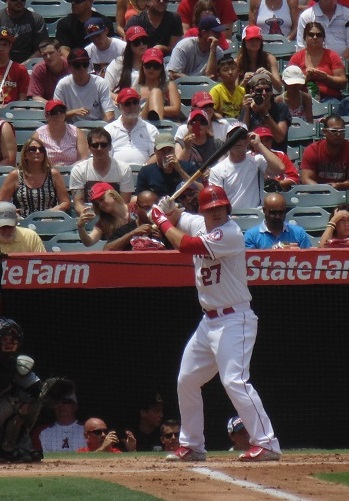
2017 Astros bench coach turned 2018 Red Sox manager Alex Cora hoists the 2018 World Series trophy. The ’18 Sox are now believed having used their replay room for off-field sign-stealing, amplifying suspicions around Cora himself.

Long before he became a major league coach then manager, Alex Cora endeared himself to me when he was a Dodger hitting a seventh-inning home run on 12 May 2004. It wasn’t the home run itself but what led to it—Cora hit the eighteenth pitch of a plate appearance against Cubs pitcher Matt Clement into the right field bullpen. The Iliad, The Odyssey, and Ben-Hur weren’t that epic.

I watched that game live on television from my then-home in Huntington Beach, California. Cora wasn’t exactly a power hitter, of course; Sammy Sosa hit as many home runs in 2004 (35) as Cora hit in his entire fourteen-season playing career. He was a clever utility infielder whose best work was with his glove on either side of second base and his brains otherwise, and he was valuable enough as a utilityman to play on the Red Sox’s 2007 World Series winner.

As Cora checked in at the plate on that May night, the Dodgers’ still-very-much-missed voice Vin Scully noted he’d hit a couple of fly balls earlier in the game, “but if you don’t have power, a couple of fly balls is wasted opportunity.” He batted with nobody out in the bottom of the seventh and a short-career left fielder named Jason Grabowski aboard with a leadoff walk.

Cora looked at ball one up and away to open. He took a strike near the outside corner, then took ball two away, then fouled one off. And then the fun really began without once going to ball three. Cora fouled eleven more off. We’ll let Scully take it from there:

. . . The crowd now is really into the pitches . . . and still two and two. Nobody out. Big foul . . . wow! . . . It’s a sixteen-pitch at-bat, and the crowd loves it, and look at Dave Roberts. They’re all enjoying this battle. Matt Clement and Alex Cora. Coming into the game, Cora was hitting .400 against Clement, he is oh for two tonight. So the game within the game here. So here’s the sixteenth pitch. What an at-bat! . . . [foul ball] . . .  Seventeen pitches . . . it is the rare time that you can be in the ballpark and everyone is counting the pitches, and it’s gonna be a seventeen-pitch at-bat, now, at least. We, I don’t know, you know, they don’t keep records of pitches in at-bats, but it’s kind of special. This will be the seventeenth pitch. Grabowski’s exhausted, and Mike Ireland reminds me how about if Grabowski had been running on every pitch? Time . . . ohhh, the crowd is loving it . . . Ever see so much excitement? And nothing’s happened, that’s what’s really funny about it. All right, here’s the seventeenth pitch—and, it’s foul. Foul ball by a hair! So that means that it will be at least an eighteen-pitch at-bat . . . Clement has made more pitches to Alex Cora right now than he has made in any inning but the third . . . the eighteenth pitch—high fly ball into right field, back goes Sosa, way back to the gate, it’s gonnnne!! Home run, Alex Cora, on the eighteenth pitch, and the Dodgers lead, four to nothing. What a moment! 9:23 on the scoreboard if you want to write it down for history . . . what an at-bat! And Dusty Baker says, “We’re gonna stop the fight.” And Dusty’s going to bring in a fresh horse. That’s one of the finest at-bats I’ve ever seen. And, then, to top it off with a home run, that is really shocking. Yeah, take a bow, Alex, you deserve it and then some. Oh, by the way, that also means the Dodgers have homered in six straight, but it took a whale of a job to do it. Stay where you are, four-nothing Dodgers, and look at the ball club.

Cora would have been remembered for that surrealistic plate appearance if nothing else had his baseball career ended when his playing days did. Even if the Los Angeles Times didn’t remember; their game coverage the following day said not a lick about Cora’s seventh-inning stretcher.

The paper called it the way you see it now in the box scores: Cora, home run. Baseball Reference, bless them, gives you a little more: it notes the pitch count up to and including Cora’s loft just into the right field bullpen. An edited YouTube video clip from the original Dodger broadcast including the Scully call is preserved by MLB, the editing dropping out in favour of the full coverage as Cora was about to face his fifteenth pitch.

Brainy as he was it was no wonder Cora parlayed himself into coaching and, in due course, managing. Except that now it appears more certain than suspected that Cora—whose inaugural season as the Red Sox manager finished with beating his former Dodgers (managed by his May 2004 Dodger teammate Dave Roberts) in the 2018 World Series—knows something more about fouls than just whacking them away to set up an unlikely two-run homer.

Cora was the Astros’ bench coach during their run to the 2017 World Series conquest. Before that postseason ended he’d agreed to become the Red Sox’s next manager. And one of the first things he was quoted as telling his new team, whom the Astros pushed aside in the 2017 division series, was, “You guys were easy to game plan against. Too many bad takes.”

Those were nothing compared to the bad take now surrounding Cora. Because Ken Rosenthal and Evan Drellich, who seem to be for The Athletic with Astrogate what Carl Bernstein and Bob Woodward were considered to be to the Washington Post for Watergate, now say the 2018 Red Sox had a little espionage operation of their own in play during that year’s regular season. And, that unlike the Astros’s engagement of an off-field live-feed camera for sign-stealing, the Red Sox thought of something they could try at home and on the road:

Three people who were with the Red Sox during their 108-win 2018 season told The Athletic that during that regular season, at least some players visited the video replay room during games to learn the sign sequence opponents were using. The replay room is just steps from the home dugout at Fenway Park, through the same doors that lead to the batting cage. Every team’s replay staff travels to road games, making the system viable in other parks as well.

Rosenlich (well, the combination worked for Woodstein, right?) are careful to clarify that nobody including whomever the Red Sox three might be thinks the Red Sox tried it during that postseason, if only because they would have been caught as red-handed as the original five Watergate burglars:

Red Sox sources said this system did not appear to be effective or even viable during the 2018 postseason, when the Red Sox went on to win the World Series. Opponents were leery enough of sign stealing — and knowledgeable enough about it — to constantly change their sign sequences. And, for the first time in the sport’s history, MLB instituted in-person monitors in the replay rooms, starting in the playoffs. For the entire regular season, those rooms had been left unguarded.

This wasn’t exactly as “egregious” (Rosenlich’s word) as the Astro Intelligence Agency’s underground television network, contravening baseball’s rule mandating eight-second camera feed delays to send stolen signs to a monitor near the dugout steps from where someone, who knows whom just yet, sent the stolen opposition signs to the batter with bang-the-can-slowly. But it’s no less beyond the ordinary bounds of on-the-field gamesmanship, even if the Red Sox system did involve at least one man on the field.

The Red Sox operation was workable only with a runner on base. They simply took the burden of catch-and-release away from the baserunner who’s usually the one who engages the on-field gamesmanship of sign stealing. Someone, who knows whom, would be in the Red Sox replay room at home or on the road, catch the sign from catcher to pitcher, and send it to the runner to send to the hitter. You’ve got to be a lot more swift to do it that way, and apparently the 2018 Red Sox were during the regular season.

Not that Rosenlich lack for a caution or two. “It’s impossible to say for certain how much this system helped the Red Sox offense,” they write. “But their lineup dominated in 2018, when they led the league in runs scored.” And, like the Astros, the Red Sox—who got caught flatfoot in 2017 when one of their people was caught using an AppleWatch to try stealing Yankee signs—were convinced enough that others were doing likewise that they weren’t above a little creative against-the-rules espionage themselves.

“You got a bunch of people who are really good at cheating and everybody knows that each other’s doing it,” Rosenlich quote “one person with” the ’18 Sox. “It’s really hard for anybody to get away with it at that point . . . If you get a lion and a deer, then the lion can really take advantage of the deer. So there’s a lot of deers out there that weren’t paying attention throughout the season. In the playoffs, now you’re going against a lion.”

Using the replay room for sign-stealing didn’t exactly begin with the 2018 Red Sox. “It was also similar,” Rosenlich write, “to one the Yankees and other teams had employed before MLB started its crackdown. (Hitters can legally visit the replay room during games to study some video.)” The trick was to be swift enough afoot to make it work without using further electronic devices.

Rosenlich also exhume a three-page March 2018 memo to team presidents from MLB’s chief baseball officer, Joe Torre (himself a former major league catcher), in which he emphasised just how much against the rules high-tech off-field sign-stealing is: “To be clear,” the memo said, “the use of any equipment in the clubhouse or in a Club’s replay or video rooms to decode an opposing Club’s signs during the game violates this Regulation.”

And sometimes the replay room monitors weren’t always immune to being compromised themselves, with Rosenlich observing, “Some would stay in the video replay room the entire game, while others would disappear for periods of time.” The duo go on to cite an unnamed video scout, not with the Red Sox, directly:

Some acted like they were your best friend, root you on. Others would tell on you for the littlest things that weren’t even real,” the scout said. “It was very inconsistent how each person took their job and what they were actually doing . . . You knew this guy was a stickler, and with this guy you could get away with some stuff. How does it stop cheating? The teams that were going to cheat were going to cheat, no matter what.

Whither Alex Cora? Rosenlich are already on record as reporting that Cora and new Mets manager Carlos Beltran (a designated hitter with the ’17 Astros who was often approached by teammates as having the mind of a coach himself) had an as-yet-undetermined hand in at least devising the Astro Intelligence Agency. Nobody knows yet just how Cora and Beltran helped devise it if indeed they did.

But Cora going from the Astros’ world champion as their bench coach to the ’18 Red Sox as their first-year manager taking them all the way to a 108-win regular season preceding a World Series triumph now looks a little too suspect. Did he know about and/or sanction the ’18 Red Sox’s replay room rompering? Did he suggest, based on any direct knowledge of the Astros’ slightly more arduous technique, that the replay room just might be a slightly simpler way to steal signs and get away with it?

No, Astroworld. The Red Sox’s replay room rompering doesn’t get the Astros off the hook. The everybody’s-doing-it defense isn’t going to wash for the Astros, and it won’t for the Red Sox, either. Red Sox Nation, of which I’ve been a member since that thriller of a 1967 pennant race in hand with being a Met fan since the day they were born (ask not my October 1986 pharmaceutical bills), is about to join Astroworld in having to come to terms with at least some of their heroes being cheaters.

“The issue . . . extends beyond individual teams, encompassing the league’s enforcement and upkeep of its own rules,” Rosenlich write. “Many inside the sport believe there is cheating and then there is cheating-cheating. In this view, the Astros undertook the latter, while more indirect video-room efforts—at least before late 2017—counted as the former.”

If and when the actual Astrogaters are revealed in full, Astroworld will be anything but amused, just as I wasn’t amused to discover that a team whose reconstruction into a powerhouse I admired turned out to be riddled with a human factor-challenged front office and field personnel who weren’t above extralegal espionage. According to ESPN’s Jeff Passan, the Astros should learn within the next two weeks just who’s going to be taken to the Astrogate woodshed and whether they come out bruised, battered, or broken.

It doesn’t amuse me that Alex Cora, a player whose tenacity I cheered one fine May 2004 evening and whose intelligence I always admired, may well have gone from helping to devise one elaborate cheat to at least fostering a second that was less elaborate if not less egregious. It amuses me even less that the Red Sox had to do it the new old fashioned way, too.

Short of posting armed Pinkerton guards inside the replay rooms, how baseball’s government handles Astrogate, Soxgate, and any other -gates yet to be affirmed should prove at least as intriguing as Cora’s once-upon-a-plate-appearance foul mastery. The kind he’s suspected of now, involving two teams, is more liable to end not with a two-run homer but a called strikeout.
The troublesome case of Curt Schilling

2020-01-05 CurtSchillling

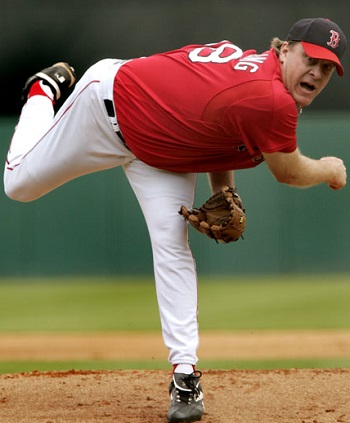
On the mound a Hall of Famer, in retirement a Hall of Shamer.

Once upon a time, Curt Schilling’s own general manager (it was Ed Wade, during their Phillies years) described him as “a horse every fifth day and a horse’s ass the other four.” By assorted readings I knew that the pitcher who evoked guts on the mound and philanthropy off it during his career was also a man in retirement who shot from the hip and the lip and bothered about the messes left afterward.

Which made Schilling no worse than assorted non-sports entertainers who speak of things beyond their professions and embarrass themselves likewise, but somewhat less, than they often embarrass those to whom their crafts are received as part and parcel of their daily bread.

But in 2016 there came the notorious Schilling tweet of a T-shirt proclaiming, “Rope. Tree. Journalist. Some assembly required,” with the just-as-notorious vote of approval reading, “OK, so much awesome here.” (Schilling deleted the tweet when the fit hit the shan, as Mr. Elder would say, but it still lives in a few thousand screen captures if not more.) His momentum for Hall of Fame election hit the wall the way Wile E. Coyote hit the earth falling from the cliff. The only shock, at least when it came to Hall of Fame-voting writers, is that they didn’t carry through on any undisclosed desires to burn Schilling in effigy. At minimum.

Over three years later, at this writing, Schilling by way of publicly disclosed voting has a shot at being elected to Cooperstown. According to the Baseball Hall of Fame Vote Tracker, out of votes disclosed publicly (the Baseball Writers Association of America has allowed that the last couple of years) Schilling has 108 votes, or 80 percent of the votes known thus far. He needs to prevail on 75 percent of the total vote, and the Tracker says that means he needs 201 more votes to get there.

The Tracker also says Derek Jeter is at a hundred percent of the known votes, Larry Walker is at 84.4 percent of those, and Barry Bonds is at 75.6 percent. (The winners will be announced on 21 January.) And even Bonds sometimes seems less a controversy than Schilling.

It’s a waste of ink to review Bonds above and beyond a simple if discomfiting fact: Whatever he did or didn’t use among actual or alleged performance-enhancing substances, it happened during baseball’s so-called Wild West Era when the substances ran rampant (and often enough misconstrued) and neither their teams’ administrations, the players’ union, nor then-commissioner Bud Selig were in that big a hurry to stop them. When the owners, the union, and the commissioner finally wised up and brought in testing, Bonds’s and Roger Clemens’s long careers were pretty much over and out.

Yet it’s Schilling who makes Hall of Fame watchers even more nervous than anything surrounding Bonds. Bonds’s admission a few years ago that yes, he was a first class jerk most of the time when he played, with or without the actual or alleged PEDs, did much to soften his once-forbidding image. Schilling’s only too renowned for the kind of diarrhea of the mouth that provokes even those who agree with him to wish his saliva glands secreted Kaoepectate.

Now we hear from Peter Gammons, one of baseball’s most long-respected journalists, whose Beyond the Sixth Game is the best available analysis of what became of the Red Sox from after the 1975 World Series and the beginning of free agency through 1985. In a lengthy but imperative read at The Athletic, Gammons examines Schilling’s Hall of Fame case and includes this quick but pungent insertion about the “Rope. Tree. Journalist. Some assembly required” business: “Schilling says he wishes he’d never done so, admitting, ‘it was in poor taste’.”

That may not satisfy two contingencies among those who follow Schilling’s Hall of Fame voting progress. One says Schilling did nothing more than say what a lot of people wish they’d had the guts to say about today’s journalists. The other says Schilling himself should be married to a rope and a tree for even thinking that way about journalists, when he isn’t being flogged for assorted sociopolitical opinions about which “controversial” may resemble a compliment so far as some are concerned. (We should note that most of those Hall voters uncomfortable with Schilling rarely if ever cite his support for today’s not so popular or amiable president as part of their grounds.)

Among purely baseball writers, Jon Heyman of MLB Network, Susan Slusser (the San Francisco Chronicle and a former Baseball Writers Association of America president), and Jose de Jesus Ortiz (another former BBWAA president) were three among many who decided that advocating murder equals the kind of character flaw that enjoins against Hall of Fame enshrinement by way of the character factor among the voting criteria.

When I first saw Schilling’s approval of marrying journalists to ropes and trees, I also thought he went far beyond the line that distinguishes mere criticism from thoughts of homicide. And I wished to God that Schilling remembered he could have drawn the line between objecting to flawed journalism and killing journalists without fearing he was tempering his view.

There’s as much to abhor as to admire about journalism and always has been. There’s scrupulous and unscrupulous journalism alike. Journalists delude themselves if they think otherwise. There’s also the parallel syndrome, likewise undeniable, that bias isn’t a one-way street: Readers see with their biases just as frequently, and not always scrupulously. Enough of what’s considered unscrupulous journalism is considered that not because it is that but because it speaks of things readers simply don’t want to know.

Well, enough of what a politician on any side of the ideological divide denounces as “fake news” isn’t “fake” but, rather, news he or she simply doesn’t like, too. Practising opinion journalism such as I practise now? Of course you get called unscrupulous now and then, not because you are, but because someone reading and disagreeing with your latest offering believes the disagreement by nature indicates scruples missing in action.

Applaud murdering journalists or other writers and speakers with whom you disagree or who brought you news you dispute or didn’t want to hear, and it’s something entirely beyond mere objection. Even American presidents, including the incumbent to whom Curt Schilling’s plighted his political troth, have only harassed with incessant rhetoric if not government apparatus, but they haven’t killed writers whose publications infuriated them—yet. When not using the press for themselves or against each other, that is.

Think of how many people continue to respect Thomas Jefferson as a champion of freedom including and particularly the press—until he wasn’t, then denounced him for saying nothing could be believed in a newspaper until he and his frenemy John Adams needed the newspapers to call each other a hermaphrodite and hypocrite (Jefferson, about Adams) or a half-breed atheistic libertine. (Adams, about Jefferson.) If you thought presidents resorting to schoolboy or locker room-style name-calling began with President Tweety, this Packard Panther car is in my garage and can be had for a measly three large.

Schilling knows only too well that he’s expert at shooting first and regretting later. “Gotta own the times you go off the rails,” he tweeted regarding one such regretted shot. He’s had to own the equivalent of a chain of stores worth of those times since his retirement from baseball, alas. Gammons, who’s known Schilling a long enough time and knows only too well how often his train jumps those rails, thinks the thing that seems to worry Hall of Fame voters most isn’t likely to happen:

My guess is that if Curt Schilling ever walks to the microphone on the stage in Cooperstown, he will be as close to speechless as he’s ever been, and the words that he utters will not be political but instead will honor [Jim] Palmer and [Tom] Seaver, Randy [Johnson] and Pedro [Martinez], [Greg] Maddux, Sandy [Koufax] and [Bob] Gibson.

He may mention the day Tony Gwynn went 5-for-5 against him, or much how he respected [Barry] Bonds, walking him 19 times in 100 plate appearances. I expect he would mention Johnny Podres and Terry Francona and Cal Ripken. And pay homage to Roberto Clemente, because the journey to that podium really began with [his father] Cliff Schilling’s favorite player.

As a pitcher, Schilling is qualified and then some to be a Hall of Famer. “I wouldn’t invite Schilling into my own home,” The Cooperstown Casebook author Jay Jaffe wrote in that book, “and I wouldn’t encourage anyone to view him as a role model, but in my view nothing in his career leaves a doubt that he belongs in Cooperstown. He ranks among the all-time greats via his run prevention skill, his dominance in the game’s most elemental battle of balls and strikes, and his repeated ability to rise to the occasion when the on-field stakes were highest.”

If you doubt that assessment, be reminded that seventeen pitchers have struck out 3,000+ batters but only four of them have done it while walking fewer than 1,000. The four are Schilling and incumbent Hall of Famers Ferguson Jenkins, Greg Maddux, and Pedro Martinez. Nice company to keep, particularly if you consider Jenkins may still be one of the most underrated and under-appreciated pitchers who ever stepped on the mound. If you doubt Schilling’s stature as a true big-game pitcher, you didn’t see him in several pennant races and postseasons, especially in 2004.

Schilling’s right to speak is equal only to someone else’s right to reject the thought, and to reject the thought isn’t quite the same as rejecting his right to enunciate it. Neither is concluding that the thought indicates a character as well as an intellectual flaw. He’s had his feuds with assorted journalists (including the aforementioned Heyman, Slusser, and de Jesus Ortiz), but he hasn’t been suspected of graduating from mere disputes to hunting down and trying to kill them himself, either. Yet.

The voting rule that includes the character factor reads, Voting shall be based upon the player’s record, playing ability, integrity, sportsmanship, character, and contributions to the team(s) on which the player played. The Hall of Fame was born in 1936; that rule, known as Rule 5, was born in 1944. The parents were Hall of Fame founder Stephen Clark and then-commissioner Kenesaw Mountain Landis. Landis, whose integrity, sportsmanship, and character allowed him to refuse allowing non-white men to play major and minor league baseball.

The Hall of Fame includes no few whose play was as extraterrestrial as their characters were actually or allegedly subterranean, and they weren’t all elected before 1944, either. It also has no few whose administration of parts or all of the game were suspect. (Landis, anyone? Ford Frick? Bud Selig? George Weiss? Tom Yawkey?) It doesn’t mean Hall voters are barred from considering character during or post-career. (Ponder how many still wish to remove O.J. Simpson from football’s Hall of Fame over his long-past-football-career crimes.) There’s no further absolute right to Hall of Fame enshrinement no matter your pure performance papers, really, than there is to play or work in professional baseball in the first place.

A lot of baseball players active and retired have had contentious relations and even shoving matches with members of the press. (“When you like us, we’re the press,” the late New York Times columnist/language maven William Safire once said. “When you hate us, we’re the media.”) A lot of journalists have been just as disdainful of a lot of players, for assorted reasons valid and invalid. But I can’t think of any player who ever suggested marrying even his least favourite journalist to a rope and a tree. Not even sarcastically, which was Schilling’s original defense.

If Schilling’s as sincere as Gammons suggests in regretting his wish for the marriage of journalists to ropes and trees, accept his apology, with the qualifier that you shouldn’t expect every journalist on any block to forget the sarcasm defense. “I don’t blame any journalist for eliminating Schilling from consideration,” Jaffe wrote this past November. “I’m done telling anybody to hold his or her nose and vote for such a candidate just because of stats and a highlight reel.”

Remind yourself, too, that whatever your particular political preferences, Curt Schilling’s worst enemy is the one he sees in the mirror when he shaves. If the Hall of Fame really was an institution to which was affixed and enforced, “Horse’s Asses Need Not Apply,” he wouldn’t belong. But that plane took off eons ago.

Objections overruled

2020-01-05 DomingoGerman

Slapping his girl friend at CC Sabathia’s charity gala last fall means Domingo German won’t be pitching in Yankee pinstripes again until early June.

Domingo German’s 81-game suspension under baseball’s domestic violence policy is only the fourth longest such drydocking among players. Former Braves pitcher Hector Olivera beats him by a game in that regard, Phillies outfielder Odubel Herrera lost the final 85 games of 2019, and Padres pitcher Jose Torres lost 100 games in 2018.

None of which stopped the word “unprecedented” from circulating around it or some Yankee fans from screaming “We object!” To the suspension, not the act that provoked it. The general gravamen among that subset of Yankee fans is that, since German wasn’t hit with any criminal charges after all, he should therefore face nothing but spring training and the 2020 season. The general problem with that view is that there’s a major league policy in place saying oh no he shouldn’t.

The actual policy allows baseball’s commissioner to put a suspected player on administrative leave for up to seven days while investigating the accusation, and it covers domestic violence, sexual assault, and child abuse alike. There’s no minimum or maximum punishment involved formally, though the commissioner can suspend, reinstate, or defer judgment until after criminal proceedings are done.

Which means commissioner Rob Manfred was within his rights under the policy to suspend German even though the September 2019 incident in question—German was seen slapping his girl friend, who happens to be the mother one of his children, after a charity gala by retiring pitcher CC Sabathia—ended up not going to criminal charges. The incident itself was bad enough without the witnesses perhaps including someone from the commissioner’s office.

Likewise was Manfred within his rights to think as he seems to have done that further such incidents forward after, say, Addison Russell’s to get him a 40-game suspension (2018-19), or Roberto Osuna (75 games, 2018), or to Giants chief executive officer Larry Baer (almost four months last year), haven’t delivered the message yet that there are some things baseball as a franchise employer simply refuses to suffer gladly.

Formal legal criminal charges or no, neither the Major League Baseball Players Association nor the Yankees objected to German going on administrative leave from the day after his final 2019 mound appearance through the end of the postseason. Yahoo! Sports columnist Hannah Keyser says the team and the union aren’t expected to appeal the final suspension, either.

German’s suspension will take him out of the 2020 season’s first 63 games since it was made retroactive to the administrative leave onto which he was placed 19 September 2019. And while the pitcher’s missing the rest of the regular season and the entire postseason didn’t exactly help the Yankee cause, it tells you something when you fear those Yankee fans hollering against the suspension seem oblivious to its provocation.

One such response, specifically to Keyser’s column, went like this: “I have no objection to a player being suspended for domestic abuse. But I do object to it when a player was never even charged and there is no real proof that they did anything.” As if the point of witnesses having seen German slap his girl friend now equals, “It depends on what your definition of ‘witness’ is.”

It’s something comparable to saying no, you don’t object to a president of the United States being impeached for abuse of power, but yes, you object when he hasn’t been charged according to criminal law construct. Therefore, whether the House impeaching the president or baseball the employer enforcing its behavioural rules, they done you wrong, somehow. I say it that way because sports fans in their most extreme moments take certain things personally and regard them as crimes of another sort.

Let their team lose a key game down the stretch and they just about would treat it not as a hard loss but, rather, a bloody crime for which heads must roll. Let a pitcher surrender a potential game, set, and pennant-losing home run, and it’s not that the hitter was the better player in the moment but that the pitcher committed the heinous act of throwing the pitch that got bombed.

Those are bad enough. But when some Yankee or other fans all but demand baseball lighten up about suspending domestic abusers in such cases as don’t even go to court (German, fellow Yankee pitcher Aroldis Chapman in 2015, Russell) or become resolved without further ado in court (Osuna), they suggest an employer has no business disciplining an employee merely because his misbehaviour didn’t result in a court case at all, never mind a conviction or time behind bars.

The Astros fired assistant general manager Brandon Taubman, after almost a week worth of the team administration trying to cover up and smearing the reporter who revealed he’d thanked God they’d [fornicating] gotten Osuna within earshot of three female reporters one of whom wore a domestic violence awareness bracelet at the time. If a team can fire an executive over seeming to ignore if not applaud domestic violence, why can’t a team or baseball’s administration suspend someone for committing it?

It’s to baseball’s credit that it says domestic violence is intolerable among those who make the game their profession. And it should be thus elsewhere in sports, as said another respondent to Keyser’s column: “As a Dad, and yet a lifelong Yankee fan, I know domestic violence cannot and should not be tolerated. That is a given. Yet in other sports, the punishment seems to be somewhat less. Time for the other pro sports, or even college sports, to step up and take a stand also.”

All that’s accomplished by those Yankee fans saying baseball done them wrong by suspending German is to make their breed look even worse than they already look to a lot of baseball fans. A lifetime’s experience with the breed (I’m Bronx born, Bronx and Long Island bred, but a Met fan since the day they were born) informs that the main reason it’s uncomfortable to think nice things about the Yankees is their fans.

If the truest cliche about the Yankees is that they don’t like to lose, the truest about Yankee fans is that they think their heroes are entitled (underline that) to be in every postseason, if not to win every World Series, and that if they don’t get either it’s either grounds for a complete housecleaning or somebody else’s fault. But even that is bearable compared to the pockets of extremes that make even normal Yankee fans quake.

Last October came three grotesque examples from that small contingent of Yankee fans who travel first crass. Two happened in Game Three of the American League Championship Series. When Edwin Encarnacion was beaten on a slightly off-line throw forcing Astros first baseman Yuli Gurriel to a spinning sweep tag on Encarnacion’s shoulder, fans in Yankee Stadium’s right field stands threw debris on the field. When Yankee reliever Luis Cessa unintentionally hit Alex Bregman with an inside pitch, there was only too audible cheering.

The third, as Game Four was about to get underway, made those two resemble accidents. A group of Yankee fans above the visitors’ bullpen in left field taunted the Astros’ Game Four starter, Zack Greinke, over his known enough battle with anxiety and clinical depression, and the medications he’s prescribed to control those very real conditions. Rather diplomatically, Greinke said after the game that he didn’t hear the taunts, which makes them no less inexcusable.

Some of the taunts exposed the miscreants in question as further half-witted and baseball dumb, namely those taunting Donald Zachary Greinke for going by his middle name as many people do. Clearly they’d forgotten if they ever knew such Hall of Famers as Henry Louis Gehrig, James Hoyt Wilhelm, George Thomas Seaver, and Lynn Nolan Ryan, for openers. Not to mention a one-time Yankee prospect who ended up traded and beating them thrice in one World Series, one Selva Lewis Burdette, Jr.

Taunting Greinke concurrently over his mental illness and his preference to go by his middle name was merely grotesque. Objecting to German’s suspension, never mind that slapping his girl friend with witnesses present damaged her and cost the Yankees his arm the rest of the stretch, the postseason, and for two months plus to open 2020, knocks on the door of degeneracy.

The Yankees aren’t baseball’s only team with a contingent of fans about whom degeneracy applies. And more Yankee fans know and shiver over it than you might think. One such fan—he didn’t identify himself as such, but his avatar is a piece of an ancient tile identifying a Lexington Avenue subway station (the el train running behind Yankee Stadium just before ducking into a tunnel is known officially as a Lexington Avenue Express)—responded to Keyser and knocked the degeneracy contingent among his brethren over the center field fence:

MLB is not a court of law. It can discipline its employees and coaches how it sees fit with input from players union, who did not contest the suspension. If a player doesn’t like the ruling, find another place to play baseball.

There are also those who think baseball’s domestic abusers should be suspended longer, like for an entire season and postseason to follow. That’s not exactly unsound thinking.

Don Larsen, RIP: Elevated

2020-01-01 DonLarsen

Don Larsen, captured mid-delivery during his World Series perfect game.

The new year wasn’t a day old, and the million-to-one shot expired. The month of Sundays turned Mondays. The imperfect (unperfect) man who pitched a perfect game in the 1956 World Series lost his battle with esophegeal cancer at 90 on New Year’s Day. And Hall of Famer Yogi Berra got to take a flying leap into Don Larsen’s arms one more time, this time in the Elysian Fields.

From Joe Borden (of the pre-historic National Association) in 1875 through Justin Verlander at the near-last minute of the 2019 season, major league baseball pitchers including 35 Hall of Famers have thrown 303 no-hitters. That’s eleven percent of all no-hitters, including perfect games, thrown by Hall of Famers from John Montgomery Ward through Roy Halladay.

Baseball being a game that enables the modest or the miscast to become the immortal even for one day, Larsen was of a perfect piece on 8 October 1956. As his career shook out he was more and better of a relief pitcher than starting pitcher. He was tall, threw hard enough, but as Joe Posnanski described memorably, “[his] wildness on the mound fairly well represented his wildness off the field.”

“Larsen was the greatest drinker I’ve known,” said Hall of Famer Mickey Mantle once upon a time, Mantle being a man who knew great drinkers when he saw them having been one himself for too long. Larsen lived enough in the wild before he married in 1960 that his teammates nicknamed him Gooney Bird.

But the greatest drinker Mantle ever knew went to a no-windup delivery for Game Five and wound up flying into Series history singularly, remaining there to this day. The nearest anyone’s gotten to Larsen for postseason pitching perfection was Halladay, pitching a no-hitter in his first ever postseason assignment to open a division series in 2011—the same year in which Halladay pitched a regular-season perfect game.

Larsen hadn’t previewed his World Series grandeur quite so grandly: he was lifted from Game Two of the ’56 Series in the second inning, despite still being ahead five runs, and his relief Johnny Kucks surrendered all five tying runs—four unearned—on a bases-loaded single (Hall of Famer Pee Wee Reese) and a grand slam. (Hall of Famer Duke Snider.)

He steamed over the early hook regardless. Publicly, he told reporters he had “not a thing” to say after the early hook and the Yankee bullpen surrendering what turned into a 13-8 loss. But he was otherwise recorded as thinking oh, would he never again pitch for Casey Stengel even if the Ol’ Perfesser begged him. He kept that vow right up until the moment he saw the old traditional manner in which a pitcher was informed of his day’s starting assignment, a baseball resting comfortably enough in his shoe.

So the legend went. The reality may have been a little different. For one thing, Larsen himself admitted years later that if he’d been his manager he wouldn’t hand him the ball again any too soon, either. And Stengel told the press the day before Game Five that Larsen would be his man to get the ball rolling. Whether Larsen himself saw it is open to conjecture: he’d gone out on the town and tied on a big one the night before Game Five.

Stengel held no grudge against Larsen for his post-Game Two fuming, obviously, Larsen having two qualities the old man admired: 1) He’d beaten the Yankees twice in a 1954 during which he earned credit for only three pitching wins. 2) Stengel recognised a champion booze hawk when he, too, saw one.

“It was between Larsen and (Bob) Turley,” said the Perfesser. “We decided it would be better to have Turley in the bullpen today and tomorrow.” Turley, of course, ended up having one of the best seats in the house for what was to come. Larsen decided to go back to what he’d abandoned in Game Two, the no-windup delivery Stengel loved to encourage in those among his pitchers who experienced control issues.

As Posnanski puts it, the Dodgers entered Game Five with the same plan they had for Game Two: “Be patient and let Larsen blow himself up the way he had in Game 2. It was a reasonable strategy; indeed, it seemed nearly foolproof. Larsen, over his career, walked about as many batters he struck out. He lost more than he won. He did not let the rigors of baseball interfere much with his thirst for living.”

You know the ancient saying about the best-laid plans, right?

With absolutely no reason to think it was entirely possible, Larsen prior to Game Five had told a friend, who turned out to have been sportswriter Arthur Richman, that he had “one of those crazy feelings that I’m gonna pitch a no-hitter tomorrow.” Richman suggested a four-hitter would be plenty enough. “Nope,” Larsen’s said to have replied. “It’s gonna be a no-hitter, and I’m gonna use my ghoul ball to do it.”

Don’t ask. Larsen never explained it. Any more than anyone could explain how Game Five began in Yankee Stadium, with both Junior Gilliam and Reese looking at called strike threes to open before Snider lined out for the side. Or, how Larsen, always prone to the walk (his walks per nine lifetime: 4.2; his strikeouts per nine lifetime: 4.9; his strikeout-to-walk ratio lifetime: 1.17), surrendered not a one while striking out seven on the day, with only Hall of Famer Jackie Robinson plus outfielders Sandy Amoros and Carl Furillo avoiding the strikeout.

Larsen would have been the first to credit a couple of fielding jewels that kept the perfecto alive. Including but not limited to Robinson slashing a line drive off third baseman Andy Carey’s glove that deflected to shortstop Gil McDougald, who threw Robinson out by a fragment at first in the second inning. Or Mantle running Gil Hodges’s long fly down to the rear latitudes of left center field for a catch he later admitted to thinking he had an easier play on it than he turned out to have.

The Hodges fly, on a hanging slider, was “his one bad pitch” of the afternoon, Berra would remember. And Larsen had one more bullet to dodge immediately afterward. More like a rocket. Amoros hit one into the right field seats that sailed foul by anywhere from two to four to six inches, depending upon who told you the story. Otherwise, Larsen was so in command that he ran a three-ball count to only one hitter (Reese) all afternoon.

He was also calmly aware of what he’d done, more sanguine about it as the years went passing by. If you found his home phone number and wanted to talk a little baseball, he’d likely needle you the way he once needled New York Post writer Mike Vaccaro: “You want to talk about my year with the Orioles, right?”

Larsen’s career began with the Orioles, when they were still the St. Louis Browns. He became a Yankee in one of the strangest trades in baseball history—a seventeen-player swap in November 1954, that made Yankees out of Larsen, Turley, and future major league manager Darrell Johnson, among others. And, that made Orioles out of reliable platoon outfielder Gene Woodling and infielder Don Leppert, among others. He became an ex-Yankee in the 1959 trade with the Kansas City Athletics that made a Yankee out of Roger Maris and ex-Yankees out of Larsen, Hank Bauer, Norm Siebern, and the future Marvelous Marv Throneberry.

New York Daily News baseball writer Joe Trimble, Vaccaro records, was paralysed after Dodger pinch hitter Dale Mitchell struck out to send Yankee Stadium berserk and Berra leaping famously into Larsen’s arms in front of the mound when the perfecto was finished. Trimble couldn’t think of a single line to open his story. His eventual Spink Award-winning colleague Dick Young, himself bristling to finish a pair of stores related to the game, did it for him: “The unperfect man pitched a perfect game.”

“Mortal men get crushed by immortal deeds,” Thomas Boswell wrote about Roger Maris, who suffered unconscionable abuse for daring to break ruthsrecord in 1961, upon Maris’s death in 1985. Larsen was a mortal man who felt elevated by his immortal deed. “Sometimes, a week might go by when I don’t think about that game,” he once said. “But I don’t remember when it happened last.”

After his long enough pitching career ended, Larsen tried major league front office work and then liquor selling, neither of which agreed with him in the end, before going to work for a California paper company successfully. He even carried a little mojo from the game at assorted old-timers’ gatherings one of which turned rather explosive in its own right.

After Yogi Berra ended his longtime rift with George Steinbrenner, the Yankees gave him Yogi Berra Day in 1999—forty years after he’d gotten one as a player. Larsen and Berra remained lifelong friends, and on the second Yogi Day Larsen was invited to throw a ceremonial first pitch to his old battery mate. Then the interleague game against the Montreal Expos began. And David Cone, the former Met, beat the Expos with . . . a perfect game.

Larsen said later it was the only perfect game for which he’d been present from beginning to end since the one he threw in the ’56 World Series.

The wild Yankee settled himself in due course, of course. He and his wife, Corinne, were married six decades when he died; he found a pleasant life in Hayden Lake, Idaho; he never lost his zest for life despite the emptiness he experienced now and then after realising he was the last man standing from both the starting lineups of his perfect game and his last pre-Baltimore team of Browns.

“That carries a little weight by itself, but I’m just not sure how much,” he told an Idaho reporter two years ago. “The last one to go was Yogi in 2015. It’s lonesome when you get to the top.”

We may presume that once Yogi took that welcome-home flying leap into his arms on New Year’s Day, Larsen in the Elysian Fields won’t be entirely lonesome at the top anymore. But our island earth may be a little more lonesome for missing the million to one shot, the nice guy who lived fast enough, settled well enough, and for once in his otherwise ordinary baseball life did what couldn’t be done. And hasn’t been done since.

Year-end, decade-end clearance

DSC03222-02

Call it the Trout Decade if you wish—but wonder when the Angels will provide a team their (and baseball’s) best all-around player can be proud of, after he signed a spring 2019 deal to make him an Angel for life.

The decade about to expire began with the Giants winning the first of their three World Series rings in five seasons. It’s ending with, among other things, the Twins signing two pitchers. One got a little ornery over cops getting a little ornery over his wife’s fanny pack as they went to a football game. The other was traded and released by his new time upon arrival, then played for two 2019 teams while looking to find whether his talent still lurked behind a still-pervasive injury history.

The Tens began with the Astros still in the National League where they were born and finishing fourth in the Central division. It ended with the Astros seven years into their life in the American League (they were the team to be named later in the deal making National Leaguers out of the Brewers), and with three American League West titles, two pennants, one World Series triumph, and a scandal involving who and how they managed to rig a center field camera off mandated feed delay into live-time from-off-the-field sign stealing.

Likewise, the Tens began with one franchise ending its actual or alleged curse of who knew exactly what (the Giants) and finished with the Nationals—perhaps the unlikeliest of world champions (23 May: ten games below .500; the night before Halloween: the first team ever to win a World Series entirely on the road)—becoming the decade’s fifth team to end long enough, strange enough trips without even a single lease upon the Promised Land. But none of them did it quite like the Nats: their postseason run included an unprecedented winning of five elimination games in all of which they actually trailed.

In the more or less middle of it, the Red Sox—who finally broke the actual or alleged Curse of the Bambino in the fourth year of the Aughts—won two World Series to make it four without a Series loss in the new century. Yankee fans and the Empire Emeritus itself are not amused that they have but one Series ring in two new century tries. (Yankee fans usually amuse themselves these days by verbally assaulting opponents battling courageously against depressive illness during postseason series.) Those 26 Series conquests prior to 2009 are just so Twentieth Century.

We learned more than we thought and more than we cared to learn about launch angles, spin rates, actual or alleged juiced balls, and tanking. (The Cubs and the Astros did it with surrealistic success but it didn’t mean anyone else could do it likewise.) That was then: Kill the ump! This is now: Automate the ump! Well, the strike zone, anyway. And the umps are all but going along with test plans for it, according to their new collective bargaining agreement. It’s a welcome development and offers no few possibilities for amusement when finally implemented; or, I bet you, too, can’t wait to see the automated strike caller ejected by the likes of Angel Hernandez and Country Joe West.

Injuries are as much part of baseball as curve balls, but some still defy sense and belief, and sometimes in that order. Blake Snell (pitcher) suffered broken toes when . . . the cement bottom of a bathroom decoration he moved landed on them. Joe Kelly (pitcher) hurt his back during spring training while . . . cooking up some Cajun cuisine. Yoenis Cespedes (outfielder), already down for the season with injuries, fractured his ankle stepping . . . into a hole on his Florida ranch. (The Mets eventually reworked his contract into a 2020 pay cut.) Carlos Corres (shortstop) suffered a cracked rib while . . . getting a back massage. Dellin Betances (relief pitcher, then a Yankee and now a Met) came off the injured list, struck out his first two hitters, then returned to the IL . . . after celebrating the Yankee win with a leap that tore his Achilles tendon.

Then there was former major league pitcher Daisuke Matsuzaka. Preparing to pitch in Japan in 2019, Matsuzaka in February met a fan at a meet-and-greet who shook his hand . . . and caused him shoulder inflammation with that hearty yank, not to mention costing Dice-K the season. This may be the first time a pitcher suffered that kind of shoulder injury on account of a hearty handshake. May. But we also said goodbye to an icon from Japan who became an icon in American baseball. Goodbye until Cooperstown, that is, Ichiro.

We also welcomed to the Hall of Fame the first unanimously-elected member and, coincidentally, the best who ever did his particular job (Mariano Rivera), a gentleman who entered games to Metallica’s “Enter Sandman” and built churches off the field among other things. Likewise to a worthy starting pitcher (Roy Halladay) for whom comfort in his own skin was an elusive quarry, but whose widow did him proud accepting his plaque. Likewise, too, to a stoic mound craftsman (Mike Mussina), a composed and deadly designated hitter (“I couldn’t get him out,” The Mariano once said about Edgar Martinez, “my God, he had my breakfast, lunch, and dinner”), a bullish bullpen bull (Lee Smith), and a nice guy (Harold Baines) whose sole credential really was just going to work every day, doing his job with no great shakes, and being baseball’s version of the old-time man in the gray flannel suit.

That was also (way back) then: An Oklahoma University president thundering to his board of directors that goddammit he wants a school his football team can be proud of. This is also now: A need for far more thundering by the Angels’ owner and administration that, goddammit, they demand a team the best all-around player in the game this decade, who’s threatening to be remembered as the best all-around player who ever played it before his career is finished, can be proud of. The bad news is that, try though you might, you can’t clone a lineup of nine Mike Trouts.

And just in case you think calling him the best all-around is hyperbole, perhaps you’d like to see how Trout—who traded his pending 2020 free agency for becoming a $430 million Angel for life last spring—shapes up next to all Hall of Fame center fielders whose careers were all or mostly in the postwar/post-integration/night ball era . . .  according to my concept of real batting average (RBA) and not the old, traditional, incomplete, deceptive batting average–which ought to be called, really, a hitting average.

The RBA formula: total bases (TB) + walks (BB) + intentional walks (IBB) + sacrifices (SAC) + hit by pitches (HBP) divided by plate appearances. Tells you more than just unrealistically-treated hits by official at-bats, you’d think. Tells you everything a batter does to help his team win, I’d think, too. (Total bases also treats your hits the way they deserve to be treated, as in all hits are not equal. And, I say again, why shouldn’t you get credit for intentional walks, since the pitcher decided he’d rather you take your base than his head off?)

And here they are, in ascending order according to their RBAs:

HOF—Center Field PA TB BB IBB SAC HBP RBA
Richie Ashburn 9736 3196 1198 40 130 43 .473
Kirby Puckett 7831 3453 450 85 81 56 .527
Andre Dawson 10769 4787 589 143 142 111 .536
Larry Doby 6299 2621 871 60 45 38 .577
Duke Snider 8237 3865 971 154 84 21 .619
Ken Griffey, Jr. 11304 5271 1312 246 110 81 .621
Willie Mays 12496 6066 1464 214 104 44 .632
Mickey Mantle 9907 4511 1733 148 61 13 .653
Mike Trout 5273 2522 803 199 48 81 .693
HOF AVG             .592

Among other things, look at that table and ask yourselves at last, “Can we please knock it the hell off with all the still-pervasive what-ifs about Mickey Mantle? Once and for all?” And, by the way, take my word for it: I’ve run the numbers on all postwar/post-integration/night-ball Hall of Famers and only one has a higher RBA than Mike Trout. If you guessed Ted Williams (.737 if you’re scoring at home), you win!

Trout was one of three players to sign long-term contracts last spring that will make them richer than the economy of a small tropical nation, more or less, and plant them in one place for just about the rest of their careers. He also opened the mayhem when his Angels, in their first home game following the unexpected death of pitcher Tyler Skaggs, performed the impossible and paid him tribute—with one and all wearing Skaggs jerseys for the game—with a combined no-hitter and concurrent 13-0 blowout of the Mariners. In a bullpen game, even. (Two pitchers, both relievers by normal trade.)

Manny Machado and Bryce Harper didn’t look quite as good as Trout in Years One of their new wealth, but they weren’t necessarily terrible, either. It’s not unrealistic to presume they pressed it a little trying to live up to their new riches, but Machado practically flew under the radar in his Year One compared to Harper, of course, who couldn’t fly under the radar if he used a stealth submarine.

And, yes, his usual gang of critics made a little too much sport—some of it amusing (T-R-A-T-I-O-R, spelled seven Nats fans upon his first return to Washington as a Phillie), some of it pure witlessness—of his former Nationals winning a pennant and a World Series without him. It never crossed their minds to take their eyes off his traditional batting average, look at his real batting average and his 2019 hitting in high leverage, and realise that yes, the Nats would have had an easier time winning with him than with the guy who replaced him in right field:

Real Batting Averages PA TB BB IBB SAC HBP RBA
Bryce Harper, 2019 682 292 99 11 4 6 .604
Adam Eaton, 2019 656 242 65 0 3 9 .486
High Leverage Hitting PA H XBH RBI BA OBP SLG OPS TB
Bryce Harper, 2019 127 35 21 50 .307 .370 .667 1.037 76
Adam Eaton, 2019 87 17 5 16 .236 .305 .333 .638 24

One thing that rankles about Harper: without apology he’s all in favour of making baseball fun again. Baseball’s supposed 2019 themes included “Let the kids play.” Turned out to depend upon whose kids were playing, much of the time. A presumed old-school icon said yes, let them play. Others said not so fast. There were even those leveling death threats against a minor leaguer whose crime was trying to get his butt on base by hook, crook, and any other way he could think to do with his team down to their final three outs on the wrong end of both 3-0 score and a combined no-hitter in the making.

The Yankees declared Kate Smith persona non grata over very dubious charges that she was actually a racist, based on ancient recordings of songs that actually satirised racism. A Mets first baseman, when not smashing a Yankee’s record for home runs in a season by a rookie, told baseball’s government we’ll show you—and delivered a 9-11 tribute in the form of specially-designed commemorative game cleats for his teammates to wear on 11 September. Rookie of the Year Pete Alonso 1, baseball government 0: the Mets in those shoes beat the Diamondbacks with . . . nine runs on eleven hits. Baseball government decided not to fine him or the Mets. How magnanimous of it.

Marvin Miller finally got fed up enough before his 2012 death to reject the idea of Hall of Fame enshrinement. The Modern Era Committee finally said what should have been said long ago: Miller belongs in Cooperstown. His election more or less makes up for the more or less quiet passing of the golden anniversary of baseball’s second shot heard ’round the world—Curt Flood’s Christmas Eve 1969 letter to commissioner Bowie Kuhn, launching the reserve clause challenge he’d lose all the way up to the Supreme Court but win in the breach when Andy Messersmith—pitching without a 1975 contract and taking it to postseason arbitration—finished what Dred Scott in Spikes (as George F. Will called him) started.

Once upon a time, Hall of Famer Tom Seaver answered Hall of Famer Bob Gibson’s knockdown of a teammate in spring training by knocking Gibson down in a regular-season game, then ordering the plate ump to stay out of it while he admonished Gibson, “We can stop right now if you want. But you’d better remember that I throw a lot harder than you do, you old fart.” This year, the harder side of life caught up to both lancers whose courage now fights new enemies. Seaver retired from public life now that he battles dementia borne of Lyme disease; Gibson told his fellow Hall of Famers in a July letter that he’d have to miss the annual Hall ceremonies thanks to battling pancreatic cancer. The prayer kits should be hard at work on their behalf.

“May the Great Umpire call him safe at home,” sportswriting legend Grantland Rice wrote eulogising Babe Ruth. The Great Umpire called enough of a 2019 roll safe at home, including and especially Bill Buckner, who wasn’t made to feel safe at home after his fateful mishap in Game Six of the 1986 World Series, but who eventually came to terms with it and made himself a fine post-baseball life that included a close friendship with Mookie Wilson, the Met whose grounder skipped through Buckner’s too-battered ankles in the first place.

Mel Stottlemyre was the best Yankee pitcher during the worst Yankee decade before becoming a respected pitching coach for the Mets and, in time, the Yankees. Eli Grba was a Yankee who became the first Angel to throw a regular-season major league pitch and, in time, overcame a sad battle with the bottle. Don Newcombe was an outsize pitching talent, the first black pitcher to start a World Series game, but whose worst enemy was himself: unforgiving of his failures more than happy about his successes (he was baseball’s first Cy Young Award winner among other things), and finally conquering the bottle himself to become a beloved Dodger ambassador.

Frank Robinson went from the Hall of Fame (he remains perhaps the greatest all-around player in Reds history and belied their “old thirty” pronouncement to win the Triple Crown in his first season as an Oriole) to becoming baseball’s first black manager and, in the interim, may have invented the kangaroo court in baseball clubhouses. Jim Bouton was a Yankee turned Pilot turned Astro turned author who finished what Jim Brosnan started, revealing from the inside (in Ball Four) that ballplayers in general and Yankees in particular, were only too human, before making a splendid second life as a broadcaster, Big League Chew co-inventor, competition ballroom dancer, and commissioner of a recreational league playing baseball the old-old-1890s-fashoned way.

Joe Grzenda wasn’t allowed to finish saving the final Washington Senators home game ever thanks to an on-field riot of heartsick fans . . . but he kept the ball until the Show returned to D.C., handing it to then-president George W. Bush for the first ceremonial first pitch in Nationals history. “I congratulate all Hall of Famers. Some I played with, and some I helped put there,” said Ernie Broglio once upon a time, having developed a fine sense of humour about being on the wrong end of the most notorious trade (for one such Hall of Famer, Lou Brock) in Cubs history.

A high-school teammate of Broglio’s, Pumpsie Green, was the man who finally integrated the Red Sox on the field, took modest pride in it, and proved a far better man than ballplayer. Bill James about relief pitcher Don Mossi: “He could run ugly, hit ugly, throw ugly, field ugly, and ugly for power. He was ugly to all fields. He could ugly behind the runner as well as anybody, and you talk about pressure . . . man, you never saw a player who was uglier the in clutch.” Jim Bouton about Mossi: “He looks like a cab coming down the street with the doors open.” Reality about Mossi: an effective relief pitcher and, better yet, a successful west coast motelier, passionate gardener, hunter, and camper, and a 25-time great-grandfather. Ugly is in the eye of the beholder.

Al Jackson was an Original Mets lefthanded pitcher, one of the few Casey Stengel really trusted, and the man who helped almost knock the Cardinals out of a 1964 pennant on the final season weekend, when he beat Hall of Famer Bob Gibson with a 1-0 shutout. (After blowing the Cardinals out the next day, alas, the Mets couldn’t finish what they started and the Cardinals snuck into the pennant on the final day.) Joe Keough, outfielder, compromised by injuries, earned his place in Royals history: he won the Royals’ first-ever regular season game with a game-winning pinch hit in the bottom of the twelfth.

Ron Fairly was a solid outfielder for the Dodgers and other clubs before becoming a much-liked broadcaster; between playing and calling games, Fairly’s baseball life involved over seven thousand major league games. And you can bet the record of every last one, every last inning, was kept meticulously by Seymour Siwoff‘s Elias Sports Bureau, which Siwoff bought from its co-founders’ widows to keep alive and make into an institution. Everyone who loves statistics as the life blood of baseball owes Siwoff. And, yes, you can look it up.