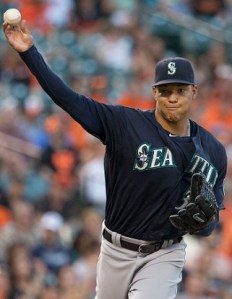
So why did the Mariners trade Walker?

If the Mariners traded Walker over his speaking out pro-protest postponement, they got some splainin’ to do.

Me and my big mouth. Well, keyboard.

Earlier today, writing about baseball game postponements in protest over the Jacob Blake police shooting, I referenced a 1968 trade involving pitcher Milt Pappas, who supported no games played during Robert F. Kennedy’s funeral. Pappas fumed when his Cincinnati Reds management may have strong-armed players into playing. In sort of a blink, he was then an Atlanta Brave.

That’ll teach me.

On Wednesday, when the Seattle Mariners and the San Diego Padres elected not to play, Mariners pitcher Taijuan Walker tweeted, “Glad to be apart of this organization and group of people!” Thank you for standing with us always!!” Come today, Thursday, Walker became a Buffalonto Blue Jay, traded for the proverbial player to be named later. He inprocesses with his new team Friday, when baseball is supposed to commemorate Jackie Robinson.

Pappas would never really know whether the Reds’ then general manager Bob Howsam told the truth when he insisted that 1968 trade was in the works before the Kennedy funeral issue. Walker at this writing may or may not really know soon, or even ever, if Marines general manager Jerry Dipoto had a deal in the works before the protest postponements, either.

In 1968, then-commissioner William D. (Spike) Eckert ordered no baseball to be played during Kennedy’s funeral. Washington’s notorious traffic issues delayed the procession, bumping the funeral to coincide with the start of the Reds’ scheduled game against the St. Louis Cardinals. Pappas supported not playing; the team voted 13-12 to play, possibly after pressure from Howsam and manager Dave Bristol. Three days later—Pappas was gone.

Major League Baseball’s official statement on the protest postponements said, “Given the pain in the communities of Wisconsin and beyond following the shooting of Jacob Blake, we respect the decisions of a number of players not to play tonight. Major League Baseball remains united for change in our society and we will be allies in the fight to end racism and injustice.” Walker tweeted his approval of his team’s protest postponement decision the same night they made it. One day later—gone.

If timing is everything, this timing looks more than a little out of time. It may not even pass the proverbial smell test.

Pappas, who died in 2016, was a white man born in Detroit of Greek parents. (His name at birth: Miltiades Stergios Papastergios.) Walker is a black man born in Shreveport, Louisiana; his father was black, his mother a Mexican-American woman who raised him alone. One dead pitcher and one living one can now hold hands as they say, plausibly enough, that baseball still has growing pains over intolerance not solely regarding a racial issue.

The game has never been entirely comfortable with players known to be outspoken on all sorts of matters. Once upon a time, the Chicago White Sox tried to compel the late pitcher/author Jim Brosnan to sign a contract enjoining him from writing for publication without prior team approval. The author of from-the-inside baseball classics The Long Season and Pennant Race elected to retire rather than allow the White Sox to decide what he could or couldn’t write.

When the then-Florida Marlins traded first baseman Carlos Delgado to the New York Mets after the 2005 season, Delgado—who’d sat in the dugout as a Blue Jay and a Marlin during seventh-inning-stretch playings of “God Bless America,” in protest the Iraq War and using his native Puerto Rico’s island of Vieques as a bombing practise spot—changed his protest tune, possibly under compulsion from the Mets’ front office.

“The Mets have a policy that everybody should stand for ‘God Bless America’,” Delgado said at the time, “and I will be there. I will not cause any distractions to the ballclub . . . Just call me Employee Number 21.” Said Mets chief operating officer Jeff Wilpon at the same time, “He’s going to have his own personal views, which he’s going to keep to himself.”

Delgado didn’t act during playings of “The Star Spangled Banner,” but on Wednesday Mets outfielder/first baseman/designated hitter Dominic Smith did. A young black man who’s a product of south central Los Angeles, Smith took a knee during the song’s pre-game playing to protest the Blake shooting.That contravened his stance in the George Floyd aftermath, when he said a knee wasn’t enough compared to teaching and learning.

There went that idea. Though his teammates had his back, too, refusing to criticise and some supporting him publicly (outfielder Michael Conforto in particular), Smith spoke for himself at a press conference. In tears. Asked by a reporter to describe the most difficult part of the past two months, Smith paused, then sighed, then said through a few sobs, “I think the most difficult part is to see people still don’t care . . . it just shows the hate in people’s hearts and, I mean, that just sucks.”

The Mets’ administration hasn’t said or done anything regarding Smith as I write. That can be considered good if we’re talking about dealing him out of town, post haste or otherwise, as the Mariners may or may not have dealt Walker over his comments. But that can be bad if we’re talking about whether Smith’s team above and beyond his clubhouse teammates will stand for his elementary right to speak his mind and heart.

I’ve said it before in these pages, but I’ll say it again: I have skin in the game of police lawlessness. I’m the paternal grandson of a New York police officer whom you could call both a true man’s man and yet one of the gentlest and most playful of men you’d ever meet in your life, especially with any and all of his eight grandchildren.

Grandpa Walter would have been as appalled at police officers behaving like the thugs they’re charged with apprehending as he would have been about people using police criminality as an excuse to break entire cities. If he’d been presented with the case for doing away with the “qualified immunity” that shields police officers from consequences for their crimes, I believe Grandpa would support its end, as I do.

But I think baseball fans and those who play and administer the game should want to know, for dead last certain, whether the Mariners traded Taijuan Walker—a serviceable, about-average major league pitcher—because it was an already-in-the-works trade on baseball grounds alone.

If they really did, they’re guilty perhaps of bad timing alone. If they didn’t, well, Lucy, they got some splainin’ to do. Did they deal Walker out of Dodge because the very thought that he spoke out proudly and unapologetically on behalf of his teammates postponing a game in protest of racism and police lawlessness offended them?

Protest by postponement

When Mookie Betts (far left) elected not to play in protest over Jacob Blake’s shooting by police, his Dodgers mates—including manager Dave Roberts (second from left) and pitchers Clayton Kershaw (second from right) and Kenley Jansen (far right)—had his back and joined him postponing against the Giants.

This is now: The Show’s government stood by teams postponing games Thursday in a show of respect to Jacob Blake, a young African-American man shot by rogue police, and quiet outrage over the manner in which Blake was shot. (Seven bullets in the back, with his children in sight in their car.)

But that was then: A Cincinnati Reds pitcher was hustled the hell out of Dodge for standing on behalf of not playing baseball during Robert F. Kennedy’s funeral. What a difference 52 years makes.

“Given the pain in the communities of Wisconsin and beyond following the shooting of Jacob Blake,” MLB’s official statement said Thursday, “we respect the decisions of a number of players not to play tonight. Major League Baseball remains united for change in our society and we will be allies in the fight to end racism and injustice.”

It could also have said plausibly that baseball stood athwart the grotesquery of Kyle Rittenhouse—a white teenager (seventeen), making his way from Antioch, Illinois to Kenosha, Wisconsin, where violence and destruction reigned courtesy of those who seize upon genuine grief, rage, and sorrow as a beard to destroy—now accused of shooting two to death after his arrival.

Once the National Basketball Association’s Milwaukee Bucks stepped up front as the first professional sports team to decline play Thursday in protest over Blake’s shooting, and theirs was a playoff game, baseball teams who had yet to play on the day—several games had finished already or were well enough in progress—began to step up front as well.

The Milwaukee Brewers and the Reds postponed, particularly after Brewers relief star Josh Hader spoke publicly about the team considering it. Those who chose to condemn Hader a few years ago, after immaturely racist tweets in his school days surfaced, should ponder once again (if it occurred to them in the first place, when Hader apologised publicly) that, yes, mis-oriented youth can and often does mature into thoughtful adulthood.

The Los Angeles Dodgers and San Francisco Giants postponed their Thursday night game after Dodgers outfielder Mookie Betts, informing his teammates earlier in the day he had no intention of playing as a show of protest, discovered to his happy surprise (he’d encouraged the Dodgers to play anyway) that one and all his teammates had his back on that.

The Dodgers’ long-enough-time franchise face Clayton Kershaw took the lead on backing him. “Mookie was saying, ‘If you guys want to play, I support that’,” Kershaw said when asked. “But we made a collective, group decision to not play tonight and let our voices be heard for standing up for what is right.”

The Seattle Mariners elected as a team not to play Thursday night, and their scheduled opponents, the San Diego Padres, agreed no questions asked. “For me, and for many of my teammates,” tweeted Mariners infielder Dee Gordon, “the injustices, violence, death and systemic racism is deeply personal. This is impacting not only my community, but very directly my family and friends. Our team voted unanimously not to play tonight.”

Elsewhere around the Show individual players declined to play even if their teams went ahead and played, and none of those players looks to face retribution or team discipline for their decisions while their teammates mostly (not unanimously, alas) likewise supported their stance.

Paralyzed waist down by his wounds, Jacob Blake isn’t exactly a model citizen, alas. He had a knife on his car’s floorboard though not in his hands, and police were dispatched to the location after a woman’s call that her boyfriend (Blake) was present when enjoined formally against being there. He also had an arrest warrant upon him. Neither gave Kenosha police officer Rusten Sheskey the right to pump seven bullets into his back.

Wherever he is in the Elysian Fields, Miltiades Stergios Papastergios must be thinking to himself, “Slowly comes the dawn.” You know him if at all by his Americanised name, Milton Steven Pappas. In 1968, he took a stand similar to that taken by the aforementioned teams and players and refused to budge when circumstances altered the original plan. The Reds traded him post haste afterward, and nobody knew for certain whether that stance provoked it.

Milt Pappas became a Red, of course, in the infamous trade that sent Hall of Famer Frank Robinson to the Baltimore Orioles, where Pappas was once part of the Orioles’ heralded but ruined “Baby Birds” starting rotation full of fresh youth. He pitched serviceably if not spectacularly for the Reds but, with Robinson winning a Triple Crown in his first Baltimore season and continuing to play like his Hall of Famer self, it wouldn’t have mattered if Pappas was the second coming of Robin Roberts.

When Dr. Martin Luther King, Jr., was assassinated in early April 1968, baseball’s Opening Day coincided with the day of King’s funeral. Baseball would have played fully if the Pittsburgh Pirates—with such non-white stars as Hall of Famers Roberto Clemente and Willie Stargell, plus former Dodgers shortstop Maury Wills—hadn’t refused to play. The Pirates triggered similar actions by other teams.

Baseball’s then-commissioner, William D. Eckert, was denounced for “calling up the club owners, not to tell them what to do, but to ask them” over the King funeral, wrote New York Daily News columnist Dick Young. But two months later former U.S. attorney general turned senator from New York, Robert F. Kennedy, freshly triumphant after winning California’s Democratic Party primary, was murdered after he left the stage at Los Angeles’s Ambassador Hotel on 6 June 1968.

With the Kennedy assassination, Eckert decreed no games should be played during Kennedy’s funeral. The man nicknamed Spike but derided previously as “the unknown soldier” (he was a retired Air Force general with no known previous baseball tie) proved he learned fast, even if he had to learn the hard way.

The Reds were scheduled to play the St. Louis Cardinals with a starting time well after the Kennedy funeral might have ended originally. Then, the funeral was delayed, after Washington’s notorious enough traffic issues delayed the funeral train’s procession. It looked as though the Reds and the Cardinals would play during the funeral after all.  Not so fast, Pappas insisted. He felt then and to the day he died four years ago that the game shouldn’t be played out of respect to Kennedy.

Reds manager Dave Bristol and general manager Bob Howsam felt the opposite. Howsam even visited the Reds clubhouse to pronounce that RFK himself would have wanted the game played. Pappas argued against playing right then and there. “Who is this guy, anyway,” Pappas told a reporter later on, “to tell us what Bobby Kennedy would have wanted us to do?”

The Reds’ players promptly took a team vote, some after having been strong-armed by Bristol, Howsam, or both. The vote was 13-12 in favour of playing. Pappas quit on the spot as the Reds’ player representative. Six games ended up postponed anyway despite the funeral delay. Three days later, in a deal Howsam swore was in the works before Kennedy’s assassination, he traded Pappas to the Atlanta Braves in a five-man swap making Reds out of fellow pitchers Tony Cloninger and Clay Carroll.

Baseball’s government, much like America’s, often has to learn the hard way about doing the right things as opposed to doing the expedient or the partisan things. There’s little to the appropriate causes monetarily as many do, other than symbolic acts that speak louder than rioters enough because their familiarity and popular appeal is powerful weight to throw above and beyond a game.

Those who think Thursday night’s players and team were out of line might care to ask what they’d prefer as a protest against rogue police and citizens alike—postponing baseball games and denouncing racism; or, breaking entire cities.

“I’d rather treasure the memories”

Before the World Series, Vin would go to church and pray. Not for a win, but there would be only heroes in the World Series, no goats.
—Sandy Koufax, on Vin Scully Day.

If Roger Angell isn’t baseball’s homer but Homer is ancient Greece’s Roger Angell, than Vin Scully isn’t baseball’s Cicero—Cicero was ancient Rome’s Vin Scully. If you’re inclined this way, you’re about to have a piece or three of Scully himself.

The broadcast virtuoso without whose voice baseball in Los Angeles and elsewhere has seemed lacking since his retirement is about to auction as much of his personal memorabilia as can be auctioned, through Hunt Auctions in Exton, Pennsylvania.

“I would much rather treasure the memories,” says the 92-year-old Scully to the Associated Press. “It’s not just a collection of cold, inanimate objects. There are things that mean a great deal to me, but now it’s time to let someone else treasure them.”

Collectors will have a chance to bid on anything from Scully’s 2016 season scorebook, the last he sustained before he retired at last, to a book about Theodore Roosevelt that the 26th American president signed for Scully’s father, who worked in Roosevelt’s law office and who died when Scully was four.

The items also include the scrapbook Scully’s mother kept of 1950s newspaper clips about her son, from just about the moment he first joined the Brooklyn Dodgers’ broadcast team as Red Barber’s find and protege. And, yes, the auction lots will include a generous selection of bats, balls, baseball cards, trophies, and awards. Including numerous plaques honouring Scully as a broadcaster of the year finalist.

“I put them up for humility,” he says, “to remind me, ‘Hey, I was in the race but I didn’t make it’.” That’s from the man who won thirty-three California Sportscaster of the Year awards and four National Sportscaster of the Year awards from the National Sports Media Association.

Scully has several reasons for sending his memorabilia to the auction block. His wife, Sandra, “suffers from a condition related to amyotrophic lateral sclerosis,” the AP says. The UCLA will watch the auction closely enough; the Scullys plan to donate a sizeable amount of the proceeds to them for neuromuscular research.

The couple also plans to use a good amount of the proceeds, the AP continues, to help five children, sixteen grandchildren, and three great-grandchildren with expenses that include parochial educations. It’s also one way to avoid a family feud when—many, many years hence, we hope in all sincerity—Scully goes to his reward and the memorabilia might be there otherwise to trigger unexpected battles.

“I didn’t want to cause bad feelings among great kids,” Scully says.

This is the same man whom Hall of Fame pitcher Sandy Koufax would remember for going to church just before a World Series and praying. “Not for a win, but there would be only heroes in the World Series, no goats,” Koufax told a Dodger Stadium throng on Vin Scully Day in 2016. “He didn’t want anybody in the future to be tarnished with the fact that they lost the World Series for their team.”

Earlier this year, Scully offered a few videotaped messages to Angelenos and others learning to cope with the impositions of the coronavirus world tour. In April, he suffered a fall at his driveway’s end while retrieving his mail, incurring a concussion, a nose fracture, and a rib fracture. “It was a learning experience,” he tells the AP. “I hold on to my walker.”

Age can compromise Scully’s body and way of life (“I heard a door close in my life,” he said as he saw two sets of the golf clubs he can no longer swing loaded aboard a truck) but not his spirit. This warm, loving man, who once had to overcome the accidental death of his 35-year-old first wife and the death of a 33-year-old son in a helicopter crash over two decades later, allows no despair in his world.

“Were you among the crowd that groaned at one of my puns?” Scully said, in his final videotaped message to his listeners on 2 October 2016—eighty years to the day after he walked home from school in New York City, saw a World Series game score posted in the window of a Chinese laundry, pitied the Giants, and fell in love with baseball itself.

 Or, did you kindly laugh at one of my little jokes? Did I put you to sleep with a transistor radio tucked under your pillow? You know, you were simply always there for me. I’ve always felt that I needed you more than you needed me, and that holds true to this very day. I’ve been privileged to share in your passion and love for this great game . . . You folks have truly been the wind beneath my wings, and I thank you from the bottom of my heart for joining me on this incredible journey of sixty-seven years of broadcasting Dodger baseball.

You can have such pieces of that journey as you might wish or can afford now; Internet bidding begins on Friday.

But it won’t be quite the same as having Scully himself on the air, amplifying a baseball game without detracting from it, ordering a camera to train upon a small child in his or her parents’ arms at the park, or spontaneously delivering exactly the right description of a play, a pitch, a hit that goes beyond the powers of even the most blessed of poets.

Such are the periodic reminders that knowing Vin Scully isn’t in the booth, at the mike, calling a game, telling the stories within the stories around the stories behind the stories, is just like knowing Yogi Berra no longer lives among us on this island earth. America sometimes just isn’t America anymore.

Was your cutout there? Bully!

Lucas Giolito, the big bully.

When Lucas Giolito’s Tuesday night no-hitter is remembered twenty years from now, and the coronavirus world tour has long been a not-so-pleasant memory, bank on one thing. Ten times the capacity of Guaranteed Rate Field will solemnly swear that their cardboard cutouts were at the game.

Much remarked for coming from a high school baseball team where his pitching teammates included Max Fried and Jack Flaherty, the Chicago White Sox righthander nailed thirteen strikeouts, walked a measly one, and threw 20 first-pitch strikes out of 28 batters faced.

Yes, it was the first no-hitter of the pandemic-truncated season other wise known as The Inner Sanctum of the Outer Limits of The Twilight Zone. And, it still counts as a bona-fide no-hitter now and for all time. But you’ll forgive me, I hope, if I’m not exactly in the mood to blast fireworks over it for ten good reasons.

The ten reasons are the number of Pittsburgh Pirates Giolito faced Tuesday night. They weren’t exactly the Big Red Machine, the Swingin’ A’s, the Pittsburgh Lumber Company, or this year’s Dodgers (who have yet to be nicknamed) Giolito had to face for the nineteenth no-hitter in White Sox pitching history.

They may not have even been the 1962 Mets, and these Pirates wouldn’t exactly go over big at the Hungry I or the Improv. Those Mets had Who the Hell’s on First, What the Hell’s on Second, You Don’t Want to Know at Third, and You Don’t Even Want To Think About It’s at shortstop. These Pirates barely fielded a cast of The Real Househusbands of Allegheny County. (That’s a joke, son. I think.)

These Pirates could accuse Giolito plausibly of bullying them. On Tuesday night, their lineup included nobody with an on-base percentage higher than .295. They have one .406 slugger (shortstop Erik Gonzalez, batting leadoff) and he has a .271 OBP. The collective OBP of Tuesday night’s Pirates was .234—fifty points lower than the 1965 Mets. (In due course you’ll see why I now mention that edition and not the 1962 comic opera—who actually had a team .329 OBP among non-pitchers.)

Come to think of it, said .406 slugger was the night’s only Pirates baserunner, reaching on a four-pitch walk to open the top of the fourth, right after James McCann’s sacrifice fly provided what proved the final 4-0 score. His reward for that walk was a first-pitch pop out behind the infield, a four-pitch strikeout, and an 0-2 line out to third base.

These Pirates strike fear in the hearts of nobody except their own fans watching on television and the cardboard cutouts that bother showing up this year. And maybe their own manager. What should have been shocking would have been if Giolito didn’t no-hit them.

“2020 has been a very strange year,” Giolito told reporters after the game from behind his mark. “Obviously a lot of weird stuff going on with COVID and the state of the world, so may as well throw this in the mix.” It’s baseball’s first-ever no-hit, no-run, no-fans-in-the-stands game.

“After the seventh, six more outs, looking at who I was facing, became very, very, very possible, and then we were able to get it done,” Giolito said. “Just staying with the same, like, mental routine for every single pitch. One pitch at a time. Full focus, full execution, straight through the target.”

It couldn’t have hurt that these Pirate targets were big enough that Dr. Anthony Fauci could have no-hit them if he’d thrown from halfway between the pitching rubber and the front of the plate.

For the longest time I thought the no-hitter Cincinnati Reds pitcher Jim Maloney threw at the Chicago Cubs one fine afternoon in Wrigley Field in 1965 was the single most ridiculous no-no I’d ever see or know. And that was a little more than half a month before Hall of Famer Sandy Koufax made those Cubs prove that practise makes perfect.

Until shoulder issues kicked into overdrive for him, Maloney might have been a genuinely great pitcher—but on 19 August 1965, Maloney did everything in his power to give the Cubs a break (those Cubs’ OBP, non-pitchers: .318)—and his Reds did everything in their power to get Cubs pitcher Larry Jackson on and off the hook.

Maloney’s good news: He struck out twelve in ten innings. His bad news: He walked ten. Jackson scattered nine Reds hits but a) only one of the nine came with a baserunner aboard (Vada Pinson, in the top of the ninth); and, b) the only one that mattered was Leo Cardenas hitting one into the left field bleachers with one out in the top of the tenth.

Then Maloney opened the bottom by walking Doug Clemens before getting rid of two Hall of Famers, Billy Williams and Ernie Banks, on a fly out to left and an Area Code 6-4-3. At least that time Maloney nailed the extra-inning no-no. Two months earlier, he lost one to the Mets when Johnny Lewis opened the top of the eleventh with a shot over the center field wall, and Mets reliever Larry Bernearth held fort in the bottom for the 1-0 Mets win.

Giolito is a pitcher who went from nothing special (5.68 fielding-independent pitching in his first three major league seasons) to a very good pitcher (3.29 FIP since last season opened) with outsize potential if he stays healthy. Unlike Maloney against the ’65 Cubs, Giolito wasn’t his own worst enemy Tuesday night, and he faced an aggregation who made those Cubs and the same season’s Mets resemble Murderer’s Row.

During the second inning, the power in Guaranteed Rate Field went out for a moment, a very brief moment. The power of the Pirates was already out to stay.

The suddenly Luddite Hall of Fame

Allen’s Hall candidacy waits an extra year since the Hall won’t Zoom.

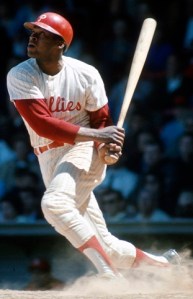
Dick Allen used to hit home runs that zoomed into earth orbit. Thanks to the Hall of Fame’s unexpected allergy to Zooming, Allen’s and others’ Cooperstown candidacies will have to wait another year.

Among other changes fun and dubious the pandemic has imposed upon baseball, two Era Committees—the Golden Era Committee on which Allen would now be a candidate, and the Early Baseball Era Committee—now won’t meet until winter 2021, with those they elect if any inducted in 2022.

It seems the old fogies who think baseball is headed into an abyss with newfangled analytics aren’t the only ones who think technology and the old ball game are a match made in hell. Hall of Fame chairman Jane Forbes Clark seems to think, erroneously, that technology mustn’t overcome the coronavirus’s travel confusions and constrictions to compromise Era Committee nominations and elections:

With the nation’s safety concerns, the travel restrictions and the limitations on group gatherings in effect for many regions, it is not possible to ensure that we can safely and effectively hold these committee meetings. The Era Committee process, which has been so effective in evaluating Hall of Fame candidates, requires an open, yet confidential conversation and an in-person dialogue involving the members of the 16-person voting committee.

Is Clark telling us that members of the Era Committees or the Baseball Writers Association of America (who determine their candidacies) can’t Zoom what numerous schools and non-retail businesses have arranged, managed, and zoomed since the coronavirus world tour kicked into overdrive in earnest a few months ago?

It really is so simple a child of five can do it. (Sorry, Groucho.) Lots of children of five in kindergartens are doing it.

When the Today’s Game Committee elected Harold Baines to the Hall of Fame so controversially two years ago, the committee members included Hall of Fame manager Tony La Russa, a man who is about as allergic to high technology as Donald Trump is to self-congratulation. And, Dave Dombrowski, last seen as the Boston Red Sox’s general manager until late last season.

Surely Clark and the Luddites among Hall governors don’t think a manager who helped introduce the computer to baseball thinking and strategising would have run home to Mommy at the idea of Zooming about Hall candidates? Or, a general manager who last worked for a team 20,000 leagues deep into analytics that require computers as much as other tools?

Technology isn’t always a gift, of course. There probably isn’t a baseball jury on earth that would say artificial turf was a baseball blessing. But if Clark thinks confidentiality would be compromised by a Zoom remote conference call, what does she think when, almost invariably, certain Hall of Fame doings and undoings get leaked to the working press routinely enough?

Fair disclosure: I have a little skin in this game. I’ve championed Dick Allen for the Hall of Fame for quite awhile now, after once being skeptical about it myself. (I’d also like to see elected his great contemporary Tony Oliva plus Minnie Minoso, both of whom deserve the honour.) But a long time reviewing the record as it was and remains convinced me that Allen belongs in Cooperstown.

I’m convinced with no further questions asked that his Hall case was compromised way less by the racism against which he waged war in Philadelphia than by a series of injuries he was sometimes foolish enough to try playing through, and that those injuries kept him (as Rob Neyer and others have observed) from posting better late-career numbers that might have solidified his Hall case.

Jay Jaffe, in The Cooperstown Casebook, says it better in prose than I could (and did) say it:

[C]hoosing to vote for him means focusing on that considerable peak while giving him the benefit of the doubt on the factors that shortened his career. From here, the litany is sizable enough to justify that. Allen did nothing to deserve the racism and hatred he battled in Little Rock and Philadelphia, or the condescension of the lily-white media that refused to even call him by his correct name. To underplay the extent to which those forces shaped his conduct and his public persona thereafter is to hold him to an impossibly high standard; not everyone can be Jackie Robinson or Ernie Banks. The distortions that influenced the negative views of him . . . were damaging. To give them the upper hand is to reject honest inquiry into his career.


I can and did say it statistically, too. I determined on my own that if Dick Allen had been allowed fifteen completely healthy seasons and a normal late-career, uncompromised decline phase, he might have finished his career with as many as 525 lifetime home runs instead of the 351 he did hit. (Oliva wasn’t Allen’s kind of power threat but the same healthy fifteen seasons and uncompromised decline phase might have left him with 315 lifetime homers.)

According to my Real Batting Average metric—which I’ve since modified to disallow sacrifice bunts (sorry, but intentional outs don’t and shouldn’t count) but retain sacrifice flies; and, which allows the complete look at a player that traditional batting average (treating all hits equal and factoring only “official” at-bats) denies—this is Dick Allen in his absolute nine-season peak period, and bear in mind that he missed an average twenty games per season in that period because of injuries:

Player PA TB BB IBB SF HBP RBA
Dick Allen, 1964-1972 5,457 2,592 685 120 33 11 .631

Forty-one percent of Allen’s hits went for extra bases, too, and they weren’t all those orbital belts that once inspired Hall of Famer Willie Stargell to suggest one reason Allen was booed by the notorious Philadelphia boo-birds (Those people would boo at a funeral—Bo Belinsky, briefly a Phillie) was that his home runs traveled too far to become souvenirs.

“What I’ve done, I’m pretty happy with it,” Allen told his biographer/Phillies historiographer William C. Kashatus once. “So whatever happens with the Hall of Fame, I’m fine with. Besides, I’m just a name. God gave me the talent to hit a baseball, and I used it the best I could. I just thank Him for blessing me with that ability and allowing me to play the game when I did.”

Whatever happens with the Hall of Fame, Allen, Oliva, Minoso, and others covered by the Golden Days and Early Baseball Era Committees, the Hall that includes members who were elected on behalf of being innovators (Branch Rickey, Bill Veeck) or pioneers (Albert Spalding, Barney Dreyfuss) is suddenly allergic to a little pioneering.