Genius playing with mental blocks?

Tony La Russa

Even Hall of Fame managers aren’t always the geniuses they’re cracked up to be.

No baseball manager is a perfect specimen, whether he lucks into the job, performs it long enough and well enough, or gets himself elected to the Hall of Fame because of his actual or reputed job performance. Many have been the managers whose reputations for genius are out of proportion to their actual performances.

Even the certified geniuses made their mistakes. Maybe none was more truly egregious than Casey Stengel’s failure to set up his rotation so his Hall of Fame lefthander Whitey Ford could start three 1960 World Series games instead of two. Unless it was Tommy Lasorda deciding it was safe to let Tom Niedenfeuer pitch to Jack Clark, with first base open and the Dodgers one out from forcing a seventh 1985 National League Championship Series game.

Maybe it was Dick Williams, placing public perception ahead of baseball to start gassed ace Jim Lonborg instead of a better-rested arm in Game Seven, 1967 World Series. Unless it was Gene Mauch, the Little General panicking down the 1964 stretch (with the Phillies, using his two best pitchers on too-short rest and blowing a pennant he had in the bank), or in Game Five (with the Angels) when he was an out away from winning the 1986 American League Championship Series.

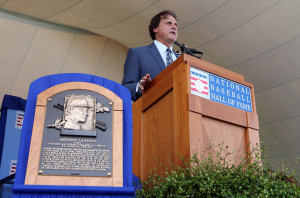
Regardless of his foibles since what proved his first retirement, Tony La Russa still has an outsize reputation as one of the most deft ever to hold the manager’s job. He’s been called a genius. He’s been called one of the smartest baseball men of the last half-century. They point to his Hall of Fame plaque, the 33 years he managed prior to returning to the White Sox this season, eleven division titles, six pennants, and three World Series rings.

Those plus his longtime reputation for volumnious pre- and post-game thinking and analysis (observed perhaps most deeply in a chapter of George F. Will’s Men at Work: The Craft of Baseball) still allow La Russa absolution from his most egregious errors.

He threw his 2021 White Sox star Yermin Mercedes under the proverbial bus, and maybe even invited the Twins to retaliate the following day, after Mercedes swung on 3-0 (violating La Russa’s fealty to the Sacred Unwritten Rules) in the eighth inning of a White Sox blowout, and hit a home run . . . off a middle infielder sent to the mound.

La Russa is still considered one of the smartest of the Smart Guys whatever they think of Mercedes’s homer or La Russa’s definition of “sportsmanship.” (They don’t always stop to ponder what La Russa thought of the Twins’s “sportsmanship” in giving up the ghost with two innings left to close even a fat deficit and sending a position player to the mound with real pitching still available to them.)

Perhaps they haven’t read Keith Law, writing in The Inside Game last year: “Sometimes you do all the right things and are stymied by bad luck. Other times you do everything wrong and are subsequently rewarded for it. That’s outcome bias.” There’s a case to be made that La Russa’s reputation, and maybe even his Hall of Fame case, is a little more than half a product of such outcome bias.

It’s hard to argue against a manager with three decades plus on his resume plus those division titles, pennants, and three Series rings. But maybe it’s easy to forget or dismiss how often La Russa either outsmarted or short-sighted himself when the games meant the absolute most.

“Tony, stop thinking,” Thomas Boswell wrote, after La Russa’s Athletics were swept out of a 1990 Series they could have tied in four and gone on to win, instead of being swept by a band of Reds upstarts who didn’t know the meaning of the words “shrink under pressure.”

If the A’s had picked an usher at random to manage them in this Series, they’d have been better. The usher would have brought in [Hall of Fame reliever Dennis] Eckersley to start the eighth inning of Game Two with a 4-3 lead. The usher would have brought in Eckersley to start the eighth inning of Game Four with a 1-0 lead. And this Series would be two-all.

La Russa could write a book on why did he did what he did. But the bottom line is that every manager in the Hall of Fame would have brought in the Eck. Twice Tony didn’t and twice the A’s lost. This time, the goat’s horns stop at the top.

Outcome bias didn’t help La Russa then, a year after he’d won his first Series. But it sure helped him after a 2011 Series he won despite himself. Because smart baseball men don’t do even half of what La Russa did to make life that much tougher for his Cardinals than it should have been.
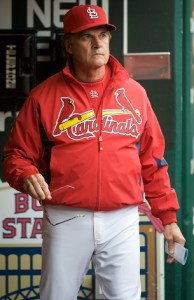
Tony La Russa

La Russa’s 2011 Cardinals won a World Series despite the skipper’s missteps.

Smart baseball men don’t take the bats out of the hands of future Hall of Famers with Game One tied at zero. La Russa took it out of Albert Pujols’s hands by ordering Jon Jay to sacrifice Rafael Furcal, guaranteeing the Rangers wouldn’t let Pujols swing even with a swimming pool noodle, walking him on the house. (The next batter got lured into dialing Area Code 5-4-3.)

Smart baseball men don’t lift better clutch hitters (especially those shaking out as Series MVPs) with late single-run leads for defensive replacements who might have to try a lot harder to do the later clutch hitting with insurance runs to be cashed in—and fail. La Russa did that lifting David Freese (after he scored a single tiebreaking run) for Daniel Descalso (grounded out with two in the eighth) in Game Two.

Smart baseball men don’t balk when their closers surrender two soft hits in the Game Two ninth with a groin-hobbled bopper due up and a double play possibility very distinct. La Russa balked. He lifted Jason Motte for Arthur Rhodes with Josh Hamilton coming up. Rhodes gave the lead away and Lance Lynn gave the game away—on back-to-back sacrifice flies.

Smart baseball men don’t look past three powerfully viable and available bullpen options with their teams down a mere 1-0 and reach for . . . a known mop-up man, with the opposition’s hottest Series bat due up. La Russa learned or re-learned the hard way in Game Four. Mike Napoli thanked him for offering Mitchell Boggs as the sacrificial lamb—Napoli hit the first pitch for a three-run homer. (Final score: Rangers 4, Cardinals 0.)

Smart baseball men don’t snooze for even a moment and forget to flash the red light when their batter (Pujols, in this case) signals their baserunner Allen Craig to try for a steal in the Game Five seventh.  Craig got arrested by half a mile, inviting another free pass to the bopper and—following a base hit setting up second and third when the batter advances on the throw to third—another free pass and an inning-ending fly out.

Smart baseball men also don’t let a little (ok, a lot of) crowd noise interfere with getting the pen men up that he wants to get up in the bottom of the Game Five eighth—after ordering one relief pitcher tough on righthanded hitters to put a righthanded hitter aboard on the house, yet, instead of getting the second out—then try sneaking a lefthanded pen man past a righthanded danger who sneaks what proves a game-winning two-run double.

They don’t try to make the Case of the Tangled Telephone out of it, either, after they end up bringing in the wrong man when nobody claimed to hear them ordering the guy they really wanted to get ready. (La Russa wanted Motte but got Lynn. Oops.)

Neither do smart baseball men drain their benches in the eighth of even a do-or-die Game Six. La Russa did. It compelled his Cardinals to perform their still-mythologised ninth and tenth inning feats of down-to-their-final-strike derring-do without a safety net beneath them. Freese took one and all off the hook with his eleventh-inning, full-count, game-winning, Richter scale-busting leadoff bomb.

The Cardinals won that Series despite their skipper. (And, because they pinned the Rangers in Game Seven, after allowing a 2-0 first-inning lead on back-to-back RBI doubles. They made it impossible for La Russa to overthink/mis-think/mal-think again after they tied in the bottom of the first and scored four more from there.) La Russa was thatclose to blowing a Series his Rangers counterpart sometimes seemed to do everything within reach to hand him.

Fairness: La Russa did plenty right and smart winning those division titles. He did plenty right and smart winning the 2006 Series in five. (It didn’t hurt that he knew what he had turning his resident pest/Series MVP David Eckstein loose.) That was two years after nobody could have stopped the Red Sox steamroller from plowing the Cardinals in four, following their self-yank back from the dead to take the last four ALCS games from the Empire Emeritus.

But the 2011 Series got La Russa compared in the long term to . . . Bob Brenly, the Diamondbacks manager who won the 2001 World Series in spite of his own mistakes, too. Batting his worst on-base percentage man leadoff; ordering bunts ahead of and thus neutralising his best power threat; overworking and misusing his tough but sensitive closer, even throwing him out a second straight night after the lad threw 61 relief pitches the night before. (You’re still surprised Scott Brosius faced a gassed Byung-Hyun Kim and tied Game Five with a home run?)

Lucky for Brenly that he had one Hall of Fame pitcher (Randy Johnson) and another should-have-been Hall of Fame pitcher (Curt Schilling, his own worst enemy) to bail him out. Brenly hasn’t managed again since the Diamondbacks fired him during a 2004 skid to the bottom of the National League West.

When La Russa retired three days after that 2011 Series ended, he didn’t announce it until after the Cardinals’ championship parade and after he called a meeting with his players. “Some grown men cried,” he said of the meeting, adding, “I kind of liked that because they made me cry a few times.”

The smartest men in baseball with even half La Russa’s experience don’t invite comparisons to comparative newcomers who trip, tumble, and pratfall their way to World Series rings. Three Series rings keeps him a Hall of Fame beneficiary of the outcome bias Law described. It’ll probably keep La Russa cushioned with the White Sox for now, despite his early tactical mistakes.

And, despite the perception the Mercedes incident leaves that he’d rather burn his players in the public eye than handle real or alleged issues the mature way. (Name one manager who ever invited the other guys to retaliate for a real or alleged rookie mistake.) All that previous outcome bias won’t save him, if he costs himself his clubhouse and the White Sox turn from early-season surprise to season-closing bust.

Clean, legal, case closed

Manny Machado, Tommy Edman

Machado (left) checks on Edman after the Sunday drop slide that blew enough social media up Monday.

Manny Machado isn’t now and never has been a controversy-free baseball player. He’s one of those players who can trigger an uproar  without doing or saying a thing. Sometimes all he has to do is smile.

But it isn’t every day that a man to whom controversy seems as natural as playing third base kicks up a little storm for doing the right thing. Especially when it’s something fundamental he was taught very early in his career.

On Sunday, the Padres’s third baseman reached base in the fourth inning, when the Cardinals’ own third baseman Nolan Arenado committed a very rare (for him) throwing error. Then, Machado ran toward second on a Jake Cronenworth ground ball to Cardinals second baseman Tommy Edman.

Edman fielded the ball cleanly while still a few steps behind the proper basepath. Then he stepped into Machado’s path with thoughts about starting a double play. He got the force tag on Machado. At that moment, Machado dropped into an almost excuse-me, soft slide that still upended Edman to keep him from throwing the none-too-fast Cronenworth out at first.

You couldn’t blame Edman for looking about as thrilled as a dental patient after he recovered from the upending. But the first thing Machado did immediately after the slide was move to see whether Edman was injured on the play. (He wasn’t.)

Whether Machado went rogue yet again ran over social media and enough of the sports press well into Monday. That was after Cardinals starting pitcher Kwang Hyun Kim told reporters he thought Machado should have been called for interference, which would have made Cronenworth out at first. Kim also seemed surprised Cardinals manager Mike Schildt didn’t argue for a review to get the call.

It wouldn’t have done Schildt any good if he’d tried, and he probably knew it. The written rules give the baserunner the right of way on the proper basepath, and you can watch the play fifty times from fifty angles and see nothing indicating Machado interfered with Edman fielding the ball in the first place.

Machado was well prepared to execute such a play. His long-enough-time Orioles manager Buck Showalter taught him the play. “I’m still trying to figure out what the story is,” Showalter told The Athletic‘s Dennis Lin.

Showalter told Lin the play was routine business in the Yankee system from his years managing in that system and finally the Yankees themselves. If the runner executes the drop-slide, it breaks up double plays no matter how far you get caught before second base and with little damage otherwise. Showalter indicated to Lin that not only were players taught how to do it running the bases but infielders were taught to be prepared for such drop-slides.

“The first thing I did,” Padres manager Jayce Tingler told Lin, “was I gave him a high-five. I thought it was a play, honestly, that won the game.”

The Padres entered the bottom of the fourth in the hole 2-0. Machado’s reach on the Arenado error led the inning off. After the force out during which Machado kept Edman from turning the double play, Kim walked Tommy Pham and surrendered a bases-loading line single up the middle to Austin Nola—before walking two runs home back-to-back enabling the Padres to tie the game.

Genesis Cabrera relieved Kim and surrendered a sacrifice fly (Patrick Kivlehan) and an RBI single (Ivan Castillo) back to back before catching Trent Grisham looking at strike three for the side. The Cardinals got a run back when Paul Goldschmidt scored as Yadier Molina dialed Area Code 4-6-3 in the top of the sixth, but Grisham made the game 5-3 with a two-out RBI double in the bottom of the inning. The Padres bullpen made sure the game finished with that score.

Tingler may well have been right. Machado’s slide as Edman crossed right into his proper basepath just might have won the game for the Padres, or at least set up their best chance to win.

Kim had more or less cruised through the first three innings, shaking off only a two-out base hit in the third while otherwise striking out the side. If he was staggered by the Machado slide enough that he couldn’t believe his manager didn’t demand a review and an interference call, on a play for which no interference and no foul play was involved at all, maybe the Padres pounced from there on a pitcher who just might have taken himself out of of his own concentration zone.

Showalter asked aloud whether Machado gave the Padres the best chance to win, and whether it was a clean play? Then, he answered his own question. “Of course it did,” he told Lin. “Outs are precious, and the game, as much as home runs seem to be there, it’s still about ninety-foot increments—who can keep the other team from getting ninety feet and who can gain ninety feet by something offensively. It should be embraced. It’s a great, thinking man’s baseball play.”

According to Lin, Machado’s former Oriole teammate Adam Jones called the play a legal and intelligent play. Also according to Lin, Jones’s comment got a resounding agreement from an old shortstop-turned-coach-and-manager—a fellow named Larry Bowa, who wasn’t exactly renowned for subtlety or gentility as a player or a leader.

The old Bowa might even have thought Machado’s comparatively dainty slide showed Edman a little too much mercy. Compared to Bowa in his time, the typical hard-nosed player often resembled a marshmallow stick figure.

Machado has faced accusations of dirty play in the past. Even if Tingler himself says it’s become a tired narrative. But Sunday’s play reminded too many fans of the play they think destroyed Red Sox second baseman Dustin Pedroia’s career back in 2017, the takeout slide at second that injured Pedroia at the back of his left knee. What they don’t remember is that that by itself didn’t put paid to Pedroia’s career.

The tenacious second baseman actually—and perhaps foolishly—managed to gut 105 games out in all 2017 and finished with a .369 on-base percentage plus six defensive runs saved above his league average at second base. But he could play only three games in 2018 and six in 2019, before sitting 2020’s pan-damn-ically mandate irregular season out and retiring three months ago.

“It’s funny,” Pedroia told NBC Sports Boston’s John Tomase after his retirement conference. “I remember when I got the first MRI after the play, a doctor said, ‘Hey, man, you could not only ruin the rest of your career but the rest of your life with this injury. You tore all the cartilage off on your medial compartment on your femur and your tibia. Your cleat just got stuck, and it’s a bad deal.’

“And I said, ‘Well, can I play’,” Pedroia continued. “And he said, ‘Yeah, you could try to. It’s going to go. When it goes, you’ll know.’ So I just remember everyone there saying, ‘Hey, we need you.’ So it was a no-brainer. If I had to do it all over again, it wouldn’t even be a question. Of course I would.”

In other words, Pedroia knew the risk of trying to continue playing despite the severity of the injury. We’ll never know for dead last certain whether some sort of knee surgery at the time instead of trying to continue despite that injury might have saved and enabled continuing his career.

About the play itself? In the immediate moment after the actual play, Pedroia himself told anyone who’d listen that he never once believed Machado intended that slide to be either dirty or injurious. Indeed—just as he’d do with Edman on Sunday—the first thing Machado did after coming to his feet was try to aid Pedroia. Machado also sent Pedroia a post-game text apology to Pedroia, who replied that he knew Machado wasn’t trying to injure him.

Without now mentioning Machado by name, Pedroia told Tomase, “Unfortunately, I just got caught in the wrong position and that was it. But I think I’m at peace with everything knowing that I did my best and the training staff and the doctors did everything we possibly could’ve to try to continue to play baseball.”

That effort earned Pedroia serious points in the guts-and-glory department. It also forced him in the end into the partial knee replacement last December that guaranteed he can never run again.

Machado was no more responsible for ending Pedroia’s career than Yankee infielder Gil McDougald was for ending onrushing Indians pitcher Herb Score’s in 1957. Score recovered from McDougald’s liner into his face, returned in due course, looked like his old self opening 1958, then blew his elbow out on a cold, wet night. He sat ten days, then tried foolishly to pitch through it, and by his own admission changed his motion to overcompensate for it “and ended up with some bad habits.”

Score hung on with the Indians until they traded him to the White Sox following the infamous Colavito-for-Kuenn deal in 1960. He didn’t regroup any better with the White Sox or in their minor league system, finally retiring to the Indians broadcast booth in 1964. It didn’t stop Cleveland from believing McDougald drilled a hole into Score’s career any more than the actualities stop Boston and elsewhere from believing Machado plowed a hole into Pedroia’s career.

But that was then, this was Sunday, and Lin would remind you that Nationals shortstop Trea Turner executed an almost exact match slide against the Mets, earlier this season,  though Mets shortstop Francisco Lindor actually stopped short of Turner and didn’t tumble over Turner onto the ground.

Nobody went boo or ballistic over that play, by the way.

“If [Machado] would’ve stopped and they threw to first and threw back to second and tagged him, nobody would’ve said a word,” Showalter told Lin. “If he had let him tag him softly up top, like most people do, nobody would’ve said a word. But because he tried to figure out a way to keep that from happening, I mean, it should be extolled.”

For all we know, too, there may be those willing to rag and bag Machado because the actual slide made him resemble a large sack of dog food falling nonchalantly and accidentally off a low warehouse shelf.

If Machado just stopped short like a good little boy and let that nice Edman consummate the double play he was “entitled” to consummate (some of the social media flappers can make you think that’s what they’re thinking), his critics would probably rag and bag him for not trying to bust up that double play by any means necessary. Hell if you do, hell if you don’t.

La Maquina, al finale?

Albert Pujols

That was last fall: Pujols tying Willie Mays on the all-time home run list. This is Mays’s 90th birthday, today: the Angels announced they designated the sadly-declined Pujols for assignment.

Late in February, Albert Pujols’s wife posted a social media message suggesting that, when his mammoth contract with the Angels expired after this season, so would her husband’s playing career. That option may not belong to him anymore.

The Angels jolted baseball when they announced Thursday that they designated the Hall of Famer in waiting for assignment. Once upon a time, timing was Pujols’s ally at the plate and beyond. Announcing the designation on Willie Mays’s 90th birthday, of all days, just made it sting that much more.

It had to. No less than Mays himself sent Pujols a text message last year saying, “It’s your time now. Go get it.” Meaning, go meet and pass Mays’s 660th lifetime home run. Pujols met 660 last September and passed it with 661 five days later. The Machine had six more bombs in him before the Angels finally gave up his ghost.

Let’s get this out of the way right now: Pujols didn’t ask to have maybe the most heartsickening, prolonged decline in the game’s history.

It wasn’t his idea to have a down season his first time out as an Angel. (Codicil: a down season for Pujols in 2012 was still a career year for more players than you can fit aboard two Dreamliners.) He didn’t ask for plantar faascitis in his heel the following year to begin a punishing series of lower half injuries that drained everything he had left.

ESPN writer Alden Gonzalez, who’s covered Pujols for most of his Angels life, saw up close and personal what Pujols put himself through in what we now know was a futile attempt to find the St. Louis smash buried somewhere inside what was left of him now.

“I’ll remember,” Alden says, “that even though his lower half was shot and he wasn’t quick enough to get around on the devastating stuff pitchers throw these days, he still showed up early, still spent hours in the training room to get ready for games, still took batting practice with intent, still crouched really low on defense and still looked for any opportunity to take an extra base. He might not have been productive, but it wasn’t for lack of effort.”

The stubborn, proud spirit was too willing, but the body was likewise too ready to tell him where to shove it at long enough last. No recent play was more emblematic than the ground ball he hit to the hole at shortstop but didn’t run out—because he couldn’t. He’d have been better off taking a skateboard out of the box up the line; he was thrown out on a lob across the infield before he was even halfway up the line.

The only tool Pujols’s body left alone was his still-devastating long ball power. Gonzalez’s ESPN colleague David Schoenfield is right to observe that’s not enough to stay aboard a major league roster. Not even though Pujols remained mostly as difficult to strike out as he always was. (His average per 162 games: 74; or, a single punchout every other game.)

But he’s all but quit taking walks; he rarely hits for extra bases beyond home runs; and, no matter how ironed up his will is, he hasn’t been the first base defender he once was for what seems eons. His Cardinals era was off the charts enough to keep his lifetime statistics showing him a plus first baseman by 95 runs saved above his league average. Fortunately.

Aside from what it did to him as a man, Pujols’s injury-instigated and perpetuated decline robs him of sitting atop the rest of the Hall of Fame’s post-World War II/post-integration/night-ball era first basemen according to my Real Batting Average. (Total bases + walks + intentional walks + sacrifice flies + hit by pitches, divided by total plate appearances.)

First Base PA TB BB IBB SF HBP RBA
Jim Thome 10313 4667 1747 173 74 69 .653
Jeff Bagwell 9431 4213 1401 155 102 128 .636
Albert Pujols 12486 5955 1334 313 115 111 .627
Willie McCovey 9692 4219 1345 260 70 69 .615
Harmon Killebrew 9833 4143 1559 160 77 48 .609
Orlando Cepeda 8698 3959 588 154 74 102 .561
Eddie Murray 12817 5397 1333 222 128 18 .554
Tony Perez 10861 4532 925 150 106 43 .526
HOF AVG .597

Had his career ended when his years with the Cardinals did, Pujols would have retired with a .708 RBA. Had he not been betrayed by his heels, feet, and most of the rest of his lower body as an Angel, he might still have finished with a higher RBA than Jim Thome did. And none of those Hall of Fame first basemen are as far above their league average for runs saved at the position as Pujols. (Eddie Murray’s +61 are 34 below Pujols.)

Pujols’s berth in Cooperstown is solely a question of when he retires as a player officially. No matter how sad his injury-instigated, protracted decline, he secured that in St. Louis to devastating effect. If the Angels don’t work a trade out now, and there’s no assurance they’d find a trading partner willing to part with viable talent in exchange for a ghost, there’s no guarantee another team would sign him for a pro-rated minimum salary as a free agent, either.

His longtime Cardinals manager Tony La Russa came out of his Hall of Fame retirement to take on the White Sox—but La Russa has already shown trouble handling today’s experimental rules as it is. No matter how much he still respects and loves Pujols, La Russa isn’t going to convince his bosses to take the ghost over young and establishing designated hitter Yermin Mercedes.

The DHs in Tiger uniforms are hitting this year at levels low enough to make Pujols continue resembling his Hall of Famer-to-be old self—but the Tigers have an aging incumbent themselves, named Miguel Cabrera. Hands up to anyone and everyone who thinks that even the current Tiger regime would hold with manager A.J. Hinch sending Cabrera to the pine in favour of Pujols now.

Purely in baseball terms, designating Pujols for assignment makes too much sense. Especially with Jared Walsh standing in for injured right fielder Dexter Fowler but far better suited to play first base. Especially with Shohei Ohtani more than capable of holding a DH slot on the days he doesn’t pitch. Pujols’s designation means the Angels don’t have to let Ohtani bat on his pitching days; they can save him for the final role Pujols can’t handle anymore.

But in human terms, this is a heartbreak. Especially for a man so community and charity oriented that you could believe the Angels well enough, even committing boilerplate, when owner Arte Moreno’s formal statement praised Pujols in character terms, as a man whose “historical accomplishments, both on and off the field, serve as an inspiration to athletes everywhere, and his actions define what it means to be a true superstar.”

If only the announcement didn’t have to happen on the 90th birthday of Mays, a man Pujols respects and maybe even loves almost as much as he loved and respected St. Louis icon Stan Musial. This may have been the worst case of bad timing in baseball since . . .

Maybe since Brad Lidge’s bad timing hanging Pujols a breaking ball to demolish for a National League Championship Series Game Five-tying three-run homer in 2005. Or, the bad timing of Rangers relievers Alexi Ogando, Mike Gonzalez, and Darren Oliver gifting Pujols three meatballs to destroy beginning in the top of the sixth in Game Three, 2011 World Series.

When Hall of Fame pitcher Tom Seaver was traded to the Reds from the Mets, following contract extension talks that went from difficult to scurrilous thanks to Mets management and certain sports columnists smearing him, A. Bartlett Giamatti—then president of Yale University, as opposed to his eventual higher calling as a baseball commissioner—wrote in Harper’s, “[A]mong all the men who play baseball there is, very occasionally, a man of such qualities of heart and mind and body that he transcends even the great and glorious game, and that such a man is to be cherished, not sold.”

If Giamatti had lived to see Pujols, he might have thought likewise, ending with “such a man is to be cherished, period.” Pujols wasn’t sold, but half his body sold him out. Whether you called him El Hombre (the nickname he hated, insisting there was only one Man and his name was Musial) or The Machine (La Maquina in his language), he didn’t deserve having his gears stripped into a long, painful, sad decline.

From Genesis to Revelation

Bryce Harper

Bryce Harper, a split second before his nose met Genesis Cabrera’s fastball leading off the sixth Wednesday night.

Eons ago, it seems now, Yogi Berra had a handy response to those who thought he looked like one of the title supporting players in Edgar Rice Burroughs’s Tarzan of the Apes. “It don’t matter if you’re ugly in this racket,” the Hall of Famer said, “All you have to do is hit the ball. And I never saw anybody hit one with his face.”

Berra got a few laughs while he drove home one point. But the flip side is that you can see one hitter too many take one with his face, which is every hitter who ever had to do it.

Thank God and His servant Stengel that it’s still the exception. It still doesn’t erase the fear of longtime watchers and fans that the latest such victim will be the game’s next Tony Conigliaro. Such fears even among his critics struck when Bryce Harper’s face was in the top of the sixth Wednesday night.

Hit one with his face? Harper led off the inning seeing one pitch from Cardinals reliever Genesis Cabrera. The pitch sailed up and into Harper’s nose on the left side while knocking his batting helmet clean off his head and the Phillies’ right fielder crumpling to the ground in the batter’s box.

The man who nearly went from Genesis to Revelation merely picked himself up, dusted himself off, and walked away from the plate under his own power. Rather gutsy for a man who was lucky he wasn’t decapitated by a fastball that veered so far off course it would have inspired “Mayday! Mayday!” calls from the crew if it was an airplane.

What we ought to be hearing now is louder demands that the ridiculous three-batter minimum for relief pitchers unless they ended an inning facing fewer needs to go the way of the Oldsmobile. Faster than the Oldsmobile went away, too.

Phillies manager Joe Girardi anguished for his man but maintained in the moment, sending Matt Joyce out to pinch run. Then Phillies shortstop Didi Gregorius checked in at the plate. He saw one pitch from Cabrera, too. This time, the errant fastball didn’t sail up toward his sight lines but, rather, did a magnificent job of trying to bore a hole in his ribs.

The umpiring crew issued warnings to both sides. Nothing more. Since a manager can’t remove an out-of-control relief pitcher until he’s seen three batters minimum under the current and extremely dubious rule, it should be on their heads as to why Cabrera was allowed to remain in the game despite two pitches dropping two batters dangerously enough.

That was enough to send Girardi sailing out of his dugout in raw fury. As might you if you’d seen the first two of your men scheduled to bat in the inning coned and drilled back-to-back, on two pitches, courtesy of a pitcher who’d just entered the game but shown as much control as a runaway truck.

Raw fury and naked fear. Girardi knows only too well the terror of fastballs reaching your face. He took one in his own pan from then-Padres pitcher Woody Williams in 2000. As happened to Harper Wednesday night, that Williams pitch drew blood from Girardi’s own schnozzola. “It’s extremely scary,” he said of Harper’s drop, “and I can tell you from experience.”

Under normal circumstances, Girardi is one of the more mild-mannered men in baseball, even given his well-known competitiveness. But he was enraged almost as much by the umps not even thinking of sending Cabrera to the rest of the night off as he was by his first two sixth-inning swingers getting hit by those out-of-control fastballs.

“I understand why they give the warnings, right?” he told reporters. “I understand they don’t want things to escalate. They don’t want people to get hit. But if a guy hits a guy in the face and a guy in the ribs with two pitches, he’s got to go, right? If you’re really protecting the players, obviously, he doesn’t have command. He’s got to go.”

So Girardi fumed to the umpires and, rather theatrically, turned to Cabrera and made the gesture umpires usually use when they’re giving someone the ho-heave. If you can think of any precedent for a manager throwing an opposing player out of the game, Girardi might like to know it. The gesture proved only that, lawfully.

But it also proved Girardi’s own departure, when plate umpire Chris Segal promptly did to him what he believed appropriately should have been done to Cabrera. As he walked off the field following the thumb, Girardi barked at Cabrera, “Throw the [fornicating] ball over the plate!” Not an unreasonable demand.

He also exchanged a bark or three from a distance with Cardinals manager Mike Schildt, who spoke after the game like a man who didn’t exactly have in mind trying to beat the other guys by assassination instead of playing baseball.

Schildt also admitted something that flies in the face of the pan-damn-ic inspired three-batter relief minimum rule. If not for that rule, Schildt told reporters, he would have gotten Cabrera out of the game the moment Harper hit the deck.

“That’s a failure of the three-batter minimum,” he told the press. “It absolutely is that. Completely, absolutely, no doubt. But that’s an outlier of it.” He’s right about the hit batsmen issue with one pitcher whose control went AWOL for the evening. But as The Athletic’s Matt Gelb observes rightly enough, “The rule was designed to quicken games (it has not) and has generated unintended consequences (too many to count).”

Schildt won’t hear Girardi complain. This very circumstance—a pitcher brought in with his control missing stuck for three batters even if he hits one, never mind two—has been one of Girardi’s primary exhibits when fuming, as he’s done from the moment it poked its nose out of its hole, against the three-batter minimum.

After Grigorius took his base to set up first and second, Andrew McCutchen singled Joyce home to break the three-all tie and chase Cabrera out of the game. One inning later, Grigorius himself sent Alec Bohm home on a bases-loaded sacrifice fly with what proved to be the final score, 5-3 Phillies.

Then things got a little testy in the bottom of the eighth, after Phillies reliever Sam Coonrod shook off Nolan Arenado’s leadoff single to strike Paul DeJong out and lure Tyler O’Neill—who’d hit a two-run homer in the bottom of the second—into a broken-bat grounder to short that Grigorius might have caught but took on the hop for a step-and-throw, inning-ending double play.

Viewers at home then saw a commercial followed by Coonrod walking off the field, but not without pointing and hollering at the Cardinals dugout. Small wonder. During the commercial break, Coonrod looked as though he wanted nothing more than to bake five and twenty Redbirds in a pie.

Phillies third baseman Brad Miller—whose own two-run bomb tied the game at three in the first place an inning before Harper and Grigorius got coned and drilled—tried to stop Coonrod before inadvertently letting go of the reliever’s hand. But Coonrod, himself a St. Louis product, put all thoughts of one-man demolition out of his mind and settled for a few hollerings, though he knew in his heart of gut Cabrera wasn’t exactly trying to vapourise his two teammates.

“As a teammate, you appreciate the intensity,” Miller told reporters after the game. “The dude came in and got some big outs for us. It’s a close game. And, yeah, he was a little fired up, obviously. Three getting hit like that was pretty scary.” “Three,” of course, refers to Harper’s uniform number.

Cabrera himself was genuinely contrite after the game—wasn’t he? “I want to apologise for all of the action that happened, especially to Harper,” he said through his translator. “I really wish him the best. I hope he has a speedy recovery, in whatever it is that happened, and that he’ll be able to return to baseball activities. The game got away from me at that point. I’m really sorry for everything that happened today. None of it was intentional. And again, I’m sorry for everything.”

Is it just me, or did a lot of Cabrera’s remark sound like prepared boilerplate?

Struggling teams are known to feel more than a little fired back up after confronting near-disaster. Until Wednesday night, the Phillies were a back-and-forth .500 team with inconsistency at the plate and arson out of the bullpen. What they showed after Harper and Grigorius got drilled reminds you that it’s a somewhat sad thing if and when a team rehorses and irons up after coming face to face with near manslaughter.

The first five days

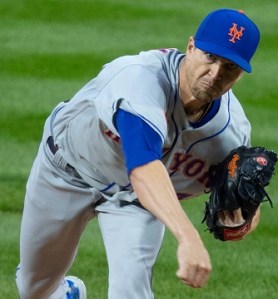
Stop me if you’ve heard it before: Jacob deGrom pitched like a Hall of Famer, but the new Mets bullpen puked the bed like the old one did.

The fans are back in the stands, however limited by ongoing COVID-19 safety protocols, but the Nationals have yet to play a regular-season game thanks to a few players and a staffer or two testing positive. There went that Opening Day must-see match between Max Scherzer and the Mets’ Jacob deGrom.

With their opening set with the Nats thus wiped out, deGrom had to wait until the Mets went to Philadelphia Monday. Oops. That and everything else seemed to play a support role to the horrid news out of San Diego.

The news that Fernando Tatis, Jr., the Padres’s new bazillion dollar shortstop, suffered a partial left shoulder dislocation on a hard third inning swing at the plate during a Monday loss to the Giants.

Padres manager Jayce Tingler told reporters he thinks team trainers and medical people were able to pop the shoulder back together, but the team isn’t taking chances. At this writing, MRI results aren’t available and nobody knows yet whether Tatis will spend significant time on the injured list.

If it’s more than a small shoulder dislocation, it may not be significant time. If it’s something like a labral tear, Tatis could miss six months—essentially, the rest of the season—according to one doctor who knows such shoulder troubles and spoke to the Los Angeles Times. Don’t fault the Padres if they’re saying to themselves, “Thank God for insurance.”

DeGrom could use a little extra insurance himself, alas. The good news for the Mets: deGrom was his usual self Monday night. Six shutout innings, seven punchouts, three hits, three-figure speed on his fastballs. The bad news, alas: the Mets are gonna Met, so far. At least out of the bullpen.

Their on-paper impressive offense found nothing more than two runs to support their ace. They got an inning of shutout relief from Miguel Castro relieving deGrom for the seventh, but the bullpen puked the bed in the eighth—including hitting Bryce Harper with the bases loaded. Not exactly a Rhodes Scholarship move there.

The Old Fart Contingency thundered aboard social media that Mets manager Luis Rojas blew it lifting deGrom after six strong—until they were reminded the added layoff after the Washington postponement put both deGrom and the Mets into caution mode.

“If that was [last] Thursday and I’m on normal rest,” the smooth righthander said postgame of the early hook, “I don’t think there is any chance I’m coming out of that game. We discussed it before what was the right thing to do. Long season and talking to them coming in, it felt like was the right decision.”

It was neither deGrom’s nor Rojas’s fault that, after Garcia took care of the Phillies in the seventh with just one infield hit within a fly out and two ground outs, the Phillies loaded the bases on the Mets’ new relief toy, Tyler May, in the eighth with one out, before Rojas went to another new Met bull, Aaron Loup. And Loup promptly hit Harper to push Miller home, before J.T. Realmuto singled home pinch runner Quinn, Mets late third base replacement Luis Guillorme threw home off line allowing Harper and Rhys Hoskins to score, and Didi Gregorius pushed Realmuto home with a first-pitch sacrifice fly.

The Mets had nothing to answer except a two-out ninth-inning stand that came up two dollars short against Phillies closer Alvarado. Kevin Pillar singled up the pipe, Francisco Lindor—the Mets’ own new bazillion-dollar lifetime shortstop—dumped a quail into shallow right that landed just in front of and then off the glove on oncoming, diving Harper, and Michael Conforto singled Pillar home while setting up first and third.

Pete Alonso, their 2019 Rookie of the Year bomber, hit one to the back of right field that looked as though it had a chance to ricochet off the top of the fence if not clear it. It wasn’t quite enough to stop Harper from running it down, taking a flying leap with his back against the fence, and snapping it into his glove to stop a game-tying extra-base hit and end the game with the Phillies on the plus side, 5-3.

Marry the foregoing to deGrom going 2-for-3 at the plate including an RBI single, and no wonder May himself said post-game, “Jake shouldn’t have to do everything himself. That’s not what teams are, and frankly Jake did almost everything today.”

Just don’t marry that to things such as the Angels’ Shohei Ohtani hitting 100+ mph on the mound and hitting a mammoth home run that flew out 100+ mph in the same inning last Friday night. Ohtani the two way player is an outlier among outliers; deGrom’s merely an outlier.

As of Tuesday morning— with the National League’s pitchers having to bat because Commissioner Nero simply couldn’t bring himself to keep the universal designated hitter this year at least, and Ohtani batting second in the Angel lineup the night he started on the mound, among other things—the pitchers have a .131/.157/.192 slash line and a .349 OPS.

The pitchers at the plate from Opening Day through the end of Monday night collected thirteen hits in 149 plate appearances: nine singles, three doubles, and Ohtani’s Friday night flog a third of the way up Angel Stadium’s high right field bleachers. They also walked three times and struck out 56 times. And the OFC still insists the National League just say no to its own invention.

All around the Show, too, there was one home run hit every 35 plate appearances and fourteen percent of all 928 hits the season’s first five days cleared the fences. It took five outs to create a single run, with 5.3 average runs created per game and 631 runs created while 559 scored.

It was fun to hear the fan noises even in limited capacities, too, though the limits in Angel Stadium made Ohtani’s blast sound even more explosive at the split second he hit it. If only things had been more fun for the home crowds: the many themes for the Show’s first five days could include, plausibly, the blues classic “On the Road Again.”

The home teams’ slash lines: .225/.313/.374/.687 OPS. The road teams: .245/.328/.403/.731 OPS. The road teams drove in fifteen more runs, hit thirteen more home runs, seven more doubles, and had seventy more hits overall. They also took eleven more walks, though they struck out fifty more times and grounded into fifteen more double plays. The road rats also had a +29 batting average on balls in play over the home boys and 108 more total bases while they were at it.

Maybe the shocker among the opening road rats were the Orioles. The Woe-rioles. Taking three straight from the Red Sox in Fenway Park. Out-scoring the Olde Towne Team 18-5, including and especially an 11-3 battering on Sunday afternoon. Even those paranoid about ID cards might want to insist the Orioles show theirs, even after the Orioles got a brief return to earth from the Yankees beating them 7-0 Monday in New York.

Unless it was the Reds, taking two out of three from the Cardinals to open, including and especially a 12-1 battering Sunday afternoon that proved the best revenge against abject stupidity is to slap, slash, scamper, and smash your way to a six-run seventh when you’re already up three runs—thanks to Nick Castellanos ripping Cardinal starter Carlos Martinez for a two-out, three-run homer an inning earlier.

Castellanos got drilled by Cardinals reliever Jack Woodford Saturday . . . two days after he bat-flipped a home run. Then, when he dove home to score on a wild pitch, Castellanos got bumped by Woodford sliding in to bring down the tag Castellanos beat. Castellanos sprung up, barked at Woodford, and began walking away before trouble could arrive. Oops. Trouble arrived—when Yadier Molina shoved him from behind to spark a bench-clearing brawl.

Baseball government myopically suspended Castellanos two games for “provoking” the brawl. Who’s baseball’s official optician? Who couldn’t see what everyone else with eyes saw? And how long has Molina—handed only an “undisclosed fine” along with a few others in the scrum—been so privileged a character that he can get away with the actual kickoff of a brawl that was seeded in the first place because the Cardinals are one of the game’s self-appointed Fun Police precincts?

“I was pleased,” Cardinal manager Mike Schildt told the press after that game. “Our guys came out there. We’re not going to take it. I know Yadi went immediately right at him, got sidetracked by [Cincinnati’s Mike Moustakas]. Woody, to his credit, got up and was like, ‘I’m not going to sit here and be taunted.’ Good for him.”

Taunted? All Castellanos said when he sprang up, by his own admission, was “Let’s [fornicating] go!” Anyone who thinks Woodford lacked intent didn’t see that ball sailing on a sure line up into Castellanos’s shoulder and rib region. Nor did they see Molina very clearly shoving Castellanos without Castellanos having the benefit of a rear-view mirror.

Castellanos appealed the two-game suspension. The final result wasn’t known at this writing. But the Cardinals should be getting a message of their own: Defund the Fun Police. Pronto.

How about the Astros, who went into Oakland and swept four from the Athletics before ambling on to Anaheim and losing 7-6 to the Angels Monday night? That was despite dropping a three-run first on Angel starter Jose Quintana and yanking a fourth run out of him in the top of the fourth, before the Angels finally opened their side of the scoreboard with Mike Trout (of course) hitting Luis Garcia’s 2-2 meatball about twelve or thirteen rows into the left field seats.

The Angels pushed a little further back, the Astros pushed a little further ahead, until the Angels ironed up and tore four runs out of the Astros in the bottom of the eighth with an RBI single (Dexter Fowler), a run-scoring force play (David Fletcher), a throwing error (on Jared Walsh’s grounder to first), an intentional walk (to Trout, of all people), and a sacrifice fly (Anthony Rendon).

Kyle Tucker’s ninth-inning solo bomb turned out more a kind of excuse-us shot than a last stand. The game left both the Astros and the Angels at 4-1 to open the season and what could be very interesting proceedings in the American League West. Now, if only the Astros could finally get past Astrogate.

They’ve been playing and winning through numerous catcalls, howls, and even a few inflatable and actual trash can sightings in Oakland and Anaheim. Jose Altuve—who’s looked more like his old self at the plate so far—seemed mildly amused when an inflatable trash can fell to the warning from those high Angel Stadium right field bleachers.

Astrogate was and remains anything but amusing. The Astros could keep up their torrid opening and overwhelm the AL West this season, but the scandal won’t go away entirely (nor should it) until the absolute last Astrogater standing no longer wears their fatigues. Yes, you’ve heard that before. That doesn’t make it any less painful for Astro fans or less true for everyone else. The Astros, nobody else, wrote the script that made them pariahs. Bang the cans slowly, fans.

Will off-field-based illegal electronic sign stealing disappear at all? Players got same-game video access back this year. There are three security people in every team’s video room at home and on the road. League cameras have been installed in those video rooms. Maybe it wouldn’t hurt to add guard dogs?

The players union agreed last year: there’ll be no more players getting away with murder even in return for spilling the deets—the commissioner can drop a lot more than a marshmallow hammer on the cheaters from now on. All by himself. He can demand answers without plea bargaining. And he doesn’t need a permission slip.

“But one of the prevailing lessons from the electronic sign-stealing era is that even if a scheme sounds far-fetched, someone might give it a whirl if they believe they can get away with it,” writes The Athletic‘s Evan Drellich, one of the two reporters (Ken Rosenthal was his partner) who helped break and burrow deep into Astrogate. “This holds true no matter what MLB does. Even a total ban on electronics, which the players would never agree to, would not be enough. In that case, a player or staffer could simply go rogue.”

In other words, boys will be still be boys, if they can-can.