He said it ain’t Shoh

Will Ireton, Shohei Ohtani

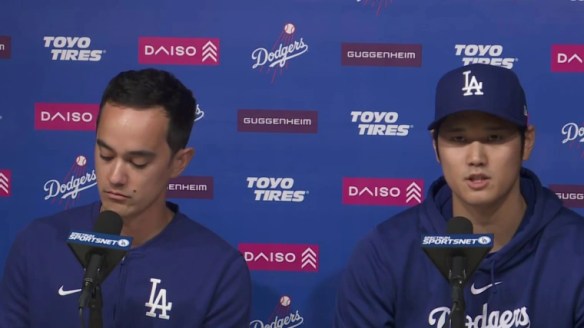
“I do want to make it clear that I never bet on sports or have willfully sent money to the bookmaker . . . The season is going to start so I’m going to obviously let my lawyers handle matters from here on out, and I am completely assisting in all investigations that are taking place right now.”—Shohei Ohtani (right), accompanied by new interpreter Will Ireton, Monday afternoon.

Carp all you like about his disinclination to take questions afterward. But don’t ever make the mistake again of mentioning Shohei Ohtani in the same breath, maybe the same pages, as Pete Rose.

However long it took since the uproar first roared, accompanied by his new interpreter, Will Ireton, Ohtani delivered a statement saying no, he didn’t bet on baseball, never has, and by the way isn’t all that much for sports gambling, anyway. That was the easier part for him.

The harder part for him was Ohtani saying he believed his now-former interpeter, Ippei Mizuhara, flat stole from him. For a fleeting few moments, Ohtani looked like the poor soul who came home from work early and discovered his children incinerated his house.

Maybe you don’t remember without the help of assorted books about it or about the man, but Rose wasn’t that candid when he was first put under baseball’s microscope for gambling. Knowing full well that he was guilty of everything the game’s formal investigation was going to expose . . .

He lied through his teeth. He attacked and smeared those who sought the truth, the whole truth, and nothing but. He threw associates under the proverbial bus who’d aided and abetted his longtime bookie gambling up to and including the April-May 1986 period when he began betting on baseball itself and the Reds for whom he still played as well as managed.

That was before the 1989 ruling from commissioner A. Bartlett Giamatti that sent him into baseball’s Phantom Zone on the grounds he’d violated Rule 21(d) up and down.

Ohtani on Monday didn’t try to throw anyone under the proverbial bus. Mizuhara already threw himself there, between his clumsy initial responses when the uproar erupted and the discovery that he’d been anything but entirely honest in the past regarding some of his academic and professional credentials.

But Ohtani didn’t say this was all a figment of somebody’s perverse imagination. He didn’t deflect. He added almost as flatly that he was cooperating with any and all investigations into Mizhuara’s activities, including Mizuhara’s betting on sports through an Orange County, California bookmaker, in violation of California law which doesn’t allow sports betting of any kind in the state.

We still don’t know just how Mizuhara was able to pay off that SoCal bookie. We still don’t know for certain just how he might have lifted over four million of Ohtani’s dollars to do it. Ohtani himself hasn’t suggested how, which may or may not be an indication that he’d sooner run head first into a lava pit than throw Mizuhara all the way under that proverbial bus.

But Ohtani wouldn’t be the first sports or entertainment figure to be fleeced by someone close to him, either. You want to ask how Mizuhara ripped him off? It might prove to be simpler than you suspect.

A few music legends could tell you. Billy Joel sued his former manager (and former brother-in-law) Frank Weber for $90 million in damages in 1989, accusing Weber of diverting millions of Joel’s dollars into his own other interests. Weber filed for bankruptcy and the pair had to settle out of court. The Piano Man reportedly retrieved only $8 million.

Sting was relieved of about $7.4 million (six million British pounds, if you’re scoring) by his longtime advisor Keith Moore—who’s said to have used fake investments abroad to send that money into his own purse.

Alanis Morissette was cleaned out of $4.8 million by her business manager, one Jonathan Schwartz, whom she accused of moving her money straight into his own account. Schwartz landed six years behind bars for such movements.

A few ballplayers could, too. Baseball and other sports were littered long enough before the Ohtani-Mizuhara mess with stories of players robbed almost blind by advisors, by lawyers, even by relatives.

Both the FBI and the IRS are on the trails of Mizhuara and the bookie in question, Mathew Bowyer. “I do want to make it clear,” Ohtani said near the end of his statement, “that I never bet on sports or have willfully sent money to the bookmaker.” If those investigations prove to support Ohtani’s contentions, Mizhuara will be buried alive in federal charges and likely to spend more years that he might like to count behind federal bars.

This entire noise should also prod MLB teams to vet their interpreters even more closely. It’s not impossible that those engaged by other teams for other foreign-born players might also be taking advantage of their proximities to their charges. Or would you like to discover this Yankee or that Astro or that other Cub or that Ranger, Brave, Met, Oriole, or Phillie yonder being ripped off Ohtani-like by their interpreters?

From the moment the hoopla began over the Ohtani-Mizhuara mess, there’s been quite the rush to presume the Dodgers’ $700 million man guilty. The early communication clumsiness of it all didn’t help, but now that Ohtani’s legal beagles have things under reasonable control it should be simpler to say and stand upon: Find and show the evidence if it exists that Ohtani’s anything other than a slightly surrealistic victim.

Until or unless real evidence shows, one and all otherwise should cork it. And, stop raising Pete Rose’s name as if this mess means Rose (against whom there was a convoy worth of evidence) finally gets his get-out-of-baseball-jail-free card.
Ohtani-Mizuhara vs. Rose

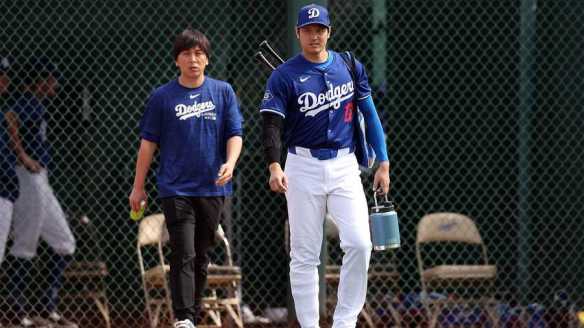
Ippei Mizhuara, Shohei Ohtani

Did Mizuhara steal from Ohtani to cover his gambling debts through an illegal bookie? Did Ohtani naïvely agree to pay Mizhuara’s debts without knowing the legal and MLB trouble he’d see?

Barely a week after I received an advance copy of Keith O’Brien’s Charlie Hustle: The Rise and Fall of Pete Rose, and the Last Glory Days of Baseball, there comes a scandal that provokes yet another round of social media demands that Rose be let off the hook for that which does not yet apply incontrovertibly to baseball’s biggest contemporary star.

Barely did the Dodgers come away from their unusual regular-season opening in Korea with a 5-2 win over the Padres when news exploded that the Dodgers handed a pink slip to Shohei Othani’s longtime friend and interpreter, Ippei Mizuhara, over accusations involving sports gambling.

The least confusing portion is that Mizuhara used Ohtani’s money to cover gambling debts incurred in California, where sports betting remains illegal. But one moment, Mizuhara claimed Ohtani wired the money to cover before. In another moment, Ohtani’s attorneys claimed Mizhuara somehow stole the money from Ohtani’s account.

What seems to be the unspoken-but-agreed-upon point is that, until now, nobody had Othani on any gambling radar. Right there it should drive the Rose case comparisons away. As O’Brien’s book reminds us, Rose had a gambling habit rooted in childhood excursions to race tracks watching his father bet the horses and matured into gambling with street bookmakers. Gambling that was on his team’s and then his entire sport’s radar long before he graduated to the kind of betting that prompted baseball to investigate him formally and banish him permanently.

Mizuhara may face legal penalties for his sports bettings through an Orange County bookie, but nobody’s yet accusing him of betting on baseball itself—either on his own or on behalf of Ohtani—and making it stick. Everything tumbled out both so quickly and so clumsily that building a timeline must be a chore for those who try.

Rose’s remaining partisans aboard social media (and elsewhere, perhaps) seem to think the foregoing alone should mean re-opening the Rose case and ramming him into the Hall of Fame. To many of them, Rose could shoot someone on Cincinnati’s Vine Street and still not lose sycophants. They seem blissfully devoid of accepting that only one man is responsible for Rose’s continuing status.

I don’t know if O’Brien’s book will change the minds of those who insist, despite that mountain range of evidence, that the Rose case deserves a review whenever any scandalous baseball behaviour—gambling or otherwise—comes to light. More’s the pity. A longtime journalist from the Boston Globe to NPR, O’Brien has provided a deeper look into the wherefores of Rose’s life in and out of baseball than just about any previous volume.

O’Brien is a Cincinnatian himself who admits right out of the gate that he, like most Cincinnatians are presumed to do, has “felt every emotion” about Rose: “[P]ride, disgust, frustration, pity, and confusion. Only one thing hasn’t changed over the years: my fascination with his story. He was Icarus in red stirrup socks and cleats. He was the American dream sliding headfirst into third. He was both a miracle and a disaster, and he still is today.”

It’s arguable that no great player of Rose’s time was quite as self-made, quite as bent to play above and beyond his natural endowments. Maybe no great player was as solipsistically reckless, either. The longer Rose proved and re-proved himself at the plate and on the field as the junkyard dog who could hang with and overthrow those snooty Westminster Kennel Club hounds, the deeper became his belief that he was invulnerable to accountability for his risky, rakish, and reckless off-field pursuits.

His own Reds employers feared for his safety once they began catching the winds that Rose’s gambling habits weren’t just limited to the racetracks. Betting with bookies, betting on sports, gradually betting through a Brooklyn bookie named Michael Bertolini who placed Rose’s bets with other New York bookies and kept meticulous notebooks recording Rose’s baseball betting—including on his own team—at least as early as April 1985, when he was the Reds’ player-manager.

“A manager betting on his own team could harm the game—­even if he was bet-
ting on the team to win,” O’Brien writes, well aware that Rule 21(d) does not distinguish between betting on or against one’s team.

He could overuse a pitcher or refuse to rest a starter in pursuit of his own financial gain, and what he ­ wagered—or didn’t wager—­ could move markets in the underworld. Bertolini’s bookies in New York surely noticed when Berto was betting against Pete. Any bookie in that situation would have been justified to wonder if Berto had inside information that would make it worthwhile to go against the Reds that night. The bookies also surely noticed when Pete didn’t bet on the Reds at all. He wasn’t betting against his team; he just wasn’t betting on them. On multiple days, according the notebook, Pete sat it out, not wagering on the Reds after having done it the day before or earlier that week. It was another thing that could move markets in the underworld. And his debts—­ his mounting debts recorded in the notebook—­were especially troubling. An athlete in arrears to a bookie is an athlete in danger of being owned by that bookie, a kept man, beholden. It was the reason why baseball had its rule against gambling in the first place and the reason why that rule—­Rule 21(d)—­was posted in every clubhouse, including the Reds’ clubhouse at Riverfront Stadium.

Independent journalist (and former NBC Sports analyst) Craig Calcaterra says there are three possibilities regarding the Mizuhara-Ohtani situation:

Possibility 1) “Mizuhara is a compulsive gambler who got in way, way over his head with a bookie To pay the bookie off, he effected either one or several massive wire transfers from Ohtani’s account without authorization. He got busted, he got fired, and he’s about to be in a world of federal legal trouble and will almost certainly be permanently banned from holding a job in Major League Baseball.” Which is, Calcaterra acknowledges, is the story Ohtani’s legal team presents.

Possibility 2) “These were Mizuhara’s gambling debts and, as per his and the spokesperson’s comments to ESPN, Ohtani felt bad for him, wanted to help him out, and covered his debts by transferring the money to the bookie . . . If this is what happened, Ohtani will be in pretty big trouble both with the feds and with Major League Baseball.” Rule 21(f) gives baseball’s commissioner discretion in punishing a player, manager, coach, clubhouse worker, front-office person who’s gambled or otherwise associated with illegal bookmakers. (Leo Durocher once learned the hard way, when then-commissioner Happy Chandler suspended him for 1947.)

“A player paying a bookie for a team employee’s illegal gambling debts, and doing so via means that represent federal crimes, creates an astounding amount of risk and would seriously damage the game,” Calcaterra writes. “If this were to be born out and Manfred did nothing, he’d basically be [urinating] all over baseball’s single most important off-the-field rule.”

Possibility 3) “These were Ohtani’s gambling debts and Mizuhara is taking a bullet for his patron . . . If this were the case it would be the biggest baseball scandal since the Black Sox, right? Ohtani would not only be in criminal jeopardy for illegal gambling but he’d probably face a permanent ban from the game. It’d be absolutely massive and would upend professional sports for a very, very long time.”

Having presented those three possiblities, Calcaterra thinks of them thus:

1) Too many assumptions must be made to make stick a thought that Mizuhara managed to mulct Ohtani’s money without a proven say-so.

2) It’s the simplest of the three prospects, not to mention it “flows with what we all want to think about Ohtani being a decent guy and a loyal friend which is something none of us know for a fact, obviously, but we’ve never been given reason to doubt it either, all of my usual ‘we don’t know anyone, not that well’ disclaimers notwithstanding.”

3) Highly doubtful, sans evidence. “Again, I know none of us know anyone,” Calcaterra continues, “but nothing we know about Ohtani suggests that he’s reckless, impulsive, or, frankly, stupid enough for this kind of business. It’d be the biggest heel-turn in the history of sports (non-professional wrestling edition), and it just does not compute for me at all.”

Meanwhile, it’s wise to remember that just because MLB has entered into promotional relationships with legal sports betting outfits on and offline, that doesn’t mean players, managers, coaches, clubhouse workers, or front-office personnel can just bet on baseball any old time they choose it. Fans can bet on baseball to their heart’s content, anywhere and any time they want. Baseball personnel can’t.

They can bet on anything else they want, from March Madness to a college fraternity’s cockroach races. But they can’t do it through unauthorised or illegal bookmakers. And Rule 21(d) hasn’t been and won’t likely be superceded or repealed.

I repeat: Nothing credible has emerged to show Mizuhara or Ohtani betting on baseball, even though Ohtani’s partisans (they, too, are legion) know what a terrible look this week’s eruption holds. But the concurrent noise insisting that this, too, is yet another reason Pete Rose deserves a pardon and his plaque in Cooperstown, is just that. Noise.

If Rule 21(d) plus the Hall of Fame’s block on Hall ballot appearances for anyone on MLB’s permanently-ineligible list can’t quell such noise, you’d like to think Mr. O’Brien’s forthcoming book should. Should, but, alas, probably won’t.

Aerus Betts

Mookie Betts

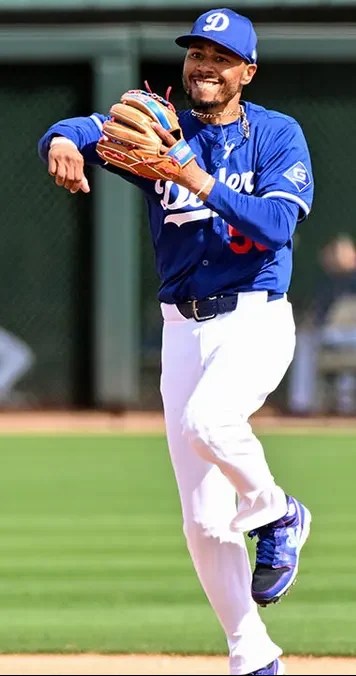
From right field to second base to shortstop. What a long, strange trip around the field for Mookie Betts . . . so far . . .

Allow me to begin with a number or three. These numbers are: 13.8, +122, and +6. In order, they are the defensive wins above replacement-level player, total fielding zone runs above the league average right fielder over ten seasons at the position, and total fielding zone runs above the league average second baseman in a hundred games at the position.

They belong to a man who has the total WAR (64.5) that’s considered almost 4.0 WAR above the level at which a baseball player qualifies himself for the Hall of Fame, assuming nothing else on his resumé might compromise or negate his case. A man who now consents to play shortstop for the Dodgers full-time, and whose departure from Boston may have hastened that formerly proud team’s current malaise.

Markus Lynn Betts (no tasteless jokes, please about the middle name which is also the legal first name of an antique legend named Nolan Ryan), nicknamed Mookie, is moving from second base to shortstop because the Dodgers’ intended shortstop, Gavin Lux, has a problem or three throwing longer distance than he does from second base.

Betts has been known as the Mookie Monster for the things he does with a bat. He’s not exactly a benign presence with a glove on his hand pursuing a batted ball in the field, either. By the time he retires as a player, he may earn a nickname for the things he has done and will do with his glove and throwing arm.

“The Roomba” will not do, since Betts is anything but robotic. “The Shop Vac” will not do, either, since Betts is neither rumbling nor obese. “The Hoover” belongs to the late Hall of Famer Brooks Robinson, even if Betts beats, sweeps, and cleans batted balls with similarly effortless-looking performances.

“Aerus Betts” sounds about right. The Aerus is an elegant tank vacuum, once known as the Electrolux, before that Swedish company pulled out of the United States, leaving its two American plants’ staffs from the top down to buy the plants and continue making the correct Luxes under the Aerus banner. Betts in the field is that kind of elegant and that kind of effective.

That former Swedish parent now makes vacuum cleaners about which “hideous looking” and “hideous sounding” are almost compliments. Betts is neither hideous looking nor hideous sounding, except maybe to an opposing pitcher who’s just fed him a pitch to hit transoceanic. Or, to an opposing batter inspired to swearing after a sure base hit is turned into a split-second out. By the time Betts finishes the coming regular season at shortstop, he may well accomplish two things at once.

Thing one: He may remind people of the acrobatics they’ve missed since the Wizard of Oz (Ozzie Smith) went from the field to the Hall of Fame, though unaccompanied by the game-opening cartwheels and back flips. Thing two: He may remind people older than myself of a too-often-forgotten Yankee jack-of-all-trades.

The late Gil McDougald wasn’t the kind of star that Hall of Famers Yogi Berra, Whitey Ford, and Mickey Mantle were. He was merely a fair hitter and a fielding whip at the infield’s three toughest positions. He finished his distinguished career in double figures for defensive runs at third base, shortstop, and second base alike. Betts has the opportunity to finish in double figures at right field, second base, and shortstop.

It may not shock Dodger fans or anyone else if, some time before he retires, the Dodgers decide Betts might be a better third base option than whomever they had going in. Betts is that kind of versatile and that kind of selfless.

Too many players making themselves comfortable somewhere on the field react as though being offered a castor oil on the rocks when asked to do likewise somewhere else. Ask Betts to move from one position to the other gets nothing but “Put me in, Coach,” so far. He’s played five out of nine field positions in his major league life so far. Three more even once apiece may not be unthinkable before he’s done.

No manager has yet asked Betts to pitch late in a lost-cause game. This may be a combination of both certain wisdom (the Dodgers are not frivolous about their pitching, especially when their pitchers incur injuries) and lack of opportunity.

Last season, the Dodgers played 64 games which Baseball Reference classifies as blowouts (BR considers a blowout a lead or deficit of five runs minimum) and won 45 of those. They also won ten games in which they scored in double digits—and advantages of nine runs or more. Betts didn’t turn up on the mound once in any of their nineteen BR-defined blowout losses.

Would you be shocked if manager Dave Roberts, trying to survive the last inning or two of a very rare Dodger blowout loss in the making, looks toward his Mookie-of-all-trades and asks, “You got an inning in you to throw up there?” You might be shocked only long enough to hear Betts say, “Put me in, Coach.”

Heard of the eephus pitch? Betts might have an Aerus pitch to serve an unsuspecting batter. At this point, nothing he does upon request or otherwise would surprise just about anyone paying close attention.

Ohtani gets his lucre and his wish

Shohei Ohtani

Shohei Ohtani signs with the Dodgers for a decade, $700 million, and the thing he wants most—better chances to win. Angel fans mourn the absolute waste of the game’s most transcendent talent.

It was almost to laugh. Within an hour of the news breaking and confirmed that Shohei Ohtani signed at last, and with the Dodgers, yet, there also came the news that some Angel fans began holding burnings of one or another kind of Ohtani merchandise. It was to laugh that you wouldn’t weep, of course.

Set aside what Ohtani signed for for the moment. Yes, it’s ten years and $700 million. It’s also no opt-out clauses in the deal. It’s also Ohtani himself deferring a considerable pile of that guaranteed money the better to enable the Dodgers to continue sustaining excellence via the farm and the market.

Now, consider the abject stupidity of the Angels and some of their fans. You want to burn Ohtani merch because, as a legitimate, lawful free agent, he signed elsewhere at all? Never mind with the beasts just up the freeway? Be my guest—and stand exposed as the fools you are.

The fools who’d rather turn Ohtani merch into burnt ashes than demand better of the team that let him walk with nothing of value in return—while going for broke elsewhere at the trade deadline only to unload two of the pieces they did acquire by way of the waiver wire at September’s beginning . . . just after Ohtani’s elbow took him off the mound for the season without sitting him down as a designated hitter.

The fools who’d rather have kept Ohtani bound to a team whose administration seems clueless about the point that you need a viable team around them to enable Ohtani and whatever might be left of future Hall of Famer Mike Trout to play for chances at championships. The point that one or two players do not a championship contender make, no matter how overendowed in ability and execution they’ve been.

You want to make Ohtani an example instead of holding Angels owner Arte Moreno and his trained seals in the front office accountable for thinking the box office is the thing and if you just so happen to win it’s mere gravy? Be my guest again. And stand exposed further.

For so long as he’s owned the Angels Moreno’s marketing background, the business in which he earned his fortune, has dominated what the Angels put on the field. Whether what they put on the field could play competent or cohesive baseball up and down the lineup seemed secondary to having what George Steinbrenner used to call “name guys who put fannies in the seats.”

It was bad enough that the Angels unearthed the transcendent Trout and saw him build a jaw-dropping Hall of Fame case in his first nine seasons before the injury bug bit into him in too much earnest over the past four. It was worse that Trout showed his loyalty to the team that discovered him and turned him loose on the field by signing a glandular extension only to have too many people wondering if he hadn’t lost his marble for it.

It was worse that Trout got to play with Ohtani, himself an injury bug victim for a couple of years following his Rookie of the Year season, and formed a tandem of transcendence (when Trout could play) that proved nothing more than a two-man supershow in the middle of a sad-sack sideshow.

“Ohtani has said he wanted to win,” writes The Athletic‘s Andy McCullough.

The Dodgers have won their division in ten of the past eleven seasons and tallied more than one hundred victories in five of the past six full seasons . . . [Ohtani] has been never part of a team with a front office capable of regularly rebuilding a pitching staff with excellent results, as Andrew Friedman has often done. And he has never played for an ownership consortium like Mark Walter’s Guggenheim group, who have been willing to invest in facilities, infrastructure and ancillary considerations.

That’s putting things politely. The hottest item at last season’s trade deadline was whether the Angels would wake up, wise up, and trade him for legitimate return value on the field and in the organisation at last. No chance.

Now it’s possible that Trout will return healthy, play like something close enough to the Trout who punched his Cooperstown ticket, stir up speculation on whether the Angels finally deal him to a contender with rich return to offer, and find himself still bound and gagged to an owner who’s willing to invest in his box office alone.

Quit the hemming and hawing over Ohtani’s deal raising an unconscionable ceiling for the free agents to follow him in the current market. Instead of bellowing over the big bad Dodgers handing him what amounts to a Delta Quadrant kingdom plus safe passage through the Cardassian Empire and ownership of Ferengi Enterprises, try bellowing over other owners’ too-entrenched refusal to invest and build in the major league product and the organisation behind it.

The Red Sox unloading Babe Ruth to the Yankees was nothing like this. Then, believe it or not, the Red Sox thought they were unloading a problem child to help relieve their owner’s financial stresses, not all of which was tied to his concurrent theatrical production operation. The Ruth sale helped temporarily.

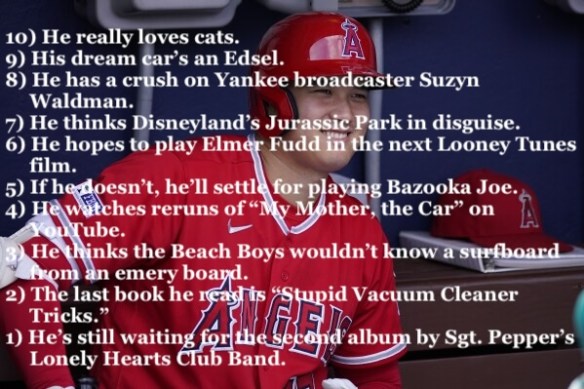
Ohtani, anything but a problem child, was allowed to walk into free agency eyes wide shut on the part of the Angels. It was perverse fun, too, watching the sports press get their proverbial panties into twists trying to figure out what was in Ohtani’s heart of hearts while he and his agent played things close enough to the vest. I couldn’t resist joining the fun for a moment, outlining a top ten list of what Ohtani was really thinking, feeling, wanting . . .

When Dodger manager Dave Roberts admitted the Dodgers talked to Ohtani and he’d have loved nothing more than to see Ohtani in Dodger silks, panties into twists turned nuclear, they thought Roberts’s honesty might have killed any deal in gestation. So much for that idea.

Too often with Trout injured Ohtani had to provide most of the Angels’ offense. Joining the Dodgers that burden is lifted. He can swing the bat comfortably and not believe every one of nine innings of baseball is on his shoulders. When he recovers from elbow surgery and takes the mound again in 2025, Ohtani has good reason to believe the Dodgers will have remodeled the starting rotation whose dissipation cost them this past postseason.

He didn’t have one millionth of a prayer of seeing that happen if he elected to re-sign with the Angels. Being a guy who makes baseball fun again is one thing. Coming home after yet another losing or short-of-the-postseason season proved something else.

So go ahead, some of you Angel fans. Burn his jerseys, blow up his bobbleheads, use his photos and posters for fish wrap if you must. You’re going to look almost as foolish for it as your team’s owner has looked for having resources unfettered and brains inoperable the entire time Ohtani wore Angels red. Almost.

Angel fans who don’t have coconut juice for brains began flocking to Angel Stadium to mourn within two hours of Ohtani himself scooping the world by announcing his Dodgers deal on Instagram. A crane already began stripping Ohtani’s mural from the side of the stadium. Fans slipped into the stadium’s team store to snap up Ohtani merch before it would disappear forever.

They came to mourn.

And one fan, Sebastian Romero, lifted a page from the books of long-suffering Athletics fans whose owner has stripped the team of credibility only to wrest approval for hijacking them to Las Vegas. Outside the stadium, Romero held up a sign before the Ohtani mural behind him was stripped, as photographed by Athletic writer Sam Blum:

As Blum noted so mournfully, Ohtani’s past three seasons have been three of the greatest the game has ever seen from a single player, on both sides of the ball, yet, with the Angels going 77-85, 73-89 and 73-89. What a waste of Ohtani hitting 124 home runs and striking out 542 batters worth two unanimous Most Valuable Player awards over that span.

A young man of few words for the press, Ohtani is on record as saying that, much as he loved the Angels, “More than that, I want to win. That’s the biggest thing for me. So, I’ll leave it at that.” Nobody can say the Angels weren’t warned. Nobody can say the Dodgers lack the resources or the brains to make that wish come true, either.

Now, I wonder. When Ohtani meets Clayton Kershaw as a Dodger for the first time, will he begin the conversation by saying, “About that All-Star Game pickoff, buddy . . . ?”

Frank Howard, RIP: The gentlest giant

Frank Howard

“Sometimes,” said a minor leaguer whom the Bunyanesque bombardier managed, “I think he’s too good for this game.” About Frank Howard, now gone, the gentlest giant of them all.

All of a sudden there’s a pall overhead. The one Washington Senator above all who didn’t want to move to Texas to become a Ranger has gone to the Elysian Fields at 87. The gentlest giant. The guy whose nickname Capital Punishment was as much a misnomer as The Killer was attached to his contemporary Harmon Killebrew.

Frank Howard. The behemoth whose home runs were conversation pieces long before that phrase was attached to the blasts hit by the likes of Dick Allen, Dave Kingman, Mike Schmidt, Darryl Strawberry, Albert Pujols, and Shohei Ohtani.

The third of six Ohio Howard children who had scouts bird-dogging him in the mid-to-late 1950s offering six-figure bonuses but who insisted that the money be divided as $100,000 for himself and $8,000 toward a new home for his parents, a condition only the Dodgers were willing to heed.

The 6’8″ galoot who became a Senator in the first place because of Sandy Koufax.

Howard had come forth as a Dodger who had that intergalactic power at the plate matched only by an inconsistency or three. The National League’s 1960 Rookie of the Year could break a game open with one swing but chased too many balls out of the strike zone. The giant with a fine throwing arm who moved too slow for an outfielder.

The guy who had enough trouble being the first Frank Howard without shaking off enough early career hype that sometimes called him the next Babe Ruth. The guy who assessed himself to Sports Illustrated too realistically despite a 1963 World Series performance that included a 450-foot home run off Whitey Ford en route the Dodgers’ sweep:

I have the God-given talents of strength and leverage. I realize that I can never be a great ballplayer because a great ballplayer must be able to do five things well: run, field, throw, hit and hit with power. I am mediocre in four of those—but I can hit with power. I have a chance to be a good ballplayer. I work on my fielding all the time, but in the last two years I feel that I have gotten worse as a fielder. My greatest fear was being on the bases, and I still worry about it. I’m afraid to get picked off. I’m afraid to make a mistake on the bases, and I have made them again and again, but here I feel myself getting better.

Howard ended up asking Dodger general manager Buzzie Bavasi for a trade after the 1964 season. As things happened, Bavasi was also hunting a solid lefthanded pitcher to plug in any spaces left by the possibility that Koufax—who’d been shut down for the year in August 1964, and diagnosed publicly with an arthritic pitching elbow (it turned out that was for public consumption)—would only be able to pitch once a week if at all.

Bavasi sent Howard plus infielder Ken McMullen and pitchers Phil Ortega and Pete Richert to the Second Nats in exchange for lefthanded pitcher Claude Osteen, infielder John Kennedy, and $100,000. Osteen became the reliable number three starter behind Hall of Famers Koufax and Don Drysdale; the Dodgers won the next two National League pennants plus the 1965 World Series.

Howard settled for becoming a marquee attraction in the nation’s capital. His old Dodger teammate Gil Hodges managed the Senators, convinced Howard to try a slight uppercut in his swing that might stop him hitting hard grounders, and turned him loose to become one of the American League’s power kings after shaking off two initial Washington seasons disrupted by injuries here and inconsistency there.

Then came the Year of the Pitcher (1968)—and Howard’s leading the entire Show with 44 home runs and a .550 slugging percentage, not to mention 330 total bases. He’d hit 48 out in 1969 (with another Show-leading 340 total bases) and 44 out in 1970. A new Senators manager finally convinced him to stop swinging at pitches that didn’t look hittable, which hiked his walk totals and gave him the plate discipline he wished aloud he’d learned a decade earlier. A manager named Ted Williams.

(“Somebody’s getting him out,” snorted Seattle Pilots manager Joe [Ol’ Shitfuck] Schultz during a meeting to discuss how to pitch Howard. “The bastard’s only hitting .306.”)

Howard also moved from the outfield to first base as often as not, and while he was no defensive virtuoso his bat continued to thrill fans and terrorise pitchers. When Alvin Dark managed the Indians, he had a habit of switching his bullet-throwing lefthander Sudden Sam McDowell and an infielder during Howard’s plate appearances (Howard tended to kill McDowell) and then back after Howard was done.

Later, as a minor league manager, Howard was legendary for his generosity with the kids he managed whom he knew barely earned peanuts. Stories abounded of Howard stopping the team bus out of nowhere and ducking into a truck stop or a package store, whipping out his money clip, and buying cases of brewskis. (He made a considerable fortune owning a few choice Wisconsin shopping centers.)

Profiling him while managing the Spokane Indians (then a Brewers farm team) in 1976, Thomas Boswell quoted one of his talks to his minor league charges:

Boys, in this game you never play as long as you want to or as well as you want to. And sooner than any of you thinks, your day will come to get that pink slip that says, “Released.” When they pull those shades, they pull ’em for a lifetime. When it’s over, no one can bring it back for you. It’s a short road we run in this business, so run hard.

That from the man who lamented near the end of his own playing career, “By the time you learn to play this game properly, you can’t play anymore.” (“We lead the league,” Spokane third baseman Tom Bianco told Boswell, “in hustle, rules, and meetings. We even had a meeting after a rainout to go over the rain.”)

He left the Spokane bridge for a shot at major league managing. He had the Padres for two years; he had the Mets for one. “The players took advantage of him,” then-Padres general manager Jack McKeon said when they fired him. “Frank just couldn’t stop being nice.”

A man like that becomes a Washington institution even after his playing career ends and he relocates to northern Virginia and keeps in touch with the city that embraced him like a son and brother. He becomes one of three men to be cast in bronze outside Nationals Park, even though he never played for this franchise of Nats, joining Hall of Famers Walter Johnson (representing the ancient Senators) and Josh Gibson (representing the Homestead Grays who played much of their time in D.C.).

He might even leave Washington with a memory they’d never forget amidst a small closet full of Hondo hammers. With Bob Short shamelessly hijacking the team to Texas after the 1971 season, Howard came up to hit in the sixth inning of the Senators’ final game, against the Yankees. Leading off against Mike Kekich in the bottom of the sixth, Howard swung on 2-1 and planted one to the back of the bullpen behind the left field fence.

“I just wish the owners of the American League could see this, the ones who voted 10 to 2 to move this club out of Washington,” said Senators radio broadcaster Ron Menchine as Howard came down the line to cross the plate.

He comes out again. . . Hondo threw his helmet into the stands, a souvenir of the big guy’s finest hour in Washington . . . The crowd screaming for Howard to come out again . . . and here he comes again!! . . .  A tremendous display of the enthusiasm of Washington fans for Frank Howard . . . Hondo loves Washington as much as the fans love him. It’s 5-2 . . .

The Senators took a lead to the top of the ninth and asked Joe Grzenda to close it out. He got two quick ground outs right back to himself. Then the heartsick RFK Stadium crowd that was restless all day long finally burst. They poured onto the field with Yankee second baseman Horace Clarke at the plate and rioted. The umpires finally called a forfeit to the Yankees. The stadium resembled the aftermath of a terrorist attack.

Howard hit the final Senators home run and the first Rangers home park home run, which also happened to be the first major league hit to be nailed in old Arlington Stadium. But he had no illusions. “A guy just does the best he can,” he told SI. “We’re aware you can’t peddle a poor product to the public. It’s nice to think that these people’s first memory of major league baseball might be my home run, but I really hope that their memory is the win.”

He never lost his baseball introspection even as he never lost his love affair with fans who sought him out long after his last swing, his last shot to the Delta Quadrant. “When people look back on their careers, they say they wouldn’t change a thing. I would have,” he once said. “I would have made the adjustments. I would have given myself the chance to put up big numbers.”

Divorced from his first wife, he remarried happily in 1991. Howard left more than long ball memories. He had family and friends to love and remember. He left behind memories of a man who was so personable, gentle, and generous, that one of his Spokane players could and did say, “Sometimes I think he’s too good for this game.”

More than “sometimes.”