Arozarobber

Randy Arozarena

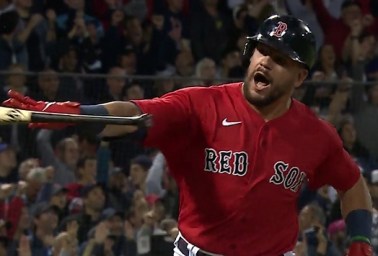
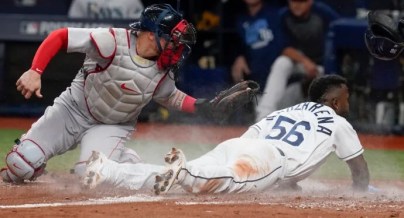
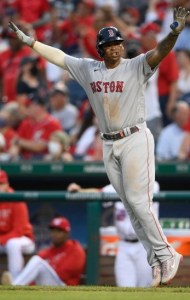
Quick on the overshift uptake, Randy Arozarena stole home straight up Thursday night. Yogi Bear never had it that simple stealing picnic baskets.

There are and have been men playing baseball who love their secondary skills almost more than they love what usually earns their keep. Randy Arozarena, Rays outfielder and batter extraordinaire, is one of those men. He can hit around the field and for distance, but he loves to run.

Give him an inch, or an abandoned side of an infield, and Arozarena’s more than happy do his part to turn a baseball game, even Game One of an American League division series, into a track meet. Give him almost all the third base side of the infield while he’s on third, and he’ll add grand theft home plate to his pleasures.

It’s not that he gets away with it every time he breaks out of his gates on the bases. He tied the Angels’ Shohei Ohtani for the American League lead in arrests for attempted theft with ten. As thieves go, Arozarena had a 67 percent success rate on the regular season. Rickey Henderson he ain’t. Yet.

The one that mattered most was the job Arozarena pulled in the bottom of the seventh Thursday night, after wringing a two-out, full-count walk from Red Sox reliever Nick Pavetta and taking third when Wander Franco doubled right behind him. Then the Red Sox shifted to the right side and brought lefthanded reliever Josh Taylor in to face lefthanded-hitting Rays second baseman Brandon Lowe.

With Red Sox third baseman Rafael Devers playing in the proper shortstop location dead center between second and third, Arozarena might as well have been wandering into the Next-to-Last National Bank and discovering security officers sound asleep before sliding his stick-’em-up demand through the teller window.

Taylor seemed almost wholly oblivious to Arozarena ambling almost halfway down the third base line as he concentrated on Lowe at the plate. Apparently, the Rays’ advance scouting secured that tendency to use as opportunity presented itself. But Arozarena also read the room on his own and smelled the opportunity in front of him.

Maybe with two outs Taylor also felt there was no way Arozarena would be that brazen. Lowe fouled a 1-2 pitch straight back out of play. Taylor leaned in for his signs, straightened back up to throw—and Arozarena bolted for home the split moment Taylor came set in the stretch.

Yogi Bear never had that simple a time stealing picnic baskets in Jellystone Park.

“I noticed that the pitcher wasn’t really watching for me or covering for me,” Arozarena said postgame, “and I saw the third baseman was pretty far away in respect to where I was at. I was looking over to [third-base coach Rodney] Linares, telling him, ‘Hey, I’m going to go. I’m going to go.’ Peeked over and saw Cash give him the green light as well, so that’s when I decided to take off.”

Lowe stepped back out of the box as Arozarena hit the jets, and Taylor just cranked and threw home fast and futilely. Red Sox catcher Christian Vasquez had no chance as he sprang afront the plate to take the throw, wheeling around back on his knees to tag.

He’d have had a better chance apprehending John Dillinger without a pistol and handcuffs than he had when Arozarena shot across the plate in a safe dive—almost like Michael Phelps hitting the pool for yet another Olympic gold medal.

What looked in the moment like Arozarena just showing himself off—this is his second postseason and he already had ten postseason home runs plus an American League Championship Series MVP on his resume—proved insurance after all in the 5-0 Rays win.

That’s because the Red Sox were barely recovered from Arozarena’s heist when they suddenly loaded the bases in the top of the eighth on a leadoff single and a pair of one-out base hits bringing Rafael Devers to the plate against Rays reliever J.P. Feyereisen. One swing and the Red Sox might have been back in business, at maximum with their deficit cut to a single run.

But Feyereisen struck Devers out swinging on 1-2. He got former Ray Hunter Renfroe to foul out to first for the side. Then both sides went quietly in the bottom of the eighth and the top of the ninth.

Taylor didn’t comment after the game but Red Sox manager Alex Cora did. ““I think JT was actually paying attention,” Cora said of Taylor and the Arozarena theft, “but probably two strikes, he had Lowe with two strikes and probably the concentration was with the hitter. Just put him away, and Randy had an amazing job.”

Rays manager Kevin Cash credited Arozarena’s room reading. “We don’t practice that,” Cash said of the theft. “The game has evolved to where defending the hitter is so important. We do the same thing. It’s not the most comfortable thing in the world to pull the third baseman off, certainly with a left-handed pitcher who can’t see everything. But it ultimately comes down to his decision-making and his ability to react.”

Except that, between such things as thinking players dropping bunts for free base hits onto the open expanses and thinking thieves like Arozarena accepting when handed that big a larceny invitation, maybe those defensive overshifts might begin dissipating at last.

The Red Sox erred in handing Arozarena that much leeway even trying to defend against Lowe. They couldn’t afford that on a night they swung futilely against four Rays pitchers including rookie starter Shane McClanahan, who went five scoreless scattering five hits while the Red Sox went 1-for-7 with men in scoring position on the night.

And, on a night the Rays pecked and powered their way to the division series-opening win against Red Sox starter Eduardo Rodriguez (who lasted only five outs) and Pivetta (Arozarena’s home steal went on Pivetta’s jacket), with three other Red Sox relievers plus the Rays’ stingy defense keeping them off the board despite more than a few hard hit balls.

My command wasn’t great at all on every pitch,” Rodriguez said postgame about Cora’s decision to pull him in the second inning. “So I’m not surprised. This is the playoffs. And you’ve got to go out there and do your job. If you don’t do it, you’re coming out of the game.”

It doesn’t look as good as you might think for the Red Sox in Game Two, either. Oh, you might think they’ll be back on track with Chris Sale scheduled to start, but Sale hasn’t prevailed against the Rays all year long.

With one theft of home Arozarena also came close to wiping out the memory of what he did to lead off the bottom of the fifth, swinging on a full count and sending Pavetta’s fastball just off the middle into the left field seats for the fourth Rays run. Making Arozarena the first man ever to hit one out and steal the plate in the same postseason game.

Pinocchio, you’re a real man now.

Arozarena’s come very far from that fateful October 2019 afternoon when, as a member of the Cardinals, he foolishly videoed Mike Schildt’s sore-winner rant and sent it viral enough, after those Cardinals blew the Braves right out of that postseason—only to get bludgeoned out themselves by the eventual World Series champion Nationals.

Three months later, the Cardinals traded Arozarena with Jose Martinez to the Rays for a couple of minor league spare parts. Martinez was supposed to be the big catch. But he faltered in the pan-damn-ically short 2020 season, after missing most of “summer camp” with COVID-19 himself, before the Rays dealt him to the Cubs at that year’s trade deadline.

I don’t know if the viral video—which he took down almost as fast as it went viral—helped compel the Cardinals to throw Arozarena in on that deal as much as their surplus of outfielders in the organisation did. But the Rays have no complaints yet.

He’s become their Mr. October. He’s picked up right where he left off last postseason. The only shock now would be if the Red Sox aren’t tempted heavily to swear out a warrant for his arrest on charges of grand theft.
It wasn’t over until it was over

Chris Taylor

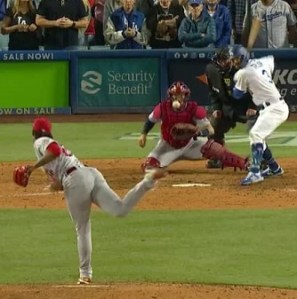
Chris Taylor, about to demolish Alex Reyes’s hanging slider and the Cardinals’ season in the bottom of the ninth . . .

If the postseason means anything, it means the biggest men on the field can come up as short as the least among them can come up Bunyanesque. You can watch the big men go hammer and tongs at it only to find the last or next-to-last man swung the wrecking ball that counted.

But if you thought a utility man who’d gone seven-for-September (well, seven hits in 71 plate appearances) would send the Dodgers to a National League division series after spending most of the NL wild card game riding the proverbial pine, you should be buying stocks, futures, and lottery tickets.

Infielder-outfielder Chris Taylor was sent into the game to open the seventh in left field, in a managerial double switch, and bat ninth in the order. And in the bottom of the ninth Wednesday night, with two outs, Cody Bellinger on second, and Alex Reyes on the mound for the Cardinals, Taylor with one swing reinforced two inviolable laws.

One was the Biblical admonition about the last being first. The other was Berra’s Law. The truest valedictory for this National League wild card game is that it most assuredly wasn’t over until it was over. It took a man who’d gone from All-Star in the season’s first half to also-ran in the second half, when a neck nerve issue contributed to making him almost literally half the player he’d been from April through July.

The number nine batter sent the Dodgers toward a division series showdown with their lifelong blood rivals, the Giants, with one swing, one two-run homer, and one moment in which the Elysian Fields angels decided the Red Sox deflating the Yankees in the American League wild card game just wasn’t quite enough.

Taylor turned on Reyes’s slider hanging a sliver under the belt and sent the ball about ten rows into the left field bleachers. He also sent Dodger Stadium into a racket that could have been heard practically across the state line separating California from Nevada.

Remember Hall of Fame broadcaster Jack Buck’s ancient holler after broken-bodied Kirk Gibson ended Game One of the 1988 World Series with a home run? Even home plate umpire Joe West—on the threshold of retirement at last—looked as though he wanted for once to come out from behind his cloak of professionalism, and beyond his reputation for inserting himself too much into games, to holler it.

I don’t believe—what I just saw!

Dodgers starting pitcher Max Scherzer believed it. Those who were there swear Scherzer turned to Dodger reliever Joe Kelly in the dugout as Bellinger checked in at the plate, telling Kelly, “I think Belli is going to get on here, and CT is gonna hit a homer.” If that’s true, maybe Scherzer should be buying stocks, futures, and lottery tickets himself.

Bellinger—whose regular season was laid waste by incomplete recovery from shoulder surgery last off-season and more than a few injuries nagging and otherwise including a broken bone or two—wrung himself into a full-count walk. Then, he stole second when Yadier Molina, the Cardinals’ grand old man behind the plate, couldn’t find a handle to throw against Bellinger’s big jump off first.

With the next pitch, Taylor made Scherzer into a prophet. Ending a game in which neither side could pry more than a single run out of either Scherzer or the Cardinals’ co-grand old man Adam Wainwright despite neither righthander having anything much resembling their truly vintage repertoires, other than a few tastes of Scherzer’s better sliders and Wainwright’s better curve balls.

“We’re going to need him,” Dodger manager Dave Roberts said about Taylor before the game. “I can’t predict what spot, whether it’s to get a bunt down, take an at-bat, play defense, start a game. I can’t predict that. I do know that he’s one of my favorite players. I trust him as a ballplayer, as a person. We’re going to need him this postseason.”

Need, meet net result. And, the newest member of a distinguished fraternity of modest men who step up immodestly in the postseason when it matters the most.

With the Dodgers’ season on the line—and TBS broadcasters Brian Anderson and Ron Darling having predicted two innings earlier that the game was liable to be won in the final at-bat—Taylor joined the like of Travis Ishikawa, Chris Burke, Aaron Boone, Todd Pratt, and Bucky Dent on the roll of the unlikeliest postseason bombers making the difference in win-or-be-gone games.

“[I]t’s been a grind for me,” Taylor said postgame. “I haven’t been playing my best. So to come through in the ninth, it felt really really good.”

Somehow, some way, Wainwright ground through five and a third innings with only Justin Turner’s leadoff launch to the rear of the Dodger bullpen in the fourth against him. Scherzer didn’t quite last that long. Despite his game-long wrestling matches with the Cardinal lineup, he was none too thrilled to get the hook in the fifth. He wouldn’t even give Roberts the ball as he left the mound.

Post-game, of course, Max the Knife was in his glory, interviewing shirtless and slightly inebriated from the party champagne. And, celebrating with his erstwhile Nationals teammate Juan Soto, who’d been in the field boxes—wearing Dodger shortstop Trea Turner’s Nats jersey, sitting next to Nats hitting coach Kevin Long in Scherzer’s Nats jersey.

“You gotta get rid of this echo,” Scherzer said on camera. “Can’t talk. I’m drunk, whatever.”

For all that the Cardinals made Scherzer wiggle into and out of jams as if it were par for the course, the only run they pried out of him was his own doing, when he wild-pitched Tommy Edman home on 0-2 to Nolen Arenado in the top of the first.

This was a game dominated by full counts, batters unable to cash gloriously positioned baserunners in, even with Scherzer and Wainwright looking like the elders they are on the mound. The Cardinals had the worst of that, going 0-for-11 with men in scoring position against Scherzer and four Dodger relievers—particularly resurgent closer Kenley Jansen, striking out the side in the ninth around Edman’s one-out single and theft of second.

Taylor also ended a too-brief battle between two men who’d gone from first-half boom to second-half bust. Like Taylor, Reyes was an All-Star for his first half. But he’d pitched his way out of the Cardinals’ closing job in the second. Just as Dodger manager Dave Roberts never once lost faith in his veteran Taylor, Cardinals manager Mike Schildt never really lost true faith in his still-young reliever.

Schildt isn’t the only one having Reyes’ back after Taylor broke his and the Cardinals’ backs Wednesday night.

“I just gave him gave him a huge hug,” said Adam Wainwright, the Cardinals’ other grand old man and wild card game starter. “Told him we love him, told him I loved him and gave him another big hug and just told him how special he was as a player and as a teammate, as a person.

“You know, it’s all you can say in a moment like that,” Wainwright continued. “He doesn’t probably want to hear any of it, but it’s all true. He’s a great teammate, is a great player. He’s a great pitcher. He’s a great friend, and I hate seeing anyone go through that, but he’s got an incredible future ahead of him.”

He’ll only have to shake off having thrown the pitch that ended a season in which the Cardinals lost a little too much—including their pitching ace-in-the-continuing-making Jack Flaherty—to the injured list and to deflated expectations for much of the season.

A season in which the Cardinals ironed up when it mattered most and rode a staggering seventeen-game winning streak, not to mention a fine young outfield, a mostly stingy defense overall, mostly solid hitting, and their elder anchorage of Wainwright and Molina,  toward the second National League wild card.

The Dodgers might have been humiliated more if they came up short. A 106 game-winning defending World Series winner, settling for the first National League wild card, after they couldn’t quite get that one game past the NL West-winning Giants? There wouldn’t be enough available space to hold all the variations on the implosion theme.

There may not be enough space to hold all the variations of Taylor-made sure to come forth now.

Mystique and Aura have left the building

Xander Bogaerts

Bogaerts throwing the perfect strike to the plate to bag Aaron Judge, after Yankee third base coach Phil Nevins didn’t stop Judge rounding third at the moment Bogaerts released the throw. This is the kind of thing that used to make Red Sox life living hell—in the last century.

If we must suffer the wild card system still, we hope yet that the wild card games themselves have potential for excitement, and maybe even a little transcendence. The kind that happened in the American League wild card game Tuesday night, in Fenway Park, was everything the Yankees didn’t have in mind.

Their season ended in a 6-2 loss to the Red Sox that flipped the too-long script of Yankee-Red Sox surrealities past and ancient. Because something that usually happened in the last century to the Red Sox, when they could just taste even a piece of glory, happened to the Yankees Tuesday night.

Two teams about whose seasons it could be said most politely that they threatened to implode at too many points collided. The Red Sox played like a championship team. The Yankees played like a team whose destiny was disaster. This was not the natural order of things for either side before the turn of this century.

That was the Twentieth Century: Dubious decisions with games on the line or close enough to it compounded what seemed ages of Red Sox disaster. This was Tuesday night: A dubious decision when the Yankees could have had a clean chance at possibly tying the wild card game all but guaranteed their homegoing instead.

Much as you’d like to see the sports goat business put out of business once and for all, it’s going to be hard to resist planting those horns squarely upon the head of Yankee third base coach Phil Nevin for what transpired in the top of the sixth.

Nevin only thought he could send Aaron Judge all the way home from first, when Giancarlo Stanton drove one off Red Sox reliever Ryan Brasier that looked like it was going to fly into the Green Monster seats. Until it didn’t. It banged off that notorious wall and to the ground in left center, where Red Sox left fielder Alex Verdugo overran the ball but center fielder Enrique Hernandez running right played the carom almost perfectly and threw in.

Hernandez fired a perfect strike to Red Sox shortstop Xander Bogaerts as the cutoff man, and—as Judge rounded third barreling home on his long legs—Bogaerts whipped around to fire a perfect strike to Red Sox catcher Kevin Plawecki. Judge started his dive as Plawecki caught the throw, and Judge was a dead pigeon with his right hand about two feet from touching the plate.

Instead of first and third and one out, after finally ridding themselves of Boston’s lights-out starting pitcher Nathan Eovaldi, the Yankees settled for Stanton on second and two out. With Joey Gallo coming to the plate and popping out to Red Sox third baseman Rafael Devers playing it back on the short outfield grass for the side.

And, with every cheering jaw in Fenway Park still dropped over Nevin turning Judge into a kamikaze.

Yankee manager Aaron Boone takes an excessive share of abuse for the Yankees’ in-season hiccups and postseason shortfalls—especially with his contract expiring now, but just about since he first took the Yankee bridge. Never mind that Boone managed back-to-back 100+ win seasons in his first two years on that bridge, which no Yankee manager did before him. Never mind the Yankees averaging 98 wins a year in his three full seasons on that bridge.

But even Boone’s worst critics can’t get away with hanging this one on him. Not that they’re not trying. From almost the moment Boone took the bridge in the first place, the first Yankee shortfall of any given series or season—a bad pitch, a bad plate appearance, a bad inning, a one-game losing streak—has brought demands for Boone’s perp walk and summary execution. Preferably five minutes earlier.

You’d think Yankeetown still hasn’t grasped the concept that it’s entirely possible for the other guys to play better and smarter when it means the most. Which is exactly what happened Tuesday night.

Boone once broke Red Sox Nation hearts with his pennant-winning blast in the bottom of the eleventh in Yankee Stadium in 2003. Now the poor man seemed as befuddled himself as everyone else in Fenway Park and in the ESPN television audience for making sense of Nevin’s send.

“I think . . . the ball coming in looked like it was going to be kind of an in-between hop to the infielder,” Boone said postgame about Hernandez’s throw in to Bogaerts. “Bogaerts did a good job of creating a hop, catching it clean and and obviously throwing home and getting him. And that kind of squashed the potential rally there, so I think what [Nevin] saw was what he thought was going to be kind of an in-between hop and really a tough chance.”

“Create” the hop? Bogaerts was simply standing on the short center field grass waiting for the throw and the hop created itself, right into Bogaerts’s glove held out to his left. He turned at the split second the ball hit his glove and threw home perfectly.

Bogaerts talking postgame said that play and his part in it meant even more than the two-run homer he drilled into the center field bleachers off Yankee starter Gerrit Cole in the top of the first. Small wonder. The Red Sox were the American League’s most defensively challenged team of the regular season. On Tuesday night they found it in them to play far above their own defensive heads when it mattered the most.

“That [play] was better than a homer for me, personally,” he said. “I mean, if that run scores, it’s 3-2. Stanton is at second base, the whole momentum is on their side. The dugout is getting pumped up. As Judge was out at home, I saw Stanton was pretty mad. He probably wanted a homer there, but also an RBI, and he didn’t get that, and he probably felt like he didn’t do much because that run didn’t score. But that changed the game.”

The Monster factor was made only too vivid in the bottom of the sixth, when Alex Verdugo sent a high liner to deep right off Yankee pitcher Luis Severino working in relief. The ball bounced off the lower part of the fence, a clean enough double, well enough to enable Bogaerts (aboard with a one-out walk) to score the fourth Red Sox run of the night.

Three times Tuesday night Stanton hit what looked like certain home runs. Aside from the sixth-inning rip that indeed turned out to change the game irrevocably, he ripped one so high toward the Monster that even the Red Sox thought it was going to disappear. Until it didn’t. Stanton was so certain that he settled into his home run trot and was held to a measly single.

In the top of the ninth, against Red Sox relief pitcher (and former Yankee product) Garrett Whitlock, Stanton sent a parabolic launch the other way into the right field seats just past the Pesky Pole himself. By then it was an excuse-me! shot for only the second Yankee run. Whittaker ended the game by getting Yankee second baseman Gleyber Torres to pop out to right.

Kyle Schwarber

The Schwarbinator became the first of two former Cubs batting leadoff Tuesday night to strike big . . .

Legends real and alleged used to include longtime Chicago newspaper star Mike Royko’s postulate that the team with the most ex-Cubs lost. The Red Sox and the Yankees may have really tempted real or imagined ancient fates with their chosen leadoff men Tuesday night: World Series-winning ex-Cub teammates Kyle Schwarber (designated hitter, Red Sox, by way of the Nationals) and Anthony Rizzo (first baseman, Yankees, at this year’s trade deadline).

Those moves came of dire necessity, actually. The Red Sox lacked designated hitter J.D. Martinez after he rolled his ankle in the Red Sox season finale, and the Yankees lacked second base regular D.J. LeMahieu thanks to a sports hernia. So, naturally, the Elysian Fields gods decided to have a little mad fun. Right?

Schwarber struck first. With Cole already having a miserable evening in the hole 2-0, the Schwarbinator led off the bottom of the third by driving a 1-2 service no doubt and about twelve rows into the right field seats. Rizzo struck back with one out in the top of the sixth, hitting Red Sox starter Nathan Eovaldi’s first service on a high line inside that Pesky Pole for the first Yankee run. Then Judge promptly beat out a tough bouncer to shortstop.

The good news for the Yankees is that that finally got Eovaldi out of the game, after he’d manhandled them brilliantly through five and a third including eight strikeouts and no walks. The bad news was Judge on the threshold of disaster on the Stanton home run that wasn’t and the Nevin send that shouldn’t have been.

No Yankee reached base on walks all night. Seven Red Sox reached on walks from Cole and three Yankee relievers. Only Clay Holmes out of the Yankee pen, facing five batters, didn’t walk a single Red Sox batter while surrendering one hit and striking one out. The walks really burned the Yankees in the bottom of the seventh, when Verdugo sent the insurance runs home with two out, slashing a two-run single against Yankee reliever Chad Green to score Hernandez and Schwarber—both of whom had reached on walks.

That Yankee sixth is what used to happen to the Red Sox when they could just taste even a piece of glory in their mouths. Something surreal. Something from The Twilight Zone. Something else from The Outer Limits. Something more from Alfred Hitchcock Presents. Leaving the Red Sox yet again fallen to the rocks below when they’d gotten to within one mile or a few innings of the mountaintop.

Why, even B.F. Dent himself—hitter of the home run that broke an earlier generation of New England hearts in the 1978 American League East playoff game—was in the Fenway stands and chatting for one minute with ESPN analyst Buster Olney. (He admitted he’s still asked about that three-run homer into the ancient Monster net—about two or three times a day.)

Except that the ESPN audience probably noticed Dent a lot more than the crowd around him in the stands did. They were too well and appropriately occupied with the Yankees incurring the kind of outrageous malfortune that once seemed the birthright of Red Sox baseball.

Before the game Dent predicted to Boston Globe columnist (and author of The Curse of the Bambino) Dan Shaughnessy, “I think Gerrit Cole will pitch a great game, and I think the Yankees will beat ’em.” That’d teach him. Cole pitched two full innings in the hole 2-0 and got nobody out while facing two more batters after Schwarber’s leadoff launch in the third.

This time, it was the Yankees crushed by trans-dimensional furies and a fatal miscalculation. It’s starting to become as much a Yankee thing this century as a Red Sox thing last. From Dave Roberts stealing second to launch that surreal 2004 Red Sox self-resurrection to Jose Altuve’s pennant-winning two-run homer, it looks as though Mystique and Aura really have left the building.

The ladies didn’t have to take Phil Nevin’s baseball brain with them, though.

Wherever the Red Sox go from here, and they know it won’t be easy tangling with the AL East champion Rays in a division series, nothing can change the extraterrestrial triumph over the Empire Emeritus that gives them that chance in the first place.

The real batting champions of 2021

Shohei OhtaniBryce HarperTrea Turner finishing the 2021 season with a .328 “batting average” is the National League champion. Right? And Yuli Gurriel finishing with a .319 “batting average” is the American League champion. Right? Only if you continue accepting the fraudulence of the traditional batting average.
Yes, I wrote “fraudulence.” There’s a reason for it. The “batting champion” is determined by dividing hits by official at-bats, but it also treats all hits as equal. The champion is also determined based on having had a minimum number of plate appearances—and yet those PAs that don’t end in base hits don’t count otherwise. No matter what he did in them.

Can you really determine a batting champion without giving him due credit for bases on balls, too? For sacrifice flies? For being hit by pitches? “Official at-bats” make those types of plate appearances vanish. Thin air. Why on earth are we not allowing the whole picture of a man at the plate to factor into his “batting championship?”

Is it truly fair to anoint a “batting champion” when mere hits divided by mere official at-bats treats his singles equal to his doubles, his triples, his home runs? When that quotient treats his doubles like his triples and home runs? His triples equal to his home runs? When it says his home runs are worth nothing more than his singles, his doubles, his triples? When it says his triples are worth nothing more than his singles and doubles? When it says his doubles are worth nothing more than his singles?

Do you really watch a baseball game and believe every hit a player gets is equal? Well, they’d be equal if he goes 4-for-4 with four singles, or four doubles, or four triples, or four home runs. If he hits for the cycle, that’s a remarkable achievement. But you know bloody well that each hit in the cycle was not equal.

Here, we’re going to determine the real batting champions by—you guessed it—my concept of a Real Batting Average. For those ten of you who’ve read my prior writings about it, bear with me for the sake of those new to it.

Real Batting Average (RBA) adds total bases, walks, intentional walks, sacrifice flies, and hit-by-pitches, and divides that total by total plate appearances. We begin with total bases because that number most accurately credits a batter’s hits they way they deserve to be credited—unequally.

Why intentional walks, especially when the other pitcher doesn’t have to throw four wide ones deliberately to make it stick anymore? Very simple: why shouldn’t that batter get credit when the other guys would rather he take his base than their pitcher’s head off?

Why sacrifice flies, since the batter’s making an out? Well, a runner on third scores on the fly, right? That batter didn’t check in at the plate planning to make an out for any reason. So yes, he gets the credit for the only really, truly productive offensive out in any baseball game.

Why are you leaving sacrifice bunts out of the formula?!? Why, I reply, do you insist on a batter getting credit for a pre-meditated out? I’ve said it before, I’ll say it again—outs to work with are the most. precious. commodity. a lineup has to work with when it’s their turn to bat in an inning. Handing the other guys a free defensive out relieves them of one full third of the responsibility of trying to get your lineup out of an inning without damage.

Sacrifice bunts don’t just waste precious offensive outs. In four out of six known sac bunt situations, a team is generally worse off, not better off, after that bunt, in terms of how likely it is for a run to score as a result of that bunt. In only one such situation (men on first and second and nobody out) is a team mostly better off after that bunt; in one more such situation (man on second, nobody out) is a team no better or worse off after that bunt.

I’m going to say it again: the only times any batter should even think about dropping a bunt are a) when he’s being overshifted defensively and has the gift of all that succulent free territory to work with (even and especially if the other guys are stupid enough to give it to him while protecting their pitcher’s no- or one-hitter); or, b) when he sees an infield full of stone hands he can exploit accordingly.

But I digress. If you’re unfamiliar with RBA, you want to know why I’m counting hit by pitches in the equation. Very simple—they want to plunk you, you ought to get extra credit for taking one for the team. They put you on base with malice aforethought, you take your RBA credit with cheerful afterthought. Hopefully, without taking a concurrent hole in the head the way Bryce Harper damn near did in April.

Now that you know (or remember) the thinking behind RBA, here’s the formula once again: TB + BB + IBB + SF + HBP / PA.

So, how about we get to the good part—determining each league’s real batting champions according to RBA. Since Trea Turner’s .328 hitting average led the entire Show among qualifiers, who needed 501 PA or more to qualify, let’s begin with the National League—where Turner comes out number fifteen:

2021 NL Qualifiers PA TB BB IBB SF HBP RBA
Bryce Harper 599 300 100 14 4 5 .706
Juan Soto 654 268 145 23 5 2 .677
Fernando Tatis, Jr. 546 292 62 6 4 2 .670
Joey Votto 533 252 77 6 4 4 .644
Nick Castellanos 585 306 41 5 6 7 .624
Max Muncy 592 262 83 5 1 11 .611
Tyler O’Neill 537 270 38 0 4 13 .605
Bryan Reynolds 646 292 75 9 4 8 .601
C.J. Cron 547 249 60 3 4 13 .601
Freddie Freeman 695 302 85 15 2 8 .593
Will Smith 501 205 58 4 11 18 .591
Brandon Crawford 549 252 56 6 5 5 .590
Pete Alonso 637 291 60 6 4 12 .586
Austin Riley 662 313 52 2 8 12 .585
Trea Turner 646 319 41 2 4 6 .576
Paul Goldschmidt 679 310 67 2 5 4 .571
Mookie Betts 550 227 68 2 5 11 .569
Manny Machado 640 276 63 10 11 2 .566
Trevor Story 595 262 53 2 5 11 .560
Nolen Arenado 653 293 50 8 7 3 .553
Kris Bryant 586 247 62 4 2 9 .553
Avisail Garcia 515 226 38 5 5 11 .553
Jonathan India 631 244 71 1 4 23 .544
Josh Bell 568 237 65 2 3 2 .544
Justin Turner 612 251 61 0 6 12 .539
Andrew McCutchen 574 214 81 2 7 4 .537
Javier Baez 547 248 28 2 3 13 .537
Adam Duvall 555 252 35 1 3 4 .532
Mike Yastrzemski 532 214 51 4 3 9 .528
Ozzie Albies 686 307 47 2 7 3 .523
Jesus Aguilar 510 206 46 4 7 3 .522
Jake Cronenworth 643 261 55 6 3 10 .521
Luis Urias 570 218 63 3 3 10 .521
Eduardo Escobar 599 259 48 1 1 1 .518
Ryan McMahon 596 237 59 2 5 4 .515
Chris Taylor 582 222 63 2 3 8 .512
J.T. Realmuto 537 209 48 5 2 11 .512
Dylan Carlson 619 237 57 2 8 11 .509
Dansby Swanson 653 264 52 4 7 5 .508
Ian Happ 535 202 62 0 1 5 .505
Eugenio Suarez 574 216 56 0 5 8 .497
Francisco Lindor 524 186 58 4 3 5 .489
Trent Grisham 527 191 54 2 4 6 .488
Tommy Pham 561 182 78 3 4 4 .483
Charlie Blackmon 582 211 54 1 3 11 .481
Josh Rojas 550 199 58 1 3 0 .475
Jonathan Villar 505 189 46 2 0 3 .475
Jazz Chisholm 507 197 34 0 3 4 .469
Kyle Farmer 529 201 22 1 5 18 .467
Adam Frazier 639 237 48 2 1 10 .466
David Peralta 538 196 46 3 2 3 .465
Eric Hosmer 565 201 48 2 2 5 .457
Pavin Smith 545 201 42 1 1 4 .457
Miguel Rojas 539 194 37 0 1 5 .440
Jean Segura 567 224 39 3 4 9 .439
Tommy Edman 691 248 38 1 4 6 .430
Raimel Tapia 533 181 40 2 4 1 .428
Kevin Newman 554 160 27 3 3 1 .350

So, considering Yuli Gurriel’s .319 hitting average, how do the American League title qualifiers stack according to RBA? Fair warning: Gurriel isn’t in the top twenty.

2021 AL Qualifiers PA TB BB IBB SF HBP RBA
Shohei Ohtani 639 318 96 20 2 4 .689
Vladimir Guerrero, Jr. 698 363 86 7 2 6 .665
Matt Olson 673 305 88 12 11 9 .632
Jose Ramirez 636 297 72 10 5 7 .615
Kyle Tucker 567 282 53 5 5 1 .610
Aaron Judge 633 299 75 2 5 3 .607
Rafael Devers 664 318 62 7 4 7 .599
Brandon Lowe 615 280 68 4 3 9 .592
Marcus Semien 724 351 66 0 3 3 .584
Yordan Alvarez 598 285 50 3 3 8 .584
Salvador Perez 665 337 28 4 4 13 .580
Giancarlo Stanton 579 263 63 1 3 3 .575
J.D. Martinez 634 295 55 6 5 3 .574
Cedric Mullins 675 312 59 3 4 8 .572
Joey Gallo 616 228 111 5 1 6 .570
Nelson Cruz 584 255 51 10 9 7 .568
Jared Walsh 585 270 48 6 3 4 .566
Josh Donaldson 543 217 74 2 8 4 .562
Teoscar Hernandez 595 288 36 1 2 7 .561
Xander Bogaerts 603 261 62 2 7 5 .559
Jose Abreu 659 272 61 3 10 22 .558
Carlos Correa 640 269 75 2 6 4 .556
Jose Altuve 678 294 66 3 6 4 .550
Jorge Polanco 644 296 45 0 6 5 .547
Hunter Renfroe 572 261 44 0 6 1 .545
Mitch Haniger 691 301 54 2 8 9 .541
Ryan Mountcastle 586 260 41 2 7 4 .536
Randy Arozarena 604 243 56 4 5 14 .533
Yuli Gurriel 605 245 59 2 12 4 .532
Miguel Sano 532 219 59 2 1 2 .532
Austin Meadows 591 237 59 3 8 6 .530
Bo Bichette 690 310 40 0 4 6 .522
Enrique Hernandez 585 228 61 0 7 9 .521
Robbie Grossman 671 231 98 3 6 8 .516
Ty France 650 254 46 1 6 27 .514
Jeimer Candelario 626 247 65 1 0 4 .506
Lourdes Gurriel, Jr. 541 233 32 1 6 2 .506
Yoan Moncada 616 214 84 1 2 10 .505
Kyle Seager 670 264 59 2 4 4 .497
Austin Hays 529 225 28 0 1 9 .497
Nathaniel Lowe 642 231 80 2 3 2 .495
Trey Mancini 616 240 51 4 1 8 .494
Tim Anderson 551 247 22 1 1 1 .494
Alex Verdugo 604 232 51 6 5 4 .493
Matt Chapman 622 213 80 0 9 4 .492
Mark Canha 625 201 77 0 2 27 .491
Adolis Garcia 622 264 32 0 4 5 .490
Andrew Benintendi 538 218 36 0 6 2 .487
Michael Brantley 508 205 33 1 1 5 .482
Yandy Diaz 541 180 69 4 4 3 .481
Jonathan Schoop 674 271 37 0 8 6 .478
Joey Wendle 501 194 28 4 3 10 .477
Jed Lowrie 512 182 49 1 4 2 .465
Randal Grichuk 545 216 27 0 4 3 .459
Hunter Dozier 543 192 43 0 6 7 .457
Cesar Hernandez 637 220 59 2 3 5 .454
Miguel Cabrera 526 182 40 0 9 5 .449
Amed Rosario 588 225 31 0 4 3 .447
Whit Merrifield 720 262 40 1 12 4 .443
D.J. LeMahieu 679 216 73 2 5 4 .442
Carlos Santana 659 193 86 3 5 3 .440
J.P. Crawford 687 233 58 1 4 5 .438
Gleyber Torres 516 168 50 1 4 1 .434
Nicky Lopez 565 188 49 0 3 4 .432
Jose Iglesias 511 189 21 0 1 6 .425
Nick Solak 511 166 34 0 2 15 .425
Myles Straw 638 196 67 0 4 2 .422
Michael A. Taylor 528 172 33 0 5 5 .407
David Fletcher 665 203 60 1 1 1 .400
Isiah Kiner-Falefa 677 227 28 2 2 11 .399
Elvis Andrus 541 159 31 2 4 6 .373

You knew Ohtani was having a season so far off the charts for its unicorn nature—a pitcher who could hit well enough to be a designated hitter on the days he didn’t pitch? a hitter who could pitch well enough to lead his team’s starting pitchers in both earned run average (3.18) and fielding-independent pitching (3.52), not to mention strikeouts per nine (10.8)? You knew he could and did hit for breathtaking power enough to finish third in the American League home run race with his 46.

But did you realise Ohtani really was that good at the plate all year? Would you have expected him to beat Vladimir Guerrero, Jr. out among qualifying American League batters and finish second in Show among them with a .689 RBA? Now do you get why Ohtani wasn’t just the most must-see-television among the otherwise hapless (and still pitching-challenged) Angels in the too-long injury-compelled absence of Mike Trout?

What about Harper? Isn’t it time for his critics to shut the hell up once and for all? The guy who led the entire Show in on-base plus slugging (OPS) with his 1.044 this year also led the entire Show with his .706 RBA. Not to mention all but dragging his Phillies back to where they got thatclose to sneaking off with the National League East title—until they met the Braves last week, and ran out of gas or whatever, letting the Braves pin them to the mats and out of the runnings.

Harper opened the season with a lifetime .610 RBA. He closed it pushing his career RBA to (wait for it!) .620. That was despite that pitch off his nose and onto his batting-side wrist taking something off his swing for almost a month.

(It’s also to lament that that torn calf killed Trout’s 2021 after just 36 games played in April and May. When he went down for keeps, his RBA was .733. I’m pretty sure that allowed a full season he would have kept pace and finished with an RBA in the .700+ range. It wouldn’t have done the Angels any good so long as they still couldn’t build a viable full pitching staff, but think about a full season Trout and Ohtani combining for a .650+ RBA.)

So meet your real 2021 batting champions—Bryce Harper and Shohei Ohtani. Everything else considered, it may not be unrealistic to say that you’ve just met your 2021 Most Valuable Players as well.

Baseball Tease Day

Rafael Devers

Wings and prayers—Rafael Devers’s tiebreaking two-run blast in the ninth Sunday punched the Red Sox’s ticket to the AL wild card game . . .

Crisis addicts of the world, unite. You won’t get the greatest possible fix for your addiction on what might have been Baseball Chaos Day. In fact, you’re getting a day off for reasonably good behaviour.

But at least you get four of the game’s most deeply storied franchises in the wild card games. That’s something, isn’t it?

If major league baseball fans must continue to bear with the thrills and chills of watching teams fight to the last breath to finish . . . in second place, at least you get to see the Cardinals host the Dodgers in the National League wild card game, and the Red Sox host the Yankees in the American League game. Right?

I know. I know. The crisis junkies among baseball’s fans were spoiling for that National League West tie between the Giants and the Dodgers. They wanted that four-way American League wild card tie so badly they could wrap themselves in it like frozen food in Reynolds Wrap.

The Blue Jays did their absolute best to make it happen when they parboiled the Orioles 12-4 Sunday afternoon. But the Mariners let them down by being unable to get past what was left of this year’s Angels.

Maybe we should have had a hint when Shohei Ohtani started the finish of his surrealistic individual season by hitting Mariners lefthander Tyler Anderson’s third pitch of the game about twelve rows into the right field seats.

Home run number 46, RBI number 100, for the guy who also finishes 2021 with a 3.18 ERA and a 10.8 strikeout-per-nine rate on the mound. If you can’t win it, just start playing spoiler. Ohtani’s surreal season could have finished a lot worse than becoming the Angels’ must-see-television in the injury-created absence of their all-universe Mike Trout.

The Mariners let themselves down, too, after a surprise season of playing slightly over their own heads to get thatclose to postseason-opening mayhem. Those were real tears in young outfielder Jarred Kelenic’s eyes as well as veteran third baseman Kyle Seager’s, when their run came one port short in losing two of three to the Angels over the weekend.

“It wasn’t a team where we were just more talented than the other team every single day,” said Seager postgame, after what may yet prove his last game as a Mariner, “but you had a group that just collectively played together and they collectively tried to win every single night.”

Trouble was, the Nationals couldn’t keep the Red Sox down despite opening an early 5-1 lead against them in Nationals Park. They couldn’t stop Red Sox third baseman Rafael Devers from hitting a hefty solo home run to open the top of the fourth and a five-all-tiebreaking two-run shot in the top of the ninth—with former National Kyle Schwarber, who’d reached on an inning-opening infield error—aboard ahead of him.

But two years after the Nats’ staggering World Series win, at least they could bask a little in the home crowd’s applause for possibly-retiring first baseman Ryan Zimmerman, the last truly Original Nat, the franchise’s first first-round draftee to play in their silks after moving from Montreal, when lifted from the game after the seventh. Even the Red Sox joined the applause unapologetically. Aretha Franklin used to spell that r-e-s-p-e-c-t.

Meanwhile, the American League East champion Rays battled the Yankees scoreless until the ninth. The Yankees even flashed something resembling past glories when third baseman Gio Urshela channeled his inner Derek Jeter in the sixth, chasing Austin Meadows’s foul pop 126 feet from an overshift position and catching it on the track, before he fell in a heap onto an empty spot on the Rays’ dugout bench.

But after Rays starter Michael Wacha pitched one-hit ball over five innings and the Yankees threw six pitchers at the Rays, Aaron Judge—the towering, snaggle-toothed, boyish-looking face of the Yankees—picked the right spot to deliver the first walk-off winner of his major league career.

With Rays reliever Andrew Kittredge freshly installed, after Josh Fleming allowed second and third with one out, Judge ripped a liner off Kittredge’s glove toward second, Tyler Wade dove home ahead of a throw from Rays second baseman Brandon Lowe. Thus the Yankees ducked a coming day’s chaos. “I wouldn’t say we exhaled,” Judge said of it postgame. “We still have work to do.”

Meanwhile, in San Francisco, the Padres’ second-half implosion finished when they all but rolled over and played dead for most of an 11-4 loss to the Giants. Enabling the Giants to become the first in Show ever to win their 107th regular season game while clinching a title on the regular season’s final regular day. Leaving the Dodgers, 10-3 assassins over the NL Central-winning Brewers, to deal with the Cardinals in the league’s wild card game.

That ages-old blood feud between the Giants and the Dodgers would just have to wait for a possible showdown in a National League division series, assuming the Dodgers get past a Cardinals aggregation that managed to do what enough teams couldn’t this year—shake off a few serious injuries and a few tough spells to get to at least the postseason’s entry game.

The Padres made life just a little too simple for the Giants Sunday afternoon. They had no answer for Giants starter Logan Webb—who struck out eight and, at the plate, threw in a line drive, insult-to-injury two-run homer in the fifth—until they finally chased him with three straight base hits in the eighth.

Entering the season it sometimes seemed as if the Padres were anointed the lords of the National League West by default and the Giants were anointed lucky to survive the races at all. But while growing pains, internal dissensions, key pitching injuries, and manager Jayce Tingler’s exposure as an inconsistent in-game thinker came more vivid as the Padres season went deeper, the Giants surprised just about the entire baseball world with their ability to hang with the Dodgers and take it literally to the last day.

Veteran or largely-veteran teams don’t work anymore, right? Baseball’s for the young, right? Letting the kids play means the veterans can’t romp, right? The Giants would like a few words with you. Their veterans played up and had just as much fun as the kiddie corps. And the Giants took their remarkable season right down to the wire to beat the Dodgers out for the title by one game.

“I think we all knew at the beginning of the season, or even dating back to the beginning of spring training, what the projections are and what the industry sort of thought of us as a club,” said Giants manager Gabe Kapler, who’d finally figured out what he couldn’t in Philadelphia—analytics hoists and supports you going in, but you’d better marry that to what’s in front of you inning by inning if you want to get the full job done.

“What I realized,” he continued, “is there are some intangibles that those projections and viewpoints failed to take into consideration.” There’s never a thing wrong with having the most possible information to open a game, but when it’s married unsuccessfully to the moments to come while you play, the offspring is usually disaster.

The Giants, the Brewers, the AL Central-winning White Sox, the Astros, and the NL East-winning Braves have to wait to begin their postseason dances. It’s both poetic and problematic that the party begins with the Olde Towne Team hosting the Empire Emeritus in a win-or-be-gone wild card game.

Poetic because of that similarly ages-old Yankee-Red Sox blood feud. Problematic because of . . . that ages-old feud having its script flipped in this century.

Go ahead and point to all those pennants and World Series rings, Yankee fan. You’ve only got one of those rings to show in the 21st Century. You may have the upper hand in division triumphs but that smothering Yankee dominance is just so 20th Century now. That’s the Red Sox sitting with four 21st Century World Series rings now.

If there’s one other thing by which the Yankees hold an edge over the Red Sox this time around, it’s a fan base that clings to “To err is human, to forgive cannot be Yankee policy” like a religious catechism. Calling for the manager’s perp walk and summary execution after a tough loss? Yankee manager Aaron Boone gets it after a tough inning as often as not.

The man who did what no Yankee manager before him could—lead his teams to back-to-back 100-wins-or-more seasons in his first two on the bridge—and has a .601 winning percentage as a Yankee manager must feel fortunate that his boss’s name is Hal, not George Steinbrenner. Hal Steinbrenner doesn’t have his father’s notorious hair trigger. It’s saved New York’s sanitation corps from barrels worth of washing blood from the streets around the House That Ruthless Built.

Maybe their own long-enough and disastrous enough history has finally given Red Sox Nation what some people thought would have been impossible to fathom—the patience of Job—compared to their counterparts turning to the south Bronx. The AL wild card game hasn’t been played yet, of course, but you don’t exactly hear Red Sox fans saying, to themselves and aloud, “OK, when’s it going to happen” and mean disaster over delight before the game actually begins.

Those two fan bases get only one day’s worth of living on the edge. If the Dodgers treat the Cardinals’ grand old man Adam Wainwright like target practise in the NL wild card game, the Dodger-Giant rivalry gets three games minimum, five maximum to go nuclear.

If the Cardinals treat the Dodgers’ cleverly imported grand old man Max (The Knife) Scherzer rudely, Giantland and Cardinal Country get to relive the 2014 disaster—disaster for the Cardinals, that is. This time, though, the Cardinals won’t have Mike Matheny on the bridge to decide The Book was more important than The Moment. Mike Schildt won’t risk paying through the feathers by allowing a Giant pennant to sail into the crowd atop Levi’s Landing behind right field. I think.

It’s enough to make you feel almost sorry for the White Sox facing the Astros in an American League division series. Even their first postseason meeting since the 2005 World Series the White Sox swept—that was before the Astros were traded to the American League, of course—doesn’t have half the blood boil potential. I think.

Baseball Chaos Day? Sunday’s regular season finales amounted more to Baseball Tease Time. It was fun to watch—but it was hell to pay. But as Hall of Fame scribe Jayson Stark would say, because . . . baseball!