How long can the Shotime really go on?

Shohei Ohtani

Shohei Ohtani hitting his 32nd home run of the season. How long before his two-way life compromises him one or both ways?

Baseball’s flavour of the month, if not the season, is a 27-year-old fellow from Japan about whom The Sporting News once cited unnamed major league scouts saying he’d never be able to hit American big-league pitching. Some say that now compares to the British Decca Records executive who dismissed the Beatles’ manager with, “Groups of guitars are on the way out.”

That fellow is now half way on the way to hitting more home runs in a single season than Babe Ruth and Roger Maris ever hit. (Number 32.) He even has an outside but not unrealistic shot at hitting more home runs than the tainted Mark McGwire and Barry Bonds ever hit in a single season. (McGwire: 70, in 1998; Bonds: 73, in 2001.)

Shohei Ohtani awoke this morning leading the Show with his 32 home runs and his .700 slugging percentage, not to mention leading the American League with four triples. He also performs reasonably at his baseball hobby, pitching: he has a 3.49 earned run average and a 3.58 fielding-independent pitching rate.

That makes him the ace of an Angels pitching staff that hasn’t seen a genuine ace since the first Obama Administration, when Jered Weaver laid claim to the title. That was a decade ago; this is now: The Angels’ starting rotation has a 5.41 ERA; the entire pitching staff, 4.97. With Ohtani in the equation. Without him, the rotation would be 5.90.

So many baseball people, employees, fans, writers alike, rush to anoint Ohtani the 21st Century’s Babe Ruth. But Ruth’s career began on the mound and went from merely impressive to out of this galaxy when he exchanged the mound for right field full-time.

In five more or less full-time seasons as a pitcher, Ruth showed a 2.16 ERA and a 2.74 fielding-independent pitching rate—a period in which the American League’s ERA was 2.88 and its FIP, 2.91. Ruth’s ERA was .72 below the league average and his FIP was .20 below the league. Except for 1916, when his ERA was better than 1.00 below league average (and his only ERA title), Ruth wasn’t exactly the best pitcher in the league—or even the best pitcher on his team. (In 1916, Dutch Leonard had a lower FIP and a better K/BB ratio.)

Really, it’s Ruth’s 1919 that stirs the blood toward comparing Ohtani to him. Well, now. On the mound Ruth posted a 2.97 ERA/3.58 FIP—while leading the American League at the plate in on-base percentage (.456), slugging percentage (.657), and OPS (1.114) in his first season playing 130 games as an outfielder.

Ohtani’s 3.49 ERA thus far is .84 below the American League through this morning; his 3.58 FIP, .66 below. Like Ruth, Ohtani is a good pitcher who can be great now and then. Unlike Ruth, Ohtani can be a strikeout machine on the mound; his 11.7 K/9 is far, far, far beyond Ruth’s 3.7 from 1915-1919. But also like Ruth, Ohtani negates both that and the league hitting a measly .195 against him this year with a 4.9 walks-per-nine rate. (The Babe in 1919: 3.9 walks per nine.)

Ruth pitched in a time when pitchers were still, generally, trained to pitch to bat contact instead of trying to miss bats. (Walter Johnson and Christy Mathewson were outliers in that regard.) Of course, Ruth’s entire career took place in an arbitrarily limited game in terms of the available talent pool. A young Japanese man such as Ohtani would have been persona non grata in Ruth’s Show.

But he didn’t become The Babe until he changed jobs. He was a good pitcher with very occasional moments of greatness, but if he’d remained strictly on the mound he wouldn’t have become a Hall of Famer. He was a great (in 1919), then glandular hitter (just about the rest of his career), the absolute best of the pre-World War II/pre-integration/pre-night ball era position players.

It begs a serious Ohtani question. Co-hosting MLB Now for the MLB Network a few days ago, Brian Kenny—author of Ahead of the Curve: Inside the Baseball Revolution—suggested it was time to think about restricting Ohtani to one or another role. Either make him a full-time pitcher, or make him a full-time designated hitter/periodic outfielder.

That suggestion sent apoplectic the New York Post‘s Joel Sherman, co-hosting the program with Kenny. “Why,” Sherman demanded, “would you stop him from doing one or the other?” Because, Kenny replied, “one could damage the other.”

Kenny was willing to acknowledge that it’s “great” if you can get an ERA under four and a slugging percentage beyond the tenth dimension, but he reminded Sherman audaciously enough that Ruth only really became Ruth when allowed to flourish (Kenny’s word) full-time with a bat in his hands.

“So,” Sherman shot back, “you would like one of the fifteen to twenty best starting pitchers in baseball to stop starting because you’re worried about something that could happen?” You can look it up: By his ERA and his FIP, Ohtani isn’t even one of the twenty-five best starting pitchers in this year’s Show. (ERA: 34th; FIP: tied for 30th.) What could happen, of course, is an injury determining Ohtani’s future employment one or the other way.

Stop snarling, Joe and Jane Fan. It happens. It has happened. Jacob deGrom, the best pitcher in baseball for several seasons, missed time enough this season due to a couple of injuries to his side incurred . . . swinging the bat. A few years ago, deGrom suffered a hyperextended pitching shoulder . . . from a hard swing-and-miss at the plate.

Adam Wainwright’s pitching life was compromised irrevocably by a torn Achilles tendon . . . running the bases. Before Steven Wright ran into trouble over domestic violence, his 2016 was ruined when he injured his pitching shoulder . . . diving back to second base. Chien-Ming Wang’s career was compromised irrevocably when he injured his right foot, the one with which he pushed from the pitching rubber . . . while running the bases.

Who’s to say a particularly hard swing or baserunning move won’t compromise an Ohtani body part whose health is required for even one of the top thirty starting pitchers in the game this season? Who’s to say a particularly hard or off-line throw from the mound won’t compromise the parts he needs to swing and hit balls into earth orbit?

Ohtani dodged such a bullet against the Red Sox two nights ago. He got hit on his surgically-repaired left knee (that’s on his landing leg for pitching, folks) when he fouled an Edwin Rodriguez pitch off his foot. One opposite foul later, Ohtani hit one halfway up the right field bleachers to pass Yankee legend Hideki Matsui for most single-season home runs by a Japanese-born Show player.

Lucky for him that he only had to jog around the bases. You still think the risk is just speculation? That time, it was just a foul off his foot and his knee. The next time, he could get blasted upside his head or his right shoulder (his pitching shoulder) with a pitch. Or, his brains blown out by a line drive on which he can’t get his glove.

I pondered the entire Ohtani phenomenon this morning in an essay for the International Baseball Writers Association of America’s Here’s the Pitch subscription newsletter. “I get the hungering and hankering for someone like Ohtani the so-called two-way player,” I wrote therein.

I get that baseball has done such a terrible job finding and promoting its stars that Ohtani presents a brilliant opportunity entirely on his own. That’s great for the gate and the press. “Shut up and let us enjoy the ride,” Joe and Jane Fan holler at the Brian Kennys.

But it isn’t smart baseball.

Smart baseball requires the maximum placement of a player into the maximum position to do the best he has to help his team win with the least risk possible. It requires Shohei Ohtani to spend his complete days at the serious work of play at the plate. Do you really want a roll call of outsize talents ruined because the gate and the hype were allowed to override if not steamroll the game?

A man walking four batters per nine innings on the mound is a phenomenal risk that really reduces his value from eleven to seven strikeouts per nine. The same man with a .745 real batting average in 2021 so far (total bases + walks + intentional walks + sacrifice flies + hit by pitches, divided by total plate appearances) is a man who can out-hit your pitching staff’s liabilities.

Go right ahead and keep up the two-way hype if it makes you happy.

With the incomparable Mike Trout still out with a calf injury, Ohtani is indeed just about the only reason Angel fans have to celebrate what shapes up to be yet another season lost.

The Angels can hit tons. They’re third in the American League for team hitting average and OPS; they’re fifth for OBP and second for slugging. Trout before his injury and Ohtani still have a lot to do with that. But they have a team administration that still seems to think building a viable pitching staff is beyond its pay grade.

So the bad news is that Ohtani, their best among (shall we say) modest starting pitchers  and their best damned hitter period, must continue going both ways, regardless of the prospective detriment to his career. He may well end up the new single-season home run champion and the league’s OPS leader. He may even get to both pitch and hit in the All-Star Game.

Wowie zowie, as Frank Zappa once sang.

Ohtani is the Rosetta Stone at the plate. He’d be the number four or five starter on another staff. There’s danger in that thar two-way business. There usually is danger when you put the gate and the hype ahead of the game. There’s better gate when you field winning baseball than a single outlying Shoman. (Just ask the 2002 Angels—the only World Series winner in the franchise’s history so far.)

Enjoy Shotime while you can, ladies and gentlemen. But if danger becomes actuality, and it costs the Angels either the most viable starter on a pitching staff hitters pray to face, or their most dangerous hitter (or maybe both at once), don’t say nobody warned you.
The first five days

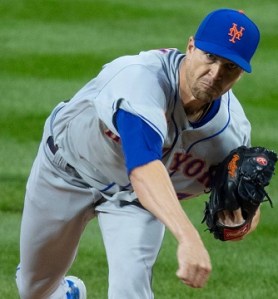
Stop me if you’ve heard it before: Jacob deGrom pitched like a Hall of Famer, but the new Mets bullpen puked the bed like the old one did.

The fans are back in the stands, however limited by ongoing COVID-19 safety protocols, but the Nationals have yet to play a regular-season game thanks to a few players and a staffer or two testing positive. There went that Opening Day must-see match between Max Scherzer and the Mets’ Jacob deGrom.

With their opening set with the Nats thus wiped out, deGrom had to wait until the Mets went to Philadelphia Monday. Oops. That and everything else seemed to play a support role to the horrid news out of San Diego.

The news that Fernando Tatis, Jr., the Padres’s new bazillion dollar shortstop, suffered a partial left shoulder dislocation on a hard third inning swing at the plate during a Monday loss to the Giants.

Padres manager Jayce Tingler told reporters he thinks team trainers and medical people were able to pop the shoulder back together, but the team isn’t taking chances. At this writing, MRI results aren’t available and nobody knows yet whether Tatis will spend significant time on the injured list.

If it’s more than a small shoulder dislocation, it may not be significant time. If it’s something like a labral tear, Tatis could miss six months—essentially, the rest of the season—according to one doctor who knows such shoulder troubles and spoke to the Los Angeles Times. Don’t fault the Padres if they’re saying to themselves, “Thank God for insurance.”

DeGrom could use a little extra insurance himself, alas. The good news for the Mets: deGrom was his usual self Monday night. Six shutout innings, seven punchouts, three hits, three-figure speed on his fastballs. The bad news, alas: the Mets are gonna Met, so far. At least out of the bullpen.

Their on-paper impressive offense found nothing more than two runs to support their ace. They got an inning of shutout relief from Miguel Castro relieving deGrom for the seventh, but the bullpen puked the bed in the eighth—including hitting Bryce Harper with the bases loaded. Not exactly a Rhodes Scholarship move there.

The Old Fart Contingency thundered aboard social media that Mets manager Luis Rojas blew it lifting deGrom after six strong—until they were reminded the added layoff after the Washington postponement put both deGrom and the Mets into caution mode.

“If that was [last] Thursday and I’m on normal rest,” the smooth righthander said postgame of the early hook, “I don’t think there is any chance I’m coming out of that game. We discussed it before what was the right thing to do. Long season and talking to them coming in, it felt like was the right decision.”

It was neither deGrom’s nor Rojas’s fault that, after Garcia took care of the Phillies in the seventh with just one infield hit within a fly out and two ground outs, the Phillies loaded the bases on the Mets’ new relief toy, Tyler May, in the eighth with one out, before Rojas went to another new Met bull, Aaron Loup. And Loup promptly hit Harper to push Miller home, before J.T. Realmuto singled home pinch runner Quinn, Mets late third base replacement Luis Guillorme threw home off line allowing Harper and Rhys Hoskins to score, and Didi Gregorius pushed Realmuto home with a first-pitch sacrifice fly.

The Mets had nothing to answer except a two-out ninth-inning stand that came up two dollars short against Phillies closer Alvarado. Kevin Pillar singled up the pipe, Francisco Lindor—the Mets’ own new bazillion-dollar lifetime shortstop—dumped a quail into shallow right that landed just in front of and then off the glove on oncoming, diving Harper, and Michael Conforto singled Pillar home while setting up first and third.

Pete Alonso, their 2019 Rookie of the Year bomber, hit one to the back of right field that looked as though it had a chance to ricochet off the top of the fence if not clear it. It wasn’t quite enough to stop Harper from running it down, taking a flying leap with his back against the fence, and snapping it into his glove to stop a game-tying extra-base hit and end the game with the Phillies on the plus side, 5-3.

Marry the foregoing to deGrom going 2-for-3 at the plate including an RBI single, and no wonder May himself said post-game, “Jake shouldn’t have to do everything himself. That’s not what teams are, and frankly Jake did almost everything today.”

Just don’t marry that to things such as the Angels’ Shohei Ohtani hitting 100+ mph on the mound and hitting a mammoth home run that flew out 100+ mph in the same inning last Friday night. Ohtani the two way player is an outlier among outliers; deGrom’s merely an outlier.

As of Tuesday morning— with the National League’s pitchers having to bat because Commissioner Nero simply couldn’t bring himself to keep the universal designated hitter this year at least, and Ohtani batting second in the Angel lineup the night he started on the mound, among other things—the pitchers have a .131/.157/.192 slash line and a .349 OPS.

The pitchers at the plate from Opening Day through the end of Monday night collected thirteen hits in 149 plate appearances: nine singles, three doubles, and Ohtani’s Friday night flog a third of the way up Angel Stadium’s high right field bleachers. They also walked three times and struck out 56 times. And the OFC still insists the National League just say no to its own invention.

All around the Show, too, there was one home run hit every 35 plate appearances and fourteen percent of all 928 hits the season’s first five days cleared the fences. It took five outs to create a single run, with 5.3 average runs created per game and 631 runs created while 559 scored.

It was fun to hear the fan noises even in limited capacities, too, though the limits in Angel Stadium made Ohtani’s blast sound even more explosive at the split second he hit it. If only things had been more fun for the home crowds: the many themes for the Show’s first five days could include, plausibly, the blues classic “On the Road Again.”

The home teams’ slash lines: .225/.313/.374/.687 OPS. The road teams: .245/.328/.403/.731 OPS. The road teams drove in fifteen more runs, hit thirteen more home runs, seven more doubles, and had seventy more hits overall. They also took eleven more walks, though they struck out fifty more times and grounded into fifteen more double plays. The road rats also had a +29 batting average on balls in play over the home boys and 108 more total bases while they were at it.

Maybe the shocker among the opening road rats were the Orioles. The Woe-rioles. Taking three straight from the Red Sox in Fenway Park. Out-scoring the Olde Towne Team 18-5, including and especially an 11-3 battering on Sunday afternoon. Even those paranoid about ID cards might want to insist the Orioles show theirs, even after the Orioles got a brief return to earth from the Yankees beating them 7-0 Monday in New York.

Unless it was the Reds, taking two out of three from the Cardinals to open, including and especially a 12-1 battering Sunday afternoon that proved the best revenge against abject stupidity is to slap, slash, scamper, and smash your way to a six-run seventh when you’re already up three runs—thanks to Nick Castellanos ripping Cardinal starter Carlos Martinez for a two-out, three-run homer an inning earlier.

Castellanos got drilled by Cardinals reliever Jack Woodford Saturday . . . two days after he bat-flipped a home run. Then, when he dove home to score on a wild pitch, Castellanos got bumped by Woodford sliding in to bring down the tag Castellanos beat. Castellanos sprung up, barked at Woodford, and began walking away before trouble could arrive. Oops. Trouble arrived—when Yadier Molina shoved him from behind to spark a bench-clearing brawl.

Baseball government myopically suspended Castellanos two games for “provoking” the brawl. Who’s baseball’s official optician? Who couldn’t see what everyone else with eyes saw? And how long has Molina—handed only an “undisclosed fine” along with a few others in the scrum—been so privileged a character that he can get away with the actual kickoff of a brawl that was seeded in the first place because the Cardinals are one of the game’s self-appointed Fun Police precincts?

“I was pleased,” Cardinal manager Mike Schildt told the press after that game. “Our guys came out there. We’re not going to take it. I know Yadi went immediately right at him, got sidetracked by [Cincinnati’s Mike Moustakas]. Woody, to his credit, got up and was like, ‘I’m not going to sit here and be taunted.’ Good for him.”

Taunted? All Castellanos said when he sprang up, by his own admission, was “Let’s [fornicating] go!” Anyone who thinks Woodford lacked intent didn’t see that ball sailing on a sure line up into Castellanos’s shoulder and rib region. Nor did they see Molina very clearly shoving Castellanos without Castellanos having the benefit of a rear-view mirror.

Castellanos appealed the two-game suspension. The final result wasn’t known at this writing. But the Cardinals should be getting a message of their own: Defund the Fun Police. Pronto.

How about the Astros, who went into Oakland and swept four from the Athletics before ambling on to Anaheim and losing 7-6 to the Angels Monday night? That was despite dropping a three-run first on Angel starter Jose Quintana and yanking a fourth run out of him in the top of the fourth, before the Angels finally opened their side of the scoreboard with Mike Trout (of course) hitting Luis Garcia’s 2-2 meatball about twelve or thirteen rows into the left field seats.

The Angels pushed a little further back, the Astros pushed a little further ahead, until the Angels ironed up and tore four runs out of the Astros in the bottom of the eighth with an RBI single (Dexter Fowler), a run-scoring force play (David Fletcher), a throwing error (on Jared Walsh’s grounder to first), an intentional walk (to Trout, of all people), and a sacrifice fly (Anthony Rendon).

Kyle Tucker’s ninth-inning solo bomb turned out more a kind of excuse-us shot than a last stand. The game left both the Astros and the Angels at 4-1 to open the season and what could be very interesting proceedings in the American League West. Now, if only the Astros could finally get past Astrogate.

They’ve been playing and winning through numerous catcalls, howls, and even a few inflatable and actual trash can sightings in Oakland and Anaheim. Jose Altuve—who’s looked more like his old self at the plate so far—seemed mildly amused when an inflatable trash can fell to the warning from those high Angel Stadium right field bleachers.

Astrogate was and remains anything but amusing. The Astros could keep up their torrid opening and overwhelm the AL West this season, but the scandal won’t go away entirely (nor should it) until the absolute last Astrogater standing no longer wears their fatigues. Yes, you’ve heard that before. That doesn’t make it any less painful for Astro fans or less true for everyone else. The Astros, nobody else, wrote the script that made them pariahs. Bang the cans slowly, fans.

Will off-field-based illegal electronic sign stealing disappear at all? Players got same-game video access back this year. There are three security people in every team’s video room at home and on the road. League cameras have been installed in those video rooms. Maybe it wouldn’t hurt to add guard dogs?

The players union agreed last year: there’ll be no more players getting away with murder even in return for spilling the deets—the commissioner can drop a lot more than a marshmallow hammer on the cheaters from now on. All by himself. He can demand answers without plea bargaining. And he doesn’t need a permission slip.

“But one of the prevailing lessons from the electronic sign-stealing era is that even if a scheme sounds far-fetched, someone might give it a whirl if they believe they can get away with it,” writes The Athletic‘s Evan Drellich, one of the two reporters (Ken Rosenthal was his partner) who helped break and burrow deep into Astrogate. “This holds true no matter what MLB does. Even a total ban on electronics, which the players would never agree to, would not be enough. In that case, a player or staffer could simply go rogue.”

In other words, boys will be still be boys, if they can-can.