Cabrera and the Yankees have it right

Miguel Cabrera

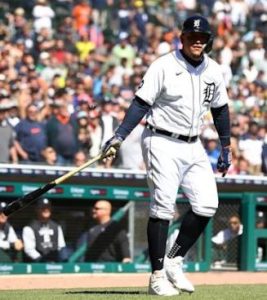
A free eighth-inning pass after going 0-for-3 to that point Thursday outraged Tiger fans far more than it outraged Miguel Cabrera to remain one knock short of 3,000.

I don’t want to pour any more gasoline onto the fire of Tiger fan’s outrage, but Yankee manager Aaron Boone did the absolute right thing Thursday afternoon. And it wasn’t as though Miguel Cabrera lacked for shots at his 3,000th lifetime hit.

Boone ordered Cabrera walked on the house in the bottom of the eighth rather than risk the righthanded-hitting Cabrera clobbering his lefthanded relief pitcher Lucas Luetge with runners on second and third, two outs, and the Tigers ahead a mere 1-0.

Now, the move backfired, sort of; Austin Meadows ripped a two-run double to make it 3-0. So think of it as the Tigers’ revenge if you wish. But since when is the other guy “entitled” to make history on your dollar? Since when are you just supposed to be nice guys and let him make his history when he might put a game a little further out of reach against you?

Cabrera was 0-for-3 on the day when his eighth-inning plate appearance approached. He didn’t exactly lack for chances to plant number 3,000 somewhere in Comerica Park. He knew it. Understandably, the Comerica crowd wanted history. Understandably, too, the Yankees wanted to come back and win a baseball game.

But a Hall of Famer is more aware of the big picture than the fans booing the Yankees lustily for ordering the free pass before he could even check in at the plate. He simply dropped his bat in the on-deck circle and make the trek to first base without so much as a wince. He waited until he reached the pad to have a word with or toward Boone.

To which Boone replied, perhaps in good humour, “Miggy was jawing at me after I called for the walk. I told him we’re even. He cost me a World Series in 2003, so now he can sleep on 2,999.” (The reference was to Cabrera then being a member of the Marlins who beat the Yankees in six in that Series—into which Boone’s legendary ALCS-winning home run put the Yankees in the first place.)

Tonight will be only the second night Cabrera sleeps on 2,999. After pulling up that short following Wednesday’s play, during which he went 3-for-4 to get there in the first place, he purred, “Who the [fornicate] cares? We lost. When has this game ever been about individual accomplishments?”

Well, fair play. Baseball has been as much about individual feats as team victories since the game was born, more or less. Cabrera may downplay his failure to reach 3,000 Wednesday—and try calming the Comerica crowd down after the free pass and the eventual Tiger win today—but he can’t really be foolish enough to deny that particular feats resonate as deeply as World Series rings.

If he’s rejecting the idea that individual accomplishment is not something to which a player is “entitled,” good for him and better for the game. There’s nothing in the written rules, and little enough unwritten in the Sacred Unwritten Rules, that says a team’s supposed to roll over and play dead so the other guy can reach a landmark.

But there’s plenty on the ethical side that says you’re supposed to achieve your milestones in honest, unmanipulated competition. Including the part that says the other guys have just as much right to try to beat you as you have to try to beat them, history be damned for the moment.

Few teams are quite as conscious or respectful of history and milestones as the Yankees. But they’re also conscious of the season at hand. They took the chance on a lefthander-lefthander matchup offering the best chance to escape the inning unscathed and try once more for victory.

Meadows and thus the Tigers turned out the winners there, fair and square. The Yankees also had a shot at closing the gap and even tying the game in the top of the ninth, when Joey Gallo beat out an infield hit with one out, until Isiah Kiner-Falefa dialed Area Code 6-4-3 for the side and the game.

The Yankees made a smart move and it backfired. That, too, can happen. If Tiger fans want to call it the vengeance of the baseball gods, they’re, ahem, entitled to that. But they shouldn’t condemn the Yankees for putting honest competition and a chance to come back and win ahead of history.

Tiger fans should also heed manager A.J. Hinch’s counsel. “Boonie’s obligation is to his own team and their chances of winning,” Hinch said postgame. “He had the matchup behind Miggy that he wanted. So you could see it coming. I know our fans responded accordingly, but I totally get it.” That’s called being a gracious winner.

Cabrera’s sound counsel, however crudely expressed, is: We still won, and tomorrow’s another day. Especially with the Tigers still at home for this weekend, hosting the Rockies. Cabrera has three more games in front of the home audience to plant number 3,000, fair and square, in honest competition.

It’s Miller time . . . for retirement

Andrew Miller

The Cubs won the 2016 World Series but, until they did, Cleveland relief pitcher Andrew Miller may have been that postseason’s biggest star.

Andrew Miller’s mother once hoped he’d parlay his high 1500s SAT results into a college degree from Masschussetts Institute of Technology. Mrs. Miller would just have to settle for her brainy son becoming a lefthanded pitcher who helped revolutionise relief work, and who helped articulate the folly of the owners’ lockout from December through almost mid-March.

Miller had long proven that the best, most valuable relief pitcher in the bullpen isn’t necessarily your “closer” earning “saves,” particularly with the team then known as the Indians (now the Guardians) in the 2016 postseason plus the second half of 2016’s and most of 2017’s regular seasons.

But during the foolish lockout, the 36-year-old Miller also helped clarify that the players refused to suffer tanking any more gladly than tanking teams’ fans do.

“All during these negotiations,” Peter Gammons wrote in The Athletic as the lockout finally came to its end, “Miller drove home the players’ insistence that tanking and ideas that diminished competition were contrary to their beliefs. He consistently called ‘increased competition a core goal’ of the negotiations. ‘Anything that points towards mediocrity is the antithesis of the game and what we’re about as players,’ he said.”

Miller announced his retirement Thursday, after a considerably distinguished sixteen-season pitching career, in which he shifted himself from a nothing-special starting pitcher who couldn’t harness his repertoire into a game-changing relief pitcher who used his stamina and his wipeout slider to show both the uselessness of the save-centric mindset and resurrect an ancient—and then-controversial, too—idea about relief work.

Hall of Fame manager Casey Stengel thought nothing of bringing prime relief (Joe Page, Allie Reynolds, Bob Turley, to name three) in earlier than the latest innings when he managed the Yankees. He hammered the point that the time to reach for a stopper happens any time, even in the earliest innings. Miller’s Indians manager Terry Francona, whose new toy came from the Yankees in a non-waiver trade deadline deal, used Miller in just that way the rest of 2016 and all the way through the postseason.

It finished what Miller’s four-year/$36 million deal with the Yankees in December 2014 started: making a mostly non-closing relief pitcher into a star. He stayed with the Yankees until that trade deadline. For the second half of 2016, right up to the moment he ran out of petrol in Game Seven of the 2016 World Series (an RBI single, plus David Ross’s last major league hit–a leadoff home run), Miller was the Indians’ best relief pitcher.

According to fielding-independent pitching, which accounts for the things within a pitcher’s control as traditional earned-run average doesn’t, it wasn’t even close: his 1.53 FIP was 80 points below the next-lowest in the pen, Dan Otero’s 2.33 . . . and 1.78 below designated closer Cody Allen.

The ancient beer commercial proclaimed, “Now—it’s Miller Time.” The skipper for team known then as the Indians proclaimed, “Now—it’s Miller Time,” whenever he needed a stopper in that postseason. Quick: Name the only two relief pitchers ever to win a postseason Most Valuable Player award without being their teams’ primary closers. Answer: Miller, in the 2016 American League Championship Series; and, Rob Dibble, in the 1990 National League Championship Series.

Miller was just as deadly in 2017 (1.99 FIP) until he developed patellar tendinitis in his right knee, his landing knee, in early August, returning that September. He ran out of fuel again in the postseason, this time against his former team, the Yankees, in the Indians’ division series exit.

In due course he signed with the Cardinals, but he fought injuries and the inconsistencies they provoked. He never really looked like the force of nature he was in 2016-17 again, except during three brief postseason trips with the Cardinals. In fact, his entire posteason relief FIP—seven postseasons, 29 games, and one trip to the World Series—is more sparkling than his regular-season career marks as a reliever and as the starter he first was before he discovered life in the bullpen with the 2011-12 Red Sox:

Andrew Miller—Fielding-Independent Pitching (FIP), Career
As a starting pitcher 4.78
As a relief pitcher 3.02
As a postseason reliever 2.43

He’d shortened his delivery into a partial slide step to help him put more bite on that slider. He also paid close attention to just how he and his fellow relief corpsmen were handled, fuming over an early-season set in Chicago during which then-Red Sox manager Bobby Valentine seemed almost indifferent to how the April chill affected their pen preparation.

“The Red Sox returned home . . . and when Miller got to the park, he was upset about the usage of Rich Hill—who had already worked through a couple of operations in his career,” Gammons wrote.

Miller talked about how Hill had gotten up “close to eight times” and finally got in to face one lone batter in the bottom of the eighth inning, and Miller said, “there ought to be some kind of punishment for doing that to a pitcher, particularly someone with a medical history.” Miller turned a corner in his career that season under [2012 Red Sox manager Bobby] Valentine and there were no public issues. But he felt a teammate had been jeopardized and for 24 hours remained in that window.

“The problem still seems to be,” I wrote in the 19 March edition of the Internet Baseball Writers Association of America’s Here’s the Pitch newsletter, “that enough managers pay too little attention to the pitch volume relievers throw in the pen before they come into games . . . if they come into games. Some of those managers still think a relief pitcher hasn’t “pitched” unless he’s been in a game. Those men may well throw more innings’ worth of pitches in the pen than they’ll ever throw on the game mound.”

Apparently, there was at least one relief pitching thinking along the same lines in 2012. Rest assured, Miller’s probably not the only such reliever with the only such thoughts. The need to monitor relief pitchers’ warmup work carefully and manage it prudently remains profound if rarely appreciated.

Miller’s Cardinals teammate Adam Wainwright, himself now approaching the end of a splendid pitching career, appreciates Miller as both a relief pitcher and an advocate for the greater good of the game as one of the players’ union’s main negotiators.

He changed the game and he kind of took that relief role back to when it first started, guys who could do two, three innings–and he was the guy who did it in the postseason. I have an appreciation for what he did for the entire game of baseball. As many hours as that guy put in for the union over these past few years is kind of staggering. He may retire and that means this whole offseason he still spent sixteen hours on the phone a day, for us, for who’s next–that means a lot.

Miller is also the kind of young man who appreciates such things in life as fine wines and (this endears him to my guitar playing heart even more) the woods used to make guitars. The relief force who has worn the uniforms of the Tigers, the Orioles, the Red Sox, the Yankees, the Indians, and the Cardinals also has a calm appreciation for baseball’s history and signatures.

“I’m usually pretty quick to be able to step back though and see how lucky I have been,” Miller told the Post-Dispatch. “The hard times were necessary for me to grow and to be able to appreciate the highs along the way. Ultimately, I was able to play for many great franchises, wear historic uniforms, and play in some amazing ballparks.”

Pondering such appreciation causes me to ponder that I’d love to find a way to suggest Miller in retirement could bring his considerable weight to bear, as a baseball thinker as well as pitcher, on behalf of a forgotten player class: the now 504 pre-1980, short-career major leaguers who were frozen out of a 1980 pension realignment that made pension vesting possible after 43 days’ major league service time

All those players have received since is an annual stipend negotiated by former Players Association director Michael Weiner and former commissioner Bud Selig. The original stipend was $625 per 43 days’ major league service time, up to $10,000 a year. Somewhere during the lockout, the stipend—whose February payment was delayed pending the lockout settlement—was hiked fifteen percent. Now, it’s $718.75 per 43 days’ major league service time.

It’s hardly close to what those pre-1980 short-career men deserve, but it’s something. The further bad news is that those monies still can’t be passed to those men’s families upon their deaths.

Many of those men were active union members supporting the battles for players’ rights and respect, which compounds the original injustice. Several of those players have said they believe a perception that most were mere September callups factored in their original freeze-out. Well. I’ve been looking it up. So far, the majority of such players either made even one of their teams’ rosters out of spring training or appeared on rosters as early as later in April, or May, or June, or July, or August.

Articulate, intelligent, sensitive Andrew Miller, entering a richly-earned retirement, would be an invaluable voice of influence on behalf of those men, if he could be made further aware of such an injustice.

What the Yankeegate letter won’t do

Affirming the 2017 Yankees as cheaters won’t exonerate or excuse that year’s Astros or the next year’s Red Sox.

Remember the somewhat infamous admonitory letter from commissioner Rob Manfred to Yankee general manager Brian Cashman, regarding proof that the Yankees were up to some 2017 electronic sign-stealing of their own? The letter the Yankees have fought to suppress with the same ardor as they exercise trying to break a decade-plus World Series ring drought?

The Yankeegate letter’s going to come forth in a fortnight, ESPN says. We’re going to learn at last whether Manfred told the whole story of any such Yankee panky or, if he did, just what it actually involved, other than the once-infamous dugout phone/Apple watch slap on the wrist. It only took two years from the day federal judge Jed S. Rakoff ordered the letter unsealed and disclosed to the public with minimal redaction.

Maybe it was only the dugout phone and/or the Apple watch. Maybe it included the Yankees trying to get cute using a television broadcast camera/monitor for a little extracurricular intelligence gathering. Maybe it included the Yankees operating a replay-room reconnaissance ring similar to that known to have been run by Red Sox players in 2018. Maybe.

The bad news, at least for the DraftKings fantasy baseball group, is that releasing the Yankeegate letter won’t reinstate their $5 million lawsuit over Astrogate and Soxgate and aimed at both those clubs plus MLB itself. The worse news is that, whatever is or isn’t in the Yankeegate letter, it won’t take the 2017-18 Astros especially, or the 2018 Red Sox as well, off the hook.

Memory summons back that some around the Astros—and no few of their fans—believed to their souls that high-tech sign-stealing was prevalent enough that they would have been left in the dust if they didn’t think about a little such subterfuge themselves. Mostly, it involved replay-room reconnaissance. The Red Sox got bagged for it over 2018, but few pretended they were the only team with that kind of spymanship.

The Rogue Sox and their fellow replay-room spies, whomever they were, still required a little of the old-fashioned gamesmanship technique: their pilfered intelligence was useless unless there was a man on base to receive it and thus signal it to the man at the plate. That doesn’t justify, either. Sign-stealing from the basepaths or the coaching lines is one thing. Picking it off replay monitors is something else entirely.

But those rooms were provided by MLB itself, to the home and visiting teams in each ballpark. Expecting them to be there without one or another team giving in to the sign-stealing temptation was (I repeat, yet again) something like Mom and Dad making off for a weekend getaway without the kids and leaving the liquor cabinet keys behind.

The 2017-18 Astros took it quite a few bridges farther. For one thing, a front office intern created a sign-stealing algorithm (Codebreaker) that he warned was legal to use before and after games but not during games, a warning then-general manager Jeff Luhnow pooh-poohed while fostering a since-exposed organisational culture in which, to be polite, human decency, never mind honest competition, was seen as an encumbrance.

For another thing, there was that little matter of either an existing camera altered illegally from its mandatory eight-second transmission delay; or, a second, illegally deployed real-time camera. Either or both of which sent signs to be deciphered from an extracurricular clubhouse monitor and then transmitted to Astro hitters with the infamous trash can bangs.

Nobody with credibility says the replay-room reconnaissance rings were right. And nobody with credibility should ever say those rings made the 2017-18 Astros less guilty. As things turned out, the Astros had such a broad reputation inside baseball for their kind of cheating that their 2019 World Series opponents took themselves to extraordinary lengths to thwart it.

No, the 2019 world champion Nationals didn’t build their own extralegal closed-circuit television spy network. They merely provided every one of their World Series pitchers with five individual sets of signs each to switch up in a split second’s notice, with their catchers provided wrist-band cards featuring every one of those sign sets just in case.

Whataboutism is no defense whether you’re a rogue police officer, a corrupt politician, or an illegal off-field-based electronic sign-stealing cheater. The Astros couldn’t just whatabout their Astro Intelligence Agency and get away with it in the public mind. Nor could the Rogue Sox whatabout it when their 2018 edition was exposed for replay-room reconaissance cheaters.

The Yankees won’t be able to whatabout it if the infamous letter shows their 2017 edition to have been replay-room or broadcasting-camera cheaters, either. But we’ll have to wait at least a fortnight before we know at least some the rest of the Yankeegate story.

For the Mets, the Buck starts here

Buck Showalter

Can the smart, well-prepared, clubhouse-cohesive Showalter proved he’s learned from his most egregious mistake?

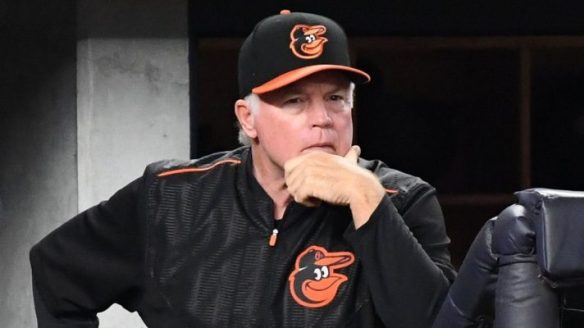
All fairness: I want to give both the Mets and Buck Showalter the benefit fo the doubt. The Mets, because they did go through a deep enough hunt before making him the 24th manager in their history. Showalter, because you don’t get to manage two decades’ worth of major league baseball without doing more than just something right.

Even if you did something so egregiously wrong once upon a time that it would stain an otherwise solid reputation for smarts, preparation, cohesion, and long-haul steadiness. Four things the Mets need abundantly and Showalter has proven he provides well enough that one terrible mistake really shouldn’t mark your entire career.

But oh, what a mistake it was. And heaven help the Mets and their new skipper if he and they should find themselves facing a comparable scenario when they arrive at the postseason and he makes the same mistake. Will George Satayana prove a baseball prophet, too?

“Those who cannot remember the past are condemned to repeat it,” Satayana wrote immortally in The Life of Reason. Baseball sometimes tries but always fails to forget the past. That can be good and bad, of course. And you’ll have little trouble finding people who’d like to forget the 2016 American League wild card game.

Let’s first put the Big One into proper perspective. It didn’t cost Showalter’s Orioles a World Series. But it cost them a chance to get into a division series from which they might, maybe, have begun a postseason journey there.

Leaving both his and baseball’s best relief pitcher in the pen while a lesser arm surrendered an eleventh-inning, wild card-losing three-run homer has left Showalter second-guessed at least as often as Gene Mauch was over the 1964 Phillies’ pennant race collapse.

That relief pitcher, Zack Britton, holds no grudge. Now with the Yankees, but facing a 2022 season away from the game while he rehabs from elbow reconstruction surgery, Britton doesn’t flinch. Ask him if he’d play for Showalter again given the chance, as The Athletic‘s Ken Rosenthal has, and his answer is an emphatic yes. One hundred percent, Britton began.

Showalter knew he’d blown it. And when he reconvened his Orioles during spring training 2017, he let them know it, Britton says.

We always had this spring training thing, which I thought was cool — off-site, get together in a movie theater, kind of show you the highlights of the previous season, just a bonding moment for the team. During that meeting, he got up there and said, ‘Before we start, I just want to address the elephant in the room.’ He apologized to me, which I didn’t think he needed to do. I think there were some guys on the team that were frustrated by the move. He just said: ‘That’s my bad. I messed up.’ And it was done with.

But was it, really?

Britton told Rosenthal Showalter “had his reasons. I’m not 100 percent sure why, but it didn’t matter. I always knew Buck was thinking through it. He always had a plan. Maybe it didn’t go according to his plan, and then it kind of backfired. But he was willing to take that risk, sticking with the plan.”

That’s the thing, though. Often enough, things happen enough that The Plan needs to be set to one side in the moment. “I don’t know his exact reasoning,” Britton admits. “But I truly think he was trying to do right by me and not hurt me. I’m going to be honest: I don’t think he thought we were going to score. And he didn’t want me to have to go out there for two or three innings.”

That game was tied at two in the bottom of the eleventh when Edwin Encarnacion checked in against Ubaldo Jimenez, a starter pressed into relief after Brian Duensing opened the inning by striking Ezequiel Carrera out. Jimenez surrendered a 1-1 base hit to Devon Travis and a first-pitch single to Josh Donaldson.

Jimenez may have been lucky that Donaldson—proud possessor of 37 regular-season home runs that year—hadn’t ended the game with something longer than a single to set up first and second. And Showalter in the moment didn’t think an 89 game-winning team that hit .256 on the regular season could put even one more run across the plate?

Both teams drained their bullpens by the time Jimenez and Encarnacion squared off. Except that Showalter still had Britton to call upon. The Jays already burned their closer Roberto Osuna, and Francisco Liriano wasn’t likely to stay in the game should the Orioles get it to the top of the twelfth. Everything favoured the Orioles.

Or would have, if Showalter brought Britton in. Now, of course this is baseball, where anything can happen—and usually does. There was always the outside chance that Britton could get tagged, too. But what’s another old saying? Oh, yes: If you’re going to go down, at least go down while you gave yourself the absolute best possible chance to survive and then triumph.

Whole book chapters have been written about the save rule wreaking more havoc then health. Showalter holding Britton because he wouldn’t be coming into a “save situation” can be found there. Possibly Exhibit A; at least, among the top three. Because that game needed to be “saved” right then and there for the Orioles to get one more chance at minimum to win.

So Jimenez stayed in the game. This time, neither he nor the Orioles escaped. Encarnacion hit the first pitch about ten tons into the second deck in left and sent the Jays to the division series.

Now, I’m going to give Showalter all credit on earth for manning up and apologising to his team during that spring movie house confab. Just the way Mauch deserves all credit for holding his team back on the plane, landing home following the end of that ’64 Phillie Phlop, a crowd awaiting them, and telling the players he’d step off the plane first: “You didn’t blow the pennant. I did.”

Just the way Tommy Lasorda—who only thought it was safe to let Tom Niedenfeuer pitch to Jack Clark with first base open and the Dodgers an out away from forcing a seventh 1985 National League Championship Series game—apologised to his players in the clubhouse after Clark’s three-run homer carried what proved a Cardinal pennant to the rear of the left field bleachers.

The New York Post‘s Steve Serby gave Showalter a chance to explain the whole thing in a 2020 interview. “You just have to wear some things,” Showalter replied, “and I can sit here and tell you ten things you may not know about that situation, but nobody wants to hear it. I’m at peace with that.”

Well, now. I’ve written before but it bears repeating. The Britton non-decision being one of baseball’s most often second-guessed, I suspect people would love to hear about the ten things that stopped Showalter from reaching to baseball’s best 2016 reliever in his bullpen other than it not having been a by-the-book “save situation.”

Rosenthal himself, a colleague of Showalter’s at MLB Network, says Showalter “has never explained the full reasoning behind his decision. But he viewed his apology the following spring as an important step in holding the team together.”

Showalter’s strengths have always including holding teams together despite periodic moments that could have driven wedges enough into them. He’s been known to handle the aftermath of bench-clearing brawls by reminding his players—without singling any one out by name—that if you’re going to fight, do it for the right reason, not just because your ego got bruised a few moments.

“[T]here’s nothing worse than supporting something you know is wrong,” Showalter said of one such Oriole incident. “That tears a club up. It’s: ‘Your actions reflect on everyone. Let’s make sure we’re fighting for a just cause’.”

Let’s assume the Mets asked Showalter about the Britton non-decision while they interviewed him for his new job. Let’s assume Showalter went back, broke it all down, reassembled it, all to the Mets’ satisfaction, and that was that.

Put the positives together and the Mets now have a manager who knows how to keep clubhouses from dissembling, who plans well, who isn’t a martinet but whose insistence on accountability doesn’t stop with his players or even with himself. His former Orioles outfielder Adam Jones has spoken of Showalter insisting on acountability from above as well as from under his command.

This is the guy who preferred to walk away from the Yankees rather than let George Steinbrenner fire his hitting coach Rick Down after the Yankees lost a tough division series to the Mariners. A man who won’t suffer The Boss’s impulses without a fight should have no trouble with Steve Cohen, the Mets’ owner whose fan friendliness often betrays tendencies that remind too many of some of Steinbrenner’s, shall we say, crazier ones.

Let Cohen rip his players in public aboard social media? Showalter might have something to say about that. He won’t quite wire himself into Cohen’s electric chair by doing so, but he won’t handle player mistakes or shortfalls quietly only to let the owner make it public and above and beyond reality, either.

He’ll have a team full of sharp veterans and maturing youth on his hands. Assuming Jacob deGrom and Max Scherzer can stay healthy, he’ll have a top two in his starting rotation to die for even if Max the Knife begins showing his age at last. He isn’t likely to let his players get themselves trapped into surrealistic nonsense or unrealistic distractions.

Just be very wary if and when Showalter brings his Mets back to the postseason, if and when their postseason advancement depends on whether he reaches for his absolute best pitching option regardless of The Plan or The Role because the immediate moment demands it.

Pray that, this time, Showalter seizes the moment to give the Mets their absolute best chance to survive and/or triumph, Plan be damned. Sending him a copy of The Life of Reason might not hurt, either.

Mystique and Aura have left the building

Xander Bogaerts

Bogaerts throwing the perfect strike to the plate to bag Aaron Judge, after Yankee third base coach Phil Nevins didn’t stop Judge rounding third at the moment Bogaerts released the throw. This is the kind of thing that used to make Red Sox life living hell—in the last century.

If we must suffer the wild card system still, we hope yet that the wild card games themselves have potential for excitement, and maybe even a little transcendence. The kind that happened in the American League wild card game Tuesday night, in Fenway Park, was everything the Yankees didn’t have in mind.

Their season ended in a 6-2 loss to the Red Sox that flipped the too-long script of Yankee-Red Sox surrealities past and ancient. Because something that usually happened in the last century to the Red Sox, when they could just taste even a piece of glory, happened to the Yankees Tuesday night.

Two teams about whose seasons it could be said most politely that they threatened to implode at too many points collided. The Red Sox played like a championship team. The Yankees played like a team whose destiny was disaster. This was not the natural order of things for either side before the turn of this century.

That was the Twentieth Century: Dubious decisions with games on the line or close enough to it compounded what seemed ages of Red Sox disaster. This was Tuesday night: A dubious decision when the Yankees could have had a clean chance at possibly tying the wild card game all but guaranteed their homegoing instead.

Much as you’d like to see the sports goat business put out of business once and for all, it’s going to be hard to resist planting those horns squarely upon the head of Yankee third base coach Phil Nevin for what transpired in the top of the sixth.

Nevin only thought he could send Aaron Judge all the way home from first, when Giancarlo Stanton drove one off Red Sox reliever Ryan Brasier that looked like it was going to fly into the Green Monster seats. Until it didn’t. It banged off that notorious wall and to the ground in left center, where Red Sox left fielder Alex Verdugo overran the ball but center fielder Enrique Hernandez running right played the carom almost perfectly and threw in.

Hernandez fired a perfect strike to Red Sox shortstop Xander Bogaerts as the cutoff man, and—as Judge rounded third barreling home on his long legs—Bogaerts whipped around to fire a perfect strike to Red Sox catcher Kevin Plawecki. Judge started his dive as Plawecki caught the throw, and Judge was a dead pigeon with his right hand about two feet from touching the plate.

Instead of first and third and one out, after finally ridding themselves of Boston’s lights-out starting pitcher Nathan Eovaldi, the Yankees settled for Stanton on second and two out. With Joey Gallo coming to the plate and popping out to Red Sox third baseman Rafael Devers playing it back on the short outfield grass for the side.

And, with every cheering jaw in Fenway Park still dropped over Nevin turning Judge into a kamikaze.

Yankee manager Aaron Boone takes an excessive share of abuse for the Yankees’ in-season hiccups and postseason shortfalls—especially with his contract expiring now, but just about since he first took the Yankee bridge. Never mind that Boone managed back-to-back 100+ win seasons in his first two years on that bridge, which no Yankee manager did before him. Never mind the Yankees averaging 98 wins a year in his three full seasons on that bridge.

But even Boone’s worst critics can’t get away with hanging this one on him. Not that they’re not trying. From almost the moment Boone took the bridge in the first place, the first Yankee shortfall of any given series or season—a bad pitch, a bad plate appearance, a bad inning, a one-game losing streak—has brought demands for Boone’s perp walk and summary execution. Preferably five minutes earlier.

You’d think Yankeetown still hasn’t grasped the concept that it’s entirely possible for the other guys to play better and smarter when it means the most. Which is exactly what happened Tuesday night.

Boone once broke Red Sox Nation hearts with his pennant-winning blast in the bottom of the eleventh in Yankee Stadium in 2003. Now the poor man seemed as befuddled himself as everyone else in Fenway Park and in the ESPN television audience for making sense of Nevin’s send.

“I think . . . the ball coming in looked like it was going to be kind of an in-between hop to the infielder,” Boone said postgame about Hernandez’s throw in to Bogaerts. “Bogaerts did a good job of creating a hop, catching it clean and and obviously throwing home and getting him. And that kind of squashed the potential rally there, so I think what [Nevin] saw was what he thought was going to be kind of an in-between hop and really a tough chance.”

“Create” the hop? Bogaerts was simply standing on the short center field grass waiting for the throw and the hop created itself, right into Bogaerts’s glove held out to his left. He turned at the split second the ball hit his glove and threw home perfectly.

Bogaerts talking postgame said that play and his part in it meant even more than the two-run homer he drilled into the center field bleachers off Yankee starter Gerrit Cole in the top of the first. Small wonder. The Red Sox were the American League’s most defensively challenged team of the regular season. On Tuesday night they found it in them to play far above their own defensive heads when it mattered the most.

“That [play] was better than a homer for me, personally,” he said. “I mean, if that run scores, it’s 3-2. Stanton is at second base, the whole momentum is on their side. The dugout is getting pumped up. As Judge was out at home, I saw Stanton was pretty mad. He probably wanted a homer there, but also an RBI, and he didn’t get that, and he probably felt like he didn’t do much because that run didn’t score. But that changed the game.”

The Monster factor was made only too vivid in the bottom of the sixth, when Alex Verdugo sent a high liner to deep right off Yankee pitcher Luis Severino working in relief. The ball bounced off the lower part of the fence, a clean enough double, well enough to enable Bogaerts (aboard with a one-out walk) to score the fourth Red Sox run of the night.

Three times Tuesday night Stanton hit what looked like certain home runs. Aside from the sixth-inning rip that indeed turned out to change the game irrevocably, he ripped one so high toward the Monster that even the Red Sox thought it was going to disappear. Until it didn’t. Stanton was so certain that he settled into his home run trot and was held to a measly single.

In the top of the ninth, against Red Sox relief pitcher (and former Yankee product) Garrett Whitlock, Stanton sent a parabolic launch the other way into the right field seats just past the Pesky Pole himself. By then it was an excuse-me! shot for only the second Yankee run. Whittaker ended the game by getting Yankee second baseman Gleyber Torres to pop out to right.
Kyle Schwarber

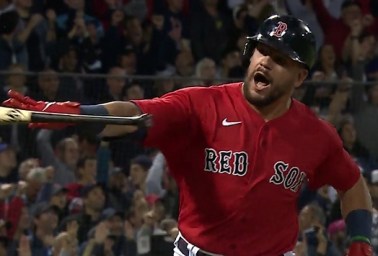
The Schwarbinator became the first of two former Cubs batting leadoff Tuesday night to strike big . . .

Legends real and alleged used to include longtime Chicago newspaper star Mike Royko’s postulate that the team with the most ex-Cubs lost. The Red Sox and the Yankees may have really tempted real or imagined ancient fates with their chosen leadoff men Tuesday night: World Series-winning ex-Cub teammates Kyle Schwarber (designated hitter, Red Sox, by way of the Nationals) and Anthony Rizzo (first baseman, Yankees, at this year’s trade deadline).

Those moves came of dire necessity, actually. The Red Sox lacked designated hitter J.D. Martinez after he rolled his ankle in the Red Sox season finale, and the Yankees lacked second base regular D.J. LeMahieu thanks to a sports hernia. So, naturally, the Elysian Fields gods decided to have a little mad fun. Right?

Schwarber struck first. With Cole already having a miserable evening in the hole 2-0, the Schwarbinator led off the bottom of the third by driving a 1-2 service no doubt and about twelve rows into the right field seats. Rizzo struck back with one out in the top of the sixth, hitting Red Sox starter Nathan Eovaldi’s first service on a high line inside that Pesky Pole for the first Yankee run. Then Judge promptly beat out a tough bouncer to shortstop.

The good news for the Yankees is that that finally got Eovaldi out of the game, after he’d manhandled them brilliantly through five and a third including eight strikeouts and no walks. The bad news was Judge on the threshold of disaster on the Stanton home run that wasn’t and the Nevin send that shouldn’t have been.

No Yankee reached base on walks all night. Seven Red Sox reached on walks from Cole and three Yankee relievers. Only Clay Holmes out of the Yankee pen, facing five batters, didn’t walk a single Red Sox batter while surrendering one hit and striking one out. The walks really burned the Yankees in the bottom of the seventh, when Verdugo sent the insurance runs home with two out, slashing a two-run single against Yankee reliever Chad Green to score Hernandez and Schwarber—both of whom had reached on walks.

That Yankee sixth is what used to happen to the Red Sox when they could just taste even a piece of glory in their mouths. Something surreal. Something from The Twilight Zone. Something else from The Outer Limits. Something more from Alfred Hitchcock Presents. Leaving the Red Sox yet again fallen to the rocks below when they’d gotten to within one mile or a few innings of the mountaintop.

Why, even B.F. Dent himself—hitter of the home run that broke an earlier generation of New England hearts in the 1978 American League East playoff game—was in the Fenway stands and chatting for one minute with ESPN analyst Buster Olney. (He admitted he’s still asked about that three-run homer into the ancient Monster net—about two or three times a day.)

Except that the ESPN audience probably noticed Dent a lot more than the crowd around him in the stands did. They were too well and appropriately occupied with the Yankees incurring the kind of outrageous malfortune that once seemed the birthright of Red Sox baseball.

Before the game Dent predicted to Boston Globe columnist (and author of The Curse of the Bambino) Dan Shaughnessy, “I think Gerrit Cole will pitch a great game, and I think the Yankees will beat ’em.” That’d teach him. Cole pitched two full innings in the hole 2-0 and got nobody out while facing two more batters after Schwarber’s leadoff launch in the third.

This time, it was the Yankees crushed by trans-dimensional furies and a fatal miscalculation. It’s starting to become as much a Yankee thing this century as a Red Sox thing last. From Dave Roberts stealing second to launch that surreal 2004 Red Sox self-resurrection to Jose Altuve’s pennant-winning two-run homer, it looks as though Mystique and Aura really have left the building.

The ladies didn’t have to take Phil Nevin’s baseball brain with them, though.

Wherever the Red Sox go from here, and they know it won’t be easy tangling with the AL East champion Rays in a division series, nothing can change the extraterrestrial triumph over the Empire Emeritus that gives them that chance in the first place.