Who has the next-to-last-laugh now?

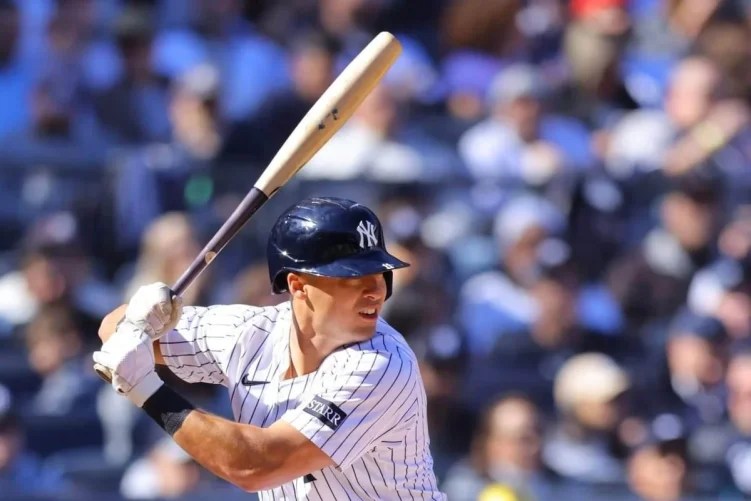
Kyle Tucker

Kyle Tucker’s seventh-inning strikeout seemed to take what remained of the Cubs’ wind away Saturday night. (TBS television capture.)

“It’s really the only inning you could talk about,” lamented Cubs manager Craig Counsell about the top of the sixth, after National League division series Game Five. “We just didn’t do much.

“We had six base runners. You’re going to have to hit homers to have any runs scoring in scenarios like that,” Counsell continued. “They pitched very well. I mean, they pitched super well and we didn’t.”

“They” were the Brewers, whom Counsell used to manage, until he reached managerial free agency and the Cubs decided to dump David Ross for no reason better than that Counsell became available. Cubs president of baseball operations Jed Hoyer admitted as much earlier this month.

Two second-place National League Central finishes and one division series loss later, Cub fans could be forgiven if they think it’s been karma for the manner in which Ross was vaporised. The Brewers won Game Five, 3-1, with 90 percent pitching depth, five percent unusual slugging, and maybe five percent karma-the-bitch.

Until, that is, they review the seventh inning in American Family Field Saturday night. First and second, nobody out, and Kyle Tucker—the man for whom the Cubs traded three to the Astros last December, in perhaps the signature moment that explains why they made that trade—coming to the plate.

He faced Aaron Ashby, the nephew of former major league pitcher Andy Ashby, and possibly the best relief pitcher on the Brewers staff. (Regular season: 2.16 ERA; 2.70 fielding-independent pitching rate.) His Cubs were down only 2-1. He got ahead of Ashby three balls, no strikes. Michael Busch (leadoff single) and Nico Hoerner (hit by a pitch) leaned away from second and first itching for a reason to take off.

The odds were in favour of them getting that reason momentarily. Tucker had spent the first three games of the division series as a singles hitter, but in Game Four he finally unloaded, blasting a leadoff home run in the bottom of the seventh. Maybe, despite an early strikeout and a subsequent ground out Saturday night, Tucker’s power strokes were back from the fixit shop.

Big maybe. Ashby pumped a pair of bullets Nolan Ryan himself might have applauded. Tucker swung through both of them.

Then Brewers manager Pat Murphy brought rookie righthander Chad Patrick into the game. Patrick, a righthander with seven minor league seasons behind him and not one Show appearance until the Brewers called him up from AAA Nashville for this year. He got Seiya Suzuki—who’d tied the game at one in the top of the second, when he answered William Contreras’s first-inning solo home run with a bomb of his own against Jacob Misiorowski—to drive one to left that found Jackson Chourio’s glove. He dropped strike three called in on Ian Happ.

Not one Cub came home in that inning or the rest of the way. The Brewers added one more in the seventh, when Brice Turang took Cub reliever Andrew Kitteredge over the right center field fence.

“I was looking up at the heavens to Bob Uecker,” said Brewers general manager Matt Arnold, referencing the beloved late Hall of Fame broadcaster and wit, who’d become as much a face of the Brewers as any player in their history until his passing last January. “Like, during the game, I’m like, ‘Bob, we need you’.”

“I must be in the front row,” Uecker must have said from his roost in the Elysian Fields.

He must have. This team had baseball’s best regular season record this year but entered the division series with a string of failure to get past their first postseason stages for five out of the previous six seasons. They were still recovering from their former closer Devin Williams, now a reliever and frequent hate object (by their own fans) for the Yankees, serving a pitch Mets first baseman Pete Alonso demolished like a munitions expert in the deciding wild card series game last year.

This time, they had to recover from the Cubs, their next-door-state rivals, coming back from a 2-0 game deficit.

This time, they made it. So far.

They have a National League Championship Series date with the Dodgers. They secured the date doing what enough people thought they couldn’t do if it meant paying the ransoms for their kidnapped families: slug. Contreras and Turang were joined by Andrew Vaughn in the fourth, blasting a full-count service from Collin Rea into the left field seats.

They even did it with men who weren’t even topics on last year’s team. Vaughn and Patrick were joined in that club by Misiorowski, who relieved Game Five’s opening closer Trevor Megill, surrendered only Suzuki’s second-inning smash, but otherwise worked spotlessly for his four innings. In what turned out a bullpen battle, the Brewers pen was just that much more efficient than the Cubs pen, which also deployed one starter (Rea) among a group of bulls.
Andrew Vaughn

Vaughn running out his fourth-inning bomb. (TBS television capture.)

And, boy, is the deal that brought Vaughn from the pathetic White Sox to the Brewers looking better every hour. It happened when the Brewers elected to move Aaron Civale from the starting rotation to the bullpen, and Civale responded with a spoken desire to play somewhere else if that was the case. Be careful what you wish for, was the answer . . . and Civale went from a contender to a basement dweller just like that, in early June, with Vaughn—once a first-round draft pick, demoted to the farm a month earlier—coming aboard.

Therein lies a distinction between these Brewers and the Cubs they just turned aside. The Brewers don’t have Cub money, but they don’t let that stop them from constant upgrade searching when necessary. The Cubs have Cub money.  But they’d rather undergo root canal without anesthetic than spend it. And they lack the Brewers’s bargain basement ingenuity. They haven’t yet figured out that you don’t have to shop at the Magnificent Mile all the time. You can find amazing upgrades at Lots 4 Less.

How will these Brewers be perceived going into an NLCS against those Dodgers? Contradictorily, of course. The Brewers swept the Dodgers in their regular-season series, 6-0. But there’ll be more than enough who think the Dodgers will still be the overdogs. Even if the Dodgers’ NLCS ticket was stamped by a horror of a throwing error by Phillies relief pitcher Orion Kerkering in Game Four of their division series.

But how will these Cubs be perceived going into winter vacation? Not too favourably, after all, one fears. The top of their lineup acquitted themselves well enough, particularly Busch with three of his four division series hits clearing the fences and Nico Hoerner with his hits in each game and his team-leading .476 postseason on-base percentage. But the bottom of the lineup disappeared. The collective slash line of the Cubs’ bottom five? .120/.215/.205.

And they’re likely enough to move forward without Tucker, who becomes a free agent and who’s perceived widely enough as thinking about moving on. Even if this usually un-expressive fellow who prefers to let his game do his talking calls it “an honour” to play with this group of Cubs.

That group of Cubs needs a small, not major bullpen remake, and they need to romance and re-sign Tucker, whom they could and should have extended during the second half of the season. But maybe the Cubs need a front-office overhaul, too. The kind that brings in persuaders who can convince the Ricketts family that it’s time to open the purse strings but think about trying Lots 4 Less after that one Magnificent Mile splurge.

Finishing with their best regular-season record since 2018 shouldn’t be enough. Three straight second-place NL Central finishes shouldn’t be enough. But maybe watching the Brewers go forth and tangle honourably with the ogres of the National League West will give these Cubs—and their ownership that’s as endowed as Mercedes-Benz but prefers to drive indiscriminately off the Chicago Auto Warehouse lot—more than a little pause.

The Brewers couldn’t care less for now. They’re enjoying their first postseason series clincher since 2018, the year they shoved the Rockies aside in a division series sweep. And if they wanted any further incentive, they got it from cynics and Cub fans alike who snarked that they hadn’t won a postseason series yet as they took the Cubs on. As if their round-one bye meant squat.

So who has the next-to-last laugh now?

Once upon a time, the early rock and roll era included a novelty hit, “Beep Beep,” in which a little Nash Rambler (I always presumed it to be the anti-classic, two-seat Metropolitan) went tire-to-tire with a Cadillac in a daring little race. The Brewers are the Nash Rambler about to go tire-to-tire with the Dodgers’ Cadillacs.

And, unlike “Beep Beep’s” challenger, they know how to get themselves out of second gear.

The new Yankee bats are barrels of fun

Baseball Bugs

Contrary to social media bleating, this is NOT one of the new Yankee bats . . .

They resemble elongated bowling pins upon first glance, those new and legal Yankee bats, perhaps the kind that would be spotted on a bowling lane . . . built for Paul Bunyan. Don’t laugh. Wielding those curious new bats among their regular lumber on Saturday against the Brewers, the Yankees resembled a gaggle of Bunyans at the plate. It began (ahem) right off the bat against former Yankee Néstor Cortés.

Three pitches. Three long enough solo home runs.Two outs later, another solo smash. That was just in the bottom of the first, against the guy they traded to make a Yankee out of postseason Brewers victim Devin Williams.

OK, let’s get more detailed. After the Brewers did nothing with a one-out walk to Christian Yelich from newly-minted Yankee starter Max Fried in the top of the first, Paul Goldschmidt—erstwhile Diamondback and Cardinal, now manning first base for the Yankees and leading off, of all things—watched a first-pitch, four-seam fastball travel well enough into his wheelhouse to drive it to the rear end of the bullpen in left center field.

One pitch, one bomb, one run.

Newly-minted Yankee Cody Bellinger—erstwhile Dodger and Cub, who hasn’t really been the same since a shoulder injury during the Dodgers’ 2020 run to the World Series title—watched another first-pitch, four-seam fastball rising in the middle of the zone, but not high enough that he couldn’t yank it into the right center field seats about six rows past the bullpen wall.

Two pitches, two bombs, two runs.

Aaron Judge—the Yankees’ bona-fide Bunyan, all 6’7″ of him, beginning his tenth season in the sacred pinstripes—watched Cortés switch things up a little, having learned the hard way abour first-pitch fastballs not always obeying orders. The lefthander opened with a cutter. It got even more into Judge’s wheelhouse than that fastball got into Goldschmidt’s. And it disappeared into the left center field seats.

Three pitches. Three bombs. Three runs. Who knew the Yankees were just getting warmed up? (And, did Goldschmidt feel even a small kind of déjà vu all over again, since he’d once hit three out against the Brewers by himself, as a Cardinal?)

Cortés then showed the Brewers what they thought they’d traded for when he struck (All That) Jazz Chisholm, Jr. out looking and got Anthony Volpe to ground out right back to the mound. Up stepped Austin Wells, who’d opened the Yankee season with the first known leadoff bomb ever hit by any major league catcher last Thursday.

Wells was kind enough to wait until Cortés opened up with a pair of cutters off the inside part of the plate for a 2-0 count before Cortés threw him a fastball and he drove it over the left center field fence. It took back-to-back walks and a called punchout on Trent Grisham to stop the bleeding. The tourniquet proved unable to contain it for very long.

From there, after Fried almost handed the Brewers a quick enough tie on the house, what with a one-out hit batsman, an RBI single, a run scoring on an infield error, another base hit, and a run scoring when Fried threw Yelich’s grounder offline, the Yankees had more treats in store.

They began with Volpe, who turned out to have been the inspiration for the new elongated bowling-pin bat. Yankee fans watching the broadcast on television got the skinny from broadcast institution Michael Kay when Chisholm batted in the first:

The Yankee front office, the analytics department, did a study on Anthony Volpe, and every single ball it seemed like he hit on the label. He didn’t hit any on the barrel, so they had bats made up where they moved a lot of the wood into the label, so the harder part of the bat is going to actually strike the ball. It’ll allow you to wait a little bit longer.

Anthony Volpe

. . . but this is, in the hands of the man whose plate performances got the Yankee brain trusts—oh! the hor-ror!—thinking. (Volpe rewarded them by hitting one of the nine Yankee bombs against the Brewers Saturday.)

The woofing and warping began aboard social media (cheaters! cheaters!) until someone, who knows whom, slipped into the bellowing the fine and legitimate point that the rule book doesn’t quite outlaw such bats. I give you Rule 3.02: The bat shall be a smooth, round stick not more than 2.61 inches in diameter at the thickest part and not more than 42 inches in length. The bat shall be one piece of solid wood. You might note that it says nothing about just where the thickest allowance must be.

You might also note that there do remain baseball traditions immune to change. Suspecting the Yankees of crime is one of them. But you don’t have to be a Yankee cultist to wonder why it was (and is) that nobody else thought of creating such bats within the rules before the Yankees got the a-ha!

You might also note, further, that Cortés wasn’t exactly unfamiliar to the Yankees, since he’d been one of them fo five of the past six seasons. “Nestor (had) been here for years,” said Judge postgame. “He’s one of the best lefty pitchers in the game. He’s going to go out there and throw strikes and attack you. We just tried to go out there and be aggressive in our zone. Goldy and Belli, they were aggressive and got things going there. This place was rocking once I got up there.”

So. When Volpe batted the secone timd in the bottom of the second, he had Judge and Chisholm aboard and two out. This time, he waited until he had a full count before swinging and hammering a Cortés cutter over the left field fence. Now the game was 7-3, Yankees. And the party wasn’t even close to being over.

Fried survived a miniature jam in the top of the third, but Cortés didn’t survive walking Yankee designated hitter Jasson Domínguez to open the bottom. Connor Thomas came in to pitch. Grisham singled Domínguez to second, Thomas plunked Goldschmidt, Bellinger beat out an infield hit to send Domínguez home and load the pillows for Judge—who sliced salami on a 2-1 up-and-in cutter.

Then Chisholm wrung his way up from a few fouls to hit a 1-2 service into the right field seats. Making it 13-3, Yankees, which turned to 16-4 (erstwhile Phillie Rhys Hoskins poked an RBI single in the top of the fourth) in the bottom of the fourth, when Bellinger sent Grisham home on a sacrifice fly after Goldschmidt doubled him to third, but Judge followed with a two-run homer over the center field fence.

Judge’s third major league three-bomb day and his first since 2023. Eight home runs on the day for the Yankees so far, tying a franchise record they’d break when pinch-hitter Oswald Peraza hammered Brewers reliever Chad Patrick for a one-out, two-run homer in the bottom of the seventh. Making it 20-6 (the Brewers scored two in the sixth); the Brewers had at least an RBI double (Jake Bauers) and a two-run homer (Brice Turang) in them before the carnage finally ended.

“You think you’ve seen it all in baseball,” said Brewers manager Pat Murphy postgame, “and you haven’t because we saw it today—three pitches, three homers. Usually, you wake up from that. You go, ‘Wow. God. That can’t ever happen.’ It just did.”

The game was so disastrous for the Brewers that Murphy finally sent Bauers forth to pitch the bottom of the eighth, hoping to spare his pitching staff any further humiliation. The first baseman didn’t do any worse on the mound than the real pitchers, either. He shook off a two-out hit batsman and followup walk with a pop out for the side. He’d even gotten Judge to fly out in the eighth, an inning after Judge’s bid for a four-bomb day came up short enough in the sixth that he settled for a double.

He had to settle for becoming the fourth Yankee ever to have three three-bomb days, joining Hall of Famers Lou Gehrig (he had four of them) and Joe DiMaggio, plus third baseman Álex Rodríguez. “Anytime you get mentioned with those guys and what they’ve done in the game, and the careers they’ve had,” Judge said postgame, “it’s pretty special.”

Not that the Yankees were perfect on the day. Their five errors, which weren’t half as disastrous as their Game Five fifth inning in the World Series, hung Fried with four unearned runs among the six he did surrender on the day. Still.

“What a performance,” Yankee manager Aaron Boone summed up. “Kind of a weird, crazy game.” Kind of a crazy way to describe a massacre, too.

Bob Uecker, RIP: Always join them laughing

Bob Uecker

‘We’d like to inject you with hepatitis. We need to bring an infielder up.”—The words Bob Uecker put into 1964 Cardinals general manager Bing Devine’s mouth, during Uecker’s Hall of Fame speech.

The man who went from making people laugh with the way he played baseball to making them laugh with the ways he talked about the game and himself has gone home to the Elysian Fields. Their gains in laughter and inverted wisdom are our losses on this island earth.

“I’d set records that will never be equaled,” Bob Uecker told the Cooperstown gathering, as he was inducted into the Hall of Fame’s broadcasters’ wing, “ninety percent I hope are never printed: .200 lifetime batting average in the major leagues which tied me with another sports great averaging 200 or better for a ten-year period—Don Carter, one of our top bowlers.”

There was far, far more to the jovial former catcher than the “jussssssssssst a bit outside” call in Major League. Most of it came forth over decades of broadcasting the Milwaukee Brewers and more than a few evenings in the guest chair with Johnny Carson. A lot of it came forth when he spoke in Cooperstown that day.

Those who think just anyone can be funny could never say they’d left half a stage of Hall of Famers in tears from laughter, led by Willie Mays himself. For now I’m going to borrow some immortal words from Vin Scully: You really ought to hear and/or read it for yourself, so I’m just going to keep my pen to myself . . .

I signed a very modest $3,000 bonus with the Braves in Milwaukee, which I’m sure a lot of you know. And my old man didn’t have that kind of money to put out. But the Braves took it. I remember sitting around our kitchen table counting all this money, coins out of jars, and I’m telling my dad, ‘Forget this, I don’t want to play.’ He said, ‘No, you are going to play baseball. We are going to have you make some money, and we’re going to live real good.’ My dad had an accent, I want to be real authentic when I’m doing this thing.

So I signed. The signing took place at a very popular restaurant in Milwaukee. And I remember driving, and my dad’s all fired up and nervous, and I said, ‘Look, it will be over in a couple of minutes. Don’t be uptight.’ We pull in the parking lot, pull next to the Braves automobile, and my dad screwed up right away. He doesn’t have the window rolled up far enough and our tray falls off and all the food is on the floor. And from there on it was baseball.

Starting with the Braves in Milwaukee, St. Louis, where I won the World’s Championship for them in 1964, to the Philadelphia Phillies and back to the Braves in Atlanta, where I became Phil Niekro’s personal chaser. But during every player’s career there comes a time when you know that your services are no longer required, that you might be moving on. Traded, sold, released, whatever it may be. And having been with four clubs, I picked up a few of these tips.

I remember Gene Mauch doing things to me at Philadelphia. I’d be sitting there and he’d say, ‘Grab a bat and stop this rally.’ Send me up there without a bat and tell me to try for a walk. Look down at the first base coach for a sign and have him turn his back on you. But you know what? Things like that never bothered me. I’d set records that will never be equaled, ninety percent I hope are never printed: .200 lifetime batting average in the major leagues which tied me with another sports great averaging 200 or better for a ten-year period, Don Carter, one of our top bowlers.

In 1967 I set a major league record for passed balls, and I did that without playing every game. There was a game, as a matter of fact, during that year when [knuckleball specialist/Hall of Famer] Phil Niekro’s brother Joe and he were pitching against each other in Atlanta. Their parents were sitting right behind home plate. I saw their folks that day more than they did the whole weekend. But with people like Niekro, and this was another thing, I found the easy way out to catch a knuckleball. It was to wait until it stopped rolling and then pick it up.

There were a lot of things that aggravated me, too. My family is here today. My boys, my girls. My kids used to do things that aggravate me, too. I’d take them to the game and they’d want to come home with a different player. I remember one of my friends came to Atlanta to see me once. He came to the door, he says, ‘Does Bob Uecker live here?’ He says, ‘Yeah, bring him in.’ But my two boys are just like me. In their championship little league game, one of them struck out three times and the other one had an error that allowed the winning run to score. They lost the championship, and I couldn’t have been more proud. I remember the people as we walked through the parking lot throwing eggs and rotten stuff at our car. What a beautiful day.

You know, everybody remembers their first game in the major leagues. For me it was in Milwaukee. My hometown, born and raised there, and I can remember walking out on the field and Birdie Tebbetts was our manager at that time. And my family was there: my mother and dad, and all my relatives. And as I’m standing on the field, everybody’s pointing at me and waving and laughing, and I’m pointing back. And Birdie Tebbetts came up and asked me if I was nervous or uptight about the game. And I said, ‘I’m not. I’ve been waiting five years to get here. I’m ready to go.’

He said, ‘Well, we’re gonna start you today. I didn’t want to tell you earlier. I didn’t want you to get too fired up.’

I said, ‘Look, I’m ready to go.’

He said, ‘Well, great, you’re in there. And oh, by the by, the rest of us up here wear that supporter on the inside.’ That was the first game my folks walked out on, too.

But you know, of all of the things that I’ve done, this has always been number one, baseball. The commercials, the films, the television series, I could never wait for everything to get over to get back to baseball. I still, and this is not sour grapes by any means, still think I should have gone [into the Hall of Fame] as a player. Thank you very much. The proof is in the pudding.

No, this conglomeration of greats that are here today, a lot of them were teammates, but they won’t admit it. But they were. And a lot of them were players that worked in games that I called. They are wonderful friends, and always will be.

And, the 1964 World’s Championship team. The great Lou Brock. And I remember as we got down near World Series time, Bing Devine, who was the Cardinals’ general manager at that time, asked me if I would do him and the Cardinals, in general, a favor. And I said I would. And he said, ‘We’d like to inject you with hepatitis. We need to bring an infielder up.’ I said, ‘Would I be able to sit on the bench.’ He said, ‘Yes, we’ll build a plastic cubicle for you because it is an infectious disease.’ And I’ve got to tell you this. I have a photo at home, I turned a beautiful color yellow and with that Cardinal white uniform. I was knocked out. It was beautiful, wasn’t it, Lou? It was great.

Of course, any championship involves a World Series. The ring, the ceremony, the following season in St. Louis at old Busch Stadium. We were standing along the sideline. I was in the bullpen warming up the pitcher. And when they called my name for the ring, it’s something that you never ever forget. And when they threw it out into left field. I found it in the fifth inning, I think it was, Lou, wasn’t it? And once I spotted it in the grass man, I was on it. It was unbelievable.

But as these players have bats, gloves . . . I had a great shoe contract and glove contract with a company who paid me a lot of money never to be seen using their stuff. Bat orders . . . I would order a dozen bats and there were times they’d come back with handles at each end. You know, people have asked me a lot of times, because I didn’t hit a lot, we all know that, how long a dozen bats would last me? Depending on the weight and the model that I was using at that particular time I would say eight to ten cookouts.

I once ordered a dozen flame-treated bats, and they sent me a box of ashes, so I knew at that time things were moving on. But there are tips that you pick up when the Braves were going to release me. It is a tough time for a manager, for your family, for the player to be told that you’re never going to play the game again. And I can remember walking in the clubhouse that day, and Luman Harris, who was the Braves’ manager, came up to me and said there were no visitors allowed. So again, I knew I might be moving on.

Paul Richards was the general manager and told me the Braves wanted to make me a coach for the following season. And that I would be coaching second base. So again, gone. But that’s when the baseball career started as a broadcaster. I remember working first with Milo Hamilton and Ernie Johnson. And I was all fired up about that, too, until I found out that my portion of the broadcast was being used to jam Radio Free Europe . . .

Keep them laughing in the Elysian Fields, Mr. Ueck.

2024: Taking the Fifth, and Other Lamentations

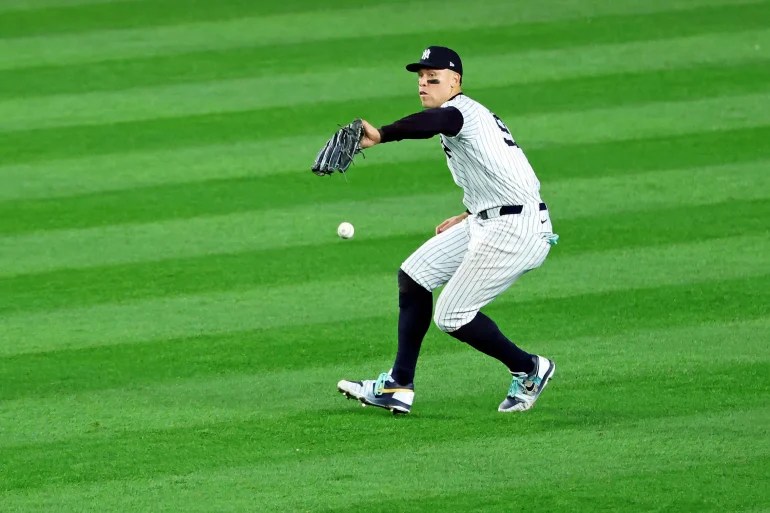
Aaron Judge

This is not what was meant when the phrase, “I’ve got the drop on you,” was coined . . .

Hands up to everyone who can’t wait for 2024 to depart. Now, hands up to everyone who thinks 2024 was just the most wonderful year of the decade. My, but that’s a barren sea of hands over that second suggestion.

Much like its home country, baseball’s 2024 was . . . well, why don’t we let some of the signature moments, doings, and undoings of baseball’s year speak for themselves. The new flimsy uniforms sucked. The All-Star Game uniforms didn’t suck that badly, but still. Meanwhile, I’m thankful to folks such as Jayson Stark and a few other intrepid sleuths of BBW—that’s Baseball Bizarro World, you perverts—who either unearthed or reminded us about . . .

Take the Fifth—Please Dept.—“Come an’ see my amazin’ Mets,” their manager Casey (I Lost With This Team What I Used to Win with the Yankees) Stengel liked to say of his maiden squad. “I been in this game a hundred years but I see new ways to lose I never knew were invented yet.”

That was the Ol’ Perfesser gazing down from the Elysian Fields, watching the team with whom he won ten pennants and seven World Series perform the single most splendid imitation of the 1962 Mets since . . . the 2024 White Sox finished their sad, sad, sad regular season.

Pace George F. Will, look to your non-laurels, White Sox—the Bronx Bumblers captured 21st Century baseball’s booby prize. You White Sox only out-lost the 1962 Mets this season. You probably never did in one regular season game what only began in a World Series game . . . with a Yankee center fielder who does a credible impersonation of the Leaning Tower of Pisa approaching the plate and Frank Howard at the plate committing his first error playing center field after 538 fly balls hit his way in his entire career to date became outs.

Then . . .

* A Gold Glove-finalist shortstop threw for a force play at third base and saw the ball ricochet off the base instead of reach his third baseman’s glove.

* The arguable best pitcher in the American League got thatclose to escaping a bases-loaded, nobody-out jam when he suffered the brain fart heard ’round the Bronx and the world: he forgot to cover first when Mookie Betts hit a screwdriving ball toward Anthony Rizzo. Oops.

* The Yankee anti-party included a balk and catcher’s interference.

* The Dodgers became the only team in baseball history to score five runs in a World Series game after they were in the hole 5-0.

* The Yankees became the only team in baseball history to serve up five unearned runs in a World Series game since they started counting earned and unearned runs as official statistics. (When did they start? In the same year during which premiered Ford’s moving assembly line, the first newspaper crossword puzzle (in the New York World), and Louis Armstrong’s first cornet. In the New Orleans Home for Coloured Waifs.)

* And the fifth-inning party actually started with everyone from the television announcers to the fans and back pondering whether Gerrit Cole might, maybe, consummate a no-hitter to keep the Yankees alive.

Your Reality Check Bounced Dept.—Too many Yankee fans continue infesting social media with proclamations that the Yankees still have the dynastic history of dynastic histories. And too many baseball fans steeped in reality and not fantasy keep reminding them, Your damn dynasty is just soooooo 20th Century!

Juan Not-So-Small Step for Met World—That’s $765 million the Mets will pay Juan Soto over the next fifteen years. This may or may not mean the end of Pete Alonso’s days as a Met, which may or may not mean . . .

Out with a Bang Dept. . . . that Polar Bear Pete’s final act as a bona-fide Met was the biggest blow on their behalf this century: the three-run homer he blasted in the ninth inning that proved the game, set, and National League division series winner against the Brewers. Which was also the only home run hit by any Met in the set.

Did I Do That Dept.—Alonso’s division series-winning blast came off Devin Williams . . . who’d never allowed a ninth-inning lead-changing bomb in his major leaguer life until then. Then, after some time passed, the Brewers let the Yankees talk them out of keeping Williams, sending them pitcher Nestor Cortes, infielder Caleb Durbin, and cash to take Williams. We still don’t know if the deal was Milwaukee payback for surrendering Alonso’s game-changing/game-swiping bomb.

Out with a Bigger Bang Dept.—That would be Walker Buehler, pitcher. One minute, locking down the Dodgers’ World Series win with a spotless Game Five ninth including two swinging strikeouts. The next, practically (well, give or take a few hours): Signing for one year and $21 million with the Red Sox. Anyone remember the Dodgers making Buehler a qualifying offer for that money and Buehler turning it down? He’s rolling serious dice on himself with this deal.

Shohei-hei Rock and Roll Dept.—You might think anyone can become a member of the 50 home run/50 stolen base club. But you won’t be able to predict who might do it the same way Shohei Ohtani did in September against the Marlins: 6-for-6 at the plate; three home runs; five extra base hits; two stolen bases; ten runs batted in. His own planet? Try realising Ohtani exists in his own quadrant.

A Cut Below Dept.—Pete Fairbanks, Rays reliever. He missed a game in 2024 because of a finger cut. He cut the finger opening a bottle of spring water. Considering his bizarre 2023 injury (incurring a black eye while trying to dunk against his toddler son through a water basketball net), it seems as though Fairbanks just couldn’t cut it anymore.

On Your Knee Dept.—Presented for your consideration: Miguel Sanó, Angel. Aleady on the injured list with an inflamed knee. He put a heating pad over it. He forgot about it just enough to burn the knee and place himself for another month on the IL. Miguel Sanó, who proved he certainly could stand the heat in . . . the Angels’ continuing Twilight Zone.

The King of Pop Dept.—Mookie Betts performs amazing feats at the plate and on the field. At the plate, they usually involve baseballs shot on lines into the outfield, or driven like ballistic missiles over fences. They didn’t involve him popping out for the cycle . . . until 25 September, when, in order, he popped out to: second baseman, third baseman, first baseman, and shortstop.

Don’t do it. Don’t Google “MLB players who’ve popped out for the cycle.” It won’t even call up the Mookie Monster, yet, never mind anyone else who might have had that kind of a day—whether a Hall of Famer, a Hall of Famer in the making, or a guy who’s destined to be forgotten outside such a single singular feat.

Underhanded Counselling?

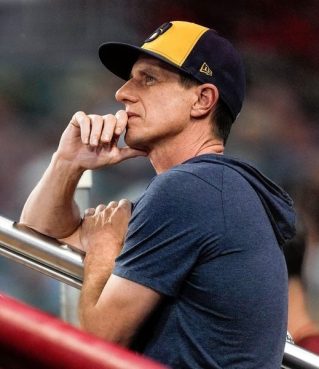
Craig Counsell

No, the Cubs did not poach Counsell from the Brewers. What they did to David Ross, however . . .

Would you blame David Ross if you discover he feels like the husband who was thrown over with little to no warning because the wife decided something better was available? OK, that’s not really a fair analogy. Grandpa Rossy is seven years younger than Craig Counsell. But considering the Cubs’ treatment, he might as well be seven years older.

But something isn’t passing the proverbial smell test about Counsell’s hiring and Ross’s firing.

First, let’s clear this one at once. The Cubs didn’t poach Counsell. Not from the Brewers or from anyone else. Counsell’s contract expired first. He didn’t exactly lack for interest once it became known he intended to test his own managerial market. But test it he did, as a proper free agent.

Now, that said, the manner in which the Ross firing and Counsell hiring were done was a weak look. Team president Jed Hoyer had a deal done with Counsell before flying to Ross’s Florida home to meet and execute Ross, the guy from whom Hoyer said he wasn’t really looking to move on. The headline on The Athletic‘s Patrick Mooney’s take said it with jarring simplicity: “David Ross’s downfall as Cubs manager? He isn’t Craig Counsell.”

Just like Rick Renteria wasn’t Joe Maddon. Just like, as things turned out, Maddon—on whom the Cubs “soured” almost too swiftly when they faded from World Series drought busters to also rans—wasn’t Ross, who’d been one of his more valuable role players for that almost surrealistic 2016 World Series run but received a front-office grooming for the bridge to follow after his retirement.

Maddon also proved not to be Counsell. It was Counsell’s Brewers who chased Maddon’s Cubs down in 2018, possibly putting Maddon onto a very warm seat the heat from which swelled a year later—when the Cubs fell from contention, had a chance to knock the Cardinals out of the races, but got swept by the Cardinals in Wrigley Field in their final home set of the year.

Hopefully, someone in the Cubs’ orbit has tipped Counsell to watch his back in case the Cubs’ administration decides, somewhere along the road, no matter what success that administration allows him to have, that he’s not whomever they’d like to romance and marry in due course.

Especially if, as they did with Ross, the Cubs announce he’s their guy in public only to romance a purported upgrade behind closed doors. Especially if they announce Counsell’s their guy despite a season being ended at the hands of Counsell’s now-former team. With the way the Cubs are administered, nothing’s impossible, including infamy.

This isn’t the single most suspicious fire-and-hire I’ve seen in a lifetime of baseball watching. Nothing compares to the shameful Yankee double switch of 1964. They canned an undermined Yogi Berra the day after the Cardinals beat his Yankees in the World Series. Then, they hired Johnny Keane, the skipper who’d just beaten him in that Series.

We learned only later that then-Yankee GM Ralph Houk had every intention of dumping Yogi after the season, no matter what, even backchanneling during the season to gauge Keane’s interest in the Yankee job, if the Cardinals were ready to let him go before their own pennant race comeback and triumph.

At least Ross didn’t get it the way the Mets once dumped an embattled Willie Randolph, either. Feeling fire under his hindquarters over the Mets’ blowing a seven-game National League East lead in September 2007, Randolph and his Mets opened 2008 34-35 and he was fired—after managing a doubleheader split in New York, then flying coast-to-coast to Anaheim to manage a win over the Angels, and getting fired . . . at 3:11 a.m.

As a manager, Ross was better than some, perhaps not as good as others. He earned his players’ trust even as the Cubs administration allowed a championship team to dissipate and a seeming team of also-rans to replace it. Yet he steered them deftly through the 2020 pan-damn-ic and into that surrealistic postseason. And his Cubs played hard in 2022, especially after the All-Star break, and despite the front office fire-selling at that year’s trade deadline.

In 2023, a Cubs team not supposed to compete competed. They pulled themselves to .500 by 27 July, then to 78-67 on 11 September. But from there they collapsed to going 5-12 to finish the season. They’d ended August taking two of three from Counsell’s Brewers but ended the season losing two of three to them.

Counsell’s NL Central-winning Brewers returned to first in the NL Central to stay on 3 August and probably secured it with a nine-game winning streak during that month’s second half, though going 8-4 to finish the regular season didn’t hurt. Then they got swept right out of the wild card series by the eventual NL pennant-winning Diamondbacks.

Except for pan-damn-ically short 2020, Counsell had only one losing season on the Brewers’ bridge. They reached nine postseasons and one National League Championship Series under his command. And Counsell earned respect for managing those runs despite the Brewers not exactly being or behaving like more than a small-market team.

When his contract with the Brewers expired, many were the speculative stories sending Counsell to a very different Mets organisation, under still-new ownership and now administered by the man who hired him in Milwaukee in the first place, David Stearns. Counsell built a reputation as a communicative players’ manager in tune with the game’s analytic side and in synch with the human side.

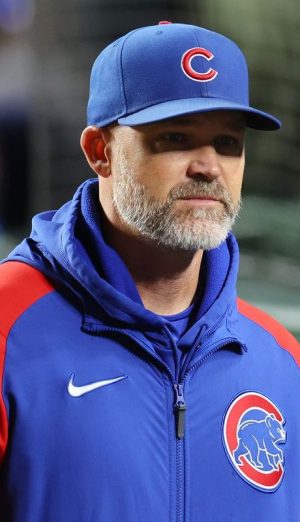
David Ross

So much for being “their guy” . . .

I saw some speculation that Counsell leveraged the apparent Mets interest in him to carve a large contract out of whomever might win his favour at all. But I also saw smarter observations that the Wisconsin-reared and rooted Counsell—the winningest manager in Brewers history—didn’t want to stray far from home in any job change.

He got what he wanted and more, the Cubs signing him for five years and $40 million to steer their Ricketty ship. That alone may do wonders on future markets for steadily successful managers who are usually expected to work for comparative peanuts and be bosses to players who could buy and sell them for the equivalent of a year’s worth of sales taxes.

The Cubs may not fall into big bidding wars for this winter’s free agency class, but they’re expected to be active enough to fortify a team that looked like a rising team often enough in 2023. Cub fans know only too well how swiftly expectations can turn, of course, but let’s leave it be for now.

I would repeat my earlier counsel to Counsell: watch your back—and not just from Brewers crowds ready to hammer you the first time you lead the Cubs to Milwaukee for a series. The next rising managerial star might turn Cub eyes toward him at the first sign of availability, too. And it may not matter whether or not you continue building a resume that might include managing the Cubs to another World Series title, either.

It took Ross—a World Series hero as a role player on the 2016 Cubs, who hit his final major league home run during that staggering Game Seven—several days to speak out about his execution. Telling Talahassee Democrat writer Jim Henry that anger is poison to him, Ross preferred gratitude:

There was a lot of people who worked really hard alongside me. … I am really thankful for the four years I got, coming from zero coaching experience to getting the chance to manage such a great organization that has impacted my life in a great way. There’s great people there. I really don’t have a whole lot negative to say, to be honest.

I get mad from time to time but I have a lot to be thankful for.

Few men and women pick up and dust off from their unexpected purgings with that kind of grace. The Cubs should consider themselves fortunate that Grandpa Rossy didn’t elect to stay away from future team commemorations as long as the incumbent ownership and administration is in place. As with the case of a certain Yankee legend, nobody might blame him if he did.