Eyes on Cherington from Pittsburgh?

2019-11-09 BenCherington

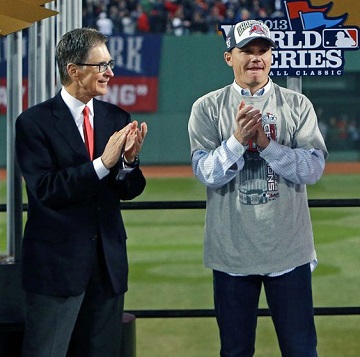
Ben Cherington (right), with Red Sox owner John Henry and the proof that Cherington knows how to raise shipwrecks: the Red Sox’s 2013 World Series triumph, for openers.

Few baseball fans are as frustrated as Pirate fans. Few deserve even a small ray of hope more. Pirate fans got one such ray when longtime Clint Hurdle was purged at last after a season in which he lost a clubhouse that seemed hell bent on destroying itself when it wasn’t pursuing silly field feuds.

They got another such ray of hope when the Pirates decided Hurdle’s execution was merely the wick lighting the powder keg of a near-complete front office house cleaning, which only began when pitching coach Ray Searage was pinked after a season during which the Pirate staff became too-much-reputed headhunters.

They got a third such ray when the house cleaning continued when president Frank Conolly and general manager Neal Huntington were purged, after a couple of years in which reputedly blockbuster deals blew up right in the Pirates’ faces even despite a warning sign or two.

And now comes a fourth such ray, in the word that candidates to be the Pirates’ next president of baseball operations include former Red Sox GM Ben Cherington.

Currently second in command to Blue Jays president Tony Lacava, Cherington is one man in baseball if there’s any such man who knows what it means to actually be able to raise and reconstruct the Titanic. He did it in New England, maybe the second most arduous baseball market for turning shipwrecks into cruises to the Promised Land.

The Red Sox hired Cherington in the first place after the 2011 season ended with the iceberg hitting the ship. His job only began when he was overruled at the top and the Red Sox hired Bobby Valentine to skipper the ship after Terry Francona—and Cherington’s predecessor Theo Epstein—abandoned it before they could be made to walk the plank.

Hiring Valentine proved the equivalent of removing Captain Smith from the bridge when the iceberg hit and installing Captain Queeg in his stead. Valentine took a clubhouse already full of noxious gases from the 2011 sinking and threw one after another lighted match into it. He was probably lucky that all he got was canned just days after the regular season ended.

Somewhere during the worst of that nightmare Cherington figured out that just because someone else dumped Smith for Queeg was no reason for him to go J. Bruce Ismay. He began repairing the ship even underwater, masterminding the August 2012 deal with the Dodgers that sent Josh Beckett, Adrian Gonzalez, and Carl Crawford out of Boston.

Major payroll surgery, that, the kind bringing the rookie GM what he’d need to augment his still-very-much-serviceable veterans with what I observed after the Valentine firing: “pieces that weren’t exactly top of the line but weren’t exactly losers, either.”

Cherington also got to dump Valentine, which could only have been his due after the rookie GM found himself as much company psychiatrist as boss when one after another player went to him seeking to keep their marbles—singular—during the depths of the Valentine nightmare. And he was the epitome of grace in throwing the switch:

Our 2012 season was disappointing for many reasons. No single issue is the reason, and no single individual is to blame. We’ve been making personnel changes since August, and we will continue to do so as we build a contending club. With an historic number of injuries, Bobby was dealt a difficult hand. He did the best he could under seriously adverse circumstances, and I am thankful to him.

You’d be hard pressed to find any other baseball general manager who could have been that diplomatic about a man who was lucky to escape with his life. It’s true the 2012 Red Sox were bedeviled by 27 trips to the disabled list, but it’s also true that four other 2012 teams (the Athletics, the Braves, the Orioles, the Yankees) were battered by injuries and still either won divisions (the A’s, the Yankees) or went to their leagues’ wild card games. (The Braves, the Orioles.)

The season recently ended gave further object lessons in how to navigate troubled waters when crews hit sick call almost en masse. Managed intelligently, they were the Yankees, the Astros, and (doesn’t it just roll off the tongue, Washington?) the world champion Nationals. Managed like several flew over the cuckoo’s nest, they were the 2012 Red Sox.

Then Cherington swung the deal that brought former Red Sox pitching coach John Farrell back from Toronto to manage the team for 2013. He imported such inexpensive pieces as Stephen Drew, Jonny Gomes, Joel Hanrahan, Brock Holt, Mike Napoli, David Ross, Koji Uehara, and Shane Victorino.

He also picked up where Epstein left off in rebuilding the Red Sox farm. He watched Hall of Famer in waiting David Ortiz rally a team, a town, and a region after the Boston Marathon bombing. (This is our [fornicating] city!!) He re-fortified when injuries hit, and watched Uehara—whom he’d thought would be a perfect sixth- or seventh-inning relief option—step up as a lights-out closer.

And, he watched his freshly repaired team of savvy vets, comeback kids, and young sprouts refuse to lose more than three straight on the season and march all the way to the Promised Land for the third time since the new century began. It also made Cherington only the third Red Sox executive ever to be named The Sporting News‘s Executive of the Year.

The rebuild, which Cherington picked up and ramped up without even thinking about tanking? (Tanking’s never an option for a team whose owner learned what not to do and how not to do it watching the win-or-be-gone George Steinbrenner style, anyway.) Mookie Betts, Xander Bogaerts, Rafael Devers, Andrew Benintendi, Jackie Bradley, Jr., all of whom loomed large in the 2018 World Series triumph, were Cherington recruits.

It was just a shame Cherington wasn’t around to savour it.

His only missteps were some free agency signings that blew up in the Red Sox’s faces: Pablo Sandoval, Hanley Ramirez, A.J. Pierzynski, Grady Sizemore. When Dave Dombrowski accepted his Detroit walking papers and the Red Sox walked Cherington out to walk Dombrowski in, Cherington still left the Red Sox a solid nucleus that didn’t exactly escape Dombrowski’s sights in 2015.

Dombrowski signed and dealt for several nuggets of his own. He watched the Red Sox go last-to-first in 2016 and repeat in the East in 2017, both of which ended in early postseason exits. Then, after hiring Astros bench coach Alex Cora to manage the crew following Farrell losing the clubhouse at last, Dombrowski watched Cherington’s seeds flower fully as the Red Sox won last year’s World Series.

But Dombrowski reverted to form and drained McCherington’s Navy while ignoring the under-constructed, over-taxed bullpen as one after another 2019 Red Sox starter was hit by either injury or inconsistency bugs. Thus did the Red Sox execute Dombrowski in early September, when their season was too long lost.

And since the Red Sox didn’t reach out and bring Cherington back (they hired former Rays vice president Chaim Bloom), though it wouldn’t necessarily be either untenable or unheard-of (reference the 1967 Cardinals, who brought Bing Devine back successfully after canning him in mid-1964) the Pirates might want to give a long, serious, thoughtful look at him.

The Pirates’ sunken ship makes the Red Sox upon Cherington’s advent resemble a sturdy aircraft carrier by comparison. And if ever a team needed a man who can prove he knows how to raise a wreck from the bottom of the sea, the Pirates do.

Minor subterfuge

2019-09-27 MikeMinor

Mike Minor nailed his 200th strikeout with a little sneaky help from his friends Thursday night.

Let me put it right on the table for you. What the Rangers did Thursday in a bid to fatten Mike Minor’s shot at 200 strikeouts on the season isn’t exactly the first time someone’s resorted to a little subterfuge in order to enable a particular milestone. And if you still believe that boys will be boys, it won’t be the last, either.

So the Red Sox are a little p.o.ed over Rangers first baseman Ronald Guzman charging Chris Owings’s one-out popup then pulling his mitt back to let the ball hit the foul grass in the ninth? The Rangers weren’t exactly thrilled at the Red Sox swinging on first pitches in the eighth, either.

“Mike Minor’s 200th strikeout should have a big asterisk. That was bush. Chasing a milestone that way is unprofessional,” fumed Boston Globe writer Pete Abraham in a tweet. “Ask me if I care, Pete,” Minor fumed back.

“I didn’t love the idea that we dropped the popup at the end,” said Rangers manager Chris Woodward to reporters after Minor nailed number 200 and, while they were at it, won the game 7-5. “But on the other side of that, they swung at three pitches in a row in the eighth inning down by two. If they have any beef with that — obviously I’m pretty sure [Red Sox manager Alex] Cora did — they chose to not try and win the game as well. They were trying to keep him from striking a guy out.”

The very nerve of the Red Sox. Trying to keep a pitcher from striking them out. What’ll they think of next? Their pitchers trying to keep hitters from hitting?

Good thing Minor wasn’t going for a no-hitter and the Rangers didn’t put the shifts onto the final Red Sox batters. The Red Sox might have been ornery enough to look at all that yummy open expanse gifted them, decided, “You’re stupid enough to give us that much room to hit, we’re not going to look a gift horse’s ass in the mouth,” and whacked a grounder or two into that gifted meadow.

But then Cora had something to say about the Guzman play. “I’m just happy our guys are playing the game the right way,” he told reporters himself. “We’re playing hard until the end. It’s been two weeks we’ve been eliminated, but we’ve been going at it the right way. That’s all I ask. I don’t manage the Rangers.”

I don’t want to be the wise guy, here, but stuff such as Guzman did to help his mate keep a shot at a milestone alive goes on more often than you think. Actual or alleged.

One of baseball’s oldest legends is the 1910 race to the American League batting title between Hall of Famers Ty Cobb and Nap Lajoie. The legend included Cobb sitting out the last two games to protect his average and the St. Louis Browns willing to give Lajoie, then with the Indians, his hits by hook, crook, and anything else they could get away with.

The Browns and the Tribe played a season-ending doubleheader while Cobb sat idle. Browns manager Jack O’Connor ordered his rookie third baseman Red Corriden to play on or at the edge of the outfield grass. Lajoie went 8-for-8 in the twin bill to win the title technically. American League president Ban Johnson declared Cobb the batting title winner after the shenanigans were taken to him.

The Chalmers Automobile Company, which awarded a car to the batting champion in those years, gave Cobb and Lajoie a new car each, pretty much deciding they were tied. Then, they changed the award the following season, giving the car to the league’s most valuable player, not the batting champion.

And O’Connor and his coach Harry Howell were banned from baseball for life over the scandal. (Lajoie’s ninth plate appearance of the day resulted in him reaching on an error; Howell tried to bribe the official scorer into changing the ruling to a base hit, but the scorer declined.)

Decades later, Denny McLain had his 31st win of 1968 in the bag when he decided he’d help Hall of Famer Mickey Mantle secure the last milestone he wanted in his career, retiring past Jimmie Foxx on baseball’s all-time home run list. Mantle was already at 534, tied with Foxx and in third place on the list.

When Tiger catcher Bill Freehan greeted Mantle checking in at the plate, with one out in the top of the eighth, Freehan told Mantle he’d be told what was coming because McLain really wanted him to do it. Sure enough, Mantle got one where he wanted it and sent it into the upper deck, making the score 6-2, Tigers. Thanks, Denny. Mantle sweetened his own retirement pot the next day when he took Red Sox righthander Jim Lonborg deep for number 536.

Almost a decade earlier, Mantle’s far less controversial teammate was offered a season-ending gift. Bobby Richardson was a sharp defensive second baseman who was often made the Yankees’ leadoff hitter. How did a guy with a .299 lifetime on-base percentage become a leadoff hitter? For one reason only: Richardson was almost impossible to strike out. (His lifetime average strikeouts per 162 games: 28.)

Richardson was also a devout Christian then and now. His usual Yankee running mates were fellow clean-livers, shortstop Tony Kubek and pitcher Bobby Shantz, and the trio was nicknamed the Milk Shake Kids. The only skirts they ever chased were the ones wrapped around their own wives; the strongest drink they probably ever took was fresh lemonade.

In fact, they inadvertently helped expose the Great Yankee Private Detective Agency in the late 1950s. When GM George Weiss hired a firm in hopes of throttling some of the randier Yankees’ off-field pursuits, the joy boys shook the dicks but the dicks still latched onto a group of Yankees anyway, tailing them around town until discovering it was the Milk Shake Kids . . . and the vice to which they were in such hot pursuit was (wait for it!) ping pong.

On the final day of the 1959 season, Richardson stood with an excellent chance of becoming the only Yankee to hit .300 or better on the year. As Richardson remembered to New York Daily News writer Bill Madden for Pride of October: What It Was to Be Young and a Yankee, he was supposed to get two gifts that day. Manager Casey Stengel would lift him from the game if he got a hit his first time up, and the Orioles were willing to do anything to let him have his hit.

The Orioles’ scheduled starting pitcher Billy O’Dell, a friend of Richardson who shared quail hunting trips with him, told him before the game he’d be “throwing one right in there for you.” Hall of Famer Brooks Robinson said he’d play deep at third in case Richardson felt like a bunt. Even the day’s plate umpire, Ed Hurley, was in on the little fix: “If you hit it on the ground, just make it look close at first.”

Richardson and Madden would make you believe that, first time up, Richardson smacked a line drive to right—and Orioles right fielder Albie Pearson made a diving catch on it. Richardson laughed to Madden recalling it. “Pearson was one of my closest friends in the game—we’d spoken together at church! He must have been the only person in the ballpark who didn’t know I was supposed to get my hit!”

Richardson is as honest as the day is long; if he ever told a lie in his life his jaw would probably dislodge from his skull. But precise memory fails even the most honest of men. Because the record actually shows that Richardson got his hit leading off the bottom of the first . . . and Pearson was nowhere near the ball: it was a line double to left center field.

And Stengel didn’t lift Richardson from the game. In the third inning Richardson hit the liner on which Pearson dove for the catch, and he also smacked a one-out single in the bottom of the sixth. Richardson didn’t leave the game until the Yankees were in a 3-1 hole with one out in the bottom of the eighth (the score would hold for a season-ending Orioles win), and Stengel elected to pinch hit for him.

The pinch hitter: the future superstar of Original Mets calamity, Marv Throneberry, who wasn’t yet nicknamed Marvelous. And O’Dell struck him out. Which was less embarrassing than what happened to the next Yankee hitter after Mantle hit McLain’s gift out.

Joe Pepitone watched the Mantle-McLain comedy from the on-deck circle and concluded McLain wouldn’t quit feeling generous when he checked in at the plate. So, just as Mantle did during his at-bat, Pepitone waggled the barrel of the bat over the plate to say where he’d like some service. And McLain knocked Pepitone on his ass with the first pitch.

Anatomy of an execution

2019-09-09 DaveDombrowskiDavidOrtiz

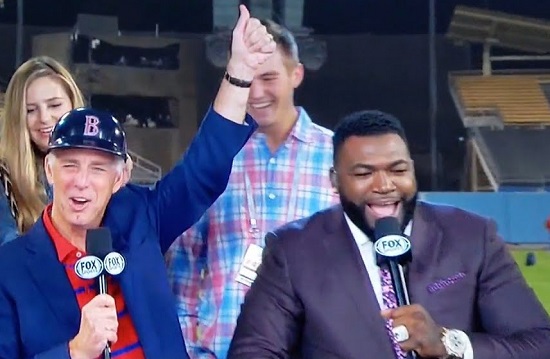
Just shy of eleven months ago, Dave Dombrowski wore a Red Sox helmet and let former Red Sox superstar David Ortiz interview him right after the Red Sox nailed a World Series. After midnight last night, Dombrowski went to the Red Sox guillotine.

Watch and ponder a 10-5, home run heavy Red Sox loss to the Yankees on national television Sunday night. Awaken Monday morning to discover the Red Sox threw out the first president of the season just after midnight. Down the stretch. With the Red Sox down to little if any hope of really defending their 2018 World Series championship.

Every once in awhile not even a World Series appearance or conquest is enough to save someone’s baseball job. It wasn’t for Dave Dombrowski. The GM-made-president of baseball operations, who finished what his predecessor Ben Cherington started and steered the Red Sox back to the Promised Land for the fourth time since the 21st Century began, is finished.

And the questions include the price the Olde Towne Team will pay for last year’s conquest. Dombrowski spent big with dollars and with prospects to make last year’s triumph happen. Now the Red Sox farm system is parched, and a lot of the dollars that finished constructing last year’s conquerors could prove a prison as much as a parade.

Forgotten at times during last year’s triumph was that Cherington built the core of the team. Dombrowski took the bows with everyone else after the Red Sox finished stunning the Dodgers last fall but all he did was finish what Cherington started. And everyone who remembered Dombrowski’s years of trying but failing to get the Tigers to the Promised Land and mortgaging the farm several times couldn’t resist asking how long before Dombrowski’s accomplishment with the Red Sox would endure before he’d be nudged out of Boston, too.

It’s unfair to Dombrowski in a few ways, of course. But running a team whose in-house culture is win/win-now/keep-us-winning isn’t simple business. And men who mortgage the farm on its behalf often have lower survival rates than men who know how to remake/remodel without tanking or without letting the farm become a dust bowl.

Cherington got four years. Dombrowski didn’t survive a fourth. Both were hired seemingly out of nowhere. Except that for one of them, “nowhere” was right under the Red Sox’s noses. Cherington was part of the Red Sox baseball operations offices since 1999 and built himself a solid player development background when he was hired to succeed Theo Epstein in 2011.

Cherington’s first order of serious business, alas, was to take it like a manperson when the powers above made him look like a fool after the infamous 2011 Red Sox collapse. He’d promised numerous players that whomever would take the bridge, after Terry Francona quit before he could be fired, it wouldn’t be the rumoured Bobby Valentine. The powers above hired Valentine (specifically, it may have been Larry Lucchino’s call); Cherington’s choice was almost anyone but. (Actually, at the time, it was Dale Sveum.)

Poor Cherington. He found himself having to keep his back door open to help one after another Red Sox player keep his marble (singular) during the Valentine nightmare. Then, he executed the daring August 2012 trade that sent the Dodgers Josh Beckett, Adrian Gonzalez, and Carl Crawford and concurrently blew open a small tonnage of financial headroom while giving himself the space to hatch and execute a post-Valentine plan.

Cherington spent the 2012-13 offseason buying or dealing for a group of more than useful availables and spare parts—Mike Napoli, Jonny Gomes, Shane Victorino, David Ross, Stephen Drew, Brock Holt, and (especially) sleeper reliever Koji Uehara—and bringing home former Sox pitching coach John Farrell to take the bridge and dissipate the Valentine toxins.

That effort, plus the returns to health of such key men as John Lackey, often-injured (and oft-unfairly alienated) Jacoby Ellsbury, and especially future Hall of Famer David Ortiz, got the Red Sox 2013 World Series rings for Cherington’s efforts. It also got Cherington named as the third Red Sox executive ever named by The Sporting News as Executive of the Year.

Concurrently, he devised and executed a longer-range plan that rebuilt the Red Sox farm without even thinking about tanking, which is never an option for a team whose owner John Henry learned what not to do and how not to do it watching the similarly win-now-or-be-gone thinking of the late Yankee owner George Steinbrenner.

Mookie Betts, Xander Bogaerts, Rafael Devers, Andrew Benintendi, Eduardo Rodriguez, and apparently defense-first Jackie Bradley, Jr.—all of whom factored large enough in last year’s conquest—were Cherington’s handiwork, either by in-house development or trade such as the deal that brought Rodriguez to the Red Sox in late 2014.

Where the earnest Cherington mis-stepped was with some of his subsequent free agency signings, including Pablo Sandoval, Hanley Ramirez, A.J. Pierzynski, and Grady Sizemore. When the Red Sox executed him in favour of Dombrowski, Cherington still left them a solid nucleus that didn’t go unnoticed by the incoming Dombrowski.

It didn’t take Dombrowski long to sign such nuggets as David Price and Craig Kimbrel, and watch as the Red Sox went from last to first in the 2016 American League East, though they were shoved out of the postseason by the eventual pennant-winning Indians. Dombrowski traded for Chris Sale, signed Mitch Moreland, and basked in the 2017 AL East title despite another postseason exit short of the Promised Land.

Then he answered Farrell’s apparently losing his clubhouse at last by canning Farrell and hiring Astros bench coach Alex Cora—while the Astros were still advancing toward their 2017 World Series conquest. And Cora let his new players know immediately how they fell short enough: “You guys were easy to game plan against. Too many bad takes [at the plate].”

Dombrowski also landed J.D. Martinez at almost the eleventh hour of last year’s spring training, then watched Benintendi, Bogaerts, Devers, and Betts especially come into their own, Betts almost running away with last year’s American League Most Valuable Player award. Marry that to Price and Sale shaking away whatever problems they might have had otherwise, and the Red Sox turned the 2018 postseason into a thrill that climaxed when Sale struck out the side to end the World Series hoisting the trophy in Dodger Stadium.

Except that there were a few serious cracks in the structure Dombrowski finished atop Cherington’s foundation:

* Almost typical of a Dombrowski administration, the Red Sox didn’t just empty the farm, they took a torch to it. Assorted observers say the farm’s being rebuilt little by little, though.

* Dombrowski ignored the Red Sox bullpen almost entirely both last offseason and approaching this year’s new single mid-season trade deadline. Some say it’s outperformed its expectations this year; others say it became taxed too heavily as one after another Red Sox starter faltered for assorted reasons—especially after they were barely worked in spring training and looked like spring-training pitchers in April.

* Betts has one more season coming under Red Sox control and, unless something happens between now and October 2020 to constitute an offer he can’t refuse, it looks as though he’s going to play the market for the first time then. The Red Sox may have ideas about trading him this winter, but if they go there they won’t get that solid a return for a one-year rental.

* Martinez is posting another magnificent season at the plate, but he has an opt-out clause he can exercise at season’s end and enough observing the Red Sox fear he’s liable to try playing hardball. For more money? For a longer commitment? Nobody knows just yet, but the Red Sox have to brace themselves for either.

* With Nathan Eovaldi, a postseason hero out of the bullpen last fall, missing too much time to injury this year and then having to shake away rust in a return to the rotation, it leaves the Red Sox with him, Sale, and Price as underperformers among the walking wounded and on long-term contracts while they’re at it.

In fact, Sale—who’s now done for the season thanks to pitching elbow inflammation—won’t even see his contract extension begin until 2020, but some argue Dombrowski signing him to that extension might have seeded Dombrowski’s end. Sale swore when signing that his shoulder troubles were behind him. Everyone wanted to believe it. Then his inconsistent 2019—brilliance here, battery there—ended prematurely when his elbow immolated. Uh-oh.

But there’ve been enough bright lights in Red Sox fatigues to make you confident they can win next year. Betts, Bogaerts, and Devers still make for a powerful threesome at the plate, though the Red Sox may want to think hard and start thinking now about keeping Betts in the family. Even if Henry wants to trim payroll up the street, he can’t afford to let his franchise player leave the family.

Benintendi shook away his first half inconsistencies and is having a magnificent second half, and he should be ready for a full season’s high-level production in 2020. Rodriguez is having a breakout season. Matt Barnes and Brandon Workman have become late-inning godsends out of the bullpen.

And rookie reliever Darwinzon Hernandez’s bullpen performance in his first 25 gigs (2.83 ERA; 2.17 fielding-independent pitching [FIP]; 17.0 K/9) in addition to his widely enough reported early maturity may mean the Red Sox’s late-game/ending-game wipeout option of the future is preparing for that future already, even if Cora isn’t anxious to smother the kid with hype.

But Jhoulys Chacin, whom the Red Sox signed after the Brewers parted ways with him late last month, has no such fear. In a perfect position to know, Chacin isn’t afraid to compare Hernandez to Josh Hader, the Brewers’ bullpen assassin. “He reminds me of Hader,” Chacin tells MassLive.com’s Christopher Smith. “He throws that raised fastball that some guys just can’t catch up.

“I’ve talked to him a lot since I’ve been here,” Chacin continued. “I want him to stay healthy and keep doing what he’s been doing. I played with Hader and to see his fastball just raise up, (Hernandez’s) fastball does pretty much the same, too. Like I said, he just needs to stay healthy and take his approach every day to the field and I think he can be a pretty good pitcher.”

It isn’t just Hernandez’s fastball. He’s developed a solid slider and has a curve ball with wipeout potential. Any way you look at him, Hernandez at 22 may hold the Red Sox bullpen’s future in his left hand.

The Red Sox won’t talk publicly about Dombrowski’s execution just yet. Give them credit, sort of, for doing it almost stealthily. The NFL’s New England Patriots hogged the weekend headlines, first signing controversial wide receiver Antoine Brown, after he wriggled his way out of Oakland, then blowing the Pittsburgh Steelers out 33-3 Sunday night to open their season. The Red Sox dropped the guillotine on Dombrowski almost noiselessly.

They left Cora to be the public face of the putsch. It’s not exactly Cora’s most comfortable position, as he made clear after Sunday night’s loss when he was told the blade sliced  through Dombrowski’s neck. “I’m surprised and shocked, obviously,” the manager said. “Right now, I don’t have too much to say. This is the guy that gave me a chance to come here and be a big-league manager. They just told me so I’m not ready to talk about it.”

Martinez and Rick Porcello have said they were all but blindsided over executing Dombrowski, to whom both players were close going back to their Detroit days. Porcello had enough on his plate apologising publicly to Red Sox fans for his, shall we say, modest performance this season, without losing a man he considered a friend.

“At the end of the day” the righthanded former Cy Young Award winner said, “we’re the players who are on the field and we’re the ones who can make or break a lot of things. Ultimately, the onus comes on us. I’m still processing everything. Processing myself, too. It’s really hard to reflect on it, too. I’ll have potentially a better answer for you in a couple days. You never like to see anybody lose their job over what we’re doing on the field.”

As peculiar as it might sound to read in print, the Yankees have had little but front office stability with Brian Cashman as their general manager since 1998—and only one World Series title to show since the turn of the century. The Red Sox have had five full-time general managers since 1998 (Dan Duquette, Mike Port, Epstein, Cherington, and Dombrowski)—and four World Series titles to show since the turn of the century.

A lot of teams would kill for the Red Sox’s 21st Century track record—four World Series rings in fifteen years—even with the extremes of maximum success and (thanks to three dead-last division finishes) maximum recess. And a lot of GMs or baseball ops presidents would kill for Dombrowski’s overall resume: two World Series rings (his other ring: the 1997 Marlins), two American League pennants (the Tigers), in a little over two decades.

But a lot of them wouldn’t turn the farm into the dust bowl to get there, either.

The Red Sox for now will be run by a trio of assistant GMs, Brian O’Halloran, Eddie Romero (the son of 1986 pennant-winning Red Sox spare part Ed Romero), and Zack Scott. Several reports say Romero among the three is most considered to be a full GM/baseball ops president in waiting. Maybe the Red Sox won’t wait too long to make it happen.

Greinke makes the ‘Stros trade winners

2019-08-01 ZackGreinke

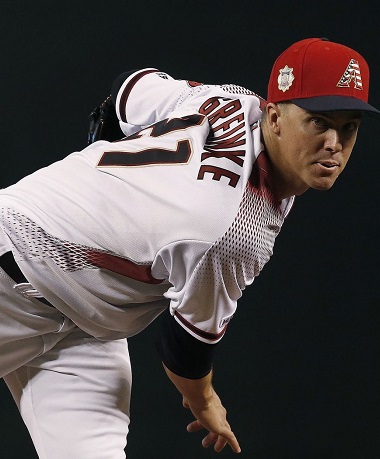
Zack the Knife makes the Astros the big trade winners. Will he help make them World Series winners?

No questions asked. The Astros slipped in at the eleventh minute, practically, and not only stole the new single trade deadline show but they did the absolute most to fortify themselves for the postseason run nobody doubts is theirs this season. Barring unforeseen disaster, of course.

With Gerrit Cole looking at free agency after the season it made sense for the Astros to seek a top-of-the-line starting pitcher with at least another full season of team control to line up with (don’t doubt it) future Hall of Famer Justin Verlander, so far the new ageless wonder of baseball.

So it came forth after the deadline passed that the Astros sent a quartet of prospects—good, promising, but not quite platinum-rated prospects—to the Diamondbacks for Zack Greinke, who isn’t exactly a slouch on the mound and who’s having a solid season in his own right so far.

They’ll get the rest of this season plus the final two seasons on the gigadeal Greinke signed with the Diamondbacks. The Snakes also sent the Astros a reported $24 million to help cover the rest of Greinke’s contract, on which the Astros will be responsible for the other $53 million. They’re not exactly complaining.

General manager Jeff Luhnow knew only two things about Greinke before he pulled the trigger on the big deal of the day: Zack the Knife has been a consistent pitcher who’s on the borderline of a Hall of Fame case; and, the righthander isn’t exactly one of the most combustible personalities in baseball.

“I don’t know him personally,” Luhnow told reporters, “but I think he’s not a guy that seeks the limelight, and that actually works well for us here in Houston. And slotting in with Verlander and Cole, he’s gonna not have to be the guy that’s in front of the camera the whole time.”

The Astros weren’t exactly over-occupied on doing the Greinke deal. Before that deal hit the news running Wednesday, they did a little bullpen fortification, getting Aaron Sanchez and Joe Biagini from the Blue Jays. The Jays also sent the Astros minor league outfielder Cal Stevenson. The Astros sent the Jays outfielder Derek Fisher.

Greinke was last seen striking out seven Yankees in five innings Wednesday. He left the park without talking to reporters, which may or may not have been an indication that he suspected or was told it was time to re-pack his bags.

On the same day, the Astros got flattened by the Indians, 10-4, in Cleveland; they finish with the Tribe Thursday before a weekend hosting the Mariners, but Greinke may not have his first Astros start until the Rockies hit town starting Monday.

“I know he’s really good. I don’t know him personally, but I’m going to get to know him,” said Astros manager A.J. Hinch. “We acquired him because of how good he is. Certainly we expect him to be a big part of our push to win the division and keep winning into October. He’s an incredible pitcher.”

He has been, and he still is when all is said and done. His new teammates won’t disagree. “What a pickup!” Cole himself crowed. Referring to the front office, he added, “They nailed it. They did a fantastic job.”

Landing Greinke shot the Astros into being World Series co-favourites with the Dodgers at Caesar’s Palace Sports Book. But the Astros are smart enough to know Berra’s Law is immutable. Zack the Knife increases their odds of a return to the Series, but so is Andujar’s Law, as uttered by a long-ago Astro, the late Joaquin Andujar: “In baseball, there’s just one word—you never know.”

What we do know, though, is who were really the big winners and the big losers of major league baseball’s first single mid-season trading deadline.

THE WINNERS

Braves—Another starting pitcher wouldn’t have hurt them, necessarily, but what the National League East leaders really needed was a back-of-the-bullpen retooling. And, they got it, in an almost rapid fire series of deals.

They landed Shane Greene from the Tigers. They landed Chris Martin from the Rangers. They landed Mark Melancon from the Giants. As CBS Sports’s Matt Snyder observes, if the prices were too high for such reported availables as Edwin Diaz (Mets) and Felipe Vasquez (Pirates), the Braves did well enough shopping the sale aisle.

None of the new pen trio are anything near the most glittering names in the relief world, but neither are they slouches or pushovers. Changes of scenery from nowhere land to pennant contention do wonders for such pitchers, and it would be absolute gravy if the Braves get something out of Melancon resembling his final years in Pittsburgh and his only spell in Washington.

Greene, of course, was an All-Star this year and was wasted on a Tigers team in the middle of a rebuild. When the Braves can turn to him near the end of a game, either as the sure ninth-inning option or if things get a little dicey in the eighth, the sight of Greene warming up with his 1.18 ERA should be enough to make their division and the rest of the league quake.

Throw in Martin’s 10+ strikeout-to-walk ratio and 10.2 K/9 rate, and all of a sudden the Braves’ bullpen doesn’t look like it’s full of bull anymore.

Indians—So Trevor Bauer turned out to be a bigger pain in the you-know-where than his otherwise solid pitching was worth. Doesn’t mean the Indians dealt from weakness. Not with Corey Kluber on the threshold of returning from the injured list.

And the Tribe managed to address their biggest weakness in the deal: their corner outfielders weren’t hitting anywhere near the same area code as their new toys Yasiel Puig (from the Reds) and Franmil Reyes (from the Padres) put together. Add Puig’s mostly plus throwing arm in right field, and all of a sudden the Indians outfield isn’t just going to roll over and play dead.

The Indians also landed lefthanded pitching youth Logan Allen (also from the Padres), and when you consider how well they develop or re-tool starting pitching this is an upside acquisition for them, too.

But the real key was the impact bats. Puig secures them in right field for the rest of the season, and perhaps if he continues doing well enough the Indians would think of pursuing him when he hits free agency in the fall. Reyes, though, secures a DH spot for them for the foreseeable future while giving them an outfield platoon option in the bargain.

Suddenly it’s not to laugh about the Tribe’s outfield anymore.

Mets—Don’t laugh. Not only are they on a six game winning streak at this writing, the formerly left for dead Mets—and even I thought they were just awaiting the nails to be hammered into their coffin after that terrible weekend in San Francisco—are 12-7 since the All-Star break.

And maybe it’s an illusion since, aside from the Giants, they faced only real contender during the string. But they did take both games against the Twins in Minnesota, including a 14-4 blowout. All of a sudden, these Mets can play as well as they can pitch.

And while the world seemed to be sure only that either Noah Syndergaard or Zack Wheeler would have a change of address after Wednesday’s deadline, it took the Astros landing Greinke to knock the Mets’ landing Marcus Stroman well enough before the deadline out of the park.

Maybe Stroman wasn’t thrilled at first to go to what he thought was a non-contender. And maybe someone ramped up for kicks a rumour that the Mets had ideas about flipping Stroman to the Yankees post haste for some of the Yankees’ top farm produce. But the Mets wasted no time ridding themselves of Jason Vargas—who should have been cashiered over a month earlier—sending him to the Phillies almost as soon as Stroman’s acquisition was a done deal.

The Mets rotation now looks like Jacob deGrom (who pitched brilliantly against the White Sox Wednesday night only to get his almost-usual no-decision, the poor guy), Stroman, Syndergaard, Wheeler, and Steven Matz. And with Matz putting on a deadly off-speed clinic shutting out the Pirates last Saturday night, looking as though he’s finally found the secret to pitching without the power of a deGrom or a more disciplined Syndergaard, it gives the Mets a rotation with two number-ones, a two, and a pair of threes.

Nationals—Like the Mets, the Nats were left for dead a few times before the All-Star break. Like the Mets, too, the Nats are riding resurgent, sort of: 10-9 since the break. And the Nats needed a bullpen remake in the worst way possible.

Not at the absolute rear end, where closer Sean Doolittle remains effective when he has something to save. It’s getting the games to Doolittle that caused one after another National migraine. But then the Nats landed Jays reliever Daniel Hudson and Mariners reliever Roenis Elias.

All of a sudden, the Nats seemed to find relief in the best way possible for that beleaguered bunch of bulls. And then they got really surreal—it turned out that they also got an old buddy (ho ho ho) from the Mariners, Hunter Strickland.

Strickland—who carried an almost three-year grudge over then-Nat Bryce Harper taking him deep twice in a division series, the second time awaiting whether his fresh blast straight over the foul line would leave the yard fair but misinterpreted as admiring the shot. (It flew fair into McCovey Cove.)

Strickland—then a Giant, who somehow hadn’t gotten the chance to face Harper until 2017, then entered a game with Harper leading off an inning and threw the first pitch right into Harper’s hip. Triggering Harper’s charge to the mound and the very delayed Giants pouring out of their dugout, during which pour former Nat Michael Morse’s career ended up being sealed when he collided with Jeff Samardzija and suffered a concussion.

Harper, of course, now wears the Phillies’ silks. But it would have been intriguing if Harper was still a Nat with Strickland coming aboard. Strickland’s coming back from a lat strain that disabled him for almost three months. And the Nats don’t see hide nor hair of the Phillies again until a four-game home set beginning 23 September.

By which time, the Nats may or may not be in the thick of the NL East race (the Braves suddenly started looking human enough the past couple of weeks), securing a wild card berth, or hoping they’ve got a leg up on 2020. A lot rides on the new bulls. But for now, the Nats took their number one need and addressed it respectably enough.

THE LOSERS

Red Sox—Like the Braves and the Nats, the Red Sox needed bullpen help badly. Unlike the Braves and the Nats, the Red Sox landed nothing. Not even a calf, never mind Diaz, whom the Mets were making available and who probably could have been had for a little less than they were said to have demanded for Syndergaard and Wheeler.

The Red Sox bullpen ERA in June: 4.92. The Red Sox bullpen ERA in July: 5.18. Letting some reasonably effective pieces make their ways to Atlanta and Washington instead does not portend well for the Olde Towne Team.

Dodgers—I know, it sounds funny to apply “losers” in any context to the National League’s 2019 threshing machine. But the threshing machine has one monkey wrench looming: the Dodger bullpen isn’t as formidable as it used to be.

Kenley Jansen isn’t really pitching like the Kenley Jansen of old this year. What’s behind him in the pen depends on whose description you read: mess, disaster, toxic waste dump, landfill, take your pick.

If the Mets and the Pirates were asking the moon for Diaz and Vasquez, the Dodgers if anyone had the moon to give in return. They’re loaded with prospects on the farm, and money in the vault, enough to have dealt a package of them for either reliever and still have a bountiful harvest to come.

Good luck holding leads against postseason lineups with that kind of pen. And the Dodgers won’t be able to hit themselves beyond their pen’s capability eternally. They won’t lose the NL West, necessarily, not with a fifteen-game lead at this writing, but their chances at a third consecutive World Series appearance and just one Series ring since 1988 just got a lot more thin.

Brewers—The pre-season favourites to defend their NL Central title aren’t exactly that good anymore. Losing Brandon Woodruff and Jhoulys Chacin to the injured list has left their rotation in tatters, and with the Giants yanking themselves back into the wild card play there went their ideas of maybe adding Madison Bumgarner for a stretch drive.

But they also needed some pen help, and what they brought aboard (Ray Black, Jake Faria, Drew Pomeranz) is serviceable but not quite as serviceable as what the Braves and the Nats brought aboard. The Brew Crew is liable to spend the rest of the season watching the Cardinals’ and the Cubs’ rear ends, but then with the NL Central as it’s been this year there could be a surprise in store. Could. Remotely.

Because the Brewers can’t live by Christian Yelich alone.

Twins—The AL Central leaders have gone from a double-digit division lead to looking only human at three games up on deadline day. They needed a little rotation help and a little bullpen help.

And they got only a little in the pen. Sam Dyson (from the Giants) and Sergio Romo (from the Marlins) are solid but not overwhelming. Maybe not for lack of trying, but the Indians’ blockbuster suddenly puts the Twins close enough to the Tribe’s mercy to make for a too-interesting stretch drive for them when they once looked like the division’s runaway train.

They can hit all the home runs they want, but if their pitching is compromised the Twins have a big problem coming. Like the Yankees, the Twins should have been more aggressive trade deadline players. Like the Yankees, they weren’t, for whatever reasons. And it could come back to haunt them down the stretch.

Yankees—Even Yankee haters won’t understand this one. The number one need for the injury-battered Bombers was rotation help. Especially after they’d just been flattened by the Twins and the otherwise-troubled Red Sox. And they did nothing to fix it.

The question may be why, or why not. If Bumgarner was off the market, they could have played for Stroman or for Mike Minor, even allowing for Minor’s rough July after a sterling June. They didn’t seem to play for any of the above. They didn’t even seem to be a topic if the Diamondbacks—knowing their own chances were still none and none-er—were looking to move Greinke to a contender.

And since their number one American League competition overall did land Greinke, the Yankees may ride a weakening AL East into October but they’re not liable to get past round one again, even if it may not be the Red Sox shoving them to one side this time.

Marcus Stroman and other trade deadline thoughts

2019-07-30 MarcusStroman

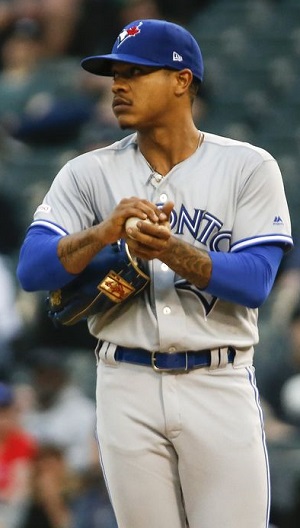
Marcus Stroman to the Mets—method to madness or madness to method?

As regards the Mets dealing a pair of mixed-reviews pitching prospects to the Blue Jays for their staff ace Marcus Stroman, and the coming trade deadline in general a few observations. Beginning with the one that tells me it seems at least three-quarters of baseball never saw this Stroman deal coming.

Anyone who thought Stroman’s new address would be New York by this year’s new single trade deadline figured it would involve the Yankees, leaders in the American League East, and not the Mets, strugglers to stay within reasonable sight of even the second National League wild card.

Or, if Stroman was going to move on from Toronto, he’d be more likely to land with one or another viable 2019 competitor—say, the Braves, where I seem to recall some observers thought he’d make a better mutual fit if the Yankees really were convinced Stroman was good enough to pitch but not necessarily fit.

But Stroman, who makes his living largely by way of his ability to lure ground balls, is now a Met. So where do we and they go from here?

1. Former major league general manager Jim Bowden, who now writes for The Athletic, says the Mets have no intention of landing Stroman just to flip him for a better package by the close of trade business Wednesday. And the two pitching prospects going to the Jays—Anthony Kay and Simeon Woods-Richardson—are considered solid but not elite prospects, but the Jays believed they weren’t going to get better than them for Stroman when all was said and done.

2. The Mets aren’t a team of elite defenders especially around their infield this year, and yet Steven Matz—returning to the rotation after a brief spell in the bullpen to re-horse—pitched a complete-game 3-0 shutout Saturday night in which his calling cards were a deft blend of breaking and off speed stuff and putting his fielders to work, which for a change they did rather admirably behind him.

3. Matz’s performance may well have had a firm impact on the Mets’ pitching thought. May. They’ve tried since 2013 to cultivate an arsenal of power arms in the rotation and seen, when all is said and done, only Jacob deGrom live up to any expectations. They watched Matt Harvey’s injuries collapse him from a power pitcher to one in search of a new cause and, now, a new team. They’ve seen Noah Syndergaard and Zack Wheeler bring the power without delivering the consistent results.

If the Mets had eyes for Stroman before Matz took the mound Saturday night, Matz’s performance had to have told them it wouldn’t be a terrible idea to add another arm to the rotation that belonged to a young man who uses more than his arm to survive on the mound. Stroman isn’t a strikeout machine; he has the second highest ground ball rate among all Show starting pitchers.

4. Maybe acquiring Stroman begins to get the Mets re-thinking their incumbent defense, too, especially marrying him to Matz in their rotation. Rookie of the Year candidate Pete Alonso forced Dominic Smith off first base, but Smith in the outfield looks almost exactly like the un-natural he is out there even though he hits with authority. Rookie general manager Brodie Van Wagenen’s willingness to take aging Robinson Cano if he wanted closer Edwin Diaz from the Mariners last winter forced Jeff McNeil, their obvious second baseman of the future, likewise into an outfield where he’s about as comfortable as an elephant in front of a mouse much of the time.

5. Diaz has been a mess not entirely of his own making this season, mishandled, sometimes mis-deployed, and while the raw talent is still there the Mets are now rumoured to be shopping him. Cano has four years left on the contract the Mets took on from the Mariners, making him almost an immovable force. Whether the Mets’ contradictory ownership might be willing to take a bath on the deal in order to start moving defensive parts back where they belong is anyone’s guess.

6. With Stroman off the market eyes turned not just upon Syndergaard but the rest of this trade deadline’s pitching market.

The Giants’ unexpected resurgence means Madison Bumgarner isn’t likely to go anywhere the rest of the season, compared to a month ago when the observers and speculators pondered where, not if he’d move on. The Yankees need whatever starting pitching help they can get but the market now seems more constricted—and as much as they’re wary of dealing with the Mets, Syndergaard now might look like an attractive Yankee target. Might.

And the Nationals, like the Giants but at a higher level, have had an unexpected resurgence of late after they were all but written off as dying as late as early June. They ran into a buzzsaw in Los Angeles this past weekend, needing Stephen Strasburg to pitch the masterwork he did in seven Sunday innings to escape with even a single win, but now Max Scherzer—whom all the Smart Guys said had to go on the trade deadline block once upon a time, in large part to bring them badly needed bullpen relief—may find his barking back barking well enough into August.

At first glance, then, it would seem the Nats have a big problem as they prepare to square off against the National League East-leading Braves Monday night. Except that the Braves, who ran roughshod over the league before the All-Star break and still lead the Nats by five and a half games, have suddenly regressed to being only human. Not only have they lost seven of their last eleven, they’ve lost two critical elements—shortstop Dansby Swanson, resurgent veteran right fielder Nick Markakis—to the injured list. The Nats won’t have Strasburg or Scherzer to throw at the Braves this week but the Nats might still gain key ground, anyway.

7. The bullpen dominos began falling over this past weekend, too. Veteran Sergio Romo, once a key to a couple of Giants World Series winners, just went from Miami to Minnesota where the Twins, this year’s American League surprise, just bumped their bullpen up several notches by bringing him aboard. Jake Diekman went from Kansas City to Oakland, a sign the Athletics are gearing up for another wild card run. There are contenders aplenty who need help in the pen and few more than the Nats.

8. If the Jays are rebuilding in earnest, bullpen-longing eyes may be cast upon the surprising Ken Giles. After his 2017 World Series mishap (which wasn’t entirely his sole responsibility) and subsequent personal and mound meltdowns, Giles has rehorsed completely in Toronto. As in, a career year: a 1.54 ERA and a 1.60 fielding-independent pitching rate. Not to mention a 5+ strikeout-to-walk rate and a 14.9 strikeout-per-nine rate.

Yes, the Nats have eyes upon Giles and his Jays pen mate Daniel Hudson. But so may the Red Sox and any other contender who needs a bump among the bulls. Even the Twins, despite landing Romo, might still make a play for Giles at least or, if Giles eludes them, Norman, whose 2.87 ERA and June-July of only four earned runs in 21 innings’ work yanked his trade value up accordingly.

Bowden rates the Stroman deal a B+ for the Mets and a B- for the Jays. It wouldn’t hurt the Jays’ standing to try prying a slightly better haul back for Giles and/or Hudson. And although Giles is dealing with a slight nerve issue in his pitching elbow, wiping out the side as he did in a Saturday night assignment should make his suitors breathe a little easier, assuming they don’t fall tempted to overwork him while he works through it.

9. The Mets may or may not yet have a wild card long shot this year, but don’t kid yourselves: they were thinking as much about 2020 as now when they made their play for Stroman. And since Stroman is under team control through the end of 2020, don’t be surprised if they like what they see from him the rest of this season and start talking extension with him before 2020 begins.

Which might also mean that Syndergaard at minimum, and Wheeler at maximum, may yet have changes of address coming by Wednesday afternoon. And with whisperings that the Red Sox have eyes upon Diaz for their pen, which needs a little help but isn’t as badly mismanaged as the Mets pen has been this year, the Mets should be thinking smart and looking very closely at that Red Sox farm system.

Because the Mets could also use a third base upgrade from veteran Todd Frazier, who’s reliable but beginning to show his age. And as thin as the Red Sox system is for now, AAA third baseman Bobby Dalbec was named both the offensive and defensive player of the year for 2018 in the Red Sox’s minor league award valuations. If the Olde Towne Team wants Diaz for their pen that much, the Mets should all but demand Dalbec in the return haul.

10. Too many teams never quite do what they should when it counts. The Mets, alas, are notorious for that. Even when they’re winning.