Unknown's avatar

About Jeff Kallman

Member, Internet Baseball Writers Association of America and the Society for American Baseball Research.

Only one way the DH is un-American

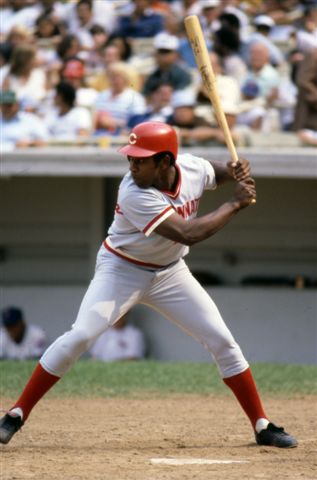
Game action batting of Cincinnati Reds Dan Driessen, 1978

Dan Driessen—the National League’s first designated hitter, when the DH rule was used for both combatants in the World Series for the first time, in 1976.

Amidst the hoopla over the Major League Baseball Players’ Association seeming to support bringing the designated hitter to the National League as soon as this season, there’s been what you could call the expected contingency of purists denouncing the DH as, yes, un-American. Well, they can relax for the time being. Commissioner Rob Manfred says it would be economically unfeasible to bring the DH to the National League so soon.

When you hear that you should probably take it with two grains of salt and a beer chaser. Because when a commissioner says something’s “economically unfeasible,” it usually means the owners wanting to let the players have something less than what they want for themselves, namely making more money.

The good of the game isn’t always the same thing as making money for either the owners or the players, and bringing the DH to the National League would be good for the game when all is said and done. So would penalising tanking teams by costing them choice draft pick positions, another proposal the players’ association has but Manfred thinks is economically unfeasible for now.

Manfred would rather talk about those things when it really is time to negotiate the next collective bargaining agreement after the current one expires after the 2021 season. The players’ association is in a marvelous position from which they can force the issue on such things as Manfred’s itch for a pitch clock (he wants it as soon as possible for the Show) and a three-batter minimum for pitchers. They could tell him that if he wants those, he needs to give these, never mind that Manfred can by baseball’s rules impose the pitch clock when he damn well pleases.

But back to the “un-American DH” for now. Which isn’t as un-American as you think it is. Actually, in one sense it is: it’s an un-American League creation. The historically minded would like to remind you one and all that it wasn’t something the American League dreamed up after a man on a flaming pie descended upon an owners’ meeting proclaiming, “From now on, you are the DH league with a D.” The original idea was first the brainchild of an owner in the National League.

That would be William Chase Temple, who owned the Pirates in the late 19th Century and also provided the Temple Cup awarded to the National League’s postseason champion. You can look it up, and I did. Baseball historian John Thorn delivered it in 2016, when rumours wafted up that the National League was actually going to consider adding the DH. Thorn unearthed the story on the suggestion of a reader who felt there was a good story behind the idea even though said reader opposed its arrival.

Temple came up with a designated hitter concept identical to the one the American League brought to the Show in 1973. “There had been a widespread concern among baseball men with the game’s declining offense,” Thorn wrote. (Sound familiar?) Returning from a pre-season meeting of National League owners in 1892, after the league expanded to twelve teams by way of admitting four from the fallen old American Association, Temple told the Pittsburgh press that the DH got only a 7-5 vote, not enough to implement it.

The first time the DH crept into the mind of anyone in the American League was 1906, when Philadelphia Athletics owner/manager Connie Mack proposed it after he tired, apparently, of watching his pitchers such as Hall of Famers Eddie Plank and Chief Bender swinging as though they had cardboard tubes instead of bats. The idea went nowhere, but the National League flirted with it again in 1928, when its president John Heydler advocated for it . . . but the American League turned it down. The National League gave it a try in a few spring exhibitions that year but ultimately rejected it.

And there the matter stayed until the 1960s, when several minor leagues including the AAA-level International League adopted it. That may have prompted both the National and American Leagues to give it a try during select spring exhibition games in 1969, but they chose not to stay with it. Not for long, anyway. Because the staying power of the DH in the minors caught the attention of Charlie Finley, the twice-removed successor owner of the A’s who’d moved to Kansas City and then Oakland.

Say what you will about Finley otherwise, and plenty have, but after the 1972 season Finley noticed two things in particular: 1) American League attendance had dwindled considerably enough in light of lesser run production than he saw the National League enjoying; and, 2) in 1972, Oakland pitching couldn’t hit with garage doors: the A’s pitchers hit a collective .165 with a .198 on-base percentage and a .203 slugging percentage. (There was one A’s pitcher who could hit that season: Hall of Fame reliever Rollie Fingers, who batted .312: six hits in nineteen at-bats.)

The rest of the league didn’t hit much better. The ’72 Orioles, to name one, had a .155 batting average among its pitching staff. (And I’m pretty sure that nobody even thought of paying their pitchers for their batting skills—not when every regular Oriole pitcher that year, starters and relievers, posted a collective 2.53 ERA.) And if the American League was looking for more run production, Finley not only had the answer, he had an unlikely ally.

Commissioner Bowie Kuhn usually considered Finley about as pleasurable as unanesthetised root canal, but this time Kuhn was willing to let Finley have his head. Kuhn allowed the American League to introduce the DH on an experimental basis for 1973. (A Yankee first baseman/outfielder, Ron Blomberg, became the league’s first DH to bat in the regular season; his first time up, he worked a full-count walk off Luis Tiant on Opening Day.) And in year One A.D.H. the American League out-hit the National League. What a surprise that the American League and practically all minor leagues, even those affiliated to National League clubs, adopted it permanently.

The National League got close to adopting the DH again in 1980. Unfortuately, Kuhn advised them that the proposal would bring the DH in for 1982. That’s when things got interesting and dicey at once, because:

* The Phillies’ vice president Bill Giles, who’d represent owner Ruly Carpenter at the voting meeting, had no idea how Carpenter wanted him to vote—because Carpenter was incommunicado on an extended fishing trip.

* The Pirates’ general manager Harding Peterson was instructed to side with the Phillies. Oops.

* The Braves, the Mets, the Cardinals, and the Padres voted in favour of the DH. The Cardinals’ then-general manager John Clairborne was the DH’s most vocal supporter among the National League teams.

* The Cubs, the Reds, the Dodgers, the Expos, and the Giants voted against. (Which showed how forgetful the Reds were of their own recent history: the DH’s first World Series appearance was 1976, when it was applied to both combatants and Reds first baseman Dan Driessen got the job—thus was he the National League’s first-ever designated hitter—for the entire Series, a four-game Reds sweep in which you could argue the DH helped the last Big Red Machine team against the revived but overmatched Yankees.)

* The Phillies, the Pirates, and the Astros abstained. And five days after the vote failed to allow the DH in the National League, the Cardinals fired Clairborne and named manager Whitey Herzog to hold the dual jobs of manager and GM.

CBS Sports’s Jonah Keri isolates one potential sticky spot if the National League accepts the DH now: it may not be the revenue pool enhancer the players’ union may think it to be. Citing Los Angeles Times writer Bill Shaikin’s observation that only two full-time DHs (Nelson Cruz and Khris Davis) qualified for the batting title in 2018, Keri says making the DH a central issue “risks wasting a bullet on a minor roster issue.”

Mega-sluggers who can’t play the field like David Ortiz and Edgar Martinez are practically unicorns in today’s game. Instead, teams typically use the DH spot to give position players quasi-rest days or to take pressure off minor, nagging injuries. From a pure labor perspective then, adding a mandatory universal DH merely grants NL teams the same ability to shuffle players across positions, but does not dramatically open up a new source of widespread, high-paying jobs.

For those purists who insist (wrongly) that the DH “impedes strategy,” shuffling players across positions actually has its strategic enhancements, particularly in things such as double switching in high-leverage late-game situations, not to mention the enhanced options pre-game or even pre-series in terms of differing defensive as well as offensive matchups when about to face particular pitchers.

Keri notices that if the DH came to the National League this seasons, three teams would benefit right out of the chute: the Mets, with a second base overload including aging Robinson Cano and injury-prone Jed Lowrie but also last year’s impressive rookie comer Jeff McNeil; and, the Nationals and the Rockies, who could find more at-bats for such part timers as Matt Adams (the Nats) and Mark Reynolds (the Rockies). They wouldn’t be the only teams.

The single most automatic out in baseball is the pitcher and has been for too long. Since the DH’s advent it’s gone all the way down to junior high schools, never mind college and the minors, so pitchers going untrained even minimally with a bat or on the bases didn’t begin with the turn of the century. The world hasn’t imploded because of it. If the world implodes, it’ll be for reasons having nothing to do with whether you didn’t get to see Clayton Kershaw, Max Scherzer, Jacob deGrom, Luis Severino, or Josh Hader at the plate.

Nor will the world implode if some of the other changes being pondered by the commissioner and the union come to pass. I can’t really object to the pitch clock anymore, either. I’ve seen enough minor league games where it’s been used a long enough time to know that it isn’t hurting anyone. Not the pitchers, not the hitters, and certainly not the quality of the game. There should be transporter aimed at the mound  through which to send pitchers waiting the 21st second to an underground tub of Jell-O. Name it the Baez Transporter, for the Dodgers reliever who takes so long between pitches you can read the closing stock prices and Amazon’s quarterly report.

(While we’re at it, how’s about cutting out the eight warmups for relief pitchers coming in for the first hitter or inning’s work, since they should already be plenty warm? Thought you’d escape without me bringing that up again, didn’t you?)

But I’d throw in a batter’s box clock, too. You get only one chance to call time per plate appearance, adjust your gloves, rub up a little more pine tar on the handle, knock the dirt out of your cleats, needle the catcher, congratulate the ump on the new arrival, insult the third baseman creeping down the line, whatever you like doing when you call time and step out of the box. Install a transporter likewise for the batter’s boxes to trigger when the batter tries for a second time-out in the same plate appearance. Name it Hargrove’s Hazard, after the former player-turned-manager who wasn’t nicknamed the Human Rain Delay because he liked to rush pitchers into throwing to him.

Meanwhile, back at the DH ranch, I’d like to remind you what happened when the now-late Hall of Famer Frank Robinson prepared for the first game he’d manage as baseball’s first black manager, for the 1975 Indians. He gave in to Indians brass who suggested strongly that the fans in Municipal Stadium (a.k.a. the Mistake on the Lake) wanted to see him in the lineup as well as managing, and put himself into the number two lineup spot against Yankee righthander Doc Medich.

With Jackie Robinson’s widow, Rachel, in the house, Robinson batted with one out in the bottom of the first and hit one over the left field fence to bring down the house. If you can think of a better way for a brand-new player-manager to launch the second half of his new job description, feel free to send it this way. But add a third element to that day’s job description. Robinson penciled himself in as the Indians’ DH for the day. Who says DH’s can’t help pioneers pioneer?
Frank Robinson, RIP: There go The Judge

2019-02-07 BrooksFrankRobinson

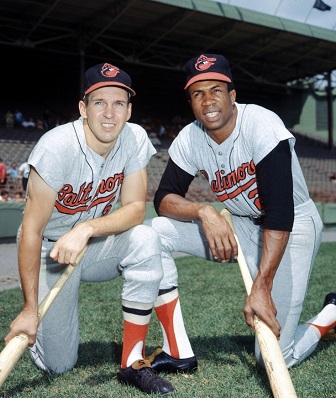
Brooks Robinson (left) made his fellow Hall of Famer Frank Robinson feel at home immediately in Baltimore.

Hall of Famer Frank Robinson lost a long battle with bone cancer at 83 Thursday. Baseball lost a lot more. It lost a top of the line player, its first black manager, a man who didn’t back down without a fight, and—maybe his least appreciated quality outside his clubhouses—a man with a wicked sense of humour.

Once when the Orioles’ team bus approached a junk yard, Robinson ordered the driver to stop at the yard—so less-than-sure-handed outfielder Curt Blefary, whom Robinson nicknamed Clank, could pick out a new glove. Then, when the Orioles won the 1969 pennant by beating the Twins in the first American League Championship Series, Robinson’s jubilation extended to their coming opponents.

“Bring on the Mets and Ron Gaspar!” Robinson hollered in the clubhouse. Exactly why he singled out that particular Met remains little known, but reserve catcher Merv Rettenmund corrected him: “It’s ROD, stupid!” Retorted Robinson: “Then bring on the Mets and Rod Stupid!” The bad news, of course, was the Mets making the Orioles look stupid in the World Series, sweeping them four straight after the Mets lost Game One.

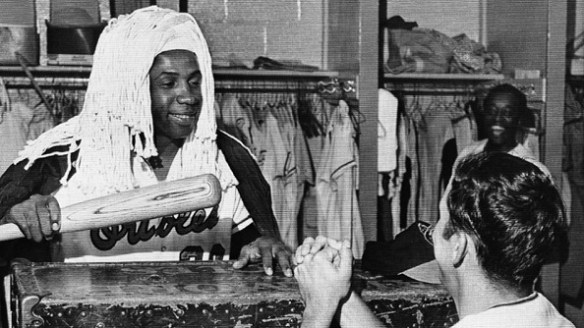
The good news, among others, was Robinson inaugurating a kangaroo court in the Oriole clubhouse upon his arrival in a trade from the Reds for 1966. By 1969, inspired by the fabled Pigmeat Markham “here come the judge” routines on Rowan & Martin’s Laugh-In, he wore a clean white string mop on his head and used his bat for a gavel. The court convened after Oriole wins; it brought a new shaft of levity into the team especially when they won their first World Series in 1966 and then romped to the American League East title in 1969, division play’s first season.

After Blefary was traded to the Yankees and he faced the Orioles for the first time as an opponent, he was silly enough to say his former team weren’t going to win “because they don’t have a big red S on their shirts.” The next day, during pre-game batting practise, Blefary was greeted by Robinson, outfielder Paul Blair, and pitchers Mike Cuellar and Moe Drabowsky surrounding him. With all four wearing Superman shirts.

Robinson became an Oriole in the first place because of one of the great front-office brain farts of baseball history. The National League’s 1956 Rookie of the Year in Cincinnati, Robinson had a splendid 1965 for the Reds but the Reds thought, not unreasonably, that they needed to fortify their pitching staff. (One fascinating story to tell might be that of just how on earth the 1960s Reds developed so much pitching talent but found most of it bedeviled by arm and shoulder troubles.) And they had their eyes on Orioles pitcher Milt Pappas.

One of the once-vaunted Baby Birds rotations of the earliest 1960s, Pappas in 1965 had a 2.80 ERA and a 3.24 fielding-independent pitching rate, though baseball brain-trusters didn’t ponder FIP in those years. Needing a more physically dependable arm to pair with ace Jim Maloney (on the threshold of his own shoulder issues, though the Reds didn’t know it at the time), the Reds’ pitching in 1965 had the second-worst overall ERA in the National League and surrendered the most walks.

Why deal Robinson to get Pappas? He played harder than a brick as a Red, hitting for power and hitting for just about anything else, playing the game almost like guerrilla warfare, notorious for slicing and dicing infielders on hard plays at the bases, one of which kicked up a particularly nasty brawl with Braves Hall of Fame third baseman Eddie Mathews. (John Klima in Bushville Wins! has described Mathews as a young man being someone who’d fight just for the thrill of it.)

He’d been bothered by a few leg injuries and a dubious 1961 arrest—Robinson was so angered by a short order cook’s racial taunting in a diner that he showed a .25 pistol he carried (for protection, since he habitually carried large amounts of cash) without realising a police officer was nearby to see it, according to a 1963 profile. Robinson paid a $250 fine and refused to talk about the incident otherwise, other than to say how stupid he’d been to show the pistol in the first place.

One contract holdout plus a 1962 postseason comment in which Robinson thought aloud about quitting the game after the Reds couldn’t win a second straight pennant—which moved manager Fred Hutchinson to demand owner/general manager Bill DeWitt give him a fat raise—may have moved DeWitt toward finding a way to move the outfielder who is still the best all-around position player in the Reds’ history.

DeWitt sounded foolish describing a player who’d hit 33 home runs and driven in 113 runs in 1965 as “a not young thirty,” but it would still be Robinson going to the Orioles for Pappas, relief pitcher Jack Baldschun, and outfielder Dick Simpson in December of that year. Any trepidations Robinson had about Baltimore, whose Orioles had only had a handful of black players since their move from St. Louis, were eliminated when namesake fellow Hall of Famer Brooks Robinson, an Arkansas native, was almost the first to welcome him aboard. “Frank,” the third baseman said, “you’re exactly what we need.”

“Robinson helps the young players,” said manager Hank Bauer, “just by talking to them.”

The two Robinsons also went a long way toward reducing racial tensions in Baltimore. When one particularly clumsy reporter couldn’t distinguish between the two, the import from Cincinnati cracked, “Can’t you see we wear different numbers?” They also went a long way toward making the Orioles far more than also-rans for the city’s sports affections behind football’s Baltimore Colts.

Robinson yanked the Orioles to the pennant with a Triple Crown season that also saw him become the first and so far only player ever to be named each league’s Most Valuable Player and then become the MVP of the Orioles’ World Series sweep of the Dodgers that October. And he became one of the team’s most enthusiastic clubhouse leaders.

A student of the game as well as a hard-edged and productive player, Robinson came to believe a hard collision with White Sox infielder (and unlikely Mets World Series hero-to-be) Al Weis in 1967 left him something less than the player he’d been to that point. (He missed 32 games with a concussion after his head met Weis’s knee a little too sharply.) He had more than enough left to help the Orioles win that 1969 pennant and continue a Hall of Fame playing career regardless. And, to make baseball history.

2019-02-07 FrankRobinson

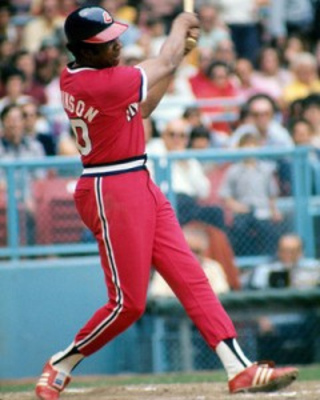
Letting Indians brass convince him to put himself in the lineup, manager Robinson blasted a home run against the Yankees his first time up. He fumed that Yankee pitcher Doc Medich tried to embarrass him with a three-pitch strikeout “on my day!”

The Orioles dealt him to the Dodgers for 1972 with a kid named Don Baylor on the way to the Oriole outfield. He had a down season with the Dodgers, then was dealt to the Angels (in the deal that made a Dodger of future free agency pioneer Andy Messersmith) where he had a comeback season, then—after clashes with the rebuilding Angels’ rookie manager Bobby Winkles—was dealt to the Indians in September 1974.

Robinson’s itch to manage was well known; he’d done it in the Puerto Rican winter leagues for a few seasons. When the Indians fired manager Ken Aspromonte after the 1974 season, general manager Phil Seghi had no hesitation in naming Robinson the next manager. Twenty-seven years after one Robinson broke the colour line at age 27, another Robinson—who let his play on the field and his mostly quiet person off it speak for him racially and otherwise—broke the managerial colour line.

At first he wouldn’t put himself into the lineup, until the Indians’ brass convinced him the fans wanted to see him play almost more than manage. So he stood in against Yankee pitcher Doc Medich on Opening Day and smashed a home run his first time up. Which mattered less to him than who was among the cheering crowd: Rachel Robinson, representing her late husband. “I hoped and wished that Jackie could have been there,” the new manager said after the game. “The next best thing was having her there . . . because it kept me focused.”

As relentless as he was when he played the game, Robinson preferred to break barriers quietly. “Jackie and Floyd Patterson were brave men to go [integration marches], but I couldn’t,” he once said of his reluctance to join the civil rights battle publicly. “Not now. Not until I’m through with baseball. I don’t believe baseball should be a fight for anything except baseball.” But he was aware enough that he’d broken a big one with the Indians and let himself savour the moment and the home run.

The bad news was some Indians players less than thrilled over Robinson’s emphasis on physical soundness. (Hall of Fame pitcher Gaylord Perry said infamously, “I’m nobody’s slave!”) As player-manager for two seasons and strictly manager for a third, Robinson’s Indians went 186-189, but he had them with a winning record in the second season before a slow start got him fired early in the third.

He’d get three more chances to manage in the majors. He brought the Giants home with a winning record in strike-shortened 1981 but fell back after losing a couple of key free agents, costing him his job again. Then he took over the Orioles on a six-game losing streak to open 1988, after they canned Cal Ripken, Sr. Robinson and the Zer-Os endured fifteen straight losses more.

2019-02-07 FrankRobinsonKangarooCourt

Presiding over the Orioles’ kangaroo court. That’s future Mets/Orioles/Nationals manager Davey Johnson pleading his case to Judge Robinson.

He kept his sense of humour, though. After the Orioles lost their 20th straight, Robinson pulled open his desk drawer to show a pin he’d been given: “It’s been lovely, but I have to scream now.” Reminded that Baltimore radio host Bob Rivers was staying on the air until the Orioles won, the 20th straight loss provoked Robinson to say, “We’re gonna kill the poor guy.” They broke the streak, finished 54-107, but then Robinson managed them to 87-75 in 1989, second behind Toronto in the AL East, earning Robinson Manager of the Year honours.

But he moved to the front office after a slow 1991 start and stayed there until he was let go in an Oriole front office shakeup. He moved to the commissioner’s office and the former judge of the kangaroo court became baseball government’s vice president in charge of player discipline, uniform policy (a neat irony there; it was Robinson who introduced the high-cut stirrups players took to wearing in the later 1960s), and other field matters, before getting one more chance to manage.

This time, it was with the Montreal Expos. He took them to two winning records and one losing one before the team was moved to Washington. Thus is Robinson the last Expos manager and the first Nationals manager, but it wasn’t always thrills: he was voted baseball’s worst manager in a players’ poll in 2005. But Robinson did manage his 1,000th win a year later; it took him two more years to manage his 1,000th loss.

In the interim he had a moment that revealed something deeper about the man himself. On 24 May 2006, after Nats third-string catcher Matt LeCroy allowed seven stolen bases while committing a pair of throwing errors, Robinson threw out the so-called unwritten rules and removed LeCroy while the Astros were still at bat in the seventh inning. But Robinson was personally fond enough and respectful enough of LeCroy that, despite the Nats hanging in to win 8-5, the skipper broke to tears when talking after the game.

“It was a move that I wasn’t trying to embarrass him in any way,” Robinson told reporters through the tears. “It was just a move, at the time, at that moment, I just felt had to do it.” LeCroy stood by his skipper, too. “If my daddy was managing this team,” said the catcher, “I’m sure he would have done the same thing.”

That was less out of character for Robinson than people believed who knew him only as a hard, determined, take-no-prisoners Hall of Famer who finished his playing career with 586 home runs, 211 runs produced per 162 games, and 107.3 wins above a replacement-level player, which marks him as the fifth best right fielder ever to play the game. After the 1969 season, Robinson made sure the proceeds from his kangaroo court’s fines were donated to . . . Reds catcher Pat Corrales, whose wife died during the season while giving birth to their fourth child.

Growing up fatherless (his parents divorced when he was an infant) in Oakland, Robinson—nicknamed Pencils by his friends for his skinny physique—took to baseball to stay out of trouble. (His high school friends and teammates included future Reds outfield mainstay Vada Pinson, future reserve clause challenger Curt Flood, and basketball giant Bill Russell.) The only real trouble he caused was for enemy pitchers and infielders.

Baseball was only slightly less blessed to have The Judge than heaven will be. The kangaroo court ought to be a regular riot.

I surrender—let the NL have the DH

Philadelphia Phillies v Chicago Cubs

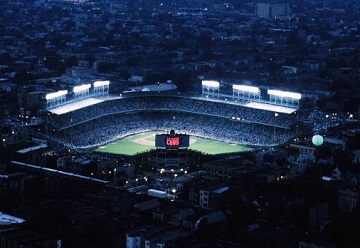
They once said, “There’ll sooner be night games at Wrigley than the DH in the NL,” didn’t they? Well, now . . .

There was a time you would think the world would implode if the National League adopted the designated hitter, as the American League did in 1973 and as the Major League Baseball Players Association wants the National League to do soon. And some people still believe it. Well, there was also a time (and a rather noisy contingency arguing either way) when you would have thought the world would implode if the lights finally went on at Wrigley Field, which they did on 8 August 1988.

You still may find Cub fans who think that was a date equal in infamy only to the St. Valentine’s Day Massacre, the Chicago Fire, or the 1968 Democratic National Convention riots. The only thing in Chicago infamous about the night the lights went on at Wrigley was the game between the Cubs and the Phillies being rained out before the fourth inning was finished.

Surely there were enough Cub traditionalists who believed the rains were God expressing His displeasure, as if decades of losing baseball with only the occasional rude interruption were worth the preservation of the great daytime at the Friendly Confines. All the rainout did was delay the inevitable. The following night, the lights went on at Wrigley Field again. And the Cubs beat the Mets, 6-4.

That and the world failing to implode on cue was the good news. The bad news was that the presidential campaign, the Preppie vs. Zorba the Clerk, continued apace. Little by little, from that day forward, Cub Country began assimilating the idea that some traditions weren’t worth keeping if they secured other distasteful traditions—like losing baseball. They finally won their first World Series since the Roosevelt Administration (Theodore’s) at night, too.

“Lovely, just lovely. The park is lovelier than my team,” Mets manager Casey Stengel said when he saw Shea Stadium for the first time. Cub fans finally figured out that their ballpark was lovelier than their team even under the lights. And maybe National League traditionalists are figuring out that the designated hitter isn’t the spawn of Satan, after all.

Sure it’s fun when Madison Bumgarner hits those home runs every couple of blue moons, the way he did twice on Opening Day once. But as NBC Sports’s Craig Calcaterra reminds us, Bumgarner’s lifetime slash line as a hitter is .183/.228/.313, with a 54 OPS+. If you think the Giants pay Bumgarner for the seventeen home runs he’s hit in ten major league seasons, hurry up before you miss the Orioles moving back to St. Louis.

Oho, but the NL’s lack of a DH “adds value to guys like Bumgarner and Kershaw and Scherzer who are good at all of baseball, not just part of it,” says one tweeting responder to Calcaterra’s reminder. “And it also adds strategy to the late innings.”

If Bumgarner’s batting slash line indicates he’s good at “all” of baseball, then I’ve been learning about law enforcement from Bonnie and Clyde. Clayton Kershaw’s batting slash is .163/.209/.188 with a 14 OPS+. Max Scherzer’s lifetime slash is .194/.227/.220 with a 22 OPS+. All you have so far is Bumgarner out-slugging two fellow pitchers, as well as batting lines like that indicating that none of the three is good at all of baseball. And they’re only being paid to be good at one thing which is a full-time job.

The late-inning strategic argument now makes as much sense as trying to put out a factory fire with water pistols. For longer than you might care to think, managers haven’t been lifting as many pitchers as once upon a time for pinch hitters; assuming their incumbents and their defenses are getting the jobs done otherwise, the managers have been going to the bullpens to begin late innings, and they’re going to pinch hitters for other than pitchers (depending on the depth of their position playing roster) more often.

Incidentally, pitchers overall in 2018 batted .115. Those who think bringing the DH to the National League would reduce it to the “kiddie league” they think the American League is with it should ponder Thomas Boswell: “It’s fun to see Max Scherzer slap a single to right field and run it out like he thinks he’s Ty Cobb. But I’ll sacrifice that pleasure to get rid of the thousands of rallies I’ve seen killed when an inning ends with one pitcher working around a competent No. 8 hitter so he can then strike out the other pitcher. When you get in a jam in the AL, you must pitch your way out of it, not ‘pitch around’ your way out of it.”

Did you know that the first three World Series after the American League adopted the DH were played without it? It didn’t show up in the Series until 1976, when baseball decided all Series games would feature a DH. The Mustache Gang Athletics won the 1973 and 1974 Series (and the ’73 Series was closer than even its seven-game length suggests: the A’s scored only three runs more than the Mets); the Reds beat the Red Sox in the 1975 thriller.

Then came the 1976 Series with Dan Driessen, the Reds’ first baseman, as the National League’s first-ever designated hitter. He did that job for all four games of the Big Red Machine’s sweep of the revived Yankees. (He did it well enough to post a 1.152 OPS for the Series—second only to Series MVP and Hall of Famer Johnny Bench.) The Series featured the DH for all until 1986, when it was applied strictly in the American League park. Red Sox pitcher Bruce Hurst looked so inept trying to bat in Game One of that Series (in Shea Stadium, and Hurst struck out in all three plate appearances) that even the umpires fought not to laugh too hard.

Another question is why on earth would you care to risk a pitcher being injured while swinging a bat or running the bases? Stop laughing and remember Adam Wainwright. In his seventh game of 2015, in late April, Wainwright popped his Achilles tendon . . . while batting. He lost the rest of that season, the Cardinals lost the division series to the Cubs, and he’s never been the same pitcher since that he was before the injury.

Stop laughing and remember Chien-Ming Wang. He looked like a Yankee mainstay in the making, until a 2008 interleague game against the Astros, before the Astros were moved to the American League. Wang reached base as a batter and was rounding for home on a subsequent play when he tore the lisfranc ligament in his right foot.

He missed the rest of the season and never again looked like the pitcher who was the fastest Yankee to reach fifty pitching wins since Ron Guidry. His injury-pockmarked-from-there career ended in 2016, after three more major league teams tried to revive him and failed. But boy wasn’t it fun to see one of those American League pitchers have to run the bases and play real baseball!

(Don’t even think about uttering “Shohei Ohtani.” The Angels never let him bat on the days he pitched last year, and they never let him pitch on the days they plugged him into the lineup as the DH. Ohtani is an outlier, albeit an extremely talented one who earned his Rookie of the Year award.)

Sandy Koufax’s Hall of Fame career was shortened by elbow arthritis when he was, well, not at his peak but about ten dimensions beyond it. Do you remember how that arthritis made itself manifest after who knew how long it merely festered in gestation? It started in August 1964—on the bases. On a pickoff attempt. (I looked it up for you: Koufax only once ever tried to steal a base and was caught red handed, and probably red faced.)

If you remember how futile Koufax was with a bat in his hands overall, you’d think the idea of him on base at all, never mind trying to pick him off, was tantamount to sending Willie Mays out to pitch a no-hitter. When Koufax scrambled back (he was safe), he made a perfect four point landing on his elbows and knees, jamming his left elbow a little. Two starts and wins later, he awoke to a pitching elbow the size of his knee. Career days numbered, even if nobody realised it in the moment.

Koufax, Wainwright, and Wang are just three examples. You can also remember Randy Johnson’s career finish—four mere relief appearances in 2009 with the Giants. Until he made those, Johnson spent about a third of that season on the disabled list with a torn rotator cuff—incurred while he was batting. Was that the way you wanted to see a great pitcher mosey off into the proverbial sunset of a Hall of Fame career?

Sure, we all had a blast when Bartolo Colon, then a Met, bombed James Shields into the left field seats in 2016, in San Diego, for Colon’s first major league home run. It was a laugh and a half of pleasure watching Colon run the bases like a cement truck with a flat inner rear tire, and watching the Mets empty the dugout before he arrived after touching the plate.

It was such a blast we almost forgot Colon was 43 years old, in his nineteenth major league season, in only his 226th lifetime at-bat since he spent the big bulk of his career in the American League. His lifetime slash: .084/.092/.107, and an OPS+ of minus-45. And I didn’t notice the Mets in any big hurry to have him grab a bat and starting loosening up to pinch hit in the wild card game they lost that year.

You’ve probably heard it said often enough that American League teams with the DH can put what amounts to an extra leadoff hitter into the number nine batting lineup slot. Why would it be so terrible for National League teams to do that? Especially since sliding in an extra leadoff hitter might move the line appropriately enough for them to slide an extra potential run producer into the number two slot?

America is a country that has had growing pains enough in its comparatively young life that several traditions have died to no regret. Some died very hard, though die they must. (We fought a civil war over one of them.) Some died over longer and more cumulatively painful times, though die they must. Enough of them absolutely had to die and we are by and large better for that. The question to ask of tradition is not whether tradition qua tradition is to be preferred, it’s whether there are those traditions that are hazardous to a nation’s core principles or a game’s health.

Baseball’s had some growing pains, too. There was once a time when the nation and some of the game’s leading figures thought the home run would destroy the game. Ty Cobb and John McGraw objected to its impediment (so they alleged) to “scientific baseball.” (Which didn’t stop McGraw from nurturing and turning Hall of Famer Mel Ott loose when that National League home run king came under his wing and of age.) Ring Lardner once said the advent of the live ball and the home run ruined baseball for him far more than the Black Sox scandal could.

There was once a time when baseball feared such things as broadcasting, night ball (and remember, again, how long the Cubs held out against it), and shifting franchise locations would be the end of the game as we know it.

They thought free agency would make the game competitively imbalanced, too. As if the game was in perfect competitive balance when the Yankees won all those 20th Century reserve-era pennants and there were only two exceptions to New York World Series winners (the 1957 Braves, the 1959 Dodgers) during the 1950s.

The National League has held out against the DH about as long as the Cubs once held out against night ball. (The Cubs actually started planning night ball before Pearl Harbour and the world war to come compelled then-owner Phil Wrigley to send the planned lights and support structure materials away on behalf of the war effort.) And like the Cubs and their faithful regarding the lights, the DH in the National League won’t inflict  curved spines, hairy hands, or erectile dysfunction.

Baseball suffers more profound compromisings. Things like tanking teams. Things like hitters obsessed with launch angles. Things like hitters and coaches un-obsessed with busting the shifts by thinking about hitting into the wide-open spaces even (especially?) when there’s a no-hitter in the making against them. (You’re fool enough to leave that wide open a space for me when your guy’s pitching a no-hitter, you’ve bought your own busted no-no.) Things like the so-called “unwritten rules” to which too many players keep clinging. (I say again: you want to play baseball like businessmen, wear three piece suits on the field.)

The Opening Day Bumgarners and the Twilight Zone Colons are the extremely rare exceptions, not the rules. What would you prefer, really, the thrill that appears as frequently as Halley’s Comet; or, the thrills that come every day from men doing their proper jobs for nine innings or more, without risking losing one of them to injuries doing things they’re not being paid to do? (Speaking of thrills, I’m sure even die-hard National League fans weren’t immune to those provided by David Ortiz, to name one, for several postseason Red Sox conquerors.)

“We try every way we can think of to kill this game, but for some reason nothing nobody does never hurts it,” said Sparky Anderson, once upon a time. The sun will still rise, the moon will still shine, the flora will still bloom, the fauna will still roam, and life as we know it will go ever onward, even when the National League accepts reality and the designated hitter.

The union wants baseball out of the tank

2019-02-06 CamdenYards

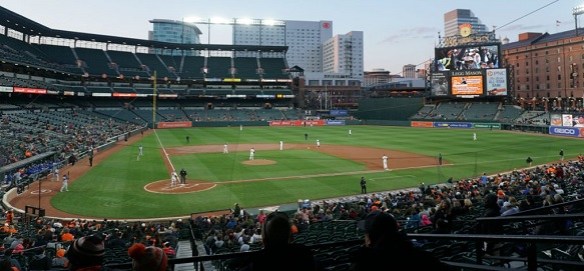
The Orioles’ beautiful ballpark and too many others look this empty too often. Fans don’t really like tanking teams. The Players’ Association has a great idea to put a stop to it.

What would you say if you knew that, before the parking lots, the turnstiles, the concession stands, and the team stores at any major league baseball park open for the season, each team in each league is guaranteed about $60 million dollars into its kitty? And, that none of those teams has to do one thing to get it other than exist in the first place?

The Major League Baseball Players Association actually has a pretty good idea about what to say. About that $60 million, about the additional likely $100 million more each year that each team pulls down through sources that only include ticket sales. Not to mention that baseball’s total revenues in 2018 amounted to $10.8 billion; or, about $343 million per team if distributed evenly among them. More about all that anon.

And the MLBPA is saying it now. With baseball government and the union now talking about game changes, some sound and some foolish, the union proposes a kind of tax against clubs who, seemingly, couldn’t care less about putting at least a mildly competent and entertaining team on the field as long as they’re making all that money anyway: costing them prime draft pick positions if they continue losing (or, at least not trying to win all that much) past a particular threshold over certain periods.

“It is unclear if the suggestion is that a team must hit at least X wins once in a span of Y years, or an aggregate total of Z wins over Y years,” writes NBC Sports’s Bill Baer. “Either way, incentivizing teams to be at least somewhat competitive is a good thing. It will reduce teams shamelessly tanking and it very likely would also prevent teams from shamelessly manipulating the service time of their top prospects. Ah, who are we kidding? Teams are going to game players’ service time until there’s an explicit rule changing it.”

If commissioner Rob Manfred is as bent on implementing changes that really won’t do a thing for the pace of play—the pitch clock, limited mound visits, and the like (you want to step up pace of play for real, get rid of the television commercials for every pitching change and do away with relief pitchers throwing eight warmups when they come into the game since they’ve already thrown enough warmups in the bullpen to equal the volume of a quality start most of the time)—the players’ association needs to push back with the tank tax. It’s one of the smartest ideas they’ve come up with in years.

Because tanking isn’t fun. Not for the team putting itself in the tank no matter how much money they’re not spending, and not for the fans who know that long suffering is relative. They can tolerate long suffering (really) when they know in their hearts that it’s not for lack of trying. (I’m talking about you, Red Sox.) They’re not going to endure it if they suspect the team couldn’t care less as long as it’s making money anyway. (I’m talking about you, Marlins.)

The real Curse of the Bambino had nothing to do with selling Babe Ruth and everything to do with half competent front-office management married to a few dubious in-game managing decisions and, of course, just enough entries of plain bad (or dumb) luck. The Marlins have made going into the tank their M.O. most of the time. Unless they’re as comical as the 1962 Mets, nobody wants to see the Marlins play against the Rays this year. And they’re about as comical as a cigarette vendor at Sloan-Kettering.

Back to following the money, beginning with that $60 million dropping into each team’s kitty before a single regular season pitch is thrown. “That money comes in,” says longtime baseball writer (co-founder of Baseball Prospectus; Sports Illustrated contributor) Joe Sheehan, “whether you win 100 or lose 100, whether you draw four million people or 400,000. It comes in whether you work every day in the offseason to get the fans excited, or whether you announce in November that you’re keeping focus on 2020 with all the kids coming through your farm system. It comes in whether you appear on the networks spending that money, or if they’d rather air color bars than your team colors.”

Nice lack of work if you can get it. Who wouldn’t want to pocket $60 million right out of the box regardless of whether their team gets to the postseason or waits till next year? (Stop snarling, Marlins fans, we know this year is next year.) That’s what big television money married to shares of the profits generated by MLBAdvancedMedia (MLBAM) does for you.

That’s also before the approximate $20 million minimum teams take in in local broadcasting monies, with a few taking in as high as $30 million or better. So we’re talking about a major league team banking as much as $90 million before the season’s first pitch is thrown, if not before spring training camps open. Married to ticket sales all season long—and in 2018 each team sold a minimum of 800,000 tickets while, as Sheehan needles, every team outside Florida sold a minimum 1.4 million tickets—and you have teams making another none-too-shabby $100 million or more regardless of what’s on the field every day.

Fans grouse over the prices of tickets and ballpark concessions, and they think spending less on playing talent should start nudging those prices down. They might as well start bidding on that cheap old ballpark for sale—at Coogan’s Bluff. Because there isn’t much indication that the owners are putting all that free money back into their teams. Marry it to baseball’s total 2018 revenues and what they’d mean for each team if they were divided evenly among them.

Now, who do you think you’re paying your hard earned money to see when you go to watch a game at the ballpark? You didn’t buy those tickets to see the owners. You didn’t buy them to see the umpires, no matter how much of the show Joe West thinks he is. You didn’t buy them to see the managers, since there isn’t one manager in the game today with half the charisma of Casey Stengel, Whitey Herzog, or Tommy Lasorda. And you didn’t buy them to see the coaches.

If you own a team, and you pull down $343.3 million a year, with practically half of it coming your way free before the season even begins, and before every other consideration, wouldn’t you think that you could put a minimally entertaining team on the field, building or re-building a viable farm system, and trading for or buying reasonably capable major league talent to rebuild, essentially, every year?

That’s what I thought. And we haven’t even thought about those teams ponying up revenue shares after doing their level best to win to clubs who seem comparatively indifferent to putting even a mildly entertaining team on the field as long as they’re making money anyway.

How many clubs are actively trying to win, not just this year but every year they can think of? How many farm systems have we been reading about that are called, charitably, parched? The Giants are thought to be one such aging and farm-parched team on the verge of a rebuild if they haven’t actually begun one. I don’t know about you, but I’d be willing to bet that $343.3 million a year that the Giants could yank their farm inside out, leave plenty to put a more competitive team into AT&T—oops! Oracle—Park this year, and still turn their owners a tidy profit.

It’s one thing to look at the past couple of off-seasons as market corrections. You can’t blame teams for being wary of signing players to more than five-year deals anymore. But you can’t forget what’s unique about professional sports, as opposed to an ordinary business. In professional sports, the product is the people who play the games. The Ford Motor Company isn’t selling the people who conceive and assemble their cars and trucks, they’re selling those vehicles. Hoover isn’t selling the people who conceive and execute their vacuum cleaners, they’re selling the vacuum cleaners.

But when you go to the ballpark, you’re paying your hard-earned dough to see a minimum of eighteen young men or more play baseball—depending on how many are emptied from the bench or the bullpens during a game; and, twenty if you’re watching an American League game with the designated hitter. Those people are the product. You’re buying food and drink and a few souvenirs because of the men who play the game, never mind the risk of getting caught on a concession stand line during a six-run rally. If you’re into wearing replicas of the team’s uniforms, you might be buying one with a number and a name on it—and it won’t be the number and name of any owner, general manager (unless he’s an ex-player you rooted for, maybe), umpire, or coach. (Again, unless the coach is a former player you rooted for.)

Few teams are more storied than the Orioles. Time was when the Orioles were either awesome or competing long and hard to be. They’re in the tank now. Do you really think it’s good for baseball that a franchise like that—with their tradition, their still-beautiful ballpark, and their litany of heroes and Hall of Famers (two Robinsons, a Palmer, a Ripken, a Murray, an Alomar, a Weaver on the managing side, a Mussina now)—is going in the tank for who knows how long, just because you’re itching to take those greed-headed players down a few pegs? (How come nobody talks about the greed-headed owners who couldn’t care less about empty seats as long as they’re making big money regardless of whether their teams win a thing?)

Once upon a time the sweetest words of tongue or pen for the fans of teams who didn’t quite make it to the Promised Land despite a whale of a stab at it were, “Wait ’till next year!” For too many baseball fans today, the sourest words of tongue or pen about their teams might actually be, “This year is next year. Again.” And there’s no assurance that all today’s tankers are doing it with eyes upon just how the Cubs and the Astros did it (top down organisational intelligence made their tanks easier to bear for their fans) before ending their protracted lack of World Series championships and going to each postseason after those Series conquests so far.

Say what you will about those imperialist Yankees, but two things remain true: 1) Of every cliche about or around them, the single most truthful is that they don’t like to lose. (Admit it, Yankee haters: even you find something admirable about that.) 2) They may have (count it!) only one World Series ring in the new century, to the Red Sox’s four, but it sure hasn’t been for lack of trying. The Yankees try everything they can think of to win, short of larceny. (Very short: the team stole only 63 bases last year; the top thieves in the American League were the Indians, with 135.) You don’t have to be a Yankee fan to admit or respect that.

The flip side of that coin might be the Athletics. They’re not as well-endowed financially as the Yankees after all the free money to open a season. They’ve had a few dead-last finishes in the AL West in this century. But they’ve rarely gone into a season trying to do it in the tank for whatever foolish reasons. They’ve been to eight postseasons since the turn of this century. They haven’t returned to the Promised Land just yet. But they try everything they can think of within their hard resources and limits (their ballpark plus their coffers) to win. (Short of larceny, alas: the A’s were dead last in the league in stolen bases last year, with 35.)

That’s one big difference between a merely struggling team and a tanking team. The players’ union proposal would begin the end of tanking as we know it if baseball government is smart enough to see that light. Teams want prime draft positions? Put in the effort to make what’s on the field now at least entertaining. Manfred wants pitch clocks? Let him close the tanks. Of course it means the players making a little more money. It also means the owners making a little more money. And there’s no such thing as a baseball owner allergic to making money. Yet.

Now, if only the Players’ Association would begin work concurrently on repairing one of the most bonehead decisions it ever made—the 1980 pension eligibility change that deprived several hundred former players, whose careers were between 1947 and 1979, and who might have had extremely short careers for various reasons, of even small amounts of pension and health benefit dollars.

The pension eligibility became one day’s major league time for health benefits, and 43 days of major league time for a pension allowance, but the 1947-1979 players were excluded from that new eligibility. Douglas J. Gladstone, journalist, baseball fan, and gadfly, is about to publish an updated edition of his seminal book about the issue, A Bitter Cup of Coffee. It’s past time to add cream to those players’ coffees.

A lot of those players joined the actions despite tiny resources and career risks to help usher in free agency and other things that have been great for the game when all is said and done. They deserve better, too.


The Last Man Standing

2019-02-04 JerryReinsdorfHaroldBaines

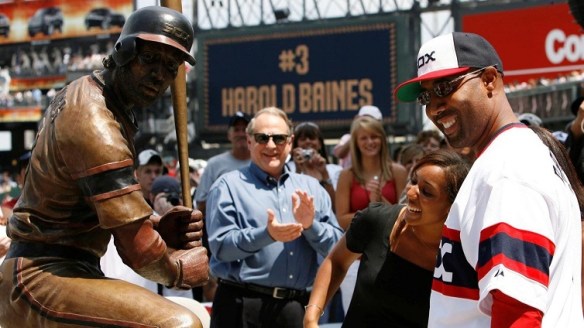
White Sox owner Jerry Reinsdorf applauds at the 2008 dedication of future Hall of Famer Harold Baines’s statue at U.S. Cellular Field.

Jerry Reinsdorf, a baseball owner once described as a man with “about as much serenity as someone facing a dentist’s drill,” has at least one unique position among baseball’s baronage. He’s the last man standing of the owners who got caught with their pants down over 1980s collusion and those who pushed for and got the 1994 players’ strike.

And, as Jay Jaffe now writes at FanGraphs, he’s a big market owner who prefers to think, act, and spend like a small market owner. Depending entirely upon immediate circumstances, of course.

His White Sox have been tied to this winter’s market for Manny Machado. They became an especially acute tie-in after signing both Machado’s brother-in-law, Yonder Alonso, and his friend Jon Jay. Those who’ve followed Reinsdorf’s tenure as the White Sox’s owner ponder that being in that market is out of character for Reinsdorf, until it isn’t.

The speculation had it that the White Sox were ready to offer Machado seven years and $175 million, which agent Dan Lozano torpedoed as a “reckless” speculation, but Jaffe wonders whether it was actually “the guaranteed core of a deal containing options and other wingdings that would push its total well above $200 million—if not all the way to $300 million—while also giving the team greater protection than they might otherwise have in such a long-term deal.”

And, as Jaffe observes further, if the seven-year/$175 million report really is the whole package, “I think we can all agree that $175 million, at $25 million per year, won’t get the job done for either [Machado or Bryce Harper], even in this apparently depressed market—not with the Padres entering the fray and the Phillies still lurking.” (At this writing, the Padres are thought to be going all-in on Harper. And, a ticklish Monday tweet had a Phillies’ corporate jet on the tarmac at McCarran International Airport, in Las Vegas, Harper’s native territory, almost a month after meeting Harper and his wife in Vegas.)

How much of a shock would it be if the White Sox land Machado at or close enough to his thought-to-be-sought total package? It may depend upon how you define “shock” and apply it to Reinsdorf.

It was Reinsdorf, after all, who was in the middle of baseball’s salary-suppression collusion mess of the 1980s. He’s the owner who called then-Phillies owner Bill Giles to remind him of his fiduciary duty (translation: help kill the market) while Giles tried a first time to sign free agent Tigers catcher Lance Parrish. (Giles eventually did get his man.) He’s also the owner who wrote to both the Tigers and then-commissioner Peter Ueberroth to say he had no intention of even thinking about signing another free agent Tiger, future Hall of Fame pitcher Jack Morris.

He was one of the reasons the owners ended up handing $280 million in November 1990 to all the players affected by those shenanigans, including Parrish and Morris. “The single biggest reality you guys have to face up to is collusion,” then-commissioner Fay Vincent told the owners. “You stole $280 million from the players, and the players are unified to a man around that issue, because you got caught and many of you are still involved.”

A few years later, it was Reinsdorf more than any other owner, including then-Brewers owner/then-acting commissioner Bud Selig, who hammered away at the mantra of putting the Major League Baseball Players Association in their place and jamming a twice-rejected salary cap down their throats, passing a three-fourths majority rule for the owners agreeing to any labour pact, and forcing the 1994 strike. He was the labour hawks’ labour hawk. Until he wasn’t.

Because not long after the strike settled, Reinsdorf (possibly urged by his future Hall of Famer Frank Thomas) decided that sticking it to the American League Central rival Indians was more important than real or imagined fiscal sanity when November 1996 came around. Whitey Herzog, in You’re Missin’ a Great Game, described it a lot more colourfully than I ever could:

Here’s the biggest antilabor hawk of all time, the guy who spent years lecturing [former Angels co-owner] Jackie Autry and the other owners on fiscal restraint. He wanted to force a strike and he wanted to cancel a World Series, if only just to break the players’ backs. He got his way in ’94 and put the game on a respirator. Yet the second the thing was settled, who was there backing the Brinks truck up to Albert Belle’s house? Reinsdorf gave him so much money it bent the whole salary structure out of whack. He needed a big-name draw. He didn’t want his division rivals, the Indians, to keep Belle. He wanted what he wanted and screw the rest of it.

As a matter of fact, Ebenezer Scrooge got so damned excited he forgot how to count. The top salary at the time, in 1996, was $8 million. Reinsdorf skipped past nine and ten and went straight to $11 million a year! That was the biggest fast-forward in the history of the salary spiral.

Making Belle baseball’s first $11 million-a-year man didn’t do the White Sox any favours. For one thing, the deal included both a $5 million buyout if the team didn’t pick up a sixth-year option and a clause guaranteeing Belle’s would be one of the top three salaries in the game for the full life of the deal. That was Reinshawk’s handiwork, folks.

When Belle’s annual salary was passed by Mo Vaughn (with the Angels) and Hall of Famers Randy Johnson (with the Diamondbacks) and Mike Piazza (with the Mets) in 1998, and Reinsdorf refused to re-work Belle’s contract to continue conforming to that clause, it made Belle a free agent again. The Orioles signed him for five years and $65 million, equal, Jaffe noted, to Piazza’s average annual value. The bad news: Belle developed a degenerative hip condition that forced his retirement at 34, following the 2000 season.

Before losing Belle, Reinsdorf ordered his then-general manager, Ron Schueler, to deliver what Chicago Tribune writer Paul Sullivan calls “the infamous white flag trade“: trading pitchers Wilson Alvarez, Danny Darwin, and Roberto Hernandez to the Giants, approaching the non-waiver trade deadline, for a trio of then-unknowns, two of whom—pitchers Bob Howry and Keith Foulke—wouldn’t remain unknown for very long. Particularly Foulke, the last man standing (on the mound) when the Red Sox finally busted eight decades of star-crossed disasters to win the 2004 World Series.

“We didn’t realise August 1 was the end of the season,” fumed White Sox third base star Robin Ventura. “What can you say when you have an owner who doesn’t believe you can catch Cleveland?” asked Darwin, referring to Reinsdorf’s telling the Chicago Sun-Times, “Anybody who thinks we can catch Cleveland is crazy.” Before the White Flag Trade, the White Sox were a measly three and a half games out of first place in the AL Central.

The non-waiver trade deadline has long since become a sport in and of itself, with teams over here pondering a push of the reset button in-season, teams over yonder pondering a renewed postseason push, and teams further out there just blowing the damn thing up in panic button mode, among other reasons known or suspected. Reinsdorf may have pioneered the non-waiver blow-up.

But he has had other spells of fiscal amiability even if none of them proved as game compromising or hypocrisy exposing as the Albert Belle deal. It took awhile before Reinsdorf and the White Sox would hand a player something better than Hall of Famer Frank Thomas’s 1997 extension. But the John Danks extension (five years, $65 million, signed in December 2011) imploded when the lefthander missed most of 2012 after surgery to repair torn anterior capsule and rotator cuff. He returned, but the White Sox released him before the final year of the deal ended. With 2.5 wins above a replacement-level pitcher to show for the full life of the extension.

The White Sox haven’t been burned by Jose Abreu’s still-operating six years and $68 million, though. Not yet. The Cuban defector who got a somewhat late major league start at 27 has given them the American League’s Rookie of the Year award, two All-Star teams, and per-162 games averages of 194 runs produced with 32 home runs and 107 runs batted in. His down 2018 was thanks to a groin issue that culminated in early September surgery that ended his season below his career par; he becomes a free agent after the 2019 season.

Abreu says he’d like to continue and finish his career with the White Sox. A healthy 2019 would go a long way toward making that wish come true. Perhaps unless the White Sox decided to plunge in on Machado after all. Which might be out of character for Reinsdorf—until it isn’t, if it isn’t.

Reinsdorf is not quite as sinister as Charlie Finley was when Finley owned the Athletics, but no few of Reinsdorf’s critics would go as far as as A’s outfielder Joe Rudi once did advising incoming A’s outfielder/DH Don Baylor about Finley, “Any time you hear him clearing his throat, he’s lying.” Yet Reinsdorf is also the man who, before letting his then-new GM Ken Harrelson execute then-White Sox manager Tony La Russa in 1986, accepted his personal assistant’s suggestion and called the A’s, about to change managers, to ask if they’d like to hire La Russa, whom their then-president Roy Eisenhardt admired. The answer was yes.

Maybe it’s not to wonder much that Reinsdorf has drawn occasional comparisons to the late George Steinbrenner, about whom Reinsdorf could never decide whether he was an ally, an enemy, a nuisance, or a mountebank. But Steinbrenner was equally renowned for arbitrary executions followed by handing the beheaded assorted lucrative jobs elsewhere within the Yankees’ structure. Reinsdorf and Steinbrenner were frequent player trading partners at one time, and it’s to wonder whether they were just trying to out-smart each other rather than make sound baseball swaps.

Like Steinbrenner often enough, Reinsdorf inspires enough to advise: Trust as far as you can throw. Stay tuned.