Unknown's avatar

About Jeff Kallman

Member, Internet Baseball Writers Association of America and the Society for American Baseball Research.

Actually, the Judge did sort of kill the left arm of God

0000 PantsOnFireRobinsonKoufax

The Judge (left) and the Left Arm of God, at a Hall of Fame induction ceremony.

Ending a delightful Hardball Times essay about baseball’s historic kangaroo courts, author Alfonso Tusa couldn’t resist an anecdote involving maybe the greatest kangaroo jurist of them all, the late Frank Robinson. Put it this way: the only thing missing from Robinson’s kangaroo courts was probably a real kangaroo. Would have made a great bailiff.

Anyway, Tusa ends by recalling a day “some journalists” asked the Hall of Famer about the best pitchers he’d ever faced. Robinson didn’t flinch, even when it came to a quartet of Hall of Famers. Juan Marichal? “Killed him!” Robinson replied. Bob Gibson? “Killed him!” Don Drysdale, a particularly frequent headhunting nemesis? “Killed him!”

Sandy Koufax? “Killed him!” Then, Robinson hit the brakes. “Wait a minute. You said Koufax? No one killed him, and if they said they did, they’re lying.”

Court is now in session. The charge: perjury. The evidence (XBHt% = extra base hit percentage):

FRANK ROBINSON VS. PA 2B 3B HR XBHt% OBP SLG OPS
Bob Gibson 98 3 0 4 37 .316 .410 .726
Don Drysdale 94 6 0 4 52 .309 .440 .749
Juan Marichal 68 3 0 3 37 .324 .459 .783
Sandy Koufax 124 7 1 7 60 .355 .524 .879

If anything, it looks quite the opposite. Even allowing for how much more often Robinson faced Koufax.

The Judge didn’t exactly kill Gibson, Drysdale, and Marichal. But if Robinson got 52 percent of his hits off Drysdale for extra bases, the highest percentage among the three, that may be fifteen points higher than he got off Gibson and Marichal each but it’s eight points lower than he got off Koufax.

What a surprise that a righthanded Hall of Famer should do that much better against a lefthanded Hall of Famer than against a trio of righthanded Hall of Famers. Notice, too, that Robinson reached base more often against Koufax, slugged 65 points higher off Koufax than the next highest number among the starboard side trio, and has the most total extra base hits off him.

Lifetime Robinson hit for the same traditional batting average against pitchers from both sides, but his on-base percentage against lefthanders is 26 points higher than against righthanders, his slugging percentage against lefthanders is six points higher, and his OPS is 32 points higher against them. (Which just so happens to have been Koufax’s uniform number while we’re at it.) His OPS against Koufax is 96 points higher than against Marichal.

After the infamous Robinson-for-Pappas deal sending Robinson out of the National League, the Left Arm of God faced the Judge in Game Two of the 1966 World Series. And this is how their confrontations went:

First inning—After picking Hall of Famer Luis Aparicio (leadoff single) off first, with Curt Blefary at the plate and flying out to center field, Koufax got Robinson to fly out to left field for the side.

Fourth inning—With two outs, Robinson wrung Koufax for a walk and was thrown out at third base following an error on Brooks Robinson’s ground ball.

Sixth inning—With Koufax now in the hole 3-0 after the ill-fated fifth (Willie Davis’s three errors in center leading to three unearned runs), Robinson led off with a triple, scoring an out later on Boog Powell’s single before Koufax escaped further trouble in his final inning’s work. Of the day, the Series, and his Hall of Fame career.

Robinson didn’t exactly kill Koufax that day; that honour, alas, fell upon Koufax’s own center fielder.

There was a Hall of Famer who did kill Koufax, however . . .

SANDY KOUFAX VS. PA 2B 3B HR XBHt% OBP SLG OPS
Henry Aaron 130 6 3 7 38 .431 .647 1.077

Aaron also worked Koufax for fourteen walks against twelve strikeouts, and Koufax felt compelled to walk Aaron intentionally four times. (Where’s Willie Mays, you ask? Mays didn’t put up quite the same OPS against Koufax as Aaron for one very good reason: he was a little better at working Koufax for walks, with 25, which probably didn’t cost Koufax too many sleepless nights compared to the havoc he might had wreaked.)

But Aaron’s is the single highest OPS among seven Hall of Famers who faced Koufax 100 times or better. Stan Musial has the second highest lifetime batting average against Koufax among Hall of Famers who faced him, but Musial only faced Koufax 44 times and only 30 percent of his hits against Koufax went for extra bases.

Small wonder Koufax tagged Aaron as Bad Henry.

Frank Robinson was one of his time’s greatest students of the game, and he may have been trying in his puckish way to acknowledge Koufax’s greatness. But what the Judge should have told those reporters was, “Sandy Koufax? Killed him! Sort of. Gibson, Drysdale, and Marichal? Bailiff!!!

On patriotism in its proper baseball place

2019-04-22 KateSmithCBS

Kate Smith at the height of her radio career.

The skirmish over the Yankees turning Kate Smith’s version of “God Bless America” off, until they can verify she wasn’t the racist a particular 1931 recording of hers has people today believing, should also have us thinking about things aside from dubious retroactive punishment for dubious retroactive charges of racism. Whether it does, of course, is something else again.

Let’s get this one out of the way: Kate Smith has never been a particular music interest of mine. My taste (and preference as the musician I just so happen to be, as a guitarist and lately, too, as a self-teaching vibraphonist) inclines far more to blues and jazz, and Smith was about as much of a blues or jazz singer as Miles Davis was a pan flute virtuoso.

When I wrote about the hoopla a couple of days ago I cited the television critic Tom Shales, who observed that kids who grew up hearing Smith “privately felt that this is what Mom would sound like, if only Mom could sing.” It prompted me to remember my own late mother singing in the shower and sounding as though being tickled on the soles of her bare feet while doing it, which is just about the way Smith’s voice sounds to me whenever I hear it.

As a concurrent lover of classic network radio from its infancy through the era’s commonly acknowledged death in 1962 (I have a personal collection of sixteen thousand plus surviving such radio shows), I’m aware of Smith’s popularity on the air, though little enough of her radio work seems to have survived the era in the way that such as Fibber McGee & Molly, Jack Benny, Lux Radio Theater, Suspense, and Gunsmoke have done. Those and more such survivals than you might believe allow the curious and the enthusiast alike to listen, learn, and, yes, stand athwart nostalgia, yelling “Art!”

But I’m also aware that Smith leveraged her own popularity during World War II to become one of radio’s most effective at delivering the goods when it came to promoting war bonds buying. She’s believed responsible for inspiring around six hundred million dollars worth of war bonds buying, never mind that no one has written a book addressing it specifically as compared to the delightful offering by Mickey Cohen (no relation to the mob legend), How Fibber McGee & Molly Won World War II.

Clearly Kate Smith has patriotic cred to burn. Just as clearly, the very idea of purging her signature recording of “God Bless America” from anywhere equals replacing Washington, Jefferson, (Theodore) Roosevelt, and Lincoln atop Mount Rushmore to an awful lot of people.

That the Yankees elect to think about it on the so far unverifiable ground that she was herself a racist—it’s based on her 1931 recording of “That’s Why Darkies Were Born,” a song known to have satirised racism—falls into place with the contemporary itch to punish and purge ancient disgraces regardless of whether the offender renounced or transcended them in later years.

Last year, in light of the still-festering take-the-knee protests upon sounding “The Star Spangled Banner” before football games, and the National Football League’s then-announced formal rule requiring players to stand for its playing, I wondered aloud whether “The Star Spangled Banner” and even “God Bless America” have been and still are so overdone before sports events as to render their meaning, well, meaningless.

2019-04-22 FredThomas.jpg

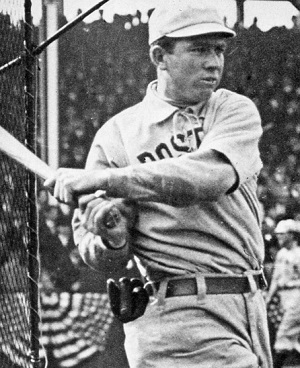
Fred Thomas, who knew about patriotism from the heart, not habit. Presumably he’s hitting here during the 1918 World Series.

Baseball itself actually has no formal rule covering either song’s playing, which is rather intriguing considering the whole thing started during a baseball game in the first place.

Specifically, it was during Game One of the 1918 World Series, with World War I on the threshold of its end and semicircular American flag bunting lining the fences in front of the field-level seats. A Navy band was present at the game. (It was common for military bands to offer music at sporting events in those years.) With or without a plan to do so, the band broke into “The Star Spangled Banner” during the seventh inning stretch.

Quite spontaneously, Red Sox third baseman Fred Thomas, himself on leave from the Navy to play in the Series, turned toward the flag in Comiskey Park (the Red Sox played the Cubs but it was thought the Cubs’ own playpen wasn’t big enough to accommodate Series fans) and saluted.

Thomas’s spontaneous gesture prompted players in both dugouts (including Babe Ruth, then a Red Sox pitcher and en route a six-hit shutout to open the Series) to salute likewise, and the ballpark crowd joined just as spontaneously. For the rest of the Series the song was played at the seventh-inning stretch. Gradually, other baseball teams and other teams in other sports leagues took it on, too.

All that before “The Star Spangled Banner” became America’s official national anthem. (It became so in—what do you know—1931.) The practise moved to playing the song before games continuing through the end of World War II and beyond, but only the NFL after the war ended made it mandatory before games.

“God Bless America” during the seventh inning stretch took hold in the wake of the 9/11 atrocity but has since receded to periodic playings, not the constant thing it was for a few years to follow. Baseball government never made it mandatory any more than it ever formally mandated “The Star Spangled Banner.”

Compulsory patriotism is empty patriotism. You probably don’t need me to tell you about those countries where patriotism was (and still is) enforced at actual or implicit gunpoint. Do you need me to remind you that there have been times enough in our own history where there’ve been those in the land of the free and the home of the brave who’ve favoured something as close to gunpoint patriotism as they could get away with?

I’d like to think the ridiculous Kate Smith kerfuffle might have been avoided if what I suggested last year might have come about: Knock it the hell off with playing “The Star Spangled Banner” before every last American sporting event all season long. And, for that matter, with “God Bless America” during the periodic seventh inning stretch. Save them for such days as Opening Day, games played on major national holidays (Memorial Day, the Fourth of July, Labour Day, etc.), the All-Star Game, and the first game of the World Series.

I’m not saying it lightly. To this day I’m charmed by the story Casey Stengel’s biographer Robert W. Creamer told “that I hope is true” (Creamer’s words): On his death bed, Stengel had a television broadcast of a game beginning in his room, and as “The Star Spangled Banner” began (as late as 1975 fans watching on television could hear and see the ballpark with it before game time) he slid out of bed, picked up the Mets cap he kept at bedside, put it over his heart, and muttered to himself, “I might as well do this one more time.”

But the charm in that is also that the Ol’ Perfesser did it spontaneously, from his heart, on the threshold of losing his battle with lymphatic cancer, and not because there was any edict requiring him to do so. Mandate it whether by formal edict or entrenched behaviour, and you reduce patriotism to habit. And patriotism—as Fred Thomas and his fellow 1918 World Series competitors understood without being told—is just too valuable and precious for that.

The Bronx is broken

2019-04-21 YankeeStadium02I don’t want to be too much of a wise guy, but if you thought the Mets had headaches and other ailments over their disabled list a couple of years ago, the Yankees would like to inform you that you ain’t seen nothin’ yet. The DL is known now as the more politically correct “injured list.” The Yankees as of today have thirteen players on theirs.

Their front office may be fool enough to succumb to political correctness and banish Kate Smith (on recording, anyway), but that’s not the players’ fault. And they’re probably not in the mood for PC when they think of their wounded. When the Yankees mash it’s supposed to mean long balls, not M*A*S*H.

They’re about ready for drastic measures, like maybe calling in Hawkeye Pierce’s Yankee Doodle Doctor. Complete with Trapper John wielding the butcher’s mallet for the anesthetic. These days a mallet on the coconut couldn’t possibly hurt as bad as the Yankees do.

Thirteen. As a uniform number, 22 Yankee players have worn it, from pre-World War II pitching star Spud Chandler all the way up to the back on which it was seen last, Alex Rodriguez. Considering their incumbent roll on medical leave, the Yankees may be tempted to retire the number. Not in any player’s honour, but on behalf of not pushing their luck.

Welcome to St. Elsewhere, Yankee Stadium. Where you shouldn’t be shocked if someone hangs a big white flag with a big red cross over the main ballpark entrance behind home plate. With the following advisory sewn in beneath the cross: “Players Enter at Their Own Risk.”

That the Yankees are only 2.5 games out of the top in the American League East may be as much a miracle of medical science as a baseball miracle. Just because the Red Sox helped them for a change by sweeping the Rays this weekend doesn’t mean the Yankees have been ushered to safety.

These days you can’t pick up a newspaper story or click on an online story about the Yankees without being tempted to wonder, before the coming week expires, whether two relief pitchers, a utility player, the bullpen coach, the field-level stadium vendors, and the late Hall of Famer Yogi Berra will go on the injured list.

Bad enough that too-often injured veteran outfielder Jacoby Ellsbury missed all 2018 with hip and foot injuries and opened this season on the list. His entire Yankee career has been an ill-fated injury morass, and none of his injuries were incurred in any way other than playing the game.

Forget the big contract Ellsbury signed as a free agent to become a Yankee in the first place. This is one guy you actually have to feel sorry for. He didn’t ask to spend half or better of his Yankee life as a recurring episode of House.

Worse: The former Red Sox sparker has enough company on the IL that, in theory, you could win a division and maybe even a pennant with those on the list since spring training ended if they were healthy, prime Ellsbury (who won two World Series rings as a Red Sox) included:

Didi Gregorius (shortstop)—Tommy John surgery on his elbow; out until after the All-Star break at minimum.

Ben Heller (pitcher)—Missed last season and won’t be re-activated until some time in July. Tommy John surgery.

Jordan Montgomery (pitcher)—Tommy John surgery recovery; isn’t expected back until some time in August.

Luis Severino (pitcher and staff ace while we’re at it)—On the IL until the second half of the season at minimum thanks to rotator cuff inflammation and a lat muscle injury.

Giancarlo Stanton (outfielder)—Out three weeks or better with a Grade One strain in his left biceps. He could return a shade sooner but nobody’s said anything in that direction as of this writing.

Miguel Andujar (shortstop)—Gregorius’s substitute needs a fill-in himself until “at least some time in May,” as Baseball-Reference.com puts it: small labrum tear in his right shoulder.

Dellin Betances (bullpen bull)—Shoulder impingement. Out until the beginning of June at minimum.

Greg Bird (first baseman, bombardier when his swing is right)—Left plantar fascia tear (it’s a foot injury, folks) and, as of 17 April, expected to miss from four to six weeks.

Aaron Hicks (center fielder)—Don’t put him in, coach: his lower back stiffened up on him and he won’t be cleared to play again until some time in May at least.

Troy Tulowitzki (infielder)—Left calf strain. Not expected back until the end of April.

Gary Sanchez (catcher)—He’s had enough trouble keeping himself honest behind the plate even as he can flat out hit, but a 20 April calf strain sent him to the IL until possibly this coming Wednesday, against the Angels.

Aaron Judge (right fielder, ICBM launcher)—The Leaning Tower of the South Bronx strained his left oblique while swinging at the plate against the Royals this weekend. On the ten-day IL but it could be a little worse, considering the Yankees’ press people called the injury “significant.” Could.

The foregoing may be why some might consider it miraculous enough that the Yankees just took three straight from even the lowly Royals after dropping the series opener Thursday. Even if they had to overcome a bullpen immolation to win in extra innings Sunday.

“There’s a couple guys that are irreplaceable here,” said catcher Austin Romine after Sunday’s ten inning, 7-6 survival, “but we’ve got to find a way to do it. We’re still winning games. We’ve got guys stepping up left and right.”

Careful with those steps, Eugene. All things considered, you never know which of those guys stepping up left and right is liable to slip and ding a foot or an ankle.

The Yankee farm system is plenty deep enough right now, but you might understand if the Yankees aren’t in that big a rush to move a few of them up to the Bronx for relief. How would they explain breaking any more players? Even Gregory House himself might be stuck for an answer no matter how many diagnostics he and his team rummage.

They’d better find a way to exterminate the injury bug and soon. Their opponents may be tempted to face them wearing lab coats, not jerseys, just to try psyching them out.

OWITCH!

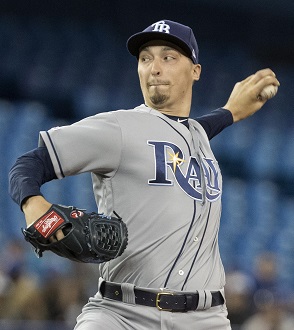
Rays Blue Jays Baseball

If it comforts Blake Snell any, his broken toe from a falling bathroom decoration pole probably isn’t baseball’s weirdest injury . . .

The American League’s defending Cy Young Award winner is learning the hard way how unforgiving certain heavy objects are when not handled appropriately. When Blake Snell decided a granite decorative stand didn’t look quite right in his bathroom, he decided to move it—forgetting it was a four-piece structure weighing eighty pounds total.

A piece landed on Snell’s right foot. The foot on which the lefthander lands when he throws a pitch. The fourth toe on his foot got fractured. Ten days on the injured list at minimum. Snell is only mildly amused.

“It’s like a three-piece set with a bottom base and this pole that comes up like 2 1/2, 3 feet,” he told reporters including The Athletic‘s Josh Tolentino. “It’s right outside the shower. I was like, ‘I’m moving this, it looks stupid.’ I went to move it, I lifted it up and it wasn’t glued to the pole. And the pole came crashing down. Really dumb. That’s what happened.”

Snell getting poleaxed by his own bathroom structure is merely the latest in a longer-than-you-think list of injuries to baseball players that run the entire field from the ridiculous to the bizarre and back to the surreal. Tolentino runs a fair survey of them that merely begin to explain the syndrome.

He missed a few real jewels among the warping wounded, from Sammy Sosa sneezing himself into a ligament sprain in his back to Hall of Famer Tom Glavine breaking a rib while throwing up aboard a flight. And, whether Hall of Famer John Smoltz tried ironing or steaming a shirt while he was in it. Stop right there—Smoltz didn’t exactly do what the urban legend persists in claiming.

“I didn’t steam it while it was on,” he said in 2008. “I set the steamer down, and when I set it down, water popped out and caught me on the chest.” Leaving him a nice little burn mark that his teammates mistook for a hickey, prompting Smoltz to try explaining.

Which prompted a reporter overhearing it not to let the fact get in the way of a delicious story that threatened to have writers ringing Smoltz’s phone off the hook from then on whenever another player incurred an injury from somewhere out of a Saturday Night Live sketch.

The story I cited regarding Smoltz came forth when Hunter Pence, then with the Astros, walked into a sliding glass door. “It’s pretty silly to have this kind of freak accident happen,” he told the Houston Chronicle at the time. “I didn’t really think I would go through a glass door. Normally it wouldn’t shatter. But somehow it shattered and I was in the middle of a bunch of broken glass. I was actually very fortunate because none of the glass was stuck into my wounds.”

Superman usually limited himself to busting through brick walls, not glass doors. Pence thought he was walking through an open door toward his bathroom and hadn’t realised his roommate closed the door first. He’d hopped up a small ledge to go through what he only thought was an open door. Oops. He was lucky to come out of it with only a sizeable number of lacerations.

Those join a pretty fair roll of bizarre injuries, with five more Hall of Famers on the list, too. The mishaps include but are surely not limited to:

Bite Me Dept.—1923: Nondescript pitcher Clarence Bethen put his false teeth into his hip pocket, thinking he looked meaner on the mound when they were out. His lifetime 7.32 ERA thinks otherwise. But in one game he actually hit a double, slide hard into second—and took a bite in the butt from the pocketed choppers. That wasn’t what they meant by putting your teeth into your work.

Jim and Jill Went Down the Hill Dept.—1967: Cy Young Award-winning Red Sox pitcher Jim Lonborg went skiing after the season. That’s where he suffered the torn left knee ligaments that cost him half the 1968 season and left him far less than the pitcher he was in 1967. It’s said Lonborg’s companion on that trip was actress Jill St. John, of whom he may or may not have been in hot pursuit down the slope. Lonborg’s happy ending: he became a respected New England dentist after his pitching career ended. (He retired from dentistry in 2017.)

Chumpionship Ring Dept.—1970: Braves closer Cecil Upshaw thought demonstrating his slam dunk technique by way of an awning on the street was a clever idea . . . until it cost him the entire season, after his ring got caught and he damaged ligaments in his hand.

Back, Back, Back Dept.—1980s: Pitcher Jamie Easterly once took up a backward-running exercise as part of his workout routines and injured his back while running backward and hitting a gopher hole. Easterly had a lot less to worry about when it came to gopher balls: he only surrendered 48 in a thirteen-season career.

Elbow Greased Dept.—1980s: Flaky Indians relief pitcher Ernie Camacho signed autographs for charity one spring, then stopping after about a hundred signatures and heading right for his team doctor complaining about pain in his pitching elbow. I’ve heard of tennis elbow, but . . .

Take Him Out of the Ball Game Dept.—1983: On an off day for the Royals, Hall of Famer George Brett broke his toe running from . . . his kitchen to his living room, to continue watching a Cubs game, specifically to see his buddy Bill Buckner hit.

Rolling Blunder Dept.—1985: Vince Coleman, the Cardinals’ road running base thief, got his foot caught in a tarp-rolling machine at Busch Stadium before Game Four of the National League Championship Series. Incurring a bone chip in his knee and a foot bruise, Vincent Van Go—who set a rookie record for stolen bases that year—was stopped for the rest of that postseason.

Cowboy Down Dept.—1986: Hall of Famer Wade Boggs once missed a week with a back strain suffered when . . . pulling on a pair of cowboy boots. This gave pulling yourself up by your own bootstraps a bad name.

Oh, What a Mangled Web Dept.—1990: Then-Blue Jays outfielder Glenallen Hill fell out of bed and right into a glass table—suffering bruises and cuts on elbows, knees, and legs—as he . . . awoke violently from a nightmare about spiders. Calling your friendly neighbourhood Spider-Man . . .

Ice, Ice, Baby Dept.—1993: Hall of Famer Rickey Henderson fell asleep with an ice bag on his foot . . . and the Man of Steal suffered a nasty case of frostbite, which froze him out of three August games.

Sorry, Wrong Number Dept.—1994: Relief pitcher Steve Sparks once thought that just because a motivational speaker he’d seen could rip a thick phone book in half he could do it—until his dislocated shoulder told him, “No, you can’t.”

Dog Bites Cone Dept.—1998: Pitcher David Cone once took a bite from his mother’s Jack Russel terrier, Veronica. The finger injury Cone suffered meant Yankee manager Joe Torre sending a rookie out for his first major leage start: Orlando (El Duque) Hernandez. We’ll presume the pooch didn’t act on Mom’s command.

Bed Sore Dept.—2002: Outfielder Marty Cordova once suffered a bad sunburn across his face . . . on a tanning bed. Never a bottle of Coppertone around when you need one.

Oh, Deer! Dept.—2005: Promising Rockies rook Clint Barmes was given some choice deer meat by elder teammate Todd Helton. The venison won the battle when its weight caused Barmes to fall and break his collarbone. He went from leading National League rookies in most offensive categories to journeyman after recovering. We’ll presume Bambi isn’t exactly one of his favourite films.

The Nutcracker Dept.—2006: There was the time Hall of Famer Ken Griffey, Jr.’s protective cup pinched his testicle. At least Junior had a sense of humour about those things: when he and Hall of Famer in waiting Adrian Beltre were Mariners teammates later on, Griffey arranged to have Beltre—returning from a testicle injury of his own—serenaded with Tchaikovsky’s Nutcracker.

While My Guitar Hero Gently Weeps Dept.—2006: Few were as snakebitten by injuries as Tigers relief pitcher Joel Zumaya, but the legend of his wrist sprain while playing Guitar Hero may be just that: a legend, one Zumaya himself rather enjoyed letting ride—he was delightfully flaky—while admitting to frustration that his career was compromised and then ended after six surgeries yet to come.

Pie in the Sky Dept.—2010: Marlins utility man Chris Coghlan tore the meniscus in his left knee when . . . he fell while trying to smoosh a pie in the face of Wes Helms, who’d just won a game for the Fish with a game-ending bases-loaded single. It might have been a good thing Helms didn’t win it with a grand slam—Coghlan might have been tempted to try hitting him with a whole bakery.

Jump for Joy Dept.—2012: Yankees pitcher Joba Chamberlain dislocated his ankle while . . . jumping on a trampoline with his five-year-old son.

Honey, I Forgot to Look Dept.—2012: Jonathan Lucroy reached under his bed for a sock and didn’t see his wife fiddling with suitcases on the bed. One of the suitcases fell over the bed and onto Lucroy’s hand. He hit the disabled list after trying but failing to hide that he couldn’t grip his bat properly.

Hold the Mayo Dept.—2012: Mark Buehrle, then pitching for the Marlins, sliced his finger opening a mayonnaise jar a few hours before a scheduled start. He made the start but had a horrid first inning.

Baggage Claim Dept.—Royals catcher Salvador Perez punished his knees enough in thousands of squats behind the plate without blowing the opening of the 2018 season when he suffered a torn medial collateral ligament in his knee . . . while carrying a heavy suitcase up some steps. He’s missing this season entirely thanks to a torn elbow ligament during a spring workout that demanded Tommy John surgery.

I suppose, though, that the ones which might claim the top or at least the hottest prizes for bizarre injuries would go thus:

Hot Nuts Dept.—2012: Stephen Strasburg suffered a rough four-inning outing before then-Nationals manager Davey Johnson lifted him mercifully. Apparently, Strasburg inadvertently got some Icy Hot balm on his jewels. That’s a mishap that usually (though maybe not exclusively) happens when being pranked in a high school locker room or while you’re away at summer camp.

You Gotta Have Bra Dept.—1980s: Giants manager Roger Craig suffered a gash on his hand while . . . unhooking a bra strap. Let’s be nice and presume the bra belonged to his wife.

Wile E. Coyote, Genius Dept.—1985: Hall of Famer Nolan Ryan could throw the proverbial lamb chop past the proverbial wolf, but the Express couldn’t throw either his vaunted fastball or himself past . . . one of a pair of coyote pups he found while driving around the countryside, when the pup bit his finger. It cost Ryan one start and the pups. Wile E. Coyote, there’s hope for you yet. Beep-beep!


On the Yankees purging Kate Smith

2019-04-19 KateSmithBabeRuth

Kate Smith, American icon now accused of racism, at a CBS microphone with a certain Yankee (and American) icon . . .

“Kids who grew up to the sound of Kate Smith’s voice,” the television critic Tom Shales once wrote about the Songbird of the South, as she was known, “privately felt that this is what Mom would sound like, if only Mom could sing.” Smith’s eternal image otherwise became what radio historian Gerald Nachman called “a sort-of singing Statue of Liberty” thanks to her recording of “God Bless America.”

Today the singing Statue of Liberty faces a purge from Yankee Stadium. The Yankees have decided to put Smith’s “God Bless America” into the proverbial mothballs, thanks to having discovered Smith recorded, in 1931, a song called “That’s Why Darkies Were Born.” The hefty Virginian who was once one of broadcasting’s most formidable presences is now to be sent to the Phantom Zone as a racist.

I didn’t grow up to the sound of Kate Smith’s voice, but I did have a mom who, God rest her soul in peace, liked to sing in the shower now and then and sounded like she was being tickled on the soles of her bare feet. As for Smith being an actual racist, I’ve just discovered (by reading a copy at archive.org) that she didn’t talk about race at all in her long-out-of-print 1960 memoir, Upon My Lips a Song. The mere absence of a topic doesn’t necessarily suggest an author’s view one way or the other on it. you wouldn’t presume that Roger Angell has an opinion one way or the other about Olympic bobsledding even though he’s never written about it so far as you know.

But to judge by the hoopla around her until-now-obscure 1931 hit—it wasn’t even close to being one of her signature songs—the answer seems a resounding yes, Smith was indeed a racist. Until you plumb a little further and a) remember that racism wasn’t exactly obscure in the era’s entertainment, unfortunately; but, b) “That’s Why Darkies Were Born” explicitly satirises it. Uh, oh. We know how instantly understood satire often is, don’t we?

A Seattle Post-Intelligencer critic, Eric D. Snider, isolated the point in a 2011 piece reviewing a film that was made and released two years after Smith’s hit, the Marx Brothers’ Duck Soup, which wasn’t exactly a hit in its own right upon release but has long since earned stature as perhaps their absolute best film in many minds. How does Duck Soup connect to “That’s Why Darkies Were Born?” A joke cracked by Groucho Marx, Snider answers:

One of Groucho’s jokes that is obscure (and probably offensive) to modern ears is this: “My father was a little headstrong, my mother was a little armstrong. The Headstrongs married the Armstrongs, and that’s why darkies were born.” Haha– wait, what? The reference is to “That’s Why Darkies Were Born,” a hit song from the 1931 Broadway revue George White’s Scandals that was famously recorded by both Kate Smith and Paul Robeson (whom you’ve heard singing “Old Man River”). The song presented a satirical view of racism, though actual racism wasn’t exactly rare in plays or movies in the 1930s.

Groucho uses the line simply because it was famous at the time and it sort of fit his train of thought. 

(Emphasis added.)

Contemporary sensibilities (or lack of sensibility) advises that there were probably those who saw Mr. Snider’s piece and concluded (erroneously) that Groucho Marx was therefore a racist.

Baseball itself observed a strictly enforced colour line in those years, which was broken at last in 1947, though it took long enough for all teams other than the Dodgers and the Indians (with Larry Doby shortly after Jackie Robinson in Brooklyn) to get and act on the message. We live with our pasts to learn from them, but how often and how far in the future should we be punished for them if we’ve long since renounced and transcended them?

Remember last year’s skirmishes about some baseball players having tweeted racist remarks as callow teenagers, views they’d long since rejected and renounced? There were those suggesting they should have been suspended at minimum or banished at maximum for having held those views at all regardless of whether they changed those views.

A decade ago, the Yankees purged the Irish tenor Ronan Tynan from singing “God Bless America” during their post-9/11 seventh inning stretches, as Tynan had been very popular doing, when it came forth that he’d made an anti-Semitic remark involving a prospective renter in his New York apartment building. That was a far more verifiable incident upon which the Yankees acted than the presumed attitude behind recording a satirical song that is now 88 years old.

If the Yankees are ready to expunge Smith’s recording of “God Bless America” from their seventh-inning stretch revelries, they should at least understand that the ancient record that prompts them was indeed intended as satire and taken as such both in its own time and in the eyes and ears of critics writing three quarters of a century later about films that referenced it just as satirically.

And it’s also wise to remind ourselves that you could probably fill Yankee Stadium several thousand times over with those who were likewise so callow in our youths but learned and behaved better when we stopped being callow youths and started becoming  men and women.

Smith recorded another song some say satirised racism, “Pickaninny Heaven,” in the same decade as that in which she cut “That’s Why Darkies Are Born.” She also endorsed an Aunt Jemima-style “mammy” doll at decade’s end. That was the 1930s, for better or worse, and Smith, who died in 1986, had miles to go before her limousine slept. Unless I chance to read a full biography of Smith that reveals otherwise, I don’t think it’s fair of me to suggest that she held racist views herself at any time, never mind in the 1930s, or that if she did then she didn’t change and transcend such earlier views.

And if she did hold racist views once upon a time in her life, should I demand her purging as many demanded the purgings of, say, Josh Hader or Trey Turner after their earlier but long since renounced views were exhumed last year?

The aforementioned Paul Robeson  had other issues, of course, including and particularly his Stalinism (it didn’t begin with his public approval of the Soviet Union’s suppression of the 1954 Hungarian revolt), but it’s reasonable to think that the legendary African/American bass/baritone who spoke often and loud against racism wouldn’t have recorded “That’s Why Darkies are Born” if he, too, didn’t think it was satirical.

Without knowing whether Kate Smith was a genuine racist when recording a satire of racism, or began as a racist but transcended it as her life went forward, the Yankees may be jumping the proverbial gun on helping to destroy the reputation of an iconic recording made by—yes, she was, to an awful lot of people in another time and place—an iconic singer.

“The Yankees take social, racial and cultural insensitivities very seriously,” an unidentifed Yankee spokesman was quoted as telling the New York Daily News. “And while no final conclusions have been made, we are erring on the side of sensitivity.” A lot of errors are committed while erring on the side of sensitivity, too.