The mental midgets strike

2019-10-18 ZackGreinke

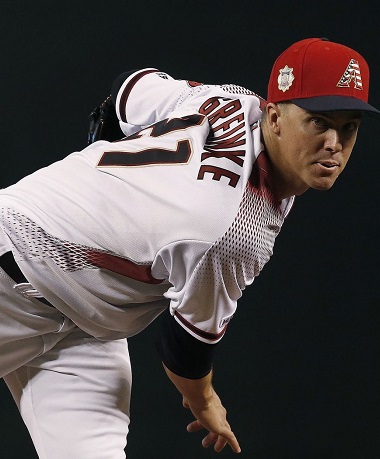
Zack Greinke catches a breath on the Game Four mound Thursday night.

The news came forth toward the end of American League Championship Series Game Four. It’s further evidence that the Yankees themselves, even while imploding late in a game that ran away from them already, have more class than a few too many of their fans.

I don’t think you could find any fan base for any major league baseball team that lacks for a small but orally diarrhetic subset to whom no kind of abuse is off limits. But what a small pack of Yankee fans did to Astros righthander Zack Greinke before Game Four began Thursday night crossed several lines.

Greinke was having a pre-game warmup in the left field visitors bullpen with a police presence there already because of Game Three’s trash throwers from the  right field stands. The small pack above the bullpen, who may or may not have been egged on by a particularly abusive pack of the Twitterpated, let him have it but good.

Not because he’s an Astro and thus the adversary for claiming the American League pennant. Not because his mission for the night was to keep every Yankee bat possible from wreaking havoc. No, these animals taunted Greinke over the very real anxiety disorder and degree of clinical depression with which he’s afflicted and the medications he is prescribed duly to control them.

Stupidity doesn’t begin to describe even a small group of subhumans who think the price of a ticket and a seat in the ballpark includes a license to abuse a still-young man verbally and violently over a mental illness he neither asked to bear nor lives without, whenever he does what those subhumans wouldn’t have even a tenth of the courage to do to earn his keep.

Greinke said after Game Four that he didn’t hear the nasty taunts. Maybe he didn’t. Pitchers are notorious for what the fictional Tiger pitcher Billy Chapel, played by Kevin Costner in the film For Love of the Game, called “clearing the mechanism,” blocking every sound from their heads other than that of their pitches hitting the catcher’s mitt when bats don’t hit their pitches.

But even if Greinke cleared his mechanism even preparing in the pre-game bullpen, it didn’t justify that kind of taunting.

Yankee Stadium security ejected one of the bastards post haste and warned each other to watch out for others. Greinke went to the mound and, except for a shaking first inning in which three consecutive walks produced a single Yankee run with the bases loaded, kept the Yankees at bay with no small help from the Yankees themselves, starting the Astros to an 8-3 win that puts them on the threshold of a World Series date with the Nationals.

And, personally, I hope the Astros get it.

Not because I hold any brief against the Yankees themselves. Not because I kid myself that the Yankees are the only baseball team with a subset of fans about whom “animals” may be speaking politely. (Hello, Phillies, Cubs, Dodgers, and Red Sox, for openers.) I hope the Astros get their date with the Nats because it’s the Yankees in the ALCS and I’m sick of re-learning how the Yankee fan subset can go from worse to intolerable every day.

And if I’m sick of it while not being a Yankee fan, I can only imagine how sick it makes the Yankees themselves feel.

The right field region louts throwing junk and debris onto the field over an overturned play at first base or cheering when Astros third baseman Alex Bregman was hit by a pitch in Game Three were mere louts. Greinke’s assailants could be tried by jury for impersonating human beings.

And it seems very safe to presume that not one of the animals would have accepted any challenge to do what Greinke does with 55,000+ right there in his office and a few million more eavesdropping next to television or radio sets. Not without running home to Mommy at the mere suggestion.

If you want to bark at me for being out of line, go ahead and bark. And go to hell while you’re at it. Because I happen to suffer an anxiety disorder with a degree of clinical depression myself. I’m also one of the lucky ones who doesn’t have to practise my profession with an audience in my office or my daily toil broadcast on the national and international airwaves.

And I don’t care how much money Greinke earns to pitch baseballs every year. You don’t hammer someone dealing day in, day out with mental illness. You don’t reference the medications he is duly prescribed as though it indicates weakness or a character flaw. You don’t even hammer him over going by his middle name as if that suggests he’s a man of any disrepute.

It may be an exercise in futility to hope Justin Verlander and the Astros kick Yankee butt in Game Five. Based on what I saw in Game Four, the Yankees themselves may be more than capable of kicking Yankee butt. It was as if George Springer and Carlos Correa hitting three-run homers reminded them, “Hey! You can’t mop the floor with us like that! Only we can mop the floor with us like that!”

On Thursday night, the Yankees forgot how to pitch, how to hit, how to field, and how pathetic it looks to drag a veteran great out for a relief appearance for one last display for his longtime fans and have to lift him post haste because, bad as his knees became over the course of a great career, his shoulder decided to bark its resignation.

Thursday night’s Yankees performed the impossible: they made the 1962 Mets resemble a smoothly running vacuum cleaner sweeping and cleaning all in their path. The Yankees looked as though they plugged the hose into the blower, not the suction port.

Especially first baseman D.J. LeMahieu and second baseman Gleyber Torres, who suddenly seemed to think of ground balls as oncoming white tornados determined to throw them around like debris in the late innings.

Bregman’s leadoff bouncer in the top of the sixth bounced right up into and off LeMahieu as though trying to have him for dinner on the run, rolling toward the mound. That might have been no great shakes otherwise except that the Yankees’ starting pitcher, Masahiro Tanaka, happened to be nearer to first base covering on the play.

That play ended Tanaka’s rather gutsy evening’s work and began Chad Greene’s out of the bullpen. And one out and one base hit later, Correa sent Greene’s four-seamer right down the pipe right up and into the left field seats in a near-perfect impersonation of Springer’s bomb three innings earlier.

And all that was just the prelude to the Yankees’ eighth-inning version of Operation Dumbo Drop.

Bregman opened against Yankee reliever Adam Ottavino by taking a pitch over the heart of the plate and pumping it right down the left field line for a leadoff double. Yuli Gurriel then bounced one up the first base line. And that one decided LeMahieu must have been awful appetising two innings earlier, because it ate him up like dessert before bouncing away into right field, allowing Bregman to third.

That’s when Yankee manager Aaron Boone decided to get the hapless Ottavino out of there and bring CC Sabathia aboard for a possible final farewell. And Astros super-rook Yordan Alvarez decided to bounce one up to the second base side, where it hopped up off the grass and off the body of Torres, who’d approached the ball with thoughts of throwing home to nail Bregman.

There went those thoughts. The ball bounced away from Torres and Bregman could have bounced off the plate after scoring the seventh Astro run. Then Correa lined one clean to shallow right field and Aaron Judge caught it cleanly enough. Then Judge, who owns one of the best throwing arms in the league, made a fatal mistake.

He caught Alvarez dead to right near second and could taste the double play he would have consummated if his on-the-money throw to Torres didn’t bang in and out of Torres’s glove. Lucky for Torres and LeMahieu that the Astros only got a single run out of those  mishaps.

Sabathia got pinch hitter Aledmys Diaz to fly out to short right but had to leave the game after falling behind Springer on 2-1 when his shoulder flared up. Jonathan Loaisiga got Springer to foul out, which is just about how Sabathia must have felt leaving the mound as he did.

Maybe the only reason the boo birds weren’t so loud in the top of the ninth is because a reported 75 percent of the Game Four crowd had left Yankee Stadium by then. Altuve opened with a weak grounder to second that somehow, some way, rolled under Torres’s glove into right center, enabling the Astros’ second baseman to make second unmolested.

Michael Brantley then hit a jam shot bloop single to shallow left, scoring Altuve with the eighth Astro run. It could have been nine after what was ruled a wild pitch but should have been ruled a passed ball on mal-positioned Yankee catcher Gary Sanchez let Brantley have second on the house with Bregman at the plate. There went the temporary cred Sanchez snatched with his two-run homer in the bottom of the sixth.

Bregman walked, but Gurriel popped out to Gregorius at short and, with Tyler Lyons entering to pitch for the Yankees, Alvarez and Correa struck out in succession to end that threat. All other things considered, the Yankees were probably lucky to escape with what remained of their Game Four lives.

And, for all intent and purpose, the game, after Astros reliever Roberto Osuna shook off a two-out walk to get Torres to fly out to right on the first pitch.

Did you know the Yankees had the game’s first lead thanks to that bases-loaded walk to Brett Gardner in the bottom of the first? I had a hard time remembering, too, after the shenanigans that followed in due course. Especially because the Yankees had the ducks on the pond three times all game long and cashed in only that lone run.

Especially after learning of the abuse thrown at Greinke pre-game. He may be too proud to say that it cut him to his soul enough to walk three in the first and surrender that run, but there isn’t a jury on earth who’d rule him unjustified.

And Greinke more or less settled down from there, before he was lifted with first and second in the fifth. He proved a better man than that small group of Yankee Stadium yahoos who thought taunting his illness, his medication, his mother, and his preferred manner of address was acceptable opposing-ballpark behaviour.

Maybe the least offensive spewings from that left field stands subset involved hammering Greinke concurrently—the louse!—for choosing to go by his middle name instead of his proper given name.

So much for the reputedly overly knowledgeable Yankee fan, who forgot if he really knew about the righthanded pitcher named Selva Lewis Burdette, Jr., once a Yankee prospect, who beat the Yankees three times to help the then-Milwaukee Braves win the 1957 World Series.

Or, about the Hall of Fame relief pitcher named James Hoyt Wilhelm, master of the hydra-headed knuckleball, who was once made a starting pitcher, and who just so happened to throw a 1959 no-hitter at the Yankees in the silks of the Orioles.

Or, about the Hall of Fame Yankee first baseman who considered himself the luckiest man on the face of the earth when forced to retire thanks to the fatal disease that has since borne his name. Well, part of his name, anyway: Henry Louis Gehrig.

Not to mention, about such Hall of Famers as George Thomas Seaver, Lynn Nolan Ryan, and George Kenneth Griffey, Jr. About a longtime Astro great and one-time Yankee named William Lance Berkman. About a Hall of Fame-bound, postseason-haunted Dodger pitcher named Edward Clayton Kershaw.

Not to mention such recent baseball notables as LeRoy Timothy Lincecum, Luis Dustin Pedroia, Ivan Carlos Beltran, D’Vaughn Juan Pierre, Guilleard Alfonso Soriano, Stefan Andrew McCutchen, Augusto Elvis Andrus, and Thompson Nicholas Swisher.

All of that can be dismissed as purely getting your dumb on. (Do those left field bullpen bastards also love the music of the Beatles, whose bassist and co-chief songwriter happened to be named James Paul McCartney?) Taunting Donald Zachary Greinke for his too-real anxiety disorder and clinical depression can’t be and shouldn’t be dismissed that readily.

One of the Twitterpated had the audacity to tweet that Greinke’s sympathisers are too much “mental midgets” to handle New York. This native to the Bronx—a very different Bronx, in which you were taught respect and punished for taunting the afflicted—would suggest such a Twitter twit is too much of a mental midget to handle a man with Greinke’s unpretentious courage.

I don’t envy the Yankees as a team and an organisation for having to contend with such grotesquery. It’s not their fault that they have a subset of fans who need trainers more than ALCS tickets. But let’s go, Astros.

“They threw the first punch”

ALCS Yankees Astros Baseball

Gleyber Torres, making Zack Greinke’s and the Astros’ Game One life miserable . . .

It was supposed to be a treat watching the Astros and the Yankees, mostly recovered from their regular season’s medical challenges. If you could say a pair of 100+ game winners were lucky to be there after they fought injury bugs as arduously as they fought field opponents, the Astros and the Yankees were just that.

Didn’t the Astros fight like six parts street gang and half a dozen parts cheetahs on speed to get their postseason home field advantage, going 12-2 to finish the season to nail down the point? Didn’t they look just that much better than the 6-8 finishing Yankees when the postseason began?

And hadn’t they survived an unexpectedly arduous division series with the upstart Rays—forcing them to open with Zack Greinke instead of Justin Verlander or Gerrit Cole—to get to the American League Championship Series in the first place? While the Yankees turned out to have it so painfully simple sweeping the suddenly somnambulent Twins to get there that you could be forgiven for suggesting the Yankees might be just a little vulnerable?

There went those ideas in Game One Saturday night.

The Yankees were good on the road this year(.568 winning percentage) but they weren’t supposed to be able to handle the Astros there. They played each other seven times on the regular season with the Astros sweeping the Yankees in three in Minute Maid Park. But somebody forgot to remind the Yankees as they opened the ALCS.

At least, somebody forgot to remind Yankee second baseman Gleyber Torres. The Yankees shut the Astros out 7-0 in Game One and Torres was practically their one-man demolition operation. The Astros’ long term survival may now depend on how well they can keep Torres from even thinking about seeing and raising from Game Two forward.

Nobody’s going to accuse the Astros of being on the ropes after a Game One loss. The Yankees won’t be foolish enough to level that charge. Not even when they punctured the Astros’s hard won, hard desired home field advantage.

“We’ve been in the situation before,” said Astros second baseman Jose Altuve after the game, referring to 2017, when the Astros were down 3-2 in that ALCS but won. “Tomorrow we have Justin, we all know how good we feel about him, so it’s just one game, it’s a seven game series, so we still have a lot of baseball to play.”

With Verlander to start Game Two and Cole to start Game Three, everyone in Astroworld should be feeling good again. No matter how good these Yankees are at finding and exploiting even the tiniest rupture in the other guys’ armour.

“They played a great game,” said Astros shortstop Carlos Correa, “a near perfect game.”

But who the hell is Gleyber Torres? Oh, yeah—he’s the guy who became a Yankee when they traded Aroldis Chapman to the Cubs in the middle of 2016. But now he’s the youngest Yankee ever to drive in five in a single postseason game. And his clutch hit reputation is beginning to fan out beyond the Bronx.

You expected trouble going in with the Aaron Judges, Giancarlo Stantons, D.J. LaMahieus, Edwin Encarnacions, and Brett Gardners. The last one from whom you expected any pinstriped lip, never mind bat, is a kid middle infielder who may have hit the most quiet 38 regular season home runs of the year.

Outside New York, Torres isn’t exactly the Yankees’ biggest star yet. But on a night when Yankee starter Masahiro Tanaka was as untouchable as he was very touchable in the regular season, and Greinke proved vulnerable enough if not quite the pinata the Rays made out of him in the division series, Torres became the last guy the Astros wanted to see at the plate. Or anywhere else, for that matter.

“Man, they’re going to be telling stories about that kid for a while,” said Judge after the game. “He’s going to be a Yankee great, I know it. He just comes to work every single day. He’s always got a smile on his face. No situation is too big. I’ll see him in the box, bases loaded, big situation and he’ll give us a little smile in the dugout like he knows he’s going to go up there and do his job.”

At first it looked as though Tanaka and Greinke would turn Game One into a pitching clinic, if not quite the ones put on by Nationals pitchers Anibal Sanchez and Max Scherzer in the first two National League Championship Series games. Tanaka looked as untouchable as he normally does against the postseason Astros, and Greinke looked nothing like the guy who’d been humiliated at the hands and tails of the Rays.

“I thought Zack did a good job giving us a chance to win,” said Astros third baseman Alex Bregman, “and we just didn’t do anything offensively.”

“When you’re facing really good pitching, it makes hitting even harder,” said mostly struggling Astros center fielder George Springer, their 2017 World Series MVP but hitting a buck twenty in this postseason to date. “Hitting’s hard. But that being said, we’re a good team, and we understand that, so we’ve got to grind and string together some at-bats and we’ll see what happens.”

As the top of the fourth began each side had one base hit apiece and they’d both been negated by inning-ending double plays. Then LaMahieu opened the Yankee fourth with a base hit and swiped second while Judge struck out swinging on one of Grienke’s nastier sliders of the night. Up stepped Torres, whom Greinke struck out swinging to end the first. And he drove one to the back of left center bounding off the fence to score LaMahieu with the game’s first run.

Torres and Greinke squared off again in the sixth after Judge led off flying out to Astros center fielder George Springer. Once again Greinke’s first service looked just too good to Torres. This one got hammered into the middle of the Crawford Boxes.

And after a six-pitch, full count, wrestling strikeout to Encarnacion, Greinke battled Giancarlo Stanton—who’d only gotten to play eighteen regular season games thanks to two trips to the injured list—and, after wriggling his way to a full count after opening 0-2, Stanton nailed a fastball just under the middle of the plate and sent it into the Astros’ bullpen behind the right center field fence.

An inning later, Torres was in the middle of it yet again. With two outs, Yankee shortstop Didi Gregorius, LaMahieu, and Judge singled back-to-back-to-back, all into right field, off Astros reliever Ryan Pressly, before Torres sent the first pair home with a bloop single to center and helped himself to second when Springer threw in futilely toward the plate.

It was the kind of night on which Torres even making an out proved productive enough. With reliever Bryan Abreu on the mound for the top of the ninth Yankee third baseman Gio Urshela hit the first pitch of the inning, a slightly hanging slider, into the right field seats. Then with one out LaMahieu walked, Judge singled him to third, and—with the Astro infield drawn in just enough—Torres whacked a grounder to an oncoming shortstop Carlos Correa.

The good news: Correa pounced on the run to throw Torres out handily enough. The bad news: LaMahieu got such an excellent jump off third he could score the seventh Yankee run without fear even with Correa all over the Torres grounder well onto the infield grass.

The Astros hurt themselves when it was still a one-run game, though. In the bottom of the fifth, Bregman, their no-questions-asked MVP candidate, worked Tanaka for a leadoff walk and Yordan Alvarez, their probable no-questions-asked Rookie of the Year, slashed a line drive to right.

As Bregman led a little too far off first, as in more than half way to second, obviously thinking of third base as his immediate destination, Judge ran to snare Alvarez’s rope. Then the tall Yankee with the toothy grin of a kid a third his age fired in to first. Bregman slipped running back to the pillow but it almost wouldn’t have mattered since he’d had a bigger lead than the law allowed in the first place.

Was Judge catching Alvarez’s liner a guarantee? Fifty-fifty at best. But he has one of the better throwing arms among American League right fielders and with Bregman that far off the pillow, slip back or no, Bregman was dead meat.

It negated the spectacular theft Bregman committed in the top of the third, when he took a spinning leap behind third with his glove arm up like the Statue of Liberty to turn Urshela’s nasty line drive, which probably would have gone further up the line for extra bases, into a nasty out.

Tanaka can’t beat the Astros in the regular season, but in the postseason he looks like an ogre against them, taking a 2.00 lifetime postseason ERA against them into Game Two. He worked the corners like a craftsman and left the usually smart hitting Astros looking half lost at the plate.

“He was throwing the ball really good today,” said Altuve. “He was hitting spots with the slider, split, and fastball. He makes it out pretty good. You have to tip your hat to that. He got a late break, normally you can see the spin, but we couldn’t see anything.”

When they got into the Yankees’ effective bullpen, they actually pried a couple of base hits out of Adam Ottavino, back-to-back singles by Michael Brantley and Altuve, but Ottavino lured Bregman into dialing an inning-ending Area Code 6-4-3.

The Astros bullpen is usually one of the league’s best, too, but Pressly didn’t look comfortable in his turn and Abreu’s inexperience was exploited a little too readily. Especially against a Yankee team who—knowing Verlander and Cole awaited them in Games Two and Three—treated Game One like a must-win contest.

“They threw the first punch in Game One,” said Astros manager A.J. Hinch. “We get to the next day. We can punch right back tomorrow. I don’t think they’re going to be too comfortable tomorrow coming to the ballpark thinking they’ve got an easy game ahead of themselves.”

Verlander gives the Astros a far above average chance to punch back in Game Two. The last thing they want is going to the south Bronx in the hole. The Yankees have ways of burying people once they’re in holes against them. One of them is a 22-year-old second baseman who prefers hitting with men on base and has the numbers to prove it so far.

“The way he’s able to get to all kinds of pitches on different planes is impressive,” said Yankee relief pitcher Zach Britton, who worked a near-spotless eighth (one walk, two punchouts) Saturday night.

“As a pitcher, you know you have to executive every single pitch throughout an at-bat or you know he’s going to beat you,” Britton continued. “That’s where the bat-to-ball skill comes in. It’s crazy. You just don’t see it in such a young player.”

You do now.

So much for a young man’s game

2019-10-08 ZimmermanScherzer

Ryan Zimmerman (left) and Max Scherzer looked older at a postgame presser than they looked playing Game Five of the Nats’ division series against the Dodgers Monday night.

Once upon a time, a generation insisted you couldn’t trust anyone over thirty. Even that was pushing it; to hear some of them talk (I know, because it was my generation, even if the words never quite came out of my own mouth) you’d have thought trusting anyone over 25 was begging for trouble.

At times in recent years it’s seemed as though baseball’s unspoken but unbreakable mottos include not trusting anyone over thirty. Well, now. If thirty is baseball’s new forty, then baseball’s geriatric generation’s been doing a lot of heavy lifting this postseason and beyond. Without walkers, wheelchairs, canes, or portable respirators, even.

It’s hard to believe because it seems like yesterday, sometimes, that he was a hot draft, but Stephen Strasburg—in the Nationals’ original starters-as-relievers postseason scheme—got credit for the win in the National League wild card game with three spotless relief innings. At the ripe old age of 31.

Strasburg also pitched six with a single earned run against him in division series Game One against the Dodgers and takes a lifetime 0.94 postseason ERA into his Game Five start in Dodger Stadium Wednesday. The Nats aren’t exactly a mostly-young team but they’re putting their fate into thirtysomething hands.

That may be the problem. Even with the professiorial beard he wears now, Strasburg doesn’t look his age yet. He still looks like a lad on the threshold of sitting for his final exams in freshman year. He isn’t even close to being as grizzled as Max Scherzer. Few among even his fellow old Nats do.

If you believe in respecting your elders (never mind how often your elders have betrayed your respect, as often they have), things get better from there. Consider, if you will:

* Two 35-year-old Nats, Max Scherzer and Ryan Zimmerman, delivered the primary goods Monday night to push the Nats-Dodgers division series to a fifth game Wednesday. Max the Knife shook off a first-inning solo homer to go six and two-thirds scoreless including a crazy escape from a seventh-inning, ducks-on-the-pond jam, and Zimmerman jolted Nationals Park with a three-run homer into the crosswinds in the bottom of the fifth.

In those hours both Scherzer and Zimmerman looked as though they’d done it for the first time in their lives. Maybe there is such a thing as baseball’s fountain of youth.

* An ancient Cardinals catcher, Yadier Molina, tied Game Four of their division series with the Braves with an eighth-inning RBI single, then won the game with a sacrifice fly in the bottom of the tenth. And, a followup bat flip the young’uns should envy.

* Another Cardinal ancient, Adam Wainwright, pitched maybe the best exhibition of pressure baseball of his life in Game Three. It went for nothing, unfortunately, since Wainwright left the game with the Cardinals behind 1-0. But Wainwright will tell his eventual grandchildren about the noisy standing O Grandpa got as he tipped his hat to the Busch Stadium faithful.

* On the other hand, if it took a young Braves whippersnapper (Dansby Swanson) to tie the game in the ninth, it took an old fart of 31 (Adam Duvall) to pinch hit immediately after and drive home what proved the winning runs with a single up the pipe. And I didn’t notice Duvall carrying a portable oxygen tank with him.

* “We got Verlandered,” Rays manager Kevin Cash said memorably after Pops Verlander, all 36 years old of him, threw seven shutout innings their way in Game One of their division series. And if you think 29 might as well be 30 and therefore on the threshold of dismissability, be reminded the Rays got Coled the following day. As in, Gerrit Cole’s seven and two-thirds, fifteen-strikeouts shutout innings.

* Abuelo Edwin Encarnacion, like Verlander an ancient 36, tied Game One between the Yankees and the Twins with an RBI double in the bottom of the first. A 30-year-old fart named D.J. LaMahieu put the Yankees up by a pair with a bottom-of-the-sixth home run; a 35-year-old creaker named Brett Gardner hit one out one out later, and the Yankees routed the Twins in Game One and the division series sweep.

Lest you think the postseason’s been the sole triumphant province of the senior citizenry, be reminded sadly that Nelson Cruz—all 39 years old of him, who had the regular season of a player young enough to be his grandson (41 home runs, 290 total bases, 1.031 OPS, 4.3 wins above a replacement-level player), and who hit one out to make a short-lived 2-0 Twins lead in Game One—ended Game Three on the wrong side when he looked at a third strike from all 31 years old worth of Yankee closer Aroldis Chapman.

Just as there’s a rule in sports that somebody has to lose, there’s a parallel rule that says sometimes one old man has to beat another old man to win.

A prehistoric Ray, Charlie Morton, took 35 years to the mound on Monday and threw five innings of one-run, three-hit, nine-strikeout baseball at his former Astros mates to keep the Rays alive, barely. And the Rays abused likewise 35-year-old Zack Greinke—who’d pitched like anything except a nursing home denizen since joining the Astros at the new single-season trade deadline—for six runs including three home runs in three and two-thirds innings’ work.

The Yankees only looked like old men when it seemed you couldn’t visit one New York-area hospital this season without finding a group of Yankees among the emergency room patients. The Astros only looked like old men likewise regarding Houston-area clinics this year. Except to their opponents, it’s funny how they don’t look like old men when they play baseball.

Pops Verlander’s getting another crack at the Rays in Game Four. Strasburg the Elder has to tangle with a whippersnapper named Walker Buehler in Game Five. The eyes of us seniors will be upon them.

Unfortunately, there are those elders who behave occasionally like the ancient Alice Cooper lyric: “I’ve got a baby’s brain/and an old man’s heart.” Molina did after he sent the Cardinals toward Game Five. Hands around his throat in a choke gesture aimed at the Braves. In a series pitting two of baseball’s more notorious Fun Police departments, that puts a new twist on police brutality and underscores why respecting your elders is  easier said than done often enough.

Mortoned and mashed

2019-10-07 KevinKiermaier

Kevin Kiermaier trots home after his three-run homer in the second opened the can against Zack Greinke and the Astros Monday afternoon.

There’s only one problem with having three stud starting pitchers. You might have one of them going for you on too much rest. And just as too little rest is hazardous to a pitcher’s health, too much rest can get him killed to death, too. In Tropicana Field or elsewhere.

Just ask Zack Greinke, stud starter number three for the Astros. Who hadn’t pitched since 25 September. And, who got killed to death in American League division series Game Three Monday by a Rays team looking to keep their season alive in the first place.

After getting Verlandered in Game One and Coled in Game Two, the Rays flipped the script. They didn’t just Morton the Astros in Game Three, they bludgeoned Greinke for five runs before Greinke could get out of the fourth inning alive.

Charlie Morton, who was key enough to the Astros’ World Series triumph two years ago, had just enough to keep the Astros to Jose Altuve’s one-out, first-inning solo launch over the center field wall. And Greinke had little enough to resist early and often firepower, opening the gates to a 10-3 beating.

Remember with apologies to John Lennon: Baseball’s what happens when you’re busy making other plans. Put it in the bank—the Astros didn’t plan for a fourth division series game or anything else that didn’t involve opening an American League Championship Series with Justin Verlander on the mound against whomever. (Likely the Yankees at this writing, unless the Twins awaken somehow in their Game Three.)

Thanks to the Rays abusing Greinke and about half the Astro bullpen, A.J. Hinch had a decision to make, because Game Three exposed the Astros’ one wounding flaw: they, too, have a bullpen described most politely as questionable. And they’re up against baseball’s arguable best bullpen of the year.

It probably took Hinch all of about five seconds to decide. He wants the Rays to get Verlandered again in Game Four. On short rest, which fazes Verlander about as much as the sunrise fazes a rooster. On three days’ rest, which he’s done only once before in his major league life and almost a decade ago at that.

That may or may not prove a break for the Rays whose bats finally arose from the dead in Game Three. And the resurrection only began when a shaky second inning for Greinke climaxed after two hard earned outs sandwiching Avisail Garcia’s single up the pipe, when Greinke plunked Travis d’Arnaud and Kevin Kiermaier almost promptly hit one high over the left field wall

Just when Greinke looked briefly as though he’d find some reserves by bagging Austin Meadows and Tommy Pham on back-to-back swinging strikeouts in the bottom of the third, Ji-Man Choi, the Rays’ hefty and popular first baseman, unloaded on 2-2 and drove one over the right field wall.

And then the Rays really got rude after Morton—who’d been so important to the Astros’ 2017 World Series triumph, especially his Game Seven finish—shook off Altuve’s leadoff double to get an infield ground out and back-to-back strikeouts (Alex Bregman swinging, Yordan Alvarez looking) in the top of the fourth.

Brandon Lowe, the Rays’ second baseman, hit Greinke’s first service of the bottom of the fourth over the left center field wall. A line out, a strikeout, and a walk to Rays shortstop Willy Adames later, Greinke’s afternoon ended almost mercifully and Hector Rondon entered in time for Matt Duffy—who’d taken over at third in the third after Yandy Diaz experienced a sore foot—to single up the middle and send Rondon out in favour of Wade Miley.

Then Meadows sent one over Astros center fielder George Springer’s head and off the wall to send Adames and Duffy home And Pham slashed the next pitch into right for a base hit sending Meadows home. And after Choi walked but Garcia forced him at second for the side, there the Rays stood with an 8-1 lead after four.

The Astros managed two off Rays reliever Chad Roe in the top of the sixth when Bregman singled, Alvarez doubled, and Yuli Gurriel sent them both home with a turf-hop single up the pipe. But Carlos Correa lined out softly to second base and, after Brandon McKay relieved Roe, Aledmys Diaz pinch hitting for Josh Reddick flied out to right.

At the rate things were going by now it seemed almost natural for Adames to drive a 2-2 pitch over the left center field wall to make it 9-3, Rays in the bottom of the sixth. Or, for Choi to reach on an unlikely high throwing error from Bregman at third, Lowe to send Choi to third with a base hit right over Altuve’s reaching leap at second, and—after Joe Smith, the sidearmer, relieved Miley—d’Arnaud to fly deep enough to right to let Choi almost stroll home with the tenth Rays run in the bottom of the seventh.

In the interim, Oliver Drake pitched two strong innings in the seventh and eighth to further save the bigger bulls of the Rays pen for Game Four, namely Nick Anderson, Diego Castillo, and Emilio Pagan, with Colin Poche sandwiching a strikeout between a shallow pop out to center and a fly to normal right field depth to finish it.

These Astros who normally swing with authority went only 1-for-6 with men in scoring position Monday to the Rays going 3-for-7. Altuve’s first-inning launch tied him with Chase Utley for the most postseason home runs (ten) by second basemen in Show history, while Greinke continued his futility in Tampa Bay—he’s never won a game any time he’s ever pitched in the Trop.

Seven of the Rays’ runs scored with two out; seven Rays drove in runs. Not counting Diaz having to leave early with his foot issue, only d’Arnaud failed to hit safely even once otherwise.

And the Astros’ old buddy Morton showed no respect, either, striking out nine in five innings’ work and remaining perfect in postseason elimination games. Doing it Monday tied him at four such postseason elimination wins with Verlander, John Smoltz, Randy Johnson, Curt Schillling, and Clay Carroll.

Tuesday won’t give Verlander a shot at a fifth such win since the Astros still lead the set 2-1, but you can rest comfortably knowing he won’t complain. Unswept as they remain in postseason play, the Rays could still get Verlandered one more time in Game Four. They’ve never needed a running of their bulls as much as they will come Tuesday.

Greinke makes the ‘Stros trade winners

2019-08-01 ZackGreinke

Zack the Knife makes the Astros the big trade winners. Will he help make them World Series winners?

No questions asked. The Astros slipped in at the eleventh minute, practically, and not only stole the new single trade deadline show but they did the absolute most to fortify themselves for the postseason run nobody doubts is theirs this season. Barring unforeseen disaster, of course.

With Gerrit Cole looking at free agency after the season it made sense for the Astros to seek a top-of-the-line starting pitcher with at least another full season of team control to line up with (don’t doubt it) future Hall of Famer Justin Verlander, so far the new ageless wonder of baseball.

So it came forth after the deadline passed that the Astros sent a quartet of prospects—good, promising, but not quite platinum-rated prospects—to the Diamondbacks for Zack Greinke, who isn’t exactly a slouch on the mound and who’s having a solid season in his own right so far.

They’ll get the rest of this season plus the final two seasons on the gigadeal Greinke signed with the Diamondbacks. The Snakes also sent the Astros a reported $24 million to help cover the rest of Greinke’s contract, on which the Astros will be responsible for the other $53 million. They’re not exactly complaining.

General manager Jeff Luhnow knew only two things about Greinke before he pulled the trigger on the big deal of the day: Zack the Knife has been a consistent pitcher who’s on the borderline of a Hall of Fame case; and, the righthander isn’t exactly one of the most combustible personalities in baseball.

“I don’t know him personally,” Luhnow told reporters, “but I think he’s not a guy that seeks the limelight, and that actually works well for us here in Houston. And slotting in with Verlander and Cole, he’s gonna not have to be the guy that’s in front of the camera the whole time.”

The Astros weren’t exactly over-occupied on doing the Greinke deal. Before that deal hit the news running Wednesday, they did a little bullpen fortification, getting Aaron Sanchez and Joe Biagini from the Blue Jays. The Jays also sent the Astros minor league outfielder Cal Stevenson. The Astros sent the Jays outfielder Derek Fisher.

Greinke was last seen striking out seven Yankees in five innings Wednesday. He left the park without talking to reporters, which may or may not have been an indication that he suspected or was told it was time to re-pack his bags.

On the same day, the Astros got flattened by the Indians, 10-4, in Cleveland; they finish with the Tribe Thursday before a weekend hosting the Mariners, but Greinke may not have his first Astros start until the Rockies hit town starting Monday.

“I know he’s really good. I don’t know him personally, but I’m going to get to know him,” said Astros manager A.J. Hinch. “We acquired him because of how good he is. Certainly we expect him to be a big part of our push to win the division and keep winning into October. He’s an incredible pitcher.”

He has been, and he still is when all is said and done. His new teammates won’t disagree. “What a pickup!” Cole himself crowed. Referring to the front office, he added, “They nailed it. They did a fantastic job.”

Landing Greinke shot the Astros into being World Series co-favourites with the Dodgers at Caesar’s Palace Sports Book. But the Astros are smart enough to know Berra’s Law is immutable. Zack the Knife increases their odds of a return to the Series, but so is Andujar’s Law, as uttered by a long-ago Astro, the late Joaquin Andujar: “In baseball, there’s just one word—you never know.”

What we do know, though, is who were really the big winners and the big losers of major league baseball’s first single mid-season trading deadline.

THE WINNERS

Braves—Another starting pitcher wouldn’t have hurt them, necessarily, but what the National League East leaders really needed was a back-of-the-bullpen retooling. And, they got it, in an almost rapid fire series of deals.

They landed Shane Greene from the Tigers. They landed Chris Martin from the Rangers. They landed Mark Melancon from the Giants. As CBS Sports’s Matt Snyder observes, if the prices were too high for such reported availables as Edwin Diaz (Mets) and Felipe Vasquez (Pirates), the Braves did well enough shopping the sale aisle.

None of the new pen trio are anything near the most glittering names in the relief world, but neither are they slouches or pushovers. Changes of scenery from nowhere land to pennant contention do wonders for such pitchers, and it would be absolute gravy if the Braves get something out of Melancon resembling his final years in Pittsburgh and his only spell in Washington.

Greene, of course, was an All-Star this year and was wasted on a Tigers team in the middle of a rebuild. When the Braves can turn to him near the end of a game, either as the sure ninth-inning option or if things get a little dicey in the eighth, the sight of Greene warming up with his 1.18 ERA should be enough to make their division and the rest of the league quake.

Throw in Martin’s 10+ strikeout-to-walk ratio and 10.2 K/9 rate, and all of a sudden the Braves’ bullpen doesn’t look like it’s full of bull anymore.

Indians—So Trevor Bauer turned out to be a bigger pain in the you-know-where than his otherwise solid pitching was worth. Doesn’t mean the Indians dealt from weakness. Not with Corey Kluber on the threshold of returning from the injured list.

And the Tribe managed to address their biggest weakness in the deal: their corner outfielders weren’t hitting anywhere near the same area code as their new toys Yasiel Puig (from the Reds) and Franmil Reyes (from the Padres) put together. Add Puig’s mostly plus throwing arm in right field, and all of a sudden the Indians outfield isn’t just going to roll over and play dead.

The Indians also landed lefthanded pitching youth Logan Allen (also from the Padres), and when you consider how well they develop or re-tool starting pitching this is an upside acquisition for them, too.

But the real key was the impact bats. Puig secures them in right field for the rest of the season, and perhaps if he continues doing well enough the Indians would think of pursuing him when he hits free agency in the fall. Reyes, though, secures a DH spot for them for the foreseeable future while giving them an outfield platoon option in the bargain.

Suddenly it’s not to laugh about the Tribe’s outfield anymore.

Mets—Don’t laugh. Not only are they on a six game winning streak at this writing, the formerly left for dead Mets—and even I thought they were just awaiting the nails to be hammered into their coffin after that terrible weekend in San Francisco—are 12-7 since the All-Star break.

And maybe it’s an illusion since, aside from the Giants, they faced only real contender during the string. But they did take both games against the Twins in Minnesota, including a 14-4 blowout. All of a sudden, these Mets can play as well as they can pitch.

And while the world seemed to be sure only that either Noah Syndergaard or Zack Wheeler would have a change of address after Wednesday’s deadline, it took the Astros landing Greinke to knock the Mets’ landing Marcus Stroman well enough before the deadline out of the park.

Maybe Stroman wasn’t thrilled at first to go to what he thought was a non-contender. And maybe someone ramped up for kicks a rumour that the Mets had ideas about flipping Stroman to the Yankees post haste for some of the Yankees’ top farm produce. But the Mets wasted no time ridding themselves of Jason Vargas—who should have been cashiered over a month earlier—sending him to the Phillies almost as soon as Stroman’s acquisition was a done deal.

The Mets rotation now looks like Jacob deGrom (who pitched brilliantly against the White Sox Wednesday night only to get his almost-usual no-decision, the poor guy), Stroman, Syndergaard, Wheeler, and Steven Matz. And with Matz putting on a deadly off-speed clinic shutting out the Pirates last Saturday night, looking as though he’s finally found the secret to pitching without the power of a deGrom or a more disciplined Syndergaard, it gives the Mets a rotation with two number-ones, a two, and a pair of threes.

Nationals—Like the Mets, the Nats were left for dead a few times before the All-Star break. Like the Mets, too, the Nats are riding resurgent, sort of: 10-9 since the break. And the Nats needed a bullpen remake in the worst way possible.

Not at the absolute rear end, where closer Sean Doolittle remains effective when he has something to save. It’s getting the games to Doolittle that caused one after another National migraine. But then the Nats landed Jays reliever Daniel Hudson and Mariners reliever Roenis Elias.

All of a sudden, the Nats seemed to find relief in the best way possible for that beleaguered bunch of bulls. And then they got really surreal—it turned out that they also got an old buddy (ho ho ho) from the Mariners, Hunter Strickland.

Strickland—who carried an almost three-year grudge over then-Nat Bryce Harper taking him deep twice in a division series, the second time awaiting whether his fresh blast straight over the foul line would leave the yard fair but misinterpreted as admiring the shot. (It flew fair into McCovey Cove.)

Strickland—then a Giant, who somehow hadn’t gotten the chance to face Harper until 2017, then entered a game with Harper leading off an inning and threw the first pitch right into Harper’s hip. Triggering Harper’s charge to the mound and the very delayed Giants pouring out of their dugout, during which pour former Nat Michael Morse’s career ended up being sealed when he collided with Jeff Samardzija and suffered a concussion.

Harper, of course, now wears the Phillies’ silks. But it would have been intriguing if Harper was still a Nat with Strickland coming aboard. Strickland’s coming back from a lat strain that disabled him for almost three months. And the Nats don’t see hide nor hair of the Phillies again until a four-game home set beginning 23 September.

By which time, the Nats may or may not be in the thick of the NL East race (the Braves suddenly started looking human enough the past couple of weeks), securing a wild card berth, or hoping they’ve got a leg up on 2020. A lot rides on the new bulls. But for now, the Nats took their number one need and addressed it respectably enough.

THE LOSERS

Red Sox—Like the Braves and the Nats, the Red Sox needed bullpen help badly. Unlike the Braves and the Nats, the Red Sox landed nothing. Not even a calf, never mind Diaz, whom the Mets were making available and who probably could have been had for a little less than they were said to have demanded for Syndergaard and Wheeler.

The Red Sox bullpen ERA in June: 4.92. The Red Sox bullpen ERA in July: 5.18. Letting some reasonably effective pieces make their ways to Atlanta and Washington instead does not portend well for the Olde Towne Team.

Dodgers—I know, it sounds funny to apply “losers” in any context to the National League’s 2019 threshing machine. But the threshing machine has one monkey wrench looming: the Dodger bullpen isn’t as formidable as it used to be.

Kenley Jansen isn’t really pitching like the Kenley Jansen of old this year. What’s behind him in the pen depends on whose description you read: mess, disaster, toxic waste dump, landfill, take your pick.

If the Mets and the Pirates were asking the moon for Diaz and Vasquez, the Dodgers if anyone had the moon to give in return. They’re loaded with prospects on the farm, and money in the vault, enough to have dealt a package of them for either reliever and still have a bountiful harvest to come.

Good luck holding leads against postseason lineups with that kind of pen. And the Dodgers won’t be able to hit themselves beyond their pen’s capability eternally. They won’t lose the NL West, necessarily, not with a fifteen-game lead at this writing, but their chances at a third consecutive World Series appearance and just one Series ring since 1988 just got a lot more thin.

Brewers—The pre-season favourites to defend their NL Central title aren’t exactly that good anymore. Losing Brandon Woodruff and Jhoulys Chacin to the injured list has left their rotation in tatters, and with the Giants yanking themselves back into the wild card play there went their ideas of maybe adding Madison Bumgarner for a stretch drive.

But they also needed some pen help, and what they brought aboard (Ray Black, Jake Faria, Drew Pomeranz) is serviceable but not quite as serviceable as what the Braves and the Nats brought aboard. The Brew Crew is liable to spend the rest of the season watching the Cardinals’ and the Cubs’ rear ends, but then with the NL Central as it’s been this year there could be a surprise in store. Could. Remotely.

Because the Brewers can’t live by Christian Yelich alone.

Twins—The AL Central leaders have gone from a double-digit division lead to looking only human at three games up on deadline day. They needed a little rotation help and a little bullpen help.

And they got only a little in the pen. Sam Dyson (from the Giants) and Sergio Romo (from the Marlins) are solid but not overwhelming. Maybe not for lack of trying, but the Indians’ blockbuster suddenly puts the Twins close enough to the Tribe’s mercy to make for a too-interesting stretch drive for them when they once looked like the division’s runaway train.

They can hit all the home runs they want, but if their pitching is compromised the Twins have a big problem coming. Like the Yankees, the Twins should have been more aggressive trade deadline players. Like the Yankees, they weren’t, for whatever reasons. And it could come back to haunt them down the stretch.

Yankees—Even Yankee haters won’t understand this one. The number one need for the injury-battered Bombers was rotation help. Especially after they’d just been flattened by the Twins and the otherwise-troubled Red Sox. And they did nothing to fix it.

The question may be why, or why not. If Bumgarner was off the market, they could have played for Stroman or for Mike Minor, even allowing for Minor’s rough July after a sterling June. They didn’t seem to play for any of the above. They didn’t even seem to be a topic if the Diamondbacks—knowing their own chances were still none and none-er—were looking to move Greinke to a contender.

And since their number one American League competition overall did land Greinke, the Yankees may ride a weakening AL East into October but they’re not liable to get past round one again, even if it may not be the Red Sox shoving them to one side this time.