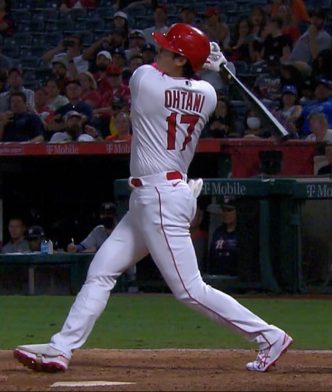
Ohtani gets his lucre and his wish

Shohei Ohtani

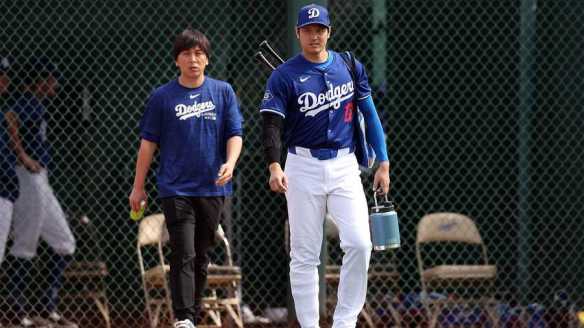
Shohei Ohtani signs with the Dodgers for a decade, $700 million, and the thing he wants most—better chances to win. Angel fans mourn the absolute waste of the game’s most transcendent talent.

It was almost to laugh. Within an hour of the news breaking and confirmed that Shohei Ohtani signed at last, and with the Dodgers, yet, there also came the news that some Angel fans began holding burnings of one or another kind of Ohtani merchandise. It was to laugh that you wouldn’t weep, of course.

Set aside what Ohtani signed for for the moment. Yes, it’s ten years and $700 million. It’s also no opt-out clauses in the deal. It’s also Ohtani himself deferring a considerable pile of that guaranteed money the better to enable the Dodgers to continue sustaining excellence via the farm and the market.

Now, consider the abject stupidity of the Angels and some of their fans. You want to burn Ohtani merch because, as a legitimate, lawful free agent, he signed elsewhere at all? Never mind with the beasts just up the freeway? Be my guest—and stand exposed as the fools you are.

The fools who’d rather turn Ohtani merch into burnt ashes than demand better of the team that let him walk with nothing of value in return—while going for broke elsewhere at the trade deadline only to unload two of the pieces they did acquire by way of the waiver wire at September’s beginning . . . just after Ohtani’s elbow took him off the mound for the season without sitting him down as a designated hitter.

The fools who’d rather have kept Ohtani bound to a team whose administration seems clueless about the point that you need a viable team around them to enable Ohtani and whatever might be left of future Hall of Famer Mike Trout to play for chances at championships. The point that one or two players do not a championship contender make, no matter how overendowed in ability and execution they’ve been.

You want to make Ohtani an example instead of holding Angels owner Arte Moreno and his trained seals in the front office accountable for thinking the box office is the thing and if you just so happen to win it’s mere gravy? Be my guest again. And stand exposed further.

For so long as he’s owned the Angels Moreno’s marketing background, the business in which he earned his fortune, has dominated what the Angels put on the field. Whether what they put on the field could play competent or cohesive baseball up and down the lineup seemed secondary to having what George Steinbrenner used to call “name guys who put fannies in the seats.”

It was bad enough that the Angels unearthed the transcendent Trout and saw him build a jaw-dropping Hall of Fame case in his first nine seasons before the injury bug bit into him in too much earnest over the past four. It was worse that Trout showed his loyalty to the team that discovered him and turned him loose on the field by signing a glandular extension only to have too many people wondering if he hadn’t lost his marble for it.

It was worse that Trout got to play with Ohtani, himself an injury bug victim for a couple of years following his Rookie of the Year season, and formed a tandem of transcendence (when Trout could play) that proved nothing more than a two-man supershow in the middle of a sad-sack sideshow.

“Ohtani has said he wanted to win,” writes The Athletic‘s Andy McCullough.

The Dodgers have won their division in ten of the past eleven seasons and tallied more than one hundred victories in five of the past six full seasons . . . [Ohtani] has been never part of a team with a front office capable of regularly rebuilding a pitching staff with excellent results, as Andrew Friedman has often done. And he has never played for an ownership consortium like Mark Walter’s Guggenheim group, who have been willing to invest in facilities, infrastructure and ancillary considerations.

That’s putting things politely. The hottest item at last season’s trade deadline was whether the Angels would wake up, wise up, and trade him for legitimate return value on the field and in the organisation at last. No chance.

Now it’s possible that Trout will return healthy, play like something close enough to the Trout who punched his Cooperstown ticket, stir up speculation on whether the Angels finally deal him to a contender with rich return to offer, and find himself still bound and gagged to an owner who’s willing to invest in his box office alone.

Quit the hemming and hawing over Ohtani’s deal raising an unconscionable ceiling for the free agents to follow him in the current market. Instead of bellowing over the big bad Dodgers handing him what amounts to a Delta Quadrant kingdom plus safe passage through the Cardassian Empire and ownership of Ferengi Enterprises, try bellowing over other owners’ too-entrenched refusal to invest and build in the major league product and the organisation behind it.

The Red Sox unloading Babe Ruth to the Yankees was nothing like this. Then, believe it or not, the Red Sox thought they were unloading a problem child to help relieve their owner’s financial stresses, not all of which was tied to his concurrent theatrical production operation. The Ruth sale helped temporarily.

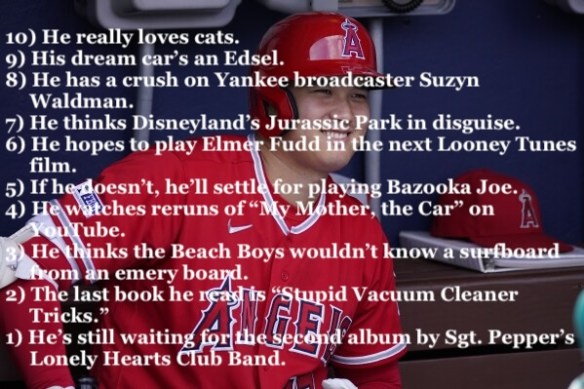
Ohtani, anything but a problem child, was allowed to walk into free agency eyes wide shut on the part of the Angels. It was perverse fun, too, watching the sports press get their proverbial panties into twists trying to figure out what was in Ohtani’s heart of hearts while he and his agent played things close enough to the vest. I couldn’t resist joining the fun for a moment, outlining a top ten list of what Ohtani was really thinking, feeling, wanting . . .

When Dodger manager Dave Roberts admitted the Dodgers talked to Ohtani and he’d have loved nothing more than to see Ohtani in Dodger silks, panties into twists turned nuclear, they thought Roberts’s honesty might have killed any deal in gestation. So much for that idea.

Too often with Trout injured Ohtani had to provide most of the Angels’ offense. Joining the Dodgers that burden is lifted. He can swing the bat comfortably and not believe every one of nine innings of baseball is on his shoulders. When he recovers from elbow surgery and takes the mound again in 2025, Ohtani has good reason to believe the Dodgers will have remodeled the starting rotation whose dissipation cost them this past postseason.

He didn’t have one millionth of a prayer of seeing that happen if he elected to re-sign with the Angels. Being a guy who makes baseball fun again is one thing. Coming home after yet another losing or short-of-the-postseason season proved something else.

So go ahead, some of you Angel fans. Burn his jerseys, blow up his bobbleheads, use his photos and posters for fish wrap if you must. You’re going to look almost as foolish for it as your team’s owner has looked for having resources unfettered and brains inoperable the entire time Ohtani wore Angels red. Almost.

Angel fans who don’t have coconut juice for brains began flocking to Angel Stadium to mourn within two hours of Ohtani himself scooping the world by announcing his Dodgers deal on Instagram. A crane already began stripping Ohtani’s mural from the side of the stadium. Fans slipped into the stadium’s team store to snap up Ohtani merch before it would disappear forever.

They came to mourn.

And one fan, Sebastian Romero, lifted a page from the books of long-suffering Athletics fans whose owner has stripped the team of credibility only to wrest approval for hijacking them to Las Vegas. Outside the stadium, Romero held up a sign before the Ohtani mural behind him was stripped, as photographed by Athletic writer Sam Blum:

As Blum noted so mournfully, Ohtani’s past three seasons have been three of the greatest the game has ever seen from a single player, on both sides of the ball, yet, with the Angels going 77-85, 73-89 and 73-89. What a waste of Ohtani hitting 124 home runs and striking out 542 batters worth two unanimous Most Valuable Player awards over that span.

A young man of few words for the press, Ohtani is on record as saying that, much as he loved the Angels, “More than that, I want to win. That’s the biggest thing for me. So, I’ll leave it at that.” Nobody can say the Angels weren’t warned. Nobody can say the Dodgers lack the resources or the brains to make that wish come true, either.

Now, I wonder. When Ohtani meets Clayton Kershaw as a Dodger for the first time, will he begin the conversation by saying, “About that All-Star Game pickoff, buddy . . . ?”

The Shoh is on hiatus

Shohei Ohtani, Mike Trout

Ohtani (left) is done for the season, an oblique injury added to his elbow’s now-reinforced UCL tear. He can walk in free agency, but Trout (right) may be entertaining trade thoughts a lot more deeply now . . .

George F. Will once wrote (in Men at Work: The Craft of Baseball) that A. Bartlett Giamatti was to baseball’s commissionership what Sandy Koufax was to the pitcher’s mound, having “the greatest ratio of excellence to longevity.” The Athletic‘s Marc Carig wrote last Satuday of Shohei Ohtani, “singular excellence is no match for collective mediocrity.”

Last Friday, Ohtani’s Angel Stadium locker was empty, and a large duffel containing his equipment and other belongings sat in front of it, after he was placed in the injured list at last—with an oblique strain. “No ceremonial sendoff,” Carig wrote. “No expressions of gratitude. Just a tender oblique and a good old-fashioned Gen Z ghosting. How appropriate. Now the credits roll on a baseball travesty.”

Ohtani has also undergone surgery on his pitching elbow at last. His surgeon, Dr. Neal ElAttrache, the same surgeon who performed Ohtani’s prior Tommy John surgery—called the new procedure “reinforcement” of the torn ulnar collateral ligament, not full Tommy John surgery. It means Ohtani won’t pitch again until 2025, but he will suit up as a DH in 2024. For whom, only time and the off-season free agency market to be will tell.

“Thank you very much for everyone’s prayers and kind words,” Ohtani said on Instagram following the Tuesday procedure. “It was very unfortunate that I couldn’t finish out the year on the field, but I will be rooting on the boys until the end. I will work as hard as I can and do my best to come back on the diamond stronger than ever.”

Note that he didn’t say for whom he expects to come back after signing a new deal this winter.

A baseball travesty? The Angels had the two greatest players of their time together in their fatigues for six years, and they couldn’t support the two with a competent, competitive supporting cast who could pick it up when one or both was injured. It was as if the 1962-66 Dodgers had swapped in the ’62-’66 Mets for everyone except Hall of Famers Koufax and Don Drysdale.

Carig called it “sabotage.” You could think of far worse applications. “They did this through general mismanagement and their own brand of incompetence,” Carig continued. “Those sins endured despite their churn of managers and front-office regimes, only further reinforcing that the full credit for this failure falls at the feet of the constant throughout it all: the owner, Arte Moreno.”

It may be wasting breath and writing space to recycle that Moreno brought a marketer’s mentality to a baseball team, aiming once and forever at what George Steinbrenner used to call “name guys who put fannies in the seats,” without stopping first to ponder whether they’d equal a cohering team on the field and at the plate and whether his true baseball people had other such cohering parts in mind. And, whether it was always good for a player’s health.

Baseball people who did stop to ponder such things didn’t last long under Moreno’s command. Whether by way of the owner’s caprices or by way of their own mistakes turned into impossible-to-ignore disaster, Moreno’s Angels have been the Steinbrenner Yankees of the 1980s as you might have imagined them if The Boss hadn’t been so shamelessly public a nuisance.

Think about this: It took an oblique strain almost four weeks later for the Angels to do what should have been done when Ohtani’s ulnar collateral ligmanent tear took him off the mound but not out of the batter’s box. The adults in the room should have overruled Ohtani’s understandable desire to continue at least with his formidable bat, disabled him entirely, and placed his health at top priority.

You can only imagine the look when last Friday came with Ohtani’s packed duffel in front of his locker. Don’t be shocked at it. If he can’t play the rest of the season, he can come to the park in moral support without having to unpack it or bring it from home.

Someone had to find the adults in the Angel room in the first place. Apparently, there were none to be found. Whether draining the farm at the trade deadline for one more run at it that proved impossible, whether turning right around and waiving most of what they drained the farm for, whether managing the health of their two supermarquee presences, the Angels room remains bereft of adults.

Oft-injured third baseman Anthony Rendon, who’s had little but injury trouble since signing big with the Angels as a free agent, developed a habit of discussing his injuries with a wary sarcasm, until he finally cut the crap and said the shin injury incurred on the Fourth of July wasn’t the mere bone bruise the Angels said it was but, rather, a full-on tibia fracture—and that he only learned it was a fracture in mid-August.

Now, Rendon was asked whether he was actually considering retirement from the game. “I’ve been contemplating it for the last ten years,” he said. If he actually does it, it would give the Angels something other teams would love but might raise fresh alarms in Anaheim: financial flexibility. Just what they need, more room for fannies-in-the-seats guys assembled with no more rhyme, reason, or reality.

Mike Trout, the player of the decade of the 2010s and still formidable when healthy, has been injury riddled the past few seasons. He may not be jeopardising his Hall of Fame resume, but something is badly amiss when he feels compelled to return perhaps a little sooner than he should return, then ends up back in injury drydock yet again after one game.

Once upon a time it was impossible to think of Trout anywhere but Anaheim. But trade speculation and fantasies around him have sprung up now more than in the recent past. Trout himself has dropped hints that he’s exhausted of the team doing either too little or not enough (take your pick) to build a genuinely, sustainingly competitive team around himself and Ohtani.

That’s not what he signed up for when he signed that blockbuster ten-year, $370 million plus extension a year ahead of what would have been his first free agency. That’s not what he signed up for when he showed the world he wasn’t that anxious then to leave the team on which he fashioned and burnished a jaw-dropping Hall of Fame case.

It was Trout, too, who welcomed Ohtani to the Angels with open arms and personal charm, then had to find too many ways to grin and bear it as the pair—when healthy—performed transcendence while surrounded by unimportance. If Trout now questions the Angels’ commitment to competitiveness and their regard for the health of those in their fatigues, pondering himself as well as Ohtani, only fools would blame him.

Most major league teams would kill to have even one such king of kings on their roster. Two of this year’s affirmed division winners (the Braves, the Dodgers) have at least one each. (Ronald Acuna, Jr., Braves; Mookie Betts, Dodgers.) The Angels had the two most singular such kings of kings and blew it higher and wider than the Hiroshima mushroom cloud.

“What remains stunning in all of this,” Carig wrote, “is the level of waste. The Angels have succeeded like nobody else in doing so little with so much.”

Sound organizations create a plan and then follow it. These Angels, not so much. A throughline can be drawn from Albert Pujols to Anthony Rendon, with Ohtani and Trout’s extension in between. What’s clear is that all of these big-ticket transactions weren’t part of some grand plan. Rather, they were the product of a billionaire collecting baubles, just faces to slap on a billboard.

Ohtani’s free agency is still liable to become a bidding war of stakes once thought unfathomable. With or without his recovery time limiting him to a DH role, Ohtani’s going to have suitors unwilling to surrender until he does. Which one will convince him they know what they’re doing to fashion truly competitive teams around him? We’ll know soon enough.

But considering that baseball medicine can still be tried by jury for malpractise, whomever plans to out-romance the Angels for Ohtani and seduce them into a deal for Trout had better come with adults in the room to manage them and their health prudently. There’s no point telling the billionaire with his baubles and billboards to grow up otherwise.

Some of us tried to warn you

Shohei Ohtani

Torn UCL. Possible Tommy John surgery. Baseball’s unicorn is only human, after all. What will be Ohtani’s most sensible future?

I was thisclose to dining on a full crow dinner and saying I was wrong two years ago. About what? About the sustained viability of Shohei Ohtani as a two-way player, an above-average pitcher and above-average hitter.

That was then: the New York Post‘s Joel Sherman and MLB Network’s Brian Kenny argued loud enough over Shohei Ohtani’s likely life as a two-way player who was above average in both directions. Kenny said it was time to think of keeping Ohtani in one way (as a hitter) and Sherman went apoplectic.

“Why would you stop him from doing one or the other?” Sherman all but demanded. “[Because] one could damage the other,” answered Kenny, the author of Ahead of the Curve: Inside the Baseball Revolution.

“So, you would like one of the fifteen to twenty best starting pitchers in baseball to stop starting because you’re worried about something that could happen?” Sherman rejoined, perhaps bypassing for the moment that Ohtani had already had Tommy John surgery and missed all of 2019 on the mound—and missed the final half of September that year as a designated hitter after surgery on his bipartate patella.

This is now: what could happen has happened. What began with his pitching arm “bothering” him awhile since the All-Star break has turned into a second ulnar collateral ligament tear and a very possible second Tommy John surgery to come. Waiter, cancel that crow dinner. Just bring me a bourbon and Coke Zero, light ice, and a reuben sandwich.

And forget about what Wednesday night’s devastating revelation means for Ohtani’s open market. Forget the babillion dollars he was likely to command in the off-season to come. Maybe that was the season’s biggest story, especially after the Angels rolled a pair of hollowed-out dice and declined to trade him for a rebuilding beginning at this year’s deadline. Now, that story’s on ice. For how long, who knows?

I’ve said it before. The split second you hear about a pitcher dealing with “arm fatigue,” you can bet your mortgage on it being something a lot more serious. Ohtani dealt with it in the preceding few weeks. “[I]t’s possibly fair to second guess whether the Angels should have proactively reined Ohtani in more at times,” writes The Athletic‘s Sam Blum.

“Possibly fair?” People who first-guessed whether the Angels should have reined Ohtani in proactively at times had their heads handed to them. Sherman tried to do that to Kenny. I took a few in the chops myself for my own similar suggestion.

Go ahead, say the “arm fatigue” didn’t stop Ohtani from throwing his first major league shutout at the Tigers on 27 July.  But then you must acknowledge that the Angels pushed it for three straight years. In one way you couldn’t blame them. They had so little else to offer, and had already so wasted the prime of future Hall of Famer Mike Trout, the no-questions-asked best position player of the 2010s, that they couldn’t resist pushing their and baseball’s greatest unicorn to the most outer of his outer limits.

He won the American League’s Most Valuable Player award in 2021. He was leading the league in home runs as he went down and the talk kept up that he might be able to bust Aaron Judge’s single-season AL home run record just a year after Judge set it in the first place. On the mound, he kept up his 11.4 strikeouts-per-nine rate and his 3.04 strikeout-to-walk rate.

Let’s not forget, too, that the only one having more fun watching Ohtani has been Ohtani himself having more fun doing it than we’ve had watching it. You’ve heard of a smile that could get a city through a power blackout? Ohtani’s is a smile that could get half the country through one. Even when Clayton Kershaw picked him off almost by mistake in last year’s All-Star Game, Ohtani’s smile out-shone the lights in Dodger Stadium when both he and Kershaw laughed their fool heads off.

Shohei Ohtani

He found love on a two-way street. Will he lose it on the Tommy John highway?

Was it that easy to be blinded by the light? Even allowing that Angels owner Arte Moreno has long been far more concerned with putting fannies in the Angel Stadium seats than putting sensibly-built winning baseball teams on the field in front of those seats, was it that simple to be blinded by the Ohtani light?

All those delicious comparisons of Ohtani to Babe Ruth tended to omit two key elements: 1) Ruth was never a full-time two-way player except in one season (1919); Ohtani’s done it almost his entire major league life. 2) When Ruth was a fuller-time pitcher, it was in an era where hard-throwing pitchers were outliers and Ruth wasn’t exactly the type to try throwing the proverbial lamb chop past the proverbial wolf.

There was always the concurrent risk that Ohtani could be injured at the plate or on the bases, too. Once upon a time, he fouled one off his foot that rebounded to hit his surgically-repaired left knee—on the leg that’s his landing leg when he pitches. Any time Ohtani incurred a bang, a bump, or a cramp on the mound or at the plate, Anaheim, America, and the world lit up.

This isn’t just a bang, a bump, or a cramp. Not even if Ohtani did complain about a few finger cramps in recent days. This is a young man’s career and what remains of his team’s credibility on the line now. This is also a scrambler for the rest of the Show. Teams calculating just how much they could afford to seduce Ohtani this winter and start making their 2024 pennant race plans accordingly now must remake/remodel those calculations.

Especially if Ohtani must undergo his second Tommy John surgery. If so, he won’t be seen on the mound all next year as well as the rest of this season. If the Angels have any brain cells left to rub together, they’ll shut him down fully the rest of this year. He can’t afford to do further damage with even one hard swing at the plate or one hard slide on the bases.

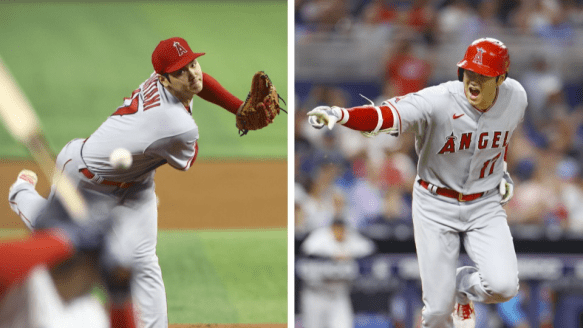
I’m not going to deny it. It’s been mad fun watching Ohtani the unicorn doing things even the Babe himself didn’t do, or at least didn’t do quite as well as Ohtani has done them. Until Wednesday night, Ohtani threatened to join Ruth as the only man to set a single-season home run record while pitching full time as well. Ruth did that with the 1919 Red Sox—with 29 home runs. Nobody was really betting against Ohtani hitting maybe 63 this year.

Maybe the most surreal of his uncornery this year was Ohtani receiving four intentional walks as a pitcher. Ruth only ever had that happen twice in a season. (1919.) Schoolboy Row (1947) and Chad Kimsey (1931) are the only other pitchers to get four free passes at the plate in a season. And Ohtani was the first pitcher to get even one free pass at the plate since Hall of Famer Jim Kaat (1970).

On the mound, Ohtani was leading the entire Show with a 5.8 hits-per-nine average and the American League with a 143 ERA+. At the plate, he was leading the entire Show with those 44 bombs and a 183 OPS+, a 1.069 OPS, and a .664 slugging percentage. According to my Real Batting Average (RBA) metric (total bases + walks + intentional walks + sacrifice flies + hit by pitches, divided by total plate appearance), Ohtani this year is batting Boeing: .737. That, folks, is Ted Williams territory: the Splinter’s lifetime RBA is .740.

The problem with all that kind of mad fun is that it takes a toll. Either we didn’t really stop to think about it; or, we didn’t give two tinkers’ damns while watching it, dropping our jaws over it, imagining the language on his eventual Hall of Fame plaque over it, you name it. Joe and Jane Fan forget baseball players are only human and not machinery. They thought Ohtani was Superman with an immunity to kryptonite.

The money? Ohtani’s already earned enough in the Show to have no money worries the rest of his life. (When this season ends, it’ll be $39.6 million.) He’s never been about the money, anyway. What he’s been about was the pleasure in overachievement. One way or the other, he’ll get his money when he recovers, even if it may not be as ionospheric as thought before Wednesday. Even if he has to begin with a one-year, Sho-us deal to start over.

But if he has to undergo his second Tommy John surgery, would Ohtani accept a life as a one-way player that might mean a longer baseball career than he might have if he continues his two-way thrust? It may take more time to know that answer than it would take for him to recuperate from the second TJ.

On last year’s Opening Day, I got to watch up front with my son in Angel Stadium when Ohtani launched the season by pitching four-and-two-thirds, one-run, four-hit, one-walk, nine-strikeout (including Astros face José Altuve thrice) ball. I’ve seen enough otherwise on the screen (am I really that old that I almost wrote “the tube?”) to know this guy was a unicorn even among unicorns.

Those of us who feared disaster in the offing should take no pleasure in what’s happened now. No matter how hard we took it up the tailpipes when we warned about it a few years ago. Now we ask just how much of his baseball future Ohtani may have sacrificed on behalf of pitching weekly, batting nightly, for a team whose maladministration didn’t deserve him any more than they deserved Mike Trout’s prime.

Who cares now whether Ohtani will throw a no-hitter and hit four home runs in the same game eventually? He’s already performed a nasty sacrifice on behalf of thrilling the living you-know-what out of us and sustaining what little credibility his team has left.

Shut him down fully the rest of this season. Don’t even let him swing the bat. Let the still-young man (29) regain his health properly. For everything he’s done on behalf of a franchise that doesn’t deserve him, if not a game whose administration doesn’t, Ohtani should get every consideration possible now.

Moreno won’t trade Ohtani? Let it be on his head

Shohei Ohtani

Shohei Ohtani could bring back a trade deadline haul that might push the Angels (and their trading partner, depending) into the postseason at last. But it would serve their owner right for failing to deal him and then letting him walk as a free agent bringing back . . . nothing.

Unless there is something festering in the deep background that nobody can expose, I have a contrarian thought for everyone insisting Angels owner Arte Moreno absolutely must trade Shohei Ohtani. I ask only that you save your ammunition until you read whole.

If Moreno’s that insistent upon keeping Ohtani until that very day when he becomes a free agent for the first time after the season ends, let him.

If Moreno insists upon remaining the kind of owner whose sense of marketing is more acute to the tenth power than his sense of baseball and of his team’s true competitiveness, let him.

If Moreno is that bent upon receiving nothing in return for Ohtani by letting him walk this coming winter, rather than receive the kind of value whose terms his baseball people can all but dictate, considering the prize Ohtani is, let him.

It would serve him right, even if it might serve long-enough-suffering Angel fans not so right.

Remember, this is the owner who was “exploring options” to sell the Angels almost a year ago. When that news broke, the sigh of relief from Angel fans could be felt from the Newport Beach coast to the farthest-planted lighthouse in Maine.

Moreno even let it slip that he had a pair of offers that would have eclipsed what Steve Cohen paid to buy the Mets. The problem was, Moreno let that slip this past March, when he also announced he simply couldn’t bear to part with the Angels just yet. Not while there was (ahem) “unfinished business” to tend.

“[We] feel we can make a positive impact on the future of the team and the fan experience,” he said in a formal statement when announcing his sale plans were done for who knew how long. “This offseason we committed to a franchise record player payroll and still want to accomplish our goal of bringing a World Series championship back to our fans. We are excited about this next chapter of Angels baseball.”

As of this morning, the Angels had gone from a season-opening 18-14 to a dead-even 48-48. The last time they had a four-or-more-games-over-.500 standing was when they were nine games over following a two-out-of-three winning stand against the Royals in mid-June. They’ve been 7-15 since.

The culprits have been the usual ones for this team—inconsistent pitching by one and all not named Ohtani; inconsistent hitting by one and all not named Ohtani (or Mike Trout); and, a near-consistent parade of patients for the injured list. Somehow, the Angels are four and a half games back in the American League wild card race, and nine out of first in the AL West.

That’s close enough for a major trade deadline deal to maybe make a difference, for the wild card hunt if not the division hunt. Right now, the biggest deal of deadline season could be Ohtani for whatever prime enough talent he’ll bring back, even if the acquiring team knows he might be just a rental for the rest of the way. (Even if that means a division, a pennant, maybe even a World Series ring.)

For a contending team loaded in surplus, that rental could still mean a deep postseason dive. For the Angels, it might mean surviving into the postseason, even through the back door, but just enough to give Ohtani (and Trout) a taste of postseason action neither has been granted to see since Ohtani became an Angel in the first place.

No, Ohtani won’t return a whole qualified starting rotation, a whole bullpen full of more than bull, or an entire additional lineup of Ohtanis (or Trouts). But he would return pieces solid enough to keep the Angels in this race and maybe, just maybe, a race or two to come.

“Ohtani is a once in a lifetime player, and moving off of him is akin to trading Babe Ruth,” writes Deadspin‘s Sean Beckwith. “You hold onto that kind of talent for as long as possible, and hope for the best.” And that last part, Beckwith knows, is the most problematic part:

Considering “hoping for the best” is the Angels’ entire organizational strategy — it’s why they’re in this current predicament — they will inevitably be crippled by indecision, or disillusioned by the “LA” on the hat, and stand semi-firm that Ohtani will stand by them.

This is, of course, an asinine strategy, and antithetical to the thinking of front offices, and sports media. The pleas for trade destination slideshows are being heeded everywhere you click, and all the big market teams are tallying their assets to see how much they could offer in a trade, because [general manager Perry] Minasian said he’s not going to trade Ohtani if they’re still in contention.

The thing is, contention is subjective, and four-and-a-half games back of the final wild card spot is more than enough for the Angels to grasp onto the belief that Shohei Ohtani will stay regardless of no tangible reason to do so.

It’s more than enough, too, to prevent Moreno—an owner who thought (erroneously) that his life’s success in marketing qualified him as a baseball man, when it only meant he could put (the old George Steinbrenner creed) “name guys who put fannies in the seats” on the field first and worry about rhyme, reason, cohesion, and performance (an awful lot of which his own capriciousness obstructed) second—from doing the sensible thing. Or, from letting Minasian do the sensible thing.

So let him cling to Ohtani until the two-way unicorn’s Angels deal expires this winter. Let him get less than nothing in return for the unicorn if that’s the way he wants it. Ohtani has been at least as sensational a baseball talent as Mike Trout was before the injuries became a near-annual thing for him. He (and Trout) deserve better than to be kept prisoners to merely hoping for the best.

Let Moreno explain why clinging to his unicorn to the very last was more important than letting his unicorn bring back what just might have pushed the Angels into their first postseason since they were swept out of a division series by the Royals, in the first of Mike Trout’s three Most Valuable Player Award seasons. Nine years ago, if you’re scoring at home.

That explanation should prove the funniest and saddest monologue since the Marvelous Mrs. Maisel first wandered onto the stage of a fleabag nightclub to schpritz about her husband dumping her for his secretary. Mrs. Maisel got laughs and a brilliant career out of it. It would serve Moreno right to get nothing back for the unicorn to whom he sold an illusion.

The All-Scar Game

Austin Riley, Pete Alonso

Austin Riley’s (Braves, left) kneeling throw to kneeling scooper Pete Alonso (Mets, right) ended the bottom of the All-Star Game eighth with a double play . . . (MLB.com photo) . . .

The best thing about Tuesday night’s All-Star Game? Easy. That snappy eighth inning-ending double play into which Athletics outfielder Brent Rooker hit. He shot one up the third base line to Braves third baseman Austin Riley, who picked and threw on one knee across to Mets first baseman Pete Alonso, who scooped on one knee to nail two outs for the price of one, doubling Blue Jays second baseman Whit Merrifield up.

That play preserved what proved the National League’s 3-2 win over the American League in Seattle’s T-Mobile Park. They got the second and third runs in the top of that eighth, when Elias Díaz (Rockies) pinch hit for Jorge Soler (Marlins) with Nick Castellanos (Phillies) aboard after a nine-pitch leadoff walk and nobody out. Díaz sent Orioles righthander Félix Bautista’s 2-2 splitter off a bullpen sidewall, then off an overhang into the left field seats.

It meant the first NL All-Star win since 2012. It also meant Díaz becoming the Rockies’s first-ever All-Star Game Most Valuable Player award winner. Otherwise? It meant almost nothing. Because the worst thing about this year’s All-Scar Game was . . . just about everything else.

Mr. Blackwell, call your office. All-Star Game specific threads have been part of it for long enough. They began ugly and devolved to further states of revulsivity. But Tuesday night took the Ignoble Prize for Extinguished Haberdashery. The only uniforms uglier than this year’s All-Star silks are those hideous City Connect uniforms worn now and then during regular season games. Both should be done away with. Post haste. Let the All-Stars wear their regular team uniforms once again.

Who are those guys? They sort of anticipated long ovations for the hometown Mariners’ All-Star representatives. But they didn’t anticipate they’d be longer than usual. To the point where two Rays All-Stars—shortstop Wander Franco, pitcher Shane McLanahan—weren’t even introduced, when they poured in from center field among all other All-Stars. (Rays third baseman Yandy Díaz, an All-Star starter, did get introduced properly. But still.)

Maybe the two Rays jumped the gun trotting in while the ovation continued, but they should have been announced regardless.

While I’m at it, what was with that nonsense about bringing the All-Stars in from center field instead of having them come out of the dugouts to line up on the opposite base lines? Some traditions do deserve preservation. Not all, but some. What’s next—running the World Series combatants’ members in from the bullpens? (Oops! Don’t give the bastards any more bright ideas!)

Down with the mikes! In-game miking of players has always been ridiculous. But on Tuesday night it went from ridiculous to revolting. When Rangers pitcher Nathan Eovaldi took the mound miked up, the poor guy got into trouble on the mound almost at once. He had to pitch his way out of a two-on, one-out jam in the second inning. He sounded about as thrilled to talk while working his escape act as a schoolboy ordered to explain why he put a girl’s phone number on the boys’ room wall.

What’s the meaning of this? We’ve got regular-season interleague play all year long now. The National League All-Stars broke a ten-season losing streak? Forgive me if hold my applause. So long as the entire season is full of interleague play, the All-Star Game means nothing. Wasn’t it bad enough during those years when the outcome of the All-Star Game determined home field advantage for the World Series?

The road to making the All-Star Game mean something once more is eliminating regular-season interleague play altogether.

Elias Díaz

. . . saving the lead (and, ultimately, the game) Elias Díaz gave the NL with his two-run homer in the top of the eighth. (And, yes, the All-Star uniforms get uglier every year. Enough!) (AP Photo.)

Tamper bay. Sure it was cute to hear the T-Mobile Park crowd chanting for Angels unicorn star Shohei Ohtani to come to Seattle as a free agent. The problem is, he isn’t a free agent yet. He still has a second half to play for the Angels. I’ll guarantee you that if any team decided to break into a “Come to us!” chant toward Ohtani, they’d be hauled before baseball’s government and disciplined for tampering.

I get practically every fan base in baseball wanting Ohtani in their teams’ fatigues starting next year. If they don’t, they should be questioned by grand juries. But they really should have held their tongues on that one no matter how deeply you think the All-Scar Game has been reduced to farce. Lucky for them the commissioner can’t fine the Mariners for their fans’ tamper chants. (Not unless someone can prove the Mariners put their fans up to it, anyway.)

Crash cart alert. Cardiac Craig Kimbrel (Phillies) was sent out to pitch the ninth. With a one-run lead. The National League should have put the crash carts on double red alert, entrusting a one-run lead to the guy whose six 2018 postseason saves with a 5.90 ERA/6.74 fielding-independent pitching still felt like defeats. The guy who has a lifetime 4.13 ERA/4.84 FIP in postseason play.

Kimbrel got the first two outs (a fly to right, a strikeout), then issued back-to-back walks (six and seven pitches off an even count and a 1-2 count, respectively) before he finally struck Jose Ramirez (Guardians) out—after opening 0-2 but lapsing to 2-2—to end the game. Making the ninth that kind of interesting should not be what the Phillies have to look forward to if they reach the coming postseason.

Sales pitch. How bad is the sorry state of the Athletics and their ten-thumbed owner John Fisher’s shameless moves while trying and failing to extort Oakland but discovering Nevada politicians have cactus juice for brains? It’s this bad—when the T-Mobile crowd wasn’t chanting for Ohtani to cast his free agency eyes upon Seattle, they were chanting “Sell the team!” when Rooker whacked a ground rule double in the fifth.

Can you think of any other All-Star ballpark crowd chanting against another team’s owner in the past? Not even George Steinbrenner’s worst 1980-91 antics inspired that. That’s more on Fisher, of course, but it’s still sad to think that a team reduced to cinder and ashes with malice aforethought captured an All-Star Game crowd’s attention almost equal to the attention they might have paid the game itself.