
“Met fans who remember me ask, ‘Oh, Bill Denehy. You’re the guy who was traded for Gil Hodges, aren’t you?’ ‘I am,’ I tell them with great pride.”—Bill Denehy.
With eleven games left in the 1967 season, Mets manager Wes Westrum, who’d succeeded Casey Stengel, resigned. Third base coach Salty Parker took the bridge to finish the season, but the Mets had a permanent candidate in mind.
They wanted Gil Hodges, the much-loved Brooklyn Dodgers icon, who finished his playing career as a knee-injured Original Met before becoming the manager of the expansion Washington Senators. But it would cost the Mets to get Hodges, since he’d signed a contract extension that would take him through the end of 1968.
So the Mets traded righthanded pitcher Bill Denehy—who shared a 1967 Topps rookie baseball card with future Hall of Famer Tom Seaver—to the Senators. If you ask Denehy today whether any Met fans who remember him ever suggested he could be called the man who really made the 1969 Miracle Mets possible, he says no . . . while laughing heartily.
Then, he tells the backstory, which begins with his having left an impression on the parent Senators when he pitched well against their minor league teams while rising through the Mets’ system. To get the Hodges deal done required a little Yankee panky—specifically, former 1930s teammates Johnny Murphy (relief pitcher) and George Selkirk (outfielder), now major league general managers.
“The Senators were trying to extract as much as they could for giving up Hodges,” Denehy says by telephone from his Florida home.
They got $100,000 in cash and they wanted a player. Johnny Murphy was then the general manager of the Mets, and George Selkirk was the general manager of the Senators, but they didn’t really like each other. Selkirk was pushing for the additional player. Mr. Murphy told me they offered three additional players to choose instead of me, but Selkirk insisted it be me. What the Mets didn’t tell them was that I hurt my arm in May and was sent to the minor leagues and got a couple of cortisone shots.
The injury in question occurred when Denehy threw a hard slider to Hall of Famer Willie Mays in his fourth major league start. “It felt like someone stuck a knife in my shoulder,” he once said. Back in the minors in Florida during ’67, he underwent a procedure to have a dye shot into his arm and shoulder and it showed the torn muscle. The Mets’ then-team physician, Dr. Peter LaMotte, didn’t affirm that diagnosis; the Mets also failed to pass the information to the Senators.
Going to the Senators for Hodges may have been the least among strange, sad deals Denehy has seen, handed himself, and been handed in the decades since.
Bill Denehy today is legally blind. It began when he awoke one morning in January 2005 unable to see through his right eye, thanks to what proved a torn retina. Caught frozen without medical insurance, since he was two weeks from beginning a new job after leaving his incumbent job, Denehy needed help from a church group to undergo the surgery at a University of Florida eye facility.
Surgery performed by the same doctor who operated on boxing legend Sugar Ray Leonard’s torn retina proved unsuccessful. “He said my retina tear was worse than Sugar Ray’s was,” Denehy says, adding that he’s since incurred two more retina holes, a macular hole, and required a stent for his left eye.
Friendly and sounding far younger than his 73 years, Denehy believes up to 57 cortisone shots in 26 months that he was given as a young pitcher caused his eventual visual loss. As he wrote (with Peter Golenbock) in his memoir, Rage: The Legend of Baseball Bill Denehy (Central Recovery Press; 280p, $16.95), “I didn’t know any better.”
This was before the dangers of cortisone were made public. I knew Sandy Koufax was taking them for his arm, and Sandy was my hero, so I figured what was good for Sandy was good for me. I found out years later that nobody should take more than ten cortisone shots in a lifetime. I was later told that if you take more than ten shots in a lifetime, your corneas will go weak and you risk going blind. I wish someone had said something back then.
“I have my hand out in front of me a foot, and I can’t see my fingers,” Denehy says on the phone. “If I bring them in, if I stuck my thumb on my nose, and then just turn my hand where my palm is facing me, I can see my fingers there.
“But I can’t read or write,” he continues. “I’ve got the television on mute right now, and all I see is whiteness and black things moving. I don’t know whether it’s a person or it’s a game or whatever on there. I can’t go to the computer. I can’t read any type of thing. Telephone numbers are difficult for me. I used to have five by seven cards with big numbers written down for telephone numbers, but that’s gone by the wayside now. I’m in the final stages now of what we call in blindness—darkness.”
Administered to excess, cortisone is also linked to glaucoma, the disease that put paid to Hall of Famer Kirby Puckett’s playing career in 1996, ten years before his premature death from a stroke. Puckett isn’t known to have taken cortisone often if at all during his twelve-season career, but it was revealed that glaucoma ran in his family.

Short-lived Senator Denehy, following The Trade.
Does Denehy think baseball’s medical personnel during his career simply didn’t know the full extent of cortisone’s potential dangers? Or does he think they saw players then as mere commodities to hustle back to the field posthaste, regardless of actual or long-term health? “Great question,” he replies. “I think it was a little of both.”
He once joined a 2004 legal action involving the cortisone issue, filed by former White Sox catcher Mike Colbern, who died in March. “Baseball gave us illegal drugs and too many cortisone shots,” Colbern told Douglas J. Gladstone for A Bitter Cup of Coffee, “but never kept medical records in order to keep us playing.”
Denehy is one of 634 still-living, short-career former major leaguers who were frozen out when a 1980 agreement between baseball government and the Major League Players Association re-aligned the game’s pension plan to vest health benefits after one day’s major league service time and a retirement allowance after 43 days’ major league time. The deal didn’t include players whose careers occurred between 1949 and 1980.
Colbern, one-time Met shortstop Al Moran, and former Houston second baseman Ernie Fazio (who died in 2017), the first signing by the Astros’ franchise (born as the Colt .45s), led a 2003 class action suit against baseball, after a 1997 agreement to provide $10,000 pensions to select former Negro Leagues players who saw some Show time but still didn’t qualify for the 1980 pension re-alignment.
The suit accused baseball of discrimination (Colbern stressed the players didn’t want to deny the Negro Leaguers) and also charged battery and negligence against baseball for allowing team doctors and trainers to administer multiple cortisone shots without informing players of cortisone’s risks. Several hundred players including Denehy joined the suit.
It lost on appeal to the 9th U.S. Circuit Court of Appeals in 2006. Baseball government, ESPN said at the time, “argued that the former players were essentially looking for a handout they didn’t deserve.”
Denehy still hopes to help change that for players such as himself. Players such as David Clyde, the mishandled Rangers pitching phenom of the 1970s. And, Jim Qualls, the Cub center fielder remembered if at all for busting Seaver’s bid for a perfect game in the ninth inning in 1969. And, Carmen Fanzone, a third baseman frozen behind Hall of Famer Ron Santo with the Cubs but who made a second career as an in-demand jazz trumpeter.
In 2011, then-commissioner Bud Selig and then-Players Association executive director Michael Weiner announced a re-alignment of the 1980 pension re-alignment: Players frozen out of the original re-alignment would get $625 for every 43 days major league time, with the 43 days representing a quarter and a limit of sixteen quarters, good for $10,000 before taxes. The bad news: If a player dies before collecting the last of those payments, the remaining payments can’t be passed on to their widows and children.
“My feeling is that we should get a pension that is indicative of the service time in the big leagues,” says Denehy of the pension re-alignment, for himself and for those among his 634 fellow former players frozen out of the deal. “We earned the time, okay? When they dropped it down to 43 days active service time, every one of us prior to 1980 that had more than 43 days should have gotten a pension.”
One possible reason for the pre-1980 players’ freeze-out? Stressing that it was strictly hearsay, Denehy spoke of a sense that many if not most of the players in question were merely September call-ups, with baseball and the players’ union believing they “didn’t really earn their way onto a major league roster.”
That might have been true for a few of the players but certainly not all of them. Denehy pitched in three major league seasons, for the Mets, the Senators, and the Tigers, and he made each of those teams directly out of spring training.
When he reported to the 1967 Mets’ spring camp, Denehy didn’t figure in their pitching plans until the day Jack Fisher, the one-time Orioles “Baby Birds” rotation member, had to miss a spring start when his little daughter was injured in a fall. Denehy got the start instead, zipping through three innings and posting a strong enough spring to go north with the Mets to open the season.
He got his first major league start on 16 April 1967, against the Phillies, striking out eight including the first Show batter he faced, Johnny Briggs. The eight punchouts matched Seaver for a Mets rookie record that stood until Matt Harvey broke it in 2012. Other than six walks against those eight strikeouts, Denehy’s only other blemish in the game came when Dick Allen blasted a two-run homer in the bottom of the fifth.
“That wasn’t a home run,” Denehy chuckles. “That was a moon drive.” The rising liner sailed until hitting a Coca-Cola sign atop Connie Mack Stadium’s second deck. Without the sign, Denehy says, “that ball would have landed in Delaware.”
Three starts later, facing Hall of Famer Juan Marichal and the Giants, Denehy threw the fateful slider to Mays. The knife in the shoulder the pain resembled would prove nothing compared to the one the quick-tempered, admittedly self-destructive, injury-plagued Denehy would stick into himself a few hundred times over.
The physical pain from his baseball injuries prodded him to more serious drinking plus marijuana and cocaine. Out of baseball, he tried real estate, insurance, and radio broadcasting, before becoming a pitching coach in the Red Sox system. (His charges included the young Roger Clemens.) By 1987, Denehy’s marriage collapsed, unable to bear the weight of his addictions and his furies any longer.
He was the University of Hartford’s baseball coach from 1984-1987. (One of his players was future Hall of Famer Jeff Bagwell.) He rebuilt the team into a potential powerhouse before a bench-clearing brawl with the University of Connecticut brought out the worst of the inner clash between Denehy’s passion to win and his fear of failure, the clash that helped ruin him.
By his own admission a runaway train, Denehy remarked out of frustration after the brawl that he hoped a particular UConn assistant coach got car bombed—he swears he was trying to say he hoped the coach’s car would be blown up “like a balloon,” but he was cut off before he say that second part. After his firing, Denehy tried to pitch once more, in the short-lived Senior Professional Baseball Association in Florida in 1989.
But he failed a physical exam, and settled for becoming a colour commentator on league broadcasts, with Lou Palmer—the first on-air ESPN broadcaster—handling play-by-play. His eventual memoir collaborator, Peter Golenbock, in The Forever Boys, said Denehy’s in-game interview of former Mets Rookie of the Year Jon Matlack—pitching for the St. Petersburg Pelicans—drew a threat from former Tiger pitcher Milt Wilcox to slap Matlack with a kangaroo court fine.

The rookie card, appraised by some collectors’ sites as worth up to $7,000 in mint condition.
Two subsequent road accidents caused Denehy injuries from a dislocated jaw and broken ankle to neck and back issues. He lapsed back into marijuana and cocaine until it throttled his plan to launch a national radio talk show discussing addiction and sports. He sobered up for good and reconciled with his children and his parents.
“I haven’t really reconciled that well with my ex-wife,” he chuckles, “but my daughters and I, we talk all the time, and it’s really good.” More than good. When Denehy was bilked out of a reported $17,000 (he thinks it may have been as much as $30,000) by his now-former caretaker, Donna Sue Santella, one of his daughters worked with his bank to get the charges Santella’s accused of running up off his accounts.
It was easier facing Dick Allen and Willie Mays than facing the losses Santella admitted in an affidavit to inflicting on him. “Very simply, first of all I feel extremely violated that she worked for me for 25 months and we found out she was stealing for fifteen months,” Denehy says. He now has a new caretaker, thanks to Florida’s department of children and families who steered him toward an agency that bonds and vets its caretakers fully.
“I want to make sure that anyone who has a handicapped person or a senior citizen that’s in their family, or just a good friend, if they need assistance, they go through an agency that is bonded and vetted to make sure that person who’s going to assist them doesn’t have any kind of record or has done this before,” he says.
Denehy admits he’s had “a bad tendency” to trust the wrong people, from his pitching days to the Santella case. “And, again, my message is that you be very, very careful,” he says. “You can’t go on in life without being able to trust people. But, make sure that it’s done over time, and make sure that you can talk to other people, so that you don’t feel people are taking advantage of you.”
He still loves baseball deeply and pays close enough attention to the games and the issues around them. He’s interested especially in proposals to move the pitcher’s mound, an idea now under experiment in the independent Atlantic League. He thinks the mound should be moved back—but not quite in the way the ordinary fan or even the commissioner’s office think it should.
But he prefaces his theory with a challenge, saying that “if you ask a hundred people what’s the distance between the rubber and the plate,” they actually answer incorrectly.
The distance is 60 feet, six inches, right? Wrong, Denehy says. “It’s actually 59 feet and one inch from the pitching rubber to home plate. It’s sixty feet, six inches, to the back apex of home plate, where they’ve got a seventeen-inch square that’s cut off the corners to make the lines that go down to first and third base.”
And he would move the rubber back the length of the plate, to make the distance a true sixty feet, six inches. The reason? Not on behalf of more balls in play or artificial pace-of-game concerns—but safety.
If you’re someone like [Aroldis] Chapman for the New York Yankees, he throws over a hundred miles an hour. But—he has a seven-foot stride. So in fact when he’s releasing the ball, he’s not even fifty-nine feet, one inch from home plate, he’s fifty-two feet, one inch from home plate . . . Just look at the number of players over the last couple of years who’ve been hit in the wrist and everything, broke their wrists or broke their arms. Because they don’t have enough time to get out of the way of a pitched ball.
And if a batter hits a 121 mph liner off a pitch thrown at 100 mph, Denehy says, “anyone who’s ever pitched and tries to throw as hard as you can, when you follow through your glove is at your side and your throwing arm is crossing your opposite hip. At 121 miles an hour, at fifty-two feet, one inch, you don’t have enough time to react to be able to get your glove up to [stop] a ball that’s hit at your face.”
The night before our conversation, the Cubs’ Anthony Rizzo lined a base hit off the head of Pirates starting pitcher Jameson Tallion. “I’m fine,” Tallion said after the game. “I’m unlucky I got hit and lucky I seem to be OK coming out of it.” It wasn’t the first time Tallion was ever hit by a line drive on the mound.
“Either a batter or a pitcher is going to get killed,” Denehy says. “And that’s going to be too damn late for baseball to come in and make a reactionary change in something that doesn’t have anything to do with batting average or pitching statistics, it has to do completely with safety.”
Like many, Denehy casts an interested eye upon the current trend of teams opening their checkbooks for lucrative, somewhat long-term contract extensions for their best young players, forestalling their first free agency seasons by several years. He thinks the owners have their own pocketbooks in mind, of course, but the players signing such extensions—even if they could have bagged more on the open market—aren’t exactly “heading for the breadlines,” either.
Referring to Bryce Harper’s mammoth new contract with the Phillies, which wasn’t an extension but a free agency signing, Denehy is emphatic. “He wanted to play baseball,” Denehy says. “And not be involved in any more negotiations, no more opt-outs, no more bonuses, he wanted to sign a deal where for the rest of his career he could do the one thing he loved more than anything else, which wasn’t making money, he wants to play baseball, and I say good for him.”
Denehy also cautions against assuming that the highest-salaried player on a team will become the automatic team leader. Often as not, the lower salaried players prove to be the team’s true leaders, though Denehy likes to point to one well-paid Hall of Fame teammate who became a leader quietly but authoritatively—Al Kaline, who once turned a salary raise down because he believed he didn’t earn it.
Kaline was once the highest-paid Tiger and the first to sign a six-figure season’s contract. “Al Kaline was extremely soft spoken,” Denehy says. “Any time we had a team meeting, any time we had anything that, you know, caused the team to get together to give their opinion . . . Al would sit at his locker and vote just like he was—Bill Denehy. He wasn’t someone who would complain, he wasn’t someone who really wanted to put his opinion out there, he was the ultimate team player. But just because you get the most amount of money, doesn’t mean that you’re going to become the team leader in the clubhouse.”
But he hopes most to see baseball finally resolve the 1949-1980 players’ pension issue once and for all. “I don’t think any one of us are at a point where we’re asking for something that we haven’t earned.
“You know, I don’t think they owe me because of all the cortisone shots that they gave me, I don’t think that they owe me for the tear that I had in my shoulder,” Denehy continues. “All I’m asking for is what I earned, and that was the service time that I got in. If they do that, make me just a regular pension, I will continue to stay happy and promote this great game of baseball.”

Denehy (left) with Seaver, spring 1967: “We were Prospect A and Prospect A-1. I’m not sure who was which.”
Regretting only that he didn’t think to get a second opinion about his original shoulder injury, Denehy refuses to allow his blindness to interfere with living.
“I’m Irish,” he says, laughing. “I have faith in a higher power. I’ve got some really good friends. I went back to my fiftieth high school reunion in 2014, I was absolutely amazed at the number of classmates who came up to me that weekend and said how proud they were of me, you know, being from our class and getting to the big leagues. And I still stay in touch with a good dozen of them, a couple of them almost every day a phone call to see what’s going on.”
The only other thing to sadden Denehy is the fate of Seaver, who’s retired from public activities following a diagnosis of dementia and isn’t likely to be part of this year’s fiftieth anniversary commemorations of the 1969 Mets. The two pitchers first met when pitching for the Mets’ then-AAA farm in Jacksonville, Florida, before both made the Mets in spring 1967.
“We went north, we were like Prospect A and Prospect A-1, I’m not sure who was which,” he continues. “Our lockers were next to each other in the clubhouse. I knew [Seaver’s wife] Nancy. Every time I was around Tom, he always treated me, while we were teammates, and even after I was out of the game, he treated me as a friend and a former teammate.”
When Denehy worked as a baseball reporter for Enterprise Radio in 1980, the network assigned him to cover Opening Day in Cincinnati, when Seaver was with the Reds. Knowing Seaver didn’t really like to talk on Opening Day, Denehy arrived a day early with an idea.
“They were having their practise,” Denehy says, “and I went up to him. We all called him Soup back then. I said, ‘Hey Soup, I need a favour from you.’ And he says, ‘What’s that?’ And I said, ‘I’m covering the game tomorrow for Opening Day, you know, for this network, it’s my first job, and I’d like to get an interview from you, but I realise you don’t do it tomorrow on your Opening Day, so maybe we could do it today.’
“And he put an arm around me and said, ‘Hey, listen. You’re a friend and a former teammate. Show up tomorrow at 10:30 in the clubhouse, here, and you and I will go underneath the stands and I’ll give you my comments on Opening Day.’ And he did that, and I was able to broadcast it.”
Denehy pauses a quick moment before finishing his thought. “That’s how much I think of that man,” he says. “I’m very sorry to hear about his illness.”


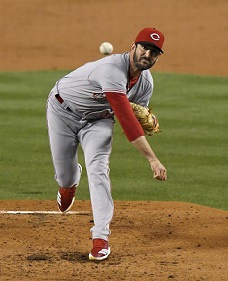 The way Matt Harvey’s tempestuous tenure with the New York Mets ended last May is still an eye-rubber. When Harvey refused a Mets’ request to go to Las Vegas and work his way back to something resembling his former mound self, prompting the Mets to trade him to the Cincinnati Reds. When the Mets decided he wasn’t worth saving anymore, and nobody on or around the Mets seemed to care.
 Throneberry Fields Forever