Easter Opening Weekend; or, Who Else is Risen?

Jeff McNeil, Rhys Hoskins

The Mets can’t afford to let Rhys Hoskins remain living free in their heads.

You’d have to be superhuman, five-headed, and swift with all five heads to catch every game on Opening Weekend. But I caught what I could with what I had:

Wait Till Next Year Dept.—Of course you could hear Met fans purring that lament, after the Mets incurred a weekend sweep at the hands of GM David Stearns’ former but still built-by-him Brewers. These are still the fans who know the season’s lost over one bad inning . . . on Opening Day.

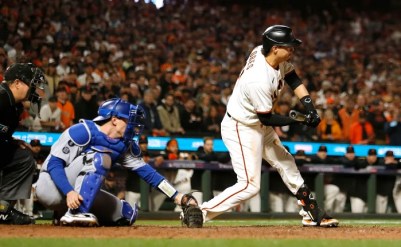
Not Terribly Bright Section: Mets second baseman Jeff McNeil fuming over newly-minted Brewer Rhys Hoskins sliding hard and late in the first game. We get McNeil’s fury, especially being spiked on the play, even if baseball government ruled the slide legal. But Hoskins is a known Met antagonist. The Mets will have enough issues going forth without letting him live rent free in their heads.

Dishonourable mention to Mets reliever Yohan Ramirez for winging one behind Hoskins on the first pitch the day after. Sure we’ll believe you weren’t trying to drop him. News flash: You want plausible deniability, wait another pitch or two before sending the message.

By the way, the geniuses who cobbled baseball’s schedule together this year sure picked a pair of bookends—the Mets and the Brewers won’t meet again until the final series of the regular season. It’s plausible that each might be playing for a postseason berth. The Mets better make damn sure Hoskins’s free lease in their heads is expired by then.

Is This Year Next Year Dept.—It’s not that Yankee fans are suddenly going to drop their sense of entitlement or shelve the “What Would George Do?” demands at the first sign of trouble. But a season-opening sweep of the BBA (Big Bad Astros) just had to make Yankee fans feel as though they were getting a special Easter present this time around.

It had to feel even better when the Yankees’ newest import, Juan Soto, factored large enough in the weekend doings. He threw the tying run out at the plate on Thursday night, then he poked what proved the winning run home Sunday in the top of the ninth. And when he couldn’t or didn’t do it, someone like Oswaldo Cabrera could and did: his 4-for-5 with three steaks Friday helped the Yankees to a 7-1 ambush over the AL West ogres.

Resurrection Section: Easter Sunday’s win was the first of the four-sweep in which the Yankees didn’t have to come from behind. By the way, on Saturday, Soto was one of three Yankees to dial the Delta Quadrant—Cabrera hit a two-run homer to tie in the seventh; Soto went solo with two out in the inning to break the tie; and, Anthony Volpe went solo for an insurance run in the eighth.

What’s Uproar, Doc Dept.—Bottom of the seventh in Tropicana Field. Blue Jays vs. Rays. Randy Arozarena on third after a leadoff single, a theft of second, then a theft of third on a swinging strikeout. José Caballero at the plate for the Rays, bunting for a base hit and getting it, scoring Arozarena and taking second when Jays third baseman Justin Turner overthrew first base.

Caballero gunned for third when he realised the throw went into the right field bullpen in foul territory. Jays right fielder George Springer grabbed the ball and threw to shortstop Bo Bichette covering third, with reliever Genesis Cabrera backing the base, getting Caballero out by a few steps. Uh-oh—Caballero bumped into Cabrera on the play, they swapped words . . . and Cabrera gave Caballero a big enough shove to empty the benches and the bullpens.

Bichette pulled Caballero away and two Jays starting pitchers, José Berrios and Alek Manoah, got Cabrera away. That cooled the scrum off practically as fast as it began. The Rays finished what they started, a 5-1 win en route a season-opening series split with the Jays, and Cabrera landed a three-game suspension Sunday, which he’s appealing.

And what were the words that triggered the scrum? According to several sources, Cabrera told reporters Caballero said, simply, “What’s up?” Seriously?

No Betts Are Off Dept.—You weren’t seeing things when you awoke Monday morning to read the season statistics thus far: Mookie Betts has been a threshing machine for the Dodgers out of the gate. In their first six games, the Mookie Monster has four home runs, ten steaks, a .621 on-base percentage, and a 1.136 slugging percentage. (1.757 OPS.) And, the Dodgers followed a season-opening split with the Padres by taking three of four from the Cardinals.

The hard part for the Cardinals: playing Sunday with a short bullpen thanks to their lone win, a Saturday night come-from-behind special. Overall, they’re also missing some key arms thanks to injuries to starter Sonny Gray (hamstring) and reliever Keynan Middleton (forearm).

Bounced Check Dept.: Miles Mikolas, Cardinals righthander, on 16 March: “We’re not exactly a low payroll team, but you got the Dodgers playing checkbook baseball. We’re going to be the hardest working group of Midwestern farmers we can be . . . It would be great to stick it to the Dodgers.”

Miles Mikolas, starting for the Cardinals to open the series against the Dodgers: Four and a third innings pitched in which he was hammered for seven hits and five earned runs including a pair of home runs by Betts and Freddie Freeman, opening his season with a 10.38 ERA.

The farmers barely brought their pitchforks and plows to bear. The Dodgers went on to win that opener, 7-1, and the Cardinals went on to being out-scored 23-14 for the set.

Hold Those Tigers Dept.—Don’t look now, but the Tigers—they who went 78-84 to finish second in the anemic AL Central last year—have opened their season atop the division. They swept the White Sox in three, though not overwhelmingly: they outscored the White Sox by a mere three. But it’s still a promising beginning.

From there the Tigers are scheduled for three against the Mets in New York, the Mets wanting nothing more than to put that season-opening 0-3 behind them if they can. The Tigers, of course, would love to make it difficult for them to do so.

Keept Your Witts About You Dept.—Royals shortstop Bobby Witt, Jr., when Opening Weekend ended: a major league-leading 1.888 OPS. The Royals, after Opening Weekend ended: 1-2, fourth in the AL Central. To survive this season, the Royals will need to keep more than their Witts about them. And, a lot more than Brady Singer on the mound for them.
Aerus Betts

Mookie Betts

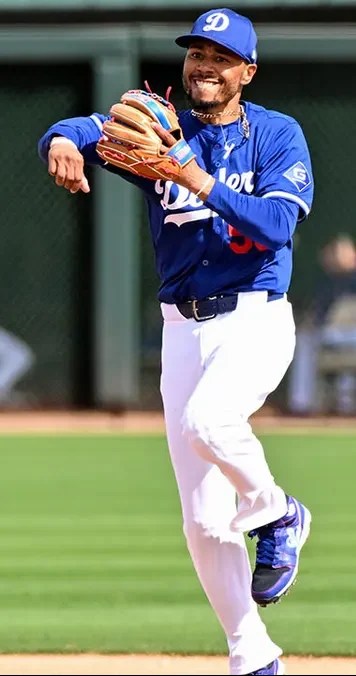
From right field to second base to shortstop. What a long, strange trip around the field for Mookie Betts . . . so far . . .

Allow me to begin with a number or three. These numbers are: 13.8, +122, and +6. In order, they are the defensive wins above replacement-level player, total fielding zone runs above the league average right fielder over ten seasons at the position, and total fielding zone runs above the league average second baseman in a hundred games at the position.

They belong to a man who has the total WAR (64.5) that’s considered almost 4.0 WAR above the level at which a baseball player qualifies himself for the Hall of Fame, assuming nothing else on his resumé might compromise or negate his case. A man who now consents to play shortstop for the Dodgers full-time, and whose departure from Boston may have hastened that formerly proud team’s current malaise.

Markus Lynn Betts (no tasteless jokes, please about the middle name which is also the legal first name of an antique legend named Nolan Ryan), nicknamed Mookie, is moving from second base to shortstop because the Dodgers’ intended shortstop, Gavin Lux, has a problem or three throwing longer distance than he does from second base.

Betts has been known as the Mookie Monster for the things he does with a bat. He’s not exactly a benign presence with a glove on his hand pursuing a batted ball in the field, either. By the time he retires as a player, he may earn a nickname for the things he has done and will do with his glove and throwing arm.

“The Roomba” will not do, since Betts is anything but robotic. “The Shop Vac” will not do, either, since Betts is neither rumbling nor obese. “The Hoover” belongs to the late Hall of Famer Brooks Robinson, even if Betts beats, sweeps, and cleans batted balls with similarly effortless-looking performances.

“Aerus Betts” sounds about right. The Aerus is an elegant tank vacuum, once known as the Electrolux, before that Swedish company pulled out of the United States, leaving its two American plants’ staffs from the top down to buy the plants and continue making the correct Luxes under the Aerus banner. Betts in the field is that kind of elegant and that kind of effective.

That former Swedish parent now makes vacuum cleaners about which “hideous looking” and “hideous sounding” are almost compliments. Betts is neither hideous looking nor hideous sounding, except maybe to an opposing pitcher who’s just fed him a pitch to hit transoceanic. Or, to an opposing batter inspired to swearing after a sure base hit is turned into a split-second out. By the time Betts finishes the coming regular season at shortstop, he may well accomplish two things at once.

Thing one: He may remind people of the acrobatics they’ve missed since the Wizard of Oz (Ozzie Smith) went from the field to the Hall of Fame, though unaccompanied by the game-opening cartwheels and back flips. Thing two: He may remind people older than myself of a too-often-forgotten Yankee jack-of-all-trades.

The late Gil McDougald wasn’t the kind of star that Hall of Famers Yogi Berra, Whitey Ford, and Mickey Mantle were. He was merely a fair hitter and a fielding whip at the infield’s three toughest positions. He finished his distinguished career in double figures for defensive runs at third base, shortstop, and second base alike. Betts has the opportunity to finish in double figures at right field, second base, and shortstop.

It may not shock Dodger fans or anyone else if, some time before he retires, the Dodgers decide Betts might be a better third base option than whomever they had going in. Betts is that kind of versatile and that kind of selfless.

Too many players making themselves comfortable somewhere on the field react as though being offered a castor oil on the rocks when asked to do likewise somewhere else. Ask Betts to move from one position to the other gets nothing but “Put me in, Coach,” so far. He’s played five out of nine field positions in his major league life so far. Three more even once apiece may not be unthinkable before he’s done.

No manager has yet asked Betts to pitch late in a lost-cause game. This may be a combination of both certain wisdom (the Dodgers are not frivolous about their pitching, especially when their pitchers incur injuries) and lack of opportunity.

Last season, the Dodgers played 64 games which Baseball Reference classifies as blowouts (BR considers a blowout a lead or deficit of five runs minimum) and won 45 of those. They also won ten games in which they scored in double digits—and advantages of nine runs or more. Betts didn’t turn up on the mound once in any of their nineteen BR-defined blowout losses.

Would you be shocked if manager Dave Roberts, trying to survive the last inning or two of a very rare Dodger blowout loss in the making, looks toward his Mookie-of-all-trades and asks, “You got an inning in you to throw up there?” You might be shocked only long enough to hear Betts say, “Put me in, Coach.”

Heard of the eephus pitch? Betts might have an Aerus pitch to serve an unsuspecting batter. At this point, nothing he does upon request or otherwise would surprise just about anyone paying close attention.

The All-Star Game was Clayton’s place

Clayton Kershaw, Blake Grice

National League All-Star starter Clayton Kershaw with fan Blake Grice, who touched Kershaw by telling the future Hall of Famer he was meeting him for Grandpa’s sake.

By right, this year’s All-Star Game start for the National League should have belonged to the Marlins’ Sandy Alcantara (he leads the Show’s pitchers with 5.3 wins above replacement level and his 1.76 ERA). And if the game were played someplace other than Dodger Stadium, it might have been Alcantara’s to start.

Braves manager Brian Snitker, managing the NL All-Stars as the previous season’s World Series skipper does, had his own idea. Especially since this was the first All-Star Game in Dodger Stadium since Jimmy Carter was still in the White House, and a Dodger icon was having an All-Star worthy season himself.

So Snitker elected to hand the opening ball to Clayton Kershaw. A Hall of Fame lock, approaching the sunset of an off-the-charts career, starting the All-Star Game in his home ballpark. You could imagine Snitker thinking to himself that you couldn’t pay to pre-arrange more serendipitous circumstances. Even with his own All-Star Max Fried among his pitching options.

It was a class gesture by the defending World Series-winning manager. Only one thing could have seen and raised, and that one thing was Kershaw himself. By most reports, one of the first things the 33-year-old lefthander did when Snitker called him to say the opening ball was his was to call Alcantara himself.

“He was awesome about it. I was really thankful about that,” Kershaw said, after the American League hung in for a 3-2 win through no fault of Kershaw’s own.

He let himself take the entire atmopshere in, even foregoing his usual pre-start intensity that compels teammates, coaches, and even his manager Dave Roberts to say nothing much more than “hello” to him. (He even let Roberts share lunch with him on Tuesday.) About the only thing Kershaw did remotely work-related was study some American League scouting reports.

One he didn’t have to study was Shohei Ohtani (Angels), whom Kershaw retired thrice when pitching last Friday. Wary of opening the All-Star Game with one of his signature breaking balls, Kershaw pumped a fastball that doesn’t have its former speed and Ohtani—interviewed before the game, promising to swing on the first pitch—smacked a broken-bat floater up the pipe into short left center for a leadoff single.

Then, having Aaron Judge (Yankees) 1-2, Kershaw suddenly couldn’t think of what to throw next. Some described him as buying time when he lobbed a throw to first. He bought more than he bargained for. He’d caught Ohtani having a snooze. Ohtani had drifted away from the pad and Kershaw’s lob turned into the first All-Star pickoff in fourteen years.

The two-way Angel could only laugh. Kershaw could only grin after first baseman Paul Goldschmidt (Cardinals) tagged Ohtani out. Dodger Stadium went nuclear. Kershaw finished striking Judge out, walked Rafael Devers (Red Sox), and lured Vladimir Gurrero, Jr. (Blue Jays) into an inning-ending ground out. The man who wanted to take it all in from start to finish then ducked out of sight and to a press podium under the ballpark.

Shohei Ohtani, Clayton Kershaw

All they could do was grin and laugh after Kershaw (right) picked Othani off first while working to Yankee bombardier Aaron Judge.

While the National League took an early 2-0 lead with Mookie Betts (Dodgers) singling home Ronald Acuña, Jr. (Braves; leadoff double off AL starter Shane McLanahan [Rays]) and—after a double play grounder by Manny Machado (Padres)—Goldschmidt hammering one into the left center field bleachers, Kershaw finished his press conference with a ten year old boy raising a hand.

“What’s up, dude?” Kershaw asked pleasantly.

The boy introduced himself as Blake Grice and told Kershaw how much his late grandfather loved both him and the Dodgers’ long-enough-retired broadcast deity Vin Scully and had wanted to meet them both. (His family had passes courtesy of MLB itself.) “So this moment is important to me,” the boy continued, “because I’m meeting you for him.”

The father of four children himself, Kershaw couldn’t resist when he heard that and saw the boy’s tears of likely gratitude for getting to do something for his grandpa in the presence of a Dodger icon who’s been the closest the Dodgers have had to longtime eminence Sandy Koufax.

“Come here, dude,” Kershaw beckoned. He hugged the boy, gave him a clap on the back, and said, “Great to meet you. Thanks for telling me. That took a lot of courage to tell me that. Your grandad sounded like an awesome guy.” When Kershaw asked Blake if he had a parent with him, the boy’s father held up his cell phone. Kershaw beckoned him forward and he snapped a photo of the pitcher and the boy speaking for Grandpa.

It was more than enough to atone for the prayers thousands of fans in the ballpark and perhaps the millions watching on television must have had that, despite going down to its ninth straight All-Star loss and 21st such loss in 25 such games, the National League didn’t tie the game in the bottom of the ninth.

That’s because the latest to emerge from baseball’s apparent laboratory of mad science would have had the game decided in favour of the Home Run Derby winner’s league if nine full innings ended in a dead heat. (On Tuesday it would have been the National League, thanks to Juan Soto [Nationals] winning the Derby.) Thank God and His servants Branch Rickey and Jackie Robinson that that didn’t come to pass.

The AL overthrew the NL lead with one out in the fourth when Giancarlo Stanton (Yankees) batted with Jose Ramírez [Guardians] aboard (leadoff single) and took Tony Gonsolin (Dodgers) far into the left center field bleachers. Byron Buxton (Twins) following at once found himself ahead in the count 2-1 when he caught hold of a Gonsolin fastball up and drilled it into the left field bleachers. Just like that, Gonsolin had surrendered 882 feet worth of home run travel.

Buxton admired game MVP Stanton’s blast from the on-deck circle and thought to himself, “I ain’t matching that.” Until he damn near did. “I don’t even know if you can put it in words how hard [Stanton] hit the baseball,” Buxton said after the game.

It made all the difference when the game otherwise became a pitching duel of sorts between eleven American League pitchers (including Framber Valdez [Astros] getting credit for the “win” despite striking nobody out in his inning’s work) and nine National League pitchers including the hapless Gonsolin tagged for the loss and, officially, a blown save.

For just the sixth time in four decades an All-Star pitcher got to start the game in his home ballpark. And for a few shining moments on the mound, Kershaw gave his home park’s audience a thrill topped only by the one he gave a ten-year-old boy looking to do his grandpa in the Elysian Fields a favour that couldn’t be done while the older man still lived on earth.

None of the highest highs or the comparatively few lows he’s endured in fifteen major league seasons have let Kershaw forget that baseball at core is about rooting, caring, loving. He had the parallel chance to remind a Dodger Stadium audience about it and to affirm it for a ten-year-old boy. He didn’t flinch at either opportunity.

Laz call finishes Super Tuesday

Jason Castro

What should have been strike three, side retired, game tied in the top of the ninth in Boston Tuesday night . . .

One game’s eighth inning was topped only by another game’s ninth. One team returning from the near-threshold of a too-early winter vacation was topped by another team returning from the threshold of a 3-1 series hole. One earthquake on the West Cost topped by one hurricane in the northeast.

Could anything to come be any more earth-moving or element-splitting than National League Championship Series Game Three and American League Championship Series Game Four?

Well, that may depend among other things upon who’s calling balls and strikes in either set’s remaining games. Because the rule book third strike that should have been called in the top of the ninth in Fenway Park didn’t send the Red Sox tied to the bottom of the ninth with yet another chance to walk off a postseason win.

Reality check. There were bad pitch calls in both NLCS Game Three and ALCS Game Four. Against all sides. There didn’t seem any particular favour or blessing bestowed particularly upon the Braves and the Dodgers out west or the Astros and the Red Sox back east.

When Laz Diaz called ball two on what even Ray Charles would have seen was strike three to Astros catcher Jason Castro, side retired, it might not necessarily have opened the door to that fresh Red Sox walkoff win. But they should have had the chance to try. Or at least to send the game to extra innings.

Red Sox pitcher Nathan Eovaldi, who’d pitched well enough in Game Two and should now have retired the side in Game Four’s top of the ninth, admitted postgame he thought he’d nailed the punchout. “I thought it was a strike,” the stout righthander said, “but again, I’m in the moment. I’m trying to make my pitches. I’m attacking the zone.”

Castro hinted that he, too, thought he was frozen alive in his own postgame comment. “Where that pitch started,” he said, “I didn’t think it was one I could pull the trigger on. It was a ball, then I was able to move on to the next pitch.”

He moved on to foul the next pitch off, rap a single the other way to right field sending Carlos Correa (leadoff double) home with the tiebreaking run, and leave the vault open for a walk and Eovaldi’s exit in favour of Red Sox reliever Martin Perez. The vault stayed unguarded for a three-run double (Michael Brantley), a free pass (to Alex Bregman), two RBI singles (Yordan Alvarez and Correa batting the second time in the inning), another RBI single (Kyle Tucker), and an inning-ending fly out (Yuli Gurriel).

The Red Sox and the Astros kept things to a 2-1 Red Sox lead until Jose Altuve tied it with a home run in the top of the eighth. Neither team hit particularly well against either Red Sox starter Nick Pivetta or each other’s bullpens until then. The Red Sox also led the entire Show in comeback wins on the regular season.

They didn’t have any similar self-resurrection in them in the bottom of the ninth.

Astros reliever Ryan Pressly surrendered a pair of two-out singles (Kike Hernandez, Rafael Devers), saw Castro let a pitch escape into a passed ball setting up second and third with two outs—a situation in which the Red Sox are customarily dangerous—but strike Xander Bogaerts out swinging for the 9-2 Astros win and ALCS tie.

Diaz blew 23 pitch calls Tuesday night, according to ESPN Stats & Info and cited by ESPN columnist Jeff Passan. He blew twelve thrown by Red Sox pitchers and eleven thrown by Astros pitchers. “[T]he one everyone— at least everyone in Boston—is going to remember,” Passan said soberly, “is the Nathan Eovaldi curve.”

“Good teams adjust to the ump,” snorted a followup tweeter. We’ll assume that tweeter couldn’t care less about getting it right by, you know, the actual rule book, even when a side should have been retired or when championships or progress toward them are on the line squarely enough.

To think that the Dodgers thought they’d stolen the day’s headlines, in Dodger Stadium far earlier, when they spent most of NLCS Game Three missing no opportunities to miss opportunities, until—standing five outs from season over—Cody Belllinger hit a three-run homer, before a base hit and a ground out set the table for Mookie Betts’s tiebreaking and ultimately game-winning RBI double.

And, for Kenley Jansen to strike out the side in the top of the ninth to secure the 6-5 Dodger win.

“it’s just hard to imagine a bigger hit,” said Dodgers manager Dave Roberts postgame about Bellinger turning on Braves reliever Luke Jackson’s high fastball and sending it into the right center field bleachers.

Just like that, the Dodgers taking the early 2-0 lead on (stop me if you heard this after Game Two) Corey Seager’s first-inning two-run homer, the Braves tearing Dodger starter Walker Buehler apart for four runs in the top of the fourth, then the Braves tacking a fifth run onto the board against reliever Ryan Bickford in the top of the fifth, seemed a pleasant memory. Even if the Braves still have a 2-1 NLCS lead.

“Does this feel like a dagger?” Jackson asked postgame. Then, he answered. “No. This is just, you know, a speed bump.” Ordinary speed bumps in ordinary roads don’t destroy undercarriages as broadly as Bellinger and Betts destroyed the Braves Tuesday afternoon.

To hear Bellinger say it, it’s just hard to imagine a tougher hit. “Yeah, it’s not a hitter’s pitch right there,” he said postgame. “But in the moment, whatever happened, I saw it and I just tried to put the barrel on it and continue to pass the baton.” He passed the baton, all right, and Chris Taylor swung it for a followup single to chase Jackson in favour of Jesse Chavez.

There’s a story in and of itself. Chavez warmed up but finally sat back down in the Braves bullpen three times earlier in the game, before he was up and throwing in the eighth yet again. He probably threw the equivalent of a quality start’s worth of pitches in all four warmup. He managed to induce the second Dodger out on pinch hitter Matt Beatty’s grounder.

He lived long enough for the Mookie Monster to split the right center field gap on the first pitch, sending Taylor home with the sixth hard-won Dodger run of the day. If you can tell me what’s brilliant about warming up and sitting down a pitcher three times before warming him up yet again, then bringing him in as gassed as the day is long, you’re a better manperson than I.

Well before Eovaldi threw the third strike that wasn’t, longtime Boston Globe scribe turned MLB Network analyst Peter Gammons tweeted, “the best interests of baseball does not not include Laz Diaz theoretically trying to call balks and strikes in post- season.” Grammatical flaw and malaprop to one side, Diaz didn’t try even theoretically but failed factually 23 times.

Jerry Meals wasn’t exactly a virtuoso behind the plate so far as both the Braves and the Dodgers were concerned. But he didn’t blow the third strike that should have retired a side with a League Championship Series game tied to the bottom of the ninth, either.

“I don’t know how he did it,” said Correa of Castro finally singling him home with the tiebreaker, “but I admire that. Because I will tell you I wouldn’t be able to do that. Sitting down for that long and then going out there facing a guy throwing 100 in crunch time? That’s special.”

All Correa left out was the should-have-been side-retiring third strike that wasn’t. If the Red Sox don’t forget their now-lost home field advantage and dust themselves off to go on and take the set and the pennant, it might become the most infamous third strike that wasn’t in New England history. If not beyond.

The strike heard ’round the world

Don Denkinger, you’re off the hook. Flores checking his swing into the arguable worst blown call in postseason history

Giants manage Gabe Kapler wouldn’t say it, even though anyone with eyes to see would say it for him. Even the Dodger fans among them. Maybe it wouldn’t change the outcome with that wired a Max Scherzer on the mound.

But ending this National League division series with that bad an umpire’s call? For the final out of the season for one team, not the first out of the ninth as was Don Denkinger’s infamous blown call at first in Game Six of the 1985 World Series?

There isn’t a jury in the land that would rule Kapler unjustified if he’d blown his proverbial stack or even demanded an investigation. This tight a Game Five between two of baseball’s most bitter of blood rivals plus the two winningest teams in this year’s Show deserved better than that.

These Dodgers and these Giants deserved better than first base umpire Gabe Morales ruling Wilmer Flores’s checked swing a strike to end it, after home plate umpire Doug Eddings—to his eternal credit—called for Morales’s help. That kind of help neither Eddings nor the Giants needed.

Two teams who’d been even-up in their regular season meetings, had the same number of hits against each other (173), and entered Game Five with each having 109 wins for the year including the postseason thus far, deserved better than a 2-1 Dodger win tainted through no fault of either team’s own.

“There are other reasons we didn’t win today’s baseball game,” Kapler said post-game. “That was just the last call of the game.” That was like a Japanese commander saying Hiroshima and Nagasaki were just the last blows of World War II.

Let’s give Morales a temporary benefit of the doubt. “[C]heck-swings are one of the hardest calls we have,” he said post-game. “I don’t have the benefit of multiple camera angles when I’m watching it live. When it happened live I thought he went, so that’s why I called it a swing.”

But Morales was shown a replay of that final pitch. Then, someone asked if he’d still call it failed check swing. Ted Barrett, the crew chief, answered for him. Sort of. As if Morales was incapable of speaking for himself.

“Yeah, no, we, yeah, yeah, he doesn’t want to say,” Barrett said. If there’s a more mealymouthed response upon a blown call’s questioning on record, I’d love to see it. Even Denkinger wasn’t that foolish when confronted with how badly he’d blown it calling Jorge Orta safe at first despite being out by almost a full step.

“Obviously you don’t want a game to end that way,” Kapler also said. “Obviously it’s going to be frustrating to have a game end like that, but pretty high quality hitter at the plate that can climb back into that count. There’s no guarantee of success in that at-bat. It’s just a tough way to end it.”

Flores checked his swing on an 0-2 pitch that came in just under the low outside corner. All things considered, especially the proliferation of dubious pitch calls all series long against both the Dodgers and the Giants, it wouldn’t have been the worst possible outcome for the plate appearance to continue.

But Flores checked his swing. Eddings called to Morales. Morales rang Flores up for game, set, and match. Sending the Dodgers to a National League Championship Series against the Braves, sending Giants fans reaching for the nearest possible liquid salves, and soiling the Game Five this series deserved otherwise.

They’d gone tooth, fang, claw, and just about anything else not just to get to Game Five in the first place but to get to the bottom of the ninth with only a single run separating them.

The Dodgers had gone to a bullpen game, opening with reliever Corey Knebel, continuing with fellow reliever Brusdar Graterol, then sending starting pitcher Julio Urias out of the pen to pitch a solid enough third through sixth. Then back to the pen men Blake Treinen for the seventh and Kenley Jansen for the eighth.

The thinking was that the Giants—a club full of elders and anonymous role players for the most part—were so deadly in situational play that, as The Athletic‘s Andy McCullough observed, the Dodgers’ best shot at neutralising that advantage by throwing two-thirds of their bullpen at the Giants and returning Urias to the postseason role where he’d been so effective in the recent past while they were at it.

It’s not that teams haven’t gone to bullpen games before. The Rays make about a third of their living doing it. Why, almost a full century ago the Washington Senators (Washington—First in war, first in peace, and last in the American League) won the 1924 World Series going to a bullpen game prototype in Game Seven.

All the Dodgers needed was Urias on board with the idea. “He earned the right to pitch in this game,” said Dodgers pitching coach Mark Prior. “If he said, ‘No, I want it,’ he was going to get it.” They surveyed other Dodgers including starters Scherzer, injured Clayton Kershaw, and Walker Buehler, who’d pitched so effectively in the Dodgers’ Game Four win.

“When they were on board,” Prior said, “it made sense. Everyone is in it to win it. Let’s go.”

That’s how they countered the Giants sending their stout young starter Logan Webb out for Game Five. He gave the Dodgers as good as their pen game gave the Giants. He pitched seven solid innings. The only blemishes on Webb were Mookie Betts delivering three of the four Dodger hits against him, and Corey Seager sending the Mookie Monster home with a double down the left field line in the top of the sixth to deliver the game’s first run.

Until Scherzer came into the game, the only real blemish against the Dodgers’ pitching was Giants left fielder Darin Ruf tying the game at one leading off the bottom of the sixth, by hitting Urias’s full-count fastball over the center field fence.

But until the Flores check swing that should have been, the co-story of the game might have ended up being the Dodgers leaving the Giants behind with yet another Belli-ache plus Max the Knife plunged into their backs in the bottom of the ninth. More’s the pity.

Continuing his re-adjusted postseason revival—after an injury-marred regular season reduced him to terms so low people questioned why Dodger manager Dave Roberts kept running his former MVP out there at all—Cody Bellinger broke the one-all tie in the ninth.

He made the Giants pay after their young relief ace in the making Camilo Doval hit Justin Turner up and in on the first pitch after Will Smith grounded out to shortstop to open the top of the ninth. Gavin Lux snuck a base hit through the right side of the infield to set first and second up.

Then, Bellinger took ball one low, swung through a slider around the middle, bounced a foul ball off to the right, then shot one up the middle and into center field sending Turner home with the tiebreaking run. Which probably amped Scherzer up in the pen even more than he’d already sent himself.

When he wasn’t throwing warmup pitches, Scherzer paced and pranced like a maniac. It was a wonder nobody had to shoot a tranquiliser dart into his rump to make sure he could go in and pitch the bottom of the ninth without dismantling himself.

He all but shot in from the pen to the mound as the sides changed. It was so must-see television that the TBS broadcast obeyed the call, too, not cutting to a commercial break as he made his way to the mound. You’d have thought the back of his uniform carried not his surname and number 31 but Danger! High Explosives! Keep Back 500 Feet!

Pinch hitter Matt Beaty ended the top of the ninth by grounding out to Flores playing first for the Giants. “Flores touched first base,” said Betts with a laugh, “and it felt like Scherz was halfway to the mound.”

This was virgin territory: Scherzer had never recorded a relief save in his entire professional pitching career. Yet he flew in from the pen as though fourteen years’ worth of a Hall of Fame pitching career to date was merely the overture to his kind of Unfinished Symphony.

So, with Bellinger shifted from first base to center field and Billy McKinney out playing first, Max the Knife unsheathed. He got Crawford to line out the other way to left. He shook off Turner bobbling Kris Bryant’s grounder up the third base line enabling Bryant safe on the error to strike out Lamonte Wade, Jr., who’d been making a name for himself with assorted ninth-and-later heroics for the Giants.

Then came Flores, the former Met who’d been part of their 2015 run to the World Series. A slider hitting the middle of the zone for a called strike. A foul off. Then, the fateful slider coming down and just off the corner. The checked swing. Eddings’ appeal to Morales at first. Strike three. Game, and Giants’ season, over.

There are eleven categories of reviewable umpire calls that managers are allowed to challenge. In the postseason, a skipper gets two challenges instead of the one allowed during the regular season. Check swings and pitches aren’t among the eleven. Maybe in the postseason they ought to be.

The “human element” be damned. When Whitey Herzog (Cardinals manager in 1985) called outright for replay in his 1998 memoir You’re Missin’ a Great Game, he had it as right as right can be: “This is for the championship—let’s get it right.” This was toward a potential championship and a win-or-wait-till-next-year game in the bargain. It should have been gotten right.

Seventy years ago, the Giants’ Bobby Thomson hit the Shot Heard ‘Round the World to finish a pennant playoff we’ve long since known, with full proof, was tainted by an off-field-based sign-stealing plot that helped those Giants come from thirteen games back to forcing that playoff in the first place.

Maybe it was tempting the fates a little too flagrantly when it turned out someone with the Giants—not a fan or fans, as I thought when seeing the sign in a flickering moment during the Game One telecast—tacked that “Remember ’51!” up on a deck rim in Oracle Park. Very clever, using a tainted triumph for motivation.

But ’51 was then, and this was Thursday night. Tainted not by cheating but by the kind of malfeasance that’s brought demands for further and fuller umpire accountability and for technology to help get the calls right. I don’t have to be as kind as Gabe Kapler.

Don Denkinger, you’re off the hook for the arguable worst blown call in postseason history. Maybe Scherzer would have retired Flores anyway if the proper call was made; maybe Flores would have kept the inning alive with a base hit. Maybe—unlikely as it might have been, considering his 0-for-17 lifetime jacket against Max the Knife—he might have tied or even won the game with one swing.

Maybe. We’ll never know now.

Until or unless baseball’s government effects real, substantial umpire accountability and stops allowing the “human element” to enable them to get away with murder, this NLDS Game Five’s finish should be known forever as The Strike Heard ‘Round the World.