26 minutes and other Opening Day salvos

Rafael Devers

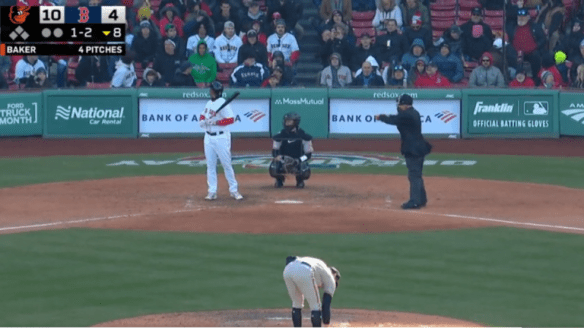
Rafael Devers (Red Sox), the Show’s first ever to strike out without a pitch thrown, taken, or swung on and missed—on a pitch clock violation.

So. After encyclopædic volumes worth were said and done, the average shortening of games on Opening Day was a whopping . . . 26 minutes. The new rules, don’t you know?

I may be on board with the pitch clock, but I’m not on board with cheers about the shortening when a fourth grade math student can tell you they’d have been shortened more by eliminating half the broadcast commercials. That’s accounting for the spots before each half inning and during any inning jam in which a pitching change was made.

But it didn’t stop the Blue Jays and the Cardinals needing three hours and 38 minutes to finish with a 10-9 Blue Jays win, paced by George Springer’s five hits for the Jays and opened with Cardinals pitcher Adam Wainwright warbling “The Star Spangled Banner” to just about everyone’s surprise in Busch Stadium.

Two players made history under the new rules. Rafael Devers (third baseman, Red Sox) became the first in Show to strike out on a pitch clock violation. Marcus Stroman (pitcher, Cubs) became the first in Show to be assessed a ball on a clock violation.

Leading off the eighth, Devers was rung up on 2-2 with Bryan Baker on the mound for the Orioles and the Red Sox in a 10-4 hole. “This doesn’t make sense to me,” said an announcer, “because he’d already looked at the pitcher. The pitcher’s not even ready to throw.”

Devers had checked back into the box with a few seconds remaining after stepping out to knock dirt out of his cleats. Even as Baker wasn’t quite ready to throw, plate umpire Lance Barksdale bagged him. It didn’t stop the Red Sox from posting a three-spot in the inning. “There’s no excuse,” said manager Alex Cora. “They know the rules.”

Knowing them and being able to maneuver within them for the first time in regular-season play are not exactly common. But it’s entirely possible that Devers not being dinged might have made a small difference. Led by Adley Rutschmann becoming the first catcher in Show history to have a five-hit Opening Day, the Orioles out-lasted the Red Sox, 10-9, after almost handing the game all the way back to the Olde Towne Team in the bottom of the ninth.

Remember: I’m also on board with turning the damn clock off in the eighth and later. Devers may yet prove evidence on behalf of that.

Stroman got his while checking Brewers runner Brice Turang at second with Christian Yelich at the plate in the third. The pitch clock expired about a hair before Stroman turned to pitch from the stretch. “It’s tough, this pitch clock,” Stroman told reporters postgame. “It’s a big adjustment. I don’t think people really realize it. It just adds a whole other layer of thinking.”

Yelich finally worked a walk out. The Brewers didn’t score then or the rest of the game. The Cubs won it, 4-0.

Jeff McNeil became the first Met to be hung with a pitch clock violation strike—for waiting for Pete Alonso to get back to first on a foul ball. Oops. Manager Buck Showalter was unamused that the clock began to tick before Alonso returned to the pad. McNeil remained mad just long enough to nail a base hit.

That was in an Opening Day game the Mets won, 5-3, beating the Marlins, but they might have had one more, at least, if not for someone whacking Brandon Nimmo with the stupid stick in the third. With first and third, Nimmo dropped a bunt—and hit into an inning-ending double play despite the run scoring. Thus the risk the wasted out, which is exactly what the sac bunt is, carries against defenders alert enough.

The good news there was Max Scherzer holding on despite all three Miami runs charged to his account and the Mets making simple enough work against a still not quite ready Sandy Alcantara. The bad was Justin Verlander having to miss a week while dealing with a muscle strain in his upper back near his throwing shoulder.

Perhaps it was miraculous that Aaron Judge picked up right where he left off from last season and hit one out in his first plate appearance against the Giants. That launched a 5-0 Yankee win that saw both starting pitchers, Gerrit Cole and Logan Webb, nail eleven and twelve strikeouts, respectively—the first opposing Opening Day starters to do that since Max the Knife (then a National, with twelve) and Jacob deGrom (then a Met, with ten) in 2019.

Speaking of deGrom, alas, the good news was, the Rangers got him a small truckload of runs. The bad news was that deGrom, still not all the way ready after a spring training disrupted by a side strain, also surrendered five before the Rangers unloaded for a nine-run fourth and held on to win, 11-7. They became the first Opening Day team to have a nine run-or-better inning since the Padres dropped 11 in the sixth against the Mets in the 1997 opener.

And Shohei still gonna Shohei. The Angels’ two-way unicorn struck ten Athletics out before his day’s work was finished. He even ripped a 110 mph base hit and threw a 101 mph pitch before he was done. And what did it prove worth in the end? Squatski. The Angels lost, 2-1. It put Ohtani onto a dubious record book page: the only pitcher to punch ten out and surrender no runs in his team’s Opening Day loss.

Meanwhile, the Rockies are still gonna Rockie, alas, even when they win. With a pair of home runs by first baseman C.J. Cron leading the way, the Rockies battered the Padres for seventeen hits—despite striking out at the plate seventeen times against four Padres pitchers. Making them the first team since 1900 to deliver that dubious 1-2 punch in a nine-inning game. Ever.

I’ve said it before, but I’ll say it once more. This is baseball. Where anything can happen—and usually does. With or without rule changes running the bases from the sublime to the ridiculous and back to the absurd. And wish though Commissioner ADD and his minions might, 26 minutes isn’t exactly that big a difference from even last year’s average.

On the other hand . . .

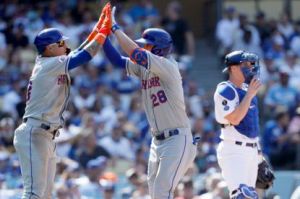
Javier Baez, J.D. Davis

The Good Javy (left, after scoring on J.D. Davis’s [center] two-run bomb in the seventh) returned from the injured list and doubled down against the Dodgers Sunday afternoon.

This time, J.D. Davis didn’t shrink. Either with one man on or with the bases loaded.

This time, too, trade deadline addition Javier Baez came off the injured list, swung like a pro, scored like a pro, and doubled down, literally. He put a small shot of rocket fuel into a team looking like the living dead too often this month.

This time, the Mets may have left eight men on but they also sent seven runs across the plate. They’ve now done that only twice since 21 July. And, this time, too, they didn’t let the Dodgers take a single lead all Sunday long.

The bad news is that Sunday’s 7-2 win to stop the Dodgers’ winning streak at nine probably won’t be enough to salvage the Mets’ 2021. They’d need a finish from here that you can describe politely as miraculous to do that. Losing eleven games in the standings this 6-15 doesn’t leave room for miracles.

But let’s worry about that later. Right now, let’s savour Baez cashing in Brandon Nimmo (leadoff full-count walk, on which he sprinted up the line to first) with one out, sending one ricocheting off the left center field fence in the top of the first, with Nimmo gunning home all the way from first.

Let’s savour Davis shooting one the other way up the right field line to send Baez home, and Jonathan Villar with two outs punching a quail into short center, Davis scoring when Cody Bellinger’s throw in brought Dodger catcher Will Smith well out in front of the plate.

Let’s savour Villar trying to take second on the throw in and Smith throwing wild enough to let Villar have third on the house, before a foul out caught by Dodger starter David Price ended the inning at three for the Mets.

Let’s savour the Dodgers getting only a pair back in the fourth, when Bellinger reached Mets starter Marcus Stroman for a two-out, two-run line single to right, making Stroman pay for walking the bases loaded ahead of Bellinger—whose season has been compromised badly by a couple of nagging leg issues and not having been able to recuperate properly from off-season shoulder surgery.

Let’s savour the Mets catching Bellinger in an inning-ending rundown out, catcher to short, Baez playing his old position in Francisco Lindor’s absence, feinting a throw toward third to keep A.J. Pollock from even thinking about a score before tagging Bellinger as he tried turning back toward second.

Let’s savour Stroman managing to keep the Dodgers at bay long enough for Baez to hustle a single into a double after two swift outs in the top of the seventh and Davis, right behind him, hitting the first pitch he saw from Dodger reliever Phil Bickford on a line over the left field fence.

Let’s savour the Mets loading the pads with one out in the top of the ninth off Dodger reclamation project Shane Greene—Nimmo’s base hit to right, Pete Alonso taking another plunk for the team, then Baez taking another plunk for the team.

And let’s savour Davis yet again, a day after he’d swung through a Max Scherzer meatball with the bases loaded for a strikeout. This time, Davis recovered promptly from falling into an immediate 0-2 hole. He wrung his way from there to a walk on four straight balls, resisting the temptation to pull the trigger on a sinker that sunk just a little too far below the strike zone floor for ball four and Nimmo trotting home.

But let’s not fool ourselves. These Mets may have a few energy reserves left, but there’s just a little too much still missing to give them much more than prayers. On paper, they’re only seven games out of first in the National League East. On the field and at the plate, Sunday’s showing is what they’ll need only every day from now on, practically, to have the prayer of even a prayer.

It may require what they may not have the rest of the way.

So just spend today thinking about Baez maybe playing his way into an extension that would keep him around the keystone with Lindor, when Lindor returns days from now.

Think about the Good Javy re-joining Lindor to turn the second base region into the swamp where base hits get sunk into ground outs. Lindor may have struggled at the plate this year but he remained a shortstop Electrolux. (Thirteen defensive runs above the league average shortstop before he was injured.)

Think about the Good Javy who turns the plate into his personal game-changing playpen, providing an energy jolt through this team that not even Con Edison could deliver, just the way he did Sunday afternoon.

Don’t think about the Bad Javy who chases pitches that deserve to escape, the one who tries a little too often to hit eight-run homers on pitches that provide the power just by the bat giving them a kiss. Not until or unless he shows up again, that is.

Think about the Good Javy outweighing the Bad Javy enough to convince Mets owner Steve Cohen it’ll be worth it to keep him around and use him as the perfect out to purge Robinson Cano, who’s due back for 2022.

Don’t say the Mets “will eat” Cano’s money for the final two years of his deal. That meal already went through the digestive tract and out the other end. They accepted him as part of the deal when they wanted relief pitcher Edwin Diaz that badly from the Mariners. Once his current suspension ends, Cano’s going to get paid whether or not he suits up for the Mets again.

Cano isn’t the defensive second baseman he used to be. He hasn’t been the hitter he once was since 2016, either. That’s something to ponder especially if wisdom finally prevails otherwise and the designated hitter finally becomes universal to stay.

The Mets may not be that inclined to have back a 38-year-old millstone drydocked an entire season over actual/alleged performance-enhancing substances, his second such suspension in four years. The Good Javy showed up in time Sunday to start helping make that decision so simple for the Mets that even Joe Biden could make it without screwing the proverbial pooch into a blood bath.

Life comes in threes for these Mets

2019-08-09 MichaelConforto

Michael Conforto, seconds from being stripped topless and bathed in Gatorade bucket ice, after his RBI finally beat the Nats Friday night in the ninth.

The question before the Citi Field house, and practically all of baseball Friday night, was whether the resurrected Mets—who’d done it mostly on the backs of the bottom crawlers—could hang with the big boys. Even if Friday night’s big boys out of Washington were picking themselves up by their own bootstraps after an almost-as-nightmarish first half.

The answer came in two parts.

Part one: a comeback from three down against Stephen Strasburg, the Nats’ best starting pitcher with Max Scherzer still in drydock over his bothersome back, in the bottom of the fourth. Part two: Another comeback from three runs down, and a game-winning RBI, off a Nats reliever the Mets turned into their personal pinata all season long.

Sean Doolittle against the rest of baseball in 2019: nine runs surrendered. Sean Doolittle against these Mets before he went to work in the bottom of the ninth: nine runs. The Mets as a team hit .385 against Doolittle in 2019 before Friday night, good for a ghastly 10.13 ERA for Doolittle against them.

The kid corps took care of business in the third. The old men took care of most of it in the ninth, including four straight inning-opening hits including a game re-tying three-run homer. Until Michael Conforto, all of a five-year young veteran, drove home old man Juan Lagares for a 7-6 win that was both the first for the Mets in a game they trailed after eight this and surrealistic even by the standards of this year’s surrealistic Mets.

Conforto barely rounded first when his celebrating teammates stripped him topless in celebration of the absolute first game-ending hit of his career. Then hit him with the Gatorade bucket ice shower. That’s how crazy this one went, right down to the proverbial wire. It didn’t exactly begin with things looking even reasonable for the Mets.

And it almost ended after an unreasonable lapse in the top of the ninth sent them three down for the second time. Apparently, the Mets didn’t get the memo saying they were supposed to tuck their tails between their legs and take it like a manperson from the almost-equally re-upstart Nats. Whoever intercepted the memo should be named the game’s most valuable player.

For the first three innings Strasburg was perfect and Mets starter Marcus Stroman, in his first gig in Citi Field, was out of character. Strasburg threw stuff that found his fielders invariably and picked up a punchout per inning. Stroman, the homecoming import from Toronto, forgot he was the John Coltrane of the ground ball and blew away seven on strikeouts, including five straight from the first to the second.

Alas, in the top of the third it began to look like the resurrected Mets couldn’t really hang with the Washington resurrected. The Nats hung up a three-spot in the top thanks in part to Anthony Rendon’s RBI triple flying just past a pair of oncoming Mets outfielders, one of whose knees (Jeff McNeil) had an unexpected and unwanted rendezvous with another’s (Conforto) face. And, thanks in larger part to Juan Soto sailing one parabolically over the right field fence.

Maybe the Nats would escape having to deal with the Mets without Scherzer, after all. Maybe an inning saying “take this, peasants!” would stick a barb into the newly upstart Mets.

But in the bottom of the third Nats first baseman Matt Adams, who’s not exactly the second coming of Mets broadcaster Keith Hernandez at first base, as it is, inexplicably let leadoff walker McNeil escape unscathed, failing to throw him out at second despite all the time on earth to do it off Amed Rosario’s ground out. And after Conforto popped out to Rendon next to third base, up stepped Rookie of the Year candidate Pete Alonso.

In four seconds flat, Strasburg’s sinking changeup traveled from the end of Alonso’s bat over the heads of Hernandez and the rest of the Mets’ broadcast team (Gary Cohen and ex-pitcher Ron Darling), stationed behind the fence for a change, and into the left field seats. Making Alonso the first Mets rook to clear the fences in four straight games since Larry Elliott in 1963.

And five pitches later, J.D. Davis caught hold of a Strasburg four-seamer coming just inside the zone and drove it the other way into the upper deck behind right. Tie game. Just like that. “Who you callin’ peasants, peasants?!?”

Stroman seemed so impervious to the Nats trying to make his life difficult the second time around the order that, after he walked Trea Turner and surrendered an almost prompt single to Adam Eaton for first and second and two out in the fifth, he slipped a full-count cutter right beneath Rendon for swinging strike three, the side, and his eighth punchout of the night.

Then the Nats got a little more frisky in the sixth. A leadoff double down the right field line by Soto. A single by Adams that eluded Alonso diving into the hole for first and third. And a sharp grounder to third by Kurt Suzuki that looked like the Mets would concede the lead run to turn the double play.

Mets third baseman Todd Frazier was having none of that. He threw home as if premeditated. Catcher Wilson Ramos blocked the hopper perfectly, held the ball, and Soto was in the rundown. The lone mistake was the Mets making the extra throw to nail Soto, allowing Adams to third and Suzuki to second. With one out. But Brian Dozier hit a laser to shortstop. And Rosario made as though he’d been studying Hall of Famer Ozzie Smith. He leaped and speared the laser with a hearty overhead glove snap as if he’d been praying for this one all night long. Then Stroman struck out Strasburg himself for the side.

Bullet dodged? Try howitzer. This was the Met defense that could have been tried by jury for treason not a fortnight ago? And maybe nobody in Citi Field was happier or making more racket than Stroman’s mother, resplendent in a blue Mets alternate jersey, jumping and whooping it up from her seat.

The Nats dodged a howitzer of their own in the bottom of the sixth. With first and third they caught a phenomenal break when plate umpire Mark Carlson called ball four on Davis, on a pitch that missed the inside of the zone and on which Davis checked his swing. But first base umpire Tripp Gibson rang Davis up, erroneously, as an overhead replay showed vividly.

Conforto running on the pitch stole second to set up first and third. But if the Mets went on to lose this game, that blown strike would likely have haunted them the rest of the weekend. Maybe the rest of the season, too, depending.

But the Nats pulled Strasburg’s kishkes away from the long knives when Ramos grounded to third, Rendon threw a little wide to first, and Adams bellyflopped like an appendicitic whale behind the base, somehow keeping his toe on the pad and the ball in his mitt, long enough for the side. It would have been the play of the game if the Nats somehow pried a win out of the Mets after saving that would-have-been tiebreaking run.

And in the top of the seventh it looked as though they’d do just that, when Rendon—after a leadoff walk to Turner pushed Stroman out, bringing in lefty Justin Wilson to strike out Adam Eaton—hit Wilson’s first service into the left field seats. “Go figure,” Hernandez purred on the broadcast. “Wilson has poor numbers against Eaton and strikes him out. He has good numbers against Rendon and Rendon hits one out.”

That’s Andujar’s Law, folks: In baseball, there’s just one word—you never know.

But did the Mets know they were done for yet?

They may have had a suspicion when Strasburg, sent back for the bottom of the seventh, took care of Frazier, newly minted Met second baseman Joe Panik (signed after the veteran Giant was designated for assignment, following their acquisition of Scooter Gennett from the Reds), and pinch hitter Luis Gillorme.

Then they thought, not quite yet, after Robert Gsellman worked a reasonably effortless three-and-three top of the eighth. And one of the Nats’ new bullpen toys, former Blue Jay and Dodger Daniel Hudson, opened the bottom by fooling McNeil completely with a changeup hitting the low inner corner. But Rosario gunned a slightly hanging breaking ball to the back corner of the left field grass for a one-out double.

Conforto pushed him to third with a jam-shot ground out up the first base line. After Hudson fed Alonso a diet of high fastballs that Alonso kept fouling off like they were castor oil, alas, Hudson threw him something good enough only to be whacked on the ground to short for the side.

Gsellman went back to open the ninth. The shaggy righthander wrestled Turner to a full count, something into which Turner is very good at wrestling himself when he begins down in the count, then watched Turner foul off a trio before lining a base hit to right. And then Eaton, who’d had nothing to show for four previous plate gigs against Gsellman, pushed a tiny bunt off to the left of the plate from which nobody could throw him out. Even with a shotgun for an arm.

First and second, nobody out, and Rendon at the plate with a .500+ lifetime batting average against Gsellman. But Rendon almost promptly flied out to right, allowing Turner to take third on the play. Prompting Mets manager Mickey Callaway—once beleaguered, now riding the unlikely post All-Star break Mets success—to reach for lefty Luis Avilan to work to the lefthanded Soto, who was one triple short of the cycle.

Not tonight. Avilan struck Soto out on a lazy looking changeup. Up stepped the lumbering Adams, 2-for-4 on the night to that point. Eaton stole second on 1-0, but Avilan pushed Adams to 1-2 before a changeup missed for 2-2.

But then Avilan threw Adams a changeup that hit the dirt and bounced off the veteran Ramos, himself an ex-Nat. Ramos and Avilan each looked as though they’d fallen asleep on their feet as Ramos barely moved back toward the plate and Avilan inexplicably failed to get there in time to cover, as Turner hustled home with the sixth Nats run.

Then Avilan struck out Adams for the side. Leaving the Mets with Doolittle as their last, best hope to save their own kishkes. To lose this one stood a good chance of cutting their momentum and morale completely in half. And Doolittle and his Nats knew it.

But the Mets knew they had the lefthander by the short and curlies almost before he went to work in the bottom of the ninth. The whole season’s record against him was evidence enough.

Sure enough, Davis opened rudely enough by whacking a double to left. And Ramos promptly sent him to third with a line single up the pipe. And Frazier tied the game with a mammoth rip down the left field line and just fair past the foul pole. The way Citi Field went berserk you’d have thought they were watching the resurrection of the 1969 Mets from half a century ago.

Panik, the newest Met, promptly singled to center, only to be forced at second when Lagares’s bunt floated in the air, leaving Panik stuck to determine whether it would hit the ground before running, allowing Rendon hustling in from third to throw as Doolittle in front of him bent over to give him room, getting Panik by several steps. And McNeil flied out to right almost at once.

Two out, extra innings against these relentless Nats looming. Right?

Wrong.

Rosario shot a tracer to left center for a hit setting up first and second. Then Conforto caught hold of a 2-2 inside fastball and sent it on a high line to right, far enough to elude the onrushing Eaton and bound off the fence with Lagares atoning for the busted bunt by scampering home with the winning run.

These Mets can hang with the bigger boys when they need to. They’ve got arguable the toughest schedule remaining among National League contenders and re-contenders. Until Friday night, a Met journey of a thousand miles was more liable to begin with two flats and a busted transmission than a smooth-running vehicle.

They repaired the flats and un-busted the transmission in reasonably record time. Pulling themselves to within a game and a half of the Nats in the National League’s wild card standings at long enough last.

Don’t ask if anything could possibly be wilder than this one’s finish. Both teams know you probably ain’t seen nothing yet. And you might see everything before this set’s finished.

“We are now in crunch time”

2019-08-07 PeteAlonso

Pete Alonso a second from starting the Mets’ barrage against the Marlins Wednesday. He says it’s crunch time. Do the Mets continue to crunch, or will they be crunched?

Somebody post guards at the Citi Field clubhouse entrance. Have them ask for I.D. Check it against all known club records. Because whoever these guys are, are we really sure these are the Mets?

Are these the Mets who looked so caught between bewitched, bothered, and bewildered that their hapless, in-over-his-head manager was getting more votes of confidence in three months than a beleaguered (and often two jumps short of overthrow or assassination) head of foreign state gets in a year?

Are these the Mets whose starting pitchers finished their assignments having to try their level best not to sneak into the clubhouse to call the arson squad after the bullpen gates opened and forward came yet another arsonist?

Are these the Mets whose rookie general manager challenged the rest of the league, “Come and get us,” then looked shell shocked (and lost his temper when he threw a chair at manager Mickey Callaway in a closed-door meeting) after the rest of the league, mostly, did just that?

Are these the Mets who could hit anytime but when it really mattered the most, who had defenders either out of position or losing their grip even if left in proper position, until they couldn’t stop enemy grounders or run down enemy flies with walls, bridges, and butterfly nets?

Except for two deals on or close to the new single mid-season trade deadline, and maybe a couple of DFAs along the way, these are those Mets.

Before the All-Star break, they were ten games under .500 and nobody could still decide whether Callaway still needed to be sent to a new line of employment known as unemployment alone or whether the rookie GM needed to join him there, as part one of a complete top-to-bottom de-lousing.

Since the All-Star break: the Mets are 19-6. They’re 13-1 since taking a second of three from the Padres on 23 July. They’ve not only yanked themselves back, improbably, into the National League wild card hunt, they’ve yanked themselves back into the National League East conversation.

And it’s right on the threshold of a six-game test that will determine once and for all whether these Mets have merely shaken away first-half growing pains and proven smart to stand 99 percent pat at the trade deadline, or whether they’ve revived themselves into a big, fat, air-out-of-the-tires letdown.

It’s not that beating up on such clubs as the Pirates, the White Sox, and the Marlins is doing it entirely the easy way; each of thoseis capable of making things just a little challenging for any contender assuming they’re pushovers on the way to glory.

But while the Mets just finished a sweep of the Fish in New York with a 7-2 Wednesday scaling that featured four home runs—including a pair of two-run jobs from Michael Conforto and Rookie of the Year candidate Pete Alonso hitting his third bomb in three consecutive games following a somewhat surprising launch drought—trouble comes to town Friday.

Trouble named the Nationals. Trouble more specifically named Stephen Strasburg, against whom the newest Met, Marcus Stroman, gets to square off in his first Citi Field start. Trouble named the Nats having rehorsed almost the same as the Mets after they, too, spent too much of the first half looking lost and bullpen-burned.

So far this season the Mets have the upper hand on the Nats at 8-5 in the season series. But that was then: the Mets slapped around a Nats group who looked almost as addled as they did, especially during a late May sweep in Washington. This is now: Nobody’s been as good as the Mets since the All-Star break, but the Nats being 13-11 since the break doesn’t exactly qualify them as pushovers, either

On the other hand, the Nats are 8-7 to the Mets’ 13-1 on the threshold of the weekend set. They’re hoping Strasburg pitches like the guy who’s 8-1 with a 2.18 ERA lifetime in Citi Field and a 2.48 ERA overall against the Mets in his career Friday night.

The Mets, for their part, hope their tuning up against the mostly bottom-crawlers since the break has them primed to pry a few runs out of Strasburg before getting into a bullpen that’s improved enough in the past month and a half but might still have its vulnerabilities enough to count.

On deadline day the Nats gave the bullpen a repair job, not a complete overhaul. They imported three serviceable relief arms—Roenis Elias, Daniel Hudson, and Hunter Strickland—but they lost a game they needed to win badly enough the same night, 5-4 to the Braves in ten innings.

Including that loss they’re exactly 3-3 on the threshold of Friday night, including back-to-back wins against the likewise unexpectedly resurgent Giants. But with the Mets showing baseball’s best record since the All-Star break, the Nats likewise face a slightly bigger test. They went 3-4 against the NL East-leading Braves in July. Not a good sign.

Especially with the Braves looking quite a bit less since the break than they looked before it. The runaway NL East train has gone from express to local: like the Nats, the Braves gave their bullpen a bit of a remake at the trade deadline, importing Shane Greene and Mark Melancon. Like the Nats, the Braves since the All-Star break are 13-11 and 3-3 in their last six games, including a split with the AL Central-leading Twins.

On second thought, it may not be as difficult as Met fans might fear for the Mets to get past the Nats and the Braves for the next six games. But if they don’t beat Strasburg Friday night, it won’t necessarily be simple business for the Mets even if Max Scherzer’s errant back means they won’t have to think about him again until early September.

Another piece of good news for the Mets going in: they have what Alonso calls “a ton more home games in August and September.” ‘Tis true. They’ve played 63 games on the road so far this year and only 51 at home. They have twelve more home games this month and seventeen in September.

But look at most of their coming opponents after the coming six with the Nats and the Braves: After three with another bottom-feeding rebuilder (the Royals), the Mets get the Indians, the Braves again (this time at home), the Cubs (home), the Phillies (road, though the Phillies may still be teetering away by that time), the Nats again (road), the Phillies again (home), the Diamondbacks (home), the threshing-machine Dodgers (home), and—after road sets with the Rockies and the Reds—they finish at home against the Marlins and, to end the regular season, the Braves.

The Braves need to do better than their 14-10 July to keep the pace theirs. Turning their 3-3 August beginning into something resembling their staggering 20-7 June would be huge. With Dansby Swanson not expected back from the injured list until later this month, and veteran godsend Nick Markakis not expected back until some time near mid September, that might be easier said than done.

No wonder Alonso could and did tweet, “We are in crunch time . . .Hard work has really been paying off this second half. The rest of the season is going to be a really fun, wild, memorable ride.” He may have made the understatement of the year for the Mets, as understated as his home runs have been conversation pieces.

Half a century ago to the season, another band of Mets rode a second-half surge to a once-in-a-lifetime miracle. Alonso tweets like a young man who believes in miracles. The Mets since the break have played like a team that believes likewise.

It’s better than burying them alive as just about all of us were ready to do when May and June ended, of course, but “crunch time” now means the Mets will either crunch or be crunched.

Marcus Stroman and other trade deadline thoughts

2019-07-30 MarcusStroman

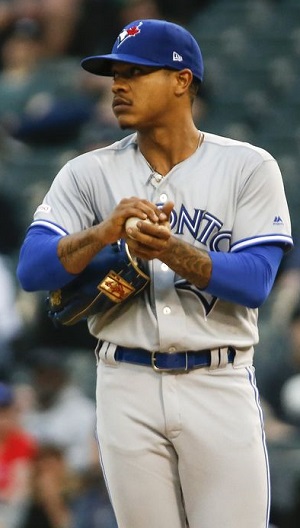
Marcus Stroman to the Mets—method to madness or madness to method?

As regards the Mets dealing a pair of mixed-reviews pitching prospects to the Blue Jays for their staff ace Marcus Stroman, and the coming trade deadline in general a few observations. Beginning with the one that tells me it seems at least three-quarters of baseball never saw this Stroman deal coming.

Anyone who thought Stroman’s new address would be New York by this year’s new single trade deadline figured it would involve the Yankees, leaders in the American League East, and not the Mets, strugglers to stay within reasonable sight of even the second National League wild card.

Or, if Stroman was going to move on from Toronto, he’d be more likely to land with one or another viable 2019 competitor—say, the Braves, where I seem to recall some observers thought he’d make a better mutual fit if the Yankees really were convinced Stroman was good enough to pitch but not necessarily fit.

But Stroman, who makes his living largely by way of his ability to lure ground balls, is now a Met. So where do we and they go from here?

1. Former major league general manager Jim Bowden, who now writes for The Athletic, says the Mets have no intention of landing Stroman just to flip him for a better package by the close of trade business Wednesday. And the two pitching prospects going to the Jays—Anthony Kay and Simeon Woods-Richardson—are considered solid but not elite prospects, but the Jays believed they weren’t going to get better than them for Stroman when all was said and done.

2. The Mets aren’t a team of elite defenders especially around their infield this year, and yet Steven Matz—returning to the rotation after a brief spell in the bullpen to re-horse—pitched a complete-game 3-0 shutout Saturday night in which his calling cards were a deft blend of breaking and off speed stuff and putting his fielders to work, which for a change they did rather admirably behind him.

3. Matz’s performance may well have had a firm impact on the Mets’ pitching thought. May. They’ve tried since 2013 to cultivate an arsenal of power arms in the rotation and seen, when all is said and done, only Jacob deGrom live up to any expectations. They watched Matt Harvey’s injuries collapse him from a power pitcher to one in search of a new cause and, now, a new team. They’ve seen Noah Syndergaard and Zack Wheeler bring the power without delivering the consistent results.

If the Mets had eyes for Stroman before Matz took the mound Saturday night, Matz’s performance had to have told them it wouldn’t be a terrible idea to add another arm to the rotation that belonged to a young man who uses more than his arm to survive on the mound. Stroman isn’t a strikeout machine; he has the second highest ground ball rate among all Show starting pitchers.

4. Maybe acquiring Stroman begins to get the Mets re-thinking their incumbent defense, too, especially marrying him to Matz in their rotation. Rookie of the Year candidate Pete Alonso forced Dominic Smith off first base, but Smith in the outfield looks almost exactly like the un-natural he is out there even though he hits with authority. Rookie general manager Brodie Van Wagenen’s willingness to take aging Robinson Cano if he wanted closer Edwin Diaz from the Mariners last winter forced Jeff McNeil, their obvious second baseman of the future, likewise into an outfield where he’s about as comfortable as an elephant in front of a mouse much of the time.

5. Diaz has been a mess not entirely of his own making this season, mishandled, sometimes mis-deployed, and while the raw talent is still there the Mets are now rumoured to be shopping him. Cano has four years left on the contract the Mets took on from the Mariners, making him almost an immovable force. Whether the Mets’ contradictory ownership might be willing to take a bath on the deal in order to start moving defensive parts back where they belong is anyone’s guess.

6. With Stroman off the market eyes turned not just upon Syndergaard but the rest of this trade deadline’s pitching market.

The Giants’ unexpected resurgence means Madison Bumgarner isn’t likely to go anywhere the rest of the season, compared to a month ago when the observers and speculators pondered where, not if he’d move on. The Yankees need whatever starting pitching help they can get but the market now seems more constricted—and as much as they’re wary of dealing with the Mets, Syndergaard now might look like an attractive Yankee target. Might.

And the Nationals, like the Giants but at a higher level, have had an unexpected resurgence of late after they were all but written off as dying as late as early June. They ran into a buzzsaw in Los Angeles this past weekend, needing Stephen Strasburg to pitch the masterwork he did in seven Sunday innings to escape with even a single win, but now Max Scherzer—whom all the Smart Guys said had to go on the trade deadline block once upon a time, in large part to bring them badly needed bullpen relief—may find his barking back barking well enough into August.

At first glance, then, it would seem the Nats have a big problem as they prepare to square off against the National League East-leading Braves Monday night. Except that the Braves, who ran roughshod over the league before the All-Star break and still lead the Nats by five and a half games, have suddenly regressed to being only human. Not only have they lost seven of their last eleven, they’ve lost two critical elements—shortstop Dansby Swanson, resurgent veteran right fielder Nick Markakis—to the injured list. The Nats won’t have Strasburg or Scherzer to throw at the Braves this week but the Nats might still gain key ground, anyway.

7. The bullpen dominos began falling over this past weekend, too. Veteran Sergio Romo, once a key to a couple of Giants World Series winners, just went from Miami to Minnesota where the Twins, this year’s American League surprise, just bumped their bullpen up several notches by bringing him aboard. Jake Diekman went from Kansas City to Oakland, a sign the Athletics are gearing up for another wild card run. There are contenders aplenty who need help in the pen and few more than the Nats.

8. If the Jays are rebuilding in earnest, bullpen-longing eyes may be cast upon the surprising Ken Giles. After his 2017 World Series mishap (which wasn’t entirely his sole responsibility) and subsequent personal and mound meltdowns, Giles has rehorsed completely in Toronto. As in, a career year: a 1.54 ERA and a 1.60 fielding-independent pitching rate. Not to mention a 5+ strikeout-to-walk rate and a 14.9 strikeout-per-nine rate.

Yes, the Nats have eyes upon Giles and his Jays pen mate Daniel Hudson. But so may the Red Sox and any other contender who needs a bump among the bulls. Even the Twins, despite landing Romo, might still make a play for Giles at least or, if Giles eludes them, Norman, whose 2.87 ERA and June-July of only four earned runs in 21 innings’ work yanked his trade value up accordingly.

Bowden rates the Stroman deal a B+ for the Mets and a B- for the Jays. It wouldn’t hurt the Jays’ standing to try prying a slightly better haul back for Giles and/or Hudson. And although Giles is dealing with a slight nerve issue in his pitching elbow, wiping out the side as he did in a Saturday night assignment should make his suitors breathe a little easier, assuming they don’t fall tempted to overwork him while he works through it.

9. The Mets may or may not yet have a wild card long shot this year, but don’t kid yourselves: they were thinking as much about 2020 as now when they made their play for Stroman. And since Stroman is under team control through the end of 2020, don’t be surprised if they like what they see from him the rest of this season and start talking extension with him before 2020 begins.

Which might also mean that Syndergaard at minimum, and Wheeler at maximum, may yet have changes of address coming by Wednesday afternoon. And with whisperings that the Red Sox have eyes upon Diaz for their pen, which needs a little help but isn’t as badly mismanaged as the Mets pen has been this year, the Mets should be thinking smart and looking very closely at that Red Sox farm system.

Because the Mets could also use a third base upgrade from veteran Todd Frazier, who’s reliable but beginning to show his age. And as thin as the Red Sox system is for now, AAA third baseman Bobby Dalbec was named both the offensive and defensive player of the year for 2018 in the Red Sox’s minor league award valuations. If the Olde Towne Team wants Diaz for their pen that much, the Mets should all but demand Dalbec in the return haul.

10. Too many teams never quite do what they should when it counts. The Mets, alas, are notorious for that. Even when they’re winning.