Marvin and Ted, a love story revisited

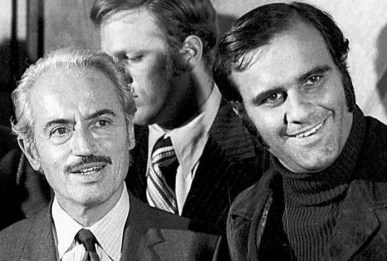
Marvin Miller, Joe Torre

Marvin Miller (left) with then-Cardinals catcher-turned-third baseman Joe Torre at a 1972 press conference.

Yes, Marvin Miller decided before his death that being elected to the Hall of Fame was no longer worth it. Not even if it was no less than his due. “At the age of 91,” he said, “I can do without farce.”

But there’ll be a nice synergy in Miller and catcher Ted Simmons being inducted into Cooperstown Wednesday, along with two more from last year’s class, Derek Jeter and Larry Walker. Miller and Simmons were joined in an unlikely way early in Simmons’s career.

The pan-damn-ic then told the new Hall of Famers, “Wait ’till next year.” Wherever he reposes in the Elysian Fields, perhaps Miller has bumped into Charlie Watts, the lifelong drummer for a band that once sang, “You can’t always get what you want/but if you try sometimes, you just might find/you get what you need.”

What Miller and Simmons needed from the last-convened Modern Era Committee in 2019 was twelve votes minimum. Miller got the twelve, one shy of Simmons’s thirteen. Both men deserved Hall of Fame plaques long enough before they finally got them. And one inadvertently provided the other with invaluable intelligence.

At age 22 Simmons found himself the Cardinals’ regular catcher entering spring training 1972. Self-aware enough, Simmons decided his emergence should be worth more than a $6,000 raise. He refused to sign a new contract that would pay him one penny less than $30,000. The Cardinals’ general manager, Bing Devine, said not so fast, son, holding the team’s offer to somewhere in the lower $20,000s.

That was while Curt Flood’s reserve clause challenge awaited its day in the Supreme Court. (Flood, alas, would lose there, but he’d kick open a door that refused to be shut again.) Simmons started the reason without a signed new contract. The Cardinals renewed him automatically as the rules of the time allowed.

Everyone in baseball trained their eyes upon the sophomore catcher who belied the usual athletic stereotypes. (Among other things, Simmons would serve active and knowledgeable time on the board of a St. Louis art museum in due course.) They also trained their eyes on the reserve clause abused so long by the owners to bind their players like chattel, until they damn well felt like selling, trading, or releasing them.

Simmons played his way onto the National League’s 1972 All-Star team as its backup catcher. Once he went to Atlanta for the game, Devine rang his hotel phone post haste. Would Simmons kindly accept a mere $75,000—as in, the $30,000 he wanted for 1972 in the first place, plus $45,000 for 1973?

Miller watched Simmons a little nervously, too, knowing the kid pondered taking it to court himself. He understood completely when Simmons accepted Devine’s new proposal. But Simmons handed Miller intelligence you couldn’t buy even on the black market: Those  owners would rather have handed a barely-seasoned kid $75,000 than let any arbitrator get a look at the reserve clause even long distance through a telescope.

Miller had once been a United Steelworkers of America economist. After a players committee including two Hall of Famers (pitchers Robin Roberts and Jim Bunning) and two respected other veterans (pitcher Bob Friend, outfielder Harvey Kuenn) chose him to run their embryonic union, Miller won the rest of the players over by being just who he was—a brain, not a bludgeon. It didn’t hurt that Miller instilled an open-door policy: “It’s your union,” he insisted.

Miller didn’t follow the stereotypical union playbook, either. He may have kept the players’ eyes on the ultimate prize, but he knew and convinced them reasonably that it had to be done step by step, from pension and clubhouse issues forward. Even as he told them, as often as need be, “You are the game. Without you, there is no game.”

His two signature triumphs came almost by accident. The first was when then-Athletics owner Charlie Finley reneged on a contracted-for insurance payment to Hall of Fame pitcher Catfish Hunter. Hunter filed a grievance and won. He also became subject of a game-wide bidding war that reached the millions and ended with him taking the third-most lucrative offer put in front of him.

Why only the third? Because the Yankees (whose representative Clyde Kluttz was the former A’s scout who signed Hunter for the A’s in the first place) were willing to divide the dollars Hunter’s way, right down to a certain amount put into an annuity to guarantee his children’s education. It was still enough to make Hunter a rich man on a fair, open market.

But Hunter was a single, isolated case. His triumph didn’t mean the end of the reserve era just yet. To do that, it took then-Dodgers general manager Al Campanis making contract talks far too personal for pitcher Andy Messersmith’s taste in spring training 1975. Messersmith promptly refused to talk to anyone below team president Peter O’Malley. He also refused to sign any contract that didn’t include a no-trade clause.

The Dodgers merely harrumphed that they’d never given no-trade clauses before and they weren’t about to start now. Messersmith said, essentially, that he’d rather be caught naked in a barracuda school than let the Al Campanises dictate his baseball future. He, too, refused to sign a 1975 contract. The Dodgers, too, renewed him automatically under the old rules.

Messersmith pitched on and pitched very well. (He’d lead the National League in starts, complete games, and innings pitched, while throwing seven shutouts and finishing second with a 2.29 ERA.) He withstood the snark of both indignant, ignorant fans and indignant, artery-hardened sportswriters.

“Every time he took the ball,” Simmons once said, “everybody in management wanted him to fail and everybody from the players wanted him to succeed.” Just as long as they didn’t have to bat against him. (The National League’s hitters batted a mere .213 against Messersmith in 1975.)

By that August, Messersmith found himself receiving two things: continuing Dodger offers for then-glandular dollars, and an education from Miller about the reserve clause itself. He was also the only active player left that season who hadn’t signed a 1975 contract. By September, the Dodgers offered him a pot of $540,000 for three years including 1975. “Where’s that no-trade clause?” Messersmith retorted, essentially. Without it, he wouldn’t budge.

When Peter came up with the dough, I was adamant. The money was incredible, but they wouldn’t bring the no-trade to the table. I’d gotten stimulated by Marvin and Dick [Moss, the players’ union’s general counsel]. Now I understood the significance of what this was all about. I was tired of players having no power and no rights.
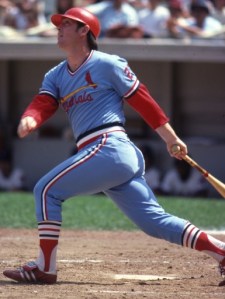
Ted Simmons

Now a Hall of Fame catcher, Ted Simmons as a Cardinal helped Miller build his leverage against the old reserve clause abuse.

That August, too, Messersmith agreed to file a grievance seeking his free agency if he remained unsigned. The season ended; Messersmith’s stout pitching alone couldn’t keep the Dodgers from finishing second in the National League West. He filed the grievance.

(Arm-and-shoulder-troubled pitcher Dave McNally, technically unsigned but intending to stay retired after leaving the Expos in June, agreed to join the grievance in August, upon Miller’s persuasion—as insurance, in case the Dodger dollars finally seduced Messersmith, who refused to be seduced by dollars alone.)

The owners had no essential argument better than “this is the way we’ve always done it.” The evidence in the grievance included a newspaper article, in which penurious Twins owner Calvin Griffith basically admitted proper reserve clause application allowed a player’s free agency after one contracted season and a second team option season and no more.

Messersmith won. (The owners promptly fired arbitrator Peter Seitz.) The Lords of the Realm author John Helyar described Simmons as “choked up” when he said, “Curt Flood stood up for us. [Catfish] Hunter showed what was out there. Andy showed us the way. Andy made it happen for us all.”

Miller was smart enough not to demand immediate free agency for all. Even he recognised teams had certain rights in players they developed, even as he insisted baseball players deserved the same rights as any other American—from the greenest labourer to the most seasoned executive—to test their value on a fair, open job market when no longer under contract.

It did far more for the good of the game than the artery-hardened hysterics of 1975 would have had you believe, especially when they mourned the death of “competitive balance.” Pace Mark Twain, the rumours of that death would prove greatly exaggerated. More teams have won the World Series since the Messersmith triumph than won the Series before it.

It’s not the players’ fault that the owners since have tried everything in their power, and sometimes beyond it, to try putting them back into their “places.” (The 1980s collusion, anyone? Isolated front-office executives willingly handing the gold to players who’d barely proven themselves worth copper? The 1994 strike born of the owners insisting the players stop them before they overspent/mis-spent/mal-spent again? Tanking?)

And they said free agency would destroy the undestroyable game. If you’d asked former commissioner Fay Vincent about that, he’d tell you what he told ESPN’s Jerry Crasnick in 2009: Blaming Miller for “destroying” baseball was “like blaming Thomas Edison for putting the candle industry out of business,” which didn’t happen, either.

Perhaps the only thing more astonishing than the owners’ post-Messersmith chicaneries was the years passing by with the idea of Miller in the Hall of Fame not so popular with his former clients (he left the union in 1982) as his work on their behalf. No less than Hall of Famer Reggie Jackson said the Hall of Fame should be for players only. You wonder what he thought when the Hall inducted Effa Manley—co-owner of the Negro National League’s Newark Eagles—as a pioneer in 2006.

“Instead of pointing to the sky,” the late Jim Bouton told Crasnick, referring to gestures often made by players crossing the plate after hitting home runs, “today’s players should be pointing to Marvin Miller.” As also to Curt Flood, Ted Simmons, Catfish Hunter, Andy Messersmith, and others who collaborated to do the once unthinkable.

Simmons himself went on to enjoy a career that should have gotten him elected to Cooperstown. His peak value matches that of the average Hall of Fame catcher. He went one and done in his only year’s eligibility on the Baseball Writers Association of America’s Hall ballot. Exactly why never really seemed clear. If he was a better hitter than catcher, the metrics simple and complex alike still show him the number eleven catcher ever to strap it on.

Maybe it was residual ill will over Simmons’s late-career tangle with Whitey Herzog. (Herzog traded him to the Brewers citing defensive shortcomings, after he declined moving to another field position. Yet Herzog eventually became a member of the Modern Era Committee that finally elected Simmons.) Maybe they had a problem marrying baseball’s most honorific museum to an art museum board member.

Miller died in 2012 with only one other regret: not having been able to convince the MLBPA to revisit the 1980 pension realignment that froze players with short careers prior to 1980 out of the pension plan. Players since 1980 need only 43 days major league time to receive a pension and one day to receive health benefits.

The only thing the frozen-out have received since comes from a 2011 deal between then-commissioner Bud Selig and then-MLBPA leader Michael Weiner: $625 per quarter for every 43 days’ major league service time for up to four years. Before you say that’s something, at least, be reminded that they can’t pass those dollars to their loved ones if they pass before the final dollars are collected.

The MLBPA leadership since Miller’s departure has little to no known desire anywhere in its ranks to redress that or anything else involving the pension freeze-out. Attrition has reduced the number of affected players from over 1,100 to just over 600. Would anyone with leverage in the game now think to resolve Miller’s regret?

“Nobody has picked it up,” former Twins pitcher Tom Johnson, one of the affected, told me last December. “Don Fehr [Miller’s successor] didn’t pick it up, [present MLBPA director] Tony Clark hasn’t picked it up, nobody has picked it up and cared about it. I wish they’d go back and listen to that.”

Listening was one of Miller’s strong suits. “It took forever for each of us to get in,” Simmons has said. “He was the real deal. During my career, Marvin was the Players Association. He was an incredible man who was very special to me specifically. It’s an honor to be inducted with him. It’s bittersweet for his family but I’m lucky I can arrive in the flesh.”

Simmons has also said he hoped restoring the Hall inductions would be a stride in the right direction of returning life to something resembling normalcy. Surely he knows that “normalcy” doesn’t always mean without hiccups or pratfalls, both of which baseball has had in abundance for too long.

Portions of this essay have been published previously.

Jack Smith, RIP: Haircut, shave, and pension throat cut

Jack Smith

Jack Smith, when he was a Dodger following seven years in their minor league system.

One of the last entries by longtime newspaper humourist Lewis Grizzard before his death in 1994 involved a haircut. Specifically, the one he received from “an old-school barber” whom he suddenly recognised as a one-time pitcher he’d seen with the 1960s Atlanta Crackers.

“THAT Jack Smith,” wrote Grizzard. “Hard to believe. There I was getting a haircut from a barber who was also a boyhood idol.”

Smith was a righthanded relief pitcher who’d bounced around the Dodgers system for seven years before he got a call-up in September 1962, when injuries sidelined reliever and former World Series MVP Larry Sherry temporarily. By his own admission, he was a hard thrower no matter what the pitch, but his number one issue was wildness.

He died at 85 on 7 April at the Westbury Health and Rehab facility in Conyers, Georgia, after a battle with Alzheimer’s disease. He was also one of the now 612 short-career major leaguers between 1949-1980 who were frozen out of baseball’s pension plan when the owners and the Major League Baseball Players Association re-aligned the plan in 1980.

That re-alignment changed pension vesting to 43 days major league time and health care vesting to a single day—excluding Smith and other short-career players during the time frame noted above. Their sole redress came by way of the 2011 deal between then-commissioner Bud Selig and then-players union director Michael Weiner: $625 per quarter for every 43 days major league time up to four years worth.

Weiner’s death in 2013 took further chances to get better redress for those players off the table, where the issue still remains, and where today’s players union director Tony Clark seems too little interested in revisiting it.

Once again, I find it unconscionable and morally repugnant that [the MLBPA] is turning its back on older men and their families,” said A Bitter Cup of Coffee author Douglas J. Gladstone, whose book first exposed the pension freezeout. “I’d love to know if Frances Clark and her three kids, Kiara, Jazzin and Aeneas, know how badly Tony is treating the men who ushered in free agency?”

A year after he won the Southern Association (AA) earned run average title with the Crackers, Smith appeared headed for another such title with Omaha (AAA) when the Dodgers called him up after Sherry’s injury. He appeared in eight games, finished two, saved one, and posted a 2.42 fielding-independent pitching rate that belied his 4.50 ERA.

The lone save was part of the Dodgers’ effort to stay in the pennant race and, in due course, force a playoff with the Giants. Smith relieved Hall of Famer Don Drysdale for the ninth. After walking Cubs second baseman Ken Hubbs and giving up a single to Hall of Famer Ernie Banks, he retired Hall of Famer Billy Williams on a fly out, surrendered a run on pinch hitter Nelson Mathews’s ground force out to shortstop, and shook off a second walk to get George Altman out on a pop foul near third base.

The effort sealed Drysdale’s 24th credited win of 1962, en route his only Cy Young Award, which kicked off a streak of five straight Cy Young Awards (then strictly a major league award) awarded to Los Angeles pitchers: Drysdale, fellow Hall of Famer Sandy Koufax thrice (1963, 1965-66) and Angels righthander Dean Chance (1964).

Smith appeared in the first two of the three 1962 pennant playoff games. In the first game, he got the sixth inning-ending double play after Sherry surrendered back-to-back home runs by Hall of Famers Willie Mays and Orlando Cepeda and pitched a shutout seventh, in a game the Dodgers lost 8-0. (Still struggling for a rhythm after a long layoff due to a finger circulation issue, Koufax himself got hit for a two-run homer by Mays in the first and a solo by Jim Davenport in the second.)

But Smith wasn’t quite so successful in the second game despite the Dodgers’ win. With the Dodgers up 7-5, he took over for Ron Perranoski after back-to-back singles (Davenport and Mays) opened the Giants’ eighth. He surrendered an RBI single to Ed Bailey and lost Cepeda when Frank Howard playing right field misplayed Cepeda’s fly.

Smith yielded to Stan Williams, who walked Felipe Alou and surrendered a sacrifice fly to John Orsino with the run charged to Smith, before getting Jose Pagan to ground out to third and getting the Giants out in order in the ninth. Ron Fairly won the game with a sacrifice fly. (The Giants won the third game and the pennant, 6-4.)

Jack Smith

Smith as a Brave; when they sent him down to the Atlanta Crackers, he decided to trade pitching for barbering after a final baseball season in 1965.

He made the Dodgers out of spring training 1963 and posted his arguable best major league effort on 28 April, against the Cardinals, with 4.1 innings of shutout ball, after the Cardinals jumped Johnny Podres for two in the first and reliever Ken Rowe for five in the second. The Dodgers managed to close the deficit to 7-4 while Smith was in the game; the Cardinals went on to win, 9-5.

After he relieved Pete Richert for the sixth, with the Dodgers in the hole 8-0 to the Pirates, the Pirates tore four runs out of him before he got the side out, a sacrifice fly by Smoky Burgess and a three-run homer by Bob Bailey. It was the last inning Smith pitched in a Dodger uniform; he was sent back to the minors, where the Milwaukee Braves claimed him in the subsequent Rule V draft.

He had a decent 1964 with the Braves, making 22 appearances, finishing nine games, and posting a 3.77 ERA and 3.70 FIP, but the Braves sent him down to the Denver (AAA) in the Pacific Coast League. In 1965, the Braves moved him to the Crackers, who’d moved to the AAA International League and become a Braves affiliate since he’d pitched for them last.

Smith had a solid 1965 in Atlanta (the Braves themselves, of course, moved there for 1966), but he decided he was tired at last of flying around the country playing baseball. He’d gone to barber college in the off-seasons and even brought some of his gear to the Braves clubhouse.

Smith opened an Atlanta barber shop, Smitty’s Bullpen, in a Marriott hotel while with the Crackers his second time. The place was so successful (then-Braves manager Bobby Bragan was a semi-regular customer) he decided to stay with it full time, retiring from baseball after the 1965 season, and finally retiring as a barber in 2016.

Some of those who follow the short-career player pension issue believe one reason they were frozen out was that they were viewed as little more than September call-ups. Smith was one in 1962, but he was on Opening Day rosters with the Dodgers in 1963 and the Braves in 1964.

His major league life didn’t last long enough to be part of the players union’s emergence as a serious force in the game. His career ended before a committee led by Hall of Fame pitchers Robin Roberts and Jim Bunning, plus veteran pitcher Bob Friend and outfielder Harvey Kuenn, led to Marvin Miller’s hiring as their first independent executive director.

Smith wasn’t there to be part of the Players Association pushes and actions that led in due course to Curt Flood’s courageous but failed reserve clause challenge; the bidding war that followed Catfish Hunter’s free agency after Charlie Finley reneged on a contracted-for insurance payment; and, Andy Messersmith’s pitching without signing a 1975 contract, then taking it to arbitration and winning the end of the reserve era, finishing what Flood started.

But Smith and his fellow 1949-80 short-career players weren’t allowed to pass the monies provided by the Selig-Weiner deal of 2011 on to their survivors after their passings. Smith is survived by his wife, Susan, three children, two stepchildren, six grandchildren, and four great-grandchildren. He may not have received grand dollars from the Selig-Weiner deal but they were something, after all. If any remained yet to come, they stopped with his death.

“It’s worth contemplating a reassessment of this,” wrote New York Post columnist Ken Davidoff, in an early February profile of a Smith contemporary, former Yankee reserve outfielder Jack Reed, “because these guys are part of the game’s tapestry and history that make it so special.”

When Hall of Fame manager Casey Stengel skippered the calamitous Original Mets, he once told his barber, “Haircut, shave, and don’t cut my throat, I may want to do that myself.” Smith’s post-baseball success as a barber doesn’t change the fact that he and his fellow short-career pre-1980 players had their throats cut.

The players spurn the universal DH—for now

Marcell Ozuna is just one DH-type player in a tough 2020-21 market with the universal DH still off the table.

No, the Major League Baseball Players Association didn’t shoot themselves in the proverbial foot when they spurned the universal designated hitter this time. They want it, as should every rational baseball fan. But it’s wise to wish they’d spurned it for the best reason.

The owners were willing to let the universal DH remain permanent and not just a 2020 irregular season experiment—if the players would agree to permanently-expanded postseasons. How very big of them. The players told the owners to stuff that trade.

“Both the league and union seem to agree a universal DH is a good idea, in part because pitchers, if prevented from hitting, no longer could get injured swinging for a hit or running the bases,” observes The Athletic‘s Ken Rosenthal. “But the league, viewing the creation of fifteen DH jobs as an economic gain for the players, wants a tradeoff. It initially suggested enacting the universal DH in exchange for the players agreeing to an expanded postseason for 2021, a concept the union rejected.”

The players know that further expanded postseasons equal further contracted competition for player signings and even trades. They know further expanded postseasons equal the next best thing to a de facto salary cap. They know further expanded postseasons equal more excuses for tanking.

So the players sacrificed something short distance that would mean a little more money in their pockets, in order to prevent something else that might take a lot more money out of players pockets long distance. Enough of the owners exposed themselves, yet again,  as refusing plain common baseball sense on behalf of continuing to make money for themselves regardless of their product’s viability.

Those owners are witless to comprehend the continuing dilution of championship play that postseasons already long expanded brought before last season’s dismal experiment of sixteen-team league postseason entries. How can we expect them to comprehend the value of the permanent universal designated hitter?

They might not be terribly impressed with arguing, well, forget the payroll question a moment and consider the play on the field. You know, the thing you’re selling in the first place. But the players and the game’s real fans should be.

This winter’s snail’s pace free agency market was a drag enough without a small but considerable group of men past their fielding prime but still loaded with hits in their bats augmenting it. Commissioner Rob Manfred’s indecisiveness on consecrating the universal DH for all time helps leave those men in limbo and those owners’ teams bereft of fortified real offense.

With the permanent universal DH off the table for one more year at least, players such as Nelson Cruz, Edwin Encarnacion, and Marcell Ozuna couldn’t draw a bead on their real market values this winter. Among other league-wide dilemmas, the Mets still have to juggle to keep both Pete Alonso and Dominic Smith in the lineup. As MLB Trade Rumors writer Steve Adams noted, “NL teams are left to build a lineup and a roster without knowing whether they’ll have a spot for an extra hitter.” They know now.

According to NBC Sports, six teams including three National League clubs have eyes on Ozuna. “[M]aybe one of the biggest reasons the Braves are balking on [trying to re-sign] Ozuna at the moment,” writes Jake Mastroianni of the FanSided journal Tomahawk Take, “is because his defense was even worse than they thought when they signed him last offseason.” Other NL clubs would feel a lot more comfortable adding him as a DH since Ozuna at best is a replacement-level defender.

The owners need less poison pills and more vision.

Never mind the American League teams playing this market slow enough when they’ve had the DH since the Nixon Administration. You’d think National League owners in need of more men on base or more men to drive in the runs would have stepped up and decided taking every chance to get more runs on the board than the other guys is worth ending the tradition one of their own ancestors wanted to end the year Carnegie Hall opened.

You’d think NL owners would be relieved at last not to have to risk their pitchers’ health on the rare occasions they reach base or their pitchers’ subsequent effectiveness in games during which they reach base, somehow. You’d think the money-conscious owners would want to preserve their seven-figure annual investments in good pitchers by enabling the rule that would let them sign still-useful veteran bats for half that much.

You’d also think those owners would be sick and tired at last of watching Jello bats hogging the number nine lineup slot to hit about .166 over the past century worth of Show baseball. Bad enough the so-called purists also continue whining about not just one of the nebulous sides of “tradition” but the nebulous side of preserving “strategy” that means keeping a batting order spot available for the most automatic out in baseball this side of Mario Mendoza.

Quick: Ask them how swiftly they’d sign a .166-hitting position player even if he could play the field like Keith Hernandez, Bill Mazeroski, Mark Belanger, Brooks Robinson, Barry Bonds, Andruw Jones, or Roberto Clemente. According to how many defensive runs saved above their league averages they were, those are the greatest fielders at all non-battery positions in baseball history. All but one of whom could hit a bit. A few of whom could hit a lot.

Want the answer? See you in about a hundred years, if that soon.

Belanger was the worst hitter among the foregoing group of defensive virtuosi. No questions asked. He had 22 intentional walks in his eighteen-season career and nineteen of them came when he batted eighth in the lineup. Guess I have to come right out and say it. Opponents didn’t hand him first base on the house because he was liable to hit a three-run homer and they’d rather have chanced lesser bats doing the clutch hitting.

They put Belanger on so they could rid themselves of the Jim Palmers, Mike Cuellars, Dave McNallys, and Pat Dobsons for side retired. In Year One B.D.H. (1972), that redoubtable Oriole starting rotation hit a death-defying .161 together and—for those who still think strikeouts are worse than hitting into double plays—struck out 151 times between them.

Palmer was the most consistent hitter of the group with a whopping .224 traditional batting average. Unless you’ve got that man who’s a human Electrolux in the field, or unless you’re a tanking masochist, you’re not going to sign .224 hitters for the rest of your batting order or bench any time soon if you can help it.

So why would you insist on keeping a group that hit .166 over the past century in that number nine slot? I say again: you want “strategy,” why wouldn’t you want that spot opened up for a possible second cleanup-type hitter or a possible extra leadoff-type hitter? It’s been tried before and, when you put the right bats in in those roles, it pays off handsomely enough.

I’d rather the players spurned a deal of the universal DH for permanent further expanded postseasons because the already-expanded postseason has already diluted real championship competition. Because they were sick at the sight of even an irregular season sending six second place teams, three third-place teams, one fourth-place team, and two teams with losing records to the championship rounds.

“[I]f the bar to reach the postseason is lowered, some clubs won’t feel as compelled to spend for an extra couple of wins to push themselves over the top,” Adams observes, appropriately. “The margin for error is much greater when nearly half (or even more than half) of the teams in the game qualify for postseason play than it is when only a third of clubs do. That’s especially true when at any given point, there are a handful of teams tanking and actively doing everything they can not to win games.”

Sometimes the players, too, have to remind themselves that the common good of the game is more than just making money for or in it. Maybe while negotiating the next collective bargaining agreement they’ll push for the universal DH for all the right reasons. While they’re at it, maybe they’ll tell the owners and Commissioner Nero not to even think about making it contingent upon what’s good for the owners but bad for baseball.

A Curt Flood Award? The first should go to Andy Messersmith

“Curt Flood stood up for us. [Catfish] Hunter showed what was out there. Andy showed us the way.”—Hall of Fame catcher Ted Simmons.

My first notice came when I saw San Francisco Chronicle writer Susan Slusser’s praise: “How wonderful! The [Major League Baseball Players Association] is instituting a Curt Flood Award for the Oakland native whose efforts helped bring about free agency and allow players to, eventually, be paid their worth on the open market. It will be handed out for the first time Thursday.”

I know who should receive the first Curt Flood Award, and I hope to God the Players Association thinks likewise. The first Flood Award ought to go to Andy Messersmith.

Flood’s Christmas Eve 1969 letter to then-commissioner Bowie Kuhn was the Second Shot Heard ‘Round the World. “After twelve years in the Major Leagues,” he began, “I do not feel that I am a piece of property to be bought and sold irrespective of my wishes.” Flood fired his gun from the same city in which a certain former slave proclaimed that living now on free soil made him thus a free man.

Small wonder that George F. Will would nickname Flood Dred Scott in Spikes. “[Scott] was not the last time,” Will wrote in 1993, “that the Supreme Court would blunder when asked when a man can be treated like someone’s property . . . Six years later—too late to benefit him—[Flood’s] cause prevailed. The national pastime is clearly better because of that. But more important, so is the nation, because it has learned one more lesson about the foolishness of fearing freedom.”

Flood’s was the groundbreaker that didn’t quite make it. But the graceful center fielder kicked a door open just wide enough for further pressure. Catfish Hunter kicked it a little further open in 1974, after Oakland Athletics owner Charlie Finley reneged on a contracted-for insurance payment to the Hall of Fame pitcher and Hunter was thus awarded his free agency.

The Hunter case didn’t challenge the reserve clause itself. The bidding war to follow for his services was won by the team who actually offered him the third-highest dollar-worth amount among the suitors but the division of the dollars Hunter wanted most, including an annuity to guarantee his children’s education. But it shone a light his fellow players had only suspected might reveal platinum on a fair, open job market.

The official name of the case to come would be John A. Messersmith vs. Los Angeles Dodgers. (Messersmith preferred to be known as Andy, though his middle name was actually Alexander.) The official net result of his almost unexpected 1975 challenge was to finish what Flood began. Almost unexpected?

Messersmith first emerged as a California Angels comer with a bristling fastball, a deadly changeup, a 2.77 ERA, a 3.04 fielding-independent pitching rate, and an upbeat personality that didn’t mind crossing the line to periodic flakiness. The Angels traded him to the Los Angeles Dodgers in November 1972, in a multi-player swap that made a somewhat temporary Angel out of Hall of Famer Frank Robinson.

He was just as good and stubborn on the mound with the Dodgers, finishing fifth in the 1973 National League ERA race (2.70), then becoming one of the league’s two 20-game winners with a 2.59 ERA in 1974 for a pennant-winning Dodgers aggregation. He also finished second to his relief pitching teammate Mike Marshall in the Cy Young Award voting.

“He’s one of the best competitors I’ve ever managed,” said his manager, Walter Alston, before that World Series. “He can do it all. He can pitch, field his position, has a good move to first . . . Andy is the kind of guy who wants the baseball. He wants to pitch and that’s why I put him up there with the other great pitchers I’ve had the good fortune to manage.”

Andy was also the kind of guy who proved to be just as stubborn talking contract as getting hitters out. He reported unsigned to spring training 1975, the original issue being not whether he’d get a well-earned raise from the $100,000 he earned in 1974 but how much of a raise. Then, according to Wall Street Journal writer John Helyar in The Lords of The Realm: The Real History of Baseball, the Dodgers’ then-general manager, Al Campanis, screwed the proverbial pooch:

As they sat in [Campanis’s] Vero Beach office . . . Campanis infuriated the pitcher. Quite apart from how well the pitcher had performed, quite apart from how much the Dodgers could allegedly afford, he injected a deeply “personal issue.” (Even eighteen years later, the matter cut so deep with Messersmith he wouldn’t elaborate on it.”)

Two things happened. One, Messersmith severed talks with the GM. “This is way out of the boundaries of negotiations; this is something else,” he told Campanis. “I’m not going to deal with you anymore.” He insisted on shifting the talks to Peter O’Malley, the club’s president. The other thing to emerge was a new non-monetary demand. No way, Messersmith decided, would he let Al Campanis be in a position to dictate his career. He’d already had to change teams once when he crossed his first GM, the Angels’ Dick Walsh. Now he wanted a no-trade clause in his contract. “I’m going to have some control of my destiny,” declared Messersmith.

O’Malley was more to Messersmith’s taste but no more amenable to a no-trade clause. “We’ve never given one,” he said, “and we aren’t going to start now.”

So Messersmith refused to sign a new contract and pitched 1975 without one. “At the start,” he’d say later, “it was all personal. Al Campanis had stirred my anger, and it became a pride issue. When I get stubborn, I get very stubborn.” The National League’s hitters got a not-so-friendly reminder. Messersmith led the league with forty starts and seven shutouts, and finished second with his 2.29 ERA, and the hitters only hit .213 against him.

“Every time he took the ball,” Hall of Fame catcher Ted Simmons said, “everybody in management wanted him to fail and everybody from the players wanted him to succeed. He was doing it for us all.”

By August, however, Messersmith found himself pitching for something above and beyond the need to stuff Al Campanis. The union’s original executive director, Marvin Miller, called him. By that time baseball had only one unsigned player on active duty—Messersmith himself. Miller wanted to know if Messersmith would consider filing a grievance seeking free agency if he finished the season unsigned.

The Dodgers didn’t make it simple for him. Neither did the near-constant questions from sportswriters Helyar summed up as, “So how ’bout that contract, Andy?” They kept hiking the money the longer and the better Messersmith pitched. Come September, Helyar noted, the offer was three years and $540,000 total. But the offer still excluded the no-trade clause that was Messersmith’s most unbreakable demand.

“We had no intention of trading Andy Messersmith,” O’Malley insisted. “He was a quality individual, a quality performer, and a delight to have on the team.” Messersmith took one look at Campanis still in the front office and decided there was no dollar amount able to buy him off.

“When Peter came up with the dough, I was adamant,” Helyar quoted Messersmith remembering. “The money was incredible, but they wouldn’t bring the no-trade to the table. I’d gotten stimulated by Marvin and [union general counsel] Dick [Moss]. Now I understood the significance of what this was all about. I was tired of players having no power and no rights.”

Miller’s only concurrent worry was whether the incredible money would back Messersmith off the grievance track. The union director thus enlisted pitcher Dave McNally, technically unsigned but contemplating retirement following persistent arm soreness. McNally agreed join a grievance. Messersmith had no intention of backing away from it. “I’ve come this far,” he said. “I need to see this through.”

There’s no reason why a club should be entitled to renew a player’s contract year after year if the player refuses to sign and wants to go elsewhere. I thought about it for a long time and I didn’t do it necessarily for me, because I’m making a lot of money. I didn’t want people to think, ‘Well, here’s a guy in involuntary servitude at $115,000 a year.’ That’s a lot of bull. But then, when you stop and think about the players who have nowhere to go and no recourse … this isn’t for a guy like me or any other established ballplayer unless you’re having problems with your owner or something like that. It’s more for the guy who is sitting on the bench and who believes he hasn’t been given a chance.

When the hearings in the case finally took place before arbitrator Peter Seitz, Messersmith stood his ground. And the earth moved under his feet.

After first flattening Kuhn—especially the commissioner’s staggering bid to claim that the end of the reserve clause would mean corrupted or thrown games—Moss delivered a knockout punch with the least likely glove: Minnesota Twins owner Calvin Griffith, courtesy of a Minneapolis Star story from March 1974: “If [a player] doesn’t sign by March 10, I can invoke the option clause. If I do that, I can cut him as much as I want up to 20 percent. Of course, he would then be playing out his option. At the end of the season he would be a free agent.”

In other words, for decades the owners used the strict language of uniform players contract Section 10(A) unlawfully, agreeing among themselves not to sign players who refused their incubment teams’ offers. Seitz, who preferred (and indeed all but begged) that the owners and the players negotiate and settle themselves, was left no choice after the owners’ Player Relations Committee leader John Gaherin told him, “There’s no change in our position. So turn the crank.”

Seitz turned the crank. Miller signed “assent” and Gaherin signed “dissent” on the document aboard which Seitz ruled in favour of Messersmith. (And McNally, though it was understood if often forgotten that the former Baltimore Orioles standout had signed onto the case strictly as a human insurance policy.) Gaherin promptly and almost apologetically handed Seitz a letter firing him as baseball’s arbitrator.

“Curt Flood stood up for us,” Simmons said. “[Catfish] Hunter showed what was out there. Andy showed us the way. Andy made it happen for us all. It’s what showed a new life.”

It would also have been nice and in the spirit of Flood and Messersmith if the union had thought concurrently to finish what former executive director Michael Weiner began in 2011, and bring complete and final pension redress to what remain 600 plus short-career major league players frozen out of the 1980 pension re-alignment.

Weiner and then-commissioner Bud Selig made possible their current stipend of $625 per quarter for every 43 days’ major league service time for up to four years. The bad news: those players can’t pass the stipend on to their families should they pass on before the stipend ends. They also can’t be part of the players’ medical plan. Miller himself is known to have said that failing to review and revamp that 1980 pension realignment while he led the union was his biggest regret.

But if there’s a better inaugural recipient of the Curt Flood Award than the man who finished what Flood began, I’m unaware of him. Baseball players since have known what they owe Flood. They don’t always remember what they owe Messersmith, too. Giving him the first Flood Award would remind them powerfully.

Justice at last for high-tech cheaters?

2020-07-30 JoeKellyFightClub

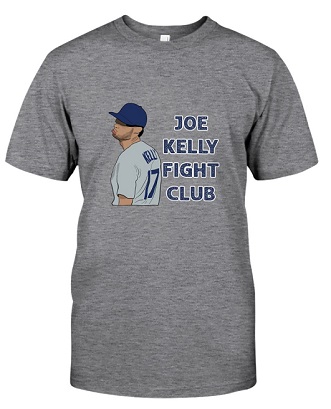
While such “Joe Kelly Fight Club” T-shirts became popular instantly, MLB and the players union finally agreed to let the commissioner hammer electronic cheaters. But are there catches?

Well, what do you know. Joe Kelly’s Tuesday night messages to Alex Bregman and Carlos Correa may have proven more than just worth an eight-game suspension (being appealed) and his canonisation as a saint in Los Angeles and elsewhere.

They have gotten both MLB’s dubious commissioner and the Major League Baseball Players Association on board with punishing future Astrogaters and Soxgaters. If they’re caught taking or transmitting such electronically-pilfered intelligence, they can be suspended without pay and lose the days of those suspensions in service time.

The news comes from one of the most unimpeachable sources—Evan Drellich, one of two writers for The Athletic (Ken Rosenthal was his teammate on it) to whom former Houston Astros pitcher Mike Fiers, an Oakland Athletic since August 2018 (after a stop in Detroit), blew the whistle on the Astro Intelligence Agency in the first place.

“MLB’s rules on the use of electronics and video grew significantly in the wake of penalties for the Astros and [Boston] Red Sox, according to a review of the document by The Athletic and conversations with officials familiar with it,” Drellich writes in an article published Thursday morning.

The league has newly hired an outside security firm to police the video replay room entrance and no later than next year plans to edit out the signs from the footage players look at in-game.

But no alteration may be as significant as the league’s ability to discipline. Commissioner Rob Manfred has the hammer, although the union can always appeal his decisions.

. . . Kelly was said by some to be delivering the justice to Astros players that MLB did not.

Whether MLB could have effectively administered that justice previously is a complicated question.

Technically, Manfred could have attempted to suspend Astros players had he not granted them immunity during his office’s investigations. But the punishments might not have stood up to expected grievances from the MLBPA because the league and union never before agreed how these specific issues would be handled. In fact, Manfred had declared in 2017, well before the Astros and Red Sox investigations, that he would hold club officials, not players, accountable for sign stealing.

No one condoned throwing at a batter’s head, as Kelly appeared to do when he threw such a pitch to walk Bregman with one out in the bottom of the sixth Tuesday, when they knew without being told that Kelly did only what it seemed at least half of major league baseball’s players—knowing how un-contrite both the Asterisks and the Rogue Sox seemed in spring training after the verdicts—thought was going to be done this season.

(It didn’t exactly take forever for a rash of T-shirts celebrating Kelly’s knockdown of Bregman and subsequent breaking-ball dustings of Carlos Correa, not to mention protesting his suspension, to go on sale online. “Free Joe Kelly” and “Joe Kelly Fight Club,” with or without Kelly’s image answering Correa’s huffing with a mock-crybaby face, seem the most popular.)

Until the coronavirus world tour knocked baseball as inside out as the rest of the world, Astrogate especially and Soxgate concurrently were the number one topic and scandal around the game. At times it was tough to determine which was more scandalous, the AIA and the Red Sox replay room reconnaissance ring, or Manfred having given players immunity instead of using his office’s powers to order them, “Spill, or be spilled.”

Not only did Chicago Cubs third baseman Kris Bryant say this was worse than the prior scandals around actual or alleged performance-enhancing substances, Dodger pitcher Alex Wood said, “I would rather face a player that was taking steroids than face a player that knew every pitch that was coming.”

Wood faced such players in the 2017 World Series. He had the lowest ERA (1.17) of any Dodger pitcher who pitched five or more innings in the set. He started Game Four in Minute Maid Park and surrendered George Springer’s two-out solo home run to break a scoreless tie and end his evening; he relieved Kenley Jansen for the Game Seven eighth and retired the side in order in Dodger Stadium.

Because the AIA’s apparatus involved either installing an additional and illegal real-time camera in Minute Maid Park, or taking an already-installed camera off the mandatory eight-second transmission delay, the 2017-18 Asterisks couldn’t run their sign-stealing scheme on the road. (In due course, it developed that Asterisk administrators tried but likely failed to urge scouts on the road to steal signs from the stands with cameras or field glasses.)

The 2018 Rogue Sox could operate their replay room reconnaissance ring in Fenway Park and elsewhere, anywhere, because it didn’t depend on altered or extra equipment. Basically, MLB handed them the keys to the candy store. Who knows how many other teams did as the Rogue Sox did, posting someone to decipher enemy pitch signs and signal them to a baserunner who’d then signal them to the hitter.

Remember: Sign-stealing on the field is as old a brand of gamesmanship as baseball itself. That’s why nobody went more than boo when New York Yankees right fielder Aaron Judge was recently seen as a runner on second looking as though sending a stolen sign to the hitter.

The 1951 New York Giants posted a coach in the clubhouse/offices above center field in the ancient Polo Grounds to steal signs telescopically and relay them to the bullpen from where signs were sent to hitters who wanted them. (The Giants stole the pennant! The Giants stole the pennant!) The verdict on their spectacular pennant race comeback forcing that fabled pennant playoff was left to history, alas.

The Red Sox married classic gamesmanship to off-field assistance handed to them (and anyone else who might have done likewise) in a gift-wrapped box. They didn’t install an extra camera and monitor in the room so far as is known. The new protocols now include prohibiting video room operators from communicating with players, coaches, and managers; and, outside security hired by MLB to guard the rooms, one guard for now and perhaps two after the coronavirus restrictions can be lifted.

Was Kelly punished too harshly for doing only what everyone with the proverbial two brain cells to rub together knew was likely to happen sooner or later, especially when the delayed season’s schedule included the surprise of the Astros facing the Dodgers in two sets? Another Athletic writer thinks so.

“When Manfred declined to punish the Astros, whether you agree with retaliation or not, he all but ensured opposing players would take matters into their own hands,” writes Molly Knight.

The Astros escaped their first series of this pandemic-shortened season against the Mariners without incident. But did anyone really expect none of the Dodgers to seek revenge?

MLB confirmed the Astros cheated their way through the 2017 World Series, and it still took them seven games to beat the Dodgers. It was as close as Los Angeles has come to winning it all since 1988. The scars from that series three years ago are still fresh for Dodgers fans, no matter how often Astros fans tell them to get over it. It’s hard to see how Astros fans would be over it if the trash can had been banged by the other team.

Considering that Kelly has a history as an erratic pitcher who rarely lets an actual or perceived offense go unanswered, it practically figured that he’d be the Dodgers’ version of the Green Hornet, flirting with crime to take down the grand theft felons. But keep in mind, too, that an eight-game drydock in a sixty-game season equals a 22-game suspension for a full 162-game season.

“Manfred may have thought he was sending a message about vigilante justice by giving Kelly an eight-game ban,” Knight writes. “But all he did was draw attention back to the absurdity that Astros players cheated to win a World Series and justice wasn’t served.”

Now Commissioner Nero has a hammer to swing on the high-tech off-field-based cheaters. Even if he catches another such intelligence/reconnaissance operation in the act—or another Fiers blows the whistle—and swing, and the Players Association files grievances on behalf of the hammered. He’d still send the message loud and strong that any more AIAs or Rogue Sox Reconnaissance Rings are verboten.

The question is whether he really will. And, whether the hammer will be a mallet or a marshmallow.