The waive

Lucas Giolito

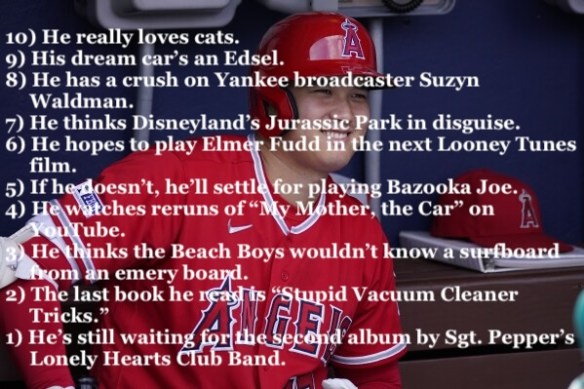
Lucas Giolito—from an Angels trade deadline acquisition to one of five put on the waiver wire approaching its deadline . . . and potentially impacting pennant races.

Just when you thought nothing weird could happen to or emanate from the Angels, they found a way to disabuse you. With one act last week they helped yank a couple of pennant races inside out. Whether it was bold or boneheaded is a matter of opinion. Likewise whether it was both at once.

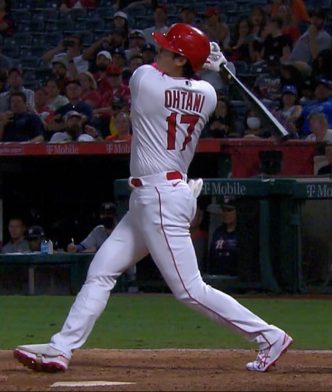
And that was on top of Shohei Ohtani going down for the count on the pitching side with that ulnar collateral ligament tear . . . but continuing on as a designated hitter regardless of the ongoing risk, and without deciding to undergo the Tommy John surgery he’ll have to face most likely.

In one week, the Angels went from mere disaster to the guys who just might have played key roles for somebody else’s postseason trips. The way they did it may have set a precedent somewhere between foolish and dangerous to the integrity of the game.

They gambled on keeping Ohtani rather than flipping him for remake-beginning prospects at the trade deadline. They leaned on an illusory 11-3 string to finish July and traded for pitcher Lucas Giolito (White Sox) and left fielder Randal Grichuk (Rockies). They opened August going 2-9. They finished the month going 8-19.

They saw the season sinking faster than the Lusitania before August finally ended. First came Ohtani with the UCL tear. Then, as owner Arte Moreno and his minions saw their all-in push at the trade deadline turn to all-out pushed just enough out of the races:

* The Angels put Giolito, Grichuk, and three other players—relief pitchers Reynaldo López and Matt Moore, plus outfielder Hunter Renfroe—on waivers last week.

* Yes, the waiver placements were salary dumpings, and they just might give a lot of other teams ideas about dumping salaries at no cost to the dumpers and miminal cost to the dumpees. To claim and receive Giolito, López, and Moore cost the Guardians what Aaron Judge may hand out in tips, $3 million.

* Yes, too, that just might have given the Guardians new pennant race life in an American League Central that isn’t exactly a division built to strike fear in the hearts of the rest of the league.

The Guards claimed Giolito, López, and Moore before the end of 31 August. Meaning those three, should they hold up and pitch in well enough, will turn up in the postseason if the Guards manage to sneak into the wild card picture or even sneak the Twins off the top of the Central heap. They swung into a good start from there—they took the first two of a weekend set with the Rays, including a Saturday walkoff on an RBI single and a sacrifice fly.

If the Guards’ motives included cutting into the Twins directly, they got off to a grand beginning even before they could pencil Giolito into the rotation and with only López seeing action prior to Sunday. They start a critical set with the Twins on Labour Day. It’s a wonder the Twins and others didn’t start ringing commissioner Rob Manfred’s or players union chief Tony Clark’s phones off the hook.

This is what a few people feared possible when the old waiver trade system expired in 2019. Until then, teams could trade players they put on waivers and, since they put everyone on the roster on the waiver wire until then, disguise whom they really wanted to deal while working out the particulars on the deals they really wanted by the close of business 31 August.

If that sounds a little bit surreal, be reminded that a few Hall of Famers changed teams in just that way, including Jeff Bagwell (to the Astros, before he’d even seen substantial major league action), Bert Blyleven (to the Twins), John Smoltz (to the Braves), Justin Verlander (to the Astros the first time), and Larry Walker (to the Cardinals, after his long Colorado tenure).

But that was then: the traders got value or at least potential value via players in return. This is now: The dealers get salary relief if they want it, as the Angels have, but nothing else. Unless it’s luxury tax relief, which the Angels will get since the waiver dump gets them below the $233 million seasonal threshold. Using it as a salary dump just might raise more than a few players union hackles and make more than a few other owners a little edgy, too.

The Reds claimed Renfroe plus Yankee outfielder Harrison Bader off the waiver wire in time to have them on a postseason roster, too. They’ve taken two out of three from the upstart Cubs (doesn’t that sound a little weird to say?) since, but with little to no help from their new waiver wire toys yet: Bader entered play Sunday at 1-for-3 with a stolen base; Renfroe, 0-for-9.

They have a six-game National League Central deficit but the Reds awoke Sunday morning with fingertips on the third NL wild card with the Diamondbacks and Giants having fingertips on the second card. The Guards are five games behind the Twins in that AL Central and slightly beyond the third AL wild card.

It all began with the Angels deciding the time for a salary dump came a little ahead of the usual off-season. The trouble was, too, that it dominated baseball’s news wires and helped some people miss a few more glorious doings, in particular Braves star Ronald Acuña, Jr.’s entry into a club with a single member—himself.

Last Thursday night, Acuña ripped Dodgers starter Lance Lynn (a trade-deadline acquisition from the White Sox) for a grand slam and his 30th homer of the season. It made him the only man in Show history to hit 30 or more bombs and steal 60 or more bases in the same year.

When he swiped numbers 60 and 61 against the Rockies last Monday, two Rockies fans hit the field running to greet him, one hugging him and the other  accidentally knocking Acuña on his derriere. Prompting an almost immediate discussion on increasing player safety on the field.

Not even the Angels’ waiver deadline salary dumping could ruin the best moment of Acuña’s 30/60 Club founding—his former teammate Freddie Freeman, the day after the founding, handing Acuña one of the bases from Thursday’s game.

There really is something to be said for Don Vito Corleone’s observation (in the novel The Godfather) that great misfortune often leads to unforeseen reward. The Guards and the Reds hope the Angels’ misfortune leads them likewise. Who hopes it doesn’t give enough owners any more cute ideas about salary dumps and, thus, prospective pennant race distortions?

Some of us tried to warn you

Shohei Ohtani

Torn UCL. Possible Tommy John surgery. Baseball’s unicorn is only human, after all. What will be Ohtani’s most sensible future?

I was thisclose to dining on a full crow dinner and saying I was wrong two years ago. About what? About the sustained viability of Shohei Ohtani as a two-way player, an above-average pitcher and above-average hitter.

That was then: the New York Post‘s Joel Sherman and MLB Network’s Brian Kenny argued loud enough over Shohei Ohtani’s likely life as a two-way player who was above average in both directions. Kenny said it was time to think of keeping Ohtani in one way (as a hitter) and Sherman went apoplectic.

“Why would you stop him from doing one or the other?” Sherman all but demanded. “[Because] one could damage the other,” answered Kenny, the author of Ahead of the Curve: Inside the Baseball Revolution.

“So, you would like one of the fifteen to twenty best starting pitchers in baseball to stop starting because you’re worried about something that could happen?” Sherman rejoined, perhaps bypassing for the moment that Ohtani had already had Tommy John surgery and missed all of 2019 on the mound—and missed the final half of September that year as a designated hitter after surgery on his bipartate patella.

This is now: what could happen has happened. What began with his pitching arm “bothering” him awhile since the All-Star break has turned into a second ulnar collateral ligament tear and a very possible second Tommy John surgery to come. Waiter, cancel that crow dinner. Just bring me a bourbon and Coke Zero, light ice, and a reuben sandwich.

And forget about what Wednesday night’s devastating revelation means for Ohtani’s open market. Forget the babillion dollars he was likely to command in the off-season to come. Maybe that was the season’s biggest story, especially after the Angels rolled a pair of hollowed-out dice and declined to trade him for a rebuilding beginning at this year’s deadline. Now, that story’s on ice. For how long, who knows?

I’ve said it before. The split second you hear about a pitcher dealing with “arm fatigue,” you can bet your mortgage on it being something a lot more serious. Ohtani dealt with it in the preceding few weeks. “[I]t’s possibly fair to second guess whether the Angels should have proactively reined Ohtani in more at times,” writes The Athletic‘s Sam Blum.

“Possibly fair?” People who first-guessed whether the Angels should have reined Ohtani in proactively at times had their heads handed to them. Sherman tried to do that to Kenny. I took a few in the chops myself for my own similar suggestion.

Go ahead, say the “arm fatigue” didn’t stop Ohtani from throwing his first major league shutout at the Tigers on 27 July.  But then you must acknowledge that the Angels pushed it for three straight years. In one way you couldn’t blame them. They had so little else to offer, and had already so wasted the prime of future Hall of Famer Mike Trout, the no-questions-asked best position player of the 2010s, that they couldn’t resist pushing their and baseball’s greatest unicorn to the most outer of his outer limits.

He won the American League’s Most Valuable Player award in 2021. He was leading the league in home runs as he went down and the talk kept up that he might be able to bust Aaron Judge’s single-season AL home run record just a year after Judge set it in the first place. On the mound, he kept up his 11.4 strikeouts-per-nine rate and his 3.04 strikeout-to-walk rate.

Let’s not forget, too, that the only one having more fun watching Ohtani has been Ohtani himself having more fun doing it than we’ve had watching it. You’ve heard of a smile that could get a city through a power blackout? Ohtani’s is a smile that could get half the country through one. Even when Clayton Kershaw picked him off almost by mistake in last year’s All-Star Game, Ohtani’s smile out-shone the lights in Dodger Stadium when both he and Kershaw laughed their fool heads off.

Shohei Ohtani

He found love on a two-way street. Will he lose it on the Tommy John highway?

Was it that easy to be blinded by the light? Even allowing that Angels owner Arte Moreno has long been far more concerned with putting fannies in the Angel Stadium seats than putting sensibly-built winning baseball teams on the field in front of those seats, was it that simple to be blinded by the Ohtani light?

All those delicious comparisons of Ohtani to Babe Ruth tended to omit two key elements: 1) Ruth was never a full-time two-way player except in one season (1919); Ohtani’s done it almost his entire major league life. 2) When Ruth was a fuller-time pitcher, it was in an era where hard-throwing pitchers were outliers and Ruth wasn’t exactly the type to try throwing the proverbial lamb chop past the proverbial wolf.

There was always the concurrent risk that Ohtani could be injured at the plate or on the bases, too. Once upon a time, he fouled one off his foot that rebounded to hit his surgically-repaired left knee—on the leg that’s his landing leg when he pitches. Any time Ohtani incurred a bang, a bump, or a cramp on the mound or at the plate, Anaheim, America, and the world lit up.

This isn’t just a bang, a bump, or a cramp. Not even if Ohtani did complain about a few finger cramps in recent days. This is a young man’s career and what remains of his team’s credibility on the line now. This is also a scrambler for the rest of the Show. Teams calculating just how much they could afford to seduce Ohtani this winter and start making their 2024 pennant race plans accordingly now must remake/remodel those calculations.

Especially if Ohtani must undergo his second Tommy John surgery. If so, he won’t be seen on the mound all next year as well as the rest of this season. If the Angels have any brain cells left to rub together, they’ll shut him down fully the rest of this year. He can’t afford to do further damage with even one hard swing at the plate or one hard slide on the bases.

I’m not going to deny it. It’s been mad fun watching Ohtani the unicorn doing things even the Babe himself didn’t do, or at least didn’t do quite as well as Ohtani has done them. Until Wednesday night, Ohtani threatened to join Ruth as the only man to set a single-season home run record while pitching full time as well. Ruth did that with the 1919 Red Sox—with 29 home runs. Nobody was really betting against Ohtani hitting maybe 63 this year.

Maybe the most surreal of his uncornery this year was Ohtani receiving four intentional walks as a pitcher. Ruth only ever had that happen twice in a season. (1919.) Schoolboy Row (1947) and Chad Kimsey (1931) are the only other pitchers to get four free passes at the plate in a season. And Ohtani was the first pitcher to get even one free pass at the plate since Hall of Famer Jim Kaat (1970).

On the mound, Ohtani was leading the entire Show with a 5.8 hits-per-nine average and the American League with a 143 ERA+. At the plate, he was leading the entire Show with those 44 bombs and a 183 OPS+, a 1.069 OPS, and a .664 slugging percentage. According to my Real Batting Average (RBA) metric (total bases + walks + intentional walks + sacrifice flies + hit by pitches, divided by total plate appearance), Ohtani this year is batting Boeing: .737. That, folks, is Ted Williams territory: the Splinter’s lifetime RBA is .740.

The problem with all that kind of mad fun is that it takes a toll. Either we didn’t really stop to think about it; or, we didn’t give two tinkers’ damns while watching it, dropping our jaws over it, imagining the language on his eventual Hall of Fame plaque over it, you name it. Joe and Jane Fan forget baseball players are only human and not machinery. They thought Ohtani was Superman with an immunity to kryptonite.

The money? Ohtani’s already earned enough in the Show to have no money worries the rest of his life. (When this season ends, it’ll be $39.6 million.) He’s never been about the money, anyway. What he’s been about was the pleasure in overachievement. One way or the other, he’ll get his money when he recovers, even if it may not be as ionospheric as thought before Wednesday. Even if he has to begin with a one-year, Sho-us deal to start over.

But if he has to undergo his second Tommy John surgery, would Ohtani accept a life as a one-way player that might mean a longer baseball career than he might have if he continues his two-way thrust? It may take more time to know that answer than it would take for him to recuperate from the second TJ.

On last year’s Opening Day, I got to watch up front with my son in Angel Stadium when Ohtani launched the season by pitching four-and-two-thirds, one-run, four-hit, one-walk, nine-strikeout (including Astros face José Altuve thrice) ball. I’ve seen enough otherwise on the screen (am I really that old that I almost wrote “the tube?”) to know this guy was a unicorn even among unicorns.

Those of us who feared disaster in the offing should take no pleasure in what’s happened now. No matter how hard we took it up the tailpipes when we warned about it a few years ago. Now we ask just how much of his baseball future Ohtani may have sacrificed on behalf of pitching weekly, batting nightly, for a team whose maladministration didn’t deserve him any more than they deserved Mike Trout’s prime.

Who cares now whether Ohtani will throw a no-hitter and hit four home runs in the same game eventually? He’s already performed a nasty sacrifice on behalf of thrilling the living you-know-what out of us and sustaining what little credibility his team has left.

Shut him down fully the rest of this season. Don’t even let him swing the bat. Let the still-young man (29) regain his health properly. For everything he’s done on behalf of a franchise that doesn’t deserve him, if not a game whose administration doesn’t, Ohtani should get every consideration possible now.

“We’re going to roll the dice and see what happens”

Lucas Giolito

The Angels hope Lucas Giolito fortifies their rotation (and Reynaldo López relieves the bullpen) for one more postseason run before Shohei Ohtani moves on. How sound are the hopes?

The good news is just as The Athletic‘s Tim Britton exhumed: two teams in the past ten years went into the trade deadline approach as buyers and ended up winning the pennant. One was the 2015 Mets; the other, last year’s Phillies.

The bad news is that this is still the Angels about whom we’re about to talk.

Maybe nobody was terribly surprised when the Angels let it be known Wednesday that they weren’t going to move unicorn Shohei Ohtani this deadline, either. But while baseball world wrapped around that, general manager Perry Minasian heeded owner Arte Moreno’s mandate and went in for a continuing potential postseason run.

The best available starting pitcher on the market who wasn’t named Ohtani is now an Angel. So is a relief pitcher who could provide a little breathing room for a bullpen not necessarily one of the American League’s most reliable.

White Sox teammates Lucas Giolito (RHP) and Reynaldo López (RHP) came west in exchange for the top two prospects in a farm system that isn’t overloaded with highly-attractive prospects otherwise. Giolito gives the Angels a reliable rotation workhorse to augment Ohtani. What López gives them out of the bullpen depends almost entirely on him.

That was last year: López was one of the stingiest relievers in the business, with a 1.93 fielding-independent pitching rate (FIP) showing his 2.76 ERA indicated a bit of hard luck. This has been this year: His 11.1 strikeout-to-walk ratio is undercut by walking over twice as many this year (4.7 per nine) as last (1.5), but . . . in his final five White Sox gigs before the trade, López struck eleven out in six innings while walking only three.

If that indicates returning to his 2022 form, the Angels will take it.

Giolito, of course, is a mid-rotation man at best, his 2020 no-hitter—the only no-no in White Sox history in which a pitcher struck ten or more batters out (he struck thirteen out)—notwithstanding. He does have a 3.12 strikeout-to-walk ratio this season, but he’s striking out shy of ten per nine but walking a shade over three per nine, almost exactly his career rates.

Pulling catcher Edgar Quero and projected reliever Ky Bush (LHP) in exchange is a plus for the White Sox, who’ve re-entered rebuilding after their last re-set didn’t quite get them where they wanted to go. They’re also hoisting pitchers Lance Lynn and Joe Kelly on the market hoping for another couple of reasonable prospects.

But did the Angels really do themselves such a big favour? Can they really iron up for one more postseason push while their unicorn (Ohtani) and their soon-to-be-returning veteran future Hall of Famer (Mike Trout) remain together? The smudge on the Angels has long enough been that they lacked what was needed behind those two to make their two greatest generational players, ever, postseason champions.

The deal for Giolito and López can prove to be either the jumpstart or the sugar in the fuel tank. Ask Britton, and his lack of optimism might prove alarming:

On the eve of the German invasion of Belgium in 1914, the Baron de Bassompierre summed up the feelings of his fellow Belgians: “If we are to be crushed,” he said, “let us be crushed gloriously.”

That’s the animating principle behind the Angels’ decisions on Wednesday night. Backed into a corner best described somewhere between “suboptimal” and “downright impossible” by a years-long inability to win with two transcendent stars, the Halos have decided to make one last stand with Ohtani.

His Athletic colleague Andy McCullough isn’t all terribly optimistic, either:

The phrase “moral hazard” comes to mind when considering the Angels emptying an already threadbare farm system on this quixotic quest for a wild-card spot this autumn. But you know what two other words come to mind? “Shohei” and “Ohtani.” Which leads to a different phrase: “moral obligation.” At least until October, the Angels plan to employ Ohtani, and Moreno has decided to maximize his franchise’s postseason chances, however remote. So the window is right here, right now, consequences be damned.

And so it is that the Angels shipped out two of their best prospects — an admittedly low bar — for Giolito, a mid-rotation starter who looks bound for some regression, and López, a reliever with a 4.29 ERA. As Britton mentioned, Giolito was the best pure rental starter on the market. He may benefit from leaving the White Sox, where little has gone well during the past two seasons. Even so, Giolito’s peripheral markers — all the knobs on Baseball Savant that were red in 2021 but blue in 2023 — are alarming. The Angels might have bought the dip. But, hey, when you’re a buyer, you buy what you can. López’s strikeout numbers have jumped in 2023 but so has his walk rate. He’s a reliever. Who knows if it’ll work out.

But, look, they decided to go for it. This is what going for it looks like. It’s going to be a heck of a ride.

Well, they said the California bullet train was going to be a heck of a ride, too. Until it wasn’t. We may yet end up trying to decide which was the bigger California boondoggle: the bullet train, or this and the past few years of Angels baseball.

That seems like a harsh thing to say about a team that’s won seven of their last nine games and now sits seven games out of first in the AL West, and four out of the final AL wild card slot, with the Red Sox and the Yankees just ahead of them there. But Minasian says of the Giolito-López acquisition that the Angels are “going to roll the dice and see what happens.”

They’re hoping to roll boxcars on two pitching rentals, while refusing yet again to let their extremely marketable unicorn bring back the prospects they need badly to begin re-seeding a farm whose drought won’t be saved by weeks of rain storms. And all three become free agents at season’s end.

Most of the Angels’ existence under the Moreno regime has equaled shooting craps. And, more often than not, crapping out.

Moreno won’t trade Ohtani? Let it be on his head

Shohei Ohtani

Shohei Ohtani could bring back a trade deadline haul that might push the Angels (and their trading partner, depending) into the postseason at last. But it would serve their owner right for failing to deal him and then letting him walk as a free agent bringing back . . . nothing.

Unless there is something festering in the deep background that nobody can expose, I have a contrarian thought for everyone insisting Angels owner Arte Moreno absolutely must trade Shohei Ohtani. I ask only that you save your ammunition until you read whole.

If Moreno’s that insistent upon keeping Ohtani until that very day when he becomes a free agent for the first time after the season ends, let him.

If Moreno insists upon remaining the kind of owner whose sense of marketing is more acute to the tenth power than his sense of baseball and of his team’s true competitiveness, let him.

If Moreno is that bent upon receiving nothing in return for Ohtani by letting him walk this coming winter, rather than receive the kind of value whose terms his baseball people can all but dictate, considering the prize Ohtani is, let him.

It would serve him right, even if it might serve long-enough-suffering Angel fans not so right.

Remember, this is the owner who was “exploring options” to sell the Angels almost a year ago. When that news broke, the sigh of relief from Angel fans could be felt from the Newport Beach coast to the farthest-planted lighthouse in Maine.

Moreno even let it slip that he had a pair of offers that would have eclipsed what Steve Cohen paid to buy the Mets. The problem was, Moreno let that slip this past March, when he also announced he simply couldn’t bear to part with the Angels just yet. Not while there was (ahem) “unfinished business” to tend.

“[We] feel we can make a positive impact on the future of the team and the fan experience,” he said in a formal statement when announcing his sale plans were done for who knew how long. “This offseason we committed to a franchise record player payroll and still want to accomplish our goal of bringing a World Series championship back to our fans. We are excited about this next chapter of Angels baseball.”

As of this morning, the Angels had gone from a season-opening 18-14 to a dead-even 48-48. The last time they had a four-or-more-games-over-.500 standing was when they were nine games over following a two-out-of-three winning stand against the Royals in mid-June. They’ve been 7-15 since.

The culprits have been the usual ones for this team—inconsistent pitching by one and all not named Ohtani; inconsistent hitting by one and all not named Ohtani (or Mike Trout); and, a near-consistent parade of patients for the injured list. Somehow, the Angels are four and a half games back in the American League wild card race, and nine out of first in the AL West.

That’s close enough for a major trade deadline deal to maybe make a difference, for the wild card hunt if not the division hunt. Right now, the biggest deal of deadline season could be Ohtani for whatever prime enough talent he’ll bring back, even if the acquiring team knows he might be just a rental for the rest of the way. (Even if that means a division, a pennant, maybe even a World Series ring.)

For a contending team loaded in surplus, that rental could still mean a deep postseason dive. For the Angels, it might mean surviving into the postseason, even through the back door, but just enough to give Ohtani (and Trout) a taste of postseason action neither has been granted to see since Ohtani became an Angel in the first place.

No, Ohtani won’t return a whole qualified starting rotation, a whole bullpen full of more than bull, or an entire additional lineup of Ohtanis (or Trouts). But he would return pieces solid enough to keep the Angels in this race and maybe, just maybe, a race or two to come.

“Ohtani is a once in a lifetime player, and moving off of him is akin to trading Babe Ruth,” writes Deadspin‘s Sean Beckwith. “You hold onto that kind of talent for as long as possible, and hope for the best.” And that last part, Beckwith knows, is the most problematic part:

Considering “hoping for the best” is the Angels’ entire organizational strategy — it’s why they’re in this current predicament — they will inevitably be crippled by indecision, or disillusioned by the “LA” on the hat, and stand semi-firm that Ohtani will stand by them.

This is, of course, an asinine strategy, and antithetical to the thinking of front offices, and sports media. The pleas for trade destination slideshows are being heeded everywhere you click, and all the big market teams are tallying their assets to see how much they could offer in a trade, because [general manager Perry] Minasian said he’s not going to trade Ohtani if they’re still in contention.

The thing is, contention is subjective, and four-and-a-half games back of the final wild card spot is more than enough for the Angels to grasp onto the belief that Shohei Ohtani will stay regardless of no tangible reason to do so.

It’s more than enough, too, to prevent Moreno—an owner who thought (erroneously) that his life’s success in marketing qualified him as a baseball man, when it only meant he could put (the old George Steinbrenner creed) “name guys who put fannies in the seats” on the field first and worry about rhyme, reason, cohesion, and performance (an awful lot of which his own capriciousness obstructed) second—from doing the sensible thing. Or, from letting Minasian do the sensible thing.

So let him cling to Ohtani until the two-way unicorn’s Angels deal expires this winter. Let him get less than nothing in return for the unicorn if that’s the way he wants it. Ohtani has been at least as sensational a baseball talent as Mike Trout was before the injuries became a near-annual thing for him. He (and Trout) deserve better than to be kept prisoners to merely hoping for the best.

Let Moreno explain why clinging to his unicorn to the very last was more important than letting his unicorn bring back what just might have pushed the Angels into their first postseason since they were swept out of a division series by the Royals, in the first of Mike Trout’s three Most Valuable Player Award seasons. Nine years ago, if you’re scoring at home.

That explanation should prove the funniest and saddest monologue since the Marvelous Mrs. Maisel first wandered onto the stage of a fleabag nightclub to schpritz about her husband dumping her for his secretary. Mrs. Maisel got laughs and a brilliant career out of it. It would serve Moreno right to get nothing back for the unicorn to whom he sold an illusion.

Smash, slash, and smother

Mike Trout, Brandon Drury

Trout accepts congrats from Drury after his leadoff blast in the third—unaware that Drury would hit the next pitch out and Matt Thaiss would hit the next pitch after that out, opening the thirteen-run third-inning carnage against the Rockies Saturday night.

Saturday night was one night the Angels could well afford Shohei Ohtani having an off night. One RBI single in seven plate appearances might be cause for small alarm ordinarily. But who the hell needed Ohtani, on a night that the Angels dropped a 25-1 avalanche atop the walking-wounded Rockies in Coors Field?

The Rockies went into the game knowing they’ll miss right fielder Charlie Blackmon another few weeks, hitting the injured list with a broken right hand, after he tried playing through it following the hand having been hit by a pitch in Kansas City. They were already missing Kris Bryant with a heel injury. Not to mention three key starting pitchers including Germán Márquez and Antonio Senzatela.

But nobody saw Saturday’s kind disaster coming when the Angels opened a 2-0 lead after two full innings.

They spent the second inning nailing a pair of back-to-back base hits before Rockies starter Chase Anderson plunked Angels right fielder Mickey Moniak on 0-2 to load the pads, and David Fletcher slashed a two-run single on the first pitch—all with nobody out.

Anderson looked rehorsed after he induced a double play grounder and caught Ohtani himself looking at a full-count third strike. You’ll find fewer more grave instances of looks being deceiving than what the Angels did to him in the top of the third.

It only began with future Hall of Famer Mike Trout leading off by hitting a 1-0 pitch over the center field fence, then with Brandon Drury hitting Anderson’s very next pitch over the left center field fence, and then with Matt Thaiss hitting Anderson’s very next pitch over the right field fence.

Three pitches. Three thumps. To think the fun was just beginning for an Angels team whose past few seasons have been anything but in the end.

Not even the most cynical observer of the thin-aired yard known as Coors Field expected what happened after Thaiss completed his circuit around the bases, and after Anderson walked a man, induced a force out at second, surrendered a base hit, and induced a pop out around the infield:

* Taylor Ward singling home new Angel toy Eduardo Escobar, acquired from the Mets a day or so earlier and going 2-for-4 in his Angels premiere.

* Ohtani singling Moniak home and sending Anderson out of the game in favour of Matt Carasiti.

* Trout walking to re-load the pads.

* Drury sending a two-run single up the pipe.

* Thaiss walking to re-set first and second.

* Hunter Renfroe yanking a bases-clearing double, one of his team-leading five hits on the night.

* Esobar singling Renfroe home.

* Moniak sending a two-run homer over the right center field fence.

The third-inning carnage ended only when Carasiti got Fletcher to ground out right back to the mound. And wouldn’t you know that at least one Twitter twit harrumphed about the injustice of it all after Moniak connected: “21st-century MLB, taken to its most absurd extreme. This is one example of why I can’t get that excited about homers, anymore.”

Not even over three straight to open an inning in which only five of the thirteen runs scoring in the frame scored by way of home runs and half the hits were singles? Not even over five runs scoring off singles and three off a double? Not even ten of the thirteen Angel runs of the inning coming home with two outs?

You want to harrumph about something, harrumph about why the Rockies were caught woefully unprepared and left two relievers in to take fifteen for the team. Not just the six Carasiti surrendered of his own as well as adding two to Anderson’s jacket, but poor Nick Davis starting in the top of the fourth.

The Angels slapped him silly for eight runs on seven hits including back-to-back one-out RBI singles followed by an RBI double, another bases-loading walk, a two-run double, and Fletcher hitting a three-run homer. Then Davis got Ward to ground out and struck Ohtani out swinging to stop that inning’s carnage.

Davis survived a pair of two-out singles in the fifth. I confess—I couldn’t resist tweeting at that point: “With apologies to the Roaring Twenties, after five it’s Angels 23, Rockies skiddoo.”

The Rockies’ righthander wasn’t quite so lucky in the sixth, but he might have felt just a small hand of fortune: the worst the Angels did to him in that inning was a double (Moniak) and a single (Fletcher) to open the inning with first and third, before the Angels’ 24th run scored on a force out at second.

That would be the same way the Angels got their 25th and final run of the night two innings later, with Karl Kauffmann on the mound for the Rockies. The only thing spoiling the Angels’ smothering shutout would be Rockies center fielder Brenton Doyle leading the bottom of the eighth off with a 1-0 drive over the center field fence off Angels reliever Kolton Ingram.

Just days earlier, the Angels were humiliated by back-to-back shutouts courtesy of the Dodgers. Now, they ended Saturday night setting a franchise record for runs in a single game—a franchise record they broke by one, having scored 24 against the  Blue Jays in an August 1979 game. They also became the first in Show in the modern era to score twenty or more runs in a two-inning span.

All that on a night when the only Angels not to get any hits were one pinch hitter and two mid-to-late game insertions. And, when they secured themselves in second place in the American League West—six games behind the division-leading Rangers.

“Today,” said Moniak postgame, “was just one of those days, where everyone was feeling good and we were getting the right pitches to hit.” That may yet qualify as the understatement of the season.