Bauer raises a Red flag

2019-08-01 TrevorBauer

Bauer admits pitching hurt. The Reds need to get that out of his system like now.

A tantrum on the field is in the eye of the beholder. Sometimes the beholder seeks the benefit of the doubt, sometimes the beholder couldn’t care less. The former will give you a pass based on your full picture, the latter will run you out of town post haste, most of the time.

Most, but not all.

When Jason Vargas threatened a reporter in Chicago in late June, after an already testy Mets media session in which the big question was why leave Seth Lugo in for a second relief inning when he was barely serviceable in the first, leading to a Mets loss, it should have been grounds to move him onward post haste.

But it wasn’t.

It took the Mets’ rookie general manager Brodie Van Wagenen over a month before getting rid of Vargas. Good thing for him the Mets began playing good baseball after the All-Star break. The bad news is that that hasn’t changed perceptions that Van Wagenen is in over his head.

Last year, when then-Nationals reliever Shawn Kelley pointed to his dugout seeking his manager’s help with a couple of contradictory umpire signals, then surrendered a home run in a ninth-inning outing he didn’t expect during a Nats blowout, he slammed his glove to the ground in frustration. Was it grounds to run him out like five minutes sooner?

It was, alas, as far as Nats GM Mike Rizzo was concerned.

And unlike Van Wagenen, who was too willing to give Vargas the benefit of the doubt, Rizzo couldn’t have cared less about Kelley’s thinking or mood in the moment. You’re either with us or you’re in the way. The Nats got the message the Mets should have gotten almost a year later.

Which brings us to Trevor Bauer.

When last seen in an Indians uniform, Bauer, fuming already over letting the Royals slap him around enough, saw manager Terry Francona come out of the dugout to lift him and winged the ball from the mound clear over the center field fence. It was the only time, as The Athletic‘s Jayson Stark (Hall of Fame baseball writer) observed with a wink, that Bauer ever threw something that sailed over the fence without being hit there.

The next thing you knew, Bauer was fined but not suspended by baseball government, but then he was traded to the Reds in a three-way deal announced the night before the new single trade deadline but not finalised until deadline day itself.

A talented pitcher whose brain oftentimes seems short of a critical resistor or two, Bauer knew at once how childish he’d been when he threw the ball. And Francona didn’t exactly deny that it had a big hand in making Bauer more likely to go than the trade rumours preceding the incident suggested.

“I had concerns what it could do to our team,” the manager told reporters Wednesday, after a loss to the Astros, “and I voiced those concerns. I would never, ever go tell [the front office] something, but they are good enough to always allow me my opinion, and you just try to do the best you can, and I’d be lying if I said I wasn’t a little bit worried.”

The Indians may or may not have known that they had something more to worry about than Bauer’s occasional tantrum or off-field foolishness. And Bauer himself has now suggested the Reds, his new team, who surrendered Yasiel Puig to the Tribe to get him, have a lot more to worry about than whether he has a few screws loose.

Admitting that you’re still trying to pitch through injuries big or small is very hazardous to your health and that of your team, old or new.

“It’s been really frustrating,” said Bauer, who was still with the Indians Wednesday. “One of the things I’m most proud about is I haven’t missed a start this year through two months of probably needing to be on the IL and probably should have missed some starts. I was able to get myself ready and take the ball.”

The injuries include back spasms and torn ankle ligaments, Bauer said. And if the Reds thought his temperament might have been a problem, they should wonder very acutely whether a pitcher risking further injury by trying to work with and despite injuries such as those isn’t risking his career and the team’s performances. And in that order.

The guts-and-glory crowd would probably want to give Bauer a medal for, you know, manning up and toughing it out. Well, now.

Last year Bauer led the American League in fielding-independent pitching rate with a sparkling 2.44, in hand with his 2.21 ERA. This year, Bauer’s FIP is 4.16 and his ERA is 3.79, and if he’s leading the league in innings pitched he also leads with fourteen hit batsmen—five more than all 2018. There was something clearly wrong with him this year. Now he’s copped to it.

The Nationals took no chances and sent Max Scherzer back to the injured list when a rhomboid muscle strain near the spot under his right shoulder that inflamed recently turned up Monday. Manager Dave Martinez said the team was taking no more chances than Scherzer wanted to take in getting back on the mound healthy.

Scherzer knows how foolish it is for even a workhorse like himself to play chicken with his physical condition. “I’ve always [prided] myself in getting out there and making 33, 34 starts,” the righthander said this week. “To not be out there is frustrating, but at the same time I feel fortunate . . . we’re not dealing with anything major here. “[We want] that right program of everything the back needs so that I can be completely durable and go out there and throw 100-plus pitches and recover.”

Of course the Nats aren’t as dismissive of even smaller injuries as have been other teams with other, more questionable cultures.

Bo Belinsky once revealed Gene Mauch took player injuries so personally that, when Belinsky was a brief Phillie, he noticed players downplaying or saying nothing about injuries for fear of the manager’s wrath. Belinsky himself turned up with an injured rib and tried pitching through it; Mauch contemptuously accused the notoriously rakish lefthander of incurring the injury while surfing in Hawaii in the off season.

Leo Durocher made Mauch seem like a kindly country doctor by comparison. One of the reasons his 1969 Cubs collapsed out of the pennant race may have been his nasty penchant for dismissing injured players as quitters. Enough so that assorted Cubs who’d been injured on the field likewise kept their mouths taped shut.

An earlier generation of Astros brain trust ignored J.R. Richard’s complaint of shoulder fatigue before the 1980 All-Star break. Shortly after the break, Richard suffered what proved his career-ending stroke. He also underwent thoracic outlet syndrome surgery—the same surgery that may yet put paid to Matt Harvey’s once-promising pitching career, the same surgery that was the net result of Harvey’s own shoulder fatigue.

Playing or pitching through injuries normally does more harm than good. Baseball’s past is littered with players of glandular promise ground down or out entirely because of injuries. Pete Reiser, Carl Erskine, Karl Spooner, Herb Score, Rocky Colavito, Ernie Broglio, Roger Maris, Tony Conigliaro, Dick Allen, Jim Maloney, Denny McLain, Mark (The Bird) Fidrych, Randy Jones, the Mets’ “Generation K” pitchers of the mid-1990s (Jason Isringhausen, Bill Pulsipher, Paul Wilson) . . . the roll is thicker than the Harvard Classics.

Sandy Koufax—pitching his final two off-the-charts/out-of-this-universe seasons, and securing his peak-value Hall of Fame case, with an arthritic pitching elbow that compelled him to an insane-in-the-brain medication regimen—was a genuine outlier. Allen’s Hall of Fame case might have solidified sooner if injuries hadn’t kept him from a more respectable decline phase.

Hall of Famer Jim Palmer was so haunted by arm trouble after his fine 1966 rookie season (including beating Koufax in a World Series game), and apparent mishandling of it the next two seasons, that when he returned, he became one of the game’s greatest pitchers and most notorious hypochondriacs.

It drove his manager and teammates to drink as often as they respected his competitiveness on the mound. But just maybe Palmer’s hyperactive concern for his health (and he did incur a few more injuries as his career went on) made him a six-time pennant winner, a three-time World Series champion, and a Hall of Fame pitcher, and kept him on the mound until he finally had nothing left by spring 1984.

The Reds are kinda sorta on the fringe of the National League wild card race right now, though they’ve played a game under .500 ball since the All-Star break. Bauer becomes arbitration eligible this winter and can become a free agent after next year. If the Reds want to maximise his talent, they’d better have a sit down with him immediately, if not sooner.

And the message needs to be, “We can put up with your flakiness and your temperament, but if you think you’re going to keep pitching through injuries, buster, you’d better think again. Because we think more highly of you than that. And we need you healthy because we’ll be healthier if you’re healthy. So quit trying to play Ol’ Blood and Guts and start being smart when you get hurt.”
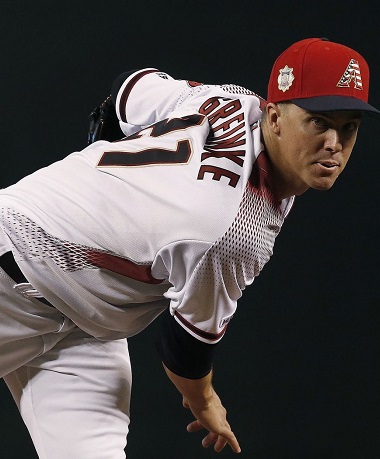
Greinke makes the ‘Stros trade winners

2019-08-01 ZackGreinke

Zack the Knife makes the Astros the big trade winners. Will he help make them World Series winners?

No questions asked. The Astros slipped in at the eleventh minute, practically, and not only stole the new single trade deadline show but they did the absolute most to fortify themselves for the postseason run nobody doubts is theirs this season. Barring unforeseen disaster, of course.

With Gerrit Cole looking at free agency after the season it made sense for the Astros to seek a top-of-the-line starting pitcher with at least another full season of team control to line up with (don’t doubt it) future Hall of Famer Justin Verlander, so far the new ageless wonder of baseball.

So it came forth after the deadline passed that the Astros sent a quartet of prospects—good, promising, but not quite platinum-rated prospects—to the Diamondbacks for Zack Greinke, who isn’t exactly a slouch on the mound and who’s having a solid season in his own right so far.

They’ll get the rest of this season plus the final two seasons on the gigadeal Greinke signed with the Diamondbacks. The Snakes also sent the Astros a reported $24 million to help cover the rest of Greinke’s contract, on which the Astros will be responsible for the other $53 million. They’re not exactly complaining.

General manager Jeff Luhnow knew only two things about Greinke before he pulled the trigger on the big deal of the day: Zack the Knife has been a consistent pitcher who’s on the borderline of a Hall of Fame case; and, the righthander isn’t exactly one of the most combustible personalities in baseball.

“I don’t know him personally,” Luhnow told reporters, “but I think he’s not a guy that seeks the limelight, and that actually works well for us here in Houston. And slotting in with Verlander and Cole, he’s gonna not have to be the guy that’s in front of the camera the whole time.”

The Astros weren’t exactly over-occupied on doing the Greinke deal. Before that deal hit the news running Wednesday, they did a little bullpen fortification, getting Aaron Sanchez and Joe Biagini from the Blue Jays. The Jays also sent the Astros minor league outfielder Cal Stevenson. The Astros sent the Jays outfielder Derek Fisher.

Greinke was last seen striking out seven Yankees in five innings Wednesday. He left the park without talking to reporters, which may or may not have been an indication that he suspected or was told it was time to re-pack his bags.

On the same day, the Astros got flattened by the Indians, 10-4, in Cleveland; they finish with the Tribe Thursday before a weekend hosting the Mariners, but Greinke may not have his first Astros start until the Rockies hit town starting Monday.

“I know he’s really good. I don’t know him personally, but I’m going to get to know him,” said Astros manager A.J. Hinch. “We acquired him because of how good he is. Certainly we expect him to be a big part of our push to win the division and keep winning into October. He’s an incredible pitcher.”

He has been, and he still is when all is said and done. His new teammates won’t disagree. “What a pickup!” Cole himself crowed. Referring to the front office, he added, “They nailed it. They did a fantastic job.”

Landing Greinke shot the Astros into being World Series co-favourites with the Dodgers at Caesar’s Palace Sports Book. But the Astros are smart enough to know Berra’s Law is immutable. Zack the Knife increases their odds of a return to the Series, but so is Andujar’s Law, as uttered by a long-ago Astro, the late Joaquin Andujar: “In baseball, there’s just one word—you never know.”

What we do know, though, is who were really the big winners and the big losers of major league baseball’s first single mid-season trading deadline.

THE WINNERS

Braves—Another starting pitcher wouldn’t have hurt them, necessarily, but what the National League East leaders really needed was a back-of-the-bullpen retooling. And, they got it, in an almost rapid fire series of deals.

They landed Shane Greene from the Tigers. They landed Chris Martin from the Rangers. They landed Mark Melancon from the Giants. As CBS Sports’s Matt Snyder observes, if the prices were too high for such reported availables as Edwin Diaz (Mets) and Felipe Vasquez (Pirates), the Braves did well enough shopping the sale aisle.

None of the new pen trio are anything near the most glittering names in the relief world, but neither are they slouches or pushovers. Changes of scenery from nowhere land to pennant contention do wonders for such pitchers, and it would be absolute gravy if the Braves get something out of Melancon resembling his final years in Pittsburgh and his only spell in Washington.

Greene, of course, was an All-Star this year and was wasted on a Tigers team in the middle of a rebuild. When the Braves can turn to him near the end of a game, either as the sure ninth-inning option or if things get a little dicey in the eighth, the sight of Greene warming up with his 1.18 ERA should be enough to make their division and the rest of the league quake.

Throw in Martin’s 10+ strikeout-to-walk ratio and 10.2 K/9 rate, and all of a sudden the Braves’ bullpen doesn’t look like it’s full of bull anymore.

Indians—So Trevor Bauer turned out to be a bigger pain in the you-know-where than his otherwise solid pitching was worth. Doesn’t mean the Indians dealt from weakness. Not with Corey Kluber on the threshold of returning from the injured list.

And the Tribe managed to address their biggest weakness in the deal: their corner outfielders weren’t hitting anywhere near the same area code as their new toys Yasiel Puig (from the Reds) and Franmil Reyes (from the Padres) put together. Add Puig’s mostly plus throwing arm in right field, and all of a sudden the Indians outfield isn’t just going to roll over and play dead.

The Indians also landed lefthanded pitching youth Logan Allen (also from the Padres), and when you consider how well they develop or re-tool starting pitching this is an upside acquisition for them, too.

But the real key was the impact bats. Puig secures them in right field for the rest of the season, and perhaps if he continues doing well enough the Indians would think of pursuing him when he hits free agency in the fall. Reyes, though, secures a DH spot for them for the foreseeable future while giving them an outfield platoon option in the bargain.

Suddenly it’s not to laugh about the Tribe’s outfield anymore.

Mets—Don’t laugh. Not only are they on a six game winning streak at this writing, the formerly left for dead Mets—and even I thought they were just awaiting the nails to be hammered into their coffin after that terrible weekend in San Francisco—are 12-7 since the All-Star break.

And maybe it’s an illusion since, aside from the Giants, they faced only real contender during the string. But they did take both games against the Twins in Minnesota, including a 14-4 blowout. All of a sudden, these Mets can play as well as they can pitch.

And while the world seemed to be sure only that either Noah Syndergaard or Zack Wheeler would have a change of address after Wednesday’s deadline, it took the Astros landing Greinke to knock the Mets’ landing Marcus Stroman well enough before the deadline out of the park.

Maybe Stroman wasn’t thrilled at first to go to what he thought was a non-contender. And maybe someone ramped up for kicks a rumour that the Mets had ideas about flipping Stroman to the Yankees post haste for some of the Yankees’ top farm produce. But the Mets wasted no time ridding themselves of Jason Vargas—who should have been cashiered over a month earlier—sending him to the Phillies almost as soon as Stroman’s acquisition was a done deal.

The Mets rotation now looks like Jacob deGrom (who pitched brilliantly against the White Sox Wednesday night only to get his almost-usual no-decision, the poor guy), Stroman, Syndergaard, Wheeler, and Steven Matz. And with Matz putting on a deadly off-speed clinic shutting out the Pirates last Saturday night, looking as though he’s finally found the secret to pitching without the power of a deGrom or a more disciplined Syndergaard, it gives the Mets a rotation with two number-ones, a two, and a pair of threes.

Nationals—Like the Mets, the Nats were left for dead a few times before the All-Star break. Like the Mets, too, the Nats are riding resurgent, sort of: 10-9 since the break. And the Nats needed a bullpen remake in the worst way possible.

Not at the absolute rear end, where closer Sean Doolittle remains effective when he has something to save. It’s getting the games to Doolittle that caused one after another National migraine. But then the Nats landed Jays reliever Daniel Hudson and Mariners reliever Roenis Elias.

All of a sudden, the Nats seemed to find relief in the best way possible for that beleaguered bunch of bulls. And then they got really surreal—it turned out that they also got an old buddy (ho ho ho) from the Mariners, Hunter Strickland.

Strickland—who carried an almost three-year grudge over then-Nat Bryce Harper taking him deep twice in a division series, the second time awaiting whether his fresh blast straight over the foul line would leave the yard fair but misinterpreted as admiring the shot. (It flew fair into McCovey Cove.)

Strickland—then a Giant, who somehow hadn’t gotten the chance to face Harper until 2017, then entered a game with Harper leading off an inning and threw the first pitch right into Harper’s hip. Triggering Harper’s charge to the mound and the very delayed Giants pouring out of their dugout, during which pour former Nat Michael Morse’s career ended up being sealed when he collided with Jeff Samardzija and suffered a concussion.

Harper, of course, now wears the Phillies’ silks. But it would have been intriguing if Harper was still a Nat with Strickland coming aboard. Strickland’s coming back from a lat strain that disabled him for almost three months. And the Nats don’t see hide nor hair of the Phillies again until a four-game home set beginning 23 September.

By which time, the Nats may or may not be in the thick of the NL East race (the Braves suddenly started looking human enough the past couple of weeks), securing a wild card berth, or hoping they’ve got a leg up on 2020. A lot rides on the new bulls. But for now, the Nats took their number one need and addressed it respectably enough.

THE LOSERS

Red Sox—Like the Braves and the Nats, the Red Sox needed bullpen help badly. Unlike the Braves and the Nats, the Red Sox landed nothing. Not even a calf, never mind Diaz, whom the Mets were making available and who probably could have been had for a little less than they were said to have demanded for Syndergaard and Wheeler.

The Red Sox bullpen ERA in June: 4.92. The Red Sox bullpen ERA in July: 5.18. Letting some reasonably effective pieces make their ways to Atlanta and Washington instead does not portend well for the Olde Towne Team.

Dodgers—I know, it sounds funny to apply “losers” in any context to the National League’s 2019 threshing machine. But the threshing machine has one monkey wrench looming: the Dodger bullpen isn’t as formidable as it used to be.

Kenley Jansen isn’t really pitching like the Kenley Jansen of old this year. What’s behind him in the pen depends on whose description you read: mess, disaster, toxic waste dump, landfill, take your pick.

If the Mets and the Pirates were asking the moon for Diaz and Vasquez, the Dodgers if anyone had the moon to give in return. They’re loaded with prospects on the farm, and money in the vault, enough to have dealt a package of them for either reliever and still have a bountiful harvest to come.

Good luck holding leads against postseason lineups with that kind of pen. And the Dodgers won’t be able to hit themselves beyond their pen’s capability eternally. They won’t lose the NL West, necessarily, not with a fifteen-game lead at this writing, but their chances at a third consecutive World Series appearance and just one Series ring since 1988 just got a lot more thin.

Brewers—The pre-season favourites to defend their NL Central title aren’t exactly that good anymore. Losing Brandon Woodruff and Jhoulys Chacin to the injured list has left their rotation in tatters, and with the Giants yanking themselves back into the wild card play there went their ideas of maybe adding Madison Bumgarner for a stretch drive.

But they also needed some pen help, and what they brought aboard (Ray Black, Jake Faria, Drew Pomeranz) is serviceable but not quite as serviceable as what the Braves and the Nats brought aboard. The Brew Crew is liable to spend the rest of the season watching the Cardinals’ and the Cubs’ rear ends, but then with the NL Central as it’s been this year there could be a surprise in store. Could. Remotely.

Because the Brewers can’t live by Christian Yelich alone.

Twins—The AL Central leaders have gone from a double-digit division lead to looking only human at three games up on deadline day. They needed a little rotation help and a little bullpen help.

And they got only a little in the pen. Sam Dyson (from the Giants) and Sergio Romo (from the Marlins) are solid but not overwhelming. Maybe not for lack of trying, but the Indians’ blockbuster suddenly puts the Twins close enough to the Tribe’s mercy to make for a too-interesting stretch drive for them when they once looked like the division’s runaway train.

They can hit all the home runs they want, but if their pitching is compromised the Twins have a big problem coming. Like the Yankees, the Twins should have been more aggressive trade deadline players. Like the Yankees, they weren’t, for whatever reasons. And it could come back to haunt them down the stretch.

Yankees—Even Yankee haters won’t understand this one. The number one need for the injury-battered Bombers was rotation help. Especially after they’d just been flattened by the Twins and the otherwise-troubled Red Sox. And they did nothing to fix it.

The question may be why, or why not. If Bumgarner was off the market, they could have played for Stroman or for Mike Minor, even allowing for Minor’s rough July after a sterling June. They didn’t seem to play for any of the above. They didn’t even seem to be a topic if the Diamondbacks—knowing their own chances were still none and none-er—were looking to move Greinke to a contender.

And since their number one American League competition overall did land Greinke, the Yankees may ride a weakening AL East into October but they’re not liable to get past round one again, even if it may not be the Red Sox shoving them to one side this time.

Heard of punching tickets out of town?

2019-07-30 YasielPuig

Yasiel Puig (66) didn’t instigate this Tuesday night brawl between the Reds and the Pirates. Neither did he know just yet that he’d just been traded to the Indians.

Well, now. Baseball government decided a fine but not a short ban was appropriate for Trevor Bauer after his Sunday afternoon tantrum. (“The last baseball Trevor Bauer threw for the Indians landed over the center-field fence,” crowed The Athletic‘s Hall of Fame baseball writer Jayson Stark. “And nobody even hit it!”)

The Indians may have decided otherwise.

They had more say in the three-way Tuesday evening deal that rid them of Bauer and brings them Yasiel Puig from the Reds than they had about Justin Verlander punching out thirteen Tribesmen en route the Astros shutting them out, 2-0.

But did the Indians elect to trade Bauer, in the deal also involving the Padres, because his reaction to surrendering a pile of runs and then manager Terry Francona coming out to lift him en route a loss to the Royals was to throw that ball over the fence?

And was some sort of cosmic mischief at play when Puig, still suited up for the Reds, found himself in the middle of a wild ninth-inning, bench-clearing brawl between the Reds and the Pirates that he had nothing to do with starting?

The three-way deal was announced while the Reds hosted and were being blown out by the Pirates. And, shortly before Reds relief pitcher Amir Garrett received a visit from pitching coach Derek Johnson in the top of the ninth.

Garrett had gotten Pirates shortstop Kevin Newman to ground out after serving pinch hitter Jose Osuna a two-seam fastball too meaty not to hit for a three-run homer that crowned what proved to be an 11-4 burial. But while Garrett was about to hand the ball off to Johnson—who was managing the Reds at the time, the circumstances behind which to come anon—a little chirping rom the Pirates dugout tripped Garrett’s trigger.

Apparently, it was Pirates pitcher Trevor Williams who chirped toward Garrett. Apparently, too, Garrett previously had words for Pirates first baseman Josh Bell, words some tweeters translated to be “[Fornicate] you!” And the next thing anyone saw, Garrett practically flew solo toward the Pirates dugout, fists flying with the intent of nailing anyone in Pirates’ colours, greeted by a swarm of Pirates with the equivalent intent of making sure he couldn’t get any piece of any of them.

The Reds were probably jolted enough at their man’s audacity that it took a couple of moments before they realised they weren’t seeing things and swarmed toward the Pirates swarm.

Puig was actually a late arrival to the dance. Late or no, he plunged into the swarm, apparently intent on getting Garrett the hell out of there by hook, crook, left hook, anything short of an ambulance populated by men and women in white coats armed with straitjackets.

And Puig probably didn’t know he wasn’t really a Red anymore.

The three-way deal sends Puig and minor league pitcher Scott Moss from the Reds to the Indians, Bauer from the Indians to the Reds, outfielder Taylor Trammell from the Reds to the Padres, and three Padres—Franmil Reyes (outfielder), Logan Allen (pitching prospect), and Victor Nova (minor league jack of most infield and outfield trades)—going to the Indians.

Puig and Reyes would make the Indians’ corner outfield that much more productive at the plate, since the pair of them have more home runs between them (49) than the combination of every players seen in the Indians’ outfield corners all season long. If Reyes was on pace to hit 40 bombs with pitcher-embracing Petco Park as his home playpen, Indians fans can only imagine and pray what he’ll hit with Progressive Field to call home.

But Puig was one of eight ejected as a result of the ninth-inning rumble in the Great American Ballpark jungle. It may be an open question as to whether he begins life with the Indians—a rental life at that, since he becomes a free agent for the first time after this season—on the field or on suspension.

All of a sudden, any of Bauer’s past transgressions, including but not limited to some pointed but slightly absurd accusations that Astros pitchers were putting a little too much pine tar on their pitching hands, seem like boys being boys compared to the Cincinnati gang war.

Keep in mind: the Pirates and the Reds aren’t exactly bosom buddies above and beyond common competition. The Pirates were a lot less than thrilled when Reds outfielder Derek Dietrich hit and couldn’t help admiring a pair of homers clean into the Allegheny River on their pitchers’ dollars, one of which triggered a brawl after Dietrich saw a Chris Archer pitch fly behind his head, prompting Puig to take on almost the whole Pirate roster.

The Pirates also make a lot of other people uncomfortable with their penchant for pitching inside as often as possible and even beyond. The Reds aren’t the only team in the game who think that what the Pirates call merely pitching inside is really headhunting.

“Hitters are crowding the plate more than ever to hit pitches on the outer corners,” observed Pittsburgh Post-Gazette writer Nubyjas Wilborn earlier in July. “[Pirates manager Clint] Hurdle and the Pirates want to own the whole plate, and that’s where part of the conflict exists.”

Tuesday night’s shenanigans began when Pirates reliever Keone (Drinkin’ Rum and Coca) Kela threw one up and in enough to Dietrich to trigger a little bristling among assorted Reds in the seventh, including Joey Votto, who had a few sweet nothings to deliver to Kela before home plate ump Larry Vanover urged Votto back to his own lair.

And part of this conflict may also have rooted in Vanover handing both sides warnings after Kela zipped Dietrich, denying the Reds at least a single unmolested opportunity to send a return message. Ignoring the warnings, apparently, Reds reliever Jared Hughes got himself a premature date with the clubhouse shower, when he drilled Starling Marte with the first pitch of the top of the ninth.

Which is how Garrett got into the game in the first place. In between both, Reds manager David Bell got himself the ho-heave when he objected to a strike call with Puig himself at the plate in the eighth. And soon enough came basebrawl.

Hell of a way for Hurdle to celebrate his birthday. Bell got himself into further trouble when, despite having been tossed from the game, he ripped out from the clubhouse to the field on behalf of his players, gave Hurdle a shove, got into and broke his way out of a headlock from Pirates batting coach Rick Eckstein, and barked a little bit at Hurdle.

Bell has his partisans and detractors, too. For every tweeter singing a variation on the theme of Bell “ejected earlier and back on the field being his usual clown self,” there was another singing a variation on the theme of “I would fight a [fornicating] war for David Bell.”

Things looked as though settling down before, for whatever reason, maybe a Pirate hollering what he thought was something out of line, Puig circled back toward the dissipating swarm for a very brief encore before he was finally lured away. He was one of eight Reds and Pirates ejected from the game before the Pirates could finish the 11-4 thrashing they’d begun.

The ejected included Hughes and Reds bench coach Freddie Benavides over the Marte plunk; plus, Garrett and Puig for the Reds; and, Pirates injury-list catcher Francisco Cervelli plus pitchers Williams, Archer, and Kyle (Up the) Crick.

Now the Indians get themselves a Puig-in-the-box who can play baseball brilliantly enough, when he’s firing on the proper cylinders and avoiding the temptations to rumble. The Reds get themselves a million dollar pitching arm attached to a brain that often impresses people appreciative of the pitching talent as being deprived of a few critical resistors.

Almost forgotten in the middle of the trade that didn’t rudely interrupt the Pirates and the Reds replaying The Wild Bunch is that the Padres may have gotten the sleeper of the deal in Trammell, a talented left fielder who’d been the Reds’ top rated prospect and the number 30 prospect in all baseball despite a somewhat slumping season this year at Double-A Chattanooga.

For curiosity’s sake alone, I ran a search for major league baseball players who’ve tangled in bench-clearing brawls while or at least on the same days they were traded. The search result didn’t answer the question directly. But the first result was a headline about Tuesday night’s tarantella. With Puig’s name leading the head.

Some precedents ought not to be wished.

Don Mossi, RIP: Ugly is as ugly does

2019-07-26 DonMossi

Don Mossi, who proved ugly was only in the eye of the beholder on and off the mound.

“He could run ugly, hit ugly, throw ugly, field ugly, and ugly for power,” wrote Bill James about pitcher Don Mossi in The New Historical Baseball Abstract. “He was ugly to all fields. He could ugly behind the runner as well as anybody, and you talk about pressure . . . man, you never saw a player who was uglier the in clutch.”

Wrote the late Jim Bouton in Ball Four, while musing how players loved to choose up all-ugly lineups to pass time, “he looks like a cab coming down the street with the doors open.”

Hall of Famer Yogi Berra, the all-ugly receiver, once said, “It don’t matter if you’re ugly in this racket. All you have to do is hit the ball. And I never saw anybody hit one with his face.” Mossi, a brainy lefthander who made Berra resemble Cary Grant by comparison, could have said the same thing, with the codicil that he’d never seen anybody pitch one with his face.

Mossi, who died Friday morning at 90 in an Idaho hospital, had nothing on the mound but his brains, an unusual three-finger grip on his fastball, which didn’t travel like a speeding bullet but came to enough forks on the way to the plate and took them to keep hitters off balance, and a deadly enough curve ball. And it gave Indians manager Al Lopez a smart idea when Mossi made the team in 1954.

Lopez used Mossi’s wits and righthander Ray Narleski’s power as an effective bullpen counterweight whenever one of the Indians’ effective starters—Hall of Famers Bob Lemon and Early Wynn, Mike (The Big Bear) Garcia, and aging but still capable Hall of Famer Bob Feller—needed to be spelled, with elder veteran Hall of Famer Hal Newhouser the long man out of that pen.

Used so judiciously, that bullpen helped the 111 game-winning Indians whistle past the 103 game-winning Yankees and into the World Series, with Mossi rolling a 1.94 ERA and a staggering 194 ERA+, then pitching four innings in the World Series without surrendering an earned run or a walk.

If only the Series equaled Mossi’s performance: the Giants swept the Indians in four straight, and it only began with Willie Mays’s stupefying catch in Game One to rob Vic Wertz of a likely extra base hit at the Polo Grounds’s cavernous rear end. In due course, Mossi would admit he was scared to death as a rook until veterans such as Feller and Lemon put him more at ease.

A year later, Mossi was deadlier. He struck out 69 against only eighteen walks, posted a 2.42 ERA and a 2.01 fielding-independent pitching rate, and even drew a few Most Valuable Player votes while he was at it. Who knew that Narleski would begin experiencing elbow trouble and put an end to that skin-tight rear end of the Indians’ bullpen?

Perhaps inexplicably, the Indians moved Mossi and Narleski into the starting rotation for most of 1957. Perhaps also inexplicably, Mossi earned his only All-Star berth. Perhaps even more inexplicably, the Tribe traded both Mossi and Narleski to the Tigers after the 1958 season—for Billy Martin, well along the way to his second career of wearing out his welcome swiftly enough, wherever he landed, after Yankee general manager George Weiss got fed up with him in 1957.

As a Tiger, Mossi became a starter, mostly, and a reasonable back-of-the rotation option. In 1961, Mossi became a curious trivia element when he surrendered only one home run to Roger Maris but none to Mickey Mantle while that pair of Yankees chased ruthsrecord all season long. Mossi also started a 1 September game against the Yankees in which a near-flawless performance was ruined when, with two out, Elston Howard and Berra singled back to back before Moose Skowron drove home Howard with the winning run.

The loss kicked off an eight-game losing streak that knocked the Tigers out of the 1961 pennant race. And that was the last season Mossi pitched before incurring arm trouble that began slowly decreasing his starting assignments and increasing his bullpen options until the Tigers sold him to the White Sox during spring training 1964.

The White Sox put him back into the bullpen permanently, and Mossi responded with a 2.94 ERA over forty innings before the Sox released him after the season. The Kansas City Athletics took a flyer on him in May 1965, but he called it a career after the season.

His comparatively late major league start may have shortened his career a bit; he was 25 when the Indians brought him up in 1954 and one year removed from discovering that odd three-finger fastball grip. He was a good if unspectacular pitcher who married his mind to his arm and did the best he could with both.

Teammates appeared to have loved and respected Mossi. Once upon a time, according to a fan posting on Mossi’s Legacy.com obituary page, Rocky Colavito—dealt to the Tigers controversially in 1960 (Indians fans were ready to arrange the execution of general manager Frank Lane over that and other trades that essentially broke up the Indians’ perennial contenders)—drove a white Cadillac convertible and picked Mossi up in it on the way to Tiger Stadium as long as they were teammates.

But his distinctive (shall we say) appearance stuck in the minds of opponents and fans more than his ways and means on the mound. Beneath eyes similar to those of Edward R. Murrow, Mossi also wore a proboscis that made Danny Thomas’s look like a bob and ears that rivaled the batwing flaps of legendary Hollywood censor Will Hays, earning him the nicknames “The Sphinx” and “Ears.”

Well, now. The Sphinx with Ears ended up having a last laugh. He returned to his native California with his wife, Eunice, and their three children; he’d married his lady on the field at Bakersfield’s Sam Lynn Ballpark while pitching for the Indians’ farm in 1950. Mossi’s baseball afterlife included running several motels in California successfully, not to mention becoming a twelve-time grandfather and a 25-time great-grandfather.

A few years after Mrs. Mossi passed away, her husband retired to Idaho, where much of their family had relocated, and took up an active life indulging his passions for gardening, hunting, and camping. The Mossis were animal lovers to the point that the pitcher’s family declined a funeral service and asked instead that contributions be made to a pet hospital in nearby Oregon.

Clearly enough, ugliness was in the eye of the beholder, and Mossi’s was only skin deep. (Admittedly, you wonder, if Mossi had gone to medical school, he’d have put up with tons of needling about becoming an ear, nose, and throat specialist.) Beneath the ears and the schnozz there rested a competitor on the mound and a gentleman off it.

So laugh, clowns, laugh. This Donald had the last laugh known as a life lived very, very well. Call it winning ugly if you must. But emphasise winning.


Some people can never be satisfied, still

20190627_190740

Left to right: Emily, Bryan, and the author, Bryan’s father, relax in Angel Stadium before a game between the Angels and the Athletics Thursday night. Guess which of the game’s seventeen total hits got the loudest ovations . . .

What’s that old saying about some people can never be satisfied? Unfortunately it also remains a true saying. That’s whether baseball’s get-off-my-lawn contingency complains about not enough hitting (in 2014) or too many home runs (this year), or whether Orioles fans look the proverbial gift horses in the mouth because of a choice of . . . uniform.

This year’s epidemic of home runs includes such side effects as strikeouts rising, singles falling, stolen bases on various endangered species lists, and howitzer-armed bullpens turned to arson squads.

It’s not unreasonable to lament the large percentage of game action that involves home runs. The absolute flip side of the proverbial coin would be a game full of nothing but singles and a crashing bore unless the pitchers are virtuoso charismatics and the fielders resemble the Flying Wallendas. (Only nine percent of this season’s fielding assists so far involve turning double plays. Ground ball pitchers, where are thy stings?)

I happened to be in Angel Stadium Thursday night, treating my son, Bryan, and his girlfriend, Emily, to a game, the first of a weekend set between the Angels and the rival Athletics, to finish their final home stand before the All-Star break. (They hit the road to meet the Rangers and the Astros to finish the season’s first half.)

The occasion was a gift for Bryan’s graduation from southern California’s North Orange Continuing Education program in which disabled students make their transitions gradually but affirmatively to whatever full collegiate work they can perform toward the level of independent life they can attain.

Bryan is speech-language impaired, and the only one in the house more proud of the courage he shows living, laughing, and persevering through his disability is his father, to whom Bryan is a hero every day, not just those during which he graduates or helps his Special Olympics team nail a silver medal in softball, as he did at last year’s national games in Seattle.

(P.S. In his first ever plate appearance in a national Special Olympics, Bryan socked a home run. In baseball, 118 players have homered in their first major league at-bats. The most recent: Lane Thomas, Cardinals, 19 April.)

And lo! Come Thursday night, the Angels defeated the Athletics, 8-3, to open a weekend set. From our nesting at field level down the right field line, we saw the runs score on:

* A second-inning home run. (A’s center fielder Ramon Laureano, leading off.)

* Another second-inning home run. (Kole Calhoun, a two-run shot that ricocheted off the rocks behind the left center field fence in the bottom of the inning.)

* A third-inning home run. (Shohei Ohtani, the defending American League Rookie of the Year, resuming designated-hitter duties if not pitching as he continues recovering from Tommy John surgery, hitting one clean over the center field fence.)

* A pair of third-inning RBI singles. (Hall of Famer in waiting Albert Pujols, driving home Justin Upton; and, Luis Rengifo, driving home Calhoun.)

* A fourth-inning home run. (Matt Olson of the A’s, leading off the top.)

* A sixth-inning single. (Mike Trout, the Angels’ all-everything center fielder, sending home Andrelton Simmons, the flying shortstop freshly restored from the injured list.)

* An eighth-inning single. (Oakland’s Marcus Semien, sending home Robbie Grossman.)

Of the game’s seventeen hits (the Angels had twelve), 24 percent of them sailed over the fences. Through this morning’s writing, major league games this season have featured 3,390 home runs out of 21,265 hits. That, folks, is 16 percent of this season’s hits. Last year, 14 percent of baseball’s hits were home runs. Oh, the horror.

Fume all you like about the home run epidemic, if epidemic it is, but doesn’t it seem peculiar that such an epidemic accounts for that small a percentage of baseball’s hits? Thirty-six percent of this year’s hits are doubles; two percent are triples. But we don’t hear either loud complaints about the epidemic of doubles or the near-extinction of triples as much as we hear about the bombs bursting in air at record levels.

On Thursday night, except for Trout’s RBI knock in the sixth, knowing that this guy gets standing ovations just taking his position in the field to open a game (a cursory look around the park tells you Trout remains the single most popular Angel based on jerseys and jersey-reproducing T-shirts with Ohtani a close enough second), guess which hits got the loudest ovations, even among the A’s fans who scattered around the stands?

Hint: it wasn’t the four RBI singles.

(A note on the Angel Stadium video display when Laureano batted midway through the game: he’s the first Athletic in their entire franchise history—going all the way back to the birth of the Philadelphia Athletics—to have made his first major league hit a game-winning RBI hit. Ever. Not even the franchise’s celebrated Hall of Famers—not Home Run Baker, Jimmie Foxx, Al Simmons, or Reggie Jackson—did that. Laureano did it in 2018.)

Once upon a time, Washington Senators owner Clark Griffith bragged (if that’s the correct word), “The fans love home runs, and we have assembled a pitching staff that is certain to please them.” This year, commissioner Rob Manfred all but brags that since the fans like home runs, baseball has introduced a ball that was certain to please them. Apparently, the “pill” at the ball’s center is being centered more accurately. Makes some people want to reach for the nearest bottle of pills.

Pitchers may not be pleased as greatly as the fans seem to be. Rangers pitcher Drew Smyly picked the wrong year to return from Tommy John surgery: he surrendered nineteen bombs in 51 and a third innings before the Rangers released him last week. And until Phillies pitcher Jared Eickhoff landed on the injured list, he’d pitched 58 and a third 2019 innings and eighteen services landed on the far side of the fence.

ESPN’s David Schoenfield says Smyly’s home run rate per nine innings this year (3.3) was baseball’s worst and Eickhoff’s (2.8) the seventh worst, but don’t get him started on those who’ve been nuked worse in fewer innings. Poor souls such as Alex Cobb (nine bombs in twelve and a third), Edwin Jackson (twelve in 25.1), or Dan Straily (22 in 47.1).

And, yet, Schoenfield continues, overall scoring per game remains “within historical norms” at 4.78 runs a game, which he says is the highest since 2007’s 4.80. Apparently it’s how you score that matters yet again. If the game levels itself out in due course (as it always seems to do, never mind the periodic equipment tinkerings) and the runs begin coming in singles-, doubles-, and triples-hitting droves, brace yourself. The death of the home run will be pronounced loud and long, too.

I mentioned the Orioles earlier. Back to them. How does this strike you—the Orioles, who are on a pace Schoenfield says will see them surrender 324 home runs for the full season (or, if you’re scoring at home, an average of 36 homers per lineup spot against them), spent Friday and Saturday doing what no team before them has done: back-to-back shutouts in which they themselves scored thirteen runs or more.

The Indians were the victims. On Friday night, John Means and three Orioles relievers kept the Indians to six hits against Mike Clevinger and three Indians relievers surrendering sixteen hits—only (count them) two of which were home runs. On Saturday night, Andrew Cashner and one reliever kept the Tribe to five hits against Zach Plesac and four Indians relievers surrendering thirteen hits—only four of which were home runs. That’s back-to-back home run percentages of 13 and 31 percent per game, and 21 percent for the two games.

But Oriole fans couldn’t even enjoy that rare a two-night spread without finding something to complain about. In this case, the Orioles’ uniforms Saturday. Commemorating Maryland Day, a state holiday, the Orioles’ jersey sleeves and cap visors displayed the image of Maryland’s state flag. “Hideous” was probably the least indignant adjective applied.

Well, as I was saying, some people can never be satisfied. Thank God and His servant Jackie Robinson that my son and his lady aren’t among the perpetually dissatisfied.