Is Mickeygate Tribegate now?

How much did the Indians really know about Mickey Callaway’s pursuits?

It’s going from worse to impossible for Mickey Callaway. But it’s going from bad enough to far worse for the Indians, too. Callaway hasn’t worked for the Indians since 2017, but it looks as though they can’t really be shocked anymore.

Team president Chris Antonetti told the press in early February he was “disturbed, distraught, and saddened” by allegations of Callaway’s sexually-oriented misconduct. That was after The Athletic exposed his inappropriateness with five media women while he managed the Mets. It may have been only the first hints.

Come Tuesday morning, Athletic reporters Brittany Ghiroli and Katie Strang published that Callaway’s kind of behaviour not only traced back to his Indians years but that several key organisation members—including Antonetti and manager Terry Francona—seemed aware enough then that Callaway’s taste for pursing women inappropriately wasn’t a one-time wild pitch.

“Since the publication of The Athletic’s first article,” Ghiroli and Strang wrote, “more women have come forward to say that Callaway made them uncomfortable by sending them inappropriate messages and/or photos, making unwanted advances and more while they worked for the Indians.”

Additionally, in 2017, an angry husband repeatedly called the team’s fan services department to complain that Callaway had sent “pornographic material” to his wife. Those calls were brought to the attention of Antonetti, manager Terry Francona and general manager Mike Chernoff; the Indians spoke with Callaway about the matter . . .

Over the past month, The Athletic has interviewed 22 people who interacted with Callaway during his years in the Indians organization, including 12 current and former employees. They say that Callaway’s sexual indiscretions permeated the workplace to such an extent that it would have been difficult for top officials to not be aware of his behavior, and they push back against any assertion that Callaway’s actions, when made public by The Athletic last month, caught team executives or MLB by surprise.

“I laughed out loud when I saw the quote (in The Athletic’s original report) that said it was the worst-kept secret in baseball, because it was,” said one Indians employee. “It was the worst-kept secret in the organization.”

After the Mets canned Callaway as manager following the 2019 season, the Angels hired him as pitching coach for incoming manager Joe Maddon. Following The Athletic‘s initial report, the Angels suspended Callaway, pending the outcome of a joint probe between the Angels and baseball’s government. Assorted reporting since has said the only reason it’s a suspension and not unemployment was Callaway’s insistence he’d done nothing truly wrong.

Ghiroli and Strang say Callaway’s reputation as a huntsman traced back to his days as a high school pitching hero (“He was a high school celebrity,” they quote “one woman he frequently pursued”) and ran into his years at the University of Mississippi, his drafting and development by the Rays (known then as the Devil Rays), and past his short, three-team pitching career, and his 2001 marriage.

““He does have a way of making you — you kind of always thought it’s just you,” Ghiroli and Strang quoted a woman from Callaway’s Memphis hometown. “Until one day you sit down with a bunch of girlfriends and a glass of wine and realize you’re not.”

Callaway had the gift of working the room profoundly enough that a career as a pitching coach all the way up from the lowest minors to the Show itself seemed almost a given. In baseball terms, Ghiroli and Strang observed, his forward-thinking and ability to present complex metrics in simpler forms made him “a key conduit” for the Indians’ pitching program overhaul.

The trouble was, his reputation for hunting women aggressively paralleled the growth of his reputation as a thinking person’s pitching coach. One of his former minor league pitching charges told Ghiroli and Strang Callaway was given to too-frequent sexualising of women in his comments and often asked players regarding women, “Where’s the beef?”

The beef to which Callaway didn’t refer is now with him, with the Indians who may actually have known what Antonetti professed to be shocked to have learned, and with anyone in baseball who’d caught onto his predatory ways without moving to stop them. The same former pitching charge told the two Athletic reporters, ““It gets kind of awkward when he’s checking out players’ girlfriends” in the stands near the dugout.

Becoming the Indians’ pitching coach didn’t send him any message about maturity, either. He’d gaze, gawk, leer, and send messages to assorted women’s social media accounts. Ghiroli and Strang also said several Indians players’ wives noted him having an extramarital affair or two.

“I don’t think it’s necessarily a Cleveland issue but a baseball issue,” one who worked for the Indians told the reporters. “As women, we feel like if we report something, we’ll be looked at like a tattletale or that if we talked, (the team) will figure out who reported it.”

Ghiroli and Strang didn’t have to hunt hard to find those women. When their first report emerged, and Antonetti said the organisation received no complaints about Callaway, those women sought the two reporters out themselves. The team was even willing to have Francona talk to the husband of a Callaway paramour who’d been calling the team incessantly for accountability.

All that was before Callaway was hired to manage the Mets, who’ve since been very public about their need to investigate prospective hires more deeply than in the past. What the Jared Porter sext scrum began, the revelation of Callaway’s sexually oriented misconduct exacerbated for them.

The aforesaid husband is thought to have contacted the Mets about Callaway’s sending his wife “pornographic” material, but the then-manager-to-be assured the Mets it tied to an extramarital affair that “dissolved,” and he was working things out with his wife.

It was bad enough the Mets and the Angels were forced to reckon with the possible full depth of Callaway’s misbehaviours. It looks worse that the Indians knew more than they let on when The Athletic first exposed them. Callaway isn’t helping himself, either, if a reply to a Ghiroli and Strang query the day before they published afresh is any indication:

While much of the reporting around my behavior has been inaccurate, the truth is that on multiple occasions I have been unfaithful to my wife, and for that I am deeply sorry. What I have never done is use my position to harass or pressure a woman. I am confident that I have never engaged in anything that was non-consensual. I feel truly blessed that my wife and children have stuck with me as the most personal and embarrassing details of my infidelities have been revealed. I will continue to work as hard as I can to repair the rift of trust that I have caused inside of my family.

How about the rift of trust he’s caused inside baseball, which has much more work to do when it comes to making women feel comfortable around the arterials of the game? How about the rift of trust he’s caused among those who knew but feared reporting it?

“Some who lived through Callaway’s time in Cleveland and were subjected to his aggressive advances,” Ghiroli and Strang wrote Tuesday morning, “questioned how the men who once supervised Callaway can be trusted to fix the culture that allowed him to operate so brazenly.”

How about even the further rift Callaway’s caused between a father and son already having a somewhat difficult relationship?

“This isn’t easy,” tweeted Nick Francona—son of Terry Francona, a son once fired by the Dodgers as player development assistant, after he sought an assessment by a Boston-based group helping combat veterans such as himself deal with the lingering effects, but who also refused to help cover up sexual misconduct among Dodger minor leaguers—“but it needs to be said.” “It” was a formal statement in which he said he couldn’t “say I am surprised” about Callaway’s behaviour, for openers:

When the news . . . first came out earlier this year, I confonted my father, Chris Antonetti, and others within the Cleveland Indians. I wanted to know why they didn’t say anything to me when the Mets hired Mickey Callaway and they gave him a strong endorsement. My father lied to me and said he didn’t know. Additionally, I think he and his colleagues fail to understand what is acceptable behaviour and what isn’t.

The younger Francona said he “confronted my father” again Tuesday morning and believes further that the elder Francona “simply doesn’t get it,” while admitting father and son are not particularly close “largely as a result of disagreements about his conduct.” Terry Francona has declined comment so far.

After writing that standing up for what he believes right means acknowledging his father and the Indians are wrong, the younger Francona called their behaviour unacceptable, leaving it “hard to have faith” that they can improve when they seem more concerned about covering up.

I don’t think this is a problem that is unique to the Cleveland Indians and I think there needs to be a reckoning across Major League Baseball . . . Until a truly independent outside party is brought in and there is transparency and accountability, these problems will continue to plague the sport.

We love to see women enjoy baseball as much as men enjoy it. What’s wrong with asking that women be made as comfortable working in or around the game as men? What’s wrong with asking a firm, enforceable line be drawn between a man interested in a woman personally and a man believing he has the right to hunt her down sexually? What’s wrong with asking accountability when a man (or a woman, for that matter, and yes that happens, too) crosses that line?

The proper answer to all three questions should be absolutely nothing with any of those.
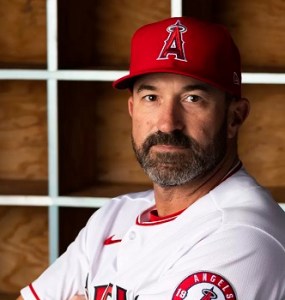
Mickey’s monkey business

If the Angels fire pitching coach Mickey Callaway over a five-year pattern of sexual harassment, it’s the least of baseball’s problems with the issue.

The man who was in over his head as the manager of the Mets seems in further over his head when it comes to ladies in the sports media. As in, five years or more worth of pursuit involving five young women, with “lewd” barely covering what he’s accused of doing.

Outside baseball’s innards, we didn’t know Mickey Callaway was any kind of sexual harasser. Inside those innards, alas, there’s a real chance that such suspicions were as one woman speaking to The Athletic says, “the worst kept secret in baseball.” If she’s right, Callaway’s head on a plate shouldn’t be the only consequence.

The Athletic‘s detailed story by Brittany Ghiroli and Katie Strang hit the Net running Monday evening. “Los Angeles Angels may be hiring a new pitching coach,” said one Facebook baseball group member in posting the article to the group. Needing a new pitching coach should be the least of the Angels’s worries. Or baseball’s.

Three organisations for whom Callaway’s worked should stand up for account. The Indians, for whom he was a respected pitching coach; the Mets, whom he managed clueslessly enough in baseball terms; and, the Angels, who probably did get caught with their own pants down about Callaway’s behaviours but probably have no choice but to fire him now.

As Los Angeles Times writer Bill Shaikin says of Callaway, “This is not a he-said, she-said story.” Not with five shes saying Callaway went considerably beyond being merely tactless in expressing his apparent interests in the five.

On baseball grounds alone there wasn’t a jury on earth that would have ruled the Mets unjustified if they’d fired Callaway months before the execution finally arrived after the 2019 regular season. In human terms, it’s now to wonder whether the Mets were half asleep when hiring him in the first place.

His reported sexually-implicit approaches to media women ran for five years across three different major league teams and in multiple cities, write Ghiroli and Katie Strang. “Two of the women said they were warned about his behavior – from fellow media members and others who worked in baseball,” they say. “An additional seven women who worked in various MLB markets said that, although they had not been approached by Callaway, they had been cautioned about him.”

The five Callaway’s believed to have pursued received anything from inappropriate photographs and requests for nude images in return to unsolicited messages, “uncomfortable” comments about their appearance, and his crotch “thrust . . . near the face of a reporter as she interviewed him.”

This emerges barely a fortnight after now-former Mets general manager Jared Porter lost his freshly-minted job over unsolicited explicit texts messages he sent a woman reporter while he worked for the Cubs.

The Indians issued a statement in response to the story saying they were “made aware for the first time tonight” that Callaway behaved like a predator toward women. “We seek to create an inclusive work environment where everyone, regardless of gender, can feel safe and comfortable to do their jobs,” the team said.

When Ghiroli and Strang contacted the Mets, the team told the two reporters they learned in August 2018 of “an incident” that occurred before they hired Callaway to manage them. “The team investigated that matter, a spokesperson said, but declined to reveal the nature of the incident, the outcome of that probe or whether Callaway was disciplined. Callaway continued managing the rest of the season.”

Mets owner Steve Cohen, who bought the team over a year after Callaway was fired, handed down a terse but unequivocal statement after seeing The Athletic‘s report: “The conduct reported in The Athletic story today is completely unacceptable and would never be tolerated under my ownership.”

Cohen had better mean that. Especially since the Porter firing and now Callaway’s exposure have the team’s personnel vetting procedures under serious question. Cohen’s owned the Mets short of three months and he’s had two nasty sexual harassment scandals to clean.

“I was unaware of the conduct described in the story at the time of Mickey’s hire or at any time during my tenure as General Manager,” said team president Sandy Alderson in his own statement. “We have already begun a review of our hiring processes to ensure our vetting of new employees is more thorough and comprehensive.”

Alderson has to do better than that. It was Alderson as GM who hired Callaway to succeed Terry Collins; it was Alderson as president who hired Porter. If he was really unaware that he’d hired a pair of sexual harassers, Alderson needs to exercise a top-down remodeling of the Mets’ vetting process.

The Angels were almost as terse as Cohen in their own statement. “The behavior being reported violates the Angels Organization’s values and policies,” the team said. “We take this very seriously and will conduct a full investigation with MLB.”

Six years ago the Angels stood on values and policies—and botched completely the Josh Hamilton incident, when he relapsed to substance abuse during a Super Bowl gathering but reported the relapse to the team promptly as required. Angels owner Arte Moreno could hardly wait to run Hamilton out of town on a rail despite the outfielder obeying the protocol.

If they were that willing to purge Hamilton without so much as a by-your-leave over “values” after Hamilton voluntarily reported his relapse straight, no chaser, the Angels better not take too long dispatching Callaway.

Hamilton’s relapse hurt no one but himself. Callaway can’t claim the same. The Angels had to find about about his predations the hard way, not by way of Callaway approaching them to say he’d been caught with everything but his pants down as a semi-serial sexual harasser.

“Rather than rush to respond to these general allegations of which I have just been made aware, I look forward to an opportunity to provide more specific responses,” Callaway said in an e-mail to The Athletic. “Any relationship in which I was engaged has been consensual, and my conduct was in no way intended to be disrespectful to any women involved. I am married and my wife has been made aware of these general allegations.”

Consensual relationships don’t generally provoke what Ghirolil and Strang describe, his pursuits putting the media women in question “in a difficult position at work given what they perceived as a stark power imbalance. The women were forced to weigh the professional ramifications of rebuffing him.” Not to mention his wife now forced to weigh the marital ramifications of her husband’s pursuits.

Don’t make the mistake of thinking Callaway and Porter before him remain isolated instances. Who can forget then-Astros general manager Jeff Luhnow rebuffing the opinion of his entire office, practically, in trading for relief pitcher Roberto Osuna at a time Osuna was still under suspension for domestic violence?

Or then-Astros assistant GM Brandon Taubman making sure three women reporters heard him loud and clear when—celebrating their 2019 American League Championship Series triumph despite Osuna surrendering an almost-game-winning home run to Yankee second baseman D.J. LeMahieu—Taubman hollered, “Thank God we got Osuna! I’m so [fornicating] glad we got Osuna!”

You don’t need to be a feminist to get that trading for an abuser of women or being so fornicating glad the team got him isn’t going to make women covering your team feel comfortable that they can do their jobs in the proper professional atmosphere.

You don’t need to subscribe to an automatic MeTooism to agree that a man taking “no” or “not interested” for an answer when he shows certain interest in a woman is simply plain sense and decency. For that matter, a woman taking “no” or “not interested” for an answer when she shows certain interest in a man is likewise.

Neither do you need to subscribe to cancel culture to agree that sending unsolicited shirtless selfies and asking for nudes in return, shoving your crotch in a woman’s face, continuous sexual implications in compliments about looks, near-incessant pressure to socialise together, or promising to share team information if she agrees to get drunk with you, among other things attributed to Callaway, are not the ways civilised men old enough to know better behave.

Baseball’s government is investigating the Callaway incidents. It needs to take an all-levels look into how rampant are the atmospheres in which women doing nothing more or less than their jobs feel discomfited by men taking too much more than professional interest in them, and refusing to take “no” for an answer to interest above and beyond the game.

Heartbreak Hotel, Cleveland

James Karinchak, rocking a Ricky Vaughn haircut, but having been rocked by Gio Urshela Wednesday night.

Bad enough: Cleveland having to host the world babyweight championship bout that was Tuesday night’s allegedly presidential debate. Worse: The Indians won’t get the chance to win their first World Series since the births of Israel, NASCAR, the Polaroid Land camera, and Scrabble.

Again.

They won’t even get to play a division series after the New York Yankees swept them out of their wild card series. But to lose an almost five-hour Wednesday night grapple extended by two rain delays totaling 76 minutes and finishing in a 10-9 Yankee win, after both sides threw everything including the kitchen, bathroom, and laundry room sinks?

It’s not quite the same as losing Game Seven of the 2016 World Series after one somewhat long rain delay and an almost equally soul-wrenching back-and-forth. But it’s close enough. It isn’t quite the single most heartbreaking loss in Indians history. (Game Seven of the 1997 World Series still clings to the top. Barely)

But it’s close enough to have turned Progressive Field—in the city that also hosts the Rock and Roll Hall of Fame—into Heartbreak Hotel.

The Indians unable to cash in for another tie at minimum in the bottom of the ninth—when Yankee closer Aroldis Chapman’s should-have-been game-ending strikeout turned into a wild pitch, enabling pinch hitter Orlando Mercado to take first on the house, before Chapman regrouped and struck out swinging another pinch hitter, Austin Hedges? It isn’t Edgar Renteria ruining Charles Nagy with a two-out RBI single in the bottom of the eleventh.

But it’s close enough.

The Show’s most reliable irregular season closer and one of the league’s better defenses handing the Yankees a re-tie and go-ahead in the top of the ninth? It isn’t Bryan Shaw surrendering a tie-breaking and a semi-insurance run, and the Indians able to get only one of those runs back, in the tenth inning in Game Seven, 2016 Series.

But it’s close enough.

While you’re at it, it won’t do any good to comfort the Indians by telling them the Yankees once lost a World Series Game Seven by a 10-9 score. Not even if you tell the Tribe the Yankees lost it when Hall of Famer Yogi Berra playing left field could only watch helplessly when Hall of Famer Bill Mazeroski’s leadoff drive sailed over the left field wall in ancient Forbes Field.

Cleveland’s going to have a tough enough time trying to figure out which part hurt the most Wednesday night. They’ll have plenty of candidates. They’ll need plenty of salve.

“We had many different things and a lot of obstacles, but this group stayed together — by any means,” said Sandy Alomar, the Indians’ interim manager thanks to Terry Francona’s continuing health issues, who might yet get Manager of the Year votes just for getting the Indians to the postseason at all. “We had an eight-game losing streak, they came back. Today’s game reflected how much this team grinds and how much they fight.”

The candidates for the biggest hurt of the Indians’ now-finished season may only begin with Alomar deciding he needed a strikeout machine to handle Yankee third baseman Gio Urshela in the top of the fourth, with the bases loaded, nobody out, and the Tribe with a 4-1 lead they built with a pair of RBI doubles and an RBI single in the bottom of the first.

Alomar brought in James Karinchak to relieve starter Carlos Carrasco, cheated a bit by the rain delays The first pitch of the game was delayed by rain that hadn’t yet arrived. The second hit in the bottom of the first, and that time the rain lasted slightly over half an hour.

Until he entered Wednesday night, Karinchak’s young career showed 131 batters facing him and only one ever hitting anything out. It also shows him rocking the jagged-back haircut Charlie Sheen made famous as fictional flame-throwing Indians pitcher Ricky Vaughn in Major League. Now, Urshela and Karinchak wrestled to a full count.

The Wild Thing he wasn’t, but poor Karinchak’s young career now shows one postseason appearance and one disaster. With one swing and one launch into the left field bleachers, former Indian Urshela burned his old team four ways to eternity.

He also made Yankee history while he was at it. Thirteen Yankees have hit postseason grand slams, and Urshela is the first Yankee third baseman to slice such salami and the only Yankee anywhere to do it when the Yankees were behind.

Maybe it’ll comfort Indians fans to know that the Buffalonto Blue Jays got shoved out of the postseason earlier and likewise Wednesday. When the Jays’ best pitcher, former Dodger Hyun-Jin Ryu, faced Hunter Renfroe, a Ray who’d been 2-for-18 with seven strikeouts lifetime against him, in the second inning . . . and Renfroe sliced what amounted to season-ending salami for the Jays.

All night long, the Indians had answers for the Yankees. Let Giancarlo Stanton put the Yankees up 6-4 with a sacrifice fly in the top of the fifth, three innings after Stanton accounted for the first Yankee run with a home run? Why, they’ll just let Jose Ramirez whack a two-run double down the right field line to re-tie in the bottom of the fifth.

Let Gary Sanchez—the embattled Yankee catcher benched for Game One after he made Mario Mendoza resemble Mickey Mantle on the irregular season, and batted ninth for Game Two—smack a two-run homer in the top of the sixth to break the six-all tie? Why, the Indians will just send Jason Luplow to the plate, pinch hitting for Josh Naylor—their return from San Diego, after unloading pitcher Mike Clevinger a fortnight after he violated  COVID protocol violations.

That was some cojones on Alomar pinch hitting for Naylor, who’d set a Show precedent with five hits in his first five postseason plate appearances. Good thing the Indians let Luplow smack a two-run double to the back of center field to re-tie the game at eight.

For good measure, they’ll even let Cesar Hernandez fight Chapman off to dump a floater of an RBI single into short center field to make it 9-8, Indians. Then, they’ll shake off Urshela’s likely game-saving double play start to end that eighth and bring in Brad Hand, who led the Show with sixteen saves and didn’t blow a single save opportunity all irregular season long while he was at it.

Hand picked the wrong night to open a save opportunity by walking Stanton. Urshela then singled Stanton’s pinch runner Mike Tauchman to second. Gleyber Torres beat out an infield dribbler to load the pillows, and Brett Gardner struck out, but Sanchez lofted a re-tying sacrifice fly to center field.

Up stepped American League batting champion D.J. LeMahieu. He called slider in the center pocket and cued it right up the middle and right through the Indians’ middle infield. And, alas, right under center fielder Delino DeShields’s down-stretched glove, enabling Urshela to score the tenth Yankee run.

The Indians ran out of answers in the bottom of the ninth.

One night after they punished American League Cy Young Award favourite Shane Bieber, the Yankees had to survive the elements and Indians tenacity to get themselves a division series date with the Rays, who beat them out of the American League East title and who lack both the Yankees’ star power and the meaning of the word “quit.”

“You don’t have to pour champagne on each other,” said Yankee manager Aaron Boone, whose winners stuck to the COVID protocols and exchanged mere fist bumps to celebrate, “to appreciate what an epic game that was and the fact that we’re moving on.”

Forgive Cleveland if the epic side of the game escapes for a good while. Embrace these Indians who fought the good fight against a Yankee team they never saw on the irregular season but had to get past excess familiarity with the medical profession for a second straight season.

So far as the Indians are concerned, these Yankees picked the wrong time to remember how to win on the road. And, the Tribe with the irregular season’s best pitching overall picked the wrong time to post an 11.00 ERA in two games against the Empire Emeritus with eleven walks in eighteen innings and seven home runs surrendered.

So far as these Yankees are concerned, they survived the best the Indians could throw at them to make it four times in the past four seasons they’ve sent either the Indians or the Minnesota Twins home for the winter early. But the Indians and their fans—already rubbing their eyes over Francisco Lindor, Franmil Reyes, and Carlos Santana going 1-for-23 at the plate this set—are going to wonder how their number one strength, their pitching, became their number-one vulnerability.

Don’t remind Cleveland that the same thing happened in the 1954 World Series, when another stellar Indians pitching staff—including Hall of Famers Bob Lemon and Early Wynn, Mike (The Big Bear) Garcia, and what still remained of Hall of Famer Bob Feller—led an 111-game winning team into a Series sweep by the New York Giants. It won’t make this one sting any more gently.

“That game is literally the definition of a rollercoaster ride right there,” said Indians relief pitcher Nick Wittgren after it ended Wednesday night. “It was amazing to see our guys fight back . . . We were fighting, battling the entire game. That was fun to watch. It would have been a little more fun to be playing tomorrow.”

Usque ad proximum annum expectare.

They were a little hard on the Bieber last night

Aaron Judge runs out the bomb he detonated off Shane Bieber on the fourth pitch of the game Tuesday night.

New York Yankees manager Aaron Boone is fond of saying his team can turn on a dime. He’d much rather they keep turning on the Cleveland Indians the way they did to open their American League wild card set. As a matter of fact, Boone’s wards were a little hard on the Bieber Tuesday night.

The Yankees and the Indians opened in Cleveland the same night the first debate between Donald Trump and Joe Biden went down. Depending upon where you peeked, the country had a hard time determining which wildfire was worse—the allegedly presidential debate, or the Yankees’ 12-3 demolition. The jury may be out until Election Day.

The Yankees could be seen as having had less time to prepare for Indians starter Shane Bieber than Trump and Biden had to face each other. They hadn’t faced the presumptive American League Cy Young Award winner all irregular season long, anywhere. They also went in having lost six of their last seven irregular season games and compiled an 11-18 road record.

Bieber had twelve season starts and faced four postseason teams—three of whom had winning records—seven times. Nobody took him long in any of his starts. Only once all year did he surrender a single run in the first or fifth innings. Nobody scored on his dollar at home all year.

Then the Yankees caught hold of him Tuesday night.

They needed only four straight fastballs to rip two runs out of him in the top of the first. American League batting champion D.J. LeMahieu saw a third straight fastball and lined a single to right field. Aaron Judge started his first plate appearance to follow seeing a fourth straight Bieber fastball. He finished it with that fastball, too, sending it over the right center field wall.

“We had a big, long hitter’s meeting,” Judge said after the game, “about all sticking to the same plan and just trying to work counts, get pitches to drive and I think, as a whole, we did that. That’s when this team is dangerous, when we go out there and we can just grind out at-bats. Any mistakes that are thrown up there, we hammer them.”

Bieber’s fastball sat so easily up or under in the zone to open that LeMahieu wouldn’t exactly call a three-pitch plate appearance a hard grind when pitch three sat right in the middle. Then the slender righthander who hadn’t surrendered a home run at home all irregular season long made the same mistake to Judge over the middle of the plate.

“The first inning didn’t go as planned,” said Bieber, showing a gift for understatement lacking too vividly in the presidential debate hall. “I wish I would have been with my off-speed stuff in the zone, and challenged those guys a little more. I forced myself into some bad situations and some bad counts on top of not having my best stuff and making mistakes. No excuses. It was not good.”

Neither was the rest of Bieber’s outing on a night Gerrit Cole struck out thirteen Indians in seven innings while walking nobody, had only one truly shaky inning (the third) and escaped with only an RBI double by Indians third baseman Jose Ramirez, then surrendered his only other run an inning after that, when left fielder Josh Naylor hit one over the right center field wall.

Cole otherwise looked even better than the guy who didn’t let five walks stop him from beating the Yankees in Game Four of last year’s American League Championship Series. The guy the Houston Astros let walk into free agency and right into the Yankees’ $324 million arms last winter.

In case you were wondering, only one pitcher before Cole ever struck out thirteen without walking a man in a postseason assignment—the late Hall of Famer Tom Seaver, in Game One of the 1973 National League Championship Series, and that was a game Seaver lost to the Cincinnati Reds, 2-1.

When he blew away the Indians’ middle infield, Francisco Lindor and Cesar Hernandez, on swinging strikeouts, before convincing Ramirez his only recourse was to pop one out to Torres behind shortstop, Cole let the Indians know early enough and often enough that they weren’t going to have a simple evening’s baseball to play.

Only nobody paid as much attention to Cole’s work or his marriage with postseason history as they might have paid if the Yankees hadn’t turned Bieber and a couple of Indians relievers into their personal batting practise pitchers.

They slapped Bieber for a single run in the third, two each in the fourth and the fifth. In order, it was AL home run champion Luke Voit doubling Aaron Hicks home with two out in the third, Brett Gardner doubling home Gleyber Torres and LeMahieu catching the Indian infield asleep with an infield RBI single pushing Gardner home in the fourth, and Torres with Gio Urshela aboard hitting one out in the fifth.

That was the 105th pitch of Bieber’s evening, corroborating Judge’s observation of the Yankee game plan at last. By that point, Bieber was probably itching to tell the Yankees what Biden told Trump during one of the president’s more insistent of his nightlong harangues, “Will you shut up, man?”

Interim manager Sandy Alomar, filling in for ailing Terry Francona, was kind enough to lift Bieber after that 105th pitch of the outing traveled from Torres’s bat to the bleachers. He didn’t tell the Yankees to shut up, man, on a night nobody could. But Alomar—whose guidance of the Indians into the postseason in the first place may actually get him Manager of the Year votes despite his interim status—did speak kindly of his still-young pitcher.

“Seems to be he was too excited,” Alomar said after the demolition ended at last. “He was the best pitcher in the American League this year. He had a bad game tonight.” That was like saying the Japanese navy had a bad set at Midway.

Even injury-hobbled Giancarlo Stanton joined in the fun. After striking out twice in four previous plate appearances on the night, the Yankee designated hitter squared off against reliever Cam Hill with one out in the top of the of the ninth and tore a 1-0 fastball—also arriving in the meatiest part of the zone—over the left center field fence.

The Yankee assault and battery almost wiped Chicago White Sox pitcher Lucas Giolito out of the day’s memory bank, thirty-four days after Giolito pitched a no-hitter the too-easy way against the Pittsburgh Pirates. He went into the top of the seventh threatening to become the only pitcher other than Hall of Famer Roy Halladay to pitch a regular-season no-hitter (that was Halladay’s perfect game) and a postseason no-no the same year.

Former Cardinal/Angel Tommy La Stella said not so fast leading off the bottom of the seventh in the Oakland Athletics’ ramshackle ballpark. With the White Sox up 3-0 already, La Stella took what he could get on a 2-2 service and snuck a base hit right through the middle.

Even playing without their best all-around player, Matt Chapman, the A’s made things a little too easy for Giolito and the White Sox. It only began when they were foolish enough to send lefthander Jesus Luzardo, young, gifted, but inconsistent, against a lineup so full of righthanded bats it’s a wonder the Oakland Coliseum didn’t list when they batted.

“Nothing against him,” said White Sox shortstop Tim Anderson when learning they’d face Luzardo, “but we have been doing good against lefties. I guess they haven’t done their homework so hopefully we can go out and continue to do what we’ve been doing against lefties.”

They did. They got six of their nine Game One hits off Luzardo and chased him in the fourth inning. In the third, they had Anderson on second with two out, Jose Abreu at the plate with a 2-0 count, first base open, and previous called strikeout victim James McCann on deck, and A’s manager Bob Melvin elected to let Luzardo keep pitching to Abreu.

Abreu elected to hit the next pitch, a fastball Luzardo intended to sail toward the outer edge of the plate but disobeyed orders and arrived smack dab in the middle. The ball disappeared smack dab over the left field fence. “Obviously,” Luzardo said post-game, “the guy’s an MVP-caliber type hitter, so you’ve got to be careful. I made a mistake. That’s not where I intended to put it.”

An inning before that, Luzardo intended to throw Adam Engel an 0-2 fastball up and in, and the ball disobeyed orders then, too. That disobedient ball went up, out, and into the bleachers.

It’s been that way for the Billy Beane-era A’s every time they reach the postseason. His A’s have been a second-guesser’s delight. This time, the second-guessers get to guess why Melvin insisted on starting Luzardo instead of rested righthander Mike Fiers against the starboard-hitting White Sox. Saying as the manager did that the White Sox hadn’t seen a lefty with Luzardo’s kind of stuff all year won’t fly half as far as Engel’s and Abreu’s home runs did.

This year’s bizarro-world postseason is barely a game old and the A’s and the Indians face elimination games Wednesday. So do the American League Central-winning Minnesota Twins after the 29-31 Houston Astros beat them 4-1 in Target Field Tuesday. So do the Buffalonto Blue Jays (third) after the AL East-winning Tampa Bay Rays edged them 3-1 in Tropicana Field.

The only solace for the A’s, the Twins, and the Jays is that none of them suffered anything close to the assault with deadly weapons the Indians suffered. Those three aren’t presumed to be half as cursed as the Indians—the last time the Indians won the World Series was during the Berlin Airlift.

With the same pairs playing Wednesday, plus the National League’s wild card sets beginning the same day, it’s to wonder only what further strange brews are liable to boil and which boils get lanced. At least there won’t be a presidential schoolyard argument to detract from the main events.

The wheeling, dealing, maybe stealing Padres

Mike Clevinger, from Cleveland outcast to the star of the San Diego Shuffle.

Entering the pandemic-truncated regular season, some thought the Show was going to be somewhere between dull and duller, not just by way of the rules experiments alone. They didn’t reckon with the San Diego Padres, of all people.

When not producing a youthful shortstop (Fernando Tatis, Jr.) who takes “let the kids play” to heart (and runs the boring old farts’ temperatures up the scale in the bargain), or hitting grand slams as if they’re going out of style, the Padres took what some presumed would be a sleepy trade deadline period and turned it into a bit of a thriller approaching Monday’s 1 p.m. Pacific time cutoff.

Landing Cleveland Indians pitcher/protocol violator Mike Clevinger and outfielder Greg Allen for a package including pitcher Cal Quantrill, infielder Gabriel Arias, outfielder Josh Naylor, and catcher Austin Hedges on Monday merely seems like what Duke Ellington once called “the cherries-and-cream topping to our sundae morning.”

Especially after the Friars already made four trades in a 24-hour period prior. The fourth of those trades looked like something of a nothingburger: on Sunday, the Padres sent a fringe relief pitcher from their 60-man roster (28 in Show; 32 at alternate camp), Gerardo Reyes, to the Los Angeles Angels for veteran catcher Jason Castro, who’s set to hit free agency after this season. And, who’s not much of a hitter but is respected for his abilities at pitch framing and new-rules plate blocking.

Now, look at what that deal followed doing the Slam Diego Shuffle:

* On Saturday, the Padres cast for and reeled in resurgent relief pitcher Trevor Rosenthal, sending the Kansas City Royals an outfield prospect (Edward Oliveres) and the proverbial player to be named later.

* On Sunday morning, the Padres more or less confirmed that the beleaguered Boston Red Sox were about to push the plunger on their season if not much of their roster, landing designated hitter/first baseman Mitch Moreland, a 2018 World Series hero, for a pair of prospects. (Hudson Potts, Jession Rosario.)

* And, a little later on Sunday, the Friars dealt big to the Seattle Mariners, sending two of their highest-rated prospects (pitcher Andres Munoz, outfielder Taylor Trammell) plus a pair of young sprouts with Show experience (catcher Luis Torrens, infielder Ty France) to land the Mariners’ best catcher, Austin Nola, plus relief pitchers Austin Adams and Dan Altavilla.

The Mariners were thin enough in the backstop ranks that nothing could have pried Nola out of their hands unless it was enough to think they might finally, maybe, possibly begin building a real future, as a good number of published reports suggest. When the Padres landed Clevinger Monday morning, what started as jaw-dropping hope turned into jaw-dropping actuality: They’re going all-in to win now as well as later.

How surreal is this season already? The Indians put Clevinger on ice when it turned out he’d made a team flight after violating coronavirus safety protocols with fellow pitcher Zach Plesac but said nothing about it—even after Plesac got bagged—until after that team flight. The Tribe sent both to their Eastlake, Ohio alternate site.

And all of a sudden Clevinger—who had a sterling 2019 season but had a struggle or two in four starts this season before his night out of dinner and cards with Plesac and other friends—became the most coveted starting pitcher on a weird trade market that figured to feature such arms as Lance Lynn (Texas Rangers), Trevor Bauer (Cincinnati Reds), and maybe Josh Hader (Milwaukee Brewers relief act) moving to fresh territory.

This must be heady stuff for Clevinger, who’s just gone from a Cleveland outcast to the star of the Slam Diego Shuffle.

One minute, Clevinger and Plesac were still recovering in Eastlake over the denunciations of their selfishness for sneaking out after dark no matter what Mom and Dad ordered. The next, he, at least, has moved from one pennant contender on the banks of Lake Erie to another down by that glistening San Diego waterfront. Where he gets to reap the pleasures and benefits of having one of the left coast’s two true marquee talents having his back at shortstop and lightening his loads at the plate.

It was enough for the Padres to swing and fling their way into the postseason picture, sitting five games behind the Los Angeles Dodgers in the West but tied with the Chicago Cubs at three and a half games up in the wild card picture. They’re not just making noise, they’re making memories of the kind San Diego hasn’t seen in a very long time.

These are fun days to be a Padre. And, a Padre fan. So much so that a Twitter wag couldn’t resist wondering if their trade deadline wheeling, dealing, and possible stealing didn’t set at least one weird record: most players sharing the name Austin (including Moreland: it’s his middle name) moving to one team or another in a series of trades made by one team in the same deadline period.

Well, what’s baseball, too, if not the still-singular repository for silly records? Now the Padres hope their wheeling, dealing, and possible stealing produce the kind of record that’s not so silly, if you don’t count the semi-Mad Hatter style postseason to come. The kind of record that gets them to the postseason in the first place.

All they have to do is make sure Clevinger can’t be too seduced by that delicious waterfront to break the safety protocols again.