2024: Taking the Fifth, and Other Lamentations

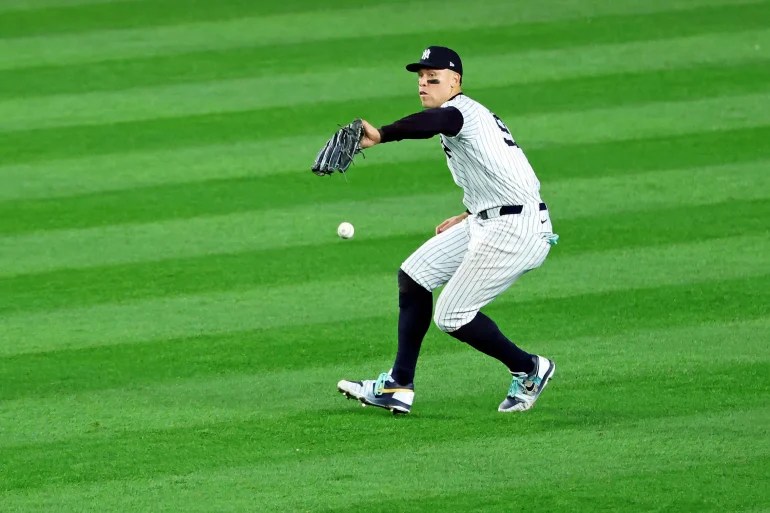
Aaron Judge

This is not what was meant when the phrase, “I’ve got the drop on you,” was coined . . .

Hands up to everyone who can’t wait for 2024 to depart. Now, hands up to everyone who thinks 2024 was just the most wonderful year of the decade. My, but that’s a barren sea of hands over that second suggestion.

Much like its home country, baseball’s 2024 was . . . well, why don’t we let some of the signature moments, doings, and undoings of baseball’s year speak for themselves. The new flimsy uniforms sucked. The All-Star Game uniforms didn’t suck that badly, but still. Meanwhile, I’m thankful to folks such as Jayson Stark and a few other intrepid sleuths of BBW—that’s Baseball Bizarro World, you perverts—who either unearthed or reminded us about . . .

Take the Fifth—Please Dept.—“Come an’ see my amazin’ Mets,” their manager Casey (I Lost With This Team What I Used to Win with the Yankees) Stengel liked to say of his maiden squad. “I been in this game a hundred years but I see new ways to lose I never knew were invented yet.”

That was the Ol’ Perfesser gazing down from the Elysian Fields, watching the team with whom he won ten pennants and seven World Series perform the single most splendid imitation of the 1962 Mets since . . . the 2024 White Sox finished their sad, sad, sad regular season.

Pace George F. Will, look to your non-laurels, White Sox—the Bronx Bumblers captured 21st Century baseball’s booby prize. You White Sox only out-lost the 1962 Mets this season. You probably never did in one regular season game what only began in a World Series game . . . with a Yankee center fielder who does a credible impersonation of the Leaning Tower of Pisa approaching the plate and Frank Howard at the plate committing his first error playing center field after 538 fly balls hit his way in his entire career to date became outs.

Then . . .

* A Gold Glove-finalist shortstop threw for a force play at third base and saw the ball ricochet off the base instead of reach his third baseman’s glove.

* The arguable best pitcher in the American League got thatclose to escaping a bases-loaded, nobody-out jam when he suffered the brain fart heard ’round the Bronx and the world: he forgot to cover first when Mookie Betts hit a screwdriving ball toward Anthony Rizzo. Oops.

* The Yankee anti-party included a balk and catcher’s interference.

* The Dodgers became the only team in baseball history to score five runs in a World Series game after they were in the hole 5-0.

* The Yankees became the only team in baseball history to serve up five unearned runs in a World Series game since they started counting earned and unearned runs as official statistics. (When did they start? In the same year during which premiered Ford’s moving assembly line, the first newspaper crossword puzzle (in the New York World), and Louis Armstrong’s first cornet. In the New Orleans Home for Coloured Waifs.)

* And the fifth-inning party actually started with everyone from the television announcers to the fans and back pondering whether Gerrit Cole might, maybe, consummate a no-hitter to keep the Yankees alive.

Your Reality Check Bounced Dept.—Too many Yankee fans continue infesting social media with proclamations that the Yankees still have the dynastic history of dynastic histories. And too many baseball fans steeped in reality and not fantasy keep reminding them, Your damn dynasty is just soooooo 20th Century!

Juan Not-So-Small Step for Met World—That’s $765 million the Mets will pay Juan Soto over the next fifteen years. This may or may not mean the end of Pete Alonso’s days as a Met, which may or may not mean . . .

Out with a Bang Dept. . . . that Polar Bear Pete’s final act as a bona-fide Met was the biggest blow on their behalf this century: the three-run homer he blasted in the ninth inning that proved the game, set, and National League division series winner against the Brewers. Which was also the only home run hit by any Met in the set.

Did I Do That Dept.—Alonso’s division series-winning blast came off Devin Williams . . . who’d never allowed a ninth-inning lead-changing bomb in his major leaguer life until then. Then, after some time passed, the Brewers let the Yankees talk them out of keeping Williams, sending them pitcher Nestor Cortes, infielder Caleb Durbin, and cash to take Williams. We still don’t know if the deal was Milwaukee payback for surrendering Alonso’s game-changing/game-swiping bomb.

Out with a Bigger Bang Dept.—That would be Walker Buehler, pitcher. One minute, locking down the Dodgers’ World Series win with a spotless Game Five ninth including two swinging strikeouts. The next, practically (well, give or take a few hours): Signing for one year and $21 million with the Red Sox. Anyone remember the Dodgers making Buehler a qualifying offer for that money and Buehler turning it down? He’s rolling serious dice on himself with this deal.

Shohei-hei Rock and Roll Dept.—You might think anyone can become a member of the 50 home run/50 stolen base club. But you won’t be able to predict who might do it the same way Shohei Ohtani did in September against the Marlins: 6-for-6 at the plate; three home runs; five extra base hits; two stolen bases; ten runs batted in. His own planet? Try realising Ohtani exists in his own quadrant.

A Cut Below Dept.—Pete Fairbanks, Rays reliever. He missed a game in 2024 because of a finger cut. He cut the finger opening a bottle of spring water. Considering his bizarre 2023 injury (incurring a black eye while trying to dunk against his toddler son through a water basketball net), it seems as though Fairbanks just couldn’t cut it anymore.

On Your Knee Dept.—Presented for your consideration: Miguel Sanó, Angel. Aleady on the injured list with an inflamed knee. He put a heating pad over it. He forgot about it just enough to burn the knee and place himself for another month on the IL. Miguel Sanó, who proved he certainly could stand the heat in . . . the Angels’ continuing Twilight Zone.

The King of Pop Dept.—Mookie Betts performs amazing feats at the plate and on the field. At the plate, they usually involve baseballs shot on lines into the outfield, or driven like ballistic missiles over fences. They didn’t involve him popping out for the cycle . . . until 25 September, when, in order, he popped out to: second baseman, third baseman, first baseman, and shortstop.

Don’t do it. Don’t Google “MLB players who’ve popped out for the cycle.” It won’t even call up the Mookie Monster, yet, never mind anyone else who might have had that kind of a day—whether a Hall of Famer, a Hall of Famer in the making, or a guy who’s destined to be forgotten outside such a single singular feat.

Time will not dim the glory of their misdeeds

Andrew Benintendi

Andrew Benintendi–his RBI single walking off a second straight White Sox win Wednesday night a) made him the first White Sox player to walk it off thrice in a year since Scott Podsednik in 2009; and, b) helped the White Sox refuse to go gently into that good gray night where record-breaking season losses live.

Baltimore’s long gone but still remembered Memorial Stadium was built as a shrine to those who fought in both world wars. On its façade, these words were posted: Time Will Not Dim the Glory of Their Deeds. The words could also have applied to the baseball team who played there before the advent of Camden Yards

To the Orioles, when they finally won a game in 1988 after 21 consecutive season-opening losses. And, to the second-longest run of sustained excellence in American League history (1960-1985, the Orioles having only two losing seasons in that quarter century span), behind the Yankees’ 45 years of winning records from 1919-1964, now relegated to memory alone.

Today’s Yankees and Orioles are both going to the postseason. But the Yankees look to have the American League East in hand and in the safe, even if there’s still no set-in-stone guarantee of their getting as far as the World Series. (And do remember the Yankee fan’s credo of entitlement that the Series is illegitimate without them.)

That’s after the Orioles went from spending 81 days atop the division including as much as a three-game advantage to second place and five games back of the Yankees thanks largely to winning only five of their last fifteen. Once on pace to win 104, a rash of injuries, especially to pitchers and infielders, leaves Oriole fans wondering whether their birds have flown since their May peak.

But both those teams would sure as hell rather not switch places with this year’s AL doormats, on the façade of whose ballpark won’t read a paen to glory but might instead read from a vintage Negro spiritual: Were we really there when this happened to us? 

The White Sox’s longest period of sustained excellence (seventeen years) began the same year Edward R. Murrow premiered See It Now with history’s first live coast-to-coast telecast and ended the same year as did the first Apollo astronauts’ lives in a launch pad fire. Their longest period of sustained single-season failure began with a 1-0 loss to the Tigers on 28 March this year.

It still seems given that these Blight Sox will break the 1962 Mets’ record for regular season losses. It could have happened Tuesday night but for the Sox doing what some people have become conditioned to believe can’t be done in White Sox uniforms: they turned a 2-0 deficit into what proved a 3-2 win with an RBI double and a pair of RBI singles in the eighth inning.

Of course, these being the White Sox, that game couldn’t be complete without some sort of mishap. Hark back to the fifth inning, when four Sox converged upon a popup around the right side of the home plate side of the infield and the ball hit the turf like a safe dropped onto a sidewalk from the fourteenth floor.

That was probably the most 1962 Metsian these Blight Sox, these White Sux, these Wail Hose, these South Blindsiders have been all season long. Until this month, the least likely development in 2024 baseball seemed the White Sox developing something heretofore bereft from their calamity and in their play: a sense of humour.

Tuesday night was also the first White Sox win this year in any game in which they trailed after seven innings. “People here tonight were trying to see history,” said left fielder Andrew Benintendi, who hit the RBI double that began the eighth-inning party. “They’re going to have to wait one more day. Maybe.”

Three years ago, the White Sox won the AL Central. The following season, microcosmically amplifying the division’s overall modesty, they finished second with a .500 record. (Exactly 81-81.) Last year, they went 61-101. None of the latter two prepared them for this season and this surrealistic collapse.

“A disaster of this magnitude must have multiple tributaries,” write ESPN’s Buster Olney and Jesse Rogers, in what must surely be the most obvious Captain Obvious utterance since Casey Stengel said of Hall of Famer Joe DiMaggio, a player with whom the Ol’ Perfesser didn’t always see eye-to-eye, “He was rather splendid in his line of work.” But the dynamic duo (Olney and Rogers, that is) proceed forth:

It’s not only about the decades-long habit of owner Jerry Reinsdorf loyally clinging to employees past peak effectiveness. “Old news,” said one staffer. It’s not only about a wave of injuries; lots of teams deal with a lot of injuries. It’s not only about a first-time manager [read: long-since deposed Pedro Grifol–JK] whose tenure was infected by a toxic clubhouse mix. Lots of teams have veterans who don’t get along, though the White Sox seemed to have had more than their share. It’s not only about a handful of players performing at their worst. It’s not only about a first-time general manager taking his first turn on the learning curve. It’s not necessarily about spending—in an era in which teams have slashed payroll to facilitate tanking, the White Sox’s payroll is about $145 million, ranked 18th among 30 teams.

According to more than two dozen sources inside and outside the organization, it’s all of that, together. Over the course of the season, there were missteps from every level of the organization—and just plain bad baseball—that turned the 2024 White Sox from a bad team into a historically awful one.

Once upon a time, Red Sox-turned-Brewers first baseman George (Boomer) Scott told then-Brewers chairman Ed Fitzgerald, “You know, Mr. Fitzgerald, if we’re gonna win, the players gotta play better, the coaches gotta coach better, the manager gotta manage better, and the owners gotta own better.” That fine fielding, power-hitting first baseman didn’t get to live to see these Blight Sox.

Once upon a more distant time, Bill Veeck marveled of the 1962 Mets, “They are without a doubt the worst team in the history of baseball. I speak with authority. I had the St. Louis Browns. I also speak with longing . . . If you couldn’t have fun with the Mets, you couldn’t have fun anyplace.” That from the man who owned the White Sox twice in his lifetime, won one pennant the first time, and survived the infamous Disco Demolition Night in his second go-round.

Grady Sizemore’s signature achievement since succeeding the deposed Grifol has been, seemingly, to ease the toxins out of the White Sox clubhouse. That alone graduated him from not a topic to on the list of candidates for the permanent managing job. His cheerful ways of finding glasses half full aren’t the worst things to happen to his team this year. Even if, as Olney and Rogers remind us, he got this gig purely because the players liked him.

The White Sox players now seem a lot less ready to throw each other under the proverbial bus. Most indications seem to be that they’re more likely to talk to each other in a let’s-go-get-’em-tomorrow mood, even if they’re the ones most likely to get got. There even seems a chance that when (not if) they pass the ’62 Mets, the White Sox might heave sighs of relief in the form of more gallows jokes.

First, they have to get there. Walking it off on Benintendi’s bottom-of-the-tenth RBI single for a 4-3 win against those Angels Wednesday night was either a continued re-awakening or prolonging the agony. Or, it was a simple declaration of, Not in our house! 

They have one more with the Angels at home, then a three-game set with the Tigers in Detroit to finish the season. They now seem bent on refusing to go gently into that good gray night, but the odds of them passing those ’62 Mets are still on their negative side.

These White Sox may not say of their too-unique season in hell, Time will not dim the glory of our misdeeds. But would you blame them for the temptation?

They’re not the ’62 Mets. More’s the pity.

Francisco Lindor, Garrett Crochet

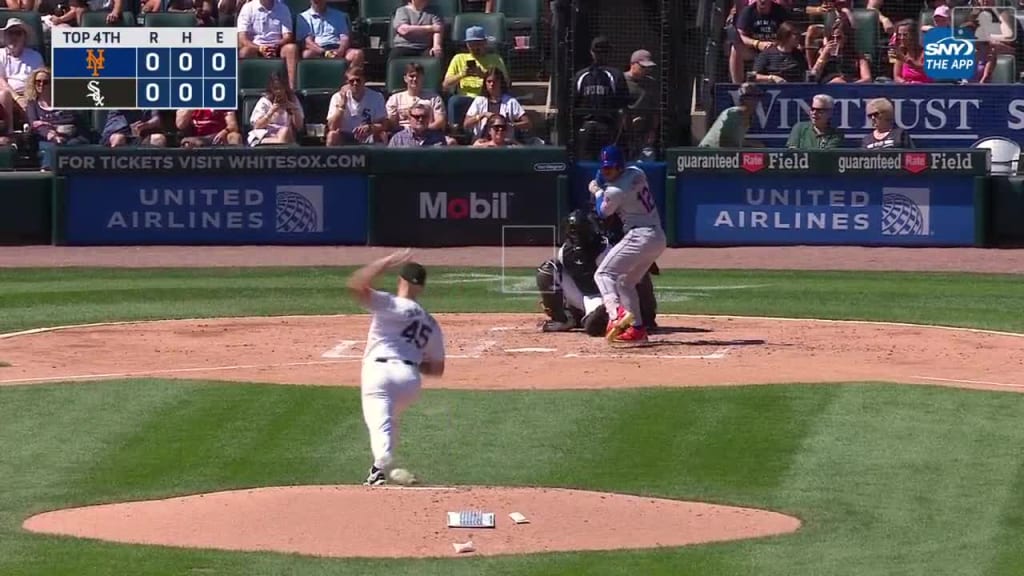
White Sox lefthander Garrett Crochet’s fourth-inning opening service had but one destiny Sunday afternoon: a blast into the left center field bleachers by Mets shortstop Francisco Lindor. (SNY image.)

Who’d have thought? Certainly not baseball’s 2024 schedule makers, who couldn’t possibly have predicted that this year’s White Sox’s road to eternal infamy would include hosting the team whose ancestors they threaten to eclipse for season-long futility.

“Meet the Mets,” the White Sox said of their weekend’s house guests. They certainly proved extremely generous hosts, allowing the postseason-contending Mets to sweep them in Guaranteed Rate Field. By now, Chicago’s South Side shrugs, when other condign responses seem more futile than the White Sox themselves.

In a way, the Mets out-scoring the White Sox 12-4 could be construed as showing mercy upon the downtrodden. By Baseball Reference‘s blowout definition (a five-run difference or better), the White Sox are 8-33 and counting. The Mets won with only a four-run advantage Friday, a two-run advantage Saturday, and a two-run advantage Sunday.

“They are not quitting,” said White Sox interim manager Grady Sizemore of his hapless charges after Saturday’s loss. “They are not folding. But it would be nice to have some of those balls fall, to get some bleeders or something.”

They’ve been the fastest to a hundred losses, the fastest to mathematical postseason elimination, and finished the weekend with a new franchise record for regular season losses. Their ballpark rang with chants of “M-V-P! M-V-P!” Sunday afternoon . . . for Mets shortstop Francisco Lindor, who started the day’s scoring by hitting Garrett Crochet’s first pitch of the fourth inning into the left center field bleachers.

I’m not sure “bleeders” is an appropos word out of a White Sox mouth this year. This team’s been bleeding from square one. And they haven’t even had a fragment of the perverse charm of the 1962 Mets whose modern-era single-season record of 120 losses the White Sox now threaten with too much credibility.

Which may be one reason why one starting pitcher and one relief pitcher on the 1962 Mets are wary of the Blight Sox pushing them out of the record books. Jay Hook was credited with the Mets’ first pitching win, when he helped bust a Met life-opening nine-game losing streak. Craig Anderson was credited with back-to-back wins in relief during a May 1962 doubleheader, and they’d be the last pitching wins with which he’d be credited in his entire major league life, a nineteen-decision losing streak just ahead of him.

They’re both well aware that this year’s Mets are chasing a place in the postseason while this year’s White Sox are chasing them and their 1962 teammates living, dead, or otherwise. Neither Anderson nor Hook wants to see the White Sox break their team’s 120 in ’62. “I want them to win at least twelve more games,” Anderson told The Athletic‘s Tim Britton before the weekend set began. “I hope they do, for their sake.” The White Sox would have to win half their remaining 24 games to make Anderson’s wish come true.

“It’s shattering when it’s happening to you, and I’m sure the White Sox are feeling that right now,” said Hook to the same writer. “I wouldn’t wish that on anybody. You don’t like to go through life thinking you were part of the worst team of whatever you did.”

It’s what the pair didn’t say aloud to Britton that makes the big difference. So I’ll say it, yet again. This year’s White Sox, like numerous historically horrible baseball teams, merely suck. The Original Mets sucked . . . with style. This year’s Blight Sox don’t even have the sense of humour of undertakers.  The Original Mets cultivated one to survive.

Now, it’s hardly the White Sox’s fault that they lack a Casey Stengel to take and keep the hardest heat off their players. But deposed manager Pedro Grifol was something between a wet blanket and a grump, and Sizemore is too earnest to help. He’s almost like National Lampoon’s Animal House’s Chip Diller, upright in his ROTC uniform, the streets overrun by the panicked under siege from a Delta House operation, pleading, “Remain calm. All is well!”

Telling the world his team isn’t folding isn’t enough. Especially since it’s been folded since the end of May. That’s when the Blight Sox stood proud with a 15-43 record. It wasn’t even enough to leave them room for a comeback comparable to the 2019 Nationals—who were 15-23 on 10 May but 24-33 at that May’s end, before overthrowing themselves to go 69-36 the rest of the way and wrest their way to a World Series conquest while they were at it.

Give Stengel the keys to a city, as New York did, and he’d say (as in fact he did), “I’m gonna use this to open a new team.” Give Sizemore the keys to Chicago and he’s liable to hand it to the opposition with the most sportsmanlike intentions after they handed his men their heads yet again.

“Come an’ see my amazin’ Mets,” Stengel would hector. “I been in this game a hundred years but I see new ways to lose I didn’t know were invented yet.” Sizemore wouldn’t shock anyone by saying, “It is what it was.” He’s hardly Grifol’s kind of grump, he’s too innately cheerful for that, but neither has he seized the moment with wit. He’d never cut the mustard in the Ol’ Perfesser’s parlour.

Sizemore can say his Blight Sox have hit more doubles so far than those Mets did all ’62, and stolen more bases, too. But the ’62 Mets even had a respectable team .318 on-base percentage to the Sox’s .278. Getting the ’62 Mets on base wasn’t half the problem that keeping them there or cashing them in without them dying by hook, crook, or schnook was.

Well, on Sunday afternoon, the White Sox had an inning that could have been from the 1962 Mets play book: Luis Robert, Jr. took one for the team leading off the seventh, getting plunked by Mets starter Sean Manaea, but then he was thrown out stealing. Andrew Vaughn drew a two-out walk and Gavin Sheets dropped a base hit in front of sliding Mets left fielder Jesse Winker, but Miguel Vargas flied out to Winker and out went that threat.

Those ’62 Mets were also infamous for the sort of fielding that made you think (ha! you thought I could resist another telling) they really had Abbot pitching to Costello with Who the Hell’s on First, What the Hell’s on Second, You Don’t Want to Know’s on third, and You Don’t Even Want to Think About It’s at shortstop. The National League’s first expansion draft rules and entry fees had much to do with it. But the Mets turned into Ringling Brothers and Barnum & Stengel Circus entirely on their own from there.

The Blight Sox defense at this writing is worth a few less defensive runs below league average than the Original Mets. But they don’t have anyone on the team with a fortieth of the perverse endearment of the Mets’ mid-May ’62 acquisition Marvelous Marv Throneberry. Their whole defense is about as funny as a stink bomb in a sewage treatment plant.

“[T]he Mets are losers, just like nearly everybody else in life,” wrote Jimmy Breslin in his post-1962 valedictory, Can’t Anybody Here Play This Game?

This is a team for the cab driver who gets held up and the guy who loses out on a promotion because he didn’t maneuver himself to lunch with the boss enough. It is the team for every guy who has to get out of bed in the morning and go to work for short money on a job he does not like. And it is the team for every woman who looks up ten years later and sees her husband eating dinner in a T-shirt and wonders how the hell she ever let this guy talk her into getting married.

They were also the team through whom those people found ways to laugh through their sorrows before trying to drown them. Not so these Blight Sox.

“I love the idea that [the Original Mets] were the worst baseball team of the modern era,” writes A Year in Mudville author David Bagdade, whose book reviewed the 1962 Mets but who admits to being a White Sox fan, the poor dear, “but that they lost with personality and humor and that they remain one of the most loved teams of any era despite (or possibly because of) their record. The ’24 Sox are just a steaming pile of baseball ineptitude. They don’t lose with personality and humor. They just lose. I don’t want anything about this Sox team to be enshrined in baseball immortality.”

Too late, perhaps. In their perversely entertaining ways, the Original Mets gave the downtrodden hope. If these White Sox caught the downtrodden drowning, they’d sooner throw them anchors.

One Sizemore to fit the White Sox

Grady Sizemore

From being part of a Cleveland team that shaved off a fifteen-game White Sox lead in the AL Central . . . to managing the Sox the rest of this season about which “disaster” might be flattery.

Once upon a time, when life was fair enough and the American League Central seemed a likely White Sox possession, Grady Sizemore and his 2005 Indians managed to turn a fifteen-game White Sox division lead in July to a mere game and a half entering the regular season’s final weekend. Even while they lost six of seven to the Sox along the way.

Those Indians forced the White Sox to think about and execute sweeping those Indians over that closing weekend to start those White Sox on the march to the World Series—which they hadn’t won since the Petrified Forest was declared a national monument. Sizemore finished the season leading the Indians with his 6.6 wins above replacement-level player.

That was then; this is now. Now, Sizemore—who took time after his playing career ended to make himself a husband and father, then worked as a $15-per-hour player development for the Diamondbacks at the behest of his friend Josh Barfield, whose move to the White Sox brought him aboard as a coach last winter—takes interim command of the White Sox for the rest of this year. God and His Hall of Fame servant Bob Feller help him.

There’s no way Sizemore could have played that final 2005 weekend against the White Sox and imagined the day coming hence when he’d have the White Sox’s bridge, even on an interim basis the team insists will remain just that while they look toward hunting a permanent skipper over the offseason to come. Neither could his legion of adoring Cleveland fans imagine it.

That 2005 opened a run of four straight seasons during which Sizemore became one of the American League’s top center fielders (37 defensive runs above his league average; .572 Real Batting Average*; 107 home runs; 128 OPS+) and matinee idols. The performance papers made him a superstar; his wiry physique and boyishly handsome face (not to mention what some have called his porn star-like surname) made him a sex symbol.

But the most irrevocable unwritten rule of Cleveland baseball for so long has been that no good deed goes unpunished. Not even the one that made Sizemore an Indian in the first place.

He came to Cleveland in the package the Indians all but embezzled out of the ancient Montreal Expos (it included pitching star to be Cliff Lee and second baseman Brandon Phillips) in exchange for pitcher Bartolo Colon. That’d teach them, and Sizemore, perhaps in that order.

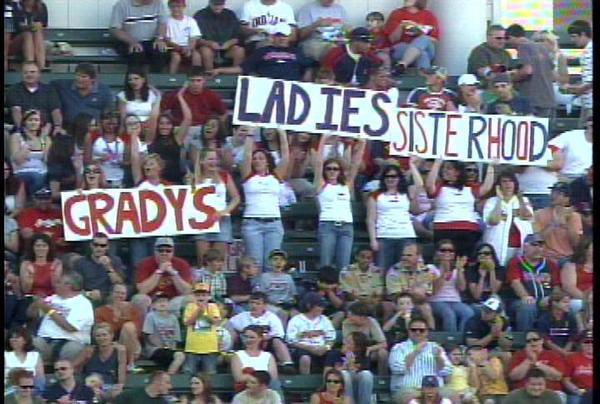
Around Cleveland, they didn’t name candy bars after Sizemore, but countless young women including a formal fan club known as Grady’s Ladies wore marriage proposals aimed his way on T-shirts in the Indians’ home playpen. (“I’m not trying to be the sex symbol of Cleveland,” he once told a writer who purred in print about his politeness and his modesty.) He managed to keep his marble (singular) and play ball; perhaps his worst known vice was driving a well-maintained baby blue 1966 Lincoln Continental.

“Good luck getting him to talk about himself,” said Indians relief pitcher Roberto Hernandez to Sports Illustrated‘s Tom Verducci. “He’s such a quiet guy who’s only interested in playing baseball and doing what he can for the team.” What he did was become one of the game’s respected and feared leadoff men, with power-speed numbers to burn, a kind of Mookie Betts prototype, but he might have done it too hard for his body’s taste.

Grady's Ladies

This is how popular Sizemore was in his early Cleveland years. And that’s without showing the young ladies wearing T-shirts with marriage proposals for him.

That being Cleveland, and those being the Indians, Sizemore couldn’t be allowed to turn a promising first five years into a Hall of Fame career. He was battered, beaten, and bludgeoned by injuries that shortened three seasons following 2008 before leaving him unable to play at all for two to follow. He didn’t have Mike Trout’s statistics but he didn’t need those to become the Trout of the Aughts. He ended up playing in Boston, Philadelphia, and Tampa Bay without a fragment of his Cleveland best left to offer.

“Just coming back from one surgery is hard,” Sizemore told a reporter when he signed with the Red Sox. “When you lump seven in a short period of time, it kind of puts your body through the wringer a little bit. I kind of had to take a step back the last year or two, and kind of just get the body right and try to get healthy and not rush things.”

Sizemore had had a double and a bomb during a fourteen-run single-inning massacre of the Yankees in April 2009. At that season’s end, he’d undergo surgeries on his groin and his elbow. Followed by another abdominal surgery, back surgery, and three knee surgeries. The three-time All-Star and two-time Gold Glove winner was reduced from a Hall of Famer in the making to an orthopedic experiment who’d be lucky to average 72 games a year over his final four major league seasons, sandwiching two full seasons his body forced him to miss.

The good news is, Sizemore is in splendid health today, and nobody’s in a hurry to see him turn the team around from joke to juggernaut. They believe in many things in Chicago, but magic acts aren’t among them. Not even if it might have taken one to end the Sox’s horrific 21-game losing streak Tuesday night or save Pedro Grifol’s job on the bridge. The skinny had it that Grifol would survive only long enough to see that streak end, if it ended.

Grifol survived to watch his charges beat the Athletics, 5-1, but the following day the White Sox couldn’t keep a 2-0 lead past the seventh, then couldn’t overcome a freshly minted one-run deficit in the final two innings. Those attentive to whispers that Grifol didn’t preside over the most communicative or tension-free clubhouse (his total record with the Sox: 89-190 over two seasons) probably noted Sox general manager Chris Getz making a point of mentioning Sizemore’s apparent knack for drawing people closer to him (unlike the guy he’s going to end up spelling when we execute him!) when announcing Sizemore’s original addition to the coaching staff.

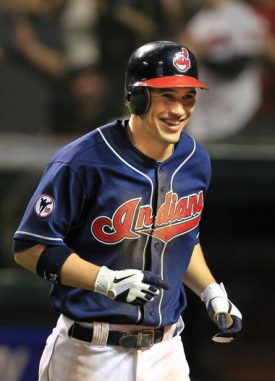
Grady Sizemore

Sizemore, young and an Indian, wearing his love for the game unapolgetically while playing like a future Hall of Famer—before the injuries made him the Mike Trout of the Aughts.

“He’s got a strong understanding of the game, how to play the game,” Getz said of him when announcing his mission for the rest of this lost and buried season. “He’s very authentic and honest with his communication ability. And so we felt that Grady would be the right fit for getting us to the end of September and building this environment that’s more effective for our players. Grady is a very strong, steady voice that we look forward to having as the manager to finish up this season.”

A guy with baseball brains to spare who can endure seven surgeries in five years without looking for the nearest escape hatch to the nearest booby hatch is a guy who can handle getting these White Sox through a remaining season in which they’d kinda sorta like not to end up breaking the 1962 Mets’ modern record (40-120) for season-long futility.

The interim manager might even have a chance to so what some have thought impossible thus far this year. Those Original Mets sucked . . . with style. And laughs. Sizemore might not make these White Sox more stylish in self-immolation, but he might actually get them to laugh—even to prevent them from thoughts of sticking their heads into the nearest ovens.

The White Sox would have to win thirteen more games to elude liberating those 1962 Mets from the top of the bottomcrawling heap. If Sizemore can get that much out of them from this day forward, he might make other teams cast an eye upon him as a manager without an interim tag attached. He might even make the South Side believe in magic, after all.

Beer showers and heck raisers

Andrew Benintendi

Andrew Benintendi hitting the two-run homer that started the White Sox on the way to ending their franchise-worst, AL record-tying losing streak Tuesday night.

In a way, it almost figured that the end would happen on the road. Something about this year’s White Sox just didn’t cry out that they should end the single most miserable spell in their history this side of the Black Sox scandal before their home people.

Maybe it was the distinct lack of humour. Nobody likes to lose, nobody likes when losing becomes as routine as breakfast coffee, but there have been chronically losing teams who managed to laugh–even like Figaro that they might not weep . . . or kill.

The 1988 Orioles survived their record season-opening 21-game losing streak with gallows humour. This year’s White Sox didn’t dare adopt gallows anything, perhaps out of fear that their own odious owner might take them up on it, build a gallows, and send a different team member to it each postgame.

My God, when these White Sox finally found better angels upon whom to call and beat the Athletics 5-1 Tuesday night, the funniest thing about it was that nobody could find a beer to drink in the postgame clubhouse celebration—because the entire supply had been poured over each other once they came off the field.

“A beer shower, what are you talking about,” cracked White Sox relief pitcher John Brebbia, who got three straight air outs in the bottom of the ninth to finish what Andrew Benintendi’s two-out, two-run homer started in the top of the fourth. “I’ve never heard of such a thing. That’s absurd.”

As if he’d suddenly been made aware he’d almost crossed the no-humour line, Brebbia plotted his own course correction. “We’ve got a day game tomorrow,” he said, “so guys are super focused on getting some sleep. Making sure they’re eating right and supplementing properly.”

Sure. Bust the franchise’s longest losing streak ever, keep them tied with the 1988 Orioles as the American League losing streak record holders, and do nothing more than check and maintain their diets, pop the right vitamins, and don’t be late for their dates with Mr. Sandman.

No White Sox player, coach, clubhouse worker, or front office denizen expected that kind of losing streak, of course. Not even with owner Jerry Reinsdorf executing his longtime leadership tandem of Ken Williams and Rick Hahn. Not even when Reinsdorf looked no further than his own hapless assistant GM Chris Getz to succeed the pair—fast. Not even with White Sox fans, what’s left of them, take pages from the book of A’s fans and hoist “Sell the Team” banners at Guaranteed Rate Field.

Not even the most shameless tankers of the past decade went into seasons expecting double-digit losing streaks at all, never mind record tyers or record threateners. But these White Sox might yet overthrow the 1962 Mets and their 40-120 season for record-setting futility. 38-124, anyone? No one’s saying that’s impossible yet.

Those Mets actually had no losing streak longer than seventeen games. They were also shut out a mere six times while they actually managed to shut the other guy out four. These White Sox have managed somehow to shut the other guys out one more time than that, but they’ve also been shut out thirteen times and possibly counting. Perhaps more amazing than those Original Mets, these White Sox were shut out only once during the now-ended losing streak. (A 10-0 blowout by the Mariners.)

The ’88 Orioles ended their notorious losing streak with a win against the White Sox that also involved eight Orioles and only three White Sox striking out at the plate. Last night, four White Sox batters struck out and five A’s did as well. The first strikeout wasn’t nailed until the bottom of the third, when White Sox starter Jonathan Cannon ended the side by blowing A’s catcher Sean Langoliers away on a climbing fastball.

To the extent that you could call it a pitching duel, the White Sox and the A’s seemed more bent on settling who could get more ground outs than fly outs. The White Sox pitchers landed eleven ground outs and sixteen air outs; the A’s pitchers, ten ground outs and nineteen fly outs. As if both teams believed idle gloves were the devil’s playthings.

The White Sox also left three men on base to the A’s leaving seven. Maybe the sleekest defensive play of the game ended the Oakland second, when White Sox shortstop Nicky Lopez handled A’s left fielder Lawrence Butler’s hopper on the smooth run and executed a smoother-than-24-year-old-scotch step-and-throw double play.

Then, in the top of the fourth, White Sox center fielder Luis Robert, Jr. slashed a clean line single to left with one out. First baseman Andrew Vaughn flied out to right to follow, but then Benintendi turned on A’s starter Ross Stripling’s 1-1 fastball right down the chute and sent it far enough over the right field fence.

This time, the White Sox would not blow the lead. Not even after A’s second baseman Zack Geldof hit a two-out solo homer in the bottom of the inning. Would anyone guarantee a White Sox win with a mere 2-1 score? The White Sox themselves wouldn’t have.

First, Sox third baseman Miguel Vargas wrung Stripling for a leadoff walk in the top of the sixth. Brooks Baldwin, a youthful midseason addition who had yet to be part of a major league victory, promptly singled him to second. One out later, Vaughn singled Vargas home and Baldwin to third with a base hit, chasing Stripling. Reliever Michel Otanez wild-pitched Baldwin home with Vaughn stealing third as Otanez worked on Sox designated hitter Lenyn Sosa—who flied out for the side but left the score 4-1, White Sox.

Maybe that still wouldn’t be enough. As the redoubtable Jessica Brand Xtweeted, the White Sox pre-Tuesday had one game since the Fourth of July in which they had a three-plus-run lead in the eighth or later, a 5-2 lead against the Royals on 29 July. Oops. The Royals dropped three homers including a grand slam to make it an 8-5 Royals win and White Sox consecutive loss number fifteen.

Come Tuesday, the White Sox turned out to have one more card to play in the top of the ninth. Benintendi doubled to right with one out, took third on a wild pitch with Sosa at the plate, then Sosa sent Benintendi home with the RBI single, before Brebbia made short air-out work of the A’s in the bottom to close a deal that once seemed about as likely as finding coherence coming from Donald Trump’s or Joe Biden’s mouths.

So what did Benintendi—once upon a time the acrobat who charged and dove to steal a certain three-run triple from Houston’s Alex Bregman, sending the 2018 American League Championship Series into a two-all tie rather than leaving it 3-1 Astros—think after he and his White Sox finally closed the book on their team-record, league-record-tying losing streak?

“We won a game, nothing more than that,” he said postgame. “I think everybody has played enough baseball. You understand that we play 162 of them. It sucks that we’ve lost 21 in a row, but a win’s a win. We’re all excited obviously, but this is no different than any other win.”

Maybe it was exhaustion. Maybe it was unexpected relief that the White Sox didn’t become the new AL losing streak record holders. When Benintendi hauled down Gelof’s towering fly to shallow left to end the game and the streak, he didn’t even want to keep the ball as a souvenir.

Chicago White Soxfans

Two traveling White Sox fans urge the team on indicating they were one out from the Promised Land Tuesday night.

Sox manager Pedro Grifol, who’s just about guaranteed to be left to find new employment, possibly when the season finally ends, possibly sooner, was almost as benign as that when the streak ended. “It was cool to watch for nine innings, these guys pull for each other,” he said. “The [Coliseum] dugout is small, but nobody really cared about how small it was today. It was just a group of guys, together, trying to see if we could get this thing behind us.”

That may have been one of the least testy postmortems of the year for these Sox. Grifol is no Casey Stengel. Not as a baseball tactician or strategist, and certainly not as a riffer with a twist who could keep the heat off his hapless charges at the lowest of their low.

“Come an’ see my amazin’ Mets,” Stengel often hectored Polo Grounds fans waiting to see the latest of the 1962 Mets. “I been in this game a hundred years but I see new ways to lose I didn’t know were invented yet.”

Grifol could never cut the mustard at Stengel’s hotel bar roost. His White Sox already sank under the weight of underwhelming individual performances and a small swarm of injury bugs. They incurred embarrassment when a few of the men they sent elsewhere around the trade deadline shone at first for their new teams. They’ve needed a Stengel badly this time around. They’ve barely got a Marx Brother—Zeppo.

A 21-game losing streak that followed a May-June fourteen-gamer was above and beyond Grifol’s and his White Sox’s comprehension no matter what. So much so that they rarely if ever found any reason to laugh while they threatened but didn’t pass the ’88 Orioles. But it’s tough enough being a White Sox fan these days, isn’t it? Do the fans have to provide all the humour?

Apparently. Before Gelof checked in at the plate in the bottom of the ninth, a pair of White Sox fans who’d gone west hoping to see the streak end stood behind the visiting dugout. They made motions indicating to White Sox players, just one out from the Promised Land of a win, any win.

One wore a brown paper bag over his head.

“Will anyone be writing any books about these White Sox?” asked a Tuesday editorial by the Chicago Tribune. Then, they answered.

If only the legendary Tribune columnist Mike Royko were still with us, we’d love to see what he would produce, given his rants back in the day about the hapless Cubs of the 1970s. But those Cubs teams were the 1927 Yankees compared with the 2024 Sox. Even Royko might be at a loss for words on the 2024 White Sox.

How rich is that? Name one other baseball team who could, in theory, have left Mike Royko lost for words, with or without a paper bag over his head. That would have been bigger headlines and more viral memes than any moment in which the White Sox finally played way over their own heads to end their horrific streak. Bigger, even, than the Rangers’ Corey Seager ruining Astro pitcher Framber Valdez’s no-hitter with a two-run homer in the ninth Tuesday.

“They played a good, clean game tonight, and we didn’t generate any offense,” said A’s manager Mark Kotsay postgame. “For that club over there, I’m sure they’re excited about ending their losing streak.” Excitement, apparently, remains in the eye and ear of the beholder.