“I loved every challenge of playing third base”

Adrián Beltré

He hit home runs on one knee, he was a human highlight reel at third base. Welcome to Cooperstown!

Of all the stories that abounded this weekend about Adrián Beltré, on the threshold of his induction into the Hall of Fame, there’s one which may be forgotten except by Angel fans left (as almost usual) to ponder what might have been. It’s the story of the Angels pursuing Beltré as a free agent after he spent five often injury-plagued seasons in Seattle.

Essentially, Angels owner Arte Moreno wanted Beltré in the proverbial worst way possible, after the Dodgers who reared him were willing to let him escape to the Mariners in free agency—despite Beltré having just led the Show with 48 home runs in 2004—because then-owner Frank McCourt didn’t want to pay what the Mariners ultimately did.

Beltré went from the Mariners to the Red Sox on a one-year, prove-it kind of deal. When that lone Boston season ended in October 2010, Moreno kept Beltré in his sights. But nothing the Angels presented Beltré impressed him enough to sign with them. He opted to sign with the Rangers instead. Moreno was so unamused he ordered his then-general manager Tony Reagins to deal for Blue Jays outfielder/slugger Vernon Wells.

Well. The Angels learned the hard way (don’t they always?) that Wells was damaged goods. The fellow they sent the Jays to get him, bat-first catcher Mike Napoli, would join Beltré for a hard-earned trip to a World Series that would break their hearts, before moving on to help Cleveland to a pennant and the Red Sox to the 2018 World Series triumph.

Meanwhile, before leaving Seattle for a one-year, show-us deal with the Red Sox, Beltré by his own admission finally learned he could have a shipload of fun playing baseball without losing the focus, the discipline, or the outlying durability that were going to make him a Hall of Famer in the first place. With the Rangers, he finished his ascent into what Baseball-Reference calls the number four all-around third baseman ever and, concurrently, built and secured a reputation as a team-first Fun Guy.

Nail his 3,000th lifetime major league hit? Party time—for the whole team and then some. “After he got 3,000 hits he had a party,” says Rangers in-game reporter Emily Jones to The Athletic‘s Britt Ghiroli and Chad Jennings. “It was like our clubhouse moved to this place. Every clubbie. Every trainer. Every massage therapist. He was extremely inclusive.”

“He was the oldest guy on the field,” says his former Rangers teammate Elvis Andrus, “but acted like the youngest.”

Beltre’s fun-loving rep went hand in glove with being a veteran clubhouse leader to whom even his manager often deferred. “If he stared at you some kind of way,” says Ron Washington, now managing the Angels but then managing the Rangers, “you knew he meant business. A couple of times, I got off my perch to go get (on a player). He would stop me and say, ‘Let me get it, skip’.’

“I saw him chew veterans,” says one-time Rangers batting coach Dave Magadan, “like they were 19-year-old rookies.”

But he also never forgot teammates, even after he retired. Lots of players can make their teammates go with the flow during arduous seasons. Beltré made them friends. Even if he might chew them out one day, he’d re-cement the friendship side by asking, “You know why I did that, right?”

Former Rangers teammate Mitch Moreland remembers taking a group of later Athletics teammates to a Seattle restaurant to which Beltré had taken a host of Rangers once upon a time. “I called (Beltré) and I was like, ‘Hey, what was the guy’s name at Metropolitan? I’m going to take the boys there’.”

He goes, “Oh, I got you.” So, he called the guy up, set it up. I took the whole team over there, we ate, and I got ready to get the bill, and Adrián had picked it up. For the Oakland A’s. After he was retired.

What of the once-familiar running gag involving Beltré’s real distaste for having his head touched and teammates—usually spearheaded by Andrus—going to great lengths to touch it and get away with it? “I still do,” Andrus says. “He still doesn’t like it. That’s what I am going to try to do at Cooperstown . . . I need to touch his head. I need to touch his head while he’s talking!”

He didn’t get anywhere close to that. Hall of Famer David Ortiz did, right smack at the podium.

But no matter. The third baseman who declined a grand farewell tour didn’t need any further validation for his place in the Hall of Fame. Those who do, however, should marry his 27.0 defensive wins above replacement level player (WAR) to his Real Batting Average (total bases + walks + intentional walks + sacrifice flies + hit by pitches, divided by total plate appearances) among Hall third basemen whose careers were in the post-World War II/post-integration/night-ball era:

HOF 3B PA TB BB IBB SF HBP RBA
Mike Schmidt 10062 4404 1507 201 108 79 .626
Chipper Jones 10614 4755 1512 177 97 18 .618
Eddie Mathews 10100 4349 1444 142 58 26 .596
Scott Rolen 8518 3628 899 57 93 127 .564
George Brett 11625 5044 1096 229 120 33 .561
Ron Santo 9397 3779 1108 94 94 38 .544
Wade Boggs 10740 4064 1412 180 96 23 .538
Adrián Beltré 12130 5309 848 112 103 97 .533
Paul Molitor 12167 4854 1094 100 109 47 .510
Brooks Robinson 11782 4270 860 120 114 53 .458
HOF AVG .555

He’s not higher there because a) he drew far less unintentional walks than most of the men on that list; and, b) that aforementioned durability led him to playing through injuries insanely enough to cause him a few so-so seasons that pulled his numbers down somewhat. But as a defensive third baseman he’s the second-most run-preventive player (+168) who ever worked that real estate . . . a mere 125 behind a guy named Robinson.

“I loved every challenge of playing third base,” said the first third baseman in Show history to nail 400+ home runs and 3000+ hits. “I was hooked. Those hot shots, slow ground balls, double plays, I couldn’t get enough of them.” Come Sunday, the Cooperstown gathering almost couldn’t get enough of Beltré, either.

Tim Wakefield, RIP: Decency

Tim Wakefield

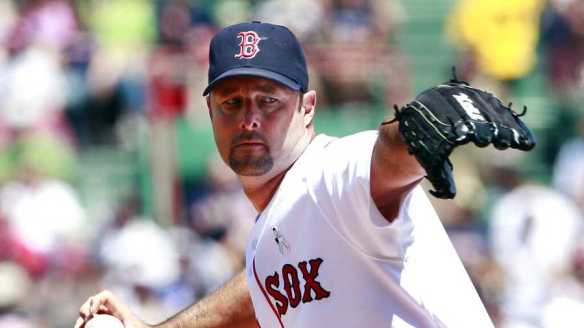
Armed with a decent if tough to handle knuckleball, Tim Wakefield was a good pitcher and a better man. He spent the most time of any pitcher with the Red Sox—seventeen seasons.

Tim Wakefield’s death at 57 struck more than a few chords around baseball Sunday. Not just because a decent man with a decent knuckleball and a philanthropic heart was taken too soon. Not just because he and his wife were robbed by a narcissistic old teammate of their right to fight two insidious diseases with dignity and courage and out of the public eye.

How decent was Wakefield? Decent enough that—when his 2004 Red Sox overthrew the Yankees in that staggering American League Championship Series run after being down to the last couple of outs in a prospective four-game sweep—Yankee manager Joe Torre called Wakefield before he called anyone else in his dark hour.

A year earlier, Torre showed him empathy after the first pitch he threw to Aaron Boone in the ALCS Game Seven bottom of the eleventh flew into the left field seats with a meal, a stewardess, and the American League pennant aboard: He had done nothing but get us out in that series, and, all of a sudden, he’s got to walk off to that.

Now, wrote the New York Times‘s Jack Curry, “Torre was alone with his disappointment. He could have called his wife for comfort or he could have called George Steinbrenner, the principal owner, for discomfort. He lifted the receiver and, surprise, called Boston pitcher Tim Wakefield instead. ‘I just told him I wasn’t happy,’ Torre said, ‘but I was happy for him’.”

Few baseball goats get to redeem themselves as swiftly as Wakefield did. He went from surrendering a pennant-losing home run one year to standing on the mound as a pennant- and World Series-winning pitcher the next. Not to mention a pennant- and World Series-winning pitcher three years after that.

It wasn’t exactly pretty—he threw threw shutout relief innings in 2004 ALCS Game Five but surrendered five earned without harm in Game One of that World Series. Then, he pitched four and two-thirds surrendering five earned in Game Four of the 2007 ALCS but didn’t appear in the Red Sox World Series conquest to follow.

Wakefield was a competitor who never refused the ball, taking a reasonable knuckleball and a quiet but powerful will to the mound. Reasonable, but hard to handle: one of his catchers, Victor Martinez, actually used a first baseman’s mitt behind the plate when catching him. Wakefield did the best he could with it for a long career including those two World Series rings, and earned nothing but respect and affection for his effort.

He could have shriveled after Game Seven of the 2003 ALCS, when he pitched a shutout bottom of the tenth inning in relief of Mike Timlin but saw his first pitch to Boone disappear to open that bottom eleventh and close out that ALCS. But like his fellow Red Sox, he simply picked up, dusted off, and started all over again. All the way to the Promised Land no Red Sox team had seen since the end of both World War I and the Austrio-Hungarian Empire.

Perhaps, as I once wrote, arguing that the sports goat business should have gone out of business long enough ago, Wakefield having been to four postseasons prior to 2003 built a survival mechanism in him to call upon when Boone swung.

It might also have helped that Red Sox Nation heaped its scorn upon manager Grady Little misreading Hall of Famer Pedro Martinez’s emptied fuel tank and leaving him aboard a Yankee or two too many to send Game Seven to the extras in the first place.

Wakefield’s steadiness probably had as much influence as any of the freewheeling, fun-loving Idiots as the 2004 Red Sox called themselves. (“We’re just a bunch of idiots who love playing baseball”—center fielder Johnny Damon, who swore it also meant they weren’t going to let the Red Sox’s star-crossed history to that point get to them.)

It wasn’t enough to enable him to overcome the brain cancer he and his family hoped to keep out of the public view before his Red Sox teammate Curt Schilling outed him last week. Schilling took an appropriate beating all over social media for revealing what Wakefield and his family hadn’t permitted him to do, and the Red Sox issued a public statement of empathy without saying outright what Wakefield fought.

We just didn’t think the battle would end so soon after Schilling’s idiotic doing.

The eulogies speak more about Wakefield the man than Wakefield the good if not quite great pitcher who was good enough to pitch nineteen major league seasons, seventeen with the Red Sox. “I only knew him off the field,” Xtweeted former Red Sox outfield star Fred Lynn, whose career beginning predated Wakefield’s by a couple of decades, “but he was a very good guy. Class act. Gentleman.”

Wakefield was a 2010 Roberto Clemente Award winner for his community and charity work off the field in Boston. (He was nominated eight times for that award.) He was the charitable Red Sox Foundation’s honourary chairman as well as being heavily involved with the New England Pitching for Kids group that aims to improve children’s lives. He also became a well-liked Red Sox broadcaster after he stepped off the mound for the final time, and habitually asked fans who met him about their own lives and doings first.

“The best guy you could want to be your friend,” Xtweeted former Pirates manager Clint Hurdle, who managed the team long after Wakefield began his career with them. “The baseball player was a great teammate and competitor. Another true ambassador of our game. The husband, father and friend cannot be replaced. He cared and he loved.”

He loved only three people above and beyond baseball. He loved his wife, Stacy, who’s reportedly battling pancreatic cancer herself, and his two children, Trevor and Brianna. May the Lord in whom he devoutly believed have welcomed him home happily, while lending His love and strength to his family.

And, perhaps, more than a few hard raps across the mouth of the teammate who saw fit to deny him and his family the dignity of their final hours together without publicity’s prurient blare.

The Red Sox need to receive, not send messages

Rafael Devers

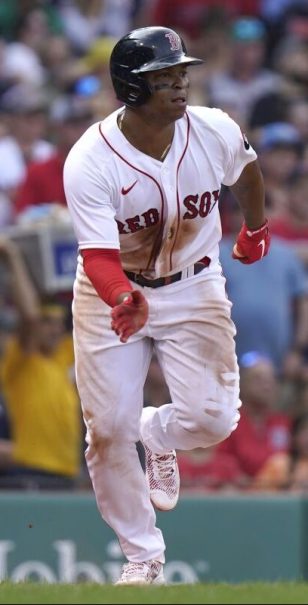
Rafael Devers’s 4-for-6 Sunday—including a two-run single and another RBI single—helped the Red Sox bury the Royals. Where were days like these from others when the Red Sox needed them most?

When the Orioles sent Trey Mancini to the Astros in a three-way deal at the trade deadline, it looked like general manager Mike Elias pushed the plunger on the season despite the team rising back from the dead. No less than Baseball Prospectus described the popular Mancini as “the heart and soul of a franchise long depleted of either.”

Well, Mancini’s now guaranteed a trip to the postseason with the Astros having clinched a postseason berth at minimum (wrapping up the American League West is just a formality waiting to happen for them) . . . and the Orioles remain within sight of a wild card entry, a mere four games back of the Mariners for the league’s fourth wild card.

Nobody really wanted to see Mancini leave Baltimore, not even Elias despite his word-salad explanation of the deal. Not in the Oriole clubhouse, not in the Camden Yards stands. But candor requires us to own up and admit the Mancini deal wasn’t popular but neither did it prove disastrous. It’s been how long since the Orioles finished seasons with winning records?

The Orioles may end up falling short, but they put on a show of self-revival that portends well for their 2023 and shows what teams can do despite losing well loved members to the business’s actualities. There are teams who would do very well to pay attention, listen, and learn.

The team in Boston, for example.

It sent the Red Sox clubhouse into a wrench when backup catcher Kevin Plawecki was designated for assignment late last Friday night and released officially Monday. On Sunday, after the mostly moribund Red Sox ironed up and smothered the Royals 13-3, the players bathed the joint with Plawecki’s walk-up song, “Dancing on My Own.” That’d send the message, right?

What message? The message that it’s not nice to send a popular clubhouse guy packing? The message that it’s not nice to cut a guy loose who kept the club loose amid disaster and started the laundry-cart dugout ride for home runs with them even if he didn’t get to take the ride himself too often? The message that the front office just doesn’t get it?

How about whether the Red Sox didn’t need to be sending but receiving messages? Such messages as yes, the front office Lucys got some splainin’ to do but so do the players. They got some splainin’ to do about what NBC Sports Boston’s John Tomase calls “this undercurrent of victimization and grievance that has left the clubhouse feeling like it plays no part in the results on the field.”

We saw it in the mopey reaction to the trade of catcher Christian Vazquez, whose replacement, Reese McGuire, has significantly outperformed him, it must be noted. We saw it a year earlier when trade deadline reinforcements didn’t arrive quickly enough, even though Kyle Schwarber ended up keying a run to the American League Championship Series. And we’re seeing it now with Plawecki, a fine backup and veteran presence who isn’t the issue here.

The issue is the reaction of players who seem unwilling to accept responsibility for their role in this disappointing campaign. When right-hander Nathan Eovaldi tells WEEI.com’s Rob Bradford the clubhouse misses presences like Schwarber, Plawecki, and Hunter Renfroe, it comes off as a direct dig at Bloom’s priorities. But how about Eovaldi fills that gap? We’re still talking about a veteran-laden roster, after all. From Xander Bogaerts to J.D. Martinez to Rafael Devers to Kiké Hernández to Nick Pivetta to the dearly departed Vazquez, the Red Sox did not lack for experienced, winning players.

So where were they when the season started going south in July? They never stanched the bleeding, even though within their very own division, the Rays survived the loss of burgeoning superstar Wander Franco, Gold Glove center fielder Kevin Kiermaier, All-Star catcher Mike Zunino, ace relievers Andrew Kittredge and J.P. Feyereisen, and potential future ace Shane Baz, among others. They currently trail the Blue Jays by only half a game for the first wild card.

The Rays didn’t give up when injuries hit, but the Red Sox did, rendering the final eight weeks of the season meaningless.

It might now seem an Eighth Amendment violation to remind the Olde Towne Team now. It wasn’t that long ago when their age-old rivals from the south Bronx went to back-to-back postseasons despite being hit with injury bugs so pronounced you’d have thought their games were episodes of Bones, Grey’s Anatomy, and House, and that The New England Journal of Medicine was really the Yankee yearbook.

I get it. Plawecki wasn’t a world beater at the plate or behind it; his usual role seemed to have been as the catcher of choice for starting pitchers Eovaldi and Michael Wacha, their two best starters when they’re not injured. Above and beyond that, Plawecki was one of the cast of Show characters who play roles unseen on the field.

“The Plaweckis of the world,” writes the Boston Globe‘s Jon Couture, “get teams through the grind, help rookies adjust, and are beloved for their conscientiousness and camaraderie. They’re needed. Thus, the pointed reaction for an end-of-the-roster guy.” (Thus, too, the likeliest reason the Rangers are interested in the now-free Plawecki and might even sign him today.)

Tomase gets it, too, but only to a particular valid extent. “Recognizing the temperature of the locker room is a necessary management skill,” he writes, “and at times the Red Sox could do a better job of communicating decisions to the rank and file.”

But we often go too far in castigating this move or that as harmful to the delicate clubhouse ecosystem.

Sometimes the players just need to man up and admit that management doesn’t owe them anything, because they did not honor their half of the bargain. Sometimes their performance leaves the boss no choice but to cut their buddy because he’s not part of the future. Sometimes next year matters more than this one.

Castigate Bloom as you wish for this unmade move or that unmade move or the other move that backfired. Fair enough. But when Tomase says the Red Sox players left Bloom little enough choice this year but to play wait-till-next-year, too (or wait-till-last-year, considering their reinforced run to the ALCS), he’s not just writing through his chapeau.

Lucky for the Red Sox they’ve got more 21st Century World Series rings than anyone else in the Show so far. Before that, a season such as this would have been written off as just another entry in the long log of rotten Red Sox malfortune. Who would have thought that the Orioles of all people would end up better off and with more respect approaching the finish line?

Clowns to the left of me, jokers to the right

Victor Robles

That was a clown dismissal, MadBum . . .

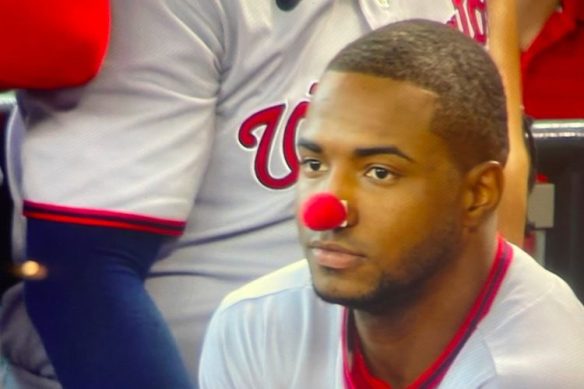
Grumpy Old Men Dept.—It’s tough to determine which stung Madison Bumgarner more, Victor Robles hitting one over the fence and savouring it visibly on his dollar or Robles responding with a classic troll when Bumgarner dismissed him as a clown: Perhaps if MadBum wishes not to be clowned, he might ponder the thought that surrendering 24 homers a year on average goes a long way toward denying such wishes. Earth to MadBum: that was a clown dismissal, bro.

Busted Dept.—I’d like to go on record yet again as saying and believing that a player who’s sent from promise to unfulfilled promise because of injuries incurred while he actually plays the game isn’t a bust. I’d also like to go on record in that regard as saying anyone who claims otherwise and matches such players to those who either can’t cut it after all or squander their talent (drugs, too much high life, too little conditioning and work ethic, etc.) should be dismissed as a damn fool.

Glove Story Dept.—Amidst most of the high-fiving among Yankee fans over the team acquiring left fielder Andrew Benintendi from the Royals in exchange for a pitching prospect trio, maybe 99 percent of the chatter pointed to Benintendi’s on-base machinery this year and maybe one percent pointed to his equivalent gift for preventing runs.

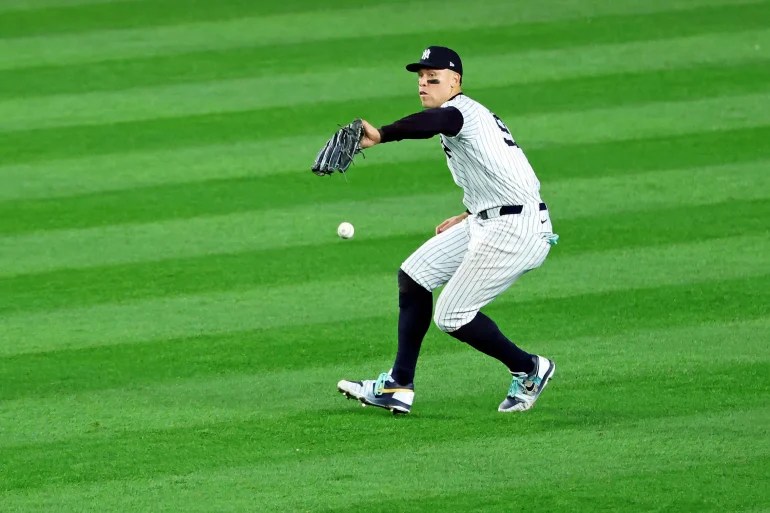
I get Yankee fans trying to swallow that this guy was once a rival on the Red Sox, but they should be very mindful of Benintendi’s ability to break the other guys’ backs with his legs and glove in left field. Their Yankees may yet need him to save a pennant the way he helped do for the 2018 Red Sox:

Giant Steps Dept.—That was then: the Giants not looking to deal away veterans. This may be now: the Giants may order about face! to the rear, march! on that. Various reports indicate the recent Giants fade has “other teams” keeping one eye on that possibility—including prospective free-agent veteran pitcher Carlos Rondon and outfielder Joc Pederson. But will the eyes have it?

Relief Dept.—It’s enough that Juan Soto is on the trade market, apparently. But Nationals general manager Mike Rizzo, also apparently, insists that he’s also not going to use moving Soto as a tack to unload a bad or at least compromised contract—such as pitcher Patrick Corbin’s remaining $50 million. You’d love to think that even the forthright Rizzo wouldn’t really play that game. Memo to teams interested in Soto: Trust your mother but keep the spare tire inflated properly.

You’ll Be Happier with a Hoover Dept.—The Astros got beaten, swept, and cleaned this week. By the Athletics. The dead-in-the-(AL)-West Athletics. In Oakland, where the A’s were 17-30 before the first-in-the-West Astros came to town. They even beat Luis (Rock-a-Bye Samba) Garcia and Cristian Javier while they were at it. And, won each game by exactly two runs. Break up the A’s?

You Can Be Sure Dept.—From self-described king of the Mets’ Twitter underground, handling himself METSMENACE, after the Mets swept the Yankees in a two-game set with Max Scherzer punching out six including Aaron Judge thrice: “It’s a good thing [Jacob] deGrom wasn’t in the dugout when Scherzer was giving high fives from hell or he’d be out for another 9 months.” As if Max the Knife would be that blind.

Bronx Savings Bank Dept.—In one way, Andrew Benintendi didn’t lose a thing being traded to the Yankees: the Royals were scheduled to fly to New York for a weekend set with the Empire Emeritus, so he was going to the Bronx one way or the other. The only thing he has to change is his field wardrobe. This is what’s known at times as the perfect storm. But what if the Yankees use the Royals for target practise and Benintendi proves one of the best marksmen this weekend?

Portside Dept.—The Red Sox insist they have no intention of trading either of their left-side infield mainstays, Xander Bogaerts (shortstop) and Rafael Devers (third base). They insist despite recent struggling that they’d prefer to buy and sell at once for the coming trade deadline, maybe selling other veterans and buying a few long-term pieces. Says Red Sox Nation: Heavy sigh of relief. Says experience, and not just regarding Boston: Is that just the same old song? Don’t touch that dial.

The Bronx Boneheads

This is what the Yankees were afraid of being exposed? After two years, accidentally turning up during a lawsuit’s discovery phase, and a few legal contortions on behalf of blocking it from anyone else’s sight, this is what the Yankeegate letter was all about? Their own 2015-2017 replay-room reconnaissance ring, a la the 2018 Rogue Sox?

No, we’re not going to argue that electronic cheating isn’t so terrible even if it doesn’t rise quite to the Astrogate level. Agree that neither those Yankees nor those Red Sox were behaving themselves, even if the Yankees didn’t get far enough in the postseason to try it in a World Series the way the ’18 Rogue Sox probably did.

But someone, anyone. Please.

Tell me the Bronx Boneheads aren’t that deeply full of themselves that they couldn’t have withstood whatever minor slings, arrows, brickbats, and bashings would have confronted them over mere replay room reconnaissance. Tell me they’re not that ridiculous about preserving the Yankee image no matter how little their sneaky little shoplifters resemble the grand theft felons.

About the only thing the Yankee prankees seem to have done a little differently than the Rogue Sox was use their dugout phone on the road to get the stolen signs from the road replay room and then transmit it to a baserunner to send home to the batter.

Cheating is cheating? Please. This was comparable only to teen comedians ordering pizzas for deliveries to unsuspecting chumps across town. It didn’t exactly amount to seizing the pizzeria and taking hostages.

Since there were unconfirmed numbers of other teams doing likewise with their free presents from MLB, those other teams are probably laughing their fool heads off over the lengths to which the Yankees spent time and money trying to keep the Yankeegate letter from escaping into the public eye.

Yes, I said free presents from MLB. It was MLB itself that laid the replay rooms on both clubhouses in all ballparks starting in 2014. They did it with the best intentions. Perhaps naively, they forgot that boys will be boys, and presents such as those were probably bound to inspire a little extracurricular chicanery.

Since Astrogate and Soxgate’s exposure in 2019-20, the rules now involve security personnel posted at all replay rooms. Before the December-March owners’ lockout, both sides were close enough to agreeing, too, on more stringent measures such as no one but a team’s designated operator plus an MLB security worker allowed in the rooms, and even blacking out catcher’s pitch signs on the replay room monitors.

But while you have your laughs-and-halves over the Yankees resembling the siblings scrambling to Watergate coverup lengths to keep Mom and Dad from learning one of them accidentally smashed the crystal pilsner glass, causing it to shatter into a trillion shards, try to remember that this does not and will not get the 2017-18 Astros off the hook.

The Yankees, the Rogue Sox, and other teams who merely turned the replay rooms into their versions of Spy vs. Spy didn’t go to even half the lengths those Astros did for intelligence gathering and transmitting.

Their general managers, so far as anyone knows, didn’t sanction sign-stealing algorithms developed by low-level interns and ignore the warnings that using them in-game was illegal. Now-former Astros GM Jeff Luhnow thought of that with the Codebreaker algorithm.

Their bench coaches and designated hitters didn’t dream up either an independent high-speed real-time camera or alter an existing delayed camera into illegal real-time transmission to deliver opposing signs to clubhouse monitors next to which a transmission person could signal Astro batters by banging the trash can, slowly or otherwise. Then-Astros bench coach Alex Cora and DH Carlos Beltran did. (Smile—you’re on Candid Camera!)

“These are different things. Very, very different things,” tweeted ESPN’s Jeff Passan after the Yankeegate letter was obtained by SNY.

Players have been trying to steal and relay signs from second base forever. That doesn’t excuse the Yankees and Red Sox, but context matters. Relaying pitches with such specificity as the Astros did was entirely new.

Now, if MLB comes down harder on the Yankees or Red Sox in 2017, does that change things? Perhaps. Maybe the Astros are scared straight. But let’s remember: Manfred warned the Red Sox in 2017 after using the Apple Watch. And they won the World Series in 2018 while cheating . . .

Using technology to steal signs was rampant in baseball. The Yankees, Red Sox and Astros — and others whose indiscretions have not been proven publicly — did it. It’s simply facile to treat them as the same. It’s factual to say that there are different levels of cheating.

The one true revelation in the Yankeegate letter is that commissioner Rob Manfred actually fined the Yankees $100,000 after they were caught using their dugout phone in September 2017. Seriously?

They spent two years and who knows how much money in legal costs to try to suppress . . . that their mere replay room reconnaissance ring of 2017-18 wasn’t even half the Astro Intelligence Agency and cost them in the end slightly less than half what they pay pitcher Gerrit Cole per day?

The Yankees feared “significant and reputational harm” if the letter was made public. That fear may have been well founded. But not for the reasons the Bronx Boneheads thought.