Callaway’s ban shouldn’t be the end

Mickey Callaway

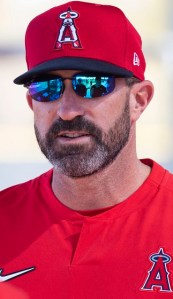
Mickey Callaway, shown here during aborted 2020 spring training—on MLB’s ineligible list through the end of 2022 for his sexual harassment across three organisations.

Mickey Callaway finally got his, sort of. His rather incessant sexual harassment of women while employed in three major league organisations, as exposed by The Athletic‘s Brittany Ghiroli and Katie Strang, landed him unemployment after the Angels fired him as their pitching coach—and a place on baseball’s ineligible list through the end of 2022. The question is why only that long.

Callaway’s penchant for sending suggestive and lewd text messages, shirtless photographs, and requests for topless images and drinking dates to five media women at minimum, was exposed at February’s beginning. “The worst kept secret in baseball,” one of the women was quoted as saying of his predations.

The Angels suspended Callaway post haste and agreed to cooperate with a full investigation by baseball’s government. The full details came forth almost immediately after the first revelations, showing Callaway’s telecommunicative tomcattery spread over a five-year period from his pitching coach days with the Indians to his self-immolating term managing the Mets to his very brief Angels tenure.

This wasn’t a man who made a couple of isolated bad mistakes. This was a man who sank himself into a morass of abasement from which he saw women as impressionable targets.

At least once Callaway was affirmed as having offered to share inside information about the Mets’ doings and undoings with one of his media women targets in exchange for getting drunk with him, possibly for openers. At least once otherwise, Indians manager Terry Francona and general manager Chris Atonetti were compelled to defend Callaway to the outraged husband of a Callaway target, before a team attorney suggested Francona himself speak to the man on behalf of making amends.

“Some of it was laziness,” writes Yahoo! Sports‘s Shalise Manza-Young, “since Callaway was hitting on women he came in contact with on a day-to-day basis, in what is supposed to be a professional setting, women who dutifully reported to the ballpark to do their jobs, to share with their respective audiences what was happening within and around the teams they were covering.”

But Callaway knew he had information he could give those women that would help them advance in their careers, and he tried to exploit that . . . You’re put in the position of saying yes and potentially getting yourself into a dangerous, compromising spot at worst, and journalistically unethical position at best; if you say no, you’re potentially burning a critical source. Few people know more about the ins and outs of a team than its manager. If you’re not breaking stories or getting fresh information, you may not be on the beat for long.

Given that woman after woman in The Athletic‘s story said Callaway’s propensity for inappropriate behavior was well known throughout MLB, it’s a stretch to believe his predation was limited to the five women who were brave enough to share their stories with the outlet.

Indeed. If at first it seemed the commissioner’s office moved a little slowly upon the original and damning revelations, putting Callaway on the ineligible list as announced on Wednesday now seems an inevitability. But Manza-Young surely isn’t the only one suspecting Callaway’s future in baseball is limited to non-existent not because he was shown to be even a virtual sexual predator but because his once-vaunted abilities as a pitching coach were belied by the Angels’ continuing inability to find and build viable pitching staffs.

“In a perfect world,” she goes on to write, “Callaway’s suspension would just be a formality and he’d never work for another baseball team again, though history tells us differently. This is a league that saw the Houston Astros trade for and celebrate relief pitcher Roberto Osuna while he was on trial for domestic assault.”

Not to mention the body that saw the Astros try first to throw under the proverbial bus the Sports Illustrated reporter, Stephanie Apstein, who exposed then-assistant GM Brandon Taubman’s post-2019 ALCS whoop about being so fornicating glad they’d gotten Osuna in the direct earshot of three women reporters. It took days for the Astros to smarten up at least to the point of canning Taubman, himself put on the ineligible list until after last year’s World Series.

Callaway can be disposed of readily enough. But the toxin of sexual harassment remains. Writing about Hall of Famer Roberto Alomar’s entry onto baseball’s permanently ineligible list over sexual misconduct in 2014 (three years after Alomar was elected to Cooperstown), Toronto Star columnist Rosie DiMinno pondered how much of the Alomar incident and the Blue Jays’s intended vaporising of his presence passed the proverbial smell test while adding that, yes, she wasn’t exactly a stranger to sexual misconduct, either:

I wish there were more details disclosed about the alleged incident, which surely could have been done without identifying the complainant . . . [and that] comes from someone who was once called a [fornicating (four-letter euphemism for ‘vagina’ starting with ‘c’)] by a player in the Jays clubhouse; who, on another occasion, had a player simulate pelvis thrusting from the rear while I was bending over to conduct an interview with another player at his stall. These were not incidents I reported to the club or to my employer. I’m just not that delicate a flower.

A woman need not be a delicate flower to work with reasonable assurance that the men with whom she deals in her line of work see and act upon her as something and someone above and beyond a target to be plucked. Callaway’s harassment was out of line whether his targets were jasmines or nerium oleanders.

It’s one thing for a man not restricted by a marital or relationship commitment to ask a woman for a date, but it’s something else entirely for a man—whether single, committed, or married—to pursue even one woman, never mind five or more, on terms that might be considered obscene even in the editorial offices of Hustler.

Callaway was a coach and manager and a man in considerable formal authority, but players wield their own kind of authoritative influence, too. His banishment should mean the overdue beginning and continuing of a reasonable remaking/remodeling of the professional baseball work atmosphere. Whether “should” graduates to “does,” alas, remains to be seen.

About all those no-hitters . . .

Corey Kluber

Corey Kluber reaches for the sky after finishing his no-hitter last Thursday—the sixth no-no of the year.

Before the present season began, there were over 220,000 Show games played and 1.6 percent of those involved no-hitters. As of this morning, there have been 693 games played this year, and less than one full percent have been the season’s six no-hitters.

To listen to enough people, you’d think there must never again be a no-hitter this year, because it’ll mean that most difficult pitching feat will be de-valued, no longer special, adding further dilution to the Great and Glorious Game in this apparent New Year of the Pitcher, this apparent New Dead Ball Era.

ESPN’s Jeff Passan says, essentially, not so fast. “For all of the consternation about the deluge of no-hitters in 2021,” he wrote Monday morning, “the act itself—recording 27 outs without allowing a single hit—remains a miracle.”

Even when the league-wide batting average is .237, the worst in MLB’s 150 years of recorded history. Even as pitchers enter seemingly every game with an overwhelming advantage against hitters. Even with the ball deadened and the fielding slick and our senses now conditioned to expect something that, entering this season, had been accomplished only 305 times in more than 220,000 games played. Six no-hitters in 693 games means no-hitters in 2021 are happening about 6¼ times as often as they have in years past.

Even so, the binary among players remains true as it ever did: As much elation as finishing a no-hitter brings, being on the receiving end is awful. The frequency of no-hitters has done nothing to lessen the embarrassment of being on the wrong side of one.

“If you finish a game with one hit and you lose 3-0,” says Mariners third baseman Kyle Seager, “it stings a whole lot less. You try to look at it like you’re playing to win the game and we lost. If you look at it from that perspective, you’re going to play 162 and lose some, then it’s more tolerable. That’s the line you want to use. But [a no-hitter’s] not just losing. You got dominated. Nobody wants that. And this year it’s happened a lot.”

Six in 693 games isn’t the epidemic you think it is when you crunch the percentage. Really and truly. So what do you think .001 percent of 220,000 games is? Even if there might be six more no-hitters to come before this season finishes, it would mean a measly .004 percent of this year’s regular-season games involved no-hitters. So everybody relax.

This year’s no-hit survey begins with Joe Musgrove, erstwhile Astro turned Pirate turned Padre. 9 April, his second start of the season: he no-hit the Rangers, 3-0. Five days later, White Sox pitcher Carlos Rodon no-hit the Indians, 8-0. Twenty-one days following Rodon, John Means of the Orioles struck, no-hitting Seager’s Mariners, 6-0. Two days after that, Wade Miley in his second Cincinnati season kept the Indians hitless in a 3-0 win. Eleven days later came Spencer Turnbull of the Tigers (of all people), keeping the Mariners hitless in a 5-0 win. The following day, the Rangers learned they weren’t quite off the no-hit hook for the year, either, when Yankee pitcher (and erstwhile Ranger) Corey Kluber did it to them, 2-0.

The irrepressible Jayson Stark dedicated a considerable volume of his weekly “Weird and Wild” series in The Athletic last Friday to determine that the Rangers and the Mariners made 2021 the first year in which two particular teams were no-hit a) in their own playpens; and, b) in the same week. It could have been much worse: Stark also exhumed that the Shoeless Joe Jackson White Sox got no-hit in back-to-back 1917. By the St. Louis Browns, of all people.

You may also have noticed, as Stark did, that all six no-hit victims so far this year are American League teams, but two of the no-nos got thrown by National League pitchers. Stark noticed something else while he was at it: Turnbull now has on his resume both a no-hitter and a streak of eighteen starts without getting credit for a win.

That kind of resume item is even more rare than the no-hitter itself. Turnbull is one of only six pitchers in major league history to claim eighteen or more straight winless starts and a no-hitter. The others:

* Bob Groom—Nineteen straight starts without credit for a win for the 1909 Washington Senators . . . but pitched a no-hitter for the Cardinals against the Cubs in 1917.

* Don Larsen—The million-to-one-shot who pitched a perfect game in Game Five of the 1956 World Series went on to achieve a nineteen-start winless streak between his last days as a Yankee and his first days as a Kansas City Athletic, 1959-60.

* Vida Blue—Before his sensational 1971 and his eventual burnout from bitterness over a 1972 contract negotiation, overwork by age 28 (averaging 265 innings a year), and drug issues, Blue pitched a no-hitter at 20 in 1970. Over a decade later, as a Royal: eighteen-start winless streak, 1982-83.

* Fernando Valenzuela—1988-89, when he was considered all washed up from unconscionable overwork (262 innings a year, average, from ages 20-25) from the moment he first kicked off Fernandomania: nineteen-start winless streak. 1990: pitched a no-hitter in Dodger Stadium. On the same day his former Dodger teammate Dave Stewart pitched one in Toronto.

* Jonathan Sanchez—July 2009: no-hitter. 2012-13: eighteen-start winless streak.

Spencer Turnbull probably didn’t know it in the moment, but he helped make baseball’s arguable most controversial umpire make a little history of his own. Sixty-five umpires not named Angel Hernandez got to call the balls and strikes for no-hitters over Hernandez’s 31 seasons as a major league umpire—before the Angel of Doom finally got to be behind the plate for Turnbull’s no-no. In that circumstance, there may be six calling it karma to half a dozen suggesting Turnbull escaped with his life.

Now comes the fun part, at least for me: Among this year’s no-no men so far, who really did the most to earn the no-no? Who really depended on more than a little help from his friends to do it?

Just as I did over two months ago when examining perfect games in another context, I’m going to assign a Win Factor (WF) to this year’s no-no men, based on their strikeouts divided by the sum of the ground-ball and fly-ball outs they got in their games. I’m also going to list their fielding-independent pitching rates (FIP) for this season thus far, which may suggest to you whom among the sextet was the most and least likely to pitch a no-hitter in the first place.

Pitcher Score K GB FB WF FIP
Joe Musgrove 3-0 10 10 7 .588 2.88
Carlos Rodon 8-0 7 10 10 .350 1.91
John Means 6-0 12 3 12 .800 3.25
Wade Miley 3-0 8 15 5 .400 3.24
Spencer Turnbull 5-0 9 12 6 .500 2.77
Corey Kluber 2-0 9 9 9 .500 3.57
Jim Maloney

Jim Maloney—his 1965 no-no against the Cubs was a jam session.

Based on their FIPs, Rodon was the most likely to pitch a no-hitter among the six–even though his .350 WF equals two of the weakest WFs among history’s perfect game pitchers. (Larsen and, in 1988, Tom Browning.) Based on the same number, Kluber was the least likely among the six to pitch a no-no—and his .500 WF equals that of Philip Humber’s 2012 perfect game while sitting higher than the perfect-game WFs of Kenny Rogers (.421); Larsen and Browning; the trio of Charlie Robertson (1922), Mark Buehrle (2009), and Dallas Braden (2010), with .286; and, Dennis Martinez (1991), with .227.

Kluber and Miley walked one batter each in their games. Turnbull walked two. Means walked nobody, but he was kept from perfection by the wild-pitch third strike allowing Mariners left fielder Sam Haggerty to take first base on the house. Rodon walked nobody, either, but he was unfortunate enough to hit Indians catcher Roberto Perez with a pitch. Musgrove didn’t walk anyone but he, too, plunked one (Rangers bomber Joey Gallo) to spoil the day otherwise.

If you’re looking for the arguable sloppiest no-hitter in baseball history, it was thrown in ten innings in August 1965, by a pitcher who had a sterling WF for the game otherwise and—based on his season’s FIP—was more likely to pitch a no-hitter that year than five of this year’s so-far six no-hit pitchers:

Pitcher Score K GB FB WF FIP
Jim Maloney (1965) 1-0 12 9 8 .706 2.62

So how does a pitcher with a .706 WF for a no-hitter throw the sloppiest of them all? Easy: Maloney walked ten batters. (He also hit Hall of Famer Ron Santo with a pitch during the game, matching him to Rodon and Musgrove for a plunk apiece in their games.)

“I wasn’t real sharp today,” Maloney said in a post-game field interview. “I made some good pitches when I had to, but when I had to come in there, they popped it up or something. I had a lot of walks . . .It seemed like I was in a jam most of the day, but somehow I come out of it.”

That still may not be the absolute weirdest example of no-hit pitching you can find. Some of the history-minded may suggest it was a Browns rookie curio/flake in 1953:

Pitcher Score K GB FB WF FIP
Bobo Holloman (1953) 6-0 3 12 12 .125 4.57

Even Holloman didn’t get as weird as three pitchers who threw no-hit, no-run, no-strikeout games: Earl Hamilton (Browns) against the Tigers, 1912; Sad Sam Jones (Yankees), against the Philadelphia Athletics, 1923; and, Ken Holtzman (Cubs), against the Atlanta Braves, 1969. We should call them the no-no-no-hitters, no?

Hamilton’s 1912 FIP (2.98) made him the most likely of that trio to pitch a no-hitter, even a no-no-no. Holtzman’s 1969 FIP (3.18) made him the second most likely of the three, with Jones bringing up the most-likely rear among them. (3.89.) Needless to say, the WFs for all three are . . . zero.

Having Holtzman’s game log available, I could table his game—which happened exactly four years to the day after Jim Maloney’s jam session:

Pitcher Score K GB FB WF FIP
Ken Holtzman (1969) 3-0 0 12 15 .000 3.18

Holtzman, Hamilton, and Jones threw a lot of pitches whacked for grounders. They threw a lot of pitches hit for fly outs. It may be a particular skill for pitchers to “throw grounders,” of course. But once that ball dives off that bat, there’s no absolute guarantee it’s going to find a fielder’s glove uninterrupted until or unless the fielder finds and snatches it to throw for the out. There’s likewise no absolute guarantee that, when the fielder throws the ball, the ball’s going to reach its intended destination without rude interruption or change in course.

Holtzman pitched his no-no-no on an afternoon during which the notorious Wrigley Field winds blew in his favour—as in, blowing in from the outfield. Keeping a few of those fifteen fly outs he got in the game, including three by Hall of Famer Hank Aaron, from disappearing into the bleachers.

In a baseball situation for which one man gets the big credit when he may not have done the majority of the work needed to get that credit in the first place, Earl Hamilton, Sad Sam Jones, and Ken Holtzman got credit for pitching no-hitters despite doing that little of the heaviest lifting to make them no-hitters in the first place.

As Stark likes to say, “Because . . . baseball!” As I like to say, because . . . in baseball, anything can happen. And, usually does.

Rockiegate v. Astrogate? Try Our Gang v. the James Gang

Colorado Rockies

The Rockies lined up on the foul line on Opening Day 2019. A former Brewer reserve says the 2018 Rocks were aspiring Astrogate-like sign stealers . . . but . . .

No one with a modicum of intellgence ever suggested the 2017-18 Astros were baseball’s only high-tech off-field-based sign-stealing cheaters. They were just the most sophisticated, top-down, and apologetically unapologetic of the known lot. Not to mention that they either altered a real-time-delay center field camera or installed a second non-delayed one to make their Astro Intelligence Agency work.

Now, former Brewers reserve catcher Eric Kratz has pointed a flying fickle finger of fate at the Rockies. The Rockies, who’ve seen enough of their best players leave for greener pastures administered by less brain-damaged administrations. The Rockies, now accused of being some of baseball’s more inept cheaters.

A couple of days ago, Kratz told the YES Network’s Curtain Call podcast (Kratz also did time with the Yankees, who own the YES Network) the Brewers caught the Rockies banging to relay signs stolen “from a television” in 2018. What were the Rockies banging? Kratz said it was—wait for it—a massage therapy gun.

“I can tell you that a team that has been to the World Series, often, recently, we caught them doing something almost similar,” said Kratz to Curtain Call hosts John J. Filipelli and Kevin Sullivan. Kratz didn’t specify that team, but then he dropped the quarters on the Rockies.

And I can also tell you, because I don’t really care, I don’t know anybody over there, the Colorado Rockies were doing the exact same thing in 2018, and we caught them, and we played them in the playoffs. You know how many runs they scored in a three-game playoff series in 2018? Not many people watched the NLDS. They scored two runs in the ninth inning of Game 2. They used to take a Theragun and bang it on their metal bench. And they were doing the exact same thing, from the TV.

So, there you go. If you think no one else was doing it, you are wrong. The difference is, the Astros may have taken it a little too far. Maybe a little bit too far. Maybe continued to do it. Or maybe it’s just the fact that they won the World Series and everybody’s pissed about that.

Theragun

The Theragun. The ball extension does the rapid-movement massaging at the push of a button. This is what the 2018 Rockies used to send batters stolen signs, reputedly. They only massaged themselves out of that postseason early.

Take careful note of all Kratz’s phrasings. “From the TV” can mean the Brewers caught onto the Rockies likely trying to steal signs the same way the Red Sox were caught doing the same year: deciphering signs from the video replay rooms provided to home and road teams in all major league ballparks, then relaying them forward.

The 2018 Rogue Sox relayed them by hand signs to baserunners to send to the batters. It was a slightly more sophisticated version of the kind of gamesmanship played on the basepaths for over a century. Unlike the Astros, they didn’t install a new camera somewhere in Fenway Park to set up a new underground television network.

Nobody’s yet accused the Rockies of fostering the kind of win-at-all-costs culture that came top down from the former Jeff Luhnow administration in Houston. There, what began as a conscious front-office effort to apply elaborate algorithims on behalf of sign-stealing continued with the development of the AIA Network, the altered/installed camera to the clubhouse monitors to the trash can bangs sending the stolen signs forward.

If you think that inspired rounds and rounds of can gags and signs since, what would the Rockies’ Theragun ineptitude inspire? “If Theraguns are Outlawed, Will Only Outlaws Have Theraguns?”

Kratz has a further point. If the 2018 Rockies really were using that massage gun for such a sign-stealing variant, it didn’t bring them a happy ending. They finished tied with the Dodgers for the National League West but lost a single-game playoff for the title, and the Brewers rousted the Rockies out three straight in the division series to follow.

Kratz mis-remembered the Rockies scoring in the set, though: they scored two in the Game One ninth (on an RBI single and a sacrifice fly) to tie the game at two, before the Brewers won in the tenth inning. Then the Brewers shut them out despite allowing them ten hits over Games Two and Three; the Rockies went 4-for-19 with men in scoring position without a single cash-in in those games.

If the Brewers caught the Rockies stealing signs in that division series, they’d caught one of the most inept bands of bandits since the wiseguys Jimmy Breslin satirised in The Gang That Couldn’t Shoot Straight. It’s almost not even worth calling the Rockies to account.

Almost.

Break into a bank with larceny on your mind, come away with nothing because you and/or your confederates didn’t have a clue about how to dismantle the alarms and decipher the vault’s combinations.You’re still going to face federal charges when you get caught red-handed and flat-footed. Even if you have la policia laughing their fool heads off because they’d just busted Our Gang, not the James Gang.

Just because the Rockies got slapped out of the 2018 postseason fast enough to equal a blink, just because they were the apparent Maxwell Smarts of sign-stealing, it doesn’t make them any less guilty if Kratz is right. The Rockies being petty criminals doesn’t acquit or mitigate the Astros’ grand theft felonies, either. Neither did the 2018 Rogue Sox.

You might not have been the only high-tech cheaters on the block, but you’re not off the hook just because they weren’t as sophisticated or successful as you. Especially when your gang might yet have won a World Series because of it.

Felipe Vazquez, from closer to sexual convict

Felipe Vazquez

Vazquez’s too-prominent tattoos identified him when his face couldn’t in messages he sent an underage girl.

Two seasons ago, Felipe Vazquez was the arguable best pitcher on the National League’s arguably most dysfunctional team. The lefthanded closer on the National League Central’s bottom-feeding Pirates was having a career year and his second consecutive All-Star season when he got clipped over his apparent taste for and sexual misconduct with at least one underage girl.

When Vazquez was arrested on 17 September 2019, the charges came from two places. From Pennsylvania, charging him with statutory sexual assault, unlawful contact with a minor, corruption of a minor by a suspect eighteen or older, and indecent assault of a victim under sixteen. And, from Florida’s Lee County, charging him with computer porn–soliciting a child and providing obscene material to minors

Now Vazquez stands convicted of fifteen counts involving statutory sexual assault, sexual abuse of children, and child pornography in Westmoreland County, Pennsylvania. A jury handed the verdict down on Thursday after needing just four hours to determine they didn’t buy Vazquez’s defense argument that his thirteen-year-old victim misled him about her real age.

“I felt we put on a very strong defense,” said one of Vazquez’s attorneys, Gary Gerson, to Pittsburgh’s CBS affiliate KDKA. “Obviously, the jury disagreed. I’m not sure exactly what their assessment of the case was. But it appears to be that they have concluded that Felipe had a mistaken belief but it was not reasonable.”

On the trial’s fourth day, prosecutors argued Vazquez’s accuser was a minor at the time and remains one at age seventeen, with Vazquez interested not in a real relationship but in self-gratification, KDKA said. As if to emphasise the age point at the time she encountered Vazquez, they presented the jury with images of her.

Vazquez himself testified on Wednesday. KDKA said the pitcher told the court his dealings with the girl started with innocent social media conversation before things “began to veer toward adult topics.” He also testified that he’d asked her to give proof of her claimed legal age to avoid trouble, adding she sent what appeared a Pennsylvania identification card showing her of legal age.

KDKA added that he told the court he’d “had intimate relationships with other female followers and fans.”

The girl herself testified earlier in the trial. KDKA said she admitted not knowing whether Vazquez knew she was only thirteen when they first mat on social media, and she affirmed telling her mother when a police interview paused that she should have been the one in trouble.

Maybe the jury came to believe that Vazquez as a then 26-year-old professional baseball player was more than old enough to know better himself. MLB actually sent him the same message when they put him on its restricted list practically as soon as his arrest finished being processed.

The Pirates also wasted no time banishing him to the Phantom Zone, after the team learned of the bust and both team president Frank Coonelly and then-general manager Neal Huntington called a team meeting before their scheduled interleague game against the Mariners. “By game time, looking around [PNC Park], it was as if Vázquez had never played for the Pirates,” wrote The Athletic‘s Rob Biertempfel.

His clubhouse locker was empty. His banner outside PNC Park had been taken down. His image was scrubbed from the scoreboard videos. His name was deleted from the list of National League save leaders that flashes on concourse monitors before the game. The scorebook magazines with Vázquez on the cover, which normally are handed out to fans as they enter the stadium, were stashed out of sight.

His 2019 arrest sent a far more dark cloud over a team of Pirates that was already battered by its own dysfunctional clubhouse. And “dysfunctional” may have been a kind way to describe things.

Another Pirate reliever, Keone Kela, instigated a wild bench-clearing brawl on the night of the non-waiver trade deadline, when he threw at Cincinnati’s Derek Dietrich—over a pair of April home runs one of which landed in the Allegheny River. The brawl was even more memorable for involving then-Red Yasiel Puig . . . who wasn’t yet aware he’d been traded to the Indians.

That year’s Pirates seemed to earn and rather relish a reputation for headhunting on the mound. But they also seemed too willing to brawl with each other when the occasions arose. The Dietrich drill happened a week before Kela was suspended two days over a confrontation he’d had with the Pirates’ performance coach Hector Morales, a confrontation requiring then-manager Clint Hurdle’s intervention.

When Hurdle did intervene, an exchange between skipper and reliever was called downright insubordination on Kela’s part by a few other Pirates. The manager who’d previously led the Pirates to a couple of postseasons before the team was said to have gone into the tank was canned after the season and elected to retire from baseball, but nobody to my knowledge has said whether 2019’s implosions factored into the latter decision.

That year’s Pirates also had to deal with suspending bullpen coach Euclides Rojas, over an argument with yet another Pirate reliever, Kyle Crick, who’d accused Rojas of giving Vazquez preferential treatment. Rojas ordered Crick to mind his own business none too politely, apparently. Biertempfel wrote at the time that another Pirate went to the team’s administration insisting Rojas get “the same level of punishment as Kela had.”

Kela is now with the Padres, his fine 2021 so far rudely interrupted by pitching forearm strain that’s turned into Tommy John surgery. Crick remains with the Pirates, with a somewhat deceptive 1.59 ERA as a middle reliever/setup man, considering his 3.49 fielding-independent pitching rate and his troublesome 4.8 walks per nine innings so far this season.

In case you wondered, too, Dietrich is now in the Yankees’ minor league system and Puig—who’s denied allegations in a sexual assault suit—is playing in the Mexican League after finding no MLB takes this winter and spring.

The Pirates are at the bottom of the NL Central again this season. So far. They’re 5-6 in their last eleven games, with back-to-back walkoff wins in there. Former Red Sox rebuilder Ben Cherington is now their general manager. The team has announced they’ll open PNC Park to full capacity by July.

Their current closer, Richard Rodriguez, has been off the charts thus far even with the Pirates at rock bottom: a 0.47 ERA/1.71 FIP, and though he’s not particularly a strikeout artist, he pitches like a man allergic to walks. (0.5 per nine innings so far.)

You hope only that Rodriguez and the rest of this year’s Pirates are likewise allergic to the kind of dysfunction that battered a 2019 edition finishing 22 games out of first in their division and climaxed with his predecessor’s sordid denouement.

Vazquez is set for sentencing in three months. Florida charges involving the same girl remain pending. The now-former pitcher could be looking at “decades” worth of imprisonment in the United States, unless the federal Immigration and Customs Enforcement agency elects to deport him home to his native Venezuela.

Vazquez’s nickname is Nightmare. But there’s another word for the man who took himself from a nightmare for opposing batters to a nightmare for an underage girl and her family. The word is degenerate.

Genius playing with mental blocks?

Tony La Russa

Even Hall of Fame managers aren’t always the geniuses they’re cracked up to be.

No baseball manager is a perfect specimen, whether he lucks into the job, performs it long enough and well enough, or gets himself elected to the Hall of Fame because of his actual or reputed job performance. Many have been the managers whose reputations for genius are out of proportion to their actual performances.

Even the certified geniuses made their mistakes. Maybe none was more truly egregious than Casey Stengel’s failure to set up his rotation so his Hall of Fame lefthander Whitey Ford could start three 1960 World Series games instead of two. Unless it was Tommy Lasorda deciding it was safe to let Tom Niedenfeuer pitch to Jack Clark, with first base open and the Dodgers one out from forcing a seventh 1985 National League Championship Series game.

Maybe it was Dick Williams, placing public perception ahead of baseball to start gassed ace Jim Lonborg instead of a better-rested arm in Game Seven, 1967 World Series. Unless it was Gene Mauch, the Little General panicking down the 1964 stretch (with the Phillies, using his two best pitchers on too-short rest and blowing a pennant he had in the bank), or in Game Five (with the Angels) when he was an out away from winning the 1986 American League Championship Series.

Regardless of his foibles since what proved his first retirement, Tony La Russa still has an outsize reputation as one of the most deft ever to hold the manager’s job. He’s been called a genius. He’s been called one of the smartest baseball men of the last half-century. They point to his Hall of Fame plaque, the 33 years he managed prior to returning to the White Sox this season, eleven division titles, six pennants, and three World Series rings.

Those plus his longtime reputation for volumnious pre- and post-game thinking and analysis (observed perhaps most deeply in a chapter of George F. Will’s Men at Work: The Craft of Baseball) still allow La Russa absolution from his most egregious errors.

He threw his 2021 White Sox star Yermin Mercedes under the proverbial bus, and maybe even invited the Twins to retaliate the following day, after Mercedes swung on 3-0 (violating La Russa’s fealty to the Sacred Unwritten Rules) in the eighth inning of a White Sox blowout, and hit a home run . . . off a middle infielder sent to the mound.

La Russa is still considered one of the smartest of the Smart Guys whatever they think of Mercedes’s homer or La Russa’s definition of “sportsmanship.” (They don’t always stop to ponder what La Russa thought of the Twins’s “sportsmanship” in giving up the ghost with two innings left to close even a fat deficit and sending a position player to the mound with real pitching still available to them.)

Perhaps they haven’t read Keith Law, writing in The Inside Game last year: “Sometimes you do all the right things and are stymied by bad luck. Other times you do everything wrong and are subsequently rewarded for it. That’s outcome bias.” There’s a case to be made that La Russa’s reputation, and maybe even his Hall of Fame case, is a little more than half a product of such outcome bias.

It’s hard to argue against a manager with three decades plus on his resume plus those division titles, pennants, and three Series rings. But maybe it’s easy to forget or dismiss how often La Russa either outsmarted or short-sighted himself when the games meant the absolute most.

“Tony, stop thinking,” Thomas Boswell wrote, after La Russa’s Athletics were swept out of a 1990 Series they could have tied in four and gone on to win, instead of being swept by a band of Reds upstarts who didn’t know the meaning of the words “shrink under pressure.”

If the A’s had picked an usher at random to manage them in this Series, they’d have been better. The usher would have brought in [Hall of Fame reliever Dennis] Eckersley to start the eighth inning of Game Two with a 4-3 lead. The usher would have brought in Eckersley to start the eighth inning of Game Four with a 1-0 lead. And this Series would be two-all.

La Russa could write a book on why did he did what he did. But the bottom line is that every manager in the Hall of Fame would have brought in the Eck. Twice Tony didn’t and twice the A’s lost. This time, the goat’s horns stop at the top.

Outcome bias didn’t help La Russa then, a year after he’d won his first Series. But it sure helped him after a 2011 Series he won despite himself. Because smart baseball men don’t do even half of what La Russa did to make life that much tougher for his Cardinals than it should have been.

Tony La Russa

La Russa’s 2011 Cardinals won a World Series despite the skipper’s missteps.

Smart baseball men don’t take the bats out of the hands of future Hall of Famers with Game One tied at zero. La Russa took it out of Albert Pujols’s hands by ordering Jon Jay to sacrifice Rafael Furcal, guaranteeing the Rangers wouldn’t let Pujols swing even with a swimming pool noodle, walking him on the house. (The next batter got lured into dialing Area Code 5-4-3.)

Smart baseball men don’t lift better clutch hitters (especially those shaking out as Series MVPs) with late single-run leads for defensive replacements who might have to try a lot harder to do the later clutch hitting with insurance runs to be cashed in—and fail. La Russa did that lifting David Freese (after he scored a single tiebreaking run) for Daniel Descalso (grounded out with two in the eighth) in Game Two.

Smart baseball men don’t balk when their closers surrender two soft hits in the Game Two ninth with a groin-hobbled bopper due up and a double play possibility very distinct. La Russa balked. He lifted Jason Motte for Arthur Rhodes with Josh Hamilton coming up. Rhodes gave the lead away and Lance Lynn gave the game away—on back-to-back sacrifice flies.

Smart baseball men don’t look past three powerfully viable and available bullpen options with their teams down a mere 1-0 and reach for . . . a known mop-up man, with the opposition’s hottest Series bat due up. La Russa learned or re-learned the hard way in Game Four. Mike Napoli thanked him for offering Mitchell Boggs as the sacrificial lamb—Napoli hit the first pitch for a three-run homer. (Final score: Rangers 4, Cardinals 0.)

Smart baseball men don’t snooze for even a moment and forget to flash the red light when their batter (Pujols, in this case) signals their baserunner Allen Craig to try for a steal in the Game Five seventh.  Craig got arrested by half a mile, inviting another free pass to the bopper and—following a base hit setting up second and third when the batter advances on the throw to third—another free pass and an inning-ending fly out.

Smart baseball men also don’t let a little (ok, a lot of) crowd noise interfere with getting the pen men up that he wants to get up in the bottom of the Game Five eighth—after ordering one relief pitcher tough on righthanded hitters to put a righthanded hitter aboard on the house, yet, instead of getting the second out—then try sneaking a lefthanded pen man past a righthanded danger who sneaks what proves a game-winning two-run double.

They don’t try to make the Case of the Tangled Telephone out of it, either, after they end up bringing in the wrong man when nobody claimed to hear them ordering the guy they really wanted to get ready. (La Russa wanted Motte but got Lynn. Oops.)

Neither do smart baseball men drain their benches in the eighth of even a do-or-die Game Six. La Russa did. It compelled his Cardinals to perform their still-mythologised ninth and tenth inning feats of down-to-their-final-strike derring-do without a safety net beneath them. Freese took one and all off the hook with his eleventh-inning, full-count, game-winning, Richter scale-busting leadoff bomb.

The Cardinals won that Series despite their skipper. (And, because they pinned the Rangers in Game Seven, after allowing a 2-0 first-inning lead on back-to-back RBI doubles. They made it impossible for La Russa to overthink/mis-think/mal-think again after they tied in the bottom of the first and scored four more from there.) La Russa was thatclose to blowing a Series his Rangers counterpart sometimes seemed to do everything within reach to hand him.

Fairness: La Russa did plenty right and smart winning those division titles. He did plenty right and smart winning the 2006 Series in five. (It didn’t hurt that he knew what he had turning his resident pest/Series MVP David Eckstein loose.) That was two years after nobody could have stopped the Red Sox steamroller from plowing the Cardinals in four, following their self-yank back from the dead to take the last four ALCS games from the Empire Emeritus.

But the 2011 Series got La Russa compared in the long term to . . . Bob Brenly, the Diamondbacks manager who won the 2001 World Series in spite of his own mistakes, too. Batting his worst on-base percentage man leadoff; ordering bunts ahead of and thus neutralising his best power threat; overworking and misusing his tough but sensitive closer, even throwing him out a second straight night after the lad threw 61 relief pitches the night before. (You’re still surprised Scott Brosius faced a gassed Byung-Hyun Kim and tied Game Five with a home run?)

Lucky for Brenly that he had one Hall of Fame pitcher (Randy Johnson) and another should-have-been Hall of Fame pitcher (Curt Schilling, his own worst enemy) to bail him out. Brenly hasn’t managed again since the Diamondbacks fired him during a 2004 skid to the bottom of the National League West.

When La Russa retired three days after that 2011 Series ended, he didn’t announce it until after the Cardinals’ championship parade and after he called a meeting with his players. “Some grown men cried,” he said of the meeting, adding, “I kind of liked that because they made me cry a few times.”

The smartest men in baseball with even half La Russa’s experience don’t invite comparisons to comparative newcomers who trip, tumble, and pratfall their way to World Series rings. Three Series rings keeps him a Hall of Fame beneficiary of the outcome bias Law described. It’ll probably keep La Russa cushioned with the White Sox for now, despite his early tactical mistakes.

And, despite the perception the Mercedes incident leaves that he’d rather burn his players in the public eye than handle real or alleged issues the mature way. (Name one manager who ever invited the other guys to retaliate for a real or alleged rookie mistake.) All that previous outcome bias won’t save him, if he costs himself his clubhouse and the White Sox turn from early-season surprise to season-closing bust.