ALDS Game Four: The Yankees, running on empty

Toronto Blue Jays

Yankee Stadium became Blue Jay Way Wednesday night, as the Jays turned the Yankees aside to advance to the American League Championship Series.

So much for the Monument Park ghosts Aaron Judge cited when the Yankees won their American League division series Game Three. They come out to play only once per postseason series. Or, the Yankees fall asleep at the switch at the plate, on the mound, or in the field, the ghosts return to the Elysian Fields feeling somewhere between dismayed and betrayed.

Once upon a time, in a different Yankee Stadium, fans taunted a World Series opponent with “Mystique and Aura, Appearing Nightly,” after one of the opponent’s pitchers suggested the Yankee couple didn’t show up in their home ballpark. Now, Mystique and Aura haven’t been seen in that or the current Yankee Stadium in a very long time. In fact, that couple may just be so 20th Century.

Wednesday night, Yankee Stadium became Blue Jay Way. The Jays finished what they started, a 5-2 Game Four win that sent the Yankees from the American League division series to season’s oblivion.

Time was when the Yankees knew they were dynastic and knew accordingly how to finish what they started, whether it was the pre-divisional win-or-be-gone pennant race and World Series (most of the time) or the divisional era pennant and World Series, for a little while, anyway. That was then. This has been since 1978: The Yankees are good for occasional World Series wins.

But you have to get there, first. And even that’s no guarantee. The Yankees didn’t collapse as spectacularly in this division series as they did in last year’s World Series. Well, wait a minute. Getting out-scored by the American League East-winning Blue Jays 34-19? You can call it a collapse, even if the Yankees did manage to win Game Three by three runs.

These Blue Jays were a lot more formidable than this year’s Red Sox, whom the Yankees vanquished in the wild card set after losing the first game. These Blue Jays, who took the AL East by winning their season series against the Yankees, were no pushovers. Maybe the Yankees weren’t quite prepared to handle the onslaught the Blue Jays laid upon them.

Maybe nobody was. Not even the Jays themselves.

But any further thoughts about Yankee domination ought to be set aside for now and, perhaps, the foreseeable future. This is their 21st Century legacy to date: They’ll make noises in the pennant races, they’ll reach their postseasons, but other than 2009 they’re not going the distance without serious changes.

So Judge led all the Yankee regulars with his 1.618 division series OPS? Vladimir Guerrero, Jr. nearly equaled it with his 1.609. As Jayson Stark (The Athletic) reminds us, the Jays batted in 34 innings in this set and scored those 34 runs. That’s a run per inning average, folks. And would you like to know the only other time any Yankee team got yanked out of a postseason by an AL East team? Two words: 2004 Red Sox.

Whatever the Yankees sent to the mound, the Jays had answers when it counted. Stark is congenitally unable to miss the ironies or the humours, so he couldn’t resist adding that the Jays as a team in this ALDS had the same slash line, practically, as Miguel Cabrera when he won the 2012 AL Triple Crown: The ALDS Jays—.338/.373/.601. Cabrera 2012—.330/.393/.609.

The Jays didn’t exactly smother the Yankees in Game Four the way they did in Games One and Two; they won by a mere 5-2. But you couldn’t blame Guerrero for trolling the Yankees with the famous victory whoop by their now-retired longtime voice John Sterling, and with Hall of Famer-turned-broadcaster David Ortiz right by his side: DAAAAAA YANKEES LOSE! 

They do when they forget they can’t run nine Aaron Judges out to bat.

The Jays as a team slashed .338/.373/.601 (OPS: .974) for the set. That was without Bo Bichette (injury) in the lineup. The Yankees as a team slashed .250/.327/.404 (OPS: .731). That was with Judge in the lineup. In Game Four the Yankee bats slept and the Yankee defense had a hole in it.

Once again, as observers have hammered most of the year, the Yankees simply couldn’t find more than one or two ways to push runs across the plate without hitting for distance.

They had the grand opportunity of Game Four with the Blue Jays going to a bullpen game, the better to save Kevin Gausman to start a Game Five that proved anything but on deck. The Jays pen helped send the Jays forward. The Yankee bullpen, one of their most suspect parts, couldn’t quite contain the Jays’s more balanced hitters.

Now the Jays will have Gausman to pitch one of the first two American League Championship Series games. The series the Yankees won’t see except on television or with ballpark tickets.

Jazz Chisholm, Jr., who can play like either a superstar or a scrub and sometimes both in the same game, watched a likely double play ball bound off his glove and behind second base, into center field, in the top of the seventh. It set up first and third for the Jays and ended the evening of Yankee starting pitcher Cam Schlittler, whose ballsy performance against the Red Sox saved the Yankee season and who’d only surrendered a pair of earned runs to that point.

Oops. A stolen base (Andrés Giménez) before a strikeout (George Springer) later, Nathan Lukes lined a two-run single to left center to leave the Jays up 4-1. An inning later, Myles Straw made it 5-1 with an RBI single. The Yankees’ only answer to that was Jasson Dominguez’s leadoff double in the bottom of the ninth and Judge singling him home.

So it turned out Blue Jays broadcaster Buck Martinez wasn’t just smack-talking when he said before the postseason the Yankees weren’t that good a team. In Game Four the Yankees made him resemble a prophet. Mystique and Aura don’t live in the Bronx  anymore.

Now I’m going to make an ask of what’s possibly the least forgiving fan base in baseball this side of the Mets, the Cubs, the Red Sox, and the Phillies: Give the Yankees a little time before you start demanding summary executions.

Too-long-time general manager Brian Cashman’s time should be done. Long-enough-time manager Aaron Boone is a good, not necessarily great manager, but he’s never had a losing season since he took the Yankee bridge in 2018. If there are miracles in the Yankee firmament, they’re probably Boone landing eight straight winning seasons almost in spite of Cashman’s makings and unmakings.

Getting smothered by the Jays this time around isn’t quite the equivalent of the manner in which the Yankees smothered themselves ending last year’s World Series. Or the manner in which they got overthrown by the Red Sox in 2004. So give them a break. Maybe a month-long break.

That doesn’t mean anyone’s trying to take your fun away, Yankee fan. Forget for one month that to err is human but to forgive must never become Yankee policy. Forget that maybe this edition of the Yankees simply had nothing left in the tank for Game Four.

Then you’ll have plenty of time for the yelling, the screaming, and the demanding of executions on 161st Street. We promise.

Don’t kill the ump, San Diego

Xander Bogaerts, D.J. Rayburn

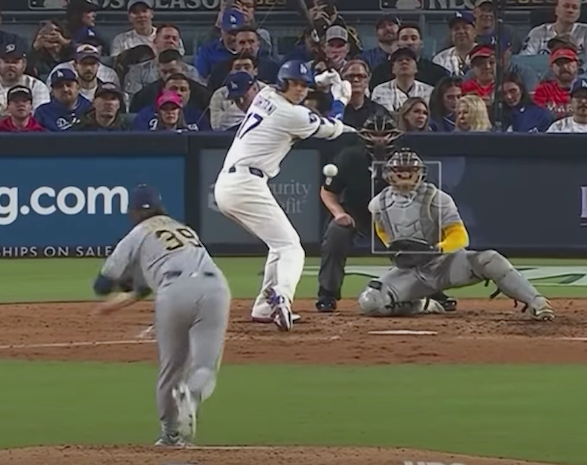
This is the pitch umpire D.J. Rayburn called strike three (wrongly) instead of ball four. This was not the reason the Padres lost Game Three of their wild card set against the Cubs Friday.

You know something? I’m probably at the front of the line wishing for Robby the Umpbot’s advent at last.  But don’t even think about trying to tell me the Padres getting nudged out of the postseason by the Cubs is plate umpire D.J. Rayburn’s fault.

Yes, Rayburn absolutely blew what should have been ball four to Xander Bogaerts in the top of the ninth of National League wild card Game Three. The pitch was low, with enough clearance between the ball and the strike zone floor to pass a Frisbee through it.

Yes, Bogaerts absolutely should have been on first. No matter how bright it wasn’t that he slammed his bat to the ground, all but forcing Padres manager Mike Schildt out of the dugout in a flash to keep things from getting worse.

Yes, the Padres absolutely should have had the proper chance to keep their late game revival going, after Jackson Merrill led the inning off with a healthy blast into Wrigley Field’s right field bleachers. That looked even more pointed when Cubs reliever Brad Keller hit the next two batters he faced, Ryan O’Hearn and Bryce Johnson, both on 1-2 counts, forcing Cubs manager Craig Counsell to lift Keller for Andrew Kittredge.

It was still first and second and one out. The Padres didn’t have the bases loaded as they probably should have had, but they still had the tying runs on the pads and a potential tie-breaking run or two due at the plate.

But Jake Cronenworth grounded to shortstop making it second and third. And Freddy Fermin flied one to the back of center field but not far enough to escape being the Padres’ third out of the game and last out of the season.

And that, ladies and gentlemen, not D.J. Rayburn, is what cost the Padres the wild card set and sent the Cubs forth to open their NL division series with a 9-3 loss to the Brewers.

Because all game long, the Padres couldn’t cash in their baserunners with the American Express card. They left eight men on base. They batted six times prior to the ninth with men in scoring position and stranded them. They had no solution for the Cubs’ superior fielding and seemed unable to find holes between those fielders to push or shoot too many balls.

They had second and third in the top of the fifth, when Gavin Sheets singled with one out and Fermin doubled him to third an out later . . . but Fernando Tatis, Jr. flied out to right.

They had Bogaerts on second when he stole the pad an out after he opened the top of the seventh with a base hit . . . and stranded him with a line out to second and a fly out to deep center.

They had Fermin on third in the top of the eighth after his leadoff single turned into taking second on a one-out wild pitch, then taking third on an infield ground out . . . and there he was stranded, on another infield ground out.

Meanwhile, the Cubs ended a faltering Yu Darvish’s start in the top of the second with a bases-loaded single, pushing him out and Jameson Tallion in, and Tallion walked the second Cub run home before getting a strikeout and an inning-ending double play.

From their, the teams traded bullpen shutout innings until Michael Busch led the bottom of the seventh off against Robert Suarez with a blast into the right center field bleachers.

The 3-1 Cubs win may well mean the closing of this group of Padres’ window for postseason triumph. They may have been lucky to get to the wild card series with an offense that led the Show in out-wasting sacrifice bunts but came home 28th in home runs. Their hitters sent 77 out at home, but their pitchers surrendered 86 in the same playpen.

Their biggest names weren’t exactly bombardiers, outside Manny Machado hitting 27 or more for the 10th time in his career. Bogaerts and Merrill missed significant time due to injuries; Bogaerts hit only 11 out and Merrill, 16. Tatis, he who proclaimed himself capable of being the best player in the game last February, settled for 25 bombs on the season and one measly single during the wild card set.

Their pitching may be somewhat suspect going forward, with Darvish likely approaching the end of a career often brilliant and sometimes frustrating, Dylan Cease and Michael King possibly departing as free agents, and Joe Musgrove entering 2026 on the comeback trail from Tommy John surgery.

And who knows what the upshots for the clubhouse and the front office will be as a result of the late owner Peter Seidler’s widow Sheel Seidler’s lawsuit to wrest control of the team from her brothers-in-law? Who knows whether A.J. Preller will be allowed to try wringing out one more miracle or handed his head on a plate in a bid to begin fresh blood injections, considering his contract expires after next season and Seidler isn’t here to have his back?

But don’t lay the blame for this early Padres postseason exit on Rayburn. He certainly did blow that crucial ninth-inning call, but he wasn’t the man at the plate turning all those Padre runners into castaways.

The long, slow Mets deflation

Juan Soto

Juan Soto—Not his fault.

A choke? Not exactly. More like the Mets stuck a pin in their $340 million blimp, somehow,  and it deflated slowly enough, agonisingly enough. The team that started the season as the best and most expensive in Show finished . . .

No, they didn’t go from the top of the mountain all the way to the rocks at the bottom. They did finish second in the National League East. On the surface, that doesn’t look anywhere near resembling terrible. Know how many teams would jump from the top of the Flatiron Building if it meant finishing second for a change?

Why, over yonder in the American League Central, the Tigers could have been called going down harder. On 12 June they had an eight-game division lead over the next in line. At one point, the Guardians were 15.5 games out of first place in the group.

Then the Tigers deflated painfully themselves to settle for a wild card while the Guards dug, clawed, gnawed, and shoved their way back to take a division that once looked like the Tigers’ exclusive possession. But since the Tigers get to meet the Guards in a wild card set, the magnifying glass is over the Mets.

And how.

How on earth did a team finish play on 12 June and sit 21 games over .500, with a Show-best 45-24 record, and five games ahead of the eventual NL East champion Phillies, but go from there to play .408 ball the rest of the way?

How did that come to include a 10-15 September that featured an eight-game losing streak and a season-ending weekend in which they looked as though they’d signed surrender papers instead of commitments to fight for their very baseball lives?

Juan Soto regrouped after early inconsistency to get within two thefts of posting a 40-40 season and finish the year leading the National League in on-base percentage. Francisco Lindor posted a second 30-30 season in three years. Pete Alonso Alonsoed (38 home runs and leading the league in doubles with 41). But . . .

“A few players thought [manager Carlos] Mendoza’s communication was not as sharp as it could be,” said The Athletic‘s Tim Britton and Will Sammon.

Others suggested that he showed some unnecessary panic early in the season when he kept shuffling roles for different players. That will be part of the conversation this winter.

“I really think he’s done everything in his power,” another club source said. “In this market, you want that type of leader: somebody who is steady and going to be honest.”

That doesn’t mean Mendoza’s coaching staff is safe. The Mets’ defense was a season-long issue. While the offense put up good overall numbers, it operated far too often in boom-and-bust cycles. The pitching staff never put it together in the second half, with many of its purportedly reliable arms underperforming.

Let’s not wait ’till next year. They’ll have all winter to solve the coaching staff, the booming-and-busting, the pitching inconsistencies, and the defense that would guarantee a war over five minutes after it begins—with the Mets on the wrong side. How should we begin to outline the manner in which this year’s blimp deflated?

* When Kodai Senga, one of the best pitchers in the game for the season’s first month and a half, exited his 12 June start with a hamstring injury incurred covering first base, was brought back just before the All-Star break instead of getting that one extra minor league rehab start, and looked nothing like that early-season ace from there, ending up in Triple-A to get himself straightened out?

* When the Rays swept them in early June, which didn’t look that ominous—the Mets were 4.5 in front of the National League East and owned that 45-25 record going in—until you saw the bullpen’s meltdown over the set, and began to get the awful feeling that it wouldn’t be the last time the pen would prove the cobras’ own mongooses? (C’mon, Mr. Webster, make it official and let us use mongeese as the plural!)

* When they rumbled into Pittburgh, where the sunken Pirates were two months past forcing manager Derek Shelton to walk the plank, and got themselves swept by the Pirates in three straight, outscored 30-4 in the set, letting the Pirates drop at least nine runs per game against them during—without Pirates ace/should-be National League Cy Young Award winner Paul Skenes facing them even for a third of an inning?

* When they lost two out of three to the Reds coming out of the All-Star Break, with the 2-1 lead they gifted back-in-the-rotation Sean Manaea squandered by one reliever whose Show debut was just a month earlier but wouldn’t turn up in a Met uniform again? When the Mets won the third game but those first two losses all but handed the Reds the wild-card tiebreaker?

* When relief ace Edwin Díaz’s otherwise stellar season (the finish: 1.63 ERA; 228 FIP; 0.88 WHIP) was rudely interrupted when the Brewers’ Isaac Collins blasted a game-ending home run 10 August, sending the Mets back to New York with their second of a pair of seven-game losing streaks?

* When the Mets turned to Nolan McLean in Philadelphia for his fifth career start, the young man responded with a one-run/5.2 inning performance that would have been enough for the Mets to win . . . if only they could have found a way to score even once? Leading to a Philadelphia sweep and any lingering hope of the Mets reclaiming the NL East they once owned in the trash compactor?

* When the Mets finally gave Jacob deGrom substantial run support in Citi Field—forgetting that deGrom now pitches for the other guys, the Rangers in this case, who’d drop another loss on them the following day for a season-longest eight-game losing streak?

* When the dead-last Nationals beat them 3-2 in the final Mets home game of the year, abetted by a pair of acrobatic fielding plays (robbing Brett Baty of extra bases; swiping a home run from Francisco Alvarez that would have tied the game) by Nats center fielder Jacob Wilson?

* When the Marlins channeled their 2006/2007 ancestors and told the Mets, “Not so fast, boys,” with the Mets needing to scale the Fish on Saturday, the Reds already losing to the Brewers, to nail the third wild card?

* When the non-Díaz bullpen surrendered four in the fourth, forcing manager Mendoza to bring Díaz in early to bind up the wounds?

* When the Mets ended up stranding ten runners, Pete Alonso hit a bases-loaded cruise missle stopped cold by Miami left fielder Javier Sanoja, and the Mets finished 2025 0-70 for the year whenever the other guys led after eight innings? (The number of Mets ninth-inning comebacks this year: zero. The number in 2024, when they got to the League Championship Series: eight.)

“There’s no other way to sugarcoat it,” said Alonso, who didn’t wait too long to let it be known he intended to opt out of his two-year deal and test his market, while leaving a door open wide enough for a reasonable-length deal with the Mets. “Super-talented team and we didn’t even get to October.”

In a sane major league game in which the leagues were aligned and divided reasonably, in which no such thing as regular-season interleague play existed, in which no team earned the right to postseason play unless its fannies were parked in first place at season’s end, the Mets wouldn’t be half the topic they are now.

In a sane baseball world, we wouldn’t have just gone through another wild race of thrills, chills, and spills, on behalf of seeing who’s fighting to the last breath (or rolling over dead trying) to finish . . . in second place.

“Sane” and “Mets” rarely fit comfortably in the same sentence. But this was one of those Met seasons about which you could say it’s liable to get them thrown out of the nut hut.

Seattle’s Sixty Special

Cal Raleigh

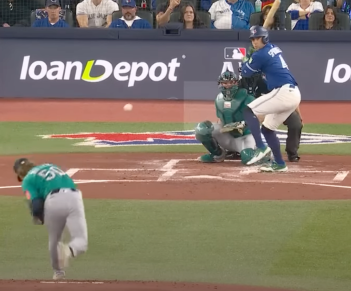
The baseball that’s just left Angel Civilli’s right hand is destined to land in the right field seats for Cal Raleigh’s unprecedented (for a catcher) 60th bomb of the year . . .

He still has the worst nickname in baseball, so far as I’m concerned. But if that’s the only terrible thing about Mariners catcher Cal Raleigh, I can live with it.

Sort of. A guy who goes where no catcher has gone before deserves better than the Big Dumper. Sorry.

With one swing in the bottom of the eighth Wednesday, in an interleague game against the National League West’s Colorado bottom-crawlers, Raleigh did more than just stamp the Mariners’s first American League West crown since 2001.

You thought it was freaky enough that Raleigh hit a 50th regular-season bomb? (Against the Padres, 25 August.) You thought it was surreal that a catcher met and passed Hall of Famer Mickey Mantle as the most home run-prolific switch hitter ever in a single season? Now he’s the only catcher ever to hit 60 or more homers in a season.

So far as the American League is concerned, when Raleigh swung on Angel Civilli’s first two-out service and sent it on a Roger Maris-like high liner into the right field seats, he also yanked away whatever exclusivity the Yankees might have claimed on 60+ home run season bombardiers.

Relax, American League teams not based in the south Bronx. You are now free to unearth your own prospective 60-homer season hitters without the slightest chance of any Yankee or Yankee fan presenting you with a cease-and-desist order attached to ownership papers. Isn’t it just delicious to feel as though someone a transcontinental distance away poached a Yankee claim?

The Mariners didn’t even exist in Maris’s and Babe Ruth’s times. When Aaron Judge passed Maris as the AL’s all-time single-season bombardier, in 2022, the Mariners were a) 36 years old as a major league franchise, and b) second-place AL West finishers behind the eventual World Series-winning Astros. Add first expansion franchise player in Show history to hit 60 or more bombs in a season.

How far past Judge could Raleigh go? Number 60 was the second homer of the evening Wednesday; Raleigh started the Mariners en route their 9-2 romp with a one-out first inning blast on Rockies starter Tanner Gordon’s dollar. That was the first of three solo bombs the Mariners detonated in the inning; Julio Rodríguez followed Raleigh with a shot, then Jorge Polanco launched one an out later.

The Mariners have one more to play against the Rocks today. They get to finish the regular season against the ogres of the National League West this weekend. The idea of this set proving a potential prelude to the World Series may not be terribly unrealistic, even if the Dodgers are extremely old hands at postseason play. (This will be their thirteenth straight postseason trip, on their twelfth NL West title in thirteen years.)

And the guy who’s had a huge hand in getting the Mariners there, whether helping his pitchers hold down a respectable 3.97 ERA when they throw to him or making longtimers forget other catchers for a few moments (Yogi whom? Johnny what? Ivan where? Mike how?), doesn’t think he’s doing anything all that remarkable.

“I mean, I just try to be the best I can be,” Raleigh tells reporters one moment. “Catchers usually are pretty tired at this point in the year, but you could say the same thing for everybody,” he says the next.

Horseshit, say his peers and elders who know that playing 120 major league baseball games behind the plate, as Raleigh’s done this season so far, isn’t exactly the healthiest or the least taxing job on the field.

“It’s pretty incredible what he’s done,” Rangers manager Bruce Bochy, himself a former major league catcher, tells The Athletic. “He’s a workhorse. It’s kind of an old-school thing. You look at Johnny Bench and Carlton Fisk and those guys. I’m sure he’s been beat up at times, too. Foul tips and things that go with catching every day. And to be able to do what he’s doing, it’s really incredible.”

“It’s the mystery bruise game,” says Guardians manager Stephen Vogt, also a former catcher. “You wake up and you can’t remember where it came from. Your legs are jello. Your body just aches. It hurts.”

“Once you catch every day and you get about 30-40 under your belt, your body becomes kind of numb,” says Tigers catcher Jake Rogers. “You get really tired, but you don’t really feel like it. You feel like you can go forever. You get in the routine of things and you’re like, ‘OK, this is not that bad.’ And then at the end of the year, you’re like, ‘Holy shit, I’m the most tired I’ve ever been in my entire life’.”

Bochy never hit more than eight homers in any of his nine major league seasons. Vogt hit a sentimentally memorable home run in his final major league plate appearance, during a return engagement with the Athletics, but his season high was eighteen. Rogers hit 21 in 2023 but ten the following year and only three this year in a season disrupted by a left oblique injury.

“Every inning you catch is making you a worse hitter,” says Guardians backstop Austin Hedges, whose career high was also eighteen in 2017.

You don’t have your legs. You’re thinking a lot. You’re mentally exhausted. There are so many things that are taking away how hard hitting is, or at least challenging that. And for him to go out and play literally every single day and his off-days are DH days—he doesn’t get a day to just stop thinking about game-calling—it’s really, really special. For me, he’s MVP.

For him, but possibly not for everyone who votes on the award. Raleigh has to overcome Judge, who leads the American League in on-base percentage, slugging percentage, OPS, total bases, runs created, and win probability added. If this self-effacing young man allows himself to think of winning the AL’s MVP this year, he’d have to pray that MVP voters take his über-demanding field position into heavy account.

My Real Batting Average metric—total bases + walks + intentional walks + sacrifice flies + hit by pitches / total plate appearances—doesn’t help Raleigh against Judge in and of itself, either:

2025 PA TB BB IBB SF HBP RBA
Cal Raleigh 687 347 95 16 3 9 .684
Aaron Judge 662 359 121 34 7 7 .798

But Raleigh accomplished what some people thought even the most powerful catchers could never fathom.

There were those who claimed Negro Leagues legend Josh Gibson either might have done it or did done it, the verifiable records being shamefully incomplete but the eyewitness accounts making plausible. The best hitters among the pre-integration/pre-World War II Show catchers—Mickey Cochrane, Gabby Hartnett, Ernie Lombardi—didn’t get near it. Neither did the best of the postwar/post-integration/night-ball era backstops, Berra, Bench, Carter, Fisk, Rodríguez, Piazza.

Raleigh’s making aspiring catchers dream the impossible dream.

Ask another Raleigh elder, Kansas City’s redoubtable Salvador Perez, whose own season homer high is 48 in 2021. “I think he’s the MVP of the American League. I have a lot of respect for Aaron Judge and I know he’s a good hitter, too,” Perez says. “but to be a catcher and prepare the game plan, help the pitcher, catch well, throw well and hit fifty-plus homers? Ha!”

That’ll be sixty plus, most likely, before the final regular-season weekend is finished.

“I’m really at peace with this”

Clayton Kershaw

Kershaw gets to retire as few of the greats truly do—on his own terms.

Often as not, you learn more about those whose careers you admire by the way they face the end than by the ways they did what earned your admiration. In Clayton Kershaw’s case, it might not be learning but re-learning.

When Kershaw froze the Giants’ Rafael Devers like ice cream with a strike-three fastball that could have been accused of clogging up the passing lane to open the top of the fifth Friday night, his mates in the infield surrounded and hugged him, then he handed the ball to Dodgers manager Dave Roberts. Roberts’s final season as a player was Kershaw’s first.

Now, Roberts put an arm around Kershaw and congratulated him on the career that’s written his likely first-ballot Hall of Fame ticket. Kershaw had only one reply: “I’m sorry I pitched so poorly tonight.”

Then, the 37-year-old lefthander looked toward his wife and four and a half children (Mrs. Kershaw is expecting their fifth) in the stands and motioned to the Dodger Stadium crowd before walking down from the mound and toward the dugout. He gave the crowd the curtain call they all but demanded, knowing they’d seen him pitch at home for the final time, then disappeared.

“I’m kind of mentally exhausted today, honestly,” he said after the Dodgers finished the game with a 6-3 win, “but it’s the best feeling in the world now. We got a win, we clinched a playoff berth, I got to stand on that mound one last time. I just can’t be more grateful.” Note the order in which he listed all of it. We first, I second.

That attitude enabled Kershaw not just to rule the earth from the mound in his prime but to pick up, dust off, start all over again after more mound heartbreak than the all-time greats should be allowed. When he triumphed, it was splendor on the mound; when he didn’t, it was down at the end of Lonely Street to Heartbreak Hotel. Never once did Kershaw take the triumphs for granted or the heartbreaks for finalities.

Clayton Kershaw

Kershaw beginning to deliver the strike three freezer to the Giants’ Rafael Devers, his final regular season batter and strikeout in Dodger Stadium.

No worse hour befell him, perhaps, than the night the Nationals yanked the Dodgers out of the 2019 postseason. The division series night Roberts sent Kershaw in relief of Walker Buehler and Kershaw yanked the Dodgers out of a seventh-inning Game Five jam by striking Adam Eaton out on three pitches. The night Roberts should have met Kershaw en route the dugout, given him the proverbial pat on the posterior, then taken the ball and brought Kenta Maeda in for the eighth to do what the manager later admitted thinking should have been done originally: face Anthony Rendon and Juan Soto.

Oops. Kershaw went out for the eighth. He threw Rendon a 1-0 fastball that looked as though it might catch the corner. Looks were so deceiving that Rendon sent it over the left field fence. The next pitch Kershaw threw, to Soto, was a slider that hung just enough for Soto to hang it into the right field bleachers. Then Roberts brought Maeda in. And Maeda struck the next three Nats out in order.

Those blows tied the game at three each, but Kershaw wasn’t anywhere near the mound when Howie Kendrick wrecked Joe Kelly and the Dodgers with the grand slam that punched the Nats’ tickets to the National League Championship Series. (And, to their eventual World Series conquest.) Some small packs of Dodger fans relieved themselves by running their cars over Kershaw jerseys in the postgame parking lot anyway.

Kershaw couldn’t bring himself to say what had to be said, that his manager inexplicably set him up to fail. Instead, he took the responsibility for himself.

“That’s the hardest part every year,” Kershaw said postgame. “When you don’t win the last game of the season and you’re to blame, it’s not fun . . . Everything people say is true right now about the postseason. I understand that. Nothing I can do about it right now. It’s a terrible feeling, it really is.”

He’d go forth to claim two World Series rings, in 2020 and 2024, even though his fractured toe kept him from pitching in last October other than cheerleading. His career 154 ERA+ leads all still-active pitchers. His 2.85 lifetime fielding-independent pitching rate is second among the active only to the often ill-fated Jacob deGrom. His resumé includes three Cy Young Awards, a Most Valuable Player award, and a no-hitter. Baseball-Reference considers Kershaw the number 20 starting pitcher who ever hit the mound; he was the best starting pitcher of his own time before his body finally started telling him, “That’s what you think.”

The fastball isn’t Little Johnny Jet anymore. The curve ball Vin Scully himself labeled Public Enemy Number One might be headed for Leavenworth. The slider that really turned Kershaw from good to great to extraterrestrial has lost just enough of its slide. But he is still Clayton Kershaw, and he will still have a role in the Dodgers postseason. Even if it’s coming out of the bullpen. He’ll be valued, even if he’ll let other arms hog the headlines for better or worse.

He didn’t pitch as poorly as he thought he did Friday night. Sure, he surrended a pair of earned runs and walked four while scattering four hits otherwise, but he struck six out in his 4.1 innings’ work. Even if that freezer to Devers looked borderline enough that you could wonder whether plate umpire Lance Barksdale might have let the moment and the legacy inform his judgment.

Kershaw Family

L to R—Cooper, Charley, Chance, Ellen, and Cali Kershaw contribute to the ovation for their future Hall of Famer as he’s about to begin his final regular-season Dodger Stadium start.

The night before, Kershaw made his pending retirement official, after an annual flirtation with the idea. True to form, he was humble and appreciative, right down to letting his wife share the moment by way of reading a letter she wrote him for the occasion:

From my perch, I have been uncomfortably pregnant, nursed newborns, rocked them to sleep to the roar of the seventh-inning stretch to get their last nap in. Fed them baby food, pouches, teething with crackers, changing blowout diapers, been frazzled with toddlers, tantrums and meltdowns, chased them through the concourses. A Mary Poppins bag filled with tricks and games to keep them occupied, and ironically teaching them the ins and outs of baseball. Explaining all the numbers on the scoreboard and the concession line, the ballpark food.

(I’ve) cried over some really hard losses and some really incredible milestones. (I’ve) watched our kids fall in love with the game, with the players and watching you pitch. Singing “Take Me Out to the Ballgame,” chasing beach balls, ducking from fly balls, spilling food and popcorn all over the fans below them. (I’ve) done it thousands of times, thousands of bathroom runs, all in the stadium. The workers and ushers are (our) best friends now.

A tear crept down Kershaw’s cheek as he read it.

“I’m really not sad. I’m really not,” he said later in the conference. “I’m really at peace with this. It’s just emotional.”

Few of the greats get to choose their own retirement terms. But they show more of what they’re made of when they do so than they ever showed on the field. Kershaw facing the end, whenever it may prove to be, showed more than any triumph and transcended any tribulation. No wonder grown adults wept for and with him.