Anthony Rendon, only human

Anthony Rendon

Rendon admitting he places family and faith ahead of baseball didn’t go over well with those who think nothing’s more important than that big game, that long season.

Let’s admit it. We often wish all baseball players were of the same mind as Hall of Famer Willie Stargell. Asked once during a particularly arduous road trip, Pops replied, “The umpire doesn’t say, ‘Work ball.’ I asked to be a ballplayer.” We often wish every player on the planet was as romantic about the game as us.

We swear we’d be the ones who’d tolerate everything around the game for the privilege of playing it professionally because, you know, if we’re making in even ten years what Donald Trump was fined in his New York fraud case we’d damn well better be ready to tolerate it.

We swear we’d come through in the clutch, we swear we wouldn’t have blown that play, we swear we would put those pain in the you-know-what writers in their place, we swear we would play through injuries and not sit it out when our team needs us to win that big game, we swear we wouldn’t let anything or anyone get in the way of . . .

We are full of it. And most of us won’t admit that we’re full of it.

That’s why so many of us were ready to have Anthony Rendon hung by his shorthairs from the top of southern California’s tallest lamppost for saying outright that baseball doesn’t quite command his priorities ahead of his family and his spiritual faith. You’d think Rendon had just admitted to painting graffiti on the Washington Monument.

The third baseman who once made a pros-and-cons list about playing the game is a decade older now. “It’s a lot different now,” he told The Athletic‘s Sam Blum on Monday.

I’m married. I have four kids. My priorities have changed since I was in my early twenties. So definitely my perspective on baseball has been more skewed . . . It’s never been a top priority for me. This is a job. I do this to make a living. My faith, my family, come first before this job.

If you choose to see him as just expressing some bitterness about the game, Rendon’s certainly earned the right. Since he signed a seven-year, $245 million free-agency contract with the Angels, after he factored big in the Nationals’ first World Series conquest, Rendon’s baseball life has been battered by injuries.

After his first Angel season, in pan-damn-ically truncated 2020, his 2021 only began with a groin strain and a ten-day injured list spell. He incurred a knee contusion and a hamstring strain, and that was before his season ended early thanks to right hip surgery.

His 2022, which featured hitting one out lefthanded for the first time in his Show career (and during Reid Detmers’s no-hitter, yet), ended in June with surgery on his right wrist. 2023? Left leg injury, not to mention a tibia fracture he swore was diagnosed at first as another contusion.

You can rest confident in the knowledge that nobody signs up to play professional baseball looking to spend as much time on the injured list as Rendon has spent since becoming an Angel. But if you’d been paying attention close enough since his Washington years, Monday wasn’t the first time Rendon ever denied baseball über alles, either.

“I want to be known as the Christian baseball player,” he told the Baptist Press in 2018. “I’m still trying to grow into that. But at the end, I want to be more ‘Christian’ than ‘baseball player’.” Nobody was ready to arrange his execution then. Maybe finishing eleventh in that year’s MVP voting and leading the National League with 42 doubles, not to mention posting a .909 OPS and 137 OPS+ had something to do with that.

Guess you’re just not supposed to talk that way after four years of a filthy lucrative seven-year contract have been spent on the injured list and you’ve only been able to play an average 52 games a year over the four.

“[A]ny job, no matter how hard you worked for it, how much you wanted it, how much you love it, is still a job,” writes Deadspin‘s Julie DiCaro. “Baseball is no different.”

Sure, players get winters off, their offices are pastoral cathedrals, and they get paid millions to play a child’s game. But they still have to go (almost) every day from mid-February to September, in nagging injuries and in health, when things are going great and when they aren’t. They have bosses, performance expectations, long stretches away from their families, and, especially on days when things go south, a scrum of reporters standing around their lockers, waiting to ask them exactly why things went so poorly.

. . . [W]hy is it that, in almost any other profession, saying one’s job is their top priority is thought of as cold, heartless, anti-family, and some kind of Cat’s Cradle tragedy, unless the person saying it is a pro-athlete? You’re supposed to say your family is a bigger priority than your job, unless your job is to entertain the masses. Then you’d better kick your wife to the curb during childbirth because we need your bat in the five-hole.

Baseball history should remind us that Yankee legend Thurman Munson died at 32 trying to split the difference. He bought and was learning to fly a Cessna jet that may have been above his pay grade operationally because he wanted to spend more time with his wife and children in their native Ohio during Yankee homestands.

Some ballplayers wouldn’t let themselves think of marriage and family until after their playing careers ended. Some of those, of course, preferred the swinging bachelor’s life, but others sensed that being professional baseball players might not really be conducive to happy home lives. Some marry sports-oriented women, many don’t. It’s not for us to judge what the heart embraces.

I remember a player who learned the hard way. If you’re my age, the name Steve Kemp might register. He was a solid ballplayer, an above-average hitter and a hustling outfielder with the Tigers and the White Sox, who enjoyed his first and only free agency payday when he signed with the Yankees for 1983. Five years, $5.45 million, big money that year.

Whoops. An early shoulder injury on a basepath collision; then, after rebounding following a sluggish first third of the year thanks to the injury, hit in the eye by a line drive during batting practise. Facial fracture, vision and depth perception loss, never the same player again. The Yankees eventually dealt him to the Pirates, willing to take him because of his determination, in a deal making Yankees out of Dale Berra and (especially) Jay Buhner.

Kemp lost more than that, alas. He made a jarring admission to Peter Golenbock, author of The Forever Boys: The Bittersweet World of Major League Baseball as Seen Through the Eyes of the Men Who Played One More Time. He was so single-minded about the game from boyhood forward that it cost him his marriage.

“He learned,” Golenbock wrote of Kemp’s days playing college ball, “that if he selfishly, myopically concentrated on his own needs—excelling at the game—he would succeed in life.” Not quite. “[T]he one part of your life that seems to get cut out is family,” Kemp said. “That’s wrong, totally wrong.”

You’re on the road, and your family wants to come, and you say, ‘Fine, but I’m not going to go out with you. You get up on your own and go. I have to sleep in.’ And I looked at myself as being very selfish. I look back, and I see it cause a lot of problems for me. I learned it, but too late. Baseball was the most important thing.

Steve Kemp

Kemp was so singleminded making baseball his priority that it cost him his family, once upon a time.

When Kemp’s playing career ended in 1988 after spells in the minors (and a fleeting sixteen games with the Rangers), he returned home to California to discover his wife asking for a divorce. The divorce happened in 1989.

“We were the American family with two beautiful, intelligent children,” he said. “It was a very good situation that was thrown out the door. A lot of people were saddened when our family split up. Now I’m saying to myself, I realise there are more important things in life than baseball.”

Kemp went on to play for the St. Petersburg Pelicans in the short-lived Senior Professional Baseball Association (1989-90). He did it for love of the game and to help take the sting out of his divorce, not necessarily in that order. He dealt with injuries, fought his own perfectionism, and mid-season asked for two days off—to take his two visiting children to Disney World. Owner Jim Morley granted them even if manager Bobby Tolan wasn’t thrilled.

“You can be bitter and negative,” he told Golenbock, “or you can try to get the most out of a situation, to learn from your mistakes. I’m trying to change myself so that I can enjoy life. I know that I have a long way to go, but before I never gave. Now I’m trying to give. That’s the important thing.”

“Mindful of how much he lost,” Golenbock wrote, “[Kemp] took his kids to Disney World for two days instead of insisting that baseball come first. He knew that Bobby Tolan would be angry, that his teammates wouldn’t understand, but it didn’t matter anymore. The happiness of his kids, that’s what counted most. The Pelicans would be there when he got back.”

It’s not as unreasonable as Rendon’s critics might think to surmise that he knows already that there are more important things in life than baseball. No matter how much or how deeply anyone loves the game, no matter how much fans who don’t know him as a human being would prefer to incinerate him for admitting it.

Maybe he doesn’t want to let the game consume, fracture, or divorce him, the way it did Steve Kemp and who knows how many other players about whom we know little beyond what they did on the field or said to the press.*

Rendon’s done nothing more evil than admit that baseball players are human beings, after all. Maybe those attacking him since it hit the press running can’t bear that. Because they’re supposed to be infallible, indestructible, dream-affirming, life-denying. That’s their job, the attackers seem to say. We don’t want to know you’re only human.

————————————-

* Steve Kemp ended his professional playing days when the SPBA folded. He returned to southern California and became both a part-time salesman for a golf accessory firm and an annual participant in Tigers fantasy camps. 

Even Trout has his limits

Image

Mike Trout

The greatest position player in Angels history may yet become fed up with the Angels’ lack of loyalty in return for his.

When Shohei Ohtani signed with the Dodgers in December, the nearly-universal observation—by those not wanting to trash his merch in protest—was remembering he was well on record as saying he wanted to win above and beyond his own performance papers. At least two trade deadlines featured thoughts about the return the Angels could have hauled in in a deal for him.

Then they let Ohtani walk as a free agent, knowing his would be one of the most high-ticket free agencies in baseball history. While he begins life as a Dodger, the eyes of those who still care about the Angels turn to the other big ticket in their fatigues, a guy who sacrificed his free agency-to-be in return for staying with the team that unearthed, nurtured, and let him shine, while building nothing truly serious around him.

He’ll never put it into just these words, but even Mike Trout has his limits. And he’s no longer just the child prodigy who delivered more prodigiously than any other player during his time. Now, he’s man of the house. But his team doesn’t behave that way.

The man Baseball Reference holds as the number five all-around center fielder ever to play the game doesn’t need any more accolades. The 32-year-old from New Jersey who leads all active players at this writing with a .997 OPS and a 173 OPS+ has already punched his ticket to the Hall of Fame several times over.* If and when the Angels elect to retire number 27, it’ll be for Trout and not for Hall of Famer Vladimir Guerrero, Sr.

It’s one thing for Trout to smile upon the Angels giving their too-often-suspect bullpen a big overhaul this offseason. But with significant free agents still unemployed as spring training is in full operation, Trout is no longer shy about saying what, oh, every last Angels observer thinks and he in his heart of hearts knows.

“I was in contact with both of them, just pushing, pushing, pushing,” Trout said before the team began its first full-squad workouts this week, “them” being owner Arte Moreno and president John Carpino.

There’s still some guys out there that can make this team a lot better. I’m going to keep pushing as long as I can. Until the season starts or until those guys sign. It’s just in my nature. I’m doing everything I can possible. It’s obviously Arte’s decision. I’m going to put my two cents in there.

And, while he reiterated his intent to remain an Angel for life, something the glandular contract extension he signed in 2019 made clear enough, even he would be amendable to a trade in the near future if things come to that. The same trade deadlines that pounded with thoughts of the return haul for Ohtani pounded likewise for Trout, even during the seasons when injuries kept him off the field for long, long periods.

“I think the easy way out is to ask for a trade,” he added. “Maybe down the road, if some things change.” Meaning, probably, that he still sees the Angels’ administration trying for real, but if he senses they quit trying even his loyalty isn’t going to hold for very much longer.

Praising Moreno’s willingness to spend up to certain points is one thing. So is praising general manager Perry Minaisian for the bullpen overhaul. But the Angels haven’t yet overhauled their starting rotation or the lineup around Trout. Asking them for the same commitment to actually winning, overall, that Trout’s made, is something else entirely.

“[W]hen I signed that contract, I’m loyal. I want to win a championship here,” Trout insisted. “The overall picture of winning a championship or getting to the playoffs here is bigger satisfaction [than] bailing out and just taking an easy way out. So, I think that’s been my mindset. Maybe down the road if something’s changed, but that’s been my mindset ever since the trade speculations came up.”

Moreno—the man who made his fortune in marketing, the man who still seems to think more like a marketer than a baseball man when he does move toward big or semi-big signings—isn’t making it easier for Trout. “I’m not going to spend money just to show that we’re going to spend money,” he told an interviewer, “unless it’s going to substantially change the team.”

Trout’s told at least one reporter and possibly more that, if that was exactly what Moreno told him directly, it didn’t exactly mean he was going to hit what free agency market remains now. “It’s, uh, yeah, no, you know how Arte is,” he said. Some said he laughed a bit. If only it was really funny.

Ordinarily, when an eleven-time All-Star talks, his team listens. Trout may well be perfectly content still to be where he is, but even he has his limits. Until now, he’d never hinted that greatly about those. But they’re there. For the moment, Trout wants to play a full season unimpeded by yet another injury in the line of duty.

Loyalty is supposed to be a two-way street, right? For Trout, as for Ohtani, loyalty in return means building a viably contending team around them with brains more than the kind of impulsiveness that saw the Angels plunge all-in last July . . . only to have it blow up in their faces (an 8-19 August) and into waiving five players—including two they acquired at that trade deadline—when September arrived.

Ohtani was lucky the Dodgers had a readymade contender awaiting him. He’s lucky that his new team has won ten of the past eleven National League West titles and gone to eleven straight postseasons. He’s lucky that, barring unexpected catastrophe, the Dodgers are liable to reach to the postseason to come at minimum. That’s a guarantee the Angels haven’t been able to hand Trout.

They can’t just put nine prime Mike Trouts into their starting lineup. They can barely build something to sustain the one Mike Trout they’ve been blessed to have. “I’m going out there and play my game,” that one Mike Trout said. “I got to put a full season together and see what happens.”

Uninjured, he may yet have another couple of seasons of the kind of play that punched his Cooperstown ticket in the first place. Whether it means anything above and beyond his place in baseball history isn’t up to him, and never has been.

———————————————————————-

* For those who gaze upon wins above replacement (WAR) without seeing it the be-all/end-all of a player’s value, but still an extremely valuable way to measure him, be advised at this writing of this: Trout’s 65.1 peak WAR and 85.2 career WAR are, respectively, 20.4 and 13.6 above the average Hall of Fame center fielder.

And, despite his recent injury history, Trout still holds the number one slots among active players for: offensive winning percentage, adjusted batting runs and wins, situational wins added, and power-speed number. He also enters this season with a lifetime .301/.412/.582 slash line.

For perspective, the last two entries on the lifetime slash are higher than those for Hall of Famers Willie Mays and Henry Aaron, and his lifetime .301 “batting average” thus far is one point below Mays.

For further perspective, according to my Real Batting Average (RBA) metric, this is how Mike Trout would look among Hall of Fame center fielders who played all or most of their careers in the post-WWII/post-integration/night-ball era, if he were to retire this instant and await his call to Cooperstown. (One more time: RBA = total bases + walks + intentional walks + sacrifice flies + hit by pitches, divided by total plate appearances.)

Center Field PA TB BB IBB SF HBP RBA
Mike Trout 6521 3142 964 119 55 99 .672
Mickey Mantle 9907 4511 1733 148 47 13 .651
Willie Mays 12496 6066 1464 214 91 44 .631
Ken Griffey, Jr. 11304 5271 1312 246 102 81 .620
Duke Snider 8237 3865 971 154 54** 21 .615
Larry Doby 6299 2621 871 60 39** 38 .576
Andre Dawson 10769 4787 589 143 118 111 .534
Kirby Puckett 7831 3453 450 85 58 56 .524
Richie Ashburn 9736 3196 1198 40 30** 43 .463
HOF AVG .587

** Sacrifice flies weren’t official until 1954. Doby and Snider played a third or more of their careers before the rule. How to overcome that hole? I found one way a few years ago: take their recorded sac flies, divide them by their total MLB seasons under the rule, then take that result and multiply it by their full number of MLB seasons.

The formula, for you math nerds: SF / SFS x YRS (years). Thus a reasonable if not perfect number of sac flies you could have expected them to hit for their entire careers.

Where’s baseball’s Mr. Blackwell?

Shohei Ohtani

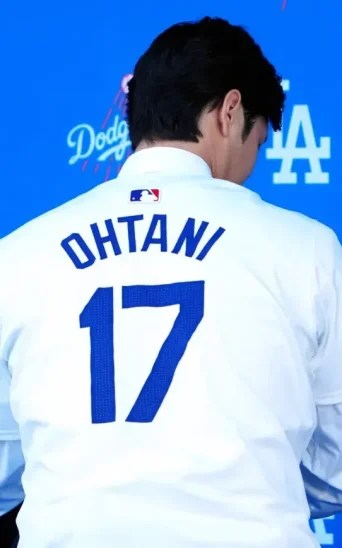
If he wasn’t already the arguable most famous player on the planet, Shohei Ohtani might be unrecognisable in baseball’s new Vapor Jersey.

Rob Manfred has announced he will retire as baseball commissioner when his contract expires in 2029. Before anyone thanked him for the gift a day after pitchers and catchers reported officially for spring training, enough remembered that it means he has nearly six full seasons yet ahead to commit more mischief than he’s committed already.

He’s the classic instance of the tinkerer who develops one sound idea in the middle of developing twenty more about which “sound” is inoperative. Perhaps more than most commissioners, Commissioner Pepperwinkle’s been one to whom there’s rarely an issue he can’t make worse.

“Politics,” Groucho Marx once observed, “is the art of looking for trouble, finding it, misdiagnosing it, and misapplying the wrong solutions.” Baseball under Manfred’s stewardship has been the same art on another level.

Manfred sought and imposed assorted changes aimed mostly at appeasing that part of its audience to whom the ballpark and its intended presentation shouldn’t interfere with its online life. So long as it continued to make money for the owners, there has seemed precious little he couldn’t entertain, the game itself be damned.

Baseball still has issues enough to resolve or relieve without Commissioner Pepperwinkle and his minions trying and failing at fashion consultation. The players were greeted for 2024 with new uniforms about which the word “abomination” seems an understatement so far as many if not most are concerned.

Officially, the new jerseys are known as the Nike Vapor Premier, the athletic gear maker promoting the new product manufactured by Fanatics. The good news is that they’re made to withstand the peaks of the summertime heat, and that exhausts the good news. Nike’s claim that the new jerseys are “softer, lighter, stretchier,” in the words of Athletic writer Stephen J. Nesbitt, seem to enough players code for poor fitting, cheap looking, and inconsistently made.

“It looks like a replica,” says an Angels outfielder, Tyler Ward, to Nesbitt. “It feels kind of like papery. It could be great when you’re out there sweating, it may be breathable. But I haven’t had that opportunity yet to try that out. But from the looks of it, it doesn’t look like a $450 jersey.”

It also doesn’t look like anyone will be able to recognise its wearers. The name on the uniform front may be the most important thing, but the names on the back look to be about half or less the size they usually were. “Look at the last names, bro,” urged another Angel, relief pitcher Carlos Estévez, to another Athletic writer, Tyler Kepner. “I’m six-foot-six. This is going to look tiny on me.”

“Hey, maybe the players–many with Nike sponsorship deals–will change their minds once they play a few games,” Kepner observes. “Maybe, in time, the jerseys won’t look like the replica you buy when you’re trying to save money but still want to kinda look authentic. But the underlying concept persists. Baseball, guided by Nike, is trying to force-feed all these stylistic changes instead of just letting them happen organically.”

If Shohei Ohtani wasn’t already baseball’s most famous and familiar player, you might have a hard time recognising him in his new field threads.

Trying to force-feed changes not limited to the stylistic alone has been a Manfred trademark, one he took up only too happily from his predecessor and former boss Bud Selig. You remember Selig, the man who believed baseball needed regular-season interleague play and wild card postseason entrants in the first place, beliefs Manfred has pushed to extremes that have turned baseball’s postseason into just another playoff system and rendered the All-Star Game entirely meaningless.

Remember: Manfred was the man who assumed office swearing baseball uniforms needed no advertising on them. He swore it long enough to cave in and allow it, a few years later. At least, as Kepner notes, he was honest about it when talking about it two years ago: “It’s a revenue source that is significant enough that it’s really impossible for a sport to ignore over the long haul. I think that’s the truth.”

Some think he’s full of what’s spread around the infield and outfield grass to keep it healthy. That works for the field but not for the game. “[J]ust because you can make money by selling something,” Kepner continues, “doesn’t mean you should.” True that. Ask anyone who thinks as I do that such abominations as City Connect and All-Star Game uniforms make baseball look like anything but the thinking person’s sport.

Baseball never seems to have a Mr. Blackwell around when it needs him.

Speaking of the All-Star Game’s threads, Manfred did just that when getting candid about the advertising patches on the sleeves: “I never thought that a baseball team wearing different jerseys in a game was a particularly appealing look for us. I understand that people can have different views on that topic, but it is part of a larger program designed to market the game in a non-traditional way.”

It’s one thing to acknowledge there’ve been several baseball “traditions” that needed to go the way of large stones for bases. But did Manfred ever stop to think there was particular pride in ballplayers chosen as All-Stars representing, you know, their teams and their home fans? (The super cynics among us might follow that by asking, “Did Manfred ever stop to think, period?”)

Manfred has also spoken up about himself and the owners for whom he truly works pondering a defined free agency signing period. That seems not to be a terrible thing in and of itself, when you observe how many valuable free agents are still without teams as spring training settles in. On the surface, a defined signing period looks sound as a nut. On the surface. Beneath the surface? Be very afraid.

Baseball ownerships historically have found ways to make the sound unsound and to sneak around what were thought to be impeccable guidelines. They’ve been pulled over as scofflaws often enough by officers of Murphy’s Law. And Commissioner Pepperwinkle may yet have more cringe-creating in him before the intended retirement enough people think can’t arrive soon enough.

“Ladies and gentlemen, your Orphan Athletics”

Oakland Coliseum

Vegas may beware more than abused A’s fans think . . .

The way things aren’t happening with John Fisher’s bid to hijack the Athletics out of Oakland and into Las Vegas, you shouldn’t be shocked if the Orphan Athletics becomes the team’s semi-official name for a spell or two.

At this writing I don’t know which thought is the more profound thought: A’s fans in Oakland desperate to see Fisher sell the team to someone willing to keep them in Oakland, or baseball fans in Las Vegas who don’t seem all that anxious to have them here.

Hear me out. Having their Triple-A team, the Aviators, playing in that lovely little ballpark up in the Summerlin area is one thing, and a very nice thing, too. But wanting major league baseball by Fisher’s ways and means is something else entirely.

You couldn’t ask for more proof of my suspicion that Las Vegas isn’t in as big of a hurry to welcome the A’s as first believed than its mayor’s own publicly expressed ambivalence.

Earlier this week, Mayor Carolyn Goodman said she thought the A’s should stay and work things out in Oakland. Until she didn’t. On Tuesday morning, she said, “You have the fan base there. We already have the Raiders. Each city needs to have that spirit of sports . . . I love the people from Oakland. I think they deserve to have their team.” On Tuesday afternoon, after the you-know-what hit the you-know-what, she said, whoops.

“I want to be clear that I am excited about the prospect of major league baseball in Las Vegas,” she began her backpedal, “and it very well may be that the Las Vegas A’s will be come a reality that we will welcome to our city.”

. . . [I]t is my belief that in their perfect world the ownership of the A’s would like to have a new ballpark on the water in Oakland and that the ownership and the government there should listen to their great fans and try to make that dream come true.

Should that fail, Las Vegas has shown that it is a spectacular market for major league sports franchises.

Translation, in part: Fisher should renew his oft-failed efforts to strong-arm Oakland into building him a new ballpark for which he’d have to pay little to nothing, but if he still can’t by all means he should continue putting the bite on Las Vegas and on Nevada whole to do it. For a team his ten-thumbed, toeless touch has reduced to what was once just their official emblem—a white elephant.

“Goodman was not speaking with any real authority on this matter,” writes The Athletic‘s chief of Bay Area coverage, Tim Kawakami. “But just take her skepticism—she literally said the A’s should figure out how to build in Oakland—as a representation of the Las Vegas demographic that never seemed too excited about the A’s relocating to Nevada.”

Just like with every other demographic, business or fan: The more you get to know Fisher’s operation, the less faith you have in anything good happening.

To me, the most telling point wasn’t Goodman’s comments. It was that her clear ambivalence about the A’s in Las Vegas was met with nearly total silence among powerbrokers in that region. Ambivalence on top of ambivalence. Where was the rallying cry from all those businesses and fans supposedly lining up to welcome the A’s? Where was the energy? Why didn’t anybody with clout step up to bellow that the mayor was wrong and the A’s will take this town by storm in 2028, which is the new theoretical finishing date?

Maybe Las Vegas won’t get really excited about possibly being the new home of the A’s until or unless Fisher sells the team. But Oakland’s going to insist that, if he does, he sell the A’s to Oakland interests who’d be more than happy to keep the A’s there and maybe build a ballpark for which they, not the local or county or even state taxpayers, will pay.

And the rest of MLB’s owners “don’t want to force Fisher to sell the team,” Kawakami writes. “But if anything’s going to get them thinking about it, or at least to suggest quite strongly to Fisher that it’s well past time to pass this team to someone else, it’ll be if he blows this Las Vegas situation.”

Don’t bet against that, either.

Fisher’s track record includes blowing two significant proposals back in the Bay Area, one at Laney College (with or without bothering to check with California’s Board of Regents to be sure property at the campus was available in the first place), one at Howard Terminal. (Where Fisher said, essentially, “Build me a delicious real estate complex and let’s throw a ballpark in for good measure.”) Not to mention blowing whatever chance the ancient and decrepit Coliseum had to be rebuilt.

Speaking of which, the A’s Coliseum lease experies after this season. Where will they go from there until, in theory, their intended Las Vegas ballpark gets built? In fact, there’s still no plan other than just plopping one onto the property of the soon-to-be-history Tropicana Hotel. There’s also no known, firm, secured plan coming from the Fisher camp to play A’s home games anywhere else, though speculation includes Sacramento, Salt Lake City, and the Aviators’ Las Vegas Ballpark.

Somehow, I just don’t think turning the A’s into what Kawakami describes as a barnstorming AAAA-level team is the best way to make friends, influence people, and turn Las Vegas ambivalence into Las Vegas popping champagne and partying hearty over the pending A’s relocation.

Remember, as Kawakami does: The A’s have lost 214 games over 2022-2023. Their television lucre by way of MLB is going to be cut short big enough if they end up playing their home games on the road, pardon the expression. That’s not exactly going to inspire Fisher to invest in improving the major league product or the farm system.

“I can’t imagine how the A’s will be any better than they’ve been the last two seasons, and they might be worse,” Kawakami writes. “Until 2029 or 2030.”

Meanwhile, the Nevada State Education Association, one of the state’s teachers’ unions, has filed suit to challenge how legal was and is that $380 million in taxpayer money state lawmakers voted and Gov. Joseph Lombardo signed to hand the A’s to build the ballpark that might never be. The suit argues the gift is illegal because it failed to undergo the required two-thirds majority vote in both state legislature houses, getting approved by simple majority instead.

The money’s actually contingent on building at the Trop prop. The NSEA suit follows their appeal after a court struck down a ballot initiative forcing the $380 million to a public vote of approval.

Meanwhile, Oakland fans continue their efforts to persuade someone, anyone to force Fisher to sell the A’s. Fan groups Last Dive Bar, the Oakland 68s, and others have called for boycotting Opening Day against the Guardians. The A’s answer is offering possibly-unprecedented buy one-get one tickets for the game.

That’s only slightly less absurd than the prospect of thinking about ballpark announcers hailing before first pitch time, “Ladies and gentlemen, your Orphan Athletics!”

Al McBean, RIP: Always leave ’em laughing

Elroy Face, Al McBean

Stepping up when relief ace Elroy Face (left) struggled in 1964 earned Al McBean (right) the Sporting News Fireman of the Year (NL) Award he displays proudly with Face here.

Al McBean was both major league baseball’s first Virgin Islander by birth and a first class character. The righthander with the hard sinkerball who died at 85 at home Wednesday seems never to have met a situation he couldn’t clown his way through. Even opponents didn’t seem to mind.

He was “the funniest man I have ever seen in a baseball uniform,” Hall of Fame second baseman and manager Red Schoendienst once said of him.

Even the way McBean came into a game from the bullpen got laughs. “Whatever those walks mirrored,” wrote the Philadelphia Daily News‘s Sran Hochman in 1963, “concentration, determination, or intoxication, nobody walked into a game the way Alvin O’Neal McBean walks into a game.”

Writing McBean’s full name may have been drawn from longtime Pirates broadcast Bob Prince, who seemed to love referring to McBean that way. But about those walks in from the pen, McBean’s manager Danny Murtaugh said, “You’d have to say McBean saunters in.”

He never apologised for enjoying life and the game. “My thing was fun,” McBean told Society for American Baseball Research biographer Rory Costello in a 1999 interview.

I liked to do little crazy things, something different for the fans, they see the same thing over and over and over. Like crawling over the foul line and not touching it. Throwing the first pitch underhand, pulling on a big red bandana and wiping my face with it. Something the fan can feel a part of.

But the guy who went to a Pirates scout’s tryout in 1957 as a press photographer (he was goaded into trying out and ended up signing with the Pirates for a $100 bonus) also liked to learn as much about the game as he could. One of his teachers was Elroy Face, the Pirates’s star relief veteran.

“I used to go to his house, barbecue a lot, pal around with his family,” McBean told Costello. “And he would tell me intricacies of the game. You could get a guy on, walk a few guys once in a while, based on how you felt that particular day. Learn how to pitch in those situations.”

Though inconsistency dogged him much of his career, McBean actually got to step in for the main man when Face struggled in 1964. McBean had posted a brilliant 1963 (2.57 ERA, 2.81 fielding-independent pitching rate, over 122.1 relief innings pitched in 58 games), then went out and all but equaled it in ’64. (1.91 ERA, 2.97 FIP, 1.04 WHIP, 89.2 innings in 58 games.)

That earned him the Sporting News‘s 1964 National League Fireman of the Year award, placing McBean in some very distinguished company: the American League winner was Red Sox legend Dick (The Monster) Radatz. And Face himself won the NL award two years earlier.

Not that McBean’s prize win was simple. Four attempts to send McBean a commemorative trophy to his Virgin Islands home resulted in broken goods in shipment. When an unbroken trophy finally arrived, McBean “erupted in mock outrage,” Costello recorded—he’d wanted the head to have a fireman’s hat atop it.

That was the least of his problems. He went to Puerto Rico to play winter ball after the ’64 season and became the subject of rumoured death threats. Heavy bettors among fans were said to have suffered heavy losses in McBean’s games and were reported to be considering shooting the effervescent righthander.

McBean continued his stellar relief work in 1965 while Face missed much of the season with a knee injury. Then Face returned healthy for 1966 and McBean lost plenty of chances to nail down Pirate wins. He had three more decent seasons for the Pirates before they exposed him to the second National League expansion draft and the newborn Padres took him.

Oops. The Padres weren’t prepared for McBean’s freewheeling kind of fun. Costello records that he asked where to find the nearest spa—and worked out in a dance leotard. McBean ended up getting one start for those 1969 Padres . . . and traded almost promptly to the Dodgers for a pair of no-names. It was the only trade between those two teams for almost three decades.

But he got a return engagement with the Pirates when the Dodgers released him a year later and the Pirates picked him up. After looking nothing like the way he once was at age 32, McBean got what proved his final release. He played winter ball in Puerto Rico again in 1970-71 before the Phillies signed him and sent him to their Eugene, Oregon (AAA) affiliate with an apparent promise to bring him up if he did well.

He did well enough at Eugene, but the Phillies opted instead to bring up a far younger pitcher named Wayne Twitchell, about whom the most memorable thing (other than a nasty knee injury that compromised his career) was getting an All-Star appearance and a public compliment from Hall of Famer Steve Carlton before Carlton went completely silent to the press.

When the Phillies demoted him to AA-level ball for 1972, McBean retired and went home to the Virgin Islands permanently. He once claimed his sole regret was making the Pirates after one World Series championship and leaving them before another: “I have never seen myself pitch,” alluding to the broadcast highlights now ubiquitous on YouTube.

He joined St. Thomas’s department of housing, parks, and recreation, and co-founded the city’s Little League program, before becoming the housing, parks, and recreation department’s deputy commissioner. He never lost his zest for life or love for baseball even if he became critical of changes in the game in the years that followed his career.

He bemoaned guaranteed big contracts compromising players’ hunger for the game; he zinged the vaunted Braves starting rotation of the 1990s for their corner life (only Hall of Famer John Smoltz escaped his snark: “At least he comes after you”); he dismissed Hall of Famer Tony Gwynn as “a [fornicating] banjo hitter”; he swore Hall of Famer Frank Thomas would be putty in his sinkerballing hands. (“The Big Hurt, my ass. I would eat him up.”)

Well, nobody’s perfect. (Though it’s not unreasonable to think that maybe, just maybe, McBean might well have done well against the Big Hurt: Thomas’s lifetime slash line hitting ground balls that good sinkerballers normally get—.268/.268/.293/.561 OPS.)

The guy whose best man at his 1962 wedding to Olga Santos was Hall of Famer Roberto Clemente (McBean once posited that Clemente was a better all-around player than his fellow Hall of Famers Henry Aaron and Willie Mays) didn’t have to be perfect. He just had to be himself.

What I enjoyed most from baseball was the camaraderie that I had with the fans in Pittsburgh. The signing of autographs, then going to people’s homes for dinner. Mt. Lebanon was one of my areas, real nice–I used to wear the little black thing on my head, I didn’t know what it was for, but I wore it anyway! Up at St. Brigid’s Parish, I knew most of the nuns there, they’d come to Forbes Field, they’d come down to the bullpen and we’d talk. I’d go to church up in the Hill District. I would drink dago red. I had fun basically with everybody.

That was the man who is said to have had a run-in with segregated facilities during one spring training by drinking water from a fountain marked “white only” and crowing, “I just took a drink of that white water and it’s no damned different from ours!”

The man who pursued his future wife by showing up at the Puerto Rican drugstore where she worked while he played winter ball, buying soap from her daily until she agreed to go on a date with him. His love affair with Olga endured on earth far longer than his pitching career.

If you thought McBean left some side-splitting memories around baseball, you can only imagine what his Olga, his daughter Sarina, and his three grandsons have to hold until they meet again in the Elysian Fields.