The Mets hang themselves on the Nats’ gallows

2019-09-03 KurtSuzuki

Trea Turner (7) gives Kurt Suzuki the Gatorade shower. The Nats bullpen should pay for his filet mignon dinners for a year after he helped the Mets bullpen stop the Nats’ intended self-hanging Tuesday night.

These Mets can hang with the big boys. We just forgot to remind ourselves it means hanging themselves. Adolf Eichmann himself didn’t hang from a gallows as big as the one the Mets’ bullpen built in Nationals Park Tuesday.

It takes a rare enough talent to blow a game your team has in the bank. But it takes genius to blow one your team secured in Fort Knox. Just when you thought the Mets’ pen began swearing off arson, and even meaning it, they remind you why you shouldn’t trust them with even a tea light.

Actually, let’s get the facts right. The Nats’ bullpen built the gallows for themselves in the top of the ninth. And they were in not necessarily dire shape but not necessarily pronounced revived fully, especially with overworked closer Sean Doolittle on the injured list.

Then the Mets’ bullpen yanked the Nats’ hapless bulls away from the rope and said, “Thanks large for saving us the trouble! Let us help you to the largest ninth-inning comeback in your franchise history. Least we can do for you building such a nice gallows for us!”

And when Kurt Suzuki, the Nats’ catcher, hit the game-ending three-run homer after Paul Sewald, Luis Avilan, and Edwin Diaz couldn’t get more than one out all inning long, it yanked the noose so tight the Mets looked decapitated as well as hanged.

(The last team to yield five runs or more in the top of the ninth and score more runs than that in the bottom of the ninth? The Red Sox, in June 1961. Against a different Washington franchise. What a difference over half a century makes.)

It didn’t matter that the Mets thumped Nats ace Max Scherzer for four runs in the fourth, beginning with ex-Nat Wilson Ramos extending his hitting streak to 26 games with an RBI double. Any more than it mattered that the Nats pried runs out of Jacob deGrom in the first, the sixth, and the eighth.

But it suddenly mattered even less that Pete Alonso made the score 10-4 in the top of the ninth when he finished a four-run inning with a two-run homer. And, less than that that two Nats relievers—Roenis Elias and Daniel Hudson—got strafed for the four runs before Juan Guerra finally ended that destruction by getting Michael Conforto to fly out for the side.

Because what really matters is three Mets relievers in the bottom of the ninth—Paul Sewald, Luis Avilan, and Edwin Diaz—making a chump out of their manager Mickey Callaway, who’s looked like a chump a little too often this year.

Callaway thought Seth Lugo working a perfect eighth before the five-run Met ninth meant it was perfectly safe for a change not to extend him for a second inning to protect a six-run lead. It was like telling a Brinks guard it was perfectly safe to let Bonnie and Clyde into the bank vault to double check their safe deposit box.

With Victor Robles leading off beating out an infield hit, Sewald got Howie Kendrick to fly out for the first and only Nats out of the inning. Because Trea Turner hit a 1-2 meatball to the back of right field for a double. And after Asdrubal Cabrera singled up the pipe for first and third, Anthony Rendon, the Nats’ should-be MVP front runner, singled home Turner.

Callaway then reached for Luis Avilan to pitch to Juan Soto, whose RBI double in the first opened the game’s scoring in the first place and whose two-run homer in the eighth pulled the Nats back to within a single run just before the Mets started their ninth-inning runaway-that-wasn’t. Soto singled to right to load the pads for Ryan Zimmerman pinch hitting for Matt Adams.

Out went Avilan and in came Edwin Diaz, who only looked in his last couple of outings as though he’d ransomed his once-deadly slider out of its kidnappers’ clutches. In his previous seven outings, he’d surrendered only two earned runs in five and two-thirds total innings. Maybe not close to the Diaz who was lights out in 2018 but not exactly the one who’d dissipated most of this season, either.

The problem was, only the first two of those gigs could be called high-leverage gigs. Diaz hadn’t seen anything like that in over two weeks until Tuesday night. And it showed when Zimmerman hit the second pitch of the plate appearance to deep right to send home Cabrera. But Diaz gamely wrestled Suzuki for seven pitches, a 3-1 count after opening with a swinging strike, then a pair of fouls.

The eighth pitch caught so much of the plate Suzuki could have been tried by jury for neglect if he didn’t send it over the left field fence.

Just like that, the Nats’ worries after losing to the Mets on Labour Day—especially filling their number-five starting rotaton spot after the Mets abused Joe Ross for two and a third, on a day Noah Syndergaard might as well have been the Invisible Man so far as the Nats were concerned—were over. For another day, at least.

With one swing Suzuki silenced the traveling 7 Line Army—a gang of Mets fans whose doings include making numerous road trips including to Washington this week, and who often sounded louder than Nats fans on Monday. In one half inning the poor 7 Liners got silenced almost as fast and hard as they’d been hot and loud in the top.

And Suzuki also punctuated a cold reality about these Mets. That magnificent post-All Star run not only ended ignominiously when they finally got to take on the bigger boys, it now looks like a cruel tease of a dream.

Their apparent crisis addiction remains their number one enemy. You thought the Mets were suddenly beginning to be exposed when they blew a set in Atlanta that they could have won, and won the third game of that set despite opening what looked like a blowout and managing to survive the Braves cutting the margin to a pair?

Who says a team that can blow a seven-run lead they’d built by the fourth inning against the Braves can’t blow a six-run lead they’d built in the top of the ninth against the Nats? Who were only too happy to dance over the Mets’ Tuesday night corpses? The backside of that, of course, is who says a team of Dancing Nats can’t pick themselves up from a six-run deficit at the eleventh hour?

And don’t discount the revenge factor when you think about that. It now seems like centuries ago, but the Mets overthrew the Nats in the bottom of the ninth to open a two-of-three Mets series win in New York last month. They did it almost the reverse of what the Nats did Tuesday night, with a three-run homer to tie and an RBI single to win. But it still left the Nats feeling deflated.

The Mets have been deflating themselves lately. After sweeping the Indians in New York they dropped back-to-back sweeps to the Braves and the Cubs, also in New York, before taking three of four from the Phillies before coming to Washington. That’s now a 3-8 record since 23 August.

Tuesday night may or may not demoralise the Mets completely. But it turned their hopes for even a second wild card into unreality. It probably, really was a sweet dream that they could have played and thought like contenders even for that card for as long as they did.

The Nats reminded the Mets in the worst way possible what happens when a contender real or alleged decide the other guys have no business hanging themselves while the Mets happen to be in the house.

But the Nats better be careful themselves. They have better teams to face yet. And those teams won’t be so inclined to stop them if the Nats insist on building and hanging on their own gallows.

Labour Day looks and lamentations

2019-09-02 WashingtonNationals

Brian Dozier (9) has a feature spot in the Nationals’ dugout dancing. But can baseball’s version of Dance Fever dance themselves into the postseason?

Maybe you did figure on things like this coming. Maybe you didn’t. But it might still be fun to consider them anyway. Prowling around early morning on Labour Day, you can discover, among other things recent past and present:

Looks Aren’t Everything Dept.—Phillies catcher J.T. Realmuto looking as though someone spiked his Raisin Bran with castor oil as he arrived at the mound and saw the bullpen gate open. Realmuto calls it poor timing, and we’ll take his word for it, but the Phillies’ bullpen isn’t exactly disaster free.

Mercy, Mercy, Me Dept.—You really want a mercy rule after Dodgers catcher Russell Martin threw the final inning of a blowout shutout? According to the irreplaceable Jayson Stark, no position player turned that trick since 1917.

Merciless Dept.—Royals shortstop Alex Gordon started a game as the cleanup hitter and finished it pitching two innings. The previous men to start a game hitting cleanup and end up pitching more than one inning in the same game? Ted Williams (1940) and Babe Ruth (1919). Gordon has bragging rights on Martin and a passel of other pitching position players now.

The Basement Tapes Dept.—Six teams came into September with excellent chances of finishing 35 games or more out of first place in their divisions. Two have better chances than that of finishing 40+ games out of first. And one (the Royals) stands to finish 35+ games out of first in the American League Central without being in last place.

But six that far out of first never happened before in the divisional play era. And, according to Stark, it only happened twice before that: in 1906, when the Cubs won 116 games; and, in 1954, when the Indians won 111. (And, when the Yankees won 103—but finished second.)

Houston, We Have No Problem Dept.—The Astros have their third straight American League West title pretty much in the safe deposit box. There’s only one good reason for them to keep grinding aside from their comparatively simple schedule the rest of the way: home field advantage in the American League Championship Series.

The other American League guys who rival the Astros for the greatest ratio of 2019 success to injured list crowding, the Yankees, also rival the Astros for gorging on home cooking: At this writing, the Astros are 51-17 in Minute Maid Park and the Yankees are 49-20 in the House That Ruthless Built.

And only one team since the advent of the wild card has played .700+ lights-out at home without winning a League Championship Series: the 2001 Mariners.

Bronx Bombing Dept.—When it was time to awaken on Labour Day, the Yankees needed one more ninth-inning home run to become baseball’s first. team. ever. to get at least twenty homers on a season in every inning, first through ninth.

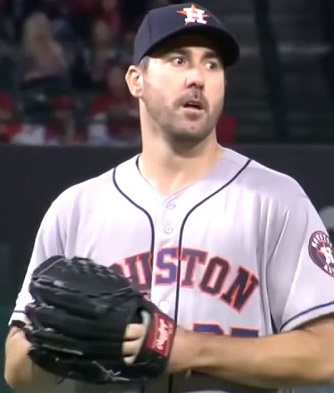
Strike The Stage Dept.—With Justin Verlander throwing a fourteen-strikeout no-hitter Sunday, the Astros got closer to setting a precedent: they could finish the season as baseball’s first. team. ever. whose pitching staff will lead the game in strikeouts and whose hitters will finish dead last in striking out.

St. Elsewhere Dept., Continued—Looks like I wasn’t kidding about the Yankees being the American League East’s best and baseball’s version of a M*A*S*H post-op section. Gio Ursehla hitting the injured list with a groin injury Friday made for the 29th Yankee to go to the infirmary this year, breaking the record of 28 by the Dodgers three years ago. Paging Dr. Westphall . . .

Twin City Rockers Dept.—Maybe the Twins can bomb their way to the American League Central title. They’re now baseball’s most prolific single-season smashers with 268 clearing the fences, passing last year’s Yankees. And they’ve also re-gained a five-and-a-half game lead over the Indians as of this morning, with the Indians both a half game behind for the first AL wild card and only a half game ahead for the second card.

It Ain’t Over Until It’s Over Dept.—The Braves went 19-9 in August including an 11-2 finish to the month. The National League East is still theirs to lose right now. But could they lose it? They could, theoretically—to the Nationals. You know. The guys who were among those left for dead before 23 May.

But since 23 May, according to The Athletic, the Nats have a better record (58-27) than the Braves (56-31) and have thus been baseball’s best team since that date. Unfortunately, that 19-31 season opening counts, too. And guess who get to play each other for seven games early this new month?

By the way, the Nats since the All-Star break are 30-16 and the Braves are 30-17. If there’s a time for the NL East leaders to be overthrown, it starts with a four-game set in Sun Trust Park 5 September and could continue with three in Nationals Park starting—wait for it!—Friday the 13th.

The Nats may have the slightly tougher tuneup for the first set, though: the Mets haven’t looked as good in the last two weeks as they did coming out of the All-Star break, but they’re not exactly pushovers just yet, either. And the Nats get to tune up for the Braves against the Mets at home before hitting the road. The Braves get a two-game tune up against the Blue Jays before greeting the Nats.

Too Little, Too Late Dept.—Unless they have a not-too-likely third wind in them, the Mets’ season may be cooked. They were 24-10 after the break and before they swept the Indians last month; they’re 2-7 since, thanks to a sweep by the Braves, in games they could have won, and thanks to a followup sweep by a Cubs club that sometimes hasn’t looked quite as good or at least as consistent as their record.

The Mets had to prove they could hang with the big boys after fashioning that staggering post-break run against mostly the also-rans and the never-woulds. But getting swept by the Braves at a moment when they could have turned the NL East at last into the dogfight everyone predicted out of spring training hurt. So did the followup sweep by the Cubs. They’re four out for the second wild card. Their postseason hope is slimmer than a thread.

Taking two of three from the Phillies in Citizens Bank Park this weekend wasn’t exactly meaningless, but they get three with the Nats in D.C. this week and another set with the Phillies at home this coming weekend. And even if their post-break record is 29-17 (one less win than the Braves), and almost wholly dependent upon how everyone else still in the picture does, this is crunch time for the Mets, whose postseason odds still sit at a seven percent chance at the postseason. This makes or breaks them.

Monsters of the Midwest Dept.—The Cardinals’ self-resurrection makes life even more interesting for the Cubs, who now sit in the second NL wild card spot and only three games behind the Cardinals for the NL Central. And other than two sets to come against the Cardinals, the Cubs have as cream puff a schedule to come as you could ask. The worst the Cardinals seem to face the rest of the stretch is a set with the Nationals starting 16 September.

So at least one and possibly both the sets to come against each other could find both the Cardinals and the Cubs in duel-to-the-death mode. But don’t rule out the spoiler factors to come, either. Pride still counts for plenty among the also-rans who’d like nothing better than to be the ones who make life miserable, or at least more challenging than it ought to be, for the big boys.

Brief Candles Dept.Who says Astros strongman Yordan Alvarez can’t walk home for the year with the American League’s Rookie of the Year award? Only 62 games, you say? It isn’t exactly unprecedented. I can name you a Hall of Famer who won a Rookie of the Year award despite playing in only (count them) 52 games the year he copped the prize: Willie McCovey, 1959.

Aside from which, Alvarez is liable to play in just about all the Astros’ remaining regular season games, giving him possibly 85 games. Ryan Howard copped an ROY playing 88. So if the Rookie of the Year should be the guy who does some of the most unheard-of things you ever heard of among rooks, Alvarez ought to have the award in the bank the same way it looks as though the Mets’ Pete Alonso does in the National League.

It’s just a shame in that regard that the Astros have a great chance of reaching the World Series and the Mets need the rest of the league to drop dead to get there, just about. Because the idea of Alonso and Alvarez tangling in a Series with their rookie credentials and plate firepower would be . . . forget must-see TV. It’d be damn-well-better-see TV.

He’s the Greatest Dancer Dept.—Remember the Sister Sledge disco hit of that name? If they gave that award out in baseball, this year’s Nats—those Dancing Fools, those  Tighten-Uppers, those Dance Fevered, who turn dugout celebrations into Arthur Murray clinics and Nationals Park into the Land of a Thousand Dances—would win the prize without even a sliver of competition.

But if they get to the postseason, would the Nats think of doing the Stroll for their on-field victory celebrations? Why the hell not?

Previous ejection was Justin time

2019-09-01 JustinVerlander

Justin Verlander celebrates after pitching his third career no-hitter Sunday.

If anyone else has thrown a no-hitter in their first outing after one during which he was ejected, I have no record of it. So it’s entirely possible that, in that sense, Justin Verlander’s Sunday afternoon special in Toronto’s Rogers Centre was unprecedented.

Can you just picture some pitcher somewhere arguing with an ump and answering, if and when the ump in question asks why he’s trying to get himself an early trip to the clubhouse, “Nothing personal, but I’d kinda like to throw a no-hitter in my next start, too.”

Or some umpire answering when a pitcher asks why the unexpected or undeserved ho-heave, “Relax, kid, I’m doing you a favour, now you got a good chance of throwing a no-hitter your next time out.”

That assumed those pitchers have anything resembling Verlander’s ability and intelligence. And you can line those who do up on one surfboard. With a little room to spare.

If anyone else’s no-hitter was consummated by an obscure rookie third baseman hitting a two-run homer in the top of the ninth for the game’s only score, then throwing out a far less obscure rookie for the game’s final out, I’m also unaware of it as I write. So Verlander better not have been kidding when he said Abraham Toro was due for a big reward.

Toro ought to get at least a new car (Verlander can afford to buy a dealership, after all, we think) for going above and beyond to make Verlander only the sixth man in Show history to throw at least three no-hitters. Maybe from a Canadian dealership, since Verlander’s the first to throw more than one no-no in the same visitors’ park.

The company he joins? Four Hall of Famers (Bob Feller, Cy Young, Sandy Koufax, Nolan Ryan) and a nineteenth-century deadballer. (Larry Corcoran.)

But I’m pretty sure none of Corcoran’s, Young’s, Feller’s, Koufax’s, or Ryan’s no-hitters featured having to dispatch three sons of former major leaguers (Bo Bichette, Cavan Biggo, and Vladimir Guerrero, Jr.), including two sons of Hall of Famers (Biggio, Guerrero), at the very top of the enemy batting order.

Verlander did. He struck Bichette and Biggio out twice, walked Biggio once, and rid himself of Guerrero on a pair of ground outs to third base and a foul pop to first.

Joining the deadballer may be the most appropriate for Verlander considering he did his Sunday work with a fastball that barely reached 90 mph if at all but a curve ball with more bite than a piranha in danger of missing its three squares on the day. He worked up and down the zone like an elevator operator, back and forth like a vacuum cleaner, and the only thing he had to worry about was whether the American League West-leading Astros would ever get a run on the board for him before his day was finished.

The Blue Jays went to a bullpen game beginning with former Met Wilmer Font, acquired in the Marcus Stroman trade, striking out three with one hit in two innings. Then two more Jays bulls, Sam Gaviglio and Zack Godley, worked three runless innings each, Gaviglio working three perfect with three punchouts and Godley shaking away two Astro hits while punching out two, plunking one, and surviving first and third in the seventh.

Then the Jays turned it over to Ken Giles, the closer and former Astro, having a renaissance season until he hit the injured list for a brief spell around the trade deadline, but who took a staggering 1.67 ERA into Sunday’s contest. And this was a day after he struck out the side to end a 6-4 Blue Jays win.

But Astros third baseman Alex Bregman opened Sunday’s top of the ninth with a double dunked into shallow right field. Giles flicked it off more or less with a three-pitch, swinging strikeout on the Astros’s explosive rookie outfielder/DH Yordan Alvarez, followed by a third-pitch fly out to center by Astros first baseman Aledmys Diaz.

Then came Toro, the switch hitter batting left.. Then came two Giles sliders, the first fouled off and the second ball one down and inside. Then came a four-seam fastball right down the pipe. And there it went the other way into the left field seats. Leaving Verlander to finish what he started, sandwiching a nasty swinging fourteenth strikeout between a pair of ground outs.

And leaving him to history.

“I can’t put it into words,” said the righthander who had four previous shots at a third no-hitter broken up in 2011, 2012, 2015, and last year. “I’ve come so close to the third one so many times.”

Maybe he should have been ejected in the starts immediately preceding those bids, too.

Absent answers, don’t judge Skaggs

2019-08-31 TylerSkaggsAngels

Mike Trout (in blue T-shirt, front) and the Angels paid a final tribute to Tyler Skaggs after blowing out the Mariners in a combined no-hitter in their first game home following Skaggs’s unexpected death. The toxicology report now raises even more questions.

No, I don’t know yet what delivered Tyler Skaggs into the clutch of opioids, whether a one-time or more-than-once deliverance. And neither do you. But that doesn’t stop people from drawing conclusions, and it doesn’t stop some of those conclusions ranging from the dismissive to the ridiculous all the way back to the obscene.

The prospect of the 27-year-old Skaggs merely being reckless in taking even once doses of fetanyl and oxycodone and maybe washing them down at once with a stiff drink is a prospect not to have been wished in the hurricane of grief his death whipped up all around baseball in early July.

“Now, we are faced with our own emotions,” writes USA Today baseball columnist Bob Nightengale, “knowing the death wasn’t an act of God or a suicide, but self-induced by the careless use of pain killers.” Remember that “careless” doesn’t mean reckless, exclusively.

We’re also faced with asking honestly whether Skaggs acted entirely on his own, as the Angels arrived in Texas for a pre-All Star break set against the Rangers, or whether he was prompted persuasively enough by someone who thought he was doing Skaggs a pain management favour.

Skaggs’s family wants to know for dead last certain. They’ve hired Texas attorney Rusty Hardin to help them know. “We are heartbroken to learn that the passing of our beloved Tyler was the result of a combination of dangerous drugs and alcohol,’’ they said in a formal statement. “That is completely out of character for someone who worked so hard to become a Major League Baseball player and had a very promising future in the game he loved so much.”

The Angels want to know, too. Suspicions point as I referred on Friday, toward a so far unidentified Angels employee the family and perhaps the team itself thinks or fears had a hand in Skaggs’s demise, perhaps by supplying him fetanyl and oxycodone through other than lawful or proper medical means.

“Everyone’s searching for facts, and everyone within the organization wants facts,’’ said general manager Billy Eppler at a press session before the Angels played the Red Sox Friday night. “Which is why we are actively cooperating with an investigation. It kind of goes without saying that I cannot comment more on the situation until the police conclude their investigation.”

Asked whether the employee the Skaggs family suspects is still with the team, Eppler wouldn’t answer. “I’m sorry,” the GM replied. “I really understand your asking that question, but again, it’s an active investigation.” Eppler said only that the Angels have told investigators everything they know. Which may or may not yet be anything substantial. Thus the proverbial thickening of the plot.

The least-kept secret in professional sports is that performing athletes are not always the best tended alive by their teams or supervising organisations when it comes to injuries or illnesses. For too many decades sports medicine involved the fastest remedy available to get the player back onto the field, the court, the course, as fast as possible.

And for too many of the same decades athletes took to their own measures of desperation to get back to the field, the court, the course, as soon as they could, within what they considered reason, the better to keep someone else from taking their jobs when they knew in their heart of hearts that there was always someone else behind them just itching for the chance.

It was one thing, for example, to know that there were enough baseball players dabbling in actual or alleged performance-enhancing substances because they were led somehow to believe the dabbling might help them inflate their performance papers. But the arguable Joe Valachi of the actual or alleged PEDs, the late third baseman Ken Caminiti, stepped forth after his career ended to say it started for him not out of any statistical interest but out of desperation to escape the deep pain of a 1996 shoulder injury.

Caminiti surely wasn’t alone in turning that way when few to none of his team’s medical personnel seemed able to provide such relief. To name another somewhat notorious example, longtime Yankee pitcher Andy Pettitte is on record as saying he took to a brief usage of human growth hormone because his continuing elbow pain finally drove him mad enough to give it a try.

Skaggs had an injury history. After the Diamondbacks traded him back to the Angels for 2014 (he’d previously gone to the Snakes with current Nationals pitcher Patrick Corbin in a deal making pitcher Dan Haren an Angel), Skaggs pitched in eighteen games before his elbow sent him to Tommy John surgery, causing him to miss the entire 2015 season.

He returned to make ten 2016 starts, then missed 98 days in 2017 with a strained oblique. In 2018, Skaggs opened with sixteen starts and a 2.64 ERA before his adductor muscle gave out and cost him three months. And this year, he sprained his left ankle after making three season-opening starts. costing him most of April.

“[A] normally developed, well-nourished and well-hydrated large build adult,” the toxicology report described him. Except that it couldn’t determine whether or to what extend he remained in any pain. Physical or otherwise. That, too, would be something both his family and the Angels should want to know.

Skaggs otherwise was known as a likeable fellow who was freshly married when spring training began this year and had everything else for which to live. He loved his young wife, Carli; he loved his teammates; he loved the game. The hurricane of grief his death provoked around baseball was real.

So were the emotions when, after the Rangers kindly canceled the game the day Skaggs died, they re-convened with Skaggs’s uniform number 45 in the dirt behind the pitching rubber in the Angels’s uniform font style. And, when the Angels beat them, 9-5.

And, especially, when the Angels returned home, the players fashioned a loving pre-game tribute including Skaggs’s mother throwing out a ceremonial first pitch, before the Angels hit the field one and all wearing Skaggs jerseys and beat the Mariners in a combined no-hitter and an 11-0 blowout. Paced by Skaggs’s closest friend and team leader Mike Trout blowing the lid off all emotion with a two-run homer in the first inning.

And, after the game, when Trout and his fellow Angels covered the entire pitching mound except for the number 45 behind the rubber with the Skaggs jerseys they wore all game long.

The toxicology report wasn’t close to completion that night. Now that it is, the questions continue as only too many seem to think they have the answers. Nightengale isolates several of the key questions. Did Skaggs slip somehow into drug addiction? Did anyone know to the extent that they may carry a degree of guilt for lack of previous intervention? Did something appear to indicate such a problem?

But Nightengale doesn’t stop there. Appropriately. “This was a young main in pain. Perhaps more physical than even the doctors and trainers knew. Maybe more mental than even any team therapist knew,” he writes. “It will be a bigger tragedy if we never understand why. Prescription painkillers are a scourge in this country, and professional sports—with catastrophic injuries and the expectation to play through the pain they cause—are ripe for potential abuse.”

This wasn’t Cubs second baseman Ken Hubbs, who’d only taken up flying a few months earlier, flying his single-engine Cessna propeller airplane over Utah and crashing to his death in spring 1964, running into an atmospheric disturbance he was probably too inexperienced to navigate successfully. The tragic irony: Hubbs took up flying to conquer his fear of it.

This wasn’t Yankee legend Thurman Munson, who’d bought a sophisticated Cessna Citation jet the better to spend more time with his wife and children during the season when the Yankee schedule allowed, and crashed at an airport near his Ohio home while practising evening landings. Munson was still well short of full qualification to handle the complex jet entirely on his own.

This wasn’t the Indians’ spring training boat crash of 1993. In which relief pitchers Tim Olin and Steve Crews were killed when their off-day boating with Crews at the wheel ended with a crash into a dock, killing Crews at once, with Olin dying the next day and pitching teammate Bob Ojeda suffering a severed scalp. Crews was considered legally drunk at the time of the crash.

This wasn’t Marlins pitcher Jose Fernandez, as effervescent a young player as you ever saw, around whom the Marlins only thought they’d build for seasons to follow. He and two friends drank somewhat copiously before boarding his 32-foot boat, Kaught Looking, and with Fernandez at the wheel crashed a jetty killing all three. Fernandez’s estate faces litigation from the families of the other two passengers; Fernandez’s attorney argues the pitcher was framed in the crash investigation.

This wasn’t Oscar Taveras, the young Cardinal who electrified the game in his postseason debut, hitting a pinch homer in the 2014 National League division series against the Dodgers. (He’d also hit one out in his first regular-season major league game that year.) He was killed with his girlfriend a month later when his Camaro ran off a wet road in their native Dominican Republic. Driving six times the legal limit for drunk driving, perhaps. Seven years after another Cardinal, pitcher Josh Hancock, died in a DUI crash.

On the other hand, Ojeda needed and received copious therapy to relieve him of suicidal thoughts following that ferocious case of survivor’s guilt. And Rays minor league pitcher Blake Bivens will need about a hundred times that to survive the murder of his wife, baby son, and mother-in-law last week, for which his teenage brother-in-law has been charged.

Hubbs and Munson died from inexperience. Crews, Fernandez, and Taveras could be argued to have died irresponsibly and likewise causing others’ deaths. But we don’t know yet what led Skaggs to the Elysian Fields. Was it irresponsibility? Did he battle heretofore unsuspected and/or undetected drug addiction or even mental illness to even a small degree? Did he have physical pain greater than his known baseball injuries?

One dismisses the kind of reckless thinking that prompts the likes of one particularly witless Tweeter who dismisses Skaggs as a junkie. Ignorant of the point that “junkie” customarily applies to heroin addicts, heroin being nicknamed “junk” for a very long time.

Absent any final answers otherwise, it’s wise not to assume the judges’ robes. As if even wisdom would prevent that from happening, anyway.

One pitcher’s death and another’s murderous bereavement

2019-08-30 SkaggsBivens

The Angels’ Tyler Skaggs’s (left) painkiller-related death raises a suspicion or three; murder robbed Rays minor league reliever Blake Bivens (right) of his wife, infant son, and mother-in-law. Bivens should be just as worthy of our sympathy and perhaps a degree or three more . . .

Fetanyl is a synthetic pain reliever usually though not exclusively administered for relief in cancer patients. Oxycodone, perhaps the most infamous among opioid pain relievers, is prescribed normally for those who need long-term, around-the-clock pain relief.

The Tarrant County (Texas) medical examiner says both plus alcohol were in Tyler Skaggs’s system the night he died unexpectedly on 1 July. “[A]lcohol, fentanyl and oxycodone intoxication with terminal aspiration of gastric contents,” the medical examiner’s report is quoted as saying.

That clinical language translates to the 27-year-old Angels’ lefthander vomiting and choking on it under the influence in his sleep.

Skaggs’s death provoked a hurricane of grief around baseball that seemed exacerbated when the Rangers, whom the Angels were in town to play, not only canceled that night’s game out of respect to the Angels but put Skaggs’s uniform number, 45, in the Angels’ uniform lettering style, behind the pitching rubber the following night, before the Angels beat them 9-4.

And when the Angels returned home from that road trip, they kicked off their first homestand since Skaggs’s death with a staggering 13-0 combined no-hitter against the Mariners that electrified its own sport and others, from Taylor Cole pitching two and Felix Pena pitching the final seven innings to Mike Trout himself accounting for about half the Angels’ destruction, his share only beginning with a two-run homer into the Angel Stadium center field rocks in the bottom of the first.

Assorted players around baseball have scratched their own little tributes to Skaggs since, including many scrawling his number 45 onto their game hats. The sole admirable sight on the otherwise execrable black (for visiting teams) and white (for home teams) Players’ Weekend uniforms—which made the games resemble contests between Mad‘s memorably “Spy vs. Spy” strips—was the circular black patch with 45 in white in the middle on every sleeve.

We’ll know soon enough, I’m very certain, as to just why Skaggs needed to take fetanyl and oxycodone. There’s already an ugly rumour that an Angels employee may have had a hand in Skaggs’s death; Los Angeles Times sports editor Bill Shaikin says MLB will investigate the claim. And Skaggs’s family has hired a Texas attorney to investigate for themselves.

Unless there was foul play of the type Tarrant County’s police couldn’t determine, or unless Skaggs suffered a medical condition about which none seems to have been aware, his is only slightly less senseless a death than what was done to the family of Rays minor league relief pitcher Blake Bivens.

Bivens’s wife, Emily; their year-old son, Cullen; and, his mother-in-law, Joan Jefferson Bernard, were shot to death Tuesday morning. Emily and Cullen Bivens were found dead inside Mrs. Bernard’s Keeling, Virginia home; Mrs. Bernard was found dead in the driveway. Bivens’s teenage brother-in-law, Matthew Bernard, is in custody charged with the crimes.

A neighbour told police Bernard came to her door and punched her in the arm before she heard subsequent gunshots at Mrs. Bernard’s home. Investigators found shell casings from a 30-30 rifle near the victims’ bodies; Bernard was arrested naked and trembling up the road after being found in a nearby wooded area. He was jogging in a circle and refused to stop at first even despite being pepper-sprayed by one officer; when he tried to choke another neighbour, police finally subdued the naked Bernard.

“My life as I knew it was destroyed,” said Bivens, a righthanded pitcher with a 4-0 won-lost record and a 3.98 earned run average but a proneness to walks for the Montgomery Biscuits (AA) this season, in an Instagram post Thursday. “The pain my family and I feel is unbearable and cannot be put into words.”

The stricken reliever tried anyway.

He called his wife the one “who made me into the man I am today and you loved me with all of my flaws.” He said of his little son, “I can’t breathe without you here. I finally understood what love was when you were born and I would have done anything for you.” And, he said of his mother-in-law, “You loved your family more than anyone I’ve ever seen. You raised the most wonderful girl in the world. I’m so glad y’all are still together.”

It says nothing against Blake Bivens that an established major league pitcher freshly married and unexpectedly dead at 27 provoked a wider, deeper choke of game-wide grief than a six-year minor league pitcher having not even a single cup of major league coffee whose wife, infant child, and mother-in-law were murdered.

But it’s impossible not to notice that Skaggs left a loving wife behind while Bivens was robbed grotesquely of his. Both are to mourn a little more deeply.