The upstarts of West Camden Street?

20200508_124212-01

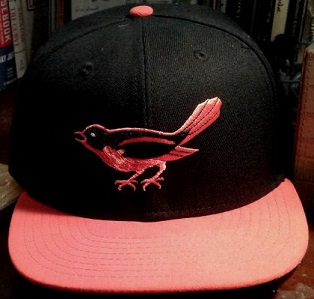
Whichever era’s gear you like, it looks safe to be an Oriole fan again. So far. All things considered.

I’m not seeing things, really, I keep telling myself. So do most of you who aren’t part of the fan base. So, probably, do most of those whose allegiance—in cardboard cutouts this pandemic season, unfortunately—anchors at 333 West Camden Street in Baltimore.

Where the Orioles have suddenly re-graduated themselves from birds of prey, as in prey for the other guys, to the American League East’s second-best record behind the beasts of the south Bronx and fourth-best record in the entire league.

Entering Sunday the Orioles had the fourth-most runs per game (5.35), the sixth-best team on-base percentage (.334), the second-best team slugging percentage (.466), the second-best team OPS (.800), the second-highest total bases (320), and the sixth-lowest team number of hitters banging into double plays (10) . . . in the entire Show.

So far.

They didn’t do it against their fellow presumed cream puffs, either. They’ve beaten the world champion Washington Nationals four out of five times, and the Philadelphia Phillies and the Tampa Bay Rays both three out of three.

They’re also one of the Show’s most prolific road shows, too, even in this coronavirus-nourished Quiet, Please! Alfred Hitchcock Presents Dimension X Minus One Fella’s Family of a season—nine road games, eight wins.

They’ve even had a six-game winning streak and they’ve won seven out of eight, including those four wins dropped on the Nats pending today’s skirmish in Camden Yards.

All that despite their pitching being near the bottom third of the league’s team ERA pack and near it in team pitching strikeouts while being just about dead center for surrendering the big flies.

It’s enough to make even generic baseball collectors reach for their Oriole hats of any era, plop them atop their heads almost daily, and wonder what strange new feats of derring-do await from a team who’d turned too profoundly into the AL East’s feats of derring-don’t even think about it.

Maybe the only more surprising ensembles in the Show right now are the Miami Marlins, who didn’t let a little thing such as practically the entire team waylaid by COVID-19 positives stop them from remaking/remodeling on the fly and entering Sunday afternoon with the number five winning percentage.

Most fish get the ick and croak. These Fish either got or laid dormant the coronavirus, lost what seemed like half their first-third of the season . . . and went from the guppies of the National League East to its barracudas. Just pray that they don’t begin behaving like real barracuda and start eating their young. Oops. Maybe the Marlins already did that—their average age is 29.4.

Come to think of it, the Marlins won nine games so far entering Sunday, and four of them came against . . . the Orioles. With this season’s cockamamie-looking playoff plan, it may not be thinking two thousand light years from home to imagine these Birds of Prey against those Flying Fish. It might be jarring, it might seem to threaten the natural order of things, but it may not be all that surreal.

So what went on in Camden Yards on Sunday afternoon? A little comic relief from Nats manager Dave Martinez, for openers, objecting to a pitch call with an extremely emphatic Horse[spit]! Horse [fornicating] [spit]! Didya hear me? in the bottom of the second. (O Vin Scully, where is thy sting?)

Let’s see . . . an RBI single, a sacrifice fly, and another RBI single put the Nats up 3-0 in the top of the first. Oriole right fielder Anthony Satlander got one back in the bottom, off Max Scherzer, with a one-out blast into the right field bleachers. A sacrifice fly and another RBI single made it 5-1, Nats in the top of the fifth.

Orioles catcher Pedro Severino said, “That’s what you think,” with two aboard in the bottom of the sixth, catching hold of a Scherzer fastball practically down the chute and sending it over the left field fence. An inning later, Satlander found the screws on Scherzer’s two-out, 2-1 repeat changeup and repeated what he did in the first, to practically the same section of unoccupied real estate.

Tied at five. If the Orioles are really playing over their own heads, they weren’t going to let even Mad Max take them without a fight.

Oops. With two out and Juan Soto on second in the top of the eighth, Oriole third baseman Rio Ruiz threw Kurt Suzuki’s should-have-been inning-ending grounder wild enough to let Soto score and Suzuki have first and then second on the house.

That was no time for surprise generosity, Orioles. Unless it wasn’t that much of a surprise. The Orioles entered Sunday fifth in the American League with fourteen errors. Well, nobody’s perfect, and the Orioles are still trying to get used to winning again, however surrealistic the truncated season.

Heavy sighs of relief, mostly from the Oriole dugout, unless someone figured out a way to send the canned crowd sounds through any cutouts in the park. Oriole reliever Paul Fry got Nats pinch-hitter Eric Thames to pop out to shortstop Jose Iglesias for the side. Staying within one run was child’s play.

Wsn’t it?

It wasn’t. Not when Nats reliever Tanner Rainey struck out the side after opening the Oriole eighth by plunking designated hitter Renato Nunez and World Series finisher Daniel Hudson struck out two after opening the Oriole ninth with a ground ball out. Even upstarts like these Orioles can’t have everything yet, can they?

Horse [spit] Horse [fornicating] [spit]! Didya hear me?

Plesac: The press made the media do it.

2020-08-15 ZachPlesac

Zach Plesac, future politician.

Once upon a time, the late William Safire—New York Times columnist and language maven (his even more famous “On Language” essays)—drew the line. “When you like us, we’re the press. When you hate us, we’re the media.”

Well, the press reported Cleveland Indians pitchers Zach Plesac and Mike Clevinger violated the team’s and the Show’s coronavirus health and safety protocols, so Plesac at least hates the media.

He must be bucking for a future in politics. He already has down pat the politician’s go-to excuse when caught with his or her hands in the proverbial cookie jar: The devil press made the devil media do it.

Name the scandal. Teapot Dome? The Profumo affair? Vietnam? The sad Thomas Eagleton affair? Watergate? The botched Iran hostage rescue mission? Abscam? Iran-Contra? Monkey Business? Whitewater? Crimes covering up extracurricular White House nookie? The Iraq war? Abu-Ghraib? Hurricane Katrina? The IRS singling out and targeting conservative groups? Benghazi? Continuing (four administrations and counting) executive order abuse? Two presidential impeachments in three decades?

It wasn’t the perps’ fault. The presidents who abetted, helped cover up, tried to help cover up, or at least approved such malfeasances? (Or, in George McGovern’s case, throwing the hapless Eagleton under the proverbial bus instead of standing by his man.) It wasn’t their fault, either. The presidents who faced impeachment but ducked removal when two Senates refused to try them seriously? Not their fault, either. It was the press’s fault, because the media exposed, investigated, and embarrassed the political (lack of) class.

You didn’t get the memo? Did you get the one reminding you that “fake news” (the catch phrase is Donald Trump’s, but the concept is almost as old as journalism itself) is the news the newsmaker doesn’t want you to know and you don’t really want to hear?

The Indians finally sent Plesac and Clevinger to their alternate site in Eastlake, Ohio, after a team meeting Friday morning at the Birmingham, Michigan site where they stay when playing the Detroit Tigers in the Tigers’ house. The two pitchers were in the cauldron for a night out in Chicago last weekend, involving a restaurant dinner and a card game at a friend’s home.

On the surface, a night out to dinner and playing cards with friends isn’t exactly the scandal to end all scandals. But the Indians, like most major league teams, take the coronavirus seriously enough to impose rules including that nobody can leave the team hotel without the team clearance Plesac and Clevinger failed to get.

The Indians sent Plesac back to Cleveland in a privately-hired car. They had no clue Clevinger was involved until after the pitcher flew back from Chicago with the team. The unamused Tribe compelled each man to issue a team-authored statement. It might have stayed calm and collected otherwise if Plesac hadn’t gone to his Instagram account and schpritzed.

Plesac got the aforementioned memo. He created a video message filmed in his own moving car. Oh, sure, he owned up to violating the protocols, but by God it wasn’t so much his fault for violating them but the media’s fault for having discovered and reported them.

“The media is really terrible, man. The media is terrible,” he fumed. “They do some evil things to create stories and make things sound better, make things sound worse. Truthfully, I’m disgusted the way the media has handled the whole situation surrounding our team.”

Tell us more, Mr. Plesac. If you’ll pardon the expression, inquiring minds—including this long-enough-time member of the working press in the media—want to know. (Yes, Virginia, I’ve been a small city/regional daily newspaper reporter, a regional daily news radio reporter and anchor, and a trade/Internet journalist since almost the birth of the online journalism era. I’m not just another blogger-come-lately.)

We’d like to know if several 1919 Chicago White Sox tanked a World Series because the press made them do it or the media was going to blow the lid off the whole thing in due course.

We’d like to know if The Giants stole the pennant! The Giants stole the pennant! because the press handed Leo Durocher reserve infielder Hank Schenz’s Wollensak spy glass or the media sent it with coach Herman Franks to the Polo Grounds clubhouse above center field to steal opposition signs for the stretch drive comeback that forced the famed pennant playoff.

We’d like to know whether the rest of the press other than the Cincinnati Enquirer aided and abetted the 1957 All-Star ballot-box stuffing scandal on behalf of the Reds, or whether the media compelled commissioner Ford Frick to yank the All-Star starting lineup voting out of the fans hands, where it didn’t return for almost a decade and a half.

We’d like to know whether the press sent Pete Rose’s gambling habit across the line to betting on baseball, or whether the media sent him across that line to bet on his own teams and bet himself right out of the game and out of Hall of Fame consideration.

(We’d like to know what you think about the press covering up the first whiffs of Rose’s gambling or the media unable and maybe unwilling to nudge then-commissioner Bowie Kuhn into the investigation he wouldn’t sanction but which came almost a decade after his exit.)

We’d like to know whether the press poured actual or alleged performance-enhancing substances into baseball or the media handed those players the pipelines to the stuff.

(Well, ok. You have us there. Sort of. Thomas Boswell was prepared to expose Jose Canseco as a juicer decades before Canseco wrote his inconsistent tell-alls, but the press didn’t really want to know until the late Ken Caminiti took it to the media, specifically to Sports Illustrated.)

We’d like to know whether the press compelled Aroldis Chapman, Jose Reyes, Hector Olivera, Jeurys Familia, Derek Norris, and Steven Wright to domestic violence scandal and suspension, or whether the media compelled Jose Torres, Roberto Osuna, Addison Russell, Odubel Herrera, Julio Urias, and Domingo German to likewise.

We’d like to know whether the press cooked up the Astro Intelligence Agency and the Rogue Sox Replay Room Reconnaissance Ring or whether the media encouraged them to graduate from theory to real cheating.

We’d like to know whether the COVID-19 outbreaks that waylaid the Miami Marlins and the St. Louis Cardinals came from a couple of players being not so smart going for nights on the town or from the press insisting that the media raise enough of a hoopla that it damn near ended this coronavirus-truncated season described in best shorthand as Alfred Hitchcock Presents the Outer Limits of the Twilight Zone.

We’d like to know whether fellow Indians pitcher Adam Plutko spoke of his own free mind when he fumed, over whether Plesac and Clevinger could re-earn their teammates’ trust, “They lied to us. They sat here and publicly said things that they didn’t follow through on. Those grown-ass men can sit here and tell you guys what happened and tell you guys what they’re gonna do to fix it. I don’t need to do that for them.”

And, whether the Indians’ all-but-franchise-face, Francisco Lindor, said of his own free mind, “We have to sit and look ourselves in the mirror. And it’s not about the person we see in the mirror. It’s who’s behind you. It’s not about that one person. It’s about everybody around you.”

Or did the devil press make the devil media make them say it?

“They [screwed] it up twice”

2020-08-14 AJHinchAlexCors

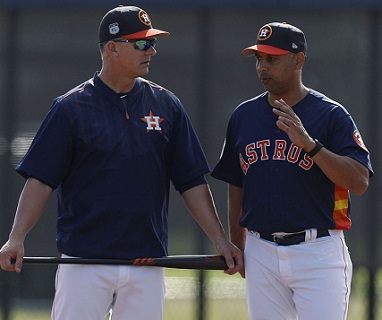
Former Houston Astros manager A.J. Hinch and bench coach Alex Cora. Los Angeles Dodgers relief pitcher Joe Kelly fumes that Astro players tainted Hinch’s and Cora’s names to save their own.

With everything else buffeting major league baseball before delayed “summer camp” and the truncated season, it was easy enough to miss. But Alex Cora—considered an Astro Intelligence Agency co-mastermind and unproven shepherd of the Red Sox Replay Room Reconnaissance Ring—spoke out in June.

And Los Angeles Dodgers pitcher Joe Kelly, one of Cora’s Red Sox charges during their run to the World Series title in 2018, spoke up likewise in a podcast by Dodger teammate Ross Stripling days before his suspension—for throwing at Alex Bregman and Carlos Correa, the latter drawing Astros and Dodgers alike out of dugouts in social-distance violation—was cut from eight to five games.

Between them comes an alteration of the former Astrogate narrative, and it’s not likely to mitigate the AIA stain on the 2017 world champions. If anything, it’s liable to make the stain deeper. Upon the 2017-18 Astros’ players and upon commissioner Rob Manfred, who handed those players blanket immunity in return for spilling about the AIA’s off-field-based, electronic pitch sign espionage.

“The people who took the fall for what happened is nonsense. Yes, everyone is involved,” said Kelly aboard Stripling’s podcast.

But the way [the AIA] was run over there was not from coaching staff . . . They’re not the head boss in charge of that thing. It’s the players. So now the players get the immunity, and all they do is go snitch like a little bitch, and they don’t have to get fined, they don’t have to lose games.

Kelly’s remarks hark among others to Cora telling ESPN writer Marly Rivera in early June that he didn’t object to shouldering his own responsibility for the 2017 Astros’ chicaneries, having been their bench coach before becoming the Red Sox’s manager, but also wanting one and all to know that neither himself nor 2017 Astros designated hitter Carlos Beltran were the sole drivers.

When Manfred dropped his Astrogate hammer earlier this year, he fined owner Jim Crane the maximum-allowable $5 million, virtual tip money. He suspended general manager Jeff Luhnow and manager A.J. Hinch for all 2020. Crane fired the pair almost at once.

Then the Red Sox more or less forced Cora out as their manager before the Rogue Sox sign-stealing report emerged. And the New York Mets more or less forced Beltran out as their newly-hired manager—before Beltran got to manage even a single exhibition game for the team he once starred for as an outfielder.

“When you take someone’s livelihood . . . to save your own ass, that’s what I don’t like,” Kelly continued.

Cheating? They cheated. Everyone knows they’re cheaters. They know they’re cheaters. It’s over. That’s done with. But now they mess it up by ruining other people’s lives, so they [screwed] it up twice . . . When you taint someone’s name to save your own name, this is one of the worst things that you could probably do . . . That really friggin’ bugs me. I think I’ll be irritated forever.

In other words, the Astros players accepting Manfred’s immunity to throw Cora, Beltran, and even Hinch and Luhnow under the proverbial bus isn’t even close to being Mike Fiers—frustrated that attempts by himself and others in the know to get reporters to push for exposing the AIA previously—finally blowing the Astrogate whistle to The Athletic‘s Ken Rosenthal and Evan Drellich last November.

Kelly may have missed Cora telling Rivera it wasn’t only players who might have made himself and/or Beltran sacrificial lambs. “There has been a narrative out there of what happened,” Cora said.

Ever since mid-November until the commissioner announced the results of the Red Sox investigation, I have read many things that are true and many others that are not.Out of this whole process, if there is one thing that I completely reject and disagree with is people within the Astros organization singling me out, particularly Jeff Luhnow, as if I were the sole mastermind. The commissioner’s report sort of explained, in its own way, what happened. But the [Astros players] have spoken up and refuted any allegations that I was solely responsible.

If there is one thing I am absolutely sure of, it is that it was not a two-man show. We all did it. And let me be very clear that I am not denying my responsibility, because we were all responsible.

Manfred’s subsequent report on the Rogue Sox determined—after the commissioner handed 2018-19 players the same immunity to spill as he handed the Astros—that their replay-room sign-stealing scheme was actually executed without Cora’s direct knowledge of the operation.

Remember: The AIA involved either installing an illegal real-time camera or altering an existing camera off mandated eight-second transmission delays to send opposition pitch signs to a clubhouse monitor, where someone deciphered them and signaled them to hitters by way of banging a can slowly next to that monitor.

The Rogue Sox didn’t go that far. They married old-fashioned on-field sign-stealing gamesmanship to new-fashioned technology all but gift-wrapped for them. MLB itself handed them and anyone else so inclined the keys to the kingdom when it installed multiple-monitor replay rooms in both clubhouses in all ballparks.

Someone deciphered opposition signs on one of those monitors and transmitted them to a Red Sox baserunner who’d send it on to a batter. The key is that the Red Sox needed a man on base to execute the reconnaissance operation in the first place. They couldn’t and didn’t have stolen signs for every man in the lineup.

The AIA didn’t need baserunners to do its dirty work, though it could only operate in Minute Maid Park. Which made the scheme even more bizarre, never mind unnecessary, since the 2017-18 Astros actually won sixteen more games total on the road than at home.

Cora, remember, once made himself a Dodgers folk hero thanks to an epic eighteen-pitch plate appearance against Chicago Cubs pitcher Matt Clement that ended in a two-run homer into Dodger Stadium’s right field bullpen. Now he’s a pariah for being the bench coach of the ’17 Astros and the manager of the ’18 Red Sox, both of whom beat the Dodgers in back-to-back World Series.

Unlike those Astros who met the press as spring training opened (pre-coronavirus shutdown) and sounded as unapologetic as men offering apologies can sound, outraging about seven-eighths of MLB players, Cora did apologise for both the AIA and the Rogue Sox. “I understand why people think that our championship is not valid, and it’s our fault that they think that,” he told Rivera.

I am being honest and I apologize for what happened and for the mistakes we made as a group. I understand why people are disappointed. I am disappointed in myself. At the time, one doesn’t think about the consequences. It was something that kept growing and growing, and in the end, it was wrong. We made a mistake and I must pay for the consequences of my actions.

Kelly pondered aloud whether those Astros who spilled to Manfred called Beltran, Cora, Hinch, and even Luhnow—whose administration was controversial enough before Astrogate’s exposure, and whose departure may have been mourned the least—“and said, ‘Hey, I’m sorry’ . . . If they had said, ‘Hey, I’m super scared, I didn’t know what to do, I didn’t want to lose money, I had to rat’ . . . Grow a pair of balls and say that.”

Would that make any difference to Beltran, Cora, and Hinch now?

Beltran lost a job he’d barely begun to do but one for which he seemed qualified enough. Cora lost a job in which he’d become only the fifth rookie manager ever to win a World Series, after Bucky Harris (the 1924 Washington Senators), Eddie Dyer (the 1946 St. Louis Cardinals), Ralph Houk (the 1961 New York Yankees), and Bob Brenly (the 2001 Arizona Diamondbacks).

The hapless Hinch, who’d shown himself mostly as an ideal managerial marriage between smarts and sensitivity, was exposed as powerless to stop his charges from plunging deeper into baseball crime or to stop his superiors from fostering such an atmosphere in the first place.

Before you return to the false narrative of Kelly’s “hypocrisy” for scoring the Astros while being a member of the Rogue Sox, remind yourself: Red Sox pitchers catching on to baserunning teammates sending stolen enemy signs to hitters probably thought the runners got the signs the old fashioned way, catching on to and exploiting an enemy catcher’s inadvertent tells.

The Red Sox fell to the ’17 Astros in a division series but beat the Astros in five—abetted especially by Andrew Benintendi’s Game Four-ending, three-run-saving, series tie-thwarting catch in left field—in the ’18 American League Championship Series.

Six Astros regulars on the 2017-18 team remain with them today. How long before the AIA stain dissipates is anyone’s guess, never mind that there were those from the scandal’s birth who suggested the stain wouldn’t leave the Astros until all the 2017-18 players had either moved on or ended their career.

There’s little enough comfort for Astro and Red Sox fans still coming to terms with having rooted for two great teams who, obviously enough, lost enough faith in their own greatness. There’s also the distinct possibility that the bad blood between the Astros and the Dodgers won’t dissipate too soon, either. They meet again in Dodger Stadium in September.

“Just to say, ‘Oh, it’s done, it’s over with, move on,’ I don’t think is a reality for anyone,” Dodger third baseman Justin Turner told a Fox Sports pre-game show. “I think around the league, there are a lot of guys upset, who kind of feel like the punishment didn’t really fit the crime. I don’t know if that’ll ever go away for me.”

Millions of fans and an awful lot of players don’t know, either.

Five for Kelly, not eight, but . . .

Syndication: Phoenix

Joe Kelly’s suspension is now five, not eight games. Some say that’s still too excessive.

The good news, such as it is, is that Los Angeles Dodgers pitcher Joe Kelly’s suspension for throwing at Houston Astros Alex Bregman and Carlos Correa, triggering a bench-clearing, safety protocols-defying debate, was reduced from eight to five games. Enough might say that’s still too much.

The bad news is that there remain enough, aboard social media especially, to whom Kelly didn’t go far enough in administering Astrogate justice. Much like rioters and looters turning peaceful if grief-stricken demonstrations into war zones, they would cross the line between demanding justice for the guilty and destroying the innocent.

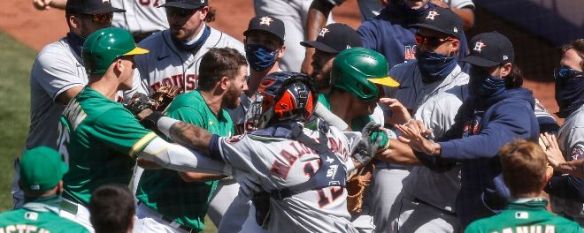
Asstros [the poster’s spelling] need to be assaulted, often and viciously,” said one such social media poster, perhaps too typically, not specifically about Kelly but about the protocol-defying near-dugout scrum into which Astros coach Alex Cintron goaded Oakland outfielder Ramon Laureano last Sunday afternoon.

“Bean balls, mound charging, spiking, spitting, fighting, punches, headlocks, punches to the face hard and often,” the poster continued. “Umpires should call every pitch against them a strike.” And then we should get really mad?

Such outrage is far more comprehensible than the same poster going forward from there to say violence has deeply therepeutic benefits. For whom? For those whose rage over the lack of Astrogate discipline against the cheating players simply will not be satisfied by one pitcher throwing beanballs?

Or, by one Athletics outfielder fuming over being hit by Astro pitches thrice in one weekend and twice that Sunday while, coincidentally, not one Astro batter saw so much as a brushback all weekend?

Social media hounds such as that demand retribution above and beyond the bounds of the game policing itself, no matter how wanting commissioner Rob Manfred proved to be when he handed Astro players from 2017-18 blanket amnesty in return for spilling about the Astro Intelligence Agency’s illicit electronic sign-stealing operation.

And, no matter how wanting fans and about seven-eighths of major league players found both that amnesty and the Astros’ subsequent unapologetic apologies as spring training opened.

Kelly himself suggested distinctions for which right reason demands acknowledgement as well. That otherwise fine 28 July saw him send a pair of fastballs upside and behind Bregman’s head and—a few batters later, before striking Correa out for the side—a pair of breaking balls making Correa dance in the batter’s box.

Bregman and Correa are two of only six 2017-18 Astros regulars remaining in those positions on this year’s edition. Kelly made a point of send the messages strictly via them when the opportunity arose.

Doing it to that pair made things obvious enough, since no pitcher customarily would think of decking a Bregman on a 3-0 count with one out. Nor would he think normally of putting runners at second and third as happened when one of Kelly’s dusters to Correa sailed past to be ruled a wild pitch officially.

Kelly probably didn’t have to be reminded that justice demands a line between the guilty held to account and those having nothing to do with the crimes in question left unscathed. If he’d elected to deck, say, Michael Brantley, who didn’t become an Astro until 2019, and was the only non-2017-18 Astro he faced in the inning, he would have crossed that line and maybe earned not one degree of the acclaim he received.

When Kelly struck Correa out, Correa and Kelly jawed a little as Kelly strode from the mound and approached the third base line returning to his dugout. Kelly then sent mock crybaby gestures including a pronounced pout to Correa. From there the dugouts emptied, health and safety protocols be damned. Not too bright on either side’s account.

But it combined with the Bregman knockdowns and Correa dustings to make Kelly a folk hero in Los Angeles, where they’d still like to send the Astros to the guillotine over the 2017 World Series the Dodgers lost to the Astros and, quite possibly, to the AIA as well.

In other places, considering Kelly’s membership on the 2017-18 Boston Red Sox (vanquished by the Astros in the ’17 division series, vanquishers of the ’18 Astros en route their own World Series triumph against the same Dodgers), Kelly’s “hypocrisy”—considering the subsequent revelation of the Red Sox Replay Room Reconnassance Ring sign-stealing—was denounced almost as furiously.

At least, it was until right reasoning people reminded themselves that neither the AIA nor the Rogue Sox operation involved the teams’ pitching staffs specifically. And, that Kelly, who became a Dodger last year, might well have gotten enough of the skinny from his mates to comprehend a significant distinction between the AIA and the Rogue Sox.

The AIA involved either altering an existing off-field camera off mandatory eight-second transmission delay or installing a furtive real-time camera to send the stolen intelligence to a clubhouse monitor for transmission to hitters. The Rogue Sox’s Four Rs involved using screens already installed in replay rooms league wide to decipher signs and signal them to baserunners who’d signal them to the hitters.

In simpler terms, the AIA went off the grid and over the barely-consecrated official line, while the Rogue Sox simply behaved like a teenage boy finding the keys to the hooch hutch unable to resist temptation until he was of legal drinking age. Especially since MLB handed them the hutch in the first place.

When Kelly’s pair of fastballs went upside Bregman’s head, there was a lot of jawing about them showing a lack of “professionalism.” Mostly from people—like Astros pitcher Lance McCullers, Jr.—who called those pitches unprofessional but couldn’t explain why illegal high-tech cheating wasn’t.

In the immediate wake of Kelly’s messaging, the word came unimpeachably that Manfred now has a hammer to drop on future such Astrosoxgate espionage: not only can those players caught taking or transmitting electronically stolen signs be suspended without pay, they lose the days of their suspensions in MLB service time, too.

The poster I cited earlier also demands the Astros’ 2017 World Series title be vacated. So has half the world, seemingly. Good luck with that. Vacate that title and you’ll have to try vacating a host of pennants (the 1940 Detroit Tigers, the 1951 New York Giants, the 1961 Cincinnati Reds) and/or World Series titles (the 2018 Red Sox, perhaps; the 1948 Cleveland Indians, possibly) past.

What the 2017-18 Astros and at least the 2018 Red Sox did was bad enough, even if you agree the Asterisks went over the line while the Rogue Sox were clever if warped enough to use what was handed to them gift wrapped.

But it would be just as wrong to compel those Astros and Red Sox people who weren’t there to pay for the crimes of those who were. Those demanding aboard social media and elsewhere that the innocent in essence must suffer with the guilty can put a sock in it.

Who hit Manfred with the smart stick?

2020-08-11 BasebrawlAstrosAs

A second drill of Ramon Laureano Sunday, followed by a vulgar insult thrown his way by Alex Cintron (who ducked away when the rumble began), triggers the brawl above . . . and gets Cintron suspended 20 but Laureano, six.

Mark well today’s date on your calendar. 11 August 2020. Until further notice, it will stand as Rob Manfred’s finest hour.

Alex Cintron, the Houston Astros hitting coach who goaded Oakland Athletics outfielder Ramon Laureano into charging the Astro dugout with an expletive Latinos consider grounds for justifiable homicide at most—suspended twenty games with no right to appeal.

Laureano, who’d been hit by Astro pitches three times last weekend and twice on Sunday, then had to put up with chirping from the Astro dugout after he pantomimed a slider grip following the second Sunday plunk—six games with a right to appeal. (And he should.)

Commissioner Nero using the brains he was born with for once—priceless.

USA Today‘s Bob Nightengale broke the news of Cintron first, Laureano immediately to follow, at about mid-day today. And while you can think that a player missing six games is a lot more critical than a coach missing twenty, especially in a pandemic-truncated season that still seems more Alfred Hitchcockian than Billy Hitchcockian, Cintron hit with the heaviest hammer sends a huge message.

Several key Astros hitters aren’t exactly running the table at the plate so far this year. Jose Altuve, Kyle Tucker, and George Springer are hitting at or below the Mendoza Line. Alex Bregman is hitting more like Alex P. Keaton. Yuli Gurriel, Carlos Correa, and Michael Brantley are hitting like themselves, more or less, but those three aren’t always club carriers.

Wags, try to resist temptation to say you can’t hit what you don’t know in advance. But don’t let Cintron off the hook. A team who needs their hitting coach to hit their reset buttons at the plate needs to lose that hitting coach about as much as Mike Trout needs to lose his batting eye.

With one moment of abject stupidity, Cintron cost the Astros badly-needed resetting. Twenty games in a 162-game season is twelve percent of a long season. Twenty games in a truncated, 60-game season is a full third of a season that’s already been cast for an episode of The Outer Limits.

It’s not that charging the Astro dugout after Cintron uncorked his insult was necessarily brilliant on Laureano’s part, and Laureano knows it. But I’ll say it again: A Latino especially who knows that the vulgar version of “maternal fornicator” is a pair of fighting words to most Latino men is saying something at least as stupid as a certain American president saying the 1918 Spanish Flu pandemic ended World War II.

Hurling that insult at a Latino gets you pounded into hamburger at minimum. At maximum, it can get you a shot in the head, or any other portion of your body at which the gun might be aimed.

And what the hell did Cintron or the Astros expect Laureano to do when he’d been hit by a second pitch Sunday and a third all weekend long? Send flowers? Blow them to steak dinners with all the trimmings?

We’re not exactly taking Commissioner Nero all the way off the hook just yet. His handling of the Astrogate scandal was a masterpiece of deferred accountability. He suspended a manager and general manager, fined an owner what amounts to tip money, and let every Astro player availing himself of the Astro Intelligence Agency’s illegal electronic sign-stealing network off the hook in return for spilling the deets.

He had to know good and bloody well that the Astros versus the A’s might have potential sub-stories, considering it was an A’s pitcher (and former Astro), Mike Fiers, who finally got fed up at the absence of press interest, no matter how many reporters he and others in the know told, and blew the whistle to The Athletic‘s Ken Rosenthal and Evan Drellich last November.

You’d have to have been either a fool or a freshly-landed exile from the Klingon home world not to think that there was even a small chance that the Astros—who were only too notoriously un-apologetic about Astrogate this past aborted spring—might feel a little less remorse than repulsed that the A’s still harboured the big snitch.

Even if the A’s rotation setting meant Fiers wasn’t going to face them on the weekend. Even if the Astros’ pitching staff is injury-plagued enough that they lean as much on rookies such as the ones who did four-fifths of the weekend plunking. (Zack Greinke hit Robbie Grossman last Friday night.) Rookies aren’t immune to persuasions from their elders that one good way to make the team’s good graces is to send little messages in manners, however wrong or warped.

And, with everyone in baseball knowing that about seven-eighths of MLB players wanted if not demanded the proper Astrogate justice Manfred wouldn’t administer, Commissioner Nero looked even more foolish suspending Los Angeles Dodgers pitcher Joe Kelly eight games for sending message pitches to Bregman and Correa in the same inning.

Nobody disputes that throwing upside Bregman’s head was dangerous stuff. But nobody with a mind disputes that Manfred’s hammer on Kelly’s head—which is still under appeal at this writing—looked even more arbitraily punitive, with or without the truncated season, compared to the blanket amnesty he granted the Astrogaters.

He did likewise with the Boston Red Sox and their Replay Room Reconnaissance Ring, of course. And, just as the Astros’ 2017 World Series title became tainted forever, so does the Red Sox’s 2018 World Series title. (Managed by Astrogate co-mastermind Alex Cora, the ’17 Astros’ bench coach/spymater.)

But those who still think the Astros get an unfair greater volume of scorn should remember there was (and remains) a significant difference between the two. One more time: The Astros went a few dozen bridges farther with their Astro Intelligence Agency, either installing or altering a real-time camera to facilitate their underground sign-stealing television network.

The Rogue Sox merely used what was already made available, at home and on the road. Nobody supplied the replay rooms with multiple video monitors for cheating, of course, but those rooms amounted to handing teenage boys the keys to the hooch hutch and telling them to resist temptation until they were of legal age.

Our better angels would like to think Manfred figured a few things out after the Kelly hoopla. Not just because he soon got a hammer to drop on any future cheaters, but because the hoopla reminded him in his heart of hearts that he shouldn’t have let the cheaters in Houston, in Boston, in the south Bronx (the Yankees were merely reprimanded for some 2017 chicanery), and perhaps elsewhere, off the hook anyway.

If our better angels are right, then for once Commissioner Nero put his fiddle down and behaved like an honest-to-God, genuine leader. For once.