Two modest stars enter Cooperstown

Fred McGriff, Scott Rolen

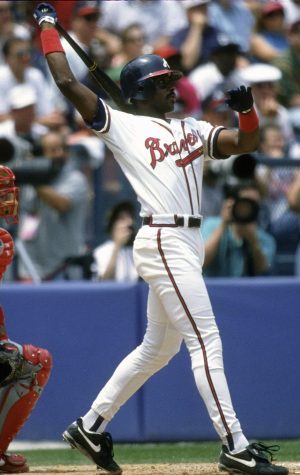
Fred McGriff and Scott Rolen proudly displayed their Hall of Fame plaques after Sunday’s induction ceremony.

When the Yankees’ (shall we say) mercurial then-owner, George Steinbrenner, faced likely suspension over his campaign to smear his Hall of Fame right fielder Dave Winfield, George F. Will pondered whether then-commissioner Fay Vincent should marshal enough consensus to force Steinbrenner to sell the team. Will even imagined vetting a jury to empanel hearing a court case over it.

“Here is a pretty judicial pickle,” Will wrote parenthetically. “Imagine trying to assemble an impartial jury of New Yorkers to hear Steinbrenner’s case. ‘Tell the court, Mr. Prospective Juror, do you have any strong opinions about the owner who masterminded the trade of Fred McGriff from the Yankees to the Blue Jays in exchange for a couple of no-names? Stop snarling, Prospective Juror’.”

Come Sunday afternoon, that same Fred McGriff stood on the Cooperstown stage accepting his Hall of Fame plaque. Elected to the Hall by the Contemporary Baseball Era Committee, the Crime Dog didn’t exactly keep the Yankees high on his gratitude list, though the trade that might have had a prospective New York juror snarling could have been called the trade that launched him to where he now stood.

“I’d like to welcome everyone here from Atlanta to San Diego, Toronto, my hometown of Tampa Bay and everywhere in between. Thank you for showing up,” said the tall first baseman who became baseball’s first and so far only man to hit 30+ home runs in a season for five different teams. (And, the first Hall of Famer whose plaque mentions OPS.)

It is awesome to be here accepting this honor. What a blessing from the man upstairs. Beautiful weather. You can’t beat it. I’m so grateful to be going into the Baseball Hall of Fame alongside a guy like Scott Rolen who played the game the right way. A true professional. I want to thank the many living legends sitting behind me. I’m humbled and honored to be standing in front of you. And now to be part of this fraternity alongside you—just some great individuals behind me.

In one way, no player ever had a later-in-life baptism of fire to equal McGriff’s. It wasn’t enough that his career tended to be buried beneath the ramped-up batting stats of both the era of actual/alleged performance-enhancing substances (McGriff was never a suspect) and new ballparks that over-embraced hitting. No. He had to play his first game for the Braves under, shall we say, fiery conditions, after his fire-sale trade from the Padres:

I was nursing an injury when the trade happened. So I drove to Atlanta, I left Tampa at noon. I didn’t expect to play. But when I got to the ballpark, there is my name in the lineup. I was sweating. But I believe the man upstairs bought me some time when a food heat lamp caught on fire.


The start of the game was delayed two hours, long enough for me to get some more treatment. And I felt a little bit better. I started the game. And I tied it up in the sixth inning with the home run. The next day, I hit two home runs. And that Braves team caught on fire. We ended up catching the Giants after being ten games out of first place at the time to trade, and we won the division.

Two years later, McGriff and those relentless Braves teams of the 1990s won their only World Series rings. The Crime Dog did splendidly for a fellow who’d been cut from his high school baseball team once upon a time.

Both McGriff and Rolen had reason to wonder if they might ever get to Cooperstown as other than paying guests. Rolen may have thought about it just a little bit less.

“At no point in my lifetime did it ever occurred to me that I’d be standing on this stage,” the third baseman with a live bat and an Electrolux way at third said early, nodding to the Baseball Writers Association of America who elected him in January. “But I’m glad it occurred to you, because this is unbelievably special.”

(Asked whether Rolen could play shortstop, his one-time Phillies manager Terry Francona replied, referring to his broad range at third, “He’s playing it!”)

A two-sport star in his native Indiana, before beginning his baseball career, Rolen remembered learing something from his father after a particularly trying basketball mini-camp. “After day one, I told Dad that I had a minor problem . . . that I need advice with. And his answer (was), ‘OK’.”

“Well, Dad. I can’t handle the ball. I can’t shoot. I’m completely out of basketball shape. And everybody in the entire gym, including the coach, is better than me.’ And his answer?”

“OK.”

“What do you mean, ‘OK?’”

“Well, what are you going to do, Scotty?”

“Well, that’s what I’m asking you, Dad.”

“Well, how the hell do I know? You say you can’t dribble. You can’t shoot. You’re out of shape. And you’re completely overmatched. You told me what you can’t do? What can you do?”

“I guess I can rebound.”

“OK.”

“I can play defense.”

“OK.”

“I can dive for loose balls. Doesn’t appear that the guys are playing too hard up here. I could outhustle, outwork and beat everybody up and down the floor.”

“OK.”

And then here came the words of wisdom: “Well, do that then.”

It turns out that, “Well, do that then,” carried me into the minor leagues and gave me a simple mindset that I would never allow myself to be unprepared or outworked. “Well, do that then” put me onto this stage today.

The man who won a World Series ring as a key element of the 2006 Cardinals finished by doing something he’d done from the moment his parents first made the trek to see him play a major league game. He tipped his cap to them. Then, it was a Phillies cap. Sunday, it was a Hall of Fame cap. The number ten third baseman of all time never forgot.

“This is baseball’s biggest honor,” McGriff said. “This is like icing on a cake. You see, my goal was simply to make it to the big leagues. And I exceeded every expectation that I could ever imagine and then some. It is a great feeling getting recognized for your hard work.”

“I’m grateful for this grand gesture,” said Rolen, one of only four third basemen ever to hit 300+ home runs, steal 100+ bases, and hit 500+ doubles. (The others: Hall of Famers George Brett and Chipper Jones, plus Hall of Famer in waiting Adrián Beltré.) “I have an overwhelming respect and intend to represent these (Hall of Famers) behind me and this legendary Hall with the integrity on which it was built.”

McGriff and Rolen have something else in common aside from forging a new friendship. McGriff got the last laugh on a capricious Yankee owner who thought he could afford to lose the Crime Dog’s budding self. Rolen got the last laugh on a Phillies regime that allowed him to be viewed unfairly as indifferent while also letting him take unfair abuse when he challenged their willingness to build and sustain winning teams.

McGriff’s Hall plaque shows him wearing a blank cap atop his smiling, mustachoed face, and it reposes next to Negro Leagues legend/longtime Cubs coach/scout/baseball’s arguable finest ambassador, Buck O’Neil. Rolen’s plaque reposes next to Red Sox/postseason legend David Ortiz, showing him in a Cardinals cap, looking as determined as he was holding third base down almost two decades, resembling if anyone music legend Neil Young.

Both Rolen and McGriff heeded when their bodies began telling them it was time to go. Thus, one particular Young lyric stands forward, when thinking of them compared to those greats who, in Thomas Boswell’s words, “torture their teams, their fans, and themselves, playing for years past their prime, for the checks and the cheers”:

It’s better to burn out/than to fade away.

Despite McGriff’s bald pate and Rolen’s thinning one, they both look as though they could still play nine innings in a tough pennant race. But they spared us and themselves the tortuous long fade away. McGriff and Rolen finally stood on the Cooperstown podium Sunday, inspiring and accepting cheers at least as edifying as those incurred by a timely hit, a long home run, a tough play at first, an impossible play at third.
Concussions killed Mauer’s career, not his Cooperstown case

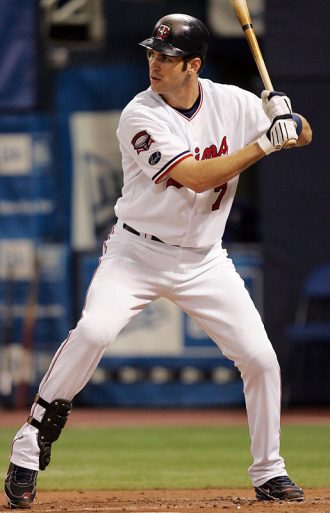
Joe Mauer

Mauer’s critics, not Mauer, should be shamed for willfully ignoring what concussions did to end his catching life and, in time, his playing career.

Scott Rolen’s election to the Hall of Fame triggered almost immediate discussions about next year’s likely Hall of Fame class. Social media being what it is, as opposed to what we wish it became, Rolen’s election also triggered an unfathomable outpouring of bile against one of three deserving Hall of Famers who make their first appearances on the writers’ ballots toward 2023’s end.

Adrián Beltré is a Hall of Fame lock. Not just because he’s a paid-in-full member of the 3,000 hit club but because he has 93.5 wins above replacement-level player (WAR) and he’s the number-two third baseman ever in terms of run prevention: Beltré’s 168 defensive runs above his league average is second all-time to Hall of Fame Brooks Robinson. (Baseball Reference rates Beltré the number four all-around third baseman.)

Chase Utley deserves a plaque in Cooperstown, too, even if his lack of black ink might be blinding. He wasn’t an overwhelming hitter, but he was a run machine once he reached base, including being worth 45 runs as a baserunner and worth another 25 runs due to his ability to avoid double plays. He’s also fourth for run prevention at second base (+141 runs, behind only (in ascending order) Hall of Famers Bid McPhee, Joe Gordon, and Bill Mazeroski.

And, then, there’s Joe Mauer. The number seven catcher all-time according to Baseball Reference. Uh-oh.

“I’ve never seen fans of a team hate an all-time great of their own the way some Twins fans do Mauer, tweeted The Cooperstown Casebook author Jay Jaffe. “They’re just so convinced he gave them a raw deal for that contract.” As in, the eight-year, $184 million contract extension he signed with the Twins in March 2010. As in, before the injury that ultimately put paid to his life as a catcher, then a ballplayer period.

It’s as though a man whose baseball profession had already led him to knee and leg issues committed some grave capital crime when, in August 2013, Mauer took a hard foul tip off his face mask. It caused a concussion that soon caused the Twins to pull him out from behind the plate and move him to first base—a position left largely vacant when they traded Justin Morneau to the Pirates a year before Mauer’s concussion.

Morneau, who suffered a concussion on a baserunning play the year Mauer signed that yummy contract extension, and who would suffer a second concussion on another diving play after he’d signed with the Rockies for 2014. One concussed first baseman eventually replaced by a concussed catcher who’d never again be the player he’d been prior to August 2013.

The guy with a reputation as a baseball gym rat who played the game with a commitment and a steadiness that caused some people to mistake him for emotionlessness spent the rest of that contract extension doing his level best to play despite things like the balance issues and light sensitivities that now made hitting a challenge and fielding a battle.

The Twins’ struggles around Mauer’s had far less to do with Mauer’s and more to do with its ownership seeming to impose a de facto spending cap the rest of Mauer’s career, including major league salaries and minor league development. But the native son, the franchise face, was too simple a target to resist, as the injured often are.

As if Mauer hadn’t battled enough at the plate following 2013, in May 2018 he suffered a second one after he dove chasing a foul ball and injured his neck. Concussion symptoms kicked in a few days later. They didn’t just impact him on the field, either. His wife, Maddie, told The Athletic they were no treat for him at home with two young twin daughters to raise, either. (The story was published as she was about to give birth to their third child, a son.)

“It’s not quiet at our house and they don’t understand why dad wants it to be quiet or be in a different room or have the lights off,” Mrs. Mauer said.

Our girls had been born about a month prior (to the 2013 concussion). Both of these times it does put things into perspective that you’re dealing with these symptoms at work, but you’re dealing with them at home just as much. I think that’s something he may not have talked about as much publicly, but it was a difficult challenge to be going through concussion-like symptoms with children.

“The neck [injury] is an easy one to take care of,” Twins trainer Tony Leo told The Athletic for the same story. “We can fix that. But the concussion had all these ebbs and flows going up and down.”

I think people don’t appreciate how much it impacts you on a day-to-day basis with just simple things like getting out of bed. Am I going to feel OK? Am I going to have a headache? Am I going to have ringing in my ears? Am I going to feel nauseous? Am I going to be able to see all right? When I turn on the lamp next to my bed, is that light going to cause me to start having a headache? Am I going to be too agitated and upset at my kids when it’s not their fault, but just because of all the sensations going on.

Everything starts compounding and adding to the anxiety you’re going through when you’re trying to minimize all these distractions and trying to allow the brain to heal. Little things trigger big symptoms, which cause you to doubt whether you’re healing or not. It’s really hard to remove yourself from everything let alone when you’re in the clubhouse with music, all the lights we have, TVs, people. You have the same thing at home with the day-to-day living that . . . We get focused on the baseball. I get focused on getting them back on the field for the game. But how do you start minimizing everything else in life that’s bothering you, especially with kids who just want to be around dad?

Maybe instead of soaking Mauer in a phlegm-and-bile bath because of what his head refused to let his body do at the level it once did during five of the eight years of that contract extension, the idiot brigades might consider what it took for Mauer to continue playing at all, at any level. After they consider that, perhaps miraculously, it actually didn’t compromise his Hall of Fame case.

As a catcher, Mauer—unusually tall for a backstop at 6’5″—was easy to overrate while he played. I made that mistake once myself. I’m not making that mistake again. I’m going to show you where Mauer will sit among Hall of Fame catchers who played in the post-World War II/post-integration/night-ball era, according to my Real Batting Average (RBA) metric. (Total bases + walks + intentional walks + sacrifice flies + hit by pitches, divided by total plate appearances.)

Catchers PA TB BB IBB SF HBP RBA
Mike Piazza 7745 3768 759 146 45 30 .613
Roy Campanella 4815 2101 533 113 50* 30 .587
Joe Mauer (as C) 3943 1640 478 79 35 13 .569
Johnny Bench 8674 3644 891 135 90 19 .551
Yogi Berra 8359 3643 704 91 95* 52 .549
Carlton Fisk 9853 3999 849 105 79 143 .525
Ted Simmons 9685 3793 855 188 100 39 .514
Gary Carter 9019 3497 848 106 99 68 .512
Ivan Rodriguez 10270 4451 513 67 76 58 .503
HOF C AVG .547

You’re not seeing things. Among that group of Hall of Fame catchers, Mauer is number three—eighteen points ahead of Johnny Bench, and twenty points ahead of Yogi Berra, the two men considered the greatest all-around catchers who ever played the game. (You might care to know, too, that as a catcher Mauer had 62 more walks than strikeouts at the plate.) He was also a highly-regarded pitch framer behind the plate who was worth 65 defensive runs above average for his entire life there.

Mauer retired in 2018 because he decided at last that family life without further health compromise was more important than his itch to compete. (The Twins retired his uniform number 7 the following season.) “Experiencing a concussion looks different for everyone,” he said in his formal retirement letter to Twins fans, “but my personal experience forced me to look beyond baseball at what is best for me as a husband and father.”

Instead of shaming Mauer because they don’t get what two concussions did to his Twins life under that contract extension, the idiot brigades should marvel that those two serious, life-and-career-altering injuries didn’t compromise his case as a Hall of Fame catcher in waiting, and even admire him for having the will to try playing on in spite of them. And, for deciding that being a husband and father was more important than playing the game he loved.

But that might ask too many people to surrender their ongoing and erroneous belief that injuries incurred in real competition equal weakness at best, thievery at worst, and character flaws somewhere in there, too. “I am done with a lot of things,” Jaffe also tweeted, “but especially done arguing about Mauer with Twins fans who don’t understand the impact of the concussions on his career.” As of this sentence, so am I.

Rolen rolls into Cooperstown at last

Scott Rolen

A big enough bat at the plate . . .

When Scott Rolen was in his absolute prime, Sports Illustrated said of him, among other things, that he “could have played shortstop with more range than Cal Ripken.” When he was with the Cardinals following his somewhat unfairly contentious departure from Philadelphia, the St. Louis Post-Dispatch asked where Rolen ranked among his era’s third basemen, then answered: the best at the moment.

Rolen’s overdue election to the Hall of Fame Tuesday still inspired carping enough among the philistines who think it was just another case of defining the Hall down. Maybe he wasn’t charismatic. He certainly wasn’t the cheerleading or the self-promoting type. But he was just as SI‘s Tom Verducci described him in 2004, “a no-nonsense star who does it all.”

That’s practically what they said about legendary Tigers second baseman and Hall of Famer Charlie Gehringer, too. He was so no-nonsense he was nicknamed the Mechanical Man. Rolen was many things at the plate and in the field. Merely mechanical wasn’t among them.

“Rolen played with an all-out intensity,” wrote The Cooperstown Casebook author Jay Jaffe, “sacrificing his body in the name of stopping balls from getting through the left side of the infield . . . and he more than held his own with the bat as well, routinely accompanying his 25–30 homers a year with strong on-base percentages.”

This son of Indiana schoolteachers did little more than let his preparation and his play do most of his talking. It’s worth repeating further that he didn’t blow up the nearest inanimate objects when a swing missed, a play faltered, or a game was lost. He played to win, but he lived what most confer lip service upon: let’s get ’em tomorrow. I say it again: if Rolen was a fighter pilot, he’d have earned a reputation as the classic maintain-an-even-strain type. The Right Stuff.

He has the numbers to support it, too, at the plate and in the field, where he knew what he was doing with a bat in his hand and didn’t sacrifice his body at third base or on the bases for naught. Once, he dropped into a slide into second base that wasn’t aggressive or out of line but so forceful that he flipped Royals second baseman Tony Graffanino and knocked shortstop Gerónimo Berroa down. Observed Verducci, “[It was] like a bowling ball picking up a 2-5 combination for the spare.”

“Berroa had this look on his face,” said Cardinals pitcher Matt Morris to Verducci, “like, I didn’t even hear the train whistle!”

First, let’s review Rolen one more time according to my Real Batting Average (RBA) metric: total bases + walks + intentional walks + sacrifice flies + hit by pitches, divided by total plate appearances. This table shows where he stands among all Hall of Fame third basemen who played in the post-World War II/post-integration/night-ball era:

HOF 3B PA TB BB IBB SF HBP RBA
Mike Schmidt 10062 4404 1507 201 108 79 .626
Chipper Jones 10614 4755 1512 177 97 18 .618
Eddie Mathews 10100 4349 1444 142 58 26 .596
Scott Rolen 8518 3628 899 57 93 127 .564
George Brett 11625 5044 1096 229 120 33 .561
Ron Santo 9397 3779 1108 94 94 38 .544
Wade Boggs 10740 4064 1412 180 96 23 .538
Paul Molitor 12167 4854 1094 100 109 47 .510
Brooks Robinson 11782 4270 860 120 114 53 .458
HOF AVG .557

You see it right. RBA has Rolen as the number-four offensive third baseman of the group and seven points ahead of the average RBA for such Hall third basemen. You can do an awful lot worse than to say you weren’t quite as great a batter as Mike Schmidt, Chipper Jones, and Eddie Mathews. But you can’t exactly carp when you shook out slightly better at the plate than George Brett, Ron Santo, Wade Boggs, Paul Molitor, and Brooks Robinson.

Scott Rolen

. . . and an Electrolux at third base.

Now, let’s put Rolen at third base. Only one of those Hall of Famers has more defensive runs above his league average than Rolen does (+140) above his—Robinson (+293). And, only two of them join him among the top 24—Schmidt (+129) and Boggs (+95). The eye test told you that Rolen was willing to throw himself under a train to make a play at third. It also told you what the meds confirmed in due course, that injuries were going to grind him into a harsh decline phase, as happened after his last solid St. Louis season.

“[He’s] the perfect baseball player,” then-Brewers manager Ned Yost said of him not long after he reached the Cardinals in the first place. “It’s his tenacity, his preparation, the way he plays. He tries to do everything fundamentally sound. And he puts the team first—there’s no fanfare with him.”

Maybe the Phillies should have had Yost to lean upon instead of Larry Bowa (manager) and Dallas Green (advisor) during Rolen’s first six-and-a-half major league seasons. Green especially dismissed him in 2001 as “satisfied with being a so-so player. He’s not a great player. In his mind, he probably thinks he’s doing OK, but the fans in Philadelphia know otherwise. I think he can be greater, but his personality won’t let him.”

That was at a point when Rolen struggled at the plate though he was making plenty of plays at third base. Rolen finished that season with a splendid enough .876 OPS and the second of his eight Gold Gloves. His personality won’t let him. Again, the misinterpretation of Rolen’s even strain as indifference.

Call it a classic case of not knowing what you had until he and you were both gone, but Bowa offered a far different assessment upon Rolen’s Cooperstown election. “To be honest with you,” Bowa told MLB-TV, “I thought he should have gotten in a few years ago. I was very happy for him.”

This guy is the ultimate professional, played the game the right way. As a manager, as a coach, you looked at guys like that, very few mental mistakes, always on top of his game. Played the game as hard as you could play for nine innings. There was really nothing Scott couldn’t do on the baseball field. He was a hitting machine, he drove in runs, hit lots of doubles, unbelievable third baseman. He had a tremendous pair of hands, a great arm. If he didn’t play a game, it was because he had an injury or something like that. This guy posted every day. His work ethic, off the charts. This guy was a tremendous baseball player.

That’s the manager who ripped Rolen a few new ones and demanded then-Phillies GM Ed Wade trade him, after Rolen called out the Phillies’ penny-pinching anticipating the arrival of Citizens Bank Park. “Fans deserve a better commitment than this ownership is giving them,” Rolen told then-ESPN writer Jayson Stark. “I’m tired of empty promises. I’m tired of waiting for a new stadium, for the sun to shine.”

In St. Louis, Rolen found a home and three postseason trips including a World Series ring, yet he ran afoul of manager Tony La Russa, who soured on him for—the horror!—injuries he incurred during honest competition on the field. Then-GM John Mozeliak eventually traded him to the Blue Jays, a deal Mozeliak came to regret by his own admission.

When former Cardinals GM Walt Jocketty landed in Cincinnati and discovered Rolen wanted to play closer to home, he didn’t hesitate to wrest him from the Jays onto the Reds. He helped those Reds to a couple of postseasons while he was at it—even after a brain-scrambling concussion and lower back issues.

If you should happen to be traveling through Smithville, Indiana, you may come upon a facility known as Camp Emma Lou. It’s a retreat built by the Enis Furley Foundation, created by Rolen and his wife Niki in 1999, aimed at children and their families struggling with illness, hardship, and other issues and giving them expenses-paid weekend retreats. The foundation and the camp are named for two of Rolen’s dogs.

That’s also the current Indiana University director of baseball player development, who got the call from the Hall and granted a request from his son immediately following a call to his parents with the news. “[I]t’s about thirty degrees here, supposed to snow twelve inches,” he told a reporter, “but there we were, about fifteen minutes after the call, in the driveway having a catch. I’ll remember that forever.”

It’s not every son who gets to have a catch with a freshly-minted Hall of Fame father.

The Crime Dog gets the Cooperstown bite

Fred McGriff

Strange circumstances or no, Fred McGriff is now a Hall of Famer.

I have absolutely no complaint about Fred McGriff’s election to the Hall of Fame. I’d been on the fence about him for a long enough time, and said so in other places, but I knew one thing above all: the Crime Dog had a borderline Hall case, isn’t the worst first baseman or the worst player overall to get a Cooperstown plaque, and would be an honourable selection in his own right if he made it.

He made it Sunday, courtesy of the Contemporary Baseball Era Committee.

If you use my Real Batting Average metric (total bases + walks + intentional walks + sacrifice flies + hit by pitches, divided by total plate appearances), McGriff’s .594 falls smack dab in the middle of the pack of Hall of Fame first basemen who played in the post-World War II/post-integration/night-ball era. It also gives him a 28 point edge over the last first baseman elected to the hall by an Era Committee:

First Base PA TB BB IBB SF HBP RBA
Fred McGriff 10174 4458 1305 171 71 39 .594
Gil Hodges 8104 3422 943 109 90* 25 .566

Actually, I knew one other thing above all about McGriff. If he wasn’t part of the absolute worst trade in Yankee history, he was at least part of the worst trade they made in the 1980s. They traded McGriff (then a minor leaguer) plus infielder Dave Collins, relief pitcher Mike Morgan, and cash, to the Blue Jays, for infielder Tom Dodd and relief pitcher Dale Murray. The best days of a modest career were behind Collins; Morgan was on the way to a respectable 22-season career as a hard-luck starter turned valued reliever.

For McGriff, it was a case of hiding in plain sight. Steinbrenner made Tampa his home; McGriff hailed from Tampa. Yet Steinbrenner was absolutely unaware McGriff even existed. The Boss and the rest of the American League would learn soon enough. Once he became a Toronto regular, the Crime Dog bit the league for an average 35 homers per 162 games in Blue Jays silks—including the league’s home run championship in 1989.

Fair play requires us to acknowledge that, even if Steinbrenner was aware of McGriff, the Crime Dog-to-be (fabled nicknaming broadcaster Chris Berman hung that on him in due course) was blocked at first base by some guy named Mattingly. And it took McGriff a few more years to be fully major league ready, which would have been fine except that patience was never a Steinbrenner virtue.

Like his Hall of Famer contemporary Mike Schmidt, McGriff didn’t just hit home runs, he hit conversation pieces. He didn’t exactly look the part; he was movie-star handsome and not  musclebound, though his Blue Jays teammate Lloyd Moseby once said, “I wish I could get Freddie to lift weights. The only things he lifts are candy bars.” But he didn’t look like a man who needed multiple Milky Way fixes, either.

McGriff’s problem was that he became one of the game’s premier power hitters in an era when a lot of others actually or allegedly used actual or alleged performance-enhancing substances. (Burning question still: if Barry Bonds, Mark McGwire, and Sammy Sosa—plus pitching great Roger Clemens—must remain persona non grata in Cooperstown, how do you justify electing their chief enabler, then-commissioner Bud Selig?)

If he’d played with the same skill set and statistics in a career beginning a decade sooner than it did, he’d have been a Hall slam dunk—regardless of not quite reaching the 500 home run plateau. In the age of the Bondses, McGwires, and Sosas, the Crime Dog didn’t look that ferocious. But even without that age’s taint, he didn’t look like the guy who did what he did, a guy who could hit a wet T-shirt and send it into the seats.

He merely had the second-most elegant home run swing I ever saw. (Darryl Strawberry’s was numero uno.) He really did look as I saw him described once, a man who looked as though conducting a symphony orchestra (as he was about to ring down the final crashes of The 1812 Overture) after he swung and a smooth neon dance figure during his swing.

The looks weren’t everything, of course. Had it not been for the 1994 owners-provoked players’ strike, McGriff probably would have finished his career with somewhere around 503 home runs. (He averaged 32 per 162 games lifetime and had 37 when the ’94 strike launched. It’s not unrealistic to think he might have had at least ten more in him.)

McGriff’s second problem was that, if he was an executioner at the plate, he was a sieve at first base. He finished his career -32 defensive runs below his league average. Like Gary Sheffield in the outfield, McGriff at first base torpedoed his own value with his defense. His 52.6 wins above replacement-level player (WAR) should have been better but his -17.2 defensive WAR put paid to that.

He also had a third problem, enunciated best by Cooperstown Cred writer Chris Bodig: “McGriff had an aw-shucks level of humility throughout his playing days. Because he played for six different teams, the Crime Dog never had a passionate following of one city’s fan base, which might have contributed to his lackluster results in the Hall of Fame voting.”

I suspect these factors played larger into McGriff finally being elected to the Hall than a lot of his partisans (he has more than you might think) might care to admit:

1) The election of Harold Baines by the 2019 Today’s Game Committee. Baines had no Hall case other than his career length. (He didn’t even have a single signature moment to hoist him above his contemporaries.) But he did have . . .

2) A Today’s Game Committee packed with men who played with, managed, or oversaw Baines on a few teams: Jerry Reinsdorf, who became the White Sox’s owner when Baines was first settling in with the team and re-acquired Baines twice more to come; Tony La Russa, the Hall of Fame manager who managed Baines with the White Sox and the Athletics; and, Pat Gillick, who was the Orioles’ general manager when Baines played there.

3) McGriff had the same benefit on this year’s Contemporary Baseball Era Committee: three Hall of Fame Braves teammates (Tom Glavine, Chipper Jones, Greg Maddux, though Jones took ill and couldn’t be part of the vote); a Blue Jays executive (Paul Beeston) during McGriff’s years there; a brief Blue Jays teammate turned executive (Ken Williams).

That’s dangerously close to the kind of cronyism that sent the ancient Veterans Committee into disrepute over the years Hall of Famers Frankie Frisch and Bill Terry oversaw the committee, hell bent on getting as many of their old cronies from the Giants and the Cardinals into Cooperstown as they could get away with, regardless of their actual Hall credentials.

“Baines’ election is simply not a great day for the institution, or for anyone bringing an analytical, merit-based approach to it while reckoning with its objective standards,” wrote The Cooperstown Casebook author Jay Jaffe upon Baines’s election. “The precedent it sets is nearly unmanageable, if future committees are to take seriously candidates of his level. Why battle over Dale Murphy or Fred McGriff if Harold Baines is the standard?”

McGriff had fifty times the Hall case Baines lacked. Murphy’s Hall case was torpedoed by knee injuries that shifted what should have been a natural decline phase into sad overdrive. Don Mattingly’s was torpedoed by his back. If all you needed was character, those two would have been Hall locks otherwise, long before they arrived and departed on this Contemporary Baseball Era Committee ballot.

But another entrant on that ballot, Curt Schilling, torpedoed himself. He got seven out of the needed twelve committee votes despite being a no-questions-asked Hall of Fame-level  pitcher. His ability to miss bats (he has the highest strikeout-to-walk ratio in the game’s history), his dominance when the heat was truly on, and his postseason resume live up to his well-known thirst for wanting the ball in the highest heat. He was the very essence of a big-game pitcher, and he has three World Series rings to show for it.

But a guy who applauded lynching journalists and became too much of a disinformation retriever wasn’t exactly going to keep friends among the voting writers. A guy who fumed publicly when several such voters sought to rescind their votes for him was pretty much asking, as he did in a letter to the Hall, for just what he didn’t get from the Contemporary Committee, enough of whom couldn’t suffer that kind of fool gladly:

I will not participate in the final year of voting. I am requesting to be removed from the ballot. I’ll defer to the veterans committee and men whose opinions actually matter and who are in a position to actually judge a player.

Whoops.

But if the Committee had to elect only one man, it doesn’t sully the Hall further by electing McGriff. He was a genuinely great hitter. If I was on the fence about him on the borderline as long as I was, it won’t deny me pleasure in seeing him at the Cooperstown podium in due course. Maybe he’ll even wolf a candy bar down before he speaks.

Gaylord Perry, RIP: Grease was the word

Gaylord Perry

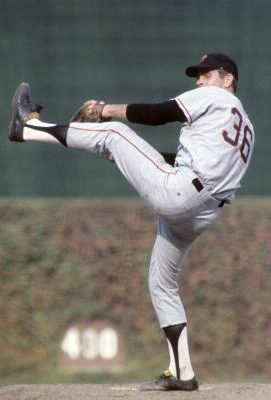
What was Gaylord Perry (shown here in his earlier seasons with the Giants) using to live rent-free in the minds of hitters, managers, umpires? Really?

A bit over forty years ago, I was in Air Force basic training on San Antonio’s Lackland Air Force Base. Hall of Fame pitcher Gaylord Perry helped me survive that hot June and July. I couldn’t watch baseball games but I could use something for which he was, shall we say, somewhat notorious.

The heat stress factors at that time of year inspired airmen basic in drill formations to develop their own relief when granted brief rest on the drill pads. Since those rests weren’t much more than two minutes, it seemed, I would brush the bill of my hat with each hand’s fingertips, then the sides of my shaven hair, then down the front of my fatigue uniform shirt.

It took my mind off both the metastasising humid heat and my fears that I was just about the worst airman basic ever to pass through the Lackland arterials. It was also noticed by my training flight colleagues asking me where I found such a nutty looking routine. I had nothing to hide. It was Perry’s routine between pitches whenever he wanted a batter to think he was loading, lubing, oiling, waxing, gelling up for the next pitch.

My Air Force career turned out to be eighteen percent as long as Perry’s major league pitching career. I was awarded the Air Force Achievement Medal for work during an exercise by the ancient Strategic Air Command. Perry won a pair of Cy Young Awards—the second at age forty. I went from the Air Force to regional journalism. Perry went to the Hall of Fame.

Longtime manager Gene Mauch notwithstanding, there isn’t a tube of K-Y jelly next to Perry’s plaque. What’s inscribed, instead, is this: “Playing mind games with hitters through array of rituals on mound was part of his arsenal.”

Perry died this morning of natural causes at 84. Maybe the only thing he loved about baseball more than pitching itself was living rent free in the heads of opposing hitters, managers, umpires, and anyone else looking to dope him on the mound and maybe rope him off it.

What the hell was it that Perry got when he went through that once-famous routine—brushing the bill of his hat with his fingertips, then his hair (what remained of it), his jersey, tapping his belt, assorted other little brushes—intended to renew his in-those-heads leases?

Was it K-Y? Was it pine tar? Vaseline? Fishing line wax? Mustache wax? 3-in-1 oil? Pennzoil? Lard? Don’t laugh: according to Thomas Boswell, outfielder-turned-Yankee broadcaster Bobby Murcer once sent Perry a gallon of lard as a gift. Maybe someone going through Perry’s personal effects and family heirlooms will discover the Gunk & Wagnall’s that sent him to Cooperstown, a pitcher who threw back to the era when anything went on the mound as well as in the batter’s box or on the bases.

Perry was an ordinary pitcher with the Giants until they acquired pitcher Bob Shaw from the latter’s fourth team, the Braves. Once a solid World Series pitcher (for the 1959 White Sox), Shaw would leave another, ahem, mark upon Perry during their first spring training together as Giants. Perry admired the way Shaw’s pitches slithered up to the plate. Admired and acquired.

Shaw discovered he had a devoted student and, according to Perry himself, taught him how to lube, grip, and deliver the newly greased sphere, not to mention how to hide the subterfuge from such prying eyes as umpires and even opposing executives. But he waited until 31 May 1964 to try a few of his new toys, in one of the most fabled games of all, the 23-inning marathon in game two of a doubleheader against the Mets in New York.

Perry worked ten shutout innings in that game—in relief. He got credit for the win thanks to an RBI double (Del Crandall, who joined the Giants in the Shaw trade) and a followup RBI single (Jesus Alou, whose older brother Felipé went to the Braves in the deal)–in the top of the 23rd. In due course Perry would write, in his memoir Me and the Spitter, that on that unique day he became an outlaw “in the strictest sense of the word—a man who lives outside the law, in this case the law of baseball.”

The spitball and other loaded and doctored pitches were outlawed in 1920. Incumbent pitchers who lived by them were allowed to continue throwing them; pitchers joining the Show afterward were not. Officially. Unofficially, of course, there were those who continued to discover new and more creative ways to turn baseballs into carpentry experiments.

Few of those post-1920 scofflaws were as unapologetic as the husky righthander from North Carolina who came from solid farming stock and plowed his own baseball yield. The younger brother of a successful enough major league pitcher named Jim, Perry wouldn’t settle for mere success, even if he did become the first to win a Cy Young Award in each league including one on the threshold of his fortieth birthday.

He wasn’t strictly a spitballer. He was actually known for throwing a fine forkball, though my saying so might inspire a few snickers and a few temperatures running up the scales. After he struck thirteen Angels out in a 1982 game, en route his 300th credited pitching win, said Angels weren’t necessarily amused.

“I only saw two pitches all night that were legal,” said outfielder Fred Lynn, once a Red Sox Rookie of the Year and Most Valuable Player in the same season but compromised since by injuries. “I have it on tape. He calls that thing a forkball. There ain’t a forkball alive that does what that pitch does.”

Lynn’s teammate Don Baylor didn’t think it was that terrible a deal. “I don’t take one thing away from him for winning three hundred with the spitter,” the future major league manager said. “There are loopholes in the rules and you get away with what you can get away with.”

Spoken about a man whose little daughter was interviewed with the family on television while Perry pitched a game in 1971. Asked whether Daddy was throwing a naughty pitch, little Allison Perry piped up, without skipping a beat, and insisted, “It’s a hard slider.”

Whether or not you think Perry’s brand of chicanery was engaging or enraging, beyond that maybe the worst thing you could have thought of him was that he had a reputation as a clubhouse lawyer and a clubhouse scold. He’d grown up tough on the farm and by his own admission suffered few fools gladly, especially after defensive miscues that might cost him a game.

“I’m hard on my teammates,” he admitted to Boswell. “I need a lot out of them to win and I drive ’em.” Some said he drove them crazy. Other might have thought he drove them toward fleeting but profound thoughts of murder.

Until he began approaching that 300th win and considered a little image refinement might be a fine thing, Perry was traded five times, released outright once, had a resume of seven teams plus more than a few nasty feelings left behind, including butting heads with groundbreaking Indians manager (and fellow Hall of Famer) Frank Robinson over the latter’s spring training conditioning rules.

Gaylord Perry

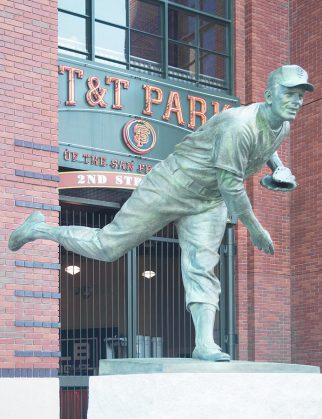
Perry’s statue outside the Giants’ home ballpark, known now as Oracle Park. There’s no tube of K-Y there, either.

Robinson insisted on foul line-to-foul line sprints. Perry had spent his career using the foul line-to-dead-center sprint. He fumed, “I’m not training for a marathon race, and I’m not about to let some superstar who never pitched a game in his life tell me how to get ready to pitch.” For his part, Robinson blamed Perry as a primary instigator that led to his firing. Ouch.

By the time Perry joined the Mariners in 1982, he learned how to behave just enough to survive. He’d also been a career-long game student who went to considerable lengths to enhance his pitching mind. He tried new pitches off the mound for about two years’ worth before using them in games. Experience plus attentiveness taught him just as it had growing up on and then working the offseasons on the farm.

“I threw my first screwball to [Hall of Famer] Willie Stargell,” Perry told Boswell. “He hit it over the center field fence. I never threw another one. I learned that you always try out a new pitch to a little guy.” That’s one way to pitch 22 seasons and send yourself to Cooperstown, whether or not you’ve greased your way there.

Seeing Perry on the Hall of Fame induction stages in the years following his own induction, I was struck often by the once-familiar face expressing both pleasure and winking mischief shaded by a trace of sorrow. Perry’s post-baseball life wasn’t always smooth. His beloved peanut farm went bankrupt three years after he retired from pitching. The following year, his wife was killed in a road accident.

He rebounded well enough. He worked as a representative for a snack company and then as the creator of a baseball program at a South Carolina college, remarried to a woman on that college’s board of trustees, and kept close to his children. (Tragically, his only son died of leukemia in 2005.) In time, the memorabilia boom provided Perry with a very comfortable living, perhaps above and beyond his best earning years as a pitcher.

To the end, wherever he went, he’d be asked what he applied, where he hid it, and how often he threw it. To the end, Perry’s answers came from the usual coy non-denying denial. Maybe he did, maybe he didn’t. Maybe he’d mastered the dark art of doctoring, maybe what he really did was commit psychological warfare. (It took until he was pushing 44 before he was tossed from any game over a suspect pitch.)

“Just planting the idea in the hitter’s mind is almost as good as having an illegal pitch,” said longtime pitching coach Ray Miller, himself a confessed scofflaw after his minor league pitching career ended. “I was misquoted . . . as saying that [Royals pitcher] Dennis Leonard had a good spitter. He came up to me this spring to chew me out and I said, ‘Dennis, you should thank me. Nobody can do a pitcher a bigger favour than saying they’ve got a hell of a spitter’.”

That was a favour off which Perry made his living for over two decades on the mound and, in time, a decade or two just being himself on the autograph circuit. I’m reasonably sure that he didn’t lay a tube of K-Y in front of him at any signing table.

“When the Perry plaque is put up in Cooperstown,” Boswell concluded in that 1982 observation, “it should not, as [longtime manager Gene] Mauch needles, have a tube of grease next to it, nor should Perry’s record have a spitball asterisk beside it.”

However, it might be a good idea to place Perry in a wing of the Hall near those nineteenth-century old-timers who won 300, like Kid Nichols, Pud Galvin, Tim Keefe, John Clarkson, Mickey Welch, Eddie Plank and Ol’ Hoss Radbourne.

Many of them came off the farm, doctored the ball as they wished, glared at any manager who dared to take them out of a game, chewed out their teammates and knocked down hitters who got too comfortable at the plate. The game was hard then, short on manners and long on sweat. And so were they.

Gaylord Perry, who has always looked like he should be pitching in dungarees, not double-knits, would grace their company.

Imagine Elysian Fields confabs of those gentlemen plus such other actual or suspected greasers as Bo Belinsky, Jim Brosnan, Lew Burdette (Belinsky swore Burdette was his teacher), Dean Chance, Tony Cloninger, Don Drysdale (“I watched him pull at the belt so much I was sure it wasn’t just habit,” Perry once said of him), Whitey (Lord of the Ring Ball) Ford, George Hildebrand, Carl Mays, Preacher (Beech-Nut) Roe, Schoolboy Rowe, and Bullet Bob Turley.

It might be worth all the sacrificial lambs on the farms to be invited to listen and learn at even one such Salivation Army briefing.