Marcus Stroman and other trade deadline thoughts

2019-07-30 MarcusStroman

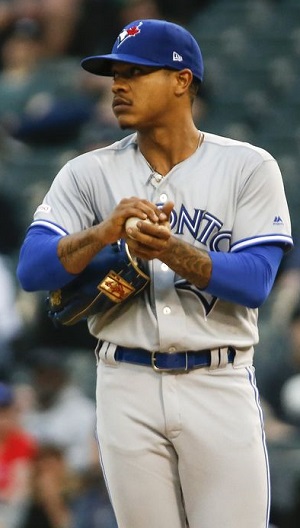
Marcus Stroman to the Mets—method to madness or madness to method?

As regards the Mets dealing a pair of mixed-reviews pitching prospects to the Blue Jays for their staff ace Marcus Stroman, and the coming trade deadline in general a few observations. Beginning with the one that tells me it seems at least three-quarters of baseball never saw this Stroman deal coming.

Anyone who thought Stroman’s new address would be New York by this year’s new single trade deadline figured it would involve the Yankees, leaders in the American League East, and not the Mets, strugglers to stay within reasonable sight of even the second National League wild card.

Or, if Stroman was going to move on from Toronto, he’d be more likely to land with one or another viable 2019 competitor—say, the Braves, where I seem to recall some observers thought he’d make a better mutual fit if the Yankees really were convinced Stroman was good enough to pitch but not necessarily fit.

But Stroman, who makes his living largely by way of his ability to lure ground balls, is now a Met. So where do we and they go from here?

1. Former major league general manager Jim Bowden, who now writes for The Athletic, says the Mets have no intention of landing Stroman just to flip him for a better package by the close of trade business Wednesday. And the two pitching prospects going to the Jays—Anthony Kay and Simeon Woods-Richardson—are considered solid but not elite prospects, but the Jays believed they weren’t going to get better than them for Stroman when all was said and done.

2. The Mets aren’t a team of elite defenders especially around their infield this year, and yet Steven Matz—returning to the rotation after a brief spell in the bullpen to re-horse—pitched a complete-game 3-0 shutout Saturday night in which his calling cards were a deft blend of breaking and off speed stuff and putting his fielders to work, which for a change they did rather admirably behind him.

3. Matz’s performance may well have had a firm impact on the Mets’ pitching thought. May. They’ve tried since 2013 to cultivate an arsenal of power arms in the rotation and seen, when all is said and done, only Jacob deGrom live up to any expectations. They watched Matt Harvey’s injuries collapse him from a power pitcher to one in search of a new cause and, now, a new team. They’ve seen Noah Syndergaard and Zack Wheeler bring the power without delivering the consistent results.

If the Mets had eyes for Stroman before Matz took the mound Saturday night, Matz’s performance had to have told them it wouldn’t be a terrible idea to add another arm to the rotation that belonged to a young man who uses more than his arm to survive on the mound. Stroman isn’t a strikeout machine; he has the second highest ground ball rate among all Show starting pitchers.

4. Maybe acquiring Stroman begins to get the Mets re-thinking their incumbent defense, too, especially marrying him to Matz in their rotation. Rookie of the Year candidate Pete Alonso forced Dominic Smith off first base, but Smith in the outfield looks almost exactly like the un-natural he is out there even though he hits with authority. Rookie general manager Brodie Van Wagenen’s willingness to take aging Robinson Cano if he wanted closer Edwin Diaz from the Mariners last winter forced Jeff McNeil, their obvious second baseman of the future, likewise into an outfield where he’s about as comfortable as an elephant in front of a mouse much of the time.

5. Diaz has been a mess not entirely of his own making this season, mishandled, sometimes mis-deployed, and while the raw talent is still there the Mets are now rumoured to be shopping him. Cano has four years left on the contract the Mets took on from the Mariners, making him almost an immovable force. Whether the Mets’ contradictory ownership might be willing to take a bath on the deal in order to start moving defensive parts back where they belong is anyone’s guess.

6. With Stroman off the market eyes turned not just upon Syndergaard but the rest of this trade deadline’s pitching market.

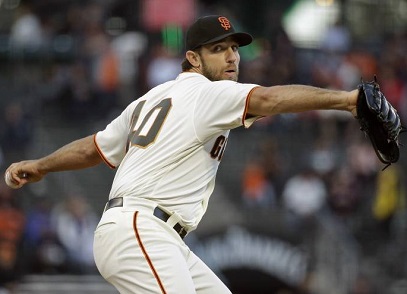
The Giants’ unexpected resurgence means Madison Bumgarner isn’t likely to go anywhere the rest of the season, compared to a month ago when the observers and speculators pondered where, not if he’d move on. The Yankees need whatever starting pitching help they can get but the market now seems more constricted—and as much as they’re wary of dealing with the Mets, Syndergaard now might look like an attractive Yankee target. Might.

And the Nationals, like the Giants but at a higher level, have had an unexpected resurgence of late after they were all but written off as dying as late as early June. They ran into a buzzsaw in Los Angeles this past weekend, needing Stephen Strasburg to pitch the masterwork he did in seven Sunday innings to escape with even a single win, but now Max Scherzer—whom all the Smart Guys said had to go on the trade deadline block once upon a time, in large part to bring them badly needed bullpen relief—may find his barking back barking well enough into August.

At first glance, then, it would seem the Nats have a big problem as they prepare to square off against the National League East-leading Braves Monday night. Except that the Braves, who ran roughshod over the league before the All-Star break and still lead the Nats by five and a half games, have suddenly regressed to being only human. Not only have they lost seven of their last eleven, they’ve lost two critical elements—shortstop Dansby Swanson, resurgent veteran right fielder Nick Markakis—to the injured list. The Nats won’t have Strasburg or Scherzer to throw at the Braves this week but the Nats might still gain key ground, anyway.

7. The bullpen dominos began falling over this past weekend, too. Veteran Sergio Romo, once a key to a couple of Giants World Series winners, just went from Miami to Minnesota where the Twins, this year’s American League surprise, just bumped their bullpen up several notches by bringing him aboard. Jake Diekman went from Kansas City to Oakland, a sign the Athletics are gearing up for another wild card run. There are contenders aplenty who need help in the pen and few more than the Nats.

8. If the Jays are rebuilding in earnest, bullpen-longing eyes may be cast upon the surprising Ken Giles. After his 2017 World Series mishap (which wasn’t entirely his sole responsibility) and subsequent personal and mound meltdowns, Giles has rehorsed completely in Toronto. As in, a career year: a 1.54 ERA and a 1.60 fielding-independent pitching rate. Not to mention a 5+ strikeout-to-walk rate and a 14.9 strikeout-per-nine rate.

Yes, the Nats have eyes upon Giles and his Jays pen mate Daniel Hudson. But so may the Red Sox and any other contender who needs a bump among the bulls. Even the Twins, despite landing Romo, might still make a play for Giles at least or, if Giles eludes them, Norman, whose 2.87 ERA and June-July of only four earned runs in 21 innings’ work yanked his trade value up accordingly.

Bowden rates the Stroman deal a B+ for the Mets and a B- for the Jays. It wouldn’t hurt the Jays’ standing to try prying a slightly better haul back for Giles and/or Hudson. And although Giles is dealing with a slight nerve issue in his pitching elbow, wiping out the side as he did in a Saturday night assignment should make his suitors breathe a little easier, assuming they don’t fall tempted to overwork him while he works through it.

9. The Mets may or may not yet have a wild card long shot this year, but don’t kid yourselves: they were thinking as much about 2020 as now when they made their play for Stroman. And since Stroman is under team control through the end of 2020, don’t be surprised if they like what they see from him the rest of this season and start talking extension with him before 2020 begins.

Which might also mean that Syndergaard at minimum, and Wheeler at maximum, may yet have changes of address coming by Wednesday afternoon. And with whisperings that the Red Sox have eyes upon Diaz for their pen, which needs a little help but isn’t as badly mismanaged as the Mets pen has been this year, the Mets should be thinking smart and looking very closely at that Red Sox farm system.

Because the Mets could also use a third base upgrade from veteran Todd Frazier, who’s reliable but beginning to show his age. And as thin as the Red Sox system is for now, AAA third baseman Bobby Dalbec was named both the offensive and defensive player of the year for 2018 in the Red Sox’s minor league award valuations. If the Olde Towne Team wants Diaz for their pen that much, the Mets should all but demand Dalbec in the return haul.

10. Too many teams never quite do what they should when it counts. The Mets, alas, are notorious for that. Even when they’re winning.

 

. . . but the little gulls understand

2019-07-19 AT&TParkSeagulls

A flock of seagulls over AT&T Park’s outfield, not unlike the one Pete Alonso of the Mets scattered in the sixteenth Thursday night.

A pair of National League also-rans meeting to start a four-game set in San Francisco. One managed by a three-time World Series-winning skipper, the other managed by a former pitching coach who’s caught too often unawares but still might break a record for in-season votes of confidence that make his team’s fan base anything but confident.

A pair of starting pitchers whose names appear as often in trade-deadline speculation as Harold Stassen used to run for the presidency. Backed by one bullpen that has three bulls whose names are sometimes whispered in trade talks and another backed by a group that plays with matches a little too often for its own good.

And, a marathon in which both sides’ pitching traded off otherwise lockdown work around twenty hits, ten for each side, with 32 strikeouts between them for fifteen innings, and a flock of seagulls flying above the left side of the AT&T Park outfield in circular patterns that looked taunting one minute and challenging the next.

Thus the Mets and the Giants Thursday night entering the sixteenth inning tied at one. Until Pete Alonso opened the top of the inning almost doing to a seagull with his bat what Hall of Fame pitcher Randy Johnson once actually did to a dove from the mound to break the tie at long enough last.

The Mets entered the bottom of the sixteenth with a 2-1 lead and exited with a 3-2 loss to the Giants in which Mets reliever Chris Mazza, who’d worked a spotless fifteenth, couldn’t get an out if he’d pre-ordered them on Amazon Prime Days just before the Mets hit the Bay Area.

Both teams all but emptied their bullpens, following seven strong innings from Mets starter Noah Syndergaard and nine from the Giants’ Madison Bumgarner, with the Mets’ pen of all people having a little bit of the better of things until the sixteenth. And that was after both Syndergaard and Bumgarner could swap a few jibes about how the single runs each surrendered might look almost like happy accidents in the box score.

Mets rookie Jeff McNeil scored in the top of the first—while Alonso himself dialed Area Code 6-4-3 with nobody out. Giants center fielder Kevin Pillar scored Pablo Sandoval with a sacrifice fly in the bottom of the fourth. And no matter what the Mets and the Giants threw at each other or swung against each other, nobody else came home until the sixteenth.

Bumgarner still felt his oats after the ninth, doing everything he could short of bringing Perry Mason in to plead his case to manager Bruce Bochy to go out for the tenth. “He lobbied, trust me, he did,” Bochy said after it finally ended. “In fact, I came in after the game, he’s still mad at me for not letting him go out there in the 10th.”

“I didn’t try to make it much of a conversation but he wasn’t having it,” the normally ornery Bumgarner said with a few chuckles punctuating his remarks. “Usually if I really want to I can get my way with him, but he wasn’t having it today. How many times do you get to go out for the tenth?”

He struck out six in nine to Syndergaard’s eight in seven. Then came the running of the bulls. The Mets’ pen—in order, Seth Lugo, Luis Avilan, Edwin Diaz, Jeurys Familia, Robert Gsellman (working two innings), and Justin Wilson—scattered three hits and three walks with a combined ten strikeouts (including Gsellman’s three) before manager Mickey Callaway sent Chris Mazza out for the fifteenth.

The Giants’ pen—in order, Will Smith (another trade deadline subject), Reyes Moronta, Tony Watson, Derek Holland, and Trevor Gott—was equally stingy until the sixteenth, scattering four hits and a walk while striking out a collective eight. (Including three each by Smith and Gott.)

Both the Mets and the Giants, riding concurrent hot or semi-hot streaks into Thursday night, might yet be pondering the reset buttons. But several players on both sides made themselves look a little more attractive to prospective contending suitors a fortnight before the new single trade deadline.

The men don’t know, but the little gulls understand.

Then Williams Jerez, who’d shaken off first and second in the top of the fifteenth, went to work in the top of the sixteenth. He had Alonso 0-2 with a foul. Then he hung a changeup, and Alonso hung it into the left field seats, missing one of the circling gulls by inches. Imagine the gulls as they scattered: Incoming! Hit the deck! There is no deck!

Jerez nailed a pair of back-to-back strikeouts before walking Amed Rosario, but he escaped when he picked Rosario off and got him thrown out for attempted grand theft. Then it was Mazza’s turn to work a second inning.

He got that turn because Callaway had no choice: he had nobody left in the pen, it wasn’t their fault the Mets were as futile in getting runs home until Alonso’s blast, and he didn’t want to burn a starting pitcher if he could help it. Callaway admitted after the game that if it went somehow to a seventh inning he would have sent left fielder J.D. Davis to the mound and pitcher Jacob deGrom out to play left field.

Thank God it didn’t quite come to that, except that the Giants made sure it wouldn’t get to that point off Mazza in the bottom of the sixteenth. It’s a luxury the Mets couldn’t have afforded unless they’d gotten more in their half than just Alonso’s almost-seagull shoot.

A leadoff double (Alex Dickerson), RBI double to re-tie (Brandon Crawford), a hit batsman (Austin Slater, who took over for Mike Yastrzemski in right field in the ninth), a bases-loading single (Pillar), and the Mets’ infield in to choke off the run that wouldn’t be choked off when Donovan Solano (who’d replaced Joe Panik at second in the tenth) sort of snuck a base hit into shallow right field.

“Syndergaard did a great job of pitching out of some jams early and their guys did too,” said Callaway after the game. “There were a lot of baserunners at third with less than two outs and nobody got in. It was a tough night to score runs.”

It was for fifteen innings, until the bases-loaded jam the Mets couldn’t escape the way they did in the fourth, when Pillar’s sacrifice fly began life as a potential bases-clearing hit until J.D. Davis ran it to the rear end of left field and made a leaping snatch.

But the Giants finally banked a win to be proud of and the Mets banked a loss they couldn’t really be ashamed of. Even the gulls looked as though they tried congratulating both sides when it finally ended.

Murphy’s law: Celebrate!

2019-06-14 TomLawless

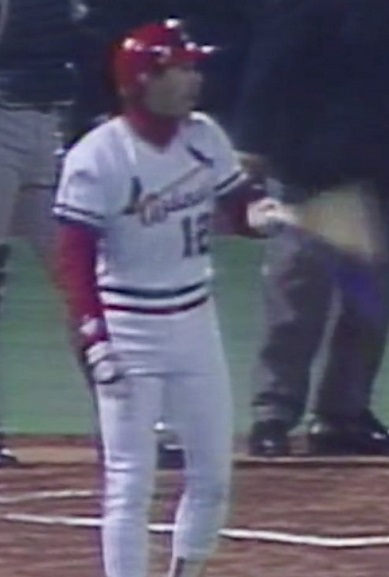
Tom Lawless, the patron saint of bat flippers, starting his flip in Game Four, 1987 World Series . . .

The Fun Police have a new protester who played the game in an earlier era. And when Dale Murphy talks, it would be wise for the Fun Police to lend him their ears and not their billy clubs.

Murphy inaugurated his partial new life writing for The Athletic with a September 2018 essay in which he applauded doing away with throwing at batters on hot streaks. That was after the Marlins’ Jose Ureña was stupid enough to think the proper way to stop Ronald Acuna, Jr. from making mincemeat out of Marlins pitching was to open a game by drilling Acuna’s elbow.

The longtime Braves bombardier said then pitching inside is one thing but drilling hitters who offend you is something else entirely. “If Ureña thought he was being tough, he wasn’t. Good pitchers–and staffs–will take command of a situation before a guy is swatting home runs left and right. The Marlins kept throwing Acuña fastballs down the middle. Well, what did they think was going to happen? A light should have gone on. Hmm, maybe we should try something else.”

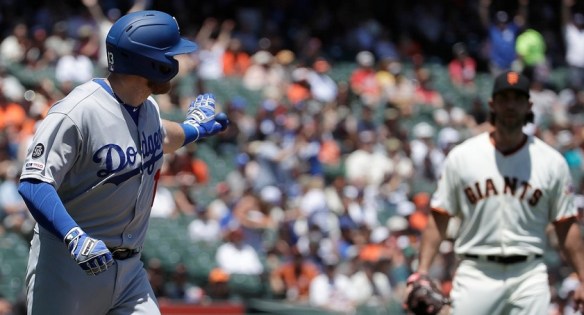
Now, Murphy wasn’t exactly amused when Madison Bumgarner barked at Max Muncy after Muncy drove one of Bumgarner’s offerings clean into McCovey’s Cove last week. Murphy was far more impressed not just that Muncy was sharp enough in spontaneity to hand Bumgarner a classic one-liner (I just told him if he doesn’t want me to watch the ball, go get it out of the ocean) that begat a classic troll shirt, but that Muncy had no qualms about even a lower-keyed celebration of, you know, achievement.

“Admiring a home run is OK,” Murphy writes in an essay published Friday. “Bat-flipping is OK. Emotion is OK. None of that is a sign of poor sportsmanship or disrespect for an opponent. It’s a celebration of achievement — and doing so should not only be allowed, but encouraged.” And he’s not limiting its encouragement to hitters alone, either. “Pitchers can shout excitedly after an important out,” he writes. They can pump their fist after a clutch strikeout. Players, fans—and basically any rational-thinking human—will understand that no harm is intended by these spontaneous expressions of joy.”

Last year, Nationals reliever Sean Doolittle jumped onto the fun train. And he said he wanted more than just bat flips. “If a guy hits a home run off me, drops to his knees, pretends the bat is a bazooka, and shoots it out at the sky, I don’t give a shit,” he said. To which I myself added, “I hope a lot of pitchers start channeling their inner Dennis Eckersley and start fanning pistols after they strike someone out. I’d kill to see a hitter moonwalk around the bases after hitting one out. Let’s see more keystone combinations chest bump or make like jugglers after they turn a particularly slick and tough double play.”

“These are some of the best athletes in the world, competing against some of the other best athletes in the world, with generational wealth at stake,” writes Murphy. “Yet, they’re expected to play baseball like they’re doing calculus at afternoon tea.” My own expression was (and remains) that whereas Willie Stargell was right saying, “The umpire doesn’t say, ‘Work ball’,” if you want to play baseball like businessmen, take the field and check in at the plate in three-piece suits.

“In what other sport does this happen?” Murphy asks. “In what other sport is celebration considered disrespect? In football, guys plan celebrations. They choreograph them with teammates. They gesture when they get a first down. As far as I know, the world hasn’t ended.  Baseball is a strange place. It’s not OK to watch your home run, but it is OK for someone to throw a baseball 95 miles per hour at your head if you do.”

It’s still funny in anything but a ho-ho-ho way that when it’s free agency signing season the Old School wants us to remember they’re getting overpaid to play a game, for crying out loud . . . but when it’s time to actually play the game, God forbid the players look like they’re, you know, playing.

Murphy is careful not to say that those on the field who don’t like celebrating their achievements should be allowed not to like it, either. But he’s adamant that if they want to celebrate, they shouldn’t risk being decapitated the next time they bat against the pitcher they just took into the ocean. And, to Madison Bumgarner’s eternal credit, he didn’t even think about trying to flip Max Muncy when Muncy faced him the next time.

Neither did the arguable and unlikely father of the home run bat flip as we’ve come to know it face revenge.

I take you back to the 1987 World Series. The one in which no game was won on the road and the Twins won in seven. The one in which Tom Lawless—journeyman infielder, minus 2.1 wins above a replacement-level player, lifetime .521 OPS, lifetime hitter of two regular-season major league home runs, who hadn’t hit one out since 1984—squared up Frank Viola (a Cy Young Award winner the following season) with two on and nobody out, in the bottom of the fourth, in a tied-at-one Game Four, and hit a meaty fastball over the left field fence.

Lawless took ten leisurely steps out of the box up the first base line as the ball flew out. When it banged off a railing above and behind the fence, he flipped his bat about ten feet straight up into the Busch Stadium air before starting his home run trot. The crowd may have cheered as much for that flip as for the ball flying out in the first place.

“Look at this!” hollered then-ABC commentator Tim McCarver when showing it on a replay. McCarver and Al Michaels sounded absolutely exuberant. Viola didn’t exactly look thrilled to have just surrendered a tiebreaking three run homer, but he wasn’t exactly spitting fire or raging in the moment, either.

As Bleacher Report‘s Danny Knobler observes in Unwritten: Bat Flips, the Fun Police, and Baseball’s New Future, Viola never once retaliated for the Lawless flip. On 14 May 1989, Viola and Lawless met for the first time since that Series, with Lawless now a Blue Jay pinch hitting for Rob Ducey in the top of the fifth. Viola caught Lawless looking at a third strike in that pinch hit appearance. Lawless stayed in the game playing right field, of all places. He batted against Viola in the top of the eighth and grounded out to first.

Not once did Lawless face a knockdown or brushback.

It’s a shame someone didn’t teach that lesson to Hunter Strickland two years ago, when he opened against Bryce Harper by drilling Harper in the hip—over a couple of long, almost three-year-old postseason home runs the second of which Strickland thought Harper pimped, when the only thing Harper actually did was make sure the launch straight over the right field line and foul pole would fly out fair.

“I didn’t remember flipping it,” Lawless said after that ’87 Series game. “I’ve never been in a position like this before.” He never would be again, either. That blast was the only World Series hit of Lawless’s career, and he never played in the Series again.

In 2017, he told a Cardinals television broadcast interviewer, “I don’t have any idea why I did it. It just happened.” Spoilsport.

Talk of the trade

2019-06-12 MadisonBumgarner

Could Madison Bumgarner change employers at last by or before this year’s trade deadline? (Will it be the Yankees? The Brewers?) And who else might the contenders have eyes upon?

‘Tis the season to be pondering who’s coming or going before or at baseball’s new single trade deadline. I know the deadline isn’t June, but it seems just about every season that June is the month when trade talk becomes as fevered as a Trump tweetstorm. At this moment the temperature is low but sure to climb.

You have to be careful, though. Out there in the press mainstream merely speculating upon who’s liable to change addresses can lead to strange feelings among the speculated-upon. And their current employers. Maybe their employers-to-be. (Renters-to-be?) And it’s always healthy to try keeping the strange as much to the playing field as possible.

Everybody with me so far? OK. Now let’s consider potential candidates, understanding that they’re not officially on the block just yet but that teams with certain needs may cast eyes upon them:

Madison Avenue Dept.—Madison Bumgarner ain’t quite what he used to be, if you don’t count orneriness, but his postseason jacket alone would make him attractive to a contender looking for a) a rental lefthander, and b) a fun policeman, since he hits free agency for the first time after this season. (The Yankees are already rumoured to have eyes for him, and the Brewers may have likewise.) But pay attention, contenders needing bullpen help: the Giants have a sleeper for you. Will Smith, lefthanded closer, 2.19 ERA, 0.73 walks/hits per inning pitched rate, 35 strikeouts and a mere five walks in 24 2/3 innings so far this year.

Surprise Package Dept.—Don’t look now, but Ken Giles—he of the 2017 World Series disasters and the 2018 meltdowns that got him purged from Houston—has resurrected himself very quietly in Toronto. Giles has a 1.08 ERA, a 1.15 FIP, a 6.0 strikeout-to-walk rate, a 15.1 K/9 rate, and a 0.4 HR/9 rate this season. Contenders needing pen help shouldn’t ignore such closers. Bloodied-but-unbowed and otherwise.

On Your Marcus Dept.—Giles’ Blue Jays teammate Marcus Stroman has a year and a half left on his current deal, and a contender looking for rotation fortification might find him attractive enough to deal for him with eyes upon extending him with plenty of time to work something out. He may be hung with a major league-leading eight losses but those are definitely team efforts considering his 3.31 ERA. A contender needing a middle-of-the-rotation arm with postseason experience could make the Jays an offer they can’t refuse.

Either Thor Dept.—Noah Syndergaard is actually pitching a little better than his 4.45 ERA shows, even if his tendency to just fire may actually be working against him now. (His K/9 rate isn’t the same as it was in 2015-16 and may not be again for a good while.) But if the Mets awaken enough to know they’re not likely to reach even a wild card berth this time around, Syndergaard still has upside (and is under contract through 2021) to bring them back some decent prospects and give a contender a not-so-secret weapon that may not disappear too soon.

Tribal Fission Dept.—Right now the Indians don’t look like the contenders they were thought to be this year—by themselves or by others. They also don’t look like sellers now, but that could change after Cleveland hosts this year’s All-Star Game and if the Indians don’t look like even a wild card outlier after the Game. The likeliest Tribesmen to bring back a haul if the Indians decide to remake/remodel? Pitchers Corey Kluber (assuming his return to health), Trevor Bauer, and Brad Hand; and, shortstop Francisco Lindor. Lindor especially would be the nugget: 25 years old, established star, and continuing upside.

Full of Colome Dept.—Smith and Giles may not be the only attractive relief target for deal-minded contenders. Alex Colome may look just as delicious even though he’s closing for a rebuilding White Sox team. That 2.19 ERA and 0.65 walks/hits per inning pitched rate are just too succulent for contenders needing relief to ignore. And, like Stroman, Colome has a year and a half left on his deal and a contender in need might find the 30-year-old  attractive enough to talk extension before the deal expires. Might.

Greene Fields Dept.—Contenders in need of relief might have even bigger eyes for Tigers closer Shane Greene. Like Colome, he’s 30. Like Giles, he has an ERA close to 1.00. (Specifically, 1.04.) Unlike Giles, though, Greene’s FIP is a little north of 3.00. But Greene at this writing has a 4.0 K/BB ratio and leads the American League with nineteen saves, and his 9.0 K/9 rate still makes him a catch.

The Nat’chl Blues Dept.—Like the Mets, the Nationals entered the season viewed as one of four National League East contenders. Like the Mets, the Nats are on the brink of fading away from that. And, like the Mets, the Nats have pieces they might be willing to move. Might. The nuggets: Anthony Rendon, their best position player still and a free agent after the season; and, Sean Doolittle, the only true decently consistent option in their inconsistent bullpen. But Howie Kendrick is also having a splendid season. If the Nats decide to sell, watch those three names.

Hot Seven Dept.—Nothing to do with Louis Armstrong, alas. Like the Nats, nobody knows just yet if the Reds might hang up the for-sale signs. But if they do, they’ve got seven men who become free agents at season’s end: Zach Duke, Scooter Gennett, David Hernandez, Jose Iglesias, Yasiel Puig, Tanner Roark, and Alex Wood. (With Wood, of course, it depends on his health.) For now, just watch. For now.


Gee, Officer Krupke—krup you!

2019-06-10 MaxMuncyMadisonBumgarner

He didn’t quite demand “Who died and left you the Baseball Police?” but Max Muncy splashed Madison Bumgarner’s self-righteousness Sunday afternoon . . .

When Madison Bumgarner’s pitching career ends, a good many people will remember him as a postseason lancer who throve and delivered when the heat was nuclear. Appropriately. And a good many people likewise will remember him as a classic get-off-my-lawn type with the petulance of a nursery school child whenever any hitter had the audacity to hit a home run off him. Also, appropriately.

The get-off-my-lawn Bumgarner arrived Sunday afternoon in AT&T Park when Dodgers infielder Max Muncy greeted him in the top of the first. The lefthanded Bumgarner threw the lefthanded Muncy a fastball fat and juicy. And Muncy drove it past about five kayakers into McCovey Cove behind the right field promenade.

All Muncy did after connecting was take a few moderate steps up the line before starting his home run jog. If you’re measuring bat flips, Muncy’s was more like a bat dump. And as he rounded first, Bumgarner—who suffers neither fools nor home run hitters gladly—growled at Muncy: “Don’t watch the ball, run!”

Muncy wasn’t exactly unprepared as he rounded first heading for second. As he quoted himself after the Dodgers banked the 1-0 win: “I just told him if he doesn’t want me to watch the ball, go get it out of the ocean.”

If you thought “Don’t look at me!”/”Don’t look at him” troll T-shirts whipped up fast after Bumgarner roared just that at then-Dodger Yasiel Puig a few years ago, you hadn’t seen anything yet:

2019-06-10 GoGetItOutOfTheOcean

That shirt hit the cyberground almost as fast as Muncy’s blast flew into the cove. Its arrival made the old “Don’t look at me!” troll shirts seem on a time delay.

About the only thing Sunday’s game did otherwise was resurrect Bumgarner’s likely trade value should the Giants finally acquiesce to reality and kick off a painful but necessary remake/remodel. He pitched seven innings and, after Muncy put his ego into the drink, scattered three more hits while striking out five and surrendering no other runs.

That wasn’t even close to the story of the game.

Bumgarner is self-aware enough to know he comes off like the kind of grump that divides baseball fans almost in half. For every old-school grouse who thought Bumgarner was not only within his rights to let Muncy have what for rounding first, but also a little chin music, maestro, his next time up, there’s a new-school graduate who thinks Bumgarner’s still too young to become a boring old fart playing a game in which he happens to earn a ducal dollop of dollars while playing it.

“I can’t even say it with a straight face,” the lefthander told reporters after the game, and he couldn’t. Bumgarner looked like he was trying to stifle the kind of nervous snicker you might emit when something strikes you funny during something like a funeral.

“I was going to say the more I think about it, you’ve got to just let the kids play, that’s what everybody is saying, but . . . he struck a pose and walked further than I liked . . . They want to let everybody be themselves. Let me by myself —that’s me, you know? I’d just as soon fight than walk or whatever. You just do your thing, I’ll do mine. Everybody is different. I can’t speak for everybody else, but that’s just how I want to play. And that’s how I’m going to.”

Bumgarner has one point. There’s nothing wrong with letting him be himself, either. If he wants to treat baseball as though he ought to be pitching in a business suit instead of a Giants uniform, that’s his right and he’s earned it.

Except that he knows others enjoy the same right to be themselves. If he wants to bawl out a hitter who just laid waste to one of his pitches and has the audacity to enjoy having done it, then what he’s really saying is he doesn’t really respect the other guy’s right to be himself, too.

If Bumgarner wants to fume because he was sent into orbit, fine. But there’s a reason why Muncy’s basepath comeback kicked off a new supply of troll shirts. Bumgarner doesn’t want hitters admiring their home runs off him, whether or not they land among a crowd of kayakers on the waters? And he’s not exactly out there trying to serve them pitches they can hit for those home runs.

Unless there’s some personal animosity between them otherwise, a hitter who’s just sent one seaborne isn’t looking to add insult to injury when he has fun with it as it sails away and after it lands. (Pirates, try to remember that the next time Derek Dietrich plants one into the Allegheny River.) Neither is a pitcher who can’t resist a little gesture of triumph after he survives a very tough plate appearance by striking the batter out at last.

Let’s have no nonsense about it all just being MadBum being the competitor he is. “‘Enjoy the view, bitch, because I’m gonna strike your sorry ass out next time’ is being a competitor,” says Deadspin‘s Albert Burneko. “‘Stop watching your home run, it’s rude!’ is being the cops.”

Forget the business suit, maybe Bumgarner ought to take the mound in a police uniform. Gee, Officer Krupke—krup you!

It’s not as though Bumgarner doesn’t understand the thrill. This is a pitcher who’s hit eighteen home runs himself during his eleven-season career. Including a pair on Opening Day 2017. You might suggest Bumgarner take off the gun belt and billy club and have himself a ball around the bases the next time he hits one for distance.

But you can see the troll shirts now: “Fun for me but not for thee!”