The waive

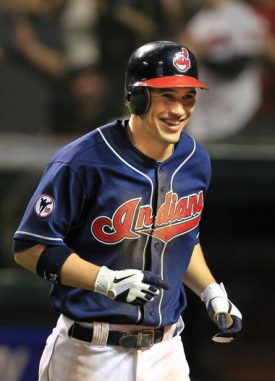
Lucas Giolito

Lucas Giolito—from an Angels trade deadline acquisition to one of five put on the waiver wire approaching its deadline . . . and potentially impacting pennant races.

Just when you thought nothing weird could happen to or emanate from the Angels, they found a way to disabuse you. With one act last week they helped yank a couple of pennant races inside out. Whether it was bold or boneheaded is a matter of opinion. Likewise whether it was both at once.

And that was on top of Shohei Ohtani going down for the count on the pitching side with that ulnar collateral ligament tear . . . but continuing on as a designated hitter regardless of the ongoing risk, and without deciding to undergo the Tommy John surgery he’ll have to face most likely.

In one week, the Angels went from mere disaster to the guys who just might have played key roles for somebody else’s postseason trips. The way they did it may have set a precedent somewhere between foolish and dangerous to the integrity of the game.

They gambled on keeping Ohtani rather than flipping him for remake-beginning prospects at the trade deadline. They leaned on an illusory 11-3 string to finish July and traded for pitcher Lucas Giolito (White Sox) and left fielder Randal Grichuk (Rockies). They opened August going 2-9. They finished the month going 8-19.

They saw the season sinking faster than the Lusitania before August finally ended. First came Ohtani with the UCL tear. Then, as owner Arte Moreno and his minions saw their all-in push at the trade deadline turn to all-out pushed just enough out of the races:

* The Angels put Giolito, Grichuk, and three other players—relief pitchers Reynaldo López and Matt Moore, plus outfielder Hunter Renfroe—on waivers last week.

* Yes, the waiver placements were salary dumpings, and they just might give a lot of other teams ideas about dumping salaries at no cost to the dumpers and miminal cost to the dumpees. To claim and receive Giolito, López, and Moore cost the Guardians what Aaron Judge may hand out in tips, $3 million.

* Yes, too, that just might have given the Guardians new pennant race life in an American League Central that isn’t exactly a division built to strike fear in the hearts of the rest of the league.

The Guards claimed Giolito, López, and Moore before the end of 31 August. Meaning those three, should they hold up and pitch in well enough, will turn up in the postseason if the Guards manage to sneak into the wild card picture or even sneak the Twins off the top of the Central heap. They swung into a good start from there—they took the first two of a weekend set with the Rays, including a Saturday walkoff on an RBI single and a sacrifice fly.

If the Guards’ motives included cutting into the Twins directly, they got off to a grand beginning even before they could pencil Giolito into the rotation and with only López seeing action prior to Sunday. They start a critical set with the Twins on Labour Day. It’s a wonder the Twins and others didn’t start ringing commissioner Rob Manfred’s or players union chief Tony Clark’s phones off the hook.

This is what a few people feared possible when the old waiver trade system expired in 2019. Until then, teams could trade players they put on waivers and, since they put everyone on the roster on the waiver wire until then, disguise whom they really wanted to deal while working out the particulars on the deals they really wanted by the close of business 31 August.

If that sounds a little bit surreal, be reminded that a few Hall of Famers changed teams in just that way, including Jeff Bagwell (to the Astros, before he’d even seen substantial major league action), Bert Blyleven (to the Twins), John Smoltz (to the Braves), Justin Verlander (to the Astros the first time), and Larry Walker (to the Cardinals, after his long Colorado tenure).

But that was then: the traders got value or at least potential value via players in return. This is now: The dealers get salary relief if they want it, as the Angels have, but nothing else. Unless it’s luxury tax relief, which the Angels will get since the waiver dump gets them below the $233 million seasonal threshold. Using it as a salary dump just might raise more than a few players union hackles and make more than a few other owners a little edgy, too.

The Reds claimed Renfroe plus Yankee outfielder Harrison Bader off the waiver wire in time to have them on a postseason roster, too. They’ve taken two out of three from the upstart Cubs (doesn’t that sound a little weird to say?) since, but with little to no help from their new waiver wire toys yet: Bader entered play Sunday at 1-for-3 with a stolen base; Renfroe, 0-for-9.

They have a six-game National League Central deficit but the Reds awoke Sunday morning with fingertips on the third NL wild card with the Diamondbacks and Giants having fingertips on the second card. The Guards are five games behind the Twins in that AL Central and slightly beyond the third AL wild card.

It all began with the Angels deciding the time for a salary dump came a little ahead of the usual off-season. The trouble was, too, that it dominated baseball’s news wires and helped some people miss a few more glorious doings, in particular Braves star Ronald Acuña, Jr.’s entry into a club with a single member—himself.

Last Thursday night, Acuña ripped Dodgers starter Lance Lynn (a trade-deadline acquisition from the White Sox) for a grand slam and his 30th homer of the season. It made him the only man in Show history to hit 30 or more bombs and steal 60 or more bases in the same year.

When he swiped numbers 60 and 61 against the Rockies last Monday, two Rockies fans hit the field running to greet him, one hugging him and the other  accidentally knocking Acuña on his derriere. Prompting an almost immediate discussion on increasing player safety on the field.

Not even the Angels’ waiver deadline salary dumping could ruin the best moment of Acuña’s 30/60 Club founding—his former teammate Freddie Freeman, the day after the founding, handing Acuña one of the bases from Thursday’s game.

There really is something to be said for Don Vito Corleone’s observation (in the novel The Godfather) that great misfortune often leads to unforeseen reward. The Guards and the Reds hope the Angels’ misfortune leads them likewise. Who hopes it doesn’t give enough owners any more cute ideas about salary dumps and, thus, prospective pennant race distortions?

“Down goes Anderson! Down goes Anderson!”

Tim Anderson

White Sox shortstop Tim Anderson hits the deck after Guardians third baseman José Ramírez (second from left, restrained further by a White Sox player) answered Anderson’s foolish challenge to fight with a flying right cross to the side of his head. White Sox first baseman Andrew Vaughn (25) would ultimately drag Anderson off the field as the two teams scrummed.

Once upon a time, Tim Anderson said he wanted to be today’s Jackie Robinson when it came to putting the fun back into baseball on the field. When the Yankees’ Josh Donaldson greeted him with, “Hi, Jackie,” during a game last year, the White Sox shortstop decided the joke’s shelf life expired not long after Donaldson first dropped it on him a couple of years earlier.

The benches and pens emptied, and Anderson’s White Sox teammates urged and nudged him back to the dugout before any serious damage could be done. The following day, Anderson—hammered with “Jack-ie, Jack-ie!” catcalls most of the day by the Yankee Stadium crowd—smashed a three-run homer that finished a doubleheader sweep, holding an index finger to his lips as a “shush” gesture to the catcallers.

But that was then and this was Saturday in Cleveland against the Guardians. In the sixth inning, Guards’ star José Ramírez went diving into second to beat a throw in from the outfield and finish his stretch into an RBI double. He slid right between Anderson’s legs.

Anderson had infuriated the Guards the night before with a tag knocking rookie Brayan Rocchio off the base, turning a double into an out when the original safe call was reversed rather controversially. Now, he seemed to try dropping a too-hard tag upon Ramírez to no avail. According to Ramírez, Anderson said he wanted to fight.

Ramírez held up his right arm as if hoping Anderson might help him up from the ground. Getting none, Ramírez rose on his own and pointed at Anderson, apparently objecting again to Anderson’s needlessly harsh tagging. Anderson assumed a boxing position as rookie umpire Malachi Moore tried to keep the pair separated.

Oops. Moore decided the better part of valour was to back away. Anderson threw a pair of rights as players on both sides approached. Then, somehow, some way, Ramírez swung a slightly wild right that caught Anderson flush on the left side of his face and knocked him to the ground. It was like Argentine boxing legend Oscar Bonavena’s wild punching style before Muhammad Ali outlasted him in 1970.

Guardians broadcaster Tom Hamilton couldn’t resist referencing another Ali fight when Ramírez connected: “Down goes Anderson! Down goes Anderson!” That went almost as viral as the scrum itself.

This wasn’t the usual bench-clearing incident in which the “brawl” was usually just a lot of hollering, shoving, more hollering, more shoving. This was two players swinging as if they’d mistaken themselves for hockey players. “It’s not funny,” said Guards manager Terry Francona post-game, “but coming [into the clubhouse] and listening to Hammy, it’s hard not to chuckle.”

It might have been Francona’s only chuckle of the evening. Not only did the White Sox finish what they started, a rather rare win, but Francona plus White Sox manager Pedro Grifol and their combatants Ramírex and Anderson were thrown out of the game post haste. So were Guards third-base coach Mike Sarbaugh and relief pitcher Emmanuel Clase.

Anderson wouldn’t talk to the press after the game, but Ramírez had plenty to say. “He’s been disrespecting the game for a while. It’s not from yesterday or from before,” the Cleveland third baseman began.

I even had the chance to tell him during the game, “Don’t do this stuff. That’s disrespectful. Don’t start tagging people like that.” In reality, we’re here trying to find ways to provide for our families. When he does the things he does on the bases, it can get somebody out of the game. So I was telling him to stop doing that and then as soon as the play happened, he tagged me again really hard, more than needed, and then he reacted and said, “I want to fight.” And if you want to fight, I have to defend myself.

Cynics suggest Anderson should get a two-week suspension for starting the fight in the first place. They say, not implausibly, that he shouldn’t exactly protest such a suspension, because his season—injuries contributed to his pre All-Star break .223/.259/.263 deflation, though he was bouncing back after the break—is much like that of the White Sox whole. Lost? Try disappeared.

Anderson has been admirable in the past for wanting baseball to be fun again, on the field and encouraging more black youth to consider the sport as a profession. He’s been capable of big moments, maybe none bigger than the game-winner he drove into the corn field behind the outfield in the first Field of Dreams game.

He wants to be remembered as an impact-delivering player. He overcame a lot to make himself a two-time All-Star. He looked like a classic baseball hero that night in Iowa. He may have thrown too much of that away Saturday night.

White Sox general manager Rick Hahn used the trade deadline to start dismantling the sorry enough team he’d built. Saturday night was actually the first White Sox win since the deadline itself. They’d lost thirteen of their previous seventeen until Saturday night. It’s not implausible to think Hahn will continue the remaking he began come the offseason.

But it’s also not implausible that Anderson, a player who’s meant plenty to the White Sox in the past, might be in his final days in their silks. If this proves the catalyst for that, it would negate enough of what he wants to mean to the team and to the game he loves. Far worse than his face or his ego getting dropped by a flying right in a foolish fight, that would hurt.

The Yankees rock and troll

Yankee Stadium

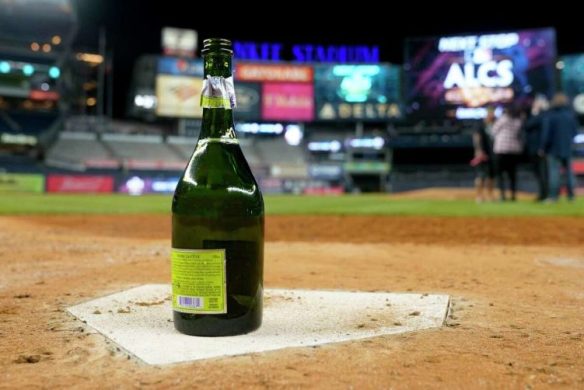
A spent champagne bottle placed on home plate after the Yankees won a trip to the ALCS Tuesday night. The Yankees had to celebrate their win in a hurry—they open against the Astros Wednesday night.

The good news is, Year One of Comissioner Rube Golberg’s triple-wild-cards postseason experiment isn’t going to have an all also-ran World Series, after all. It still yielded a pair of division-winning teams getting to tangle in the American League Championship Series.

The bad news is, those two division winners are still the Yankees and the Astros, after the Yankees sent the AL Central-winning Guardians home for the winter with a 5-1 win Tuesday that wasn’t exactly an overwhelming smothering.

What it was, though, was the game for which the Guardians shot themselves in the proverbial foot. Specifically, two Guardians, one of whom is old enough to know better and the other of whom needs a definitive attitude adjustment.

Guardians manager Terry Francona has more World Series rings this century (two) than Yankees manager Aaron Boone (none). Francona is considered by most observers to be one of the game’s smartest managers who’s made extremely few mistakes and learned from one and all; Boone is one of those skippers about whom second-guessing is close enough to a daily sport in its own right.

But when push came to absolute shove for rain-postponed AL division series Game Five, Boone proved willing to roll the dice Francona finally wasn’t.

After Gerrit Cole held the Guards off with a magnificent Game Four performance Sunday but the rain pushed Game Five from Monday to Tuesday, Boone was more than willing to throw his original Game Five plan aside—Jameson Tallion starting and going far as he could to spell the beleaguered Yankee bullpen—and let Nestor Cortes pitch on three days’ rest for the first time in his major league life.

Francona wouldn’t even think about changing his original Game Five plan, opening with his number-four starter Aaron Civale, who hadn’t even seen any action this postseason until Tuesday, then reaching for his bullpen at the first sign of real trouble. He wasn’t willing to let his ace Shane Bieber go on three days’ rest for the first time in his major league life.

Mother Nature actually handed Francona one of the biggest breaks of his life when she pushed Game Five back a day. Either he missed the call or forgot to check his voicemail. “I’ve never done it,” said Bieber postgame Tuesday, about going on three days rest. “But could I have? Sure.”

“It’s not because he can’t pitch,” said Francona after Game Five. “It’s just he’s been through a lot. You know, he had [a shoulder injury in 2021] and he’s had a remarkable year, but it’s not been probably as easy as he’s made it look.”

It might have been a lot easier on the Guardians if Francona handed his ace the chance to try it, with reinforcements ready to ride in after maybe three, four innings. Even year-old-plus shoulder injuries deserve appropriate consideration, of course. But Bieber surrendered a mere two runs in five-and-two-thirds Game Two innings. Francona’s hesitation when handed the chance helped cost him a shot at another AL pennant.

Civale didn’t have it from the outset. He had as much control as a fish on the line jerking into death out of the water. Giancarlo Stanton slammed an exclamation point upon it when he slammed a hanging cutter the other way into the right field seats with two aboard and one out.

The Guards’ pen did surrender two more runs in the game, including Aaron Judge’s opposite field launch the next inning. But they spread those runs over eight and two-thirds innings’ relief while otherwise keeping the Yankees reasonably behaved. They gave the Guards every possible foot of room to come back and win it.

That was more than anyone could say for Josh Naylor. The Guards’ designated hitter had already raised temperatures among enough Yankees and around a little more than half of social media, when his Game Four home run off Cole resulted in him running the bases with his arms in a rock-the-baby position and motion.

Naylor intends the gesture to mean that if he hits you for a long ball he considers you his “son” in that moment. It wasn’t anything new for him or for those pitchers surrendering the 20 bombs he hit on the regular season. And Sunday’s blast was the third time Naylor has taken Cole into the seats in his major league life. He was entitled to a few bragging rights.

Cole himself thought the bit was “cute” and “a little funny.” He wasn’t half as offended as that half-plus of social media demanding Naylor’s head meet a well-placed fastball as soon as possible. Yesterday, if possible. The Yankees found the far better way to get even in Game Five than turning Naylor’s brains into tapioca pudding.

“We got our revenge,” Yankee shortstop Gleyber Torres all but crowed postgame. Torres even did a little rocking of the baby himself in the top of the ninth, after he stepped on second to secure the game-ending force out. “We’re happy to beat those guys,” he continued. “Now they can watch on TV the next series for us. It’s nothing personal. Just a little thing about revenge.”

Naylor was also serenaded mercilessly by the Yankee Stadium crowd chanting “Who’s your daddy?” louder with each plate appearance. Every time he returned to the Guards’ dugout fans in the seats behind the dugout trolled him with their own rock-the-baby moves. And his most immediate postgame thought Tuesday was how wonderful it was that he’d gotten that far into their heads.

Some say it was Naylor being a good sport about it. Others might think he was consumed more with getting into the crowd’s heads than he was in getting back into the Yankees’ heads. The evidence: He went 0-for-4 including once with a man in scoring position Tuesday.

Oh, well. “That was awesome,” he said postgame of the Yankee Stadium chanting. “That was so sick. That was honestly like a dream come true as a kid—playing in an environment like this where they’ve got diehard fans, it’s cool. The fact I got that going through the whole stadium, that was sick.”

Josh Naylor

Rock and troll: Yankee fans letting Josh Naylor have it on an 0-for-4 ALDS Game Five night.

Did it cross his mind once that his team being bumped home for the winter a little early was a little more sick, as in ill, as in not exactly the way they planned it? If it did, you wouldn’t have known it by the way he continued his exegesis. “If anything, it kind of motivates me,” he began.

It’s fun to kind of play under pressure. It’s fun to play when everyone’s against you and when the world’s against you. It’s extremely fun.

That’s why you play this game at the highest level or try to get to the highest level: to play against opponents like the Yankees or against the Astros or whoever the case is. They all have great fanbases and they all want their home team to win, and it’s cool to kind of play in that type of spotlight and in that pressure.

Wouldn’t it have been extremely more fun if the Guardians had won? Did Naylor clown himself out of being able to play up in that spotlight and its pressure this time? Those are questions for which Cleveland would love proper answers.

So is the question of how and why the Guards didn’t ask for a fourth-inning review that might have helped get Cortes out of their hair sooner than later, after a third inning that exemplified the Guards’ hunt-peck-pester-prod limits.

They went from first and second and one out in the top of the third—one of the hits hitting the grass when Yankee shortstop Oswaldo Cabrera collided with left fielder Aaron Hicks, resulting in a knee injury taking Hicks out of the rest of the postseason—to the bases loaded and one out after Guards shortstop Amed Rosario wrung Cortes for a four-pitch walk. They got their only run of the game when Jose Ramírez lofted a deep sacrifice fly to center.

Now, with two outs in the top of the fourth, Andres Giménez whacked a high bouncer up to Yankee first baseman Anthony Rizzo, who had to dive to the pad to make any play. The call was out, but several television replays showed Giménez safe by a couple of hairs. Perhaps too mindful of having lost three prior challenges in the set, the Guardians’ replay review crew didn’t move a pinkie. Francona seemingly didn’t urge them to do so.

Never mind that it would have extended the inning and given the Guards a chance to turn their batting order around sooner, get Cortes out of the game sooner, and get into that still-vulnerable Yankee pen sooner. Francona’s been one of the game’s most tactically adept skippers for a long enough time, but not nudging his replay people to go for this one helped further to cost him an ALCS trip.

These Yankees don’t look proverbial gift horses in the proverbial mouths. An inning later, with Torres on first with a leadoff walk and James Karinchak relieving Trevor Stephan following a Judge swinging strikeout during which Torres stole second, Rizzo lined a single to right to send Torres home. That was all the insurance the Yankees ended up needing.

Especially when these so-called Guardiac Kids, the youth movement whose penchant for small ball and for driving bullpens to drink with late rallies, forcing the other guys into fielding lapses, winning a franchise-record number of games at the last minute, had nothing to say against three Yankee relievers who kept them scoreless over a final four solid shutout innings.

Especially when they actually out-hit the Yankees 44-28 and still came up with early winter. The trouble was, the Guards also went 3-for-30 with men in scoring position over Games One, Two, Four, and Five, and had nobody landing big run-delivering blows when needed the most. Their ability to surprise expired.

Now the Yankees have a chance for revenge against the Astros who’ve met them in two previous ALCSes and beaten them both times. They had to hurry their postgame celebration up considerably—the ALCS opens Wednesday night.

The Guardians could take their sweet time going home for the winter and pondering the season that traveled so engagingly but ended so ignominiously.

“Winning the division was the first part,” Hedges said postgame. “Wild-card round. Put ourselves in position to beat the Yankees. And we wanted to win the World Series, but that’s a good Yankees team. The cool thing is, now we have a bunch of dudes with a ton of playoff experience in the most hostile environment you can imagine.”

The Guards were bloody fun to watch for most of it. Then Cole, Stanton and Judge rang their bells in Games Four and Five, and they had nothing much to say in return. The Guardiac Kids were the babies who got rocked. There was nothing much fun about that.

The Guards win an Óscar

Óscar González

Óscar Gonzáles about to send the Guardians to an AL division series . . . but did it have to be against a former Cleveland pitcher who’d served them long and well?

A Guardian kid leading off the longest scoreless game in the bottom of the fifteenth. Facing a former Guardian pitcher. The second pitch of the plate appearance disappearing and taking the Rays’ season with it.

One of seventeen to make major league debuts with the Guards this season, Óscar González hit eleven home runs on the way here. Now, he hit the most important one of his 24-year-old life Saturday afternoon to finish the Guardians’ shove of the Rays to one side in a two-game American League wild card sweep of opposites.

The whippersnappers upended their elders (the Rays’ average starting lineup age : 27; the Guards: 24) without caring how long it might take. If they could do it in a comparative Game One blink, sure. If they needed fifteen innings and shy of five hours to do it, neither they nor the sellout Progressive Field home crowd cared, either.

They made very short work (as in two hours and change) of the Rays in Game One. Then, they and the Rays threw the pitching kitchen sink at each other, just about, before Game Two reached the bottom of the fifteenth and Corey Kluber, former Guardian when they were still the Indians, went to work for a second inning’s relief.

It was his first relief gig in nine years. It turned out to be his last, thus far. And it wouldn’t be unfair to ponder whether Kluber might be beginning to think that someone, somewhere, placed a postseason hex upon his 36-year-old head. This was his fourth postseason tour that ended with him on the wrong side in elimination games in which he either started or appeared at all.

The last time Kluber turned up in the postseason, he wore Cleveland fatigues in 2018 and was bushwhacked by the Astros in the first of a three-game Houston division series sweep then, thanks to a fourth-inning leadoff bomb (Alex Bregman) and an RBI single, then back-to-back fifth inning-opening bombs (George Springer, Jose Altuve).

A year before that, Kluber faced the Yankees to decide another AL division series. The Yankees made shorter work of him then, with a third-inning two-run homer (Didi Gregorius) and four straight singles the final two of which plated a run each with one out in the fifth, en route the Yankees taking it in five.

A year before that, Kluber’s and the Indians’ World Series ended dramatically in that 8-7, late-rain disrupted Cubs win after a back and forth that might have tempted God Himself to proclaim a tie for the two then-longest World Series title droughts in the Show. And yet again Kluber started but was stripped of four runs that only began with Dexter Fowler sending the first-ever Game Seven-opening home run over the center field fence.

The two-time American League Cy Young Award winner has since struggled through injury-disrupted seasons in stops with the Rangers and the Yankees before spending 2022 working his way back to respectability with a respectable-enough 3.57 fielding-independent pitching rate.

But with one swing on a slightly-hanging cutter on 1-0, González sent Kluber’s newfound respectability and the end of the Rays’ fourth annual postseason trip in a row into the left field seats. He also sent Progressive Field nuclear while sending his young Guards to a division series date with the Yankees.

All season long the Guards’ rookie guard lifted heaviest carrying them to the American League Central title. The only question entering the wild card set was whether it’d be one of the kids or one of the few elders who’d get the big job done for them. Not that manager Terry Francona cared less, of courseI don’t think by that point we cared,” manager Terry Francona said.

“It could have been one of the old guys,” Francona said postgame after González’s blast. “We didn’t care. We’re not biased. I was happy that he hit it.”

“I flipped on the Guardians and game,” tweeted MLB Network researche Jessica Brand, “and first pitch Óscar González goes deep. I’m not sure I want that kind of power. Was kind of secretly relishing the goose egg farm.”

Well, somebody had to scramble those eggs sooner or later. For the longest time it looked as though neither side was necessarily that anxious to do anything other than pin the opposing lineups’ ears behind their heads and become human Electroluxes in the field.

Guardians pitching kept the Rays to six hits and Rays pitching kept the Guards to five. The Rays and the Guards used eight pitchers each, and the Guards blew a shot at smashing the scoreless tie a full game’s worth before González finally struck.

Myles Straw (who promptly stole second) and Rookie of the Year candidate Steven Kwan were handed back-to-back walks by Rays reliever Pete Fairbanks—relieving starter Tyler Glasnow—to open the bottom of the sixth. Somewhat tough on the Guards this year, Fairbanks unintentionally handed them a break when he called Rays manager Kevin Cash and a team trainer out to the mound.

“I can’t feel my hand,” Fairbanks is said to have told Cash. The team subsequently said the righthander’s index finger went numb for unknown reasons in the moment. Exit Fairbanks, enter Jason Adam, and ducks on the pond at once when Adam plunked last year’s Atlanta postseason hero Eddie Rosario on the first pitch.

Enter José Ramírez, the Guards’ All-Star third baseman. Exit Ramírez on strikes almost at once. And exit the Guards for the side when Josh Naylor grounded into a step-and-throw double play.

Ramirez more than made up for it in the twelfth, when he backhanded Manuel Margot’s hard hopper behind the pad, the momentum pulling him into foul territory, then whipped a long, low throw for which Naylor at first had to stretch to scoop, and he kept just enough of his foot on the pad to secure the out. The Rays challenged the play but lost.

Heavy sigh of relief from one end of Progressive to the other.

González might have had the most privately embarrassing moment of the night when his belt broke while sliding in the seventh. Lucky for him that first base coach Sandy Alomar, Jr. had a belt to spare. And lucky for the Guardians that González had a belt to spare opening the fifteenth inning.

But did it have to be against a Kluber who’d pitched long enough and well enough for Cleveland and its long-enough-deprived fans? A Kluber who’d given them everything he’d had, came up short, then came up injured enough to put paid to his Lake Erie days?

This is the guy who missed all 2019 after an arm fracture plus an abdomninal injury, had his 2020 option exercised by the then-Indians on Halloween 2019, then was traded to the Rangers a month and a half later in a delayed but somewhat shameful trick-or-treat. Then, Kluber returned in July 2020 as the pan-damn-ically delayed season began and lasted on inning before shoulder tightness proved a torn teres major muscle.

That sent him to the injured list and, in due course, to free agency, where he signed for a year with the Yankees for 2021, started a return to respectability including a no-hitter against the Rangers themselves, then lost another two months with another shoulder injury.

Kluber became a free agent again, signed with the Rays this year, and all seemed as right in his 36-year-old pitching world as he and anyone had a right to expect. He’s hardly the first to return to a postseason against one of his former teams, but he may be close to the top three for heartbreaks in such returns.

Those two Cy Young awards can’t help heal this one. And Cleveland cynics might amuse themselves thinking Kluber sent their team forward in their first year under a new name.

To such cynics, say only, “Don’t go there.” A franchise riddled with its own actual or alleged curses doesn’t need a Kluber Curse to throttle their exuberant and talented kid corps now. It would only destroy the magnitude of what González did Saturday afternoon, whether he did it against Corey Kluber or Clark Kent.

On Plesac’s agents dumping him

Zach Plesac

Zach Plesac, earning his D.A.* of the Month award 26 August.

I promise, I have more important things to ponder. Things such as whether next year’s rule changes really will do anything substantial. (If what I saw watching the Las Vegas Aviators host the Tacoma Rainers Wednesday night says anything, don’t hold your breath. Even with the pitch clock and strict obedience thereto, the 8-7 Aviators loss still took about three hours and ten minutes to play. Thank 37:19 minutes worth of between-innings time for the real culprit: broadcast commercials )

Things such as whether Aaron Judge will reach not 60+ home runs but maybe 70, at the rate he’s going. (He parked 56 and 57 in Fenway Park Tuesday night while his Yankees beat the Red Sox 7-6 in ten innings. He left himself four short of Roger Maris, the Yankee single-season record-holder, in game 143 of the season, if you still really care about such arbitrary things.)

Things such as whether the coming expanded postseason will prove a convoluted mess on top of its going in as a true competition dilution. (Why is Commissioner Rube Goldberg more interested in arbitrary time-of-game tinkering than he is in adjusting divisions, eliminating regular-season interleague play, and restoring real pennant races? He still doesn’t get it: 2:15 minutes worth of commercials after each half inning elongate games more than pitchers or hitters adjusting after every pitch, in-inning pitching changes, or mound conferences ever did.)

Things such as the Rays making history by putting the Show’s first all-Latino team on the field to commemorate Roberto Clemente Day, and clobbering the Blue Jays 11-0 while they were at it. The leading lashers: Randy Arozarena (3-for-5 including a double, a run scored, and a run driven home), Yandy Díaz (a three-run homer in the second), and Manuel Margot (a three-run double in a six-run ninth).

But no. I have to ponder a very rare instance of a player being dumped by his agents instead of the other way around. And this is because Zach Plesac, Guardians pitcher, did something dumb once too often for their taste.

On 26 August, Plesac surrendered two long balls already when he had Seattle’s Jake Lamb 1-2 in the bottom of the seventh. Then he fed Lamb a meal fit to pad a Mariners lead into 3-1 after Lamb fed it over the right center field fence. Plesac spun around on contact, bent over a bit as he watched the ball fly, then punched the mound in abject frustration.

Uh-oh. Even as the Guardians struck back to bust the tie and hang in to win off a three-run eighth, that punch took Plesac out for the rest of the season thanks to the fractured hand that resulted. This was the last thing the American League Central-leading, postseason-bound Guards needed.

It also proved the last thing Creative Artists Agency needed, too. About two weeks after the Guards put Plesac on the injured list, CAA dropped him as a client. “Three strikes appeared to be enough for CAA to say ‘you’re out,’” writes the New York Post‘s Jeremy Layton. “Plesac, despite a 3-11 record in 2022, has pitched decently for Cleveland (4.39 ERA), and is eligible for a big arbitration payday in the offseason. Still, the agency clearly decided the juice was not worth the squeeze.”

This is the pitcher who co-violated the team’s COVID protocols in 2020, having a night out  in Chicago including dinner in a restaurant and a card game at a buddy’s place, without getting team clearance first. The Guards ordered Plesac and co-partyer Mike Clevinger to issue statements. Then he went on Instagram and said the incident being reported in the press made it the media’s fault.**

This is also the pitcher who incurred a thumb fracture in May 2021. Was he hit by a comebacker? Was he hit by a pitch while batting in an interleague game in a National League ballpark? Nope. He suffered the injury . . . while ripping his jersey off and apart after he was battered for five runs (only three earned) during a Guards loss to the Twins. It cost him a month and the Guards another team migraine.

Not many players self-destruct as publicly, spectacularly, or ridiculously as Plesac. He’s  probably cost himself a considerable enough piece of the arbitration payday he might have expected otherwise this offseason. Maybe that will finish sending the message CAA began.

If Plesac’s agents can dump him merely for being a repeat jerk, why don’t other baseball agents—and teams, for that matter, whether trading, releasing, or letting them just walk into free agency—drop those guilty of far more grave behaviours? They’ve done it before, in various ways, and they can and should do it again.

Especially regarding such behaviours as domestic violence. A player being a repeat jerk is just that. Domestic abusers are many things more serious. Calling them mere jerks would be an unwarranted compliment.


* —Dumb Ass.

** —When you like us, we’re the press. When you hate us, we’re the media.—William Safire.