The microbet scandal: Don’t let it get to Congress

Darren McGavin

Darren McGavin, in The Natural, as Gus Sands, the bookie who boasted a) of microbets decades before they turned into a real-life baseball scandal; and, b) claimed his glass eye (with its iris larger than his right eye) was his “Magic Eye” which saw all.

When freshly-resurrected slugger Roy Hobbs was introduced to jaded bookmaker Gus Sands, in the novel and film The Natural, some slightly awkward conversation turned to Hobbs’s sterling doubleheader performance: five hits in the opener, four in the nightcap. “That’ll cost me a pretty penny,” Sands said. “I was betting against you today, slugger.”

Hobbs thought it meant against his team, the New York Knights, but Sands corrected him, saying, “Just you.” This surprised Hobbs. “Didn’t know you bet on any special player,” he said.

“On anybody and anything,” Sands continued. “We bet on strikes, balls, hits, runs, innings, and full games. If a good team plays a lousy team we will bet on the spread of runs. We cover anything anyone wants to bet on.” Sands’s example was a World Series game during which he bet $100,000 on three pitched balls.

The film showed the late Robert Redford looking somewhere between bemused and befuddled. “How’d you make out on that?” he asked. “Didn’t,” Darren McGavin’s smug Sands replied with a fatalistic smile out of which he could and did shift on the proverbial dime.

“But the next week,” Sands perked up, “I ruined the guy in a different deal.” Pausing for a sigh somewhere between extravagant and feigned, Sands went on. “That’s the way it goes,” he began. “Sometimes you win, sometimes you don’t. Today I lost on you. Some other time, I’ll clean up double.”

How would he do that? Hobbs inquired. “When you’re not hitting so good.” How would he know when? “The Magic Eye,” Sands replied, pointing to the glass eye with the larger iris. “It sees all.”

From there, the novel had it, Hobbs and Sands wagered on a few small things that led to Hobbs performing some impromptu magic tricks that amused their restaurant show’s MC, befuddled the sports columnist who’d introduced his running mate Sands to Hobbs in the first place, and left Sands himself somewhere between embarrased and infuriated.

Bernard Malamud may have known the wherefores of sports bookmaking in and before his time, even whether a Gus Sands would describe his game-within-the-game bets as microbets. He couldn’t have predicted that betting on anybody and anything, including individual pitches, would ooze into the scandal now bedeviling a major league baseball team and the sport’s governors alike.

If only this could be resolved by yanking tablecloths out from under undisturbed table settings or tweaking a snide bookmaker’s nose to produce several silver coins (tricks  Malamud described Hobbs as pulling upon Sands before their evening ended).

MLB went into its marketing relationships with assorted legal gambling businesses certain enough that it was only to reach sporting fans. It didn’t necessarily believe that the relationship would lure players or other team personnel into cooperative gambling behaviours that might or might not have a direct effect upon a game itself.

The disabusement began externally if no less dismayingly, when there came to light over a few seasons various players receiving death threats over certain game outcomes. It wasn’t just frustrated fans pouring their grief out aboard social media, it was frustrated fan bettors ready to horsewhip or hacksaw this or that player for costing them assorted volumes of money.

That was serious enough. But we have had Tucupita Marcano, Padres infielder, banished for life last year for betting on major league games with or without his own team. We have had four other players (Michael Kelly, Jay Groome, José Rodríguez, Andrew Saalfrank) suspended for a year apiece for betting on major league games in which they weren’t involved.

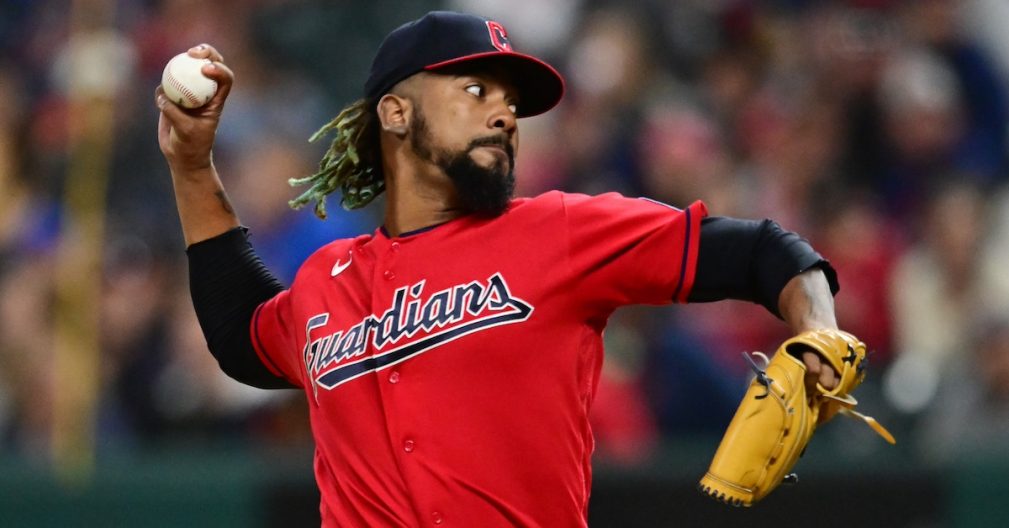
And now we have Guardians pitchers Luis Ortiz and Emmanuel Clase under scrutiny, fire, and arrest for pitch rigging the better to enrich gamblers betting Sands-like on particular pitches. Ortiz was arraigned in federal court in Brooklyn over a week ago; Clase surrendered for arraignment last Thursday. The Guardians are understandably not entirely certain how to proceed from there.

Both pitchers were lost to them last July when the pitch rigging came to light and they were placed on administrative leave. It’s not entirely untoward to suspect that one critical reason Guards manager Stephen Vogt earned a second straigth Manager of the Year award was that he succeeded in keeping his team on message and striking to snatch the American League Central title in spite of the pall created by losing two key pitchers for reasons not associated with the injured list.

“We arguably played our best baseball after they left,” said Guards general manager Chris Antonetti last week. “It’s one of the things I’m most proud of our team for.” Which is understandable thinking and magnanimous praise from the man who also admitted, not long after Ortiz and Clase were drydocked, “In the GM manual that I read, they left these chapters blank.”

Ortiz and Clase are accused of enabling gamblers to bet on certain pitches for what totaled six-figure dollar amounts and of receiving kickbacks for their parts in the plots. Since their arraignments, MLB has arranged with a good number of its authorised sports book advertisers to restrict gamblers’ microbets to $200 per and bar making such bets parts of parlays.

It may not be enough. Not since Marcano. Not since Groome, Kelly, Rodríguez, and Saalfrank. Not since Ortiz and Clase.

However tricky was the original idea of baseball taking ad revenues from legal sports books, we had the knowledge that it was strictly for the fans and that players, coaches, managers, front office personnel, clubhouse workers, and other team people were still governed by Rule 21. Governed by it, and wholly obedient to it.

“Why do we need the ability to bet on every pitch?” asked The Athletic‘s Jason Lloyd, who answered promptly. “The correct answer is because of how much revenue prop bets generate, but abolishing the concept of micro-bets in sports is the only true way to eliminate the uncertainty of whether a player is on the take.”

No argument from über-agent Scott Boras, who waxed affirmative on banning microbets when he wasn’t going Dr. Seuss discussing this or that man among his major league clientele at the general managers’ meetings in Las Vegas last week.

“You have to remove those prop bets to make sure the integrity of the players isn’t questioned,” he told Lloyd. “There’s going to be all forms of performance questions given now to pitchers when they throw certain pitches to the back of the screen or situationally, and really, we don’t want any part of it. We don’t want the players’ integrity to ever be questioned.”

He might have added that we don’t want players’ integrity being questioned when they offer at certain pitches, when they don’t, what type of pitches they’re hankering to hack, what type they’ll pass upon, that kind of thing.

Maybe it’s time at last for baseball to rethink the soundness of allowing even legal sports books to advertise around the ballpark or on the baseball air. Rethink it before Capitol Hill, so often interested more in perp walks than proper policymaking, goes from merely demanding MLB “demonstrate how it is meeting its responsibility to safeguard America’s pastime” to ordering MLB onto such a perp walk.

First published by Sports-Central.

We can’t have nice things for too long

Emmanuel Clase

Emmanuel Clase, whom the feds charge masterminded a pitch-rigging scheme for bettors and his fellow Guardians pitcher Luis Ortiz.

How tempting is it to define the present era as the one that tells us we can’t have nice things? And, the one that delivers the message more brutally after each of the rare nice things we get.

Baseball just delivered us a postseason for the ages, even if you don’t hold with the wild card system. Put that to one side a moment and admit it. The game we love spent a month showing us that, any time we care to write the game off as a self-immolating bore, it’ll be more than happy to disabuse us.

Think about it. When you get seven postseason sets ending with winner-take-all games, you’ve been blessed to the tenth power. When you get more than one extra-inning postseason hair raiser without the disgrace of Manfred Man (who’s not allowed anywhere near the postseason—yet), you’ve been blessed that big again.

When you get utter cream-always-rises defiance against the wild card system, putting nobody in either League Championship Series except teams whose butts were parked in first place at season’s end, you’ve been blessed above and beyond whatever it was you had the right to expect.

When you get Shohei Ohtani spending one postseason game striking ten out from the mound and hitting three out at the plate, then spending World Series Game Three reaching base nine times—five with the near-complete consent of the Blue Jays who seemed to prefer death to Ohtani’s singular controlled mayhem—your cups runneth over.

When you get a postseason seeing regular-season supermen continue their feats of derring-do and damage (can we forget Cal Raleigh crowning a 60-homer regular season with five intercontinental ballistic missle launches while the Mariners were in the postseason? Freddie Freeman’s eighteenth-inning walkoff?), and heretofore dismissable Clark Kents turning into assorted breeds of Supermen (Addison Barger, Miguel Rojas, call your offices), your bowls, barrels, vats, and tanks runneth over, under, sideways, down, and back.

In other words, this postseason couldn’t have been more entertaining, exciting, and exemplary if it had been coordinated, produced, and directed by Bill Veeck, Casey Stengel, Kevin Costner, and The Chicken.

No, that beyond good deed couldn’t go unpunished, could it? Can we have (demand) this Sunday back?

First there came the should-be-frightening revelation that, according to a popular podcast, Bryce Harper—he who told commissioner Rob Manfred firmly enough to get the you know what out of the Phillies clubhouse if he wanted to talk salary cap, though the two shook hands and shook it off later on—was threatened by “one of Manfred’s deputies,” who said, supposedly, “Don’t ever disrespect [the Commish] like that again. That’s how people end up in a ditch.”

“If this threat is true,” wrote Yardbarker‘s David Hill, “the next labor stoppage could get ugly fast.” If that threat is true, we don’t have to wait for a lockout or a strike to get ugly fast. It’s just become ugly fast.

And how about the ugly-fast-enough revelation that two Guardians pitchers, relievers Emmanuel Clase and starter Luis Ortiz, on administrative leave since late July on pitch-rigging suspicions, have just graduated from suspicion to formal charges of fraud, conspiracy, bribery, and money laundering? Charges “stemming,” as the federal indictment out of Brooklyn says, “from an alleged scheme to rig individual pitches that led to gamblers winning hundreds of thousands of dollars, according to an indictment unsealed by federal prosecutors Sunday.”

The U.S. Attorney’s Eastern District office in Brooklyn said Sunday that Clase’s involvement in the pitch-rigging plot goes back to May 2023, with Ortiz joining up last June. It didn’t exactly cripple the Guardians’s season to lose the pair, especially when they ended up snatching the American League Central from the unexpectedly rising/unexpectedly sputtering Tigers.

But then came the postseason. The Tigers nudged the Guardians out of the picture in a wild card series. From there, aside from the usual off-season doings, undoings, maneuverings, and meanderings, the question around the Guards became when the other shoes would drop around Clase and Ortiz.

They dropped Sunday, all right. The indictment says Clase arranged with a gambler to throw particular pitches for ball counts so the bettor could bet on those pitches (it’s called proposition betting) and reap the financial reward. The indictment says further that gamblers won almost half a million betting on pitches thrown by the Guardians pair, while the pitchers themselves earned kickbacks for helping the bettors clean up.

Clase and Ortiz, said Eastern District U.S. Attorney Joseph Nocella, Jr., “deprived the Cleveland Guardians and Major League Baseball of their honest services.”

They defrauded the online betting platforms where the bets were placed. And they betrayed America’s pastime. Integrity, honesty and fair play are part of the DNA of professional sports. When corruption infiltrates the sport, it brings disgrace not only to the participants but damages the public trust in an institution that is vital and dear to all of us.

“While the pervasiveness of legalized gambling has upended the sports world, the allegations against Clase and Ortiz are the most severe for the sport since Pete Rose agreed to a lifetime ban for betting on baseball in 1989,” ESPN’s Jeff Passan wrote. “MLB’s rules against gambling on the sport are strict, and Clase and Ortiz could face lifetime bans similar to the one delivered last year to San Diego Padres infielder Tucupita Marcano, who placed nearly 400 bets on baseball.

Nocella’s office described Clase as the scheme’s mastermind, saying he’d throw balls instead of strikes and sliders instead of cutters on first pitches, with gamblers betting on each pitch to be called balls or traveling under specific speeds. The indictment said further that such proposition bets would be stacked in parlays often as not, meaning bigger winnings.

But the indictment also charges that Clase gave money to gamblers to bet on his own behalf, texted with them while games were in progress, and was joined up by Ortiz after he  came to the Guards in a winter 2024-25 trade, Passan said.

Among others, Clase helped gamblers win $27,000 apiece on one Clase pitch faster than 94.9 mph in an interleague game with the Mets. “Weeks later,” Passan said, referring to the indictment, “bettors added a leg to a parlay for a pitch to be a ball slower than 94.95 mph—and won $38,000 when Clase spiked a slider at least five feet in front of home plate.”

By last April, Clase asked for and got kickbacks for throwing specific pitches. He even asked one winning bettor to send kickback money to his native Dominican Republic “for repairs at the country house.” Last June, Ortiz joined the scheme by agreeing to be paid $5,000 to throw a first second-inning pitch for a ball call, with Clase getting $5,000 himself for arranging it, the indictment charges.

The same month, Ortiz agreed to open the third inning with ball one for $7,000. The indictment also says bank security cameras caught Clase withdrawing $50,000 cash, $15,000 of which went to one bettor in a group who placed $18,000 on that pitch.

Ortiz’s attorney denied in a formal statement that his client would do anything to influence a game improperly, “not for anyone and not for anything.”

Clase was making $4.9 million for 2025 and stood to make $6.4 million for 2026, with a pair of team options for 2027 and 2028 at $10 million each. Ortiz wasn’t near six figures yet so far as I could determine, but he wasn’t exactly improverished, either. Why on earth would either man slide into a shady side profession that could end their baseball lives if convicted and banished?

Maybe we shouldn’t ask. Maybe it won’t matter, at least until the case goes to trial, barring any for-now-unknowable chance of one or both pitchers coming to take plea deals and then throwing themselves upon the mercy of the courts of law and public opinion.

Maybe it won’t mean a thing until or unless baseball decides to take a second, third, and fourth look at its cross-promotion deals with legal sports books. Yes, those were supposed to encourage fan betting alone. Baseball’s prohibitions against players, coaches, managers, and team personnel betting on the sport remain stringent.

Oops. Manfred took a presidential gumshoe in the gluteus to declare Rose’s “permanent” and wholly justified banishment applied only while he was alive on earth—thus making Rose eligible to appear on the Hall of Fame’s next Classic Baseball Era Committee ballot.

But five months after Ohtani’s original interpreter Ippei Mizuhara went to the federal calaboose for stealing $17 million of Ohtani’s money to support an out-of-control gambling habit, it might be wise to review and perhaps repel those cross-promotions. Which might require the kind of spine this commissioner displays very selectively.

When an uppity player told Manfred where he can take his salary cap talk, the commissioner’s office ironed up to slap him down. But when an uppity president behaving like the school bully crooked his finger and demanded Rose be sent to Cooperstown as soon as last week, regardless that Rose earned his banishment, Manfred’s spine went Vaseline.

The stove isn’t the only thing that’s hot. It won’t shock me if baseball tempers get a little hot for a good while. That’s the risk whenever baseball’s witless remind us that we can’t have nice things for very long.

ALCS Game Five: Off, Guards

Juan Soto

Juan Soto and everyone in Progressive Field knew bloody well where what he just hit was going in the top of the tenth Saturday night . . .

A Guardian shortstop trying to will a tenth-inning double play before he had full control of the ball. A Yankee right fielder already in line for one of the biggest paydays in baseball history willing to wait for the fastball an off-speed-throwing Guardian reliever proved only too willing to provide.

Brayan Rocchio lost the handle on the toss leaving two Yankees aboard instead of side retired. Guards reliever Hunter Gaddis struck Gleyber Torres out but wrestled Juan Soto through six off-speed breakers and a 1-2 count before someone, who knows whom, thought Gaddis could sneak a fastball past Soto, if not lure him into an inning-ending out.

Good luck with that. Showing precisely why he’s in line for a mid-to-high nine-figure payday this winter to come, Soto got the fastball for which he probably prayed hard. Then, he launched it into the right center field seats with the Yankees’ fortieth American League pennant attached.

With one swing Cleveland’s Progressive Field went from extra-innings thrill to funeral parlour. If that was the ballpark mood, imagine the Guardians’ clubhouse mood when the game ended, the Yankees had a 5-2 ticket to the World Series in their pockets, and the Guardians could only think about how far they’d come in how little time only to feel the big wrench of having not quite enough.

“Because we were so close,” said left fielder Steven Kwan, referring to those in the Guards’ uniform, not necessarily the now-finished American League Championship Series, “it makes it sting a little bit more.”

For the Guardians and their respected rookie manager Stephen Vogt, it was the worst possible ending to an ALCS in which they’d made a better than decent showing—none of the five games was decided by a margin larger than two runs—but lacked the kind of putaway potency with which the Yankees seemed overendowed. On both sides of the ball.

Consider: Twice, in Games Four and Five, Vogt had the opportunity to keep Giancarlo Stanton from making mischief. He could have walked Stanton instead of pitching to him. He pitched to him. Stanton made him pay with interest.

Especially in Game Five, when Guardians starting pitcher Tanner Bibee kept Stanton in check in the sixth inning with nothing but pitches off the zone but not yet dispatched. That was the moment someone should have told Bibee one of two things: 1) Walk him, be done with it, then get rid of Jazz Chisholm, Jr., a far more feeble plate presence. 2) If you must pitch to Stanton, keep the damn ball off the zone.

Bibee tried. The slider aiming for the lower corner ended up hanging up under the middle. Stanton sent it hanging over the left center field fence. Tie game at two each.

Soto slammed home the pennant-clinching exclamation point (did anyone really doubt after that blast that the Guards would go quietly into that not-so-good gray night in the bottom of the tenth?), but there are reasons Stanton ended up as the ALCS Most Valuable Player award winner. In a word, he made it impossible for the Guards to contain him. Still.

This series: Four hits, every last one of them clearing the fences. Eight hits lifetime against the Guardians in the postseason, every last one of them bombs. Three set-clinching wins against the Guards (2020, 2022, Saturday night), and Stanton has dialed the Delta Quadrant in each one of them.

That was the last thing the Guardians needed in a set during which their biggest bopper, third baseman José (The Most Underrated Player in the League ) Ramírez, was practically the invisible man. Oh, he had two doubles and a homer in the series, scored a pair, sent three home, but on a Saturday night when the Guards needed every man to patch the sinking ship Ramírez went 0-for-4 with an intentional walk.

Ramírez wasn’t the number one Guard culprit, though. Their closer Emmanuel Clase recovered his regular season form too little, too late to make a big difference. Rocchio was a little too tentative at shortstop. The rest of the Guardian bullpen seemed gassed by the middle of Game Four.

None seemed more so than Cade Smith—who had the dubious honour of not being told to walk Stanton to set up a likely double play in the Game Four sixth, and being allowed instead to serve Stanton a rising fastball that didn’t rise enough for Stanton to miss planting it out of sight.

Those late home runs from Jhonkensy Noel and David Fry in Game Three sure seemed like last year’s news suddenly. And that Guardian bullpen dominance during the season sure seemed like a figment of somebody’s warped imagination now.

Clase and Smith didn’t surrender three homers all season—but they got ripped for three in this set. Gaddis couldn’t be touched with anything including subpoenas all season—but there he was on the wrong end of Soto’s proved-to-be-pennant-winning detonation.

The team called it, invariably, a season of growth. The Guardians did indeed grow into themselves this year, even if they now face of winter during which they may have to think of a tune-up or three. They own a generally weak AL Central division, but they can’t afford to perform a hot stove league disappearing act.

That they got here at all despite losing their ace starter Shane Bieber for the season to Tommy John surgery tells you something about their resilience and their will. Not to mention losing Triston McKenzie to so much struggling after his 2022 breakout that he was disappeared into the minors. Not to mention Logan Allen lost likewise. Alex Cobb and Matthew Boyd weren’t quite enough to make up for that.

So Vogt had to over-rely on his stellar bullpen. On the regular season they were bank. In the postseason their exhaustion collapsed them slowly but surely. To the point where there’s speculation now that Clase might be considered tradeable for some rotation reinforcement. Might.

The Guards needed more against these Yankees and simply couldn’t find or keep it. In Game Five, they needed more than the brothers Naylor collaborating on a run in the second and Kwan singling Andres Gimenez home in the fifth. A 2-0 lead with elimination on the line isn’t enough against these Yankees.

Not that the Yankees took them for granted. Just ask their oft-criticised general manager, who’s had his job so long some Yankee fans might actually believe he was the guy who first hired Miller Huggins away from the Cardinals to manage them.

“I remember just going, ‘Oh my God’,” said Brian Cashman when Soto dropped the big bomb. “Did the prayer sign. And then knew that we had to somehow put them down in the bottom of the inning, because these guys don’t go easy.” Not even when Lane Thomas hit into the final out of the set, a long fly ball . . . to Soto himself in right field.

All that without Aaron Judge swinging one of the big Yankee bats. He managed to hit a pair out this ALCS but the Leaning Tower of 161st Street was otherwise one of the sleepiest Yankees at the plate. (5-for-31; thirteen strikeouts; two double plays.) His awakening in the World Series would be anything but welcome in the opposing dugout.

On, Guards!

Cleveland Guardians

The Guardians celebrate their division series conquest. Ahead lay the Yankees for the pennant. Time for their star to be uncrossed at last?

The first time Cleveland went to the World Series? They were known as the Indians. And they won. (Yes. You can look it up.)

They edged to the 1920 pennant as the White Sox collapsed in the immediate wake of the Eight Men Out’s being suspended upon the Black Sox revelations. Then, they beat the Brooklyn Robins—your future Dodgers—in six games. (On the same day as the Series clinching game, ground for the Holland Tunnel joining New York to New Jersey was broken under the Hudson River. And, Man o’War, 1920’s Preakness Stakes and Belmont Stakes winner, beat 1919 Triple Crown winner Sir Barton in a match race in Ontario.)

The next time Cleveland went to the World Series? Still the Indians, and winning once again.

This time, they beat the Boston Braves, also in six games. Those Indians had a few Hall of Famers (Lou Boudreau, Larry Doby, Bob Feller, Bob Lemon, Satchel Paige) one of whom (Feller) provided a hand-held World War II spyglass with which he’d come home from World War II for through-the-scoreboard sign-stealing subterfuge down the stretch. Not very nice.

The next time Cleveland went to the World Series? Still the Indians. Burying the American League thoroughly in 1954.

So thoroughly that the usually triumphant Yankees could win 103 games and finish . . . second. As if to prove too decisively that no good deed remains unpunished, they were flattened in four straight by the New York Giants, a massacre that only began with a kid named Willie Mays and a certain play next to the Polo Grounds’ deep center field wall.

The next time Cleveland went to the World Series? It took slightly over four decades.

1995: A heartbreak loss to another team of Braves, this time roosted in Atlanta. Two years later: A worse heartbreak loss, off the bat of Edgar Renteria, swinging for a team barely entering kindergarten and destined to be dismantled posthaste, by their brain-frozen owner, before the champagne was barely washed from their hair.

The next time Cleveland went to the World Series? It took a sliver over two decades. Still the Indians.

They had the pleasure of tangling with another star-crossed team, out of Chicago. They had the 3-2 Series advantage. Those Cubs said, well, they have us right where we want them . . . and won the next pair, not without a lot of back-and-forth and wrestling. (And, one karmic Game Seven rain delay.)

Now, they are in their third year of life as the Guardians. They are about to begin an American League Championship Series against the Yankees, whose ancestors came up so short against them for the pennant exactly sixty years previous. And I find myself in an uncomfortable position.

You see, I have been a Met fan since the day they were born. The Mets are about to play the Dodgers in the National League Championship Series. Wouldn’t I just love to see the Mets elbow, shove, bop, wrestle, and shiv their way past the Dodgers to reach this Series? Of course I would.

The Mets haven’t won a Series in 38 years. That’s slightly more than half the time since the last Cleveland Series conquest. I have seen the Mets win two Series. I’ve also seen my Red Sox (fan since the 1967 pennant race) win four Series in this century. I’ve seen the Cubs finish a 108-year rebuilding effort with a Series win—against a team of Indians one of whom now co-leads the Mets in postseason field and batting mayhem. I’ve even seen Washington win its first non-Negro Leagues World Series since Calvin Coolidge had to finish Warren G. Harding’s term in the White House.

Far as I’m concerned, everyone else can just hurry up and wait a little longer. I don’t want my Mets to lose. But I don’t want the Guardians to lose, either.

The Guardians have been just as star crossed if not more so since 1954. You think being a Cub, a Red Sox, a Met, or a Dodger could be excercises in extraterrestrial heartache? (And, headaches?)

Ask any Cleveland fan about such curses as Rocky Colavito (traded as spring training 1960 was about to end) or disasters such as illness (physical and otherwise), injuries, or both, to such promising sprouts such as Max Alvis, Larry Brown, Tony Horton, Ray Fosse, and 1980 Rookie of the Year Super Joe Charboneau.

Ask any Cleveland fan about Ten-Cent Beer Night in ancient Municipal Stadium in 1994. (Also known as the Mistake on the Lake in the Mistake on the Lake.)

Ask any Cleveland fan what really happened to the team’s first major free agency pitching signing, Wayne Garland, after he signed a ten-year contract in 1977. (Answer: He injured his arm in his first spring training game, pitched through the injury anyway to prove he was worth his deal, but never regained the form that made him attractive to the team in the first place.)

Ask any Cleveland fan why the former Tribe lost future Hall of Fame pitcher Dennis Eckersley to a spring training 1978 trade. (Answer: a teammate having an affair with his wife.)

Ask any Cleveland fan about the year Sports Illustrated predicted they’d win the 1987 American League pennant . . . but went forth to finish dead last with 101 losses.

Ask any Cleveland fan about spring 1993. 1) Their new spring training home in Homestead, Florida was flattened by Hurricane Andrew. 2) They moved spring training to Winter Haven. 3) Relief pitchers Tim Crews and Steve Olin killed, and starter Bob Ojeda left alive with head injuries and long therapy to follow, when a legally-inebriated Crews drove his boat right into a Little Lake Nellie dock.

Ask any Cleveland fan if they’ve recovered from relief multi-instrumentalist Andrew Miller finally running out of fuel in Game Seven of that 2016 Series, then having one more stellar season in him despite a bad knee only to see the team fall to the Yankees in the 2017 division series.

It took five hard-played division series games and a Game Five dispatching of the Tigers’ best pitcher for the Guards to get to this ALCS in the first place. The exclamation point came from a guy acquired from the Nationals at the trade deadline. Lane Thomas went from the barely-known soldier to the man of the hour in the Game Five fifth when, with the bases loaded, he sent Tarik Skubal’s first pitch into the left field seats.

Now the Guards face the Yankees with key elements at full power. The side of Steven Kwan that suggested greatness has shown up thus far. José Ramírez, maybe the least appreciated superstar in baseball outside his home turf, is doing José Ramírez things. The Guards’ bullpen, maybe the best in the AL this season, suffers no fools gladly. Even those wearing Yankee uniforms.

These are the two best in the AL setting up to square off for the pennant. Almost like ancient times.

But I’ll put up with the usual hemming, hawing, gnashing, bellyaching, and execution demands from Yankee fans drunk deep of fractured entitlement (yes, they still think no World Series is legitimate without the Yankees in it) in order to see these Guards—perhaps the most star-crossed of this year’s LCS entrants and certainly one of the most star-crossed in major league history—come out of the coming skirmish with a World Series date and triumph.

Even if it might be against my Mets. (And it might be, even if the Mets didn’t look so wonderful being blown out by the Dodgers in NLCS Game One Sunday evening.) But I may sacrifice even that to see the stars uncrossed for Cleveland for once. Maybe.

Published originally at Sports Central.

One Sizemore to fit the White Sox

Grady Sizemore

From being part of a Cleveland team that shaved off a fifteen-game White Sox lead in the AL Central . . . to managing the Sox the rest of this season about which “disaster” might be flattery.

Once upon a time, when life was fair enough and the American League Central seemed a likely White Sox possession, Grady Sizemore and his 2005 Indians managed to turn a fifteen-game White Sox division lead in July to a mere game and a half entering the regular season’s final weekend. Even while they lost six of seven to the Sox along the way.

Those Indians forced the White Sox to think about and execute sweeping those Indians over that closing weekend to start those White Sox on the march to the World Series—which they hadn’t won since the Petrified Forest was declared a national monument. Sizemore finished the season leading the Indians with his 6.6 wins above replacement-level player.

That was then; this is now. Now, Sizemore—who took time after his playing career ended to make himself a husband and father, then worked as a $15-per-hour player development for the Diamondbacks at the behest of his friend Josh Barfield, whose move to the White Sox brought him aboard as a coach last winter—takes interim command of the White Sox for the rest of this year. God and His Hall of Fame servant Bob Feller help him.

There’s no way Sizemore could have played that final 2005 weekend against the White Sox and imagined the day coming hence when he’d have the White Sox’s bridge, even on an interim basis the team insists will remain just that while they look toward hunting a permanent skipper over the offseason to come. Neither could his legion of adoring Cleveland fans imagine it.

That 2005 opened a run of four straight seasons during which Sizemore became one of the American League’s top center fielders (37 defensive runs above his league average; .572 Real Batting Average*; 107 home runs; 128 OPS+) and matinee idols. The performance papers made him a superstar; his wiry physique and boyishly handsome face (not to mention what some have called his porn star-like surname) made him a sex symbol.

But the most irrevocable unwritten rule of Cleveland baseball for so long has been that no good deed goes unpunished. Not even the one that made Sizemore an Indian in the first place.

He came to Cleveland in the package the Indians all but embezzled out of the ancient Montreal Expos (it included pitching star to be Cliff Lee and second baseman Brandon Phillips) in exchange for pitcher Bartolo Colon. That’d teach them, and Sizemore, perhaps in that order.

Around Cleveland, they didn’t name candy bars after Sizemore, but countless young women including a formal fan club known as Grady’s Ladies wore marriage proposals aimed his way on T-shirts in the Indians’ home playpen. (“I’m not trying to be the sex symbol of Cleveland,” he once told a writer who purred in print about his politeness and his modesty.) He managed to keep his marble (singular) and play ball; perhaps his worst known vice was driving a well-maintained baby blue 1966 Lincoln Continental.

“Good luck getting him to talk about himself,” said Indians relief pitcher Roberto Hernandez to Sports Illustrated‘s Tom Verducci. “He’s such a quiet guy who’s only interested in playing baseball and doing what he can for the team.” What he did was become one of the game’s respected and feared leadoff men, with power-speed numbers to burn, a kind of Mookie Betts prototype, but he might have done it too hard for his body’s taste.

Grady's Ladies

This is how popular Sizemore was in his early Cleveland years. And that’s without showing the young ladies wearing T-shirts with marriage proposals for him.

That being Cleveland, and those being the Indians, Sizemore couldn’t be allowed to turn a promising first five years into a Hall of Fame career. He was battered, beaten, and bludgeoned by injuries that shortened three seasons following 2008 before leaving him unable to play at all for two to follow. He didn’t have Mike Trout’s statistics but he didn’t need those to become the Trout of the Aughts. He ended up playing in Boston, Philadelphia, and Tampa Bay without a fragment of his Cleveland best left to offer.

“Just coming back from one surgery is hard,” Sizemore told a reporter when he signed with the Red Sox. “When you lump seven in a short period of time, it kind of puts your body through the wringer a little bit. I kind of had to take a step back the last year or two, and kind of just get the body right and try to get healthy and not rush things.”

Sizemore had had a double and a bomb during a fourteen-run single-inning massacre of the Yankees in April 2009. At that season’s end, he’d undergo surgeries on his groin and his elbow. Followed by another abdominal surgery, back surgery, and three knee surgeries. The three-time All-Star and two-time Gold Glove winner was reduced from a Hall of Famer in the making to an orthopedic experiment who’d be lucky to average 72 games a year over his final four major league seasons, sandwiching two full seasons his body forced him to miss.

The good news is, Sizemore is in splendid health today, and nobody’s in a hurry to see him turn the team around from joke to juggernaut. They believe in many things in Chicago, but magic acts aren’t among them. Not even if it might have taken one to end the Sox’s horrific 21-game losing streak Tuesday night or save Pedro Grifol’s job on the bridge. The skinny had it that Grifol would survive only long enough to see that streak end, if it ended.

Grifol survived to watch his charges beat the Athletics, 5-1, but the following day the White Sox couldn’t keep a 2-0 lead past the seventh, then couldn’t overcome a freshly minted one-run deficit in the final two innings. Those attentive to whispers that Grifol didn’t preside over the most communicative or tension-free clubhouse (his total record with the Sox: 89-190 over two seasons) probably noted Sox general manager Chris Getz making a point of mentioning Sizemore’s apparent knack for drawing people closer to him (unlike the guy he’s going to end up spelling when we execute him!) when announcing Sizemore’s original addition to the coaching staff.

Grady Sizemore

Sizemore, young and an Indian, wearing his love for the game unapolgetically while playing like a future Hall of Famer—before the injuries made him the Mike Trout of the Aughts.

“He’s got a strong understanding of the game, how to play the game,” Getz said of him when announcing his mission for the rest of this lost and buried season. “He’s very authentic and honest with his communication ability. And so we felt that Grady would be the right fit for getting us to the end of September and building this environment that’s more effective for our players. Grady is a very strong, steady voice that we look forward to having as the manager to finish up this season.”

A guy with baseball brains to spare who can endure seven surgeries in five years without looking for the nearest escape hatch to the nearest booby hatch is a guy who can handle getting these White Sox through a remaining season in which they’d kinda sorta like not to end up breaking the 1962 Mets’ modern record (40-120) for season-long futility.

The interim manager might even have a chance to so what some have thought impossible thus far this year. Those Original Mets sucked . . . with style. And laughs. Sizemore might not make these White Sox more stylish in self-immolation, but he might actually get them to laugh—even to prevent them from thoughts of sticking their heads into the nearest ovens.

The White Sox would have to win thirteen more games to elude liberating those 1962 Mets from the top of the bottomcrawling heap. If Sizemore can get that much out of them from this day forward, he might make other teams cast an eye upon him as a manager without an interim tag attached. He might even make the South Side believe in magic, after all.