Are Hal Chase’s statistics “meaningless?”

Hal Chase

Hal Chase—The talent said a great defensive first baseman; the corruption says otherwise. (Sporting News photo.)

If there’s one thing that baseball itself will debunk somewhere, some time, somehow when you least expect it, it’s the idea that you’ve seen everything on or off the field. The moment you satisfy yourself that you have, the game has a way of replying in a split second, “Pants on fire!”

That doesn’t work with great hits or great plays alone. You think you hear it all (over again) whenever Pete Rose’s dwindling supporters burp up yet another mealymouth argument on behalf of putting him into the Hall of Fame despite what Rule 21(d) and the Hall’s own rule about ballot eligibility say? Brace yourselves.

For whatever reason, the subjects of the day a few days ago, on a Society for American Baseball Research (SABR) social media group thread, included Hal Chase, whom history still treats as perhaps the poster boy for baseball’s gambling infestation from the late 1800s through the end of the Dead Ball Era.

A thread opener cited Babe Ruth’s once-famous observation, when asked to name those he thought the best at their positions:

[T]he Prince was also a very fine hitter who played his entire career before the ball was juiced up. He couldn’t run, he could fly. And aside from Ty Cobb, he was the best baserunner I ever saw. Fielding, are you kidding? Prince Hal was the greatest fielding first baseman that ever played. He was worth the price of admission just to watch him toe-dance around first base and pick those wild throws out of the dirt.

Funny, but that’s not exactly what Chase’s statistics say. When I pointed that out in the thread, among the replies was, “And that’s what makes the stats on him useless,” which was dubious enough. But then came the real corker: “Just goes to show how much stats are useless.” Not the stats on Chase himself but stats overall. On a SABR group thread, no less.

Just about all accounts of Chase affirm that what Ruth saw in him was there. But add that it tended to happen only when Chase was of a mind to exercise it. You don’t even have to read Donald Dewey and Nicholas Acocella’s The Black Prince of Baseball to comprehend. The record was long enough in place attesting that, in baseball’s arguable most corrupt era, Chase was its arguable most corrupt figure.

“Chase’s talents,” wrote SABR director of editorial content Jacob Pomrenke in a 2013 essay, “were legendary: He made one-handed catches with astonishing ease, played farther off the bag than anyone had ever seen and charged sacrifice bunts with speed and agility. He also earned the reputation of being the best hit-and-run batter in the American League and frequently ranked among league leaders in batting average, RBI and stolen bases.”

There is, of course, an ocean’s worth of distance between one’s talents and one’s development and exercise of them. In this instance Pomrenke’s reminder is vivid enough:

His career in the major leagues from 1905 to 1919 was checkered with accusations of game-fixing. Two of his managers with the New York Highlanders (later the Yankees), George Stallings and Frank Chance, accused him of “laying down” on the team. He missed signs frequently (especially on the hit-and-run, causing base runners to be hung out to dry) and dropped balls from his infielders in such a subtle way that it made their throws look like errors. But whenever a stink was raised about his play, club owners Frank Farrell and Big Bill Devery sided with their star first baseman—and even made him the manager once, a decision that satisfied no one. Chase lasted just one full season in the role.

We’re not going to run down the entire record of Chase’s corruption here. We know that the Dead Ball Era could also have been called the Dubious Ball Era considering how many players were involved in gambling-inspired game fixing and how many owners and managers lacked clean hands themselves. (It only begins with remembering New York Giants manager John McGraw owned a piece of a pool hall belonging to and run by eventual 1919 World Series financier Arnold Rothstein.)

We won’t even go into the complete details about how Christy Mathewson—pitching star (and charter Hall of Famer) turned manager of the 1916 Reds, where Chase landed after a two-season term in the upstart/outlaw Federal League—caught Chase dead to right bribing teammates and opponents to help him fix games and suspended him, only for Chase to be let off after Mathewson entered the Army during World War I and was unable to testify at a league hearing.

Let’s hark back to the Ruthian recollection of Chase’s abilities. Far from being meaningless, Chase’s actual major league statistics do portray him the way the stats so often portray outsize talents that don’t turn them into performance at the plate or on the field:

A very fine hitter. Well, Chase won a batting title in 1916 and had four other top-ten finishes. That might speak well of a player with a short career, but Chase played fifteen major league seasons. He finished third in the batting race once, eighth once, and tenth once. For eleven major league seasons (including his Federal League years) he wasn’t a top-ten guy for batting average.

Aside from Ty Cobb, he was the best baserunner. This one’s tricky, because the stats are incomplete on how often Chase was caught stealing while he did steal 363 bases and finished in the lower third of his league’s top ten three times.

He was worth the price of admission just to watch him toe-dance around first base and pick those wild throws out of the dirt. Ruth’s hardly the only Chase contemporary or semi-contemporary to praise Chase as a fielder. But considering the full story, isn’t it possible that Chase flashed that amazing ability selectively, delivering the goods just as Pomrenke observed, when he bloody well felt like it or when it was in his personal as opposed to his teams’ interest?

Think of this, too: Forgot for the moment how dubious “errors” are (think deep and ponder that an “error” is some official scorer’s notion of what should have happened on a play no matter how tough) and consider that Chase led his league eight times (it’s the most black ink on his record), finished second three times, third twice, fourth twice, fifth once, and seventh once. All fifteen major league seasons he played show him with top ten finishes including eight league leaderships in fielding errors.

Christy Mathewson

Christy Mathewson—the charter Hall of Fame pitcher turned manager may have been the only man in pre-Landis baseball willing to challenge and try purging Chase and other gambling-corrupt elements in the game before the Black Sox scandal forced the game’s hand.

The final stats show Chase shaking out as the 124th best first baseman who ever played the major league position. I think the entire body of evidence shows that he didn’t just hurt his teams and his game with his game-fixing actions.

Writing The New Historical Baseball Abstract, Bill James ranked him number 76, but that was published in 2001. “[W]hat greatness as a baseball player comes down to is, ‘What did he do to help his teams win?’ If you were trying to win a pennant, how badly would you want this guy? Hey, this is not Joe Jackson that we are talking about here. This is not the corrupted. This is the corrupt.”

As James pointed out further, Chase never played on a pennant winner, “and most of the teams he played for declined precipitously when he joined them and improved dramatically after he was gone.” Let’s look at that all the way. Was James right? The following table shows where Chase’s teams finished the year before he joined, right after he joined, and the year after he left:

Joined Before After Left Year After
New York (AL) 1905 2nd 6th (-) 1913 6th (push)
Chicago (AL) 1913 4th 5th (-) 1916 3rd (+)
Cincinnati (NL) 1916 7th 7th (push) 1918 1st (+)
New York (NL) 1919 2nd 2nd (push) 1919 2nd (push)

Two Chase clubs finished farther out of the race after he joined them than they finished the year before. Two finished exactly the same after he joined, but one (the 1916 Reds) won the pennant the year after he left. One (the 1919 Giants) finished the same before, with, and after Chase.

What we have is a baseball talent who elected to undermine his own skills on behalf of the worst elements in baseball during the era that climaxed with the disgraces of the Black Sox scandal. (Chase had no part in the 1919 World Series fix attempt himself, but it’s on the record that he made $40,000 betting against the White Sox.) He was avariciously corrupt enough to undermine his own abilities and thus his own final statistics.

You can run down baseball history and find scores of players who had all the talent but none of the final results that equaled the talent. Many were undermined by injuries, many squandered or eroded their talents by themselves. For every truly talented player who worked concurrently on the team-first ethic, there’s another who placed himself well beyond the team need.

Chase was a team player in the sense that he enlisted teammates and even opponents to be part of a game-tanking for profit fraternity whose purpose was to continue undermining the very essence of honest competition for his and their own profit.

Ruth and other contemporaries praising Chase’s skills so extravagantly begs the question of just how far they were willing to look the other way. How far were they willing to ignore the dark side leaving Chase with a statistical record on both sides of the ball that’s nowhere near what you expect or hope of a ballplayer that gifted who exercises and advances his talent.

You’d be as hard pressed to find a player as simultaneously gifted and corrupt as Chase as you’d be to understand what about him (other than equally corrupt or corrupted officials) enabled him to skate on numerous attempts to run him out of the game. Except perhaps his personal popularity.

Rose’s gambling issues traced back at least to the mid-1970s. But as John Helyar wrote, in The Lords of the Realm, “baseball let him get away with it. GMs wouldn’t mess with a gold-plated gate attraction. Writers had no need to expose the best quote in the business. And baseball’s security director then, Henry Fitzgibbon, limited himself to Dutch-uncle talks with Rose.”

Only when it became too flagrant to dismiss did baseball finally take steps forward. But in Peter Ueberroth’s final days as commissioner he called Rose in, listened to Rose’s flat denials, then told a reporter, “There’s nothing ominous, and there won’t be any follow-through.” Not so fast, we came to learn the hard way soon enough.

Chase was insulated similarly long enough. He was popular, according to most accounts from his time; in fact, he was the first homegrown star of the Yankee franchise. (They were known as the Highlanders when he came up; the name changed in 1913.) A game that deep in gambling corruption wasn’t that anxious to make an example of Chase, no matter how earnest the equally popular Mathewson was—and he might have been the only man in pre-1920 baseball willing to stand up to the gambling cancer—in trying to purge him and similar elements.

Only in 1919 as a Giant did Chase’s major league career come to a halt. Technically, he suffered an injured wrist, but even McGraw couldn’t look the other way anymore when he’s said to have caught Chase and third baseman Heinie Zimmerman trying to bribe teammates to tank a few games.

The following spring, Chase was home on the west coast playing semipro ball when his old Reds teammate Lee Magee blew the whistle: Magee and Chase conspired to throw games in 1918. Chase was also caught trying to bribe players in the Pacific Coast League in 1920. The only thing knocking those out of the headlines was the slowly revealing scandal of the 1919 World Series.

The PCL banned Chase for life. (Chase came to the Highlanders/Yankees attention originally when he starred for the PCL’s Los Angeles Angels.) Incoming baseball commissioner Kenesaw Mountain Landis didn’t ban Chase formally from the rest of organised ball, but the hammer upon the Black Sox plus Chase’s age (37), injuries, and flagrant corruption meant he wasn’t going to be seen in the majors again.

Chase didn’t inaugurate baseball’s gambling corruption. That was established before he emerged as a major league first baseman. He merely found himself at home on the corrupt side. His major league statistics aren’t meaningless. They’re the outcome for a genuinely talented player who embraced instead of rejecting the game’s pre-1920 corruption.
Where Votto sits

Joey Votto

Father Time may have something to say about Joey Votto’s major league days soon enough. But Grandfather All-Time has wonderful things to say about Votto’s career as a Red.

Earlier this month, Cincinnati magazine published an audacious looking article proclaiming Joey Votto the greatest Red of all time. The hype of that headline alone was probably enough to bring Votto’s critics to a boil, and that was before such social media cracks as:

Seriously?

LMAO!!!!!!!!!!!

In your Dreams!!

Frank Robinson Pete Rose Johnny Bench Joe Morgan Concepcion just to name a few not even mention the pitcher.

They were All Much Better ballplayers and Definitely More Valuable to Their team! I might take Tony Perez at first before Votto!

Way too many crack smokers out there.

Against my better judgment, I responded to that next-to-last one first, reminding the entrant it wasn’t Votto’s fault that he didn’t (and doesn’t) have the caliber of teammates Perez had. That was after mentioning that Votto’s 63.7 wins above replacement-level (WAR) as a Red are 18.1 higher than Perez’s.

The article’s author, Chad Dotson, mentioned that since Votto’s Show premiere in 2007 only two players have more WAR than Votto: Mike Trout, and Robinson Canó. (Canó may or may not be compromised by two suspensions for actual or alleged performance-enhancing substances, of course.) When you’re third in the WAR race since 2007 you’ve got a powerful case as one of your time’s genuine greats.

Votto has been an on-base machine for the most part; his seven league OBP titles are matched only by Hall of Famers Babe Ruth, Rogers Hornsby, and Ted Williams, plus should-be Hall of Famer Barry Bonds. Votto’s also done something only Hornsby, Williams, and Hall of Famer Wade Boggs have done: win four straight OBP titles.

Which doesn’t impress the Votto critics—including his former general manager Walt Jocketty—who think he walks too much and passes by too many chances to put a ball in play, including (as Dotson observed) taking pokes at pitches out of the strike zone. Oh. The hor-ror. Taking pitches out of the strike zone. Didn’t they used to call that a great batting eye?

“[J]ust on the surface, it’s clear that there is more to Votto than standing in the batter’s box, bat on shoulder, waiting for ball four,” Dotson wrote. “After all, the guy has led the league in slugging percentage, doubles, and OPS and has pounded 24 or more homers in nine different seasons . . . He’s a well-rounded player who has been one of the game’s best for a long, long time.

There’s more to Votto than just those league leaderships and his career average 28 home runs per 162 games, too. Wait until you see Votto measured by way of my Real Batting Average metric. The Votto critics will discover that, among the top six WARriors as Reds, Votto looks a lot better. Not that they’ll pay attention.

One more time: Real Batting Average (RBA) does what the traditional batting average fails to do to the point of it being a fraudulent statistic. The oldest fart among baseball’s statistic traditionalists should be made to answer why we should continue living by a stat that a) treats all your hits equally and b) determines its champion by a minimum number of plate appearances even though it goes no further than dividing all hits regardless of value by official at-bats alone.

RBA accounts for just about everything a man does at the plate and uses the sum of the following parts:

Total bases (TB), which treats your hits with the unequality they deserve. (If you still think a single’s equal to a double’s equal to a triple’s equal to a home run, get thee back to sixth grade math and that may be giving you too much credit.)

Walks (BB). The only thing insulting about a walk should be that you read the strike zone better than anyone else in the park. If that’s a crime, Votto should be only too happy to plead guilty and serve sentence—namely, a trip to first base. The last I looked, one of your most valuable assets in a batting inning is baserunners.

Intentional walks (IBB). You deserve to be credited separately for the other guys preferring—for whatever reason, whether it’s your formidable swinging or the lesser man behind you they’d prefer as the easier out—that you take your base instead of their pitchers’ heads off.

Sacrifice flies (SF). Unlike the sacrifice bunt—in which you’re giving up a precious out to work with on purpose, on behalf of an advance that gives you team a better scoring chance after your bunt than before it in only one of six known “sacrifice bunt” situations—you’re not trying deliberately to make an out here. You didn’t check in at the plate thinking boy, I’m gonna hit that slop all the way for . . . an out, but your fly out brought him home. And you should damn well get some credit for it.

Hit by pitches (HBP). Their pitcher puts you on first the hard way? Let it be to your credit and on his head. You didn’t ask to get drilled, but—assuming you didn’t start a bench-clearing brawl over it and get thrown out of the game—there you are on first base. You just gave your team that much more shot at, you know, scoring.

We take the sum of all the foregoing and divide that sum by total plate appearances to get your RBA. And this is Votto as a Red according to RBA, and compared to the five other franchise WAR leaders (none of whom happens to be Tony Perez):

Player (as a Red) PA TB BB IBB SF HBP RBA
Frank Robinson 6410 3063 698 129 53 118 .634
Joey Votto 8241 3523 1309 147 48 69 .618
Joe Morgan 4973 1885 881 39 52 22 .579
Johnny Bench 8674 3644 891 135 90 19 .551
Barry Larkin 9057 3527 939 66 67 55 .514
Pete Rose 15,890 5752 1210 167 79 107 .460

Think about that. RBA places Votto as the number two Red in the history of the franchise and shows him as one of only two players among the franchise WAR leaders with a .600+ RBA in in Cincinnati uniform. The only thing missing on his resume is beyond his control. It isn’t Votto’s fault the Reds have never reached, never mind won a World Series with him.

The only alarm that ought to be raised over Votto now is whether age (he’s 38) is overtaking him for keeps at long enough last. (His .407 RBA for 2022 as of this morning is 211 points below his career mark.)

The Reds didn’t exactly look like the Dreads hosting the Cubs at Great American Ballpark Thursday afternoon. Not when they beat the Cubs 20-5 with a twenty-hit battering after the Cubs held a 3-0 lead following an inning and a half. Not with a two-run second, an eight-run third, a single-run fifth, a two-run sixth and seventh, and a five-run eighth.

Votto had only a small hand in the Reds’ destruction, scoring on a two-run single in that third. He walked twice, struck out once otherwise. But if he’s always been the kind of player who cares about improving his craft, he’s also been one of those men who couldn’t care less about his own numbers so long as his team wins.

The wins these days are about as easy to come by for the Reds as summoning up his longtime brio has been for Votto this year. About the only thing remaining intact from his younger years is Votto’s continuing passion for the game.

Remember: This is the guy who got thrown out of a 2021 game early, arguing a check swing call against him, then learned a young fan in San Diego at her first live major league game was disappointed at not being able to see him, her favourite player—and sent her a ball he signed that also said, “I am sorry I didn’t play the entire game.”

The spirit remains willing even if the reflexes are no longer fresh and the swing is no longer swift. Even if he admits to being embarrassed by the Dreads’ 14-30 season’s record thus far. Father Time may be starting to tell him that his major league days might be numbered at long enough last. Grandfather All-Time says Votto may not be the greatest ever to wear a Reds uniform but he’s at least the number two man at the plate in their long, long, storied, long history.

You tell me who needs to retire the crack pipe now.

The Cincinnati Dreads

Hunter Greene

Hunter Greene (here) and reliever Art Warren combined to keep the Pirates hitless—and the Pirates still found a way to win with a little help from the Reds themselves.

“Come an’ see my amazin’ Mets,” their original manager Casey Stengel liked to crow about his 1962 theater of the absurd. “I been in this game a hundred years but I see new ways to lose I never knew were invented yet.”

Reds manager David Bell isn’t that quick with a quip. Whatever his other virtues, he won’t occupy half the space in the quote anthologies that Stengel does. The Young Perfesser he ain’t. His team’s as funny as the eastbound end of a westbound horse.

Today’s Reds are compared a little too often to those embryonic Mets for futility. When the Original Mets won their very first game after nine straight life-opening losses, “Break up the Mets!” became a prompt wisecrack. These Reds have actually been 6-4 in their last ten games, but their 9-26 record hasn’t inspired such cracks as that. Red fans may yet just crack.

But even those Mets never figured out a way to no-hit the opposition and lose. This year’s Reds figured that out all by themselves in Pittsburgh on Sunday. Against the Pirates, who aren’t exactly out of the tank yet but have at least won in double digits by now. The franchise whose past includes a Big Red Machine have now become the Cincinnati Dreads.

The 1962 Mets (ha! you thought I’d avoid saying it again) had Abbott pitching to Costello with Who the Hell’s on First, What the Hell’s on Second, You Don’t Want to Know’s on third, and You Don’t Even Want to Think About It at shortstop. These Reds don’t even have the understudies for My Mother, the Car.

Those Mets finished their tragicomic maiden season with their first owner  insisting, as she entered 1963, “Let’s hope it is better this year. It has to be. I simply cannot stand 120 losses this year. If we can’t get anything, we are going to cut those losses down. At least to 119.”

This year’s Dreads have a team president who listened to his fan base’s lament over purging five key players on the threshold of Opening Day, thus leaping from competitiveness to tanking in a single bound, and replied, “Well, where you gonna go?”

Let’s start there. I mean, sell the team to who? I mean, that’s the other thing, I mean, you wanna have this debate? If you wanna look at what would you have this team do to have it be more profitable, make more money, compete more in the current economic system that this game exists, it would be to pick it up and move it somewhere else. And, so, be careful what you ask for. I think we’re doing the best we can do with the resources that we have.

Joan Payson had a wry sense of humour and a realistic assessment of her embryonic Mets and the unlikely, almost countercultural affection they stirred among New York fans bereft of two storied National League franchises, left with nothing but the smug hubris of a Yankee fan base spoiled by incessant success and blind to the Original Mets’ earthy appeal.

Phil Castellini thinks he can afford to be smug in a one-team baseball city, but he hasn’t learned that buying what you can afford doesn’t always mean you should buy it at all. Especially when you all but admit that the common good of your team and its game is nothing more than showing profit and making money for it.

Mrs. Payson—formerly the lone stockholder voting against the New York Giants moving west—became New York’s empathetic favourite grandma. Mr. Castellini, the son of the Reds’ owner, seems more like Cincinnati’s unapologetically distant, carping, authoritarian father.

Those Mets were a newborn team plucked from the flotsam and jetsam of the National League, in the league’s first expansion draft. These Reds may not even be that good. And that doesn’t stop at what might yet prove to be this year’s won-lost record.

Those Mets and their fans learned to laugh, like Figaro, that they might not weep. These Reds may have to learn to laugh that they might not fall to the temptation presented to 1988 Orioles manager Frank Robinson, late in that team’s season-opening 22-game losing streak. Robinson showed an empathetic reporter a button he’d been given saying, “It’s been lovely, but I have to scream now.”

It hasn’t been lovely for this year’s Dreads, but their fans have to scream now, anyway. The boss all but threw them under the proverbial bus. Among several major league fan bases about whom you can say frustration is a way of life, none of them are as rightfully frustrated as Red fans now.

Last year’s Reds finished third in the National League Central with a winning enough record and continuing hope for another solid race. Then Castellini’s general manager Nick Krall either sent or allowed to walk Nick Castellanos, Sonny Gray, Eugenio Suarez, and Jesse Winker. For the moment I struggle to remember the last time any team effected a fire sale on the threshold of Opening Day.

Castellanos signed with the Phillies and is having a solid season thus far. Gray is solid enough in the middle of the Twins’ starting rotation after his trade there for a spare bolt. Suarez and Winker have opened sleepily in Seattle for the most part, but the Reds could probably have received more in return than a middling pitcher and a few washers.

But nothing seems more telling about this year’s upended Reds than touted rookie howitzer Hunter Greene plus relief pitcher Art Warren combining to no-hit the almost-as-moribund Pirates but still losing, 1-0 Sunday. Thanks to the rule that proclaims no-hitters official only if the no-hit-pitching team throws nine no-ht innings, this one doesn’t even count—except as one further entry into the 2022 ledger of Reds roughing.

What a difference half a century plus eight years makes. On 23 April 1964, the Reds were no-hit by Ken Johnson (a former, very brief Red) and the Houston Colt .45s, but they won, 1-0 . . . and Johnson retains credit for a no-hitter. The game was played in Colt Stadium—about which Original Met (and Hall of Famer) Richie Ashburn observed, “This is the only park in the league where the women wear insect repellant instead of perfume.”

Thus did Johnson have to face the Reds in the top of the ninth. That’s where he lost the game but not the no-hitter. Johnson himself threw Pete Rose’s one-out bunt for a hit wild, allowing Rose to second. Rose took third on a ground out but scored when Hall of Fame second baseman Nellie Fox—approaching the end of his playing career—booted Vada Pinson’s grounder. Johnson retired Hall of Famer Robinson on a fly out to left for the side, but Reds pitcher Joe Nuxhall finished the shutout he started in the bottom of the ninth.

That was then, this was now. (Four other teams between 1964 and Sunday have thrown no-hit baseball but lost.) For Sunday’s eventual stinker, the good news was Greene striking nine out in seven and a third innings and 118 pitches. The bad news was Greene walking five while three Pirates pitchers kept the Reds to four hits and two walks. The worse news was Greene walking the next two men he faced after getting rid of Pirates right fielder Jack Suwinski on an eighth inning-opening ground out.

Exit Greene, enter Warren, who promptly walked Pirates left fielder Ben Gamel to load the pads before third baseman Ke’Bryan Hayes grounded into a run-scoring force out. Warren managed to induce an inning-ending infield pop out, but the Reds disappeared in order in the top of the ninth.

There wasn’t a Little Tramp, a Keystone Kop, a Marx Brother, or a Stooge among them, either.

By dint of their postgame comments, these Dreads don’t exactly have among them a Shelley Berman, a Lenny Bruce, a Godfrey Cambridge, a George Carlin, or even a Chester A. Riley. What a revoltin’ development that is.

And that single most frustrated fan base in the Show can only shrug, shake its heads, and not so much lament but accept, while quoting an ancient black spiritual that might yet become the Reds’ 2022 epitaph: “Were we really there, when this happened to us?”

Crazy Joey Votto, Cooperstown bound

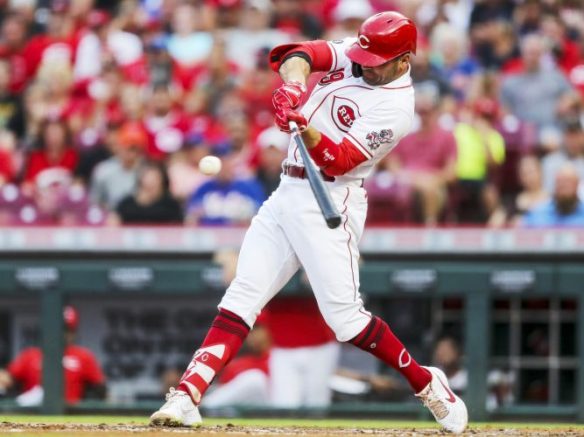
Joey Votto, looking like a man infected with a combination of St. Vitus Dance and laughing gas. If it helps get him to Cooperstown, he won’t complain.

This is the kind of person Joey Votto can be. One minute, he’s his own kind of crazy. Especially with a bat in his hands. The next, he’s . . . well, the word is onorevole in Italian. In Yiddish, the word is mensch.

On 19 July, in San Diego, Votto fumed over a call at the plate in the first inning, resulting in himself and Reds manager David Bell being tossed. Votto thought he’d checked his swing on a 1-2 pitch missing up and away. The plate umpire sought help; the third base umpire said Votto went. Replays showed it was hair-thin close. It could have gone either way.

Votto and the arbiters kept it civil until the third base ump, apparently, said something to trip Votto’s trigger. Votto could be seen (and heard?) saying, “what the (fornicate)?!?” The plate ump interjected, as if to suggest Votto had no business talking to the third base ump. Bell hurried out to protect his player to no avail. Both got sent to bed without their supper.

In the Petco Park stands (the Reds were playing the Padres), a six-year-old Los Angeles girl named Abigail—wearing a Votto T-shirt, attending her first live major league game—cried because she wouldn’t get to see her hero play all game long. Another fan tweeted a photograph of Abigail in tears.

Somehow, someone on the Reds caught the tweet and made Votto aware of her. So he sent Abigail a ball he signed, “I am sorry I didn’t play the entire game. Joey Votto.”

The next afternoon, there were Abigail and her family in the Petco field boxes, courtesy of Votto and the Reds. Votto went out of his way to meet her, in her Reds T-shirt and a large bow with baseball stitching in her hair. He signed anything she handed him and left her with a grin about equal to the distance of a textbook Votto line drive hit.

Now, this is the kind of baseball player Abigail picked as a hero: As the irrepressible Jayson Stark has exhumed, Votto’s one of only six players in Show history to lead his league in on-base percentage seven times or better. He’s done it seven times. The other five: Ted Williams (twelve), Babe Ruth (ten), Barry Bonds (ten), Rogers Hornsby (nine), and Ty Cobb (nine). You may have noticed all but one of them are Hall of Famers.

A Canadian who grew up with a poster of Williams tacked on his bedroom wall, Votto will be a Hall of Famer in due course.

Spare me the lack of three thousand hits (he isn’t likely to reach that number) or five hundred home runs (he isn’t likely to get there, either). The Hall of Fame was supposed to be about greatness, not raw totals. With two more years on his current Cincinnati contract and at age 37, Votto isn’t going to join the 500 bomb club or the 3,000 hit club unless he swings a telephone pole for a bat before he’s Jack Benny’s (alleged) age.

But he’s going to be remembered for all-around greatness. The sole legitimate question around Votto’s Hall of Fame case is whether he’ll make it on the first try or have to wait a few.

As of Wednesday morning Votto’s was A Space Odyssey hit total: 2,001. Guess what. According to my Real Batting Average (RBA) metric (total bases + walks + intentional walks + sacrifice flies + hit by pitches), if Votto’s career ended the instant I wrote the words he’d become the number three Hall of Fame first baseman whose career came entirely or mostly in the post-World War II/post-integration/night-ball era:

HOF First Base PA TB BB IBB SF HBP RBA
Jim Thome 10313 4667 1747 173 74 69 .653
Jeff Bagwell 9431 4213 1401 155 102 128 .636
Joey Votto 7978 3433 1265 143 46 63 .620
Willie McCovey 9692 4219 1345 260 70 69 .615
Harmon Killebrew 9833 4143 1559 160 77 48 .609
Orlando Cepeda 8698 3959 588 154 74 102 .561
Eddie Murray 12817 5397 1333 222 128 18 .554
Tony Perez 10861 4532 925 150 106 43 .526
HOF AVG .597

Stark narrows his seven-or-more OBP titlist list to those who won seven in any ten-year period. The list shrinks to Hornsby (eight), Williams (seven), Ruth (seven), Cobb (seven), and Votto (seven). “How’s that,” Stark asks, knowing the answer good and well, “for a Mount Rushmore of OBP?”

How’s this, too, for a winning player? Baseball-Reference says the Reds would win 75 percent of their games if they could run a lineup of nine Joey Vottos to the plate. Since they’re playing a 162-game season this year, that would equal 122 wins. A Reds lineup of nine Vottos wouldn’t be eight and a half games behind the National League Central-leading Brewers. But they might be about 28.5 games ahead.

You might care to know, too, that among active players the guy Reds fans call Vottomatic is number two for career OPS+ with 148. That’s 27 points behind the active leader. A fellow (albeit still on this year’s injured list) named Mike Trout. You can do an awful lot worse than pull up second behind Trout.

Allow me to tell you what RBA says about Votto by leverage. We’re talking about the most game-on-the-line moments in which Votto’s checked in at the plate over his entire career through this morning. No one can premeditate the situation in which a batter will step up to the plate at any time–unless he’s being sent out to pinch hit. But RBA says Votto’s one beast you wish you could save for premeditated high-leverage plate appearances:

Joey Votto PA TB BB IBB SF HBP RBA
High leverage 1510 687 274 77 19 13 .709
Medium leverage 2769 1140 442 30 22 21 .598
Low Leverage 3699 1606 549 36 5 29 .601

Essentially, he’s the same batter overall in low as in medium leverage, adjusting for a few particulars. (His combined RBA in those two situations: .600.) But he’s 109 points more monstrous in the highest leverage moments, the moments when the game’s likely outcome is most squarely on the line or close to it.

As a defensive first baseman? A guy who’s 55 defensive runs saved above his league average, lifetime, isn’t exactly lame with the leather out there. He’s not the rangiest first baseman ever to patrol the pad—but neither was Lou Gehrig. He’s gotten the job done and then some. He’s probably also used the position to keep fans at home and on the road entertained with more than a few amusing quirks and tricks.

Small wonder fans in road ballparks forgive Votto his periodic needles and horseplay at their expense. (He once needled a friendly road fan with, “I remember you when you used to be thin.”) Small wonder young fans like little Abigail in San Diego weep when he gets tossed too early for arguing with umpires who still think (erroneously) that they’re Gods, Jr.

Small wonder, too, that fans such as another young girl in Atlanta last week think they can will Votto to prolific evenings.

A week ago, the Braves beat the Reds in eleven in Truist Park, 8-6. Votto did everything he could think of, short of spiking the Braves’ Gatorade with a liquid sedative, to enable a Reds win. He had a little help from his new young friend, to whom he gave his game jersey as he walked off the field following Ozzie Albies’s game-ending three-run homer.

What a surprise he’d do that: She coaxed him all game long. Votto swore the young girl called every one of his four hits on the night: a line single to somewhat deep center in the top of the first, a two-run homer in the top of the sixth, a line single to right setting up first and third in the top of the seventh, another two-run homer in the top of the ninth to tie the game at five. (Apparently, she didn’t call the full-count, bases-loading walk he coaxed out of Braves pitcher Touki Toussaint in the top of the third.)

The fact that both homers made Votto the first Red since Hall of Famer Frank Robinson to hit fourteen bombs in a twenty-game stretch—after becoming the eighth in Show to hit one out in seven straight games—was almost irrelevant. Almost.

“We made an agreement before every at-bat,” Votto told the press after the game. (When you like us, we’re the press. When you hate us, we’re the media.—William Safire.) “I talked to her a little bit mid-at-bat and she was screaming at me and supporting me. I’m not sure if it’ll end up on social media, but she was incredibly supportive despite lots of people that were not on her side. We almost did it together.”

Just another night at the park for Crazy Joey Votto, also known as future Hall of Famer Onorevole Mensch.

The first five days

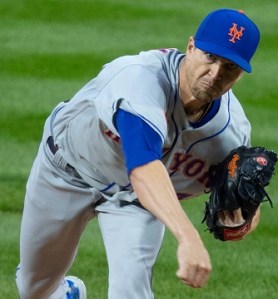
Stop me if you’ve heard it before: Jacob deGrom pitched like a Hall of Famer, but the new Mets bullpen puked the bed like the old one did.

The fans are back in the stands, however limited by ongoing COVID-19 safety protocols, but the Nationals have yet to play a regular-season game thanks to a few players and a staffer or two testing positive. There went that Opening Day must-see match between Max Scherzer and the Mets’ Jacob deGrom.

With their opening set with the Nats thus wiped out, deGrom had to wait until the Mets went to Philadelphia Monday. Oops. That and everything else seemed to play a support role to the horrid news out of San Diego.

The news that Fernando Tatis, Jr., the Padres’s new bazillion dollar shortstop, suffered a partial left shoulder dislocation on a hard third inning swing at the plate during a Monday loss to the Giants.

Padres manager Jayce Tingler told reporters he thinks team trainers and medical people were able to pop the shoulder back together, but the team isn’t taking chances. At this writing, MRI results aren’t available and nobody knows yet whether Tatis will spend significant time on the injured list.

If it’s more than a small shoulder dislocation, it may not be significant time. If it’s something like a labral tear, Tatis could miss six months—essentially, the rest of the season—according to one doctor who knows such shoulder troubles and spoke to the Los Angeles Times. Don’t fault the Padres if they’re saying to themselves, “Thank God for insurance.”

DeGrom could use a little extra insurance himself, alas. The good news for the Mets: deGrom was his usual self Monday night. Six shutout innings, seven punchouts, three hits, three-figure speed on his fastballs. The bad news, alas: the Mets are gonna Met, so far. At least out of the bullpen.

Their on-paper impressive offense found nothing more than two runs to support their ace. They got an inning of shutout relief from Miguel Castro relieving deGrom for the seventh, but the bullpen puked the bed in the eighth—including hitting Bryce Harper with the bases loaded. Not exactly a Rhodes Scholarship move there.

The Old Fart Contingency thundered aboard social media that Mets manager Luis Rojas blew it lifting deGrom after six strong—until they were reminded the added layoff after the Washington postponement put both deGrom and the Mets into caution mode.

“If that was [last] Thursday and I’m on normal rest,” the smooth righthander said postgame of the early hook, “I don’t think there is any chance I’m coming out of that game. We discussed it before what was the right thing to do. Long season and talking to them coming in, it felt like was the right decision.”

It was neither deGrom’s nor Rojas’s fault that, after Garcia took care of the Phillies in the seventh with just one infield hit within a fly out and two ground outs, the Phillies loaded the bases on the Mets’ new relief toy, Tyler May, in the eighth with one out, before Rojas went to another new Met bull, Aaron Loup. And Loup promptly hit Harper to push Miller home, before J.T. Realmuto singled home pinch runner Quinn, Mets late third base replacement Luis Guillorme threw home off line allowing Harper and Rhys Hoskins to score, and Didi Gregorius pushed Realmuto home with a first-pitch sacrifice fly.

The Mets had nothing to answer except a two-out ninth-inning stand that came up two dollars short against Phillies closer Alvarado. Kevin Pillar singled up the pipe, Francisco Lindor—the Mets’ own new bazillion-dollar lifetime shortstop—dumped a quail into shallow right that landed just in front of and then off the glove on oncoming, diving Harper, and Michael Conforto singled Pillar home while setting up first and third.

Pete Alonso, their 2019 Rookie of the Year bomber, hit one to the back of right field that looked as though it had a chance to ricochet off the top of the fence if not clear it. It wasn’t quite enough to stop Harper from running it down, taking a flying leap with his back against the fence, and snapping it into his glove to stop a game-tying extra-base hit and end the game with the Phillies on the plus side, 5-3.

Marry the foregoing to deGrom going 2-for-3 at the plate including an RBI single, and no wonder May himself said post-game, “Jake shouldn’t have to do everything himself. That’s not what teams are, and frankly Jake did almost everything today.”

Just don’t marry that to things such as the Angels’ Shohei Ohtani hitting 100+ mph on the mound and hitting a mammoth home run that flew out 100+ mph in the same inning last Friday night. Ohtani the two way player is an outlier among outliers; deGrom’s merely an outlier.

As of Tuesday morning— with the National League’s pitchers having to bat because Commissioner Nero simply couldn’t bring himself to keep the universal designated hitter this year at least, and Ohtani batting second in the Angel lineup the night he started on the mound, among other things—the pitchers have a .131/.157/.192 slash line and a .349 OPS.

The pitchers at the plate from Opening Day through the end of Monday night collected thirteen hits in 149 plate appearances: nine singles, three doubles, and Ohtani’s Friday night flog a third of the way up Angel Stadium’s high right field bleachers. They also walked three times and struck out 56 times. And the OFC still insists the National League just say no to its own invention.

All around the Show, too, there was one home run hit every 35 plate appearances and fourteen percent of all 928 hits the season’s first five days cleared the fences. It took five outs to create a single run, with 5.3 average runs created per game and 631 runs created while 559 scored.

It was fun to hear the fan noises even in limited capacities, too, though the limits in Angel Stadium made Ohtani’s blast sound even more explosive at the split second he hit it. If only things had been more fun for the home crowds: the many themes for the Show’s first five days could include, plausibly, the blues classic “On the Road Again.”

The home teams’ slash lines: .225/.313/.374/.687 OPS. The road teams: .245/.328/.403/.731 OPS. The road teams drove in fifteen more runs, hit thirteen more home runs, seven more doubles, and had seventy more hits overall. They also took eleven more walks, though they struck out fifty more times and grounded into fifteen more double plays. The road rats also had a +29 batting average on balls in play over the home boys and 108 more total bases while they were at it.

Maybe the shocker among the opening road rats were the Orioles. The Woe-rioles. Taking three straight from the Red Sox in Fenway Park. Out-scoring the Olde Towne Team 18-5, including and especially an 11-3 battering on Sunday afternoon. Even those paranoid about ID cards might want to insist the Orioles show theirs, even after the Orioles got a brief return to earth from the Yankees beating them 7-0 Monday in New York.

Unless it was the Reds, taking two out of three from the Cardinals to open, including and especially a 12-1 battering Sunday afternoon that proved the best revenge against abject stupidity is to slap, slash, scamper, and smash your way to a six-run seventh when you’re already up three runs—thanks to Nick Castellanos ripping Cardinal starter Carlos Martinez for a two-out, three-run homer an inning earlier.

Castellanos got drilled by Cardinals reliever Jack Woodford Saturday . . . two days after he bat-flipped a home run. Then, when he dove home to score on a wild pitch, Castellanos got bumped by Woodford sliding in to bring down the tag Castellanos beat. Castellanos sprung up, barked at Woodford, and began walking away before trouble could arrive. Oops. Trouble arrived—when Yadier Molina shoved him from behind to spark a bench-clearing brawl.

Baseball government myopically suspended Castellanos two games for “provoking” the brawl. Who’s baseball’s official optician? Who couldn’t see what everyone else with eyes saw? And how long has Molina—handed only an “undisclosed fine” along with a few others in the scrum—been so privileged a character that he can get away with the actual kickoff of a brawl that was seeded in the first place because the Cardinals are one of the game’s self-appointed Fun Police precincts?

“I was pleased,” Cardinal manager Mike Schildt told the press after that game. “Our guys came out there. We’re not going to take it. I know Yadi went immediately right at him, got sidetracked by [Cincinnati’s Mike Moustakas]. Woody, to his credit, got up and was like, ‘I’m not going to sit here and be taunted.’ Good for him.”

Taunted? All Castellanos said when he sprang up, by his own admission, was “Let’s [fornicating] go!” Anyone who thinks Woodford lacked intent didn’t see that ball sailing on a sure line up into Castellanos’s shoulder and rib region. Nor did they see Molina very clearly shoving Castellanos without Castellanos having the benefit of a rear-view mirror.

Castellanos appealed the two-game suspension. The final result wasn’t known at this writing. But the Cardinals should be getting a message of their own: Defund the Fun Police. Pronto.

How about the Astros, who went into Oakland and swept four from the Athletics before ambling on to Anaheim and losing 7-6 to the Angels Monday night? That was despite dropping a three-run first on Angel starter Jose Quintana and yanking a fourth run out of him in the top of the fourth, before the Angels finally opened their side of the scoreboard with Mike Trout (of course) hitting Luis Garcia’s 2-2 meatball about twelve or thirteen rows into the left field seats.

The Angels pushed a little further back, the Astros pushed a little further ahead, until the Angels ironed up and tore four runs out of the Astros in the bottom of the eighth with an RBI single (Dexter Fowler), a run-scoring force play (David Fletcher), a throwing error (on Jared Walsh’s grounder to first), an intentional walk (to Trout, of all people), and a sacrifice fly (Anthony Rendon).

Kyle Tucker’s ninth-inning solo bomb turned out more a kind of excuse-us shot than a last stand. The game left both the Astros and the Angels at 4-1 to open the season and what could be very interesting proceedings in the American League West. Now, if only the Astros could finally get past Astrogate.

They’ve been playing and winning through numerous catcalls, howls, and even a few inflatable and actual trash can sightings in Oakland and Anaheim. Jose Altuve—who’s looked more like his old self at the plate so far—seemed mildly amused when an inflatable trash can fell to the warning from those high Angel Stadium right field bleachers.

Astrogate was and remains anything but amusing. The Astros could keep up their torrid opening and overwhelm the AL West this season, but the scandal won’t go away entirely (nor should it) until the absolute last Astrogater standing no longer wears their fatigues. Yes, you’ve heard that before. That doesn’t make it any less painful for Astro fans or less true for everyone else. The Astros, nobody else, wrote the script that made them pariahs. Bang the cans slowly, fans.

Will off-field-based illegal electronic sign stealing disappear at all? Players got same-game video access back this year. There are three security people in every team’s video room at home and on the road. League cameras have been installed in those video rooms. Maybe it wouldn’t hurt to add guard dogs?

The players union agreed last year: there’ll be no more players getting away with murder even in return for spilling the deets—the commissioner can drop a lot more than a marshmallow hammer on the cheaters from now on. All by himself. He can demand answers without plea bargaining. And he doesn’t need a permission slip.

“But one of the prevailing lessons from the electronic sign-stealing era is that even if a scheme sounds far-fetched, someone might give it a whirl if they believe they can get away with it,” writes The Athletic‘s Evan Drellich, one of the two reporters (Ken Rosenthal was his partner) who helped break and burrow deep into Astrogate. “This holds true no matter what MLB does. Even a total ban on electronics, which the players would never agree to, would not be enough. In that case, a player or staffer could simply go rogue.”

In other words, boys will be still be boys, if they can-can.