The bench is for fannies, not fists

Huascar Ynoa

Repeat after me, young marksman: To err is human, to forgive is not bench policy when it meets a flying fist.

I don’t want to be a spoilsport or anything, but some baseball traditions manage to hang around in spite of themselves. Traditions like the guy who performs a feat of back-to-back derring-do one moment, then swings himself out of the starting rotation and into “a couple of months,” maybe the rest of the season, on the injured list the next.

Let the record show that Braves pitcher Huascar Ynoa had every right on earth to feel frustrated Sunday evening, after the Brewers slapped him and his silly for five runs on nine hits, including Avisail’s two-homer that bumped out of center fielder Endier Inciarte’s glove web over the wall, en route a tough enough 10-9 Braves loss.

Let the record show further that rightful frustration doesn’t necessarily counsel you that it’s wise beyond your years to punch the dugout bench out after you’ve been removed mercifully enough from further slappage.

“I knew he had done it and it was sore,” said Braves manager Brian Snitker, after the Braves’ team flight back to Atlanta, “but in the flight it started bothering him more. They checked [Monday] morning and it was a fracture. It’s a shame.”

Maybe hitting home runs including a grand salami during back-to-back starts gives a young man an unlikely and perhaps unreasonable sense of his own invincibility. But maybe Ynoa will learn the hard way that, frustration or no, bad outing or no, benches are for fannies, not fists.

He joins not that fraternity of ballplayers who sent themselves to the injured list in freak accidents. He joins the dubious brotherhood of boneheads who thought they could punch their way out of their bad moments by taking on inanimate objects that don’t hit back but leave mucho damage when they’re hit at all.

The core reasons are as varied as the ways you can win or lose a ball game. There’s no way to predict just what will make a player mad at himself in any inning, on any day.

When Pat Zachry established himself as a new Mets ace, after being traded there in a package sending the Reds the old (and Hall of Fame) Mets ace (Tom Seaver), he faced his old buds from Cincinnati a year later and ran right into Pete Rose’s then-36-game hitting streak.

Zachry kept Rose quiet until the seventh, when Charlie Hustler slapped a single. A couple of batters later, Zachry was lifted from the game and not a happy trooper about it. He decided to kick whatever came within reach of his hoof . . . until he saw a stray batting helmet. He reared back to deliver, then—as if the helmet was the football Lucy kept jerking away from Charlie Brown—swung his foot, missed the helmet, and nailed a concrete block.

Broken foot. Season over. Zachry was probably grateful if no teammate decided to serenade him upon his return the following spring with a chorus or three of a certain old hit by Paul Revere and the Raiders.

A.J. Burnett had a tough enough time pitching in 2010 without deciding the way to take out his frustrations after the Rays made a pinata of him one fine day was to punch out . . . the clubhouse doors. The good news was that Burnett didn’t miss serious time. (Cue up Teddy Pendergrass.) The better news: He wasn’t half as foolish as another short-term Yankee six years earlier.

Kevin Brown wasn’t having a bad 2004 despite a few little injuries in The Stripes when he ran into the Orioles in early September, came out in the sixth inning, and tried to challenge a clubhouse wall with his fist. Guess who won that debate and took Brown out of action for three weeks. We’ll have a wild guess that it was a long time before Brown could listen to a certain Pink Floyd song without cringing.

Legend has it that Elvis Presley was given to picking up a pistol and blowing out the screen whenever he saw something (or someone) he didn’t like on television. Jason Isringhausen once saw and raised Elvis, during his final season as a Cardinal: Having a bad 2008 as it was, Isringhausen decided like Popeye that was all he could stand because he couldn’t stand no more, after Jason Bay blasted a three-run homer on his dollar.

He punched a television set out—cutting his hand and ending up on the old disabled list for fifteen days. The least advisable music with which to serenade him the rest of the year was probably this Allan Sherman chestnut about a pair of early 1960s TV addicts, even if the song was funny as hell otherwise.

Boys will be boys, grown men will be boys, but when on earth will even the most severe competitors finally figure out that certain inanimate objects (in the case of Isringhausen’s would-have-been-victim, inanimate is in the eye of the beholder) live by the motto, “To err is human, to forgive is not my policy?”

Lucky for Ynoa that he doesn’t yet have even a short-term a reputation as, shall we say, a testy guy. John Tudor, ordinarily a quiet fellow who preferred to let his pitching do about 90 percent of his talking, had that reputation to some extent. It was more than a little unfair.

When he felt like using his mouth to cover the other ten percent, Tudor was actually thoughtful, articulate, sensitive, self-aware, and modest. (His least favourite subject was himself.) At least, he was with writers who treated him like a man and not a commodity. When he incurred difficult times with the press, as he did down the stretch in 1985, Tudor could and did bristle enough to challenge at least one writer to put his fists where his mouth was.

When he got knocked out of Game Seven of that World Series at the earliest time in his career that he’d ever been chased (his often-troublesome shoulder gave out), Tudor went into the clubhouse, took a swing at an electric fan with the hand by which he earned his living, and needed a hospital to stitch it up. Tudor apologised publicly one week later. (The following spring training, he admitted to Thomas Boswell the incident and bad press still bothered him: “I can’t worry about it, but that’s not saying I like it.”)

But in the immediate moment, word of Tudor’s ill-fated fan-shake reached the press box. Apparently, at least one of the occupants was one of his least favourite writers. The feeling was surely mutual enough. Said writer whose identity is lost to time and memory is said to have cracked, “Ahhhhh, the sh@t finally hit the fan!”
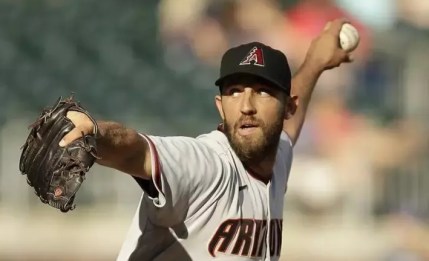
Yes he did pitch a no-hitter. Wanna fight?

Madison Bumgarner

Bumgarner won’t get credit for his no-hitter because . . . seven innings, in a doubleheader now mandated as two seven-inning games. But he damn well should get it.

Repeat after me: Madison Bumgarner pitched a no-hitter Sunday afternoon. Madison Bumgarner pitched a no-hitter Sunday afternoon. See? Simple, and appropriate.

The carpers carp that MadBum won’t and shouldn’t get credit for a no-hitter because of the seven-inning rule applied to doubleheader games. That’s almost as bad as saying Bumgarner himself decided to help make the rule so let it be on his head and to his discredit. They’re both false, too.

Bumgarner worked his seven innings, struck out seven, and might have had a perfect game if not for Diamondbacks shortstop Nick Ahmed’s throwing error on Braves second baseman Ozzie Albies’s grounder leading off the bottom of the second. MadBum’s mates gave him a cozy five-run lead before he even had to throw a pitch, then tacked on single runs in the third and the sixth.

The lefthander with the 747 wingspan spread as he’s about to deliver is being cheated out of his propers because of a strange contradiction. A 1991 rules change declared no-hitters to be nothing less than nine innings with the pitcher finishing on the winning side. That was prodded by Yankee pitcher Andy Hawkins’s no-hit loss to the White Sox in Chicago, where he didn’t have to pitch the ninth.

The rule changers then didn’t ponder what didn’t occur to them, the wherefores of un-hit pitchers in official games made less than nine innings by future rule changes. Such as the pan-damn-ic safety protocols prompting makeup games required for any reason being parts of doubleheaders and going only seven innings each.

That doubleheader rule was held over for this season, of course. When last I looked, those between the commissioner’s office and the Major League Baseball Players Association who agreed to keep such doubleheaders this year didn’t include Madison Bumgarner.

So playing within both the 1991 no-hitter rule adjustment and the pan-damn-ic doubleheader innings limit does him no favours. He gets credit for a complete game but not a no-hitter. Bumgarner wuz robbed.

Let me go back on record right now to say again that I approve of doubleheaders with seven-inning games—because they make just plain common sense. Old Fart Contingency members who denounce them as just more kowtowing to candy-ass contemporary players are invited hereby to stuff those denunciations, then learn or re-learn a little baseball history.

In Game of Inches, Peter Morris—a baseball historian whose specialty is the earliest baseball generations and the debunking of longtime myths about them—recorded that the doubleheader actually predated the professional game, until it died awhile because when the game went professional team ownerships felt a little (ho ho) funny about two for the price of one keeping money out of their kitties.

“When the National Association began in 1871, there were no doubleheaders. Nor were there any the next year,” noted The Hardball Times‘s Chris Jaffe in 2010. “Professional baseball had its first one in 1873, and it would prove to be the only one in the five-year history of the NA. It took place on the Fourth of July, which was fitting because this would quickly become one of the great days for doubleheaders in baseball.”

Fast forward. The ancient American Association challenged the National League as a major baseball league. By 1891, the upstarts finally so inspired the National League that, in that season, the NL played more doubleheaders than the AA.

Mostly a holiday occurrence at first (Jaffe notes Memorial Day 1883 as the first time all Show teams played doubleheaders on the same day), the full decade of the 1890s showed the National League—having it all to itself with the AA’s collapse—playing doubleheaders a quarter of the time all decade long.

Oh, yes. There was one distinctive trend within the NL’s growing doubleheader friendliness: the bottom-feeding teams played the most doubleheaders. “This was an especially important development, because it remained true for decades,” Jaffe observed.

That makes sense if you think about it. Poor teams need an added inducement to convince the fans to come out and see them. Perhaps more importantly, when they traveled on the road their opponents needed an extra bit of persuasion to convince rooters to see what promised to be some lackluster on-field performances.

After the American League formed and joined in the Show fun, times came when teams often played 25 doubleheaders a season and sometimes more. The doubleheader had far less to do with the good of the game than with making money for the owners—especially those owning the also-ran teams who needed whatever they could get to draw fans at home, and those owning the more powerful teams who needed to draw fans when the also-rans came to town.

The Great Depression really exposed that one. From 1930-34, the National League teams averaged 36 percent a year’s schedule in doubleheaders and the American League teams, 30 percent. During World War II, the NL’s teams averaged 46 percent of their schedule in doubleheaders and the American League’s teams, 45 percent—including AL teams playing practically half their schedule in doubleheaders in 1943 and the NL teams doing likewise in 1945.

If a National League team had played just one more doubleheader, it would have meant over half the league’s games being played in twin bills.

Naturally enough, nobody gave much thought to what it might take out of players to play so many doubleheaders in a season. Especially the 1943 White Sox. For whatever reasons, those White Sox alone played an unconscionable 44 doubleheaders. Those included eleven in July, eleven between September’s beginning and the 1 October regular-season finish, and 27 pairs of doubleheaders played either on back-to-back days or with an off-day between them.

Never mind Hall of Famer Ernie Banks’s fabled watchword, “It’s a beautiful day—let’s play two!” You try thinking about playing 36 innings of baseball in two or three days by design rather than by extra innings happenstance. You might be at least as exhausted thinking about it as the men who played those innings in that stretch must have been playing them.

Doubleheaders began fading away little by little by the end of the 1950s. But it’s to wonder why baseball’s overlords of the era previously discussed didn’t even think about considering seven-inning games for doubleheader days. The ’43 White Sox played 774 innings worth of doubleheaders before extra-inning games are considered (eight times a White Sox doubleheader game went to extras that year); if they’d been seven-inning games, they would have played 602 doubleheader innings.

Discussing in February the pan-damn-ically inspired rule changes that should be kept or dumped, CBS Sports writer Mike Axisa applauded keeping doubleheaders of seven-inning games:

Games are going to be postponed, potentially a lot of games, and they will have to be made up at some point later in the season. We saw teams play three doubleheaders in a single week at times last year. MLB has to assume something like that will happen again, in which case seven-inning doubleheaders are a necessity. You can’t ask players to run themselves into the ground like that.

. . . [O]f all the 2020 rule changes MLB and the MLBPA should consider for 2021, this is the one that most has to happen . . . It’s less wear and tear on the players, and less time at the park equals less exposure to the pandemic for players, coaches, stadium workers, and fans. Seven-inning doubleheaders are a must.

They should be a must even beyond the eventual end of the pan-damn-ic. Especially for the reason Axisa said primarily. Baseball players aren’t automatons who can play endlessly, no matter what the Old Fart Contingent thinks or maybe even wishes. They’re human beings, with human limitations, no matter how much baseball talent and skill they bring while it’s there for them to bring. (“By the time you finally learn how to play,” mammoth bombardier Frank Howard once said, “you can’t play anymore.”)

Forget how much money they’re earning. Forget Hall of Famer Willie Stargell’s memorable observation, during a long and arduously-traveled road trip, “The umpire doesn’t say, ‘Work ball’.” Professional baseball requires hard work to play. It’s not a question of just suiting up, going out to play seven or nine innings, then changing clothes with a shower and heading home.

Madison Bumgarner went to the mound Sunday in a lawfully-scheduled seven-inning game under rules he didn’t make . . . and didn’t surrender a single hit. He earned credit for the win. The 1991 no-hitter rule change didn’t account for arbitrarily but necessarily changed structures of doubleheaders, and Bumgarner didn’t ask for a seven-inning game to start half a twin bill.

Officially, MadBum gets credited with a complete game. Also officially, he gets no credit for a no-hitter. If you can tell me how much sense that makes without tripping over both of us, you’re a better manperson than I. Far as I’m concerned, the seven-inning doubleheader needs to stay beyond the pan-damn-ic . . . and Madison Bumgarner damn well did pitch a no-hitter.

Don’t blame replay for Bohm staying safe

Travis d'Arnaud, Alec Bohm

Repeat after me: Alec Bohm was out at the plate . . . Alec Bohm was out at the plate . . . (Atlanta Journal-Constitution photo.)

The arguments against using replay to determine close plays included that it would take a big, big, big piece of the human factor out of a game. Well, what the hell was that we saw in Atlanta Sunday night?

It was the human factor getting it wrong despite having what Braves pitcher Drew Smyly called five different angles on a nationally televised game.

It was home plate umpire Lance Barrett missing a call on a bang-bang play at the plate in the top of the ninth but the replay review crew out of New York essentially doubling down on the wrong call, despite how right Smyly was and having five or even more angles to review.

It was Phillies third baseman Alec Bohm colliding with Braves catcher Travis d’Arnaud as he arrived sliding as d’Arnaud with the ball lunged to block the plate, forcing Bohm to slide just offline enough to miss touching the plate even with his lead foot.

It was the Phillies winning 7-6 when the Braves went three-and-three in the bottom of the ninth and Bohm saying almost nothing but, “I was called safe. That’s all that matters.” Note that “I was called safe” isn’t exactly the same thing as saying, “I was safe.”

Even the Mets weren’t that coyly disingenuous about Michael Conforto elbowing his way to a blown call in his favour and a bases-loaded hit-by-pitch walkoff against the Marlins last Thursday.

With one out in the top of the ninth Phillies shortstop Didi Gregorius lofted a fly the other way to left. Marcell Ozuna strode in toward the line to catch it. As Bohm tagged at third, Ozuna fired a two-hop strike down the line that hopped into the crouching d’Arnaud’s mitt. In the same split second d’Arnaud turned right, his folded leg across the plate with the tag on the sliding Bohm’s back leg.

D’Arnaud did bump Bohm in front of the plate for a moment. Bohm’s left foot, his lead foot, never touched the plate, flying just over it, and neither did the rest of his body parts, before he sprang up in a bent-knee pirouette and turned another one upright, waving his arms, including one wave that looked as though he were making a safe call.

If you want to give Barrett a benefit of the doubt you could say plausibly that d’Arnaud sprawling across the plate after the bumping tag on Bohm might (underline that) have obstructed his full view of Bohm’s slide.

“We saw it,” insisted Phillies manager Joe Girardi standing by his man and the review crew at once. “It looked like his big toe kind of hit the corner of the plate is what we saw when we saw a lot of the angles.”

I saw it, too, from a lot of the angles. For Girardi to say that, Bohm’s big toe must have been on his heel. On the angle his foot flew over the plate, his heel was actually a hair or two closer to hitting the plate than his big toe was.

Smyly didn’t pitch all that well Sunday night—he surrendered five runs on five hits in five innings’ work, including a two-run homer to Ozzie Albies in a three-run first and a leadoff solo to Freddie Freeman in the bottom of the fifth. But his perspective on that play at the plate was anything but impaired.

“[I]t’s clear that his foot didn’t touch the plate, that it was on the chalk,” Smyly told reporters post-game. “Everyone saw it and sees it, everyone knows it. And for MLB not to overturn that, it’s embarrassing. Why even have replay if you won’t overturn that? That’s the way I feel about it. I think everybody feels that way. There’s five different angles. It’s clear, he didn’t touch the plate.”

#HeDidntTouchThePlate became a Twitter hashtag almost as fast as the original play went down in the first place. Better that than the Truist Park audience throwing debris down onto the field. They had every right to be outraged, but better chanting (as they did) Bull-[sh@t]! Bull-[sh@t!] than throwing junk and at least one bottle kept from doing damage by, ironically, the netting hoisted to protect fans from bullet-fast foul balls.

Braves shortstop Dansby Swanson, himself native to Atlanta, may have felt his team got jobbed, but he wasn’t too thrilled about the fans’ display, either. “It’s an embarrassing representation of our city because I know from being from here, that’s not how we act,” he said after the game.

And then probably the worst part of it all, I don’t think people realize we have families here. There are kids that are here, kids that are sitting in the front row, and you’ve got bottles whizzing by their heads. Just endangering kids that may not be able to protect themselves is downright embarrassing, and it should never happen again. It just can’t happen, and it never needs to happen again.

It spoiled a night on which both teams brought their bats to town and swung them with authority. From Albies in the first and Freeman in the fifth to Ronald Acuna, Jr.’s fourth-inning sacrifice fly and mammoth seventh-inning home run. From Rhys Hoskins’s leadoff bomb in the fourth and Gregorius’s three-run homer two outs and back-to-back singles later, to Bryce Harper’s opposite-field leadoff launch seven or eight rows into the left field seats in the sixth.

When The Athletic queried the New York replay crew about the Bohm safe call, the journal received an e-mail reply: “After viewing all relevant angles, the Replay Official could not definitively determine that the runner failed to touch home plate prior to the fielder applying the tag. The call STANDS, the runner is safe.” How many angles was “all relevant angles?”

“It makes me not even want [replay review] anymore,” d’Arnaud said. “Honestly, it just slows the game down. It took like five minutes for them to decide that and, to me, they got it wrong. So I’d rather just not have it and get the game going.”

Some plays take a little longer than five minutes to decide, some take a little less. D’Arnaud’s frustration is the most understandable among any Brave. When Conforto was ruled a hit batsman as plate ump Ron Kulpa changed his strike call in the bottom of the ninth last Thursday, Mets broadcaster Ron Darling asked why have replay if the review umpires can’t get it right.

Kulpa admitted his mistake the following day. (He got a lovely ovation from the Citi Field audience Saturday for his admission.) Barrett hasn’t weighed back in at this writing. But the issue isn’t replay itself. The issue is that there’s still a human factor in baseball games, major league or otherwise, and that factor can still get it wrong even with every potential angle showing otherwise.

Even a major league player or two ripped the call. Padres third baseman Will Middlebrooks tweeted, “How do you watch that replay and say he’s safe. Hahaha this is a joke.” Of all people, Angels all-everything center fielder Mike Trout tweeted, “So bad…” followed by an emoji showing a smiley face in tears laughing. D’Arnaud’s brother Chase, himself a former major league utility infielder, tweeted back to Middlebrooks and Trout, “the guy makes that call in New York should be interviewed just like players who get interviewed after games.”

Not just by reporters but by baseball’s government, too.

It’s far too early in the major league season for a game and a call like that to wreak real havoc on a pennant race, of course. If the safe call was overturned as it should have been, it would have meant the Braves and the Phillies each at 5-4 and tied for first in the National League East this morning.

But if a replay review crew can still blow what angle after angle showed them wasn’t a runner safe across the plate in mid-April, how egregiously will they blow a similar call down the stretch in a game that weighs like a bank vault on the races?

Georgia on our minds

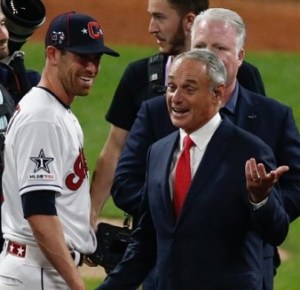
Commissioner Rob Manfred congratulating 2019 All-Star Game MVP Shane Bieber. Did he think deep or hard before moving this year’s All-Star Game out of Atlanta?

Most of us, generations be damned, grew up hearing the two most certain of life’s certainties are death and taxes. Everyone has candidates for the third certainty, including that which reminds us of one thing that crosses partisan lines even if the partisans forget the other side does it, too.

Translated to baseball terminology, that thing seems to be demanding a replay review when ball four is called in election races on what they think they threw for strike three. When such a review turns into something such as a new state election law, as in Georgia, there comes a fourth guarantee: somebody isn’t going to like it.

A lot of somebodies don’t like the law. Such somebodies as former Georgia state lawmaker Stacey Abrams and President Joseph Biden. A lot of not-so-much-somebodies don’t like the law, either, and their agitation as much as any other factors have prompted among other things major league baseball’s government moving this year’s All-Star Game and college draft out of Atlanta’s Truist Park.

Abrams had skin in the game going in. She lost Georgia’s 2018 gubernatorial race to Brian Kemp, who signed the omnibus bill into law earlier this month, by 50,000 votes, claiming then-Georgia secretary of state Kemp erased thousands from state voter rolls.

Kemp had skin in the current game going in, too. For the heinous offense of certifying that now-former president Donald Trump didn’t push the winning run across the state plate in the bottom of the twelfth, regardless that Kemp wasn’t exactly known to favour anyone other than Trump, Kemp faced Trump’s none-too-silent wish to see him thrown out of the league.

The most understandable result of Trump’s post-campaign campaign to overthrow his loss to Biden might have been Georgia and other states reviewing and tightening up their election laws. The only place where fury and back-and-forth charges of foul get more furious might be a baseball game decided (in truth or in allegation) by a close call for or against one or the other side at the final out.

Election shenanigans have been as common in American politics as yard signs, and they didn’t begin or end with such ancient players as New York’s Tammany Hall, Chicago’s Daley Machine, Kansas City’s Prendergast Machine, or Nassau County’s (Long Island) Margiotta/D’Amato Machine. Wherever you landed observing Trump vs. Biden, your least shocking revelation would have been one or another state addressing their election laws in the aftermath.

When Kemp signed the new Georgia election law, Abrams charged that it “suppresses voters, criminalizes compassion & seizes election authority from local + state officials.” That statement wasn’t half as incendiary as Biden’s prompt denunciation of the law as both un-American and as “Jim Crow on steroids.”

Georgia’s real history with Jim Crow is grotesque enough, from state poll taxes (1877) and literacy tests from which descendants from Confederate and Union soldiers were exempt (1907) to the “white primary” rule (1908) that prohibited non-white voting explicitly. Jim Crow in any southern states was (and remains) a portion of American history for which the nation can never be proud.

Now, about the new Georgia election law. Examine deeper than what you see excerpted in the press and aboard social media. Comparing it to Jim Crow is nebulous. It only begins with the fact that mandating seventeen days pre-election (two Saturdays included) for early voting—with mandatory eight-hour-minimum open times and allowance for twelve-hour (7 a.m.-7 p.m.) times—doesn’t exactly “suppress” voters.

A good number of states lack that allowance, including Biden’s home state Delaware which isn’t going to put it in place before the next Congressional election year 2022. Biden himself—with different priorities and a far less grotesque personality, he’s like Trump in showing you wisdom by standing athwart it—also said the Georgia law imposes limits on absentee voting that “effectively” (his word) deny voting to “countless” people. That’s not exactly what the law says or does.

For one thing, no-excuse absentee voting stays in place with just a couple of adjustments. I’d be hard pressed to think a voter is being “suppressed” because the absentee ballot application window is a “mere” 67 days, or because such applications you can now do online, because the state secretary of state is now required by law to offer them online. Or, because the absentee ballot must be received by election officials at least eleven days before Election Day.

Some of the new law’s critics harp about the voter identification portion, which has now shifted it from matching signatures to identification numbers from a voter’s driver’s license or free voter identification card. Lacking either, a Georgia voter can present a photocopy of a utility bill, a bank statement, a paycheck, a government check, or an official document that includes his or her name and address. All they have to do is include the last four digits of their Social Security numbers if they don’t have driver’s licenses or previous voter ID numbers.

If that’s “voter suppression,” I’m Willie Mays. And if that’s something designed to keep non-white voters from voting, I’m hard pressed to comprehend the 2016 Gallup survey that found 77 percent of non-white voters supporting photographic voter identification. You’d think (properly) that non-white voters have just as much stake in preventing real (not alleged) voter fraud as white voters have. And you’d be right.

The new Georgia election law also puts the famous drop boxes into law. They showed up in Georgia for the first time last year thanks to the pan-damn-ic, and now they’re legally mandatory with or without the coronavirus. The new law requires one drop box for every one hundred thousand registered voters or one for every advance vote location in any Georgia county, whichever number is smaller.

Abrams was right about one thing: the new law does “criminalise compassion,” sort of. Giving, offering, or helping give food and/or drinks to people within 150 feet of polling places or within 25 feet of voters in line to vote becomes a legal misdemeanor. Even, seemingly, when the benefactor isn’t discussing the election or particular favoured candidates.

The law also bars ordinary Georgians from photographing or recording their own votes. Guess who gets an exemption from that: the state secretary of state, whom the law requires to create “a pilot program for the posting of digital images of the scanned paper ballots created by the voting system,” with the images becoming “public records subject to disclosure.”

I’ve read about enough early proposals for inclusion in the law that were foolish at minimum, dangerous at most, and thrown out of the bill before it became a final product. But how the hell did that one slip in? How close do you think that one gets to the kind of thing you thought was reserved for the Third Reich, the Soviet Empire, and other authoritarian/totalitarian states who’ve used ballots when allowed at all against their citizens?

Kemp and any Georgia governor has a line-item veto power—but it affects only statewide and state executive budget items. Even he can’t be comfortable with the idea that his or any Georgia secretary of state can come that close to crossing the line from scanning paper ballots to making Georgians’ votes public.

You can bank it. Baseball commissioner Rob Manfred and his minions probably didn’t read the new Georgia law in almost any way, shape, or form. You can understand why, since the law’s volume is 68 percent (92 pages if you’re scoring at home) the length of Philip Roth’s legendary novella Goodbye, Columbus. But the mis- or mal-excerpting of the law did them no favours and puts baseball into a precarious position.

For one thing, the Atlanta Braves themselves aren’t thrilled with baseball pulling the All-Star Game out of their home playpen. Indeed, even Abrams herself has said Georgia companies shouldn’t jump all the way into boycotts but first “use the chance to publicly condemn the law, invest in voting rights expansion and support wide-ranging federal election legislation before they’re targeted with a boycott movement,” as the Atlanta Journal-Constitution puts it.

For another thing, former UN ambassador and Atlanta mayor Andrew Young demurs from any such boycott, especially involving Atlanta, whatever he thinks of the new law, telling The Athletic, “Everything doesn’t depend on sports. But if you hurt the sports, you hurt the hotels, you hurt the airport, you hurt every business in town . . . [Atlanta’s] the 44th largest economy in the world — and, you can quote me, I don’t know why anybody wants to [fornicate] with that.”

Manfred and his look more like knee-jerkers than thoughtful protesters who considered the whole thing reasonably. (They look, in other words, much the way Trump looked when thundering against Maximum Security’s 2019 Kentucky Derby qualification or on behalf of Pete Rose’s Hall of Fame entry without troubling himself with the deets on both rejections.) Lacking an immediate suggestion for an alternate All-Star Game site this year is the least of Commissioner Nero’s largely self-imposed problems.

On Wednesday night, some Republican lawmakers in Georgia’s state House of Representatives voted to cancel a tax break for Georgia-based Delta Air Lines, on the grounds that Delta objected to the new election law. “You don’t feed a dog that bites your hand,” said Georgia’s House speaker David Ralston. “You got to keep that in mind sometimes.”

Imagine the furies if Democratic officials behaved likewise. Oops . . . Lois Lerner, for openers, call your office.

Wherever you sit about the law itself, the thought of governing officials deciding a private entity needs to be punished for taking any position regarding any legislation or policy should scare the hell out of you. If they can do it to an airline, they can do it to anything, including the business of a game.

Brian Snitker hates to bunt. He’s right

This gentleman despises bunting. So should you.

Brian Snitker will not have to worry about putting food on the table for an extra two years. The Braves have extended their manager two more seasons, through the end of 2023, and with an option for 2024. He’s worth it not just because he’s returned the Braves to National League East excellence, but because he hates the bunt.

In 605 opportunities during the pan-damn-ic truncated 2020 season, the Braves tried exactly one sacrifice bunt. Partly because last year the universal designated hitter rendered the bunt superfluous, mostly because a bunt to Snitker is about as useful as a diving board aboard a Boeing 787.

Two seasons ago, Charlie Culberson attempted a bunt against Washington reliever Fernando Rodney. Culberson squared to bunt with his bat up high enough that the foul bunted ball caught him right in the kisser. That may have convinced Snitker even more that bunting should go the way of the streetcar. Though it’d be more fun to see streetcars come back than bunts to metastasise again.

An injury such as happened to Culberson is rather rare. But bunts would be entirely rare if Snitker has anything to say about it. Speaking for myself, I can think of only three times I’d really want a man at the plate dropping a bunt anymore, and I’ll get there in due course.

Essentially, baseball’s bunt is somewhat like football’s punt. Hands up to football fans who think it’s ridiculous for teams to punt on fourth down without at least a cursory stab at going for it when they’re a) inside enemy territory with seven or less to go; b) inside the enemy 33 with ten or less; or, c) fourth and four or less anywhere. (University of California-Berkeley economist David Romer thought of those scenarios, answering “yes.”)

In football—punt ball, surrender ball. In baseball—bunt ball, surrender out. “With even a successful bunt,” wrote Brian Kenny in Ahead of the Curve, his remarkable study of baseball foolishness, “you are giving up an out. It feels good—you can actually see your baserunner move closer to scoring. What you don’t see is that one-third of your resources have been spent.”

Between 1993 and 2010, Kenny observed, you could actually expect less than a run bunting with a man on first and no outs or a man on second with one out. (Man on first, no outs, and a bunt: 0.94 runs expected; man on second, one out, and a bunt: 0.72 runs expected.) In the same time frame, bunting with a man on first and nobody out and bunting with a man on second and one out accounted for less than half of the scoring.

“Even when the bunt moves the runner over,” Kenny wrote, “it lessens your chance of scoring a run. You are working against your own goals.” Managers bunted witlessly for decades, Kenny wrote, because of three benefits: ducking blame for failure, getting credit for success, and looking like geniuses doing it. Even if the next men up couldn’t cash in the run. Even though the manager handed the other team a gift.

That’s bad enough early in the game. In the late innings, if you haven’t emptied your bench yet, and you’ve got a comparative spaghetti bat due up to hit, you’d better pinch hit for that spaghetti bat with someone who isn’t on the payroll to bunt. (Keith Law, in Smart Baseball: “I have yet to meet the fan who bought a ticket to a major league game because she really wants to see guys drop some sac bunts.”)

If you don’t have a spaghetti bat on deck but you’ve got a solid hitter who can do some clutch hitting, you’re not sending him up there to bunt . . . unless you’d like to try the impossible and get yourself beaten senseless by someone with two brain cells for which to arrange a dinner date. Why impossible? Because nobody can be beaten into a pre-existing condition.

If you’re foolish enough to send that solid hitter up with orders to bunt, and you have another solid bat behind him, that solid bat behind your bunter is liable to be put aboard on the house to set up a double play prospect. Unless you have a lineup of nine Mike Trouts, it forces you to hope that the lesser hitter to follow all that gets you the unlikely clutch hit. It’s not unheard of, of course, but it’s usually as likely as Alcoholics Anonymous opening a wet bar after a group meeting.

There are only three times to want anyone up there even thinking about bunting:

1) Against one of those defensive overshifts. Leaving your guy at the plate acres of virgin frontier, why not let him bunt? Hell—why not order him to bunt? Tell him you’ll shoot him doornail if he doesn’t bunt when presented with that.

Show me a bunt onto that delicious wilderness, I’ll show you a man on first at minimum, on the house. If they’re fool enough to open those plains with a man on, it’s first and second or better on the house. Show me enough bunts like those, I’ll show you the pending end of the overshifts.

Don’t be afraid of such a bunt even if the other guys have a no-hitter going in the late innings. They want to give you presents even with a no-hitter, take them. Let it be on their heads. If they want to arrest you for breaking one of the Sacred Unwritten Rules, tell them you’re not above a little Fun Police brutality.

2) Against infielders with weak throwing arms or concrete for hands. If the other guys have such infielders, you should really wonder whether their GM was kidnapped and replaced by Mr. Magoo.

Bunting against them may not be the kindest or gentlest play, and reaching on an error won’t do a thing for a batter’s final seasonal resume, but he’ll reach base of it. If there’s a man on, you’ll get someone closer to home if not coming home without wasting an out.

3) Against the other guys smelling bunt and putting the old wheel play on. Baseline fielders shoot down the lines, middle infielders run away from second base to cover the baseline pillows. If they put it on, show bunt, watch them shoot down and toward the lines—then pull back the minute the pitcher comes to the plate and just put the bat on the ball.

It was just such a fake bunt that Mets relief pitcher Jesse Orosco made into a six or seven hop single up the abandoned pipe to drive a second insurance run home in the bottom of the eighth in Game Seven, 1986 World Series. (Don’t start jumping up and down hollering “let the pitchers hit!”—Orosco was a lifetime .161 hitter who was probably lucky to average 22 plate appearances per 162 games in the first place.)

Now, if only Snitker would start or continue agitating for the universal designated hitter. Once and for all, let’s be done with all those pitchers at the plate making Mario Mendoza resemble Mickey Mantle. Let’s have Snitker and his peers relieved of the burden of watching their rallies getting murdered because their number eight bats got pitched around so the other guys’ pitchers can strike their peers out for side retired.

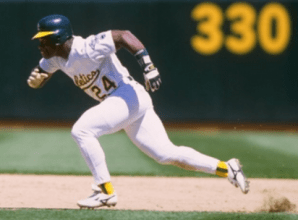
The Man of Steal flew like Superman on the bases—mostly without bunting his way aboard, either.

Myth busted, by the way: You can have speed on the bases without bunts. You usually try to bat the swiftest you’ve got leadoff, right? You can also have smarts on the bases without bunts. Put the swiftest and smartest man you have in the leadoff spot. Let him swat or walk his way aboard, then turn his tail loose. You don’t have to waste outs to do that.

Consider: Rickey Henderson. The arguable greatest leadoff hitter of the post-World War II/post-integration/night-ball era. The greatest speed merchant and larcenist the game may ever have seen. Not exactly one of the world’s most passionate bunters. (I calculated his batting average on bunts—BuBA—by dividing the bunts he beat out for hits by his total bunt attempts.)

Player Bunt Att. Bunts Outs Hits BuBA
Rickey Henderson 49 30 26 4 .082

You’d think a Hall of Famer who could fly like Superman up the line and around the bases might try more, right? Wrong. The Man of Steal wasn’t going to get all that much to bunt with in the first place. A man with 3,055 lifetime hits didn’t earn his bread and butter because he let anyone convince him, “Let’s work on those bunts, brah.”

Let’s not go there about “productive outs,” either. The only true situation where an out’s as good as a hit is a sacrifice fly. No batter’s going up to the plate with a man on third thinking to himself boy, those fools who said I couldn’t hit, I’ll show them—with a nice neat sacrifice fly. No fans pay their way into the ballpark to chant Sac fly! Sac fly! either.

The ground out pushing a runner or two closer to home? Sure, it’s nice. If and when it happens. That, too, gives you one less out to work with, and that wasn’t in your plans. Now tell me you wouldn’t rather have a base hit or a walk. If your answer’s yes, tell me you’d rather have two than three outs to work with in the ninth.

If your answer’s yes to that, you might be one of those thinking baseball was never better than when the ball was dead. Well, now. Let me show you the Show’s all-time bunt leader.  (512 lifetime in 25 MLB seasons.) Let me show you what he did in a verifiable fifteen-year span. And, let me show you what it was really worth with that available record.

Player Bunt Att. Bunts Outs Hits BuBA
Eddie Collins (1916-30) 222 184 168 16 .072

Yep, I threw you a ringer. But bunt lovers deserve it. (Stathead Baseball, my source for Collins and Henderson, goes back only as far as 1916.)

Collins played almost two-thirds of his career in the dead ball era. Maybe from force of habit he kept up his bunt happiness as the live ball era kicked into overdrive, never mind that bunting just might have been more viable and effective in that dead ball time when among other things fielders’ gloves had about as much pocket as a pillow mattress and most pitchers threw about as hard as as bowlers.

Think about it. Collins remains baseball’s all-time volume bunter. With a .914 out percentage on his bunts, bunting with men in scoring position almost half the time he bunted, and an .072 bunt hit average. Want to know how many runs were added to his teams with those 184 bunts?  How does -20 strike you?

This is no spaghetti bat, either. This is a Hall of Fame infielder who was a road runner on the bases, had six top-ten MVP finishes in seven shots (and won an MVP once), was a .333 hitter with a .400+ on-base percentage lifetime, and played on six pennant winners and five World Series winners. It wouldn’t be out of line for you to ask how much better his team’s scoring and chances to win might have been if he’d hit away instead of wasting those outs.

One more time: Outs to work with in baseball are commodities equal in value to jadeite on the mineral exchanges. (Yes, you can look it up: Jadite’s worth $3 million per carat now.) Bunting is waste enough by itself. Bunting in the late innings is worse. Bunting in the ninth inning when the value of outs to work with makes jadeite’s value resemble Reynolds Wrap’s should be cause for psychiatric evaluation.

Casey Stengel used to manage his Yankees according to the philosophy if you have an opening, shove with your shoulder. If you’re given the opening, as in the still-to-be free cookie on second base, you shouldn’t be thinking of nudging the runner along with a dinky,  out-wasting bunt—you should be shoving with your entire body.

Swing away right out of the chute. Get that run home fast as you can. Make the other guys work to re-tie and win if they can. It’s easier to bust a tie than to overthrow even a one-run deficit, kiddies.

If teams do that often enough, maybe the free cookie on second to open the extra half-innings will go where the bunt should be except for the other three instances enunciated above. Into the same place where the Edsel reposes.