For eight departed, with one sad thing in common

Ed Bauta

Ed Bauta, the only MLB player to appear in both the final game played in the Polo Grounds and the first game played in Shea Stadium.

See if you can guess what the following players who left this island earth for the Elysian Fields in 2022 have in common, other than having particular moments in very brief major league playing careers.

These are only a few such players. Some had exemplary moments; some had moments they might have preferred to forget; but they, too, cracked the Show, however briefly.

Mike Adamson (RHP; died 7 May.) A relief pitcher who went directly from college to the Orioles after they drafted him in July 1967. He went directly from there to two innings’ relief against the Indians with the Orioles down four. A scoreless debut inning led to a pair of runs the next,  including Indians outfielder Chuck Hinton stealing home. Two more very short up and down seasons before a shoulder injury wrecked his pro career.

Ed Bauta (RHP; died 6 July.) A Pirate signing who went to the Cardinals in the 1960 deal landing the Cardinals their second baseman of the ’60s, Julián Javier. Knee issues got in his way; his lone full season was 1963. Bauta was the only player to appear in both the final major league game in the Polo Grounds and the first game in Shea Stadium, as a Met. The Mets sent him down for keeps in 1964; he pitched in the minors and the Mexican League until 1973.

Ethan Blackaby (OF-PH; d. 16 January.) He signed with the Braves in 1961, played in six 1962 games and nine 1964 games. He pinch hit for catcher/flake/broadcast legend Bob Uecker and swatted a double in his first major league plate appearance in September 1962, but he picked up only two singles the rest of his Show time.

Blackaby also played 1,073 games in the minors. Later, he was the part-owner and general manager of the Triple-A Phoenix Giants.

Carl Boles (LF-PH; died 8 April.) Major league career begun and ended in 1962. He came up to the Giants 2 August; he pinch ran for veteran catcher Ed Bailey and scored a tying run in the second game of a three-game pennant playoff between the Giants and the Dodgers. (The Giants lost the game 8-7.) Boles went from there back to the minors before playing in Japan from 1966-1971 and showed himself a power hitter, but never got another Show shot.

Bill Burbach

Bill Burbach—pitched the first no-hitter in Puerto Rico’s Hiram Bithorn Stadium during winter ball 1969-70 while trying to stay a Yankee.

Bill Burbach (RHP; died 20 July.) The first player picked by the Yankees in the first amateur draft in 1965. In the minors he faced ageless pitching legend Satchel Paige; Paige pitched one inning, Burbach struck out twelve—but walked eleven. Often pitching in hard luck, Burbach finally reached the Yankees in spring 1969. Second major league start: a five-hit shutout against Denny McLain and the Tigers on 20 April that year.

He pitched the first no-hitter ever delivered in Puerto Rico’s Hiram Bithorn Stadium that coming winter, but he only totaled 37 Show appearances (28 starts)—including a mere four in 1970 and two in 1971. Traded twice from there before deciding his baseball future had passed, he retired to work in the industrial lubricant business.

Leo Posada (OF; died 23 June.) A multi-sport star in Cuba before the Castro takeover. He arrived with the 1960 Kansas City Athletics and nailed his first major league base hit against Hall of Famer Jim Bunning, followed by a pair of three-hit games before the season ended. Had a somewhat solid 1961 (including leading the entire Show with twelve sacrifice flies), but manager Hank Bauer sent him down to the minors in 1962.

Posada never returned to the Show. But he played a few more years in the minors before becoming a respected minor league coach and manager whose charges including such future major league presences as Cesar Cedeño, Cliff Johnson, and John Mayberry. He also went on to spend sixteen years in the Dodger organisation . . . and, in due course,  he became his more fabled nephew’s personal swing doctor. You may have heard of that nephew: Yankee catching bellwether Jorge Posada.

Costen Shockley (1B; died 30 May.) If he’s remembered at all, Shockley is remembered for being sent (with pitcher Rudy May) from the Phillies to the Angels in the deal that sent legendary lefthanded pitcher/playboy Bo Belinsky to Philadelphia after the 1964 season . . . and for leaving baseball rather than keeping his wife and young child uprooted and nomadic on the West Coast.

“I took my family over baseball,” Shockley once said. “Do I think I could have played in the big leagues? Sure, I think I would have done well.”

Sad irony: 17 July was also the 1964 date Shockley made his first Show appearance, as a Phillie against the Reds, singling and scoring later in the seventh against Joey Jay. The following day, he hit his first of three major league home runs off John Tsitouris. After surviving the infamous Phillie Phlop, but realising the Angels planned to make him a minor league nomad, Shockley left the game in 1965 to work in construction and coach his son’s team to the Senior Little League World Series championship in 1981.

Bill Short

Bill Short’s Show career didn’t endure, but he made the International League’s Hall of Fame.

Bill Short (LHP; died 2 February.) The International League (AAA) Most Valuable Pitcher award winner, Short had an up-and-down, all-or-parts six-season Show life, including his only major league shutout (as an Oriole) on 1 July 1966, in the nightcap of a doubleheader against the Twins. That was the highlight of a 73-game Show career . . . but Short was inducted into the International League’s Hall of Fame in 2009.

What did those gentlemen have in common? They were among what are now about 505 short-career major leaguers who were frozen out of the 1980 pension plan realignment, a realignment that vested players for pension benefits after a mere 43 days’ major league service time and health benefits after a single day’s worth.

Various such pre-1980 short-career players to whom I’ve spoken over the past few years have told me the reason for their freeze-out may have been the perception that they were nothing more than September call-ups. As if that should have mattered, but these players saw major league time in months prior to September, even making teams out of spring training.

The only thing Adamson, Bauta, Blackaby, Boles, Burbach, Posada, Shockley, and Short received for their Show time while alive was a stipend swung between then-Major League Baseball Players Association director Michael Weiner and then-commissioner Bud Selig in 2011. It gave them and their fellow pre-1980 short-career men $625 per 43 days’ major league service time, up to $10,000 a year before taxes.

Last year’s owners’ lockout ended with those former players getting a fifteen-percent hike over five years to come in the Weiner-Selig stipend. Not only is it still insufficient, however grateful those players were to receive something, anything, but none of them—not Adamson, not Bauta, not Blackaby, not Boles, not Burbach, not Posada, not Shockley, not Short, not any of the remaining such short-career players, or others who went to the Elysian Fields this year—could pass the dollars on to their families upon their deaths.

The Major League Baseball Players Association continues to act as though those players no longer exist. The Major League Baseball Players Alumni Association continues to act likewise. Most of today’s major league players, several of whom earn the equivalent of a small island nation’s economy, are unaware of those pre-1980 short-career players and their freeze-out.

Legally, neither the MLBPA nor the MLBPAA are required to do a blessed thing. (Don’t get me started on the owners, most of whom didn’t own their teams in 1980.) Morally, of course, is another matter entirely.

Who dares call it cheating?

When Gaylord Perry passed away as December began, there were almost inevitably those who snarked about his actual or reputed virtuosity with the illegal-since-1920 spitball—or, in his case, the grease, wax, petroleum jelly, or even oil ball. (Maybe even a lard ball, since Bobby Murcer once sent Perry a gallon of the stuff as a gift.) Who knew for dead last certain?
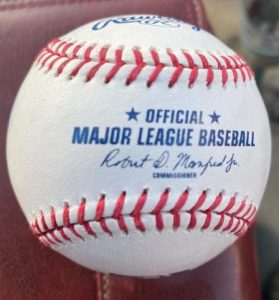
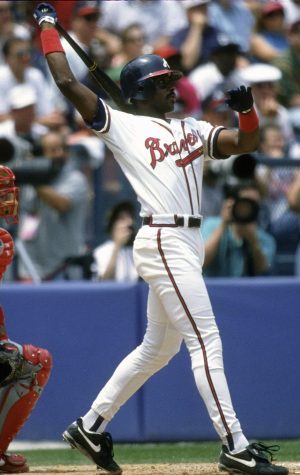
Show me someone outraged that such a cheater got to pitch 22 major league seasons, never mind go to the Hall of Fame, and I’ll show you one who still ROFL over this or that story of Perry’s subterfuge. Maybe he used one, some, or all those substances on his pitches. Maybe he merely planted enough suggestions to live rent-free in over half of baseball’s heads, at the plate and elsewhere.

But when further evidence is adduced that baseball’s government not only can’t but seemingly won’t settle on a consistently-manufactured ball, and doesn’t think anything’s untoward about sending certain livelier balls to be used for certain games—or even on behalf of certain milestones—the response is about the size and volume of a wounded amoeba.

Oh, they howled over pitchers trying to get a grip on inconsistently-covered balls with that good new-fashioned medicated goo. Will anyone howl likewise over the balls themselves having more than inconsistent covers . . . like inconsistent insides that impact the likely play of the game even more?

It’s almost a full week since Insider‘s Bradford William Davis, by way of astrophysicist and Society for American Baseball Research member Meredith Wills, Ph.D.’s research, revealed that MLB enabled baseballs of three differing weights for official game usage, even before commissioner Rob Manfred swore to God and His servants in the Elysian Fields that this, folks, is a one-ball season.

Players who noticed and were unamused by the differences were either waved away (Cy Young Award winner Justin Verlander, to name one) or all but ordered to sit down, shut the hell up, and be done with such nonsense. At minimum. When Giants outfielder Austin Slater wanted to collect balls for Wills to analyse, Slater was answered with a memo from the Major League Baseball Players association saying baseball’s government threatened to fire anyone sending aiding and abetting him. 

A year earlier, Davis disclosed Wills’s research revealing the 2021 season featured two balls of differing weights, not to mention the possibilities that a set between two tankers might get a lead ball while a set between two contenders or longtime rivals might get a Super Ball. This year, with the third ball apparently in play, a ball somewhere between 2021’s deader and livelier balls, MLB still can’t play ignorant and get away with it, though not for lack of trying.

“[W]e do know that the league keeps track of information that would permit it—if it wanted—to know which balls get used in each game,” Davis wrote last week. “According to two sources familiar with MLB’s ball shipment process, the league not only directs where its balls are sent, it also knows which boxes its game compliance monitors–league employees tasked with ensuring each team adheres to league rules–approve and use before each game starts.”

There’s a word for that kind of subterfuge. You know it. I know it. Few if any dare say it in this context, though they love to deploy it in others.

Assorted batsmen have been caught with or confessed to using doctored bats, usually but not exclusively corked. Albert Belle, Norm Cash (who copped to using a loaded bat winning the 1961 American League batting title), Wil Guerrero, Billy Hatcher, Amos Otis (another confessed scofflaw), Graig Nettles (master of the Super Mini-Ball stick), Chris Sabo, and Sammy Sosa were a few denounced with that word.

Assorted pitchers not named Gaylord Perry have been suspected powerfully or caught outright putting more on their pitches than their fingers. Some got laughs first: Lew Burdette (tobacco juice swamp next to the rubber, applicable when he bent over to adjust his shoelaces), Whitey Ford (late-career mud balls and ring balls, the latter balls cut on the rasp in his wedding ring), Mudcat Grant (soap balls, until he rubbed too much soap inside his gray road jersey and the sun finked on him), Joe Niekro (emery board balls), Don Sutton (sandpaper and other things, plus notes he left in his glove fingers for umpires frisking him: “You’re getting warmer, but it’s not in here”). Some avoided the laughs: Ross (Skuzz) Grimsley (greasy hair), Kevin Gross (sandpapered glove pocket), Michael Pineda (pine tar balls), Phil (The Vulture) Regan (sweat balls), Mike Scott (sandpaper). They all got denounced with the same word, too.

Assorted actual or alleged users of actual or alleged performance-enhancing substances, on both sides of the ball, didn’t get half the laughs drawn by the second-story men at the plate or the embezzlers of the mound. But such actual or alleged users—Sosa, Barry Bonds, Roger Clemens, Mark McGwire, Rafael Palmeiro, Manny Ramírez, Álex Rodríguez, others—did (and still do) get hammered with that word, too.

When teams set up off field-based sign-stealing operations—from buzzers underground (the 1899 Phillies) to telescopes behind the outfield (the 1951 Giants most notoriously), inside the scoreboards (the 1948 Indians, the 1961 Reds), and high behind the ballpark (the 1910s Philadelphia Athletics); from rifle scopes in the seats (the 1940 Tigers) to illegal real-time cameras feeding an extra clubhouse monitor next to which the pilfered intelligence is signaled to batters (the 2017-18 Astros)—they got denounced for that word. Even if only one got disciplined by baseball’s government while the predecessors got disciplined merely by history.

If those ex-cons real or alleged can be judged accordingly, why the hell can’t baseball’s government be judged likewise over the Three Ball Blues? Hitters altering bats and pitchers scuffing balls earn the verdict. Teams engaging off field-based electronic intelligence gathering earn it. Why can’t baseball’s own government and the official ball manufacturer it co-owns earn it for inconsistent manufacturing and seemingly willful, selective deployment?

Some dare call it what then-Commissioner A. Bartlett Giamatti denounced when he ruled that Gross’s appeal of his ten-game suspension wasn’t all that appealing:

Unlike acts of impulse or violence, intended at the moment to vent frustration or abuse another, acts of cheating are intended to alter the very conditions of play to favour one person. They are secretive, covert acts that strike at and seek to undermine the basic foundation of any contest declaring the winner—that all participants play under identical rules and conditions. Acts of cheating destroy that necessary foundation and thus strike at the essence of a contest. They destroy faith in the games’ integrity and fairness; if participants and spectators alike cannot assume integrity and fairness and proceed from there, the contest cannot in its essence exist . . . Cheating is contrary to the whole purpose of playing to determine a winner fairly and cannot be simply contained; if the game is to flourish and engage public confidence, cheating must be clearly condemned with an eye to expunging it.

Aaron Judge went to the plate last season unaware he’d be swinging at three different-consistency balls, unaware that he might have been given a little surreptitious assistance, en route breaking the American League’s single-season home run record. Now-retired Hall of Famer in waiting Albert Pujols went to the plate last season unaware he, too, might be swinging at differing balls, en route finishing his career with over 700 lifetime home runs.

They and everyone else at the plate last season deserved to know they were being pitched consistently made baseballs, not balls of differing makeup depending upon whom was at the plate reaching for which potential milestones. The pitchers who faced them deserved likewise to know going in that the games’ integrity was unimpeded, and to know that they or the other guys were just better, not that they were unknowingly throwing lead balls or Super Balls at any given time.

If you’re looking for denunciations of cheating toward the Manfred administration for its Three Ball Blues, from the same fans, observers, and chroniclers who would have and did scream bloody murder when confronted with actual or alleged cheating players and teams, save your energy for the time being. At this writing, their overall silence is louder than a heavy metal concert.

Three-ball blues

The Ball

This is the baseball I landed during batting practise before Opening Day at Angel Stadium this year. (I gave it to my son who attended with me.) Who knew if it was juiced or drained?

Signing with the Mets for two years and $86 million was good with and for Justin Verlander. But it may not be the most important thing he did outside pitching the decisive World Series Game Six. The most important thing the future Hall of Famer did this year was buttonhole a baseball official before a game against the Yankees in June and demand, “When are you going to fix the [fornicatin’] baseballs?”

It’s not the first time he complained. In 2017, Verlander was just one of several who noticed and complained that balls used that postseason were a little too smooth for comfort. And it got worse instead of better. By 2021, Major League Baseball had two kinds of baseballs, one slightly heavier than the other, and thus containing a little more life than the other.

With a lot of help from Meredith Wills, an astrophysicist and baseball fan whose passion is examining the makeup of baseballs and who’s discovered the Show can’t get it straight or consistent, Insider exposed 2021’s two-ball tango. The Insider reporter who delivered Dr. Wills’s discoveries and alarms, Bradford William Davis, has now seen and raised: in 2022, baseball played its own version of “Three Ball Blues.”

That vintage blues song discussed pawn shops, the traditional sign for which is three golden balls. The lyrics include the old joke inside the pawn business: “It’s two to one, buddy, you don’t get your things out at all.” Baseball’s three-ball blues may mean it’s two to one on getting its integrity back after engaging its own kind of cheating—still inconsistent and often juiced balls.

Not necessarily in the final game scores. Davis and Wills suggest powerfully that baseball’s government wanted a little more oomph on behalf of a lot more hype, with certain events such as the Home Run Derby, the postseason, and maybe even Aaron Judge’s chasing and passing Roger Maris as the American League’s new single-season home run king.

Verlander was far from the only player to complain. Davis says Giants outfielder Austin Slater fell upon that 2021 Insider story, sought to collect balls to send Wills for analysis, and was ordered by “a top executive in the commissioner’s office” to back off.

“The warning,” Davis says, “sent in the form of text messages that Insider reviewed, came via a [Major League Baseball Players Association] official who was relaying the league executive’s displeasure.” Displeasure over what? Being caught red-handed delivering inconsistently-made baseballs about which the game’s own commissioner seems distinctly under-alarmed?

Rob Manfred told reporters before the All-Star Game that, yup, we had two balls in 2021, but it was the fault of a pandemic-times issue in Rawlings’s Costa Rica manufacturing plant: closues and supply chain issues, as Davis translates, meant MLB’s plan to stay with a new, lighter, deader ball was compromised when it had to “dip into a reserve stock of the older, heavier, livelier balls for some 2021 games.”

MLB claimed random distribution between the two 2021 balls. Davis’s 2021 reporting via Dr. Wills brought forth suspicions that MLB wasn’t just doing it randomly, that at times they were sending balls to certain places for certain series depending on what they thought might be the gate: say, a game between a pair of also-rans might get the deader ball but a game between a pair of big rivals or contenders might get the livelier ball.

Now Manfred told that July conference think nothing of it, we’ve got it knocked, we’re sticking to the deader ball, and every ball made for 2022 will be consistent. Not so fast, Dr. Wills discovered, according to Davis: “Major League Baseball did not settle into using a single, more consistent ball last season, Wills’ research suggests: the league used three.”

By the time Manfred made that statement in July, Wills had already found evidence that at least a handful of those older, livelier, “juiced” balls — the ones that the “new manufacturing process” purportedly replaced — were still in circulation. Though these juiced balls are from 2021 or earlier, according to manufacturing markings, they were in use in 2022; Insider obtained two of them from a June 5 Yankees match against the Tigers.

Over the next few months, Wills and Insider—with whom Wills exclusively shared her research—worked together to collect game balls for her to painstakingly deconstruct, weigh, and analyze. What she found was striking: In addition to that small number of older juiced balls and the newer dead balls, Wills found evidence that a third ball was being used at stadiums across the majors.

Davis says Wills’s data indicates production on the third ball began six months before Manfred promised 2022 as a single-ball season. “This new third ball’s weight,” Davis writes,

centers somewhere between the juiced ball the league phased out last season and the newly announced dead ball: It is, on average, about one-and-a-half grams lighter than the juiced ball and one gram heavier than the dead ball. According to the league’s own research, a heavier ball tends to have more pop off the bat, meaning the third ball would likely travel farther than a dead ball hit with equal force.

Aaron Judge

Aaron Judge had no clue whether he’d be pitched a dead, lead, or Super Ball while chasing Roger Maris this year.

Wills calls it “the Goldilocks ball: not too heavy, not too light—but just right.” But this isn’t the Three Bears we’re talking about here. This is about the possibility that hitters didn’t know going in when one hefty swing would send a ball over the fence but another such hefty swing with the same square, powerful contact might result in a sinking line drive, a dying quail, or a long out.

In other words, Judge—who’s just signed a nine-year/$360 million deal to remain a Yankee, after betting big on himself during his contract walk year—had no clue just what he was going to hit, and I don’t mean fastball, curve ball, slider, cutter, or sinker. Nobody knows for certain whether or how many such Goldilocks balls Judge sent into the Delta Quadrant. And that’s allowing for him being strong enough to hit a clump of seaweed into the second deck.

“But we do know,” Davis writes, “that the league keeps track of information that would permit it—if it wanted—to know which balls get used in each game. According to two sources familiar with MLB’s ball shipment process, the league not only directs where its balls are sent, it also knows which boxes its game compliance monitors–league employees tasked with ensuring each team adheres to league rules–approve and use before each game starts.”

Baseball government people were handed the net results of Dr. Wills’s reseach and all but waved it away with an all but run-along-girlie-you-bother-me statement:

The 2022 MLB season exclusively used a single ball utilizing the manufacturing process change announced prior to the 2021 season, and all baseballs were well within MLB’s specifications. Multiple independent scientific experts have found no evidence of different ball designs. To the contrary, the data show the expected normal manufacturing variation of a handmade natural product.

Rawlings itself, co-owned by MLB since 2018, issued a similar statement:

This research has no basis in fact. There was no ‘3rd ball’ manufactured and the ball manufactured prior to the 2021 process change was fully phased out following the 2021 season. All balls produced for the 2022 season utilized the previously announced process change.

While storage conditions during research can easily impact ball weight measurements, a one-gram difference in ball weight would be within normal process variation. We continue to produce the most consistent baseball in the world despite the variables associated with a handmade product of natural materials.

Davis demurs. “While lighter and less bouncy than the balls used before Rawlings switched up its manufacturing in 2021,” he writes, “the Goldilocks balls have a weight profile that makes them livelier and more batter-friendly than the dead balls that the league says it now uses exclusively.”

To which Manfred says, essentially, Integrity of the game? Shut up and get back to shortening the times of games without even thinking about cutting down the broadcast commercials. Any time Manfred comes up with something reasonable—the universal designated hitter, slightly larger bases, the advent of Robby the Umpbot—he comes up with or allows about five or more unreasonable things to counteract.

Differing baseballs aren’t just “unreasonable.” They strike at the very core (pun intended) of competition at least as profoundly as something like Astrogate did, on both sides of the ball. Pitchers who don’t know whether they’ll be given a grippable ball to pitch have just as much skin in this game as hitters who don’t know whether they’ll square up a dead, lead, or Super Ball.

The men who play the game, the fans who pay to see them play, the team builders  tasked with putting the teams on the field, and the managers who have to run the games and make the moves that mean distinction or disaster, deserve as level a field as possible.

The era of actual/alleged performance-enhancing substances was considered criminal for undermining the level playing field. Tanking teams are considered criminally negligent for providing something less than truly competitive product. Likewise, when it comes to honest competition, inconsistently-made baseballs should be considered weapons of mash  destruction.

The Crime Dog gets the Cooperstown bite

Fred McGriff

Strange circumstances or no, Fred McGriff is now a Hall of Famer.

I have absolutely no complaint about Fred McGriff’s election to the Hall of Fame. I’d been on the fence about him for a long enough time, and said so in other places, but I knew one thing above all: the Crime Dog had a borderline Hall case, isn’t the worst first baseman or the worst player overall to get a Cooperstown plaque, and would be an honourable selection in his own right if he made it.

He made it Sunday, courtesy of the Contemporary Baseball Era Committee.

If you use my Real Batting Average metric (total bases + walks + intentional walks + sacrifice flies + hit by pitches, divided by total plate appearances), McGriff’s .594 falls smack dab in the middle of the pack of Hall of Fame first basemen who played in the post-World War II/post-integration/night-ball era. It also gives him a 28 point edge over the last first baseman elected to the hall by an Era Committee:

First Base PA TB BB IBB SF HBP RBA
Fred McGriff 10174 4458 1305 171 71 39 .594
Gil Hodges 8104 3422 943 109 90* 25 .566

Actually, I knew one other thing above all about McGriff. If he wasn’t part of the absolute worst trade in Yankee history, he was at least part of the worst trade they made in the 1980s. They traded McGriff (then a minor leaguer) plus infielder Dave Collins, relief pitcher Mike Morgan, and cash, to the Blue Jays, for infielder Tom Dodd and relief pitcher Dale Murray. The best days of a modest career were behind Collins; Morgan was on the way to a respectable 22-season career as a hard-luck starter turned valued reliever.

For McGriff, it was a case of hiding in plain sight. Steinbrenner made Tampa his home; McGriff hailed from Tampa. Yet Steinbrenner was absolutely unaware McGriff even existed. The Boss and the rest of the American League would learn soon enough. Once he became a Toronto regular, the Crime Dog bit the league for an average 35 homers per 162 games in Blue Jays silks—including the league’s home run championship in 1989.

Fair play requires us to acknowledge that, even if Steinbrenner was aware of McGriff, the Crime Dog-to-be (fabled nicknaming broadcaster Chris Berman hung that on him in due course) was blocked at first base by some guy named Mattingly. And it took McGriff a few more years to be fully major league ready, which would have been fine except that patience was never a Steinbrenner virtue.

Like his Hall of Famer contemporary Mike Schmidt, McGriff didn’t just hit home runs, he hit conversation pieces. He didn’t exactly look the part; he was movie-star handsome and not  musclebound, though his Blue Jays teammate Lloyd Moseby once said, “I wish I could get Freddie to lift weights. The only things he lifts are candy bars.” But he didn’t look like a man who needed multiple Milky Way fixes, either.

McGriff’s problem was that he became one of the game’s premier power hitters in an era when a lot of others actually or allegedly used actual or alleged performance-enhancing substances. (Burning question still: if Barry Bonds, Mark McGwire, and Sammy Sosa—plus pitching great Roger Clemens—must remain persona non grata in Cooperstown, how do you justify electing their chief enabler, then-commissioner Bud Selig?)

If he’d played with the same skill set and statistics in a career beginning a decade sooner than it did, he’d have been a Hall slam dunk—regardless of not quite reaching the 500 home run plateau. In the age of the Bondses, McGwires, and Sosas, the Crime Dog didn’t look that ferocious. But even without that age’s taint, he didn’t look like the guy who did what he did, a guy who could hit a wet T-shirt and send it into the seats.

He merely had the second-most elegant home run swing I ever saw. (Darryl Strawberry’s was numero uno.) He really did look as I saw him described once, a man who looked as though conducting a symphony orchestra (as he was about to ring down the final crashes of The 1812 Overture) after he swung and a smooth neon dance figure during his swing.

The looks weren’t everything, of course. Had it not been for the 1994 owners-provoked players’ strike, McGriff probably would have finished his career with somewhere around 503 home runs. (He averaged 32 per 162 games lifetime and had 37 when the ’94 strike launched. It’s not unrealistic to think he might have had at least ten more in him.)

McGriff’s second problem was that, if he was an executioner at the plate, he was a sieve at first base. He finished his career -32 defensive runs below his league average. Like Gary Sheffield in the outfield, McGriff at first base torpedoed his own value with his defense. His 52.6 wins above replacement-level player (WAR) should have been better but his -17.2 defensive WAR put paid to that.

He also had a third problem, enunciated best by Cooperstown Cred writer Chris Bodig: “McGriff had an aw-shucks level of humility throughout his playing days. Because he played for six different teams, the Crime Dog never had a passionate following of one city’s fan base, which might have contributed to his lackluster results in the Hall of Fame voting.”

I suspect these factors played larger into McGriff finally being elected to the Hall than a lot of his partisans (he has more than you might think) might care to admit:

1) The election of Harold Baines by the 2019 Today’s Game Committee. Baines had no Hall case other than his career length. (He didn’t even have a single signature moment to hoist him above his contemporaries.) But he did have . . .

2) A Today’s Game Committee packed with men who played with, managed, or oversaw Baines on a few teams: Jerry Reinsdorf, who became the White Sox’s owner when Baines was first settling in with the team and re-acquired Baines twice more to come; Tony La Russa, the Hall of Fame manager who managed Baines with the White Sox and the Athletics; and, Pat Gillick, who was the Orioles’ general manager when Baines played there.

3) McGriff had the same benefit on this year’s Contemporary Baseball Era Committee: three Hall of Fame Braves teammates (Tom Glavine, Chipper Jones, Greg Maddux, though Jones took ill and couldn’t be part of the vote); a Blue Jays executive (Paul Beeston) during McGriff’s years there; a brief Blue Jays teammate turned executive (Ken Williams).

That’s dangerously close to the kind of cronyism that sent the ancient Veterans Committee into disrepute over the years Hall of Famers Frankie Frisch and Bill Terry oversaw the committee, hell bent on getting as many of their old cronies from the Giants and the Cardinals into Cooperstown as they could get away with, regardless of their actual Hall credentials.

“Baines’ election is simply not a great day for the institution, or for anyone bringing an analytical, merit-based approach to it while reckoning with its objective standards,” wrote The Cooperstown Casebook author Jay Jaffe upon Baines’s election. “The precedent it sets is nearly unmanageable, if future committees are to take seriously candidates of his level. Why battle over Dale Murphy or Fred McGriff if Harold Baines is the standard?”

McGriff had fifty times the Hall case Baines lacked. Murphy’s Hall case was torpedoed by knee injuries that shifted what should have been a natural decline phase into sad overdrive. Don Mattingly’s was torpedoed by his back. If all you needed was character, those two would have been Hall locks otherwise, long before they arrived and departed on this Contemporary Baseball Era Committee ballot.

But another entrant on that ballot, Curt Schilling, torpedoed himself. He got seven out of the needed twelve committee votes despite being a no-questions-asked Hall of Fame-level  pitcher. His ability to miss bats (he has the highest strikeout-to-walk ratio in the game’s history), his dominance when the heat was truly on, and his postseason resume live up to his well-known thirst for wanting the ball in the highest heat. He was the very essence of a big-game pitcher, and he has three World Series rings to show for it.

But a guy who applauded lynching journalists and became too much of a disinformation retriever wasn’t exactly going to keep friends among the voting writers. A guy who fumed publicly when several such voters sought to rescind their votes for him was pretty much asking, as he did in a letter to the Hall, for just what he didn’t get from the Contemporary Committee, enough of whom couldn’t suffer that kind of fool gladly:

I will not participate in the final year of voting. I am requesting to be removed from the ballot. I’ll defer to the veterans committee and men whose opinions actually matter and who are in a position to actually judge a player.

Whoops.

But if the Committee had to elect only one man, it doesn’t sully the Hall further by electing McGriff. He was a genuinely great hitter. If I was on the fence about him on the borderline as long as I was, it won’t deny me pleasure in seeing him at the Cooperstown podium in due course. Maybe he’ll even wolf a candy bar down before he speaks.

A sort of homegoing for Jacob deGrom

Jacob deGrom

In the end, Jacob deGrom wanted to be closer to home for five years. The Rangers gave him what he wanted and with handsome dollars. But the second-best pitcher in Mets history will be missed in New York.

Of course it’ll be strange to think of and see Jacob deGrom in a Rangers uniform. And of course the social media universe, especially those whose baseball fealty belongs to the Mets, blew like a kitchen full of whistling tea kettles over the news that deGrom signed for five years, ages 35-39, and $185 million.

Assuming a return to health, and no such further rude interruptions along the way, deGrom gives the Rangers instant credibility and the Mets the accelerated need to fill a starting rotation hole about the size of Stonehenge. With deGrom off the free agency boards, Justin Verlander now looks more like a delicious Met target.

For the Rangers, of course, the question is whether deGrom’s health will allow him to pick up where he left off before the injury assault began in May 2021. The Mets seemed just leery enough of that question and its potential answer to hold the line at the three-year deal Craig Calcaterra—the former NBC Sports baseball analyst now journaling independently—says most assumed before the Rangers offered five.

As Joel Sherman of the New York Post reported the Mets’ last offer to deGrom was around three years and $120 million. I don’t get the sense that that was a final offer or that the Mets walked away or anything, though. It was likely just the case that Texas came in with five and deGrom grabbed it, likely knowing it wouldn’t be beat.

And why wouldn’t the Rangers go for it? Texas starters had a collective 4.63 ERA last season, which ranked 25th in the majors. With deGrom at the top of the marquee above supporting players Martín Perez, Jon Gray, Jake Odorizzi, and introducing Dane Dunning, things seem poised for an improvement. The big question, of course, is whether the Rangers are going to see the insanely dominant Jacob deGrom of 2018-21 during this deal.

Until that May 2021 side injury, followed by a shoulder and then elbow injury forcing his season’s end early that July, deGrom wasn’t just off the charts, he was somewhere in his own solar system on the mound. His right scapula stress reaction took him out this year until 2 August, after which he pitched like deGrom until the stretch—when he pitched well but not quite deGrominantly.

“Some of that,” Calcaterra reminds us, “might’ve been a function of stamina but one never knows. Obviously the Rangers have seen his medicals and wouldn’t have offered him this deal if there were red flags, but deGrom will turn 35 in the middle of the 2023 season and no pitcher lasts forever.”

Let’s get this out of the way once and for all. No baseball player asks for injuries while doing his job. (Those who get injured being foolish off the field are often another matter.) It wasn’t deGrom’s fault that his 2021 was derailed by three injuries; it wasn’t his fault that his right scapula elected to hand him five-sixths of the 2022 season off.

Neither is it the Mets’ fault that they were leery of giving deGrom the fourth and fifth years he wanted and that the Rangers were willing to risk. They had baseball’s arguable best pitcher in their silks but his body betrayed him often enough to give them pause. Even if their owner Steve Cohen bought the team as much from his lifelong Met fandom as for anything else, he didn’t become wealthy enough to buy it by acting from his heart alone.

And yet . . . and yet . . .

We’re beginning to learn a little more that not everything was entirely sweet between deGrom and the Mets. He never hinted publicly at discontent, and he had reason for discontent that few of his teammates did. Remember: this is the guy who’s still accused of not being a “winner” and not knowing how to “win” because, despite winning back-to-back Cy Young Awards in 2018-2019, he “won” only 21 games over both seasons.

“Jacob deGrom’s issue wasn’t that he ‘didn’t know how to win’,” wrote MLB.com’s Anthony Castrovince, in A Fan’s Guide to Baseball Analytics. “It was that he didn’t know how to not be on the 2018 New York Mets.”

They put up 3.57 runs per deGrom start, the third-lowest support average for any qualified pitcher in the majors that season. In the end, deGrom, owner of the league’s best ERA (1.70), finished 2018 with the same number of wins as the White Sox’s Lucas Giolito, owner of the league’s worst ERA (6.13). As the great Jayson Stark wrote of deGrom’s Cy Young case in The Athletic late in the season, “So are you still asking why we’re ignoring wins? It’s obvious, isn’t it? Because there isn’t a single entry on the stat sheet that tells us less about how this man has pitched than the entry that most people used to check first. That’s why.

He had the same problem not knowing how not to be on the 2019 Mets, too. That team put up 4.1 runs per deGrom start—but gave him only 3.6 runs to work with while he was in the game. For those two Cy Young seasons, deGrom’s fielding-independent pitching (you can consider it a man’s ERA when the defenses behind him are removed from the equation) was a sterling 2.32—and his 2018 1.98 FIP led the entire Show.

He could have sued his team plausibly for non-support, but to the public and even in his clubhouse deGrom was a chronic non-complainer. “Throughout deGrom’s career with the Mets,” writes ESPN’s Buster Olney, “he was a respected teammate, especially for how he handled a chronic lack of run support.”

But he also felt in some ways like an alienated man. deGrom may be a private young man but he’s not obscure. When he made known his intention to opt out of his Mets deal—which he had every right to do since the option to do it was in the deal—it was a sign that something between the pitcher and the organisation fell just enough out of whack to compel deGrom to think of continuing and finishing his career closer to home.

There isn’t a dollar amount on earth that can match that value in a man’s soul. Not that the Rangers aren’t trying.

It’s not unlikely that, giving him the fifth year he really wanted (plus an option for a sixth), deGrom’s average annual value of $37 million a year as a Ranger was still a bargain. Sometimes, the home town discount really means the man’s actual as opposed to baseball home town, or close enough thereto.

“[T]o some in the [Mets’] clubhouse,” Olney goes on to say, “he also became a little more distant from teammates over his years in the organization; he was a private person who seemed to become a little more private.”

It was a perception likely exacerbated by that time away from the field—391 days passed between his last start in 2021 to his first start in 2022. Some teammates . . . developed a relationship with Steve Cohen after Cohen bought the Mets the fall of 2020, but friends felt that deGrom wasn’t really interested in that.

deGrom also had reduced his interactions with the large contingent of media that descends upon the Mets’ clubhouse, regularly speaking to reporters after his starts but increasingly deflecting any other requests. Early in his career, deGrom had agreed to do in-game interviews in national broadcasts on the days he did not pitch. But as deGrom’s stature in the game grew, that practice ended.

Instead, deGrom preferred to just focus on pitching. He didn’t seem particularly interested in the pomp and circumstance that can come from playing baseball in New York, a sentiment conveyed to members of the Braves even before this offseason. Based on their conversations with deGrom, some Atlanta players felt certain that if given the chance, deGrom—who had grown up in Florida as a fan of the Braves—would prefer to sign with the team he rooted for as a kid.

Indeed the Braves put themselves in play for deGrom, but they, too, didn’t want to assume the risk of deGrom’s desired five years versus the chances of deGrom’s body betraying him (and them) yet again. The Rangers were not just willing, but they had a secret weapon when it came to landing deGrom: their new manager.

Bruce Bochy managed the 2015 National League All-Stars after winning the 2014 World Series with the Giants. deGrom was one of his pitchers, the league’s 2014 Rookie of the Year. Bochy, says Olney, was impressed by both deGrom’s humility and his sixth-inning performance of striking out the side with only ten pitches.

Freshly minted as the Rangers’ manager, Bochy now engaged deGrom on a Zoom call. “To Bochy,” Olney continues, “it was clear that deGrom’s focus was on family, on pitching, on competing. The Rangers continued to dig into deGrom’s background, his preparation; they learned that deGrom was already assessing the housing market in the Dallas area. Said one of deGrom’s friends from New York: ‘He’ll probably wind up on a ranch’.”

If the Rangers continue to reconstruct a team their newly-signed top pitcher can be proud to front on the mound, and if that newly-signed top pitcher can keep doing what he does without further injuries, things in the American League West will become more than merely interesting.

Having deGrom in Ranger silks isn’t exactly the ideal scenario or best interest for the ogres of the AL West, the world champion Astros. Their Cy Young Award-winning grand old man, Justin Verlander, is now a free agent. The Mets are now said to be all-in on making sure they can make Verlander a happy man for a season or maybe two, particularly re-uniting with his old Detroit teammate/rotation mate Max Scherzer.

“deGrom is the best pitcher in baseball when he’s healthy. There’s no replacement for his potential,” writes Smart Baseball author Keith Law in The Athletic.

There is, however, a way to replace his production, since he threw just 64 innings last year, and while they were, again, comically great innings–the man made eleven starts and walked eight guys, at least one of which was probably a clerical error–he was worth about two wins above replacement, and someone else had to make the 21 starts he didn’t make. The Mets could just throw $40 million at Justin Verlander for a year, tell him they give him as good a shot as anyone at getting him another 15-18 wins, after which he can go ply his trade for another team if they didn’t give him enough run support. If he really wants to get to 300 career wins, which would be fantastic to see, they’re a great choice.

The Astros don’t exactly lack for starting pitching; their rotation made a very distinct and vivid impression during the World Series and that’s without including Verlander in the picture. But losing Verlander to their fan base isn’t quite like losing deGrom is to the Mets’ fan base. Until he signed with the Rangers Friday night, the Mets’ long-anguishing, often-masochistic fan base thought and hoped deGrom would end up a Met for life.

They’ll have to settle for deGrom having been the second-best pitcher in Mets history, behind Hall of Famer Tom Seaver. (Jerry Koosman, you say? Dwight Gooden? Try again. As a Met, Koosman’s FIP is 3.26 and Gooden’s is 2.77. deGrom’s 2.62 as a Met beats them both. He’s also only five FIP points behind Seaver as a Met. He also has the best walks/hits per inning pitched rate as a Met of the four. Better not go further, lest we careen into heresy.)

They’ve had to settle for far worse. If you don’t believe them, they’ll be more than disgustingly happy to remind you—chapter and verse. At least until they see Justin Verlander shouldering into a Mets jersey at his introductory press conference, they may now dare to dream.