“A miracle and a disaster.”

Pete Rose’s longtime Reds manager was almost as incessantly quotable as Rose. “We try every way we can think of to kill this game,” Sparky Anderson once said, “but for some reason nothing nobody does never hurts it.” The Hall of Fame manager wasn’t necessarily talking about Rose. But he could have been.

When Rose became the first back-to-back National League batting champion in a Reds uniform, Ohio governor James Allen Rhodes declared Pete Rose Day in the state and Cincinnati elected to re-name his favourite childhood park, Bold Face Park, as Pete Rose Playground. Five hundred citizens signed a petition opposing the name change.

“They didn’t think Pete Rose was worthy of a local landmark,” writes Rose’s newest biographer, Boston Globe writer turned NPR contributor Keith O’Brien, “perhaps because there were growing questions and rumors about him—questions and rumors that even West Siders couldn’t ignore. One of the rumors circulating about Pete concerned gambling. He seemed to do a lot of it.”

Indeed. He was about to graduate from merely spending a lot of time at the race tracks to befriending and betting through bookies. Violating a lesser-known clause of baseball’s Rule 21 long enough before he began betting on the game itself. “I was raised, but I never grew up,” was one of Rose’s most widely-disseminated quotes. That was probably the root of the problems that finally steered him toward that which got him a permanent ban from baseball and a concurrent ban from appearing on a Hall of Fame ballot.

Maybe no book heretofore written about Rose goes quite as deep into his self-making and his self-unmaking as O’Brien’s Charlie Hustle: The Rise and Fall of Pete Rose, and the Last Glory Days of Baseball does now. But this fresh excursion into Rose’s life and legacy leaves little room to conclude other than what O’Brien himself writes almost at the outset:

He was Icarus in red stirrup socks and cleats. He was the American dream sliding headfirst into third. He was both a miracle and a disaster, and he still is today.

O’Brien didn’t build his work idly or incompletely. A Cincinnatian himself, he plunged as fully into Rose’s world as possible, from talking to former teammates, former baseball commissioners, former Rose investigators, family, friends, adversaries, to talking to Rose himself—twenty-seven hours worth with Rose, “before he stopped calling back, before he shut down.” The author also plowed through scores of federal court documents and even FBI files as well as ages of published articles as well as the Dowd report that first put paid to Rose’s baseball life.

Charlie Hustle is a long, page-turning, heartbreaking re-examination of the Rose who willed himself into becoming a baseball symbol and sank himself into becoming a baseball pariah. Maybe it’ll convince his most stubborn apologists that their hero was his own destroyer. Maybe it’ll convince his most stubborn critics that being right about him doesn’t equal being proud of that.

To those who loved him, and even to more than a few who thought he was excessive at minimum, Rose the player was like the junkyard dog deciding he’d hang with those Westminster dandies any old time he chose, no matter what he lacked. To the same people, Rose was just a particularly extreme manchild. One remembers Thomas Boswell quoting then-Orioles general manager Hank Peters not long after the end of Rose’s fabled 44-game hitting streak: “The Reds have covered up scrapes for Pete his whole career. He’s always been in some little jam . . . but people never seem to hold it against him.”

Maybe that perception took hold because nobody in the sports press then really wanted to risk losing one of the best and most available quotes in the game. Not to mention a star player whose generous side—welcoming rookies and newly-acquired veterans enthusiastically, helping them remake or remodel their approaches, joining them in business ventures, standing by them against bigots—was almost as talked up as his bull-headed playing style and his gift of gab.

Nobody then wanted to expose the Rose who ran around on his first wife, often flagrantly, with younger women, one a teenager Rose swore was sixteen (Ohio’s legal age of consent) but who later said she’d been fifteen at the start. Or, the Rose whose taste for sports betting began to look like more than just simple, occasional recreation. It took over a decade to follow before Rose’s rough-hewn mythology began to implode and the sports press that once adored him began to comprehend that this wasn’t just a more coarse boys-will-be-boys type.

Headlines in early 1979 about Rose being sued by the extramarital mother of a baby girl by him exposed him publicly as an adulterer and deadbeat (she sued after Rose stopped sending her payments for the baby) long before his exposure for not paying many of his gambling debts. So did first wife Karolyn divorcing him in 1980. (As earthy as her husband, Karolyn also confronted the mistress who’d become Rose’s second wife, whom she spotted driving her Porsche—and opened the door to punch her out.)

When did this scrappy, witty rogue, who could and did will himself into Everymanperson’s Hero, really begin crossing the line from mere recklessness to self-immolation? Some time in the early 1970s, as he began to graduate from mostly a Cincinnati star to a national baseball figure, Rose became friendly with Alphonse Esselman, a bookmaker freshly released from federal prison, now using a used car lot as a front, and first meeting Rose at the River Downs track.

Esselman’s initial appeal for Rose was an ability to speak of sports equal to Rose’s own, which must have been formidable enough. Rose also began betting on football and college basketball games through Esselman, “almost every night and certainly on Saturdays and Sundays in the fall, after baseball season was over,” O’Brien writes.

At home, especially on big football weekends, Pete disappeared into a room and watched games all day. Karolyn saw him when he emerged for snacks from time to time or for dinner, and throughout the day, she could hear him in there, shouting. “Plenty of time,” he’d say, figuring spreads and probabilities in his mind. But it was almost as if he were gone, lost inside a world of his own making, a world that could destroy him. By consorting with Al Esselman and placing bets with him, Pete was violating a rule of baseball known by every player.

Had it stayed purely with that, Rose at worst might have faced a discretionary punishment from baseball’s commissioner, not necessarily one that got him his permanent banishment. Maybe something similar to the one Happy Chandler inflicted upon Dodgers manager Leo Durocher in 1947 (a full season) for hanging with bookies. Maybe something similar to what Bowie Kuhn inflicted upon Tigers pitcher Denny McLain (indefinite but reduced to ninety days) for becoming one, involving non-baseball games.

“By 1984, Pete had graduated from placing bets with friendly West Side bookies like Al Esselman to hanging around shady, small-­time mobsters and established East Coast criminals,” O’Brien writes, referencing the time before the Reds dealt to bring Rose back from the Montreal Expos, where he played after his term with the Phillies.

Pete had reportedly started placing bets with a syndicate run out of Dayton by Dick Skinner, an old-­school bookie and convicted felon known to authorities as “the Skin Man.” Skinner was believed to be the largest bookmaker in southeast Ohio, and to Skinner’s dismay Pete fell thousands of dollars behind on his payments. Skinner was soon
complaining about Pete all over Dayton and Cincinnati. Then, in early 1984, Pete made a new gambling connection: Joe Cambra, a man on the fringes of the Rhode Island mob with dark eyes, dark hair, a home in southern Massachusetts just across the Rhode Island
border, and a winter retreat in West Palm Beach not far from the Expos’ spring training facility.

. . . Unaware that anyone was watching, Pete paid off his debts to Cambra on July 5, 1984, with two checks—­one from his personal account in Ohio for just over $10,000 and a second from the Royal Bank of Canada for $9,000. Pete then had a great week at the plate.
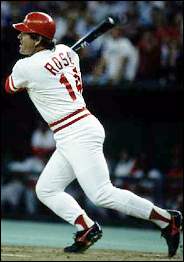
Pete Rose

“He was Icarus in red stirrup socks and cleats.”—Keith O’Brien.

That August, prodigal Reds general manager Bob Howsam decided to bring Rose home to Cincinnati as their player-manager, “despite all the warning signs and things he knew to be true.” One of Rose’s first doings after returning to Cincinnati was joining a Gold’s Gym there, one known as a clearinghouse of sorts for illegal performance substances, and where Rose and his youthful baseball protegé Tommy Gioisia met one Paul Janszen, who’d join with Gioisia in placing Rose’s bets with bookies. Including one Ron Peters.

Rose’s eventual success in breaking Ty Cobb’s lifetime hits record was the opposite of his success as a gambler. He was into enough bookies for enough money by March 1986 that, according to the Michael Bertolini notebooks revealed in full in 2015, O’Brien writes: “Pete was gambling on baseball by at least April and May 1986—­with a handful of bets on the Yankees, Mets, Phillies, Braves, and his own team, the Reds. To crawl out of the hole he had dug for himself that March, Pete had apparently started wagering on the thing he knew best: baseball.”

In time, and with the feds investigating Rose’s gambling associates and connections, Sports Illustrated went digging and intended to run with what they discovered about Rose’s betting. Not so fast, determined baseball commissioner Peter Ueberroth, in February 1989, calling Rose to New York to meet with him and National League president A. Bartlett Giamatti, we can’t afford to wait for that magazine to run with it.

O’Brien reminds us Ueberroth didn’t want to just hand this off to Giamatti and hoped against hope that Rose would come clean, admit he’d made a phenomenal mistake, and save himself. “But Pete couldn’t do it. He wouldn’t do it.”

The same qualities that made him a successful baseball player—­and one of the greatest hitters of all time—­ensured his failure now. Pete wasn’t going to let Paul Janszen win, if that’s what this was about. He wasn’t going to admit to anything in that room on Park Avenue filled with polished men wearing the right kinds of suits. He was going to fight his fight . . . He was going to listen to his late father. “Hustle, Pete. . . . ​ Keep up the hustle.” He was going to foul off the fastball on the outside corner to see another pitch. He was going to bunt the ball down the line to win the batting title, and he was going to take out the catcher at home plate in a meaningless game, breaking his shoulder at the joint.

Pete Rose was going to lie.

Sure, Pete admitted in the room in New York, he was a gambler and he bet on lots of things: the horses, the dogs, even football games. But no, he said that day. He did not bet on baseball.

“I’m not that stupid,” [Giamatti’s aide Fay] Vincent recalled him saying.

Exit Ueberroth, enter Giamatti as his successor, enter John Dowd leading baseball’s official investigation, and exit Rose to baseball’s Phantom Zone, soon enough. Enter, too, the Hall of Fame, entirely on its own (one more time: it’s not governed by MLB itself), electing quite reasonably to bar those considered persona non grata by baseball from appearing on any Hall of Fame ballot.

Let’s reiterate yet again that baseball’s Rule 21(d)’s mandate of permanent banishment for betting on one’s own team (O’Brien reminds us that days Rose didn’t bet on the Reds one or another way were still signals to other gamblers regarding the Reds) doesn’t make exemptions a) for a player who broke a once-thought-impossible-to-break record; b) for a player with Hall of Fame credentials; or, c) for a player-manager who claimed only to have bet on his team to win.

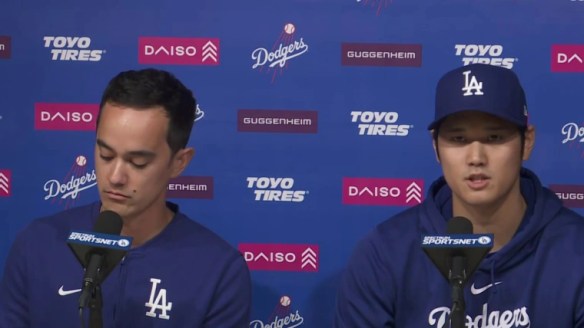
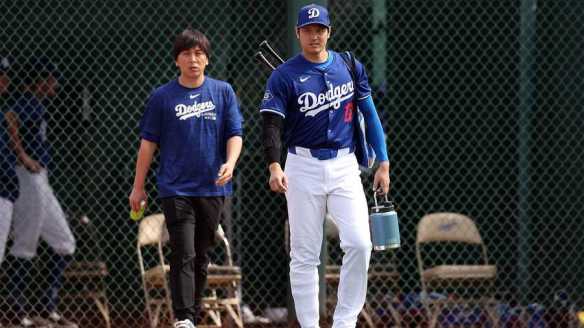
Let’s reiterate, further, that the firestorm over Shohei Ohtani’s now-former interpreter Ippei Mizuhara and the latter’s gambling through an Orange County bookie (sports betting remains illegal in California) doesn’t take Rose off the hook. Nor do baseball’s promotional deals with legal sports betting Websites and companies.

Fans can bet on baseball whenever they like. Players, managers, coaches, trainers, clubhouse workers, front office people, can bet on any sports they like—except baseball. They can play fantasy football, bet on the Final Four, bet the horses or NASCAR, round up high-stakes poker or pinochle games. Anything that catches their competitive eyes. Except baseball.

If Rose as a player-manager and then manager alone had never crossed the line into betting on baseball itself, his story would have had a very different turn in 1989. He might still have graduated from a mere visceral rogue to a scoundrel with an addiction, but he might have been elected to the Hall of Fame regardless.

Rose’s Hall of Fame teammate Johnny Bench was once asked when he thought Rose—who triumphed under baseball’s most heated lights, and fell under the detonations of his own explosives—should be brought back in from baseball’s cold. Bench’s answer: “As soon as he’s innocent.”  Charlie Hustle says, in essence, that’s not happening.

Ohtani-Mizuhara vs. Rose

Ippei Mizhuara, Shohei Ohtani

Did Mizuhara steal from Ohtani to cover his gambling debts through an illegal bookie? Did Ohtani naïvely agree to pay Mizhuara’s debts without knowing the legal and MLB trouble he’d see?

Barely a week after I received an advance copy of Keith O’Brien’s Charlie Hustle: The Rise and Fall of Pete Rose, and the Last Glory Days of Baseball, there comes a scandal that provokes yet another round of social media demands that Rose be let off the hook for that which does not yet apply incontrovertibly to baseball’s biggest contemporary star.

Barely did the Dodgers come away from their unusual regular-season opening in Korea with a 5-2 win over the Padres when news exploded that the Dodgers handed a pink slip to Shohei Othani’s longtime friend and interpreter, Ippei Mizuhara, over accusations involving sports gambling.

The least confusing portion is that Mizuhara used Ohtani’s money to cover gambling debts incurred in California, where sports betting remains illegal. But one moment, Mizuhara claimed Ohtani wired the money to cover before. In another moment, Ohtani’s attorneys claimed Mizhuara somehow stole the money from Ohtani’s account.

What seems to be the unspoken-but-agreed-upon point is that, until now, nobody had Othani on any gambling radar. Right there it should drive the Rose case comparisons away. As O’Brien’s book reminds us, Rose had a gambling habit rooted in childhood excursions to race tracks watching his father bet the horses and matured into gambling with street bookmakers. Gambling that was on his team’s and then his entire sport’s radar long before he graduated to the kind of betting that prompted baseball to investigate him formally and banish him permanently.

Mizuhara may face legal penalties for his sports bettings through an Orange County bookie, but nobody’s yet accusing him of betting on baseball itself—either on his own or on behalf of Ohtani—and making it stick. Everything tumbled out both so quickly and so clumsily that building a timeline must be a chore for those who try.

Rose’s remaining partisans aboard social media (and elsewhere, perhaps) seem to think the foregoing alone should mean re-opening the Rose case and ramming him into the Hall of Fame. To many of them, Rose could shoot someone on Cincinnati’s Vine Street and still not lose sycophants. They seem blissfully devoid of accepting that only one man is responsible for Rose’s continuing status.

I don’t know if O’Brien’s book will change the minds of those who insist, despite that mountain range of evidence, that the Rose case deserves a review whenever any scandalous baseball behaviour—gambling or otherwise—comes to light. More’s the pity. A longtime journalist from the Boston Globe to NPR, O’Brien has provided a deeper look into the wherefores of Rose’s life in and out of baseball than just about any previous volume.

O’Brien is a Cincinnatian himself who admits right out of the gate that he, like most Cincinnatians are presumed to do, has “felt every emotion” about Rose: “[P]ride, disgust, frustration, pity, and confusion. Only one thing hasn’t changed over the years: my fascination with his story. He was Icarus in red stirrup socks and cleats. He was the American dream sliding headfirst into third. He was both a miracle and a disaster, and he still is today.”

It’s arguable that no great player of Rose’s time was quite as self-made, quite as bent to play above and beyond his natural endowments. Maybe no great player was as solipsistically reckless, either. The longer Rose proved and re-proved himself at the plate and on the field as the junkyard dog who could hang with and overthrow those snooty Westminster Kennel Club hounds, the deeper became his belief that he was invulnerable to accountability for his risky, rakish, and reckless off-field pursuits.

His own Reds employers feared for his safety once they began catching the winds that Rose’s gambling habits weren’t just limited to the racetracks. Betting with bookies, betting on sports, gradually betting through a Brooklyn bookie named Michael Bertolini who placed Rose’s bets with other New York bookies and kept meticulous notebooks recording Rose’s baseball betting—including on his own team—at least as early as April 1985, when he was the Reds’ player-manager.

“A manager betting on his own team could harm the game—­even if he was bet-
ting on the team to win,” O’Brien writes, well aware that Rule 21(d) does not distinguish between betting on or against one’s team.

He could overuse a pitcher or refuse to rest a starter in pursuit of his own financial gain, and what he ­ wagered—or didn’t wager—­ could move markets in the underworld. Bertolini’s bookies in New York surely noticed when Berto was betting against Pete. Any bookie in that situation would have been justified to wonder if Berto had inside information that would make it worthwhile to go against the Reds that night. The bookies also surely noticed when Pete didn’t bet on the Reds at all. He wasn’t betting against his team; he just wasn’t betting on them. On multiple days, according the notebook, Pete sat it out, not wagering on the Reds after having done it the day before or earlier that week. It was another thing that could move markets in the underworld. And his debts—­ his mounting debts recorded in the notebook—­were especially troubling. An athlete in arrears to a bookie is an athlete in danger of being owned by that bookie, a kept man, beholden. It was the reason why baseball had its rule against gambling in the first place and the reason why that rule—­Rule 21(d)—­was posted in every clubhouse, including the Reds’ clubhouse at Riverfront Stadium.

Independent journalist (and former NBC Sports analyst) Craig Calcaterra says there are three possibilities regarding the Mizuhara-Ohtani situation:

Possibility 1) “Mizuhara is a compulsive gambler who got in way, way over his head with a bookie To pay the bookie off, he effected either one or several massive wire transfers from Ohtani’s account without authorization. He got busted, he got fired, and he’s about to be in a world of federal legal trouble and will almost certainly be permanently banned from holding a job in Major League Baseball.” Which is, Calcaterra acknowledges, is the story Ohtani’s legal team presents.

Possibility 2) “These were Mizuhara’s gambling debts and, as per his and the spokesperson’s comments to ESPN, Ohtani felt bad for him, wanted to help him out, and covered his debts by transferring the money to the bookie . . . If this is what happened, Ohtani will be in pretty big trouble both with the feds and with Major League Baseball.” Rule 21(f) gives baseball’s commissioner discretion in punishing a player, manager, coach, clubhouse worker, front-office person who’s gambled or otherwise associated with illegal bookmakers. (Leo Durocher once learned the hard way, when then-commissioner Happy Chandler suspended him for 1947.)

“A player paying a bookie for a team employee’s illegal gambling debts, and doing so via means that represent federal crimes, creates an astounding amount of risk and would seriously damage the game,” Calcaterra writes. “If this were to be born out and Manfred did nothing, he’d basically be [urinating] all over baseball’s single most important off-the-field rule.”

Possibility 3) “These were Ohtani’s gambling debts and Mizuhara is taking a bullet for his patron . . . If this were the case it would be the biggest baseball scandal since the Black Sox, right? Ohtani would not only be in criminal jeopardy for illegal gambling but he’d probably face a permanent ban from the game. It’d be absolutely massive and would upend professional sports for a very, very long time.”

Having presented those three possiblities, Calcaterra thinks of them thus:

1) Too many assumptions must be made to make stick a thought that Mizuhara managed to mulct Ohtani’s money without a proven say-so.

2) It’s the simplest of the three prospects, not to mention it “flows with what we all want to think about Ohtani being a decent guy and a loyal friend which is something none of us know for a fact, obviously, but we’ve never been given reason to doubt it either, all of my usual ‘we don’t know anyone, not that well’ disclaimers notwithstanding.”

3) Highly doubtful, sans evidence. “Again, I know none of us know anyone,” Calcaterra continues, “but nothing we know about Ohtani suggests that he’s reckless, impulsive, or, frankly, stupid enough for this kind of business. It’d be the biggest heel-turn in the history of sports (non-professional wrestling edition), and it just does not compute for me at all.”

Meanwhile, it’s wise to remember that just because MLB has entered into promotional relationships with legal sports betting outfits on and offline, that doesn’t mean players, managers, coaches, clubhouse workers, or front-office personnel can just bet on baseball any old time they choose it. Fans can bet on baseball to their heart’s content, anywhere and any time they want. Baseball personnel can’t.

They can bet on anything else they want, from March Madness to a college fraternity’s cockroach races. But they can’t do it through unauthorised or illegal bookmakers. And Rule 21(d) hasn’t been and won’t likely be superceded or repealed.

I repeat: Nothing credible has emerged to show Mizuhara or Ohtani betting on baseball, even though Ohtani’s partisans (they, too, are legion) know what a terrible look this week’s eruption holds. But the concurrent noise insisting that this, too, is yet another reason Pete Rose deserves a pardon and his plaque in Cooperstown, is just that. Noise.

If Rule 21(d) plus the Hall of Fame’s block on Hall ballot appearances for anyone on MLB’s permanently-ineligible list can’t quell such noise, you’d like to think Mr. O’Brien’s forthcoming book should. Should, but, alas, probably won’t.

Aerus Betts

Mookie Betts

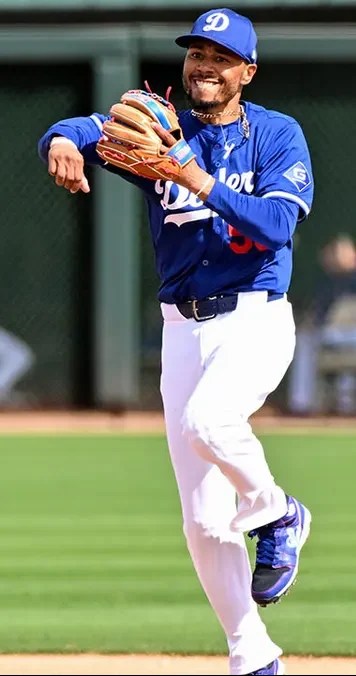
From right field to second base to shortstop. What a long, strange trip around the field for Mookie Betts . . . so far . . .

Allow me to begin with a number or three. These numbers are: 13.8, +122, and +6. In order, they are the defensive wins above replacement-level player, total fielding zone runs above the league average right fielder over ten seasons at the position, and total fielding zone runs above the league average second baseman in a hundred games at the position.

They belong to a man who has the total WAR (64.5) that’s considered almost 4.0 WAR above the level at which a baseball player qualifies himself for the Hall of Fame, assuming nothing else on his resumé might compromise or negate his case. A man who now consents to play shortstop for the Dodgers full-time, and whose departure from Boston may have hastened that formerly proud team’s current malaise.

Markus Lynn Betts (no tasteless jokes, please about the middle name which is also the legal first name of an antique legend named Nolan Ryan), nicknamed Mookie, is moving from second base to shortstop because the Dodgers’ intended shortstop, Gavin Lux, has a problem or three throwing longer distance than he does from second base.

Betts has been known as the Mookie Monster for the things he does with a bat. He’s not exactly a benign presence with a glove on his hand pursuing a batted ball in the field, either. By the time he retires as a player, he may earn a nickname for the things he has done and will do with his glove and throwing arm.

“The Roomba” will not do, since Betts is anything but robotic. “The Shop Vac” will not do, either, since Betts is neither rumbling nor obese. “The Hoover” belongs to the late Hall of Famer Brooks Robinson, even if Betts beats, sweeps, and cleans batted balls with similarly effortless-looking performances.

“Aerus Betts” sounds about right. The Aerus is an elegant tank vacuum, once known as the Electrolux, before that Swedish company pulled out of the United States, leaving its two American plants’ staffs from the top down to buy the plants and continue making the correct Luxes under the Aerus banner. Betts in the field is that kind of elegant and that kind of effective.

That former Swedish parent now makes vacuum cleaners about which “hideous looking” and “hideous sounding” are almost compliments. Betts is neither hideous looking nor hideous sounding, except maybe to an opposing pitcher who’s just fed him a pitch to hit transoceanic. Or, to an opposing batter inspired to swearing after a sure base hit is turned into a split-second out. By the time Betts finishes the coming regular season at shortstop, he may well accomplish two things at once.

Thing one: He may remind people of the acrobatics they’ve missed since the Wizard of Oz (Ozzie Smith) went from the field to the Hall of Fame, though unaccompanied by the game-opening cartwheels and back flips. Thing two: He may remind people older than myself of a too-often-forgotten Yankee jack-of-all-trades.

The late Gil McDougald wasn’t the kind of star that Hall of Famers Yogi Berra, Whitey Ford, and Mickey Mantle were. He was merely a fair hitter and a fielding whip at the infield’s three toughest positions. He finished his distinguished career in double figures for defensive runs at third base, shortstop, and second base alike. Betts has the opportunity to finish in double figures at right field, second base, and shortstop.

It may not shock Dodger fans or anyone else if, some time before he retires, the Dodgers decide Betts might be a better third base option than whomever they had going in. Betts is that kind of versatile and that kind of selfless.

Too many players making themselves comfortable somewhere on the field react as though being offered a castor oil on the rocks when asked to do likewise somewhere else. Ask Betts to move from one position to the other gets nothing but “Put me in, Coach,” so far. He’s played five out of nine field positions in his major league life so far. Three more even once apiece may not be unthinkable before he’s done.

No manager has yet asked Betts to pitch late in a lost-cause game. This may be a combination of both certain wisdom (the Dodgers are not frivolous about their pitching, especially when their pitchers incur injuries) and lack of opportunity.

Last season, the Dodgers played 64 games which Baseball Reference classifies as blowouts (BR considers a blowout a lead or deficit of five runs minimum) and won 45 of those. They also won ten games in which they scored in double digits—and advantages of nine runs or more. Betts didn’t turn up on the mound once in any of their nineteen BR-defined blowout losses.

Would you be shocked if manager Dave Roberts, trying to survive the last inning or two of a very rare Dodger blowout loss in the making, looks toward his Mookie-of-all-trades and asks, “You got an inning in you to throw up there?” You might be shocked only long enough to hear Betts say, “Put me in, Coach.”

Heard of the eephus pitch? Betts might have an Aerus pitch to serve an unsuspecting batter. At this point, nothing he does upon request or otherwise would surprise just about anyone paying close attention.

A star-spangled show of strength?

San Francisco Giants

The Giants crowd the dugout. The new skipper wants the dugout crammed before the national anthem now to show the other guys they mean business. But . . .

Tempted though I am to say “now I’ve heard everything” regarding “The Star-Spangled Banner” sounding before sports events, I don’t dare. That’s because every time I think and say I’ve heard it all, I get disabused rather rapidly. But you can’t help thinking it even for a moment when you see the Giants’ new manager’s explanation for why he’s mandating his players to stand for the National Anthem before a game.

Bob Melvin wants his entire team on the field, in the bullpen, in the dugout, standing for the anthem, whether spring training, the regular season, or the postseason to which the Giants are given +5000 odds of making this time around. And it has nothing to do with anything resembling patriotism, about which more anon.

“It’s all about the perception that we’re out there ready to play,” the manager told The Athletic‘s Andrew Baggarly. “That’s it. You want your team ready to play and I want the other team to notice it, too. It’s really as simple as that.” Seriously?

Seriously, says infielder Wilmer Flores. “It shows that we’re ready to play,” he says. “That’s the message we want to send to the other team. Even if you’re not playing, you’re engaged. You’re there to watch the game. It’s definitely something he wanted us to do. We’re here to play, right? I think it’s good. It doesn’t mean you’ll have a good result this season. But it’s a good way to start.”

But what if the National Anthem was no longer required playing and saluting before a ballgame? Is it impossible for a team to show it’s ready to play going in without it? Would a team be unable to stand en masse in the dugout or outside the bullpen while the starting lineup is announced without the anthem?

I get what the Giants say is the real thinking behind the rule. Not just a turnaround from previous manager Gabe Kapler’s stance, which Baggarly describes as a “‘no wrong answer’ situation” regarding the anthem, but a show of team strength after what outfielder Mike Yastrzemski described as a fend-for-yourself approach fostered by Kapler’s well-intentioned trust in his players to prepare.

That might be simple when you’re a team that won 107 games, as Kapler’s Giants did in 2021. It might not be all that simple when they spent the two seasons to follow going 160-164.

“I don’t know where it came from,” continues the grandson of Hall of Fame outfielder Carl Yastrzemski, “but it kind of took over where everybody felt like they could do their own thing and it made it feel like there wasn’t an entire group effort or a sense of unity. When you look at successful brands and successful teams, they have unity in a common goal. And I think that we need to refocus on that and to generate a very narrow window of where all of our eyesight should be.”

For better or worse, Kapler and his coaches trusted their players’ own preparation and swore that “‘eyewash,’ or going through the motions, would be kept to a minimum,” Baggarly writes. Melvin wants it known that quite the opposite will happen without him or his staff becoming tyrants about it if they can help it.

These Giants may not make the postseason this time around, but by gosh they’re going to come to play every day and they’re going to make a pre-game show of coming to play every day.

Somehow, this kind of going through the motion even in a crafted show of pre-game strength in the dugout, on the field, or outside the bullpen (relief pitchers and other bullpen personnel are now required to stand outside the pen in front of the fence under this mandate) is supposed to serve notice: These aren’t your lost 2022-2023 Giants, kiddies. At least, not until the umpire hollers, “Play ball!”

But the anthem is a tricky proposition for the Giants regardless. In 2022, Kapler elected to quit standing for the anthem in protest of the Robb Elementary School shootings in Uvalde, Texas and especially the Uvalde police who were present but did nothing to thwart them. Nobody wanted to condemn, hang, or guillotine Kapler for it, if you don’t count Tony La Russa. There was no Donald Trump in the White House that time to demand his firing post-haste, if not a firing squad.

“When I was the same age as the children in Uvalde,” blogged Kapler, once a World Series champion on the 2024 Red Sox, “my father taught me to stand for the pledge of allegiance when I believed my country was representing its people well or to protest and stay seated when it wasn’t. I don’t believe it is representing us well right now.”

Maybe this would be a good time to re-iterate something upon which I’ve stood since the National Football League elected to make it compulsory for its players to stand for the anthem unless they chose to remain in their locker rooms during its playing: stop playing it before every damn last baseball game of the year, already.

Save “The Star-Spangled Banner” for ballgames played on the national holidays that arrive during baseball season: Memorial Day, Flag Day, the Fourth of July, Labour Day. Save it for Opening Day. Save it for the All-Star Game. Save it for day one of the posteason (not the wild card games). Save it for Game One and (if it gets that far) Game Seven of the World Series.

(This could also apply to “O Canada” regarding Blue Jays home games: save that for Opening Day, the All-Star Game, day one of the postseason if the Jays make it, Games One and [if necessary] Seven of the World Series if the Jays make it, plus Victoria Day, Saint John Baptiste Day, Canada Day, Labour Day, National Day for Truth and Reconciliation, and Canada’s Thanksgiving Day.)

A nation whose first presidency ended with its first president warning against “the postures of pretended patriotism” should really have no issue with that.

“Compulsory patriotism is empty patriotism,” I wrote almost five years ago. “You probably don’t need me to tell you about those countries where patriotism was (and still is) enforced at actual or implicit gunpoint. Do you need me to remind you that there have been times enough in our own history where there’ve been those in the land of the free and the home of the brave who’ve favoured something as close to gunpoint patriotism as they could get away with?”

If we remove “The Star-Spangled Banner” from all but the aforementioned baseball season occasions, and Melvin really insists upon his Giants being all present and accountable before the game begins, he (and everyone else) might consider a fine, fine alternative. Here’s a hint: Put me in, coach, I’m ready to play . . .

Mickey Mantle, as he actually was

Mickey Mantle

Even now it’s impossible to see discussions of Mickey Mantle without unfair laments over what the Hall of Famer wasn’t.

It’s almost three decades since Mickey Mantle’s death and it is a half century since he was elected to the Hall of Fame. Wouldn’t you think by now that the lamentations over what could have been, should have been, would have been, might have have been for Mantle had ceased and desisted? Isn’t what been been far more than enough?

Could have been one of the truly greats. Never quite lived up to his potential. Squandered so much of his enormous talent. Variations on those themes and more. All patent nonsense. I began getting that a-ha! when reading Allen Barra’s 2002 book, Clearing the Bases: The Greatest Baseball Debates of the Last Century.

Barra devoted a chapter to an in-depth comparison between Mantle and his transcendent contemporary Hall of Famer Willie Mays. Near the end of it, he ran down the foregoing laments, sort of, then asked, “But what about what Mantle did do?” to finish the chapter:

We spent so much of Mantle’s career judging him from [his longtime manager] Casey Stengel’s* perception as the moody, self-destructive phenom who never mastered his demons, and we spent much of the rest of Mantle’s life listening to a near-crippled alcoholic lament over and over about what he might have been able to accomplish. For an entire generation of fans and sportswriters who saw their own boyhood fantasies reflected in Mantle’s career and their worst nightmares fulfilled by his after-baseball life, Mantle’s decline became the dominant part of the story.

It’s time to dispel this myth . . . He was one of the most complete players ever to step on a big league field, a hitter with a terrific batting eye . . . spectacular power, blinding speed, and superb defensive ability. He could do things none of his contemporaries could do . . . He could switch-hit for high average and power, and he could bunt from either side of the plate, and no great power hitter in the game’s history was better at stealing a key base or tougher to catch in a double play . . . That his life is a cautionary tale on the dangers of success and excess can not be argued, but as a player he has a right to be remembered not for what he might have been but for what he was.

Of course Barra was and remains right. Even Mantle’s most unapologetically cynical observers buy that of course he’d have smashed Babe Ruth to smithereens, of course he’d have out-run Willie Mays in center field, of course he’d have out-stolen Ty Cobb first, of course he’d have left an impossible bar to clear, if only his lifelong-troublesome legs and a less young-death-present upbringing had left him the whole body and fully sound mind do it.

(For a contrast, hark back to Jim Bouton’s original lament in Ball Four: “Like everyone else on [the Yankees], I ached with Mantle when he had one of his numerous and extremely painful injuries. I often wondered, though, if he might have healed quicker if he’d been sleeping more and loosening up with the boys at the bar less. I guess we’ll never know.” Critics crucified Bouton over that, written in 1969-70. Whoops.)

If only. Enough.

When Barra wrote, no player—not Hall of Famers Lou Gehrig, Yogi Berra, Babe Ruth, nobody—played more games as a Yankee than Mantle’s 2,401. Hall of Famer Derek Jeter got to play two more seasons and 346 more. Jeter’s the only Yankee to suit up in the fabled pinstripes for more games than Mantle did.

If you want to lament what couldawouldashouldamighta been for Mantle, you should keep it to his center field play. That’s where his notorious legs really cost him. Sure, he could run a fly ball down with the best (he saved Don Larsen’s World Series perfect game with just such a running stab), but he finished his career ten fielding runs below his league average in center field—and only once was good for ten or more above it. (In 1955.)

Mantle had an excellent throwing arm but his legs kept his range factors at his league’s average as long as he played center field. He had twenty outfield assists in 1954 . . . and ten or more only twice more his entire career, both in the 1950s. His legs also hurt him on the bases: he did finish with an .801 stolen base percentage, but playing in the time when the running game returned he never stole more than 21 bases in a single season.

But . . . he did take extra bases on followup hits 54 percent of the time he reached base in the first place. Willie Mays out-stole him (and led the entire show annually from 1956-58), yet Mays finished with a slightly lower lifetime stolen base percentage. (.767.) In center field? No contest. Mays was worth +176 fielding runs lifetime.

So who was really better at the plate? I’m going to repeat a table I posted as a footnote a few days ago, when I assessed where Mike Trout sits among Hall of Fame center fielders who played all or most of their careers in the post-World War II/post-integration/night-ball era. The table looks at those center fielders according to my Real Batting Average metric: total bases + walks + intentional walks + sacrifice flies + hit by pitches, divided by total plate appearances:

Player PA TB BB IBB SF HBP RBA
Mickey Mantle 9907 4511 1733 148 47 13 .651
Willie Mays 12496 6066 1464 214 91 44 .631
Ken Griffey, Jr. 11304 5271 1312 246 102 81 .620
Duke Snider 8237 3865 971 154 54** 21 .615
Larry Doby 6299 2621 871 60 39** 38 .576
Andre Dawson 10769 4787 589 143 118 111 .534
Kirby Puckett 7831 3453 450 85 58 56 .524
Richie Ashburn 9736 3196 1198 40 30** 43 .463
AVG .576

Mantle’s RBA is twenty points higher than Mays. (Trout, I repeat, is 21 points higher than Mantle at this writing, believe it or not.) You might notice that he took almost two hundred more walks than Mays despite playing several seasons fewer. They actually finished with the same average home runs per 162 games (36), but Mays was the far more difficult strikeout: 66 per 162 games, compared to Mantle’s 115.

So where would Mantle finish with an RBA twenty points higher than Mays. Look deeper. Mantle hit into far fewer double plays than Mays did. Even with his badly-compromised legs, which you might think would get him thrown out at first a little more often in such situations, Mantle hit into 138 fewer double plays than Mays did.

Here’s a couldashouldawouldamighta for you: Imagine how many fewer double plays Mantle might have hit into if he had healthy or at least less-frequently-injured legs. Today’s blowhard fans, writers, and talking heads love to yap about the guys who strike out 100+ times a year. Ask them whether they’d take Mays’s 66 against 11 GIDPs a year . . . or Mantle’s 115 against six.

Try this on for size. Mantle was seen so often as lacking compared to the Hall of Famer he succeeded in center field, Joe DiMaggio. Yet, and Barra himself noted this in the aforementioned book, Mantle averaged 83 more strikeouts than DiMaggio . . . but DiMaggio hit into seventeen more double plays even playing five fewer seasons. When last I looked a strikeout was a single out. (Unless, of course, you swing into a strike-‘im-out/throw-’em-out double play, and we don’t know how many of those were involved in Mantle strikeouts.)

Here’s another: In the same era, only three players have win probability added numbers above 100. In descending order, they are: Barry Bonds (127.7), Ted Williams (103.7), and Mays (102.4). Henry Aaron’s 99.2 is just behind Mays; Mantle’s 94.2 is right behind Aaron. Those are the only five players from the same era with WPAs 90 or higher. (Did I forget to mention Teddy Ballgame whacked into 197 double plays?)

If you still want to tell me that a guy with a 94.2 win probability added factor “didn’t live up to his potential,” go right ahead. But then I’m going to tell you that we don’t have to wonder what couldawouldaashouldamighta been if Mantle’s physical and mental health allowed.

They didn’t calculate wins above replacement-level player [WAR] when Barra wrote Clearing the Bases, alas. Mays (156.1) has Mantle (110.2) beaten by ten miles. Mantle was 36 when he retired. Mays from 36-40 was still worth an average 5.0 WAR a season, which is actually still All-Star caliber. It’s not Mantle’s fault Mays’s body allowed him a longer useful baseball shelf life. Any more than it was Mays’s fault he didn’t get to play on more than four pennant winners and one World Series champion.

I don’t know if the foregoing will put a lid on the couldawouldamightashoulda stuff around Mantle once and for all. But I can dream at least as deeply as all those fans and sportswriters did when Mantle was in pinstripes doing things nobody else save one in his time did, and doing it for teams that won twelve pennants and seven World Series rings while he did them.

For me, I haven’t cared about how great he couldawouldamightashoulda been since I first read Barra’s book. I still don’t. Pending the final outcome of Mike Trout’s career (Trout, too, has had injury issues enough the past three seasons, and he’s right behind Mantle as the number five center fielder ever to play, according to Baseball Reference), Mantle and Mays remain the two single greatest all-around position players who ever suited up.

It’s still heartbreaking to remember Mantle apologising for and owning what he wasn’t in life itself not long before his death. But he owes nobody any apology for what he was on a baseball field in spite of his compromised health. Barra remains right: “as a player he has a right to be remembered not for what he might have been but for what he was.”

———————————————————————————-

* My personal favourite story about Mickey Mantle and Casey Stengel: When Mantle first became a Yankee, the team was scheduled to play an exhibition with the Dodgers in Ebbets Field before the regular season began. Stengel took Mantle to the once-fabled Ebbets Field wall from right field to center field, bisected by a giant scoreboard and beveled to create an angle toward the field in its lower half.

Stengel wanted to show Mantle the tricky angles made by the scoreboard and the bevel. “Now, when I played here,” Stengel began. He was cut off by Mantle exploding into laughter, hollering, “You played here?!?” (Stengel did, as a contact-hitting, base-stealing  outfielder with the Dodgers from 1912-1917, then with three other National League teams including the Giants from 1918-1925.)

“Boy never saw concrete,” the Ol’ Perfesser told a reporter who happened to overhear the exchange. “He thinks I was born sixty years old and started managin’ right away.”