Cervelli, Lucroy, and baseball’s most vulnerable beasts

2019-07-07 JonathanLucroy

Hours after Francisco Cervelli surrendered the “tools of ignorance” Sunday, Angels catcher Jonathan Lucroy (center, kneeling) was blasted near the plate by Astros baserunner Jake Marisnick. Angels outfielders Kole Calhoun and (hidden, mostly) Mike Trout join team health personnel checking their man . . .

Baseball’s single most dangerous field position is probably behind the plate. Catchers are in on the beginning of each play, receiving the pitcher’s delivery unless its struck by the hitter. But catchers can also be men one minute made mincemeat the next, depending.

They risk being concussed into brain damage by anything from a foul tip, a violent backswing, an unforgiving wall or rail or fence while trying to catch a foul popup, or a baserunner steaming from third base and flying home in a near-perfect impression of a cruise missile. The luckier ones retire from baseball without their bodies becoming their own quislings or their minds lost in the liquefying of their brains.

Their field equipment was nicknamed “the tools of ignorance” by ancient catcher Muddy Ruel, who hoped to highlight the irony, as baseball’s very own Website points out, “that a player with the intelligence needed to be effective behind the plate would be foolish enough to play a position that required so much safety equipment.”

Ruel played generations before catchers took to wearing helmets that are the next best thing to those employed by hockey goalies. Thomas Boswell once called the catcher “half guru, half beast of burden.” It’s the latter that often means a catcher sliced, diced, and pureed, Bigfoot turned to Blue Bonnet margarine.

Baseball changed the rules a few years ago to get catchers a little further out of the line of collision than was reasonably healthy for them to remain. There were those mourning the further snowflaking of the grand old game. But maybe we ought to wonder instead how such men as Hall of Famer Yogi Berra lived as long as they did with their marbles unspilled. (Berra died at 90.)

Nothing specifically says baseball must be excessively dangerous for those who play it or those who watch and love it. Nothing suggests concurrently that even the thinking person’s sport that baseball is must be immune at all times to physical injury. But players have been known to play as though in the youthful and naive belief that they are eternally invulnerable. Until they’re not.

Hall of Fame catcher Roy Campanella once said, famously, that for a man to play baseball well a lot of him had to be a little boy. Boys will be boys, but there’s nothing written or implicit mandating that they absolutely have to destroy themselves or each other to be boys, or young men.

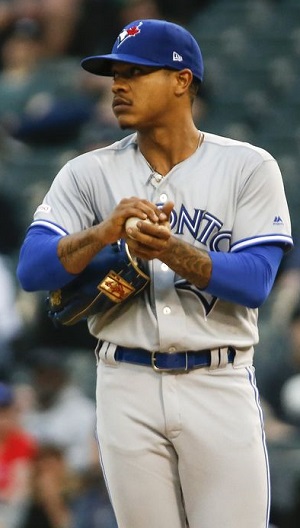
On baseball’s final Sunday before the All-Star break, one major league catcher decided six concussions per twelve major league seasons was quite enough, and it was time to set the so-called tools of ignorance to one side. Francisco Cervelli, Yankee turned Pirate, got number six thanks to a broken bat hitting his chin on 25 May. “That’s enough,” he told DKPittsburghSports.com’s Dejan Kovacevic. “This time is different. I can’t live like this.”

What a difference almost a month and a half makes. When first knocked down and out, Cervelli was determined to get back behind the plate as soon as feasible, which seemed to unnerve Pirates general manager Neal Huntington.

“We care about this man. We care about this person and want him to have a great post-playing career . . . You have to respect the player’s wishes,” Huntington said then. “Francisco has been adamant that he wants to continue to catch. I think he would be quite unhappy if we told him he was never going to catch for us again.”

Kovacevic says Cervelli changed his mind gradually but surely and with no instigation from the Pirates. He talks of switching to the outfield, perhaps. Barring any frequent collisions with fellow outfielders, it’s a far less dangerous place to play, assuming Cervelli can recover his batting stroke enough to justify the Pirates letting him fall in out there.

And lo! Just hours after the news of Cervelli discarding the tools of ignorance came forth, there came a play in Houston that gave his alarm too much credence.

Astros outfielder Jake Marisnick, inserted into the game against the Angels as a pinch runner for left fielder Yordan Alvarez, attempted to come home from third on a long bases-loaded fly to right by Astros center field star George Springer. Angels right fielder Kole Calhoun fired a strike home.

Marisnick came booming down the line as Angels catcher Jonathan Lucroy awaited the Calhoun throw. Mindful of the oncoming Marisnick, Lucroy moved out front and slightly left of the plate, which (read carefully) opened the lane for Marisnick to stay on a straight line, with Lucroy, a well-seasoned catcher, leaving himself concurrent room to apply a tag.

Except that Marisnick jinked left, right into Lucroy, blasting Lucroy into a heap, the impact compelling Marisnick to double back to touch the plate, before he bent over Lucroy in obvious alarm for the veteran’s health as the Angels’ training staff arrived at the plate.

The play was reviewed out of New York and Marisnick was ruled out. He would have scored the go-ahead run in a ten-all tie; the Astros ultimately won the game 11-10 in the tenth inning.

Social media seemed to bristle with Astros fans fuming over the out call, but the call was indeed correct according to the rule that’s been in place since 2014, when the Giants and most of baseball became fed up over how much playing time injuries and plate collisions cost their star catcher Buster Posey:

A runner attempting to score may not deviate from his direct pathway to the plate in order to initiate contact with the catcher (or other player covering home plate). If, in the judgment of the Umpire, a runner attempting to score initiates contact with the catcher (or other player covering home plate) in such a manner, the Umpire shall declare the runner out (even if the player covering home plate loses possession of the ball).

I watched as many replays of the play as I could. My conclusion:

1) Lucroy did indeed move to allow Marisnick a more proper lane, just before Lucroy took Calhoun’s throw to the plate on the short hop about a foot forward left of the plate. (The longtime rule was that catchers were not allowed to block the plate, a rule rarely enforced, but Lucroy acted within the letter of the current rule, too.)

2) Marisnick did indeed move left and into Lucroy’s way in a bid to move him off the play when he was indeed given a clear, straight line to the plate. If you see the play from the camera angle behind the plate, you see Marisnick look as though making a quick turn left, the pivot on his right leg, and into Lucroy.

3) Read this very carefully, too: From all appearances, Marisnick had no intention of relieving Lucroy of his limbs or his brains on the play. He wanted simply to knock Lucroy off the play and relieve him of the ball he speared seconds before impact. The ball was indeed knocked right out of Lucroy’s mitt at the moment Marisnick turned him into the high priced spread.

4) The foregoing said, Marisnick was very remorseful over Lucroy’s injury, as he tweeted subsequently: Through my eyes I thought the play was going to end up on the outside of the plate. I made a split second decision at full speed to slide head first on the inside part of the plate. That decision got another player hurt and I feel awful. I hope nothing but the best for [Lucroy].

5) Properly remorseful but momentarily blinded. Full speed or otherwise he couldn’t possibly miss Lucroy moving forward to allow him a proper lane, which, I repeat, would still give Lucroy a fair shot at tagging him out and Marisnick a fair shot at scoring.

The Angels sent Lucroy to a local hospital for a CT scan and concussion evaluation, not to mention to determine whether his nose was broken on the play. Lucroy’s week already included mourning the unexpected deaths of his Angels teammate Tyler Skaggs and his coach at Louisiana-Lafayette College, Tony Robichaux. Crowning such grief by being blown to smithereens wasn’t exactly on Lucroy’s radar.

It soiled both the Astros’ otherwise splendidly hard earned win and the afternoon on which Mike Trout, the Angels’ and baseball’s Mr. Everything, bombed his way into his team’s record book, his two launches making him the Angel with the most home runs prior to an All-Star break, ever. (The previous record, 26, was shared by Trout, future Hall of Famer Albert Pujols, and former Angels star/World Series hero Garret Anderson.)

It also spoiled such Sunday milestones as Mets rookie Pete Alonso, one of the few bright lights in a Mets season described at best as grotesque, breaking the National League’s record for runs batted in by a rookie before an All-Star break and tying the Mets’ team record for home runs before the All-Star break. (Dave Kingman set it in 1976.)

And it punctuated Francisco Cervelli’s decision with an exclamation point that might as well have been fashioned into a stake.

Baseball takes the Fourth

2019-07-04 LouGehrig

Lou Gehrig, who said farewell eighty Fourths of July ago . . .

This year is a splendid one for baseball anniversaries, not all of them pleasant. A hundred years ago the Reds were cheated out of the thrill of World Series victory by the agony of the Black Sox’s chill of self-conscious defeat; fifty years ago, the eight-year-old, crazy Mets were crazy enough to win a division, a pennant, and a World Series. Just to name two.

Today America will have its annual red, white, and blue pyrotechnic racket celebrating the declaration without which this hardy if too often self-buffeted experiment would not be alive to watch twelve major league baseball games and a few hundred more minor league games.

And the Mets, crazy this year for reasons having too little to do with the craziness of 1969, get their first Fourth of July off in a non-strike-impacted season in their entire franchise history, after splitting a pair with the Yankees Tuesday and Wednesday. No such luck for the Empire Emeritus; they have landed in Florida to open a weekend with the freshly upstart but lately teetering (they’ve won 5 of 7 but lost 9 of 16 entering today) Rays.

Twenty seasons after the shenanigans of the 1919 World Series, America’s 4 July fireworks were handed a sober contrast in the old Yankee Stadium. Two weeks after receiving his diagnostic death sentence, the insidious disease that now bears his name, Lou Gehrig accepted the honour of his teammates past and present and did what he’d rarely done on the field prior to his self-imposed removal from the Yankee lineup.

He wore his heart on his sleeve. He also spoke without a script, without premeditation, without a speechwriter. You can hunt all you like but find no actual or alleged American leader that gifted by spontaneous soul:

Fans, for the past two weeks, you have been reading about the bad break I got. But today, I consider myself the luckiest man on the face of the earth.

I have been in ballparks for seventeen years and have never received anything but kindness and encouragement from you fans.

Look at these grand men. Which of you wouldn’t consider it the highlight of his career just to associate with them for even one day? Sure, I’m lucky.

Who wouldn’t consider it an honor to have known Jacob Ruppert? Also, the builder of baseball’s greatest empire, Ed Barrow?

To have spent six years with that wonderful little fellow, Miller Huggins? Then to have spent the next nine years with that outstanding leader, that smart student of psychology, the best manager in baseball today, Joe McCarthy? Sure, I’m lucky.

When the New York Giants, a team you would give your right arm to beat, and vice versa, sends you a gift—that’s something. When everybody down to the groundskeepers and those boys in white coats remember you with trophies—that’s something.

When you have a wonderful mother-in-law who takes sides with you in squabbles with her own daughter—that’s something. When you have a father and a mother who work all their lives so you can have an education and build your body—it’s a blessing. When you have a wife who has been a tower of strength and shown more courage than you dreamed existed—that’s the finest I know.

So I close in saying that I may have had a tough break, but I have an awful lot to live for.

Leave it to Hollywood to bowdlerise such transcendence the way it did when, despite availability’s freshness, they put a completely fictionalised version of Gehrig’s “Luckiest Man” speech into Gary Cooper’s mouth, the crowning insult from a film that insults more than embraces Gehrig’s actualities. In a later generation a Hell’s Angels president lamented their press coverage by wondering, “All that bullshit, hell, ain’t the truth bad enough for ’em?” Film students and baseball fans alike have every right to ask of The Pride of the Yankees, “All that bullshit, hell, ain’t the truth good enough for ’em?”

On the same day Gehrig graduated from baseball excellence to soul transcendence, Jim Tabor, a Red Sox third baseman, hit two grand slams in a doubleheader nightcap against the Philadelphia Athletics. (One of them was an inside-the-park number.) He became one of only thirteen players to perform that feat, on a day he driving in eleven runs over the entire doubleheader.

In 1983 a Yankee pitcher, Dave Righetti, subsequently a respected pitching coach, kept the Red Sox from making their own Fourth of July fireworks. He threw a no-hitter, the first Yankee to do it since Don Larsen’s perfect game in the 1956 World Series and the first Yankee lefthander to do it since George Mogridge—in 1917, while the world war alleged to be ending all wars continued apace.

Righetti finished his no-hitter with a flourish. In 1983 Hall of Fame third baseman Wade Boggs struck out a mere 36 times. The bad news is that one of those strikeouts completed Righetti’s masterwork. Which reminds me that sixteen pitchers have struck out 3,000 or more batters and only two of them secured number 3,000 on the Fourth of July: Nolan Ryan (1980; his victim: Cesar Geronimo) and Phil Niekro. (1984; his victim: Larry Parrish.)

One year after Knucksie’s milestone the Mets and the Braves played a game that started on the Fourth of July and ended on the fifth of July. The good news for the Mets: Keith Hernandez hit for the cycle. The better news for the Braves: pitcher Rick Camp tied the game with a home run—in the bottom of the eighteenth. (“If this team needs me to tie a game, they’re in trouble,” Camp remembered later.) The best news for the Mets: They scored three in the top of the nineteenth before Ron Darling—now a Mets broadcaster, then a starting pitcher pressed into survival relief—struck out Camp himself to end the 16-13 win.

The Braves said nuts to that and went ahead with their postgame fireworks show anyway. Nothing keeps some people from their red, white, and blue racket making—not even the fifth of July and nineteen innings of baseball.

Sixty years to the day before that Fourth, two Hall of Famers—Lefty Grove (Athletics) and Herb Pennock (Yankees)—tangled in a pitching duel that went fifteen innings before Grove surrendered the game-losing RBI to Yankee catcher Steve O’Neill. The bad news: It was one of only ten RBIs O’Neill would have all season long. The worse news: it was the first game of a doubleheader.

Today, the eyes of baseball will fall most likely upon the Dodgers, who enter a home game against the Padres on a streak of five consecutive games won in the final plate appearance of the inning. The last two of the streak were won by Cody Bellinger, the Dodger outfielder doing his level best to give Dodger fans a taste this season of what Angel fans have tasted since 2012 from Mike Trout.

On Tuesday night, Bellinger received the fifth consecutive walk of the bottom of the ninth to win, 5-4. On Wednesday night, having opened the scoring with a parabola over the center field fence, and with his parents in Dodger Stadium, Bellinger stepped up in the bottom of the tenth and sent one into the right center field bleachers. Winning again, 5-4.

The two Wednesday blasts put Bellinger into the Dodgers’ record book. He knocked two Brooklyn legends—Hall of Famer Duke Snider, and eventual Miracle Mets manager Gil Hodges—to one side for the most home runs by a Dodger in any season prior to the All-Star break.

But the eyes of baseball are just as likely to fall upon the Nationals, in Washington, when they host the Marlins in the nation’s capital. The Nats have gone from basket case in the making to winners of 15 out of 17 and a resurrected National League East threat, and even their once-lamented 2019 bullpen seems to be shaking off its early season penchant for throwing kerosene balls.

An American president-to-be fired the pronouncement heard ’round the world 243 years ago. (If you’re scoring at home, that’s one year more than the total home runs a former Nationals manager hit during his own playing career.)

May [our Declaration] be to the world, what I believe it will be (to some parts sooner, to others later, but finally to all) the Signal of arousing men to burst the chains, under which monkish ignorance and superstition had persuaded to bind themselves, and to assume the blessing & security of self government.

Let today’s American political (lack of) class sully America’s birthday all it wishes, if only because the formal legal holiday allows even a single day’s relief from their suffocating mischief. Immune as almost completely they are to America as an idea as well as a country, let them stew all they choose that they can’t really impose that immunity upon still-sovereign Americans, enough of whom will re-embrace America the idea in hand with America the country today.

Descended from stock as varied in international origin as baseball players are in performance, approach, and style, still-sovereign Americans will spend a fair portion of her birthday watching the game that above all others begins with the act of a sovereign individual but scores with the act America the idea embraces in the abstract and, at her best, the actuality. Enunciated best by the Yale scholar of renaissance literature (Dante in particular) who eventually became baseball’s overseer, if for a tragically brief term:

Baseball is quintessentially American in the way it tells us that much as you travel and far as you go, out to the green frontier, the purpose is to get home, back to where the others are, the pioneer ever striving to come back to the common place. A nation of migrants always, for all their wandering, remembers what every immigrant never forgets: that you may leave home but if you forget where home is, you are truly lost and without hope.

Mr. Jefferson, meet Professor Giamatti. Preferably behind home plate, but anywhere you might see America’s best annual birthday present, that roaming to the frontier, that hope of coming home, its starting cry the one with which you, Mr. Jefferson, might have finished your declaration and America’s, had you been clairvoyant enough to see its advent: Play ball!


The Angels win with overloaded hearts

2019-07-03 TrevorCahill

Angels relief pitcher Trevor Cahill gives a salute to the late Tyler Skaggs. Showing class to burn, the Rangers installed Skaggs’ uniform number—in the Angels’ uniform font—behind their pitching rubber in memorial tribute for Tuesday’s game.

A teammate dies without warning as a season comes to within sight of the halfway marker. Your scheduled road opponent is gracious enough to cancel the game scheduled that night out of respect for your loss. The grief within your clubhouse and your front office is too real to suppress. And back home your fans are laying out item after item, flower after flower, message after message in your teammate and friend’s memory.

“LTBU in heaven!” said a scrawl on one souvenir batting helmet left among the memory gifts, referring to Angel fans’ customary call (Light that baby up!) after Angels wins, to light the halo around the original stadium big A scoreboard now implanted in the back parking lot.

Angel fans get to mourn Tyler Skaggs a little longer than the Angels themselves in terms of the schedule, because the Angels still had a game to play against the Rangers in Arlington Tuesday night.

Whether you’re in the depth of a pennant race, on the race’s fringes, or headed for the repose where the also-rans will commiserate when it’s all over, you know in your heart of hearts, gut of guts, and mind of minds, that the young man you mourn would rather you suit up, shape up, and step up on the mound, at the plate, on the bases, in the field, than spend more than a single day’s grief without playing the game he loved with you.

So the Angels did what they knew their lost brother wanted. They suited up, shaped up, stepped up, with Skaggs’s uniform number (45) on a small round black patch on their jerseys’ left breasts. They carried Skaggs’s Angels jersey for a pre-game moment of silence in his honour.

“It was just kind of something unplanned. His jersey was hanging in his locker. We wanted to take him out there with us one more time,” said pitcher Andrew Heaney later. “He was definitely my best friend. There’s probably about 100 other people out there that would say he was their best friend, too, because he treated everybody like that.”

His best friends beat the Rangers, 9-4, on a night during which the Rangers showed the Angels such respect as canning the walkup music and others among the normal rackets for Ranger feats at home. The Rangers even installed a red number 45 behind the pitching rubber. In the Angels’ uniform font. To do Skaggs and his team honour.

And not a single Angel tried to hide his grief at a post-game conference.

Their all-everything center fielder, Mike Trout, spent most of the game walking three times and scoring on a base hit. Maybe the single greatest star in the Angels’ firmament, ever, Trout couldn’t get through a simple expression of what Skaggs meant to himself and their team without several chokings back of tears.

“Lost a teammate, lost a friend, a brother, we just got to get through it,” he said shakily. “He was an unbelievable person. It’s all about him. Husband of Carli, what a sweet girl, Debbie his mom, you know, a good relationship with them. You know, it’s just a tough, you know, 24 hours.

“We’re getting through it, tough playing out there today, but like Brad [Ausmus, the Angels’ manager] said earlier, Skaggs, you know, he wouldn’t want us to take another day off,” Trout continued. “The energy he brought into this clubhouse, you know, every time you saw him he’d pick you up. It’s going to be tough, you know, these next couple of days, the rest of the season, the rest of our lives, you know, to lose a friend . . . All these guys in here, you know, I see these guys more than my family. To lose somebody like him is tough.”

In Washington, Nationals pitcher Patrick Corbin, close friends with Skaggs since their Diamondbacks days, switched his uniform from 46 to Skaggs’s 45. Then he went out to pitch his regular turn, his manager Dave Martinez saying it was just about all Corbin could do. Corbin himself affirmed it after the Nats beat the Marlins, 3-2, Trea Turner walking it off with an RBI hit.

“When you have a loss, you want to keep things as normal as you can and just try to go out there and do what you have to do,” Corbin said after that game. But he never said it would be easy to pitch through the memories of their being drafted together by the Angels, traded together to the Diamondbacks, and in each other’s wedding parties this past offseason.

Corbin not only changed his uniform number to Skaggs’s but scratched the number in the dirt behind the mound before he managed to pitch seven innings despite being disrupted by a rain delay of over an hour, surrendering one run, no walks, and seven strikeouts.

Another Nat had personal ties to Skaggs. Adam Eaton played in the fall instructional leagues with Skaggs. And they were eventually traded away from the Diamondbacks in the same three-way deal that returned Skaggs to the Angels and sent Eaton to the White Sox.

“Saw his debut. Saw his first hit. Saw his first strikeout. Know his wife. My wife knows his family. It’s just . . . I’m not quite sure it’s hit me yet,” the outfielder said, shades covering his teary eyes. “My family, our hearts go out to his family. He’s kind of kicked us in the pants in his passing that we need to take every day as it’s our last and enjoy our family and love our family and what’s important in our life, and know that we’re blessed to play this game every day. That’s the gift he’s given us, even after.”

As for the Angels, they started the game with a first-inning, run-scoring ground out before a first-inning sacrifice fly, a third-inning solo homer, and a double steal including home put the Rangers up 3-1. The Angels tied it in the fifth on a base hit that turned into two runs home on an outfield throwing error; a four-run sixth—an RBI single, a runner-advancing throwing error, another RBI single, and a sacrifice fly—put them ahead to stay.

The Rangers got their final run on another sacrifice fly, and the Angels got their final two when shortstop Andrelton Simmons opened the top of the eighth with a walk and, one out later, right fielder Kole Calhoun drove a middle-high fastball parabolically over the right center field fence. The win pulled the Angels back to .500 and to within four games of the American League wild card hunt.

Those small details were probably the last things on their minds Tuesday night. They might be a little more concerned for Tommy La Stella, their breakout All-Star, who had to leave the game in the sixth after fouling a pitch off his right leg below his knee. But La Stella probably thought his injury was tiny compared to the wrench in the team’s hearts.

“It’s bigger than the game. The friendship and the love I had for him and his family, it’s more than that,” Trout said.

“Today it was just different,” said Calhoun after the game, “and there’s no playbook on how it’s supposed to go today and you’re supposed to act and react. But getting back to the game definitely is what he would have wanted. Today was a day that we leaned on each other like we really needed to do.”

The same thing happened ten years earlier, after rookie pitcher Nick Adenhart was killed by a drunk driver while out celebrating after a splendid first start of the season. The day after Adenhart’s death, the Angels beat the Red Sox, 6-3, in Angel Stadium. The win was only partial comfort then just as it was Tuesday night in Arlington.

It doesn’t always work that way.

Cardinals pitcher Darryl Kile died unexpectedly of a heart attack in June 2002, while the Cardinals were in Chicago to play the Cubs. The following day, they lost to the Cubs, 8-2, with the Cubs scoring all eight before the eighth inning including a four-run sixth, and the Cardinals able to muster only two in the eighth—on future Hall of Famer (and current Angel) Albert Pujols’s two-run homer—and one in the ninth on an RBI single.

When Yankee catcher Thurman Munson was killed in the crash of his own aircraft, the Yankees played the Orioles the day after and lost a 1-0 heartbreaker in Yankee Stadium. In a game featuring three future Hall of Famers (Eddie Murray, Reggie Jackson, and Goose Gossage) and a pitching duel between Scott McGregor of the Orioles and Luis Tiant of the Yankees, the lone run came when John Lowenstein hammered a Tiant service over the fence.

A year earlier, Angels outfielder Lyman Bostock was murdered while on a visit to Gary, Indiana, in a car, when a man fired at the car hoping to hit his estranged wife, whom he suspected having an involvement, shall we say, with another man in the car. The next day, the Angels beat the Brewers in extra innings, Carney Lansford singling home Danny Goodwin with two out in the tenth.

Death in season sometimes rallies teams and other times knocks them apart. Maybe no death in Reds’ history was as shocking as the 2 August 1940 suicide of reserve catcher Will Hershberger—whose own father had committed suicide previously. Blaming himself for a doubleheader loss, Hershberger reportedly told manager Bill McKechnie more than that troubled him but nothing to do with the team, and McKechnie never disclosed the rest.

The Reds played another doubleheader the day after Hershberger’s death. They swept the Boston Braves (then known as the Bees), then went on to win the pennant with a 23-8 September before beating the Tigers in seven in the World Series. McKechnie publicly dedicated the rest of the season and the pennant chase to Hershberger, and the Reds awarded a full winning World Series share to Hershberger’s mother while they were at it.

And when Indians shortstop Ray Chapman died after being coned by Carl Mays’s fastball in 1920, the stricken Tribe—with just a little help from the explosion of the Eight Men Out being taken out in Chicago at almost season’s end—ended up winning the pennant and the World Series.

The 1955 Red Sox were headed only to a fourth place finish but they suffered the unexpected death of promising young first baseman Harry Agganis to a pulmonary embolish on 27 June that year. The following day, the Red Sox swept the Washington Senators in a doubleheader compelled by a rainout earlier that season. The scores were 4-0 in the opener and 8-2 in the nightcap.

These Angels may or may not band up and make a surprise run to the postseason from here. But they honoured their effervescent pitching teammate now gone in the only coin all accounts suggest Skaggs would have accepted. They played ball. And they beat a team who probably didn’t really mind getting their tails kicked for just one night, because the grief felt around baseball over Skaggs’s unexpected death was just too real.

“We knew what they were dealing with on the other side,” Rangers manager Chris Woodward said after the game. “We were trying to comprehend the impact something like that would have on our ball club. I can’t even describe the feelings they were having. Obviously, it wasn’t our best game, but clearly it affected us in some way. Honestly, I don’t know how to describe that feeling. It was just kind of obvious they deserved to win.”

“We know we’ve got an angel watching over us now,” Calhoun said. “When I got to the plate, it felt right to pay some respect to him, and like I said, we know we’ve got somebody watching over us up there.” Somebody who didn’t deserve to die at 27.

Tyler Skaggs, RIP: Another heavenly Angel, damn it . . .

2019-07-01 TylerSkaggs

Tyler Skaggs—accommodating, joyful, and tragically dead at 27.

The Angels are a franchise with a sad enough history of calamity in its ranks. It’s a shame to think of things this way, but it’s been a decade since the last death among their active family, young pitcher Nick Adenhart. Just maybe the franchise’s sad history of active duty rendezvous with the Grim Reaper would get an even longer break.

Then came the news that pitcher Tyler Skaggs was found dead at 27 in the team’s Southlake, Texas hotel Monday afternoon, as the Angels were about to open a road set with the Rangers. Even the Rangers were staggered by his death. They had no issue at all with cancelling Monday’s game.

Skaggs was a Santa Monica High School standout, the son of their longtime softball coach Debbie Skaggs, a good if sometimes inconsistent pitcher in the major leagues, and with a reputation for approachability that went back to his high school days and a sense of humour that got wicked without getting nasty.

Only recently Skaggs deployed his humour on behalf of getting teammate Tommy LaStella to this year’s All-Star Game, in a hilarious video in which Skaggs interviewed Angels two-way star Shohei Ohtani—with Skaggs in English and Ohtani, playfully, in his native Japanese. It must have helped, since LaStella was voted by fellow players to the American League All-Stars “in a career year nobody saw coming,” least of all LaStella.

“I will remember the smile and spirit he always showed during his Santa Monica High days,” wrote Los Angeles Times baseball writer Eric Sondheimer almost immediately after learning of Skaggs’s death. “The beach, the ocean, the air — it helps creates a personality that people want to embrace. He’s left us but won’t be forgotten. Now’s the time to remember all the joy he brought people through his 27 years.”

Skaggs was a mid-to-back-of-the-rotation starter whose best pitch was considered his curve ball while he also owned a changeup that could be effective but wasn’t quite fully developed. He missed all 2015 and most of 2016 recovering from Tommy John surgery; he battled subsequent injuries including adductor strains; he was still freshly married to his wife, Carli, having tied the knot last December.

And he was a prodigal Angel, having been dealt to the Diamondbacks in mid-2010 in the deal that made Dan Haren an Angel, but returning in 2013 in the three-way deal that brought him back to the Angels, sent slugging but defense challenged outfielder Mark Trumbo to the Snakes, and sent Adam Eaton from the Snakes to the White Sox, with the Angels also getting swing pitcher Hector Santiago while they were at it.

He was posting a fine season marked by a little hard luck this year, his 4.29 ERA counterweighted by a fine 3.84 fielding-independent pitching rate and a mere 3.8 runs to work with from his mates during his times in the games to prove the hard luck spells.

None of which matters as heavily as the Angels having to say a permanent goodbye to a good pitcher who was an apparent joy in the clubhouse. Police say no foul play was suspected. Leaving us only to speculate sadly over just what could have taken a young guy with as much to live for as Skaggs had.

My son, Bryan, an inexhaustible Angels fan since early boyhood, called me to tell me the news, my cell phone ringing just as I was stepping into a supermarket. His first words were, “Another Angel’s going to heaven.” He’d been shattered by Adenhart’s death at the hands of a drunk driver ten years earlier.

He probably had little enough idea that the Angels have been there only too many times in their franchise life. Since 1965, when they were freshly relocated to Anaheim, and when rookie pitcher Dan Wantz surprised observers by pitching his way onto the staff with an unexpected strong spring  training, only to die of a brain tumour at 25 four months later.

There was Minervino Rojas, late blooming but seemingly inexhaustible relief pitcher. (“He’s got three pitches,” a rival said of the deceptively effective Rojas, formerly buried in the Giants’ system. “Slow, slower, and come and get it.”) A fireman’s fireman whose off-speed repertoire helped him lead the American League retroactively with 27 saves in 1967, in the era when the one-inning closer wasn’t even a topic. Arm trouble forced his retirement in spring 1969. A year later: a hit-and-run driver killed two of his three children, though his wife and infant son survived, and left Rojas a paraplegic.

There was utility infielder Chico Ruiz—once famed for the steal of home as a Red that kicked off the 1964 Phillie Phlop—dead in an offseason auto accident in 1972, a year after he’d helped poison an already-poisoned clubhouse by threatening talented but deeply troubled outfielder Alex Johnson, who loved him yet also loved to needle him incessantly, with a pistol. At 33.

There was Bruce Heinbechner, pitching his way onto the roster in spring 1974, seen as the Angels’ forthcoming lefthanded relief specialist, until the 23-year-old was killed in a pre-season auto accident. There was Mike Miley, shortstop, three years later. Seen as a prospective Rookie of the Year challenger at 23–before he, too, was killed in a pre-season road accident.

There was Lyman Bostock, outfielder, one of the Angels’ earliest big-money free agents after a promising career to date with the Twins. Like Skaggs, outgoing and popular. So enthusiastically chatty in the clubhouse that Bostock’s Angels teammates nicknamed him Kareem Abdul Jibber-Jabber. Shot to death at 27 a year after Miley’s death, while riding in a car with a relative and friends in Gary, Indiana. The shooter said he was aiming at his estranged wife; the case prompted Indiana to change its insanity defense laws.

There was Donnie Moore, relief pitcher, haunted both in his own soul and in the aftermath of surrendering the fateful home run to Boston’s Dave Henderson when the Angels were a strike away from going to the 1986 World Series—still coming to terms with the end of his career and his personal demons when he shot and injured his wife before shooting himself to death, in 1989.

And, there was Adenhart, who threw six shutout innings in his first 2009 start, scattering seven hits and striking out five, killed at 22 by a drunk driver while riding as a passenger in a mini-van. The driver, Andrew Thomas Gallo, was sentenced to 51 years-to-life behind bars.

2019-07-01 TylerCarliSkaggs

Tyler Skaggs posted this wedding photo on Instagram after marrying his wife, Carli, last December.

Skaggs took his lady to the Bahamas in November 2017, to propose to her. He looked happier with Carli Skaggs on their wedding day than at any other time in a life most accounts say was as happy as the day was long.

That only makes his death now even more heartbreaking than any game lost, any pitch that didn’t make it the way he wanted it. The Angels lose a teammate and friend but a young lady loses a husband whom she knew deeply had too much life to share and live.


Some people can never be satisfied, still

20190627_190740

Left to right: Emily, Bryan, and the author, Bryan’s father, relax in Angel Stadium before a game between the Angels and the Athletics Thursday night. Guess which of the game’s seventeen total hits got the loudest ovations . . .

What’s that old saying about some people can never be satisfied? Unfortunately it also remains a true saying. That’s whether baseball’s get-off-my-lawn contingency complains about not enough hitting (in 2014) or too many home runs (this year), or whether Orioles fans look the proverbial gift horses in the mouth because of a choice of . . . uniform.

This year’s epidemic of home runs includes such side effects as strikeouts rising, singles falling, stolen bases on various endangered species lists, and howitzer-armed bullpens turned to arson squads.

It’s not unreasonable to lament the large percentage of game action that involves home runs. The absolute flip side of the proverbial coin would be a game full of nothing but singles and a crashing bore unless the pitchers are virtuoso charismatics and the fielders resemble the Flying Wallendas. (Only nine percent of this season’s fielding assists so far involve turning double plays. Ground ball pitchers, where are thy stings?)

I happened to be in Angel Stadium Thursday night, treating my son, Bryan, and his girlfriend, Emily, to a game, the first of a weekend set between the Angels and the rival Athletics, to finish their final home stand before the All-Star break. (They hit the road to meet the Rangers and the Astros to finish the season’s first half.)

The occasion was a gift for Bryan’s graduation from southern California’s North Orange Continuing Education program in which disabled students make their transitions gradually but affirmatively to whatever full collegiate work they can perform toward the level of independent life they can attain.

Bryan is speech-language impaired, and the only one in the house more proud of the courage he shows living, laughing, and persevering through his disability is his father, to whom Bryan is a hero every day, not just those during which he graduates or helps his Special Olympics team nail a silver medal in softball, as he did at last year’s national games in Seattle.

(P.S. In his first ever plate appearance in a national Special Olympics, Bryan socked a home run. In baseball, 118 players have homered in their first major league at-bats. The most recent: Lane Thomas, Cardinals, 19 April.)

And lo! Come Thursday night, the Angels defeated the Athletics, 8-3, to open a weekend set. From our nesting at field level down the right field line, we saw the runs score on:

* A second-inning home run. (A’s center fielder Ramon Laureano, leading off.)

* Another second-inning home run. (Kole Calhoun, a two-run shot that ricocheted off the rocks behind the left center field fence in the bottom of the inning.)

* A third-inning home run. (Shohei Ohtani, the defending American League Rookie of the Year, resuming designated-hitter duties if not pitching as he continues recovering from Tommy John surgery, hitting one clean over the center field fence.)

* A pair of third-inning RBI singles. (Hall of Famer in waiting Albert Pujols, driving home Justin Upton; and, Luis Rengifo, driving home Calhoun.)

* A fourth-inning home run. (Matt Olson of the A’s, leading off the top.)

* A sixth-inning single. (Mike Trout, the Angels’ all-everything center fielder, sending home Andrelton Simmons, the flying shortstop freshly restored from the injured list.)

* An eighth-inning single. (Oakland’s Marcus Semien, sending home Robbie Grossman.)

Of the game’s seventeen hits (the Angels had twelve), 24 percent of them sailed over the fences. Through this morning’s writing, major league games this season have featured 3,390 home runs out of 21,265 hits. That, folks, is 16 percent of this season’s hits. Last year, 14 percent of baseball’s hits were home runs. Oh, the horror.

Fume all you like about the home run epidemic, if epidemic it is, but doesn’t it seem peculiar that such an epidemic accounts for that small a percentage of baseball’s hits? Thirty-six percent of this year’s hits are doubles; two percent are triples. But we don’t hear either loud complaints about the epidemic of doubles or the near-extinction of triples as much as we hear about the bombs bursting in air at record levels.

On Thursday night, except for Trout’s RBI knock in the sixth, knowing that this guy gets standing ovations just taking his position in the field to open a game (a cursory look around the park tells you Trout remains the single most popular Angel based on jerseys and jersey-reproducing T-shirts with Ohtani a close enough second), guess which hits got the loudest ovations, even among the A’s fans who scattered around the stands?

Hint: it wasn’t the four RBI singles.

(A note on the Angel Stadium video display when Laureano batted midway through the game: he’s the first Athletic in their entire franchise history—going all the way back to the birth of the Philadelphia Athletics—to have made his first major league hit a game-winning RBI hit. Ever. Not even the franchise’s celebrated Hall of Famers—not Home Run Baker, Jimmie Foxx, Al Simmons, or Reggie Jackson—did that. Laureano did it in 2018.)

Once upon a time, Washington Senators owner Clark Griffith bragged (if that’s the correct word), “The fans love home runs, and we have assembled a pitching staff that is certain to please them.” This year, commissioner Rob Manfred all but brags that since the fans like home runs, baseball has introduced a ball that was certain to please them. Apparently, the “pill” at the ball’s center is being centered more accurately. Makes some people want to reach for the nearest bottle of pills.

Pitchers may not be pleased as greatly as the fans seem to be. Rangers pitcher Drew Smyly picked the wrong year to return from Tommy John surgery: he surrendered nineteen bombs in 51 and a third innings before the Rangers released him last week. And until Phillies pitcher Jared Eickhoff landed on the injured list, he’d pitched 58 and a third 2019 innings and eighteen services landed on the far side of the fence.

ESPN’s David Schoenfield says Smyly’s home run rate per nine innings this year (3.3) was baseball’s worst and Eickhoff’s (2.8) the seventh worst, but don’t get him started on those who’ve been nuked worse in fewer innings. Poor souls such as Alex Cobb (nine bombs in twelve and a third), Edwin Jackson (twelve in 25.1), or Dan Straily (22 in 47.1).

And, yet, Schoenfield continues, overall scoring per game remains “within historical norms” at 4.78 runs a game, which he says is the highest since 2007’s 4.80. Apparently it’s how you score that matters yet again. If the game levels itself out in due course (as it always seems to do, never mind the periodic equipment tinkerings) and the runs begin coming in singles-, doubles-, and triples-hitting droves, brace yourself. The death of the home run will be pronounced loud and long, too.

I mentioned the Orioles earlier. Back to them. How does this strike you—the Orioles, who are on a pace Schoenfield says will see them surrender 324 home runs for the full season (or, if you’re scoring at home, an average of 36 homers per lineup spot against them), spent Friday and Saturday doing what no team before them has done: back-to-back shutouts in which they themselves scored thirteen runs or more.

The Indians were the victims. On Friday night, John Means and three Orioles relievers kept the Indians to six hits against Mike Clevinger and three Indians relievers surrendering sixteen hits—only (count them) two of which were home runs. On Saturday night, Andrew Cashner and one reliever kept the Tribe to five hits against Zach Plesac and four Indians relievers surrendering thirteen hits—only four of which were home runs. That’s back-to-back home run percentages of 13 and 31 percent per game, and 21 percent for the two games.

But Oriole fans couldn’t even enjoy that rare a two-night spread without finding something to complain about. In this case, the Orioles’ uniforms Saturday. Commemorating Maryland Day, a state holiday, the Orioles’ jersey sleeves and cap visors displayed the image of Maryland’s state flag. “Hideous” was probably the least indignant adjective applied.

Well, as I was saying, some people can never be satisfied. Thank God and His servant Jackie Robinson that my son and his lady aren’t among the perpetually dissatisfied.