Can you top this?

2019-10-02 WashingtonNationals

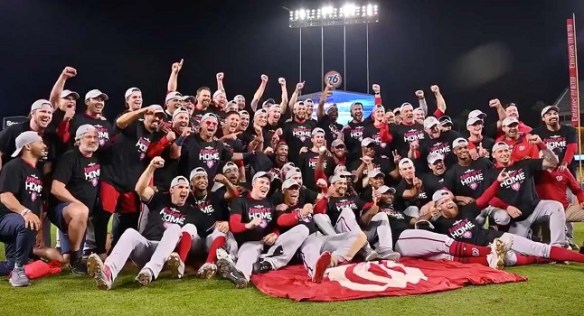
Can the American League wild card game possibly beat the National League’s for surrealism?

An Athletics fan of my acquaintance in a Facebook baseball group told me this morning that, even in the dump of a Coliseum, the American League wild card game between the A’s and the Rays looked to be an absolute sellout. This is good.

Whether the A’s and the Rays come up with anything such as happened in the National League game Tuesday night is anybody’s guess until they play. And, hopefully, each team’s fans pray devoutly, it won’t be the kind of late twist of fate that squirted the Nationals to overthrow a win the Brewers looked to have in the safe.

Until Tuesday night it was the Nats who tended to suffer on wrong side of the pennant race’s or the postseason’s slings, arrows, slapsticks, anguishes, and surrealities. Then one unexpected skip on the grass of a bases-loaded eighth-inning single gave the Nats a deep taste of how it feels to be on the winning side of even one of those.

Maybe the Elysian Fields demigods decided at long enough last that, considering the toxic surreality that is Washington’s number one business—also known as the nation’s largest organised crime family—the nation’s capital and those who live there and root for the Nats deserved even a brief reprieve.

The history minded in the capital could see the ghosts of the last time a bad hop won something big for Washington baseball. Two bad hops in fact, both on the dime of Giants third baseman Freddie Lindstrom, one enabling the ancient Senators to tie and the other enabling them to win Game Seven of the 1924 World Series.

These Nats haven’t yet reached that close to World Series rings, of course. But after Juan Soto’s liner skipped surrealistically beyond the otherwise well positioned glove of rookie Brewers right fielder Trent Grisham, you might forgive the Nats and their fans if they permit themselves thoughts that, this time, they just might not get kicked to the rocks below after being led up the mountain to gaze upon the Promised Land.

The A’s and the Rays have a next-to-impossible act to follow Wednesday night. The Nats merely have a division series date with the Dodgers starting Friday in Los Angeles. They’ve crossed the Red Sea. Now comes the trek across the desert. As the man on the radio used to say, it won’t be easy, Clyde.

Some star-crossed teams can say at least that their signature transdimensional disasters were spread out over decades. The Nats have gotten theirs within just sixteen years of life adjacent to the Potomac. Their Montreal forebears never knew even a sixteenth of that. Maybe the 1994 strike costing them a clear postseason path.

Why, those Montreal forebears were even managed by Gene Mauch in their infancy and never had the chance to endure the kind of thing that sketched Mauch’s name into unfair infamy with the 1964 Phillies and the 1986 Angels. Lucky them.

But those now-ancient Expos never looked like the walking dead after a 19-31 season start, resurrected themselves after an embarrassing series loss to this year’s equally self-resurrected Mets, then romped to at least the first league wild card until they nearly blew it in September, either.

Those Expos never had the chance to go to four winner-take-all games before Tuesday night and lose every last one of them.

Those Expos were never betrayed by jumping out to a 6-0 lead in the first three innings of one of those games only to start swinging like they were trying to hit six-run homers on every pitch thrown to them or start pitching like they were trying to strike out the side on single pitches and enabling the Cardinals to overthrow them. The 2012 Nats thought of that.

Those Expos were never betrayed by their own manager hooking a sharp young pitcher with reserves still in the tank and two outs from a complete-game division series shutout, then failing to reach for Stephen Strasburg on call in the pen with the season absolutely on the line in another division series. Matt Williams dreamed that one up in 2014.

Those Expos didn’t get bastinadoed out of the race by the Mets when their skipper absolutely refused to betray The Book, whatever the hell it was at the time, and finally got caught completely out of the loop when his half-crazed closer tried to choke his right fielder in the dugout the weekend they were eliminated mathematically from the race. Williams conjured that one up, too, in 2015.

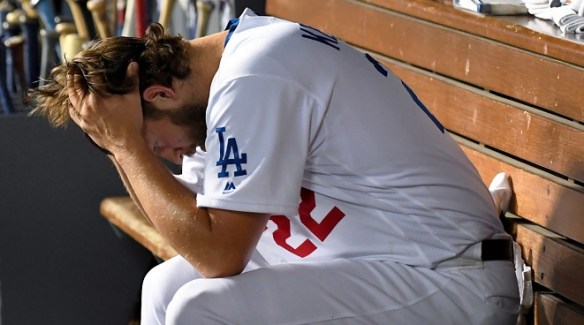
Those Expos didn’t out-score the Dodgers 24-19 in a division series only to lose Game Five on a four-run Dodger seventh and a slightly surrealistic Clayton Kershaw save. That brilliant idea came to the 2016 Nats.

Those Expos didn’t push a division series to a Game Five and then watch in horror when their catcher committed a passed ball, then threw wild past first, then got caught in catcher’s interference before the next batter up got hit by a bases-loaded pitch to finish a four-run fifth against them. 2017 Nats.

They may or may not miss baseball in Montreal but they probably don’t miss having avoided those kinds of disasters, either. Until Tuesday night, moving them to restore Washington baseball began to resemble the capital’s only known non-government-involved case of being careful what you wished for.

Long, long ago, it used to be said with only partial actual accuracy: “Washington—First in war, first in peace, and last in the American League.” Prior to Tuesday night it looked an awful lot like “Washington—First in war, first in peace, and first to disaster in the National League.”

For seven innings Tuesday it looked like they were going to get chaperoned right off the grounds of the postseason dance before they could even present their tickets, never mind get that last dance with the prettiest girl. And the odds looked reasonable that Brewers closer Josh Hader would make damn sure their tickets would be voided when he opened by striking out Victor Robles on a full count.

Except that Hader didn’t bring his customary authority to the door. Then, it was hitting pinch hitter Michael A. Taylor (for Strasburg, who’d pitched three scoreless relief innings in the Nats’ all-hands-on-deck bullpen plan) with a pitch that got his hand and bat one after the other in a split nanosecond. Then, Hader found enough to strike Trea Turner out and set the Brewers a mere four outs from going to Los Angeles, instead.

But venerable veteran Ryan Zimmerman pinch hit for Adam Eaton and slashed a broken-bat base hit right up the pipe, with Andrew Stevenson, a far more swift set of legs, sent out to run for him. Then, after forcing him back from 3-0 to a full count, with “M-V-P!” chanting pouring down from the stands, Hader walked Anthony Rendon to load up the pillows for Soto.

Then it was Soto’s frozen rope into right. It was Grisham, whose leadoff walk preceded Yasmani Grandal’s two-run homer in the top of the first that the Nats back onto their heels too early, hustling in from deep positioning to pick it off. It was the ball taking that odd skip away from Grisham’s otherwise well positioned glove. It was Taylor and Stevenson driving home at the speed limit and Rendon right behind them before Grisham’s relay throw hit his cutoff man.

And it was Brewers third baseman Mike Moustakas taking the relay throw just ahead of Soto’s arrival at third and starting the brief rundown that bagged Soto at second for the side. And what proved the end, when Nats manager Dave Martinez—who almost mismangaed himself right out of a job in May—reached for Daniel Hudson, who shook off a one-out single to get two air outs for the game.

These Brewers ironed up and fought hard enough after Christian Yelich inadvertently kneecapped himself for the rest of the year that even Nats fans ached for them for just a moment. They’d gotten a sad taste of the kind of thing that used to bedevil the Red Sox before the turn of the century, the Dodgers in Brooklyn from pre-Pearl Harbour through 1955, and the Cubs from the (Theodore) Roosevelt Administration until 2016.

The kind of thing, too, that usually happened to the Nats, not by them.

The realist may say, “Don’t count your Dodgers before they’re hatched,” but the optimist, given a license renewal Tuesday night, has a day and a half window to tell the realist to sit the hell down, shut the hell up, and stop spoiling the fun. Even if the Dodgers end up keeping the fun to a day and a half window, it’s a window Nats fans wouldn’t dare to close, and you can’t blame them one lick.

The A’s and the Rays may feel like the Rolling Stones tasked with trying to follow James Brown on television’s legendary The T.A.M.I. Show in 1965. Come to think of it, by comparison to following the Nats, the Stones may have had it easier. May.

Dancing Nats skip to a division series

2019-10-01 TrentGrisham

It was Trent Grisham’s first error of the season. After 70 flawless chances in 42 major league games.

The Nationals had the plan for the National League wild card game. Max Scherzer would start. All hands would be on deck in the pen including Stephen Strasburg in case Scherzer got into hot water, and Patrick Corbin in case Strasburg fell into the soup.

It’d be their big rotation guns against the Brewers’ bullpenning game. With Christian Yelich out of the picture thanks to that busted kneecap, the Brewers would be short of power while the Nats would abound with it. Right?

It wasn’t in the plans for Scherzer to get taken deep early before settling in. Or, for the Nats to take a three-run deficit into the bottom of the eighth, have to tangle with the Brewers’ best bullpen arm, Josh Hader, and turn it into a one-run lead on a misplayed, bases-loaded, bases-clearing single. By a rookie right fielder who hadn’t committed an error on 70 chances in 42 previous major league games in the outfield. Right?

Oh, sure, they planned that Juan Soto, the boy wonder, would be one of the big men in the absolute clutch. So does every Nats fan and observer. Even on a night when it began to look as though the Nats began thinking the clutch was something you had to pump in an ancient car.

They just didn’t imagine Soto would whack the line single that sent the Brewers home for the winter, 4-3. Any more than the Brewers imagined right fielder Trent Grisham, though playing deep, wouldn’t be able to come up with the ball and keep the Nats to maybe a single run on the play. Any more than Grisham could imagine being a postseason hero in the first inning and a postseason victim in the eighth.

But it wasn’t in Grisham’s plans, either, to see the ball take a bizarre little skip under his glove and off to his right as he hustled forward and extended his glove down to take the likely hop. He reached to good position, then he saw the horrific skip away. Just like Leon Durham did in the 1984 National League Championship Series. Just like Bill Buckner did in the 1986 World Series.

Even as he retrieved the ball to start the rundown play that nailed Soto for the third out, Grisham would be forgiven if he wanted to lift up the Nationals Park right field grass, crawl under it, and leave behind nothing but a sign saying do not open until spring training.

He didn’t do that, but he did stand up and fess up to a rookie mistake. “I was getting ready to throw to home,” he said after the game. “Came in off-balance, it took a little funky hop on me because I came in off-balance. I didn’t really gather myself and the ball got by me.”

Said Brewers manager Craig Counsell, “The inning was an ugly inning. Crazy things happen.”

To think the Dancing Nats, whose celebratory dugout rug cutting after big hits has become their season’s trademark, skip on to a division series date with the Dodgers. Crazy things, indeed.

Certainly it wasn’t in the Brewers’ plans to have no further solution for Scherzer as he shook off the early-inning bombs, or Strasburg as he flicked any hints of mischief away like annoying mosquitoes, or Daniel Hudson off whom they got nothing but a one-out single in the top of the ninth before a fly out to center sent the Nats Park crowd nuclear.

Apologies, John Lennon, wherever you are. Baseball is what happens when you’re busy making other plans, too.

Just like that, the Brewers’ heroic late September driving despite losing Yelich—playing like a threshing machine bound to overcome the imploding Cubs, getting about as close as the thickness of a sheet of paper to snatching the National League Central—meant nothing but getting the chance to let a game they almost had in the vault slip to the Nats.

“We finally caught a break,” said Scherzer, knowing only too well the Nats’ previous futility in winner-take-all games. “Man, this is so good for this city, and the team, and this organisation. It’s getting the monkey off your back. It gives you a reason to believe.”

For Grisham, by his own admission, the eighth inning is “gonna sting. It’s gonna sting for a long time.” His teammates did their best to remove the sting, he said, with plenty of words of encouragement and assurances that they might not have reached even the wild card game without him.

“I can take solace in what a lot of these guys said to me, especially a lot of the older veteran guys,” Grisham continued, talking to reporters after changing clothes, his voice calm, his manner matter-of-fact. “I have a lot of faith in them and trust what they said to me . . . I just ended up making an error. It’s not my first, and it’s not going to be my last.”

Remember his composure facing up to it after the wild card game. It was worth more than any brickbat heartsick Brewers fans are liable to swing in his direction. Remember that when men young or old try their best and fail, that’s all it is. Failure isn’t pretty but it isn’t a moral or character lapse.

The Nats didn’t expect Scherzer to get into hot water right out of the chute. They got the Brewers leading the majors in walks, but they didn’t expect Mad Max to walk Grisham on 3-2 to open the game before former Dodger Yasmani Grandal hit one into the Nats’ bullpen in right to end a six-pitch battle.

And they sure didn’t expect Eric Thames to open the top of the second defying the scouting reports—which command he be fed a diet of off-speed pitches to keep him from making mischief—and sending the second of Scherzer’s two straight curve balls over the right center field fence.

“Sometimes you just have to tip your hat and move on,” said Scherzer after the game.

Their only answer for long enough was Trea Turner with two outs in the bottom of the third, sending Brewers starter Brandon Workman’s only serious mistake of the evening into the left field seats. And after five innings’ and six strikeouts worth of work, plus a bottom of the fifth in which the Nats put two on and abandoned them, exit Scherzer and enter Strasburg. And Strasburg worked three mostly effortless innings, striking out four.

Effortless enough that the Dodgers may not get to wait as long as they’d prefer to deal with him in the division series, perhaps as soon as Game Two. With Corbin prepared to open against them. And Scherzer in Game Three on regular rest. (Memo to the Dodgers: Be careful what you plan for.)

The Brewers sent their vaunted enough bullpen out to continue nullifying the Nats. And for most of the game the Nats looked as though they were putting good at-bats together but spoiling them by seeming often as not to try to hit six-run homers with key swings.

Then the game got to Hader, who’s normally about as welcome out of the Brewers bullpen for his opponents as a case of hiccups is to a glass blower. And when he opened the bottom of the eighth by striking Victor Robles out after first falling behind 2-0, it began to look as though the Brewers had figured out every known escape hatch to use against the Nats.

Except that Hader’s pitch command looked suspect enough. And proved suspect enough when Michael A. Taylor pinch hit for Strasburg, worked his way to a full count, then got hit by a pitch. No, he didn’t. The ball hit the bat knob. No, it didn’t. Actually, it clipped Taylor’s hand and the bat knob. And in that nanosecond order. The review took a few minutes but the hit batsman call stood.

It may yet stand as the single most powerful plunk of all time.

At first it looked like it might end up otherwise, though, when Hader struck Turner out swinging. Then Ryan Zimmerman, the Nats’ elder statesman, who’d like to play one more season even as a role player, pinch hit for Adam Eaton, who’d been 0-for-3 on the night. The elder slashed a single right up the pipe for first and second. And Anthony Rendon, to the shower of a rollicking “M-V-P!” chant down from the stands, wrestled his way into a full-count walk.

Then it was Soto. With a foul off to open. Ball one far enough outside for a Washington Metro train to pass without bumping anything on either side. Then, the line drive that ducked and eluded the hapless Grisham’s glove. And ended up putting paid to the Brewers’ 2019.

Before the Brewers and the Nats suited up Tuesday night, Yelich actually let it be known he was half hoping for a shot at a World Series moment like Kirk Gibson’s in the 1988 World Series. The broken battler willing himself to one big swing where it mattered most and hurt the other guys most.

Just the way Gibson willed himself to pinch hit in the bottom of the ninth of Game One, sent Hall of Famer Dennis Eckersley’s hanging slider into the right field bullpen to win it, and pumped his right arm and fist more to urge a body that belonged in traction around the bases than to celebrate.

“I’ve seen it, yeah,” Yelich said. “I wouldn’t even be capable of doing that kind of run right now. We’re a long, long, long ways away from that happening, but you never like to rule anything out.”

Having fought so tenaciously after losing Yelich to get to Tuesday night in the first place, the Brewers didn’t exactly like having their postseason ruled out too soon, either. And, having fought back from an early 19-31 plotz that threatened to lay their season almost entirely to waste, these Nats didn’t intend for their postseason to be ruled out too soon, either.

A homecoming for Maddon?

2019-09-30 MikeSciosciaJoeMaddon

Joe Maddon (right) was Mike Scioscia’s consigliere in the Angels’ dugout before he became a successful manager himself.

So you think Joe Maddon isn’t the real reason the Cubs imploded down the stretch? What do you think about the man the Angels just cashiered while Maddon is a managerial free agent?

Sure, Los Angeles Times reporter Maria Torres has said Brad Ausmus was safe through the end of 2020 at minimum. And the Chicago Tribune said Maddon returning to the Angels was “unlikely.” But two better known and normally sharp baseball reporters, Buster Olney (ESPN) and Ken Rosenthal (The Athletic) have said a little more strongly that if Maddon became available, Ausmus became a retroactive lame duck.

Even as I sat down to write, the Angels weren’t the only team being tied to Maddon. The safest wager now is that Maddon’s unemployment isn’t liable to last as long the postseason probably will. It’s just a question of who’s going to employ him gainfully again.

Ausmus is the Angels’ first manager of the post-Mike Scioscia era, which ended sadly in three straight losing seasons. Hell of a way for the franchise’s single most successful manager to finish his tenure. But Ausmus started with one arm tied behind his back as it was and finished with his arms amputated, so to say. And he has even less culpability for the Angels’ disappearance than Maddon had for the Cubs’.

It wasn’t Ausmus’s brilliant idea that this year’s Angel starting rotation would be an injury-and-inconsistency infected mess almost from the beginning. Or that the Angel bullpen (their collective 5.10 ERA was the fifth worst in baseball this year) would be their own game morticians. Even working in one of the Show’s most favourable pitchers’ parks as their home park.

It wasn’t Ausmus’s idea to miss Justin Upton in the outfield for most of the year or that the Jonathan Lucroy experiment behind the plate and the Matt Harvey experiment on the mound would implode.

It wasn’t Ausmus’s idea that Albert Pujols—a Hall of Famer in waiting otherwise, but an injury-compromised wreck for most of his Angels life—can still play at mere replacement-level on his best days, now, no matter how earnest he remains, no matter how honest his effort. (For that matter, tell yourself it was Pujols’s idea that his legs and feet should begin a continuing betrayal after just his first Angels season.)

It wasn’t Ausmus’s idea that the morale winds got knocked completely out of the Angels’ sails when Tyler Skaggs was found dead in a Texas hotel room to begin their final road series before the All-Star break. Skaggs’s death shocked all baseball but nobody really knows just how deeply it cut into the Angels’s psyches. The Angels were a game under .500 at the All-Star break but 22 below it in the second half.

If you can consider it good news, Skaggs’s death brought Mike Trout forward as a team leader who leads with far more than just what he does in the field and at the plate. (He was striking firmly for his third American League Most Valuable Player award before his foot nerve issue forced him to season-ending surgery in early September. The Astros’ Alex Bregman could very easily win this year’s award if Trout doesn’t.)

But what good is leadership on a team that still isn’t really worthy of its own and baseball’s continuing greatest all-around player? Trout remained Trout and then some even after Skaggs’s death. Ended prematurely, his season was still a season for the books: he still led the majors in on-base percentage and OPS+ and the American League in slugging, OPS, and intentional walks.

The Angels otherwise? That magnificent combined no-hit blowout of the Mariners in their first home game after losing Skaggs was maybe the season’s most spiritually transcendent game—and maybe their last real gasp. Their clubhouse may have held together but they just weren’t a good team on the field. And it’s no more Trout’s fault than it is Ausmus’s.

Ausmus may not be one of the game’s better tactical or strategic managers but neither has he really made the kind of brain-twisters that may yet put paid to men like Mickey Callaway, Gabe Kapler, and maybe even a couple of postseason entrants whose futures probably depend on how far their teams go toward the Promised Land this time.

But Ausmus is now history with the Angels and Maddon has history with them. He took the bridge briefly in 1999 after Terry Collins walked rather than deal any longer with a clubhouse he helped blow up himself, when he was younger, more foolish, and more like a walking exposed nerve. He led those Angels to a 19-10 finish before handing Scioscia the bridge and becoming Scioscia’s consigliere on the bench.

He served long and well as Scioscia’s bench coach. He earned the respect and affection of owner Arte Moreno while he was at it. And now that he’s a free agent, the Angels—as MLB Trade Rumours so delicately phrases it—are “contemplating” Ausmus’s job status.

Rick Renteria, call your office. The Cubs “contemplated” your job status once upon a time as Maddon became available, too. You know how that worked out, amirite? Sure you might be content on the south side of Chicago helping to bring the White Sox back to the land of the living, but that’s not the same thing as you knowing the Cubs were on the threshold of postseason revival and conquest.

And the Angels aren’t considered the only prospective suitors for Maddon’s hand in managerial marriage.

The perpetually rebuilding Padres pinked Andy Green with eight games left this season and they’re thought to have eyes for Maddon now. The Mets and the Phillies are thought to be pondering execution orders for Mickey Callaway and Gabe Kapler, respectively. Don’t think Maddon isn’t in their dugout wet dreams now. (For that matter, don’t think all three teams aren’t pondering further alterations in the front offices, either.)

The Pirates dumped Clint Hurdle somewhat unceremoniously on the final day, letting bench coach Tom Prince have the bridge for a season-ending 3-1 loss to the Reds. The man who skippered the Pirates back to competitiveness for awhile watched his 2019 edition earn a reputation for headhunting, his front office swap out assets for liabilities on field and in the clubhouse, his clubhouse turn into a toxic mess, and himself almost helpless to stop the mass suicide.

(Early last year, when the Nationals were thought to have clubhouse trouble, former manager Dusty Baker observed, “Jayson Werth. That’s who they miss in that clubhouse.” The Pirates could probably say, “Andrew McCutchen. That’s who we miss in this clubhouse.” Just as the Cubs can say, “David Ross. That’s who we miss in this clubhouse.”)

Maddon may be in the Pirates’ periscope sights, too. But then, maybe not. Maddon isn’t the whiplash type. Like legendary Navy fleet admiral Chester Nimitz, Maddon’s command style is reason, not reaming. This collection of Pirates probably needs something more blunt in the dugout. And maybe something a lot more broad-sighted in the front office.

It must be humbling for Maddon, who’s not exactly bereft of modesty, to realise he’s one of those men who inspires others to dump their incumbents when he shows even a hint of actual or pending availability. But for growing members of the club becoming known as Men Fired (Or Likely To Be) That Joe Maddon Be Hired, it must be a little sobering.

Maddon era ends with a Cubs whimper

2019-09-29 JoeMaddon

Joe Maddon watches from the Busch Stadium visitors’ dugout on his final day as the Cubs’ skipper.

What was long enough presumed was made official Sunday. The Joe Maddon era in Chicago ended with the Cubs’ regular season finale, and a 9-0 loss to the National League Central-clinching Cardinals while they were at it.

The final decision came Friday, apparently, despite the Cubs taking one from the Cardinals to start the weekend, when Maddon and president Theo Epstein met over a bottle of wine, and Epstein affirmed there’d be no contract renewal.

And it may not be quite as simple as saying that, if only the Cubs could have played just  last weekend the way they handled the Cardinals the first two games this weekend, Maddon might have survived.

Getting swept by the Cardinals in the Cubs’ final season set at Wrigley Field last weekend merely finished breaking their backs for the year. They still had another week and weekend to play and, until they hit St. Louis Friday night, the Cubs still looked and played broken—and against the Pirates, yet.

But the plain truth is that the Cubs were broken long before last weekend. And the breakage wasn’t Maddon’s fault entirely or exclusively. Maybe ESPN’s Jesse Rogers said it best after Sunday’s news broke: “Maddon’s dismissal from the Cubs boils down to one sentence: He wasn’t able to outmanage the mistakes the front office saddled him with.”

That happens only too often and not exclusively with the Cubs. But it feels magnified anyway because the Cubs delivered in 2016 what was long presumed impossible. And enough people in Cub Country and elsewhere really thought it was the opening salvo for a dynasty-to-be.

The dynasty that isn’t hit their wall in their own venerable playpen at the end last year. They slip-slid into a National League Central tiebreaker with the Brewers and lost that game. Then settled for the NL wild card game against the Rockies and lost that one, too. Scoring a grand total of two runs in both games, 22 innings worth of baseball.

The Maddon era qualifies cumulatively as a raging success, but its finish qualifies as a raging flop. For two straight seasons Maddon presided over a team that didn’t achieve what their talent demanded. He wasn’t necessarily in a great position to continue the earlier success, but he wasn’t necessarily able any longer to call his team to account before trouble spots became chronic.

Enemy teams came to salivate, not shiver, at the prospect of Cubs on the bases—they led the National League in baserunning outs this year. The other guys had only to put the bat on the ball and often as not save their prayers—this year’s Cubs were the league’s most error-prone defense.

“When you make a lot of errors in the field, when you make a lot of errors in the baserunning, that’s momentum,” pitcher Cole Hamels told Rogers. “That’s an area that could get corrected. There’s still a lot of players in here that are still learning.”

Hamels could have been talking about accountability, too. This year’s Cubs seemed to lose that. Maddon’s isn’t an in-your-face style of leadership, but as Rogers notes it’s believed that even when he did call players in to account for their mishaps, mistakes, and misses, “he didn’t address matters strongly enough . . . or the message didn’t get through.”

It’s not easy being as well respected as Maddon is for keeping his sanity when everything and everyone else around you has search parties out trolling to retrieve theirs. Neither is it easy to discover your remarkably sane and becalmed manner in keeping your clubhouse on message and on task no longer keeps it either.

“[P]eople — players, coaches, general managers, fans, even writers — came to see it is possible to work your butt off and still be a reasonable human being,” wrote Yahoo! Sports‘s Tim Brown. “You can be the boss without being condescending. You can lose and find hope. You can win and recognize that’s about an inch from losing.”

You can even manage the Cubs out of the wilderness, back to the Promised Land for the first time since the Roosevelt Administration (Theodore’s), and keep them in contention for the two seasons to follow, and still keep your marble (singular) when everything around you dissipates.

Which is probably the best reason while Maddon may not remain unemployed for very long. The rumour radar seems to be trained on the Mets, the Phillies, and the Padres as prospective new employers. The Padres job is open since Andy Green was pinked last week; the Mets and Phillies jobs may be opening very shortly.

A rumoured-enough possible Maddon successor is David Ross, whose clubhouse leadership and work as Miguel Montero’s co-backup behind the plate was invaluable to that 2016 World Series conquest. Ross retired after that Series. Don’t think for a moment that the Cubs didn’t miss him in the clubhouse from that point forward.

That was another problem after the ’16 triumph. The Cubs’ most tangible clubhouse leadership came by way of imports from other teams: Ross, Miguel Montero, John Lackey, Jon Lester, Jason Heyward. Their homegrown core led by example enough mostly but didn’t develop, or didn’t feel comfortable developing, more direct and over influence.

Ross retired after the World Series conquest. And Montero blew his leadership cred when he a) complained publicly about losing ’16 postseason playing time to Willson Contreras and Ross behind the plate; and, b) blamed Jake Arrieta publicly for the June 2017 day the Nationals ran wild on the bases (seven attempts, seven thefts) against Montero’s arm.

The latter got Montero run out of town post haste. Lackey retired after the 2017 season. Lester really started showing his age this season. Heyward is still a plus defender but a minus hitter.

But nobody expected Albert Almora, Jr. to stop hitting, or David Bote to become a defensive liability, or Hamels to be injured, or Contreras and Kyle Schwarber running the bases like trucks with flat tires, or Kyle Hendricks developing a seeming allergy to winning on the road. (At home in ’19: 2.05 ERA; .206 batting average against; 0.87 walks/hits per inning pitched. On the road in ’19: 5.02 ERA; .290 BAA; .141 WHIP.)

Hendricks himself reflected a major Cub dilemna this year. At Wrigley Field, if you don’t count that final weekend’s implosion, the Cubs played like a world champion in the making. On the road, they played like the 1962 Mets without the laughs. They dealt with key injuries, of course, and in abundance enough—but so did the Yankees and the Astros, and those two were deep enough to keep on winning.

Which is why Epstein himself may have some splainin’ to do. He didn’t exactly retool the retooling-needy bullpen with solid bulls. He depleted the farm to win the ’16 Series and beyond. The Cubs haven’t drafted a single major league-quality pitcher under the Ricketts/Epstein regime; the scouts haven’t mined deeper for jewels. Their 2018 round one pick, Nico Hoerner, proved a pleasant surprise. His September callup turned into a presence in the Cubs’ 2020 scheme, almost unexpectedly.

More than just the manager may be different next year. Hamels is about to test the free agency market. So does trade deadline acquisition Nicholas Castellanos, whose torrid play after joining the Cubs was too far from enough to help. So does relief pitcher Steve Cishek.

Aging utility man Ben Zobrist—whose season was disrupted by a harsh divorce, harsh enough to prompt his leaving the team to tend his children through it—may or may not retire. And there may (underline that, gang) be trade winds blowing around Almora, Kris Bryant, Jose Quintana, and the should-have-been-purged Addison Russell, whose too-much-proven domestic violence embarrassed everyone around the Cubs.

Maybe, too, Epstein overshot when he said last winter he wouldn’t even think about extending Maddon (if at all) until after this season was done. If it made Maddon too lame a duck maybe that extended to the players. Nobody likes that coming unemployment is a given for the boss you happen to love.

So why not send that boss out with a bang instead of a whimper? If the Cubs couldn’t stay the course to the postseason, the least they could have done was finish what they started and try forcing the Cardinals into an NL Central tiebreaker.

No such luck. Cardinals pitcher Jack Flaherty could have thrown from a sitting position, maybe even in a deep leather sofa Sunday afternoon. The Cardinals buried the Cubs, 9-0. It seemed almost like a mercy killing. And even a Cub win wouldn’t have forced the tiebreaker, after all: the Rockies beat the Brewers in thirteen in Coors Field. On a walkoff wild pitch.

But it might have shown a little pride.

Things in Busch Stadium began quietly enough and within reason with an RBI single by Paul Goldschmidt and a run-scoring Area Code 6-4-3 dialed by Marcel Ozuna in the first. The quiet lasted just long enough for Dexter Fowler—another element in the Cubs’ 2016 triumph allowed to leave—to hit one into the left field seats with Flaherty himself aboard on a base hit in the second.

And the Cardinals didn’t wait for the Cubs to regroup in the third, either. Ozuna singled home Goldschmidt and, after Yadier Molina walked, Matt Carpenter sent one over the right center field fence. Then Goldschmidt continued the party with a one-out bomb in the fourth.

It got so bad that Maddon sent Zobrist out to pitch the eighth. But Maddon wasn’t trying to be cute, even if there’ll be those sourpusses who decide he’d just surrendered completely without even a whiff of a fight back. He really did want to give a little gift to his 2016 World Series MVP, a personal favourite from their days together in Tampa Bay.

Zobrist walked Fowler to lead off but got a prompt line out to right center from Tommy Edman before walking Goldschmidt. He got a pop out to second baseman (and former Cardinal) Daniel Descalso. Then, he struck Molina out on 2-2 for the side. Molina couldn’t resist a sly grin as he lingered a moment in the batter’s box. Zobrist enjoyed the moment thoroughly. (He can also brag, wink wink, about a 0.00 lifetime ERA if he wants.)

It was a pleasant gesture and a pleasant way to accept the gift. God and His servant Jolly Cholly Grimm only knew how often the Cubs’ regular relievers got torched with men on and two outs during the season. Maybe Zobrist’s unlikely ability to wiggle into and out of trouble gives the front office a hint about fixing that bullpen. Among other things.

Two milestones, one rude interruption

2019-09-28 JustinVerlander

Justin Verlander captured after nailing his 3,000th strikeout Saturday night.

You thought there’d be no excitement possibility on this year’s regular season-closing weekend? Think again.

The National League Central turned out to have a surprise in store for you this weekend: the Cardinals and the Brewers entered Sunday with a chance at facing an NL Central title tiebreaker game.

A couple of less wealthy teams in the American League East and West put wild cards in the bank and got to say, Look, ma—no tanking!

And a nice guy who pitches for the Astros while standing to win this year’s American League Cy Young Award hit two milestones Saturday night—with one rude interruption to his achievements.

A nice guy who became the only member of the 3,000 strikeout club to surrender a home run to the first man up after he bagged the milestone punchout. And on the first pitch, yet. Who says Andujar’s Law (In baseball, there’s just one word: you never know—Joaquin Andujar, once an Astro himself) is ripe for repeal?

Justin Verlander, as smart on the mound as he is nice otherwise, started against the Angels Saturday night needing six strikeouts to reach 3,000. The game meant little enough by itself, other than the long-lost Angels celebrating their fan appreciation night; the Astros owned the AL West all year long and had home-field postseason advantage in the bank while they were at it.

There’d be plenty of time to get back to the business of serious competition, especially with these Astros not only winning a third straight American League West but inspiring some oddsmakers to put them at +200 for going all the way to win a second World Series in three seasons. Saturday night was a night for one man’s milestones.

With the Angels—whose season ended well out of the contention they were never really in, was punctured by unexpected tragedy, and once again proved them a team unworthy of its and baseball’s best all-around player—leading 1-0, Verlander hit his first one in the bottom of the fourth.

He got 3,000 when he threw Kole Calhoun a nasty, down-and-in slider on 2-2, Calhoun swinging and missing rather emphatically. The Angel Stadium crowd wasn’t sure for a moment what to cheer louder, Verlander nailing the milestone punchout or Calhoun reaching first when the ball went past catcher Robinson Chirinos enabling Calhoun’s reach in the first place.

The official scorer ruled a wild pitch. It could have been ruled a passed ball; Chirinos was moving to the inside as Verlander delivered and looked in solid position, mitt down, to stop the ball.

Thus only the third time in his major league life had Verlander struck a batter out to see him reach base on it. Making him the second member of the 3,000K club whose milestone punchout resulted in the batter reaching base. Hall of Famer Phil Niekro brought that one off on the Fourth of July in 1984, as a Yankee, when he led off the top of the fourth by striking out the Rangers’ Larry Parrish—only to see Parrish reach first when Knucksie’s famous knuckleball knuckled past catcher Butch Wynegar.

Verlander didn’t hold it against Chirinos. “He was like ‘Don’t worry about it’,” Chirinos said to reporters after the game. “I lost that pitch because Calhoun is so on top of the plate, so the ball was coming into him and it hit my foot and went the other way. I was laughing that it happened in the worst moment. Something to remember. Good thing he got to 3,000.”

No worries. The Angel Stadium crowd handed Verlander a loud ovation—their own team has its problems but Angel fans appreciate achievement, just as a Hall of Famer appreciates it when his own achievement is respected and appreciated on the road. He tipped his hat to the crowd and went right back to work.

“I honestly haven’t had a moment to really have it set in,” Verlander said after the game. “My teammates gave me a good speech after and everybody gave me a great hug. Hopefully this is one of those moments that we look at and it’s just one of the special moments of the season that was extremely special.”

But I’d bet only the Angel Stadium audience thought what happened next was special. Angel shortstop Andrelton Simmons checked in at the plate and hit one over the center field fence. How rude of him. It made Verlander the only member of the 3,000K club to surrender a home run to the next man up after the milestone punchout. And on the first pitch to the guy.

Verlander and the Astros had the last laugh, however. They went on to overthrow the 3-0 deficit into which Simmons’s launch put them and win, 6-3, after Jose Altuve (a two-run shot) and Josh Reddick (a three-run shot) cleared the fences in the sixth, and Altuve added an RBI double in the seventh.

And Verlander exacted a little milestone revenge against Calhoun in the bottom of the sixth. When he struck Calhoun out then, it made him plus Gerrit Cole only the second pair of teammates (Curt Schilling and Hall of Famer Randy Johnson were the other pair, for the 2001 Diamondbacks) to strike out 300+ in the same season.

Sweetening that particular pot: neither Verlander nor Cole had ever struck out 300+ batters in their careers until now. And Verlander is the second pitcher to nail his 3,000th strikeout in an Astros uniform, behind Hall of Famer Nolan Ryan, who flattened Cincinnati’s Cesar Geronimo for that milestone on the Fourth of July in 1980.

I couldn’t resist. I looked up all eighteen games that included a 3,000th strikeout and what happened with the next man up in those innings after those pitchers bagged their milestones:

Walter Johnson (Senators)—The milestone: Stan Coveleski (Indians), bottom of the sixth, 22 July 1923. The next batter: Charlie Jamieson—fly out to left.

Bob Gibson (Cardinals)—The milestone: Cesar Geronimo (Reds), top of the second, 17 July 1974. The next batter—None; Gibson retired the side with that strikeout.

Gaylord Perry (Padres)—The milestone: Joe Simpson (Dodgers), top of the eighth, 1 October 1978. The next batter: Pedro Guerrero—reached on an infield hit and took second on the throwing error.

Nolan Ryan (Astros)—The milestone: Cesar Geronimo (Reds), bottom of the second, 4 July 1980. The next batter: Junior Kennedy—walk. (Dubious co-milestone: It made Geronimo the only man to be the 3,000th strikeout victim of two pitchers.)

Tom Seaver (Reds)—The milestone: Keith Hernandez (Cardinals), top of the fourth, 18 April 1981. The next batter: None; side retired.

Steve Carlton (Phillies)—The milestone: Tim Wallach (Expos), top of the first, 29 April 1981. The next batter: None; Wallach was the third victim as Carlton opened the game striking out the side.

Ferguson Jenkins (Cubs)—The milestone: Garry Templeton (Padres), bottom of the third, 25 May 1982. The next batter: Ruppert Jones—fly out to left.

Don Sutton (Brewers)—The milestone: Alan Bannister (Indians), top of the eighth, 24 June 1983. The next batter: None; side retired.

Phil Niekro (Yankees)—The milestone: Larry Parrish (Rangers), bottom of the fourth, 4 July 1984. The next batter: Pete O’Brien—fly out to center.

Bert Blyleven (Twins)—The milestone: Mike Davis (Athletics), top of the fifth, 1 August 1986. The next batter: Mickey Tettleton—walk to load the bases.

Roger Clemens (Blue Jays)—The milestone: Randy Winn (Devil Rays), top of the third, 5 July 1998. The next batter: None; side retired.

Randy Johnson (Diamondbacks)—The milestone: Mike Lowell (Marlins), bottom of the fourth, 10 September 2000. The next batter: None; side retired.

Greg Maddux (Cubs)—The milestone: Omar Vizquel (Giants), top of the third, 26 July 2005. The next batter: None; side retired.

Curt Schilling (Red Sox)—The milestone: Nick Swisher (Athletics), bottom of the first, 30 August 2006. The next batter: Mark Kotsay—grounded out to second base. (Note: Swisher hit an RBI double off Schilling in the bottom of the fourth.)

Pedro Martinez (Mets)—The milestone: Aaron Harang (Reds), bottom of the second, 3 September 2007. The next batter: None; side retired.

John Smoltz (Braves)—The milestone: Felipe Lopez (Nationals), top of the third, 22 April 2008. The next batter: Cristian Guzman—grounded out to first unassisted for the side.

CC Sabathia (Yankees)—The milestone: John Ryan Murphy (Diamondbacks), 30 April 2019. The next batter: None; struck out the side. (Without a little trouble, though, since former Met Wilmer Flores hit one out against Sabathia with two out in the inning and Nick Ahmed singled right after, before Murphy came up.)

Thus we have eight pitchers whose 3,000th strikeouts retired the side and three whose 3000th strikeouts struck out the side. Two walked the next man up and one of the two loaded the bases with that walk. (Blyleven escaped that inning unscathed for runs.) Two got ground outs from the next batters; three got fly outs next. And two (Walter Johnson, Pedro Martinez) struck out fellow pitchers for their milestone punchouts.

Justin Verlander would probably have loved nothing better than to get rid of Andrelton Simmons immediately after he dispatched Kole Calhoun for number 3,000. I’m sure he’ll settle for being the only man to get the same guy for two milestones on one night.

The flip side, of course, is that Calhoun—a solid if not so spectacular Angel outfielder with 34 home runs on his 2019 ledger—would have loved nothing better than not being Verlander’s 300th strikeout of 2019 and 3,000th strikeout lifetime on the same night.

Joaquin Andujar, wherever you are in the Elysian Fields, call your office.