Unknown's avatar

About Jeff Kallman

Member, Internet Baseball Writers Association of America and the Society for American Baseball Research.

Self-awareness as a vice

George Kirby

George Kirby, a second-year pitcher who inadvertently proved a little self-knowledge might be a dangerous thing—for his image, not for his particular line of work.

Maybe the only thing that brings Joe and Jane Fan to a boil faster than a baseball player speaking honestly about an injury is a pitcher who admits he didn’t do well with being kept in a game past his sell-by date for the day. George Kirby, second-year Mariners pitcher, may be learning the hard way.

After surrendering back-to-back first-inning runs to the Rays Friday, Kirby pitched five more spotless innings. In the bottom of the seventh, he threw one pitch for an unassisted ground out to first base, a second pitch Jose Siri drilled for a double, then three pitches to René Pinto. The third was lined down the left field line and into the seats to tie the game at four.

Mariners manager Scott Servais lifted Kirby for Isaiah Campbell. Campbell walked Yandy Díaz, induced Brandon Lowe to force Díaz at second base, but then fed Harold Ramirez a pitch meaty enough to feed the left field seats. An eight-inning leadoff bomb off another Mariners reliever secured the 7-4 Rays win.

But Kirby faced the media postgame and admitted he wasn’t exactly thrilled about pitching the seventh, which he entered having thrown 93 pitches or so already. “I didn’t think I really could go any more,” the boyish-looking righthander said. “But it is what it is.”

Come Saturday, Kirby apparently couldn’t wait to walk that back, the faster the better: “Skip’s always got to pry that ball out of my hands. Just super uncharacteristic of me as a player and who I am out on that mound. I love competing. Like I said, I just screwed up.”

The social media jerk brigades turned out in force with the customary charges of gutless, backbone-challenged, you name it. So did a few former players, for that matter. There seemed little room for charity, little thought that Kirby might have spoken Friday out of frustration over surrendering a game-tying bomb, and even less thought that Kirby might actually have a little self-awareness going for him.

Kirby had already faced Pinto twice earlier in the game when they met in the bottom of the seventh. Pinto flied out in the second and lined out in the fifth. Including the close of business Friday, all batters facing Kirby for the third time around, lifetime thus far, have a meaty enough .814 OPS against him, including what are now twelve home runs in 46 such games in which they got that third chance.

The first time through a lineup, Kirby’s batters have a .684 OPS against him, but the second time through they have a .602. Their batting average against him drops from .265  the first time to .221 the second. The third time they see him? They’re two points below .300.

This is also a pitcher who kept the Astros in check in Game Three of last year’s division series. You might remember that game: the eighteen-inning marathon in which neither side could even sneak a run home, with Kirby starting for the Mariners and going seven shutout innings, scattering six hits. With Jeremy Peña hitting Mariners reliever Penn Murfee’s full-count meatball over the left center field fence for the game’s only run and the eventual world champion Astros’s trip to the American League Championship Series.

Kirby also made his first All-Star team this season, and if he didn’t quite pitch like one during his fourth-inning appearance (a leadoff double, a one-out RBI single), you could attribute that to All-Star inexperience. On this season whole, including Friday night, Kirby leads the entire Show with a 9.44 strikeout-to-walk ratio and an 0.9 walks-per-nine rate, not to mention having a very respectable 3.31 fielding-independent pitching rate that suggests his 3.48 ERA means a little hard luck pitching in the bargain.

He pitched 131 major league innings last year and, after Friday, has pitched 165.2 innings this year. The most innings he’d pitched in the minors in any full season was 111.1 in 2019.

Backpedaling his Friday comments may indicate that someone told Kirby it wasn’t such a great look to admit his true sell-by date for the game expired after six innings. The jerk brigades were only too happy to pile that message on, including dredging up the usual outliers who could and did go long and (figuratively, most of the time) threaten murder and mayhem if their managers even thought about lifting them early.

Allow me to reference a decade that ended with the average innings pitched per start being 6.4. Care to guess? The 2010s? The Aughts? The 1990s? Strike three. The decade I referenced was the 1950s. Now would you care to stop saying they were all “tougher” in the allegedly Good Old Days—the days when baseball people thought injuries were half in a player’s head if not signs of quitting?

(Further ancient history: Paul Richards, once thought a genius when it came to pitching, also thought once that the way to fix injuries—especially among his once-vaunted and unconscionably overworked “Baby Birds” Orioles kids of the late 1950s/early 1960s—was to send them for . . . tonsillectomies. True story.)

Hell if you do, hell if you don’t. But I’m not going to be one of the ones telling Kirby he should have kept his big mouth shut Friday. A little more self-awareness such as his might actually mean longer and less physically-stressing careers for a lot of young pitchers. Not to mention better chances of postseason success, considering the Mariners lead the American League’s wild card chase.

How often have pitchers who’ve insisted on “gutting it out” despite fatigue or sensing their best stuff’s expired end up murdered on the mound and thus hurting their team as a reward for their “guts?” How often have fans, hanging the no-guts/no-backbone tags on pitchers who don’t “gut it out” past their game’s sell-by date, turned around and hung the no-brains/no-sense tags on managers who left their pitchers in one inning too many?

Ponder that foolishness before you join the fools who think Kirby needs a spine transplant.

“Extremely disappointing?” How about unacceptable?

Julio Urías

A second domestic violence case and administrative leave for the Dodgers’ lefthander.

Sitting thirteen games in first place would be heaven for any baseball team. Perhaps not so much now for the National League West’s Dodgers, who must feel since Labour Day weekend as though someone signed a deal with the devil and the devil came to collect with usurious interest.

A 24-5 August shot them that far ahead of the divisional pack. A 1-5 September beginning is usually the kind that such a team flicks away like a nuisance of a mosquito. It’s what they learned after beating the NL East ogres from Atlanta on Sunday, thwarting a sweep, that must have the Dodgers feeling as though no good deeds go unpunished.

On the same night they beat the Braves, Los Angeles Exposition Park police arrested the Dodgers’ lefthanded pitcher Julio Urías on “suspicion of felony corporal injury on a spouse.” Released on a $50,000 bond, Urías has a court date on 27 September. In the interim, his scheduled start against the Marlins in Miami Thursday is a non-starter.

“We are aware of an incident involving Julio Urías,” the Dodgers Xtweeted in a formal statement on Labour Day itself. “While we attempt to learn all the facts, he will not be traveling with the team. The organization has no further comment at this time.” It’s not the first time the Dodgers have been there with Urías, who was arrested four years ago over a physical incident with a woman in a shopping center parking lot.

But then, Urías faced no formal charges when the victim in question subsequently told authorities she had fallen, yet baseball’s government elected to suspend him twenty days while it investigated that incident.

This time, Urías could face a far longer suspension. And, the end of his days as a Dodger. And in that order. TMZ has reported “multiple sources” say Urías shoved “a woman” against a fence at BMO Stadium in Los Angeles, with stadium workers breaking it up, before the pair got into a car “where we’re told things once again got heated.”

“Which shows that he was, once again, content to be violent towards a woman in front of thousands of strangers,” wrote Craig Calcaterra in Cup of Coffee Thursday. “That says a lot, frankly. I mean, if you’re willing to be violent like that in front of others, imagine what you’re doing in private.”

Urías was placed on administrative leave by MLB Wednesday. He was due to hit the free agency market during the coming off-season. His 2023 season hasn’t exactly been top of the line, but he might still have commanded a handsome payday based on his overall track record. A record that includes leading the National League last year with his 2.16 earned run average. And, that he sealed the Dodgers’ first World Series triumph since the Reagan Administration, crowning two and a third innings’ spotless relief when he struck Tampa Bay’s Willy Adames out on three pitches to finish Game Six of the 2020 Series.

It’s difficult to picture the Dodgers wanting Urías back with what amounts to a spousal battery charge against him. It took long enough, of course, but the Dodgers cut ties with Trevor Bauer over his too-well-detailed sexual violence after his precedent-setting suspension was lifted last winter.

Maybe, just maybe, no MLB team will be willing to take the chance with a guy having two such cases on his resumé, unless Urías makes a truly contrite, above-and-beyond, verifiable commitment away from domestic violence.

But the further bad news has been the boilerplate language emitted in the immediate wake of the Urías arrest. “Obviously, extremely disappointing development,” said Dodgers general manager Andrew Friedman. “It’s just an extremely unfortunate circumstance for everyone,” said manager Dave Roberts.

Extremely disappointing? Extremely unfortunate? How about unacceptable? How about speaking unambiguous, plain language against treating women like punching bags?

How about the Dodgers remembering how they flinched over consummating a deal for Aroldis Chapman from the Reds after learning Chapman was involved in a domestic violence dispute, even one that didn’t end in his arrest?

How about remembering that, in his 2019 case and suspension, Urías’s formal statement was 169 words worth of nothingburger other than those which caused some to infer he was sorry-not sorry that he hadn’t actually bruised the woman in question when he shoved her to the ground?

How about remembering what Bauer put them through and proclaiming bluntly that physically abusing a woman can’t be tolerated in the Dodger organisation or anywhere else? How about the Dodgers reminding themselves that, both in 2019 and last Sunday, Urías was accused of attacking a woman in public places?

Then they could worry about what losing Urías does to their already-compromised starting rotation depth. (Tony Gonsolin and Dustin May: season-ending surgeries. Future Hall of Famer Clayton Kershaw: working his way back from shoulder issues, he surrendered a pair of home runs and three earned runs against the Marlins Tuesday, leaving Chris Taylor to re-tie the game at three with a homer before Dodger reliever Ryan Yarbrough surrendered three more on a pair of bombs for the 6-3 Dodger loss.)

They didn’t have to wait for the deeper details to come forth to take an unmistakeable stand. They didn’t even have to wait for MLB to put Urías under administrative leave Wednesday to say what their formal statement said thereupon: We do not condone or excuse any acts of domestic violence.

The Yankees are fabled among many things for a sign above the doorway from the Yankee Stadium clubhouse to the dugout, quoting Hall of Famer Joe DiMaggio’s speech on a day in his honour in the late 1940s: “I thank the Good Lord for making me a Yankee.” Maybe the Dodgers and all other teams in baseball should hang one saying, We will not condone or excuse domestic violence.

And mean it.

The waive

Lucas Giolito

Lucas Giolito—from an Angels trade deadline acquisition to one of five put on the waiver wire approaching its deadline . . . and potentially impacting pennant races.

Just when you thought nothing weird could happen to or emanate from the Angels, they found a way to disabuse you. With one act last week they helped yank a couple of pennant races inside out. Whether it was bold or boneheaded is a matter of opinion. Likewise whether it was both at once.

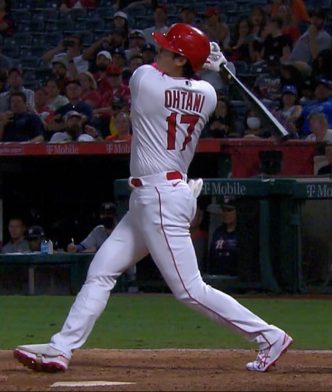
And that was on top of Shohei Ohtani going down for the count on the pitching side with that ulnar collateral ligament tear . . . but continuing on as a designated hitter regardless of the ongoing risk, and without deciding to undergo the Tommy John surgery he’ll have to face most likely.

In one week, the Angels went from mere disaster to the guys who just might have played key roles for somebody else’s postseason trips. The way they did it may have set a precedent somewhere between foolish and dangerous to the integrity of the game.

They gambled on keeping Ohtani rather than flipping him for remake-beginning prospects at the trade deadline. They leaned on an illusory 11-3 string to finish July and traded for pitcher Lucas Giolito (White Sox) and left fielder Randal Grichuk (Rockies). They opened August going 2-9. They finished the month going 8-19.

They saw the season sinking faster than the Lusitania before August finally ended. First came Ohtani with the UCL tear. Then, as owner Arte Moreno and his minions saw their all-in push at the trade deadline turn to all-out pushed just enough out of the races:

* The Angels put Giolito, Grichuk, and three other players—relief pitchers Reynaldo López and Matt Moore, plus outfielder Hunter Renfroe—on waivers last week.

* Yes, the waiver placements were salary dumpings, and they just might give a lot of other teams ideas about dumping salaries at no cost to the dumpers and miminal cost to the dumpees. To claim and receive Giolito, López, and Moore cost the Guardians what Aaron Judge may hand out in tips, $3 million.

* Yes, too, that just might have given the Guardians new pennant race life in an American League Central that isn’t exactly a division built to strike fear in the hearts of the rest of the league.

The Guards claimed Giolito, López, and Moore before the end of 31 August. Meaning those three, should they hold up and pitch in well enough, will turn up in the postseason if the Guards manage to sneak into the wild card picture or even sneak the Twins off the top of the Central heap. They swung into a good start from there—they took the first two of a weekend set with the Rays, including a Saturday walkoff on an RBI single and a sacrifice fly.

If the Guards’ motives included cutting into the Twins directly, they got off to a grand beginning even before they could pencil Giolito into the rotation and with only López seeing action prior to Sunday. They start a critical set with the Twins on Labour Day. It’s a wonder the Twins and others didn’t start ringing commissioner Rob Manfred’s or players union chief Tony Clark’s phones off the hook.

This is what a few people feared possible when the old waiver trade system expired in 2019. Until then, teams could trade players they put on waivers and, since they put everyone on the roster on the waiver wire until then, disguise whom they really wanted to deal while working out the particulars on the deals they really wanted by the close of business 31 August.

If that sounds a little bit surreal, be reminded that a few Hall of Famers changed teams in just that way, including Jeff Bagwell (to the Astros, before he’d even seen substantial major league action), Bert Blyleven (to the Twins), John Smoltz (to the Braves), Justin Verlander (to the Astros the first time), and Larry Walker (to the Cardinals, after his long Colorado tenure).

But that was then: the traders got value or at least potential value via players in return. This is now: The dealers get salary relief if they want it, as the Angels have, but nothing else. Unless it’s luxury tax relief, which the Angels will get since the waiver dump gets them below the $233 million seasonal threshold. Using it as a salary dump just might raise more than a few players union hackles and make more than a few other owners a little edgy, too.

The Reds claimed Renfroe plus Yankee outfielder Harrison Bader off the waiver wire in time to have them on a postseason roster, too. They’ve taken two out of three from the upstart Cubs (doesn’t that sound a little weird to say?) since, but with little to no help from their new waiver wire toys yet: Bader entered play Sunday at 1-for-3 with a stolen base; Renfroe, 0-for-9.

They have a six-game National League Central deficit but the Reds awoke Sunday morning with fingertips on the third NL wild card with the Diamondbacks and Giants having fingertips on the second card. The Guards are five games behind the Twins in that AL Central and slightly beyond the third AL wild card.

It all began with the Angels deciding the time for a salary dump came a little ahead of the usual off-season. The trouble was, too, that it dominated baseball’s news wires and helped some people miss a few more glorious doings, in particular Braves star Ronald Acuña, Jr.’s entry into a club with a single member—himself.

Last Thursday night, Acuña ripped Dodgers starter Lance Lynn (a trade-deadline acquisition from the White Sox) for a grand slam and his 30th homer of the season. It made him the only man in Show history to hit 30 or more bombs and steal 60 or more bases in the same year.

When he swiped numbers 60 and 61 against the Rockies last Monday, two Rockies fans hit the field running to greet him, one hugging him and the other  accidentally knocking Acuña on his derriere. Prompting an almost immediate discussion on increasing player safety on the field.

Not even the Angels’ waiver deadline salary dumping could ruin the best moment of Acuña’s 30/60 Club founding—his former teammate Freddie Freeman, the day after the founding, handing Acuña one of the bases from Thursday’s game.

There really is something to be said for Don Vito Corleone’s observation (in the novel The Godfather) that great misfortune often leads to unforeseen reward. The Guards and the Reds hope the Angels’ misfortune leads them likewise. Who hopes it doesn’t give enough owners any more cute ideas about salary dumps and, thus, prospective pennant race distortions?

No más for Stras

Stephen Strasburg

Now-retiring Stephen Strasburg has much to be proud of, and his career has much to teach future pitchers and coaches about mechanical issues.

There was no pleasure for me when I wrote, in June, that since Stephen Strasburg underwent throacic outlet syndrome surgery he’d pitched only once, a year before I wrote. And, that it was more than likely that his career was really over.

Strasburg’s attempts to rehabilitate since that surgery haven’t worked. The 2019 World Series MVP tried everything, all the way to limiting his workouts to his lower body but discovering they strained his upper body thanks to nerve damage. Two months ago he hoped to accept it if his body told him not to even think about the mound again.

He’s accepted it. The word came forth Thursday that Strasburg’s calling it a career, with only a formal September announcement to come.

The news hit the Internet running when we’d barely processed fully that Shohei Ohtani suffered a second ulnar collateral ligament tear in his pitching arm. If Ohtani undergoes a second Tommy John surgery, he has a better chance of returning to the mound at all. Assuming his continuation as the Angels’ designated hitter doesn’t cause even more damage before he might undergo the operation.

Strasburg’s eventual fate may have been far more cut-and-dried, for all the man’s determination to return after assorted injuries. The root was his pitching style, the inverted-W positioning of his arms, with both elbows above his shoulders as he cocked to throw a pitch. The positioning strains elbow and shoulder alike.

In Strasburg’s and others’ cases, it’s numbered career days even if they can’t really pinpoint the likely end. It’s also a comparatively recent phenomenon. The inverted-W positioning, Clearing the Bases author Allen Barra observed in 2011, began coming into play when the full windup began disappearing from the pitching repertoire.

Whenever you ask how the like of Hall of Famers Warren Spahn and Juan Marichal could pitch 250+ innings a season without arm or shoulder trouble, Barra says, the answers are several (including that they just might have been outliers) but the primary just might be the full windup. (In Marichal’s case, he had about sixteen different ones, not to mention about a dozen different leg kicks including his fabled Rockettes-high kick.)

[It] took advantage of the momentum of their whole body to give velocity to the pitch. In recent decades, with pitchers more concerned about holding runners on base, the windup has largely gone the way of the two-dollar hot dog. The Inverted W is the result of a pitcher trying to add speed or finesse on a pitch by forcing the delivery—in other words, his arm working against his body instead of with it.

Strasburg almost never pitched with a full windup. The most he’d show in the way of any kind of windup would be lifting his hands to just below his chin, before turning to throw and cocking into that inverted-W before throwing. WIth his landing leg’s foot planted ahead of, not with the throw.

The no-windup delivery by itself isn’t dangerous. Don Larsen pitched his perfect game in the 1956 World Series using a no-windup delivery, hands set at the letters before throwing. But Larsen also didn’t have the inverted-W. His pitching elbow didn’t come above his shoulder, his arm was “up and ready,” above his head releasing the ball, as his left foot landed.

A no- or little-windup delivery with the inverted-W, alas, is something else entirely. That inverted-W plus 2003 overwork contributed the bulk of the injury trouble that turned Mark Prior’s pitching career from phenomenal to science experiment. (There were a few other injuries, of course.) But I bet you don’t remember a Hall of Famer whose career ended because of it.

Don Drysdale

Don Drysdale—the inverted-W put paid to the Hall of Famer’s career in 1969 with a dissipated rotator cuff.

Don Drysdale had the inverted-W. He pitched longer with it than you might reasonably expect, even through previous shoulder pains. The year after he broke Walter Johnson’s consecutive shutout-innings record, Drysdale’s rotator cuff dissipated and ended his career in a time when surgery on the cuff didn’t exist.

Barra wrote that Joba Chamberlain was the Yankees’ Strasburg, the single hardest throwing righthander the Yankee system had produced in decades. He also observed that, with all the Yankee tinkering upon the much-hyped, talented Chamberlain, they missed the biggest hindrance he’d developed, the inverted-W cock-and-throw style.

The issue with the inverted-W isn’t just the elbow and shoulder straining. It’s a timing issue, too. As analyst Chris O’Leary (the aforementioned “up and ready” was his descriptive phrase) has written, “[T]he position isn’t damaging in and of itself.”

However, by coming to this position, [a pitcher] is ensuring that his pitching arm will not be in the proper position at the moment his shoulders start to turn. As with pitchers with other timing problems like rushing, because his pitching arm is so late, he will dramatically increase the stress on both his elbow and shoulder.”

That’s “late” as in a pitcher’s front, landing foot planting before his arm is back around throwing the pitch, not as he throws it.

Strasburg may have been extremely fortunate to return from Tommy John surgery as a successful pitcher. But his mechanics and the timing issues they can cause, even if he modified them somewhat by the time of the 2019 postseason (he’d long fixed an issue with his pivot foot, training it to be fully parallel to the rubber), may have been destined to take him out at last with a shoulder compromised so severely that he couldn’t even pick his daughters up for fatherly hugs and affection.

That’s more than enough to make a man think that, no matter how much he loves the thrill of competition and the spoils of success, there comes the moment when it’s just not worth pursuing it further. Ask Hall of Famer-in-waiting Joe Mauer, who finally retired because of what concussions did not just to his career but to his ability to be the husband and father he prefers to be.

They’ll still have to talk about how to handle the rest of Strasburg’s uninsured mega-contract, the one he signed after coming away as that 2019 Series MVP and exercising his opt-out clause, only to click his spikes three times saying “there’s no place like home!” and getting the deal. He didn’t want to leave Washington, and God plus His servant Walter Johnson know Washington didn’t want him to leave, either.

He didn’t ask for his body to keep him from pitching and earning the dollars to come, no matter how treacherous his pitching mechanics proved. No professional athlete does. The mind overcomes the body’s basics only so often, and no two bodies are exactly alike. Strasburg’s kept him from posting the Hall of Fame case his talent and performances when healthy suggested. Now it sends him to retirement at 35.

The Nats couldn’t insure Strasburg’s post-2019 deal without paying ferociously high premiums. If Strasburg had retired without injury, he’d have left the remainder on the table. But with TOS putting paid to his career the Nats will pay out the remaining $150 million on the deal, including some deferred payments that will keep paying the righthander through 2029.

If you consider the jumpstart his original arrival gave the Nats for credibility, the deadly postseason resume (1.46 ERA; 2.07 fielding-independent pitching; 0.94 walks/hits per inning pitched; 11.5 strikeouts per nine innings), that 2019 Series MVP pushing the Nats toward the finish line and into the Promised Land, the franchise strikeout leadership, Strasburg has earned every dollar.

Maybe the real miracle was that Strasburg could and did pitch so well as long as he did. A young man that talented, who could and did deliver some big moments in a career that was good, often great, sometimes beyond these dimensions, has to say goodbye not because age caught up to him but because his body said, “Halt right there, brah” and meant it this time.

It took Strasburg long enough to let his pleasure in the game show through his usually stoic countenance, in large part because the early hype might have suffocated him. But he went from baseball’s No. 1 draft pick to a World Series MVP before he was finished. That’s something in which to take pride and joy.

Almost as much pride and joy as we hope Strasburg enjoys raising his family and living whatever second act in life that he chooses to live.

Some of us tried to warn you

Shohei Ohtani

Torn UCL. Possible Tommy John surgery. Baseball’s unicorn is only human, after all. What will be Ohtani’s most sensible future?

I was thisclose to dining on a full crow dinner and saying I was wrong two years ago. About what? About the sustained viability of Shohei Ohtani as a two-way player, an above-average pitcher and above-average hitter.

That was then: the New York Post‘s Joel Sherman and MLB Network’s Brian Kenny argued loud enough over Shohei Ohtani’s likely life as a two-way player who was above average in both directions. Kenny said it was time to think of keeping Ohtani in one way (as a hitter) and Sherman went apoplectic.

“Why would you stop him from doing one or the other?” Sherman all but demanded. “[Because] one could damage the other,” answered Kenny, the author of Ahead of the Curve: Inside the Baseball Revolution.

“So, you would like one of the fifteen to twenty best starting pitchers in baseball to stop starting because you’re worried about something that could happen?” Sherman rejoined, perhaps bypassing for the moment that Ohtani had already had Tommy John surgery and missed all of 2019 on the mound—and missed the final half of September that year as a designated hitter after surgery on his bipartate patella.

This is now: what could happen has happened. What began with his pitching arm “bothering” him awhile since the All-Star break has turned into a second ulnar collateral ligament tear and a very possible second Tommy John surgery to come. Waiter, cancel that crow dinner. Just bring me a bourbon and Coke Zero, light ice, and a reuben sandwich.

And forget about what Wednesday night’s devastating revelation means for Ohtani’s open market. Forget the babillion dollars he was likely to command in the off-season to come. Maybe that was the season’s biggest story, especially after the Angels rolled a pair of hollowed-out dice and declined to trade him for a rebuilding beginning at this year’s deadline. Now, that story’s on ice. For how long, who knows?

I’ve said it before. The split second you hear about a pitcher dealing with “arm fatigue,” you can bet your mortgage on it being something a lot more serious. Ohtani dealt with it in the preceding few weeks. “[I]t’s possibly fair to second guess whether the Angels should have proactively reined Ohtani in more at times,” writes The Athletic‘s Sam Blum.

“Possibly fair?” People who first-guessed whether the Angels should have reined Ohtani in proactively at times had their heads handed to them. Sherman tried to do that to Kenny. I took a few in the chops myself for my own similar suggestion.

Go ahead, say the “arm fatigue” didn’t stop Ohtani from throwing his first major league shutout at the Tigers on 27 July.  But then you must acknowledge that the Angels pushed it for three straight years. In one way you couldn’t blame them. They had so little else to offer, and had already so wasted the prime of future Hall of Famer Mike Trout, the no-questions-asked best position player of the 2010s, that they couldn’t resist pushing their and baseball’s greatest unicorn to the most outer of his outer limits.

He won the American League’s Most Valuable Player award in 2021. He was leading the league in home runs as he went down and the talk kept up that he might be able to bust Aaron Judge’s single-season AL home run record just a year after Judge set it in the first place. On the mound, he kept up his 11.4 strikeouts-per-nine rate and his 3.04 strikeout-to-walk rate.

Let’s not forget, too, that the only one having more fun watching Ohtani has been Ohtani himself having more fun doing it than we’ve had watching it. You’ve heard of a smile that could get a city through a power blackout? Ohtani’s is a smile that could get half the country through one. Even when Clayton Kershaw picked him off almost by mistake in last year’s All-Star Game, Ohtani’s smile out-shone the lights in Dodger Stadium when both he and Kershaw laughed their fool heads off.

Shohei Ohtani

He found love on a two-way street. Will he lose it on the Tommy John highway?

Was it that easy to be blinded by the light? Even allowing that Angels owner Arte Moreno has long been far more concerned with putting fannies in the Angel Stadium seats than putting sensibly-built winning baseball teams on the field in front of those seats, was it that simple to be blinded by the Ohtani light?

All those delicious comparisons of Ohtani to Babe Ruth tended to omit two key elements: 1) Ruth was never a full-time two-way player except in one season (1919); Ohtani’s done it almost his entire major league life. 2) When Ruth was a fuller-time pitcher, it was in an era where hard-throwing pitchers were outliers and Ruth wasn’t exactly the type to try throwing the proverbial lamb chop past the proverbial wolf.

There was always the concurrent risk that Ohtani could be injured at the plate or on the bases, too. Once upon a time, he fouled one off his foot that rebounded to hit his surgically-repaired left knee—on the leg that’s his landing leg when he pitches. Any time Ohtani incurred a bang, a bump, or a cramp on the mound or at the plate, Anaheim, America, and the world lit up.

This isn’t just a bang, a bump, or a cramp. Not even if Ohtani did complain about a few finger cramps in recent days. This is a young man’s career and what remains of his team’s credibility on the line now. This is also a scrambler for the rest of the Show. Teams calculating just how much they could afford to seduce Ohtani this winter and start making their 2024 pennant race plans accordingly now must remake/remodel those calculations.

Especially if Ohtani must undergo his second Tommy John surgery. If so, he won’t be seen on the mound all next year as well as the rest of this season. If the Angels have any brain cells left to rub together, they’ll shut him down fully the rest of this year. He can’t afford to do further damage with even one hard swing at the plate or one hard slide on the bases.

I’m not going to deny it. It’s been mad fun watching Ohtani the unicorn doing things even the Babe himself didn’t do, or at least didn’t do quite as well as Ohtani has done them. Until Wednesday night, Ohtani threatened to join Ruth as the only man to set a single-season home run record while pitching full time as well. Ruth did that with the 1919 Red Sox—with 29 home runs. Nobody was really betting against Ohtani hitting maybe 63 this year.

Maybe the most surreal of his uncornery this year was Ohtani receiving four intentional walks as a pitcher. Ruth only ever had that happen twice in a season. (1919.) Schoolboy Row (1947) and Chad Kimsey (1931) are the only other pitchers to get four free passes at the plate in a season. And Ohtani was the first pitcher to get even one free pass at the plate since Hall of Famer Jim Kaat (1970).

On the mound, Ohtani was leading the entire Show with a 5.8 hits-per-nine average and the American League with a 143 ERA+. At the plate, he was leading the entire Show with those 44 bombs and a 183 OPS+, a 1.069 OPS, and a .664 slugging percentage. According to my Real Batting Average (RBA) metric (total bases + walks + intentional walks + sacrifice flies + hit by pitches, divided by total plate appearance), Ohtani this year is batting Boeing: .737. That, folks, is Ted Williams territory: the Splinter’s lifetime RBA is .740.

The problem with all that kind of mad fun is that it takes a toll. Either we didn’t really stop to think about it; or, we didn’t give two tinkers’ damns while watching it, dropping our jaws over it, imagining the language on his eventual Hall of Fame plaque over it, you name it. Joe and Jane Fan forget baseball players are only human and not machinery. They thought Ohtani was Superman with an immunity to kryptonite.

The money? Ohtani’s already earned enough in the Show to have no money worries the rest of his life. (When this season ends, it’ll be $39.6 million.) He’s never been about the money, anyway. What he’s been about was the pleasure in overachievement. One way or the other, he’ll get his money when he recovers, even if it may not be as ionospheric as thought before Wednesday. Even if he has to begin with a one-year, Sho-us deal to start over.

But if he has to undergo his second Tommy John surgery, would Ohtani accept a life as a one-way player that might mean a longer baseball career than he might have if he continues his two-way thrust? It may take more time to know that answer than it would take for him to recuperate from the second TJ.

On last year’s Opening Day, I got to watch up front with my son in Angel Stadium when Ohtani launched the season by pitching four-and-two-thirds, one-run, four-hit, one-walk, nine-strikeout (including Astros face José Altuve thrice) ball. I’ve seen enough otherwise on the screen (am I really that old that I almost wrote “the tube?”) to know this guy was a unicorn even among unicorns.

Those of us who feared disaster in the offing should take no pleasure in what’s happened now. No matter how hard we took it up the tailpipes when we warned about it a few years ago. Now we ask just how much of his baseball future Ohtani may have sacrificed on behalf of pitching weekly, batting nightly, for a team whose maladministration didn’t deserve him any more than they deserved Mike Trout’s prime.

Who cares now whether Ohtani will throw a no-hitter and hit four home runs in the same game eventually? He’s already performed a nasty sacrifice on behalf of thrilling the living you-know-what out of us and sustaining what little credibility his team has left.

Shut him down fully the rest of this season. Don’t even let him swing the bat. Let the still-young man (29) regain his health properly. For everything he’s done on behalf of a franchise that doesn’t deserve him, if not a game whose administration doesn’t, Ohtani should get every consideration possible now.