Unknown's avatar

About Jeff Kallman

Member, Internet Baseball Writers Association of America and the Society for American Baseball Research.

Rants and ruin for the ’69 Cubs

2019-03-27 DonYoung

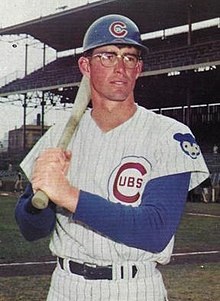
Don Young—two misplayed balls on 8 July 1969 triggered the postgame tirades that may have begun wrecking the 1969 Cubs.

While reading Wayne Coffey’s They Said It Couldn’t Be Done, the best book you’ll ever read about the 1969 Mets, I bumped into a jarring quote from 1969 Cubs relief ace Phil (The Vulture) Regan. It may—underline that—hold the opening key to how those Cubs, who looked at first like a National League East runaway, ended up collapsing as the Miracle Mets re-heated in earnest to reach the Promised Land.

On 8 July the Cubs tangled with the Mets in Shea Stadium to open a series and lost a game they led until the ninth inning. How the game was lost, and what two key Cubs said after the game, may have opened disaster’s door. It helped ruin the baseball life of the Cubs’ center fielder on the day, a rookie named Don Young who had an early reputation for being a promising defender with a fine arm. And it may have helped cost the Cubs the postseason.

Young committed two misplays in the bottom of the ninth. Cubs manager Leo Durocher and Hall of Fame third baseman Ron Santo tore into Young in the press after the game. Young himself said, simply, “I lost the game for us. That’s all.” The Vulture was appalled—especially at Santo.

“Don Young was never the same after that,” said Regan, in remarks Coffey reprinted in full in his book. “He showered and left the ballpark as soon as he could get out of there. To this day, you never hear from him. Santo was the captain and a veteran. He apologised later, but it was done. You can’t do that. That hurt us.”

Hall of Famer Ferguson Jenkins got the start against the Mets’ redoubtable lefthander Jerry Koosman. They both went the distance until Koosman was lifted for a pinch hitter to open the bottom of the ninth with the Cubs ahead, 3-1. Jenkins and Koosman first swapped home runs, Ed Kranepool hitting one out in the bottom of the fifth and Hall of Famer Ernie Banks hitting out out in the top of the sixth. But Glenn Beckert drove a run home with a seventh-inning single and former Met Jim Hickman hit a two-out shot in the top of the eighth.

Mets second baseman Ken Boswell, who hadn’t started that day against Jenkins, now pinch hit for Koosman at a point where Jenkins had erased nine consecutive Mets. Boswell skied one to short center field. Young misread the ball at first but rehorsed in a split second and sprinted in, diving and missing as the ball landed in front of him and just away from onrushing Cub middle infielders Beckert and Don Kessinger.

Despite running full tilt on contact, Boswell was surprised to find himself on second with a double. Tommie Agee batted next and fouled out near first base, bringing up another pinch-hitter, Donn Clendenon. The veteran whom the Mets picked up in a deal with the infant Montreal Expos almost a full month earlier drilled one toward the left center field fence. Young turned, gunned it to the warning track, nailed the ball with a staggering on-the-run backhanded snap of his glove . . . and the ball dropped right before Young’s momentum crashed him into the fence with a thud. Leaving the Mets with second and third and one out.
2019-03-27 LeoDurocher

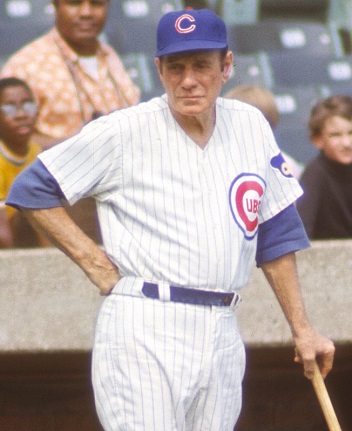
Leo Durocher—disgrace.

Branch Rickey once said Durocher’s genius included his ability to make a bad situation worse immediately. “Two little fly balls,” Durocher fumed after the game. “He just stands there watching one and he gives up on the other. It’s a disgrace. My three-year-old could have caught those balls.”

Durocher’s on-the-record tirade poured out with the hapless Young within clean earshot. The humiliated 23-year-old outfielder finished dressing and high-tailed it out of the clubhouse and the ballpark at once. Santo mistook that for apathy and, when Jerome Holtzman of the Chicago Sun-Times asked whether Santo heard Durocher’s tirade, the third baseman ripped Young a few new ones. On the record.

“He was just thinking about himself, not the team,” Santo steamed about Young. “He had a bad day at bat, so he’s got his head down. He’s worrying about his batting average and not the team. All right, he can keep his head down and he can keep right on going out of sight for all I care. We don’t need that kind of thing.”

Who were those two fools, and which game were they watching? Especially Santo, who’d previously been a mentor to Young, teaching him about the league’s pitchers and assorted outfield differences? It was one thing for the manager to rip a player in the press; however unwise it is, you get the manager doing it. It was something else for a teammate to do it, as Regan understood only too well.

Young did have a bad turn at the plate, going 0-for-4 with a pair of strikeouts in the game. According to David Claerbaut’s Durocher’s Cubs: The Greatest Team That Didn’t Win, Hickman told Santo to settle the rookie down after he’d slammed his bat and helmet after one of those plate appearances, but Santo grabbed Young and ordered him to do his job. So much for settling the rook down.

But Young still had time enough to shake that off, since his last plate appearance was his second strikeout, ending a 1-2-3 top of the eighth. He misread Boswell’s shuttlecock at first in a combination of the afternoon haze and the bright shirts on fans sitting behind the plate—for maybe a second, taking maybe a step and a half back before getting the right read at once and scampering in to try for the ball.

If that’s just standing there watching one, I’m Ray Charles.

But what happened to Young on the Clendenon drive could have happened to any center fielder including Willie Mays. He ran full speed to catch up to the ball and made a backhanded grab on the middle of the warning track. It might have gotten play of the game honours in a heartbeat if, while still on the full run, the ball didn’t fall out of his glove a split second before he crashed the fence like a battering ram.

Just in case Durocher and Santo suffered a deeper brain fart than their postgame comments already indicated, the Mets hadn’t scored yet, and the Cubs—who came into the series with a five-game lead over the upstart Mets—had two outs to go to finish them off on the day, with their best pitcher still working well enough.

The Mets’ hottest bat, left fielder Cleon Jones, was up next. Durocher didn’t want to put Jones aboard to close up the empty base as the potential winning run with Art Shamsky, a lefthanded hitter with power, due up behind Jones. So Jenkins would pitch to Jones, starting him with a curve ball that “got more of the plate than Jenkins wanted,” Coffey writes, and Jones slashed a double to left, tying the game at once.

Jenkins then put Shamsky aboard to pitch to Mets third baseman Wayne Garrett instead. He got Garrett to ground out to Beckert at second, but the grounder set up second and third again. Two outs and Kranepool, another lefthanded hitter and the last remaining Original Met, was next. Mets catcher J.C. Martin, a lefthanded hitter with an oh-so-sterling .258 on-base percentage to that point, and whose 1969 batting average against righthanders was lower than that against lefthanders, was due up after Kranepool.

With the winning run already aboard, Durocher could have put Kranepool on and gotten the advantage of Martin’s reverse split. But he let Jenkins pitch to Kranepool. And at first it looked like Jenkins would have the best of it, getting ahead of Kranepool 1-2 on a diet of breaking balls at the outer edges. Knowing he wouldn’t see a proper strike, Kranepool got what he expected, another off-speed pitch away.

2019-03-27 RonSanto

When not ripping a hapless teammate after max-effort misplays, Ron Santo’s heel-clickings after Cub wins made him the most frequent Cub target for retaliatory brushback pitches.

With Jones running from third on contact Kranepool reached for the pitch and lofted it on a soft line over shortstop. Kessinger chased it into supremely short left field but couldn’t reach it. The ball hit the grass. Jones hit the plate running. Shea Stadium exploded after the 4-3 win the Mets all but embezzled out of the Cubs. Nobody heard Durocher thundering that his three-year-old could have gotten to Kranepool’s quail.

All hell broke loose after midnight that night when, Clarebaut related, a friend of Santo’s rang his New York hotel room around 3 a.m. to tell him the Sun-Times let him have it over his public criticism of Young. Santo was no shrinking violet: he called a press conference for the next afternoon and apologised.

It was more than the hapless Young got from Durocher, which was nothing. Durocher never mentioned the game in the chapter on those Cubs in his memoir Nice Guys Finish Last.

Still claiming Young’s day at the plate got into his head in the field, Santo added, “I know this is true because it has happened to me. I have fought myself when I wasn’t hitting and, as a result, messed up in the field. But I know I was wrong. I want everyone to know my complete sincerity in this apology.” Too much, too little, too late.

Santo took a back seat to few for giving Durocher the benefit of the doubt, but even he admitted in due course, “He brought us closer to a pennant than anyone else had in a generation. But he also brought disruption and chaos.”

Indeed. When a writer asked whether he thought about resting some of his regulars, Durocher lost it. He called a team meeting on the spot demanding to know whom among his players were tired—and the players, knowing only too well that Durocher would accuse fatigued and injured players of being quitters, nobody said a word.

And one of the reasons the Mets went the distance was their own completely opposite manager. Gil Hodges played for Durocher in Brooklyn and knew Durocher’s blustery style only too well. He also had an instinct Durocher lacked: he monitored his players’ health judiciously, kept his regulars regular but fresh, kept his bench and role players alert and prepared, and kept the Mets in better shape for their magnificent 44-17 season finish.

If Hodges managed Don Young and thought Young loafed on one fly and gave up on the other, he would have buttonholed Young privately first and asked what happened out there first before rendering a verdict Hodges would never have given in public or with insults at all. If Hodges knew Young gave top effort, he would have reviewed the plays with Young and gotten him to think aloud about improving his readings and jumps on the ball.

If only.

Because when Sports Illustrated caught up to Ernie Banks in 2014, two years before his death, Banks was asked which single moment he thought introduced the poison into the 1969 Cubs’ well. The Hall of Famer whom Leo Durocher disliked upon arrival in Chicago but couldn’t get rid of because he was still the spiritual face of the Cubs didn’t mince words:

They say one apple can spoil the whole barrel, and I saw that. Before going to New York to play the [8 July game] against the Mets, I went to different players on our team and told them, ‘We’re going to New York, and when the game is over, there’s going to be more media than you’ve ever seen in the clubhouse, so watch what you say.’ So we got to New York, and lose the first game. Don Young dropped a fly ball, and that was it. We came into the locker room. I was next to Santo, and he just went crazy. Young was so upset, he ran out. [Coach] Pete [Reiser] had to bring him back. I had never seen something so hurtful.

Banks said the Cubs began falling apart factionally from there. Marry that to burnout, both of the regular players and the pitching staff, including bullpen bull Regan, plus Durocher’s long-lost sense of perspective, and that—after spending enough of the first half looking like they had the National League East in a safe deposit box—was the story of the ’69 Cubs’ collapse. (The Cubs from 1 August-1 October: 27-29.)

Durocher went from bad to worse after that, little by little, until he either quit or was fired during the 1972 season. Santo called it “a turbulent clubhouse mess.” He might have been the Cubs’ winningest post-World War II manager by the time he left, but he also hamstrung the club. The Cubs wouldn’t even see .500+ season results again for another twelve years after Durocher left. You could almost predict Opening Day fans whipping up placards as the first pitch was thrown: “Wait ’till next year!”

Young ended up spending 1970-72 in the minors, his once fine throwing arm betraying him, then left baseball and went on with his life, living free spiritedly and working his way across the country. Every so often he signs photographs, caps, or baseball cards for fans who catch up to him.

Three 1969 Cubs—Banks, Jenkins, and Billy Williams (the only Cub regular who didn’t wilt down the stretch)—ended up in the Hall of Fame. So did two 1969 Mets—Tom Seaver and Nolan Ryan, though Ryan didn’t exactly look like a Hall of Famer at the time despite a few performances showing the potential.

Durocher and Santo also ended up in the Hall of Fame—posthumously. Santo at least had the playing record to justify his election; he was the game’s best all-around third baseman after Eddie Mathews faded and before Mike Schmidt came into his own. He may well have had to wait because, no matter his retirement of charity, popularity as a Cub broadcaster, and lifelong courageous battle against diabetes, he’d been a prickly personality as a player with a number of hassles comparable to if not quite as fateful as the Young incident.*

But we’ve known for almost two decades now, for dead last certain, that Durocher cheated the 1951 Giants into a pennant race comeback that forced the legendary three-game playoff they won. Between that, his single World Series championship in a cumulative 24 years worth of major league managing, and his dessication of a Cubs team that should have finished what they started in 1969, how did he get into Cooperstown?

He was famous? So were Gene Mauch and Fred Hutchinson. So was Gil Hodges. But that trio didn’t have the Lip’s penchant for ingratiating himself with the show business glitterati. Somehow, some people are crazy enough to think that you need more than going on the air any time you please or being Frank Sinatra’s buddy pal to qualify for the Hall of Fame.

The 1969 Cubs settled for being Claerbaut’s “Greatest team that didn’t win.” The 1969 Mets settled for becoming the last but most successful of three 1960s miracle teams. (The others: the 1961 Reds and the 1967 Red Sox, neither of whom won their World Series.) And, the far better side of baseball mythology.


* Santo’s 1969 habit of clicking his heels on the field after Cub wins so annoyed opponents that by his own admission he became the Cubs’ most frequent target for knockdown and retaliation pitches. When Mets coach Joe Pignatano called him “bush!” for it before a game, Santo flipped him the bird. But when exchanging lineup cards with Hodges before that game, as the Cubs’ team captain, Santo pleaded, “Tell Piggy the only reason I click my heels is because the fans will boo me if I don’t.”

Hodges didn’t buy it for a minute. “You remind me of [Mets relief pitcher] Tug McGraw,” the Mets’ skipper replied. “When he was young and immature and nervous, he used to jump up and down too. He doesn’t do it anymore.” And Santo eventually wrote in his memoir, “The rest of the league wasn’t so enthralled. Once they started catching onto my act, the fastballs seemed to get a lot closer to my head. The brushback pitches seemed to come a lot closer to my chin.”

And other places. On 8 September, Cub starter Bill Hands drilled Agee in the bottom of the first and Koosman, not hesitating a single degree, drilled Santo in the wrist in the top of the second. It cost Santo his power for the season; he hit only two more of his 29 home runs the rest of the way, including on closing day 2 October—against the Mets, who could afford the 5-3 loss since they won the NL East by eight games.

The little miracle of Flushing, Queens

2019-03-26 TheySaidItCouldn'tBeDoneOh, every now and then I work a small one just to keep My hand in. My last miracle was the 1969 Mets. Before that, I think you have to go back to the Red  Sea. Ahhhhh, that was a beauty!
—George Burns, as God; Oh, God! (1977)

One of the most fabled photographs in Mets lore was shot after Shea Stadium emptied following the Mets’ surrealistic 1969 World Series conquest. Delerious fans left the field resembling Berlin after the bombings. Mets pitchers Tom Seaver and Gary Gentry, their uniforms disheveled from surviving the onslaught after celebrating their win, plodded over the wreckage in apparent disbelief.

Among the celebrating hordes before the two pitchers made their inspection was a fifteen-year-old, hooky-playing kid from Huntington, Long Island, Wayne Coffey, whose grandfather took him to the deciding Game Five. The kid let the moment carry him onto the field, where he pulled up a clump of grass near first base, high tailed it back to the seats before he could be smothered, and ultimately planted the choice greenery in his family’s back yard.

Seven years later, Coffey’s parents sold the home. “The new owners negotiated for the washer and dryer,” he writes, “and had no idea they had gotten a piece of Shea Stadium at no extra charge.”

Coffey grew up to become a respected sports writer and, as of this week, the author of They Said It Couldn’t Be Done, maybe the single best book yet written about the band of lancers, acrobats, bit players, old men, young tigers, and spare parts, with the deceptively becalmed but shrewd manager, who became baseball’s least likely world champions to that point, during a year in which strife seemed to hold hands with splendor in New York and elsewhere.

The year began with New York crippled by the worst blizzard ever to hit the city, in February 1969. (I know, because my mother, my younger brother, and myself were stranded for almost a week in my maternal grandparents’ Bronx apartment.) It left Mayor John Lindsay public enemy number one, especially in Queens, where the Mets played and where over half the city’s 42 deaths in the storm occurred.

Lindsay would lose the Republican primary for re-election and run as an independent. The 1969 Mets may have helped him win a second term (Lindsay attached himself to their fortunes ostentatiously) but they couldn’t save his long-term political career. (His presidential ambitions were torpedoed before his second mayoral term expired.) If he couldn’t manage one blizzard (even allowing for under-equipment, it took a week for the snow plows to get to Queens), good luck with the coming 1970 Hard Hat Riot (construction workers attacking students protesting Kent State) and police corruption scandal. (Lindsay was caught almost flatfoot when the New York Times published the unimpeachable disclosures of two clean detectives, Frank Serpico and David Durk.)

Baseball’s spring began that year with a tussle over how much of its lucrative new television contracts should go into the players’ pension fund. During the season unease about the war in Vietnam and continuing racial tensions began afflicting more than just students on campus and civil rights crusaders. And man—specifically, Neil Armstrong and Buzz Aldrin, with Michael Collins manning the command module above—finally walked on the moon.

And with the continuing collapse of the Yankees, parched under the ten-thumbed management of their then-owners CBS, the eyes of New York and the country gazed upon the upstart Mets—even when the Apollo 11 crew took their triumph parade down New York’s Canyon of Heroes. The sign Collins most loved along the parade route: “We Love the Mets, But We Love You More. Sorry, Mets.” In due course, Tug McGraw, Mets relief pitcher, would remember, “When those astronauts walked on the moon, I knew we had a chance.”

Gil Hodges was, at once, gifted at bringing a baseball team together and the worst stress manager in the game, a potentially lethal combination in a quiet man who smoked heavily and had a family history of heart disease, including his own father dying of an embolism at 56 years old. But he obeyed doctor’s orders, surrendered his Marlboros and his habit of pitching batting practise, and settled for making these disparate Mets into a miracle worker.

“As well as any manager in the game,” Coffey writes, “Hodges understood the importance of making every player feel involved, keeping every player fresh, giving everyone on his club a slice of ownership in what the collective team was doing.”

“We really were a team,” said Ed Kranepool, the veteran who would be the last survivor of the Original Mets on the 1969 conquerors, and who once admitted his wasn’t the warmest relationship with Hodges, a man he only came to appreciate more in the months before Hodges’s untimely 1972 death.

Sometimes you win in spite of your manager, but not with this club. Gil did everything right. He made every possible move to help our club. He never tricked you. He was so consistent . . . You never showed up at the ballpark not ready. Once he said he was going to do something, he stuck to it. You were prepared when you went to the park. You got your rest. You were ready. You worked hard to stay in shape because you knew you would be called on. He kept everybody sharp.

Hence the key, in hand with their staggering enough pitching, to why the Mets heated up for keeps down the stretch when the Cubs—who looked like a runaway National League East winner until manager Leo Durocher’s heavy hand burned out their regulars with few reserves by the time the heat turned up—were left broiled and basted. That and Hodges’s distinct insistence on keeping issues and mistakes as much out of the public eye as possible. He’d correct and discipline on the spot, but he’d never do it in the press.

He treated equally his rural, urban, educated, and visceral players and didn’t mind allowing the occasional indulgence for those who really needed one. Whether future Hall of Famers (Cy Young Award winner Tom Seaver, then-swingman Nolan Ryan), valued co-stars (Gentry, Tommie Agee, Cleon Jones, Bud Harrelson, Jerry Koosman), supporting players (Ken Boswell, Ed Charles, Donn Clendenon, Wayne Garrett, Ed Kranepool, Tug McGraw, Art Shamsky, Ron Taylor), or extras (Cal Koonce, J.C. Martin, Bob Pfeil, Al Weis), he directed his cast with the aplomb of an Alfred Hitchcock and the patience of Job.

His most salient quality may have been his unschooled knowledge into the psyches of his players, a quality likely borne of all those seasons he’d played in Brooklyn and in all those pennant races in which the Dodgers—the team who shepherded the end of baseball’s colour line with Jackie Robinson—came up short in October until that staggering October 1955.

So much so that, knowing the sensitive Agee (a former American League Rookie of the Year trying to return from a terrible 1968) needed it, Hodges actually allowed Agee any and all the time he needed after a game to park himself in the manager’s office, behind closed doors, and vent. What Hodges got for that kind of empathy was a leadoff hitter leading the team in regular season runs batted in, and one of his major outfield acrobats in the postseason.

Hodges prized character in hand with baseball smarts and execution, especially in players whose backgrounds suggested they could have gone too readily the other way. Few personified this more than veteran third baseman/house poet Ed Charles, in his final major league season, who’d had it harsh enough growing up in segregated Florida without growing up concurrently with a father who beat his mother regularly and pistol whipped him a time or two.

“Background is not the primary concern,” wrote Charles, whose 1969 record looks horrendous until a deeper look shows he hit .275 with men in scoring position and .333 with the bases loaded, “but backbone is.”

To quit is cowardice. To lose faith is to doubt the working of God through man, and to shirk responsibility is to live a life void of purposeful meaning, another liability on the backs of those who are the true heirs of life.

Charles could have been writing about the 1969 Mets. Once, though, Charles did lose faith, when called back to the dugout for a pinch hitter, the only time it happened during his Met tenure. Charles was so crestfallen he slammed his bat back into the bat rack, with Hodges watching but saying nothing at the out-of-character outburst.

Coffey records that Charles went into Hodges’ office the next day and apologised for his momentary lapse of good example. “I knew you’d be coming in,” a smiling Hodges said when Charles finished

The Original Mets were the tragicomic National League dumping ground collection of Abbott on the mound and Costello behind the plate, the Four Marx Brothers in the infield, the Three Stooges in the outfield, the Harlem Globetrotters on the bench, and the Keystone Kops in the bullpen. The 1969 Mets were the Flying Wallendas in the outfield, the Daring Young Men on the Flying Trapeze covering the infield, the Third Army on the mound, Sgt. Rock (Jerry Grote) behind the plate, and spare parts from IBM.

They swept the Braves in the first-ever National League Championship Series. (This was divisional play’s first season, of course.) When the Orioles swept the Twins in the first-ever American League Championship Series, Hall of Famer Frank Robinson hollered, “Bring on the Mets and Ron Gaspar,” referring to the Mets’ reserve outfielder who’d predicted a little rashly that the Mets would sweep the Series without a loss. Told by reserve catcher Merv Rettenmund that the proper name was “Rod, stupid,” Robinson hollered, “Then bring on the Mets and Rod Stupid!”

The bad news is that life is not always kind even to miracle workers. Tom Seaver has retired from public life after being diagnosed with dementia; Gary Gentry and Bud Harrelson also battle it. Ed Kranepool still awaits a kidney transplant. (He might have received it in January but for an unexpected health issue for the donor-to-be.) Hodges, Charles, Tommie Agee, first base coach (and Hall of Fame catcher) Yogi Berra, Don Cardwell (veteran starter who had a key five-game win streak down the stretch), Donn Clendenon, Kevin Collins, Cal Koonce, Tug McGraw, third base coach Eddie Yost (known as the Walking Man in his playing days for his frequency drawing walks) and pitching coach Rube Walker have all passed away.

So has Karl Ehrhardt, the fabled Sign Man whose placard down the Canyon of Heroes for the 1969 Mets’ World Series parade provided Coffey his book’s title. (THERE ARE NO WORDS, his sign read when Cleon Jones’s catch of Davey Johnson’s fly ball ended the World Series.) So has Jane Jarvis, the jazz virtuoso who spent almost fifteen years including 1969 entertaining Shea Stadium with her jaunty organ playing, until she was forced out when a later Met ownership decided organ music was just so un-cool.

“I definitely think the Mets will make it next year,” Jarvis said during August 1969. “We might get lucky and win it this year.” You might even be lucky enough to hear Jarvis’s jaunty music in the back of your head—maybe even her version of Charlie Parker’s “Scrapple from the Apple,” which she often played during bench-clearing brawls—while you read Coffey’s book, grateful that it doesn’t even come close to living by nostalgia.


How goodly are thy tents, O Jacob? At least $137.5 million worth of goodly.

2019-03-26 JacobdeGrom

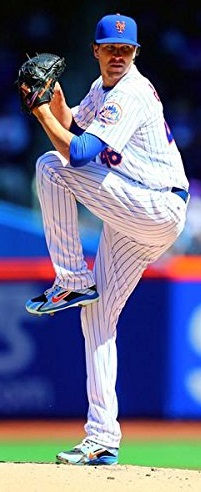
Jacob deGrom, the fourth Cy Young Award winner in Mets history. (His company: Hall of Famer Tom Seaver, Dwight Gooden, and R.A. Dickey.)

Before last year’s spring training, Jacob deGrom agreed to let his shoulder-length, corn broom-style hair be shorn. It was like Samson letting Delilah seduce him out of his locks. Except that when Delilah sheared Samson, he became weaker than a baby in the cradle. When deGrom got sheared, he became Samson.

Samson of course received more support from a forgiving God and His children Israel than deGrom received from his Mets last year. If Samson finally brought the Philistines’ temple down upon them (and himself in the bargain), deGrom must have felt on too many days and nights as though the Mets let the Philistines escape after he’d manhandled them yet again.

How goodly are thy tents, O Jacob? They’re becoming five years and $137.5 million worth of goodly now.

Almost as soon as deGrom’s rotation mate Noah Syndergaard all but ordered the Mets to do right by their defending Cy Young Award winner, the Mets got serious and deGrom, who wasn’t optimistic about a new deal with the Mets before his self-imposed Opening Day deadline, gets rich.

It’s not quite the kind of rich the Red Sox decided to make Chris Sale, but it’s rich enough for a pitcher who’d merely walked the line between above average and excellent before 2018 but went off the charts and into Pedro Martinez territory during 2018.

The Cy Young Award voters chose wisely not to hold his team’s non-support against him; the Mets chose wisely at last in making him their new franchise face. DeGrom’s new deal includes an opt-out clause after 2022, his age 34 season. It also includes a no-trade provision and a team option for 2024.

Thus does deGrom join the pre-free agency extension parade whose participants include Sale, Nolan Arenado, Alex Bregman, Justin Verlander, and, of course, the arch Angel Mike Trout.

Syndergaard unloaded Sunday, partially out of frustration that the Mets planned a promotional pre-Opening Day trip to Syracuse, when asked whether he was paying attention to his buddy deGrom’s contract status, knowing deGrom would have become arbitration eligible at the end of the season about to begin.

“Jake’s the best pitcher in baseball right now,” Syndergaard said. “I think he deserves whatever amount he’s worth. I want to keep him happy, so when it does come time for him to reach free agency, he stays on our side pitching for the Mets. I just think they should quit all this fuss and pay the man already . . . He’s really good. He’s a great teammate. I just don’t get it.”

The National League’s 2014 Rookie of the Year, and the fourth Cy Young Award winner in franchise history (the others: Hall of Famer Tom Seaver, Dwight Gooden, and R.A. Dickey), has probably shocked a lot of people who thought upon his original arrival, among a known crop of up and coming young Mets pitchers, that Matt Harvey was going to be the prize nugget and deGrom one of his over-endowed supporting players.

Harvey had his moments but he became addled both physically and emotionally; the former sapped his pitching power, the latter finally punched his ticket out of New York and to Cincinnati. He’s been remaking himself since into a different pitcher and person before the Angels took a chance on him as a low-cost, single-season free agent for this year.

DeGrom has survived rotator cuff tendinitis (in his Rookie of the Year season) and ulnar nerve surgery (after the 2016 season) and was the only Met starting pitcher to avoid the disabled list (oops! the injured list) during their bloodied-and-bowed 2017. When he underwent the much remarked haircut before last year’s spring training, he was only kidding when he said it would add a little speed to his fastball. We think.

Whatever it did or didn’t do, deGrom’s 2018 wasn’t just off the chart, it was somewhere beyond the Delta Quadrant:

* Batters hit .198 off him.

* He led the entire Show with his 1.70 earned run average and his 1.99 fielding-independent pitching rate. (Once again: that’s your ERA when the defense behind you is taken out of the equation.)

* His 216 ERA+, which adjusts to all the parks in which he pitched last year, also led the Show, as did his rate of 0.4 home runs surrendered per nine innings.

* He was only the second pitcher in baseball history to post an ERA under 2.00, strike out 250 or more batters, and walk fewer than 50 batters in a season, since ERA became an official statistic in 1913. The first? You guessed it—Pedro Martinez.

* If you consider that surrendering three earned runs or less in a game equals pitching well enough to win, deGrom had 29 consecutive starts in which he did that, and he only surrendered three or more earned runs five times all season.

* Along the same criteria of pitching well enough to win, deGrom had twelve starts in which he didn’t earn a decision and in only two of those did he surrender as many as three earned runs. If the Mets had won those games while he was still the pitcher of record, deGrom’s won-lost record would have been 22-9.

* Bizarrely, deGrom wasn’t charged with his first loss until after he’d been credited for four wins over his first twelve starts. In only one of those starts did he surrender more than three runs, and in only one other of those starts did he surrender as many as three.

* The Mets went 14-17 in deGrom’s 2018 starts and his ERA in the losses was 2.13—according to the Elias Sports Bureau, it was the first time any starting pitcher’s ERA in his team’s losses over a full season was lower than 2.35. (DeGrom’s ERA in the nine losses he was charged with: 2.71.)

* I told you all that without mentioning wins above a replacement-level player. It isn’t a particularised statistic but, rather, a value developed to determine to the best extent possible a player’s total contribution to his team. DeGrom’s 10.1 led everyone in baseball last year except for Mookie Betts (10.9 and the American League’s Most Valuable Player award winner) and Mike Trout (10.2 despite missing time with a thumb injury). Come to think of it, four National League pitchers had more WAR than the league’s MVP winner Christian Yelich: deGrom, Philadelphia’s Aaron Nola (10.0), Washington’s Max Scherzer (9.5), and Colorado’s Kyle Freeland (8.2)

P.S. Only one first place National League MVP vote didn’t go to Yelich. Three guesses who got that vote.

I wrote it when deGrom won the Cy Young Award but it’s worth repeating: In 2018 he was Pedro Martinez 2000, Bob Gibson 1968, Sandy Koufax 1966, and the Mets treated him like the late Anthony Young 1992-93, when that hapless but courageous righthander was hung with losses in 27 consecutive decisions.

DeGrom’s run support per game while he was actually on the mound last year: 2.9. (For the entire games in which he started, the Mets averaged 3.5 runs.) The Mets should have been grateful he didn’t haul them into divorce court on charges of non-support. And deGrom still wanted to talk about staying a Met.

He got his wish, for this season and for the four to follow, five if the Mets pick up that 2024 option, which could make the total value of his new deal $170 million. And he gets to tangle with Scherzer on Opening Day while he’s at it. Jacob’s Ladder is going to be a lovely ladder to continue climbing. It would be even lovelier if the Mets, at last, field a team their best pitcher can be proud of.

Steve Howe, inadvertent executioner

2019-03-25 SteveHoweYankees

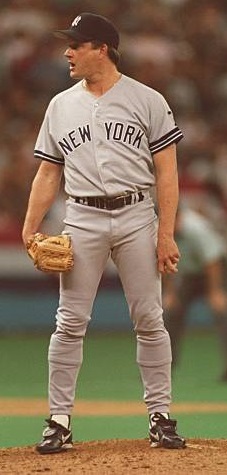
Steve Howe.

The Hardball Times has published a striking retrospective of the late Steve Howe, the uber-talented, uber-troubled, uber-addicted relief star of the 1980s who could tie hitters into knots but couldn’t untie the knot of cocaine addiction. And, who inadvertently sealed commissioner Fay Vincent’s doom in 1992.

“We can’t know for certain just what cocktail of mental health issues, genetic disposition, and poor choices led to Howe’s struggles in baseball,” writes Mike Bates in the Hardball Times essay. “But we do know playing baseball for teams that were not equipped to help him get better did not work . . . [T]he problem more than anything else: teams that wanted their player back more than they wanted their player to be well.”

What Bates didn’t address was how Howe’s seventh drug-related incident pushed Vincent out, at last, after the owners continued fuming over the commissioner’s intervention in the 1990 spring lockout, collusion, realignment, revenue sharing, and threatened losses in broadcast monies.

Allowing that baseball’s business might have been a powder keg not of Vincent’s making, Vincent’s tendency, as John Helyar noted in The Lords of the Realm: The Real History of Baseball, was to sit “passively waiting for issues to become a mess instead of getting ahead of the curve on them.” Enough of the owners then thought Vincent was somewhat out of control. Without even trying, Steve Howe helped convince them. And if you didn’t read Helyar’s book you might have missed the details.

Vincent magnanimously allowed the former Dodger relief star (and the National League’s 1980 Rookie of the Year), practically the poster boy for baseball’s cocaine epidemic of the 1980s, back into baseball in time for the 1991 season. His agent, Dick Moss couldn’t find takers including Yankee general manager Gene Michael until Howe and his wife just up and made their way to the Yankees’ spring camp.

Howe convinced someone to provide a catcher so he could show what he still had. The lefthander threw for ten minutes, got himself a non-roster spring training invite, and pitched his way into a new contract.

Considering Howe’s past, that achievement that defied belief. “He’s been clean for two years,” Michael told the New York Times at the time. “I asked a lot of people a lot of questions about him, his makeup, the type of person he is. I feel there’s been a lot worse things done in baseball than bringing Steve Howe back. If it was my son or your son, you’d want to give him another chance.”

“Our kids adore him,” Howe’s wife, Cindy, told Times columnist Ira Berkow, when Howe pitched his way from the Yankees’ Columbus (AAA) farm into a May call-up. “Everybody likes him. Even my parents, who suffered along with me. Steve’s a wonderful, caring, loving person. He’s just goofy and flaky and likeable and lovable. He’s just been very sick.”

Starting that May, Howe was better than even his vintage self in more ways than one. He appeared in 37 games, finished ten of those games, posted a 1.68 earned run average and a 2.34 fielding-independent pitching rate, and had a sub-1.00 walks/hits per inning pitched rate, until he suffered a hyperextended left elbow that finished his season in August.

Starting 1992 he was almost better: his twenty gigs through 6 June produced a 2.45 ERA/2.69 FIP with a 0.55 WHIP and a 4.00 strikeout-to-walk ratio, -.36 from his 1991 ratio. But it was something that happened during the 1991-92 off-season that took him out: his Montana drug arrest in December 1991. In June 1992 Howe pleaded guilty to trying to possess the drug, and Vincent finally banned him for life as a seven-time loser.

The players’ association filed a grievance based on Howe’s having been clean in numerous 1992 drug tests. Howe’s own agent Dick Moss handled the union’s side of the grievance and, during the 30 June hearing, engaged three Yankee officials—Michael, manager Buck Showalter, and a vice president named Jack Lawn—as character witnesses. Vincent was not amused.

You could forgive Vincent for thinking that Howe was a truly lost cause who’d just made him look foolish. But the way he struck back unnerved everyone around the game, the Yankees in particular. Banning Howe was one thing, but trying to force Michael, Showalter, and Lawn to change their testimony with a strong-arm disciplinary threat was something else entirely.

Showalter was in his Yankee Stadium office preparing for the day’s game against the Royals when Vincent called him and ordered him flatly to be at the commissioner’s office at eleven that morning. “We have a problem,” Vincent said, “with your testimony yesterday.” The same message was communicated to Michael and Lawn, after Showalter panicked to Yankee publicist Jeff Idelson (the future president of the Hall of Fame) and Idelson called Michael at home.

Equipped with a car phone, and after picking up Showalter and Lawn, Michael called the attorney Vincent rejected in a previous, non-related matter, Bob Costello. Costello told Michael there was no transcript of the Howe grievance hearing and, by the way, don’t go into Vincent’s office without a lawyer unless you’ve been taking suicide lessons.

“Keep in mind when you’re in there that there’s only one reason to call you on such short notice,” Costello warned. “Whatever you said yesterday displeases this guy. He wants to bring you in there and have you contradict what you said . . . And I’m telling you, when you decide not to talk about what our testimony was, he’s going to threaten you with discipline.”

Michael, Showalter, and Lawn thought together, more or less, he wouldn’t dare! Oh, yes he would. Vincent told each that he’d “effectively resigned from baseball” because they’d dared to “disagree with our drug policy” by standing as character witnesses for Howe. As he was quoted as telling Showalter, “You work for baseball; you work for this office when you sign a contract.”

All three made a point of telling Vincent they weren’t talking against baseball but for Howe himself. Which must have been ticklish enough for Lawn, a former Marine who’d formerly worked for the Drug Enforcement Agency. But when Vincent asked why Lawn even wanted to testify, he replied, “If a month from now I pick up a paper and see that Steve Howe killed himself, at least I would have known I tried to help.”

When Lawn told Vincent he was sworn to tell the truth, and “only testified in accordance with my conscience and my principles,” Vincent shot back, “You should have left your conscience and your principles outside the toom.” Helyar wrote that the “stunned” Lawn “fumbled in his shirt pocket for something to write on. He wanted to remember Vincent’s words precisely.”

After doing so on an index card, Lawn told Vincent he supported baseball’s drug policy when asked and didn’t contradict Vincent’s suspension power. Vincent’s aide Steve Greenberg actually told Lawn he “should know when you testify that you should say only certain things.” But when Greenberg demanded to know why Lawn spoke of drug addiction as a disease and why he went to bat for Howe? “Well, as I learned in the Marine Corps,” Lawn replied, “you don’t abandon the wounded.”

After debriefing Showalter, Michael, and Lawn by phone after the meeting, Costello called another lawyer with whom he’d been manhandled by Vincent on other Yankee business, Don Amorosa, and Costello gave it to him straight: “This guy has cooked his own goose.”

Vincent’s insistence on the immediate dressing down meeting meant Showalter didn’t get back to Yankee Stadium until four minutes before the game’s first pitch. And it hit the New York press like the grand slam the Royals’ Wally Joyner smashed in the second inning, making it 6-0 Royals. And, like the three-run homer Matt Nokes hit in the bottom of the seventh to help secure the staggering 7-6 Yankee comeback win.

That comeback win was less on the writers’ postgame minds than Vincent’s showdown with Showalter, Michael, and Lawn. Showalter had to stop at a Yankee official’s office to talk about the meeting and the threats and didn’t get to the dugout until the second inning, after Joyner—himself a former Rookie of the Year (with the 1986 Angels)—hit Tim Leary’s 2-0 service over the right center field fence.

Amorosa faced the press after the game and fumed that Showalter, standing right there, wouldn’t surrender to “intimidating tactics by Commissioner Vincent.” The New York scribes couldn’t have cared less if Vincent wanted to mop the streets and the subways with the then-banished Yankee owner George Steinbrenner, but keep your meathooks off the Showalters and Michaels who were trying to re-tool the Yankees back toward greatness.

The press pressure forced Vincent to back off his discipline threats. (He’d originally told all three Yankees they’d have to wait until the following Monday, five days later, before he’d let them know whether he’d execute them.) It also compelled him to order notices in baseball’s clubhouses saying nobody should fear discipline or retaliation from testifying with candor in grievance hearings.

But it also lit the powder keg of Vincent’s own execution. Those owners already itching to dump Vincent got new impetus and allies by his “manhandling of the Yankee Three,” Helyar wrote. “More no-confidence [in Vincent] memos came across [Brewers owner Bud Selig’s] fax machine. The conference callers turned to two big questions. One: How much support did they need to fire Fay Vincent? Two: Could they legally fire him?”

The answers were, in order: A two-thirds majority; and, yes, as long as they paid Vincent for the rest of his contracted term. Vincent said publicly he’d fight to the bitter end if there was one, but privately he discovered he’d lost key survival support from among former holdouts he’d personally helped solve knotty problems in the recent past. He saved the owners the trouble of firing him by resigning in September 1992.

Howe was reinstated after all. Arbitrator George Nicolau ruled that baseball failed to test Howe “in the manner it promised based on Howe’s documented case of attention deficit and hyperactivity disorder,” as Forbes‘s Marc Edelman wrote in 2014. Howe had a none-too-great 1993 but got himself named the Yankee closer for 1994, having a splendid season, the near-equal of his striking 1991-92 work.

But he had a none-too-great 1995, was moved back to a setup role for 1996, and was released in June 1996 after 25 appearances and an obscene 6.35 ERA. He tried one more season in the independent Northern League, with the Sioux Falls Canaries, but called it a career after that 1997 season, after the Giants backed away from signing him following an airport incident in which he was found with a handgun in his luggage.

“Steve Howe was good to me,” now-Hall of Fame Yankee closer Mariano Rivera remembered in 2013, seven years after Howe’s death. “Steve Howe was real good to me. Always was there, making sure I was doing the right things and motivating me always to do what is right and to go with everything that you have.”

Howe could help anyone except himself. There are those who can overthrow drug addiction successfully and those who can’t no matter how often and how hard they try. Howe couldn’t.

Almost ten years after his baseball career ended, working his own framing contracting business in Arizona, Howe was leaving California for home when his pickup truck rolled over in Coachella, ejected him, and landed on him, killing him at 48. Toxicology reports said there was methamphetamine in his system.

The obituaries said everything about how Howe sealed his own fate and almost nothing about how he inadvertently sealed Fay Vincent’s.

The Red Sox keep their Sale going

2019-03-23 ChrisSale

Chris Sale, starting the party after striking out the side to finish the Red Sox’s 2018 World Series triumph. The Olde Town Team’s extended him for five years and $145 million.

He only finished the World Series by striking out the side to finish Game Five. But the real signature moment for Chris Sale, one of the best pitchers in the American League for several seasons and counting, came in Game Four, when he wasn’t even a pitching topic.

Bottom of the sixth. Yasiel Puig has just hit a three-run homer halfway up the left center field bleachers, and it looks like the potential Game Four-winning blast. Red Sox starter Edwin Rodriguez slams his glove to the ground in self-disgust as Puig starts running the bases after his celebratory bat flip. Dodger Stadium sounds like the roaring of jet engines at not-so-nearby Los Angeles International Airport.

Sale in the Red Sox dugout sees real cause for real alarm. He’s on his feet and, shall we say, talking. And it sure doesn’t look like he’s giving the kind of soothing reassurances in which long-enough retired David Ortiz bathed his mates during Game Four of the 2013 Series. His precise words couldn’t be captured unless you were sitting behind the Red Sox dugout, but the words two f@cking pitches! were picked up somehow. Possibly a reference to the Red Sox being held to two hits to that point by Dodger starter Rich Hill.

This may have been the only time on record in which a pitcher hollered, cussed, browbeat, or all-the-aboved his team into turning a 4-1 deficit that looked like it was going to tie the Series at two games each into an explosive late comeback of a 9-4 win to push the Dodgers onto the brink of the elimination into which they’d be bludgeoned in Game Five.

The comeback win that ended with Sale striking out Justin Turner, Enrique Hernandez, and Manny Machado uninterrupted, with only Hernandez making it interesting by wrestling Sale to a full count before swinging and missing. Sale zipped Turner on three straight pitches and magnanimously allowed Machado one ball before zipping him, too.

Now Sale’s zipped his signature on the dotted line and landed himself a five-year, $145 million extension with the Red Sox.

The Olde Towne Team has decided the shoulder inflammation which limited Sale’s service availability down the stretch last season—and probably took him out of the Cy Young Award running, since he was disabled after missing two post-All Star starts and then again after a five-inning shutout performance against the Orioles, but still led the league with his 1.98 fielding-independent pitching rate despite not quite pitching enough for title or award consideration—is as past as Sale himself swears it is.

The average $29 million annual value of Sale’s new deal puts him behind only Zack Greinke ($34.4 million AAV), Clayton Kershaw ($31 million AAV), David Price ($31 million AAV), and Max Scherzer ($30 million AAV). It may also mean he may be underpaid if he lives up to the valuations conjugated by FanGraph’s Dan Szymborski’s ZiPS projection that Sale through age 35 (when the new deal expires) may yet be worth a sliver short of an average annual 5.0 wins above a replacement-level player over the life of the deal. (Lifetime, Sale has 43.0 WAR and has finished top ten five times in his nine-season career to date.)

At this writing Sale leads all active starting pitchers with his 10.9 strikeouts-per-nine innings rate and his 5.31 strikeout-to-walk rate; only Kershaw’s is better than his lifetime 2.89 ERA and +144 ERA plus. He may also be among the leaders among active pitchers disinclined to talk about themselves above or beyond the game on the mound and the field. Like Hall of Famer Sandy Koufax, Sale’s least favourite subject of conversation is himself.

“He spent a good 10 minutes explaining why, he’s sorry, but it’s just too awkward to talk about all the things he doesn’t like to talk about,” writes The Athletic‘s Ken Rosenthal, who tried to ask, anyway. “The quiet acts of kindness. The bold moments of leadership. The goofy interactions that are difficult to square with a player who’s so serious about his craft. Sale doesn’t like to talk about himself, and the ramifications of that personal preference are really not his concern.”

When two members of the Red Sox’s media relations department ran the Boston Marathon for charity, Sale whipped out his checkbook and wrote big checks to each—without being asked.

When teammate Eduardo Nunez’s older of two young sons approached Sale and asked for some pitching advice earlier this spring training, Sale forgot how gassed he was from a strenuous bullpen and workout session, put down his phone, and asked the kid to show his mechanics. Then, Sale talked to the lad about pitching philosophy, patience, and the art itself.

But if you’d asked the Red Sox about just what Sale said during his Game Four dugout dump, you get a lot of contradictory answers. As The Athletic‘s Boston reporter Jen McCaffrey recorded after Game Four, it all added up to Sale trying to fire his teammates back up, but just how he did it depended upon whom you asked.

“I couldn’t tell you what he said,” said Mitch Moreland, who had a monstrous three-run homer of his own to pinch hit half an inning after Puig exploded. “I’m sure it was something to fire us up, and obviously it worked. So it was a good one for us.”

“Chris, in the dugout screaming?” said manager Alex Cora, with a reported smirk. “My English is very limited, so I didn’t understand what he was saying.” (Cora’s English is, of course, very, very good.)

“I was definitely there. At that moment that was huge because it motivated us,” said Rafael Devers, who would pinch hit and bust a four-all tie with a single to start that five-run Game Four Red Sox ninth. “It scared me a little bit because I had never seen him yell like that and the words that he was saying, I had never heard that come from him before. But, you know, we came out sluggish and that moment helped us get motivated for the rest of the game.”

And, the Series.

That’s what the Red Sox bought with $145 million over five years. A marksman on the mound. A heart and soul man off the mound. And, if need be, the guy who’ll rip you a few new ones in the dugout if he thinks you look slack or listless with a World Series potentially on the line.