One shortstop, one swing, one win

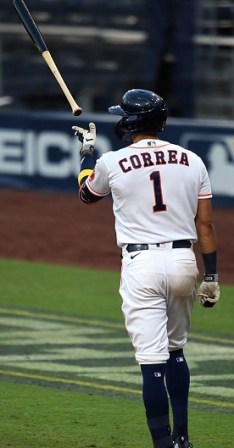
Carlos Correa—no, he wasn’t conducting The Four Seasons, either.

Realistically, nobody thought the Tampa Bay Rays and the Houston Astros were going to play a short American League Championship Series. Not even when the Rays bedeviled and bedazzled their way to a 3-0 series lead.

But if the acrobatic and customarily timely Rays end up falling home for the winter, Carlos Correa may yet prove the one who drew up the tickets to be punched.

The Rays and did overcome their opener John Curtiss serving George Springer one pitch to drive off the third patio of the Western Metal Supply Co. building behind the left field fence. They had eight more innings to do it Thursday afternoon, and they did.

But can they overcome Nick Anderson serving Correa a 1-1 pitch to send over the center field fence with one out in the bottom of the ninth to win it for the Astros, 4-3? Depending on the answer, the Rays will find themselves either going to the World Series or going home with questions to haunt them all winter and maybe beyond.

Maybe that sounds too pessimistic for a team still holding a 3-2 ALCS lead. But remember the 2004 New York Yankees. They still led that ALCS 3-2, too, despite the Boston Red Sox’s throwing a sweep prospect out the window at the eleventh hour and being on the apparent march. We still know how that worked out for the Empire Emeritus.

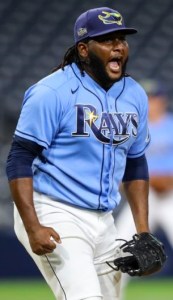
We also know the Rays and the Astros tried to play each other’s best games Thursday. The Rays showed long ball power at the plate—and little else. The Astros played the Rays’ bullpen game—and neutralised the Rays when things called for their usual merry-go-round approach. They left just enough room for Correa to wreck the Rays’ arguable best reliever of the year.

It’s not that Anderson was gassed or prone to doing things he wasn’t supposed to do, or that manager Kevin Cash failed to read his man fully. This wasn’t Arizona Diamondbacks manager Bob Brenly throwing an already-overworked Byung-Hyun Kim out for a third inning to be ruined on his sixtieth pitch of the niight by Derek Jeter’s fabled Mr. November blast.

The only thing Anderson did was throw Correa a nasty fastball tailing toward the outer part of the zone. But the only thing Correa did was exercise an adjustment he said postgame that he made in the clubhouse cage, with hitting coach Alex Cintron, earlier on the afternoon, then send that would-be tailer into postseason immortality when it looked to most as though Game Five headed to extra innings.

Correa saved his manager Dusty Baker from doing what he would have had to do but with as much enthusiasm as a mid-20th century child taking his castor oil for an illness. Having pushed just about every bullpen chip he had to the middle of the table, Baker would likely have had to reach for his intended Game Six starter, Framber Valdez. He could match the Rays bullpen for bullpen through nine. After nine, he’d have made a suicide bet.

With one swing Correa saved Valdez for his intended assignment and put himself and the Astros into the record book. Name one other postseason game in which the winning team homered on the first and the final pitch. You can send Magellan on an around-the-world sail and come up with only one. The one Correa won.

Name any other player in Show history to hit two postseason game-winning home runs without ever doing it in the regular season? Did you say Red Sox legend David Ortiz? Big Papi had eleven in regular-season play. Did you say Bernie Williams, the longtime Yankee center field stalwart? Williams did it three times in regular-season play. But if you said Carlos Correa, give yourself a pat on the back at least as hearty as the flip Correa gave his bat as he proceeded up the first base line to run it out.

Name any other shortstop in Show history to hit a game-winning bomb in a postseason elimination before Correa teed off. If you said nobody, make that pat on the back a big pounding slap. Jeter’s rip off Kim? Tied the 2001 World Series at two games each. Ozzie Smith’s gone-crazy-folks blast off Los Angeles Dodgers reliever Tom Niedenfuer, in Game Five of the 1985 National League Championship Series? All that did was put the St. Louis Cardinals ahead 3-2.

Once again, Correa swings alone.

“That’s as big a moment as I’ve ever been involved in,” Baker said after Thursday’s game.  “That’s one of the reasons I came back . . . That’s as sweet as it gets right there.” Baker should know. In a nineteen-season playing career and a 23-season managing career, Baker was never part of any postseason game that ended with a home run until now.

(Yes, folks. That was the same Tom Niedenfuer who’d get destroyed in Game Six in 1985, when Tommy Lasorda thought it was perfectly safe to let him pitch to Jack Clark with first base open and the Dodgers one out from going to the World Series, and Jack the Ripper thought it was even safer to hit a first-pitch three-run homer for which the Dodgers had no response in the bottom of that ninth.)

The magnitude of Correa’s blast is yet to find its full definition. That would require the Astros hanging in to win the ALCS. If they do, Hall of Fame writer Jayson Stark has news for you: they’d buy Correa membership in a very exclusive club of players whose postseason game-winners kept their eventual World Series-winning teams from going home for the winter if they’d lost the games won by their game-winners.

That club now is merely Bill Mazeroski (Game Seven, 1960 World Series), Hall of Famer Kirby Puckett (Game Six, 1991 World Series), Hall of Famer-in-waiting Ortiz (Game Four, 2004 ALCS), and David Freese (Game Six, 2011 World Series). Mazeroski’s, of course, won that World Series. Puckett, Ortiz, Freese, and now Correa bought their teams another day to play.

Correa didn’t point to the fences the way Babe Ruth remains alleged to have done in the 1932 World Series, but Baker swore after the game Correa told him before going out to the plate in the ninth that he was going to end the game right there. Correa swore he told Jose Altuve the same thing.

“Please Lord,’’ Baker did admit to praying, “let us walk it off.”

“I wanted to drive the ball,” Correa told reporters, “and I felt I could do it. So when I was walking on the field, I said, ‘I’m going to end it’.’’

Until or unless someone else spills and says the shortstop and the skipper were full of it, give them the benefit of that doubt. It’s maybe the first such benefit any Astro has earned this year. They brought enough of that lack of benefit upon themselves in the Astrogate aftermath. They should have considered themselves sadly fortunate the pandemic-mandated empty ballparks in which they played kept them from facing maybe the most hostile road crowds baseball’s seen this side of its classic blood rivalries.

It’s going to be tough enough for the Astros to finish what’s been done only once before, rise from the dead to win after being down 3-0 in a postseason set. Third baseman Alex Bregman illuminated that for his teammates, say a few published reports: he showed them a documentary of those 2004 Red Sox.

Those Red Sox did it to their historic rivals. These Astros aren’t trying to take it to, say, the Oakland Athletics or the Texas Rangers. OK, so there’s no blood feud involved. To the best of anyone’s knowledge, not one Astro has any particular animus against the Rays themselves. Just as happened in last year’s division series, the one the Rays almost swiped from the Astros, the Rays are just another obstacle on the Astros’ way back to the World Series. For now.

Are the Rays worried yet? Maybe they should be. Unless they can remember how to hit situationally and stop trying to get their Yankees on. Cash can say all he wants that he doesn’t think the Rays are getting home run happy, but all of a sudden the Rays are doing nearly all their scoring with the long ball.

That five-run fifth in Game Three was a usually-typical Rays uprising—single, force out, single, two-run single, sacrifice bunt, back-to-back hit batsmen the second of which forced in a run, two-run double. The only aberration was the bunt. The Rays didn’t sac bunt all year before then. (Neither did anyone else in this postseason.) Just like old Casey Stengel (and how today’s boring old-school farts forget!), the Rays don’t believe in surrendering outs normally.

Innings and rallies like that seem distant memories. And you can’t go to the World Series on any kind of memories.

They scored two of their three Game Four runs on a two-run homer. They scored all three of their Game Five runs with home runs. When first baseman Ji-Man Choi led off the top of the eighth pulling one into the right field seats off Astros reliever Josh James, it tied the score at three and had one and all thinking along with the Astros: “We have them right where they want us.”

Late innings. The Astros’ largely youthful bullpen spent for the day. The Rays’ other high-leverage bulls still lurking, with Baker in danger of having to burn Valdez and force himself into a Game Six alternative.

Then Correa shook away Bregman’s leadoff pop fly out to short right field, speared by Rays second baseman Brandon Lowe running toward the line from the infield shift/fourth-outfielder array. Correa took a ball one curve ball up and a little in, then swung and missed on an Anderson curve that dropped smack dab in the middle of the strike zone.

Then Anderson threw that fastball tailing away from the middle of the zone. It didn’t tail away quick enough to keep Correa from turning it into a satellite.

The Rays’ missing man refuses to surrender. Kevin Kiermaier hadn’t been seen since he was drilled on the wrist during that Game Three fifth-inning push, until he pinch-ran for Mike Zunino in the top of the ninth and stayed in the game for center field defense. His absence in Game Four and almost all Game Five probably hurt more than the Rays would ever admit.

“We like our chances,” Kiermaier said postgame. “We have a lot of confidence in our bunch that we’ll get the job done . . . We have to work at-bats, have solid approaches, move base to base like usual.”

They beat Valdez and company sort of that way in Game One, a solo homer, an RBI single, and their don’t-even-think-about-it bullpen. They’ll have to do it again in Game Six. Not even a lineup of nine Randy Arozarenas can hit home runs every time up.

Their best chance to hang in and win is playing Rayball and not letting the Astros even think about playing it. Thanks to Correa, the Astros now have other thoughts in mind.
The Astros keep the extra inch

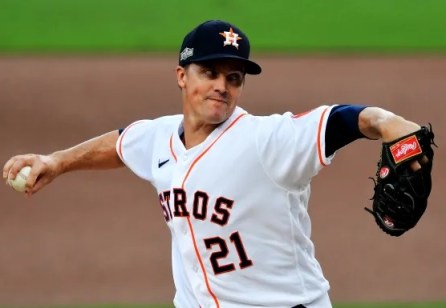
Greinke found what he needed when his skipper’s confidence found him when it was needed.

Once upon a time, stealing the pennant came to mean things like eleventh-hour surges at the end of the stretch drive. Or, off-field-based (and illegal) sign-stealing chicanery. (That means you, 1914 Philadelphia Athletics, 1940 Detroit Tigers, 1948 Cleveland Indians, 2017 Houston Astros, and 2018 Boston Red Sox.)

This time around, it may still mean the Tampa Bay Rays stealing the American League pennant by robbing the Houston Astros wide awake every time the Astros think a nicely-hit ball is about to send a run or two home.

But not quite yet.

Whatever you think about the Astros, they won’t just go gently into winter vacation. They didn’t muster up a jaw-dropping eleven-run first inning such as the Los Angeles Dodgers dropped on the Atlanta Braves earlier Wednesday. They didn’t have to. They needed just an extra home run and a managerial non-decision to live to play one more day at least.

This time, in Game Four of the American League Championship Series, the Astros didn’t give the Rays’ defensive aerialists further chances to rob them blind whenever they thought hard hits had chances to fall in. This time, they didn’t give the Rays the inches from which the Rays would push, shove, nudge, and yank miles.

This time, George Springer hit a tie-breaking two-run homer in the bottom of the fifth off Rays starter Tyler Glasnow and Astros manager Dusty Baker did an about-face rather than lift his starter Zack Greinke with first and second, one out, and white-hot Rays left fielder Randy Arozarena—whose two-run homer off Greinke in the top of the fourth tied the game in the first place—checking in at the plate in the top of the sixth.

Baker had his options just about ready to roll. He had Cristian Javier and Ryan Pressly throwing in his bullpen. And when he went to the mound, he talked to Greinke some but to catcher Martin Maldonado more, and Maldonado stood up for his pitcher just when Greinke needed it the most.

Greinke didn’t forget Game Seven of last year’s World Series. That’s when then-skipper A.J. Hinch noticed he’d run out of fuel and lifted him for Will Harris, his best relief option. To Greinke it meant lack of confidence, never mind that he’d been battered by the Rays in that division series, slapped silly by the New York Yankees in that ALCS, and taken for a home run by Washington’s Anthony Rendon before walking Juan Soto in that Game Seven seventh.

That was then: Greinke came out for Harris and Howie Kendrick ripped what looked like Harris’s unhittable cutter for a two-run homer off the Minute Maid Park foul pole with the Astros’ next-to-last Series hopes attached. This was Wednesday night: Baker turned around and returned to his dugout.

Greinke struck Arozarena out on a check swing. He got help from Astros shortstop Carlos Correa cutting off a hopper from Rays first baseman Ji-Man Choi that might have left room for left fielder Manny Margot to score, if Correa didn’t reach it on the short outfield grass and knock it down.

Then Greinke struck out Michael Brosseau—whose late home run against the Yankees got the Rays to this ALCS in the first place—with a changeup that dove off a cliff just before Brosseau’s bat could give it a kiss. Kiss the Rays’ deepest threat of the night goodbye. Then turn the game over to the pen.

Arozarena’s check swing came on what would have been ball two. Brosseau struck out on what would have been ball four and an Astro lead cut to 4-3. And thus would Rays shortstop Willy Adames’s RBI double have been a tie game in the top of the ninth with the likelihood of extra innings.

“My plan,” Baker told reporters after the 4-3 Astro win, “was to take him out, but I wasn’t really convinced of my plan. Sometimes you look in the guy’s eyes, sometimes you listen to the catcher, and you do what you gotta do.”

“It was nice having someone have confidence in me,” Greinke told the reporters. “Because since I’ve been here, they haven’t seemed to have confidence in my ability. So it was nice having that happen in an important time like that.”

Especially for a seventeen-year veteran whose arm was ailing and inconsistent all postseason long, until he found the best of his late-career self when he needed it the most Wednesday night, putting his best off-speed pitches into a Mixmaster and cranking no higher than cookie-mixing speed.

He also vindicated Baker, a very veteran manager who’s not allergic to the analytic game but who’s lived as much by his gut as his brain and has often been caught with his pants down when his gut gets betrayed by circumstances far beyond his control.

Baker was one game from yet another tsunami of second-guessing when Greinke justified his gut Wednesday night. The skipper isn’t all the way through the turbulence just yet. But for once in his life Baker read his players and tea leaves right. He may yet have a few sharp readings left in him before this set’s over. May.

If baseball’s the game of inches, Greinke and the Houston pen made sure the Rays didn’t get the inches that would have mattered. Not that the Rays bullpen was caught sleeping. They matched shutout innings with the Astros’ bulls until Adames’s double off Pressly, brought in to close things out after Javier walked Choi to open the ninth. And the Rays used two bulls who weren’t exactly considered among their A-list stoppers.

The Astros’ own core five of Springer, Correa, Jose Altuve, Alex Bregman, and Yuli Gurriel played their 54th postseason game together, passing a once-fabled Yankee core (Derek Jeter, Bernie Williams, Scott Brosius, Tino Martinez, and Paul O’Neill) by a game.

Winning it 4-3 made it that much more precious to the Astro core who may yet play their last games together in this set. One Astro win doth not a Rays collapse make, and the Astros are smart enough to know they’re in for a continuing fight, but don’t fault them for savouring Game Four a little extra.

Especially on a night Altuve’s first-inning launch over the left field fence and Springer’s fifth-inning flog meant the eighteenth lifetime postseason bombs for each man. Matching them to Hall of Famer Reggie Jackson and putting them one behind Hall of Famer-to-be Albert Pujols in the divisional play-era postseason rolls.

Not to mention a night on which Altuve’s apparent and frightening case of the yips at second base took its first steps toward potential dissipation, Altuve handling a pair of none-too-tough chances and throwing without the ball deciding on its own to go to the enemy side.

“Those are things that happen in baseball,” Altuve said, facing the press for the first time all series long. “I left that in the past and showed up today ready to play some baseball and help my team.” The question then becomes whether Altuve can leave those game-changing mishaps in the past. He sure thinks so. Springer’s pretty sure he knows so.

“He prides himself in every aspect of the game,” the center fielder said. “When he believes that he failed or let the guys down, he takes it to heart. But one of the most impressive things about Jose is how he can clear his head and contribute in all aspects of his game. I know the head he has on his shoulders. He’s our leader and always has been.”

That comes from the guy who watched Altuve start Wednesday night’s scoring with a second first-inning solo bomb in as many days and his third in the series, swat an RBI double in the fourth, and tell himself, “You’re not taking care of all the scoring, bro,” before driving a 2-1 service down the left field line and into the third patio up the Western Metal Supply Co. building.

The Astros still had to wrestle for their win. Even if the Rays didn’t have to get their acrobats on, they still turned four double plays on the evening and rapped out seven hits to the Astros’ nine. They’re still out-pitching the Astros by a few hairs, finishing Game Four with a team 2.31 ERA to the Astros’ 2.65.

The bad news for the Astros: Come Game Five, the Rays can go to their bullpen A-listers at will. The Astro pen otherwise has looked remarkable for the most part, but the Rays live and die by their bullpen as much as they live and die by their high-wire defense.

Most likely, the Astros send Framber Valdez out to start Game Five, likely against the Rays’ Blake Snell. No announcements were made at this writing, and Rays skipper Kevin Cash would have no compunction at all against going to a bullpen game the Astros aren’t positioned or built to deliver just yet.

But, as the Beatles also sang once upon a time, a splendid time is guaranteed for all.

A nightmare on Keystone Street

Jose Altuve, shocked to his haunches by an unexpected and unlikely throwing problem.

Now hear this. Especially you, Astroworld. And you, too, anti-Astroworld. Jose Altuve deserves your sympathy and empathy. Not your scorn.

Some of the greatest fielders in the business come up short or falter off line. Much of the time it happens not when they’re doing what they shouldn’t ought to be doing but when they’re doing it the way they’re supposed to be doing.

Baseball’s irrevocable laws include that anything can happen—and usually does. Even and especially in the negative. It doesn’t just happen to men who know better but did what they knew going in might be wrong. It happens to the best in the business, to men who enter trying to do right and end up doing too wrong without even trying.

A six-time All-Star who has at least one Gold Glove on his resume doesn’t premeditate and plot to turn a mostly right battle of the pitchers into a Monty Python’s Flying Circus-like comedy of error and surreality with his team measuring on the wrong end of the laugh-that-you-might-not-weep meter. And landing on the brink of being swept into winter vacation.

Bad enough Altuve had two throws disobey his right arm’s orders in Game Two, especially since one of them might have been tried and convicted on the right side if Astro first baseman Yuli Gurriel had gotten his mitt around instead of in front of the ball, even backhanding to try for it.

But all Altuve did in top of the sixth in Game Three was pick Tampa Bay Rays second baseman Brandon Lowe’s bouncing grounder with vacuum cleaner hands, throw to shortstop Carlos Correa ready to start a double play . . . and watch as though witness to a murder as the ball bounced past Correa, handing the Rays first and second and nobody out.

Altuve might have preferred an on-the-spot assassination over what followed. Opposite-field two-run single. The first sacrifice bunt seen all postseason long, from a team who avoided the bunt like the coronavirus all year long. Back-to-back hit batsmen to re-load the bases and push a run home. A pinch-hit shuttlecock becoming a two-run double.

None of that’s on Altuve. He didn’t surrender those hits or hit those batters. Remember that.

A 5-1 Rays lead—turned a mere 5-2 when Michael Brantley hit a kind of excuse-me solo homer in the bottom of the sixth—wasn’t the way either Altuve or the Astros planned things after Altuve’s one-out solo bomb in the bottom of the first handed the Astros the 1-0 lead that would last exactly four more innings.

The two starting pitchers, Houston’s Jose Urquidy and Tampa Bay’s Ryan Yarbrough, fenced sharply through five full, if you didn’t count Yarbrough’s slightly shaky second (walk, plunk). Urquidy’s harder stuff against Yarbrough’s repertoire of off-speed breakers that have movement enough to avoid being dismissed as slop.

They put the history minded in mind of Casey Stengel’s ancient observation, after the Ol’ Perfesser watched his Yankee craftsman Eddie Lopat duel Brooklyn Dodgers craftsman Preacher Roe in a 1952 World Series game:

Those two fellas certainly make baseball look like a simple game, don’t they? It makes you wonder. You pay all that money to great big fellas with a lot of muscles and straight stomachs who go up there and start swinging. And [Lopat and Roe] give ’em a little of this and a little of that and swindle ’em.

Then Astros manager Dusty Baker got Urquidy the hell out of there right after Altuve’s sad betrayal. He wasn’t going to let his sharp young righthander hang around in case fumble turned into funeral. His Astros had enough problems coming into this postseason in the first place.

Didn’t they manage to survive injuries, inconsistency, sleeping bats, and their sometimes self-amplified status as the Show’s number one bandits, just to sneak into commissioner Rob Manfred’s pandemic-inspired, sixteen-team postseason at all?

Don’t they have enough trouble going what’s now 4-for-24 with runners in scoring position this ALCS and sending not one of them home? Or leaving a combined 31 men on base? Against a collection of Rays known only to themselves and each other—until they get their acrobats, aerialists, jugglers, high-wire walkers, and human cannoballs on at the merest hint of a hard-hit ball?

The last must feel especially as though rubbing it into the usually proud, suddenly hapless Altuve. You can’t blame the man. His teammates and his skipper are probably trying to figure out just how—short of kidnapping—to keep the Rays from turning any more of these games into something straight out Sgt. Pepper’s Lonely Hearts Club Band.

For the benefit of Mr. Kite/there will be a show tonight/on trampoline.
The Hendersons will all be there/late of Pablo Fanques Faire/what a scene!
Over men and horses/hoops and garters/lastly through a hogshead of real fire—
in this way, Mr. K will challenge the world!

“Nobody feels worse than Jose, because he takes it very serious and takes it to heart,” said Baker after the game, mindful that Altuve has a history of all but beating himself senseless whenever he hits a slump period. “He’s one of ours, and we’ve all been through this before. Not in this spotlight like this. It hurts us all to see him hurting.”

The Rays’ Mr. K is manager Kevin Cash. He and his Hendersons are challenging the world, indeed. He has his Arozarenas, Kiermaiers, Margots, Renfroes, and Wendles going over men, horses, hoops, and garters.

He even had his relief pitcher John Curtiss going through the hogshead of fire in the seventh Tuesday night. Curtiss took a lunging leap to his right to spear Gurriel’s high bouncer to the third base side of the hill, and threw Gurriel out while springing up from his knees. We do this kinda stuff to ’em all through the picture!

About the only thing Mr. K didn’t have in the repertoire was his stout reliever Diego Castillo choosing the bottom of the ninth to form his own escape trap. Starting with a swinging strikeout, he walked pinch-hitter Abraham Toro plus George Springer back-to-back.<

Then, Castillo struck poor Altuve out on a check swing that may or may not have been a gift from plate umpire Jeff Nelson. The best explanation may have been Altuve leaning so far forward checking his swing that it looked as though his bat nicked across the front of the plate. At minimum, Nelson should have called for help to be absolutely sure.

Maybe it wouldn’t have mattered in the end, but still. And Castillo jammed Brantley into a fist fly to left center that Margot hustled in to grab to end it. The check swing won’t be dissected even a thirty-second as deep as will Altuve’s continuing throwing trouble.

There’s no good time to catch what sports calls the yips—the sudden inability of a ballplayer to execute what he’s been doing blindfolded all his life. And there isn’t always a good explanation for just how and why it happens. Just ask one of the most notorious cases, the only infielder in baseball who beat the yips back successfully while he still had a lot of career left.

“I can feel for Jose. There’s nothing worse in the world,” said Steve Sax, the one-time Los Angeles Dodgers second baseman whose thirty 1983 throwing errors were attributable to the yips—until, he once said, his final conversation with his dying father, when Dad told him it wasn’t a physical or mental block but unexpected lost confidence.

“It’s the most lonely place to be,” Sax continued in a telephone interview. “It’s embarrassing. It’s just awful. I hope he can grasp this as soon as possible because this thing is very simple. It’s right in front of him. So many people are going to say, ‘Oh, Jose, you have a mental block.’ He doesn’t. He has a temporary loss of confidence. It has nothing to do with his mental state. Something triggered him to start questioning his ability, that’s why he’s doing this. When he gets his confidence, this will disappear.”

The only problem is that the Astros’ postseason presence may disappear before Altuve’s problem or the Rays’ flying circus do. But he needed lots of help bringing the Astros to this brink and he got it, too. And exactly half of it wears Rays uniforms.

That goes for both enough Astro fans ready to plant the goat horns into Altuve’s forehead and enough anti-Astro fans proclaiming this, especially, is nothing but Astrogate karma. And don’t even think about killing his father to cure him.

The day of living dangerously

SHAZAM!! Manuel Margot, training for the Olympic pole-vault team in the second inning Tuesday.

If you thought like me that Game One was The Little Bang Theory, what should we call Game Two? How about, The Day of Living Dangerously? For the Tampa Bay Rays, that is. They beat the Houston Astros, 4-2, Monday afternoon, but it looked for awhile as though they decided to defy a suicide pact.

Actually, it looked as though their usually-reliable bullpen bull Nick Anderson made and then abrogated the suicide pact, at the last split second before his end of the bargain would have required him firing the bullet through his head.

He’d surrendered back-to-back-to-back singles to Yuli Gurriel, Josh Reddick, and pinch-hitter Aledmys Diaz. He gave up the run to get George Springer to whack into a step-and-throw double play to second. Then, he re-loaded the pillows with back-to-back, four-pitch walks to Jose Altuve and Michael Brantley.

For a few brief and none-too-shining moments, with the shadows crawling across San Diego’s Petco Park, you could see the Rays’ dreams of somehow, maybe chasing the Astros home for the winter a little prematurely by Astro standards going up in a cloud of dust when Alex Bregman hit Anderson’s fastball just off the middle to him.

All afternoon long, the Rays took everything the Astros dished out, which was about ten times as much as the Rays could muster, and still clung to the lead they took in the first after the nice Astros were generous to a fault with them with no score, two out, and Randy Arozarena on first with a base hit to left instead of his customary home run.

Specifically, Altuve proved the generous one. The usually sure-handed, sure-armed second baseman snapped up Ji-Man Choi’s grounder to shallow right into the shift but threw offline enough to first baseman Yuli Gurriel to set up first and second. Setting Manuel Margot up to hit Astro starter Lance McCullers, Jr.’s second pitch to him into the left field cutouts.

From there it went thus: McCullers, way out-pitching his former Astros rotation mate Charlie Morton . . . and leaving after seven innings, in the seventh of which Rays catcher Mike Zunino—with two out and nobody aboard—hit a 1-1 sinker that didn’t sink enough over the center field fence.

The Astros, Dr. Peppering the Rays at the plate, outhitting them 10-2-4 . . . and still unable to paint the scoreboard more than Carlos Correa hitting otherwise effective Rays reliever Pete Fairbanks’s 1-0 fastball a lot further over the center field fence than Zunino’s would travel.

Every Astro hitter except Bregman having at least one hit on the day . . . and still going a measly 1-for-4 with runners in scoring position.

Diver down . . .

The problem was the Rays playing like they thought they were the 1969 Mets. Acrobats, jugglers, and precision shooters in the field. Maybe the only thing the Rays didn’t have going for them on defense was the 82nd Airborne. And maybe they think, who the hell needs those guys after Margot’s shazam! in the top of the second.

Gurriel (one-out single) on third, Martin Maldonado (two-out ground-rule double) on second, two out, and Springer swinging on 1-1. The ball sailing up and toward the right field line. Margot chasing across the sun field, glove shielding his eyes enough to keep the ball in sight. The high sidewall coming into quicker sight as the ball angled to foul ground. Margot taking a flying leap.

Olympic pole vaulters don’t clear their bars like that. Do they?

He speared the ball one-handed a split second before his torso hit the wall’s top fence brace and he bent over that brace and fell into a straight-down dive on the far side, bending just in time not to land flat on his head. Then he sprang up almost as swiftly, somehow, thrusting his glove hand up in a perfect Lady Liberty impression.

Shazam!

The Petco Park audience would have heaved a sigh of relief enough to blow a typhoon from the shores of California to the rock-bound coasts of Maine—if there’s been a real crowd in the park, that is.

When he sprang up almost as swiftly to show he held onto the ball, the Petco Park audience would have heaved a sigh of relief enough to blow a hurricane from the shores of California to the rock-bound coasts of Maine—if there’d been a real crowd in the park, that is.

After all the foregoing plus that near brain-scrambling pole vault of a catch, wouldn’t you think that even an Anderson who might still have been a little gassed or hung over from his Friday night’s labour would think twice before compelling a high-wire act with no guarantee of a trampoline to break his and the Rays’ fall.

Bregman’s high liner sent center fielder Kevin Kiermaier back. And back. To the track. At the wall. Caught. Game over. Crash carts taken off white-hot alert. Oxygen ventilators shut down for the night.

Every other Rays heart still threatening to break through their owners’ rib cages and skins. Every Astro probably wondering to themselves whether it would take nuclear weapons and exterminators to rid themselves of these death-defying pests. Maybe they’ll call the 82nd Airborne. Ringling Brothers and Barnum & Bailey Circus is out of business, you know.


The little bang theory

Diego Castillo, after closing the Rays’ ALCS Game One win Sunday night.

How bizarre was Game One of the American League Championship Series? Aside from being played in a National League ballpark, that is? Aside from the Tampa Bay Rays having a barely quenchable thirst for doing things the hard way and making the other guys do things likewise?

They beat the Houston Astros 2-1 Sunday night. Just as they beat the New York Yankees 2-1 to get here in the first place. Except that’s where the similarities end, no matter how good the Rays are at minimalism.

They’re to the low score what the Astros are to the big bang. They’ve played three postseason games thus far scoring two runs or less—and won two. Everyone else this postseason scoring two or less? Three wins, nineteen losses.

They struck out thirteen times against Framber Valdez and three Houston relief pitchers—and won. Just the way they did against the Yankees to get to the ALCS, and just the way nobody else this postseason has.

The Rays are about as intimidated by striking out as David was by Goliath. All year long including this postseason, you can look it up, they struck out thirteen times or more in twelve games—and won eight. Anyone else? Not even close. They’d rather strike out than hit into double plays.

They endured Sunday night without going to most of their A-list bullpen bulls. Nick Andersen and Peter Fairbanks didn’t even poke their noses out of their holes. Remember: there’ll be no days off during the ALCS, either. He who tends his bullpen best is liable to be he who survives with the least damage.

The lone Rays A-lister available Sunday after last Friday’s Yankee wrestling match was Diego Castillo. Largely because the chunky righthander himself told his boss he had at least an inning in him despite throwing 29 pitches over two innings to end the ALDS.

“Man,” said manager Kevin Cash after Sunday’s game, “he’s a stud. He was the one that was available between Nick, Pete and himself. We felt he could give us an inning.” So Cash brought him in to squelch a bases-loaded mess into which C-list reliever Aaron Loup managed to hand the Astros in the top of the eighth. No pressure.

Castillo threw one pitch to Astros first baseman Yuli Gurriel. It was an intended sinkerball that hung up around Gurriel’s hands. Gurriel whacked it on the ground up the middle and right to the oncoming Rays second baseman Brandon Lowe. Lowe executed the step-and-throw inning-ending, disaster-ducking double play.

“We needed the ball on the ground,” said Rays catcher Mike Zunino after the game. “That’s the first thing. When Cashie left the mound, I told [third baseman Mike] Brosseau that he was going to get the ground ball.” So Lowe got it instead. Nobody’s perfect.

Sunday night wasn’t a Night of the Pitchers with a dramatic eighth-inning home run making the final difference between the two top teams in the American League East. This was the Amazing Randi versus David Copperfield with one hand behind their backs and one eye obstructed behind a patch.

It was the night the Astros’ young lefthanded lancer Framber Valdez came pretty much as advertised out of the chute. And, the night the Rays’ lefthanded, former Cy Young Award winning veteran Blake Snell came to prove he could get away with sticking his head into the lion’s mouth and yanking it out the split half second before the lion could snap its jaws around his neck.

It was the night the designated home team Rays went 1-for-8 with men in scoring position and left nine men on base, versus the designated visiting Astros went 2-for-8 with men in scoring position and left ten men on, with both teams having what looked like scores in the making snuffed by swift and slick pitching to some swift and slick infield defense.

It was also the night Jose Altuve hit a Snell meatball into the left field seats on 2-1 in the top of the first, Randy Arozarena found a Valdez sinker that didn’t sink under the middle of the zone to sink behind the center field fence in the bottom of the fourth, and a leadoff walk followed by a pair of grounders back to the mound and a clean base hit plating Rays shortstop Willy Adames in the bottom of the fifth.

From there it was a contest to see whose bullpen depth mattered more and whose offense might turn possibles into plotzes worse. When it finally finished, the Rays stood at 33-0 when when leading after the seventh this year and holding a Show-leading 73-game winning streak when leading in the eighth.

They also stood proud Sunday night with a now 16-5 record in one-run 2020 games, the .762 winning percentage the best in major league history. The little engine that could? The Rays are the little engine that do.

“The one thing you learn about our club over 60 or 162,” Cash told reporters, “we’re in a lot of tight ballgames. And tight ballgames, you’ve got to teach yourself how to win those. That’s mistake-free, playing clean. There’s no margin for error and I think our guys take that approach every single night when they take the field.”

Tight ballgames? If Game One got any tighter there would have been crash carts in the cutout-filled seats and oxygen ventilators in the on-deck circles.

“They do some things that are unusual,” said Astros manager Dusty Baker before the game. If understatement is an irrevocable requirement for Manager of the Year, Baker might have this year’s award nailed down tight shut.

But Cash solidified his own airtight case, taking baseball’s version of of the 99 Cent Store (O Woolworth, where is thy sting?) to the top of the American League East irregular season heap and to the postseason’s number-one seed. He’s the director of the Rays starring in The Little Bang Theory.

They shoved the Toronto Blue Jays out of the wild card series in half a blink, wrangled the Empire Emeritus out of the division series, and neutralised the postseason-resurgent Astros’ big bats into cardboard tubes to open this week’s showdown.

They did it despite Snell seeming bent on setting new major league records for getting himself into more full counts than the law allows and escaping when it looked like the coppers had the cuffs around his wrists ready to click shut.

They did it despite Valdez striking out eight in six mostly splendid innings and the youthful enough Astros bullpen looking as though they’d been studying the Rays for what to do, how to do it, and when to do it.

No, the Rays had to suck the Astros into joining them for an act that made the Flying Wallendas resemble cartoon amateurs. They even had to find their own kind of exclamation point, with Castillo striking out Altuve, the pint size power plant who’d started the evening with the long ball, on a nice, nasty, diving-away slider to close it out at last.

Last fall, the Rays lost a division series to the Astros in five games but proved they could play up to and with the big beasts when given the chance. This fall they’re proving that the great white whales don’t stand that much of a chance against a pack of hell-bent-for-blubber anchovies. So far.