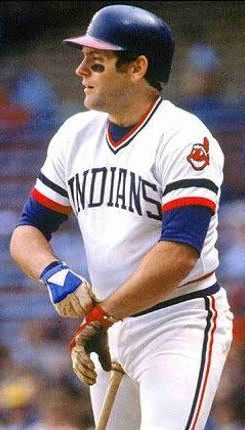
Commissioner, anyone?

Adapted from JK’s speech to the Las Vegas chapter of the Society for American Baseball Research delivered 10 June 2023.

Calling baseball commissioner Rob Manfred an inveterate tinkerer is calling Donald Trump and Joe Biden mountebanks. Calling Manfred a visionary denigrates the very definition of vision. But those who pine for the so-called good old days, while letting themselves think Manfred’s lust for rule remaking/remodeling points toward them, must first be made to answer, “Which good old days?”

Certainly not the days when the bases were large stones. Certainly not when pitchers were required to throw no way but underhanded and from a standing position strictly. Certainly not when the one-hop hit to the outfield was ruled an out if the fielder snagged the ball on that hop. Certainly not when none but white men were permitted to play the major league game. 

There are some things from the so-called Good Old Days that ought to be preserved or exhumed, of course. That’s without regard to the particular period of Good Old Days the get-off-my-lawn crowd prefers to revive. There are also things heretofore inconceivable to which today’s governors of our game, Manfred on down, should lend far more thought than they do. But it cannot be Manfred to shepherd it any longer.

Would you like to become baseball’s next commissioner? If your answer is yes, at minimum you’ll need a reasonable station from which to disembark your train. What follows is a fourteen-step platform:

1. The august office itself. Upon assuming office, the new commissioner shall convene a rules committee to explore broadening the means by which commissioners are chosen in the future. There’s no sound reason why the owners alone should choose the game’s public steward and top administrator, since it’s long been proven that under the owners alone the commissioner thinks the good of the game is little more than making money for it, and them.

The commissioner of the future should be elected by the following group of 79 people: Single representatives of the owners and the players, each; and, designated representatives from each of major league baseball’s nineteen umpiring crews.

2.Tick-tock clock. On paper, and in the imagination, the pitch clock seemed sound as a nut. In actuality, it wreaks more havoc than should be allowed. Havoc, and no few injuries ranging from the simple to the serious and back. Not to mention the imposition upon pitchers with unique or at least colourful pitching styles. Those concerned about the coming of the Clockwork Baseball Player should concern themselves about and stand athwart anything that would make that coming reality.

3. Game time. Are we supposed to applaud that, thus far, the pitch clock and its concurrent impositions upon the batter have shaved a whole . . . half an hour on average off the time of play? Are we supposed to applaud that the truest culprit of the elongated major league game—namely, the broadcast commercial blocks after each half inning and during each pitching change—remains unmolested?

The pitch clock’s elimination should be matched by all effort to make a new broadcasting agreement that includes no commercial blocks longer than one minute after half-innings and thirty seconds during pitching changes. (Yes, Virginia, it really does take less time now for a relief pitcher to get from the bullpen to the game mound than for the commercials to play.)

4. Manfred Man. The free cookie on second base to open each extra half inning shall be eliminated. Permanently. The only Manfred man that should ever be in the public mind shall be, once again, the hitmaking band of the 1964-66 British Invasion.

5. We’re on the air, anywhere. Eliminate all blackout rules for television. Allow any major league game to be broadcast in any region regardless of whether the ballpark is in the same broadcast region. Let a million television sets bloom because decades of evidence have proven that, of all the reasons for people to stay away from the ballpark, television like radio before it is the least of those reasons.

(As a relevant aside, I still remember seeing Dodger Stadium fans clutching tiny portable TV sets in the park. With the pictures turned down but the sound turned up. Why? Because they wouldn’t believe what they’d just seen from beginning to end unless they heard it from the late Vin Scully.)

6. Umpires can be impeached, too. The umpires have been laws unto themselves for long enough. It’s past time for them to be held as accountable for their malfeasance as players, managers, and team administrators. There’s no reason on earth for accuracy below 96 percent to be permissible. If you doubt that, ponder that a surgeon with a 96 percent accuracy rating wouldn’t face job security, he’d face malpractise suits.

Umpires with accuracy below 96 percent shall be placed on probation for the rest of the incumbent season or the first half of the following season. Failure to improve will result in suspensions. And, yes, the rule book strike zone shall be enforced strictly. The days of umpires deploying their own strike zones must end. That by itself should help assure accuracy of 96 percent or higher behind the plate.

7. No tank you veddy much. Team ownerships who fail repeatedly to invest properly in their major league product and their minor league support systems shall be put on notice. You have one year to decide: Will you invest properly in your teams, every year, regardless of the free spoils of revenue sharings you receive before each season begin; or, will you sell your team to a local/regional ownership willing to do what needs to be done to put an honestly competitive team on the field.

Tanking is fan abuse, plain and simple. If you can afford to buy a major league baseball team, you can afford to put forth a product that gives honest effort to compete. Rebuilding on the fly has been done for eons, before and after the free agency era.

Concurrently, past commissioner Bowie Kuhn’s ridiculous prohibition on player sales shall be rescinded. Teams shall be allowed to sell their players on an open market for whatever price other teams are willing to pay—and the players to be sold shall receive at least 25-30 percent of the sale price. This will allow the supposedly not-so-rich teams to stay minimally competitive, too.

Call it the Averill-Landis Rule, after the ancient commissioner who thought Hall of Famer Earl Averill wasn’t nuts to demand to know how much of the sale price he might receive when the Cleveland Indians bought him from the Pacific Coast League.

While we’re at it, a tanking team must never be given permission to relocate, which leads to . . .

8. If you want to build it, we will come. Under no circumstances shall any team seeking to build a new ballpark go to the local and/or state government for help. For now we mean you, Oakland Athletics. It takes colossal gall to try strongarming your incumbent locale into building you a new ballpark and, when they call your bluff, try to strongarm Las Vegas into building one for you; or, at least, paying for half if not more of it.

The willful self-destruction of a team fan base should never be sanctioned. Neither should regional taxpayers be made to foot all or most of the bill for a new playpen. The Voice in Field of Dreams assuredly did not say, If you build it, they will pay for it.

9. Interleague, schminterleague. Eliminate it from the regular season. Entirely. Save it for when it truly matters—during the All-Star Game, and during the World Series.

10. Are the All-Stars out tonight? Absent one fan, one vote, one time requirements, eliminate the fan vote. Why? Because the All-Star Game must include rosters containing none but the absolute best players on the season thus far. If this means one or more teams lack All-Star representation, tough. This isn’t T-Ball.

While we’re at it, the next commissioner must rule that the All-Star Game also needs to cease being used as a gold watch, even for future Hall of Famers. They’ll get their tributes appropriately around the circuit without a final All-Star honorarium, not to mention those so qualified getting the big one in Cooperstown in due course.

11. Competition, not compensation. This nonsense must cease. The regular season’s meaning has been compromised long enough. And the saturation of postseason games has compromised more than enhanced the game. There’s no reason on earth why any team not parked in first place at season’s end should be playing for baseball’s championship.

Expansion should be pursued to create divisions with even numbers of teams. Then, two conferences of two divisions each shall be fashioned in each league. The wild cards shall be eliminated entirely.

Then, each league’s division champions will meet in a best-of-three division series. The winners in each league will then meet in a best-of-five League Championship Series. (You want the Good Old Days restored, there’s a splendid restoration.) The World Series shall remain its best-of-seven self with its primacy thus restored. (Postseason saturation will be scaled back considerably under such a system, too.)

Thus will baseball fans no longer be subject to the thrills, spills, and chills of watching teams fighting to the last breath to finish in . . . second or even third place.

12. We want a real ball! Something’s very wrong when the Japanese leagues can develop baseballs pitchers can grip easily and are eminently fair to both sides of the ball but the American major leagues—which own a major baseball manufacturer—can’t. All effort to develop a baseball that doesn’t require that new-fashioned medicated goo for pitchers but is consistent and fair to hitters as well shall be undertaken.

A new, consistent baseball shall be developed and brought into play within one year of the new commissioner taking office. It’s long past time for the thinking person’s sport and those who support and supply it to start thinking. Hard.

13. Pensions. The new commissioner shall convene an immediate panel from among all team ownerships and the Major League Baseball Players Association. This panel, at once, shall agree that it was wrong to eliminate pre-1980 short-career major league players from the realignment of 1980. That realignment granted pensions to all players who accrued 43 days of major league service time, and health benefits to all players accruing one day of major league time.

The calculations shall be done to ensure full and proper pensions, based on their actual major league time, to all 500+ surviving short-career players who played before the 1980 realignment. The 2011 Weiner-Selig stipend—one small payment per 43 days service time, which today equals $718 per 43 days—was laudable, but insufficient.

Those players backed their players union’s actions that led to or upheld free agency, too. They do not deserve to remain frozen out.

14. As your absolute first order of business in office. Before assuming office, the new commissioner’s first official pronouncement shall be to demand . . . a recount.

When it gets late, ditch the clock

Max Scherzer

[I]f everybody’s playing baseball the way it should be, don’t ever let that [pitch] clock determine the outcome of the game. Ever.—Max Scherzer.

Very well, I surrender. I can live with the pitch clock—on one condition. The same condition by which the Mets’ Opening Day starting pitcher, Max Scherzer, can live with it.

“I’m not saying the clock’s not valuable,” Scherzer tells The Athletic’s Spink Award Hall of Fame writer Jayson Stark. “It is. But if everybody’s playing baseball the way it should be, don’t ever let that [pitch] clock determine the outcome of the game. Ever.”

Max the Knife was agreeing with Stark’s own assessment, an agreement with which I agree, too, with one codicil I’ll note shortly:

I’d be thinking seriously about turning the clock off in the eighth and ninth innings of games when the score was within three runs either way. That removes the chances of a game ending on a pitch-clock technicality. Plus, when those at-bats freeze in time, as the tension hangs over the big moment, that doesn’t fit anyone’s definition of “dead time.” Does it?

How is it any kind of problem if the game-turning at-bats late in tight games last a few seconds longer? Isn’t that the lesson of Mike Trout versus Shohei Ohtani, as the most dramatic final at-bat any WBC scriptwriter could ever write?

My codicil: Turn the damn pitch clock off for the eight and the ninth, period, I don’t care what the score happens to be. Not even if the game still looks like a blowout with a mushroom cloud. It’s entirely possible for a team to pick up, dust off, and neutralise or overthrow a blowout in the mid or late innings.

You demand the evidence? You got it. Here are the regular season double-digit deficits that started closing up in the fifth or later across Show history:

Twelve-run deficit5 August 2001: The Guardians (known then as the Indians) down that margin coming into the seventh. Manager Charlie Manuel may or may not have thought it was the impossible deficit when he pulled four regulars out of the lineup. Well, now: Three in the seventh, four in the eighth, five in the ninth—and with two outs, yet—forcing extra innings where a no-name named Jolbert Cabrera sent Kenny Lofton home with a broken-bat single in the eleventh. Final score: 15-14.

15 June 1925: Philadelphia Athletics vs. Cleveland. Down by twelve in the seventh as well, Connie Mack’s men scored once in that inning . . . then sent thirteen runs home in the eighth, an uprising only beginning when Jimmy Dykes slashed a three-run triple. It ended with Hall of Famer Al Simmons hitting a three-run homer. In between, nine of ten reached on seven singles and two walks. Talk about serving the ancient Indians a shit sandwich: they couldn’t push a run across in the top of the ninth. Final: 17-15.

Eleven-run deficit17 April 1976: Phillies vs. Cubs. The Phillies were in the hole 13-2 by the fifth. Oops. Hall of Famer Mike Schmidt hit a two-run homer in the fifth. They scored three in the seventh, five in the eighth (two-run single by should-be Hall of Famer Dick Allen; three-run bomb by Schmidt), three in the ninth for a 15-13 lead, and—after the Cubs tied it in the bottom of the ninth—a third homer from Schmidt (two runs) and a sacrifice fly, answered by only one Cub run in the bottom of the tenth. 18-6 your final from the Friendly Confines.

Ten-run deficit—As it happens, there are five such games:

2 June 2016, Mariners vs. Padres. The Ms down ten in the top of the sixth; came back to win, 16-13. The biggest inning—the seventh, when the Ms sent nine runs home on seven RBI singles.

8 May 2004, Rangers vs. Tigers. Down 14-4 in the fifth, the Rangers marched back to win, 16-15, in ten innings.

21 August 1990, Phillies vs. Dodgers. Down 11-1 in the eighth, the Phillies overthrew the Dodgers, 12-11. The biggest inning—the Phillies’ nine-run top of the ninth, including John Kruk’s one-out, all-runs-unearned grand slam to tie, followed by a base hit and an RBI double to take the lead the Dodgers couldn’t close in the bottom of the ninth.

4 June 1989, Blue Jays vs. Red Sox. Down 10-0 entering the seventh. The biggest inning—none, really: Two in the seventh on a double play grounder and a ground-rule double. Four in the eighth on a two-run single, an RBI double, and an RBI single. Game-tying RBI single in the ninth. Unanswered two-run homer in the top of the twelfth. 13-11, Jays the final.

25 April 1901, Tigers vs. Orioles. OK, that’s a ringer: in 1901, the Orioles were born as the Milwaukee Brewers, before moving and becoming the infamous St. Louis Browns who moved to Baltimore in 1954. The Tigers trailed 13-3 in the eighth. The game log isn’t available, but the line score is: the Tigers scored one in the eighth and ten in the bottom of the ninth. 14-13 your final, and that was four years before a kid named Ty Cobb arrived in Detroit. By the way, that was also Opening Day, folks.

Berra’s Law: It ain’t over till it’s over. Andujar’s Law: In baseball, there’s just one word—you never know. Stark’s Law: In baseball, anything can happen. Kallman’s Amendment: . . . and usually does. Incumbent or newborn, the rules should not make room for another of Professor Yogi’s fabled observations to come sickeningly true: It gets late early out there.

Clocks and Clouds

Over a week ago, Mets pitcher Max Scherzer felt as though he’d awakened one fine morning to discover he had super powers. Very well, that’s a slight exaggeration. But after he’d spent two innings against his old team, the Nationals, striking out five despite surrendering a single run, Scherzer felt the newly-mandated pitch clock gave him, well…

“Really, the power the pitcher has now—I can totally dictate pace,” he crowed then. “The rule change of the hitter having only one timeout changes the complete dynamic of the hitter-and-pitcher dynamic. I love it. It’s a cat-and-mouse game. There’s rules, and I’ll operate within whatever the rules are. I can come set even before the hitter is really in the box. I can’t pitch until eight [seconds], but as soon as his eyes are up, I can go.”

Not so fast. Come last Friday, Scherzer faced the Nats once again and learned the hard way that he might have competition in the New Tricks Up Their Sleeves Department. With a man on first, he thought he could catch Victor Robles off guard the split second home plate umpire Jeremy Riggs re-set the pitch clock, after Robles stepped out of the box with his only allowable step-out during a plate appearance before stepping back in. Scherzer started to throw at that very split second. Riggs called a balk.

“He calls time, I come set, I get the green light,” Max the Knife told reporters post-game. “I thought that was a clean pitch. He said no. We have to figure out where the limit is.”

Baseball’s government thinks it did it for him. Hours after Scherzer’s little experiment was neutralized, MLB sent a memo to all 30 teams saying forthrightly that pitchers can’t throw “before the batter is reasonably set in the batter’s box.” Come Saturday, another Mets pitcher, Justin Verlander, discovered he’ll have to do something about his long-normal routine around the mound between pitches.

“Today I got on the mound a couple times and looked up and it was like, I only had seven seconds,” the future Hall of Famer said, after pitching three innings against the Marlins, surrendering a single run, and having to adjust his mound strolling. “If me and [Mets catcher] Omar [Narvaez] weren’t on the same page, it could have been a problem.”

When this spring training’s exhibition games began, Padres third baseman Manny Machado became baseball’s first to earn a 10-year, $350 million contract extension for opening with an 0-1 count on him before he even began a plate appearance. Okay, that’s a joke. But Machado did have strike one called on him when facing Mariners pitcher (and former Cy Young Award winner) Robbie Ray and failing to be in the batter’s box when eight seconds on the clock passed.

“I’m going to have to make a big adjustment,” Machado said with a hearty laugh after that game. “I might be 0-1 down a lot this year. It’s super fast. It’s definitely an adjustment period.”

Pitchers have 15 seconds to throw a pitch after receiving the ball back with the bases empty and 20 with men on base. Batters must be set and ready after 8 seconds are gone. And the pitchers aren’t the only ones looking to circumvent some of the new rules imposed by baseball’s attention-deficit commissioner. The notorious defensive infield shifts are now against the law, too, at least to the extent that there must be an infielder each on either side of second base itself at all times. Well, now. A few teams have already tried their own end run around that.

The Red Sox, for one. They thought they could get away with moving their left fielder to the shallowest patch of the right field grass against notorious all-or-nothing slugger Joey Gallo, now with the Twins. They got away with it long enough for Gallo—who’d torn one through the right side of the infield for a base hit earlier—to hammer a 3-1 service into the right field bleachers.

I’m reasonably certain I’m not the only one who thinks commissioner Rob Manfred didn’t stop to think that there was a reason for games going well over three hours having nothing to do with the actual play and everything to do with broadcast dollars. It never seems to have occurred to him that it wasn’t pitcher or batter gamesmanship, but two-minute-plus broadcast commercials after every half inning and during mid-jam pitching changes.

It seems to have occurred to Commissioner ADD less that he and his bosses might have landed the same delicious dollars by just limiting the spots to before each full inning and adjusting the dollars accordingly. Since it’s been established long and well enough that Manfred’s true concept of the good of the game is making money for it, that should have been child’s play for anyone applying brains.

And, speaking of dollars, try not to delude yourselves that MLB’s new so-called Economic Reform Committee will be for the good of the game, either. How about the Committee to Horsewhip Owners Who Actually Spend on Their Teams and Want to Win? The Committee to Immunize the Bob Nuttings and Bob Castellinis and John Fishers From Their Economic Malfeasance?

Manfred has pleaded that oh, but of course he’s after nothing more and nothing less than “a crisp and exciting game.” He’s been bereft, apparently, of the sense that baseball’s flavors come as much from the tensions in its pauses as from the cracks of the bats, the thwumps! of the pitches into the catchers’ mitts, and the brainstormings on the field and in the stands during jams.

Thus far, the games are shorter—by a measly 22 minutes. But the potential for such unintended consequences as, at extreme, a World Series-ending strikeout on a pitch clock violation is almost as vast as Manfred couldn’t stand single games having become. Those supporting the new arbitrary havoc like to say Manfred merely scoped what “the fans” wanted. It’s not inappropriate to ask, “which fans?”

Think about this: Hall of Fame pitcher Juan Marichal was fabled for an array of about sixteen different windups and ten different leg kicks, including the Rockettes-high kick that was his most familiar visual hallmark. The new pitch clock may actually come to erode the presence of pitchers who are that much fun to watch (I’m talking about you, Luis [Rock-a-Bye Samba] Garcia, among others) even if they’re not a barrel of laughs against whom to bat.

It might also erode the presence of batters who are as much fun before they swing as while they swing. What’s next—a base-running clock, mandating batters have x number of seconds before they’d better start hauling it around the bases on home runs? Oops. I’d better not go there. We don’t want to give Commissioner ADD any more brilliant ideas.

Note: This essay was published first by Sports-Central.

Ch-ch-ch-changes

2023 bases

Are the new bases (left) really that effronterous?

“A state without the means of some change,” wrote Edmund Burke in Reflections on the Revolution in France, “is without the means of its conservation.” As spring training opens, baseball faces more change. Stop snarling, self-identified and self-righteous purists and traditionalists, and start thinking.

It’s too easy to forget that a game without the means of some change is a game without the means of its conservation, too. It’s even easier to forget that baseball has never remained a static game. Would you like to know the game you’d be watching if it had?

You’d see a game end after one or the other team scored 21 runs, no matter which inning the 21st arrived. In theory, the game could have ended after one inning. In fact, the highest-scoring first inning in major league history happened in 1952, when the Boys of Summer Dodgers dropped a mere fifteen-spot on the Reds.*

You wouldn’t see the game mandated to end in the ninth inning until 1857, barring extra innings. You’d see large stones for bases and, a little later, wood posts. You’d see any old thing—marble, metal, glass—as home plate, so long as it was round, until 1899. You wouldn’t see anything resembling the colloquial “bags” for bases until canvas bases were introduced . . . in 1877.

You’d see pitchers barred by the rules from throwing higher than underhand. If it’s before 1887, you’d actually see batters calling for pitches—“high,” “fair,” or “low”—and umpires ordering pitchers to throw precisely those. You’d see foul balls not called strikes, at least before 1894. You’d see strike three on a third foul ball until 1901. You’d see pitchers required by law to throw from standing positions from 1863-1867. (Hall of Famer Juan Marichal, he of the eighteen different windups and about ten different leg kicks, wouldn’t have had a major league career with or without ethnic restrictions.)

You wouldn’t see fly outs until 1864, until which time what you know today as the one-hop base hit was ruled an out if the outfielder caught it on the first hop. You wouldn’t see the batter getting away with running past first after ripping a base hit without being called out until 1870. Come to think of it, you wouldn’t see a batter’s box until 1872. And you wouldn’t see ball four equaling a walk until 1889—before which walks were nine, seven, six, and then five balls.

You might be astonished to hear assorted purists and traditionalists screaming bloody murder at any, most, or even all those changes. You might even think, what fools those mortals were. So think twice before you start screaming again over, say, new bases coming to the ballparks near you that will be . . . a mere three inches larger around than the pads were through the end of last year’s World Series.

Don’t snort at those who understood slightly larger bases might mean slightly fewer injuries. The reason you don’t hear about how many runners broke themselves on the ancient stone bases is because you don’t know who they might have been and whether those injuries were recorded. Now try to imagine whether future Hall of Famer Mike Trout would have missed a full two-thirds of one season with a nasty thumb injury if he’d gone into a base three inches larger around.

Of course, it’s not every purist or traditionalist who thinks of safety first. (Please. Enough such creatures think enough players injured in the line of duty are goldbricking it and exposing themselves as fragiles when they don’t heal and return from those injuries within, oh, a few days.) They’re too busy counting the numbers anticipating a hike in basepath crime.

Last year, there were 3,297 stolen base attempts. Seventy-five percent succeeded. Ten years earlier, there were 4,365 attempts with 74 percent successful. Less proved slightly more last year. But as Keith Law reminded us in Smart Baseball, “speed kills” cuts both ways in baseball. Speed with brains is Hall of Famers such as Lou Brock (75 percent success), Ty Cobb (81 percent), Rickey Henderson (81 percent), and Tim Raines (85 percent); if your runner isn’t successful 75 percent or better, you’d “be better off having the first base coach nail [your] runner’s foot to the bag.”

We get to say goodbye, too, to those notorious infield defensive overshifts, which often placed at least one infielder into the role of a fourth outfielder. Well, now. Those who think they were contemporary aberrations might forget, assuming they knew, that there were managers playing the overshift as far back as in Cy Williams’s day. Williams, of course, was a power hitting dead-ball era center fielder who once hit thirteen homers without leading his league (1915, when Gavvy Cravath led the National League with a then unheard-of 25) but hit twelve the next year and led the entire Show.

“My biggest complaint about the shift,” says David Robertson, relief pitcher, “is, how do you explain it to kids? What’s the point of having a shortstop if he can’t play shortstop.” Well, let’s ask a shortstop. Mets shortstop Francisco Lindor is on record saying the end of the shifts might mean the return of more “exciting” infield plays. He may not be wrong.

But I would rather have seen the shifts busted the way they tended to be in Williams’s day and in that future day of another Williams, Ted, not to mention how some hitters the past few years did thwart them. The problem was that not every hitter could go the other way, not through neglected learning but because hitting itself is as much organic as anything else. And there were those teams who fumed when smart hitters thought about dropping bunts into that delicious free real estate.

(You guessed it. I’m going there, again. Be gone, bunts, except a) if you have the next Brett Butler [383 lifetime bunts, 85 percent for base hits]; or, b) if you have enough free real estate even without the shifts—say, a stone-handed infield playing just at the edge of the outfield grass—to have first base on the house. Unless you’re up with first and second and nobody out, you have less chance scoring after a sacrifice bunt than before it. The most precious commodity you have with your team at the plate is outs to work with. A sac bunt blows a third of that resource. The defense thanks you for your help.)

The pitch clock? I’m still on the fence about it. Last year’s minor league games did shorten up a bit under the rule. Commissioner Rob Manfred hopes putting it into the majors—a pitcher now has fifteen seconds to throw to the plate with the bases empty and twenty seconds with a man on base—will shorten it up in the Show. He still doesn’t get that certain rule tinkerings won’t do half as much to shorten the times of games as certain broadcast tinkerings.

As in, eliminating the commercials not just between half-innings but from every pitching change in a game. I’ll guarantee it: fans watching at home used to love seeing the teams change sides and go through their quick warmups before getting back to play. I’ll guarantee it further: it takes less time to get a relief pitcher into a game from the bullpen than to run those pitching-change commercials.

And while we’re at it, I’m going here, again, too—if you’ve brought a pitcher into the middle of a jam, and it wasn’t because the incumbent was injured, why are you wasting his time, your time, and his arm with the eight warmups on the game mound? What do you think he was doing getting ready in the bullpen, practising his dance moves?

He might have thrown the equivalent of a quality start’s minimum pitches before you brought him in. He’ll be as ready as possible to face that first batter the moment you give him that good-luck pat on the fanny. Let him get to it. Now, you’ve shaved 45 seconds more off the game time in addition to dumping those pitching-change commercials. (Does Manfred consider, as a commissioner who thinks the good of the game equals making money for its owners, that you could charge a bit extra for the between-ends-of-innings spots and thus not lose money without the half-inning and pitching-change spots?)

The pickoff throw limit? The late Vin Scully used to love describing what he called “the game within the game,” including those contests between ornery baserunners and pitchers determined to keep them from getting too ornery, if not putting them under arrest. (Once upon a time, a Phillies pitcher, Art Mahaffey, proud of his effective pickoff move, swore to pick off his first major league baserunner. The spindly righthander picked off the first three Show men to reach base against him.)

It was just as much fun as anything else to watch Hall of Famer Nolan Ryan try to outsmart Henderson on base before the Man of Steal took off with grand theft in his heart and his legs. (I didn’t choose that pair arbitrarily: Ryan blew one through Henderson for his history-making 5,000th lifetime strikeout.) Or, to watch Hall of Famers Don Drysdale, Sandy Koufax, Juan Marichal, and Tom Seaver engage battles of wits with Brock at first.**

We’ll learn soon enough whether these changes wreak as much damage as the free cookie on second to begin each extra half inning has done so far. Just don’t use the “tradition” argument. That argument began dying before the Civil War ended. But Mr. Manfred might have been (I hate to use a four-letter word) wise to ponder another Scully observation:

Football is to baseball as blackjack is to bridge. One is the quick jolt. The other the deliberate, slow-paced game of skill . . . It’s all there in front of you. It’s theatre, really. The star is the spotlight on the mound, the supporting cast fanned out around him, the mathematical precision of the game moving with the kind of inevitability of Greek tragedy. With the Greek chorus in the bleachers.

Whichever chorus caught hold of Manfred’s ear and refused to let go without a fight, the changes he’s sought and begun to impose seem a mixed jar of nuts and berries. The question before the house then becomes not whether but which of the nuts will come out on top when you shake the jar. Which nuts, and whether the thinking person and his or her sport will prove to have another allergy to them.

———————————–

* Legend has it that Reds starter Ewell (The Whip) Blackwell, knocked out after surrendering three runs with one out (a leadoff ground out), returned to the team hotel after his shower . . . and shortly met his relief, Bud Byerly, at the hotel. Byerly opened his turn by his catcher Dixie Howell throwing Andy Pafko out stealing, before surrendering a walk and five straight RBI singles.

The Reds went through four pitchers (Blackwell, Byerly, Herm Wehmeier, and Frank Smith)  before the first-inning carnage ended. The Dodgers with Hall of Famer Duke Snider—batting for the third time in the inning, having opened the bloodshed with a two-run homer—caught looking at a third strike.

Except for Snider’s one-out blast, the Dodgers scored ten of their fifteen runs with singles. The other three scored on two bases-loaded walks (both by Smith) and a bases-loaded hit batsman. (Hall of Famer Jackie Robinson, Wehmeier’s first batter, plunked on 1-0, sending Billy Cox home.) Or, if you’re scoring in longhand at home, one nuke followed by eight machine gunnings and three enemy mistakes.

** At least two decades before Hall of Famer Tony Gwynn earned his “Captain Video” nickname for taping his plate appearances to correct mistakes, Lou Brock habitually carried a small, handheld, old-style movie camera, using it to film pitchers the better to pick up any “tell” he could get to help him with his life of basepath crime.

Snapped Drysdale, when spotting Brock with the camera, “I don’t want to be in your goddam movies, Brock!” That from a man who was almost as famous for making numerous television guest spots as he was for making pitches on the mound.


About those coming rule changes . . .

Mike Hargrove

Mike Hargrove—the Human Rain Delay might lead the Show in unpitched strikeouts starting next year if he was playing major league ball now.

Hands up to everyone screaming blue murder about the rules changes coming to baseball in 2023. Now, listen up. They might actually be not as grave as you think. Might.

It’s probably a good thing that Mike (The Human Rain Delay) Hargrove (first baseman) and Pedro Baez (relief pitcher) don’t play now. The new pitch clock rule would have Hargrove leading the Show in batting strikeouts with about half of those coming without pitches being thrown, and Baez would likely lead the Show in pitching walks without throwing pitches.

Starting next year, pitchers get fifteen seconds to throw to the plate with the bases empty and twenty to throw with anyone on base. Hitters better be in the batter’s box ready to swing after eight seconds on that pitch clock.

They’ve used the pitch clock in the minors for a few years now and, well, if you don’t count the unconscionable contraction of the minors a couple of years ago nobody’s proclaimed the end of the world as we know it yet.

The bases are going to get a little bigger, too. The bases have changed since the game was first organised, unless you never knew they began as large stones, changed to wood posts, and then to pure sandbags before somebody thought to make them the filled canvas squares that were familiar to one and all until about three decades or so ago. Stop snarling, Boring Old Fart. Then, pick up a copy of Peter Morris’s A Game of Inches, and learn that baseball was never quite as static as you let yourself be led to believe.

Why enlarge the bases even a relatively small amount? (From fifteen-inch squares now to eighteen-inch squares starting next year.) MLB’s Competition Committee thinks they’ll cut down on baserunning injuries (to name one, future Hall of Famer Mike Trout missed about half a season one year after incurring a thumb injury sliding into base) and raise the prospect of basepath theft in the bargain.

“In Triple-A, the first season of larger bases didn’t make much of a change on its own—but in the lower levels, bigger bases combined with rules about pickoffs saw large increases in steals per nine innings,” noted ESPN’s Jesse Rogers. “Even combined with the disengagement rules, though, MLB doesn’t believe either change will lead to teams being unable to control the run game.”

The infamous defensive overshifts will be verboten, too. Starting next season, teams will be required to keep four infielders on the infield dirt, including one each on either side of second base. This won’t exactly eliminate pure defensive shifting—you can still position a shortstop almost behind second base itself or a second baseman almost directly behind the pad, and move your first and third basemen accordingly against pure pull hitters—but you won’t see those walls of infielders on one side or a shortstop in short right field or a second baseman in short left, for a couple of examples.

But how to enforce? “If the hitting team reaches base and runners advance on a ball hit under the violation, the game proceeds without penalties,” Rogers wrote. “If the play has any other consequence—an out, a sacrifice, etc.—the hitting team can decide either to accept the penalty—which would add one ball to the hitter’s count—or decline it, and the play would stand.”

I wish he hadn’t said “sacrifice.” I’ve said it before, I’ll say it again: deliberate sacrifices waste outs, your most precious commodity when your guys are at the plate. You can look it up, too: in six known “bunt situations,” only once do you have an absolute better chance of scoring after than before that bunt (men on first and second, nobody out), only once  otherwise do you have an even scoring chance before and after (man on second, nobody out)], and all four others you have less chance to score after than before that bunt.

Unless you’ve got the next Brett Butler on your team (that half-pint center fielder dropped 337 bunts in his long career and 85 percent of them were for base hits), you should be fined heavily for wasting outs and scoring probabilities with bunts.

These three new rules won’t be as drastic as the continuation of the free cookie on second base to open each extra half inning is and will remain. The players on the Competition Committee were outnumbered 6-4, but I’d love to know if they pushed to get rid of Manfred Man at all. It’s a ridiculous rule that probably did nothing to cut down the time of a game, which was of course the critical factor in devising the aforementioned new rules. (It’s also another of the extremely few reasons to waste an out with a bunt: you’re handed a man on second going in, you have an even chance of scoring after bunting him to third, go for it. Make Manfred Man look like anything but a pretty flamingo.)

But will they really cut down on the times of games? From where I sit the jury’s going to have a long deliberation. And two things that would really cut down on the times of games don’t even seem to have been topics. You don’t need me to tell you that eliminating broadcast commercials a) between half-innings and b) during pitching changes in jams would probably do more to cut the times of games than any of the foregoing changes—especially if they’re married to thing two: eliminating the eight warmup pitches on the game mound for relievers coming in in the middle of those jams.

Go ahead and scream. All better? Now listen up. Again. (I’ve argued this before.) When you bring a pitcher into a jam, unless you’re bringing him in because your incumbent was injured, you shouldn’t even have to think about the new man warming up on the game mound.

He might have thrown anywhere from one to three or even four innings worth of pitches getting to where you could bring him in in the first place. Warm up? He’s coming in hotter than a Las Vegas summer. It takes less time for him to get from the bullpen to the game mound, most of the time, than it does to run those ridiculous “this call to the bullpen” commercials.

You brought him in to get you out of that jam. He’s nuclear hot already. Let him get right to work. Your reliever’s not going to have less men on base behind him or a less pesky hitter at the plate after he throws those eight useless warmups, is he? (Oops. Better not give Commissioner Rube Goldberg any more bright ideas!)