We can’t have nice things for too long

Emmanuel Clase

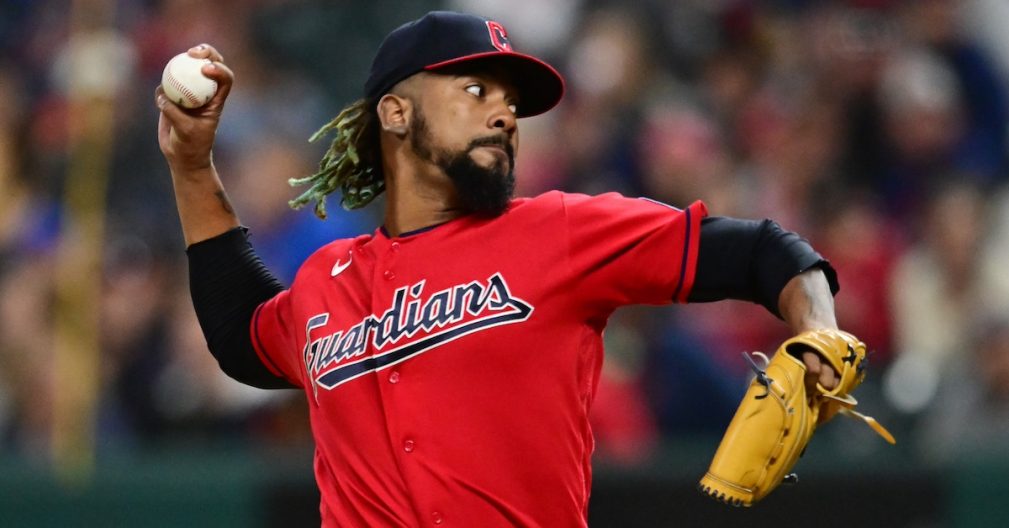
Emmanuel Clase, whom the feds charge masterminded a pitch-rigging scheme for bettors and his fellow Guardians pitcher Luis Ortiz.

How tempting is it to define the present era as the one that tells us we can’t have nice things? And, the one that delivers the message more brutally after each of the rare nice things we get.

Baseball just delivered us a postseason for the ages, even if you don’t hold with the wild card system. Put that to one side a moment and admit it. The game we love spent a month showing us that, any time we care to write the game off as a self-immolating bore, it’ll be more than happy to disabuse us.

Think about it. When you get seven postseason sets ending with winner-take-all games, you’ve been blessed to the tenth power. When you get more than one extra-inning postseason hair raiser without the disgrace of Manfred Man (who’s not allowed anywhere near the postseason—yet), you’ve been blessed that big again.

When you get utter cream-always-rises defiance against the wild card system, putting nobody in either League Championship Series except teams whose butts were parked in first place at season’s end, you’ve been blessed above and beyond whatever it was you had the right to expect.

When you get Shohei Ohtani spending one postseason game striking ten out from the mound and hitting three out at the plate, then spending World Series Game Three reaching base nine times—five with the near-complete consent of the Blue Jays who seemed to prefer death to Ohtani’s singular controlled mayhem—your cups runneth over.

When you get a postseason seeing regular-season supermen continue their feats of derring-do and damage (can we forget Cal Raleigh crowning a 60-homer regular season with five intercontinental ballistic missle launches while the Mariners were in the postseason? Freddie Freeman’s eighteenth-inning walkoff?), and heretofore dismissable Clark Kents turning into assorted breeds of Supermen (Addison Barger, Miguel Rojas, call your offices), your bowls, barrels, vats, and tanks runneth over, under, sideways, down, and back.

In other words, this postseason couldn’t have been more entertaining, exciting, and exemplary if it had been coordinated, produced, and directed by Bill Veeck, Casey Stengel, Kevin Costner, and The Chicken.

No, that beyond good deed couldn’t go unpunished, could it? Can we have (demand) this Sunday back?

First there came the should-be-frightening revelation that, according to a popular podcast, Bryce Harper—he who told commissioner Rob Manfred firmly enough to get the you know what out of the Phillies clubhouse if he wanted to talk salary cap, though the two shook hands and shook it off later on—was threatened by “one of Manfred’s deputies,” who said, supposedly, “Don’t ever disrespect [the Commish] like that again. That’s how people end up in a ditch.”

“If this threat is true,” wrote Yardbarker‘s David Hill, “the next labor stoppage could get ugly fast.” If that threat is true, we don’t have to wait for a lockout or a strike to get ugly fast. It’s just become ugly fast.

And how about the ugly-fast-enough revelation that two Guardians pitchers, relievers Emmanuel Clase and starter Luis Ortiz, on administrative leave since late July on pitch-rigging suspicions, have just graduated from suspicion to formal charges of fraud, conspiracy, bribery, and money laundering? Charges “stemming,” as the federal indictment out of Brooklyn says, “from an alleged scheme to rig individual pitches that led to gamblers winning hundreds of thousands of dollars, according to an indictment unsealed by federal prosecutors Sunday.”

The U.S. Attorney’s Eastern District office in Brooklyn said Sunday that Clase’s involvement in the pitch-rigging plot goes back to May 2023, with Ortiz joining up last June. It didn’t exactly cripple the Guardians’s season to lose the pair, especially when they ended up snatching the American League Central from the unexpectedly rising/unexpectedly sputtering Tigers.

But then came the postseason. The Tigers nudged the Guardians out of the picture in a wild card series. From there, aside from the usual off-season doings, undoings, maneuverings, and meanderings, the question around the Guards became when the other shoes would drop around Clase and Ortiz.

They dropped Sunday, all right. The indictment says Clase arranged with a gambler to throw particular pitches for ball counts so the bettor could bet on those pitches (it’s called proposition betting) and reap the financial reward. The indictment says further that gamblers won almost half a million betting on pitches thrown by the Guardians pair, while the pitchers themselves earned kickbacks for helping the bettors clean up.

Clase and Ortiz, said Eastern District U.S. Attorney Joseph Nocella, Jr., “deprived the Cleveland Guardians and Major League Baseball of their honest services.”

They defrauded the online betting platforms where the bets were placed. And they betrayed America’s pastime. Integrity, honesty and fair play are part of the DNA of professional sports. When corruption infiltrates the sport, it brings disgrace not only to the participants but damages the public trust in an institution that is vital and dear to all of us.

“While the pervasiveness of legalized gambling has upended the sports world, the allegations against Clase and Ortiz are the most severe for the sport since Pete Rose agreed to a lifetime ban for betting on baseball in 1989,” ESPN’s Jeff Passan wrote. “MLB’s rules against gambling on the sport are strict, and Clase and Ortiz could face lifetime bans similar to the one delivered last year to San Diego Padres infielder Tucupita Marcano, who placed nearly 400 bets on baseball.

Nocella’s office described Clase as the scheme’s mastermind, saying he’d throw balls instead of strikes and sliders instead of cutters on first pitches, with gamblers betting on each pitch to be called balls or traveling under specific speeds. The indictment said further that such proposition bets would be stacked in parlays often as not, meaning bigger winnings.

But the indictment also charges that Clase gave money to gamblers to bet on his own behalf, texted with them while games were in progress, and was joined up by Ortiz after he  came to the Guards in a winter 2024-25 trade, Passan said.

Among others, Clase helped gamblers win $27,000 apiece on one Clase pitch faster than 94.9 mph in an interleague game with the Mets. “Weeks later,” Passan said, referring to the indictment, “bettors added a leg to a parlay for a pitch to be a ball slower than 94.95 mph—and won $38,000 when Clase spiked a slider at least five feet in front of home plate.”

By last April, Clase asked for and got kickbacks for throwing specific pitches. He even asked one winning bettor to send kickback money to his native Dominican Republic “for repairs at the country house.” Last June, Ortiz joined the scheme by agreeing to be paid $5,000 to throw a first second-inning pitch for a ball call, with Clase getting $5,000 himself for arranging it, the indictment charges.

The same month, Ortiz agreed to open the third inning with ball one for $7,000. The indictment also says bank security cameras caught Clase withdrawing $50,000 cash, $15,000 of which went to one bettor in a group who placed $18,000 on that pitch.

Ortiz’s attorney denied in a formal statement that his client would do anything to influence a game improperly, “not for anyone and not for anything.”

Clase was making $4.9 million for 2025 and stood to make $6.4 million for 2026, with a pair of team options for 2027 and 2028 at $10 million each. Ortiz wasn’t near six figures yet so far as I could determine, but he wasn’t exactly improverished, either. Why on earth would either man slide into a shady side profession that could end their baseball lives if convicted and banished?

Maybe we shouldn’t ask. Maybe it won’t matter, at least until the case goes to trial, barring any for-now-unknowable chance of one or both pitchers coming to take plea deals and then throwing themselves upon the mercy of the courts of law and public opinion.

Maybe it won’t mean a thing until or unless baseball decides to take a second, third, and fourth look at its cross-promotion deals with legal sports books. Yes, those were supposed to encourage fan betting alone. Baseball’s prohibitions against players, coaches, managers, and team personnel betting on the sport remain stringent.

Oops. Manfred took a presidential gumshoe in the gluteus to declare Rose’s “permanent” and wholly justified banishment applied only while he was alive on earth—thus making Rose eligible to appear on the Hall of Fame’s next Classic Baseball Era Committee ballot.

But five months after Ohtani’s original interpreter Ippei Mizuhara went to the federal calaboose for stealing $17 million of Ohtani’s money to support an out-of-control gambling habit, it might be wise to review and perhaps repel those cross-promotions. Which might require the kind of spine this commissioner displays very selectively.

When an uppity player told Manfred where he can take his salary cap talk, the commissioner’s office ironed up to slap him down. But when an uppity president behaving like the school bully crooked his finger and demanded Rose be sent to Cooperstown as soon as last week, regardless that Rose earned his banishment, Manfred’s spine went Vaseline.

The stove isn’t the only thing that’s hot. It won’t shock me if baseball tempers get a little hot for a good while. That’s the risk whenever baseball’s witless remind us that we can’t have nice things for very long.

Trump threatens to pardon Rose

Pete Rose

The late Pete Rose, shown at a signing table at 2023’s GalaxyCon in Columbus, Ohio.

Those to whom Donald Trump points the way to wisdom by standing athwart it have further evidence to present. The president who thinks (yes, those four words isolated by themselves would flunk a polygraph) he knows all says he will pardon the late Pete Rose. On which grounds, you ask?

Let the man speak a moment:

Major League Baseball didn’t have the courage or decency to put the late, great, Pete Rose, also known as “Charlie Hustle,” into the Baseball Hall of fame. Now he is dead, will never experience the thrill of being selected, even though he was a FAR BETTER PLAYER than most of those who made it, and can only be named posthumously. WHAT A SHAME! Anyway, over the next few weeks I will be signing a complete PARDON of Pete Rose, who shouldn’t have been gambling on baseball, but only bet on HIS TEAM WINNING. He never betted against himself, or the other team. He had the most hits, by far, in baseball history, and won more games than anyone in sports history. Baseball, which is dying all over the place, should get off its fat, lazy ass, and elect Pete Rose, even though far too late, into the Baseball Hall of Fame!

Is there anyone within the oatmeal-for-brains arterials of the second Trump Administration with the will and the backbone to counsel him that he’s talking through his chapeau? Seeing none thus far, I volunteer, though I’m not of the Trump or any other government administration.

To begin, unless Trump speaks of Rose’s conviction and sentence served for tax evasion having to do with his income from memorabilia shows and sales, his power of the pardon doesn’t reach major league or other professional baseball.

Herewith a memory refreshment for the president who once opined—erroneously, unless Congress is still foolish enough to transfer its responsibilities to the White House—that Article II of the Constitution, which codifies the president’s job, enabled him to do as he damn well pleased: From Section 2, Article II: The President shall . . . have Power to grant Reprieves and Pardons for Offences against the United States, except in Cases of Impeachment.

Rose’s violations of Rule 21 weren’t legal offences against the United States. Moral and cultural violations are other stories, of course. (And how, when it came to Rose, alas.) Sorry, Mr. President. (That’s Mr. President, not Your Majesty, Your [In]excellency, or Your Lordship.) That only begins to convict you of erroneous assault with a dead weapon.

Consider: Rule 21’s prohibition of MLB personnel betting on MLB games does. not. distinguish. between betting on one’s team to win and betting on one’s team to lose. The notebooks whose revelations affirmed the depth of Rose’s betting on baseball that began while he was a player/manager affirmed concurrently that there were days aplenty when Rose’s baseball bets didn’t include bets on his Reds.

Read carefully, please: In the world of street/underground/extralegal gambling, a player or other team personnel known to bet on baseball but not laying a bet down on his team on a particular game sends signals to other street/underground/ extralegal gamblers not to bet or take betting action on that team. That’s as de facto betting against your team as you can get.

Now, about that business of, “He had the most hits, by far, in baseball history, and won more games than anyone in sports history.” Rule 21 doesn’t make exceptions for players who achieve x number of milestones or records. Especially not the clause that meant Rose’s permanent (not lifetime) banishment: Any player, umpire, or Club or League official or employee, who shall bet any sum whatsoever upon any baseball game in connection with which the bettor has a duty to perform, shall be declared permanently ineligible.

Did you see any exception for actual or alleged Hit Kings?

If you count Nippon Professional Baseball as major league level, and its quality of play says you should, Rose’s 4,256 hits don’t make him the Hit King—but it does crown as such freshly-minted Hall of Famer Ichiro Suzuki with his 4,367, between nine seasons with the Orix Blue Wave (Japan Pacific League) and nineteen seasons with the Mariners, the Yankees, and the Marlins.

Did you see any exception for those who “won” more games than anyone in sports history?

Modesty wasn’t exactly among Rose’s virtues, but he liked only to brag that he had played in more winning major league baseball games than anyone who ever suited up. Played in. Even Rose never once said or suggested that he won those games all by his lonesome, with no help from the pitchers and the fielders who kept the other guys from putting runs on the scoreboard, or with no help from the other guys in the lineup who reached base and came home.

Baseball is “not in the pardon business,” said Rose’s original investigator John Dowd, in a statement to ESPN, “nor does it control admission to the [Hall of Fame].” Baseball’s commissioner could have reinstated Rose any old time he chose. The Hall of Fame, which is not governed by MLB though the commissioner sits on its board, enacts its own rules, including the rule barring those on the permanently-ineligible list from appearing on any Hall ballot.

Rose tried and failed to get two commissioners to end his banishment. The trail of years during which he lied, lied again, and came clean only to a certain extent. And he did the last only when it meant he could peddle a book. “[W]hat had once been a sensation,” his last and best biographer Keith O’Brien wrote (in Charlie Hustle: The Rise and Fall of Pete Rose, and the Last Glory Days of Baseball), “quickly became yet another public relations crisis for Pete Rose.”

Somehow, his book managed to upset almost everyone . . . He refused to admit that he bet on baseball in 1986 while he was still a player, despite evidence showing otherwise. At times, he painted himself as the victim. Even the book title–My Prison Without Bars–sounded whiny, as if he hadn’t helped build the prison walls with his own choices . . . He picked fights over little pieces of evidence instead of taking full responsibility for his mistakes. He didn’t sound very sorry, critics said, and reinstatement eluded him every time he asked for it: in 2004, in 2015 and 2020, and in 2022. Nothing changed. If anything, his situation only grew worse.

Not even Rose’s jocularity when signing autographs or bantering with fans who met him in the years since his banishment could rescue him. Perhaps that was because, in part, it was tough to tell whether he was just kidding or sending none-too-subtle zingers at the critics he really believed done him wrong. Sorry I bet on baseball. No Justin Bieber, I’m sorry. Build the wall for Pete’s sake. Sorry I broke up the Beatles. I’m sorry I shot J.F.K. About the only thing missing was, I’m sorry I built the Pontiac Aztek.

Only one man was responsible for Rose’s exile to baseball’s Phantom Zone. It wasn’t his original investigators, or the commissioner who banished him under the rules, or the commissioners who denied his reinstatement petitions in the years that followed until his death of hypertensive atherosclerotic cardiovascular disease last fall.

“All his adult life,” wrote another freshly-minted Hall of Famer (writer’s wing division), Thomas Boswell, after Rose was first banished in August 1989, “he has thought, and been encouraged to think, that he was outside the normal rules of human behaviour and above punishment. In his private life, in his friendships, in his habits, he went to the edge, then stepped over, trusting his luck because—well, because he was the Great Pete Rose.”

Funny, but with just a name change at the end, and regardless of party affiliation or ideological core, you could say the same thing about more than one president of the United States. Including and especially the once and current incumbent.

A rainy day memorial for Rose

Pete Rose Memorial

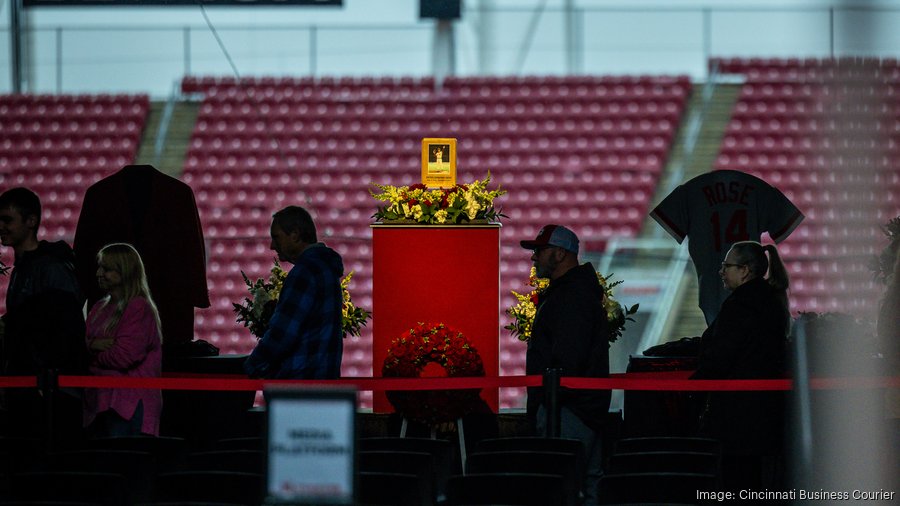
Cincinnatians still mourning the late September death of Pete Rose file past his urn hoisted in Great American Ballpark Sunday. (The photo on top: Rose pointing skyward on first base after breaking Ty Cobb’s career hits record in 1985.) The Reds enabled them to say farewell to the late legend over fourteen hours—in honour of Rose’s uniform number 14. 

From 7 AM through 9 PM Central Standard Time, Cincinnati was handed the chance to visit Great American Ballpark and pay their respects to Pete Rose. Dreary with the rain though it was, several thousand people did just that.

They came to say goodbye to a hometown baseball legend who died September 30 at 83. A hometown legend whose wounding flaws and the sickness that got him banned from baseball and from election to the Hall of Fame many among them still seem to struggle with comprehending.

“As West Siders,” said Molly Good, who teaches at Western Hills High School, which Rose attended, to Cincinnati Enquirer writer Erin Crouch, “we’re like a big family, and he’s one of our family.” (They should have named an alley after me, the way I acted in school, Rose said, memorably, when Cincinnati dedicated Pete Rose Way.)

That wasn’t quite the way a West Sider who contributes to the Enquirer, Jack Greiner, put it the day after Rose’s death. “[M]y sadness is mixed with a heavy dollop of ambivalence,” he began.

I’ve already seen the platitudes from pandering politicians. The theme seems to be that Pete was the living embodiment of Cincinnati’s west side — tough, gritty and hard-working. I can’t argue with that. My ambivalence stems from the fact that in every other facet of his life, Pete in no way embodied the values I consider synonymous with the West Side.

Westsiders are rule followers. With very few questions asked. Pete was not. And while that had its charms, the fact is that he lived his life as though the rules didn’t apply to him. Whether it was gambling on baseball, IRS regulations, or wedding vows, Pete apparently felt unburdened.

The visitation included passing by the urn containing Rose’s ashes, which his family seems not to have finalised concerning burial or scattering. Atop the container sat a copy of the fabled photograph of Rose pointing skyward as he stood on first base, tipping his batting helmet, the night he broke Ty Cobb’s career hits record in 1985 Cincinnati.

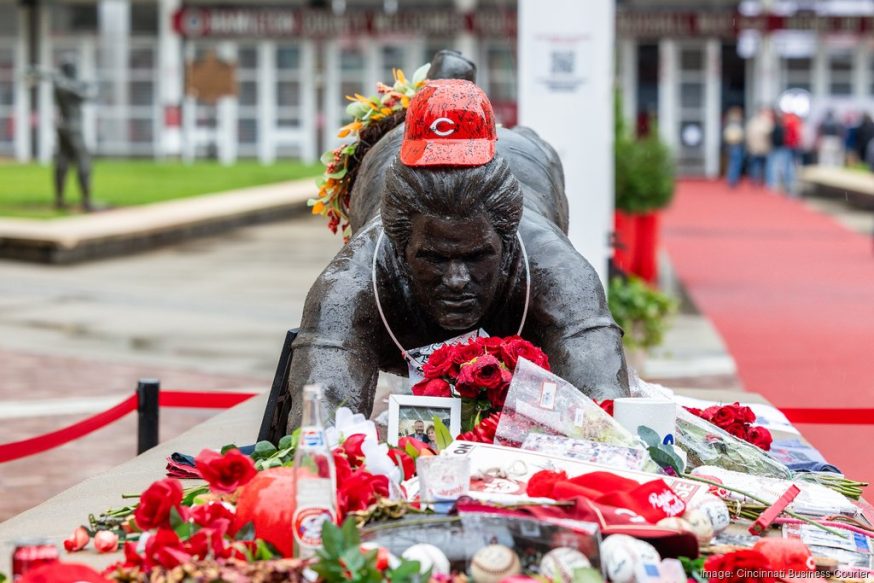
Those attending were clad in one or another red garment, under assorted red or red-and-white umbrellas, including Reds jerseys with Rose’s old uniform number 14. Many stopped by the statue of Rose captured in one of his fabled head-first slides into base outside the ballpark. Within a very short time, the figure of Rose hitting the ground hands first was surrounded by assorted Reds paraphernalia tied to Rose explicitly or other objects expressing feelings about him.

Most of the mourners were older Cincinnatians who grew up watching Rose with the 1963-1978 Reds, including the height of the legendary Big Red Machine teams. Reds officials told the press that at least 1500 people turned out for the visitation over its first seven hours; the visitation was scheduled for fourteen hours as a nod to Rose’s old number. Wreaths of roses appeared at various spots, including at least one displaying his number 14.

Pete Rose statue

Mourning Reds fans didn’t let Sunday rain stop them from surrounding the landing hands on Pete Rose’s statue (he’s captured in one of his fabled headfirst slides into base) with assorted paraphernalia, inscribed baseballs, and roses.

The rainy weather may well have kept more from attending the first half, but those first seven hours may have had more attending than the Reds had counted just yet. As I sat down to write, I had no idea what the final turnout would prove to be. The mourners didn’t just pass by Rose’s ashes, they paid respects personally to Rose’s two daughters, Fawn and Kara, who’d cooperated with the Reds and with the team’s hall of fame to bring the event to pass.

“We wanted to do something like this,” said Reds Hall of Fame executive director Rick Walls. “You could see from the turnout, it means a lot to the people here. It’s a moving experience.”

“He was a guy you thought was going to live forever,” said one longtime Reds fan, Bob Augspurger, to Associated Press writer Jeff Wallner. “When I heard the news, obviously it was sad. Baseball lost its greatest ambassador.”

“Westsiders tell the truth. Pete lied for thirteen years about betting on baseball,” Greiner had written. “He did it so naturally that he seemed to believe the lie. Westsiders are accountable. Pete’s ultimate confession was done in a book from which he reaped profits. He continued to deflect, citing to others who in his mind behaved worse than him.”

Let it be said, then, that Queen City people came out to pay their respects to a native son whose greatness on a baseball field was as impossible to forget as the clay feet on which he walked off the field proved impossible to replace or re-shape. A man whose professional achievement and the penultimate honor it should have received could be and was blocked and soiled by only one man.

Somehow, Sunday’s rain seemed a little more appropriate.

This essay was published originally at Sports Central.

Pete Rose, RIP: “I was raised, but I never grew up”

Pete Rose

Pete Rose, in his early Reds seasons.

The true cynic must have been awfully tempted to note the date and believe that, once again, Pete Rose made something bigger than him about him. Rose died Monday, at 83, when the Atlanta Braves and the New York Mets tangled in a postseason-decisive doubleheader.

“He couldn’t have done it better,” that cynic might think, “if he’d held out for Game One of the World Series.”

The charitable is tempted to think likewise that even Rose wasn’t and wouldn’t have been that crass about his passage from this island Earth. Would he? He’d already had too deep a roll of “untrustworthy behaviour,” as The Athletic‘s Ken Rosenthal phrased it almost two years ago. He had an equivalent roll of proclaiming enough of his controversies and troubles were someone else’s fault.

“He was Icarus in red stirrup socks and cleats,” wrote his most recent and possibly most thorough biographer, Keith O’Brien, in Charlie Hustle: The Rise and Fall of Pete Rose, and the Last Glory Days of Baseball. “He was the American dream sliding headfirst into third. He was both a miracle and a disaster, and he still is today.”

Few historically great baseball players could be Rose’s level of being their own best friends and their own worst enemies. Those players discovered the hard way when their careers turned toward the decline phases or ended outright. None of those players took either to Rose’s extremes.

O’Brien has written an elegy in the Los Angeles Times in which he, a fellow Cincinnatian, recalls the code by which Rose was raised in the city’s West Side neighbourhoods: “to look both ways when crossing U.S. 50, to be home by supper, to fight for everything in life and to never speak ill of the dead.”

Rose fought for whatever he could and did achieve as a baseball player, the under- endowed, skinny kid who willed himself above and beyond his presumed station to become one of baseball’s biggest stars.

Rarely if ever did it occur to those covering him and falling into thrall to his on-field extremism and off-field wit that Charlie Hustle had a darker, danker side that even opposing GMs ignored because he was a gate attraction on the road as well as at home. “Sportswriters celebrated him for his grit and determination,” O’Brien writes, “and happily ignored his obvious flaws: his womanizing, his gambling and his apparent addiction to both.”

It was an easy choice for the writers. Rose was charming, loved to talk about baseball and always made light of any concerns about his propensity to get down a bet. He admitted being addicted to gambling only later, and only when it served him. The first time was in 1990, when he was seeking leniency in his federal sentencing for tax evasion, and he acknowledged it again in 2004, when he published a shallow, self-serving memoir that he hoped would get him reinstated to baseball.

In reality, Rose was horribly addicted in ways he’d never truly acknowledge. He couldn’t stop gambling. Many people knew it—journalists, Major League Baseball officials, the Reds’ management, his friends, even ordinary fans—and in the end they all just watched him fall.

“The Reds have covered up scrapes for Pete his whole career,” said then-Orioles general manager Hank Peters, after Rose’s 44-game hitting streak ended. “He’s always been in some little jam . . . but people never seem to hold it against him.” Said Rose’s one-time boss on the Reds, Dick Wagner, “Pete’s legs may get broken when his playing days are over.”

Commissioner Peter Ueberroth forced himself to hand the original Rose investigation over his gambling to successor A. Bartlett Giamatti, who’d learn the hard way what disappointed Ueberroth: Rose couldn’t and wouldn’t admit what he’d done. He’d spend years denying it despite the evidence and his banishment . . . until, as Rosenthal reminded us, he wrote a self-serving memoir whose title (My Prison Without Bars) said more than he probably intended.

Rose’s permanent banishment from MLB for violating the rule that prohibits betting on one’s team (and does not specify whether it’s betting your team to win or lose) was followed by the Hall of Fame (which is not under direct MLB jurisdiction, even though baseball’s commissioner serves on its board) voting to bar those on baseball’s permanently ineligible list from appearing on any Hall ballot.

As usual, even if the provocateur is his death, Rose provokes an all-around debate between those who cling to their faith that he was handed a raw deal, those who cling to their equivalent faith that he got precisely what baseball’s rules mandated, and those who cling to the erroneous belief that what he was handed was a “lifetime,” not a “permanent” banishment from the game he loved and besmirched.

There’s even a debate over the shouldn’t-be-debatable, Rose’s verified extramarital dalliance with a girl under Ohio’s legal age for sex. (The long-since grown up girl revealed it in a sworn statement in defense of John Dowd, whom Rose sued for defamation after Dowd cited him for statutory rape. Rose said he didn’t know she was under age at the time . . . but settled with Dowd out of court.) Some simply don’t discuss it. But plenty of others pour a triple shot of appropriate outrage.

Another Athletic writer, C. Trent Rosecrans, went outside Cincinnati’s Great American Ballpark after the news broke Monday, to where a statue of Rose in one of his entertaining and often reckless headfirst slides sits. The statue’s base was covered with everything from roses to baseballs on which Reds fans wrote messages to him.

Pete Rose

Possibly the last known photograph of Rose, appearing at a card show with former Reds teammates (l to r) Dave Concepción, George Foster, Tony Perez, and Ken Griffey, Sr., the day before Rose’s death.

“Outside of Cincinnati, Rose’s legacy is complicated,” Rosecrans writes. ” . . . Here, it’s less complicated. ‘He is Cincinnati,’ [Geoff] Moehlman said. ‘Hard-working town. Hard-working player’.” But O’Brien also remembered in his book that, when Rose became the Reds’ first back-to-back batting titlist, Ohio’s governor proclaimed Pete Rose Day, Cincinnati chose to rename his favourite childhood park after him, but at least five hundred Cincinnatians signed a petition opposing that renaming.

“They didn’t think Pete Rose was worthy of a local landmark,” O’Brien wrote, “perhaps because there were growing questions and rumors about him—questions and rumors that even West Siders couldn’t ignore. One of the rumors circulating about Pete concerned gambling. He seemed to do a lot of it.”

That was before Rose made his first bet with an illegal bookmaker in Cincinnati in the early 1970s. That revelation at that particular time could have brought Rose a discretionary commissioner’s suspension, such as the full year Happy Chandler banned Leo Durocher for hanging with bookies or the full year Bowie Kuhn banned Denny McLain for being a bookie. Maybe it would have been an awakening for Rose almost two decades before he got the one he didn’t want.

The petition against renaming his childhood park for him was also before his womanising reached the point that he faced and lost a paternity suit in 1979. Before he went out of control and into debt enough with his gambling that—not long after becoming the Reds’ player-manager, but while he still held both jobs, in April 1986—Rose did for the first time what he’d never entertained previously: bet on baseball.

He once said, famously enough, “I was raised, but I never grew up.” That’s not entirely true. He had a moral side. The side that enabled him to befriend minority players on his early Reds teams. The side that spurred him to help rookies who followed him and traded-for veterans alike acclimate. The side that compelled him to say to Hall of Famer Carlton Fisk, during Game Six of the 1975 World Series, “This is some kind of game, isn’t it?”

The side that refused to let him even think about a sacrifice bunt against the Cubs in Chicago, when he batted with the Reds still in a piece of a 1985 pennant race, big Dave Parker on deck, and everyone from his boss Marge Schott to Joe and Jane Fan all but demanding he sacrifice and save what he called the Big Knock (passing Ty Cobb, whom he’d already met on the road, on the all-time hits parade) for the home audience.

The side that manager Rose used to order player Rose—knowing a bunt meant a free pass to Parker, lesser bats handed the high-leverage hitting, far less chance for a Reds win—to hit away. Into the most honourable strikeout of his career. (Maybe it was the least he could do on the approach after hanging around to chase Cobb down for far longer than his real usefulness as a player really lasted. But still.)

That’s the side obscured by the manchild who could no longer charm his way out of having mistaken recklessness for invincibility.

I was raised, but I never grew up. The tragedy isn’t that Rose will remain banished from baseball or blocked from the Hall of Fame. The tragedy is that Rose alone wrote the script that sent him there.

He said it ain’t Shoh

Will Ireton, Shohei Ohtani

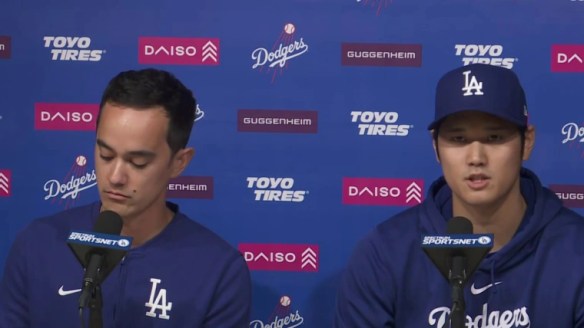
“I do want to make it clear that I never bet on sports or have willfully sent money to the bookmaker . . . The season is going to start so I’m going to obviously let my lawyers handle matters from here on out, and I am completely assisting in all investigations that are taking place right now.”—Shohei Ohtani (right), accompanied by new interpreter Will Ireton, Monday afternoon.

Carp all you like about his disinclination to take questions afterward. But don’t ever make the mistake again of mentioning Shohei Ohtani in the same breath, maybe the same pages, as Pete Rose.

However long it took since the uproar first roared, accompanied by his new interpreter, Will Ireton, Ohtani delivered a statement saying no, he didn’t bet on baseball, never has, and by the way isn’t all that much for sports gambling, anyway. That was the easier part for him.

The harder part for him was Ohtani saying he believed his now-former interpeter, Ippei Mizuhara, flat stole from him. For a fleeting few moments, Ohtani looked like the poor soul who came home from work early and discovered his children incinerated his house.

Maybe you don’t remember without the help of assorted books about it or about the man, but Rose wasn’t that candid when he was first put under baseball’s microscope for gambling. Knowing full well that he was guilty of everything the game’s formal investigation was going to expose . . .

He lied through his teeth. He attacked and smeared those who sought the truth, the whole truth, and nothing but. He threw associates under the proverbial bus who’d aided and abetted his longtime bookie gambling up to and including the April-May 1986 period when he began betting on baseball itself and the Reds for whom he still played as well as managed.

That was before the 1989 ruling from commissioner A. Bartlett Giamatti that sent him into baseball’s Phantom Zone on the grounds he’d violated Rule 21(d) up and down.

Ohtani on Monday didn’t try to throw anyone under the proverbial bus. Mizuhara already threw himself there, between his clumsy initial responses when the uproar erupted and the discovery that he’d been anything but entirely honest in the past regarding some of his academic and professional credentials.

But Ohtani didn’t say this was all a figment of somebody’s perverse imagination. He didn’t deflect. He added almost as flatly that he was cooperating with any and all investigations into Mizhuara’s activities, including Mizuhara’s betting on sports through an Orange County, California bookmaker, in violation of California law which doesn’t allow sports betting of any kind in the state.

We still don’t know just how Mizuhara was able to pay off that SoCal bookie. We still don’t know for certain just how he might have lifted over four million of Ohtani’s dollars to do it. Ohtani himself hasn’t suggested how, which may or may not be an indication that he’d sooner run head first into a lava pit than throw Mizuhara all the way under that proverbial bus.

But Ohtani wouldn’t be the first sports or entertainment figure to be fleeced by someone close to him, either. You want to ask how Mizuhara ripped him off? It might prove to be simpler than you suspect.

A few music legends could tell you. Billy Joel sued his former manager (and former brother-in-law) Frank Weber for $90 million in damages in 1989, accusing Weber of diverting millions of Joel’s dollars into his own other interests. Weber filed for bankruptcy and the pair had to settle out of court. The Piano Man reportedly retrieved only $8 million.

Sting was relieved of about $7.4 million (six million British pounds, if you’re scoring) by his longtime advisor Keith Moore—who’s said to have used fake investments abroad to send that money into his own purse.

Alanis Morissette was cleaned out of $4.8 million by her business manager, one Jonathan Schwartz, whom she accused of moving her money straight into his own account. Schwartz landed six years behind bars for such movements.

A few ballplayers could, too. Baseball and other sports were littered long enough before the Ohtani-Mizuhara mess with stories of players robbed almost blind by advisors, by lawyers, even by relatives.

Both the FBI and the IRS are on the trails of Mizhuara and the bookie in question, Mathew Bowyer. “I do want to make it clear,” Ohtani said near the end of his statement, “that I never bet on sports or have willfully sent money to the bookmaker.” If those investigations prove to support Ohtani’s contentions, Mizhuara will be buried alive in federal charges and likely to spend more years that he might like to count behind federal bars.

This entire noise should also prod MLB teams to vet their interpreters even more closely. It’s not impossible that those engaged by other teams for other foreign-born players might also be taking advantage of their proximities to their charges. Or would you like to discover this Yankee or that Astro or that other Cub or that Ranger, Brave, Met, Oriole, or Phillie yonder being ripped off Ohtani-like by their interpreters?

From the moment the hoopla began over the Ohtani-Mizhuara mess, there’s been quite the rush to presume the Dodgers’ $700 million man guilty. The early communication clumsiness of it all didn’t help, but now that Ohtani’s legal beagles have things under reasonable control it should be simpler to say and stand upon: Find and show the evidence if it exists that Ohtani’s anything other than a slightly surrealistic victim.

Until or unless real evidence shows, one and all otherwise should cork it. And, stop raising Pete Rose’s name as if this mess means Rose (against whom there was a convoy worth of evidence) finally gets his get-out-of-baseball-jail-free card.