Dave Parker, RIP: Presence

Dave Parker

The Cobra had a blast playing baseball–and he leveled a few blasts, too . . .

Dave Parker almost lived long enough to take the Cooperstown podium for his Hall of Fame induction. A long-enough battler with Parkinson’s disease, there had been a time when Parker wondered whether it was his own fault he hadn’t or wouldn’t be elected to the Hall.

The Classic Baseball Era Committee elected him last December. The Cobra died at 74 Saturday, 29 days before he’d have been up on that stage. Not fair.

Even before his notoriety during the 1985 Pittsburgh drug trials, Parker could have caused a lot of people to wonder the same thing. Power hitter though he might be, he also played with the attitude of scrappy little middle infielders.

On the bases he thought infielders plus catchers were nothing more than papier mache walls through which to run. not living breathing humans liable to stand just as strong against him as the linebackers against whom he played as a high school running back. Describing him as a Sherman tank running on high test would not have been inaccurate.

Those caused him injuries that got in the way of his performance more often than not as time went on. His admitted cocaine use at the drug trials surely did, too. He might apologise for having been a fool, but Parker never once shied away from taking responsibility for his own self.

That classic prankish-looking face and that classic wisenheimer smile—invariably, Parker resembled a man unable to mask that he’d just detonated a ferocious prank somewhere within the vicinity—married his jaw-dropping power at the plate to make the Cobra look as though he couldn’t wait to carve his autograph into a hapless pitcher’s cranium and make the poor sap laugh his fool head off over it.

His self-worth was bottomless and unapologetic. He wasn’t even close to kidding when he told a fan trying to get the best possible angle for a cell phone camera shot, “It wouldn’t take much to make me look good.” But what made him look better was his reputation for team leadership wherever he played.

In Pittsburgh and in Oakland he was part and parcel of World Series winners. In between, he had a memorable stop in Cincinnati, where his manager was Pete Rose and he sat on deck one fine day in Wrigley Field, about to close a road trip out, awaiting manager Rose’s decision on what player Rose would do at the plate—and whether player Rose would take a final shot at passing Ty Cobb on the all-time hit list in the bargain.

Parker’s presence helped Rose make his decision. Manager Rose knew his Reds had only the slimmest shot at staying in the 1985 pennant race and that nobody batting behind Parker was liable to deliver the clutch hit. A sacrifice bunt would have left first base open and the Cubs liable for malpractise if they pitched to Parker rather than put him on to go for the weaker pickings behind him.

Never mind every Red fan on the planet plus their (shall we say) mercurial owner Marge Schott demanding Rose bunt and save the big hit for the home folks. Manager Rose ordered Player Rose to swing away knowing that would give his team just enough more chance to win—but he struck out. It was the most honourable strikeout of Rose’s life. Maybe the most honourable play of it, too. Imagine if Parker wasn’t on deck.

Once he cleaned up from his cocaine issue, Parker’s clubhouse leadership came back to the fore. Making him the kind of guy who had big value to his team even when he slumped. Your clubhouse might be a lot more fun but it would also become a lot more baloney-proof.

As a matter of fact, that clubhouse value shone brightest when the Cobra left Oakland after their 1989 Series triumph, but the Athletics got swept out of the 1990 Series—by a Reds team picking itself up and dusting itself off after Rose’s violations of Rule 21(d) cost him his professional baseball career.

Stop snarling and let Thomas Boswell (who will be in Cooperstown that July weekend accepting his Career Excellence Award induction) explain, as he did in a sharp post mortem analysing just how those mighty A’s could have been humbled by those underdog but hardly modest Reds:

Where is Dave Parker when you need a clubhouse enforcer? The A’s always knew, sooner or later, they’d need Big Dave to quell a cell-block riot, just as the ’77 Reds desperately missed Tony Perez after they traded him. In ’88 [Jose] Canseco popped off about beating the Dodgers in five games. The Dodgers won in five. In ’89 Parker promised to clean, stuff, and mount Jose if he spoke above a whisper. The A’s swept. Now Dave’s gone, Jose predicted a sweep. General manager Sandy Alderson makes a lot of good moves, but saving money on Parker may have cost him a world title.

Dave Parker

“Where is Dave Parker when you need a clubhouse enforcer?” The A’s missed Parker more than they thought when they let him escape after 1989.

“He’s one of the greatest teammates I’ve ever had,” said Parker’s Oakland teammate, pitcher Dave Stewart, a man who looked like six parts commando and half a dozen parts assassin on the mound. “He had such a presence when he walked into the room.”

“He used to say, ‘When the leaves turn brown, I will be wearing the crown’,” said Keith Hernandez, who played against Parker as a Cardinal and a Met and saw Parker win the National League batting title back to back. “Until I usurped his crown in ’79. He was a better player than me. RIP.”

Until his illness made it difficult if not near impossible, Parker’s post-playing days included working as a special batting instructor for the Pirates. Longtime Pirates star Andrew McCutchen was one of those who learned a few things from the Cobra.

“It was rough to see him go through that,” said McCutchen in a formal statement. “I just hope now he’s in a better place and not having to worry about that stuff anymore . . . He was probably Superman to a lot of people when he played.”

Parker’s kryptonite turned out to be Parkinson’s. “I’m having good days, bad days, just like everybody else,” he told a Pennsylvania radio station four years ago. “My bad days, you just got to play the hand that’s dealt. And I know that it’s something that I got to deal with for the rest of my life.”

One of his ways of dealing with it was setting up the Dave Parker 39 Foundation (39 was his uniform number), raising money to continue research into finding a cure for the disease whose other famed victims have included actor Michael J. Fox, boxing legend Muhammad Ali, singer Linda Ronstadt, and Pope John Paul II.

Pirates middle infielder Nick Gonzales wears Parker’s old number 39. He said Saturday, learning Parker had just passed, “It just meant a little more playing today with that number. Personally, I think it should be retired. I think I should get a new number, honestly.”

That kind of tribute would be one of two Parker might appreciate from his new eternal perch in the Elysian Fields. The other was the Pirates doing just what they did Saturday, thumping the higher-flying Mets 9-2 a day after they thumped them 9-1. And the Cobra didn’t have to promise to clean, stuff, and mount anyone to make it happen, either.
Rickey Henderson, RIP: Baseball’s grandest larcenist

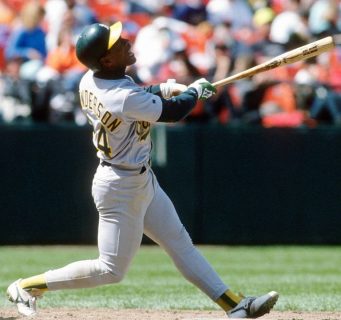
Rickey Henderson

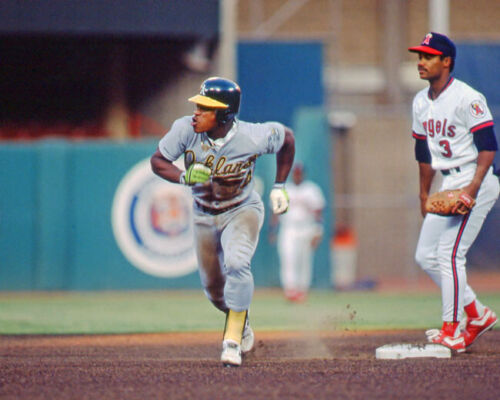
The Man of Steal gets the jump in a 1990 game, as then-Angels infielder Johnny Ray looks as though the right move was premeditated surrender.

“To me,” Hall of Famer Rickey Henderson once said, “the most important thing was stirring things up and scoring some runs so we could win a ballgame.” In more ways than one, he was a virtuoso at both. He made a cliché of the maxim that when he led off his team had a man on second going in. He also had to have the uniform torn off his back after slightly more than a quarter century of professional baseball.

On Friday night, at age 65, pneumonia plus asthma tore the Man of Steal from earthly life. Rest assured that even the Elysian Fields might be hard pressed to contain him, though God and His servant Stengel might be entertained above and beyond expectations.

Once upon a time, the Yardbirds’ drummer Jim McCarty wrote in an album liner note, “It’s been said that Jeff Beck is one of the world’s leading guitarists and I’m inclined to agree with him.” Well, now. It was (and is) said (and how!) that Henderson is the greatest leadoff hitter in major league history, and I’m inclined to agree with him.

So was just about all of baseball world, and it didn’t wait until his death to say it, either. But with the news of his death, here was Howard Bryant, a Henderson biographer, writing for ESPN: “He wasn’t as good as he said he was. He was actually better.”

“Rickey Henderson,” said Hall of Fame catcher Mike Piazza, “was a dream to hit behind as teammate and a nightmare for a catcher as an opponent.” And, a joy to fans who loved watching him turn baseball games into Olympic track and field meets.

Henderson was so prolific at reaching base you almost thought he’d become the first to steal first legitimately. Once he did get aboard, you could pretty much bank the run scoring by hook, crook, and anything else Henderson could think of, short of shooting the infielders and the catchers with tranquiliser darts.

The basics would be his 3,118 major league hits, his 1,406 stolen bases, his 298 major league home runs, scoring fifty runs more than Ty Cobb, and stealing about five hundred more bases than Hall of Famers Cobb, Lou Brock, or anyone else making his living with basepath theft. Not to mention the batting stance—damn near a catcher’s crouch, prompting baseball writing legend Jim Murray to suggest his strike zone was the size of Hitler’s heart.

This wiry guy who sometimes checked into hotels using Negro Leagues legend and Hall of Famer Cool Papa Bell’s name as an alias is thought of first for breaking both the single-season and lifetime stolen base records, each held then by Brock. But neither Brock nor anyone else walked 796 times leading off any inning.

The Man of Steal’s 394 game-opening walks is staggering enough. You can think of players who didn’t or won’t walk that often in their entire baseball lives. But 796 walks leading off innings? That’s as surrealistic as a Dali painting, a Kafka novel, or an extremely early Pink Floyd composition. Cobb did it a mere 153 times.

“I’m 69 years old,” dance and film legend Bill (Bojangles) Robinson told an Ebbets Field crowd on Jackie Robinson Day in 1947, “but never thought I’d live to see the day when I’d stand face-to-face with Ty Cobb in Technicolour.” Mr. Bojangles should have lived to see Henderson. He’d have beamed about standing face-to-face with Funkadelic in spikes.

Henderson’s 81 lifetime game-opening home runs and his 293 bombs batting first in the order were (and remain) impressive enough. His 142 inning-opening home runs might be even more so. Whomever else Henderson had behind him in the lineup, it might have been most true that to beat those teams you had to get through him first, last, and always.

He went to eight postseasons with five teams and posted an .831 OPS. You guessed it: there have been and there are players thought to be heftier hitters who didn’t and won’t post .831 OPSes in their whole careers. By any measure, his 1989 postseason was his personal best, winning the American League Championship Series MVP and posting a 1.514 OPS over that ALCS and the (Earthquake) World Series.

The intentional walk is usually handed to a fellow whose bat should be registered as a lethal weapon. Henderson had 61 free passes in 25 major league seasons, an average of three per year. He didn’t lack long ball power, of course, but neither was he guaranteed to lead off every inning he checked in at the plate beyond the first inning.

Simple enough answer: No pitcher who hadn’t yet lost his marble (singular) wanted to hand Henderson a premeditated base because they knew it meant guaranteeing him three bases on the house before the inning ended. Henderson had 5,356 plate appearances in which he led off an inning and he was never handed an intentional walk in those.

He got his walks the old fashioned way: he earned them. No player was better at reading pitchers and catchers preparing for a day’s larceny. He averaged only 89 strikeouts a season at the plate but 115 walks. Keeping the Man of Steal off base and off the top of baseball’s ten most wanted grand theft suspects compared to keeping a politician from putting his or her foot in his or her mouth.

Rickey Henderson

Henderson was more than a base thief—he hit 81 lifetime game-opening home runs, 142 inning-opening homers, and 293 bombs when listed in the lineup at the number one spot.

No player or man is perfect, and Henderson’s imperfect sides could and did drive players and managers on his own teams as well as the opposition to drink or thoughts of manslaughter, whichever came first. His tendency to whine and fume when he thought he was being underpaid steamed his front offices. His tendency to think of sitting it out when he wasn’t feeling a hundred percent physically caused too many to think he was a born goldbrick or worse.

Just ask Tony La Russa, the Hall of Fame manager who managed against him before getting to manage him. Once when managing the White Sox the first time around, La Russa had to bear Henderson getting in his face and telling him the next time his White Sox decided to brawl with Henderson’s A’s, Henderson was coming for him first.

“Rickey knew his body better than anybody else,” La Russa later told Bryant. “I have to admit I was wrong about him.”

As a manager, I would ask him how he felt and he would tell me, ’70 percent.’ Seventy percent wasn’t good enough for him to play, but I’d tell him 70 percent of Rickey Henderson was better than 100 percent of anybody else I had on the bench. There were times he did not play even when that 70 percent, I thought, could have benefited the team, but when you look at the end results of what he did, the totality of his career achievements cannot be argued.

When Henderson re-joined La Russa, re-joining the A’s for a third tour after winning a World Series with the 1993 Blue Jays, the A’s team bus passed a Toronto billboard showing Joe Carter’s jubilant tour around the bases after hitting the ’93 Series-winning three-run homer. (Henderson and fellow Hall of Famer Paul Molitor were on base when Carter connected.) Bryant wrote that only one voice came from the rear of the bus.

The voice was Henderson’s. “I was on second base!” the Man of Steal crowed.

Yes, he was as funny as he could be infuriating. But as Hall of Fame pitcher Dennis Eckersley told Bryant, “Rickey was great, sure, but when Rickey put his nose in it—those days when he really wanted to play —there was nobody better.”

“It ain’t bragging if you can do it,” the ancient saying goes. Henderson on the field was the braggart who backed it up. When he spoke to the crowd after busting Brock’s record, he made people fume as well as cheer when he said, “Lou Brock was the symbol of great base stealing. But today I am the greatest of all time.” It turned out that Brock himself helped Henderson write his day’s remarks. Well.

Henderson even proved at least once that one Hall of Famer had to one-up another Hall of Famer to set an all-time record as unlikely (at this writing) to be broken as his 1,406 stolen bases. He proved it when he turned up as Nolan Ryan’s 5,000th strikeout victim, with then-commissioner A. Bartlett Giamatti in the house, “ticking off at least one Oakland player who thought he detected Giamatti rooting for Ryan.” (So said the New York Times‘s George Vecsey.)

That was the summer in which the bulk of Giamatti’s too-brief term in office was consumed with the Pete Rose investigation, which didn’t allow him as much time at the ballparks as he would have loved. But bank on this: Had Giamatti lived to be in the house the day Henderson stood to pass Brock, two years later, there’d have been a Brewer or three carping that they thought they detected Giamatti rooting for Henderson.

Even the larger-than-life need anchorage. Henderson had his wife. “Pamela Henderson never received the credit,” wrote another ESPN scribe, Bradford Doolittle. “While he was building his masterpiece, some players didn’t even know Rickey was married, but she was both the anchor and the captain of the yacht.” You don’t stay together since high school and stay married 41 years without a captain and an anchor. It was as if Henderson’s wife and the mother of his three children reassured herself, “Let him have his fun. When he gets home, we’ll remind him who’s on this bridge.”

Maybe one of Henderson’s true problems was that he really did love the game too much to let it go. After a quarter century plus, most players are long retired to their post-playing lives. At age 45, he was busy stealing 37 bases for the independent Newark Bears. When it all shook out, he probably deserved more than two decades plus a near-year more of life after the batter’s box and the basepaths.

He died five days before his 66th birthday. Somehow, it’s appropriate that he should have been a Christmas baby. At his best, the Man of Steal made every game he played feel like Christmas to his teams.

First published at Sports Central.

Beer showers and heck raisers

Andrew Benintendi

Andrew Benintendi hitting the two-run homer that started the White Sox on the way to ending their franchise-worst, AL record-tying losing streak Tuesday night.

In a way, it almost figured that the end would happen on the road. Something about this year’s White Sox just didn’t cry out that they should end the single most miserable spell in their history this side of the Black Sox scandal before their home people.

Maybe it was the distinct lack of humour. Nobody likes to lose, nobody likes when losing becomes as routine as breakfast coffee, but there have been chronically losing teams who managed to laugh–even like Figaro that they might not weep . . . or kill.

The 1988 Orioles survived their record season-opening 21-game losing streak with gallows humour. This year’s White Sox didn’t dare adopt gallows anything, perhaps out of fear that their own odious owner might take them up on it, build a gallows, and send a different team member to it each postgame.

My God, when these White Sox finally found better angels upon whom to call and beat the Athletics 5-1 Tuesday night, the funniest thing about it was that nobody could find a beer to drink in the postgame clubhouse celebration—because the entire supply had been poured over each other once they came off the field.

“A beer shower, what are you talking about,” cracked White Sox relief pitcher John Brebbia, who got three straight air outs in the bottom of the ninth to finish what Andrew Benintendi’s two-out, two-run homer started in the top of the fourth. “I’ve never heard of such a thing. That’s absurd.”

As if he’d suddenly been made aware he’d almost crossed the no-humour line, Brebbia plotted his own course correction. “We’ve got a day game tomorrow,” he said, “so guys are super focused on getting some sleep. Making sure they’re eating right and supplementing properly.”

Sure. Bust the franchise’s longest losing streak ever, keep them tied with the 1988 Orioles as the American League losing streak record holders, and do nothing more than check and maintain their diets, pop the right vitamins, and don’t be late for their dates with Mr. Sandman.

No White Sox player, coach, clubhouse worker, or front office denizen expected that kind of losing streak, of course. Not even with owner Jerry Reinsdorf executing his longtime leadership tandem of Ken Williams and Rick Hahn. Not even when Reinsdorf looked no further than his own hapless assistant GM Chris Getz to succeed the pair—fast. Not even with White Sox fans, what’s left of them, take pages from the book of A’s fans and hoist “Sell the Team” banners at Guaranteed Rate Field.

Not even the most shameless tankers of the past decade went into seasons expecting double-digit losing streaks at all, never mind record tyers or record threateners. But these White Sox might yet overthrow the 1962 Mets and their 40-120 season for record-setting futility. 38-124, anyone? No one’s saying that’s impossible yet.

Those Mets actually had no losing streak longer than seventeen games. They were also shut out a mere six times while they actually managed to shut the other guy out four. These White Sox have managed somehow to shut the other guys out one more time than that, but they’ve also been shut out thirteen times and possibly counting. Perhaps more amazing than those Original Mets, these White Sox were shut out only once during the now-ended losing streak. (A 10-0 blowout by the Mariners.)

The ’88 Orioles ended their notorious losing streak with a win against the White Sox that also involved eight Orioles and only three White Sox striking out at the plate. Last night, four White Sox batters struck out and five A’s did as well. The first strikeout wasn’t nailed until the bottom of the third, when White Sox starter Jonathan Cannon ended the side by blowing A’s catcher Sean Langoliers away on a climbing fastball.

To the extent that you could call it a pitching duel, the White Sox and the A’s seemed more bent on settling who could get more ground outs than fly outs. The White Sox pitchers landed eleven ground outs and sixteen air outs; the A’s pitchers, ten ground outs and nineteen fly outs. As if both teams believed idle gloves were the devil’s playthings.

The White Sox also left three men on base to the A’s leaving seven. Maybe the sleekest defensive play of the game ended the Oakland second, when White Sox shortstop Nicky Lopez handled A’s left fielder Lawrence Butler’s hopper on the smooth run and executed a smoother-than-24-year-old-scotch step-and-throw double play.

Then, in the top of the fourth, White Sox center fielder Luis Robert, Jr. slashed a clean line single to left with one out. First baseman Andrew Vaughn flied out to right to follow, but then Benintendi turned on A’s starter Ross Stripling’s 1-1 fastball right down the chute and sent it far enough over the right field fence.

This time, the White Sox would not blow the lead. Not even after A’s second baseman Zack Geldof hit a two-out solo homer in the bottom of the inning. Would anyone guarantee a White Sox win with a mere 2-1 score? The White Sox themselves wouldn’t have.

First, Sox third baseman Miguel Vargas wrung Stripling for a leadoff walk in the top of the sixth. Brooks Baldwin, a youthful midseason addition who had yet to be part of a major league victory, promptly singled him to second. One out later, Vaughn singled Vargas home and Baldwin to third with a base hit, chasing Stripling. Reliever Michel Otanez wild-pitched Baldwin home with Vaughn stealing third as Otanez worked on Sox designated hitter Lenyn Sosa—who flied out for the side but left the score 4-1, White Sox.

Maybe that still wouldn’t be enough. As the redoubtable Jessica Brand Xtweeted, the White Sox pre-Tuesday had one game since the Fourth of July in which they had a three-plus-run lead in the eighth or later, a 5-2 lead against the Royals on 29 July. Oops. The Royals dropped three homers including a grand slam to make it an 8-5 Royals win and White Sox consecutive loss number fifteen.

Come Tuesday, the White Sox turned out to have one more card to play in the top of the ninth. Benintendi doubled to right with one out, took third on a wild pitch with Sosa at the plate, then Sosa sent Benintendi home with the RBI single, before Brebbia made short air-out work of the A’s in the bottom to close a deal that once seemed about as likely as finding coherence coming from Donald Trump’s or Joe Biden’s mouths.

So what did Benintendi—once upon a time the acrobat who charged and dove to steal a certain three-run triple from Houston’s Alex Bregman, sending the 2018 American League Championship Series into a two-all tie rather than leaving it 3-1 Astros—think after he and his White Sox finally closed the book on their team-record, league-record-tying losing streak?

“We won a game, nothing more than that,” he said postgame. “I think everybody has played enough baseball. You understand that we play 162 of them. It sucks that we’ve lost 21 in a row, but a win’s a win. We’re all excited obviously, but this is no different than any other win.”

Maybe it was exhaustion. Maybe it was unexpected relief that the White Sox didn’t become the new AL losing streak record holders. When Benintendi hauled down Gelof’s towering fly to shallow left to end the game and the streak, he didn’t even want to keep the ball as a souvenir.

Chicago White Soxfans

Two traveling White Sox fans urge the team on indicating they were one out from the Promised Land Tuesday night.

Sox manager Pedro Grifol, who’s just about guaranteed to be left to find new employment, possibly when the season finally ends, possibly sooner, was almost as benign as that when the streak ended. “It was cool to watch for nine innings, these guys pull for each other,” he said. “The [Coliseum] dugout is small, but nobody really cared about how small it was today. It was just a group of guys, together, trying to see if we could get this thing behind us.”

That may have been one of the least testy postmortems of the year for these Sox. Grifol is no Casey Stengel. Not as a baseball tactician or strategist, and certainly not as a riffer with a twist who could keep the heat off his hapless charges at the lowest of their low.

“Come an’ see my amazin’ Mets,” Stengel often hectored Polo Grounds fans waiting to see the latest of the 1962 Mets. “I been in this game a hundred years but I see new ways to lose I didn’t know were invented yet.”

Grifol could never cut the mustard at Stengel’s hotel bar roost. His White Sox already sank under the weight of underwhelming individual performances and a small swarm of injury bugs. They incurred embarrassment when a few of the men they sent elsewhere around the trade deadline shone at first for their new teams. They’ve needed a Stengel badly this time around. They’ve barely got a Marx Brother—Zeppo.

A 21-game losing streak that followed a May-June fourteen-gamer was above and beyond Grifol’s and his White Sox’s comprehension no matter what. So much so that they rarely if ever found any reason to laugh while they threatened but didn’t pass the ’88 Orioles. But it’s tough enough being a White Sox fan these days, isn’t it? Do the fans have to provide all the humour?

Apparently. Before Gelof checked in at the plate in the bottom of the ninth, a pair of White Sox fans who’d gone west hoping to see the streak end stood behind the visiting dugout. They made motions indicating to White Sox players, just one out from the Promised Land of a win, any win.

One wore a brown paper bag over his head.

“Will anyone be writing any books about these White Sox?” asked a Tuesday editorial by the Chicago Tribune. Then, they answered.

If only the legendary Tribune columnist Mike Royko were still with us, we’d love to see what he would produce, given his rants back in the day about the hapless Cubs of the 1970s. But those Cubs teams were the 1927 Yankees compared with the 2024 Sox. Even Royko might be at a loss for words on the 2024 White Sox.

How rich is that? Name one other baseball team who could, in theory, have left Mike Royko lost for words, with or without a paper bag over his head. That would have been bigger headlines and more viral memes than any moment in which the White Sox finally played way over their own heads to end their horrific streak. Bigger, even, than the Rangers’ Corey Seager ruining Astro pitcher Framber Valdez’s no-hitter with a two-run homer in the ninth Tuesday.

“They played a good, clean game tonight, and we didn’t generate any offense,” said A’s manager Mark Kotsay postgame. “For that club over there, I’m sure they’re excited about ending their losing streak.” Excitement, apparently, remains in the eye and ear of the beholder.

“I don’t care who said it.”

Aaron Boone

Aaron Boone fingers the culprit impressionist who really barked at umpire Hunter Wendelstedt after Boone kept his mouth shut following one warning. (YES Network capture.)

Umpire accountability. There, I’ve said it again. The longer baseball government refuses to impose it, the more we’re going to see such nonsense as that which Hunter Wendelstedt inflicted upon Yankee manager Aaron Boone in New York Monday.

The Yankees welcomed the hapless Athletics for a set. Wendelstedt threw out the first manager of the game . . . one batter and five pitches into it. And Boone hadn’t done a thing to earn the ejection.

Oh, first Boone chirped a bit over what the Yankees thought was a non-hit batsman but was ruled otherwise; television replays showed A’s leadoff man Esteury Ruiz hit on the foot clearly enough. Wendelstedt got help from first base umpire John Tumpane on the call, and Tumpane ruled Ruiz to first base.

The Yankees and Boone fumed, Wendelstedt warned Boone rather loudly, and Boone kept his mouth shut from that point.

Until . . . a blue-shirted Yankee fan in a seat right behind the Yankee dugout hollered. It looked and sounded like, “Go home, ump!” It could have been worse. Fans have been hollering “Kill the ump!!” as long as baseball’s had umpires. George Carlin once mused about substituting for “kill” a certain four-letter word for fornication. His funniest such substitution, arguably, was “Stop me before I f@ck again!” The subs also included,  “F@ck the ump! F@ck the ump!”

Neither of those poured forth from the blue-shirted fan. Merely “Go home, ump!” provoked Wendelstedt to turn toward the Yankee dugout and eject . . . Boone, who tried telling Wendelstedt it wasn’t himself but the blue shirt behind the dugout. “I don’t care who said it,” Wendelstedt shouted, and nobody watching on television could miss it since his voice came through louder than a boat’s air horn and, almost, the Yankee broadcast team. “You’re gone!”

I don’t care who said it.

“When an all-timer of an ejection happens,” wrote Yahoo! Sports’ Liz Roscher, “you know it, and this qualified.”

There was drama. There was rage. There was the traditional avoidance of blame on the part of the umpire. It’s a classic example of the manager vs. umpire dynamic, in which the umpire exercises his infallible and unquestionable power whenever and wherever he wants with absolutely zero accountability or consequences of any kind, and the manager has no choice but to take it.

Bless her heart, Roscher actually used the A-word there. And I don’t mean “and” or “absolutely,” either. She also noted what social media caught almost at once, that Mr. Blue Shirt may have mimicked Boone well enough to trip Wendelstedt’s trigger even though the manager himself said not. one. syllable. after the first warning.

May. You might think for a moment that a manager with 34 previous ejections in his managing career has a voice the umpires can’t mistake no matter how good an impression one wisenheimer fan delivers.

This is also the umpire whom The Big Lead and Umpire Scorecards rated the third-worst home plate umpire in the business last year, worsted only by C.B. Bucknor (second-worst) and Angel (of Doom) Hernandez (worst-worst). I’ve said it before but it’s worth repeating now. Sub-92 percent accuracy has been known to get people in other professions fired and sued.

A reporter asked Boone whether the bizarre and unwarranted ejection was the kind over which he’d “reach out” to baseball government. “Yes,” the manager replied. “Just not good.”

Good luck, Skipper. Umpire accountability seems to have been the unwanted concept ever since the issue led to a showdown and a mass resignation strategy (itself a flagrant dodge of the strike prohibition in the umps’ collective bargaining agreement) that imploded the old Major League Umpires Association in 1999.

The Korean Baseball Organisation is known for its unique take upon umpire accountability. Umps or ump crews found wanting, suspect, or both get sent down to the country’s Future Leagues to be re-trained. Presumably, an ump who throws out a manager who said nothing while a fan behind his dugout barked would be subject to the same demotion.

If the errant Mr. Blue Shirt really did do a close-enough impression of Boone, would Wendelstedt also impeach James Austin Johnson over his near-perfect impressions of Donald Trump?

Well after the game ended in (do you believe in miracles?) a 2-0 Athletics win (they scored both in the ninth on a leadoff infield hit and followup hitter Zack Gelof sending one into the right field seats), Wendelstedt demonstrated the possibility that contemporary baseball umpires must master not English but mealymouth:

This isn’t my first ejection. In the entirety of my career, I have never ejected a player or a manager for something a fan has said. I understand that’s going to be part of a story or something like that because that’s what Aaron was portraying. I heard something come from the far end of the dugout, had nothing to do with his area but he’s the manager of the Yankees. So he’s the one that had to go.

The fact that an umpire can order stadium personnel to eject fans or even toss a loudmouth in the stands himself (it happened to Nationals GM Mike Rizzo courtesy of now-retired Country Joe West, during a pan-damn-ic season game in otherwise-empty Nationals Park) seems not to have crossed Wendelstedt’s mind. The idea of saying “I was wrong” must have missed that left toin at Albuquoique.

Major league umpires average $300,000 a year in salary. If I could prove to have a 92 percent accuracy rate and learn to speak mealymouth, I’d settle for half that.

Ken Holtzman, RIP: The no-no-no song and other things

Ken Holtzman

Ken Holtzman, one of the prime contributors to the Athletics’ legendary (some also say notorious) three straight World Series titles in 1972-74.

Ken Holtzman was a good pitcher with two distinctions above and beyond being credited with more wins than any Jewish pitcher including Hall of Famer Sandy Koufax. He may have been the last major league player to talk to Hall of Famer Jackie Robinson before Robinson’s death. And, he’s the answer to this trivia question: “Name the only two pitchers in major league history to pitch no-hit, no-run games in which they struck nobody out.”

According to Jason Turnbow’s Dynastic, Bombastic, Fantastic, his history of the 1970s “Swingin’ A’s,” Robinson was at Riverfront Stadium for a pre-Game One World Series ceremony in 1972, commemorating 25 years since he broke the disgraceful old colour barrier. Robinson threw a ceremonial first pitch, then departed through the A’s clubhouse, where he happened upon Holtzman finishing his pre-game preparation.

“Nervous?” Robinson asked the lefthander. “Yes, sir, a little bit,” Holtzman admitted. After some small talk, Turnbow recorded, Robinson handed Holtzman an instruction: “Keep your hopes up and the ball down.” Nine days later, the A’s continued celebrating a World Series title but Robinson died of a second heart attack.

“I was probably the last major leaguer to talk to Jackie Robinson,” Holtzman would remember. Robinson’s advice probably did Holtzman a huge favour; he started Game One and, with help from Hall of Famer Rollie Fingers plus Vida Blue in relief, he and the A’s beat the Reds, 3-2.

A good pitcher who brushed against greatness often enough and became something of a rubber-armed workhorse, Holtzman—who died at 78 Sunday after a battle against heart problems—had two no-hitters on his resume from his earlier years with the Cubs. The first one, in 1969, made him that trivia answer. Four years to the day after Cincinnati’s Jim Maloney pitched a no-hitter that’s the arguable sloppiest no-hitter of all time (Maloney struck twelve out but walked ten), Holtzman joined the No-No-No Chorus.

19 August 1969, the Cubs vs. the Atlanta Braves in Wrigley Field, Holtzman vs. Hall of Famer Phil Niekro. While the Cubs got all the runs they’d need when Hall of Famer Ron Santo smashed a three-run homer off Knucksie, Holtzman performed the almost-impossible. He got fifteen air outs (including liners and popouts), thanks in large part to the notorious Wrigley winds blowing in from the outfield. (Hall of Famer Henry Aaron made three of his four outs on the day in the air.) He got twelve ground outs. And he couldn’t ring up a strikeout if he’d bribed home plate umpire Dick Stello begging for even one little break.

It joined Holtzman to Sad Sam Jones of the 1923 Yankees. Jones faced and beat the Philadelphia Athletics in Shibe Park, with both Yankee runs scoring on a two-run single by former Athletic Whitey Witt in the third inning. Jones got fourteen ground outs and thirteen air outs, living only slightly less dangerously than Holtzman did.*

Holtzman took a little more responsibility throwing his second no-hitter, against the Reds on 3 June 1971, the first no-no to be pitched in Riverfront Stadium. This time, he struck six out while walking four, getting ten ground outs and ten air outs each. Clearly he’d learned some things before his Cub days ended.

Ken Holtzman

Holtzman, as a young Cub.

He had no trouble learning off the mound, either, graduating with bachelor’s and master’s degrees from the University of Illinois and mastering French well enough to have read Proust in the language. When he moved from the Cubs to the A’s, he even found a unique way to funnel his competitive side when he didn’t have to be on the mound.

Holtzman drew a few teammates toward his passion for playing bridge, including Hall of Fame relief pitcher Rollie Fingers, infielder Dick Green, and relief pitcher Darold Knowles, according to Turnbow. In time, the Oakland Tribune‘s A’s beat writer Ron Bergman would join Holtzman and Fingers in scouting and finding bridge clubs on the road.

“We’d be the only three guys there,” Holtzman once cracked, “three major leaguers playing against 85-year-old women.”

“It was all gray-haired old ladies,” Fingers said. “We’d beat them during the afternoon, and then we’d go to the ballpark and beat a baseball team.”

On the mound, Holtzman arrived with immediate comparisons to Koufax. Being Jewish and lefthanded and arriving in Koufax’s final season made that possible, and impossible. Nobody could live up to a Koufax comparison at all, never mind by way of sharing the same pitching side and religious heritage.

Holtzman didn’t help relieve himself of those when he faced Koufax himself in Wrigley Field, the day after Yom Kippur 1966, and outlasted Koufax, 2-0, taking a no-hitter into the ninth before veterans Dick Schofield and Maury Wills singled off him. Or, when he pitched 1967 as a 21-year-old phenom with a 9-0 won-lost record around the military reserve obligations many players had in his time.

His Cub career wasn’t always apples and honey, alas. Other than the unrealistic Koufax comparisons, there were the military reserve interruptions (he pitched on weekend passes in 1967) and there was his tendency to speak his mind, which didn’t always sit well no matter how much his teammates liked him personally.

There was also dealing with Leo Durocher managing those Cubs, and especially becoming a Durocher target, burning when Durocher accused him of lack of effort. The Cubs’ Durocher-triggered self-immolation of 1969 didn’t make for better times ahead, for either Holtzman or the team. In fact, Durocher’s Cubs author David Claerbaut recorded a conversation Hall of Famer Ernie Banks had with Holtzman as the collapse approached:

Banks had a few drinks with the young southpaw after a game in Pittsburgh. “Kenny,” he said, “we have a nine-game lead, and we’re not going to win it becsuse we’ve got a manager and three or four players who are out there waiting to get beat.”

For the then 23-year-old hurler, the conversation with Banks was chilling. “He told me right to my face, I’ll never forget it. It was the most serious and sober statement I’d ever heard from Ernie Banks—and he was right.” Holtzman’s take was similar to that of Mr. Cub. “I think that team simply wasn’t ready to win. I’m telling you, there is a feeling about winning. There’s a certain amount of intimidation. It existed between the A’s and the rest of the league . . . In Oakland, when we took the field, we knew we would find a way to win. The Cubs never found that way.

After a struggling 1970 and 1971, Holtzman asked for and got a trade . . . to the Swingin’ A’s, for outfielder Rick Monday. A’s manager Dick Williams took to Holtzman at once. So did pitching coach Wes Stock: “I’ve never seen a pitcher throw as fast as he does who has his control.”

Holtzman learned soon enough how the contradictory ways of A’s owner Charlie Finley would make the A’s baseball’s greatest circus—even while they won three straight World Series in which Holtzman had prominent enough roles (and made his only two All-Star teams) and missed a fourth thanks to being swept by the Red Sox in 1975.

His first Oakland season in 1972 didn’t exclude heartache, alas. With the A’s in Chicago for a set with the White Sox, the Munich Olympic Village massacre happened. Eleven Israeli athletes and coaches were held hostage and killed by the Palestinian group Black September.

Proud but not ostentious about his Jewishness, Holtzman and Jewish teammate Mike Epstein took a long, pensive walk before electing to have the A’s clubhouse manager sew a black armband onto one of their uniform sleeves. The two players were stunned to see Hall of Famer Reggie Jackson wearing such an armband as well.

Epstein objected (he’d had previous tangles with Jackson), but Holtzman accepted. Jackson “had contact with Jewish people growing up and was not entirely unaware of Jewish cultural characteristics,” Holtzman said. “So when I saw Reggie with that armband, I felt that he was understanding what me and Mike were going through. He . . . felt it appropriate to show solidarity not only with his own teammates but with the fact that athletes were getting killed.”

In the wake of the Messersmith decision enabling free agency at last (Holtzman faced Andy Messersmith twice in the 1974 World Series and the A’s won both games), owners and players agreed to suspend arbitration while negotiating a new collective bargaining agreement. Oops. Finley offered nine A’s including Holtzman contracts with the maximum-allowed twenty percent pay cuts. What a guy.

Annoyed increasingly by Finley’s duplicities, Holtzman began 1976 as an unsigned pitcher but was traded to the Orioles on 2 April—in the same blockbuster that made Orioles out of Jackson plus minor league pitcher Bill Von Bommel and A’s out of pitchers Mike Torrez and Paul Mitchell plus outfielder Don Baylor.

Holtzman took a 2.86 ERA for the Orioles into mid-June 1976, then found himself a Yankee. He was part of the ten-player swap that made Yankees out of catcher Elrod Hendricks and pitchers Doyle Alexander, Jimmy Freeman, and Grant Jackson, while making Orioles of catcher Rick Dempsey and pitchers Tippy Martinez, Rudy May, Scott McGregor, and Dave Pagan.

As a Yankee, Holtzman landed a comfy five-year deal but picked the wrong time to begin struggling in 1977. A May outing in which he couldn’t get out of the first inning put him in manager Billy Martin’s somewhat crowded bad books. (He didn’t pitch in that postseason, just as he wasn’t called upon in 1976.) Active in the Major League Baseball Players Association as well, that side of Holtzman may have made Yankee owner George Steinbrenner less than accommodating as well.

In 1978, Holtzman again struggled to reclaim his former form and was dealt back to the Cubs. After struggling further to finish 1978 and for all 1979, Holtzman retired. He returned to his native St. Louis, worked in insurance and stock brokerage (the latter had been his off-season job for much of his pitching career), and did some baseball coaching for the St. Louis Jewish Community Center. He even managed the Petach Tivka Pioneers in the Israel Baseball League briefly, walking away when he disagreed with how the league was administered.

Holtzman might not have been the next Koufax, but the father of three and grandfather of four knew how to build unusual bridges toward triumphs on the field. May the God of Abraham, Isaac, and Jacob have brought Holtzman home to the Elysian Fields for an eternity living in peace.

* St. Louis Browns pitcher Earl Hamilton also threw a no-hit/no-strikeout game, against the Tigers in 1912 . . . but a one-out, third-inning walk preceded an infield error that enabled Hall of Famer Ty Cobb to score in a 4-1 Browns win. Hamilton did as Jones did otherwise: fourteen ground outs, thirteen air outs (including liners and popouts).