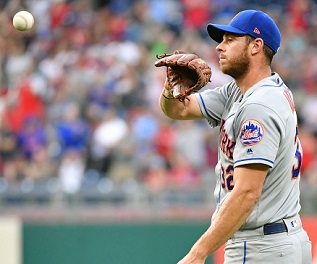
They call it stormy Monday . . .

2019-06-24 StevenMatz

If only this was Steven Matz getting back one of the three home runs he surrendered during Monday night’s massacre . . .

It must be nice to work for a team in which a vile, vulgar outburst on behalf of avoiding accountability doesn’t get you canned on the spot or within twenty-four hours. By that measure, Mets manager Mickey Callaway and enough of his team live charmed lives. At least until they squared off against the Phillies Monday evening.

For their profanities at reporters who sought nothing more than accountability for a bullpen decision that cost them a series-ending game against the Cubs Sunday afternoon, the Mets didn’t fire Callaway or trade or release pitcher Jason Vargas. They didn’t suspend either man. They merely fined the pair of them.

General manager Brodie Van Wagenen issued Callaway yet another vote of confidence. Cynics think Callaway was thus rewarded for being Van Wagenen’s human shield because no major league manager could be anything close to Callaway’s kind unless he was little more than a general manager’s satrap.

Come Monday Callaway and Vargas issued apologetic non-apologies unless they were non-apologetic apologies. Or vice versa. Then Callaway backtracked just so and, seemingly on his own, he apologised to the writers traveling with the Mets and specifically to Newsday‘s Tim Healey, who’d been Callaway’s and Vargas’s specific Sunday post-game target.

At least Vargas didn’t try in his too-short apologetic non-apology to justify himself by invoking Billy Martin’s ancient decking of a reporter, which actually happened not after a baseball game but in a bar during halftime of a Western Basketball Association game. As Deadspin‘s Samer Kalaf observed wryly, “invoking a successful Yankees manager, who was also a kook, isn’t the best play here.”

It’s also not the best play there to invoke a manager who was infamous for handling pitching staffs as though this year was next year. “Managers, like anyone else, tend to be shaped by their experiences,” Bill James wrote in 1981. “Billy Martin probably manages as if there were no future because he has never had a future with any organisation, only a string of todays here and there.”

Callaway’s experience before becoming the Mets’ manager was as a pitcher and a pitching coach who could be presumed reasonably to operate with the organic knowledge that this year isn’t next year and that pitching arms must be kept oriented six parts this year and half a dozen parts next if they’re to deliver the most of their ability with the least imposition and injury.

Presumably, Callaway could have been assumed to know better than to send a clearly less-than-at-his-best relief pitcher out to work a second inning, instead of a) opening that second inning with a fresh arm; or, if he insisted on staying with his man to open, b) bringing in his well-enough-experienced closer for a prospective five-out save.

But in just the latest in a two-season series of pitching maneuvers described most politely as dubious, Callaway sent his less-than-at-his-best man Seth Lugo out for the eighth after Lugo worked a scoreless but too-difficult seventh Sunday afternoon. Instead of opening the frame with freshly-prepared Robert Gsellman, or asking closer Edwin Diaz for a five-out save of a 3-2 Met lead, he left Lugo in.

Javier Baez promptly smashed a three-run homer, overthrowing the Met lead for keeps, and only a soul afflicted with sleeping sickness couldn’t have told you the number one question on every writer’s postgame mind was going to be why on earth Callaway stayed with Lugo—who’d pitched two innings last Friday—when Lugo’s arm was clearly enough spent after one inning of work.

Callaway’s and Vargas’s behaviours would likely have led to their prompt unemployment with the Mets, if not necessarily in baseball elsewhere, if the Mets weren’t so befuddled looking a club that the very idea of sending any message stronger than a wrist slap on behalf of demanding accountability seems to be one that sends them praying to the porcelain god regardless of the best play here. Or there. Or anywhere.

Vargas finally dismissed Sunday’s clubhouse rumble as “an unfortunate distraction.” From what? The Mets’ inconsistent play? Their second-year manager’s strategic mischief, mistakes, and malpractise? Callaway from all appearances is a genuinely decent and likeable man otherwise, but he’s in so far over his head he needs a periscope just to see twenty feet below the surface.

Their rookie general manager’s clumsy team construction that’s left them with a bullpen of compromised stock and fielders playing mal-positioned and into the sort of miscues you’d expect from the Mets’ 1962 ancestors but without the mirth and merriment? Their metastasising inability to stand accountable? Their unexpected faith that it’s all the media’s fault?

The same rookie general manager supposedly managing at least some of the Mets’ games from New York, regardless of whether he knows anything beyond the numbers when it comes to managing his players, their fuel tanks, and the immediate game situations that require a manager’s insight and foresight? Which means the hapless Callaway has an unwanted partner in crime leaving him to take the worst plays’ fall?

These are the Mets who opened against the teetering Phillies Monday night. The Phillies entered the set in a spell of plate somnambulism. By the time the game was in the bank, the Mets and the Phillies swapped bombs, defensive slickness, defensive inconsistencies, pitching mismanagement, timely hitting, and wasted contact.

And that was just in the first five innings.

The Phillies’ bullpen is an injured mess. The Mets’ is a misassembled and mismanaged  mess. Presumably those are what forced Callaway and Phillies manager Gabe Kapler to leave their starting pitchers, Steven Matz and Zach Eflin, in to take seven- and six-run beatings, respectively, before either pitcher got past a fifth inning’s work.

Callaway relieved Matz with Brooks Pounders as the Phillies took a 7-6 lead in the bottom of the fifth. With two outs. Jean Segura doubled home the eighth Phillies run before the side retired. Callaway left Pounders in for the sixth. A one-out triple, an RBI single, a steal, a two-out infield RBI single, and a two-run homer. Pounders was probably lucky to escape without the Phillies pounding additional bullets into his evening’s corpse.

Kapler relieved Eflin with Juan Nicasio, JD Hammer, and Fernando Salas. Only a single Met was allowed to get to within binoculars distance of second base under their command. Until Dom Smith sent an excuse-me homer the other way over the left field wall in the top of the ninth. The Mets otherwise allowed the teetering Phillies to resemble the 1927 Yankees while ending a seven-game losing streak during which the Phillies scored only two more runs than they scored all Monday night.

Nineteen hits versus the Mets’ fifteen in a 13-7 Phillies win does that for you. For the Mets, that wasn’t even close to the best play here, either.
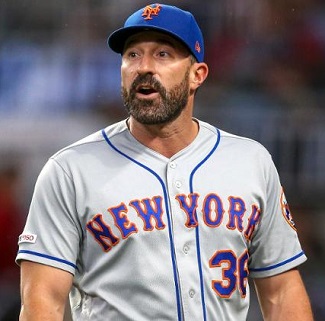
He can’t rant with the masters, either

2019-06-23 MickeyCallaway02

As postgame ranters go, Mickey Callaway won’t make anyone forget Tommy Lasorda or Lee Elia.

If the Mets do what seemingly three quarters of the Internet thinks has to be done and fire embattled manager Mickey Callaway after Sunday’s postgame profanities, so be it. But they may want to know that Callaway’s isn’t even close to the absolute worst outburst major league baseball people have been known to release after harsh losses.

After the Mets lost to the Cubs 5-3, Callaway—himself a former pitcher and pitching coach presumed to understand such things—should have expected the number one postgame question would be why he left not-so-strong reliever Seth Lugo in for a second inning after over-labouring a first one, long enough for the Cubs’ Javier Baez to drill a three-run homer that overthrew a Met lead and held up for a Cub win.

Just about everyone watching the game, including Mets broadcasters Gary Cohen and Ron Darling (himself a Mets pitcher on their 1986 World Series winner), knew Lugo barely got through his scoreless first inning’s work. Callaway warmed up Robert Gsellman but didn’t bring him in until after Baez’s blast.

And closer Edwin Diaz, who might have been asked for a five-out or even a two-inning save, since he’d only pitched a single inning Friday night (for a save) after five days without a game appearance, wasn’t even a topic. Until Callaway was asked about it postgame and insisted, a little snappishly, that five-out save opportunities weren’t a topic, either.

No matter how much pressure Callaway’s been under, reporters shouldn’t have had to expect him to throw down a couple of [maternal fornicators], or order his people to get another [maternal fornicator] out of the clubhouse. Or, when Mets pitcher Jason Vargas was asked in all innocence by reporter Tim Healey if he had something to say, as Healey swore Vargas appeared, Healey shouldn’t have had to have Vargas threaten to knock him the [fornicate] out, bro.

With Mets first-season general manager Brodie Van Wagenen said to be en route Philadelphia, where the Mets open a set with the teetering Phillies Monday, it might not be a shock if he greets Callaway by putting the manager’s head on a plate. As of this writing, nothing from inside the Mets yet appears to indicate its likelihood.

But if so, Sunday’s postgame behaviour was only the wick that ignited the powder keg. All season long it’s been a question of when, not whether Callaway would meet the guillotine. And wags could suggest plausibly that one reason to execute Callaway could be that, when it comes to postgame tirades, he can’t cut the mustard in Lee Elia’s or Tommy Lasorda’s parlours.

About the only thing Callaway has in common with those two is that their still-legendary, still-heard expletives-undeleted rants had something to do with the Cubs, too.

Elia was the Cubs’ manager on 29 April 1983, when the Cubs lost a one-run game to the Dodgers in Wrigley Field. The Cubs’ Hall of Fame closer Lee Smith threw an eighth-inning wild pitch to Pedro Guerrero with Ken Landreaux on third, allowing Landreaux to score what proved the winning run.

Aside from the season’s early losing—the game dropped the Cubs to 5-14 and dead last in the National League East—the sparse Wrigley audience, and a fan dropping a beer on Cubs outfielder Keith Moreland, left Elia in no mood to play nice, never mind accommodating, after the game. And never mind most of the press corps going to the Dodgers’ clubhouse because first baseman Mike Marshall played in Wrigley for the first time and homered in the fifth.

The unwitting provocateur was radio reporter Les Grobstein, who asked Elia about the Cubs’ fan support. Elia delivered a tirade in which he tried defending his players but ripped the boo birds, unloading 41 profanities before unloading the money quote: They oughta go out and get a [fornicating] job and find out what it’s like to go out and earn a [fornicating] living. Eighty-five percent of the [fornicating] world is working. The other fifteen percent come out here. (The Cubs still played strictly day games then.)

Elia by all accounts was lucky his [fornicating derriere] wasn’t fired almost on the spot; he happened to return to his Wrigley Field office to retrieve a set of keys when then-general manager Dallas Green, who’d just heard the recording of Elia’s rant, called the skipper’s office.

The mortified Elia apologised to the GM. He probably survived because, near the end of his bellowing, he did urge people to rip him and not his players if they were unhappy with the Cubs’ play. Unfortunately, Elia would be fired later in the season as the Cubs fell fifteen games under .500.

In due course he’d sell for a cancer charity autographed baseballs displayed in specially-made cases that included specially-made players that delivered a cleaned-up version of the infamous schpritz. He’d also manage the Phillies for a short period and eventually work in the Braves’ front office.

Five years earlier, the Cubs inadvertently seeded a postgame jewel by Hall of Fame manager Tommy Lasorda, after a fifteen-inning win in Dodger Stadium on 14 May 1978. The inadvertent provocateurs were Cubs slugger Dave Kingman—whose home runs were typically conversation pieces that approached earth orbit no matter the venue in which he swung at the plate—and Los Angeles radio station KLAC reporter Paul Olden.

Kingman was 1-for-2 when he batted in the sixth against Doug Rau and smashed a two-run homer to pull the Cubs back to within a run. An inning later, Kingman grounded into a run-scoring force out, but in the ninth he hit Dodger reliever Mike Garman for another two-run homer to tie the game at seven. In the fifteenth, though, Kingman squared off against Rick Rhoden and hit a three-run homer that proved the game winner.

Like just about everyone else in the stadium and among the press corps following that 10-7 Dodger loss, the number one subject on Olden’s mind when he met Lasorda was Kingman’s particular destruction that day. Olden might have had a simpler time asking Emperor Hirohito what he thought of the atomic bomb destruction of Hiroshima.

Some thought Lasorda still seethed over Hall of Famer Reggie Jackson’s three-bomb demolition of the Dodgers in Game Six of the previous fall’s World Series. Whether that was true or false only Lasorda knows for certain. Lasorda knew only that the last thing he wanted to talk about was Kingman’s mayhem:

What’s my opinion of Kingman’s performance? What the [fornicate] do you think is my opinion of it? I think it was [fornicating] horseshit. Put that in. I don’t [fornicating] . . . opinion of his performance? Jesus Christ, he beat us with three [fornicating] home runs. What the [fornicate] do you mean what is my opinion of his performance? How can you ask me a question like that? What is my opinion of his p – of his p-p-performance? Jesus Christ he hit three home runs. Jesus Christ. I’m [fornicating urinated] off to lose the [fornicating] game, and you ask me my opinion of his performance. Jesus Christ. I mean that’s a tough question to ask me, isn’t it? What is my opinion of his performance?

It’s entirely possible that Lasorda survived that rant because he’d just taken his Dodgers to a World Series and had his team in the thick of the National League West hunt they’d win in due course en route a second consecutive Series. (And, a second straight Series loss to the Bronx Zoo edition of the Yankees.)

Lasorda cooled down little by little, especially after Olden admitted he hadn’t necessarily asked a brilliant question. But the outburst was on tape, and in short order a copy fell into the hands of a rival radio station whose owner just so happened to be Angels owner Gene Autry.

Lasorda shook off his mood enough to attend a charity dinner for the Cystic Fibrosis Foundation. Either at the dinner or before it, Lasorda apologised to Olden. And in due course Lasorda was asked once to look back upon what was known as the Kingman Rant:

You know Paul said to me he was sorry he did that, I said “Hey, you did your job Paul. Don’t worry about it”. He asked me, ‘What is your opinion of Kingman’s performance?’ Nobody asked me about an opinion. They’ve always asked me, ‘Well, Kingman hit three home runs’, ‘What did he hit’, ‘What did it do to you’, so and so. This guy says, ‘What is your opinion’. So I proceeded to give him what was my opinion of Kingman’s performance. I’d like to have the rights on that, on that tape, because what happened, uh . . . was when it was first played on the Jim Healy show, I guess Gene Autry heard it and he wanted a copy of the real tape. And then all of a sudden, within a two week period, that tape had gone from the west coast to the east coast. Everybody had that tape. Within a month’s time, I couldn’t go anywhere without somebody telling me they had the tape—the real tape of that, uh, opinion. I think it was finally translated into Japanese.

Both the Elia and the Lasorda explosions have survived to get major play around the Internet. And Paul Olden ended up having a surrealistic last laugh: since 2009, Olden has been the once-removed successor to the legendary Bob Sheppard as Yankee Stadium’s public address announcer.

Jackson tagged Sheppard as “The Voice of God.” Lasorda can say the day he went Dodger blue on Olden sent Olden on his way to God’s perch. I’m pretty certain Callaway won’t be able to make the same claim. Whether he’s fired Monday or in time enough.

Don’t blame or curse the writers, bros

2019-06-23 SethLugo

Seth Lugo, who shouldn’t have been left in to start the eighth Sunday, after surrendering Javier Baez’s difference-making three-run homer.

Maybe the most frequent refrain around last year’s Mets was Jacob deGrom pitching like a virtuoso but his team losing for him regardless. It didn’t stop him from winning a deserved Cy Young Award then. But it stopped him and the Mets from banking a badly-needed win in Wrigley Field Sunday afternoon.

And it threatened to turn into a rumble in the clubhouse jungle after the game, after manager Mickey Callaway heard one too many questions around the likely theme, “What on earth were you thinking or not thinking when you let Seth Lugo go out for a second inning when he didn’t exactly have even his C+ game to work with?”

Not to mention Mets pitcher Jason Vargas challenging Newsday writer Timothy Healey to a fight as the postgame interviews ended. “I’ll knock you the [fornicate] out, bro,” Vargas snapped, when Healey first stood his ground after Callaway demanded team public relations people escort him away.

A man who surrenders four earned runs in four and two thirds innings, as Vargas did Friday in a game the Mets hung in to win 5-4, should spend more time thinking about knocking hitters out at the plate than knocking reporters out for doing nothing more than, you know, their jobs.

Because there was deGrom Sunday afternoon, with a nine-strikeout, two-run, six-hit start, shaving another point or two off his ERA, his breaking balls coming out to play very nicely with others starting in the second, playing a little too nice for the Cubs’ comfort, mostly, and coming out after six innings with a 3-2 Mets lead.

And there was Lugo—arguably the Mets’ most reliable bullpen bull this year so far, after shaking away some early-season struggling—unexpectedly laboring through the seventh, though the box score by itself won’t show it. He needed ten pitches to surrender a leadoff single to Victor Caratini and six to coax pinch hitter Daniel Descalso into dialing Area Code 5-4-3 before getting Albert Almora, Jr. to ground out for the side.

Listen up. It wasn’t the writers who decided it was better to send a less-than-fully-armed Lugo out to pitch the eighth instead of opening with a fresher Robert Gsellman, who’d been loosening up during the seventh.

It wasn’t Healey who fed Kyle Schwarber a sixth-pitch hanger on which Lugo was lucky The Schwarbinator didn’t hit across the street but rather up the middle for a none-too-deep base hit. Or, who walked Anthony Rizzo on 3-1 after Kris Bryant flied out to center. Or, who had Javier Baez in the hole 0-2 before serving him a slider that slid insufficiently enough to be sent into the right field bleachers.

Goodbye, 3-2 Mets lead. Hello, 5-3 Cubs lead to stay, after Pedro Strop took care of Robinson Cano and Carlos Gomez on back-to-back swinging strikeouts before pinch hitter Dom Smith lined out to right for game and series split.

And, goodbye for the time being to the good feelings of Rookie of the Year candidate Peter Alonso busting the National League’s record for home runs before the All-Star break Saturday and becoming the Mets’ all-time rookie home run leader Sunday when he sent Cole Hamels’s changeup seven or eight rows into the left field bleachers in the top of the fourth, leading off and tying the game at one.

Not to mention Tomas Nido—the backup catcher who isn’t much at the plate but is valued because he works so well with deGrom in spite of Callaway’s insistence that not even a Cy Young Award winner should have a personal catcher—surprising one and all in the top of the fourth with a 1-0 rip into the center field bleachers to give the Mets the lead they’d expand when deGrom himself snuck an RBI single through the middle later in the inning.

What did Callaway, Vargas, and any other earthly or otherwise being in Mets silks think the writers were going to ask about after a loss like that? Hall of Famer Ryne Sandberg’s performance leading the Wrigley faithful in “Take Me Out to the Ball Game” during the seventh-inning stretch?

Actually, the first subject was Edwin Diaz, the Mets’ closer. Why wasn’t Diaz considered for a five-out save at the earliest sign of eight-inning trouble? “Just because you think so?” Callaway retored to Yahoo! reporter Matt Ehalt, who asked the question. “Absolutely not. We have a very good plan, we know what we are doing and we’re going to stick to it.”

If that’s the case, why not send Gsellman out to work the eighth from the outset, since it wasn’t exactly hidden from plain sight that Lugo laboured through the seventh?

Then came the questions about Lugo starting the eighth, including from Healey, apparently, and then came the testiness from Callaway and, in time, Vargas, who needed Gomez and Noah Syndergaard to restrain him before Healey finally departed.

A manager who’s been considered on the hot seat over dubious in-game strategies and his bullpen management since just about the second week of the season is in no position to bark “Get this [maternal fornicator] out of the clubhouse” at anyone, never mind a reporter seeking clarification on the non-move that turned the game away from the Mets in the first place.

Callaway said he thought Healey was being sarcastic when saying “See you tomorrow, Mickey,” after the questionings ended. First the skipper told Healey not to be a smartass. Then came the expletives undeleted.

Healey tried to assure Callaway he wasn’t being sarcastic but Callaway wouldn’t quit. He said much later Sunday the testiness began with “See you tomorrow, Mickey,” a harmless pleasantry rendered unpleasant when Callaway snapped back with Vargas in earshot and, apparently staring at Healey for a considerable period. “(I) recalled asking him if everything was OK,” Healey said.

Apparently not. That was when Vargas threatened to knock Healey the [fornicate] out, bro. “[T]hen Vargas took a couple of steps toward me,” Healey said. “Some people said charged—charged is super-strong.”

Whether Healey was right or wrong, so long as he and the other writers in the postgame interviews weren’t insulting Callaway and Vargas and merely asking tough but reasonable questions about the critical moment in the Mets’ loss, Callaway and Vargas stepped over a line. Office holders holler “fake news” as much over reporting they simply don’t like as over false reporting. But even they’re not known customarily to throw obscenities in reporters’ faces under or after tough questioning. (We think.)

“No matter what the reporter did,” veteran reporter Ken Rosenthal of The Athletic said, “this can’t happen . . . The problem is Mickey Callaway probably should’ve been fired a month ago . . . ever since, this has been lingering over this team . . . everybody is simply waiting.”

“While Callaway has never had an outburst like this before with a reporter, the second-year manager has pushed back when asked critical questions,” Ehalt himself wrote later Sunday. “Vargas had not had an incident like this with a Mets reporter since he joined the team last year.”

Diaz himself also urged someone, anyone, to get Healey out of the area, but apparently Diaz and other Mets feared the altercation getting even more serious. They had to be unnerved already by their manager and one of their pitchers jumping all over Healey as it was. Especially if it was as much out of character for Vargas as seems to be the case.

After Healey finally disappeared, some reporters lingered to talk to Diaz. Without incident, apparently. But these Mets are a tense outfit right now and may have been long before Sunday afternoon’s follies.

The bullpen new general manager Brodie Van Vagenen built for this season is mostly mis-built. Some of his acquisitions have misfired. Former closer Jeurys Familia, re-acquired for this season, has proven an arsonist as as a setup man. And veteran second baseman Robinson Cano looks too vividly like an aging imitation of the one-time star who parlayed his Yankee success into glandular dollars in Seattle from whom the Mets took him in the deal that made Diaz himself a Met.

Under criticism this year for periodic loafing, Cano looked even more so Sunday, on a second-inning grounder that turned into a too-easy step-and-throw double play. And he showed his age in the fourth, unable to throw on to first while in mid-leap over a slide at second, to finish a likely double play.

And, there are still the Wilpons in the executive command post still unable or (Met fans and some writers accuse) unwilling to overhaul the organisation and allow a sound balance between analytics and game sense to take hold.

The Mets are good at jumping to apologise for their manager’s and pitcher’s out-of-line behaviour toward the reporters doing nothing worse than being reporters. If Callaway, Vargas, and any other Mets really thought no one would ask about why Lugo was left in to work the eighth after he was—by his own admission—less than at full power in the seventh, the question becomes whom among these Mets still have their heads in the game.

The team didn’t need to apologise. It should have been the manager and the pitcher doing it. No matter how beleaguered they are in fact or in supposition, no matter how out of character it might have been, they behaved out of bounds.

Callaway looked at first like he’d survive the vote of confidence he got publicly after the Mets suffered a weekend bushwhacking by the Marlins last month. Now the Mets may yet end up having to apologise for having engaged a manager as far in over his head as Callaway seems increasingly to be.


The overrunning of the bulls

2019-05-31 EdwinDiaz

Alex Verdugo’s (27) game-winning sacrifice fly Wednesday night further exposed Mickey Callaway’s injudicious handling of his closer Edwin Diaz (39).

Even if you’re not handed the best of bullpen bulls to work with, there’s a judicious and an injudicious way to manage those bulls. Mets manager Mickey Callaway seems more and more to be the injudicious type. For any manager that’s a yellow flag. For a former pitching coach, that’s red alert.

Callaway didn’t build this bullpen. That was freshman general manager Brodie Van Wagenen’s work. But given that, Callaway’s management of this less-than-solid pen this year could yet prove fateful, if not fatal, for a manager who was all but wired into the electric chair almost two weeks ago.

The talk of the tomb—er, town—Friday morning was apparent disconnect between Callaway and his closing ace Edwin Diaz. Diaz apparently told Callaway he wouldn’t be an available option Thursday in Los Angeles, but Callaway apparently made public that Diaz would be available—despite pitching eight times in twelve days including Thursday night.

Diaz may be known as a swift warmup when he gets the call but even a swift warmup is liable to have thrown a full inning’s worth of pitches before he’s brought into the game. Doing that math should suggest that he pitched sixteen innings or better worth of pitches in those eight gigs. And one notices soon enough that Mets relief pitchers are throwing a lot more bullpen warmups than might be healthy for them.

Early in the season Callaway vetoed any thought of handing the ball to Diaz before the ninth inning even if he needed a stopper like five minutes ago. In due course he and the Mets changed that position. Smartly enough, assuming his work load’s been handled smartly otherwise.

“It’s impossible to climb inside Callaway’s mind, but it’s reasonable to believe that this added pressure could influence the in-game decision-making process,” writes Elite Sports NY‘s Danny Small. “Whether that means leaving his starter in for longer than anticipated or going to a reliever who probably needs a day off, a manager in win-at-all-costs-mode before June hits is a bad look.”

One dumb part: Diaz had a travel day off . . . from New York to Los Angeles, not exactly the most restful of journeys, before Callaway went to him Tuesday night, when the Mets had a fat 7-3 lead against the Dodgers going to the bottom of the ninth.  He threw sixteen pitches, shaking off a leadoff double by Alex Verdugo to get a strikeout and two line outs to end the game.

On Wednesday, though, Diaz may have had a temporarily empty tank when Callaway brought him in with the Mets leading 8-5. A save situation by the rule, but disaster when Joc Pederson and Max Muncy homered back-to-back, Pederson on a full count. You could call it Dodger vengeance for the Mets’ seventh, when Amed Rosario and Dominic Smith opened by taking reliever Julio Urias over the center field fence back-to-back.

Then Diaz suffered back-to-back doubles and another Dodger run, followed by putting Corey Seager on to work to Matt Beatty, who singled to load the pads for Verdugo. The good news was Diaz got Verdugo out. The bad news is that is was the sacrifice fly that won the game for the Dodgers, 9-8.

Diaz didn’t poke his nose out of his hole Thursday as the Mets lost comparatively quietly, 2-0. And the trip from Los Angeles to Arizona, where the Mets open a weekend set with the Diamondbacks Friday night, isn’t even an eighth as draining as a coast-to-coast jaunt.

The Mets’ lack of bullpen depth behind Diaz hurts. Their arguable best setup man, Seth Lugo, was reported returning to the team from the disabled list Friday after a spell of shoulder tendinitis. Right now it’s even money how long it takes Lugo to return to his groove.

Jeurys Familia, their returning former closer, is described best as shaky. Robert Gsellman can be an effective pitcher but his inconsistency is an issue. Drew Gagnon is pitching better than his 4.96 ERA (his fielding-independent pitching is a healthy 2.96) but he’s still walk prone and doesn’t miss bats that effectively.

You understand to an extent why Callaway wants to lean on Diaz as heavily as he does, but you have to wonder about moments such as going to him when the lead is big enough not to really need him as acutely as you wondered about not going to him earlier than the ninth when the Mets needed an immediate stopper.

Callaway’s hardly the first manager to mishandle any bullpen, however well built. You could assemble a remarkable banquet populated by skippers who think relief pitchers are impervious to drainage.

When Pete Rose managed the Reds in the 1980s, he wasn’t especially judicious about his bullpens but in particular he warmed up one lefthanded late-innings reliever, Rob Murphy, more than 200 times one season. Murphy averaged 71 innings a season per 162 games and topped out at 105 innings for 1989, the year Rose was banished for violating Rule 21(d).

Two hundred warmup sessions in a 105-inning season would be bad enough, especially when you figure Murphy had to have been warmed up more than once in a game without coming in. If Rose warmed him up that often for his 84.2 inning 1988, it was to wonder that Murphy’s ERA wasn’t higher than the 3.08 he did post. And, that his arm didn’t amputate itself.

Come to think of it, except for his first season with the Red Sox in 1989, Murphy would never again be half as effective as he’d once been despite of misuse in Cincinnati. “Some managers think, if a guy’s not actually in a game, he’s not pitching,” wrote Whitey Herzog in You’re Missin’ a Great Game. “But if he’s tossing on the sidelines, man, he’s getting hot.”

If the Mets’ relievers are indeed warming up more often or with more pitches than might be healthy before they’re brought into games, that’s an overdue red alert, too. (It’s also a good reason to dispense with the traditional eight warmups on the game mound the moment the reliever’s brought in.)

A former pitching coach should know better. A team hoping to stay the course to the postseason can’t afford to burn their best relief pitcher out before the stretch. Which is very much what’s in danger of happening to Diaz, and maybe one or two others.

And, it could help turn the Mets’ season from all-in to all-gone, and maybe all-rebuild, before the non-waiver trade deadline passes.


Lay off Cespedes

2019-05-24 YoenisCespedes

Yoenis Cespedes on his Florida ranch.

Among all the Mets who aren’t there because of injuries, Yoenis Cespedes seems to draw the most witless derision by fans about whom you can no longer say they should know better. Because Joe and Jane Fan too often regard injuries on and off the field as the product of some moral flaw almost regardless of how the injuries were incurred.

That is why there are analysts who believe Joe and Jane Fan are bigger boneheads than a lot of the ones who earn six or higher-figure salaries to write cracks or columns condemning  players like Cespedes. Or, who blog about them.

Cespedes’s Mets tenure hasn’t exactly been unhazardous to his health as it is. He was already on the injured list since last year, rehabilitating after surgery to remove calcification on both his heels. And while rehabbing at his Florida ranch, Cespedes suffered multiple ankle fractures last weekend when he hit a hole on the grounds, requiring surgery to end a season that hadn’t even begun for him.

To look at some of the comments on assorted forums as well as some of the headlines in the press you’d have thought Cespedes was some sort of mental case.

“MORON!” went a small passel of fan comments from forum to forum. “Folly Rancher” hollered the headline on the New York Post‘s back page. “Like a soldier who shoots himself in the foot to avoid combat,” went another fan comment. On Twitter, Slam Central Station, which describes itself as “the official banter account for the 27 times World Series champion New York Yankees,” wrote “Yoenis Cespedes after signing a 4-year, $110M contract with the Mets” to describe . . . a video of a young woman falling over while walking in a pair of highly elevated shoes.

Maybe I’m out of line but I can think of a lot more bizarre ways in which professional athletes have spent their disabled time rehabilitating. And if you think Cespedes owning, living on, and rehabilitating on a Florida ranch makes him a candidate for the rubber room, I’m afraid of what you think about Hall of Fame pitcher Nolan Ryan. Who’s divided his baseball retirement between baseball administrative activities or on his Texas ranch.

If Ryan hasn’t incurred any strange injuries during his ranching life, perhaps he’s fortunate. Another former pitcher, Ross Ohlendorf, lives the rancher’s life. “Ohlendorf is sympathetic to Céspedes’ plight,” writes The Athletic‘s Jayson Stark, “because he has been there and done almost every ranch thing imaginable, right up to his current case of nasty poison ivy.”

It may be a better thing that Cespedes suffered multiple ankle fractures. If Joe and Jane Fan, Joe and Jane Headline Writer, and Joe and Jane Blogger/Tweeter can mock, rip, and ream him for hitting a hole on his grounds the wrong way, don’t ask what they’d do if Cespedes came up with poison ivy instead. Would you rather he broke his ankles on the dance floor of a New York hot spot trying too hard to impress a few females?

They’re already less than empathetic with the likes of Albert Pujols, whose career decline phase has been accelerated all too much by the series of leg and heel injuries he’s incurred since the first season he played for the Angels on a mammoth contract.

You hear them talk about his inability to do just about anything other than continue to hit home runs as if he was nothing more than a useless bum. You don’t hear them talk about the injuries that reduced the Hall of Famer-in-waiting to the performance level of a reserve player in the first place.

And they’ve been long less than empathetic with hapless Yankee outfielder Jacoby Ellsbury, who’s been the poster boy for almost epidemic injuries almost from the moment he became a Yankee in the first place. Remind them that Ellsbury’s injuries came entirely from, you know, playing the game, and you might be reminded not to let those pesky facts get in the way of their comforting biases.

They see the money and forget these men are only human, too. And the minute you suggest to Joe and Jane Fan, Joe and Jane Headline Writer, and Joe and Jane Blogger/Tweeter the plain truth that professional baseball isn’t just a matter of suiting up and playing a game, that it requires work and lots of it and comes with risks and lots of them, they’d sooner sign your deportation papers than ponder the depth of what you’ve just told them.

You’d have thought by some of the comments, brickbats, and slanders that Cespedes’s entire career has been one marked by recklessness. Stepping wrongly into a hole on his ranch grounds may actually be the only injury he’s incurred when not playing the game. He’s had more than his share of baseball injuries already, and a few times he exacerbated them while actually—what a concept, albeit a foolish one—trying to play through them.

2019-05-24 YoenisCespedesMets

Yoenis Cespedes, when he’s a healthy Met.

(Don’t even go there about the time the Mets asked Cespedes not to play golf while he was rehabbing an injury a couple of years ago. You could probably win the pennant with the players who’ve enjoyed golf off the baseball field even when they were on a baseball disabled list. Hall of Famer Tom Glavine to fellow Hall of Famer Greg Maddux, when they went into Cooperstown together: “You made me better by watching you pitch, and you made me wealthier with all the money we took from Smoltzie on the golf course”)

Earning eight figures a season doesn’t make baseball players any less prone to the slings and arrows of the game on the field and life off it, unless you really are dumb enough to think $29 million a year immunises you against illness or injury.

And Cespedes’s ankle isn’t even close to the most bizarre injury any baseball player has suffered. Listen up, Joe and Jane Jackass.

Cespedes didn’t put his false teeth into his hip pocket and then get a bite in the butt while sliding into second base. (Nondescript pitcher Clarence Bethen thought of that in 1923.)

He didn’t break his ankle chasing (it was alleged) Jill St. John down a ski slope. (Cy Young Award-winning Red Sox pitcher Jim Lonborg managed that after the 1967 season.)

He didn’t take up an exercise routine involving running backward and step subsequently into a gopher hole causing a back injury. (That was 1980s pitcher Jamie Easterly’s idea.)

He didn’t try demonstrating a slam dunk technique on a storefront awning and catch his ring in the awning to shred ligaments in the hand and lose a season. (Braves closer Cecil Upshaw did that in 1970.)

He didn’t spend a day off running too fast from his kitchen back to his television set and busting a toe out of desperation to see a buddy batting on a baseball telecast. (Hall of Famer George Brett did that because he couldn’t bear to miss a Bill Buckner at-bat.)

He didn’t strain or injure his back pulling on his cowboy boots. (Hall of Famer Wade Boggs did.)

He didn’t fall asleep with a bitter-cold ice bag on his foot to give himself a case of frostbite in August and cost himself a few games. (Hall of Famer Rickey Henderson did.)

He didn’t get a sunburned face on a tanning bed. (Marty Cordova did.)

He didn’t decide that if a motivational speaker could tear the thickest phone book in half then he could, until his dislocated shoulder told him, “No, you can’t!” (Relief pitcher Steve Sparks learned that the hard way.)

He didn’t think he could get away with hauling a full heavy side of deer meat up a flight of stairs until the venison-to-be won the weight division and sent him flying down into a broken collarbone. (Clint Barmes did, also in 2010.)

He didn’t tear his left meniscus trying to smoosh a pie in a teammate’s face during said teammate’s postgame television interview. (Marlins utility player Chris Coghlan did, trying to nail Wes Helms in 2010. An accident, you say? What do you think happened to Cespedes, then, a premeditated plot?)

He wasn’t the genius who forgot to look in all directions while reaching for a sock under his bed, until the suitcase his wife fiddled with on the bed fell over and injured his hand, an injury he tried to hide until even the blind saw he couldn’t grip his bat properly. (Earth to Jonathan Lucroy, 2012.)

And he didn’t injure his ankle while jumping a trampoline, with or without a son. (Joba Chamberlain jumped into a dislocated ankle while trampolining with his then five year old son, also in 2012.)

If you still think Cespedes suffering ankle fractures on his ranch during a surgery rehabilitation makes him a moron, I have some land to sell you cheap. On Bizarro World.