Tom Seaver, RIP: Gravitas

The Franchise.

When Tom Seaver’s family announced his withdrawal from public life in March 2019, thanks to his battle with dementia, I wrote that it would not be untoward for those who love baseball to pray that The Franchise received any kind of miracle. He’d helped fashion one that inspired one of the classic lines in 1970s film comedy.

“Oh, every now and then I work a little miracle just to keep My hand in,” George Burns as God told a skeptical John Denver in Oh, God! “My last miracle was the 1969 Mets. Before that, I think you have to go back to the Red Sea. Aaaaah, that was a beauty.”

I saw Oh, God! in a Long Island movie house when it was released originally, and that line got the heartiest laughs of the entire film. Loud enough that you had to sit through it again to hear the part about the Red Sea. Somewhere in the middle of the racket I remembered Seaver’s fellow Hall of Fame pitcher Sandy Koufax, covering the 1969 World Series for NBC, interviewing Seaver during the set.

“Tom,” Koufax began, “do you think God is a Met fan?” Seaver didn’t miss. “I don’t know, Sandy,” he replied, “but I think He rented an apartment in New York this week.”

Now the miracle may be that Seaver suffers no longer, shepherded to the Elysian Fields by the God who embraces such of His works as elegantly, intelligently competitive pitchers. The first genuine Mets superhero, after their infancy chock full of super anti-heroes, Seaver died in his sleep Sunday at 75, following a battle against dementia incurred through Lyme disease for which COVID-19 is reported to have delivered the final pitch.

Met fans thought their team hit the lottery when Seaver arrived in 1967. How literally true it was, after the Atlanta Braves made a huge mistake signing him out of USC. The Braves ran afoul of the rule that college pitchers couldn’t be signed after their season began. Seaver also ran afoul of the NCAA, which ruled him ineligible for USC despite his not having taken so much as a nickel into his pocket yet.

Commissioner William (The Unknown Soldier) Eckert voided the deal. Then, he offered Seaver to any team willing to beat the Braves’ $40,000 bonus offer. Three teams offered. (The Mets, the Indians, and the Phillies.) Eckert put their names into a hat. He just so happened to draw the Mets. They’d soon learn that coming up with Seaver out of a hat was like reaching into a bowl of marbles and pulling up the Hope Diamond. So would at least one of his would-have-been Braves teammates.

When Seaver made his first All-Star team, as the National League’s Rookie of the Year-to-be in 1967, he couldn’t wait to introduce himself to Hall of Famer Henry Aaron. “Kid,” Aaron replied, “I know who you are. And before your career is over, I guarantee you everyone in this stadium will, too.” Thus spoke the Hall of Famer half of whose hits against Seaver were extra-base jobs—eight out of sixteen lifetime hits in 89 plate appearances.

Examing Seaver statistically is child’s play, even discovering that he’s one of only two major league pitchers ever to strike out more than three thousand batters and retire with a lifetime earned-run average below 3.00. (The other: Hall of Famer Walter Johnson.) Or, the only man in baseball history to strike out ten straight. Examining him as the mound artist with unlikely and uncommon endurance (only nine post-1920 pitchers have more complete games than his 231) is likewise.

After Gil Hodges settled in as the Mets’ manager in 1968, he and his pitching coach Rube Walker saw they had a host of talented young pitchers and a concurrent need to nurture them properly.

“[T]o protect Seaver and [Jerry] Koosman, as well as up-and-comers Nolan Ryan and Gary Gentry,” wrote Sports Illustrated‘s Tom Verducci in 2019, “Hodges and Walker used their young starters in a groundbreaking five-man rotation in ’68 and again for most of ’69. Moreover, the coach instituted Walker’s Law: No Mets pitcher was allowed to throw a baseball at any time, even for a game of catch, without Walker’s permission.”

They enforced such rules all 1969 until the crucial stretch drive. Then they turned those arms all the way loose. Chicago Cubs manager Leo Durocher burned his key pitchers starting and bullpen alike, plus most of his regulars, and the National League East title they once looked to have in the bank. (He also said it was almost everyone else’s fault at the time.) Hodges and Walker worked their pitchers with care and brains and had them still fresh for crunch time.

Now, marry that to the manager’s insistence upon using his entire roster deftly, keeping veterans and young sprouts alike prepared to step in with perhaps minus two seconds’ notice, not to mention some staggering defense and unlikely clutch hitting. That’s how the Miracle Mets won the East, dumped the Braves sweeping the maiden National League Championship Series, and won four straight (including Seaver’s ten-inning Game Four triumph) after losing Game One of the Series to the behemoth Orioles.

Unless, of course, you asked legendarily flaky Mets relief pitcher Tug McGraw. (“I’ll tell you one thing,” Seaver once said. “I want him right here in my foxhole, I’ll tell you that!”) “When those astronauts walked on the moon,” McGraw would say in due course, “I knew we had a chance. Anything was possible.”

Seaver’s pitching greatness is in the records. Baseball Reference ranks him the number eight starting pitcher in baseball history. He won three National League Cy Young Awards and probably should have won two more. He pitched his best baseball despite anchoring teams that could barely get him an average 3.6 runs to work with lifetime.

But there was something else always about Seaver that left impressions. On the one hand, his prankishness and wit (he almost got away with posing as a lefthander for his first non-rookie baseball card, his wicked grin the giveaway, but the card was pulled fast) are as legendary as his greatest pitching performances. On the other hand, he had the gravitas that made the ordinary and the extraordinary alike comfortable with and around him.

When absolutely necessary, Seaver knew how to deflate the self-inflated. Verducci remembered that Seaver wandered into the legendary Toots Shor restaurant later in the off-season evening on which he was presented his Rookie of the Year award. He bumped into Yankee manager Ralph Houk, whose team was well enough along in its own Lost Decade (1965-75). The time just so happened to be 1:30 a.m.

“You’ll never be a big league pitcher keeping hours like this,” Houk barked, with all the righteous Yankeehood he could muster despite his team’s deflation, at the fresh young Met. Seaver summoned his own bark: “If you had 25 players like me, you wouldn’t finish 10th.”

That wasn’t braggadoccio cutting the harrumphing Houk back down to size. It was self-assurance that stopped about ten city blocks short of arrogance. The son of a top amateur golfer who spent a little time in the Marines in his early baseball seasons, Seaver knew only too well that the line between knowing yourself and inflating yourself was a line too fine for many to walk and too simple to forget existed in the first place.

Long before A. Bartlett Giamatti became a baseball executive, he discovered how well Seaver walked that line. Giamatti chanced to attend a gathering at the Connecticut home of a literary light who’d invited Seaver and his wife, Nancy, to the gathering. “Seaver had . . . dignitas, all the more for never thinking for a moment that he had it at all,” Giamatti wrote, after the Mets threw New York into a soul-wrenching depression by trading Seaver to the Cincinnati Reds in 1977.

A dignity that manifested itself in an air of utter self-possession without any self-regard, it was a quality born of a radical equilibrium. Seaver could never be off balance because he knew what he was doing and why it was valuable . . . With consummate effortlessness, his was the talent that summed up baseball tradition; his was the respect that embodied baseball’s craving for law; his was the personality, intensely competitive, basically decent, with the artisan’s dignity, that amidst the brave but feckless Mets, in a boom time of leisure soured by division and drugs, seemed to recall a cluster of virtues no longer valued . . .

About that trade—which climaxed a bitter feud between Seaver and the Mets’ patrician to a fare-thee-well chairman M. Donald Grant, who thought Seaver forgot his place when the pitcher criticised the Mets for failing to both rebuild the farm system and enter the freshly-minted free agency market reasonably—Giamatti was just as unequivocal:

Of course Tom Seaver wanted money, and wanted money spent; he wanted it for itself, but he wanted it because, finally, Tom Seaver felt about the Mets the way the guy from Astoria felt about Seaver—he loved them for what they stood for and he wanted merit rewarded and quality improved. The irony is that Tom Seaver had in abundance precisely the quality that M. Donald Grant thinks he values most—institutional loyalty, the capacity to be faithful to an idea as well as to individuals. Grant ought to have had the wit to see a more spacious, generous version of what he prizes so highly in himself. Certainly the guy who had watched Seaver all those years knew it, knew Seaver was holding out for something, a principle that made sense in one who played baseball but that grew from somewhere within him untouched by baseball, from a conviction about what a man has earned and what is due him and what is right. The fan understood this and was devastated when his understanding, and Seaver’s principle, were not honoured. The anguish surrounding Seaver’s departure stemmed from the realisation that the chairman of the board and certain newspaper columnists thought money was more important than loyalty, and the fury stemmed from the realization that the chairman and certain writers thought everybody else agreed with them, or ought to agree with them.

Seaver and his wife sustained a solid, loving marriage through and beyond the baseball years, raising two daughters successfully. Verducci repeats the tale so often told when the subject is Seaver: Seaver’s brother-in-law asked him what he’d do when he finally left baseball permanently. (He worked as a Met and Yankee broadcaster for a time after his pitching days.)

“I’ll move back to California,” Seaver replied, “and grow grapes.”

The Fresno native bought 116 acres worth of arid, embracing land in the west Napa Valley, discovered it was perfect for growing Cabernet grapes and bringing a man to peace, and spent the rest of his life tending and growing those grapes and a large winery. It was there that a group of 1969 Mets visited him for what they feared and did prove the final time, in 2017.

Outfielder Art Shamsky arranged and led the trek, which also included Koosman, shortstop Bud Harrelson (himself battling Alzheimer’s disease, alas), and outfielder Ron Swoboda, and wrote about it lyrically (with Erik Sherman) in last year’s After the Miracle. Shamsky recorded a poignant moment when he had a spell alone among the vines with Seaver, and Seaver admitted his bout with Lyme disease left him prone to heavy anxiety attacks.

Eighteen months ago, Seaver’s family announced the dementia that arrived as a Lyme after-effect meant he would no longer appear in public, costing him the formal anniversary celebrations of the 1969 Mets and his usual trip to the annual Hall of Fame inductions. “Tom will continue to work in his beloved vineyard at his California home,” the family statement said, “but has chosen to completely retire from public life.”

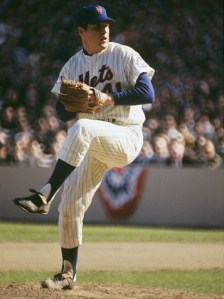
Now we see Seaver one more time, the boyish-looking young man wise beyond his years but unafraid to keep enough boy in him. We see him winding up into that long-familiar downward, leg-driving delivery. We see him surveying the aftermath with Gentry, their uniforms askew, walking around what remained of Shea Stadium’s field, after delerious fans mauled it celebrating that surreal World Series triumph.

Now we see Seaver at the end of his brilliant career, still looking boy enough as the hair started to turn and the body began losing its taper, accepting one final bath of love from Mets fans as he said goodbye by bowing to all sides of the park from the mound. Until such hours as when he became the first Met player whose uniform number (41) was retired, or when he joined his fellows and those who followed saying goodbye to Shea Stadium over a decade ago.

Now we see Seaver’s second act, the vintner at peace with his family and their tall, shading, rich vines; the pitching icon who relaxed every July at the Hall of Fame, the single greatest Met at ease and at peace with his person, his meaning, his life.

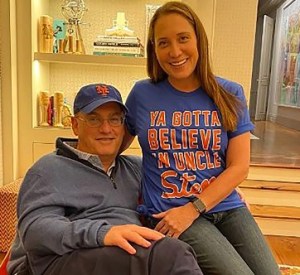
When he was traded to the Reds, a heartsick fan in Shea Stadium hung an iambic banner:

I WAS A
BELIEVER
BUT NOW WE’VE
LOST
SEAVER

“I construe that text, and particularly its telling rhyme,” Giamatti wrote, “to mean that the author has lost faith in the Mets’ ability to understand a simple, crucial fact: that among all the men who play baseball there is, very occasionally, a man of such qualities of heart and mind and body that he transcends even the great and glorious game, and that such a man is to be cherished, not sold.”

So he was—cherished, that is—by fans and the game’s intelligentsia alike, both of whom know baseball is as spiritual as it is viscerally embracing, both of whom joined former teammates and competitors crowding the Twitterverse and other social media with messages of gratitude and grief alike at almost the split second the news of his death arrived.

None cherished The Franchise greater than his beloved Nancy, their daughters Sarah and Anne, and their grandsons Thomas, William, Henry, and Tobin. We should thank the Lord for blessing baseball with him and welcoming him home gently to the Elysian Fields; and, them, for allowing us to share even a piece of a man who transcended even the great and glorious game.

Tempered joy in Metsville

Amed Rosario (arms up) gets a hero’s welcome after his walkoff bomb finishes a doubleheader sweep of the Yankees Friday night. Crowning a pair of surreal days for these surreal Mets.

When hedge fund titan Steve Cohen first emerged as a potential buyer of the New York Mets, I had a little mad fun with that news because we have a couple of things in common. Not financially, of course; Cohen can hand out in tips about a million times what I’ll ever be required to pay in taxes. But we have our mutual grounds regardless.

We’re both Long Island boys who’ve been Met fans since the day they were born. We both made our baseball bones on the original troupe about which it’s fair to say they were baseball’s anticipation of Monty Python’s Flying Circus. We both grew up or (in my case) finished growing up (har har) in Long Island towns with pronounced Mob connections.

Cohen grew up in Great Neck, where there lives the opulent wedding/bar-mitzvah factory emporium (Leonard’s) at which Johnny Sack asked Tony Soprano to perform a hit, a request made just before Sack was carted back to prison from his daughter’s wedding. Bronx native though I am, I finished growing up (snort) in Long Beach, also the home of Don Vito Corleone in The Godfather.

Sorry, Mr. Cohen. My mob family’s Oscars can blow up your mob family’s Emmys.

But it looks at last as though Cohen will graduate from an eight percent stake to controlling ownership of the Mets, more or less as the last man standing. So that gives him more than one up, since the only piece of the Mets I own and can afford is a game hat.

Celebrity would-be buyers Alex Rodriguez, a former Yankee who actually grew up loving and hoping to play for the Mets one day (he actually had his chance, which either he or his then-agent blew like a ninth-inning Met lead), and his paramour Jennifer Lopez, pulled out of the bidding Friday. That may have been the first heavy sigh of relief from Met fans on the day.

Apparently, not even J-Rod could come up with quite the money needed to buy the Mets, whose incumbent Wilpon ownership has long enough been a two-man implosion machine. The J-Rod group would also have included one NFL owner (the Florida Panthers’ Vincent Viola), a BodyArmour founder (Michael Repole), and a WalMart e-Commerce U.S. wheel. (Chief executive officer Marc Lore.)

J-Rod said farwell to the bidding by observing they “submitted a fully funded offer at a record price for the team which was supported by binding debt commitments from JP Morgan and equity commitment letters from creditworthy partners.” The Athletic‘s Daniel Kaplan observes red flags:

[N]otable in the statement is a reference to debt and equity commitment letters from creditworthy partners. On the latter, equity commitment letters are different from money in the bank, and adding a lot of debt to a team that loses around $50 million per year, pre-COVID-19, is not a recipe upon which MLB may have looked fondly.

MLB isn’t “too keen on another [Derek] Jeter/Marlins where they had to scrape their last nickel to pay the purchase price,” a source close to MLB told The Athletic earlier this month, referring to the debt-heavy Marlins. “Especially for a major-market club that already has such large operating losses. Cohen’s checkbook is even more valuable in a COVID and post-COVID environment.”

Not that Kaplan missed red flags flying around Cohen himself, of course. Cohen’s former SAC Capital outfit copped to insider-trading charges and coughed up a record fine of $1.8 billion. Cohen himself wasn’t accused of wrongdoing, but in 2016 he had to agree to the Securities and Exchange Commission’s demand that he not manage the monies of outside investors for 24 months.

Just as problematic may be sex discrimination claims filed in Connecticut against Cohen’s Point72 Asset Management, which I noted myself during the week. Those don’t charge Cohen personally, but one filed in 2018 does, Kaplan writes, though he adds that later in 2018 “the parties voluntarily agreed to terminate the case and submit the case to arbitration, according to court filings.”

Buying an eight percent take in a major league franchise won’t place you under the proverbial microscope, but looking to become the controlling partner will. Baseball’s 23 other major league ownerships have to be edgy about welcoming to their often-dubious ranks a man whose history includes battles over financial crime and sex discrimination charges.

Fred Wilpon and his son, Jeff, haven’t been anywhere near such suspicions so far as anyone knows. They’ve been seen mostly as having been more dumb than dishonest regarding the Bernie Madoff scandal, in which they invested and took an extremely expensive bath. The same could be said for most of Madoff’s investors. But the fallout eventually amplified the Wilpons’ wounding flaws.

Their naivete about Madoff helped them leverage to make the notorious Bobby Bonilla deferred-compensation contract, compel them to pay a reported $29 million into the fund marked for compensating other Madoff victims, and force them “to borrow hundreds of millions more to cover debts they had made against their Madoff assets, [having] almost a major-league payroll’s worth of money due every year just in interest on those debts.”

In baseball terms, the Wilpons weren’t exactly geniuses, either. Before they bought out their original co-owner Nelson Doubleday, they tried to thwart a deal Doubleday wanted to make in the worst way possible. Lucky for them that wiser minds prevailed. That’s two wild cards, one pennant, and one World Series appearance—not to mention the post-9/11 shot heard ’round the world and a Mets hat atop his head—underwriting Mike Piazza’s Cooperstown plaque.

For every Piazza, Carlos Beltran, Carlos Delgado, Johan Santana, and Billy Wagner deal, the Wilpons blocked exponential other solid signings and tradings their baseball brain trusts recommended or signed off on deals and trades about which “dubious” could be considered a compliment.

When Cohen first stepped into the Mets’ controlling partnership picture last winter, I remembered the Wilpons also doing once what some thought could never be done. They made George Steinbrenner himself, the man who threw out the first manager of the year during the 1980s, resemble the epitome of benevolence, with their despicable 2008 execution of manager Willie Randolph, his pitching coach Rick Peterson, and his first base coach Tom Nieto.

The guillotines dropped on the trio after the struggling Mets traveled all the way west from New York to play the Los Angeles Angels in an interleague set and won the first of the set. At three in the morning. It must have been enough to make Randolph, a longtime Yankee fixture at second base, nostalgic for The Boss’s Malice in Wonderland fun house.

Red flags or no red flags, the news that J-Rod dropped out of the Mets’ bidding does indicate the Mets dodging at least one bullet, if what I noted during the week is true and Rodriguez was taking informal counsel from disgraced former Houston Astros general manager Jeff Luhnow. Taking baseball administration counsel from Luhnow is like seeking family counseling from Ma Barker.

The news may also have had an effect on the Mets otherwise.

On Thursday, the night before J-Rod pulled out of the Mets’ running, the Mets’ front office botched almost completely a stirring protest gesture against rogue police and racism, when the Mets and the Marlins observed a moment of silence on field before walking off the field postponing their game.

But come Friday, as MLB commemorated its pandemic-delayed Jackie Robinson Day, and—tragically—the actor (Chadwick Boseman) who played Robinson so powerfully in 42 lost his battle against colon cancer the same day, the Mets swept a doubleheader from the Yankees in the Bronx.

The sweep finished when Amed Rosario, pinch hitting for starting Mets shortstop Luis Guillorme, caught hold of a hanging slider from Yankee closer Aroldis Chapman with pinch-runner Billy Hamilton aboard and sent it into the left field seats. A Mets team who entered the twin bill as the Show’s worst for hitting with men in scoring position (.199) went 5-for-12 in that situation Friday.

Come Monday is the reported deadline for new Mets ownership bids. Joy in Metsville about the end of the Wilpon era is probably tempered by their wish that a saviour with cleaner hands might enter at the eleventh hour. Such a saviour will need five king’s ransoms to out-bid the Long Island boy who once paid for a single painting what the Mets will have paid stud pitcher Jacob deGrom for the entire length of his current contract.

The Mets have been many things in their 58-year life. Dull isn’t necessarily one of them.

Be careful what you wish for, Mess fans

Earlier this week, the worst you could say about the New York Mess (er, Mets) was a piece of doggerel I sketched to Prince’s “1999,” after a Miami Marlins baserunner stumbled, bumbled, and fumbled down the third base line—and still stole home:

Two thousand, 2020, party over—oops! Shame on you!
Tonight we’re gonna party like it’s 1962.

A Met fan since the day they were born can tell you that, compared to loving the Mets, it was easier for Mad Men‘s Don Draper (who kept a souvenir Mets pennant in his office) to be loved by his first and second wives, neither of whom found it simple and both of whom, their own flaws to one side, often felt like singing “19th Nervous Breakdown.

Draper was haunted by having been born and raised in abject hell, if “raised” is the proper word to describe a child treated like a home invader and handed an accidental chance to remake/remodel himself in a wartime accident that killed his field commander. The Mets weren’t quite born in hell, but they’ve been haunted by managements that often treated them like home invaders.

The Mets have been built, un-built, re-built, un-built, re-built again, and un-built again, more often than Orpheus rolled the stone up the mountain to be rolled back down. Today the Mets are on the sales floor. And the Wilpons, who have never been quite the same since they walked into Bernie Madoff’s pyramid trap and walked out fortunate that their heads weren’t removed from their shoulders, simply can’t go gently into that good gray night.

Thursday’s Twitterverse exploded with the news from ESPN’s Jeff Passan that Mets general manager Brodie Van Wagenen, a man seen in over his head when speaking politely of him, zapped commissioner Rob Manfred for the thought that the Mets and the Marlins might walk off the field tonight in protest, over the police shooting of African-American Jacob Blake, only to return to play an hour later.

Until he didn’t. Within less time than it once took for Mike (The Human Rain Delay) Hargrove to complete a plate appearance, Van Wagenen hustled a statement forth saying, whoops! The idea was really Jeff Wilpon’s, not Manfred’s, after Wilpon was informed the Mets’ players voted not to play tonight, a decision with which the Marlins apparently concurred. Van Wagenen concurrently apologised for the original Manfred remark.

What the Mets actually did was take the field, led by Dominic Smith and Billy Hamilton, two African-American Mets. The Marlins did likewise. Both teams observed 42 seconds of silence (the 42 refers, of course, to Jackie Robinson’s uniform number), then walked off the field. The idea was that of the Marlins’ Miguel Rojas. The game was postponed, just as three were on the same grounds Wednesday.

This after Los Angeles Dodgers pitcher Clayton Kershaw stood with his teammates standing together when Mookie Betts opted not to play Wednesday. Observing the negative backlash, Kershaw said, “Yes, I have seen those comments and that’s okay because I feel we’re doing the right thing.” Among other things were those backlashers accusing the Dodgers of standing up for a convicted child molester.

The now-paralyzed Blake isn’t a sterling citizen, of course, and he dealt with Kenosha, Wisconsin police last weekend in the first place over an arrest warrant involving a domestic dispute with his estranged girlfriend, with whom he has three children. The child molestation/child sex assault charges have been debunked. (Yes, you can look it up.)

A criminal suspect’s right not to be shot seven times in the back isn’t contingent on the crime he’s accused of committing. Jack Ruby wasn’t a cop but prying through a small crowd to shoot presidential assassin Lee Harvey Oswald to death didn’t make him any less a murderer.

And those police officers who succeed in performing their jobs without becoming the criminals they’re consecrated to apprehend must be grotesquely appalled whenever one of their breed commits if not succeeds at such attempted murder, knowing as they’re trained to know that absent a bona fide life-and-death moment they’re not sworn in to exercise absolute power of life and death.

Today’s clumsiness is just the latest in a bill of particulars a Met fan and others can lodge against the Wilpon ownership and its administrative subordinates while agreeing the sooner their ownership ends, the better. However, Met fans may well be advised to be very careful what they wish for.

Steve Cohen, who now has a small ownership stake in the Mets but would like to buy the team outright, seemed at first like the ideal choice having grown up a Met fan himself. But reports earlier this month imply that sexual discrimination charges filed recently against his Point72 Asset Management hedge fund firm would compromise him as the next Mets owner.

A team in the middle of a surrealistic enough truncated season in which the game’s players now speak and act on behalf of battling racism, discrimination, and the criminal element within law enforcement can’t afford to become the property of a man whose own company may have issues with discrimination.

But Alex Rodriguez (former Mariners/Rangers/Yankees star (however tainted) turned broadcaster) also aspires to own as big a stake in the Mets as he and his paramour Jennifer Lopez can buy. And Rodriguez is said “in touch” with suspended former Houston Astros general manager Jeff Luhnow, whose results uber alles mentality did too much to reduce the Astros from champions to pariahs.

Luhnow’s administration was exposed plausibly as lacking human decency to match its cold analytical inclinations, while fostering concurrently conditions that made possible the Astrogate illegal electronic sign-stealing scandal that stained the kings of the American League West (and 2017 world champions) until, possibly, the entire roster and organisation are turned over in due course.

The good news is that Rodriguez isn’t said to be thinking of Luhnow as his GM should he win his stake in the Mets, and Luhnow can’t be employed in baseball again until 2021, assuming anyone in baseball wants him. The bad news is that, if that’s who A-Rod leans upon for even informal counsel, be afraid, Mess fans. Be very afraid.

So why did the Mariners trade Walker?

If the Mariners traded Walker over his speaking out pro-protest postponement, they got some splainin’ to do.

Me and my big mouth. Well, keyboard.

Earlier today, writing about baseball game postponements in protest over the Jacob Blake police shooting, I referenced a 1968 trade involving pitcher Milt Pappas, who supported no games played during Robert F. Kennedy’s funeral. Pappas fumed when his Cincinnati Reds management may have strong-armed players into playing. In sort of a blink, he was then an Atlanta Brave.

That’ll teach me.

On Wednesday, when the Seattle Mariners and the San Diego Padres elected not to play, Mariners pitcher Taijuan Walker tweeted, “Glad to be apart of this organization and group of people!” Thank you for standing with us always!!” Come today, Thursday, Walker became a Buffalonto Blue Jay, traded for the proverbial player to be named later. He inprocesses with his new team Friday, when baseball is supposed to commemorate Jackie Robinson.

Pappas would never really know whether the Reds’ then general manager Bob Howsam told the truth when he insisted that 1968 trade was in the works before the Kennedy funeral issue. Walker at this writing may or may not really know soon, or even ever, if Marines general manager Jerry Dipoto had a deal in the works before the protest postponements, either.

In 1968, then-commissioner William D. (Spike) Eckert ordered no baseball to be played during Kennedy’s funeral. Washington’s notorious traffic issues delayed the procession, bumping the funeral to coincide with the start of the Reds’ scheduled game against the St. Louis Cardinals. Pappas supported not playing; the team voted 13-12 to play, possibly after pressure from Howsam and manager Dave Bristol. Three days later—Pappas was gone.

Major League Baseball’s official statement on the protest postponements said, “Given the pain in the communities of Wisconsin and beyond following the shooting of Jacob Blake, we respect the decisions of a number of players not to play tonight. Major League Baseball remains united for change in our society and we will be allies in the fight to end racism and injustice.” Walker tweeted his approval of his team’s protest postponement decision the same night they made it. One day later—gone.

If timing is everything, this timing looks more than a little out of time. It may not even pass the proverbial smell test.

Pappas, who died in 2016, was a white man born in Detroit of Greek parents. (His name at birth: Miltiades Stergios Papastergios.) Walker is a black man born in Shreveport, Louisiana; his father was black, his mother a Mexican-American woman who raised him alone. One dead pitcher and one living one can now hold hands as they say, plausibly enough, that baseball still has growing pains over intolerance not solely regarding a racial issue.

The game has never been entirely comfortable with players known to be outspoken on all sorts of matters. Once upon a time, the Chicago White Sox tried to compel the late pitcher/author Jim Brosnan to sign a contract enjoining him from writing for publication without prior team approval. The author of from-the-inside baseball classics The Long Season and Pennant Race elected to retire rather than allow the White Sox to decide what he could or couldn’t write.

When the then-Florida Marlins traded first baseman Carlos Delgado to the New York Mets after the 2005 season, Delgado—who’d sat in the dugout as a Blue Jay and a Marlin during seventh-inning-stretch playings of “God Bless America,” in protest the Iraq War and using his native Puerto Rico’s island of Vieques as a bombing practise spot—changed his protest tune, possibly under compulsion from the Mets’ front office.

“The Mets have a policy that everybody should stand for ‘God Bless America’,” Delgado said at the time, “and I will be there. I will not cause any distractions to the ballclub . . . Just call me Employee Number 21.” Said Mets chief operating officer Jeff Wilpon at the same time, “He’s going to have his own personal views, which he’s going to keep to himself.”

Delgado didn’t act during playings of “The Star Spangled Banner,” but on Wednesday Mets outfielder/first baseman/designated hitter Dominic Smith did. A young black man who’s a product of south central Los Angeles, Smith took a knee during the song’s pre-game playing to protest the Blake shooting.That contravened his stance in the George Floyd aftermath, when he said a knee wasn’t enough compared to teaching and learning.

There went that idea. Though his teammates had his back, too, refusing to criticise and some supporting him publicly (outfielder Michael Conforto in particular), Smith spoke for himself at a press conference. In tears. Asked by a reporter to describe the most difficult part of the past two months, Smith paused, then sighed, then said through a few sobs, “I think the most difficult part is to see people still don’t care . . . it just shows the hate in people’s hearts and, I mean, that just sucks.”

The Mets’ administration hasn’t said or done anything regarding Smith as I write. That can be considered good if we’re talking about dealing him out of town, post haste or otherwise, as the Mariners may or may not have dealt Walker over his comments. But that can be bad if we’re talking about whether Smith’s team above and beyond his clubhouse teammates will stand for his elementary right to speak his mind and heart.

I’ve said it before in these pages, but I’ll say it again: I have skin in the game of police lawlessness. I’m the paternal grandson of a New York police officer whom you could call both a true man’s man and yet one of the gentlest and most playful of men you’d ever meet in your life, especially with any and all of his eight grandchildren.

Grandpa Walter would have been as appalled at police officers behaving like the thugs they’re charged with apprehending as he would have been about people using police criminality as an excuse to break entire cities. If he’d been presented with the case for doing away with the “qualified immunity” that shields police officers from consequences for their crimes, I believe Grandpa would support its end, as I do.

But I think baseball fans and those who play and administer the game should want to know, for dead last certain, whether the Mariners traded Taijuan Walker—a serviceable, about-average major league pitcher—because it was an already-in-the-works trade on baseball grounds alone.

If they really did, they’re guilty perhaps of bad timing alone. If they didn’t, well, Lucy, they got some splainin’ to do. Did they deal Walker out of Dodge because the very thought that he spoke out proudly and unapologetically on behalf of his teammates postponing a game in protest of racism and police lawlessness offended them?

They stink the body electric

AlfredHitchcockMets

Some say this season came out of Stephen King. Others might think the Mets are Alfred Hitchcock Presents The Outer Limits of The Twilight Zone.

Dysfunctional organisations are about as alien to baseball as a pack of cigarettes rolled into a T-shirt sleeve once was to a 1950s greaser. But then there are the New York Mess—er, Mets—whose 58-year history has had several administrations that could give lessons in chaos to any given White House.

On Sunday, the Mets’ game against the Atlanta Braves had just gotten underway, seemingly, when a statement from the Mets hit the ground running like the Flash: Yoenis Cespedes, who’d homered for their only run in an Opening Day win against the same Braves, was AWOL.

As of game time, Yoenis Céspedes has not reported to the ballpark today. He did not reach out to management with any explanation for his absence. Our attempts to contact him have been unsuccessful.

In due course Sunday it transpired that Cespedes opted out of the rest of 2020. For COVID-19 reasons? For dwindling plate appearance opportunities as the Mets’ number one designated hitter this year? For both? Inquiring minds wanted to know and, seemingly, almost didn’t want to know, at the same time.

The only thing everyone in Mets Land and elsewhere seemed to agree with for long enough on Sunday was that Cespedes’s absence scared the Mets and their observers alike.

When Yoenis Cespedes didn’t show up today, the Mets sent security to his room,” tweeted ESPN writer Jeff Passan later Sunday afternoon. “They found it empty. He had taken his belongings, just up and left, and through his agent informed the team mid-game that he was opting out, according to Mets GM Brodie Van Wagenen.”

UPDATE: Yoenis Céspedes has decided not to play the remainder of the season for COVID-19 related reasons,” tweeted MLB.com writer Anthony DiComo around the same time as Passan’s tweet.

The Mets-inclined Twittersphere wavered between wondering whether Cespedes’s none-too-glittering stats since that opening day home run were one factor, whether Cespedes possibly losing interest was another factor, and whether the Mets not exactly burning up the league was a third. One or two even contemplated aloud whether the injuries that originally took Cespedes down and cost him all 2019 were legitimate after all.

Already rehabbing on his Florida ranch after surgery to remove calcification on both his heels, Cespedes suffered multiple ankle fractures last May when he hit a hole on his grounds—revealed in due course to have happened while tangling with a wild boar he tried releasing from a trap.

Sure it sounded absurd on the surface. Haven’t enough baseball players and other professional athletes gotten themselves injured in some of the craziest, most hare-brained ways? Yes, they have. They’re funny to everyone except the injured.

A Hall of Famer, George Brett, once suffered a toe fracture . . . because, on a day off, he was just that anxious to get back to the television set to watch his buddy Bill Buckner take a turn at bat and smashed the toe against a door jamb. Another Hall of Famer, Rickey (The Man of Steal) Henderson, fell asleep with an ice bag on his ankle and woke up with a nasty case of frostbite. In August.

Once upon a time, last year’s World Series MVP Stephen Strasburg might have had murder in his heart if you’d known he struggled through a rough outing after getting a little Icy Hot balm on his family jewels accidentally. His method of your execution would have depended on whether you serenaded him with a certain Jerry Lee Lewis oldie.

Cespedes fracturing both ankles in multiple places after a tangle with a wild boar is nothing in the absurdity department compared to those. And that’s without remembering that freshly-crowned Cy Young Award winner Jim Lonborg, of the 1967 “Cinderella Red Sox,” tore up the knee on his landing leg when he was or wasn’t chasing movie star Jill St. John down the ski slopes that winter.

Lonborg’s mishap compromised his pitching career; when he returned, he inadvertently altered his motion to go easy on the landing knee and caused himself shoulder issues for the rest of his pitching days. It also inspired adding the “Jim Lonborg Clause” to the universal players contract enabling teams to bar players from “dangerous” off-field activities.

Whether the Mets looked askance out of the public eye about Cespedes’ battle of the boar is anybody’s guess. But the New York Post‘s Mike Puma and Joel Sherman say that, twice during this truncated regular season’s first nine games, Cespedes complained that he may have been kept out of the lineup a few times the better to block him from reaching certain incentive bonuses.

One of those came Saturday, when Cespedes first talked to [manager] Luis Rojas and then [general manager] Brodie Van Wagenen about his playing status and bonuses. Then Cespedes knew before the buses left for Truist Park on Sunday he was not in the starting lineup and he never showed for the game against the Braves, triggering a bizarre day even for the Mets.

Cespedes might have been struggling since his Opening Day launch, but this wouldn’t exactly be the first time a team has tried playing cute with a player over performance bonuses. It probably won’t be the last, either. But it doesn’t often happen when the team’s general manager just so happens to be the player’s former agent, either.

That same Saturday just so happened to be the fifth anniversary of the day Cespedes first arrived in New York and flipped the switch all the way up on the Mets’ season turnaround, the turnaround that took them all the way to the World Series they lost—thanks mostly to the porous defense they finally couldn’t out-hit—to the Kansas City Royals.

Cespedes may be rolling glandular dice with his opt-out. He becomes an unrestricted free agent at season’s end. It’s difficult if not impossible to fathom him getting even the kind of money he agreed to take for this year, after he and the Mets negotiated it from $20 million down to six. Even the Mets’ apparent dysfunction doesn’t leave him with a great look now.

“There is no way to defend Cespedes on this, at all, if we are to believe multiple sources,” writes another Post columnist, Mike Vaccaro, “and on two levels: Not just using the COVID opt-out as cover—think about that one for a minute—but also, given how much of a fiasco his four-year contract . . . has been, that he would make this kind of stand over money.”

Fair play: Cespedes’s mother is ill and at-risk. He does have legitimate health concerns. He also did say goodbye to several Mets teammates Saturday night, but he told his agency, Roc Nation, about his decision, and either Cespedes or the Roc Nation group didn’t tell the Mets’ brass right away. Is that so Mets, or what?

This coronavirus-truncated and mishap of a season has already been described by yet another writer as something straight out of a particularly literary Red Sox fan named Stephen King. I’m more convinced it’s Alfred Hitchcock Presents . . . The Outer Limits of The Twilight Zone. With the Mets’ latest mess (or is that the Mess’s latest mets?) as the episode called “I Stink the Body Electric.”