Paul Lo Duca learns the hard way

Paul Lo Duca, Billy Wagner

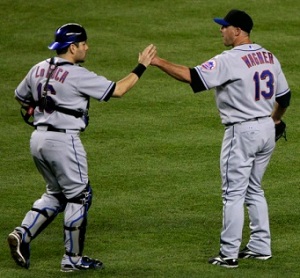
Paul Lo Duca and Billy Wagner share a high-five after nailing down a Mets win. Claiming Joe West’s strikes could be bought with Wagner’s classic Chevy sends Lo Duca from high five to out five hundred large . . .

You can accuse one of baseball’s two most notorious umpires of anything you like. Call him a craven self-promoter. Say his strike zone behind the plate is more flexible than politician’s policy positions. Tell the world he’s a meathead for complaining about the length of a baseball game between two certain teams over whom he appoints himself judge and jury.

Those won’t get you hauled into court to answer for defamation. But say on the air that Joe West’s strikes could be bought for the price of using your pitcher’s classic automobile and it’ll cost you six figures. Especially when West wasn’t even behind the plate in the games in question when you caught that pitcher.

Former major league catcher Paul Lo Duca is learning the hard way after losing a defamation lawsuit West filed in 2019. That year, Lo Duca accused West, the single most notorious umpire this side of Angel Hernandez, of being very generous calling strikes with relief ace Billy Wagner on the mound, after Wagner agreed to let the chunky umpire use the lefthander’s 1957 Chevrolet any old time he chose whenever they were in town together.

That’ll cost Lo Duca $500,000 plus interest paid to West after a decision in Manhattan Supreme Court Monday, during a session to determine damages for which Lo Duca didn’t even show up according to numerous published reports.

Lo Duca claimed on a 2019 sports betting podcast that he talked to Wagner after a game in which Wagner both advised Lo Duca to set up a little more inside on the hitters and suggested West would give Wagner the inside corners a little more generously. Why? Here’s Lo Duca himself aboard that podcast:

We’re playing like a really tight game against the Phillies and Billy Wagner comes in from the bullpen. I used to go to the mound every time and like, ‘What’s going on?’ and he’s like, ‘Hey, Joe’s behind the plate. Set up a couple more inches inside. I was like, ‘Are you kidding me? Joe hates me.’ He’s like, ‘No, no, no, no, no, no. Joe loves me.’

I go, ‘He hasn’t given us the corner all day.’ He’s like, ‘Don’t worry about it.’ He literally throws 10 pitches and strikes out three guys. Joe rings up all three guys. Eight out of the nine pitches were at least three to four inches inside, not even close. Guys were throwing bats and everything. Joe walks off the field.

I get back into the clubhouse and I’m like, “What the [fornicate] just happened just right now?” And Wagner just winks at me. I’m like, “What’s the secret?” He’s like, “Eh, Joe loves antique cars so every time he comes into town I lend him my ’57 Chevy so he can drive it around so then he opens up the strike zone for me.”

I’m like, “This guy’s been throwing me out for the last 10 years of my life and all I needed to do was rent him a ’57 Chevy?”

'57 Bel Air

A 1957 Chevrolet, the kind of car Billy Wagner didn’t use to buy strikes from Joe West.

There were two problems with Lo Duca’s revelation, as things turned out. Problem One: West countered, and the records support him, that he was never behind the plate when Wagner was on the mound with Lo Duca catching in either 2006 or 2007, the two seasons Lo Duca spent with the Mets. Problem Two: Wagner himself submitted a December 2020 affidavit denying he talked to Lo Duca about buying West off with a vintage Chevy or anything else.

Manhattan Supreme Court Judge John Kelley found it too simple to rule in West’s favour when Lo Duca didn’t show up Monday or respond directly to West’s suit otherwise. As of this writing, Lo Duca hasn’t responded to the court ruling and Wagner hasn’t spoken publicly about the case or the critical conversation he denies ever happened.

West remembers working only one Mets-Phillies game behind the plate in the 2006-2007 time frame and Wagner wasn’t on the mound at any time during the game—which ended on a home run, not three straight punchouts. Unlike on a lot of occasions when he calls strikes balls, balls strikes, outs safe, and safes out, West was dead right about that.

You can look it up. In 2006-2007, the Mets played 27 games that ended in walk-offs. Their record in those games: 18-9. (That’s a .667 winning percentage in those games, for those scoring at home.) They included two walk-off games with the Phillies in each year; the Mets won only one of those games:

9 May 2006—Final score: 5-4, Phillies. The walk-off blow: Mets reliever Aaron Heilman’s throwing error on Bobby Abreu’s grounder, allowing David Delluci (two-out triple) to score the winner. Billy Wagner: didn’t pitch. Paul Lo Duca: caught and batted second in the lineup. Home plate umpire: Doug Eddings.

23 May 2006—Final score: 9-8, Mets, sixteen innings. The walk-off blow: Carlos Beltran’s leadoff home run off Phillies reliever Ryan Madson. Wagner: pitched the 11th; fly out, two swinging strikeouts. Lo Duca: caught the entire game and batted second. Home plate umpire: Jeff Kellogg.

28 August 2007—Final score: 4-2, Phillies. The walk-off blow: Ryan Howard’s two-run homer off Guillermo Mota. Wagner: didn’t pitch. Lo Duca: caught and batted seventh. Home plate umpire: Joe West. Most likely, this is the game West himself remembers.

30 August 2007—Final score: 11-10, Phillies. The walk-off blow: Chase Utley’s RBI single through the hole at second, after Tadahito Iguchi singled to tie the game and stole second. Wagner: pitched the ninth and surrendered the tying and winning runs. Lo Duca: entered the game in the eighth taking over for Mike DiFelice and batting eighth. Home plate umpire: Ed Hickox.

Four times the Mets and the Phillies played games ending in walk-off hits in 2006 and 2007. Joe West was the plate umpire for one of those games, in which Wagner didn’t pitch but Lo Duca caught. In the two games in which Wagner did pitch, he struck out two of his three batters in the first game but struck out none of the batters he faced in the second game.

As a matter of fact, Wagner was credited with the pitching wins in three Mets walk-offs in 2006 and two in 2007. So we should have a look at those, too:

9 April 2006, vs. the Marlins—Final score: 3-2, Mets. The walk-off blow: David Wright’s sacrifice fly in the bottom of the ninth. Wagner: pitched the top of the ninth, worked his way out of a two-out jam by inducing a ground out to second base, no strikeouts. Lo Duca: caught the entire game and batted second. Home plate umpire: Ed Montague.

1 May 2006, vs. the Nationals—Final score: 2-1, Mets. The walk-off blow: Lo Duca’s grounder to relief pitcher Gary Majewski on which Majewski’s throwing error trying to start a double play allowed Endy Chavez to score the winner. Wagner: pitched a spotless ninth with two swinging strikeouts and a ground out right back to the box. Home plate umpire: Chris Guccione.

19 May 2006, vs. the Yankees—Final score: 7-6, Mets. The walk-off blow: Wright scoring Lo Duca with a fly single off Hall of Famer Mariano Rivera. Wagner: struck the side out swinging in the top of the ninth. Lo Duca: of course, caught the entire game and batted second. Home plate umpire: Alfonso Marquez.

23 June 2007, vs. the Athletics—Final score: 1-0, Mets. The walk-off blow: Wright’s RBI double. Wagner: shook off a leadoff single in the top of the ninth to get a bunt ground out, a fly out, and a swinging strikeout. Lo Duca: started the game but came out for a pinch hitter in the sixth. Home plate umpire: Marvin Hudson.

21 August 2007, vs. the Padres—Final score: 7-6, Mets. The walk-off blow: Luis Castillo’s RBI single. Wagner: pitched the ninth and surrendered a game-tying run on Kevin Kouzmanoff’s sacrifice fly, during a rough inning in which he surrendered a single, a walk, and a hit batsman to load the bases for Kouzmanoff. Lo Duca: didn’t play. Home plate umpire: Angel Hernandez.

Five times between 2006 and 2007 Billy Wagner ended up the pitcher of record in walk-off wins by the Mets; only once did he get credit for the win when the Mets walked it off after he’d surrendered a tying run. Paul Lo Duca was behind the plate for Wagner in three of the five. Joe West didn’t call balls and strikes in any of those five games, including the one such game in which Wagner did strike out the side—against the Yankees, not the Phillies—with Lo Duca behind the plate.

West plans to retire after this season. Trying to bring Lo Duca to account, West’s legal team pressed his fear that the Lo Duca podcast appearance would injure his chances to be elected to the Hall of Fame, especially considering he stands to break Hall of Fame umpire Bill Klem’s record for games umpired. As The Athletic points out, umps elected to Cooperstown earn a lot more on the rubber chicken and autograph circuits if they have the Hall of Fame on their resumes.

Never mind whether or not you think West belongs in Cooperstown. Lo Duca forgot one of the key lessons we learn at ages younger than Lo Duca’s when he first made the Show: Look before you leap. The tide may have receded.
“I try to control what I can control”

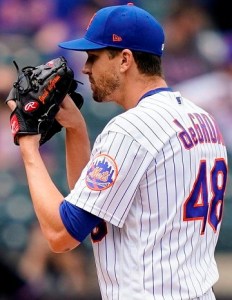
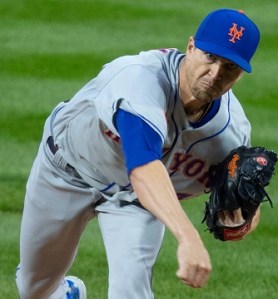
Jacob deGrom

He pitches like Tom Seaver for a team that hits like the St. Louis Browns when he’s on the mound.

Here we go yet again. And it’s getting more ridiculous than before. To the point where someone might be tempted to spike Jacob deGrom’s MP3 player with the Four Tops.

Once upon a time, that legendary Motown quartet sang, “It’s the same old song/with a different meaning since you’ve been gone.” Except it isn’t deGrom who’s gone, it’s the Mets offense when he’s on the mound.

He’s too much a team player to say it, but he must be tempted to wish his teammates wouldn’t just sing “Reach Out, I’ll Be There” but mean it and show it.

For the second time in his first two 2021 starts, deGrom pitched like a Hall of Famer. For the second time in his first two starts, his Mets could have been hauled into court for non-support and for trashing what he left behind. Or, at least, for impersonating the St. Louis Browns.

On Saturday his only blemish was the 0-2 fastball Marlins rookie Jazz Chisholm deposited over the right field fence in the top of the second, after deGrom struck Garrett Cooper and Brian Anderson out swinging.

Those were two of fourteen strikeouts deGrom nailed in eight innings’ work. He threw 95 pitches and 76 were strikes; he scattered five hits including the Chisholm bomb; he was, in other words, the Jacob deGrom who may still remain the favourite for this year’s National League Cy Young Award.

If the Mets keep playing this kind of baseball with deGrom on the mound, the righthander may set another precedent, even in theory: the first 20-game “loser” to win the Cy Young Award.

Don’t laugh, it could happen. DeGrom has an 0.64 ERA and a 1.55 fielding-independent pitching rate. Right now, these Mets seem capable entirely of going the distance to hang 20 losses in deGrom’s locker despite him making their late Hall of Famer Tom Seaver resemble the late Anthony Young.

Marlins rookie Trevor Rogers pitched like a deGrom aspirant on the other side, with ten punchouts in six innings and three measly hits against him while walking two to deGrom’s none. He threw 68 percent of his pitches for strikes to deGrom’s 80 percent. These Marlins need all the good news they can find and Rogers, a lefthander who stands an inch taller than deGrom does physically, may be some of their best news this year.

For eight innings the game stayed 1-0 and deGrom’s elegant assassination of the Marlins other than the Chisholm blast was rewarded with the Mets forgetting that it’s neither necessary nor possible to hit six-run homers every time they check in at the plate.

They had Brandon Nimmo opening the first with a double and taking third when the Marlins misplayed Francisco Lindor’s bunt at second base—and stranded him when Lindor got arrested for attempted grand theft second base followed by Michael Conforto and Pete Alonso striking out.

They had Dom Smith leading off the fifth with a line single past second base but James McCann dialing an immediate Area Code 6-4-3; then, they got the gift of Jeff McNeil wringing Rogers for a full count walk and taking second on a balk with Jonathan Villar at the plate—but they also got Villar striking out for the side.

They had deGrom himself leading off the sixth with a base hit, first and second when Nimmo followed immediately with a walk, and first and third when deGrom had room enough to tag for it on Lindor’s fly to the back of right field—and Conforto and Alfonso striking out for the side again.

They had six chances to get men in scoring position home and blew all six chances. Even allowing how tough Rogers was on the day, that’s six veterans unable to out-think the rookie when they were at the plate and give their own man even two runs to work with.

Of course, in deGrom’s first start the Mets actually let him leave a game with a lead only to see one inning of shutdown relief followed by another of the bullpen puking the bed. This time, the Mets left deGrom in a 1-0 hole—and the bullpen had another stomach upset.

Specifically, the one imposed by Edwin Diaz opening the Miami ninth. He served Starling Marte a grapefruit to hit for a long double on 0-1 and handed Jesus Aguilar a 1-0 meatball to dump into short right center for an RBI single. Just when it looked like Diaz would contain the damage with a fly out to center (Cooper) and a grounder to short (Anderson) forcing Aguilar at second, he walked Chisholm unintentionally and served Miguel Rojas an orange to shoot through the hole at shortstop and send Anderson home.

Then Jeurys Familia kept the damage to a pair by striking out Chad Wallach on three pitches. What was the reward in the bottom of the ninth? Doing nothing against Miami reliever Yimi Garcia. Lindor lined out to the right side of the infield, Conforto grounded out to second, and Alonso looked at strike three right on the floor of the zone on 1-2.

Guess Conforto couldn’t elbow his way into getting something going the way he did Thursday, when he did or didn’t quite get out of the way of a pitch that caught him on the elbow guard with the bases loaded in the bottom of the ninth.

Twenty viewings of that segment and I still couldn’t tell for dead last certain whether Conforto thought about a swing and snuffed the thought at once, or whether he thought he might get away with taking one for the team. Those who think Conforto was looking for a sneaky play should be reminded that his career-long habit with two strikes on him is to lean over the plate a little more than normal.

Plate ump Ron Kulpa rung him up on strike three—then called hit batsman. A replay review didn’t overturn the call that Kulpa knew should have been strike three with the batter failing to get out of the way of the strike. Even the Mets’ own broadcast team—Gary Cohen, Keith Hernandez, and Ron Darling—knew Conforto got away with manslaughter.

The ump declared mea Kulpa right after that game. He got cheered by the Citi Field crowd Saturday, appropriately. We know too much about ump malfeasance and umpires refusing to admit they blew one; we should expect an ump getting some love when he admits he made a big mistake.

The boo birds let the still-struggling Conforto have it in the sixth. Speculation abounds that Conforto in his contract walk year and other formidable Met hitters are pressing too heavily at the plate. (They’re 6-for-41 with men in scoring position so far.)

Nimmo all but admitted as much when he told a reporter, “That could be happening, I’m not in everyone’s mind, but I do try and talk and figure out what guys are thinking, but that definitely could be happening as the game goes on and the runs are not there . . . it definitely could be happening in some guys’ minds.”

Ask deGrom—as the same reporter did about him having a 2.06 ERA since 2018 while the Mets have been six games under .500 in his starts in the same span—and you’re not going to get him to admit he just might have those non-support papers ready to file at the nearest courthouse.

Even if he isn’t quite the most luck-afflicted of hard-luck pitchers. Nobody denies deGrom pitches in an ocean of rotten luck. But he’s not even the most hard-luck pitcher in Met history, believe it or not. That dubious honour belongs to Jon Matlack, whose 39 percent of starts with two runs or less to work with is the highest in franchise history. Higher than the 37 percent shared by Matt Harvey and Hall of Famer Nolan Ryan, higher than the 33 percent of Hall of Famer Tom Seaver, higher than deGrom’s 35 percent.

That could change rather drastically, if the Mets continue their very dubious practise of forgetting how to hit when deGrom is on the mound. Bless him, deGrom doesn’t want to think about things like that. Yet. “I try to control what I can control,” he insisted, “and that’s getting ready for my next start. I hadn’t seen that stat. These guys are great. They’re going out there giving 100 percent. Today we just got beat.”

If he doesn’t exactly sound like the abused spouse who’s willing to believe yet again that the abuser will keep the promise to never, ever, ever do that again, he’s not that far from it, either. If he keeps pitching like a Hall of Famer and wins a third Cy Young Award this year, despite his team making his “won-lost” record resemble an Anthony Young Award winner’s, someone’s going to have to do an intervention.

The first five days

Stop me if you’ve heard it before: Jacob deGrom pitched like a Hall of Famer, but the new Mets bullpen puked the bed like the old one did.

The fans are back in the stands, however limited by ongoing COVID-19 safety protocols, but the Nationals have yet to play a regular-season game thanks to a few players and a staffer or two testing positive. There went that Opening Day must-see match between Max Scherzer and the Mets’ Jacob deGrom.

With their opening set with the Nats thus wiped out, deGrom had to wait until the Mets went to Philadelphia Monday. Oops. That and everything else seemed to play a support role to the horrid news out of San Diego.

The news that Fernando Tatis, Jr., the Padres’s new bazillion dollar shortstop, suffered a partial left shoulder dislocation on a hard third inning swing at the plate during a Monday loss to the Giants.

Padres manager Jayce Tingler told reporters he thinks team trainers and medical people were able to pop the shoulder back together, but the team isn’t taking chances. At this writing, MRI results aren’t available and nobody knows yet whether Tatis will spend significant time on the injured list.

If it’s more than a small shoulder dislocation, it may not be significant time. If it’s something like a labral tear, Tatis could miss six months—essentially, the rest of the season—according to one doctor who knows such shoulder troubles and spoke to the Los Angeles Times. Don’t fault the Padres if they’re saying to themselves, “Thank God for insurance.”

DeGrom could use a little extra insurance himself, alas. The good news for the Mets: deGrom was his usual self Monday night. Six shutout innings, seven punchouts, three hits, three-figure speed on his fastballs. The bad news, alas: the Mets are gonna Met, so far. At least out of the bullpen.

Their on-paper impressive offense found nothing more than two runs to support their ace. They got an inning of shutout relief from Miguel Castro relieving deGrom for the seventh, but the bullpen puked the bed in the eighth—including hitting Bryce Harper with the bases loaded. Not exactly a Rhodes Scholarship move there.

The Old Fart Contingency thundered aboard social media that Mets manager Luis Rojas blew it lifting deGrom after six strong—until they were reminded the added layoff after the Washington postponement put both deGrom and the Mets into caution mode.

“If that was [last] Thursday and I’m on normal rest,” the smooth righthander said postgame of the early hook, “I don’t think there is any chance I’m coming out of that game. We discussed it before what was the right thing to do. Long season and talking to them coming in, it felt like was the right decision.”

It was neither deGrom’s nor Rojas’s fault that, after Garcia took care of the Phillies in the seventh with just one infield hit within a fly out and two ground outs, the Phillies loaded the bases on the Mets’ new relief toy, Tyler May, in the eighth with one out, before Rojas went to another new Met bull, Aaron Loup. And Loup promptly hit Harper to push Miller home, before J.T. Realmuto singled home pinch runner Quinn, Mets late third base replacement Luis Guillorme threw home off line allowing Harper and Rhys Hoskins to score, and Didi Gregorius pushed Realmuto home with a first-pitch sacrifice fly.

The Mets had nothing to answer except a two-out ninth-inning stand that came up two dollars short against Phillies closer Alvarado. Kevin Pillar singled up the pipe, Francisco Lindor—the Mets’ own new bazillion-dollar lifetime shortstop—dumped a quail into shallow right that landed just in front of and then off the glove on oncoming, diving Harper, and Michael Conforto singled Pillar home while setting up first and third.

Pete Alonso, their 2019 Rookie of the Year bomber, hit one to the back of right field that looked as though it had a chance to ricochet off the top of the fence if not clear it. It wasn’t quite enough to stop Harper from running it down, taking a flying leap with his back against the fence, and snapping it into his glove to stop a game-tying extra-base hit and end the game with the Phillies on the plus side, 5-3.

Marry the foregoing to deGrom going 2-for-3 at the plate including an RBI single, and no wonder May himself said post-game, “Jake shouldn’t have to do everything himself. That’s not what teams are, and frankly Jake did almost everything today.”

Just don’t marry that to things such as the Angels’ Shohei Ohtani hitting 100+ mph on the mound and hitting a mammoth home run that flew out 100+ mph in the same inning last Friday night. Ohtani the two way player is an outlier among outliers; deGrom’s merely an outlier.

As of Tuesday morning— with the National League’s pitchers having to bat because Commissioner Nero simply couldn’t bring himself to keep the universal designated hitter this year at least, and Ohtani batting second in the Angel lineup the night he started on the mound, among other things—the pitchers have a .131/.157/.192 slash line and a .349 OPS.

The pitchers at the plate from Opening Day through the end of Monday night collected thirteen hits in 149 plate appearances: nine singles, three doubles, and Ohtani’s Friday night flog a third of the way up Angel Stadium’s high right field bleachers. They also walked three times and struck out 56 times. And the OFC still insists the National League just say no to its own invention.

All around the Show, too, there was one home run hit every 35 plate appearances and fourteen percent of all 928 hits the season’s first five days cleared the fences. It took five outs to create a single run, with 5.3 average runs created per game and 631 runs created while 559 scored.

It was fun to hear the fan noises even in limited capacities, too, though the limits in Angel Stadium made Ohtani’s blast sound even more explosive at the split second he hit it. If only things had been more fun for the home crowds: the many themes for the Show’s first five days could include, plausibly, the blues classic “On the Road Again.”

The home teams’ slash lines: .225/.313/.374/.687 OPS. The road teams: .245/.328/.403/.731 OPS. The road teams drove in fifteen more runs, hit thirteen more home runs, seven more doubles, and had seventy more hits overall. They also took eleven more walks, though they struck out fifty more times and grounded into fifteen more double plays. The road rats also had a +29 batting average on balls in play over the home boys and 108 more total bases while they were at it.

Maybe the shocker among the opening road rats were the Orioles. The Woe-rioles. Taking three straight from the Red Sox in Fenway Park. Out-scoring the Olde Towne Team 18-5, including and especially an 11-3 battering on Sunday afternoon. Even those paranoid about ID cards might want to insist the Orioles show theirs, even after the Orioles got a brief return to earth from the Yankees beating them 7-0 Monday in New York.

Unless it was the Reds, taking two out of three from the Cardinals to open, including and especially a 12-1 battering Sunday afternoon that proved the best revenge against abject stupidity is to slap, slash, scamper, and smash your way to a six-run seventh when you’re already up three runs—thanks to Nick Castellanos ripping Cardinal starter Carlos Martinez for a two-out, three-run homer an inning earlier.

Castellanos got drilled by Cardinals reliever Jack Woodford Saturday . . . two days after he bat-flipped a home run. Then, when he dove home to score on a wild pitch, Castellanos got bumped by Woodford sliding in to bring down the tag Castellanos beat. Castellanos sprung up, barked at Woodford, and began walking away before trouble could arrive. Oops. Trouble arrived—when Yadier Molina shoved him from behind to spark a bench-clearing brawl.

Baseball government myopically suspended Castellanos two games for “provoking” the brawl. Who’s baseball’s official optician? Who couldn’t see what everyone else with eyes saw? And how long has Molina—handed only an “undisclosed fine” along with a few others in the scrum—been so privileged a character that he can get away with the actual kickoff of a brawl that was seeded in the first place because the Cardinals are one of the game’s self-appointed Fun Police precincts?

“I was pleased,” Cardinal manager Mike Schildt told the press after that game. “Our guys came out there. We’re not going to take it. I know Yadi went immediately right at him, got sidetracked by [Cincinnati’s Mike Moustakas]. Woody, to his credit, got up and was like, ‘I’m not going to sit here and be taunted.’ Good for him.”

Taunted? All Castellanos said when he sprang up, by his own admission, was “Let’s [fornicating] go!” Anyone who thinks Woodford lacked intent didn’t see that ball sailing on a sure line up into Castellanos’s shoulder and rib region. Nor did they see Molina very clearly shoving Castellanos without Castellanos having the benefit of a rear-view mirror.

Castellanos appealed the two-game suspension. The final result wasn’t known at this writing. But the Cardinals should be getting a message of their own: Defund the Fun Police. Pronto.

How about the Astros, who went into Oakland and swept four from the Athletics before ambling on to Anaheim and losing 7-6 to the Angels Monday night? That was despite dropping a three-run first on Angel starter Jose Quintana and yanking a fourth run out of him in the top of the fourth, before the Angels finally opened their side of the scoreboard with Mike Trout (of course) hitting Luis Garcia’s 2-2 meatball about twelve or thirteen rows into the left field seats.

The Angels pushed a little further back, the Astros pushed a little further ahead, until the Angels ironed up and tore four runs out of the Astros in the bottom of the eighth with an RBI single (Dexter Fowler), a run-scoring force play (David Fletcher), a throwing error (on Jared Walsh’s grounder to first), an intentional walk (to Trout, of all people), and a sacrifice fly (Anthony Rendon).

Kyle Tucker’s ninth-inning solo bomb turned out more a kind of excuse-us shot than a last stand. The game left both the Astros and the Angels at 4-1 to open the season and what could be very interesting proceedings in the American League West. Now, if only the Astros could finally get past Astrogate.

They’ve been playing and winning through numerous catcalls, howls, and even a few inflatable and actual trash can sightings in Oakland and Anaheim. Jose Altuve—who’s looked more like his old self at the plate so far—seemed mildly amused when an inflatable trash can fell to the warning from those high Angel Stadium right field bleachers.

Astrogate was and remains anything but amusing. The Astros could keep up their torrid opening and overwhelm the AL West this season, but the scandal won’t go away entirely (nor should it) until the absolute last Astrogater standing no longer wears their fatigues. Yes, you’ve heard that before. That doesn’t make it any less painful for Astro fans or less true for everyone else. The Astros, nobody else, wrote the script that made them pariahs. Bang the cans slowly, fans.

Will off-field-based illegal electronic sign stealing disappear at all? Players got same-game video access back this year. There are three security people in every team’s video room at home and on the road. League cameras have been installed in those video rooms. Maybe it wouldn’t hurt to add guard dogs?

The players union agreed last year: there’ll be no more players getting away with murder even in return for spilling the deets—the commissioner can drop a lot more than a marshmallow hammer on the cheaters from now on. All by himself. He can demand answers without plea bargaining. And he doesn’t need a permission slip.

“But one of the prevailing lessons from the electronic sign-stealing era is that even if a scheme sounds far-fetched, someone might give it a whirl if they believe they can get away with it,” writes The Athletic‘s Evan Drellich, one of the two reporters (Ken Rosenthal was his partner) who helped break and burrow deep into Astrogate. “This holds true no matter what MLB does. Even a total ban on electronics, which the players would never agree to, would not be enough. In that case, a player or staffer could simply go rogue.”

In other words, boys will be still be boys, if they can-can.

Lindor gets his lucre

341 million more seasons to smile than Lindor already had making himself a Met.

The night before Opening Day, Francisco Lindor went from prospective off-season free agent to a Met for life. The morning after Lindor became a $341 million Met, the anticipated enough Opening Day duel between Jacob deGrom and the Nationals’ Max Scherzer got postponed thanks to five Nats players and one team staffer testing positive for COVID-19.

Lindor was already the catch of the offseason when the Mets reeled him in from the Indians with pitcher Carlos Carrasco in exchange for Amed Rosario, Andres Gimenez, and two prospects. That one showed things stood a fine chance of being far different under the Steve Cohen regime than they were under the former Wilpon government.

But would the gigarich Cohen be willing to open the vaults deep to keep Lindor beyond his walk season? Turns out that he would, after a little tussling and a few hiccups. Especially after Lindor turned spring training into his personal coming-out party as a Met.

All Lindor wanted, it turns out, was for someone—preferably his new bosses—to acknowledge that, sure, Fernando Tatis, Jr.’s hot stuff and liable to stay that way, and sure, the Padres weren’t stupid to lock him down and make him a Padre for life, but there was someone else playing shortstop on the baseball street who’d shown and proven a little bit more (well, a lot more) than Tatis had just yet.

When the Mets first offered Lindor $325 million, Lindor—whose smiling style can provide alternative power in the event of a major blackout—said nice, but not so fast. He’d have had to be willfully blind not to notice the Padres invested $340 million in a shortstop who’s played just shy of a full season’s worth of games in two years. He wanted just a little bit more—$1 million more as things turned out.

A little nudge here, a little tug there, a little bump yonder, and Lindor got what he wanted. Just $1 million more worth of evidence that he’d done already what the Padres hope Tatis continues doing. Even if the tradeoff for getting just that much more acknowledgement meant Lindor also looks at $50 million deferred money.

“When it came to negotiating his contract, Lindor was comparable to Tatis only in the sense they play the same position,” writes Ken Rosenthal of The Athletic. “Lindor, 27, was one year away from free agency. Tatis, 22, was four years away. And in terms of career accomplishment, Lindor had produced five seasons of at least 4.0 Wins Above Replacement, according to FanGraphs, and Tatis had yet to produce one.”

The thing they have in common otherwise is how much plain fun both Lindor and Tatis are to watch. They’re studies in controlled incendiaries at the plate; they’re studies in acrobatics at shortstop. So far. Barring catastrophic injury or other unforeseen unforced troubles, they’re likely to be that for a long enough time to come.

Lindor’s played six Show seasons; Tatis has played 143 Show games so far. This is how they compare in terms of my Real Batting Average metric: total bases (TB) x walks (BB) x intentional walks (IBB) x sacrifice flies (SF) x hit by pitches (HBP), divided by total plate appearances (PA):

Player PA TB BB IBB SF HBP RBA
Francisco Lindor (6 yrs, per 162) 732 319 59 27 8 5 .571
Fernando Tatis, Jr. (143 games) 629 325 57 2 4 10 .633

Tatis is equivalent to the hot first-season wonder. Lindor’s a six-year veteran. If Tatis after six years shows an RBA of .571 or better, he belongs at Lindor’s level. But Tatis isn’t just going to have to keep it up at the plate. He’s going to have to step it up major bigtime in the field. For that equivalence of one season, Tatis has saved 18 runs below his league average. For six seasons, Lindor has saved 56 runs above his league average.

Tatis is the prodigy, the work in progress. Lindor’s the established positional model. If he’s aware that he’s proven himself a top-of-the-line all-around shortstop, you can’t blame him for believing the Mets—or his next employer, should he have chosen to play 2021 out and hit what might be a crowded offseason market throttled by dependence on the next CBA negotiations and outcome—should pay him just so.

Without Lindor’s presence the coming shortstop division of the next free agent class is going to be formidable enough. Unless one of these players lands himself an extension to his liking before the 2021 season finishes playing out, here they are, according to RBA so far:

Player PA TB BB IBB SF HBP RBA
Javier Baez 2708 1201 128 30 12 22 .504
Carlos Correa 2583 1089 272 17 27 15 .550
Corey Seager 2301 1034 207 15 12 16 .558
Trevor Story 2541 1228 213 10 9 21 .583
Francisco Lindor 3510 1531 284 27 36 25 .542

Story, of course, benefits from the Coors factor; neutralised and his RBA might be somewhere more between Lindor and Correa. Now, put them all in the field, see who’s saving runs how far above his league average, and it’s no contest:

Player TZR
Javier Baez +11
Carlos Correa +30
Corey Seager +23
Trevor Story +41
Francisco Lindor +56

With Lindor off the market, Story is the best all-around shortstop in the coming free agents’ class by the raw numbers, but that Coors factor may or may not factor likewise into whether his payday might come that close to Lindor and Tatis.

Tatis landing his Padres lifetime meant that Lindor’s market would take a big leap flying high. Now Lindor’s jumped the coming shortstop market up, of course. But—assuming the CBA negotiations don’t put any kind of crimps into the real market values of players—Baez, Correa, Seager, and Story may see better dollars than they thought they’d see without getting close to Lindor’s bank account to come.

Assume a fair market and intelligence to match coming for argument’s sake. Story and Correa should see larger lucre than Seager and Baez. But that’s only on assumption. We don’t know yet what the coming CBA will deliver.

The bad news is that I’m pretty sure of one thing the coming CBA won’t deliver. The Major League Baseball Players Association isn’t likely to even think about revisiting the player pension plan and giving a reasonable shake to the class that was frozen out of the plan’s 1980 re-alignment capriciously and unfairly: short-career major league players from 1949-80.

Those players include a small handful of one-time Mets. Players such as Bill Denehy, the pitcher traded to the Washington Senators after a single injury-disrupted season as a Met, so the Mets could bring Gil Hodges from Washington to manage them.

Players such as Bill Wakefield, whose lone major league season was as a Met reliever in 1964 when he set a team record for appearances. Players such as outfielder Rod Gaspar and infielder Bobby Pfeil of the 1969 Miracle Mets. Players such as 1970s outfielders George (The Stork) Theodore and Leon Brown. And more.

The 1980 re-alignment changed pension vesting to 43 days major league service and health care vesting to a single day’s major league time. But it excluded players with short careers who played between 1949 and 1980. Some who follow the issue believe one reason was that they were seen as little more than September call-ups, though most of the players frozen out made teams right out of spring training.

The sole redress those players have received since comes from a 2011 deal between then-commissioner Bud Selig and then-players union director Michael Weiner: they have the pre-1980 short-career players $625 per quarter for every 43 days major league service, up to four years worth. The bad news: it doesn’t allow the players to pass those dollars to their families upon their deaths. The worse news: Weiner’s own death, taking further chances for better redress off the table so far.

Cohen has shown he wasn’t kidding when he said he was willing to spend and invest reasonably in reviving the Mets and securing them as a competitive Show team. Perhaps if the players union continues refusing to do better by the short-career players frozen out of the full pension realignment, Cohen—like me, a Met fan since the day they were born—might think about doing something better just for his own former Mets.

I’ve said it before, but I’ll say it again: It’s worth considering, and doing. Think about the props Cohen would earn if he, an owner, starts with his own team what the union still won’t think about with all 614 remaining un-pensioned short-career major leaguers. Maybe he’d inspire other owners with comparable dollars and love of the game to do likewise for theirs.

Denehy, Wakefield, Gaspar, Pfeil, Theodore, Brown, and other such short-term former Mets were among the players who supported the union during their major league lives, walking pickets, surrendering small incomes otherwise, the better to see the days when a Francisco Lindor could count before taxes on $341 million going into the bank thanks to a far more fair and open market than that in which they played.

Someone needs to make a serious move. If the union can’t or won’t, why not an owner? Especially one who’s been as unapologetic in his love for his team and the game as Cohen has been?

Is Mickeygate Tribegate now?

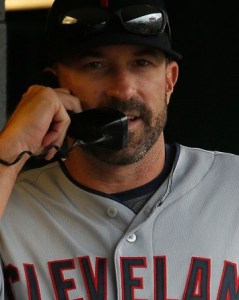
How much did the Indians really know about Mickey Callaway’s pursuits?

It’s going from worse to impossible for Mickey Callaway. But it’s going from bad enough to far worse for the Indians, too. Callaway hasn’t worked for the Indians since 2017, but it looks as though they can’t really be shocked anymore.

Team president Chris Antonetti told the press in early February he was “disturbed, distraught, and saddened” by allegations of Callaway’s sexually-oriented misconduct. That was after The Athletic exposed his inappropriateness with five media women while he managed the Mets. It may have been only the first hints.

Come Tuesday morning, Athletic reporters Brittany Ghiroli and Katie Strang published that Callaway’s kind of behaviour not only traced back to his Indians years but that several key organisation members—including Antonetti and manager Terry Francona—seemed aware enough then that Callaway’s taste for pursing women inappropriately wasn’t a one-time wild pitch.

“Since the publication of The Athletic’s first article,” Ghiroli and Strang wrote, “more women have come forward to say that Callaway made them uncomfortable by sending them inappropriate messages and/or photos, making unwanted advances and more while they worked for the Indians.”

Additionally, in 2017, an angry husband repeatedly called the team’s fan services department to complain that Callaway had sent “pornographic material” to his wife. Those calls were brought to the attention of Antonetti, manager Terry Francona and general manager Mike Chernoff; the Indians spoke with Callaway about the matter . . .

Over the past month, The Athletic has interviewed 22 people who interacted with Callaway during his years in the Indians organization, including 12 current and former employees. They say that Callaway’s sexual indiscretions permeated the workplace to such an extent that it would have been difficult for top officials to not be aware of his behavior, and they push back against any assertion that Callaway’s actions, when made public by The Athletic last month, caught team executives or MLB by surprise.

“I laughed out loud when I saw the quote (in The Athletic’s original report) that said it was the worst-kept secret in baseball, because it was,” said one Indians employee. “It was the worst-kept secret in the organization.”

After the Mets canned Callaway as manager following the 2019 season, the Angels hired him as pitching coach for incoming manager Joe Maddon. Following The Athletic‘s initial report, the Angels suspended Callaway, pending the outcome of a joint probe between the Angels and baseball’s government. Assorted reporting since has said the only reason it’s a suspension and not unemployment was Callaway’s insistence he’d done nothing truly wrong.

Ghiroli and Strang say Callaway’s reputation as a huntsman traced back to his days as a high school pitching hero (“He was a high school celebrity,” they quote “one woman he frequently pursued”) and ran into his years at the University of Mississippi, his drafting and development by the Rays (known then as the Devil Rays), and past his short, three-team pitching career, and his 2001 marriage.

““He does have a way of making you — you kind of always thought it’s just you,” Ghiroli and Strang quoted a woman from Callaway’s Memphis hometown. “Until one day you sit down with a bunch of girlfriends and a glass of wine and realize you’re not.”

Callaway had the gift of working the room profoundly enough that a career as a pitching coach all the way up from the lowest minors to the Show itself seemed almost a given. In baseball terms, Ghiroli and Strang observed, his forward-thinking and ability to present complex metrics in simpler forms made him “a key conduit” for the Indians’ pitching program overhaul.

The trouble was, his reputation for hunting women aggressively paralleled the growth of his reputation as a thinking person’s pitching coach. One of his former minor league pitching charges told Ghiroli and Strang Callaway was given to too-frequent sexualising of women in his comments and often asked players regarding women, “Where’s the beef?”

The beef to which Callaway didn’t refer is now with him, with the Indians who may actually have known what Antonetti professed to be shocked to have learned, and with anyone in baseball who’d caught onto his predatory ways without moving to stop them. The same former pitching charge told the two Athletic reporters, ““It gets kind of awkward when he’s checking out players’ girlfriends” in the stands near the dugout.

Becoming the Indians’ pitching coach didn’t send him any message about maturity, either. He’d gaze, gawk, leer, and send messages to assorted women’s social media accounts. Ghiroli and Strang also said several Indians players’ wives noted him having an extramarital affair or two.

“I don’t think it’s necessarily a Cleveland issue but a baseball issue,” one who worked for the Indians told the reporters. “As women, we feel like if we report something, we’ll be looked at like a tattletale or that if we talked, (the team) will figure out who reported it.”

Ghiroli and Strang didn’t have to hunt hard to find those women. When their first report emerged, and Antonetti said the organisation received no complaints about Callaway, those women sought the two reporters out themselves. The team was even willing to have Francona talk to the husband of a Callaway paramour who’d been calling the team incessantly for accountability.

All that was before Callaway was hired to manage the Mets, who’ve since been very public about their need to investigate prospective hires more deeply than in the past. What the Jared Porter sext scrum began, the revelation of Callaway’s sexually oriented misconduct exacerbated for them.

The aforesaid husband is thought to have contacted the Mets about Callaway’s sending his wife “pornographic” material, but the then-manager-to-be assured the Mets it tied to an extramarital affair that “dissolved,” and he was working things out with his wife.

It was bad enough the Mets and the Angels were forced to reckon with the possible full depth of Callaway’s misbehaviours. It looks worse that the Indians knew more than they let on when The Athletic first exposed them. Callaway isn’t helping himself, either, if a reply to a Ghiroli and Strang query the day before they published afresh is any indication:

While much of the reporting around my behavior has been inaccurate, the truth is that on multiple occasions I have been unfaithful to my wife, and for that I am deeply sorry. What I have never done is use my position to harass or pressure a woman. I am confident that I have never engaged in anything that was non-consensual. I feel truly blessed that my wife and children have stuck with me as the most personal and embarrassing details of my infidelities have been revealed. I will continue to work as hard as I can to repair the rift of trust that I have caused inside of my family.

How about the rift of trust he’s caused inside baseball, which has much more work to do when it comes to making women feel comfortable around the arterials of the game? How about the rift of trust he’s caused among those who knew but feared reporting it?

“Some who lived through Callaway’s time in Cleveland and were subjected to his aggressive advances,” Ghiroli and Strang wrote Tuesday morning, “questioned how the men who once supervised Callaway can be trusted to fix the culture that allowed him to operate so brazenly.”

How about even the further rift Callaway’s caused between a father and son already having a somewhat difficult relationship?

“This isn’t easy,” tweeted Nick Francona—son of Terry Francona, a son once fired by the Dodgers as player development assistant, after he sought an assessment by a Boston-based group helping combat veterans such as himself deal with the lingering effects, but who also refused to help cover up sexual misconduct among Dodger minor leaguers—“but it needs to be said.” “It” was a formal statement in which he said he couldn’t “say I am surprised” about Callaway’s behaviour, for openers:

When the news . . . first came out earlier this year, I confonted my father, Chris Antonetti, and others within the Cleveland Indians. I wanted to know why they didn’t say anything to me when the Mets hired Mickey Callaway and they gave him a strong endorsement. My father lied to me and said he didn’t know. Additionally, I think he and his colleagues fail to understand what is acceptable behaviour and what isn’t.

The younger Francona said he “confronted my father” again Tuesday morning and believes further that the elder Francona “simply doesn’t get it,” while admitting father and son are not particularly close “largely as a result of disagreements about his conduct.” Terry Francona has declined comment so far.

After writing that standing up for what he believes right means acknowledging his father and the Indians are wrong, the younger Francona called their behaviour unacceptable, leaving it “hard to have faith” that they can improve when they seem more concerned about covering up.

I don’t think this is a problem that is unique to the Cleveland Indians and I think there needs to be a reckoning across Major League Baseball . . . Until a truly independent outside party is brought in and there is transparency and accountability, these problems will continue to plague the sport.

We love to see women enjoy baseball as much as men enjoy it. What’s wrong with asking that women be made as comfortable working in or around the game as men? What’s wrong with asking a firm, enforceable line be drawn between a man interested in a woman personally and a man believing he has the right to hunt her down sexually? What’s wrong with asking accountability when a man (or a woman, for that matter, and yes that happens, too) crosses that line?

The proper answer to all three questions should be absolutely nothing with any of those.