Two Bs and a Tuck

Alex Bregman

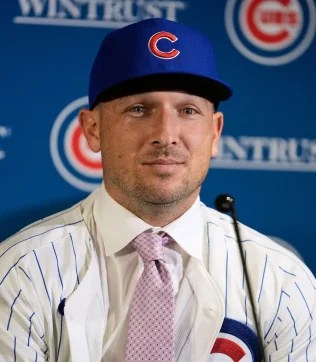
“There’s an excitement in the air about Cubs baseball,” said their new $175 million third baseman Alex Bregman after signing with the team last week.

What a week, right? Just like that, three of the more luminous members of this winter’s free agency class found new homes for varying dollars.

The usual suspects scream blue murder. A few unusual suspects pick up Dodger manager Dave Roberts’s expressed equal adoration for a salary cap and a salary floor. So, who’s coming out how, where, and why? Let’s look with sober eyes.

Da Bear Market Dept.—Think about it: On the same evening the NFL’s Chicago Bears shoved the Green Bay Packers to one side and out of the race for the Super Bowl, in Soldier Field, the Cubs made erstwhile Astro/Red Sox third baseman Alex Bregman a rather wealthy man.

With the Red Sox thought to be pushing a bit extra to bring Bregman back, the Cubs pushed enough to land Bregman on a five-year, $175 million that includes a mutually agreed-upon $70 million worth of deferred money.

You think Bregman’s new teammates weren’t enthused about the deal and their new mate? “I texted him when the news broke: ‘Dude, let’s freaking go’,” said pitcher Jameson Taillon, an Arizona neighbour of Bregman’s according to The Athletic. “He FaceTimed me. He was like, ‘Hey, we’re just finishing up dinner. Can I come over?’”

He wasn’t alone, wrote the journal’s Patrick Mooney: “Pete Crow-Armstrong, the All-Star center fielder, was in attendance at Soldier Field when he found out that Bregman would be a new teammate. Immediately after seeing the reports, Gold Glove shortstop Dansby Swanson called Bregman from a friend’s wedding.”

The Cubs made a run for the postseason last year. After a few years behaving like the big city kid who seemed to be seduced by the outskirts of Four Corners, Nowhere in Particular, they started behaving like the bigger market team they’re supposed to be once the postseason run ended.

“There’s an excitement in the air about Cubs baseball,” said Bregman while he made a bit of a whirl-around Chicago tour last week. “I can’t wait to get after it.” Pause. “After it” means “pennant race” and “World Series trip” for a man who now picked uniform number 3 to indicate he’d like a third World Series ring as well as stability for his family.

He’s known as a student of the game, a disciplined hitter, a sharp-fielding third baseman, and a clubhouse godsend. All Bregman has to do is live up to all that as best a 31-year-old with more than a few miles on him can, as he did when his body allowed in Boston last year. Da Cubs will make sure his appreciation is far, wide, and deep.

Tucker, the Man and His Team Dept.—Meanwhile, an erstwhile Cub lit the fuse on fresh screaming over the big, bad, behemoth Dodgers and their big, bad, behemoth platinum vault. The erstwhile Cub is Kyle Tucker, considered the number one free agent in the winter class by those who thought Bregman was the class’s second banana.

Tucker signed up for four years, $240 million, and opt-outs after years two and three. The deal also includes $30 million in deferred dollars. If Tucker helps the Dodgers to a third straight World Series title, Dodger City will consider it all very wisely spent. If he doesn’t or can’t, well . . .

That screaming won’t be limited to denunciations of the Dodgers as the new Evil Empire. It’ll include audible-in-the-Klingon-Empire demands for explanations as to why a no-doubt talent but with 27.3 wins above replacement-level in eight season is pulling down $17 million a year more than Aaron Judge, Yankee bombardier first class, who earned about 3.0 more WAR just over three of the past four years.

The Dodgers are betting on Tucker’s future coming somewhere near Judge’s present, of course. Aside from the dollars, the Dodgers could offer something far deeper to the low-keyed Tucker. He can do Tucker things without the floodlights baking him too heavily compared to the rest of the Dodgers’ star power.

He might have been the star of this free agency market, when Bregman and Bo Bichette weren’t, but that’s about as far as Tucker seems to care to go when it comes to attracting attention with anything beyond his still-growing bat and his virtuosity playing right field.

What’s Bo Know Dept.—Bo Bichette is a Met. Roll the rhyme around awhile, Metsropolitan New York. Savour the possibilities to come with a healthy Bichette helping the Mets ride all the way to a postseason. (Remember: He came off the injured list to be one of the shining time Blue Jays in last year’s World Series.)

Now, be afraid. Be very afraid. Because the Mets plan for their new $126 million infield toy is to move him from his normal shortstop to third base. Every Met fan since the day they were born will warn you. The Mets don’t have a sterling history of third base conversions. (Mets legend David Wright was born to the position, you may remember.)

Ask what happened when they traded a talented but still-erratic arm named Nolan Ryan to the Angels for a veteran elite shortstop named Jim Fregosi . . . and decided to turn that veteran elite shortstop into a third baseman. Case closed.

Bichette can hit. The only population that doesn’t know that might be a colony of Arctic walruses. But with the glove? He’s 36 defensive zone runs below his league average as a shortstop, and his range factors per game are below the average, too. He played a little second base in the minors but not a lick of third base in the Show.

The Mets turned toward Bichette more seriously (they’d been talking previously) when Tucker went California bound the night before. The Phillies saw the Mets embrace Bichette and elected to reunite with veteran catcher J.T. Realmuto after all.

Now all the Mets have to do is get a read on whether Bichette will be the second coming of poor Jim Fregosi or the first coming of Bo Bichette, third base maven. Not to mention whether Brett Baty, the incumbent third base Met, will have a reasonable future moving to the corner outfield, as some reports speculate.

Well, the Mets have been many things over the decades. Boring has rarely been one of them.

The Polar Bear of Baltimore

Pete Alonso

The Polar Bear gets his wings in Baltimore.

Those running baseball front offices will never lack for pressure. But there are always those among them who inflict the pressure upon themselves. Sometimes the intentions are noble. Sometimes the foresight is far. Sometimes the vision is blurry. Sometimes the blur becomes blindness.

Today’s Oriole fans have the unexpected luxury of believing their team’s president Mike Elias means business, when he says he was looking to take the Orioles’s promising lineup over the top and signing Pete Alonso was the means to that end.

Today’s Met fans have what they think is the too-familiar lack of luxury in believing their team’s president David Stearns is either talking through his head gear or blowing smoke, when he says the Mets were wary of going as far ahead in time with Alonso as the Orioles ultimately did.

Those Met fans, who’ve made a dark art out of pronouncing a season lost after a single bad inning on Opening Day, can’t fathom how a first baseman who’s still a young enough man, and has been one of their team’s most consistent power hitters since his 2019 arrival, became un-affordable beyond three years and unworthy of even receiving an offer this time around.

Stearns hasn’t kept his wish to upgrade the Mets defensively a state secret. The unfortunate flip side of Alonso’s batting prowess has been his fielding lack of it. As good as he is on the double play, as excellent as he is at snatching throws in the dirt, Alonso has slightly negative run prevention plus below-league average range factors.

The Orioles seem to be counting on Alonso’s formidable bat making up for the fielding shortfalls. The Mets seemed unwilling to continue taking that chance no matter how many home runs, no matter how many extra base hits, no matter that Alonso nudged Darryl Strawberry to one side as the franchise’s all-time home run hitter.

Alonso wasn’t the first free agent Stearns allowed to change addresses. The day before the Orioles landed him, relief ace Edwin Diaz elected to sign with the Dodgers. Three years and $96 million—and the largest average annual value for a reliever yet—wasn’t a figure the Mets couldn’t equal if they were thinking in three-year increments as seemed to be the case with Alonso.

So what made the bullpen bellwether return west? Part of it might have been Stearns signing bounceback relief candidate Devin Williams, with whom he was familiar from their time in Milwaukee. Part of it, too, and perhaps especially, might have been their coaching overhaul following the season included Jeremy Hefner, a pitching coach Diaz liked and respected.

The 2025 Mets had pitching issues that had nothing much to do with Hefner. But Diaz took his dismissal to mean the Mets suddenly got unserious about something dear to his heart.

“I spent seven years in New York,” the righthander said after he signed with the Dodgers. “They treated me really good. They treated me great. I chose the Dodgers because they are a winning organization. I’m looking to win, and I think they have everything to win. Picking the Dodgers was pretty easy.” Owitch.

And Alonso? He was both a fan favourite and an undisputed team leader, on the field and off it, known as much for his charitable acts as his bat and his fun-loving leadership style. But he spurned a significant extension offer a few years ago, and he re-upped with the Mets last winter in the face of a thinner market, taking two years with an opt-out after 2025. He exercised it after a big bounceback season and found a more accommodating new market.

Never underrate the power of betting on yourself and winning big even if it’s moving from the Grand Central Parkway to Cal Ripken Way.

“I’ve really enjoyed playing in New York,” said the Polar Bear, whose Oriole introduction included a large stuffed white polar bear on the table to his right and a brief struggle to button up his new Orioles jersey properly. He took number 25 only because his long-familiar number 20 has been long, long retired by the Orioles in honour of Hall of Famer Frank Robinson.

“I’m very gracious for that opportunity,” continued Alonso, who may have landed himself the Yogi Berra Malapropriety Award with that phrasing. “There’s some amazing people over there. Whether it be the locker room staff, clubbies, it was phenomenal. I really enjoyed my time. But this right here, this organization, this city, I’m so proud to call it home.” Double owitch.

“Losing franchise stalwarts Díaz and Alonso on back-to-back days is something a Mets fan might have expected from the Wilpon ownership—only with some ridiculous positive spin on how the team will be better for it,” said The Athletic‘s Ken Rosenthal.

Now, fans might wonder if Fred and Jeff Wilpon are practicing voodoo on David Stearns and owner Steve Cohen.

Stearns and Cohen have not said much of anything. That’s to be expected as they start to clean up the mess they’ve created, the baseball equivalent of a flooded kitchen floor. But they had better provide some answers quickly, and with actions, not words.

Maybe reuniting with Stearns gives Williams a clean shot at a big bounceback following a testy 2025 in Yankee pinstripes. Maybe bringing aging, injury-recovering Marcus Semien aboard—at the cost of another fan favourite, Brandon Nimmo, going to the Rangers—helps the Mets begin the defensive remaking Stearns has sung as a mantra. Maybe adding Jorge Polanco on a two-year deal helps likewise, especially since Polanco can play first as well as second with some pop at the plate. (He hit 26 homers last year.)

Alonso solves a huge portion of half the Orioles’s issues. They need pitching upgrades and  the best Alonso can do about that is help give that staff runs to work with. But they’re getting a class act who seems unable to wait to have a clubhouse impact as well as a scoreboard one.

“How I’m going to help is share my experience, and pretty much share whatever has helped me kind of step and rise to the occasion,” said Alonso, who has a sterling postseason resumé including an intergalactic moment or two. “I want to be an open book, pretty much to everyone in the clubhouse. For me, I take pride in that. Not only do I love performing, but ultimately I love forging great relationships and being a great teammate.”

That sounds like just the kind of guy the Mets should have wanted to keep.

Published originally at Sports Central.

We interrupt your World Series fun . . .

Yoshinobu Yamamoto

Yamamoto carving the Blue Jays in Game Two, following the Jays’ bludgeoning the Dodgers in Game One, was rudely interrupted by the commissioner putting his foot in his mouth again.

Hand it to Rob Manfred. Baseball’s commissioner certainly found a way to soil or at least cloud our World Series pleasure. The Blue Jays bludgeoned the Dodgers in Game 1; Yoshinobu Yamamoto put restraints on almost all the Blue Jays to even it up in Game 2. Nothing but fun.

That’d teach us. Baseball’s lessons include periodic reminders that Murphy’s Law includes a clause about no good deed going unpunished. We just couldn’t be allowed to love this Series without Manfred invited to spread a little fertilizer across the field.

We couldn’t be allowed to enjoy Blue Jays outfielder Addison Barger becoming history’s first pitch hitter to step up with the bases loaded and send one into the seats. We couldn’t be allowed to enjoy Barger plus Dominic Varsho and Alejandro Kirk going long in the middle of the Jays making life miserable for Dodger starter Blake Snell and a few other starters-turned-bullpen bulls, to the tune of a 11-4 Game 1 blowout.

We couldn’t be allowed enjoy Yoshinobu Yamamoto carving the Blue Jays like Thanksgiving turkeys in Game 2, going the distance for a second straight postseason start, the first Dodger to do that since Orel Hershiser in 1988 and the first anyone to do that since Curt Schilling in 2001. Not to mention the Dodgers making a nice mix of small and tall ball — an RBI single here, a pair of solo homers there, a bases-loaded wild pitch, and a run-scoring force out yonder, to beat the Jays in Game 2, 5-1.

No, that pleasure was just too much, wasn’t it? We couldn’t even enjoy the pleasure of calling out the cone-head contingency in Rogers Centre chanting, “We don’t need you! We don’t need you!” whenever Shohei Ohtani strode to the plate, Ohtani having spurned a Jays offer on behalf of staying in southern California even if it meant switching leagues.

It wasn’t quite as contemptibly disgusting as the notorious AI-generated feces flyer his apparent pal in the White House dreamed up a weekend ago. No one that I know of is rushing to strap Manfred into the cockpit of a Boeing Shitterfortress yet. But if reporters who spotted and buttonholed him before World Series Game 2 had premeditated it, they couldn’t have done a better job of getting Manfred to put his foot in his mouth. Yet again.

With a gambling scandal battering the NBA, Manfred was asked whether baseball remains vigilant in protecting the game’s integrity from gambling infestations. After all, two Guardians pitchers (Emmanuel Clase, Luis Ortiz) remain in drydock while investigations continue into whether they accommodated suspicious microbets while pitching in June.

“We didn’t ask to have legalized sports betting,” Manfred said Saturday night. “It kind of came, and that’s the environment in which we operate. Now we don’t have a lot of choice about that, and if it’s going to change — broadly change — probably the only way it would happen is the federal government.”

The federal government.

The one whose chief executive may have strong-armed Manfred into declaring, whoops, the “permanent” banishment mandated for violating Rule 21(d) didn’t mean “permanent,” after all, meaning the end of the late Pete Rose’s exile from baseball and blockage from the appropriate Hall of Fame ballot.

The one whose chief executive conducts a dog-ate-my-homework presidency with more glee than his predecessors ever showed, while threatening the long tentacles of the law upon people in and out of government, for no crime other than disagreeing that he can do as he damn well pleases, indeed, the Constitution (which says otherwise) and the law be damned. And, with more glee than his worst such predecessors ever allowed themselves.

Manfred also said he didn’t want to discuss baseball’s pending labour issues right now (“I want to get seven exciting [World Series] games. A year from now, we’ll have plenty of time to talk about labor”), but boy have we had great postseasons since the 12-team system with wild card rounds, haven’t we?

If anyone put in front of Manfred the thought that this postseason has actually seen nothing but first-place teams in both the League Championship Series and the World Series, I haven’t been able to spot it yet.

Perhaps the commissioner wishes to fix things that might actually be broken. How about negotiating a salary floor, not a salary cap, with reasonable penalties for falling short of the floor, the better to get those billionaires’ boys’ club members who refuse to invest in their teams to either invest or divest?

How about expanding to two more major league teams, one for each league? Then, how about rebuilding baseball’s leagues and divisions thus:

1) Two conferences in each league. We’ll argue over naming them later.

2) Two divisions per conference. We’ll argue over naming them later, too.

Then, we move toward restoring genuine championship play:

3) No more wild card nonsense. If you didn’t finish the regular season with your butts parked in first place, you get to wait till next year. (A properly instituted and enforced salary floor may also stop Reds, White Sox, Rockies, and Pirates fans from awakening on Opening Day thinking, “This year is next year,” but I’d rather sacrifice a great if sad saying on behalf of up-and-down league competitiveness.)

4) No more regular season interleague play. Save it for the All-Star Game. And, while we’re at it, be done at last with those fakakta All-Star and City Connect uniforms that run the gamut from ugly to disgusting and back to repulsive. Let the players wear their proper team uniforms for the All-Star Game again. (And, for the Home Run Derby, if it must continue and for those invited to swing. Which reminds me: only bona-fide All-Stars shall be considered for Home Run Derby participation.)

5) Best-of-three division series, featuring none but the regular season division winners.

6) Best-of-five League Championship Series — the way it was from the 1969 birth of divisional play through 1984.

7) The World Series shall remain a best-of-seven, and thus have its absolute primacy restored.

Last but not least: 8) The foregoing will prevent postseason saturation, while 9) still providing plenty of postseason games. At maximum, there would be (count them!) 29 games. Even if every such series ends in a sweep (remember, baseball is the sport where anything can happen — and usually does), you’d still have 20 games.

Now, back to our World Series fun. Let’s get back to determining whether ancient Max Scherzer, the Blue Jays’s planned Game 3 starter at this writing, can summon up the old Max the Knife one more time. Or, whether the Dodgers help him decide the hard way whether it’s time to think about having his glove bronzed and letting those great seasons past make his Cooperstown case.

NLCS Game Four: Shoh there!

Shohei Ohtani

Shohei Ohtani is about to send his second of three NLCS Game Four bombs to somewhere approaching the Delta Quadrant . . .

Was this destiny, or the mere re-awakening of a sleeping giant? Had he gone 2-for-the-National League Championship Series entering Game Four only to set Dodger Stadium and the world up for a display any world’s fair including last century’s gaudy boondoggles in New York would have been proud to hoist?

Don’t ask. You’ll drive yourself mad trying to answer, becasuse any answer might be right and any might be wrong. Just remember that Shohei Ohtani did what he did to win Game Four on both sides of the ball.

On side one he was Bob Gibson without the glare and stare, throwing six innings of two-hit, ten-punchout, shutout ball, before he ran into a spot opening the seventh ticklish enough for Dodgers manager Dave Roberts to lift him with two on, nobody out, and Alex Vesia warm and good in the bullpen.

On side two, Ohtani was . . . oh, David Ortiz, Reggie Jackson, and Babe Ruth, all at once. If there’s such a thing as a postseason series sweep you could call dramatic, Ohtani made sure this one was it.

The vanquished Brewers who’d only managed to muster up a single run in each of the four games could do little enough other than watch and appreciate what was being made on their dollar. Even as they could only mourn that, whatever they were doing to keep Ohtani on his best behaviour prior to Game Four, it failed them miserably enough.

“We’re watching something we’ve never seen before,” said Dodgers manager Dave Roberts, who probably still couldn’t believe the manner in which his team’s ticket to the World Series was stamped Friday night. The scoreboard said 5-1, Dodgers. The margin was four runs; the Dodgers out-hit the Brewers by four. But . . .

There have been ouitlier pitchers who’ve hit home runs in postseason play. As Jayson Stark exhumes, only two starting pitchers have ever hit two postseason bombs in their whole careers: Hall of Famer Gibson (1964, 1968) and one-time Orioles co-ace Dave McNally (1966, 1974). And, “[s]eeing as how all pitchers not named Ohtani aren’t even allowed near a bat rack anymore, that’s a record that will never be broken,” Stark adds. “Unless Ohtani breaks it!”

Babe Ruth, you say? Well, now. Ruth pitched 166 games lifetime, including the postseason, and never hit two homers in any but one of those games, on 13 June 1921. He also recorded one measly strikeout that day. The Bambino hit three homers in a single postseason game twice, Game Four in the 1926 Wortld Series, and Game Four in the 1928 Series. Guess how many innings he didn’t pitch in either of those games.

It gets even more insane from there. How would you like to name all the pitchers who’ve hit more home runs at the plate in a game than what they allowed from the mound in the same game? Stark has named the two, Philadelphia’s Rick Wise (23 June 1971) throwing a no-hitter and Detroit’s Jesse Doyle (28 September 1925) in relief but hung with the loss despite getting eleven outs during his turn.

Yes, it’s very fair to say that Ohtani blasted those two right out of the running. What the hell, he began the blasting in the first inning. Top—he shook off a leadoff walk to Brewers second baseman Brice Turang to strike out the side. Then he led off at the plate in the bottom half, worked the count full against Brewers starter Jose Quintana, and hit one into the right field bleachers.

Two base hits and a strikeout later, Tommy Edman singled Mookie Betts home and Teoscar Hernández pushed a ground out to first that enabled Will Smith to score. As things turned out, that was really the only scoring the Dodgers needed on the night. These Brewers may have had the regular season’s best record and outlasted the wild-card Cubs in the division series, but they found themselves playing the futility flutes against the Dodgers’ big brass.

Bottom of the fourth, the count 3-1: Ohtani launched Brewers reliever Chad Patrick’s 3-1 offering to and past the rear end of the right center field bleachers. Speculation that the ball ended up making its way to the Hollywood Freeway wasn’t unreasonable.

“My reaction,” said Dodger president of baseball operations Andrew Friedman, “was just mouth agape. Trying to track it. Not seeing it come down. And saying: Did that one just leave the stadium?” All I could see was the ball flying over a Starlux Airlines sign and its roof section. Maybe it ended up somewhere in nearby Glendale, maybe in the back yard that once belonged to Hall of Fame manager/character Casey Stengel.

The sad part was that blast being the only real blemish against Patrick on the evening. He pitched four relief innings and kept all but one of the Dodgers from getting any cute ideas against him. If the Brewers now ponder the what-ifs if Patrick could have started, you can’t exactly say they’re wrong.

Bottom of the seventh, Trevor Megill relieving Patrick and striking Andy Pages out to open. Megill, who’d posted a 2.49 regular-season ERA and a .209 opponents’ batting average against him. Pitched respectably in the earlier rounds this postseason, too. Now he had Ohtani in the hole 1-2. The next launch had to settle for landing a few rows up the left field bleachers.

Well, what did you expect? You thought Ohtani would hit a third bomb into satellite orbit? The man’s only human, after all.

Here are the guys I feel sorry for other than the Brewers, who ran entirely out of fuel at the worst possible time after such a magnificent season: the Mariners. They finally fought back hard against the Blue Jays who’d threatened to sweep them away in their own Seattle playpen, en route an American League Championship Series fall.

Then, they had an eighth inning to remember Friday: Cal Raleigh leading off with a Game Five-tying home run; then, after back-to-back walks and a hit batsman, prodigal Eugenio Suaárez hitting an opposite-field grand slam four rows up the right field seats. Guaranteeing a Game Six back in Toronto, where they’d swept the Jays out of Games One and Two.

Cal who? Eugenio what? Not even their late-hour of power could erase the magnitude and the impact of the Shoh in Los Angeles.

Go ahead. Review every great single-game postseason performance. Then tell me if they were better than Friday night in Chavez Ravine. Tell me Reggie Jackson seeing only three pitches and hitting every one of them onto or near the el train behind Yankee Stadium in Game Six of the 1977 World Series was a better performance. Now, tell me how many innings he pitched at all in that game.

Tell me Don Larsen’s perfecto in the 1956 World Series and Roy Halladay’s no-no in the 2010 National League division series were better performances. Now, tell me how many home runs they also hit in those games.

I don’t remember Bill Mazeroski, Kirk Gibson, Joe Carter, David Ortiz, and David Freese pitching even in the bullpen in their Big Postseason Games. Nor do I remember Howard Ehmke, Carl Erskine, Sandy Koufax, or Moe Drabowsky dialing the Delta Quadrant at the plate during their postseason pitching virtuosities.

Bob Gibson punched out ten and hit one out in the decisive Game Seven of the 1967 World Series. He did the same thing in Game Four of the 1968 Series. In between was his seventeen-punchout jewel in Game One of the ’68 Series without hitting one into the seats. None of them equal 10+K/3 HR in the same game, either.

(Who the eff is Moe Drabowsky, you say? He the eff is the guy who relieved Dave McNally in Game One, 1966 World Series, and pitched 6.2 innings of spotless, eleven-strikeout, one-hit, shutout relief the rest of the way, launching the Orioles on their surprising sweep of the last-standing Koufax-Drysdale Dodgers. At the plate, alas, Drabowsky went 0-for-2 with a walk and a strikeout.)

I don’t want to leave either the Mariners or the Blue Jays hexed or vexed as they get ready to resume ALCS hostilities. But remember that the Dodgers won the first three NLCS games without Ohtani doing much at the plate. They’re dangerous enough without him. Friday night was a staggering reminder of how dangerous they are when he is on. Whomever wins the American League pennant has a lot of studying to do.

Kerkering Agonistes

Orion Kerkering

Kerkering’s mistake throw home sailing wide left of Phillies catcher J.T. Realmuto as Hyeseong Kim hits the plate with the Dodgers’ NLCS ticket punch. (ESPN broadcast capture.)

In Greek mythology, Orion is the mighty hunter who was felled by either the bow of the goddess of the hunt Artemis or by the sting of a giant scorpion. In National League division series Game Five, Orion was Kerkering, the Phillies relief pitcher stung in the bottom of the eleventh by the gravest mistake of any 21st century Phillie, ever.

If Kerkering wanted immediately to scream for help, you wouldn’t have blamed him. If the next place he really wanted to be was a Himalayan cave at altitude high enough to stop anyone from finding him, you wouldn’t have blamed him for that, either.

Baseball players and other professional athletes are human enough to make grave mistakes on the field. Many of them play for teams whose fans run the gamut from entitled to fatalistic to . . .

Well, put it this way. Again. Those playing in Phillies uniforms represent a city about which it’s said, often enough, that a typical wedding finishes with the clergyman pronouncing the happy couple husband and wife before telling the gathering, “You may now boo the bride.”

So let’s say a prayer, or three, or ten, for Kerkering. Let’s pray that, no matter how the rest of his baseball career goes, he has the heart and soul to stand up, count himself a man, acknowledge that he blew it bigtime enough, and stare the infamous Philadelphia boo birds down without giving in to the temptation to hunt them down for Thanksgiving dinner.

With the bases loaded and two outs Thursday evening, Kerkering served Dodgers center fielder Andy Pages a sinker that didn’t fall from the middle of the strike zone. Pages whacked a two-hop tapper back to the box. Kerkering sprang forward and knocked the ball down, then reached to retrieve it with his bare hand.

Phillies catcher J.T. Realmuto stood fully erect and pointed to first base, with Pages about halfway up the line and Dodgers pinch runner Hyeseong Kim hurtling down the third base line. In a single instant, Kerkering went for what he thought would be the quickest out, as opposed to what every soul in Dodger Stadium expected to be the sure, guaranteed-not-to-tarnish, twelfth-inning-securing out.

He threw home, where he had no shot at bagging Kim, instead of to first baseman Bryce Harper, where he still had a clean shot at bagging Pages. The throw went wide left of Realmuto at the moment Kim hit the plate with the Dodgers’ National League Championship Series ticket punched by his spikes.

Thus ended a game during which neither the Phillies nor the Dodgers flashed anything resembling their usually powerful offenses, while both teams fought a magnificent pitching duel. Whether the 2-1 final was the Phillies losing or the Dodgers winning, take your pick.

Kerkering didn’t duck, either, once he arose from his haunches in front of the mound while the Dodgers celebrated and then let a teammate urge him out of the dugout into the clubhouse for comfort. Then, facing reporters, Kerkering owned up without hesitation.

“I wouldn’t say the pressure got to me. I just thought it was a faster throw to J.T., a little quicker throw than trying to cross-body it to Bryce,” he said. “It was just a horse [manure]  throw . . . This really [fornicating] sucks right now.”

Until Kerkering’s mishap, the Dodgers’ sole score was a bases-loades walk Mookie Betts wrung out of Phillies reliever Jhoan Duran in the bottom of the seventh. And the Phillies’s sole score came in the top of that inning, when Nick Castellanos sent Realmuto home with a double down the left field line.

Other than that, neither side had any real solutions to the other guys’ effective starting pitchers, Tyler Glasnow for the Dodgers and Cristopher Sanchez for the Phillies. These lineups, full of MVPs and big boppers and rippers and slashers, never landed the big bop or rip or slash.

Until Pages swung at Kerkering’s second service of the plate appearance, the story of the game figured far more to be the Dodgers’s Roki Sasaki, the starter who ran into shoulder trouble early in the season, returned to finish the season as a reliever, and now found himself the jewel of a Dodger bullpen about which “suspect” was the most polite adjective deployed.

Sasaki merely spent the set appearing in three games, allowing not one Phillie run, and keeping his defense gainfully employed. The record says he pitched 4.1 innings in the series. He pitched three of them Thursday, the eighth, ninth, and tenth. Whatever he threw at them, not one Phillie reached base. Two struck out; four flied, lined, or popped out; three grounded out. If the Dodgers could have won it in the tenth, Sasaki had a case as a division series MVP candidate.

The Phillies’s usual closer, Jhoan Duran, found himself deployed earlier than usual, relieving Sanchez in the seventh. After Betts’s RBI walk, Duran settled, ended the seventh, and pitched a shutout eighth. Matt Strahm succeeded him for a shutout ninth, and Jesús Luzardo—who was supposed to have been the Phillie starter if the set got to a fifth game—worked a shutout tenth.

Alex Vesia took over for the Dodgers in the top of the eleventh. He walked Harper, then wild-pitched him to second with two outs. Then he fought Harrison Bader—usually the Phillies center fielder but reduced to pinch hitting thanks to a bothersome groin injury—to a full count and a tenth pitch before he pulled Bader into a swinging strikeout.

Luzardo went back out for the eleventh. The tone of the game still suggested it wasn’t going to end too soon. Then Tommy Edman rapped a one-out single down the left field line, with Dodger manager Dave Roberts sending Kim out to run for him. Will Smith lined out deep enough to center field, but Max Muncy grounded a base hit past the left side of second base, pushing Kim to third.

Phillies manager Rob Thomson lifted Luzardo in favour of Kirkering, the 24-year-old righthander who’d become one of their more important bullpen bulls as the postseason arrived. He’d gone from untrusted to unimportant to invaluable in one year.

Now the Phillies needed him to push this game to a twelfth inning in which both teams were all but guaranteed to throw what little they had left at each other until one of them cracked. First, he had to tangle with Enrique Hernández. While Muncy helped himself to second on fielding indifference, Hernández worked out a six-pitch walk.

Up stepped Pages. Into the night went the Phillie season.

J.T. Realmuto, Orion Kerkering

Realmuto was just one Phillies teammate trying to make sure Kerkering could shake it off and not do as Kyle Schwarber advised, let one bad moment define his career and life. (ESPN broadcast capture.)

Kerkering sank in front of the mound as the Dodgers poured out to celebrate around and behind. Nothing mattered to him or to the Phillies now. Not even the unlikely fact that the Phillies had kept Shohei Ohtani, the Dodgers’ best hitter and the best hitter in the game who isn’t named Aaron Judge this year, toothless, fangless, and clawless throughout the set, 1-for-18 with a single RBI hit and nine strikeouts.

The Dodgers weren’t sure what to think, either. “That,” Vesia said postgame, “was a badass baseball game.” Through ten and a half innings, yes. What to call the bottom of the eleventh would probably take time. Even “disaster” seemed like a disguise.

But Thomson and the rest of his players had no intention of throwing Kerkering under the proverbial bus. Realmuto made sure to be the first to embrace and try to comfort him. Castellanos, who’s endured his own share of trials and tribulations, sprinted in to get to Kerkering with brotherly comforts.

“I understand what he’s feeling,” said the Phillies right fielder. “I mean, not the exact emotions. But I can see that. I didn’t even have to think twice about it. That’s where I needed to run to.”

The same mind set overtook Schwarber, who’d done more than enough to push the Phillies toward Game Four after losing the first two in Philadelphia, especially his space launch of a home run in the fourth to tie the game and start the Phillies toward the 8-2 win. (He helped the piling-on with a second bomb, too.) “One play shouldn’t define somebody’s career,” said the Schwarbinator in the clubhouse. “I’ve had tons of failures in my life.”

Just how that team will be defined going forward is up in the air for now. Realmuto, Schwarber, and pitcher Ranger Suárez can become free agents come November. But the Phillies are expected to push to entice Schwarber to re-up, and Realmuto is still too valuable behind the plate for the team to let walk without trying to keep him, too, especially since the organisation is considered very lacking in catching depth.

“I’m thinking about losing a baseball game. That’s what it feels like right now,” said Realmuto after Game Four. “The last thing I’m thinking about is next year.”

Schwarber, too, preferred to stay in most of the moment. “This is a premier organization,” said the designated hitter who sent 56 home runs into orbit during the regular season.  “And a lot of people should feel very lucky that you’re playing for a team that is trying to win every single year, and you have a fan base that cares and ownership that cares and coaches that care. You have everyone in the room that cares. We’re all about winning, and it’s a great thing. That’s why it hurts as much as any other year.”

These Phillies lost the 2022 World Series in six games, the 2023 NLCS in seven, a division series last year in four, and a division series this year in four. What’s up in the air right now just might turn to finding where and making changes enough. Especially since the average age of their regulars this year was 31. (The two youngest regulars, Brandon Marsh and Bryson Stott, are 27.)

Right now, they’re entitled to lie down and bleed. None more so than one young reliever who may not find comfort in knowing that he wasn’t the sole reason the Phillies fell short yet again. He may not find comfort yet in knowing that his teammates outscored the Dodgers by two runs across the entire division series but still couldn’t cash more than one scoring chance in in Game Four to make a difference.

“I feel for him,” Thomson told the postgame press conference about Kerkering, “because he’s putting it all on his shoulders. But we win as a team and we lose as a team.”

His sole comfort for now might be his teammates having his back. “Just keep your head up,” he said was their collective message to him. “It’s an honest mistake. It’s baseball. S— happens. Just keep your head up, you’ll be good for a long time to come. Stuff like it’s not my fault—had opportunities to score. Just keep your head up.”

The question is whether the more notorious side of Philadelphia fandom will try to knock his head off while he tries keeping it up. Maybe—as happened so notoriously to Mitch (Wild Thing) Williams after he surrendered a 1993 World Series-losing home run to Joe Carter—Kerkering’s refusal to hide and willingness to own up should help.

Or not, unfortunately. Even if Kerkering didn’t throw a World Series-losing pitch but committed only a division series-losing error.

If not, it’ll come to whether the worst sides of Philadelphia fandom compel the Phillies  brain trusts to decide, however good his pitching future might be, that it’s not safe for him to see it in a Phillies uniform.

Maybe someone should find ways to ask those sides pre-emptively whether they would have had half the fortitude to own up to a grave on-the-job mistake made in front of 50,000+ fans in a ballpark, and a few million more watching on television, or streaming online, or listening to the radio.

As with too many others who hammered those I call Merkle’s Children—Fred Merkle himself, plus Williams, Ralph Branca, Bill Buckner, John McNamara, Donnie Moore, Don Denkinger, Tom Niedenfeuer, Gene Mauch, Johnny Pesky, Mickey Owen, Ernie Lombardi, Fred Snodgrass, maybe every St. Louis Brown ever—you might be lucky to find a very few who’d answer, “Yes.”