We can’t have nice things for too long

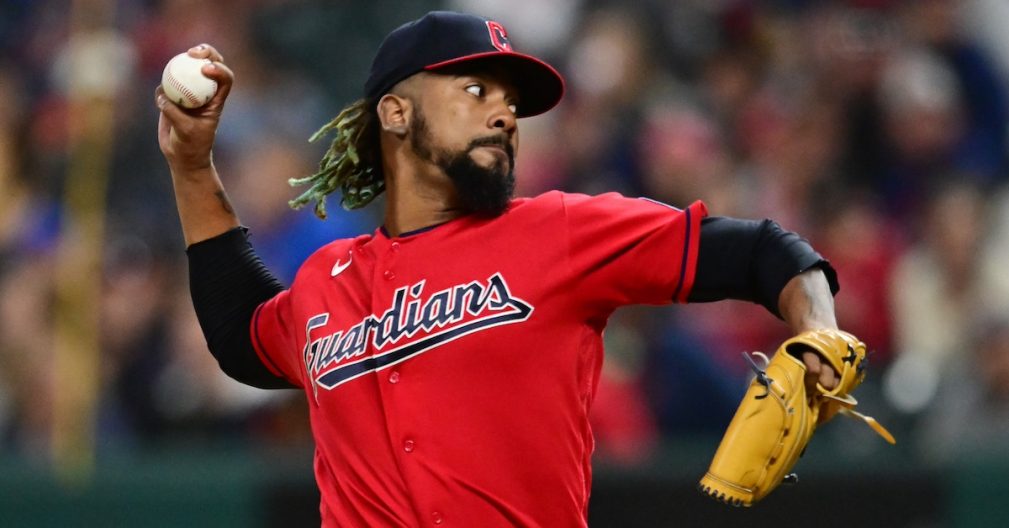
Emmanuel Clase

Emmanuel Clase, whom the feds charge masterminded a pitch-rigging scheme for bettors and his fellow Guardians pitcher Luis Ortiz.

How tempting is it to define the present era as the one that tells us we can’t have nice things? And, the one that delivers the message more brutally after each of the rare nice things we get.

Baseball just delivered us a postseason for the ages, even if you don’t hold with the wild card system. Put that to one side a moment and admit it. The game we love spent a month showing us that, any time we care to write the game off as a self-immolating bore, it’ll be more than happy to disabuse us.

Think about it. When you get seven postseason sets ending with winner-take-all games, you’ve been blessed to the tenth power. When you get more than one extra-inning postseason hair raiser without the disgrace of Manfred Man (who’s not allowed anywhere near the postseason—yet), you’ve been blessed that big again.

When you get utter cream-always-rises defiance against the wild card system, putting nobody in either League Championship Series except teams whose butts were parked in first place at season’s end, you’ve been blessed above and beyond whatever it was you had the right to expect.

When you get Shohei Ohtani spending one postseason game striking ten out from the mound and hitting three out at the plate, then spending World Series Game Three reaching base nine times—five with the near-complete consent of the Blue Jays who seemed to prefer death to Ohtani’s singular controlled mayhem—your cups runneth over.

When you get a postseason seeing regular-season supermen continue their feats of derring-do and damage (can we forget Cal Raleigh crowning a 60-homer regular season with five intercontinental ballistic missle launches while the Mariners were in the postseason? Freddie Freeman’s eighteenth-inning walkoff?), and heretofore dismissable Clark Kents turning into assorted breeds of Supermen (Addison Barger, Miguel Rojas, call your offices), your bowls, barrels, vats, and tanks runneth over, under, sideways, down, and back.

In other words, this postseason couldn’t have been more entertaining, exciting, and exemplary if it had been coordinated, produced, and directed by Bill Veeck, Casey Stengel, Kevin Costner, and The Chicken.

No, that beyond good deed couldn’t go unpunished, could it? Can we have (demand) this Sunday back?

First there came the should-be-frightening revelation that, according to a popular podcast, Bryce Harper—he who told commissioner Rob Manfred firmly enough to get the you know what out of the Phillies clubhouse if he wanted to talk salary cap, though the two shook hands and shook it off later on—was threatened by “one of Manfred’s deputies,” who said, supposedly, “Don’t ever disrespect [the Commish] like that again. That’s how people end up in a ditch.”

“If this threat is true,” wrote Yardbarker‘s David Hill, “the next labor stoppage could get ugly fast.” If that threat is true, we don’t have to wait for a lockout or a strike to get ugly fast. It’s just become ugly fast.

And how about the ugly-fast-enough revelation that two Guardians pitchers, relievers Emmanuel Clase and starter Luis Ortiz, on administrative leave since late July on pitch-rigging suspicions, have just graduated from suspicion to formal charges of fraud, conspiracy, bribery, and money laundering? Charges “stemming,” as the federal indictment out of Brooklyn says, “from an alleged scheme to rig individual pitches that led to gamblers winning hundreds of thousands of dollars, according to an indictment unsealed by federal prosecutors Sunday.”

The U.S. Attorney’s Eastern District office in Brooklyn said Sunday that Clase’s involvement in the pitch-rigging plot goes back to May 2023, with Ortiz joining up last June. It didn’t exactly cripple the Guardians’s season to lose the pair, especially when they ended up snatching the American League Central from the unexpectedly rising/unexpectedly sputtering Tigers.

But then came the postseason. The Tigers nudged the Guardians out of the picture in a wild card series. From there, aside from the usual off-season doings, undoings, maneuverings, and meanderings, the question around the Guards became when the other shoes would drop around Clase and Ortiz.

They dropped Sunday, all right. The indictment says Clase arranged with a gambler to throw particular pitches for ball counts so the bettor could bet on those pitches (it’s called proposition betting) and reap the financial reward. The indictment says further that gamblers won almost half a million betting on pitches thrown by the Guardians pair, while the pitchers themselves earned kickbacks for helping the bettors clean up.

Clase and Ortiz, said Eastern District U.S. Attorney Joseph Nocella, Jr., “deprived the Cleveland Guardians and Major League Baseball of their honest services.”

They defrauded the online betting platforms where the bets were placed. And they betrayed America’s pastime. Integrity, honesty and fair play are part of the DNA of professional sports. When corruption infiltrates the sport, it brings disgrace not only to the participants but damages the public trust in an institution that is vital and dear to all of us.

“While the pervasiveness of legalized gambling has upended the sports world, the allegations against Clase and Ortiz are the most severe for the sport since Pete Rose agreed to a lifetime ban for betting on baseball in 1989,” ESPN’s Jeff Passan wrote. “MLB’s rules against gambling on the sport are strict, and Clase and Ortiz could face lifetime bans similar to the one delivered last year to San Diego Padres infielder Tucupita Marcano, who placed nearly 400 bets on baseball.

Nocella’s office described Clase as the scheme’s mastermind, saying he’d throw balls instead of strikes and sliders instead of cutters on first pitches, with gamblers betting on each pitch to be called balls or traveling under specific speeds. The indictment said further that such proposition bets would be stacked in parlays often as not, meaning bigger winnings.

But the indictment also charges that Clase gave money to gamblers to bet on his own behalf, texted with them while games were in progress, and was joined up by Ortiz after he  came to the Guards in a winter 2024-25 trade, Passan said.

Among others, Clase helped gamblers win $27,000 apiece on one Clase pitch faster than 94.9 mph in an interleague game with the Mets. “Weeks later,” Passan said, referring to the indictment, “bettors added a leg to a parlay for a pitch to be a ball slower than 94.95 mph—and won $38,000 when Clase spiked a slider at least five feet in front of home plate.”

By last April, Clase asked for and got kickbacks for throwing specific pitches. He even asked one winning bettor to send kickback money to his native Dominican Republic “for repairs at the country house.” Last June, Ortiz joined the scheme by agreeing to be paid $5,000 to throw a first second-inning pitch for a ball call, with Clase getting $5,000 himself for arranging it, the indictment charges.

The same month, Ortiz agreed to open the third inning with ball one for $7,000. The indictment also says bank security cameras caught Clase withdrawing $50,000 cash, $15,000 of which went to one bettor in a group who placed $18,000 on that pitch.

Ortiz’s attorney denied in a formal statement that his client would do anything to influence a game improperly, “not for anyone and not for anything.”

Clase was making $4.9 million for 2025 and stood to make $6.4 million for 2026, with a pair of team options for 2027 and 2028 at $10 million each. Ortiz wasn’t near six figures yet so far as I could determine, but he wasn’t exactly improverished, either. Why on earth would either man slide into a shady side profession that could end their baseball lives if convicted and banished?

Maybe we shouldn’t ask. Maybe it won’t matter, at least until the case goes to trial, barring any for-now-unknowable chance of one or both pitchers coming to take plea deals and then throwing themselves upon the mercy of the courts of law and public opinion.

Maybe it won’t mean a thing until or unless baseball decides to take a second, third, and fourth look at its cross-promotion deals with legal sports books. Yes, those were supposed to encourage fan betting alone. Baseball’s prohibitions against players, coaches, managers, and team personnel betting on the sport remain stringent.

Oops. Manfred took a presidential gumshoe in the gluteus to declare Rose’s “permanent” and wholly justified banishment applied only while he was alive on earth—thus making Rose eligible to appear on the Hall of Fame’s next Classic Baseball Era Committee ballot.

But five months after Ohtani’s original interpreter Ippei Mizuhara went to the federal calaboose for stealing $17 million of Ohtani’s money to support an out-of-control gambling habit, it might be wise to review and perhaps repel those cross-promotions. Which might require the kind of spine this commissioner displays very selectively.

When an uppity player told Manfred where he can take his salary cap talk, the commissioner’s office ironed up to slap him down. But when an uppity president behaving like the school bully crooked his finger and demanded Rose be sent to Cooperstown as soon as last week, regardless that Rose earned his banishment, Manfred’s spine went Vaseline.

The stove isn’t the only thing that’s hot. It won’t shock me if baseball tempers get a little hot for a good while. That’s the risk whenever baseball’s witless remind us that we can’t have nice things for very long.

On Harper telling Manfred where not to go

Bryce Harper

Bryce Harper, a player who suffers neither fools nor commissioners (did I repeat myself?) gladly . . .

Once upon a time, when John Glenn’s Mercury space flight ran into a brief postponement,  then-Vice President Lyndon Johnson all but demanded he be sent through the phalanx of press outside Glenn’s home to have some television time with Glenn’s wife, Annie. Rebuffed before the postponement, Johnson now thought it’d be just the thing if he could “console” Mrs. Glenn over the airwaves.

Mrs. Glenn wanted no part of Johnson’s publicity hounding. NASA, as Tom Wolfe phrased it so deftly in The Right Stuff (the book, not the movie, you miserable pudknockers), wanted no part of Mrs. Glenn’s demurrals: “There’s John, covered with sweat, drawn, deflated, beginning to feel very tired after waiting for five hours for 367,000 pounds of liquid oxygen to explode under his back . . . and the hierarchy of NASA has one thing on its mind: keeping Lyndon Johnson happy.”

You remember the film version, no? John, we’ve got a problem with your wife, said NASA’s program chief to the astronaut. Oh, no you don’t, Glenn said, figuratively, when replying to his wife that, if she didn’t want Johnson or the networks coming in, “then that’s it, as far as I’m concerned, they are not coming in—and I will back you all the way, one hundred percent, on this, and you tell them that . . . you tell them astronaut John Glenn told you to tell them that.”

NASA program chief to Glenn: John, it’s the vice president!! Glenn to NASA chief: You are way out of line here!  NASA chief: Yeah? Well, I’m thinking of changing the order of flight assignments! Six other Mercury astronauts, not all of whom thought as highly of Glenn as the nation would after his orbital flight and gutsy re-entry, five of whom might well have given their left testicles to be the first American into full orbit (the first two Mercury flights were up to the wild blue yonder, a brief kiss of space, then right back down to the ocean), said that’s what you think: Oh, yeah, Who you gonna get?

Now, my question: If one astronaut could tell a pushy vice president where not to go and get away with it, why on earth couldn’t one baseball player tell a pushy commissioner—whose tricks and rhetoric stand athwart the good of the game he professes to have first on his mind—where to go and get away with it.

I’m not going to repeat the names of the philistines who’ve called for Bryce Harper’s suspension or at least formal and loud enough reprimand after last week’s confrontation with Rob Manfred. The one in which Commissioner Pepperwinkle visited the Phillies clubhouse (as he does with all major league clubhouses each year) with his economic agenda to discuss, and Harper—one of the game’s most intelligent as well as talented and accomplished players—told him flatly that if he wanted to talk salary cap, “you can get the [fornicate] out of our clubhouse.”

Manfred subsequently said that he and Harper shook hands near the end of the meeting. Other reports suggested Manfred tried to contact Harper the following day but Harper declined. To reporters afterward, Harper said, only, “Everybody saw the words and everything that happened. I don’t want to say anything more than that. I’ve talked labor and I’ve done it in a way that I don’t think I need to talk to the media about it . . . I’ve always been very vocal, just not in a way that people can see.”

Perhaps the worst kept secret in baseball right now has been Manfred’s subtle-as-a-jellyfish-sting push to put a salary cap onto the negotiating table for the next collective bargaining agreement, though he doesn’t use the specific phrase “salary cap” and prefers now to use such language as baseball’s “economics.” The lesser volume of talk involving the far more necessary (and viable) salary floor—a requirement that baseball’s owners whose teams aren’t named the Dodgers, the Mets, the Phillies, or the Yankees, among an extremely few others, should either spend a negotiated minimum on player payroll or sell to ownerships more than willing to spend—tells you all you need and more than you want.

Manfred thinks he’s baseball’s grand protector and preserver. But for every one smart thought or plan he devises (smart and thoughtful: the universal designated hitter; the Field of Dreams Games) he devises numerous dumb and dumbers: The free cookie on second base to open each half inning; the continuing City Connect uniform abominations; abetting the Oakland Athletics’ abandonment of a fan base who loved them, in favour of an owner who let the team and their old park go to seed absent “public financing” [read: public fleecing]; NASCAR-like ad patches on uniform jerseys; redefining “permanent” as “lifetime” regarding the late, flagrant Pete Rose; and, the Speedway Classic (please don’t say you couldn’t see this one coming), in which a baseball field was implanted and a baseball game was played inside a NASCAR track, all sit as evidence for the prosecution.

Did you really love looking at the sentence linking to ESPN’s story of the Speedway Classic game between the Braves and the Reds, pushed to Sunday when the rain washed it out in the first inning Saturday? After red flag, [Eli] White’s 2 HRs let Braves lap Reds. See if you can tell where such a sentence as that fits better, especially since no major league team is named for either cars or curs: the Daytona 500, or the Westminster Kennel Club Dog Show. Should Bristol Motor Speedway have sent a home run pace car around the track after every homer . . . or a pack of greyhounds?

Don’t tell me about the Speedway Classic crowd breaking a major league attendance record. American immunity to novelty didn’t end with the pet rock, the Garbage Pail Kids, the Macarena, Beanie Babies, Furby, Pogs, and Fidget Spinners. The good news, otherwise: It broke a major league attendance record. The bad news, further: Bristol Motor Speedway ran out of food and drink on Saturday night; stories abound about motorists stopping at convenience stations and being crowded by Braves and Reds fans allowed to bring their own provisions Sunday.

Maybe a player making nine figures on a thirteen-year deal with six years and $153.2 million yet to come, playing for a team whose owner actually does operate as though the common good of the game isn’t solely to make money for himself*, isn’t quite the ideal man to speak up. But Barnum’s Law has yet to be repealed, and Manfred has proven himself one of its least apologetic supplicants.

————————————–

* Hark back to spring training 2019, when Bryce Harper signed his thirteen year/$330 million deal with the Phillies, after talking directly with Phillies owner John Middletown and all but ordering his agent Scott Boras to sit down and keep his big trap shut. After impressing Middleton with his knowledge of the game’s play and its history, not to mention asking how Middleton himself made a long, happy marriage work, Middleton had this to say to Boras

Scott, I want to tell you something, I’m not interested in talking about marketing dollars, ticket sales, billboards, concessions. There’s only one reason I’m talking to you, and that’s because I believe this guy can help us win. I’ve made enough money in my life, I don’t need to make more. My franchise value has risen dramatically over the last 25 years. I don’t need it to rise more. If it does, fine. I’m here to win, and I think your guy can help me win.

You want to know why players think owners and even commissioners lie whenever their lips move? Middleton is the rare contemporary MLB owner who speaks as a man who’s in it for the love of the game and behaves as though it’s not a mere platitude, whether in Philadelphia or Pudknock. (For the record, too, Harper as a Phillie has more than lived up to his end of the bargain, a few injury disruptions notwithstanding.)

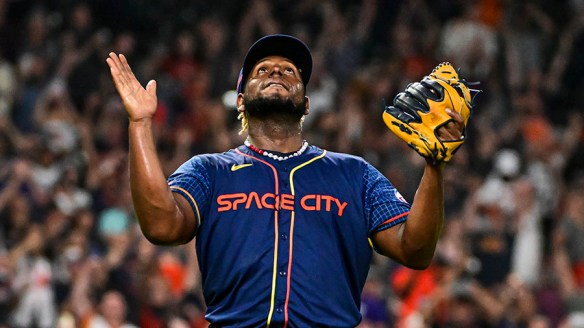
The earliest no-hitter for his team’s first win

Ronel Blanco

The Blue Jays got Blancoed for the record books on Monday . . .

You know a man of my ability
he should be smokin’ on a big cigar.
But ’till I get myself straight
I guess I’ll just have to wait
in my rubber suit rubbin’ these cars.

–Jim Croce, “Workin’ at the Car Wash Blues”

I have no idea if Ronel Blanco knows who Jim Croce was, never mind if he’s heard the old troubador’s music. But the Dominican righthander who worked at a car wash in his homeland before the Astros handed him a $5,000 bonus when he was 22 can smoke all the big cigars he wants now.

You earn such spoils if you become only the fourth pitcher in Show history to throw a no-hitter for your team’s first win of the regular season, a club that includes Hall of Famer Bob Feller (who did it in 1940, on Opening Day) plus Burt Hooton (Cubs, 1972) and Hideo Nomo (Red Sox, 2001). You earn them when you break Nomo’s record for the earliest regular-season no-hitter in Show history by two days. (Nomo: 4 April; Blanco: 2 April.)

But you might care to share them with your catcher, Yanier Diaz, since he also became the first since 1901 to call a no-hit game from behind the plate and hit a pair out in the same game: solo blasts with two out in the second and one out in the seventh. And, with your left fielder Kyle Tucker, who joined Diaz going long in both innings, a solo in the second and a two-run shot in the seventh.

And pass one to your manager, Joe Espada, who’s become the first manager in Show history to be on the bridge when his first major league win comes with a no-hitter. You might have needed to wait until age 28 to get to the Show at all but Espada ground away a very long time as a minor league infielder turned minor and major league coach before becoming the Astros’ bench coach after 2017.

All that plus a changeup described politely as nasty kept the Blue Jays’s bats from hitting anything past Astro fielders when not striking out while the Astros dropped a ten-run, twelve-hit assault upon last year’s AL wild card victims. (They lost two straight to the Twins in that set.)

All the Astros wanted in Minute Maid Park was to shake off the season-opening sweep the Yankees dropped on them that included three comeback wins for the latter. They couldn’t have gotten a better shake-off if they’d hired a scriptwriter and his number-one script doctor at once.

Fairly enough, the Jays exacted a little revenge the following day. José Altuve wants to open the proceedings with a leadoff bomb against José Berríos in the top of the fourth? We’ll just see about that, said Davis Schneider, with two out in the top of the ninth and Daulton Varsho pinch-running for Justin Turner, hammering Josh Hader’s slightly hanging slider more than slightely beyond the center field fence. Thus the 2-1 Jays final.

But it wasn’t enough to dull or diminish Blanco’s blanking Monday. Nobody can take that from him.

MEANWHILE, ELSEWHERE IN THE RECORD BOOKS

Slumpbusting Thumps Dept.—Bryce Harper opened the season 0-for-11 with only a pair of walks placing him on base. Then he took it out on Reds started Graham Ashcraft on Tuesday for openers, hitting a 1-2 service over the Citizens Bank Park center field fence in the bottom of the first. He abused Ashcraft opening the bottom of the fourth, too, hitting the first pitch into the lower right field seats.

Harper wasn’t even close to finished, either. With the bases loaded, one out, and Brent Suter, the second Reds reliever of the night, on the mound, Harper unloaded on a full count and sent one two-thirds of the way up the lower right center field seats. Making the score 8-1, Phillies. They needed all that insurance plus Brandon Marsh’s solo bomb in the top of the ninth, after all, since the Reds pried three more runs out before expiring on the wrong end of a 9-4 Phillies win.

Harper became the 56th player and third Phillie to hit three home runs including a salami slice in the same game. The previous two such Phillie phloggers: Should-be Hall of Famer Dick Allen (29 September 1968) and Jayson Werth (16 May 2008). All three such games have something else in common: thirteen runs scored total, though Allen’s and Werth’s resulted in 10-3 Phillie wins.

OH, BY THE WAY . . .

Place Your Betts Dept.—Mookie Betts has now played eight regular-season games this year. He has five home runs, fifteen hits in 38 plate appearances, and eight walks. The only problem there is that four of the five times he hit them out there wasn’t a Dodger to be found on base ahead of him, and the Dodgers have been 3-2 in the games he’s dialed the Delta Quadrant so far.

But the Mookie Monster has also scored fourteen times, and other than by himself it seems Freddie Freeman has shown him the most love after he’s reached base: Freeman has sent him home five times over those first eight.

Did I mention that, as of Wednesday morning, Betts leads the National League in hits, bombs, walks, and total bases? That he leads the NL with a .605 on-base percentage thus far? That he leads the entire Show with his 1.772 OPS?

NLCS Game Five: All things small and big

Zack Wheeler

Zack Wheeler pitching almost spotlessly in NLCS Game Five did as much to save the Phillies season as their early running and mid-game bombing did.

Ask, and you shall receive. The Phillies asked Zack Wheeler to pitch like an ace in National League Championship Series Game Five—and he did. They asked their hitters to step up and swing when it mattered—and they did. They asked their bullpen to hold fort—and they did.

Their reward for doing those things was a handy 6-1 win in Chase Field and a trip back to Philadelphia with not one but two chances to punch their World Series tickets. The Phillies, of course, not to mention the throng liable to greet them in Citizens Bank Park come Monday, would prefer it not take that long.

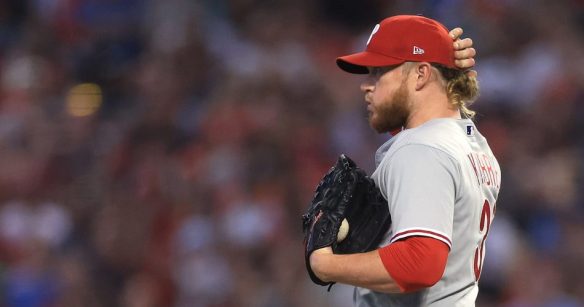
All it took otherwise was for the Phillies to put Games Three and Four behind them, the ones in which their overtaxed bullpen let the Diamondbacks waste a grand start by Ranger Suárez in the former and their overtaxed bull Craig Kimbrel implode them toward a come-from-ahead loss in the latter.

Not to mention Kyle Schwarber starting the Game Five ball rolling in a way you don’t expect of the bombardier who showed up nuclear in the sixth inning, beating one into the ground to take a slow enough roll toward third, a region left open with the Diamondbacks in a slight shift toward second, that he beat out for a leadoff hit.

Not to mention Bryce Harper sending him to third with a one-out single shot right back up the pipe, Bryson Stott lining him home with a single. And, Harper coming home on a double steal while inadvertently colliding with a momentarily-stunned Diamondbacks catcher Gabriel Moreno as the throw from Snakes second baseman Ketel Marte to the plate went off it. It was the first time any Phillie stole home in any postseason.

Not to mention Wheeler and his Diamondbacks counterpart Zac Gallen engaging a pitcher’s duel that was noiseless, generally, until Schwarber opened the top of the sixth by turning Gallen’s 2-0 hanging breaking ball into a satellite flying over the Chase Field pool and several rows into the seats behind it. Giving Schwarber the all-time National League Championship Series home run lead with eleven.

Not to mention Harper, one out later, wrestling back from 1-2 into a full count before driving a fastball slightly over the middle of the zone and a little further into the same general real estate where Schwarber’s leadoff bomb landed.

Not to mention J.T. Realmuto abusing the Diamondbacks’ third reliever of the evening, Luis Frias, for a two-out two-run homer in the top of the eighth, which could have been considered repayment for Diamondbacks center fielder Alek Thomas—the hero of the Snakes’ Game Four win with his unlikely eighth-inning, game-tying two-run homer—hitting Wheeler’s first pitch of the seventh over the right center field fence for the only score of the evening for his team.

Not to mention the Phillies bullpen keeping the Diamondbacks off the board the final two innings despite a couple of dicey moments in the ninth, when Evan Longoria drew a two-out walk off Seranthony Domínguez and took second on defensive indifference before Perdomo landed on first after his bouncer hit Domínguez’s leg and deflected to shortstop.

Manager Rob Thomson reached for Matt Strahm. Strahm landed a swinging strikeout on Diamondbacks rookie Corbin Carroll to finish off. The Phillies reached for ways to express how it felt to shake off such a heartbreaker as the Game Four loss.

“I just want to win. That’s it,” said Harper, whose evening included a grand first inning play when he speared Diamondbacks DH Pavin Smith’s hard grounder lunging right and onto a knee before taking it to the pad himself. “Whatever that takes, whatever that’s going to be, whatever that’s going to look like. That was a big game for us. Coming in here and getting one is huge. That’s a good team over there. We took advantage of everything we could.”

Harper also tended Moreno at once after the double-steal collision, perhaps mindful that Perdomo has been under concussion watch before in his career and was caught in the head on a backswing during the D-Backs’s wild card set. “The way he went down,” Harper said postgame, “I was making sure he was good and stable.”

(Memo to: Social media idiots. It wasn’t a dirty play. Harper came straight down the base line without trying to collide with Moreno. Moreno moving from in front of the plate to reach for the throw crossed into Harper’s path, unintentionally but technically blocking the plate without the ball in his mitt, illegally, leaving Harper nowhere to go at that moment.)

The collision to one side, Realmuto seemed less impressed by his own home run than by the double steal that made Harper the second-oldest (at 31) ever to steal home in a postseason game. (Hall of Famer Jackie Robinson at 37 remains the oldest; he did it in the 1955 World Series.) “After what [the Snakes] did to us the last two games, they had all the momentum in the world,” the Phillies catcher said postgame. “So we had to try to do something early in the game to get it back. That was a great call by [Thomson] putting that on.”

The plot was simple. Stott would take off for second and draw Moreno’s throw while stopping just short of the pad. It looked like Stott getting himself caught in a rundown, but Marte winged his throw home almost immediately after Stott stopped with Harper, instructed to “be aggressive” by Phillies third base coach Dusty Wathan, gunning it home.

“It just shows you,” said Phillies shortstop Trea Turner, “how being aggressive and putting pressure on those guys — not just them but everybody in general, to put pressure on the other side is good and it makes things happen.” Make things happen? The Phillies opened by taking a page out of the Diamondbacks’ grinding book and shoving right back before even thinking about the long ball side of their own game.

For all the Phillies’s basepath daring and bomb launching, though, Wheeler had to have been the player of the game for them when all was said and done. “He gave us exactly what we needed with where our pen was at,” said Thomson. “It’s incredible what he does,” said Harper of Wheeler, who threw 21 first-pitch strikes facing 28 batters. “It’s so much fun to watch. I love playing behind him, and it’s incredible. He’s legit, man.”

Now it’ll be up to Aaron Nola to pick up in Game Six where Wheeler left off in Game Five. As for the rest of the Phillies? Who knows what surprises they might bring? Another double steal including a theft of the plate? Another evening of acrobat defense? Another bomb or three?

You almost hope the set goes the full distance, if only to give the Diamondbacks more chances to show the talent might overcome this edition’s general lack of postseason experience. They’re a young team with a lot of upside and a lot of dynamism in their own right. They showed they, too, can exploit mistakes or misfirings in pushing this NLCS to a two-all tie in the first place.

But if they want to hang around a little longer, they’ll have to find a way to beat the Phillies in the Phillies’ own playpen, where the audience never sleeps and the noise rarely lets up before the final out. The Phillies just won their first NLCS road game. Going home, however, means a lot more to them than just scoring a run.

NLCS Game Three: Cardiac arrested

Craig Kimbrel

“Some days you get them, and some days you don’t.”—Phillies relief pitcher Craig Kimbrel, gotten but good by the Diamondbacks in Game Three.

Two League Championship Series Game Threes, two postseason juggernauts stopped. One night, the Astros slap aging and rusted Max Scherzer silly en route making the ALCS a 2-1 affair. The next afternoon, the Diamondbacks do what Cardiac Craig Kimbrel all but begs them to do and turn the NLCS likewise into a 2-1 affair.

Until both the Phillies and the Diamondbacks more or less snuck single runs home in each half of the seventh, their Game Three was mostly a pitching clinic. In fact, until Diamondbacks reliever Ryan Thompson wild-pitched Bryce Harper home in the top of the seventh, no scoreless postseason game ever ended its scoreless status that way.

Both starters, Ranger Suárez for the Phillies and rookie Brandon Pfaadt for the Diamondbacks, pitched into the sixth without so much as a peep across the plate on either side.

The bullpens took over and, while a few things got a little dicey between them, they held the tie and threatened to send the game to extra innings. Then Phillies manager Rob Thomson made his big mistake. He called upon Kimbrel to hold fort for the bottom of the ninth.

If this game was in Philadelphia, even the Phillies’s loud and loyal fans would have had the crash carts on double red alert. But in Chase Field, the Diamondbacks’s snake pit, the only thing anyone on that crowd wanted to hand Kimbrel was a loaded triple-decker hamburger smothered in heavy sauce.

This was a little too classic Kimbrel. He fell behind Lourdes Gurriel, Jr. leading off, 3-0, pumped two strikes called on the corner, watched Gurriel foul a pair off, then walked him low and away.

He fell behind Pavin Smith, a late game entry pinch hitting for the day’s designated hitter Evan Longoria two innings earlier, 2-0, Gurriel stealing second on the second pitch.

Then, a swinging strike, followed by a grounder up the middle that Phillies third baseman Bryson Stott grabbed on a slide but left himself no play. With Gurriel the potential winning run now on third.

Next was Emmanuel Rivera, playing third for the Diamondbacks. Kimbrel got his first first-pitch strike of the assignment while Smith took second on fielders’ indifference. A foul strike, a ball low, then a grounder toward third speared by Phillies shortstop Trea Turner, who threw home and nailed Gurriel at the plate.

Back in Philadelphia, the sigh of relief probably crossed three state lines—but the crash carts remained online and on double red alert. With good reason.

Kimbrel started Snakes shortstop Geraldo Perdomo with a ball way off the plate before Perdomo fouled the next pitch away and swung for strike two. This was the first time Kimbrel got ahead of a batter in the inning. That’d teach him. Two straight balls, low, to follow. Ball four to load the pillows. A first pitch strike to second baseman Ketel Marte. A second pitch fastball a little up . . .

Bing! It wasn’t up enough for Marte to miss shooting it back up the pipe for a base hit sending Smith home with the game winner.

Yes, it was only Game Three. Yes, the Phillies still have the NLCS advantage. But, yes, they may have to think twice before deciding they can live with the cardiac side of Kimbrel much longer.

“He just couldn’t find the zone consistently,” said Phillies manager Rob Thomson postgame, “and sometimes that happens to Kim,” Thomson said. “But he’ll be available [for Gamr Four], and he’ll be ready to go.”

Hear me out. This guy has been a great pitcher in the past. Somehow, he still holds a lifetime 2.47 fielding-independent pitching rate (FIP), a 0.99 walks/hits per inning pitched rate, and a 3.87-1 strikeout-to-walk ratio, not to mention a 14.2 strikeouts-per-nine rate. But his real greatness may well be behind him, even if he was an All-Star in his first Phillies season this year.

Now, let’s look at Kimbrel by dividing his career between his final of three regular seasons with the Red Sox and his seasons since:

Craig Kimbrel ERA FIP WHIP BB/9 K/9 K/BB
2010-2018 1.80 1.81 0.91 3.3 14.8 4.44
2019-2023 3.57 3.68 1.16 4.1 13.0 3.15

Yes, he can still strike the other guys out like a virtuoso. But since leaving Boston he’s walking about one more per nine than before and striking one less out. He’s allowing more to reach base in the first place since leaving Boston. His ERA/FIP were about dead even during those great first nine seasons of his career, but they’re two runs higher since that 2010-2018 term. And, from 2019-23, his FIP (kind of your ERA when the defense behind you is taken out of the equation) is eleven points higher than his ERA.

Since somehow earning six saves despite a 6.74 ERA in the 2018 postseason, Kimbrel has been up and down in October. In 2020, he pitched an inning and a third shutdown relief in the National League wild card game for the Cubs. In 2021, he appeared in three American League division series for the White Sox—and surrendered two earned runs in three innings.

Until Thursday afternoon, Kimbrel this postseason looked great if you didn’t look past the surface numbers. In division series Game One he got the side in order to finish the Phillies’ win—without a strikeout. But he needed Johan Rojas’s spectacular running catch in division series Game Four’s seventh to save him in the Phillies’ win.

He got the NLCS Game One save credit with a swinging strikeout and a game-ending double play—after he walked his second batter of the ninth. Entering Game Three, Kimbrel had an ERA of zero . . . but a 3.71 FIP. But after Game Three, they became 2.09/5.07.

A 5.07 FIP is not conducive to late-inning survival.

“Some days you get them, and some days you don’t,” Kimbrel said, too matter-of-factly, after the game ended. “Today just wasn’t my day.”

Remember: It wasn’t Kimbrel’s fault the Phillies’ usually formidable offense was kept to three hits on the day, or scored their only run of the game on a walk, an infield hit, a double play pushing Harper to third, and the wild pitch enabling Harper to score. But given the chance to push Game Three to extras tied at one, Kimbrel went cardiac once too often.

That may not be a thrill or a chill the Phillies can afford much longer. If at all.

He’ll be available tomorrow, and he’ll be ready to go. Which “he’ll”—the guy who can be as tight shutdown as they come, or the guy who can’t stop the high wire act until the cable snaps under his feet? These Phillies deserve to know, because these Diamondbacks won’t be kind if the wrong one’s ready.