Max the Knife: Let Robby the Umpbot rank the umps

Max Scherzer

“We need to rank the umpires . . . and talk about relegating (the bottom ten percent) to the minor leagues.”—Max Scherzer.

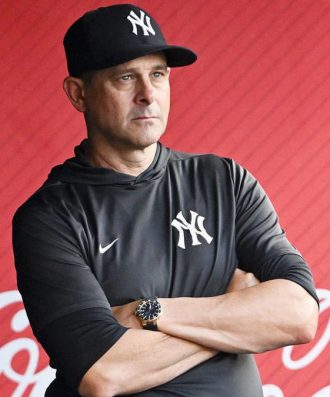
Hunter Wendelstedt’s toss of Yankee manager Aaron Boone Monday has now been deemed “a bad ejection,” according to SNY’s Andy Martino, citing an unnamed source. “Bad ejection?” How about unwarranted? How about irresponsible? How about letting reputation overrule the moment erroneously?

And, how about Max Scherzer suggesting a very good way to start holding umpires better accountable for such unwarranted, irresponsible errors?

Nobody with eyes to see and ears to hear should have cared two pins that Boone had 34 previous ejections plus a reputation for being a bit on the whiny side. Boone kept his  mouth tight shut following an early warning over a beef involving a hit batsman on a low pitch, but a blue-shirted fan seated behind the Yankee dugout barked and Wendelstedt decided Boone should get the bite.

Wendestedt not only ejected a manager erroneously but doubled down with one of the most mealymouth explanations you’re liable to hear from anyone among the people who are supposed to be the proverbial adults in the room:

This isn’t my first ejection. In the entirety of my career, I have never ejected a player or a manager for something a fan has said. I understand that’s going to be part of a story or something like that because that’s what Aaron was portraying. I heard something come from the far end of the dugout, had nothing to do with his area but he’s the manager of the Yankees. So he’s the one that had to go.

Imagine parents hearing one of their children call them an obscene name while in another’s bedroom, then deciding the child whose bedroom it is should be grounded a week instead of the pottymouth. That’s what Wendelstedt’s ejection was, and the crime didn’t happen from the Yankee dugout but behind it.

The only thing MLB government intends to do, Martino observed, is add the Boone ejection to Wendelstedt’s evaluation for game management. Seasonal evaluations have impacts on whether umpires get plum assignments such as leading crews, working All-Star Games, and working postseasons.

Wendelstedt isn’t a crew chief despite being a major league ump for 28 years. (He works today on Marvin Hudson’s ump crew.) He hasn’t worked an All-Star Game since 2011; he hasn’t worked a postseason series since the 2018 National League Championship Series. You might consider thirteen years since his last All-Star game and eight since his last postseason assignment punishment enough.

But players, coaches, managers are subject to prompt accountability for their misbehaviours. They get fined and/or suspended for bad arguments on the field and MLB government can’t wait to make those punishments public. Blocking an errant ump from the postseason may seem like punishment to you, but how much damage might his regular-season mistakes and doubling down on mealymouth excuses for them have wreaked upon a pennant race?

On 26 July 2011, plate ump Jerry Meals ruled incorrectly that the Braves’ Julio Lugo was safe at the plate in the bottom of the nineteenth on 26 July 2011. Pirates catcher Michael McKenry tagged him out three feet from the plate, and you can see McKenry make the tag right before Lugo stepped on the plate.

Meals apologised profusely after the game and the day after. (He also incurred death threats against his wife and children.) His public acknowledgement of his mistake may have saved his hide; he got to work a 2011 NL division series and was promoted to crew chief in 2015, a rank he held before his retirement in 2022.

But that call cost the Pirates a win after a very long night and helped knock the wind out of their pennant race sails. They were a game out of first in the National League Central when that game ended. They split the next two games with the Braves before hitting a ten-game losing streak, losing fourteen of their next sixteen, and falling to fourth in the division to stay.

There are and have been those umps such as Meals who hold themselves accountable for their mistakes. Umps such as also-retired Jim Joyce and Tim Welke, and still-working Chad Fairchild. Umps such as the late Don Denkinger, who owned up to his infamous 1985 World Series mistake and also came out strong for replay.

Umps such as Gabe Morales, who seemed itching to apologise for blowing the call—when plate ump Doug Eddings asked for help on Wilmer Flores’s check swing, bottom of the ninth, two out and a man on first, the Giants down one run, Game Five of a 2021 NLDS riddled with dubious calls—for game, set, match, and early winter for the Giants. We’ll never know if Flores would have risen to the occasion on 1-2, whether against Max Scherzer or Marvin the Martian, but he should have the chance to try.

What to do about the Wendelstedts? About the Angel Hernandezes, Laz Diazes, C.B. Bucknors? Now pitching on a rehab assignment at Round Rock for the Rangers, Scherzer himself has a thought. A very good one. You’re afraid of Robby the Umpbot? Max the Knife says not so fast, Robby might actually do us a huge favour if he’s deployed properly and baseball government doesn’t screw his pooch:

We need to rank the umpires. Let the electronic strike zone rank the umpires. We need to have a conversation about the bottom—let’s call it 10%, whatever you want to declare the bottom is—and talk about relegating those umpires to the minor leagues.

Scherzer’s said something I’ve argued before. Remember: relegating low-ranking, low-performing umpires to the minors for retraining is precisely what the Korean Baseball Organisation does. If MLB’s government can’t get the World Umpires Association to sit down and talk seriously and reasonably about umpire accountability without Robby the Umpbot, maybe the point that many umps aren’t exactly paranoid about Robby’s eventual advent offers a way to get it without undermining umps or bruising egos too seriously.

Accountability is an absolute must. Max the Knife’s thought put into play would be a far better look than leaving the Wendelstedts excuses to double down on their most grievous errors and verbal diarrhea to follow, or leaving baseball’s government excuses to continue letting them get away with it.

“I don’t care who said it.”

Aaron Boone

Aaron Boone fingers the culprit impressionist who really barked at umpire Hunter Wendelstedt after Boone kept his mouth shut following one warning. (YES Network capture.)

Umpire accountability. There, I’ve said it again. The longer baseball government refuses to impose it, the more we’re going to see such nonsense as that which Hunter Wendelstedt inflicted upon Yankee manager Aaron Boone in New York Monday.

The Yankees welcomed the hapless Athletics for a set. Wendelstedt threw out the first manager of the game . . . one batter and five pitches into it. And Boone hadn’t done a thing to earn the ejection.

Oh, first Boone chirped a bit over what the Yankees thought was a non-hit batsman but was ruled otherwise; television replays showed A’s leadoff man Esteury Ruiz hit on the foot clearly enough. Wendelstedt got help from first base umpire John Tumpane on the call, and Tumpane ruled Ruiz to first base.

The Yankees and Boone fumed, Wendelstedt warned Boone rather loudly, and Boone kept his mouth shut from that point.

Until . . . a blue-shirted Yankee fan in a seat right behind the Yankee dugout hollered. It looked and sounded like, “Go home, ump!” It could have been worse. Fans have been hollering “Kill the ump!!” as long as baseball’s had umpires. George Carlin once mused about substituting for “kill” a certain four-letter word for fornication. His funniest such substitution, arguably, was “Stop me before I f@ck again!” The subs also included,  “F@ck the ump! F@ck the ump!”

Neither of those poured forth from the blue-shirted fan. Merely “Go home, ump!” provoked Wendelstedt to turn toward the Yankee dugout and eject . . . Boone, who tried telling Wendelstedt it wasn’t himself but the blue shirt behind the dugout. “I don’t care who said it,” Wendelstedt shouted, and nobody watching on television could miss it since his voice came through louder than a boat’s air horn and, almost, the Yankee broadcast team. “You’re gone!”

I don’t care who said it.

“When an all-timer of an ejection happens,” wrote Yahoo! Sports’ Liz Roscher, “you know it, and this qualified.”

There was drama. There was rage. There was the traditional avoidance of blame on the part of the umpire. It’s a classic example of the manager vs. umpire dynamic, in which the umpire exercises his infallible and unquestionable power whenever and wherever he wants with absolutely zero accountability or consequences of any kind, and the manager has no choice but to take it.

Bless her heart, Roscher actually used the A-word there. And I don’t mean “and” or “absolutely,” either. She also noted what social media caught almost at once, that Mr. Blue Shirt may have mimicked Boone well enough to trip Wendelstedt’s trigger even though the manager himself said not. one. syllable. after the first warning.

May. You might think for a moment that a manager with 34 previous ejections in his managing career has a voice the umpires can’t mistake no matter how good an impression one wisenheimer fan delivers.

This is also the umpire whom The Big Lead and Umpire Scorecards rated the third-worst home plate umpire in the business last year, worsted only by C.B. Bucknor (second-worst) and Angel (of Doom) Hernandez (worst-worst). I’ve said it before but it’s worth repeating now. Sub-92 percent accuracy has been known to get people in other professions fired and sued.

A reporter asked Boone whether the bizarre and unwarranted ejection was the kind over which he’d “reach out” to baseball government. “Yes,” the manager replied. “Just not good.”

Good luck, Skipper. Umpire accountability seems to have been the unwanted concept ever since the issue led to a showdown and a mass resignation strategy (itself a flagrant dodge of the strike prohibition in the umps’ collective bargaining agreement) that imploded the old Major League Umpires Association in 1999.

The Korean Baseball Organisation is known for its unique take upon umpire accountability. Umps or ump crews found wanting, suspect, or both get sent down to the country’s Future Leagues to be re-trained. Presumably, an ump who throws out a manager who said nothing while a fan behind his dugout barked would be subject to the same demotion.

If the errant Mr. Blue Shirt really did do a close-enough impression of Boone, would Wendelstedt also impeach James Austin Johnson over his near-perfect impressions of Donald Trump?

Well after the game ended in (do you believe in miracles?) a 2-0 Athletics win (they scored both in the ninth on a leadoff infield hit and followup hitter Zack Gelof sending one into the right field seats), Wendelstedt demonstrated the possibility that contemporary baseball umpires must master not English but mealymouth:

This isn’t my first ejection. In the entirety of my career, I have never ejected a player or a manager for something a fan has said. I understand that’s going to be part of a story or something like that because that’s what Aaron was portraying. I heard something come from the far end of the dugout, had nothing to do with his area but he’s the manager of the Yankees. So he’s the one that had to go.

The fact that an umpire can order stadium personnel to eject fans or even toss a loudmouth in the stands himself (it happened to Nationals GM Mike Rizzo courtesy of now-retired Country Joe West, during a pan-damn-ic season game in otherwise-empty Nationals Park) seems not to have crossed Wendelstedt’s mind. The idea of saying “I was wrong” must have missed that left toin at Albuquoique.

Major league umpires average $300,000 a year in salary. If I could prove to have a 92 percent accuracy rate and learn to speak mealymouth, I’d settle for half that.

The Yankees rock and troll

Yankee Stadium

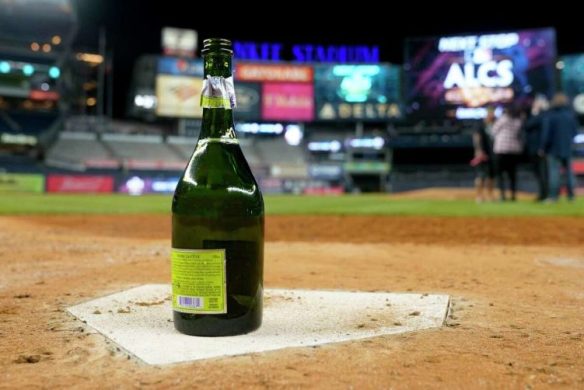
A spent champagne bottle placed on home plate after the Yankees won a trip to the ALCS Tuesday night. The Yankees had to celebrate their win in a hurry—they open against the Astros Wednesday night.

The good news is, Year One of Comissioner Rube Golberg’s triple-wild-cards postseason experiment isn’t going to have an all also-ran World Series, after all. It still yielded a pair of division-winning teams getting to tangle in the American League Championship Series.

The bad news is, those two division winners are still the Yankees and the Astros, after the Yankees sent the AL Central-winning Guardians home for the winter with a 5-1 win Tuesday that wasn’t exactly an overwhelming smothering.

What it was, though, was the game for which the Guardians shot themselves in the proverbial foot. Specifically, two Guardians, one of whom is old enough to know better and the other of whom needs a definitive attitude adjustment.

Guardians manager Terry Francona has more World Series rings this century (two) than Yankees manager Aaron Boone (none). Francona is considered by most observers to be one of the game’s smartest managers who’s made extremely few mistakes and learned from one and all; Boone is one of those skippers about whom second-guessing is close enough to a daily sport in its own right.

But when push came to absolute shove for rain-postponed AL division series Game Five, Boone proved willing to roll the dice Francona finally wasn’t.

After Gerrit Cole held the Guards off with a magnificent Game Four performance Sunday but the rain pushed Game Five from Monday to Tuesday, Boone was more than willing to throw his original Game Five plan aside—Jameson Tallion starting and going far as he could to spell the beleaguered Yankee bullpen—and let Nestor Cortes pitch on three days’ rest for the first time in his major league life.

Francona wouldn’t even think about changing his original Game Five plan, opening with his number-four starter Aaron Civale, who hadn’t even seen any action this postseason until Tuesday, then reaching for his bullpen at the first sign of real trouble. He wasn’t willing to let his ace Shane Bieber go on three days’ rest for the first time in his major league life.

Mother Nature actually handed Francona one of the biggest breaks of his life when she pushed Game Five back a day. Either he missed the call or forgot to check his voicemail. “I’ve never done it,” said Bieber postgame Tuesday, about going on three days rest. “But could I have? Sure.”

“It’s not because he can’t pitch,” said Francona after Game Five. “It’s just he’s been through a lot. You know, he had [a shoulder injury in 2021] and he’s had a remarkable year, but it’s not been probably as easy as he’s made it look.”

It might have been a lot easier on the Guardians if Francona handed his ace the chance to try it, with reinforcements ready to ride in after maybe three, four innings. Even year-old-plus shoulder injuries deserve appropriate consideration, of course. But Bieber surrendered a mere two runs in five-and-two-thirds Game Two innings. Francona’s hesitation when handed the chance helped cost him a shot at another AL pennant.

Civale didn’t have it from the outset. He had as much control as a fish on the line jerking into death out of the water. Giancarlo Stanton slammed an exclamation point upon it when he slammed a hanging cutter the other way into the right field seats with two aboard and one out.

The Guards’ pen did surrender two more runs in the game, including Aaron Judge’s opposite field launch the next inning. But they spread those runs over eight and two-thirds innings’ relief while otherwise keeping the Yankees reasonably behaved. They gave the Guards every possible foot of room to come back and win it.

That was more than anyone could say for Josh Naylor. The Guards’ designated hitter had already raised temperatures among enough Yankees and around a little more than half of social media, when his Game Four home run off Cole resulted in him running the bases with his arms in a rock-the-baby position and motion.

Naylor intends the gesture to mean that if he hits you for a long ball he considers you his “son” in that moment. It wasn’t anything new for him or for those pitchers surrendering the 20 bombs he hit on the regular season. And Sunday’s blast was the third time Naylor has taken Cole into the seats in his major league life. He was entitled to a few bragging rights.

Cole himself thought the bit was “cute” and “a little funny.” He wasn’t half as offended as that half-plus of social media demanding Naylor’s head meet a well-placed fastball as soon as possible. Yesterday, if possible. The Yankees found the far better way to get even in Game Five than turning Naylor’s brains into tapioca pudding.

“We got our revenge,” Yankee shortstop Gleyber Torres all but crowed postgame. Torres even did a little rocking of the baby himself in the top of the ninth, after he stepped on second to secure the game-ending force out. “We’re happy to beat those guys,” he continued. “Now they can watch on TV the next series for us. It’s nothing personal. Just a little thing about revenge.”

Naylor was also serenaded mercilessly by the Yankee Stadium crowd chanting “Who’s your daddy?” louder with each plate appearance. Every time he returned to the Guards’ dugout fans in the seats behind the dugout trolled him with their own rock-the-baby moves. And his most immediate postgame thought Tuesday was how wonderful it was that he’d gotten that far into their heads.

Some say it was Naylor being a good sport about it. Others might think he was consumed more with getting into the crowd’s heads than he was in getting back into the Yankees’ heads. The evidence: He went 0-for-4 including once with a man in scoring position Tuesday.

Oh, well. “That was awesome,” he said postgame of the Yankee Stadium chanting. “That was so sick. That was honestly like a dream come true as a kid—playing in an environment like this where they’ve got diehard fans, it’s cool. The fact I got that going through the whole stadium, that was sick.”

Josh Naylor

Rock and troll: Yankee fans letting Josh Naylor have it on an 0-for-4 ALDS Game Five night.

Did it cross his mind once that his team being bumped home for the winter a little early was a little more sick, as in ill, as in not exactly the way they planned it? If it did, you wouldn’t have known it by the way he continued his exegesis. “If anything, it kind of motivates me,” he began.

It’s fun to kind of play under pressure. It’s fun to play when everyone’s against you and when the world’s against you. It’s extremely fun.

That’s why you play this game at the highest level or try to get to the highest level: to play against opponents like the Yankees or against the Astros or whoever the case is. They all have great fanbases and they all want their home team to win, and it’s cool to kind of play in that type of spotlight and in that pressure.

Wouldn’t it have been extremely more fun if the Guardians had won? Did Naylor clown himself out of being able to play up in that spotlight and its pressure this time? Those are questions for which Cleveland would love proper answers.

So is the question of how and why the Guards didn’t ask for a fourth-inning review that might have helped get Cortes out of their hair sooner than later, after a third inning that exemplified the Guards’ hunt-peck-pester-prod limits.

They went from first and second and one out in the top of the third—one of the hits hitting the grass when Yankee shortstop Oswaldo Cabrera collided with left fielder Aaron Hicks, resulting in a knee injury taking Hicks out of the rest of the postseason—to the bases loaded and one out after Guards shortstop Amed Rosario wrung Cortes for a four-pitch walk. They got their only run of the game when Jose Ramírez lofted a deep sacrifice fly to center.

Now, with two outs in the top of the fourth, Andres Giménez whacked a high bouncer up to Yankee first baseman Anthony Rizzo, who had to dive to the pad to make any play. The call was out, but several television replays showed Giménez safe by a couple of hairs. Perhaps too mindful of having lost three prior challenges in the set, the Guardians’ replay review crew didn’t move a pinkie. Francona seemingly didn’t urge them to do so.

Never mind that it would have extended the inning and given the Guards a chance to turn their batting order around sooner, get Cortes out of the game sooner, and get into that still-vulnerable Yankee pen sooner. Francona’s been one of the game’s most tactically adept skippers for a long enough time, but not nudging his replay people to go for this one helped further to cost him an ALCS trip.

These Yankees don’t look proverbial gift horses in the proverbial mouths. An inning later, with Torres on first with a leadoff walk and James Karinchak relieving Trevor Stephan following a Judge swinging strikeout during which Torres stole second, Rizzo lined a single to right to send Torres home. That was all the insurance the Yankees ended up needing.

Especially when these so-called Guardiac Kids, the youth movement whose penchant for small ball and for driving bullpens to drink with late rallies, forcing the other guys into fielding lapses, winning a franchise-record number of games at the last minute, had nothing to say against three Yankee relievers who kept them scoreless over a final four solid shutout innings.

Especially when they actually out-hit the Yankees 44-28 and still came up with early winter. The trouble was, the Guards also went 3-for-30 with men in scoring position over Games One, Two, Four, and Five, and had nobody landing big run-delivering blows when needed the most. Their ability to surprise expired.

Now the Yankees have a chance for revenge against the Astros who’ve met them in two previous ALCSes and beaten them both times. They had to hurry their postgame celebration up considerably—the ALCS opens Wednesday night.

The Guardians could take their sweet time going home for the winter and pondering the season that traveled so engagingly but ended so ignominiously.

“Winning the division was the first part,” Hedges said postgame. “Wild-card round. Put ourselves in position to beat the Yankees. And we wanted to win the World Series, but that’s a good Yankees team. The cool thing is, now we have a bunch of dudes with a ton of playoff experience in the most hostile environment you can imagine.”

The Guards were bloody fun to watch for most of it. Then Cole, Stanton and Judge rang their bells in Games Four and Five, and they had nothing much to say in return. The Guardiac Kids were the babies who got rocked. There was nothing much fun about that.

An epic Yankee fall?

Aaron Boone

Aaron Boone—how often does a four-game division lead feel like the next rung down of a collapse?

“If we don’t dig ourselves out,” Yankee manager Aaron Boone told reporters after the Yankees lost to the Rays 2-1 Saturday night, “you’ll have a great story to write.” Sometimes, greatness is in the eye of the beholder. If the beholder is a typical Yankee fan, this kind of greatness is the last thing the Yankees need.

There’s always been a trunk full of cliches about the Yankees. The two most significant have been a) they don’t like to lose; and, b) their fans consider no postseason legitimate unless the Yankees are in it. (The third most significant, at least since a certain man bought the team in 1973: To err is human; to forgive is not Yankee policy.)

Even the terminally optimistic Boone feels the weight. If he’s telling reporters they’ll have a “great” story to write unless the Yankees find a way out of their current spinout, there’s no joy in half of New York. The other half is hanging with the Mets, who may have a mere two-game lead in the National League East but whose fans aren’t exactly ready to call for summary executions despite their team having ended May 10.5 games ahead of their divisional pack.

The Mets’ faithful learned from the crib that there’s no such thing as an entitlement to success. (Quick: Name any Yankee team ever called a miracle team.) The Yankee faithful were spoiled so rotten by their 20th Century success that their descendants still think the World Series trophy is fraudulent unless it has the Yankee name on it.

Maybe the Yankees will dig themselves out of their present funk. But maybe they won’t. They’re 15-16 in the second half so far and went 10-18 in August alone, but they awoke Sunday morning having lost six of nine. Dropping the first pair of a weekend set with the second-place Rays is one thing, but entering that set splitting four with the sad-sack Athletics and two of three to the equally sad-sack Angels is not the look the Yankees wanted going in.

Their toughest opponents the rest of the way will be those same Rays for a three-game set in Yankee Stadium starting 9 September. They return home from Tampa Bay to host the Twins for four, and the Twins are no pushovers, but they’re not exactly up to the Rays’ performance level just yet. They’re also not quite up to the level of the suddenly-amazing Orioles, whom the Yankees host to end September and open October.

The Orioles—who looked as though they’d surrendered their heart and soul when trading Trey Mancini at the trade deadline, which could have threatened their unlikely sightline to the wild card picture. While almost nobody was looking, the Orioles not only finished July with a 16-9 month but they consummated a 17-10 August and opened September with three straight wins—one against the AL Central-leading Guardians and two against the A’s. Once upon a time the victims of a miracle team (in 1969), these Orioles may yet <em>become</em> a miracle team themselves.

They were as deep as 23 games in the AL East hole as of 2 July. They were 35-44. They’ve since gone 36-25. This regular season may yet finish with a debate over which was greater, the Yankees’ collapse from a one-time 15.5 game AL East lead or the Orioles’ resurrection from a 23-game divisional deficit to a postseason berth.

Yankee and other eyes concurrently train upon Aaron Judge’s pursuit of the 60 home run barrier across which two Yankees have gone (Hall of Famer Babe Ruth’s 60 in 1927; Roger Maris’s 61 in ’61) and—after a healthy leadoff belt in the top of the ninth off Rays reliever Jason Adam Saturday night—Judge himself is only eight shy of meeting. Some think Judge is so locked in he may even meet the 70-bomb single-season barrier head-on before the regular season expires. He’d be the first player to reach it without being under suspicion of actual/alleged performance-enhancing substances, anyway.

But Yankee cynics make note that, for thirty days including Saturday night, the Yankees’ team slash line of .213/.289/.325 is only that high with Judge, himself the possessor of a .279/.446/.593 slash for the same span. Without him, they’d be .208/.268./.295. Their Lost Decade of 1965-75 looked better than that.

How on earth did the Yankees get here? Easy enough. Hal Steinbrenner isn’t the man his father was, good and bad. The good side: Prince Hal isn’t exactly the type to decide one bad inning is enough to demand heads on plates, and if he fires a manager he wouldn’t have the gall to say, “I didn’t fire him. The players did.” The bad side: He doesn’t like to invest half as much as his father did.

Say what you will about George Steinbrenner, but the man didn’t care how much he had to spend, either on the free agency market or on keeping the farm reasonably fresh. Prince Hal’s running the most profitable franchise in the American League as if they were a minor league outlier or the A’s, whichever comes first. Nobody wants the bad side of The Boss resurrected, no matter how often Yankee fans demand it now. But nobody wants the good side buried interminably, either.

Which means general manager Brian Cashman, the longest-tenured man in his job in baseball, had little choice but to cobble a roster with one proverbial hand tied behind his back. But that acknowledgement goes only so far. Cashman’s eye for diamonds in the rough has failed him long enough. The present Yankee roster makes some rebuilding teams (the Orioles, anyone?) resemble threshing machines.

Which also means Boone—the only man in Yankee history to manage back-to-back 100-game winners in his first two seasons on the bridge—looks a lot larger for his faltering in-game urgency managing and getting less than the best of the men not named Judge or (relief pitcher) Clay Holmes on his roster. So do the three Yankee hitting coaches who can’t seem to shake the non-Judge bats out of what one of them is quoted as calling the wrong case of the “[fornicate]-its.”

The definition to which those coaches hold is translated admirably by strongman designated hitter Giancarlo Stanton: “We’ve just got to give whoever is on the mound a tough at-bat, even if we get out. We’ve just gotta wear ’em down a little bit. Just be a little tougher on them.” The definition to which the Yankee bats have held mostly of late seems to be unintentional surrender.

Yes, the Yankees have been injury-addled. Yes, they’ve been playing a curious chess game with minor leaguers brought up to the club to the point where they had to send two promising pitchers back down because the roster was about as flexible as an iron gate. But the lack of urgency the Yankees seemed to feel when they looked like AL East runaways hasn’t been resolved just yet with the team looking as though they can be overtaken before this is over.

Once upon a time, New York was rocked by a Brooklyn Dodgers team that looked as though it was shooting the lights out in the National League but found itself overtaken into a pennant tie by a New York Giants team that was 13 games out at one point. That tie and subsequent playoff, of course, turned out to be as tainted as the day was long. (The Giants stole the pennant! The Giants stole the pennant!)

To the best of anyone’s knowledge, nobody’s cheated their way back into the AL East race. If the Yankees keep up their current malaise, nobody would have to. Collapsing entirely from a 15.5 game lead would stand very much alone on the roll of Yankee infamy.

Cabrera and the Yankees have it right

Miguel Cabrera

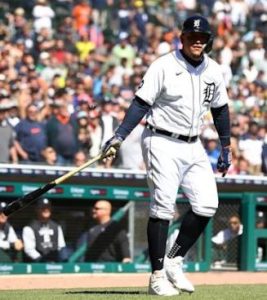
A free eighth-inning pass after going 0-for-3 to that point Thursday outraged Tiger fans far more than it outraged Miguel Cabrera to remain one knock short of 3,000.

I don’t want to pour any more gasoline onto the fire of Tiger fan’s outrage, but Yankee manager Aaron Boone did the absolute right thing Thursday afternoon. And it wasn’t as though Miguel Cabrera lacked for shots at his 3,000th lifetime hit.

Boone ordered Cabrera walked on the house in the bottom of the eighth rather than risk the righthanded-hitting Cabrera clobbering his lefthanded relief pitcher Lucas Luetge with runners on second and third, two outs, and the Tigers ahead a mere 1-0.

Now, the move backfired, sort of; Austin Meadows ripped a two-run double to make it 3-0. So think of it as the Tigers’ revenge if you wish. But since when is the other guy “entitled” to make history on your dollar? Since when are you just supposed to be nice guys and let him make his history when he might put a game a little further out of reach against you?

Cabrera was 0-for-3 on the day when his eighth-inning plate appearance approached. He didn’t exactly lack for chances to plant number 3,000 somewhere in Comerica Park. He knew it. Understandably, the Comerica crowd wanted history. Understandably, too, the Yankees wanted to come back and win a baseball game.

But a Hall of Famer is more aware of the big picture than the fans booing the Yankees lustily for ordering the free pass before he could even check in at the plate. He simply dropped his bat in the on-deck circle and make the trek to first base without so much as a wince. He waited until he reached the pad to have a word with or toward Boone.

To which Boone replied, perhaps in good humour, “Miggy was jawing at me after I called for the walk. I told him we’re even. He cost me a World Series in 2003, so now he can sleep on 2,999.” (The reference was to Cabrera then being a member of the Marlins who beat the Yankees in six in that Series—into which Boone’s legendary ALCS-winning home run put the Yankees in the first place.)

Tonight will be only the second night Cabrera sleeps on 2,999. After pulling up that short following Wednesday’s play, during which he went 3-for-4 to get there in the first place, he purred, “Who the [fornicate] cares? We lost. When has this game ever been about individual accomplishments?”

Well, fair play. Baseball has been as much about individual feats as team victories since the game was born, more or less. Cabrera may downplay his failure to reach 3,000 Wednesday—and try calming the Comerica crowd down after the free pass and the eventual Tiger win today—but he can’t really be foolish enough to deny that particular feats resonate as deeply as World Series rings.

If he’s rejecting the idea that individual accomplishment is not something to which a player is “entitled,” good for him and better for the game. There’s nothing in the written rules, and little enough unwritten in the Sacred Unwritten Rules, that says a team’s supposed to roll over and play dead so the other guy can reach a landmark.

But there’s plenty on the ethical side that says you’re supposed to achieve your milestones in honest, unmanipulated competition. Including the part that says the other guys have just as much right to try to beat you as you have to try to beat them, history be damned for the moment.

Few teams are quite as conscious or respectful of history and milestones as the Yankees. But they’re also conscious of the season at hand. They took the chance on a lefthander-lefthander matchup offering the best chance to escape the inning unscathed and try once more for victory.

Meadows and thus the Tigers turned out the winners there, fair and square. The Yankees also had a shot at closing the gap and even tying the game in the top of the ninth, when Joey Gallo beat out an infield hit with one out, until Isiah Kiner-Falefa dialed Area Code 6-4-3 for the side and the game.

The Yankees made a smart move and it backfired. That, too, can happen. If Tiger fans want to call it the vengeance of the baseball gods, they’re, ahem, entitled to that. But they shouldn’t condemn the Yankees for putting honest competition and a chance to come back and win ahead of history.

Tiger fans should also heed manager A.J. Hinch’s counsel. “Boonie’s obligation is to his own team and their chances of winning,” Hinch said postgame. “He had the matchup behind Miggy that he wanted. So you could see it coming. I know our fans responded accordingly, but I totally get it.” That’s called being a gracious winner.

Cabrera’s sound counsel, however crudely expressed, is: We still won, and tomorrow’s another day. Especially with the Tigers still at home for this weekend, hosting the Rockies. Cabrera has three more games in front of the home audience to plant number 3,000, fair and square, in honest competition.