On Plesac’s agents dumping him

Zach Plesac

Zach Plesac, earning his D.A.* of the Month award 26 August.

I promise, I have more important things to ponder. Things such as whether next year’s rule changes really will do anything substantial. (If what I saw watching the Las Vegas Aviators host the Tacoma Rainers Wednesday night says anything, don’t hold your breath. Even with the pitch clock and strict obedience thereto, the 8-7 Aviators loss still took about three hours and ten minutes to play. Thank 37:19 minutes worth of between-innings time for the real culprit: broadcast commercials )

Things such as whether Aaron Judge will reach not 60+ home runs but maybe 70, at the rate he’s going. (He parked 56 and 57 in Fenway Park Tuesday night while his Yankees beat the Red Sox 7-6 in ten innings. He left himself four short of Roger Maris, the Yankee single-season record-holder, in game 143 of the season, if you still really care about such arbitrary things.)

Things such as whether the coming expanded postseason will prove a convoluted mess on top of its going in as a true competition dilution. (Why is Commissioner Rube Goldberg more interested in arbitrary time-of-game tinkering than he is in adjusting divisions, eliminating regular-season interleague play, and restoring real pennant races? He still doesn’t get it: 2:15 minutes worth of commercials after each half inning elongate games more than pitchers or hitters adjusting after every pitch, in-inning pitching changes, or mound conferences ever did.)

Things such as the Rays making history by putting the Show’s first all-Latino team on the field to commemorate Roberto Clemente Day, and clobbering the Blue Jays 11-0 while they were at it. The leading lashers: Randy Arozarena (3-for-5 including a double, a run scored, and a run driven home), Yandy Díaz (a three-run homer in the second), and Manuel Margot (a three-run double in a six-run ninth).

But no. I have to ponder a very rare instance of a player being dumped by his agents instead of the other way around. And this is because Zach Plesac, Guardians pitcher, did something dumb once too often for their taste.

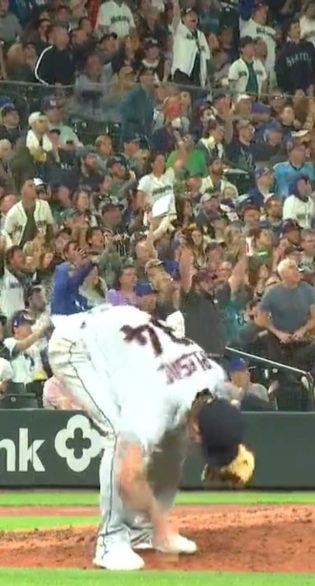
On 26 August, Plesac surrendered two long balls already when he had Seattle’s Jake Lamb 1-2 in the bottom of the seventh. Then he fed Lamb a meal fit to pad a Mariners lead into 3-1 after Lamb fed it over the right center field fence. Plesac spun around on contact, bent over a bit as he watched the ball fly, then punched the mound in abject frustration.

Uh-oh. Even as the Guardians struck back to bust the tie and hang in to win off a three-run eighth, that punch took Plesac out for the rest of the season thanks to the fractured hand that resulted. This was the last thing the American League Central-leading, postseason-bound Guards needed.

It also proved the last thing Creative Artists Agency needed, too. About two weeks after the Guards put Plesac on the injured list, CAA dropped him as a client. “Three strikes appeared to be enough for CAA to say ‘you’re out,’” writes the New York Post‘s Jeremy Layton. “Plesac, despite a 3-11 record in 2022, has pitched decently for Cleveland (4.39 ERA), and is eligible for a big arbitration payday in the offseason. Still, the agency clearly decided the juice was not worth the squeeze.”

This is the pitcher who co-violated the team’s COVID protocols in 2020, having a night out  in Chicago including dinner in a restaurant and a card game at a buddy’s place, without getting team clearance first. The Guards ordered Plesac and co-partyer Mike Clevinger to issue statements. Then he went on Instagram and said the incident being reported in the press made it the media’s fault.**

This is also the pitcher who incurred a thumb fracture in May 2021. Was he hit by a comebacker? Was he hit by a pitch while batting in an interleague game in a National League ballpark? Nope. He suffered the injury . . . while ripping his jersey off and apart after he was battered for five runs (only three earned) during a Guards loss to the Twins. It cost him a month and the Guards another team migraine.

Not many players self-destruct as publicly, spectacularly, or ridiculously as Plesac. He’s  probably cost himself a considerable enough piece of the arbitration payday he might have expected otherwise this offseason. Maybe that will finish sending the message CAA began.

If Plesac’s agents can dump him merely for being a repeat jerk, why don’t other baseball agents—and teams, for that matter, whether trading, releasing, or letting them just walk into free agency—drop those guilty of far more grave behaviours? They’ve done it before, in various ways, and they can and should do it again.

Especially regarding such behaviours as domestic violence. A player being a repeat jerk is just that. Domestic abusers are many things more serious. Calling them mere jerks would be an unwarranted compliment.


* —Dumb Ass.

** —When you like us, we’re the press. When you hate us, we’re the media.—William Safire.
About those coming rule changes . . .

Mike Hargrove

Mike Hargrove—the Human Rain Delay might lead the Show in unpitched strikeouts starting next year if he was playing major league ball now.

Hands up to everyone screaming blue murder about the rules changes coming to baseball in 2023. Now, listen up. They might actually be not as grave as you think. Might.

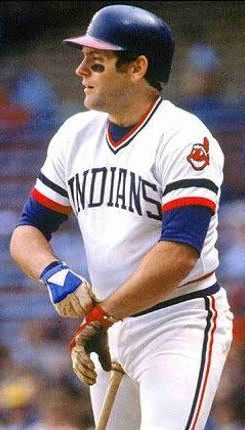
It’s probably a good thing that Mike (The Human Rain Delay) Hargrove (first baseman) and Pedro Baez (relief pitcher) don’t play now. The new pitch clock rule would have Hargrove leading the Show in batting strikeouts with about half of those coming without pitches being thrown, and Baez would likely lead the Show in pitching walks without throwing pitches.

Starting next year, pitchers get fifteen seconds to throw to the plate with the bases empty and twenty to throw with anyone on base. Hitters better be in the batter’s box ready to swing after eight seconds on that pitch clock.

They’ve used the pitch clock in the minors for a few years now and, well, if you don’t count the unconscionable contraction of the minors a couple of years ago nobody’s proclaimed the end of the world as we know it yet.

The bases are going to get a little bigger, too. The bases have changed since the game was first organised, unless you never knew they began as large stones, changed to wood posts, and then to pure sandbags before somebody thought to make them the filled canvas squares that were familiar to one and all until about three decades or so ago. Stop snarling, Boring Old Fart. Then, pick up a copy of Peter Morris’s A Game of Inches, and learn that baseball was never quite as static as you let yourself be led to believe.

Why enlarge the bases even a relatively small amount? (From fifteen-inch squares now to eighteen-inch squares starting next year.) MLB’s Competition Committee thinks they’ll cut down on baserunning injuries (to name one, future Hall of Famer Mike Trout missed about half a season one year after incurring a thumb injury sliding into base) and raise the prospect of basepath theft in the bargain.

“In Triple-A, the first season of larger bases didn’t make much of a change on its own—but in the lower levels, bigger bases combined with rules about pickoffs saw large increases in steals per nine innings,” noted ESPN’s Jesse Rogers. “Even combined with the disengagement rules, though, MLB doesn’t believe either change will lead to teams being unable to control the run game.”

The infamous defensive overshifts will be verboten, too. Starting next season, teams will be required to keep four infielders on the infield dirt, including one each on either side of second base. This won’t exactly eliminate pure defensive shifting—you can still position a shortstop almost behind second base itself or a second baseman almost directly behind the pad, and move your first and third basemen accordingly against pure pull hitters—but you won’t see those walls of infielders on one side or a shortstop in short right field or a second baseman in short left, for a couple of examples.

But how to enforce? “If the hitting team reaches base and runners advance on a ball hit under the violation, the game proceeds without penalties,” Rogers wrote. “If the play has any other consequence—an out, a sacrifice, etc.—the hitting team can decide either to accept the penalty—which would add one ball to the hitter’s count—or decline it, and the play would stand.”

I wish he hadn’t said “sacrifice.” I’ve said it before, I’ll say it again: deliberate sacrifices waste outs, your most precious commodity when your guys are at the plate. You can look it up, too: in six known “bunt situations,” only once do you have an absolute better chance of scoring after than before that bunt (men on first and second, nobody out), only once  otherwise do you have an even scoring chance before and after (man on second, nobody out)], and all four others you have less chance to score after than before that bunt.

Unless you’ve got the next Brett Butler on your team (that half-pint center fielder dropped 337 bunts in his long career and 85 percent of them were for base hits), you should be fined heavily for wasting outs and scoring probabilities with bunts.

These three new rules won’t be as drastic as the continuation of the free cookie on second base to open each extra half inning is and will remain. The players on the Competition Committee were outnumbered 6-4, but I’d love to know if they pushed to get rid of Manfred Man at all. It’s a ridiculous rule that probably did nothing to cut down the time of a game, which was of course the critical factor in devising the aforementioned new rules. (It’s also another of the extremely few reasons to waste an out with a bunt: you’re handed a man on second going in, you have an even chance of scoring after bunting him to third, go for it. Make Manfred Man look like anything but a pretty flamingo.)

But will they really cut down on the times of games? From where I sit the jury’s going to have a long deliberation. And two things that would really cut down on the times of games don’t even seem to have been topics. You don’t need me to tell you that eliminating broadcast commercials a) between half-innings and b) during pitching changes in jams would probably do more to cut the times of games than any of the foregoing changes—especially if they’re married to thing two: eliminating the eight warmup pitches on the game mound for relievers coming in in the middle of those jams.

Go ahead and scream. All better? Now listen up. Again. (I’ve argued this before.) When you bring a pitcher into a jam, unless you’re bringing him in because your incumbent was injured, you shouldn’t even have to think about the new man warming up on the game mound.

He might have thrown anywhere from one to three or even four innings worth of pitches getting to where you could bring him in in the first place. Warm up? He’s coming in hotter than a Las Vegas summer. It takes less time for him to get from the bullpen to the game mound, most of the time, than it does to run those ridiculous “this call to the bullpen” commercials.

You brought him in to get you out of that jam. He’s nuclear hot already. Let him get right to work. Your reliever’s not going to have less men on base behind him or a less pesky hitter at the plate after he throws those eight useless warmups, is he? (Oops. Better not give Commissioner Rube Goldberg any more bright ideas!)

Queen Elizabeth II, RIP: Take her out to the ballgame

Tony La Russa, Queen Elizabeth

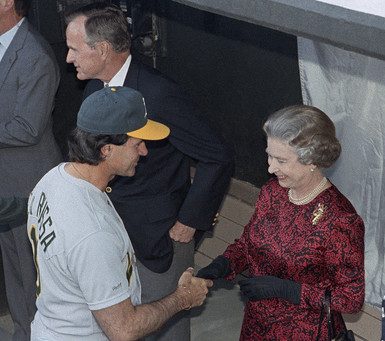
Hall of Fame manager Tony La Russa greeting Queen Elizabeth II in the dugout (with President George H.W. Bush in the background) before the A’s played the Orioles in May 1991, during the queen’s visit to the U.S. On that day, La Russa’s pitcher Dave Stewart threw HRH a nyukleball.

Her late majesty Queen Elizabeth II had something not customarily associated with royalty, namely a fair sense of humour. Dave Stewart, then an  Athletics pitcher, sort of learned when Elizabeth and her husband Prince Phillip visited the United States in 1991 and attended a game between the A’s and the Orioles.

The game was 15 May 1991 at Baltimore’s old Memorial Stadium. Stewart didn’t start the game for the A’s but Bob Welch did. Before the game, the royal couple visited the dugouts and chatted with assorted players, including Stewart, a pitcher whose success on the mound with the A’s was equal only to his countenance taking a sign. The countenance that suggested he might bite your bat barrel or your head off before trying to bust one past you.

Stewart discovered Her Royal Highness’s good humour even if decorum compelled her not to let it loose too readily. “I remember like it was yesterday,” the former righthander whose uniform number 34 becomes a retired number come Sunday told USA Today‘s Bob Nightengale.

We were all lined up to meet her in that procession. So Three Stooges was one my favorite comedies . . . So when she passed (in line), I did like a Three Stooges thing: ‘Queenie, nyuk nyuk.’ She laughed. Well, cracked a smile . . . Put it like that. The rest of the team was cracking up. It was cool for me. I’m sure it was for everybody too, but I had to go act like a god-dang fool.

Let the record show the A’s beat the Orioles 6-3, despite Orioles first baseman Randy Milligan hitting a pair out against Welch, a pair of leadoff blasts in the fourth and sixth innings; and, with a little help from Oriole starter Jeff Ballard picking Hall of Famer Rickey Henderson off second only to see it turn into a run on a dubious fielding error.

Let the record show further that Prince Philip may have had a better time at the game than his wife. Sitting in a luxury box with then-president George H.W. Bush, defense secretary Dick Cheney and then-baseball commissioner Fay Vincent, according to the San Jose Mercury-News, Philip pored through a media guide and kept binoculars in front of his eyes as he scanned the field and the play. Elizabeth “sat primly and looked bored.”

If you’re my age, you may remember enough of the world thought she was kidding around when she named the Beatles as members of the Order of the British Empire in 1965. I can remember enough hoopla indicating enough among the British political and social class objected anywhere from strenuously to amusingly to returning their own M.B.E.s.

My thought approaching age ten was that Her Majesty must have been tempted to breach her well-known composed self and style to slap the twits silly. Ed Sullivan, through whom the Beatles graduated from mere phenomenon to universe shakers in early 1964, did it for her, when he introduced the Beatles at Shea Stadium in August 1965: Honoured by their country . . . decorated by their Queen . . . and loved here in America!

Twelve years after Sullivan’s bouquet came the espionage novel that probably provoked both mirth and melancholia in the former motherland, William F. Buckley, Jr.’s Saving the Queen. His protagonist—a CIA operative on assignment to plug up the Buckingham Palace leaks through which American atomic secrets were being snuck—included in his operation a sexual tryst with a fictitious British queen.

Well, now. I’ll let the late Mr. Buckley himself take it from here, from an essay republished in A Hymnal: The Controversial Arts (1979):

There is something wonderfully American, it struck me, about bedding down a British queen: a kind of arrant but lovable presumption. But always on the understanding that it is done decorously, and that there is no aftertaste of the gigolo in the encounter. I remember, even now with some trepidation, when [Saving the Queen] came out in the British edition. The first questioner at the press conference . . . was, no less, the editor of The Economist, and he said with, I thought, a quite un-British lack of circumspection, “Mr. Buckley, would you like to sleep with the Queen?” Now, such a question poses quite awful responsibilities. There being a most conspicuous incumbent, one could hardly wrinkle up one’s nose as if the question evoked the vision of an evening with Queen Victoria on her Diamond Jubilee. The American with taste has to guard against a lack of gallantry, so that the first order of business becomes the assertion of an emancipating perspective which leads Queen Elizabeth II gently out of the room before she is embarrassed. This was accomplished by saying, just a little sheepishly, as [protagonist] Blackford Oakes would have done, “Which queen?”—and then quickly, before the interrogator could lug his monarch back into the smoker—“Judging from historical experience, I would need to consult my lawyer before risking an affair with just any British queen.”

The reaction of monarch with the subdued but not invisible sense of humour is not on record to the best of my knowledge, though I’d be happy if proven wrong. Especially so considering that in the novel itself the queen is the seductress and the spy the seduced. Elizabeth was known discreetly for playfulness with her husband but not believed to have been anything on the make in her premarital youth.

A consummation even more devoutly to be wished might be her response to Mr. Buckley’s eventual revelation that his friend David Niven, the distinguished British actor, answered his request for a blurb to appear with the novel’s paperback edition: Probably the best novel ever written about fucking the Queen.

Needless to say, the blurb never appeared except in a Buckley recollection or three. I suspect Elizabeth’s good humour might have deflected contortions enough, remembering she probably confronted far more grave lapses of decorum over her unprecedented seventy-year reign.

Including too many among her own offspring, for one of whom it would be high praise if nyuklehead was the worst sobriquet attached to him. The good news is that he’s not the one who ascended the predominantly ceremonial British throne upon his mother’s death. If the sins of the parents be visited not upon their children, surely the sins of the children should not be visited upon their parents.

Which enables Elizabeth to an eternal reward I pray includes frequent escort to the Elysian Fields and an afterlife education telling her that, unlike what she seems to have thought that 1991 day in Baltimore, a queen renowned as something of a thinking person should appreciate the thinking person’s sport.

He can drive 55

Aaron Judge

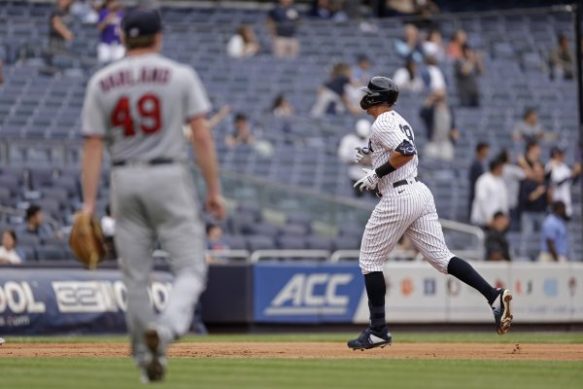
Judge runs it out after driving 55 at Twins rookie Louie Varland’s expense Wednesday.

If you consider a sixty home run season the Promised Land for a power hitter, Aaron Judge awoke Thursday morning five bombs from crossing the Jordan River. And yet . . . and yet . . . the philistine contingencies continue asking the wrong questions about whether Judge will have done it, ahem, “legitimately.”

The Leaning Tower of 161st Street parked number 55—a fourth inning, leadoff blast off Twins starter Louie Varland—in the first game of a Yankee doubleheader sweep of the Twins Wednesday. Among the first notes on the blast was that it gave Judge two more homers after 136 games than Roger Maris in 1961.

If that’s among the only thing that impresses you about what Judge is trying to accomplish, so be it. If it’s second to whether and if Judge hits 60 or more by game 154, since Babe Ruth did that in 1927, so be it, too. The length of season factor was settled long enough ago. It remains far less relevant than other things.

Some of those things have been broken down and analysed splendidly by an MLB.com writer, Mike Petriello. Like me, Petriello has the audacity to look at the deepest data available, refusing to accept that the thinking person’s sport, which is also the deepest sport, should be allergic to thinking and depth.

Petriello goes above and beyond the primary truth that still discomfits enough even today,  Ruth never having faced the truly best available competition in official league play, through no fault of his own and all fault of (ahem) Organised Baseball of the era. (The biracial Judge would have been persona non grata in Ruth’s game.) But Petriello makes the parallel note that in 1927 only five players were born outside the United States, while 2022 includes 418 such players.

The Babe also didn’t face a third of the volume of pitchers Judge has faced, fresh or otherwise. In 1927, Ruth faced 67 pitchers all season long; Maris in 1961 faced 101. Judge faced 224 entering Wednesday and 232 by the time the twin bill ended. The rookie Varland was 225. The poor guy had the honour of being welcomed rather rudely to the majors by a seven-year veteran advancing upon history with a roundhouse punch into the left field seats.

“With series remaining against two teams he’s not seen yet (Milwaukee and Pittsburgh) and the usual September roster shenanigans,” Petriello writes, “Judge might get up to around 240 or so pitchers faced, all with their own arm slots, repertoires and approaches. It will be nearly four times what Ruth saw, and more than twice what Maris saw.” Variety is the life of spice, and a challenge to the bombardier.

In Ruth’s day, too, the idea of relief pitching as we came to know it barely took hold, if at all, above and beyond the Washington Senators’ Firpo Marberry and maybe one or two more. That was then: most relievers not named Marberry were brought in only upon injury or disaster. (Sometimes both.) This is now: relief pitching is a long-sanctioned, time-enough-honoured element in baseball’s art and craft.

Ruth got to enjoy a privilege about which Judge can only fantasise now, seeing a pitcher for a third or even fourth time in a game. Petrillo then sees and raises himself: Ruth got to face a pitcher for a third time or more 35 percent of the time in 1927; Maris, 30 percent in 1961. Judge? Seventeen percent.

Even Mark McGwire, Sammy Sosa, and Barry Bonds among the 60+ home run club got to face pitchers a third time around more often, from Sosa’s 20 percent in 2001 to his (1998), Bonds (2001), and McGwire’s (1998) 22 percent, then to McGwire’s and Sosa’s 24 percent (1999).

It gets a little more bizarre, Petriello notes: Judge has seen only one starter a fourth time around this year, twice—and both times, it was Max Scherzer. Judge does have one bomb off Scherzer, a third-inning blast on 22 August, but he flied out the third time he faced Scherzer that day. Almost a month earlier, Judge faced Scherzer in a 6-3 Yankee loss, and Max the Knife struck him out thrice after surrendering a first inning fly out.

Petriello’s deep dive also exhumed that Ruth in 1927 hit nine home runs off relievers he got to see a second time in a game, and over half his home runs came at the expense of either starters he saw a third time or more or relievers he saw a second time around or more. Judge should be so lucky: it’s only happened to him 19 percent of the time this year.

“If [Judge] saw starters being used the same way the Babe did,” Petriello writes dryly, “he might be looking at an 80-homer season at this point.” The flip side to the coin is that if Ruth saw the volume of quality pitching Judge sees, he might have been lucky to break his own original record of 29 in 1919. (For all you 154-game season chauvinists, 1919 was a 140-game season. Shall we declare Ruth the original “illegitimate” record-breaker because he had a 154-game season to hit 54 for a new record in 1920?)

Judge has 25 games to go to pass Ruth, Maris, and the rest. His season’s average is one bomb every 2.5 games. If he stays on the pace, he might hit 65. It would be one short of Sosa’s best, five short of McGwire’s, eight shy of Bonds, and all alone atop Yankee history. For now, the Leaning Tower of 161st Street is the most prolific single-season righthanded home run hitter ever to wear the Yankee pinstripes.

“The baseball world has changed considerably since 2001, or 1961, or 1927,” Petriello writes, blissfully unconcerned for the philistine contingency which persists in thinking that the game had no business changing at all, never mind that some changes over all those decades have been nothing but beneficial to baseball’s health while others amount to calling repairmen to fix what wasn’t actually broken.

Almost all of it has changed in a way to make hitting more difficult, for any number of reasons, most revolving around velocity, pitch movement, and the endless streams of high-octane arms who don’t worry about pacing themselves to go deep into games. This, above all else, is why the strikeout rate keeps going up; the next time a batter from a half-century ago complains about today’s hitters, remember that their task is immeasurably more difficult than his was. (Emphasis added.)

Remember, too, that Judge is playing in a season in which nobody’s still really dead certain whether he’ll get to swing on a rabbit ball or a miniature medicine ball. But it almost doesn’t matter. (Almost.) You can throw Judge a ball of seaweed, and he can hit it into the upper deck.

But he might hit more than ten more homers, too. Continuing to put the lie to manager Trey Wilson (in Bull Durham) telling his stumbling team, “This—is a simple game. You throw the ball, you hit the ball, you catch the ball.” If it was that simple, Judge’s height would be the only large thing about him.

“I can’t drive 55,” rocker Sammy Hagar once sang for a top-thirty hit. Judge can drive 55, and maybe a lot more before the regular season ends. There won’t be a traffic cop or highway patrolman alive who can stop him.

An epic Yankee fall?

Aaron Boone

Aaron Boone—how often does a four-game division lead feel like the next rung down of a collapse?

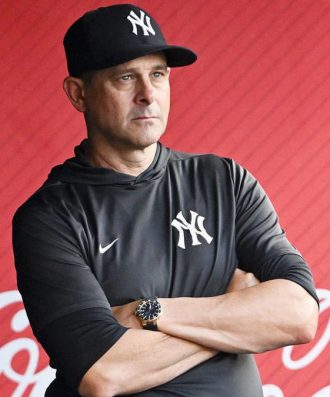
“If we don’t dig ourselves out,” Yankee manager Aaron Boone told reporters after the Yankees lost to the Rays 2-1 Saturday night, “you’ll have a great story to write.” Sometimes, greatness is in the eye of the beholder. If the beholder is a typical Yankee fan, this kind of greatness is the last thing the Yankees need.

There’s always been a trunk full of cliches about the Yankees. The two most significant have been a) they don’t like to lose; and, b) their fans consider no postseason legitimate unless the Yankees are in it. (The third most significant, at least since a certain man bought the team in 1973: To err is human; to forgive is not Yankee policy.)

Even the terminally optimistic Boone feels the weight. If he’s telling reporters they’ll have a “great” story to write unless the Yankees find a way out of their current spinout, there’s no joy in half of New York. The other half is hanging with the Mets, who may have a mere two-game lead in the National League East but whose fans aren’t exactly ready to call for summary executions despite their team having ended May 10.5 games ahead of their divisional pack.

The Mets’ faithful learned from the crib that there’s no such thing as an entitlement to success. (Quick: Name any Yankee team ever called a miracle team.) The Yankee faithful were spoiled so rotten by their 20th Century success that their descendants still think the World Series trophy is fraudulent unless it has the Yankee name on it.

Maybe the Yankees will dig themselves out of their present funk. But maybe they won’t. They’re 15-16 in the second half so far and went 10-18 in August alone, but they awoke Sunday morning having lost six of nine. Dropping the first pair of a weekend set with the second-place Rays is one thing, but entering that set splitting four with the sad-sack Athletics and two of three to the equally sad-sack Angels is not the look the Yankees wanted going in.

Their toughest opponents the rest of the way will be those same Rays for a three-game set in Yankee Stadium starting 9 September. They return home from Tampa Bay to host the Twins for four, and the Twins are no pushovers, but they’re not exactly up to the Rays’ performance level just yet. They’re also not quite up to the level of the suddenly-amazing Orioles, whom the Yankees host to end September and open October.

The Orioles—who looked as though they’d surrendered their heart and soul when trading Trey Mancini at the trade deadline, which could have threatened their unlikely sightline to the wild card picture. While almost nobody was looking, the Orioles not only finished July with a 16-9 month but they consummated a 17-10 August and opened September with three straight wins—one against the AL Central-leading Guardians and two against the A’s. Once upon a time the victims of a miracle team (in 1969), these Orioles may yet <em>become</em> a miracle team themselves.

They were as deep as 23 games in the AL East hole as of 2 July. They were 35-44. They’ve since gone 36-25. This regular season may yet finish with a debate over which was greater, the Yankees’ collapse from a one-time 15.5 game AL East lead or the Orioles’ resurrection from a 23-game divisional deficit to a postseason berth.

Yankee and other eyes concurrently train upon Aaron Judge’s pursuit of the 60 home run barrier across which two Yankees have gone (Hall of Famer Babe Ruth’s 60 in 1927; Roger Maris’s 61 in ’61) and—after a healthy leadoff belt in the top of the ninth off Rays reliever Jason Adam Saturday night—Judge himself is only eight shy of meeting. Some think Judge is so locked in he may even meet the 70-bomb single-season barrier head-on before the regular season expires. He’d be the first player to reach it without being under suspicion of actual/alleged performance-enhancing substances, anyway.

But Yankee cynics make note that, for thirty days including Saturday night, the Yankees’ team slash line of .213/.289/.325 is only that high with Judge, himself the possessor of a .279/.446/.593 slash for the same span. Without him, they’d be .208/.268./.295. Their Lost Decade of 1965-75 looked better than that.

How on earth did the Yankees get here? Easy enough. Hal Steinbrenner isn’t the man his father was, good and bad. The good side: Prince Hal isn’t exactly the type to decide one bad inning is enough to demand heads on plates, and if he fires a manager he wouldn’t have the gall to say, “I didn’t fire him. The players did.” The bad side: He doesn’t like to invest half as much as his father did.

Say what you will about George Steinbrenner, but the man didn’t care how much he had to spend, either on the free agency market or on keeping the farm reasonably fresh. Prince Hal’s running the most profitable franchise in the American League as if they were a minor league outlier or the A’s, whichever comes first. Nobody wants the bad side of The Boss resurrected, no matter how often Yankee fans demand it now. But nobody wants the good side buried interminably, either.

Which means general manager Brian Cashman, the longest-tenured man in his job in baseball, had little choice but to cobble a roster with one proverbial hand tied behind his back. But that acknowledgement goes only so far. Cashman’s eye for diamonds in the rough has failed him long enough. The present Yankee roster makes some rebuilding teams (the Orioles, anyone?) resemble threshing machines.

Which also means Boone—the only man in Yankee history to manage back-to-back 100-game winners in his first two seasons on the bridge—looks a lot larger for his faltering in-game urgency managing and getting less than the best of the men not named Judge or (relief pitcher) Clay Holmes on his roster. So do the three Yankee hitting coaches who can’t seem to shake the non-Judge bats out of what one of them is quoted as calling the wrong case of the “[fornicate]-its.”

The definition to which those coaches hold is translated admirably by strongman designated hitter Giancarlo Stanton: “We’ve just got to give whoever is on the mound a tough at-bat, even if we get out. We’ve just gotta wear ’em down a little bit. Just be a little tougher on them.” The definition to which the Yankee bats have held mostly of late seems to be unintentional surrender.

Yes, the Yankees have been injury-addled. Yes, they’ve been playing a curious chess game with minor leaguers brought up to the club to the point where they had to send two promising pitchers back down because the roster was about as flexible as an iron gate. But the lack of urgency the Yankees seemed to feel when they looked like AL East runaways hasn’t been resolved just yet with the team looking as though they can be overtaken before this is over.

Once upon a time, New York was rocked by a Brooklyn Dodgers team that looked as though it was shooting the lights out in the National League but found itself overtaken into a pennant tie by a New York Giants team that was 13 games out at one point. That tie and subsequent playoff, of course, turned out to be as tainted as the day was long. (The Giants stole the pennant! The Giants stole the pennant!)

To the best of anyone’s knowledge, nobody’s cheated their way back into the AL East race. If the Yankees keep up their current malaise, nobody would have to. Collapsing entirely from a 15.5 game lead would stand very much alone on the roll of Yankee infamy.